- Nomination for the “Research through Architecture / Architecture and Experiments” section
#OPENGIARDINI
Authors’ Comment
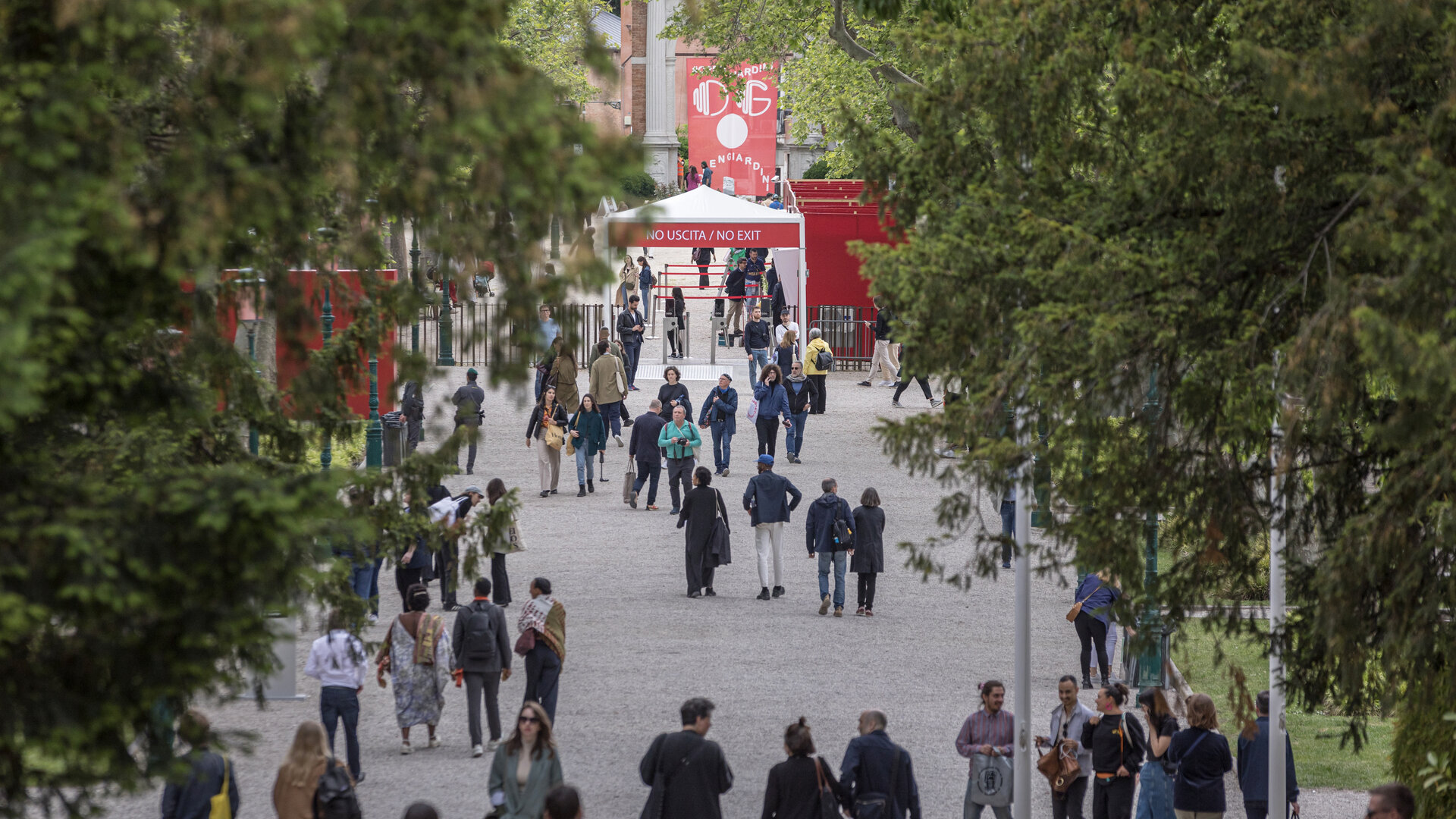
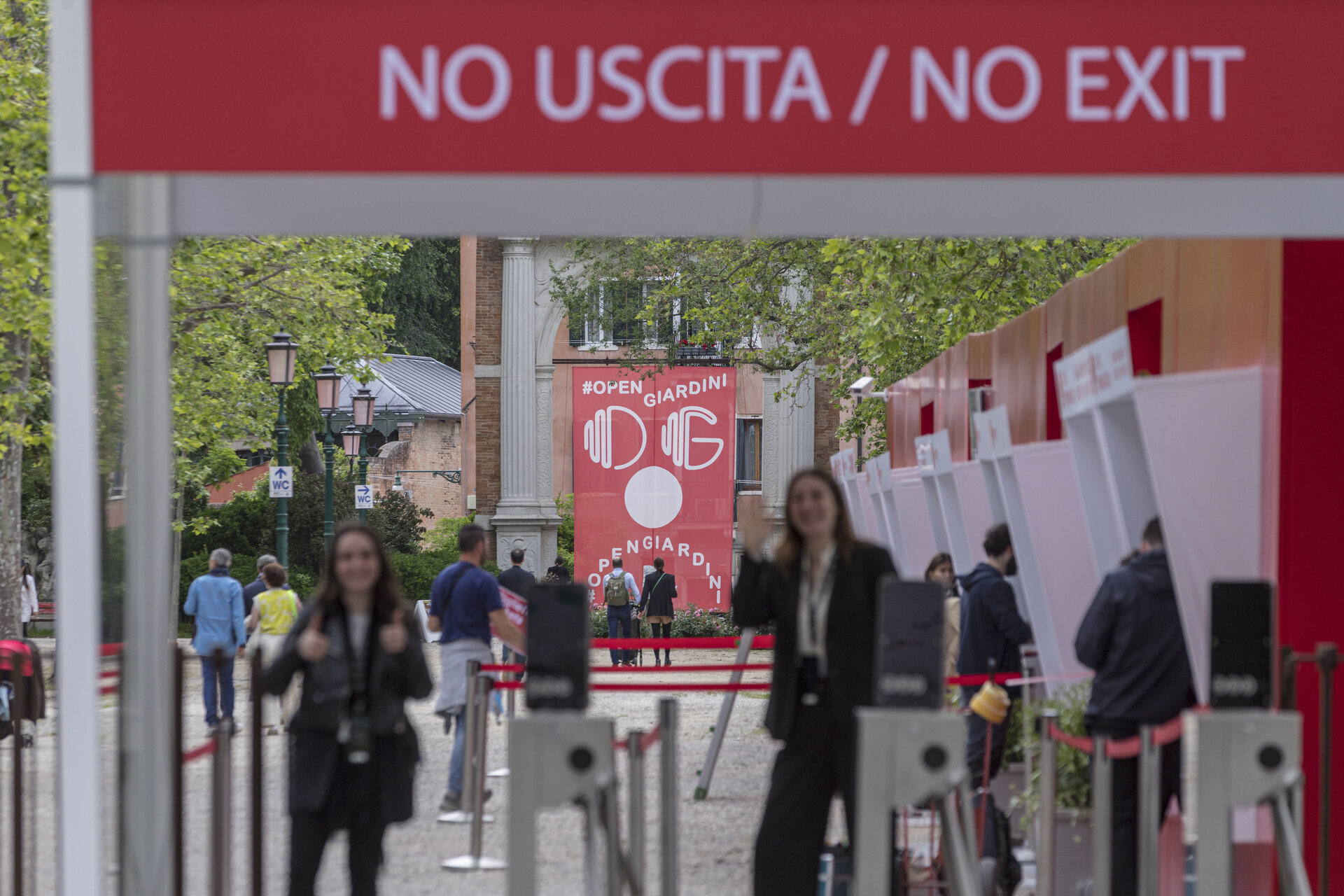
In 1807, Napoleon razed a Venetian neighborhood to create the city’s first public park. In 1895, the Biennale built the first permanent buildings in the Giardini Pubblici. Since then, the Biennale has restricted public access to two-thirds of the park. A decolonization Biennale should address this century-old privatization of public space. The entire Giardini could be open for the half-year without exhibitions. However, gates, walls, fences, CCTV cameras, and armed guards prevent public access year-round. We explored this paradox of a public space not open to the public to address the Giardini's current and future use.
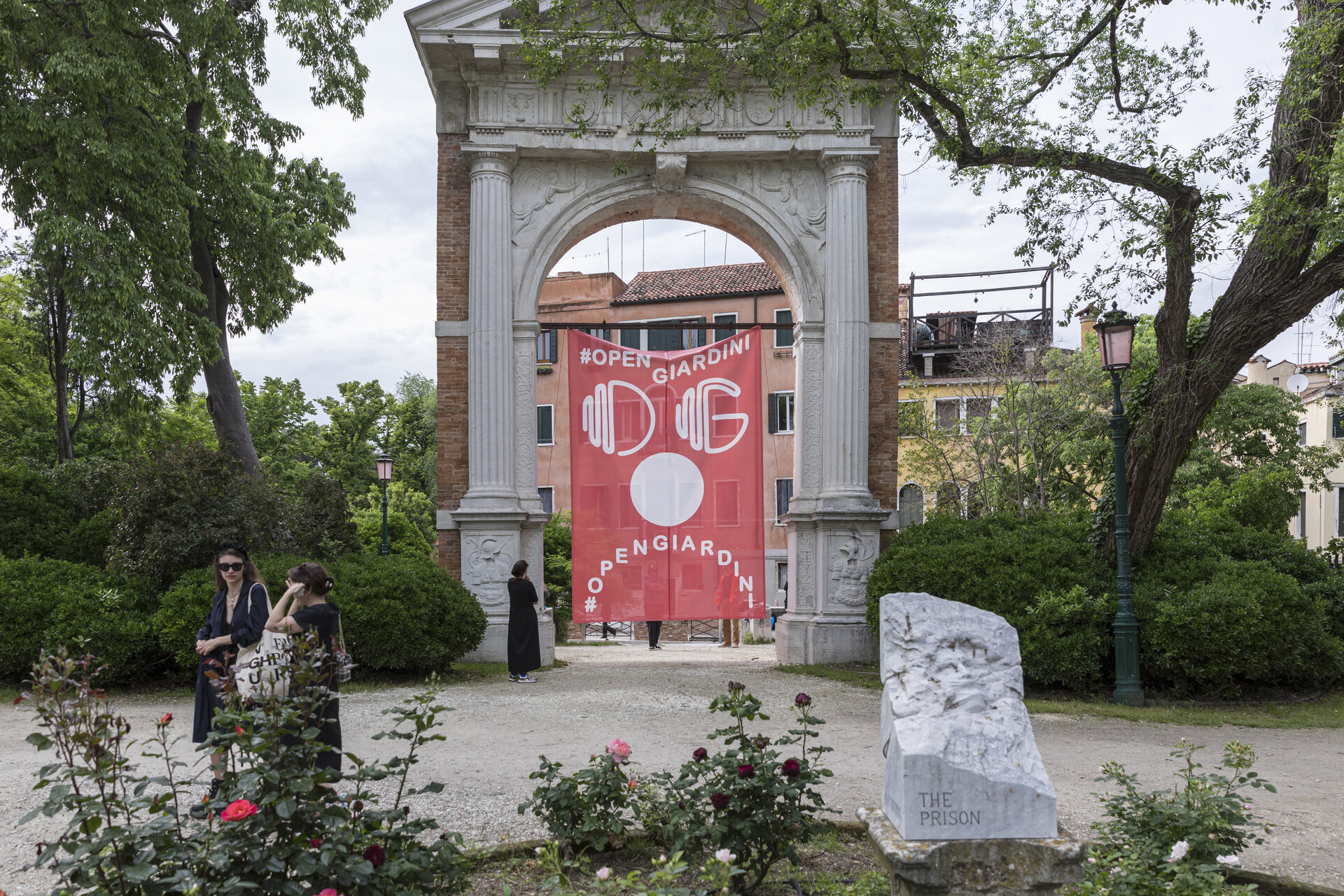
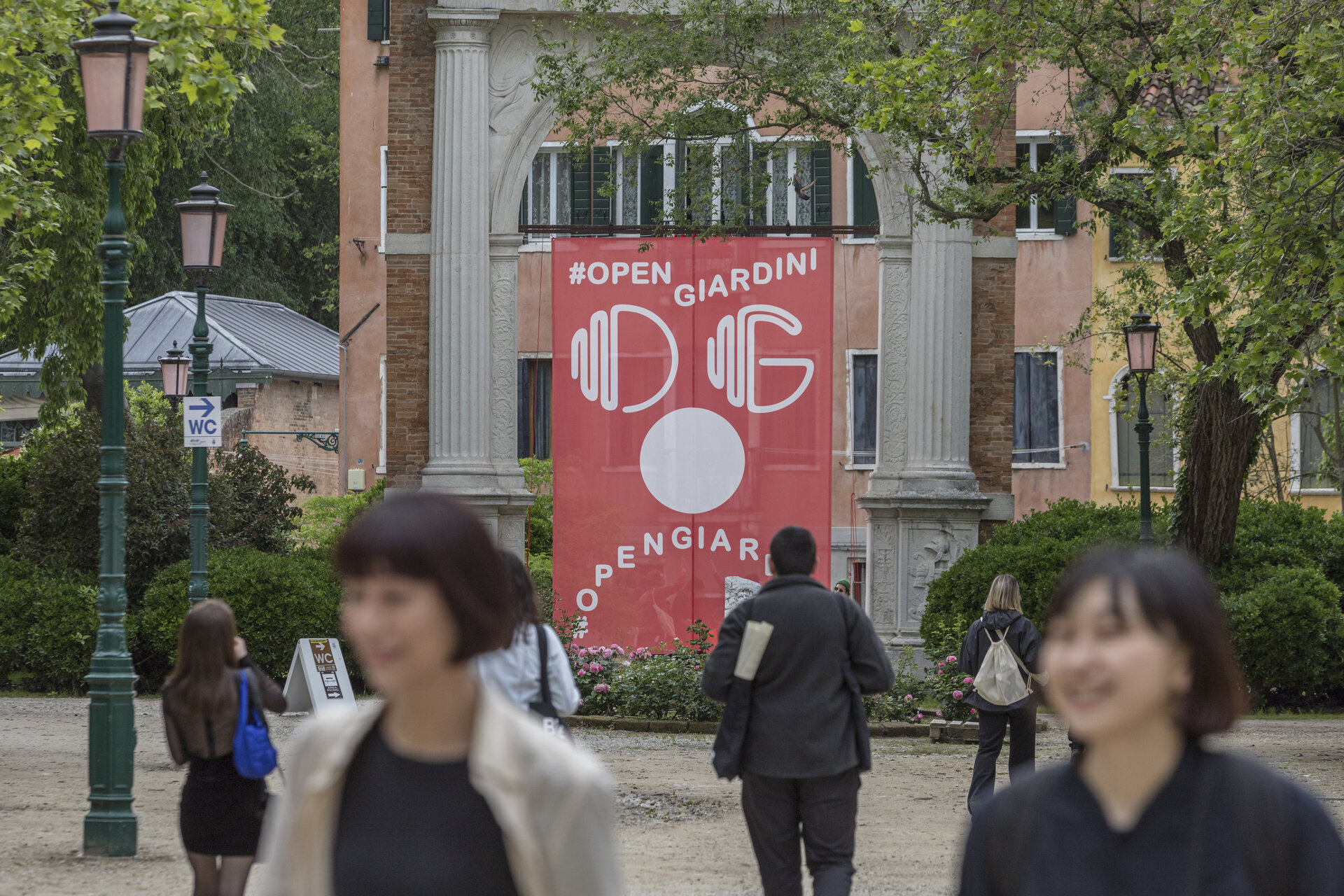
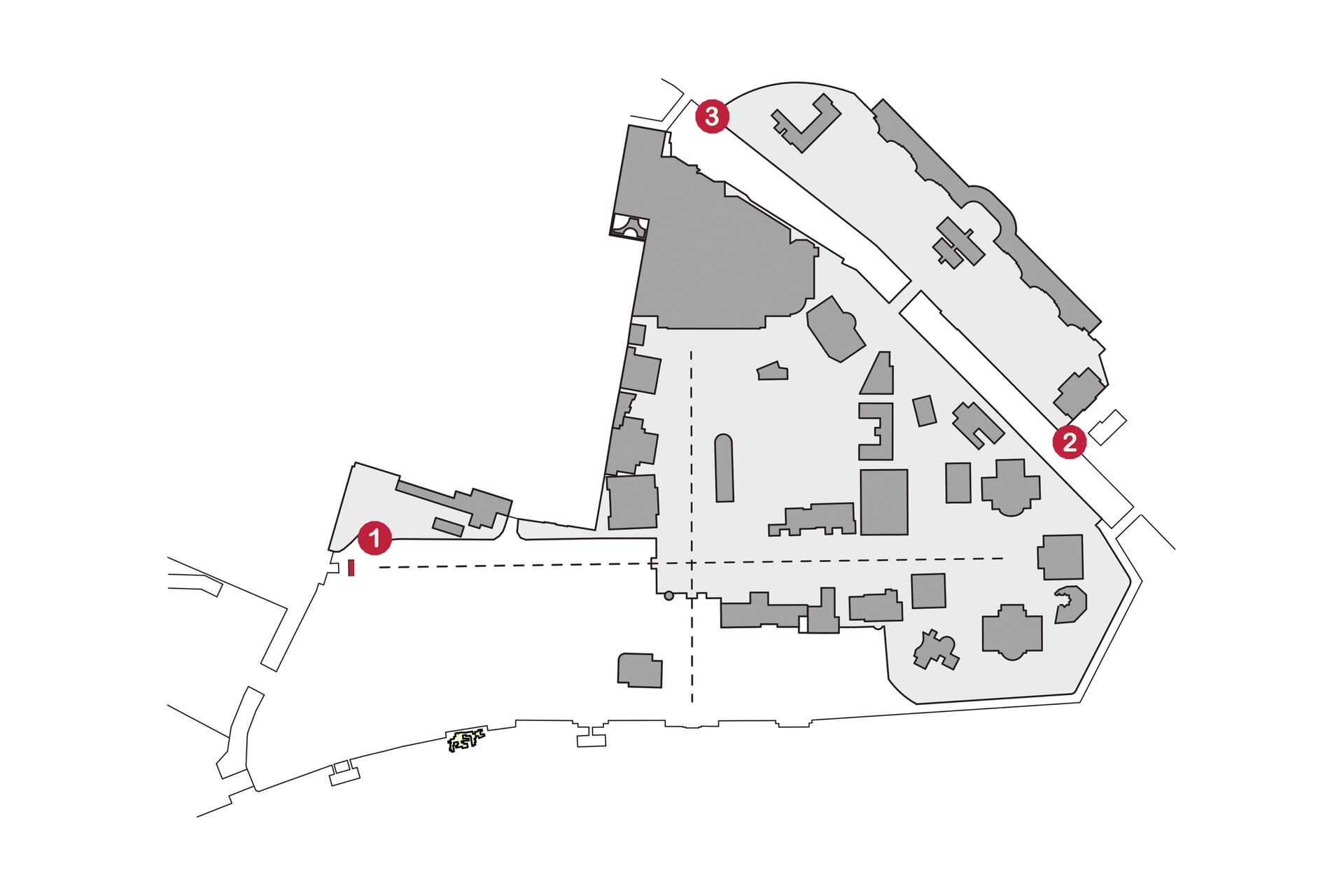
Our most visible intervention was a large banner hung to the Lando Arch of Sant'Antonio di Castello. It was no coincidence that the arch is the last surviving remnant of the churches demolished for the public gardens. The banner, requesting that the Giardini be returned to the people, was strategically placed in the public area of the park, in front of the Biennale's entry gate on the other side of the avenue that ends with the British Pavilion.
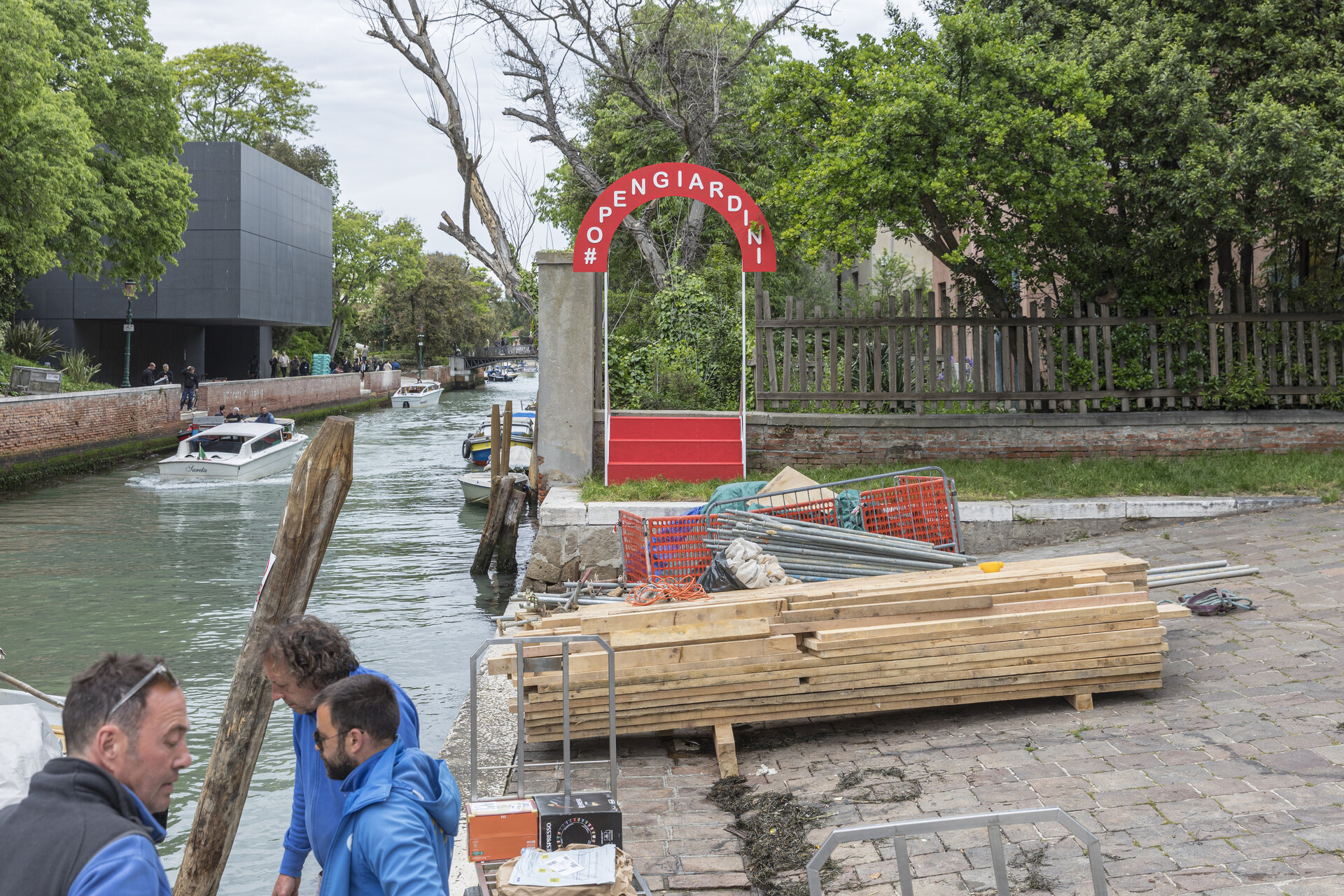
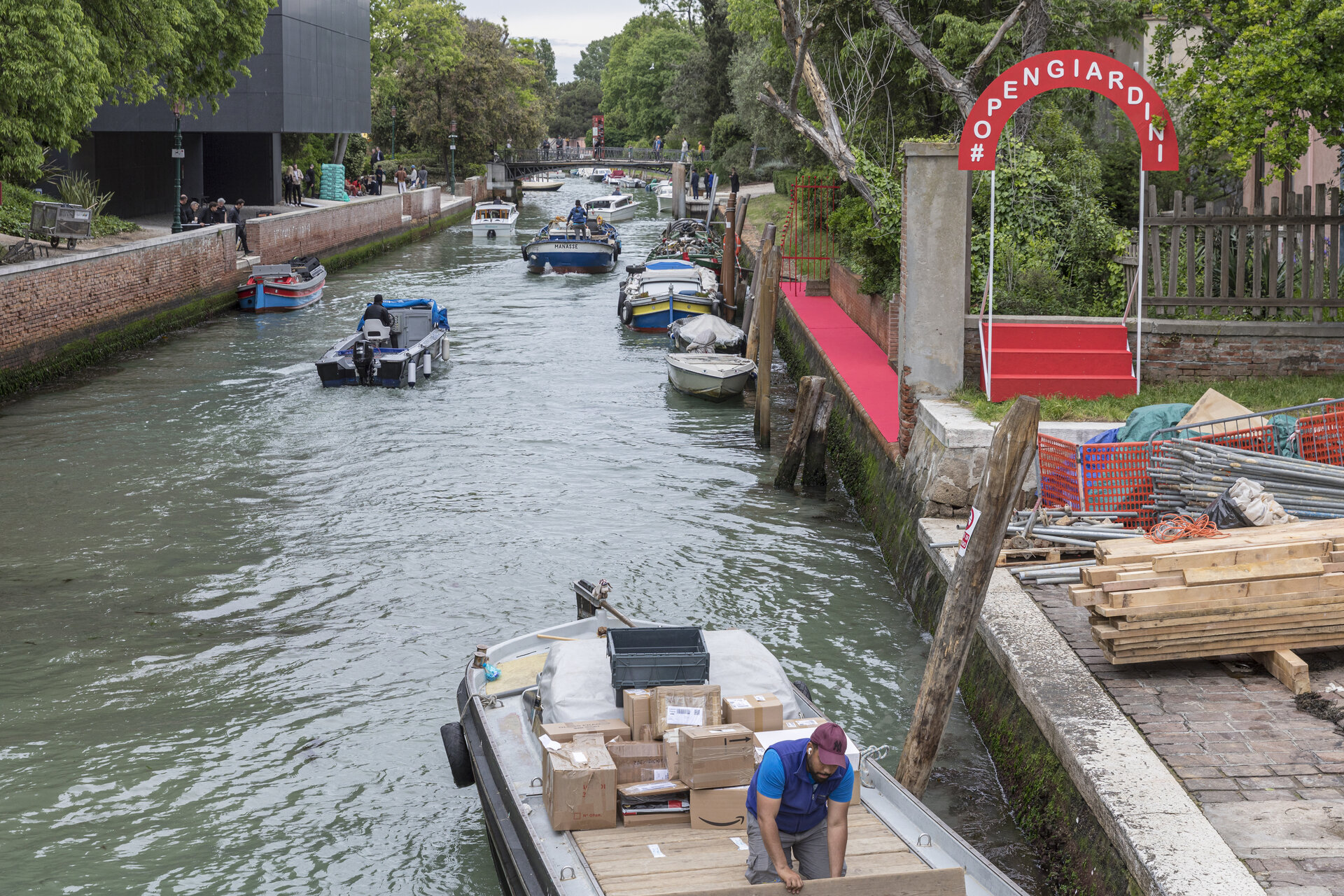
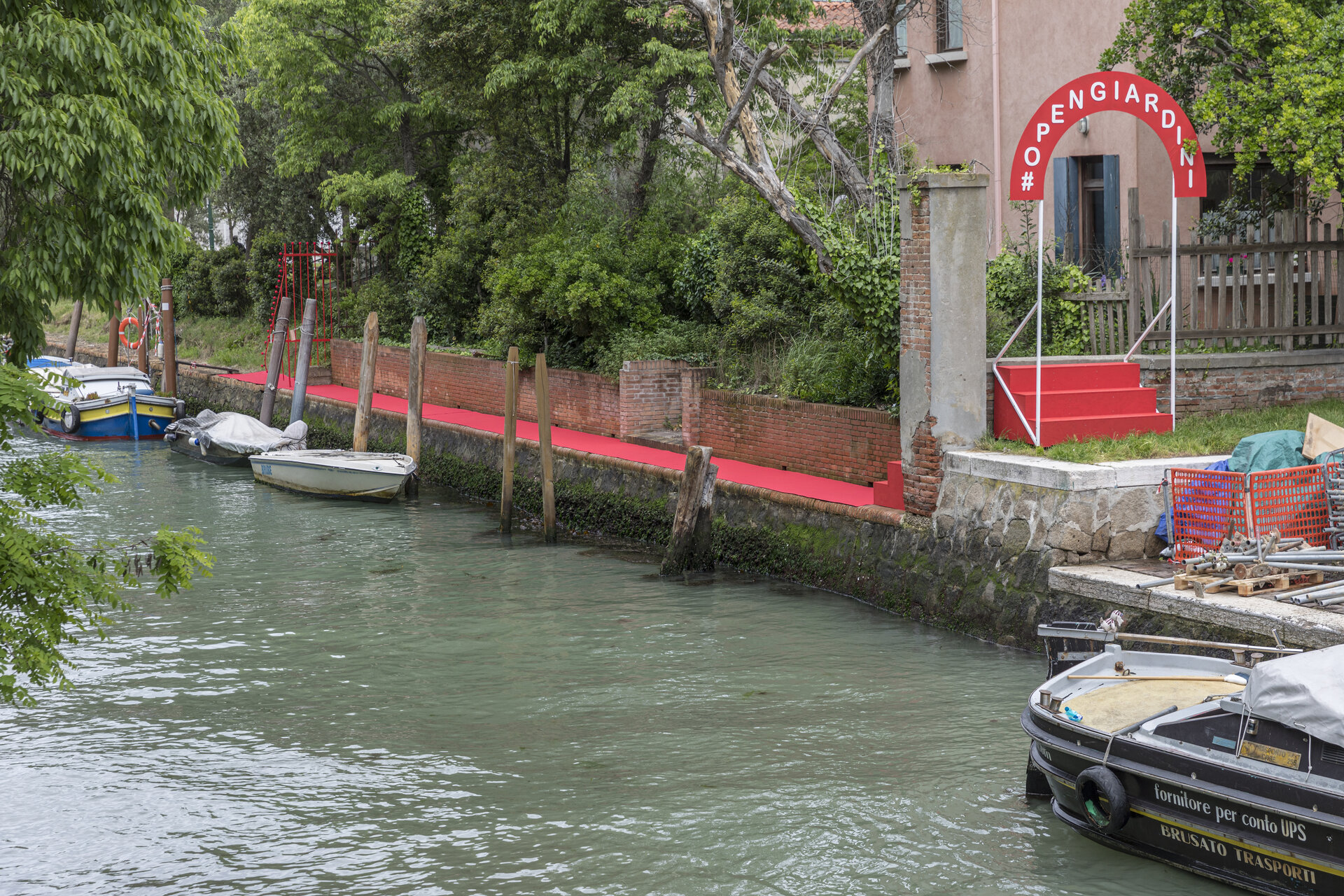
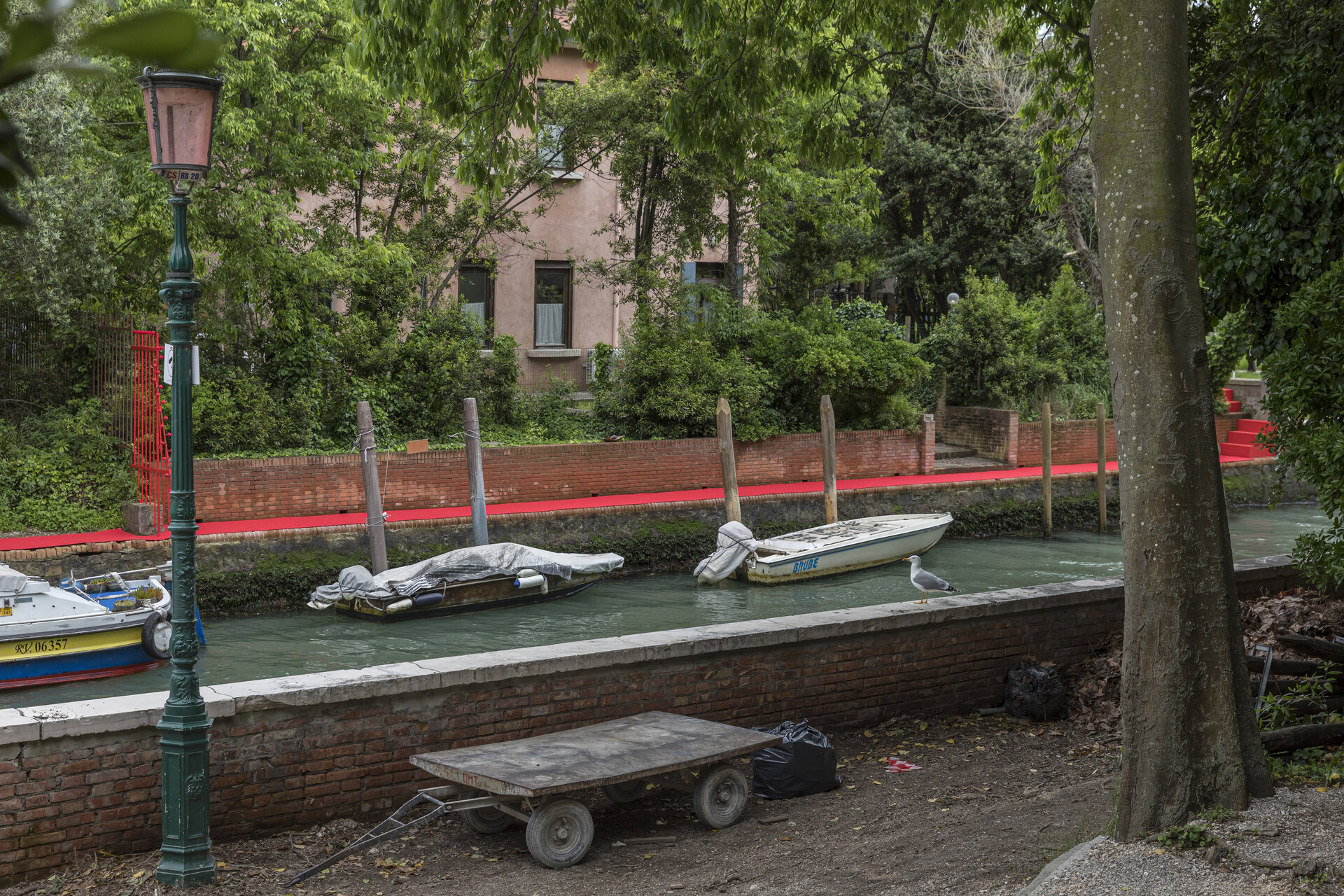
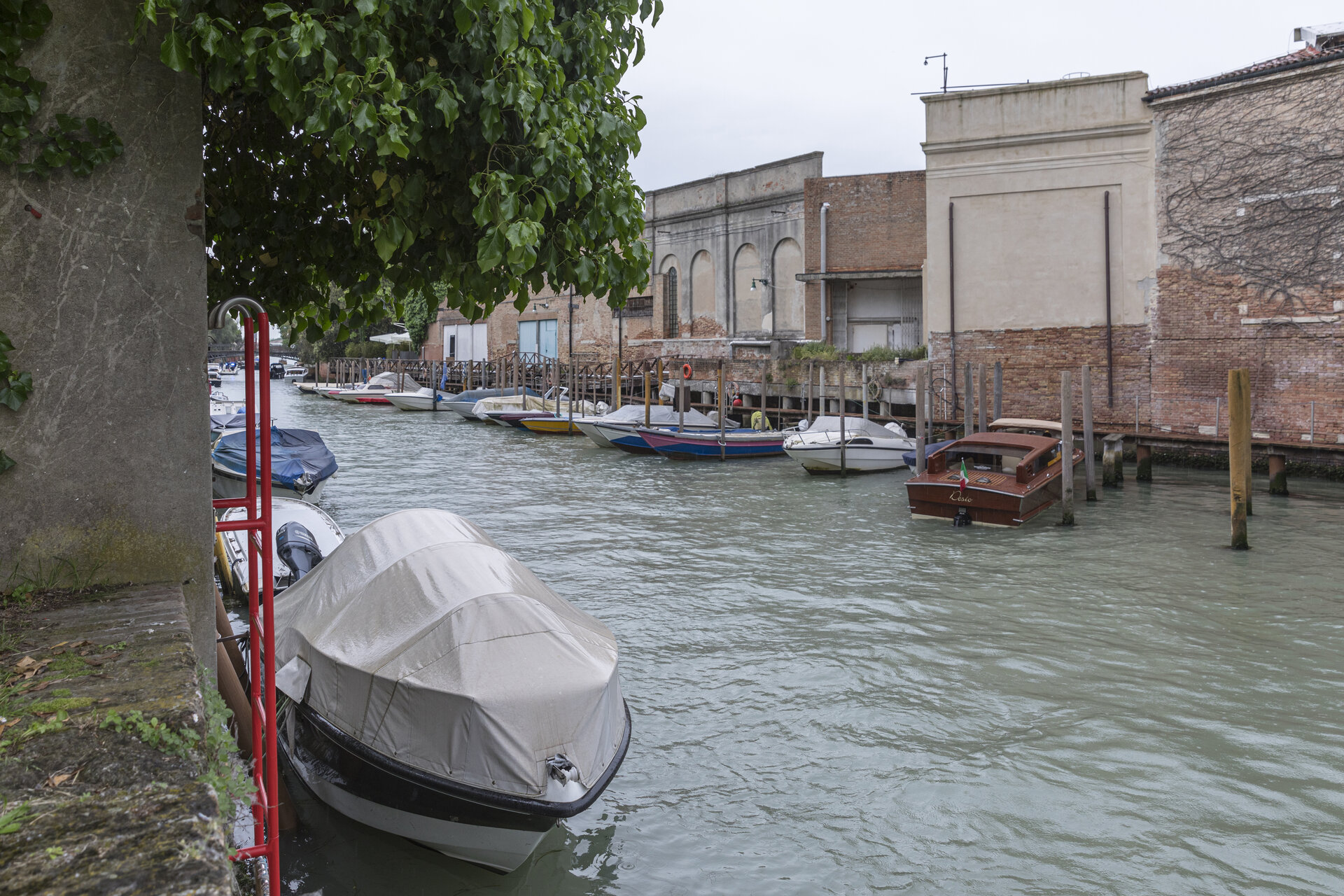
The recent proliferation of the Biennale’s hostile border devices has made it harder for people to “jump the fence” and sneak into the Giardini without tickets or invitations: an opposition tactic practiced by the locals since the first Biennales. However, boats docked on the Giardini canal, far within the Biennale’s confines, show that its border is not impenetrable. The town randomly assigns these mooring places to people who must jump the Biennale's border to get to their vehicles.
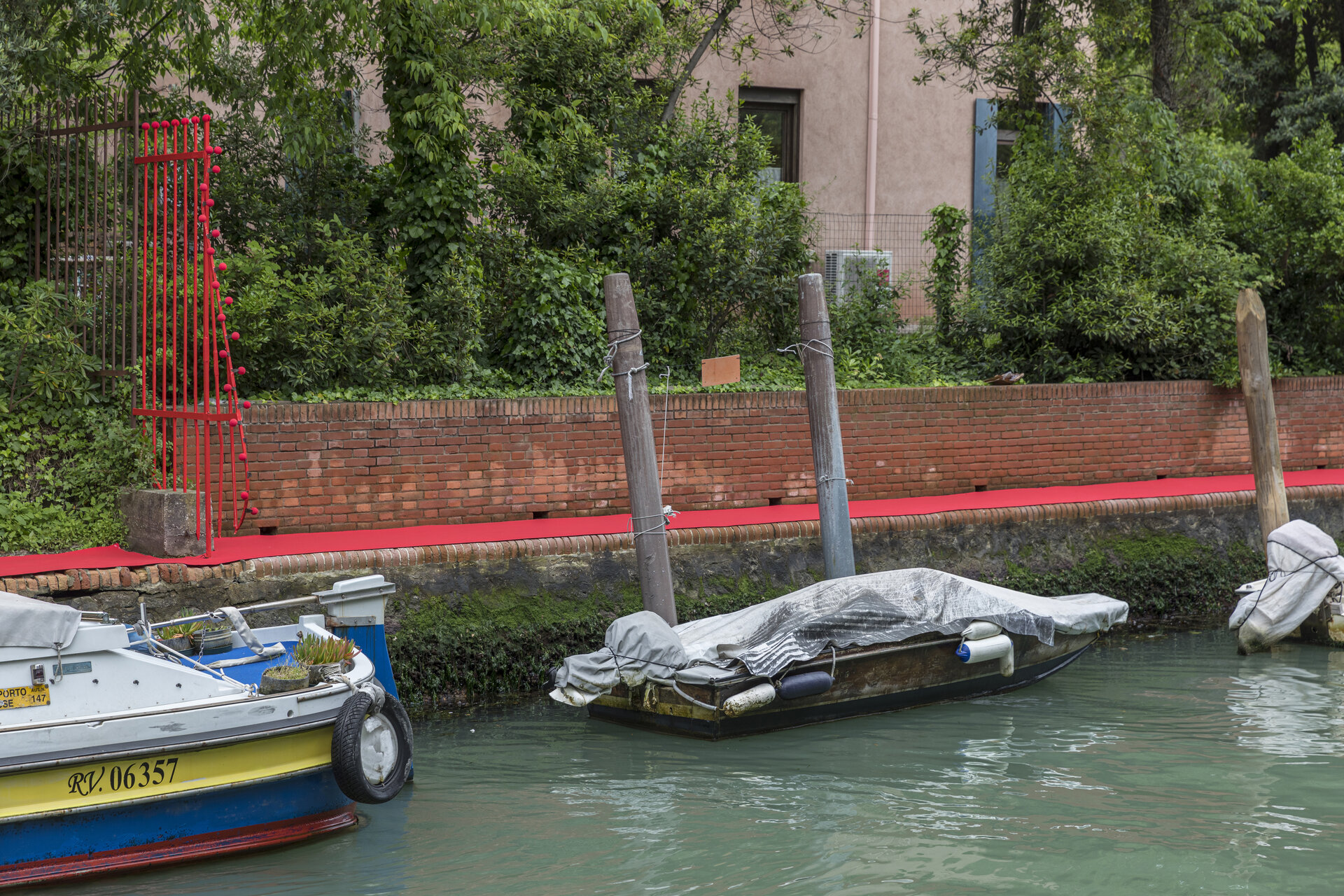
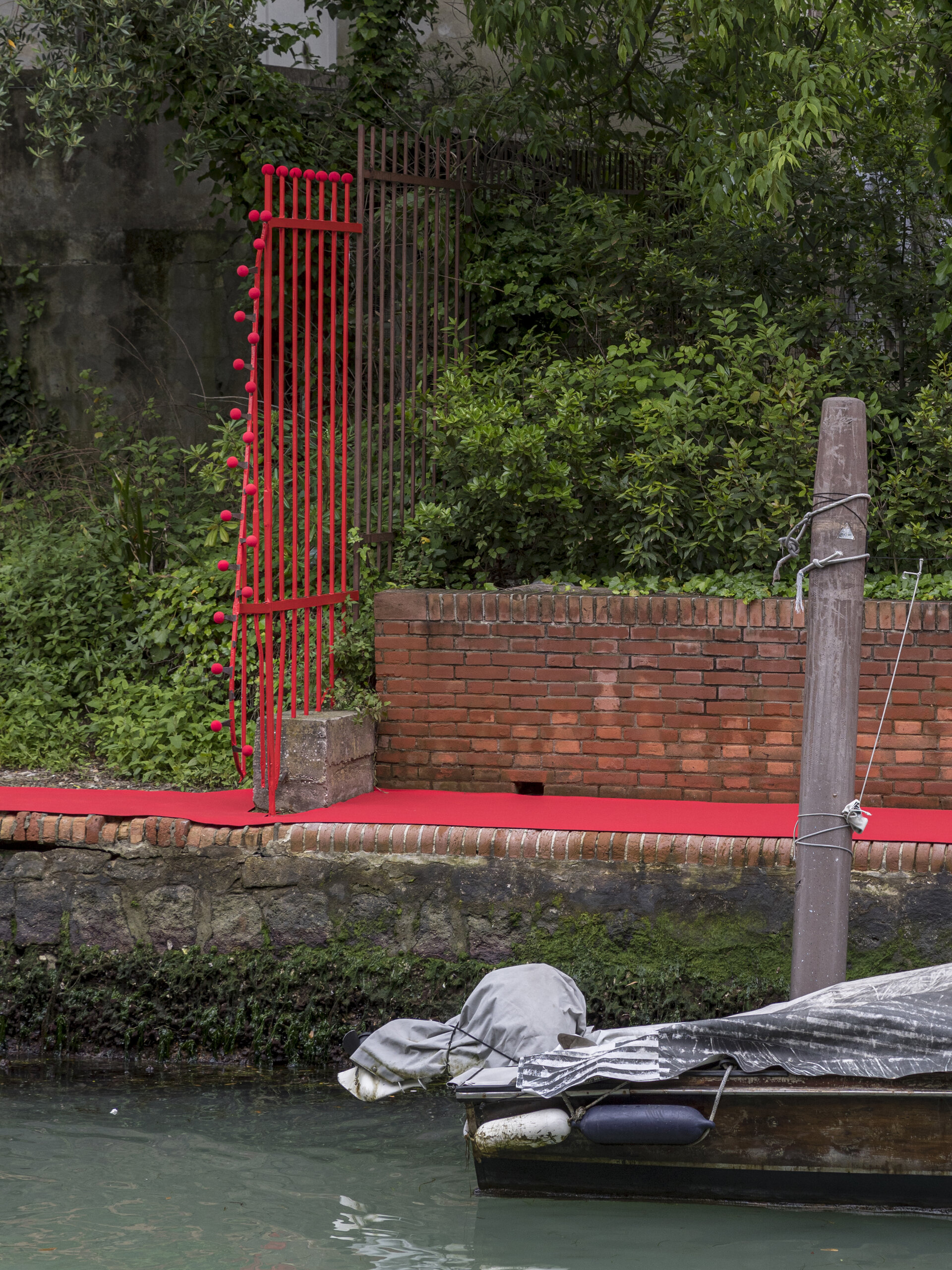
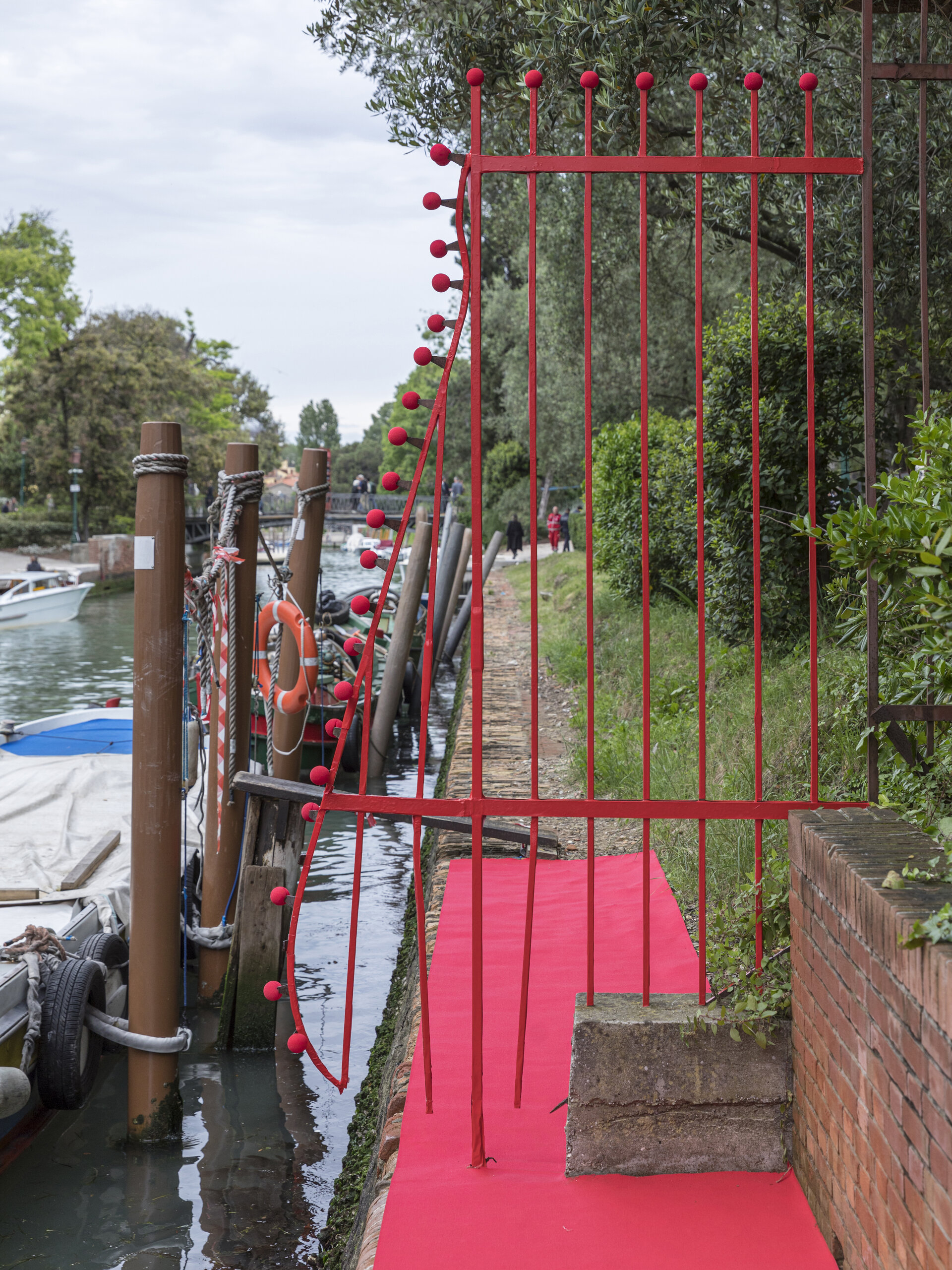
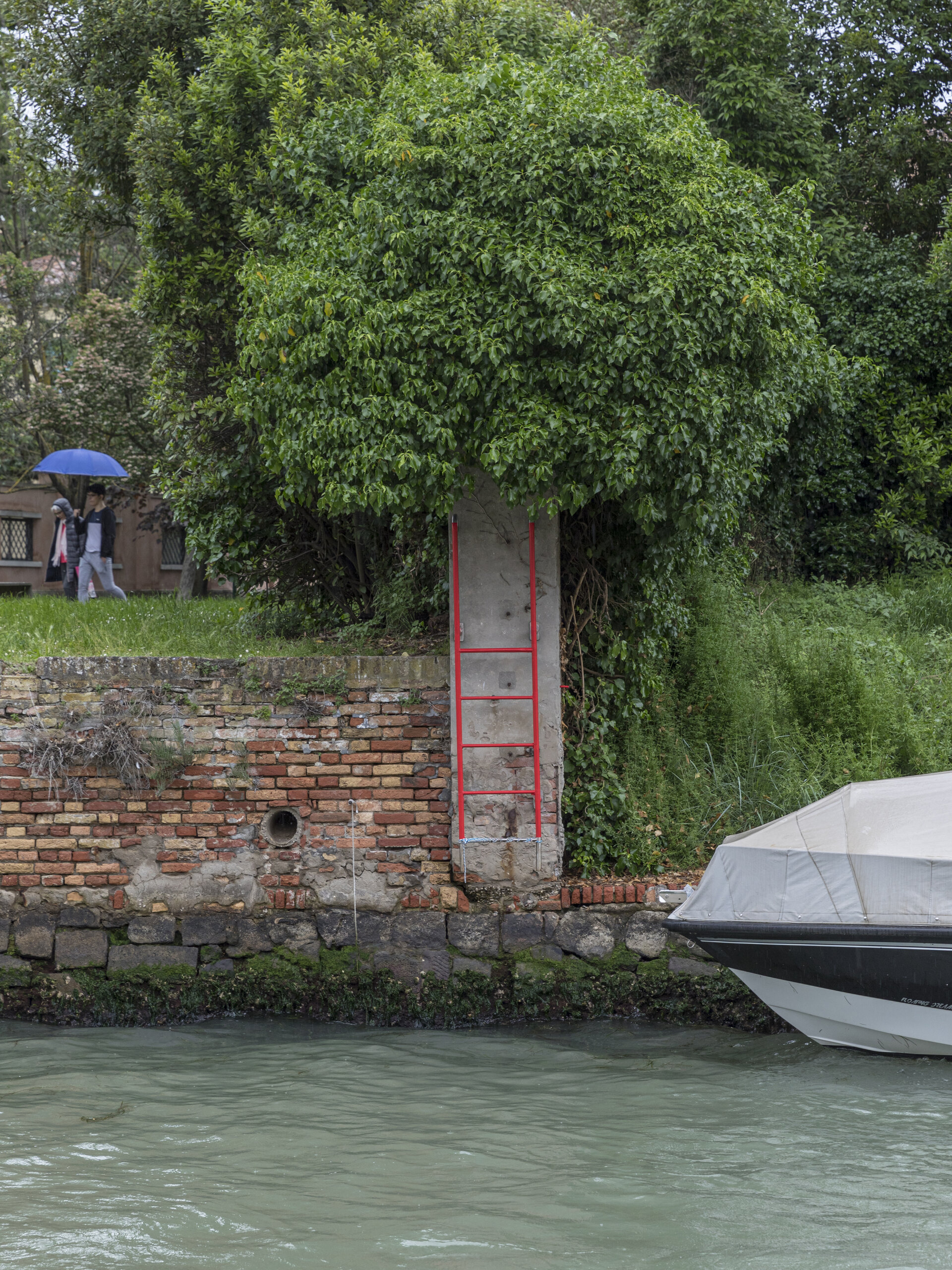
These conflicting interests have generated two territorial exceptions where the canal interrupts the Giardini fence: two “weak points” in the Biennale's fortified perimeter where boat owners have created their own entries to the walled enclave. These illegal entries are uncomfortable and risky due to jumping over towering barriers, descending ladders over water, and escaping medieval-grade human deterrents like spiked fences and walls with shattered glass. It's not the most dignified way to get to work every day.
Because the Biennale seems unwilling to find solutions to the boat owners' bizarre situation, we tried to make their entry routines easier and more respectable. We also wanted to make a clear statement in order to start a conversation between the City, Biennale, and National Pavilions, who are accountable for the stall issue.
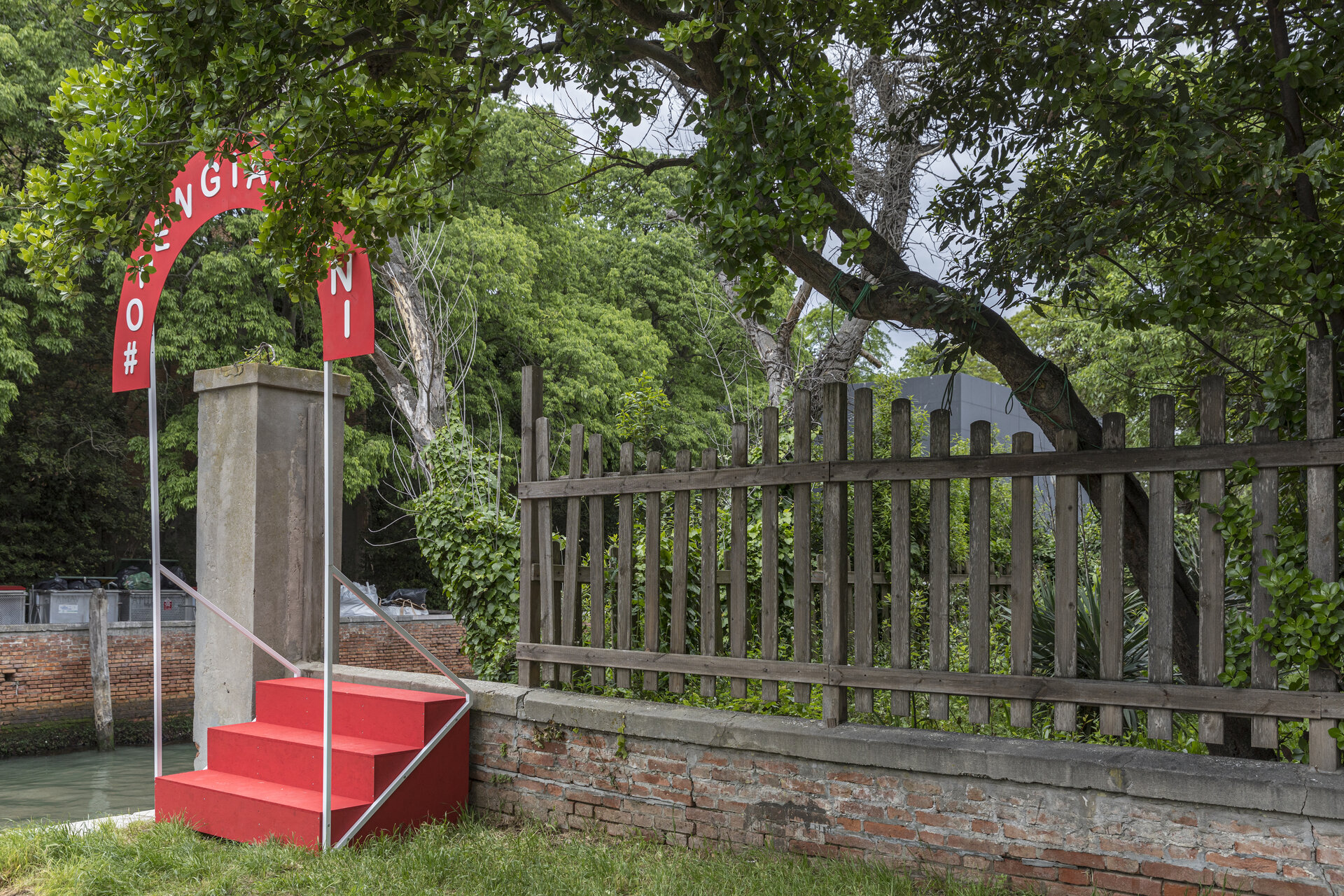
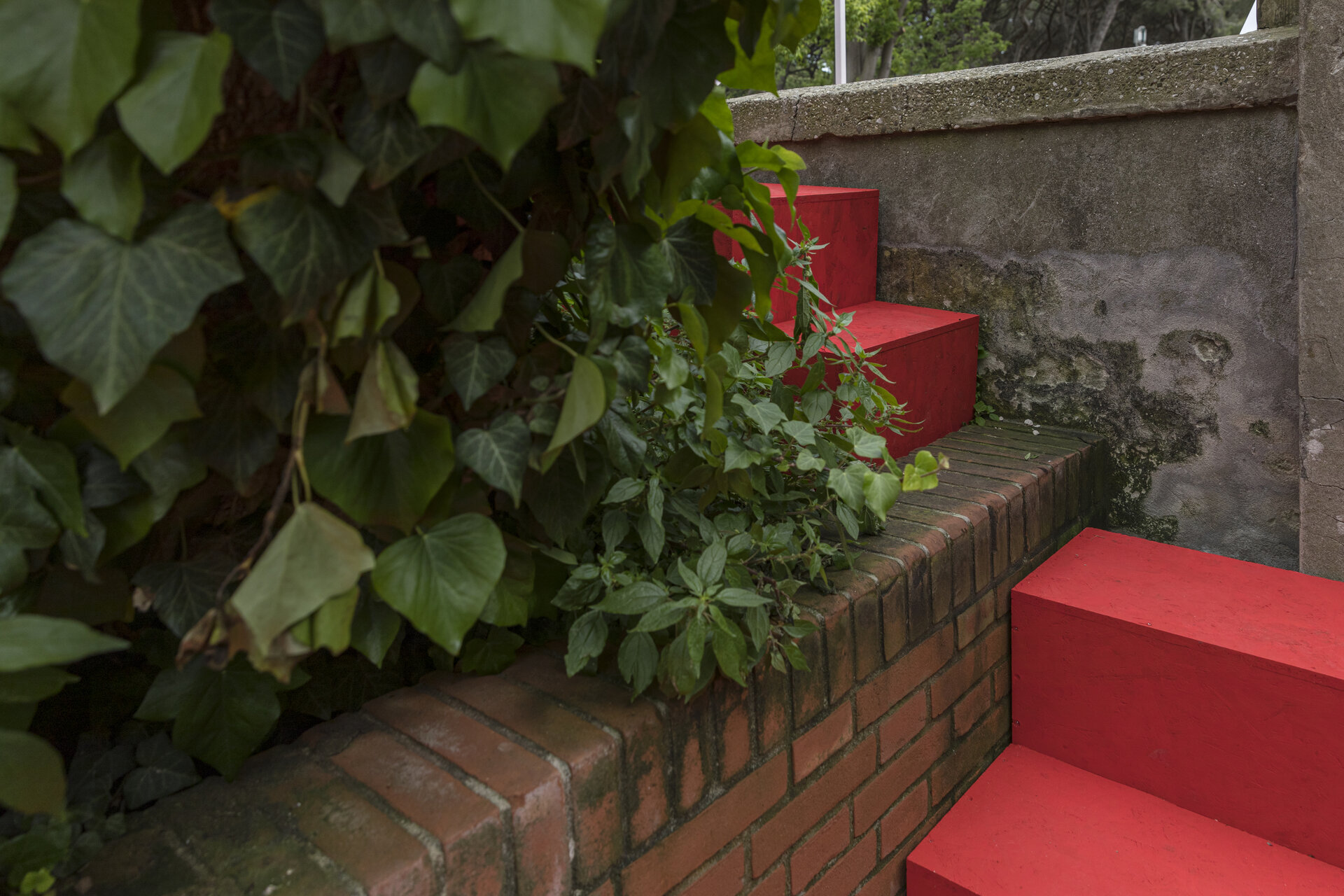
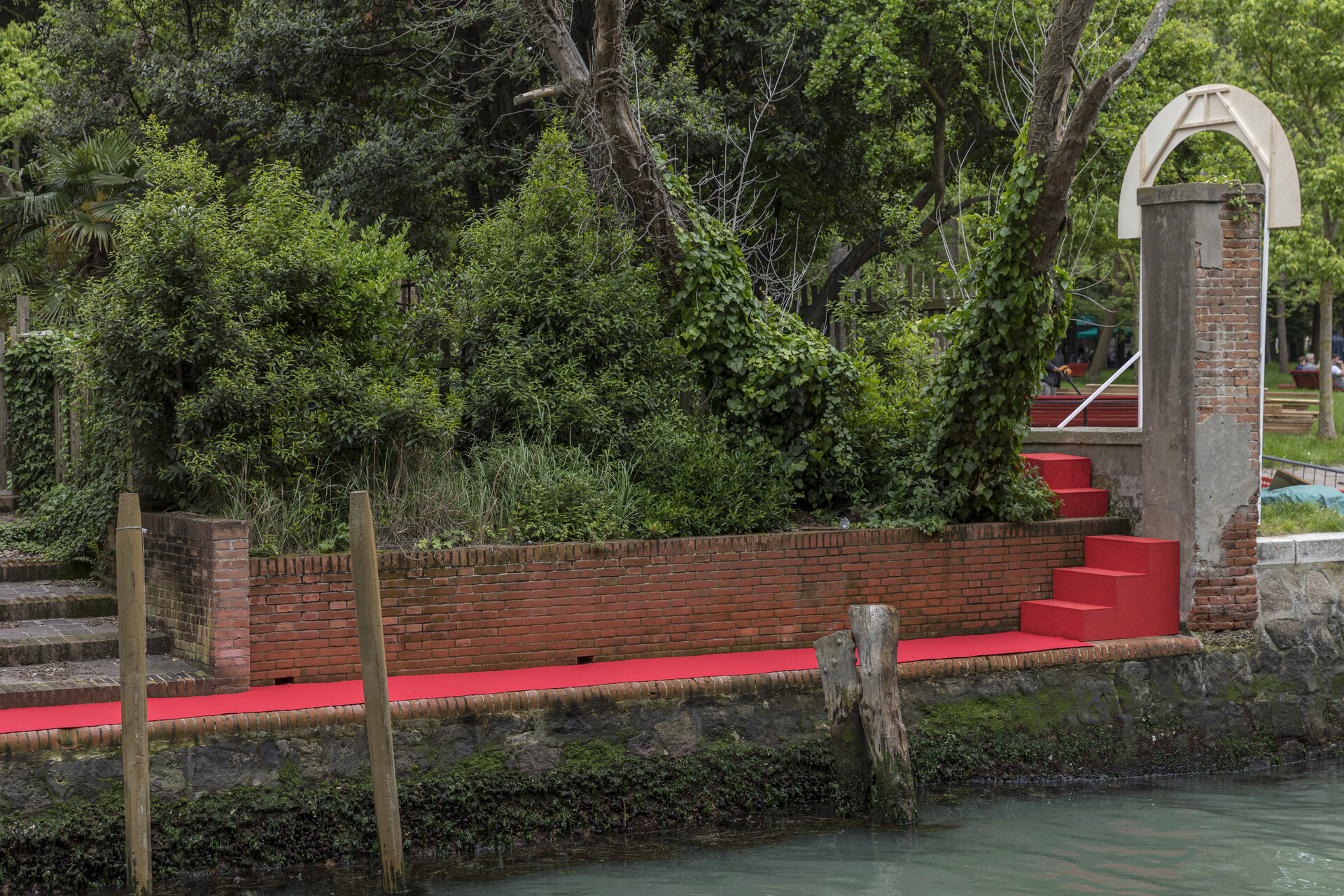
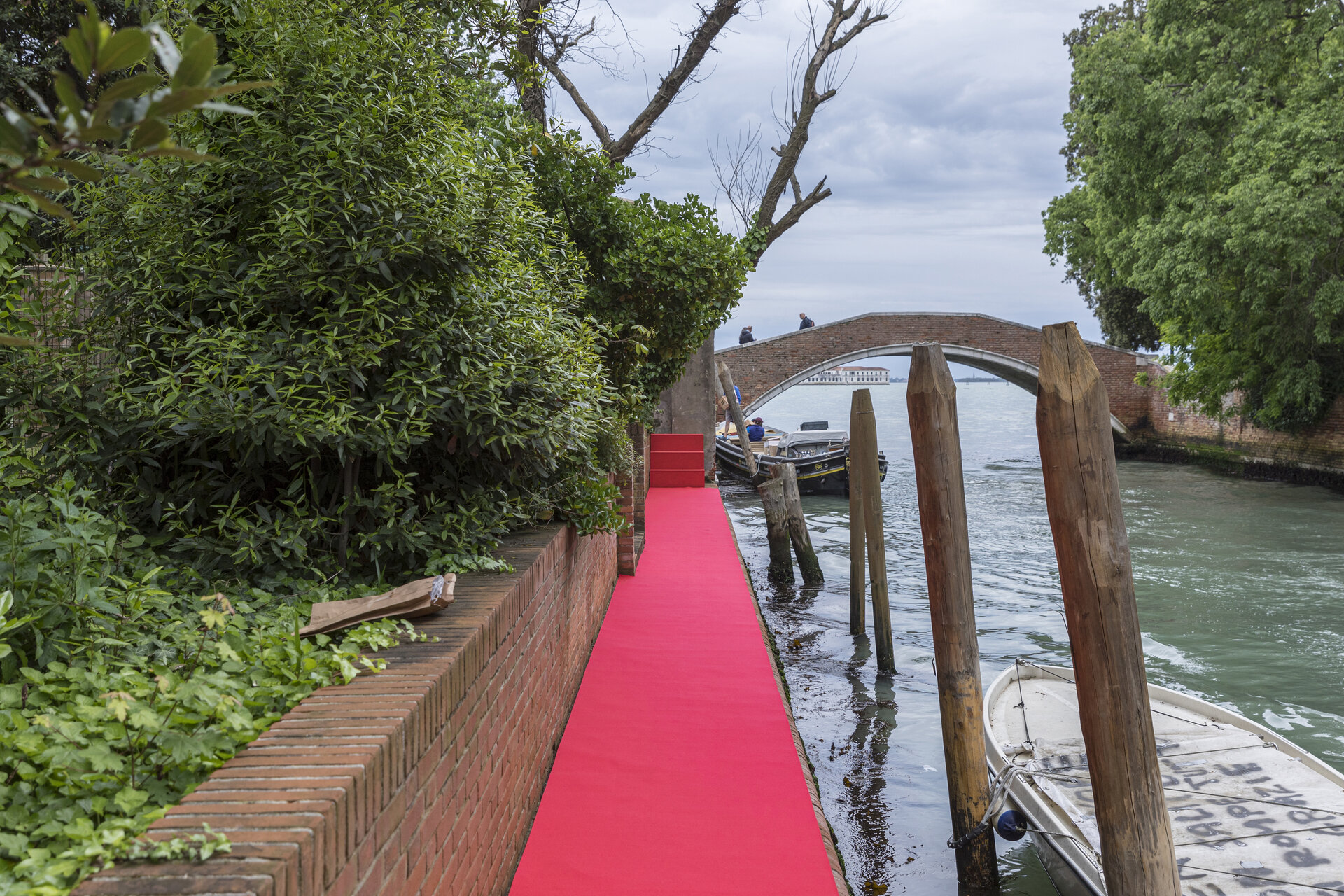
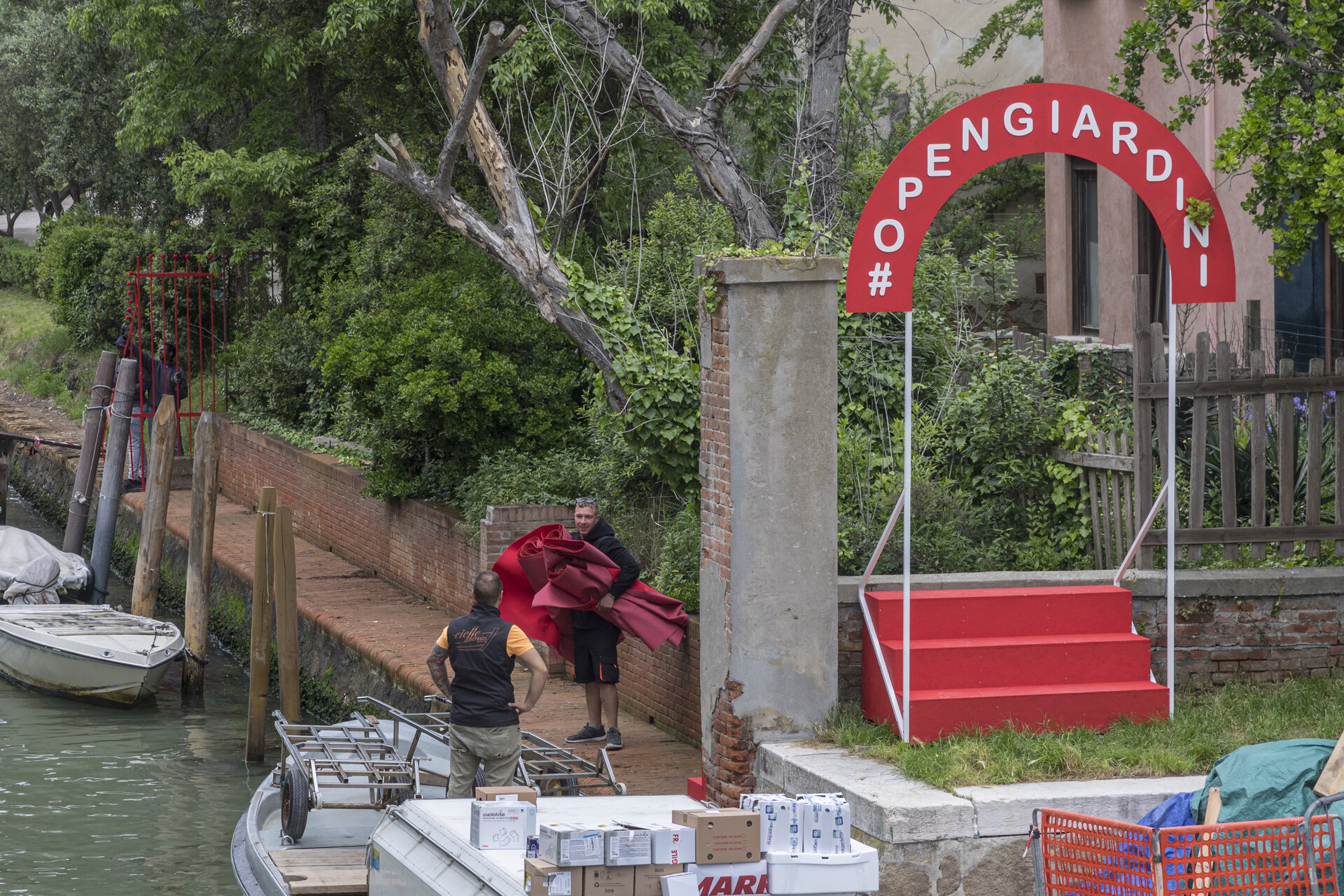
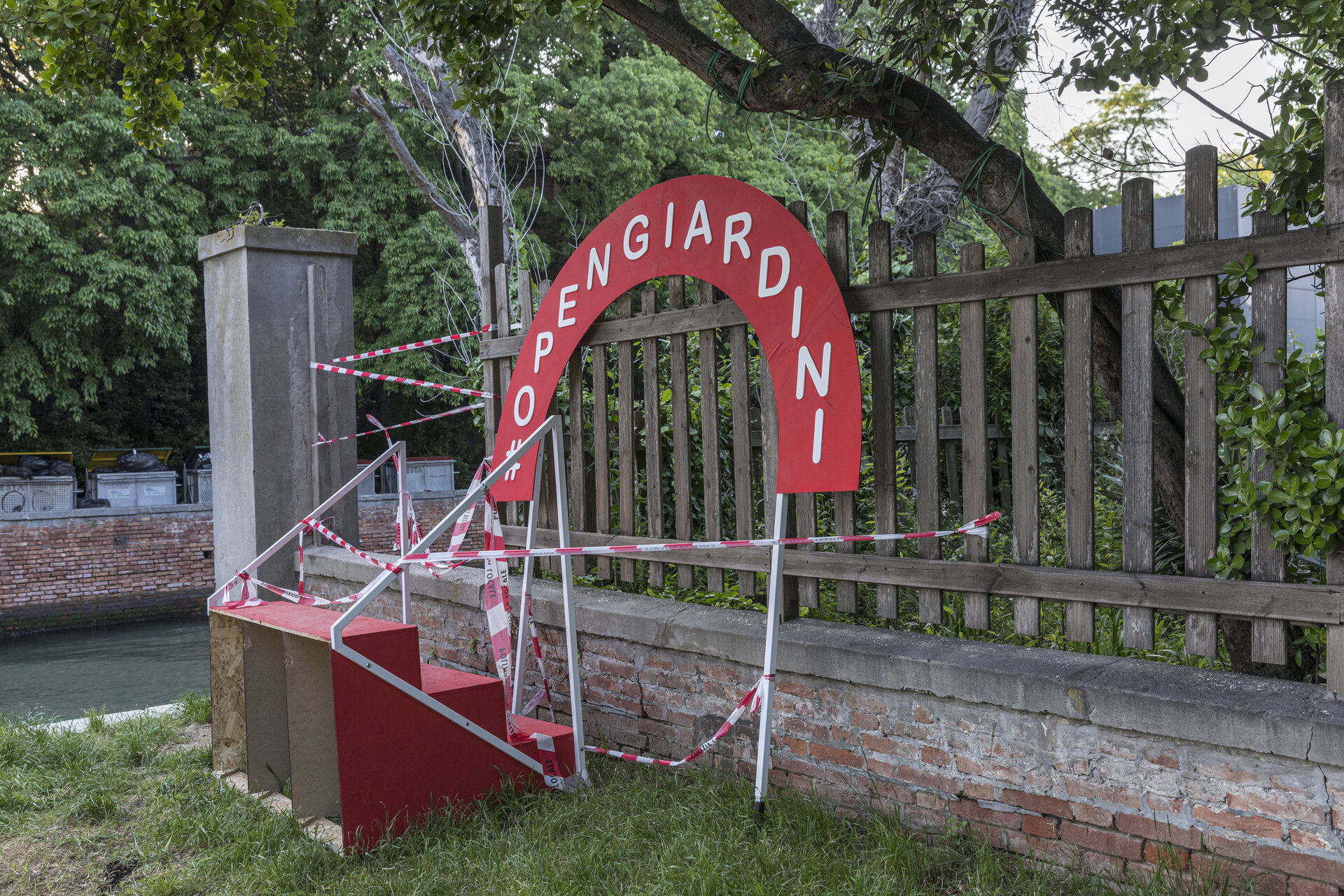
A ceremonial doorway-like arch with the sign #OPENGIARDINI topped the riverside entrance at the canal's southern end, behind the Greek pavilion. Beyond the portal, ladders to mediate the height differences led to a long red carpet that accompanied the walk to a rusty spiked fence. A comfortable grip was added where the boatmen hung to swing across the barrier, red tape covered the rust, and puffy clown noses were attached to the spikes. The red carpet extended across the fence to the first docking stations.
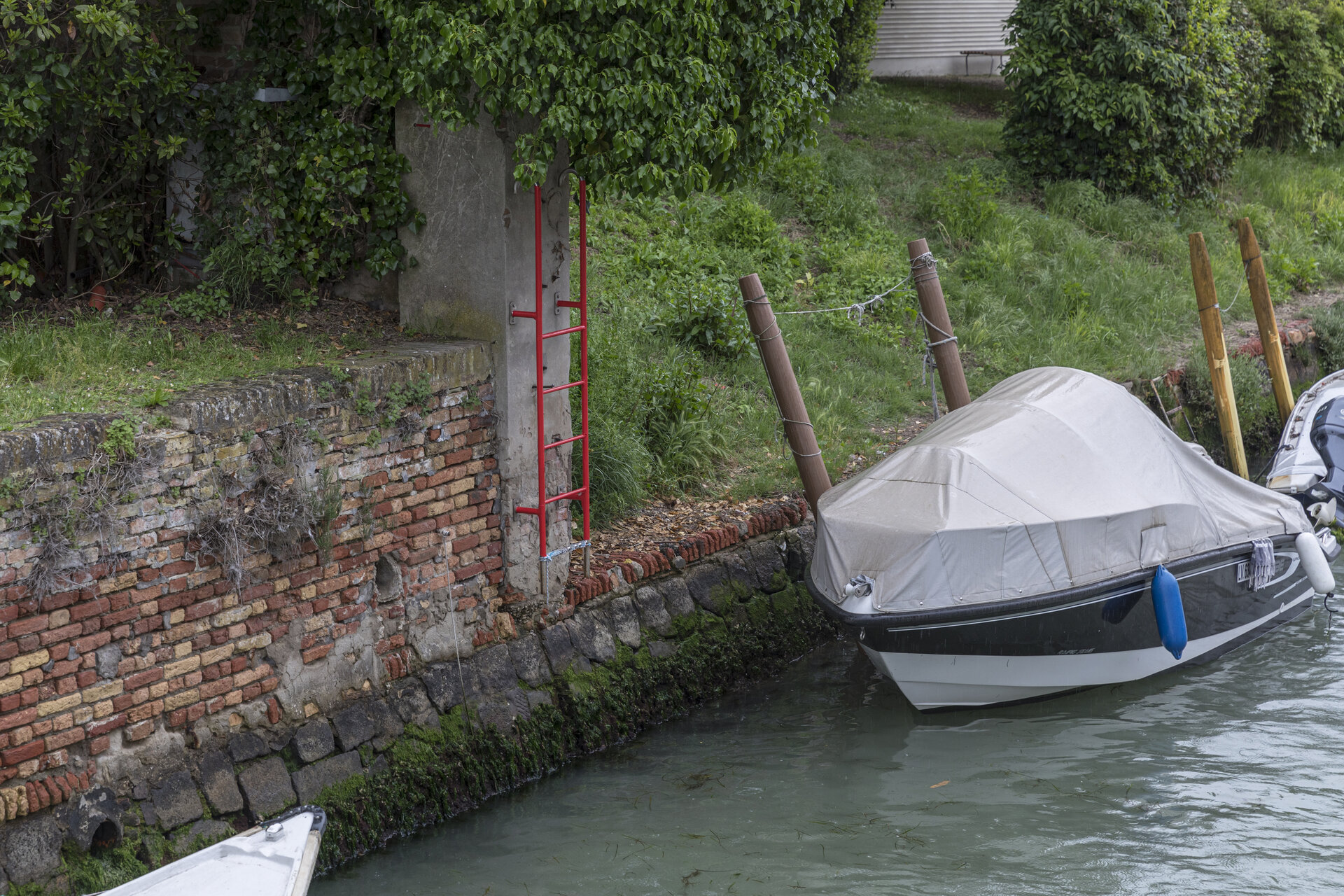
At the canal's opposite end, an improvised steel ladder placed in the Giardini’s brick wall on the back of the Austrian pavilion was improved with better grips.
Built up during the exhibition preview, most of the installations were removed by Biennale staff the following days after Giardini tickets went on sale. We expected the Biennale's response, but removing our unauthorized works only made the boatmen’s everyday struggles just as difficult as before.
Architecture and Experiments

- The Yellow Line
- #OPENGIARDINI
- Optical Frames
- Limanu Summer School 2024 - Multicultural Heritage on the Edge
- Voice Your Place 2.0
- WOODJOIN Wood connecting - how it’s designed, how it’s made and how it works
- Reflected spaces
- Signs of Life
- Voices of the past. Muntari - the village lost in the mountains
- School of Planetary Gardeners TERRRA Brezoi


