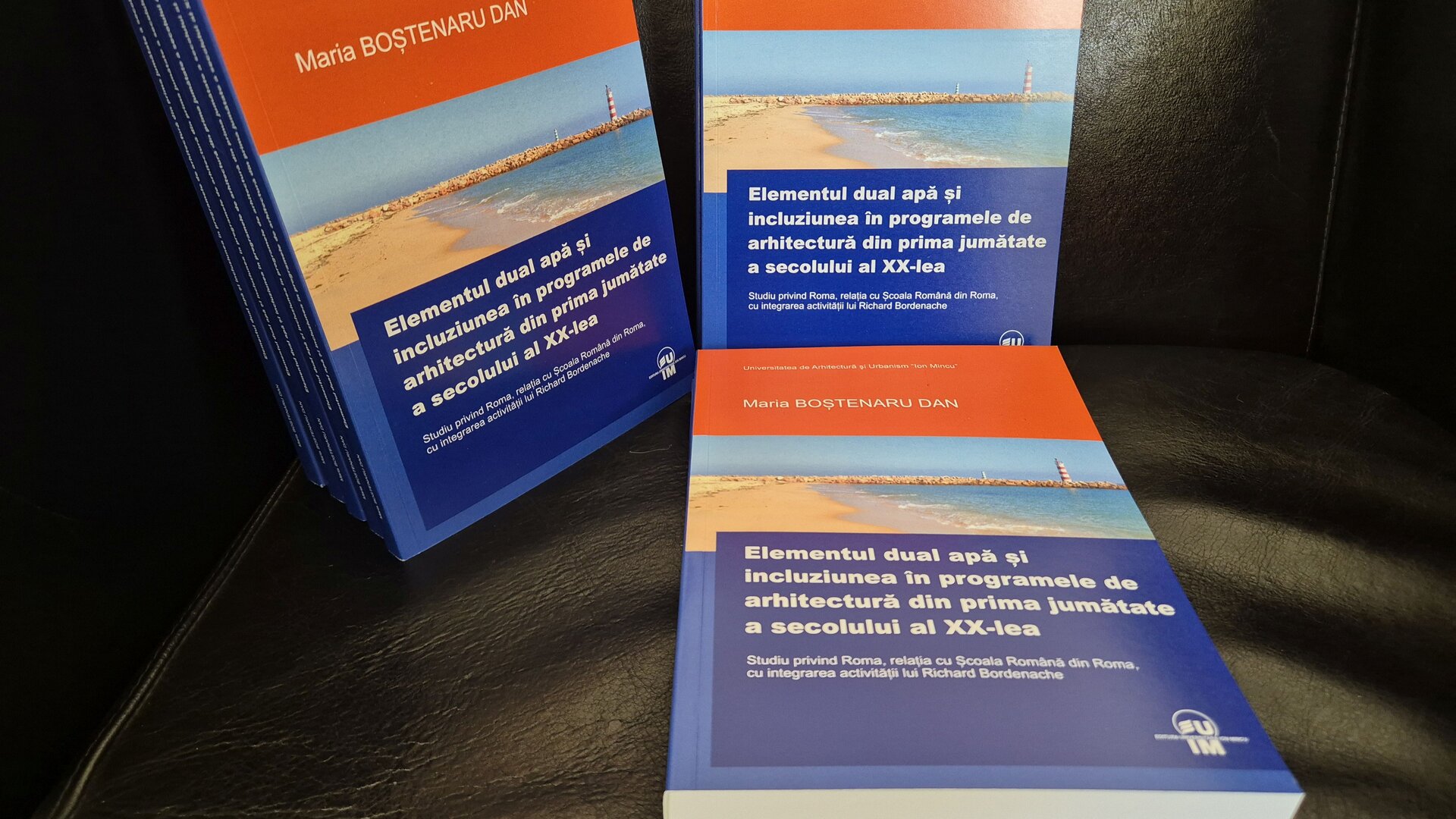
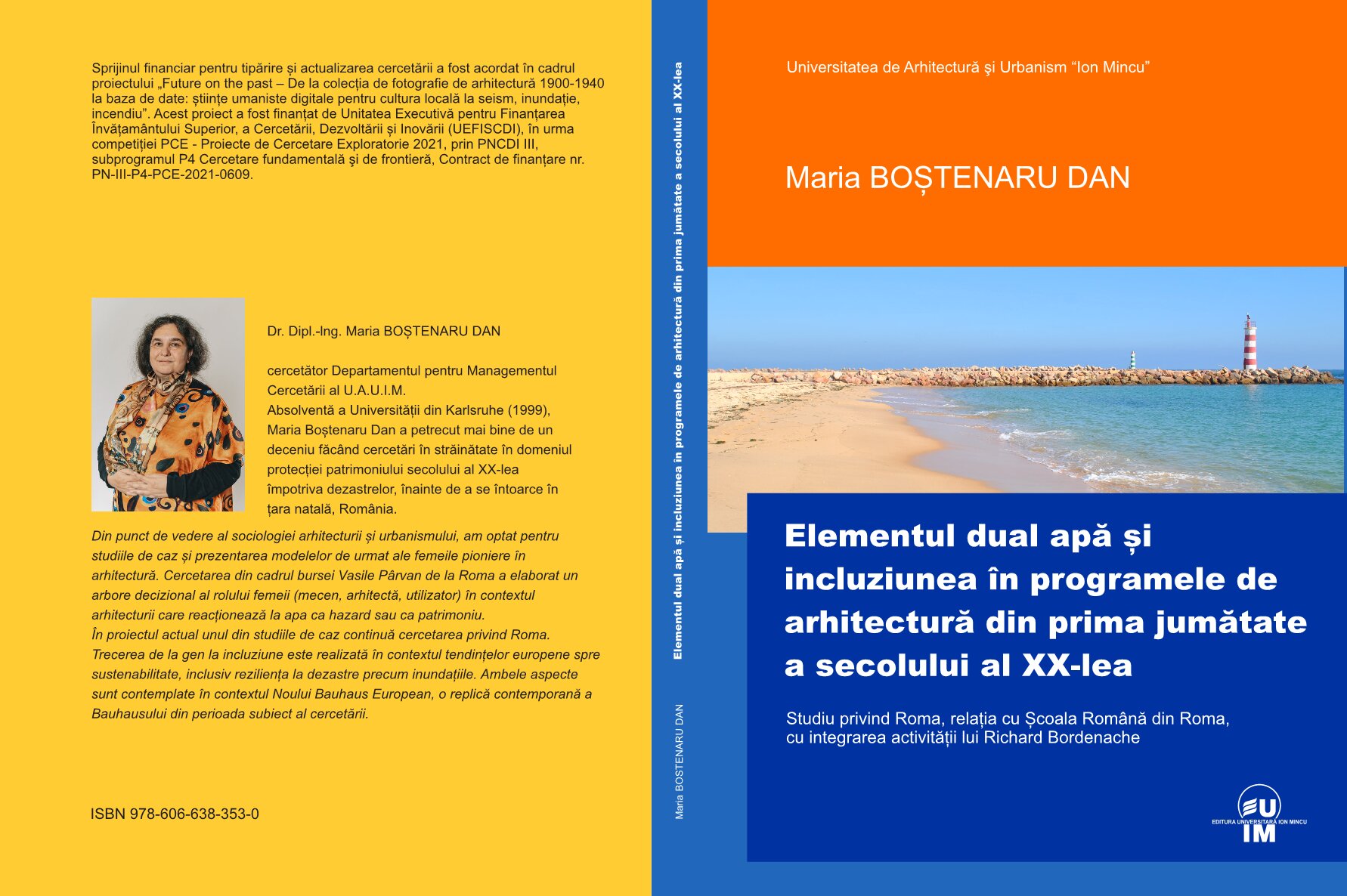
The dual element water and the inclusion in architectural programs in the first half of the 20th century
Authors’ Comment
From the point of view of the sociology of architecture and urbanism, the subject of women pioneers in architecture can be approached in two ways: using quantitative methods and statistics or using qualitative methods and case studies. We opted for case studies and presenting role models for the profession. We preferred this approach to women in the profession, looking at them as both subjects and objects of research.
Research from the Vasile Pârvan Fellowship in Rome, included in this book, developed a decision tree of the role of women (patron, architect, user) in the context of architecture responding to water as hazard or water as heritage.
In the current project, in which one of the case studies continues research on Rome, the shift from gender to inclusion is also considered in the context of European trends towards sustainability, with the project also addressing resilience to disasters, including floods. Both aspects are contemplated in the context of the New European Bauhaus, an updated ideal replica of the original Bauhaus situated in the interwar period on which this research focuses.
The link between the two studies is realized by the work carried out in the context of European associations on contemporary women researchers, including in the field of architecture.
Architecture Books

- Inclusive Design. Empathy exercises in the design process
- Topohermeneutics and Architecture: Malpas, Norberg-Schulz, Auret
- At some point - Roundabout architecture
- Four Zero
- Last Year at Marienbad
- The dual element water and the inclusion in architectural programs in the first half of the 20th century
- Another Breach in the Wall. The City as a Common Good.
- Historical Industrial Architecture. Possibilities for Sustainable Recovery. The Case of Timișoara
- Dwelling Together 2. Recent Blocks of Flats by ADN BA


