- Nomination for the “Research through Architecture / Architecture Books” section
Topohermeneutics and Architecture: Malpas, Norberg-Schulz, Auret
Authors’ Comment
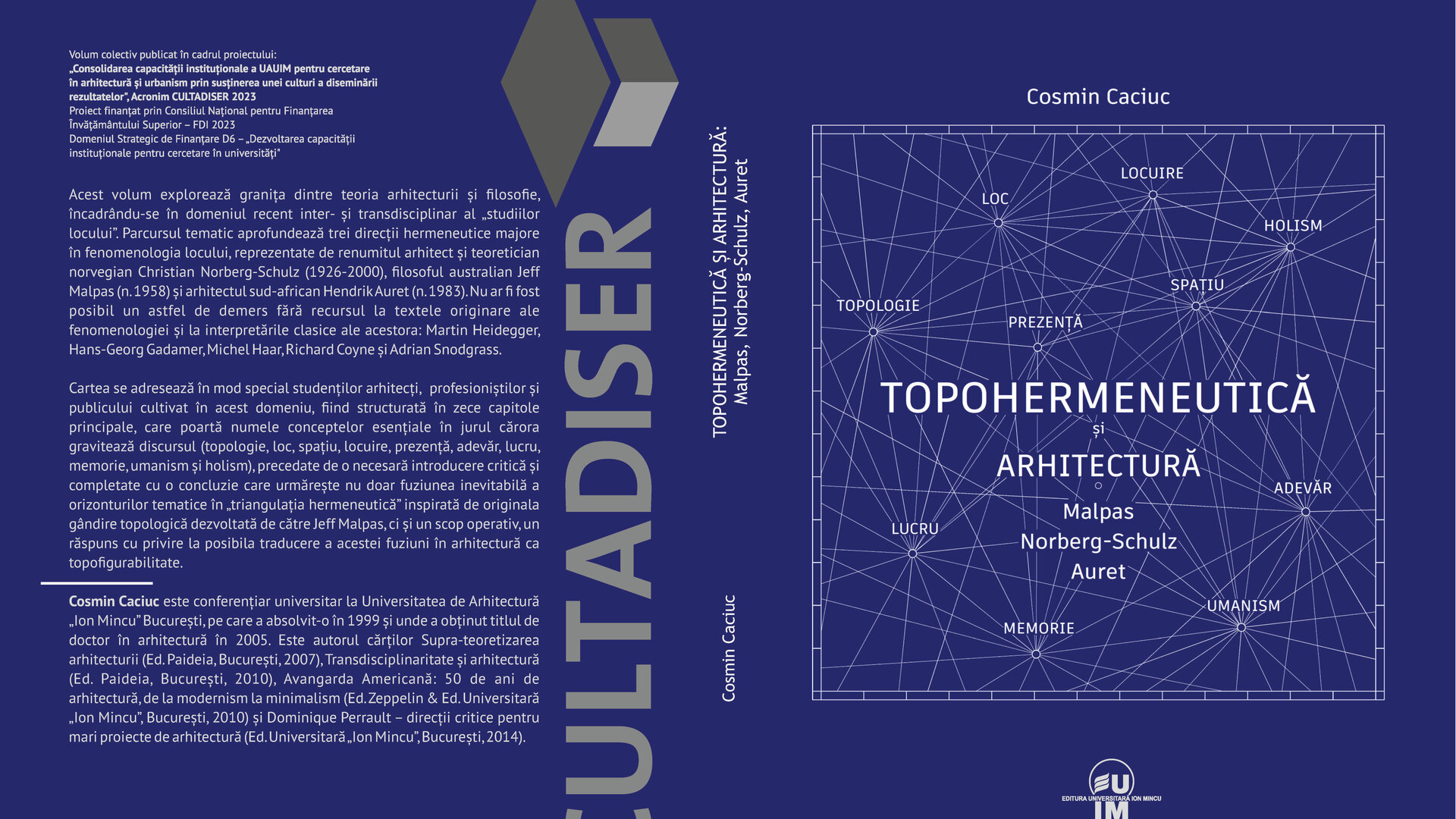
This volume explores the boundary between architectural theory and philosophy, falling within the recent inter- and transdisciplinary field of "place studies". The thematic course deepens three major hermeneutical directions in the phenomenology of place, represented by the renowned Norwegian architect and theorist Christian Norberg-Schulz (1926-2000), the Australian philosopher Jeff Malpas (b. 1958) and the South African architect Hendrik Auret (b. 1983). Such an approach would not have been possible without recourse to the original texts of phenomenology and their classic interpretations: Martin Heidegger, Hans-Georg Gadamer, Michel Haar, Richard Coyne and Adrian Snodgrass.
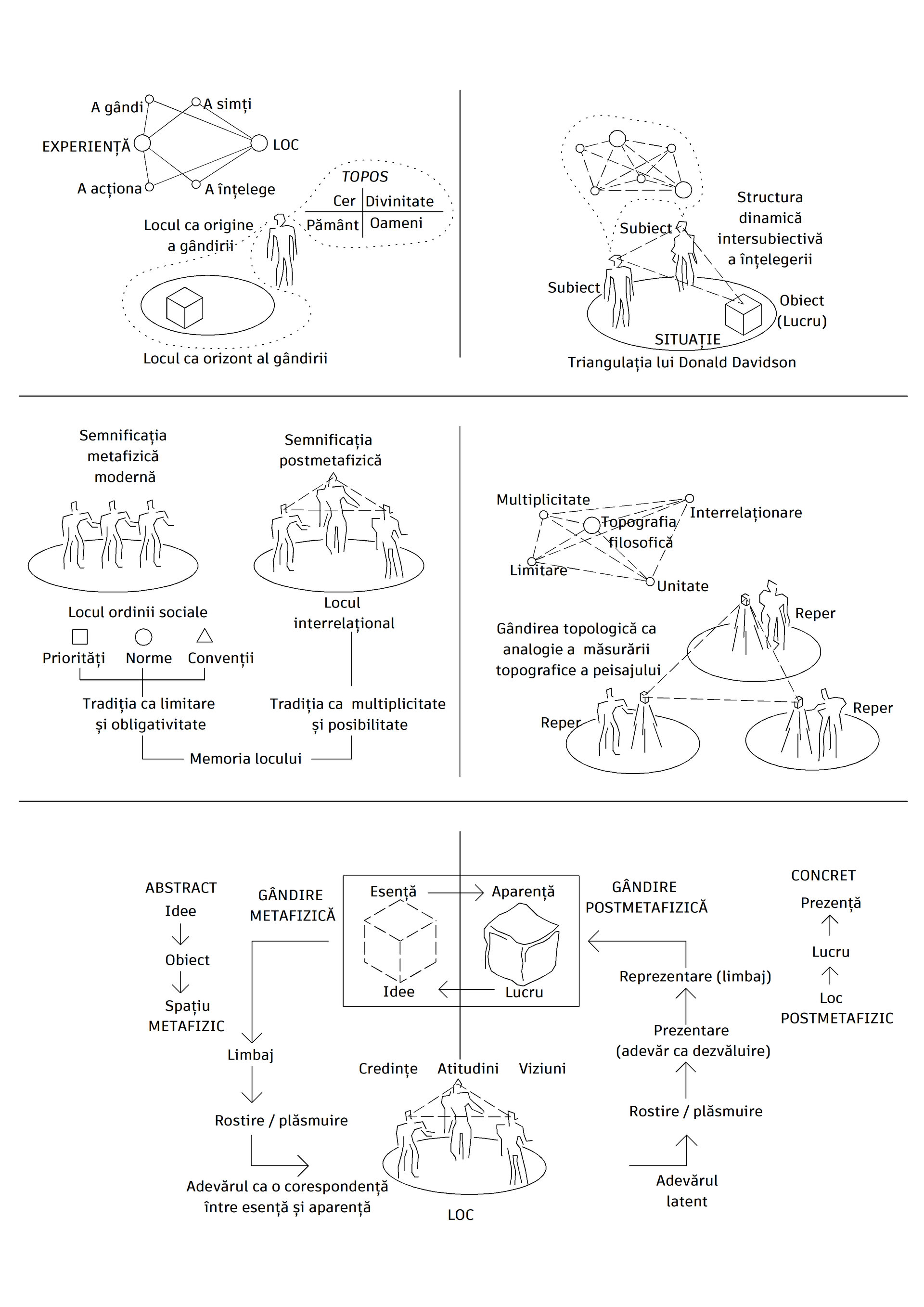
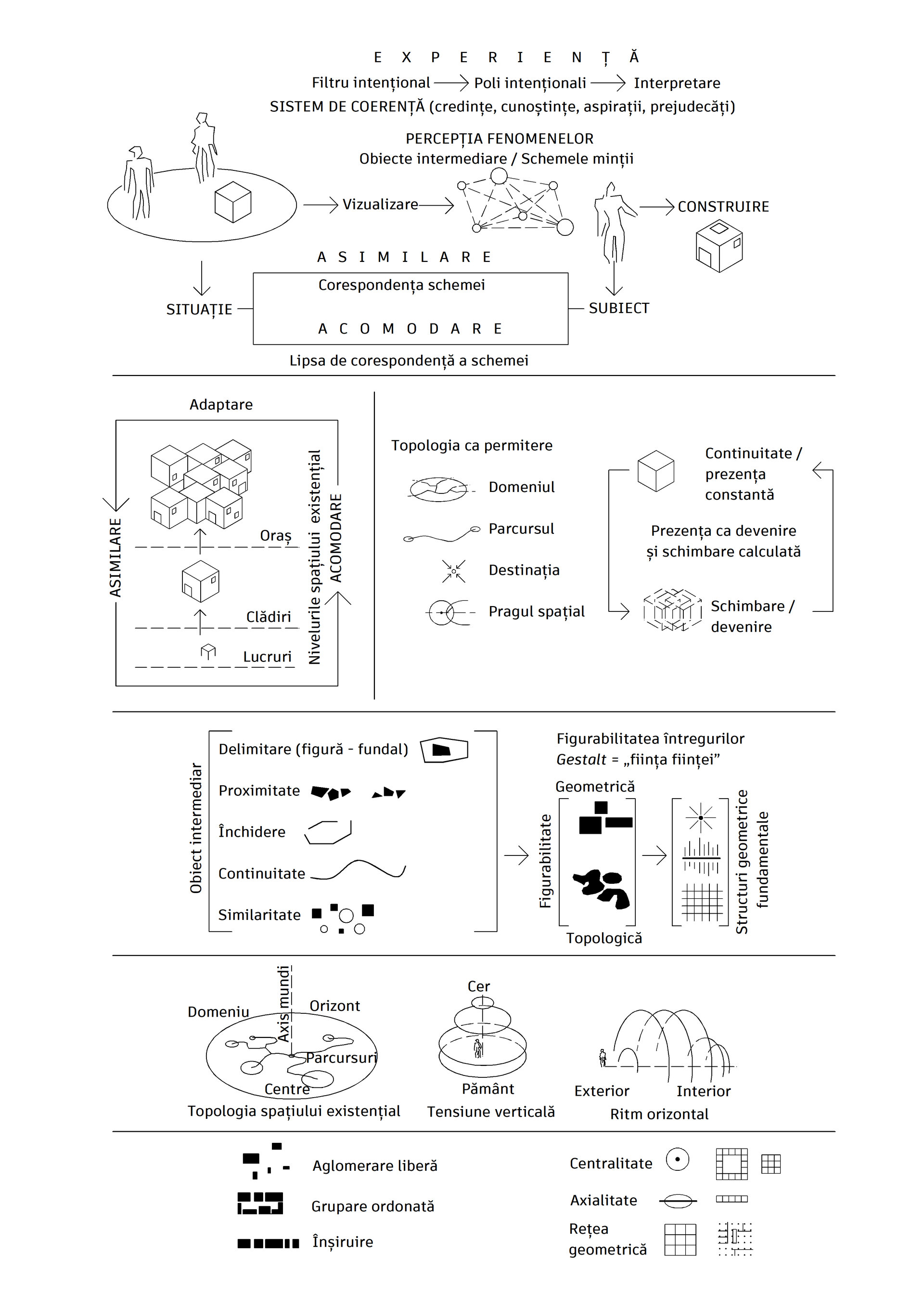
This book is especially addressed to architectural students, professionals and the public cultivated in this field, being structured in ten main chapters, which bear the names of the essential concepts around which the discourse revolves (topology, place, space, dwelling, presence, truth, thing, memory, humanism and holism), preceded by a necessary critical introduction and completed with a conclusion that pursues not only the inevitable fusion of thematic horizons in the "hermeneutic triangulation" inspired by the original topological thinking developed by Jeff Malpas, but also an operative purpose, a response regarding the possible translation of this fusion in architecture as topofigurability.
Christian Norberg-Schulz, the last great theorist who tried to formulate a unitary theoretical system for our professional practice under the ambitious motto of "architectural totality" through the "art of place" is the main character to whom this book is dedicated. I have considered both the beginning period (ante-Heideggerian), defining for the volume Intentions in Architecture (1963), together with the transition period that followed, expressed in Existence, Space and Architecture (1971), as well as the peak studies in the Heideggerian line: Genius Loci (1979), The Concept of Dwelling (1985) and Architecture: Presence, Language, Place (2000).
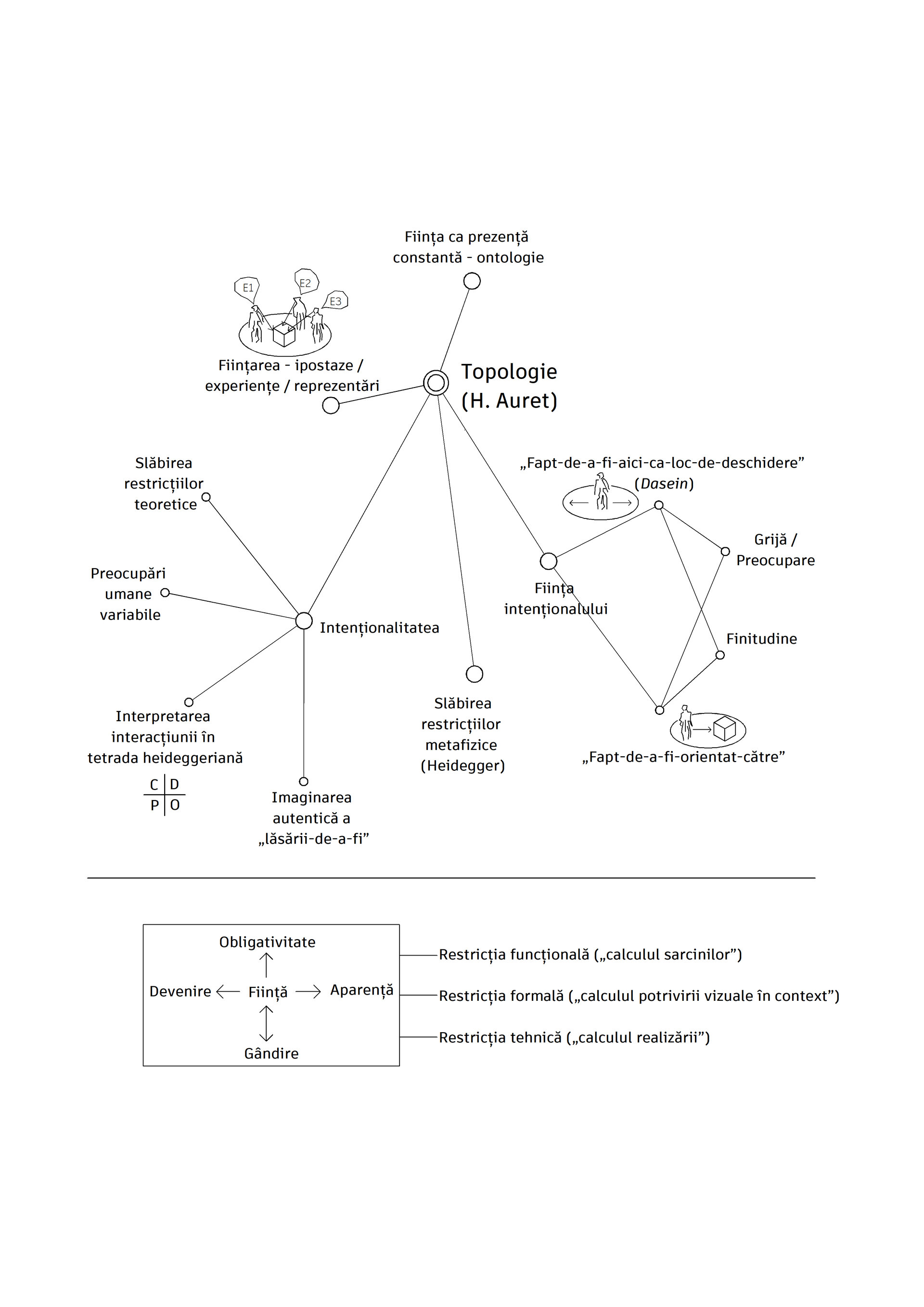
His theory, well-known in our local educational environment, is subjected to the critical perspectives provided by Jeff Malpas, Australian professor of philosophy at the University of Tasmania, with a remarkable experience in phenomenology, the author of the excellent volume dedicated to architects, Rethinking Dwelling: Heidegger , Place, Architecture (2021), and by Hendrik Auret, architect and senior lecturer at the University of the Free State in South Africa, author of the recent study Christian Norberg-Schulz's Interpretation of Heidegger's Philosophy. Care, Place and Architecture (2019).
In this context, my effort represents a hermeneutic intersection between Norberg-Schulz, Malpas and Auret, in the hope that at the end of it we might discover both what unites them and what transcends them in the sense of themes that can be permanently cherished and resumed in the theory of architecture.
Topofigurability explores the rift between dwelling and the common ground of material conditions and historical situation. The identification of a figurability of the place can be transposed into an architectural figurability, permanently keeping the openness in favour of a possible collective recognition. In this sense, Norberg-Schulz's slogan – "life takes place" – retains its existential relevance as the motto of topohermeneutics – the hermeneutics dedicated to place and its imprint in architecture.
Architecture Books

- Inclusive Design. Empathy exercises in the design process
- Topohermeneutics and Architecture: Malpas, Norberg-Schulz, Auret
- At some point - Roundabout architecture
- Four Zero
- Last Year at Marienbad
- The dual element water and the inclusion in architectural programs in the first half of the 20th century
- Another Breach in the Wall. The City as a Common Good.
- Historical Industrial Architecture. Possibilities for Sustainable Recovery. The Case of Timișoara
- Dwelling Together 2. Recent Blocks of Flats by ADN BA


