Dunavăț Retreat
Authors’ Comment
Starting from the geometric simplicity characteristic of local architecture, the two holiday houses are laid out on a modular grid of 3x3 meters, generating a compact volume where the grid becomes more than just a mere unit of measure; it defines a harmonious space in which each module is a piece of a larger puzzle.
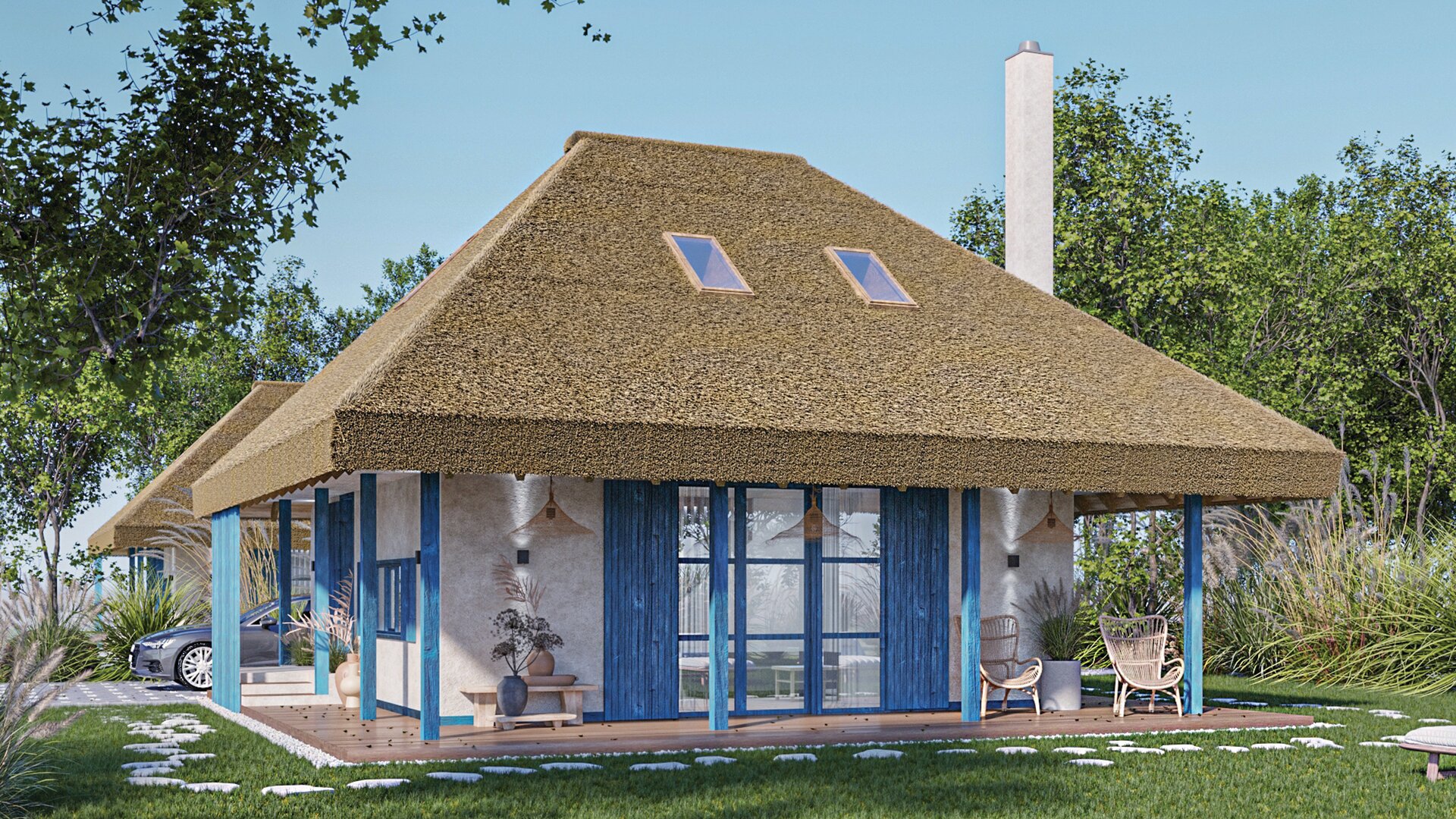
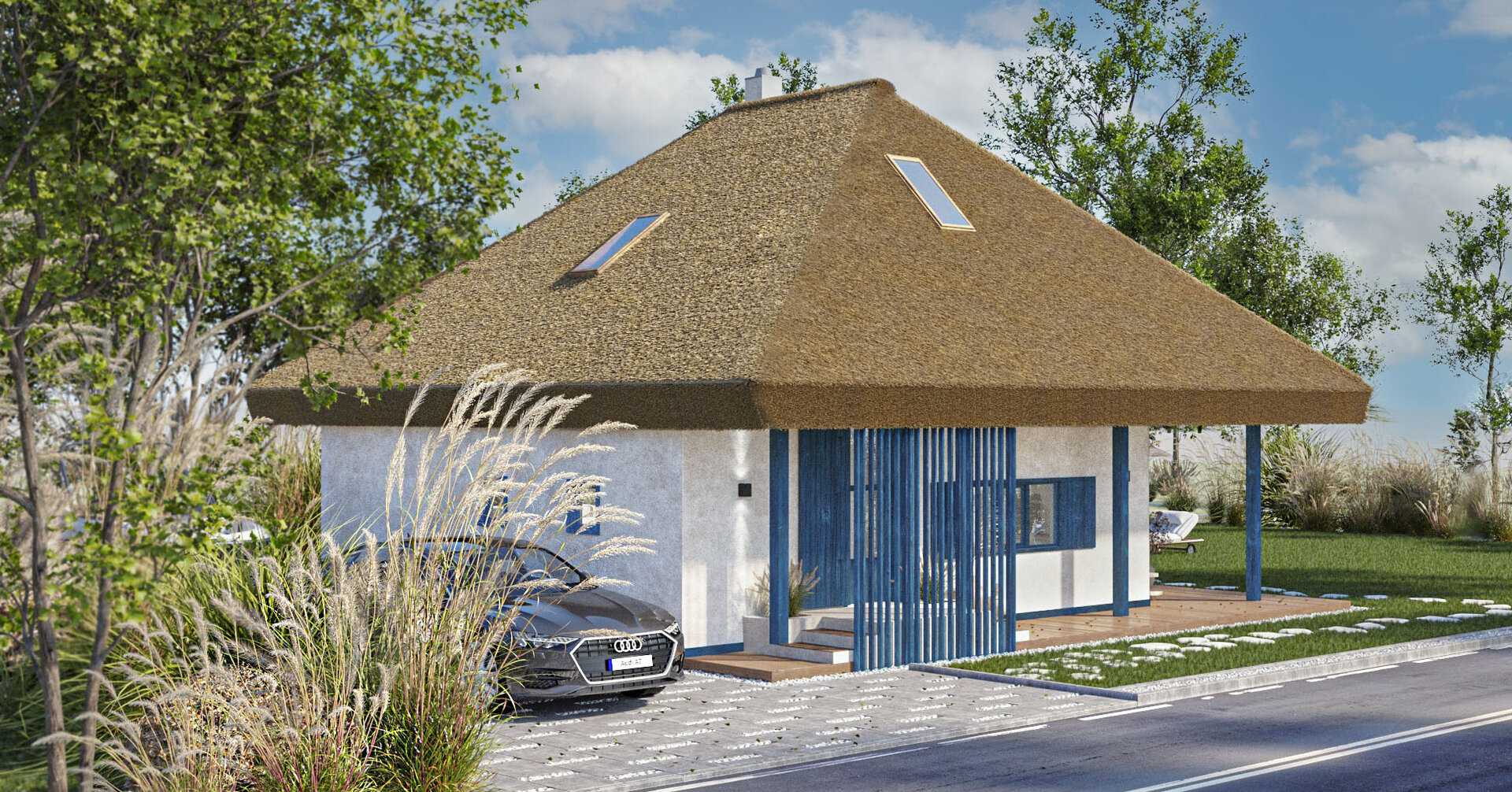
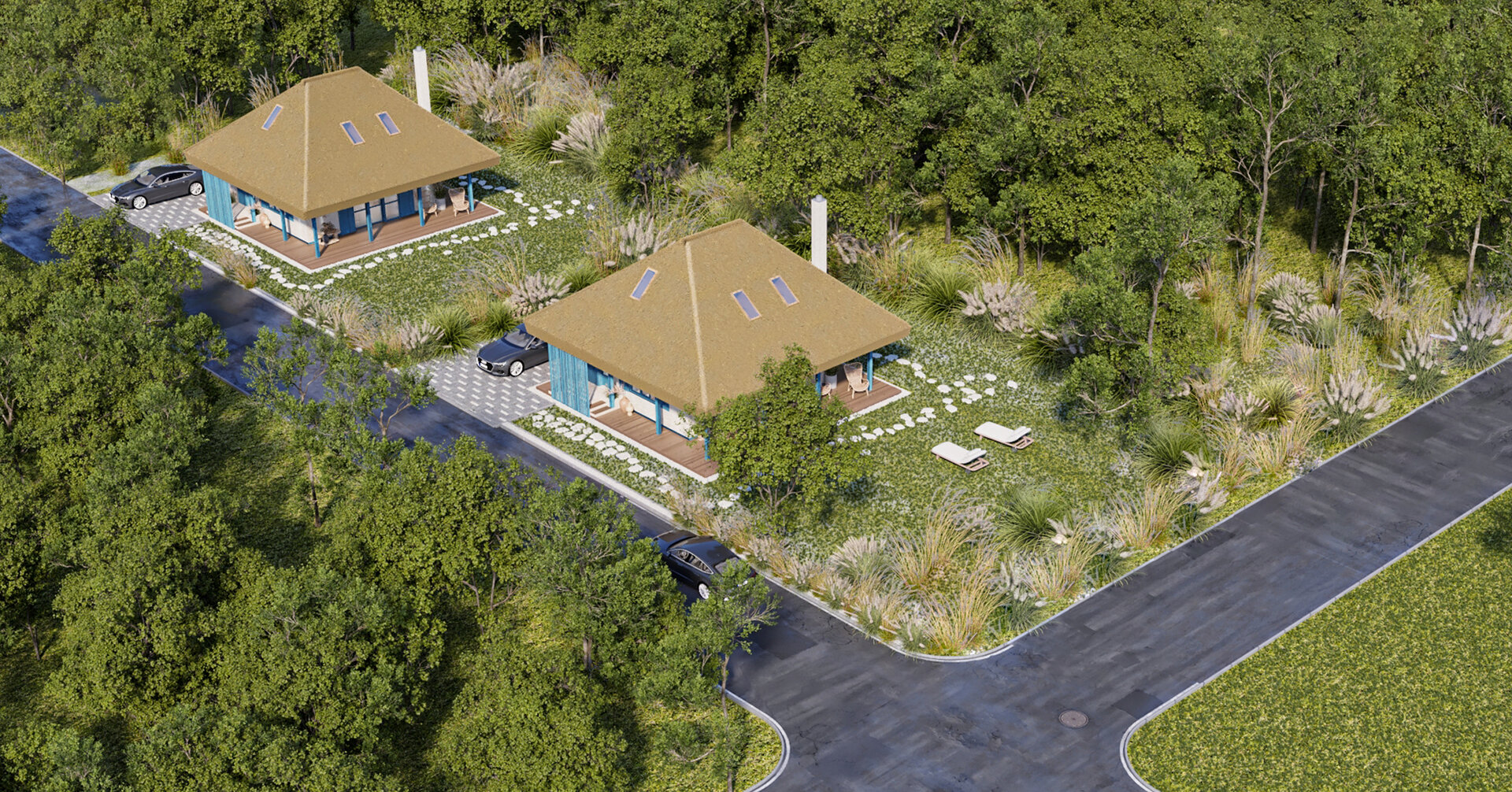
The houses are organized on two levels: ground floor and attic. On the ground floor, the open living area is oriented towards the southwest to take advantage of natural light and the view of the courtyard. A bedroom is placed on the southeast side, while the northeast and northwest sides are used for the house’s utility functions: bathrooms and kitchen, with small windows designed to protect the houses from the dominant winds. In the attic, the remaining night area unfolds, with skylight windows placed on all four sides, offering ample natural light inside and panoramic views of the village of Dunavățu de Jos.
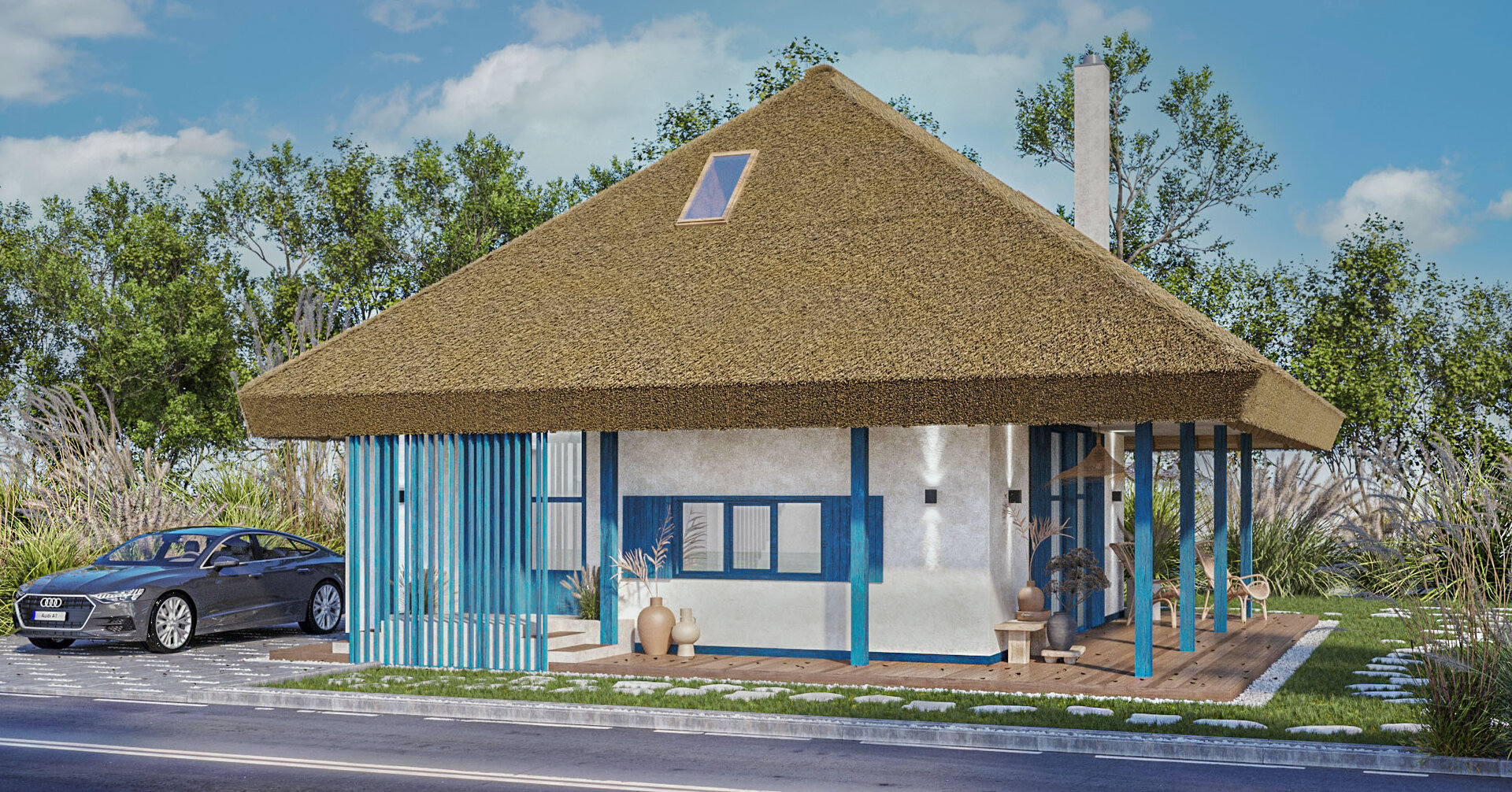
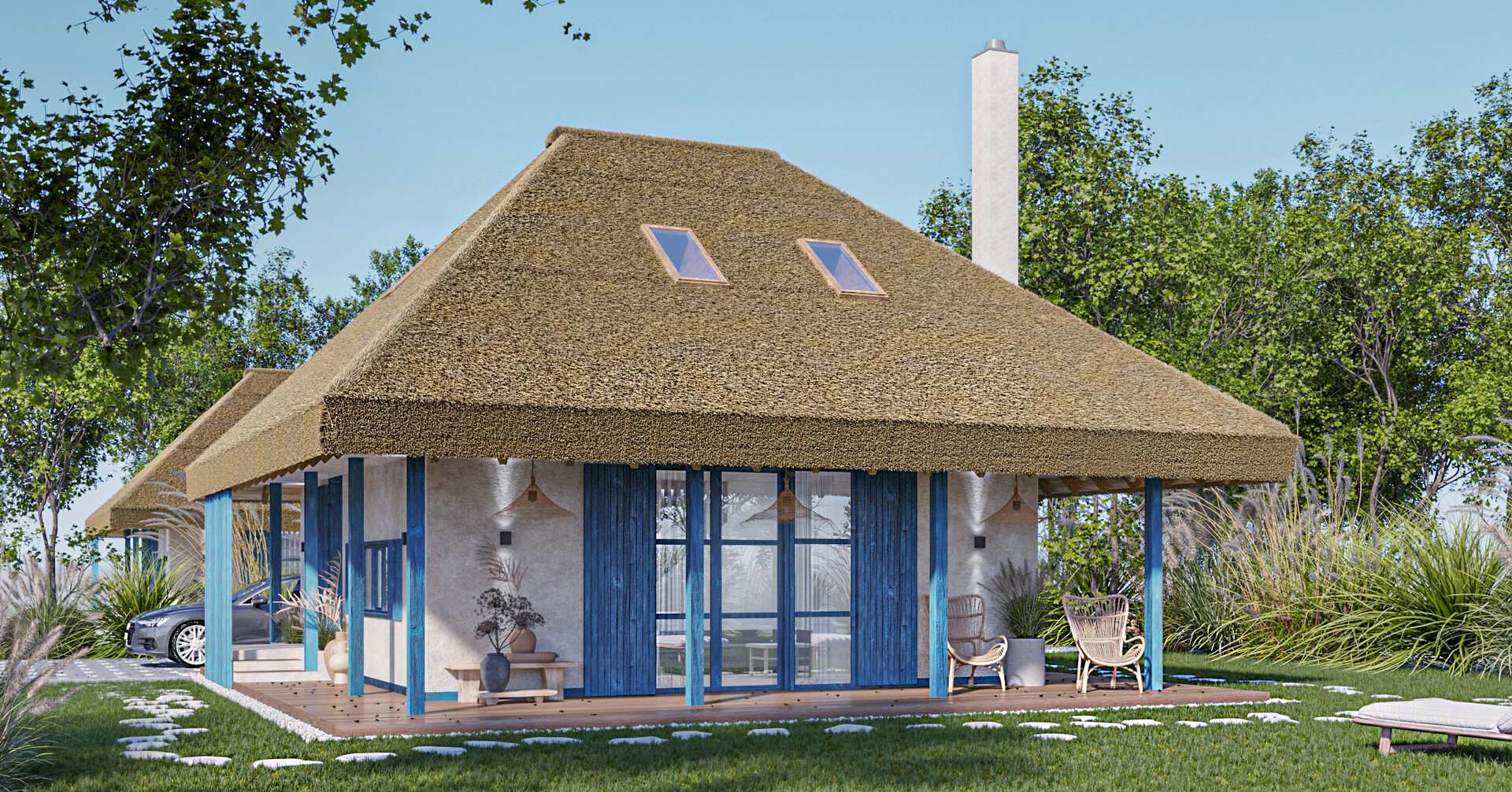
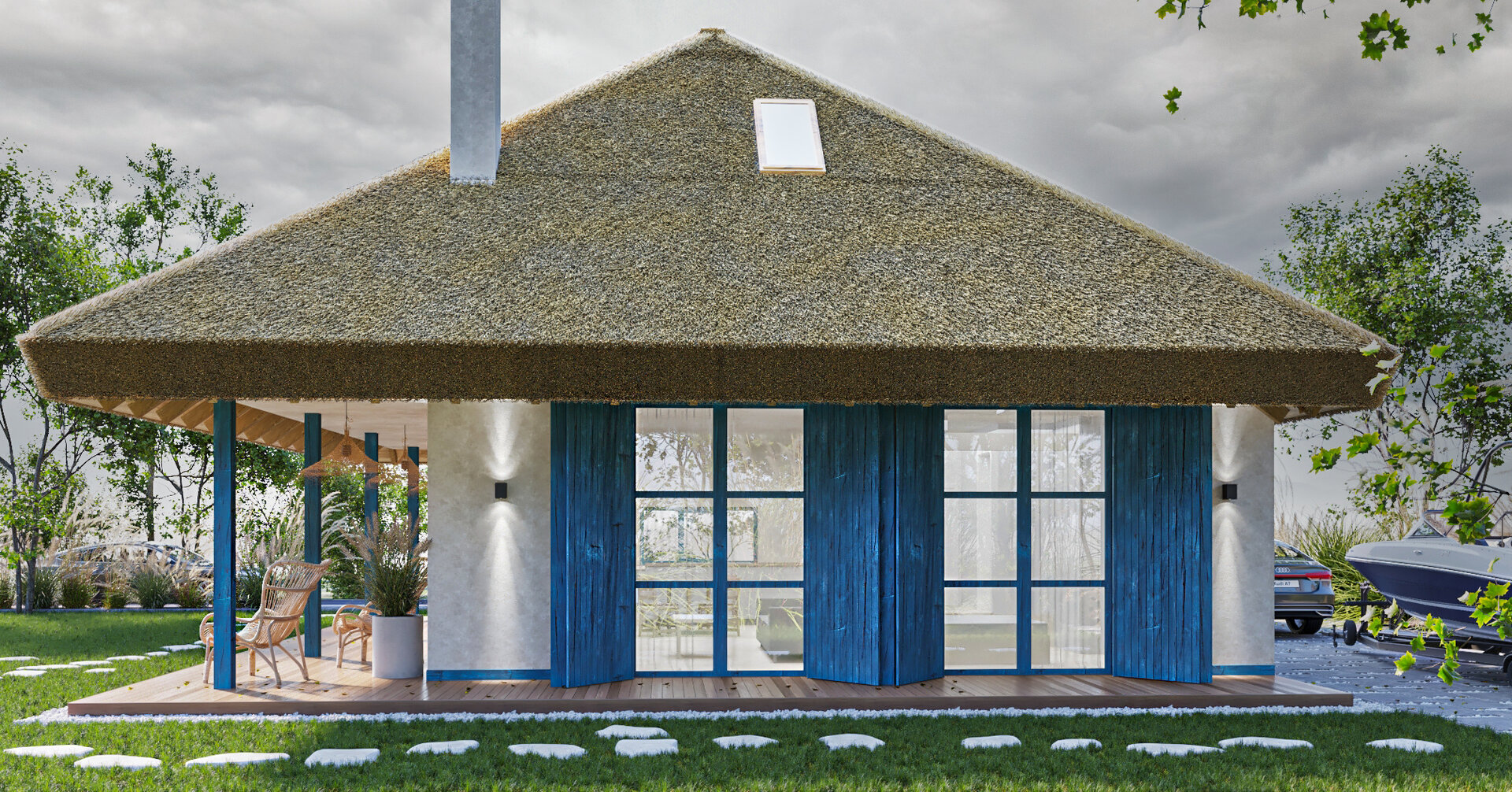
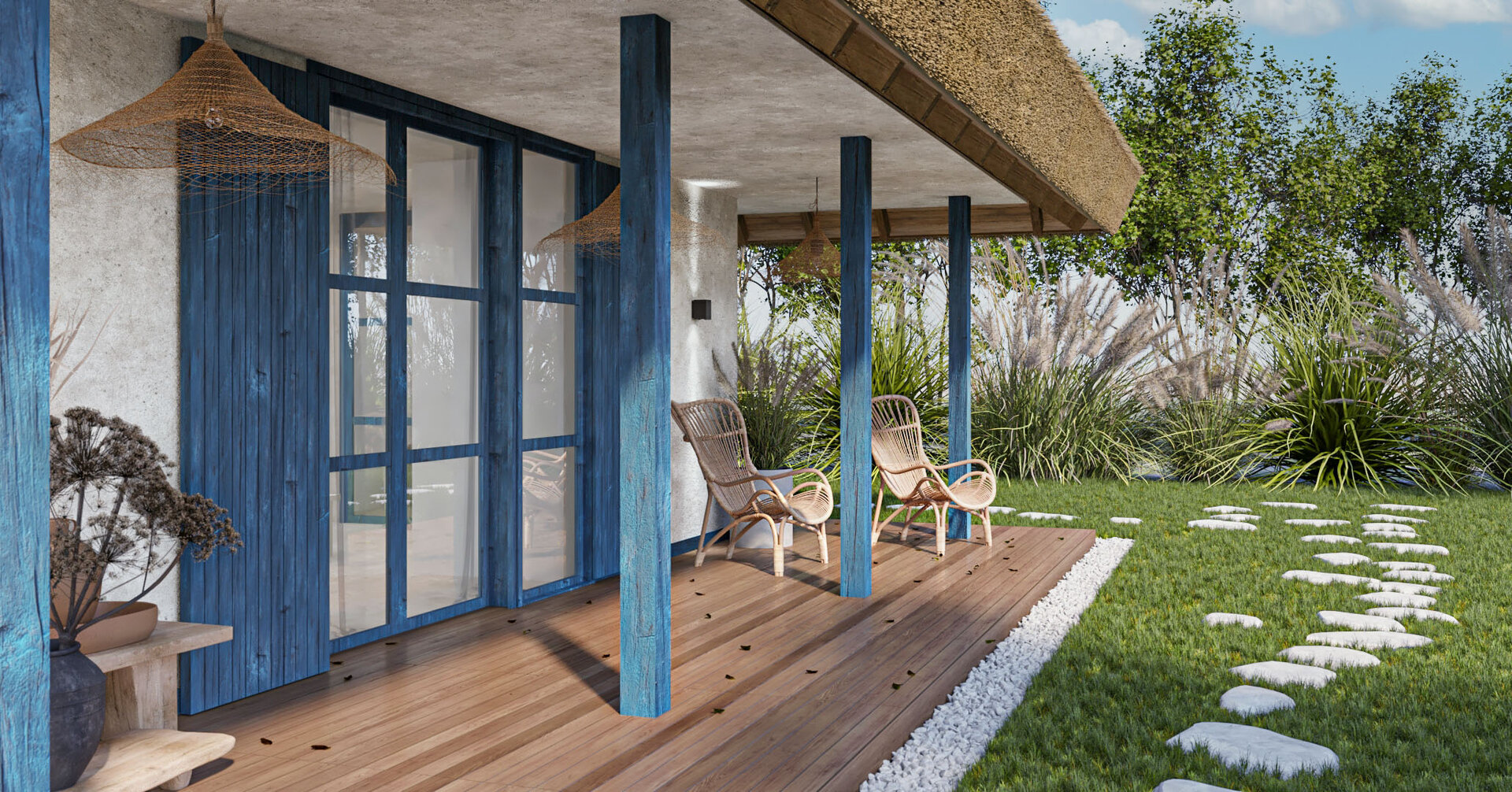
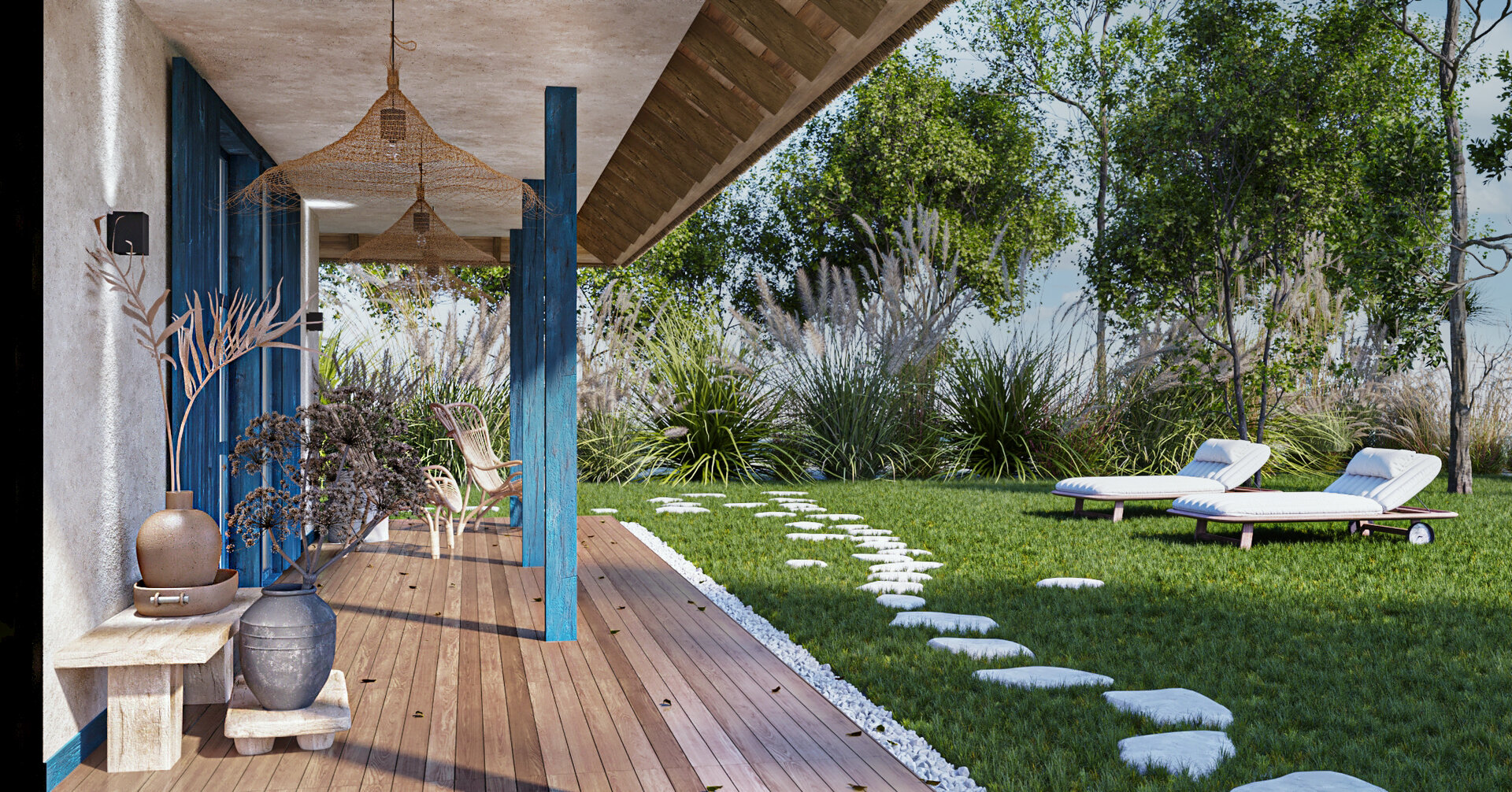
On three sides of the houses, a generous porch extends, providing a shaded space for relaxation and connection with the surrounding nature. The porch on the southwest side links the living area of the house to the open courtyard, creating a transitional space between indoors and outdoors.
The southern facades are dominated by large glazed doors, complemented by shutters, while maintaining a balance between solid and void in favor of solidity. When the large doors open onto the porch, the two spaces—interior and exterior—become unified, as if the boundaries between the house and the surrounding landscape disappear, and the interior of the house naturally extends into the courtyard and surrounding nature.
The thatched roof, with its four slopes, asserts its visual presence in a subtle yet powerful way, becoming an essential part of the facade’s identity.
Natural white plasters are used for the exterior walls, while the windows, shutters, and perimeter columns of the porch are painted in the characteristic blue of the region.
This project is based on the use of traditional materials, such as wood and thatch, combined with contemporary construction and thermal insulation techniques. In this regard, the structural system is made of wood in the superstructure, with the infrastructure consisting of thread bar micropiles and a reinforced concrete slab above the ground.
The architecture of these houses reflects a balance between contemporary functionality and traditional aesthetics, shaping a delicate dialogue between simple volumetry, natural materials, and integration into the unique context of the Danube Delta.
Residential Architecture



