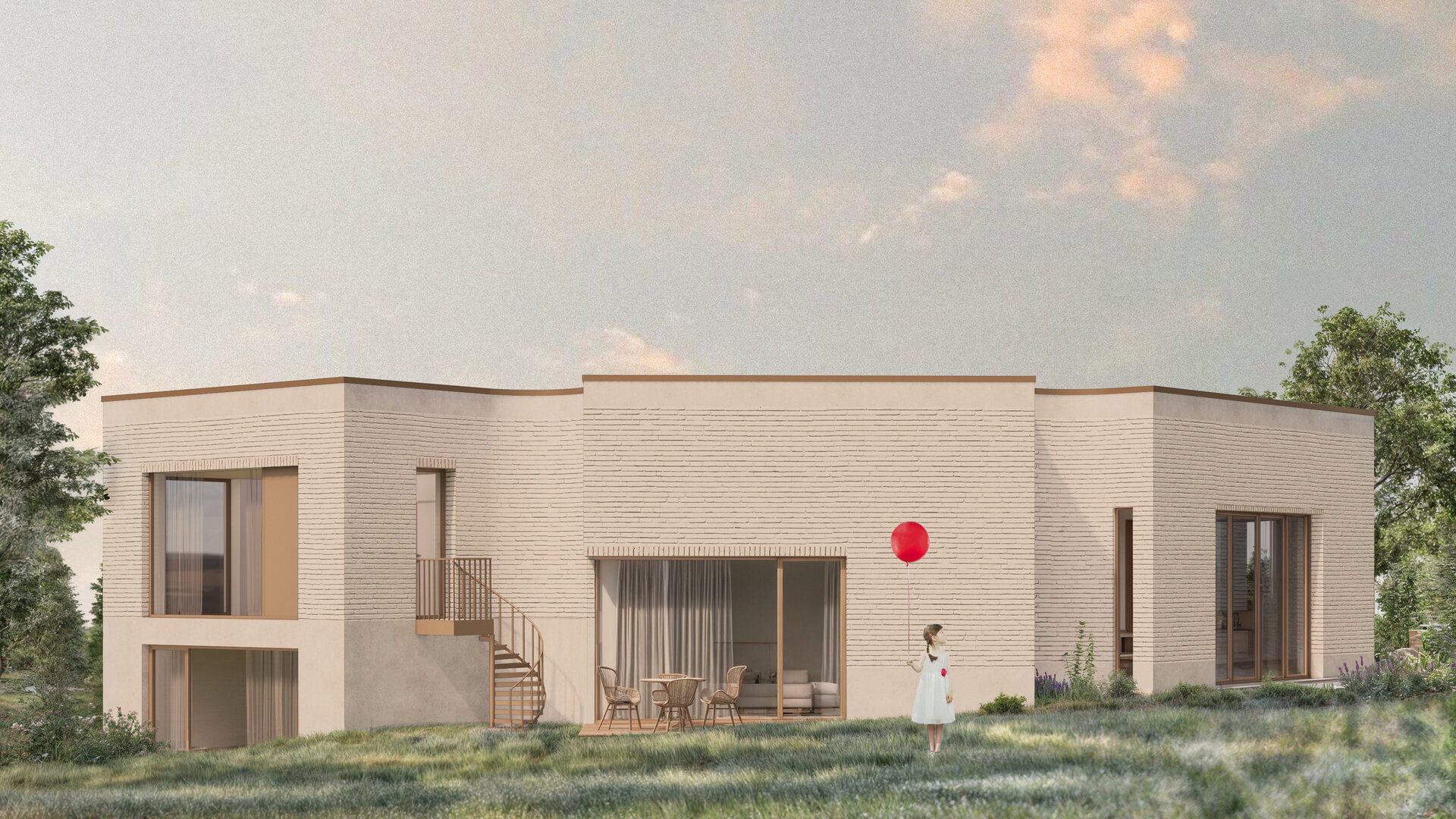
- Nomination for the “Portfolio Architecture / Residential Architecture” section
House for a garden
Authors’ Comment
Clients’ note:
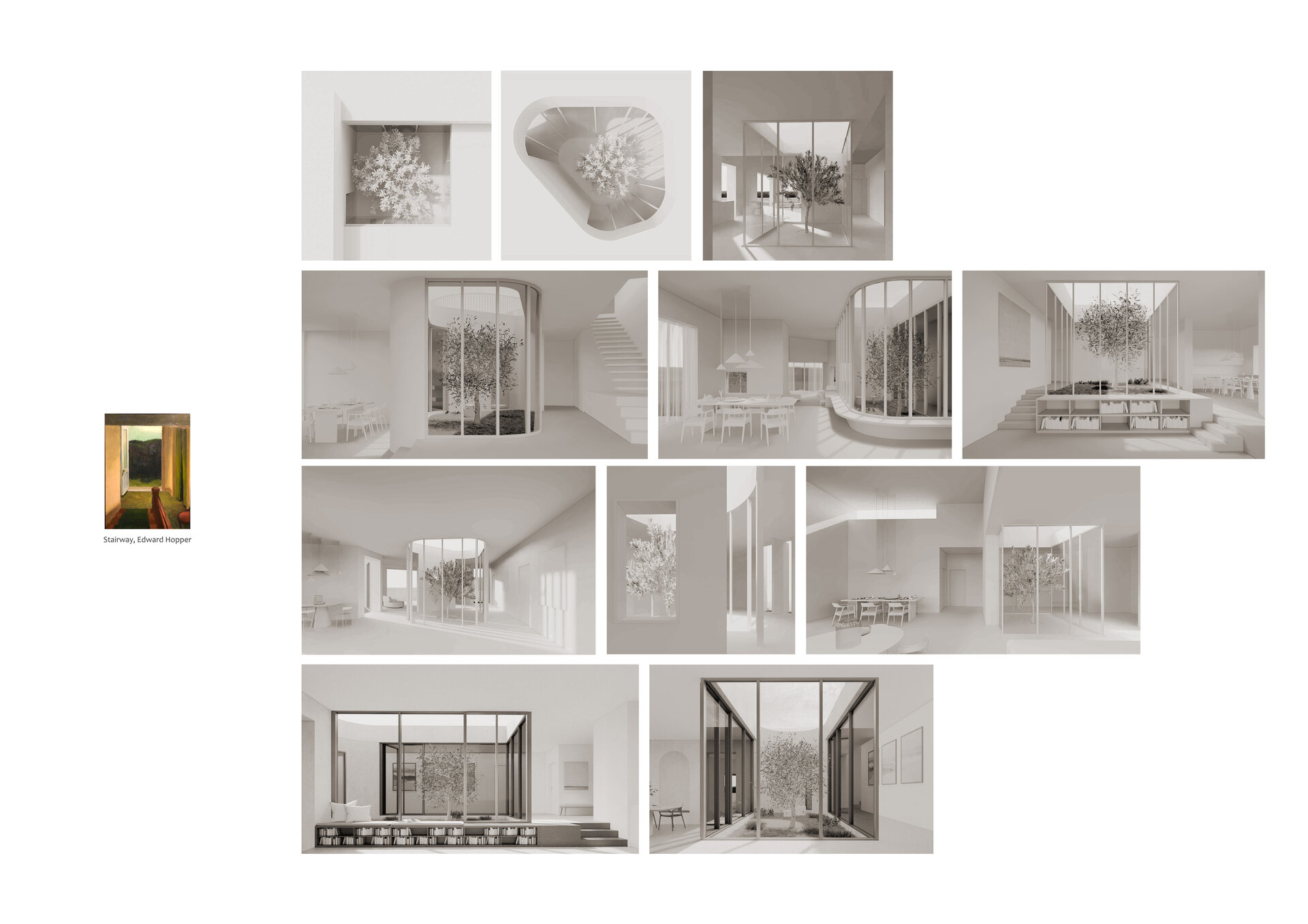
<<"Let’s bring home, home." Similar to the phrase "Once upon a time," this marks the beginning of our home's story. An interior garden built around an element meant to instill in our family a sense of gratitude for our Greek roots. The olive tree – the sum of emotions and experiences from a childhood grazed by the warm Mediterranean air. A distant memory of homes that left a deep mark, their gardens serving as peaceful and sheltered retreats.
Starting from this interior garden, we realized that a circular layout of the house is what suits us best. An uninterrupted continuity between the rooms, becoming not only an ideal playground for our daughter but also a constant visual connection between all the spaces. A "home" ever-changing, giving us the chance to observe the transformations and magic of each season.>>
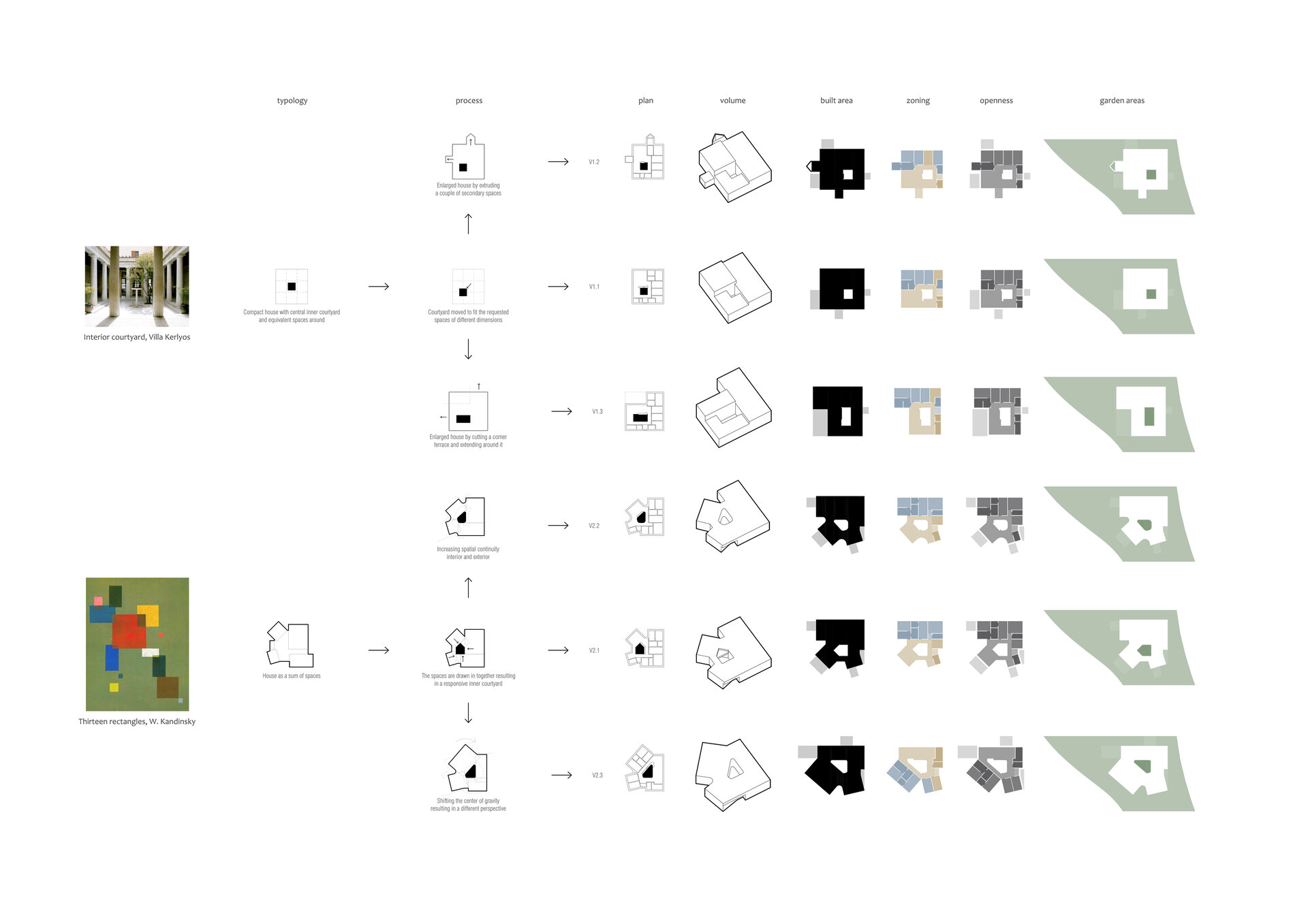
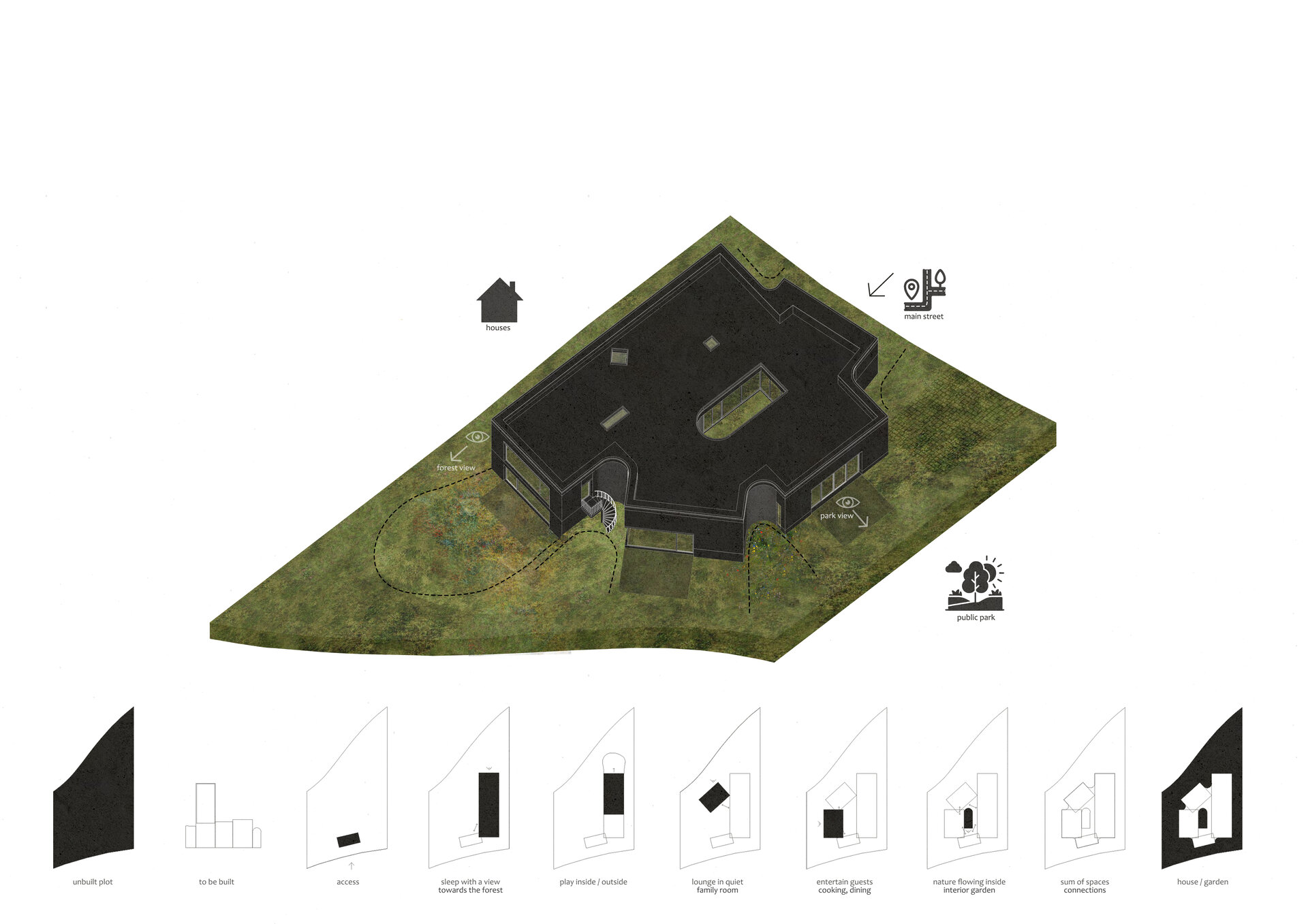
Creating an ideal home is not merely about the functional organization of rooms but an in-depth exploration of the relationships between them, how they are oriented based on cardinal directions and context. Thus, each room gains significance not only through its own form or functionality but also through its interaction with the other spaces in the house. According to Gestalt Theory, as stated by Kurt Koffka, "the whole is greater than the sum of its parts." Applied to architecture, this premise offers a complex perspective on the design process and the outcome, where coherence and harmony between individual spaces contribute to defining an integrated whole.
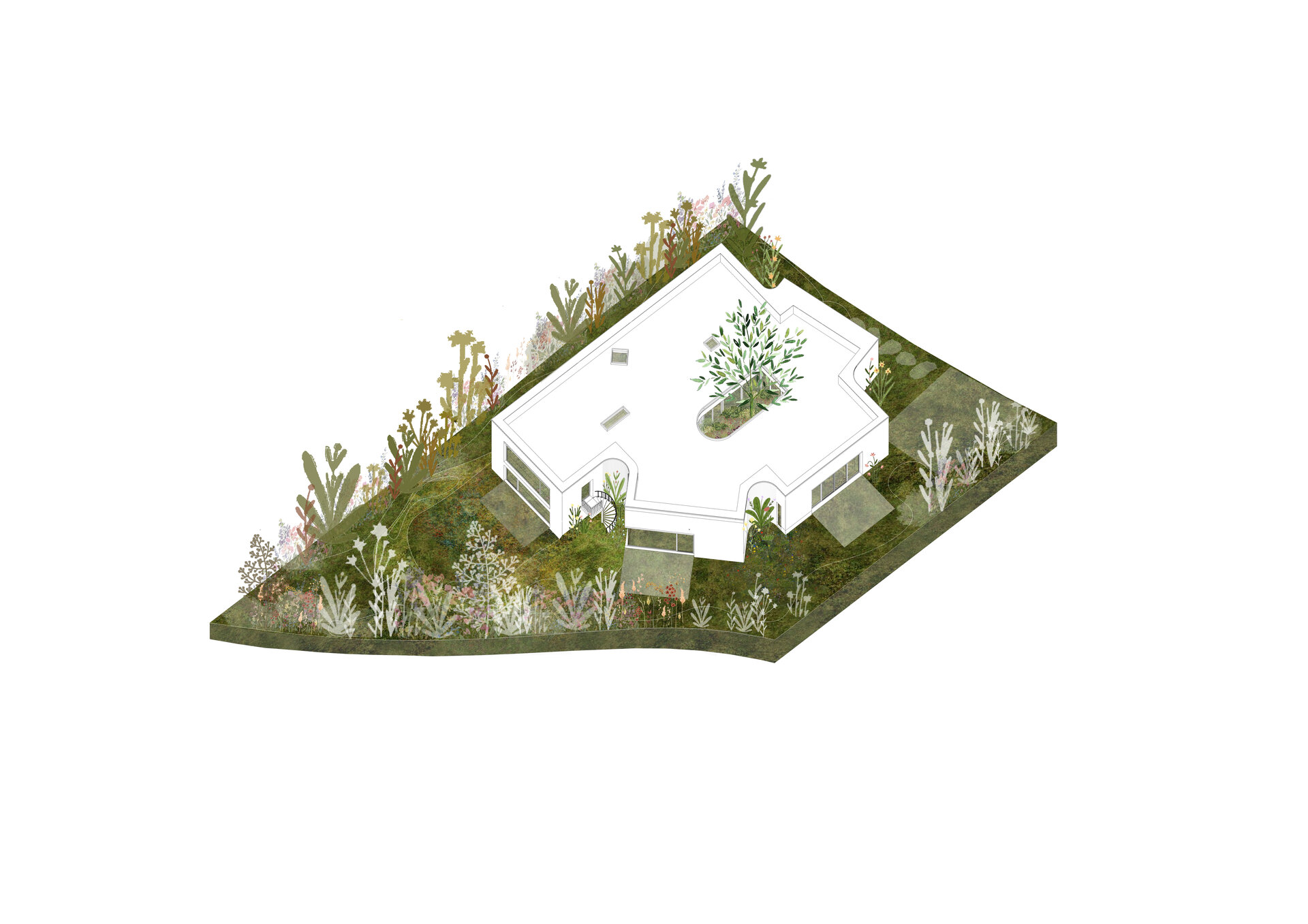
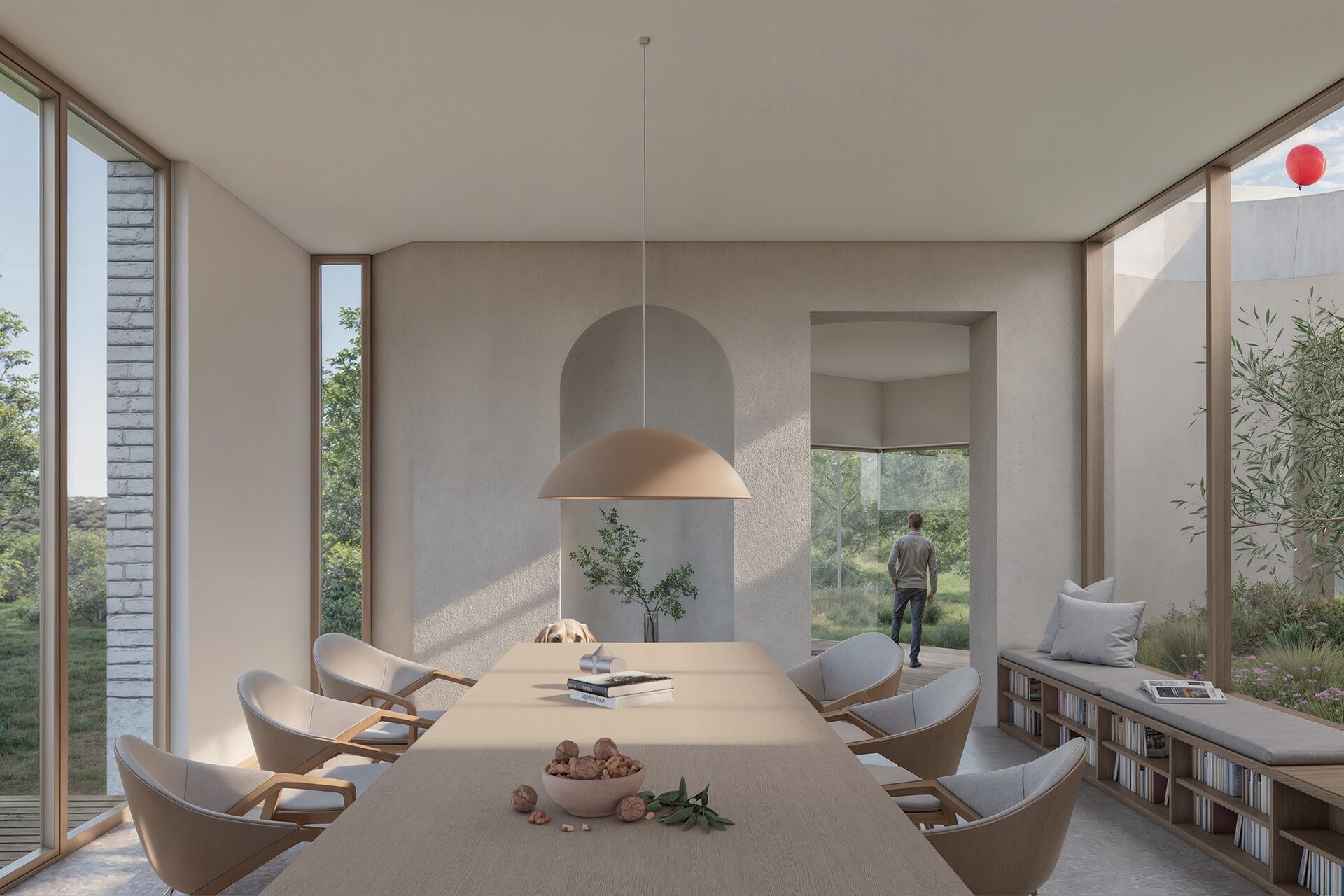
Through this vision, the home is not simply a group of well-positioned rooms but becomes an expression of balance between functionality and aesthetics, between light and shadow and between interior and exterior space. The inner courtyard, placed at the heart of the house, functions as a compositional core, bringing nature into the proximity of everyday life and giving the whole an organic dynamic, constantly evolving.
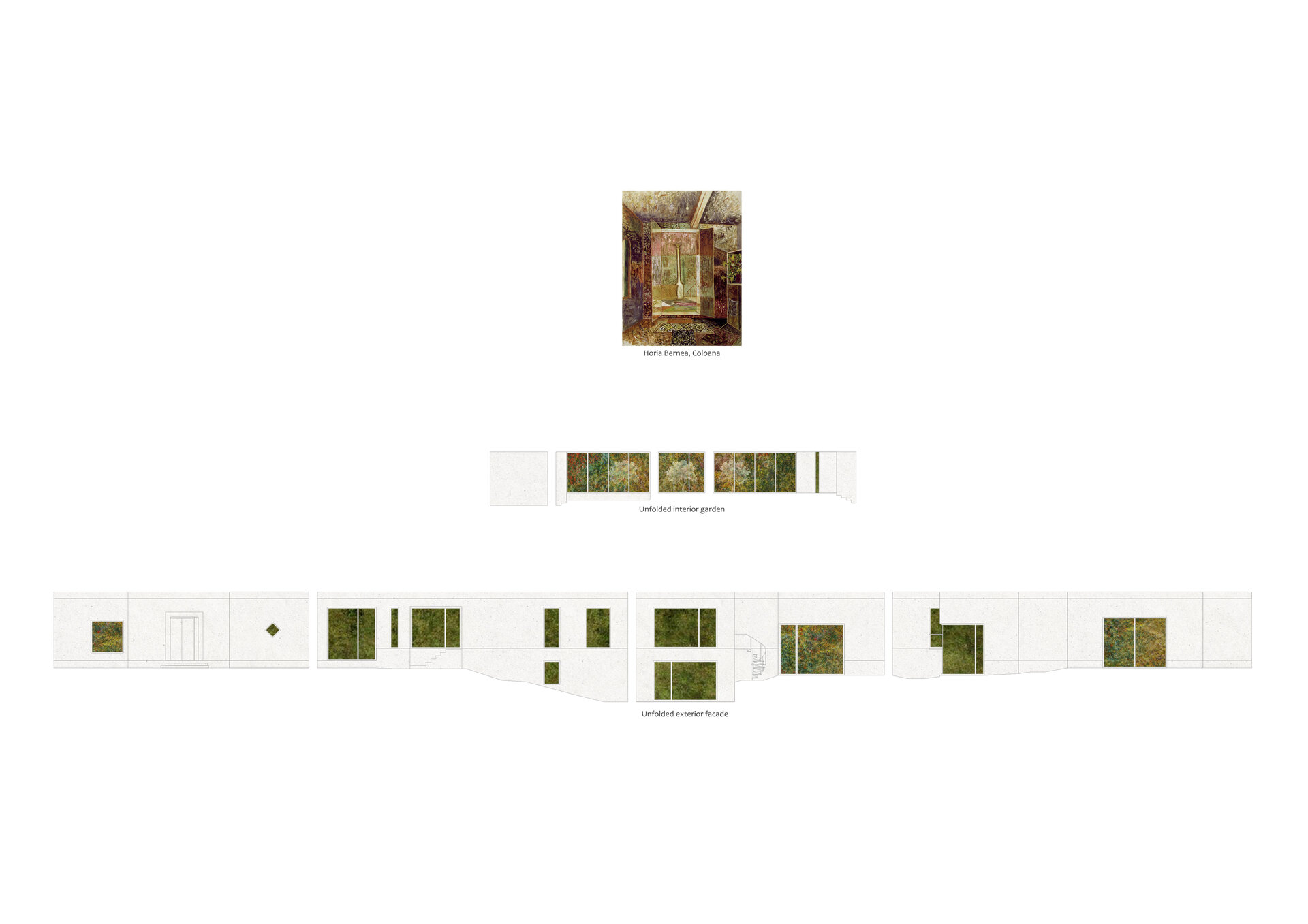
The study thus embarks on a search for the perfect courtyard, a space to be experienced from all places of the house, with different perspectives. Whether it is eye level, perceived from the ground, or from above, through narrow niches or large windows, the inner courtyard metamorphoses to create unique frames from various points of the home.
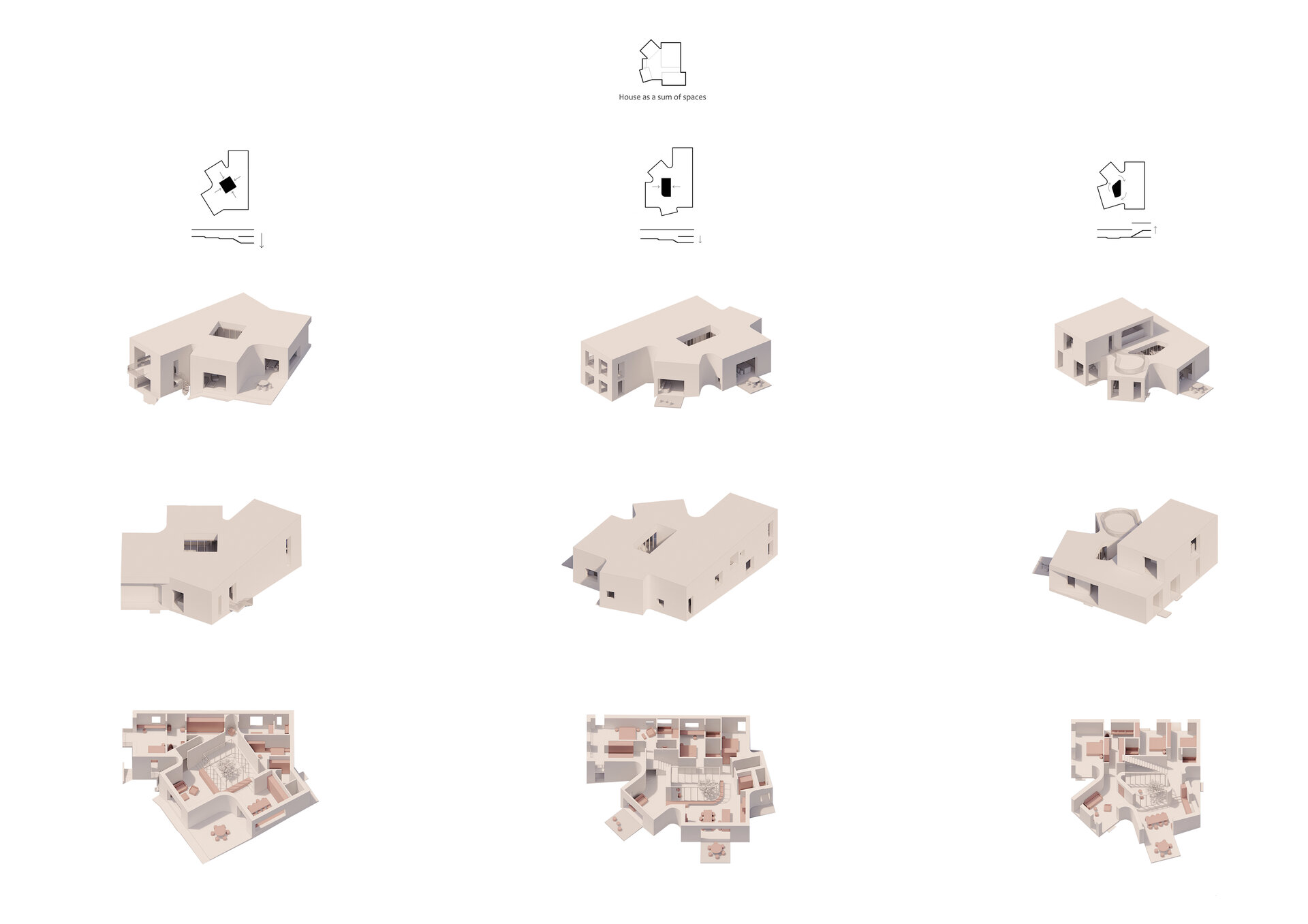
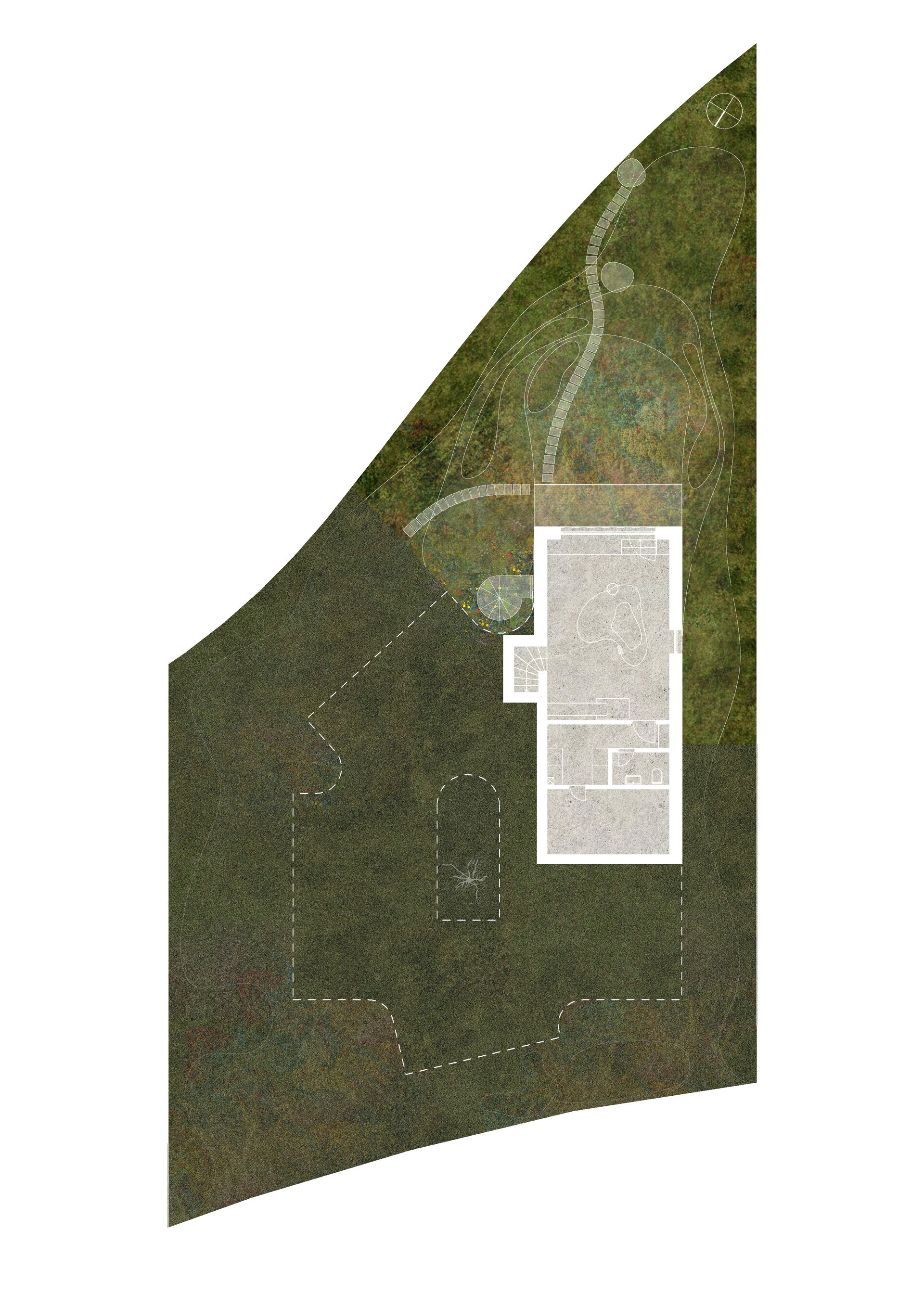
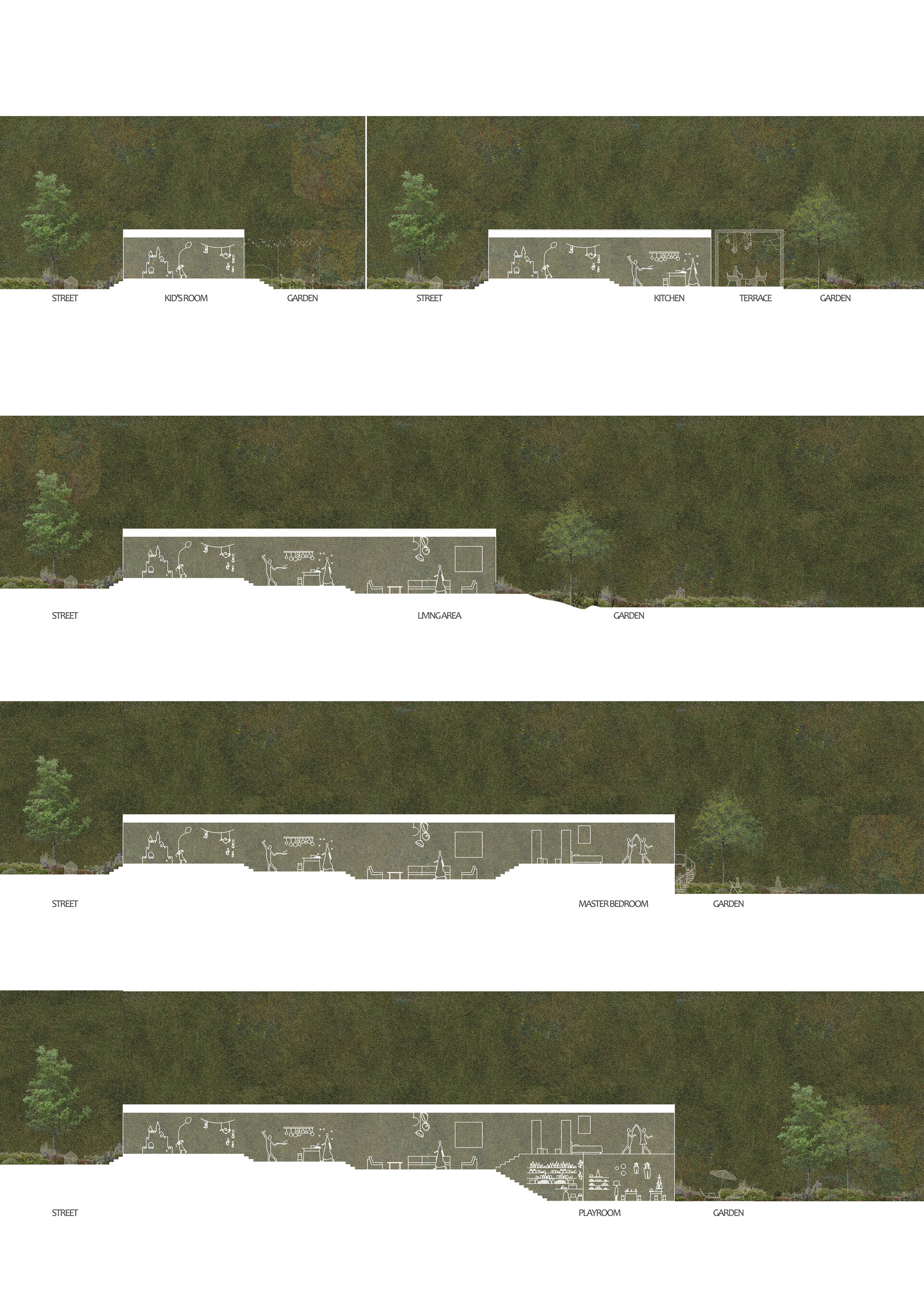
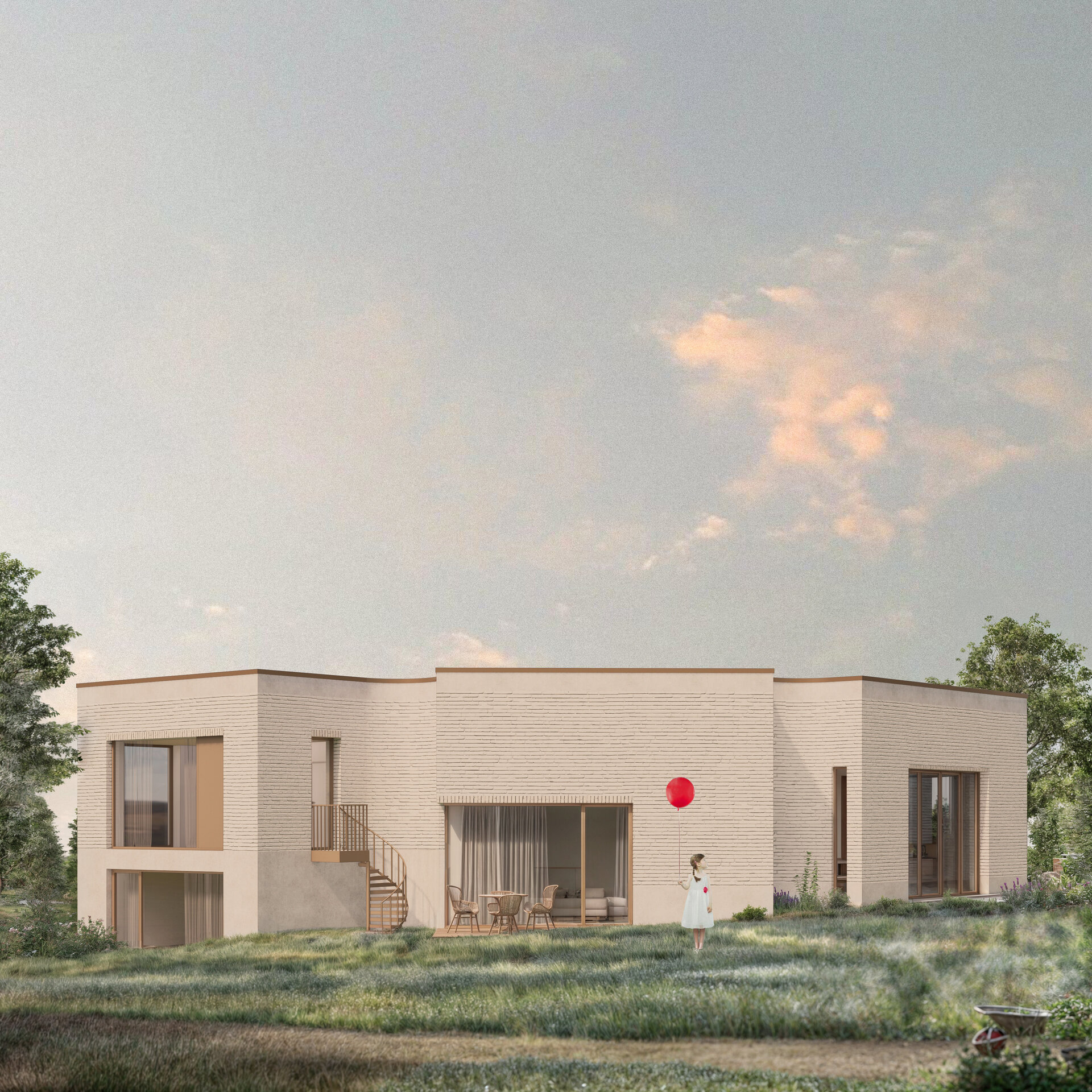
To create a fluid visual connection between spaces, while maintaining a degree of privacy and physical separation, various solutions for level differentiation were used. The bedrooms are placed elevated from the ground, generating a feeling of safety, while the living room and kitchen open directly onto the garden. The playroom, located at a lower level, creates a direct relationship with the rear sunken garden, suggesting the idea of shelter and protection.
The process of defining interior space takes into account the needs of a growing child, integrating elements that encourage exploration and play. Thus, the differences in levels throughout the home become an essential part of the spatial experience, with access to the playroom made via a slide, marking the transition to a space dedicated to playfulness and experimentation.
The garden thus adapts to the gradual stepping of the house, defining new points of interest along the way. Transition spaces, such as the spiral stairs or garden corners with aromatic plants, subtly communicate with the interior through windows that allow natural light and scents to flow in.

Residential Architecture



