I started to see the colours
Authors’ Comment
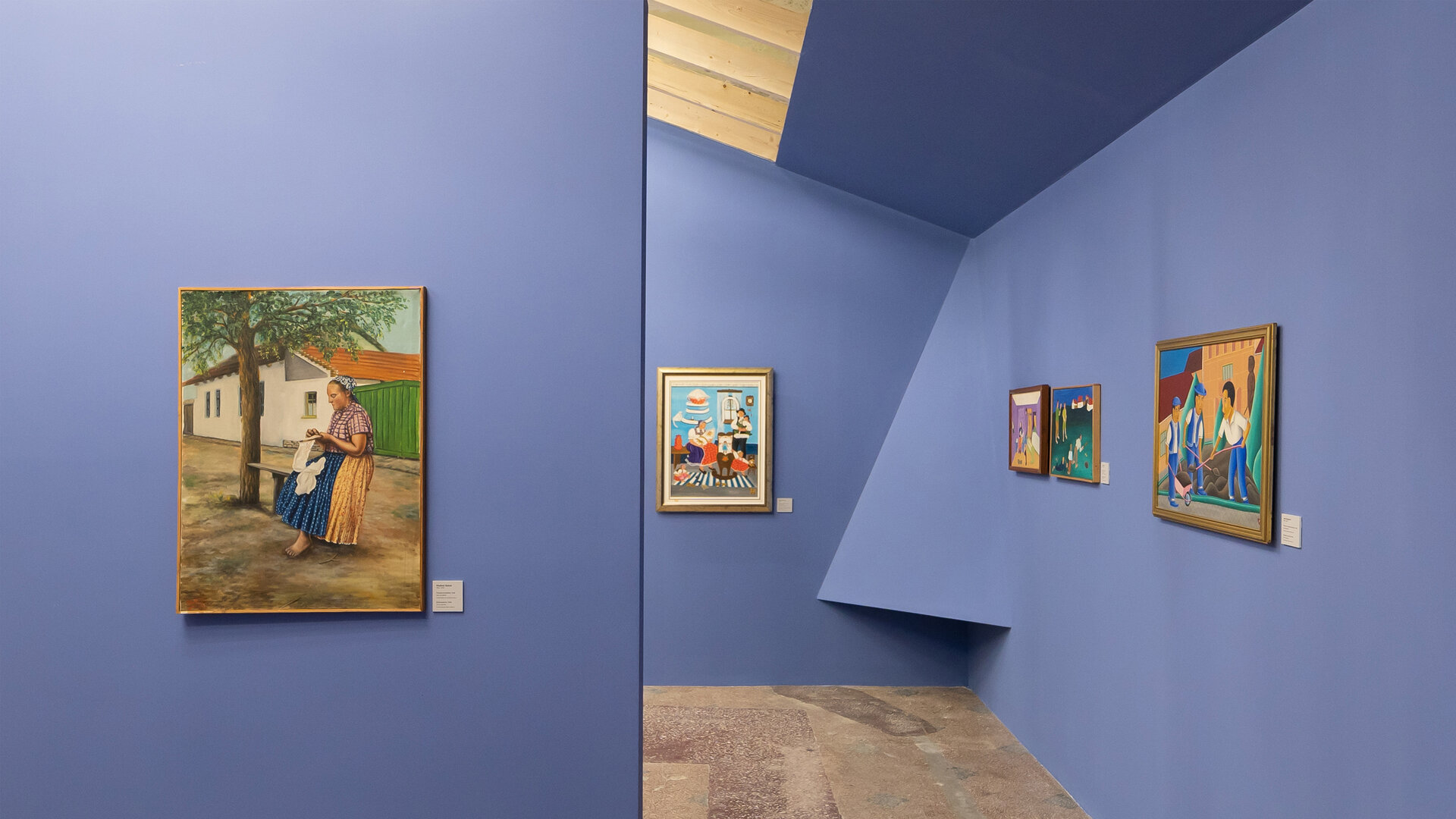
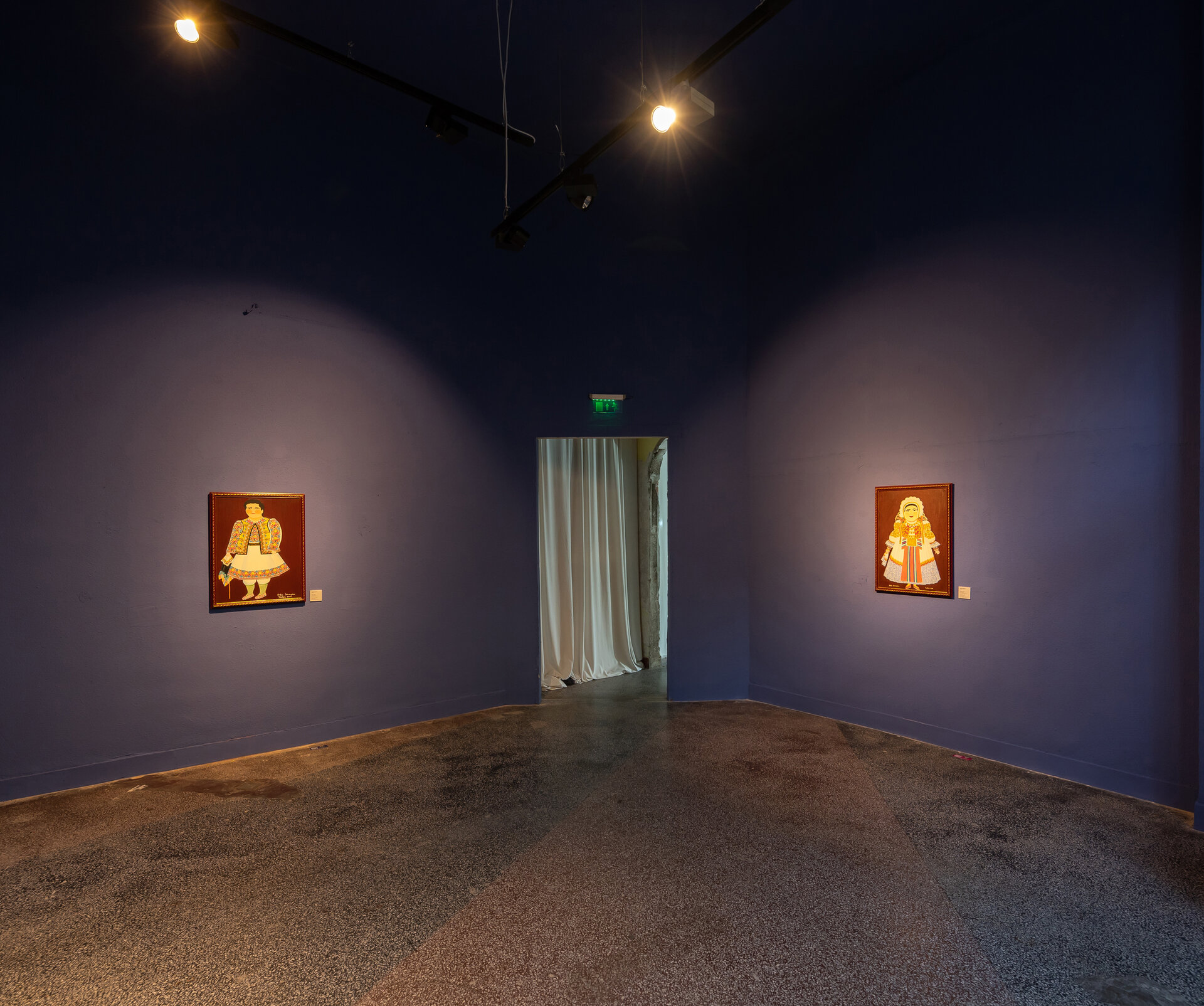
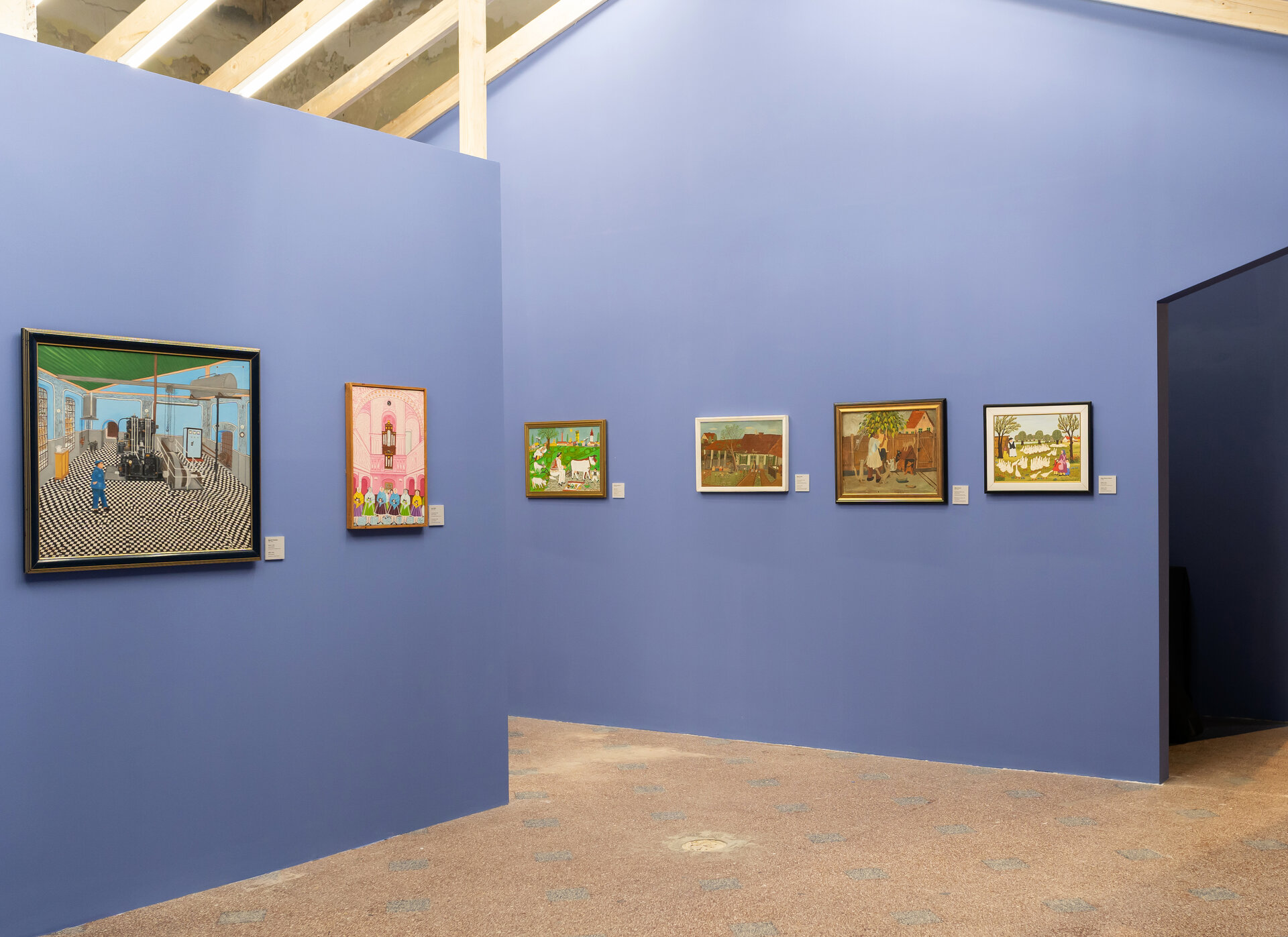
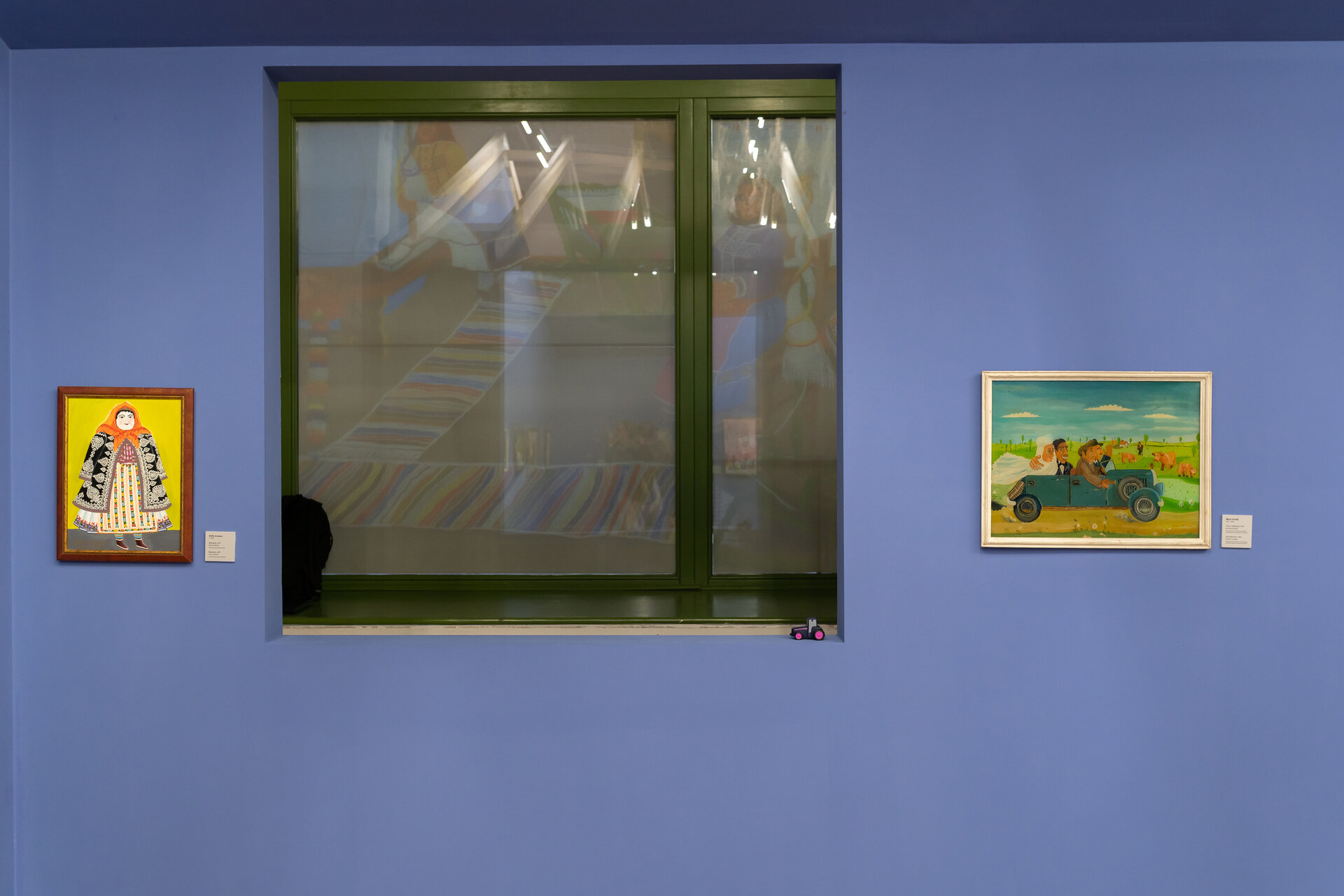
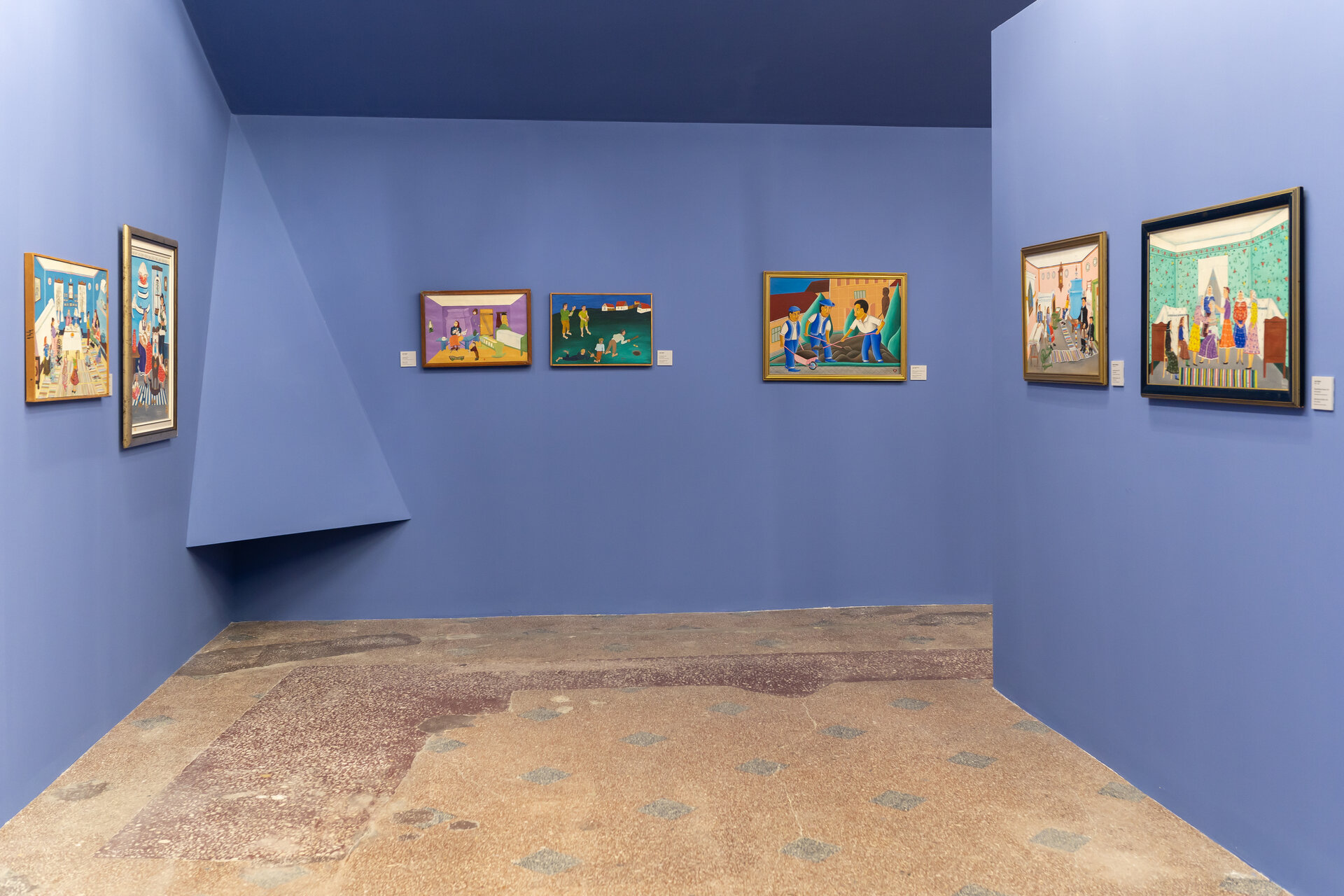
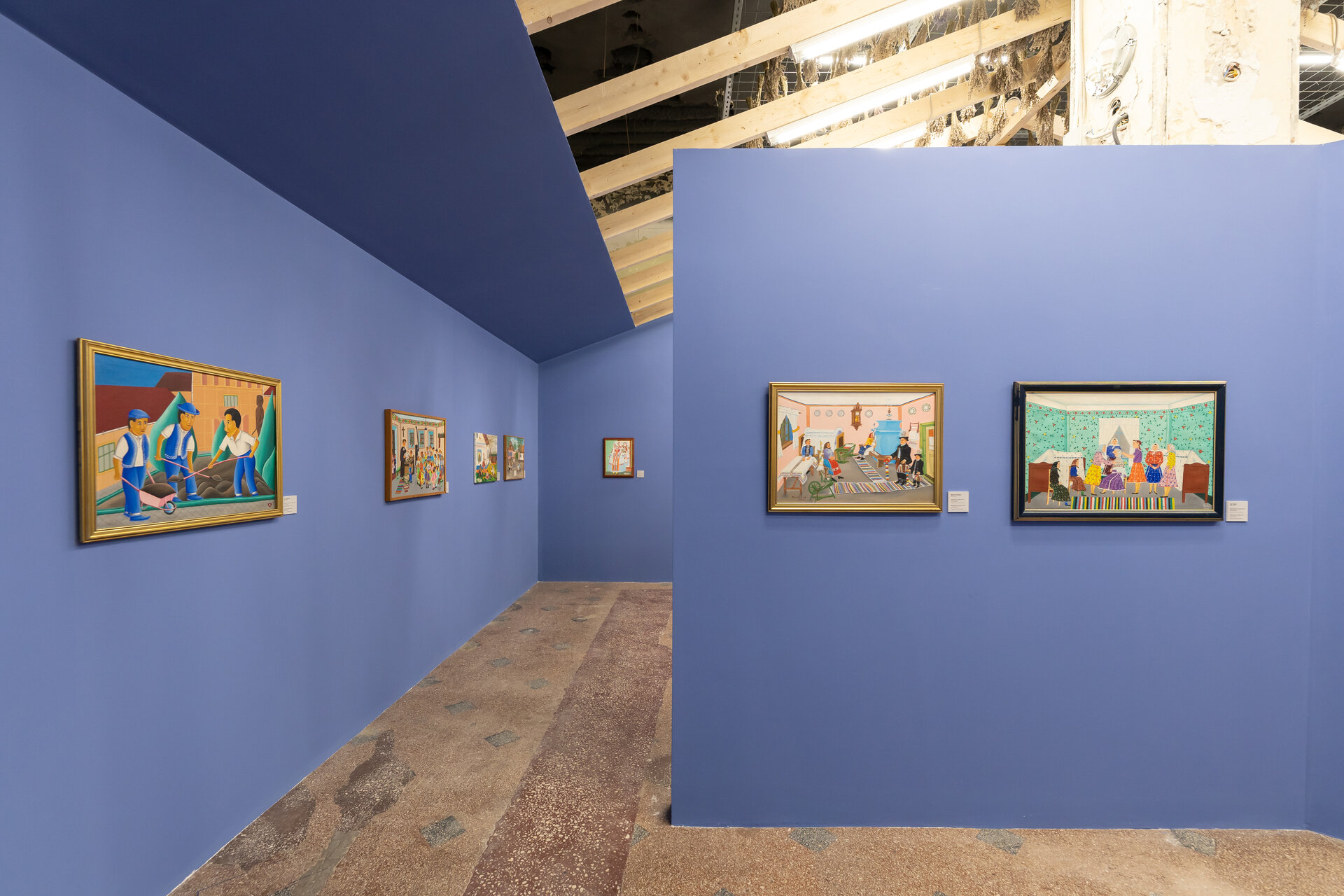
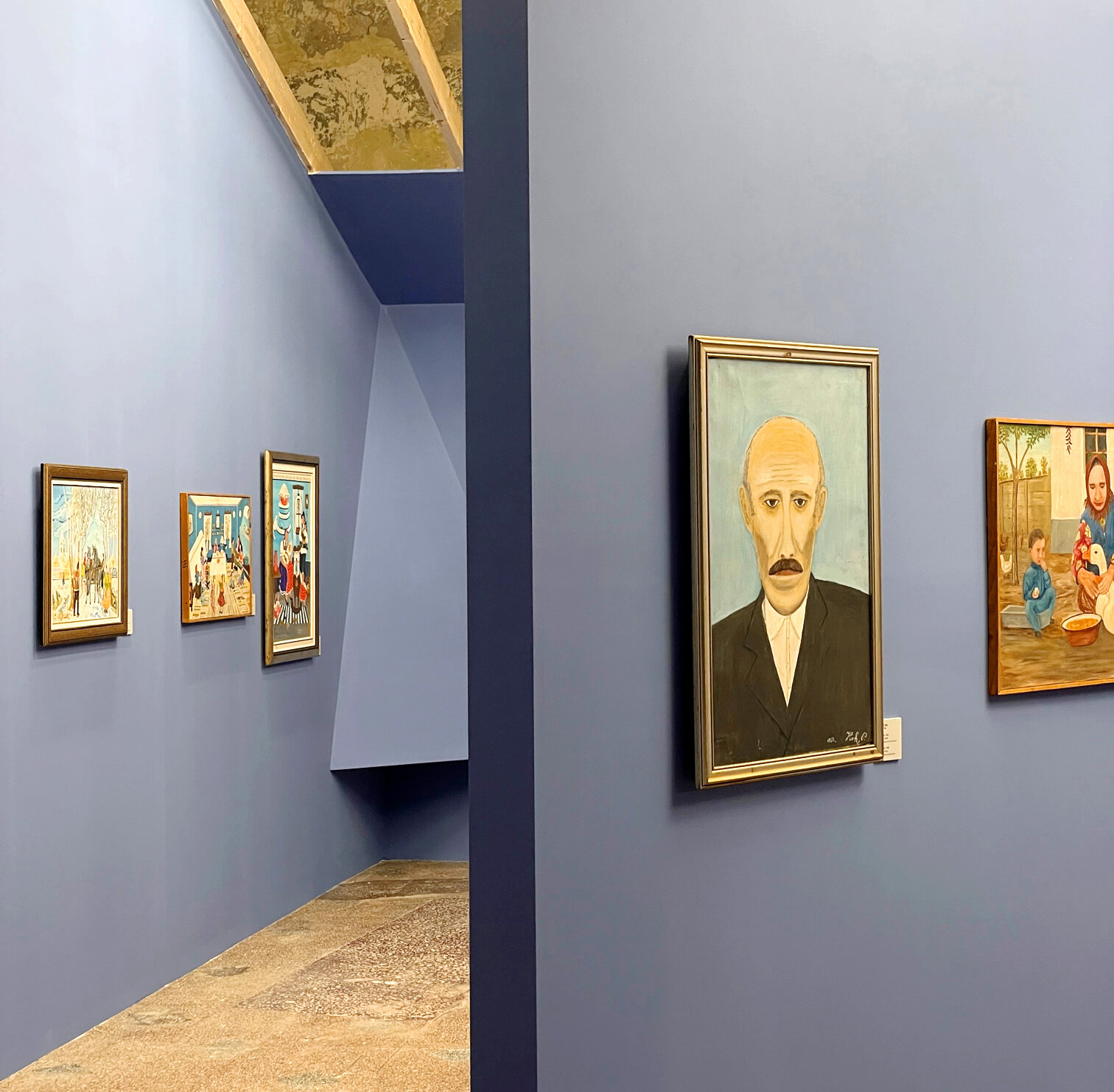
"I started to see colors" is an exhibition of naive art from Serbia and Romania. The 35 presented works compose a route between the dominant themes of naive art: work, nature, family, free time, religious holidays and traditions.
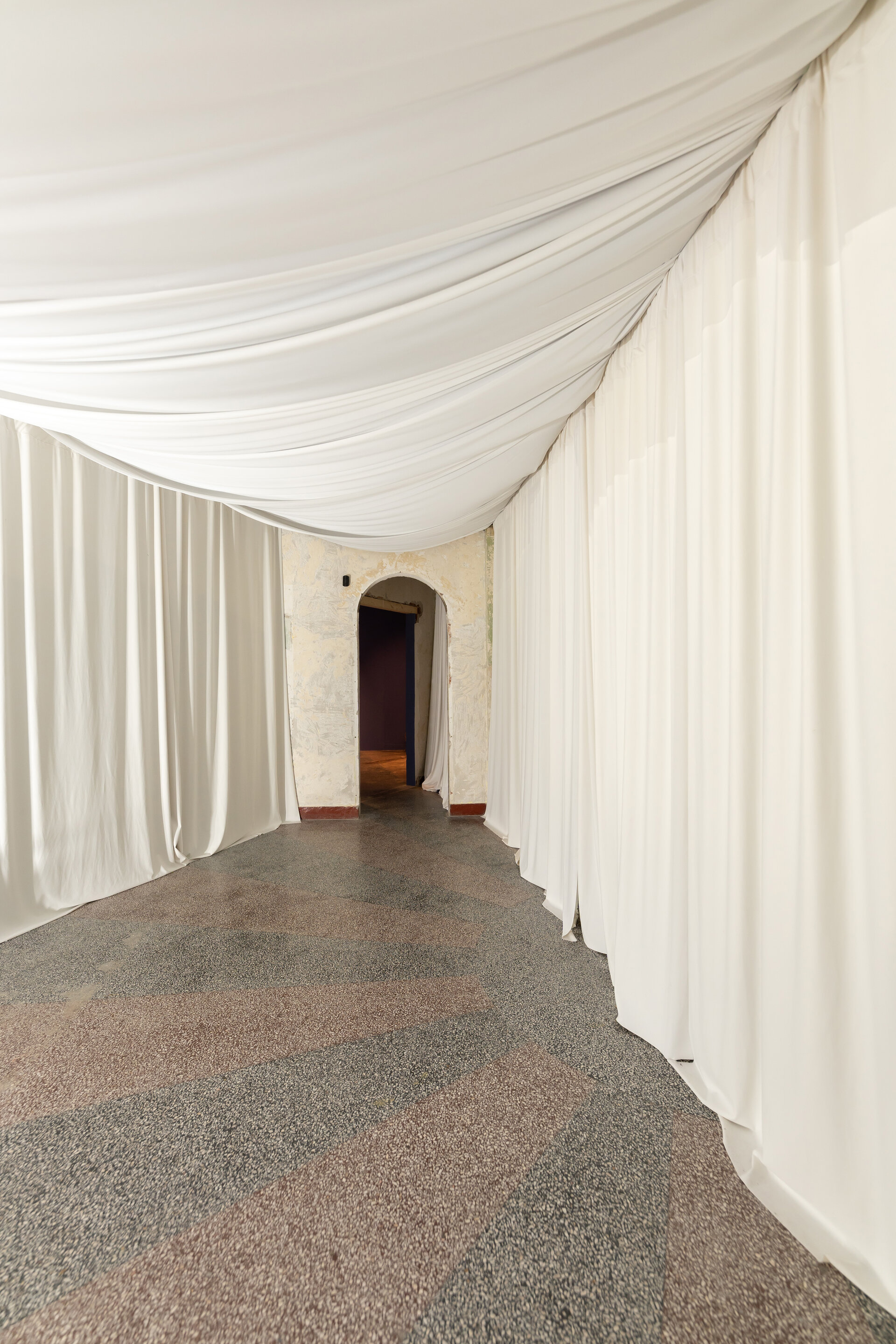
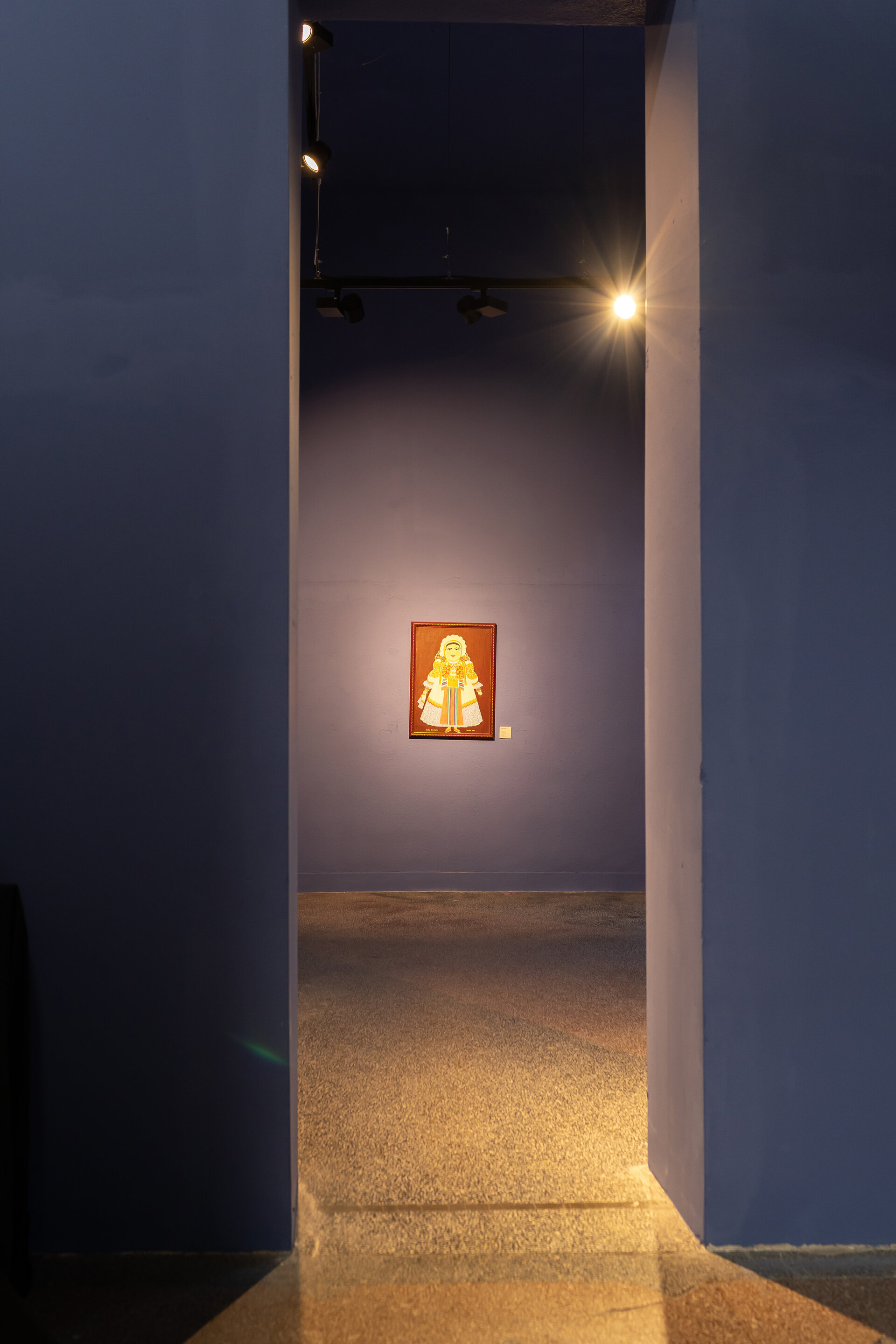
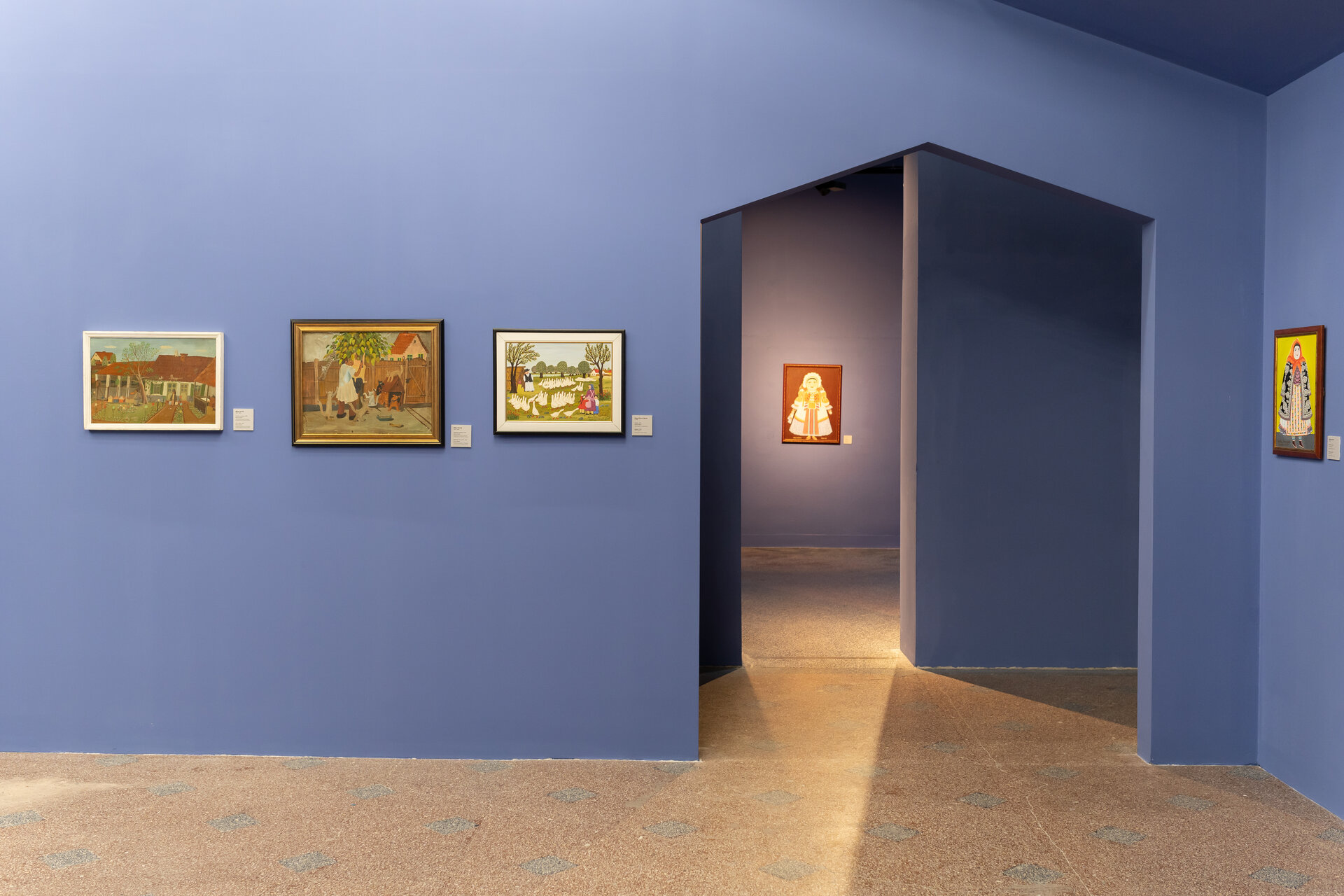
The exhibition is hosted in the Stefania Palace and the main intention of the project was to propose a succession of spaces of different sizes and intensities that lead you to a final "destination" - you start from home and end up in a "house". The entrance is through a bright corridor that refers to the habits of the old iconographers who took a moment of rest to rinse their eyes before starting to paint. Neutral colored drapes propose new limits of space and a new dynamic; in this way, the visitor enters an atmosphere and begins to assimilate the energy of the exhibition and the space.
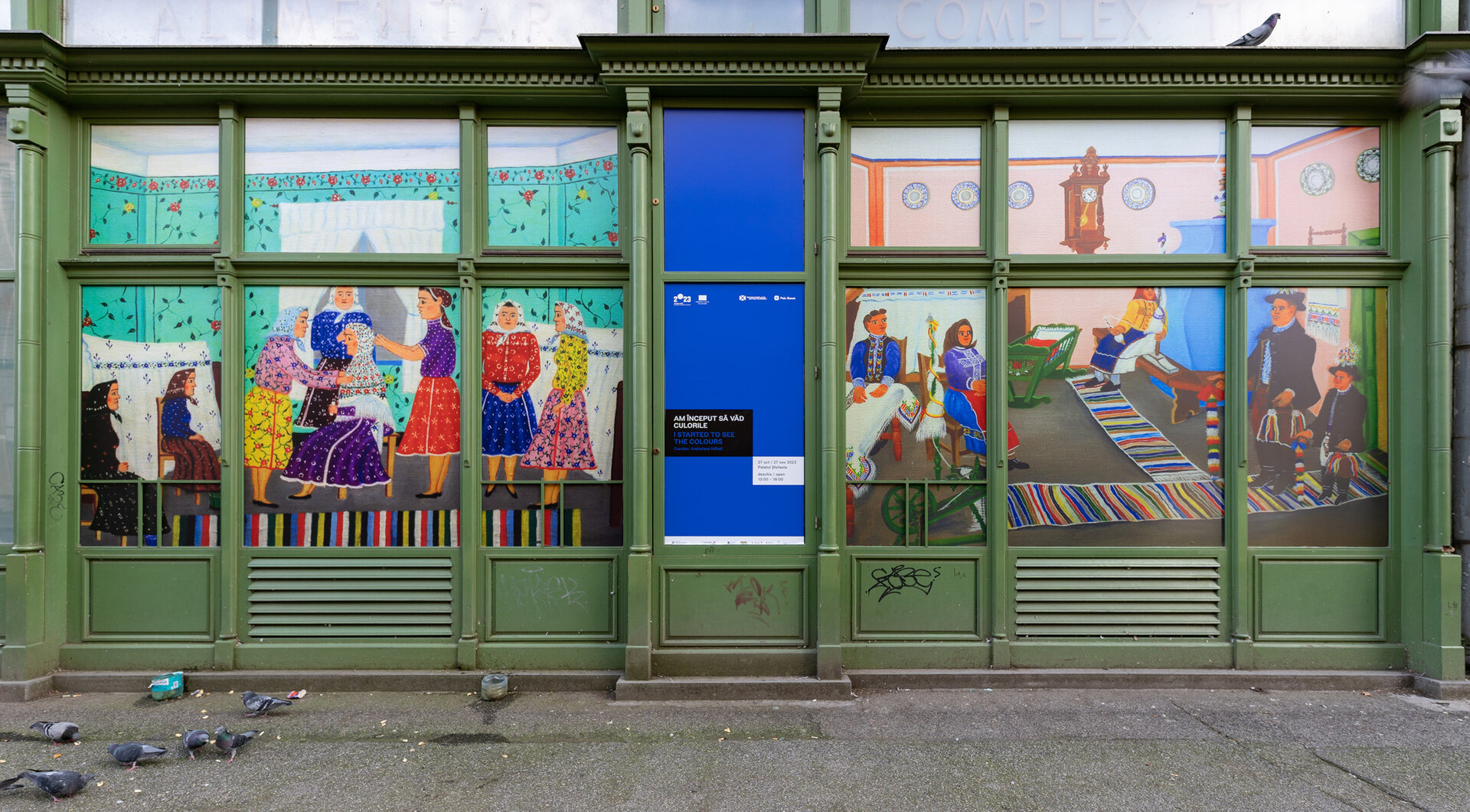
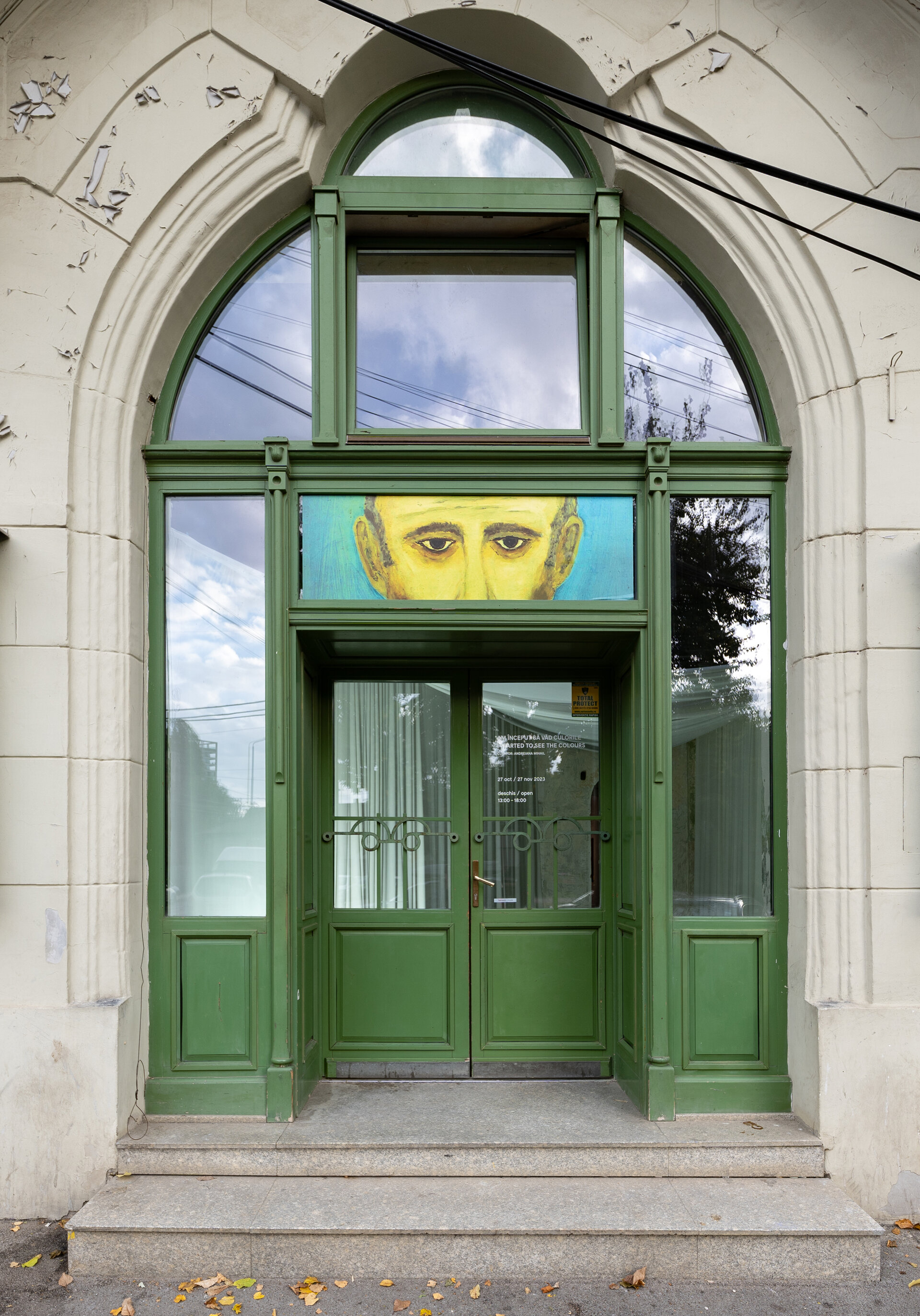
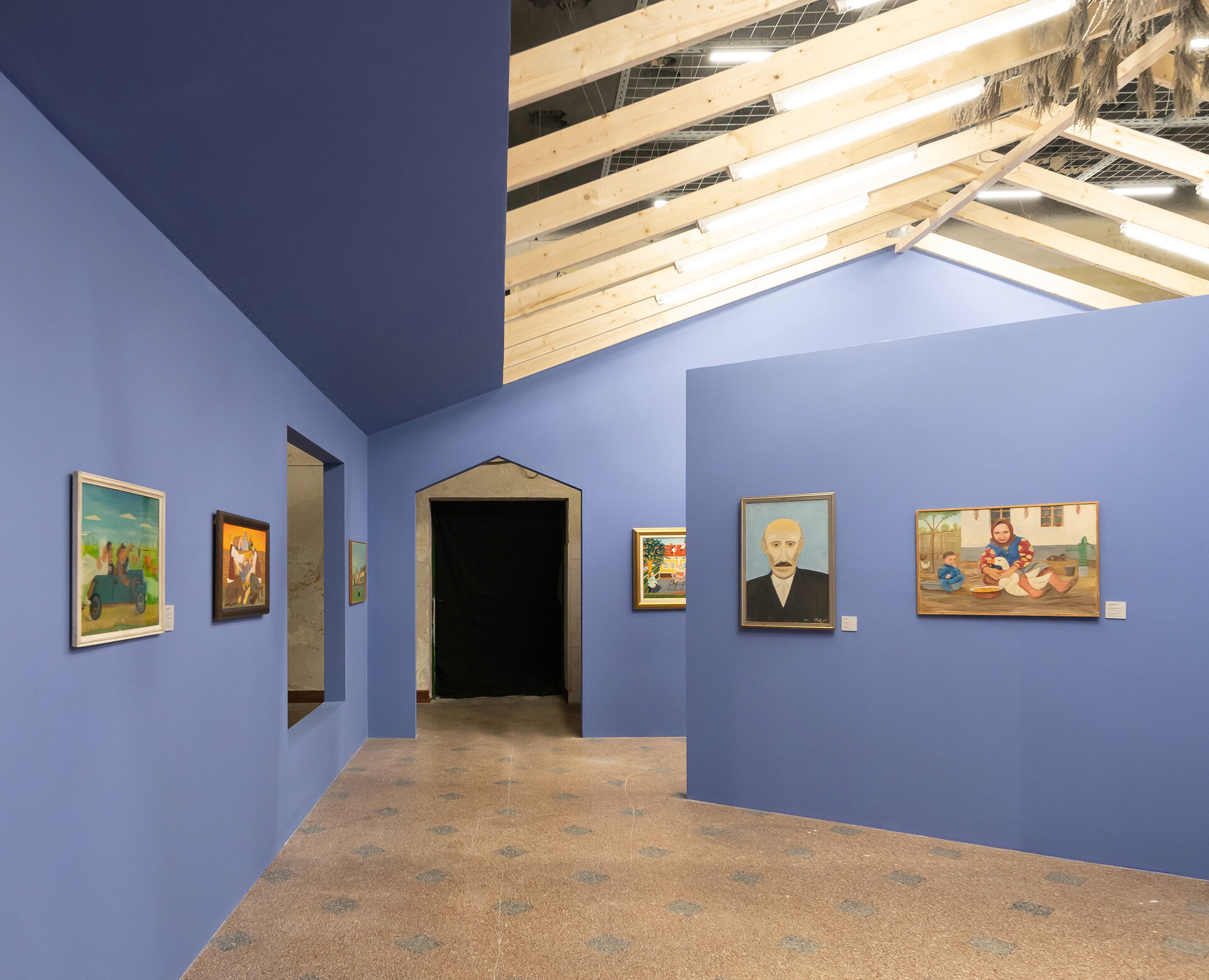
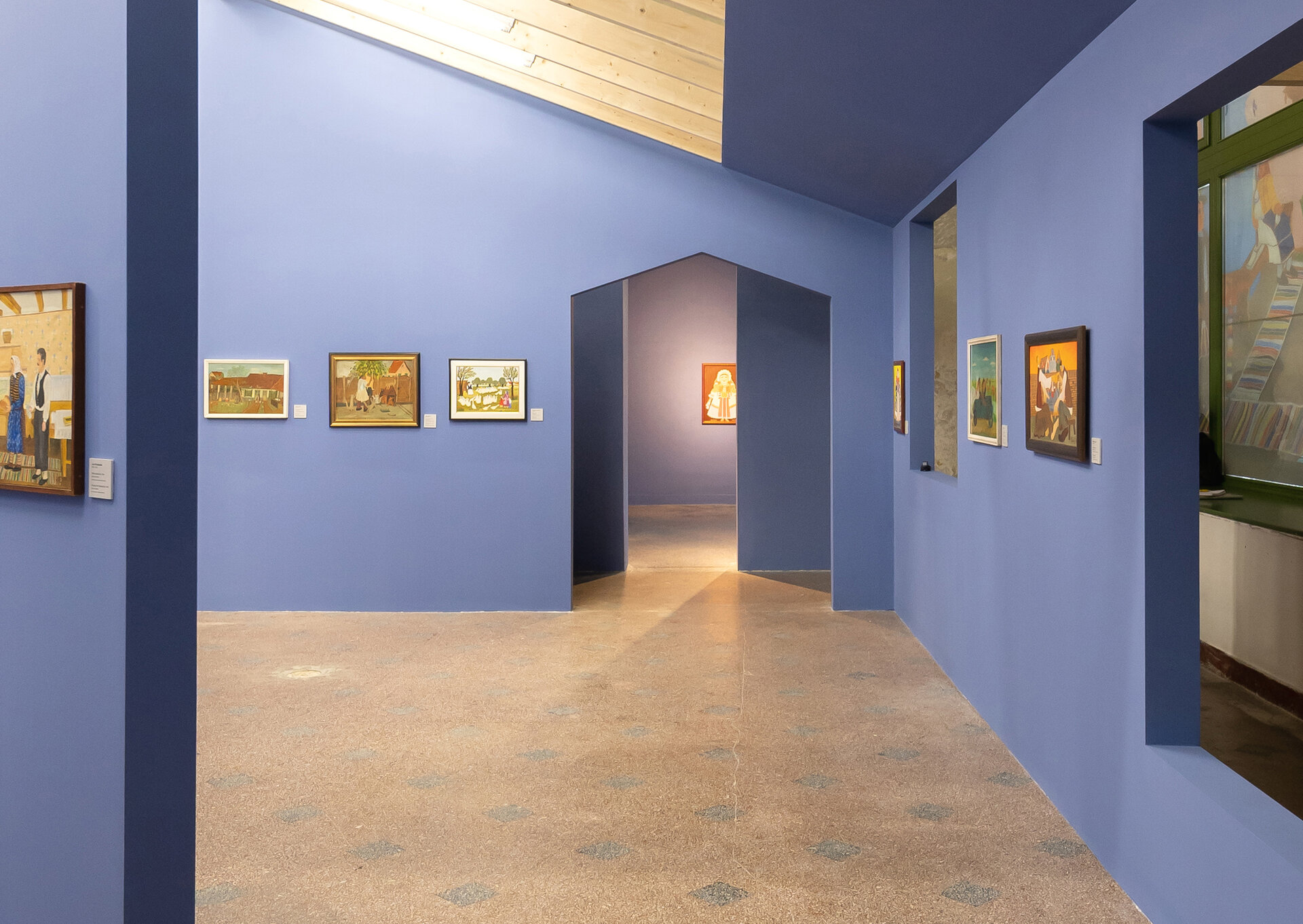
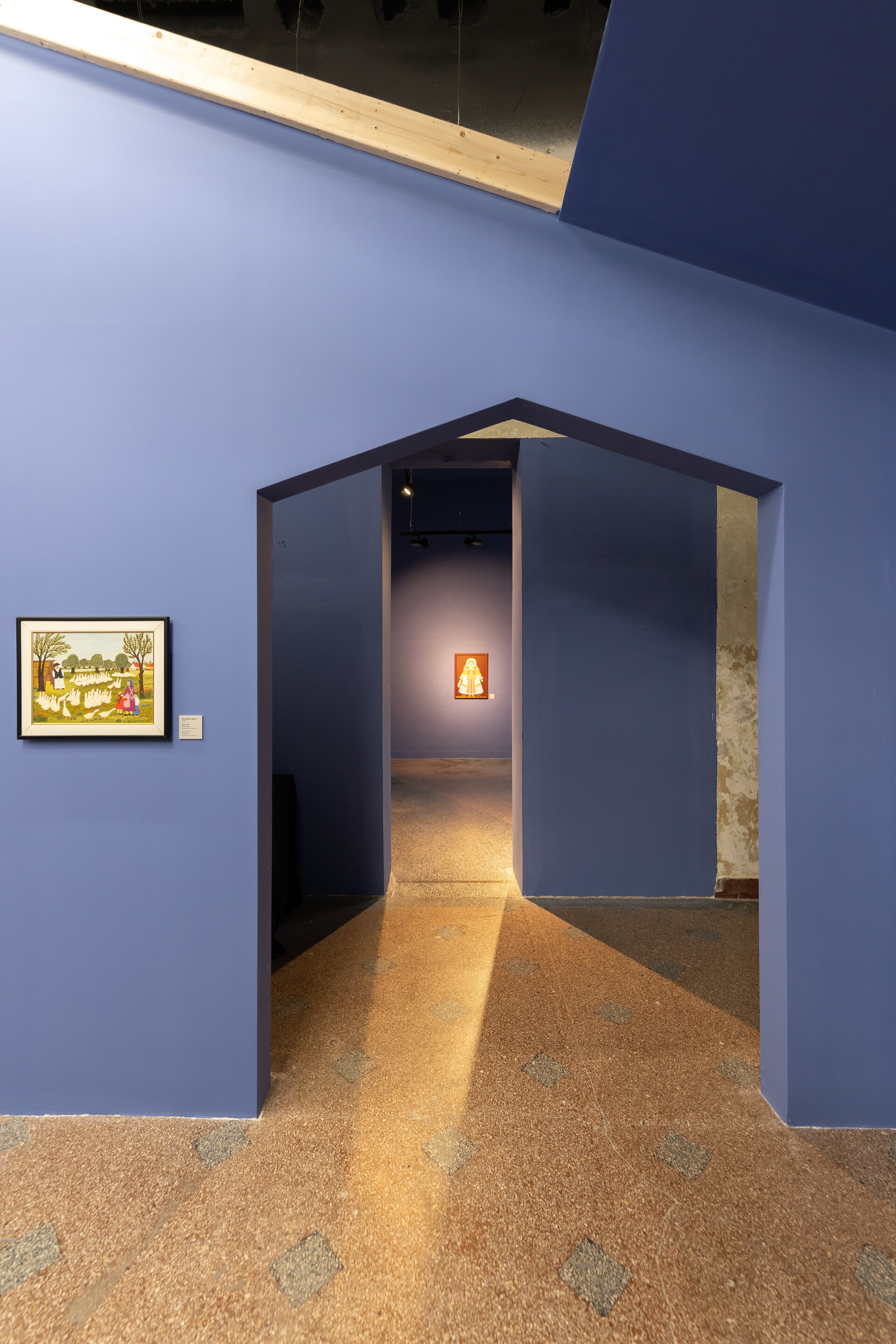
The main idea of the house in the house here has many nuances. The first objective decision was not to touch or finish the walls of the palace and then an independent solution resulted. The next important point was that the solution should contain or be composed of a system that can be dismantled and replicated in other spaces, and finally, the content of the exhibition which represents an amalgam of still-frames from everyday life and/or life" to the country" led to a thought of having visitors under one roof. Three clear corroborated points led to the idea of house-within-a-house. The construction was done entirely on site. The relationship with the existing limits was studied in the sense that the entrances were suitable and oversized according to the needs and the existing route, the "window" gaps propose a new rhythm in dialogue with the existing facade. From here there is also an interesting detail - you can be inside the Palace and at the same time outside the house, seeing the exhibition.
The interior route is solved by articulating the existing central pillar, as an element that generates spaces and forms different rooms that define both the route and the varnishing. The entire ground floor of the palace takes on a human dimension. The energy of the house results from the relationship between the domestic elements (wall-window, window-door, fireplace-corner), so well rooted in a collective memory
In a last over-dimension, the whole roof is open to the existing, with the visible structure to impose a rhythm of the space and a structure of the existing lighting. Lavender bouquets, picked/gathered locally, solve a problem of comfort and the olfactory trail present in an intervention in an old building.
Gathered together, there is a fundamental idea that I repeat, namely the depth of the proposal as it progresses and the stratification of energy in several dimensions - physical, sensory, visual.

Exhibition and Scenography Design

- Constantin Brancusi: Romanian sources and universal perspectives
- Romanian Design Week 2024 - Central Exhibition
- “Below ground”, the permanent exhibition of the archeological museum in Bergen
- I started to see the colours
- STVL 0.2 _0.3
- The Monster, the Square and the Laughter
- Original Spaces | Legalized Gestures
- “Dan Popescu” Exhibition
- Exfoliated
- Oblic Studio Showcase
- SIT_2324. Shibaura Institute of Technology, Architecture & Landscape Laboratory. Diplomas exhibition. Sessions 2023 and 2024
- Paper Boat
- Touch Nature
- EPHEMERA Pavilion
- /SAC Rezumat
- EXF_SIST
- VIM Studio x Decorum Stand, Archyfest 2024


