BUN Restaurant
Authors’ Comment
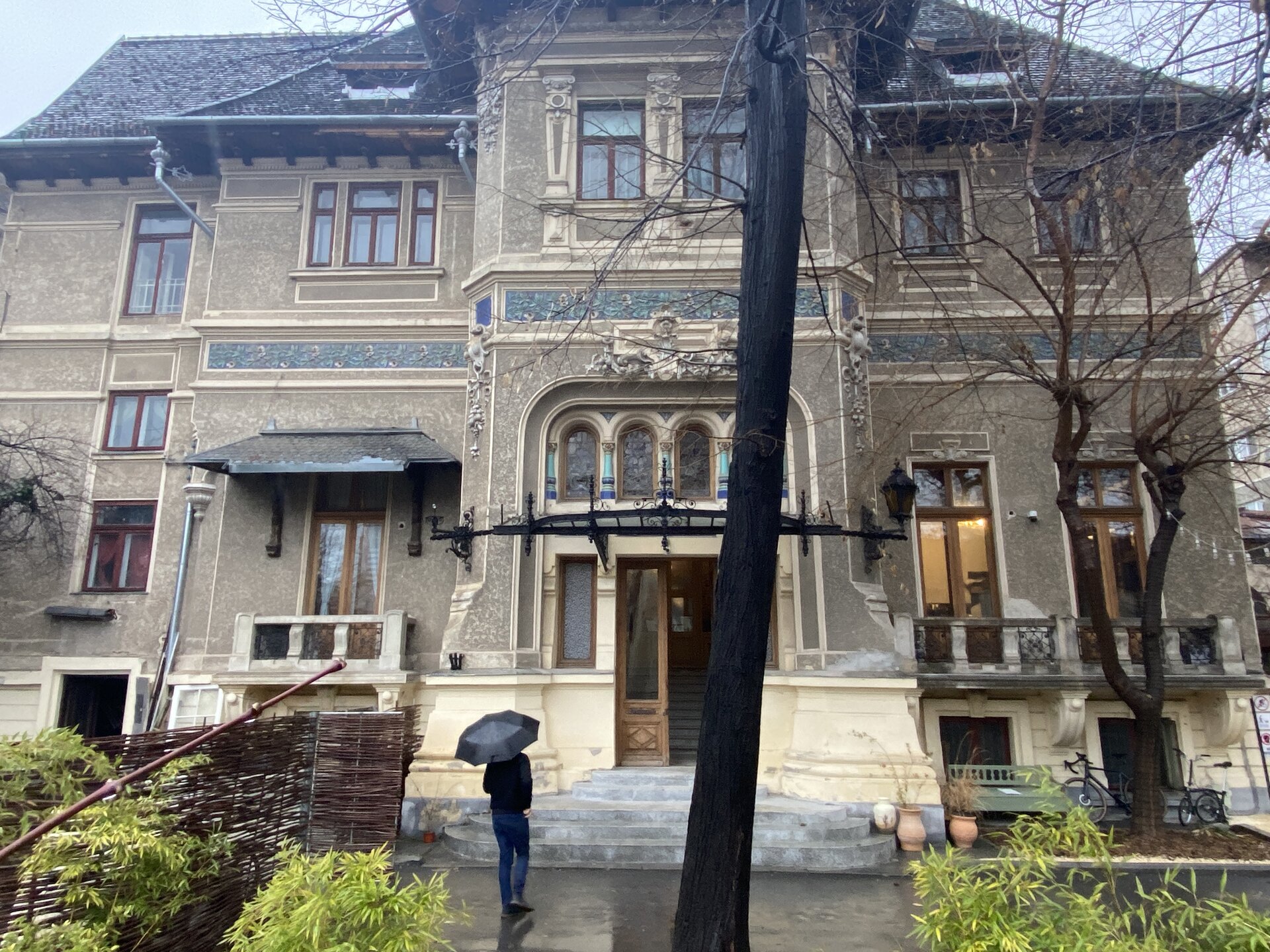
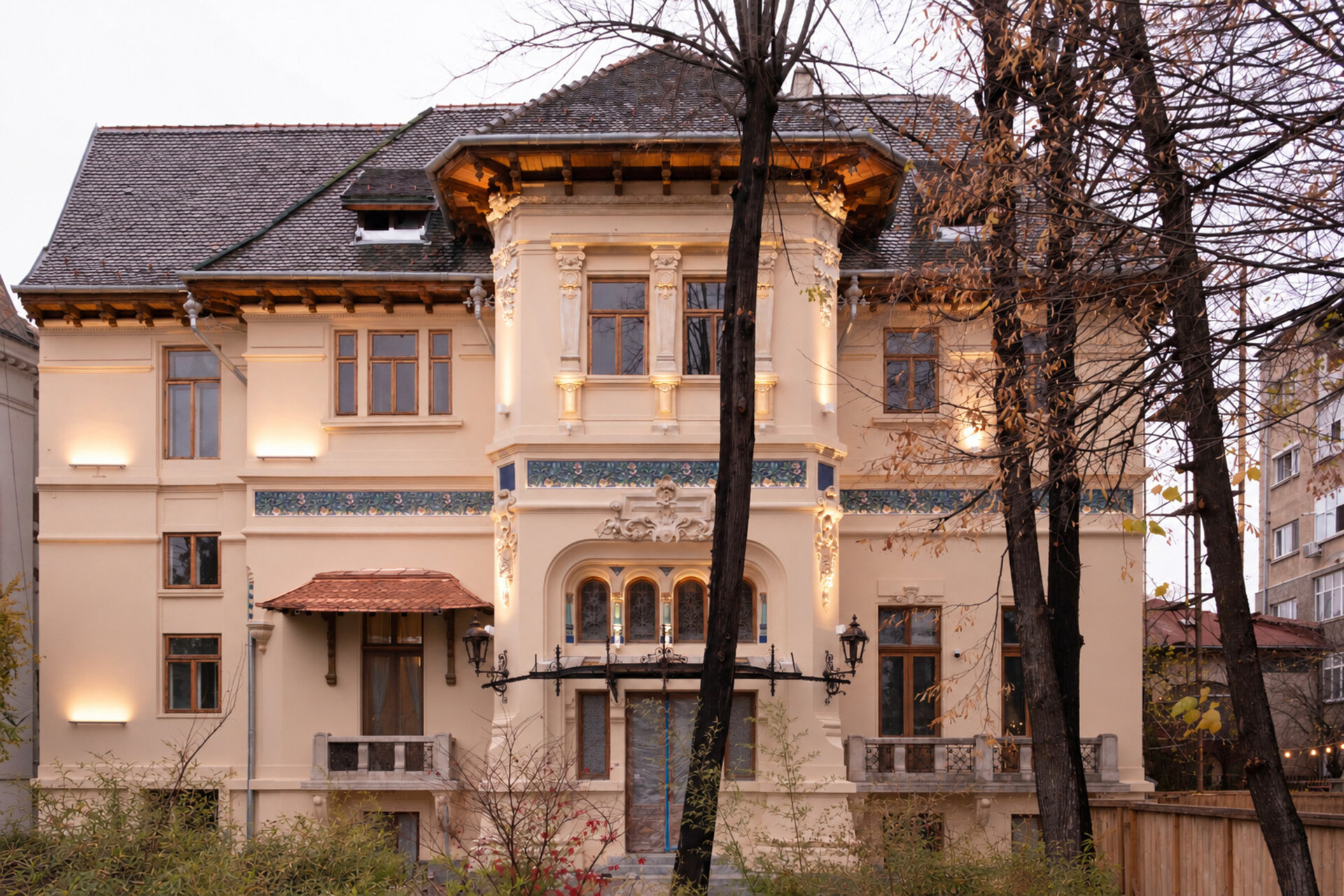
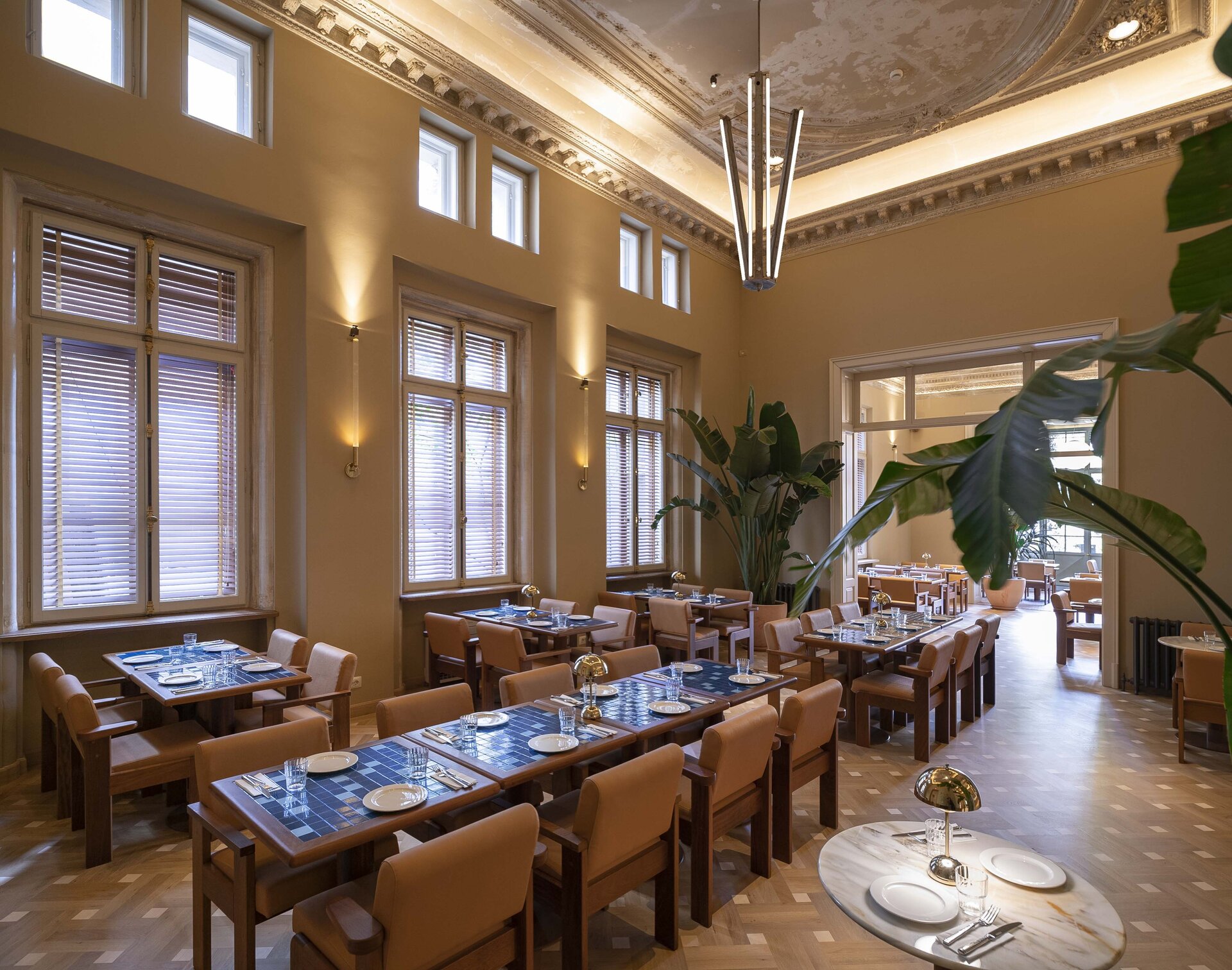
BUN is located in the Brătianu Residence, a sumptuous mansion built in 1896, disused for most of the last 25 years. Both the exterior and interior were in an advanced state of neglect. The building is not listed as protected heritage but both the owner and we have chosen to treat it as such.
There are lots of opinions and approaches in restauration: from keeping as found with minimal protection, to bringing everything back to original state, to inventing parts that never existed, to inserting contrasting contemporary elements, etc. We used a different approach for each element, depending on its condition, how relevant the present state is, history relevance, as well as how appropriate for the new function. We believe in an adaptive re-use as opposed to “museification”.
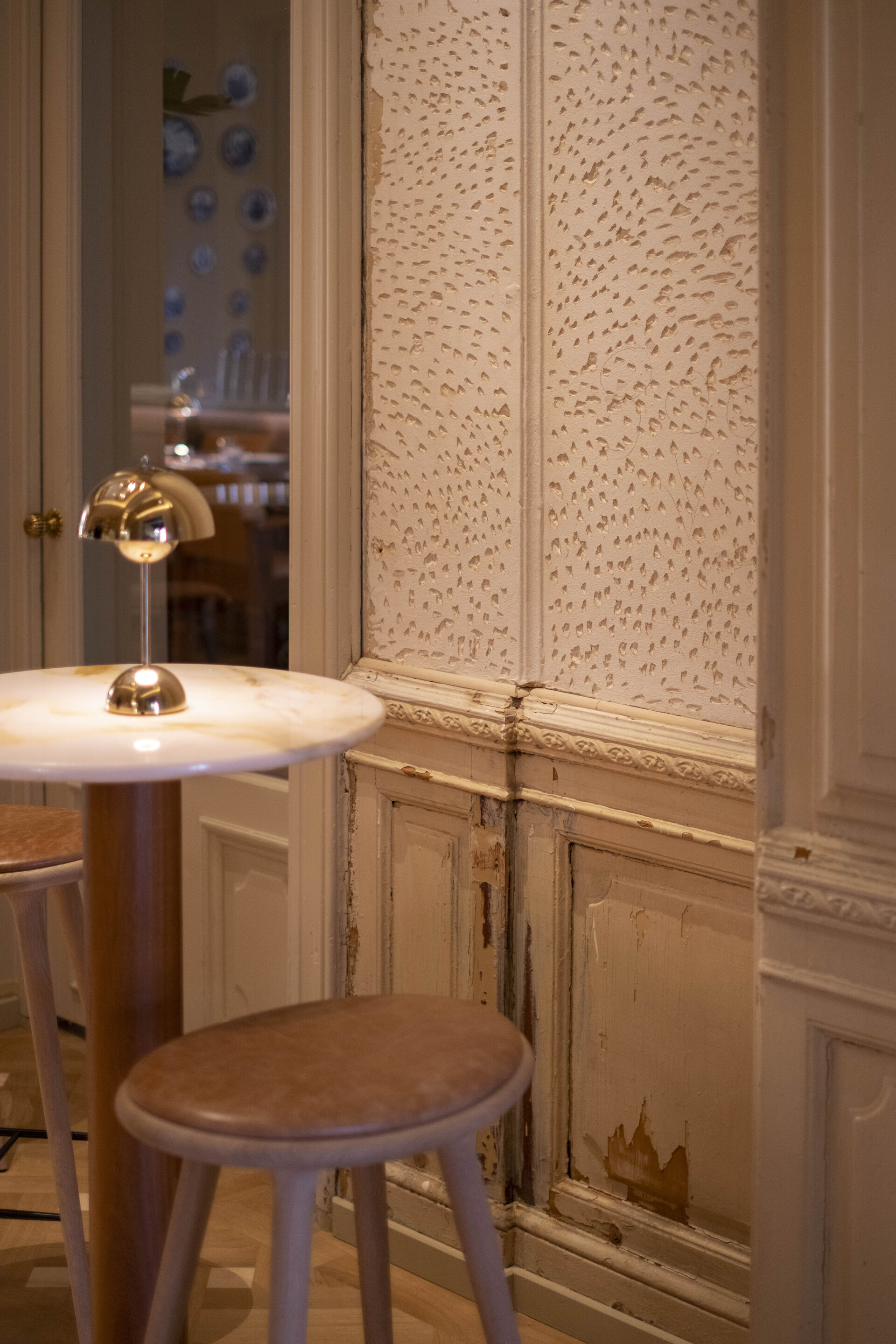
Restauration began with cleaning up to the original finishing, followed by deciding the appropriate level of intervention, while always leaving witnesses of the original layers.
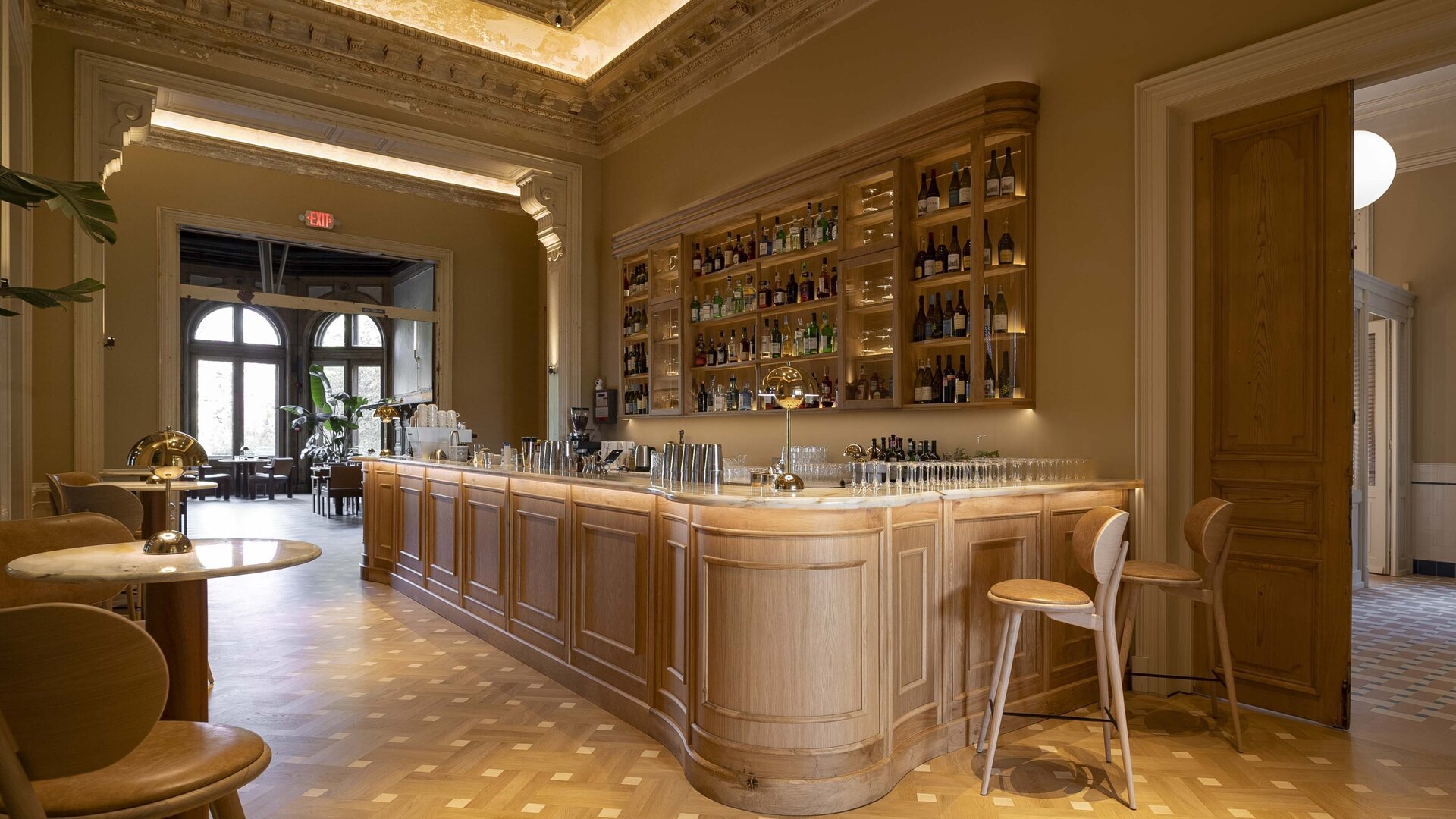
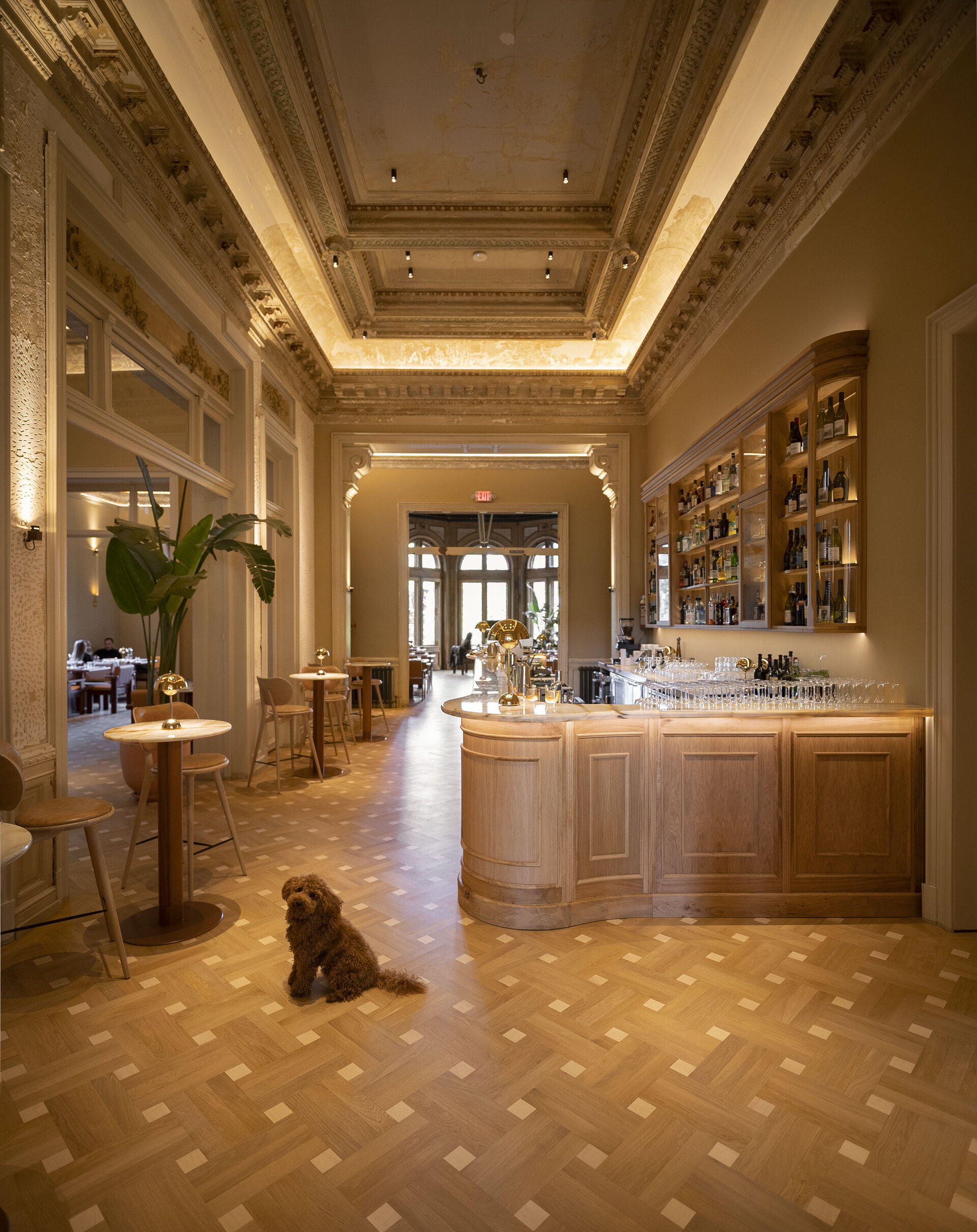
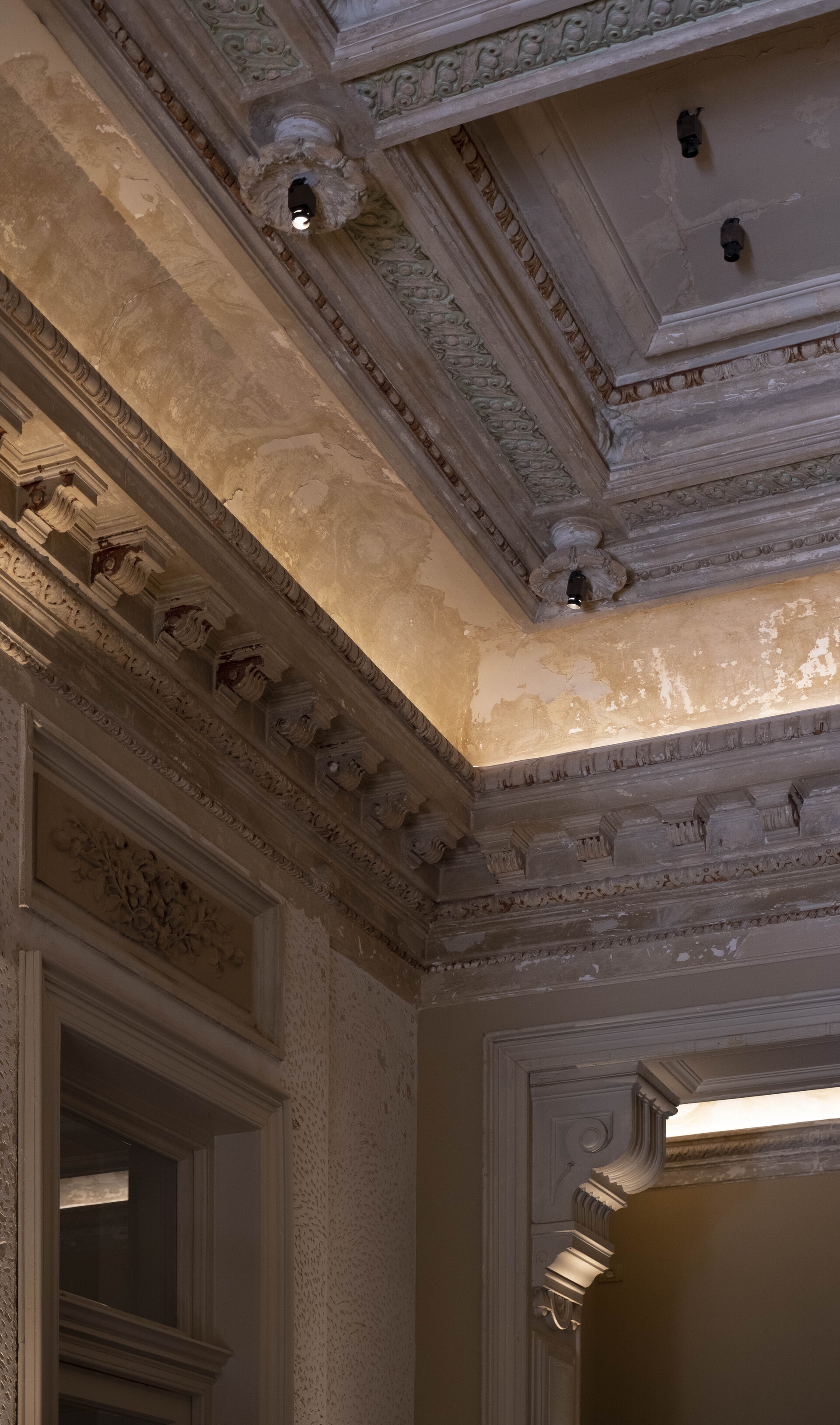
Sometimes, even mundane elements such as make shift fluorescent lights, a relic from the 60's, after careful consideration, were deemed as relevant for the building's history hence repaired and kept as found.
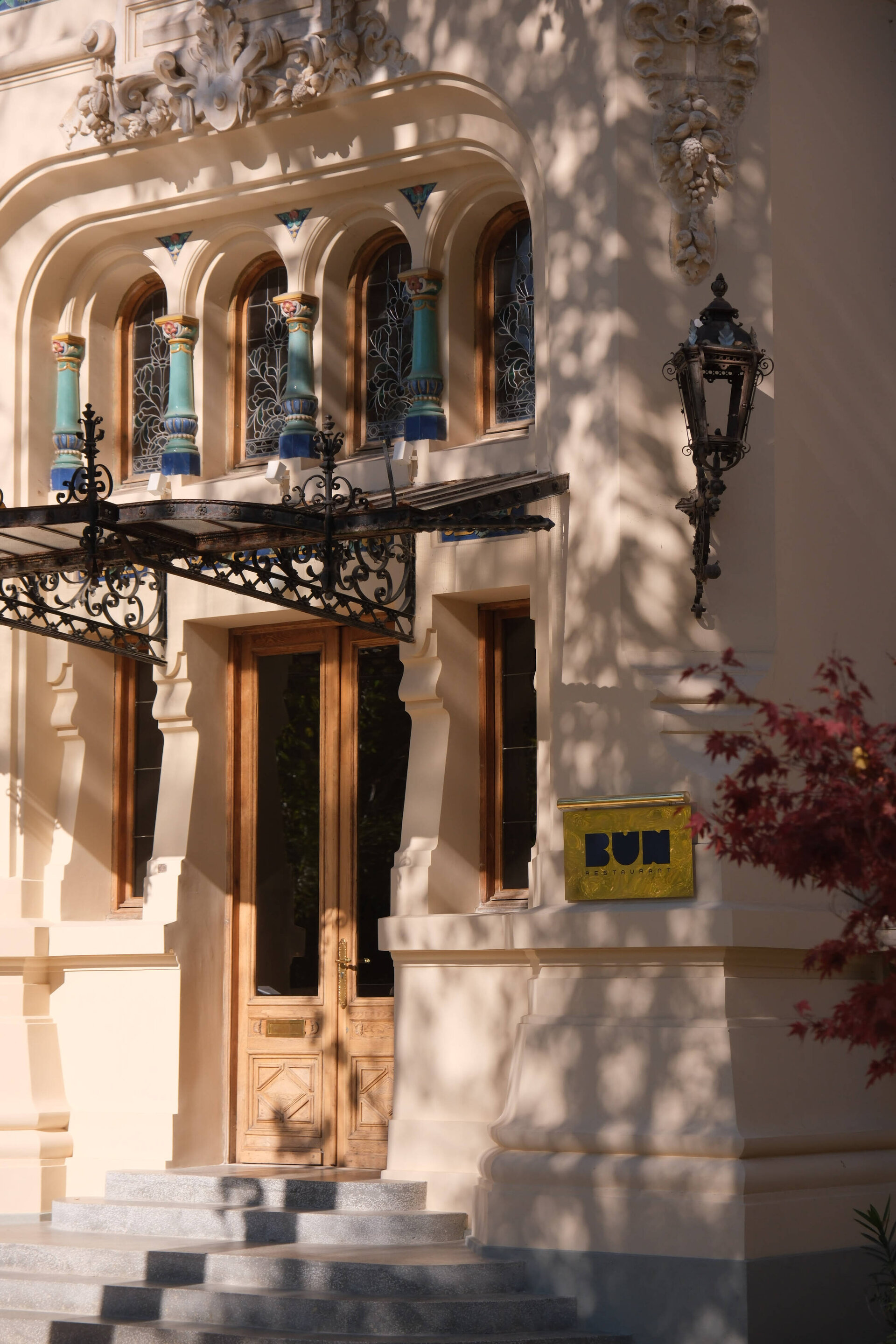
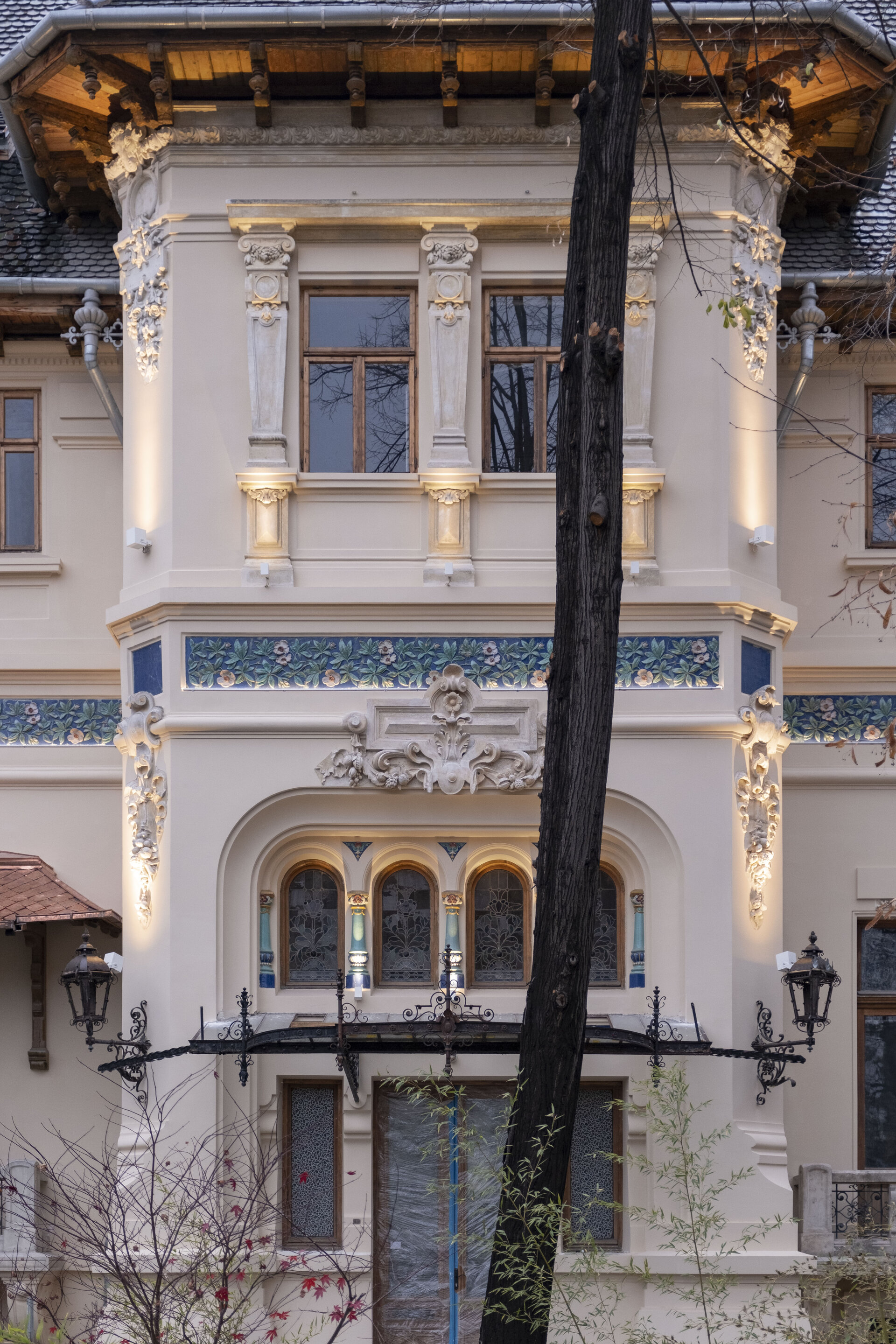
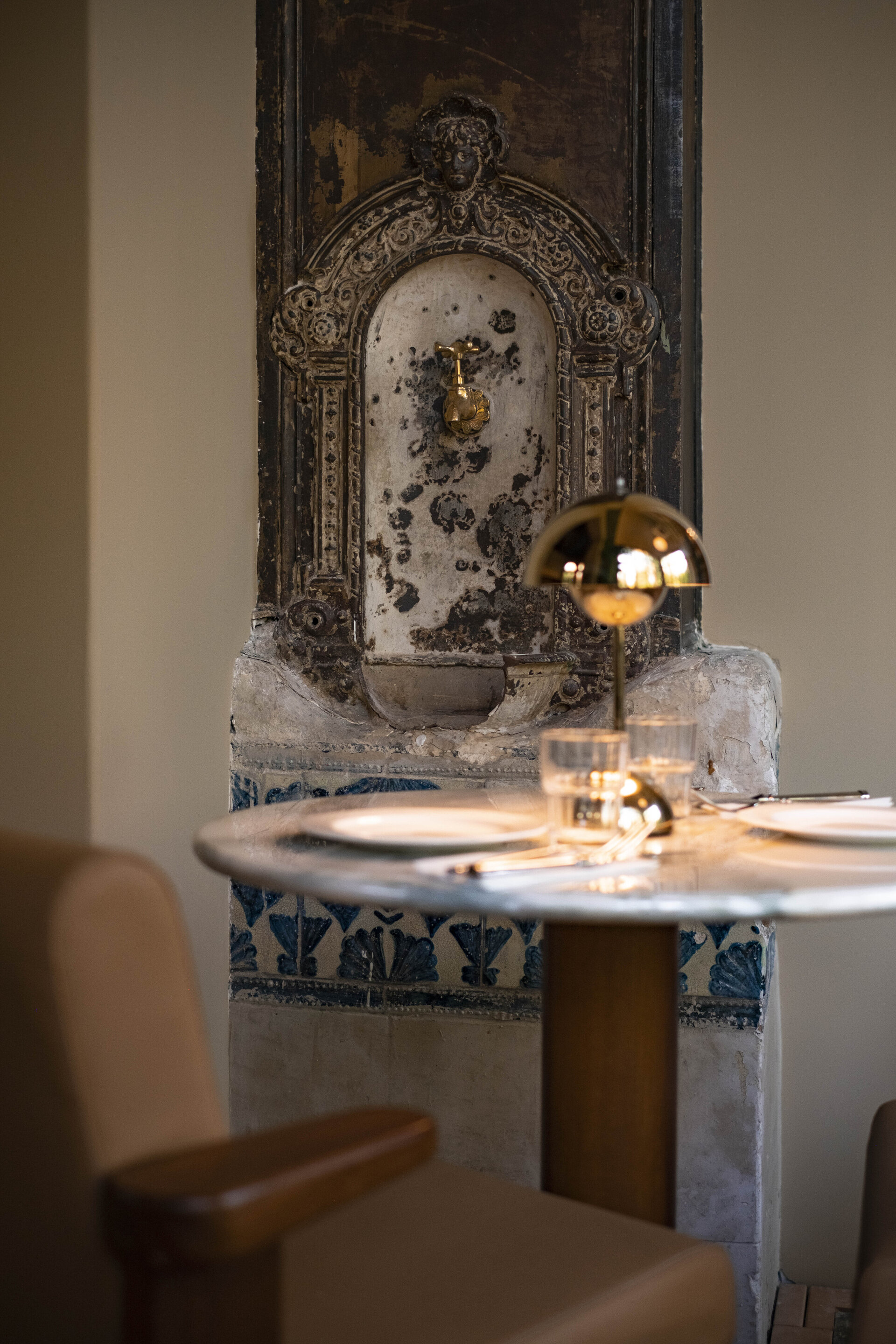
Stratigraphic investigations revealed that the cement-sprayed finish was a later intervention from the 1960s–70s. Successive uncovering identified the original delicate ivory-white, reinstated to restore the historic appearance and enhance the delicate blue-turquoise ceramics.
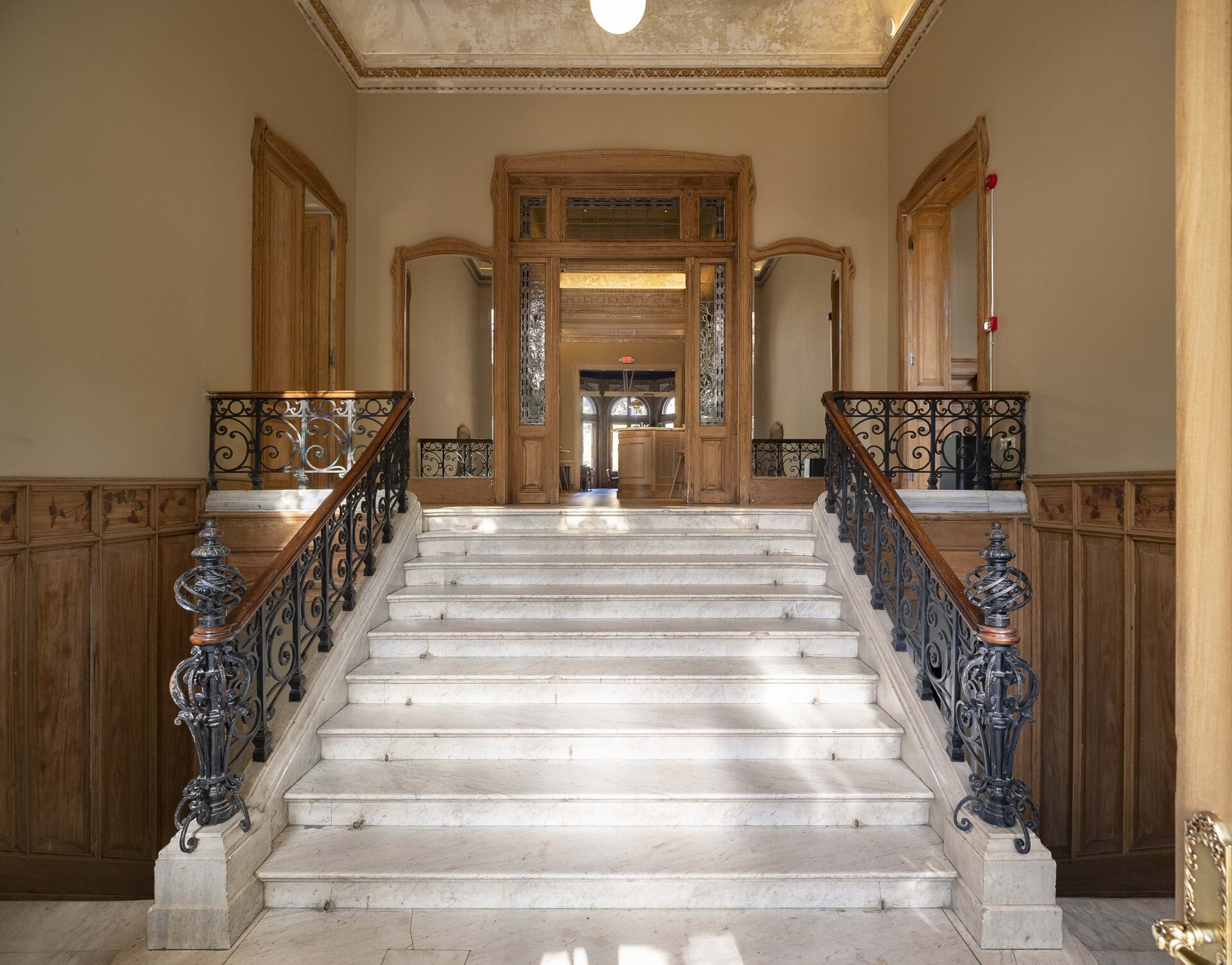
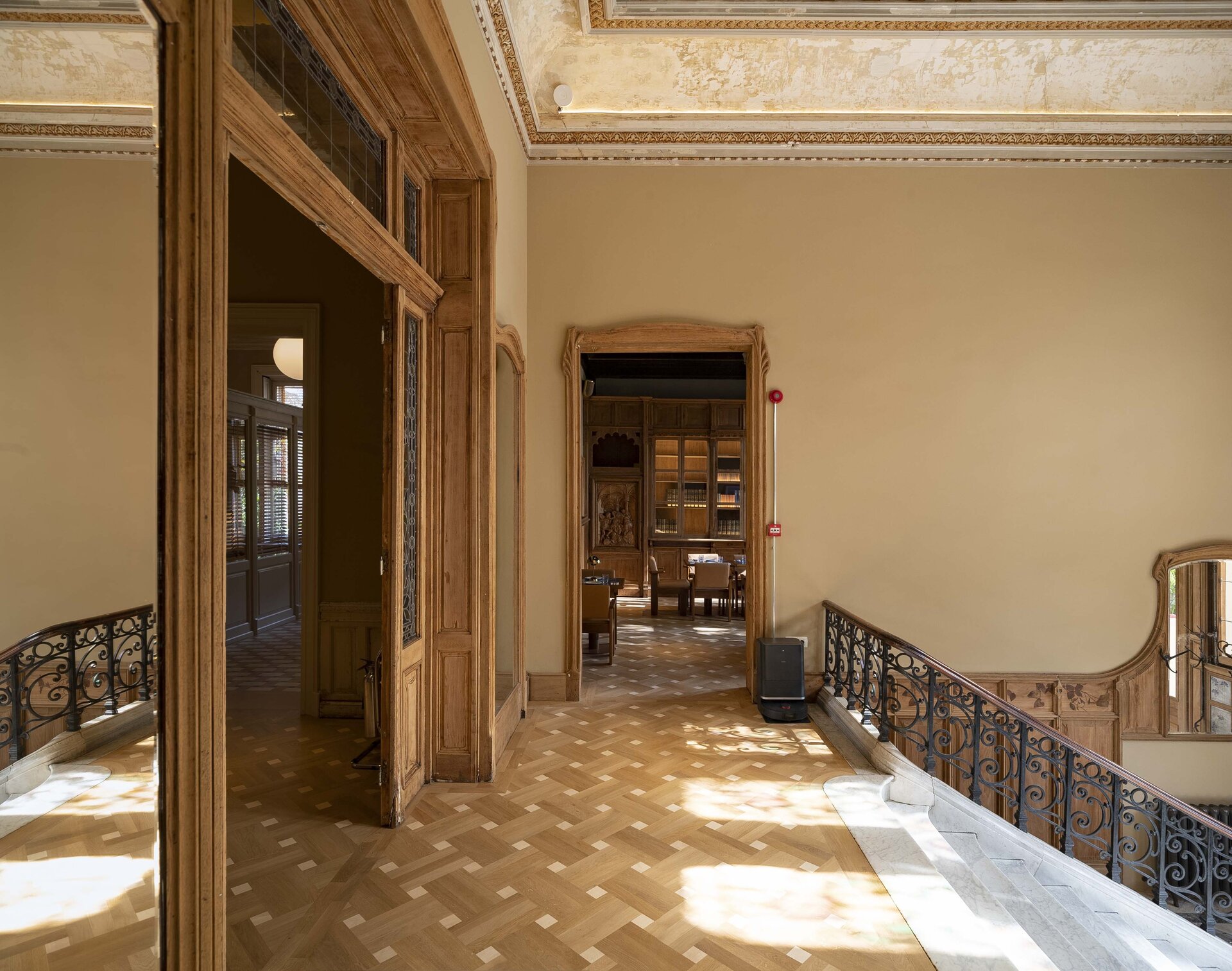
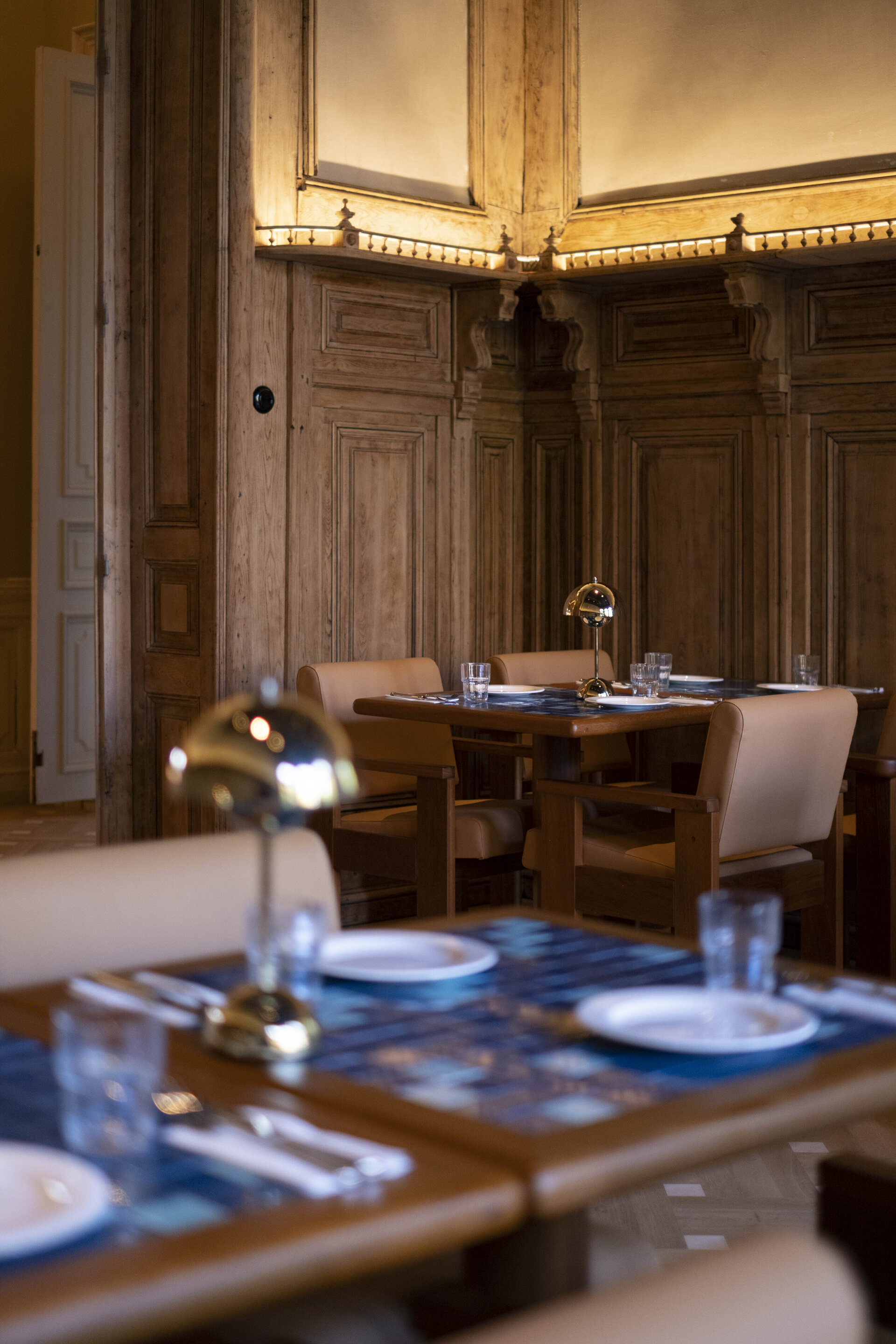
Timber joinery, eaves and soffits, stucco work and ornamental details were carefully cleaned and repaired. Existing crafted elements were preserved in their natural finish, retaining traces of original paintwork and historic patina as evidence of authenticity.
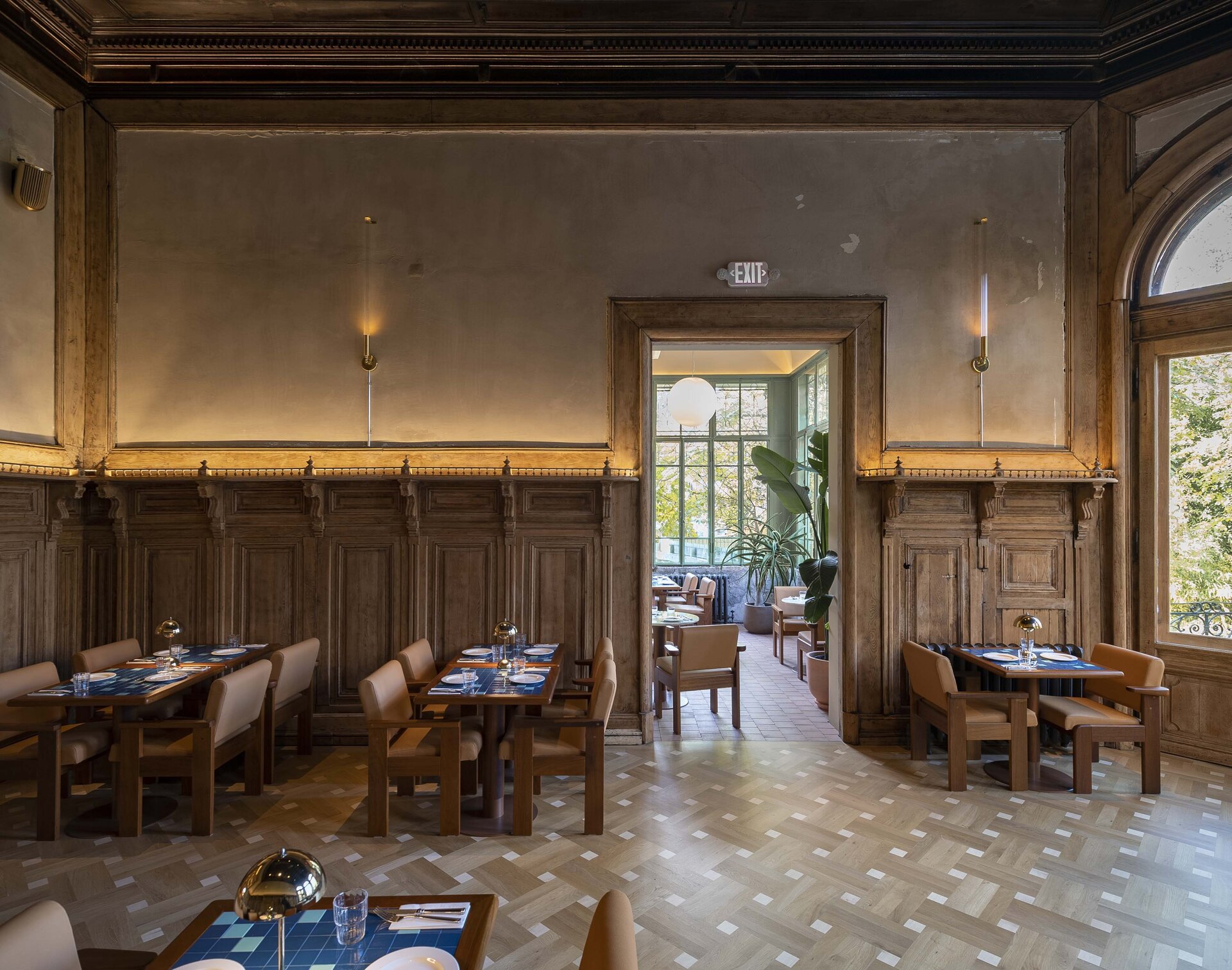
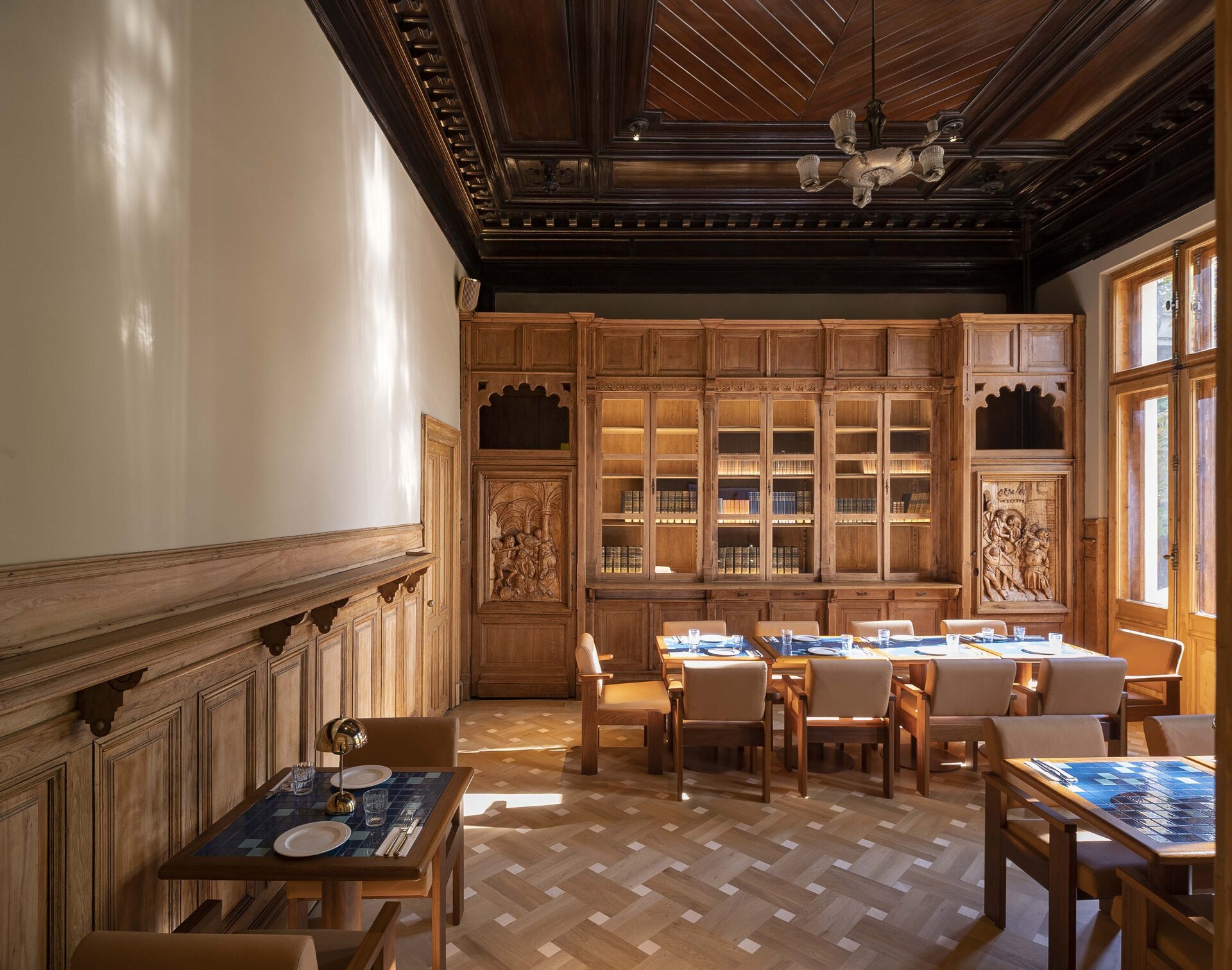
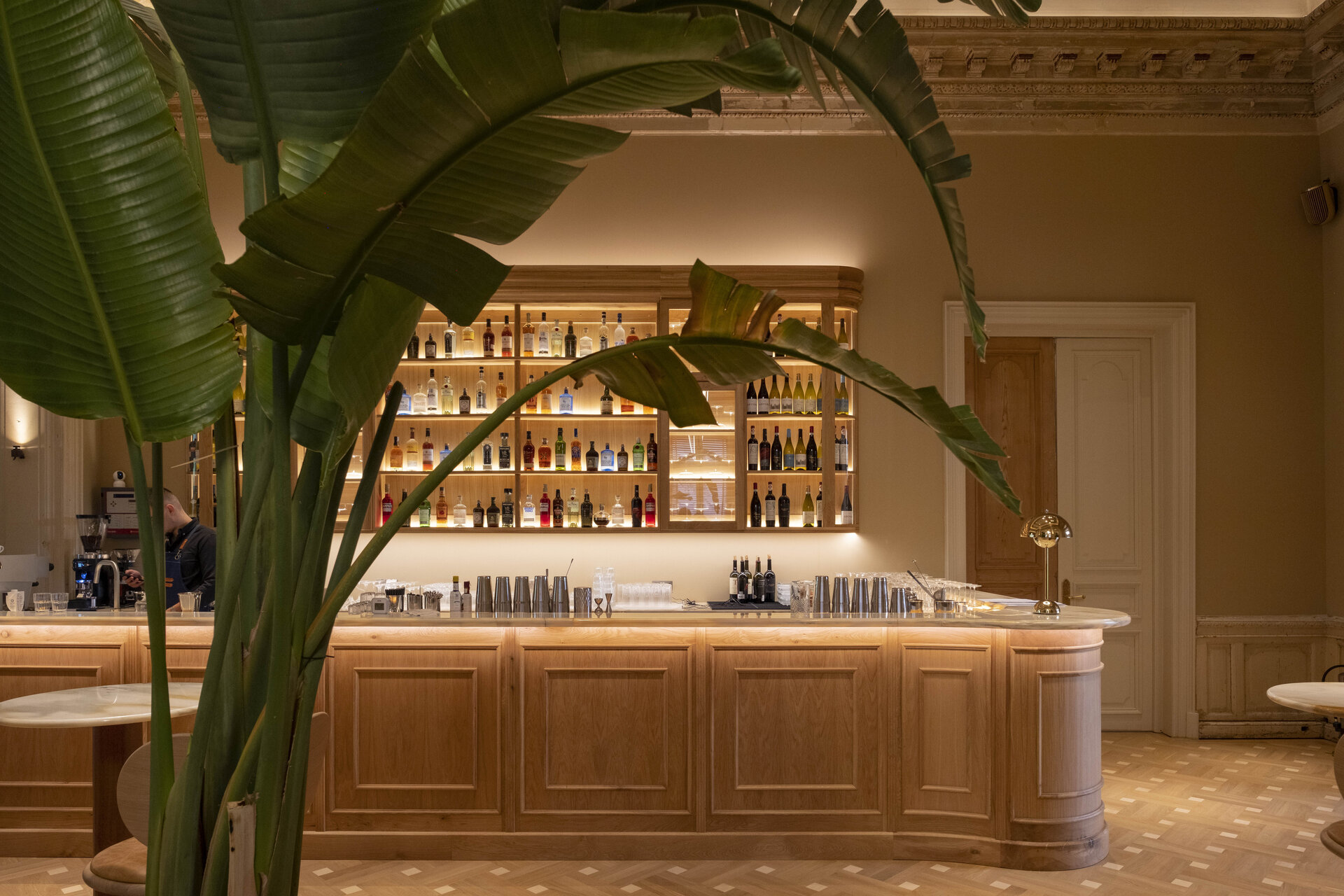
Ceilings were cleaned but we decided to keep them unrepaired, only stabilized, as a witness of history. Walls were partially painted in one of the original colors. After stripping the thick layers of paint from the doors some proved in need of capital repairs and were subsequently painted while on others the bare wood was too beautiful to be painted back, same with walls and wainscot. The parquet couldn’t be rescued and was replaced with an identical one in same grain, dimensions and pattern.
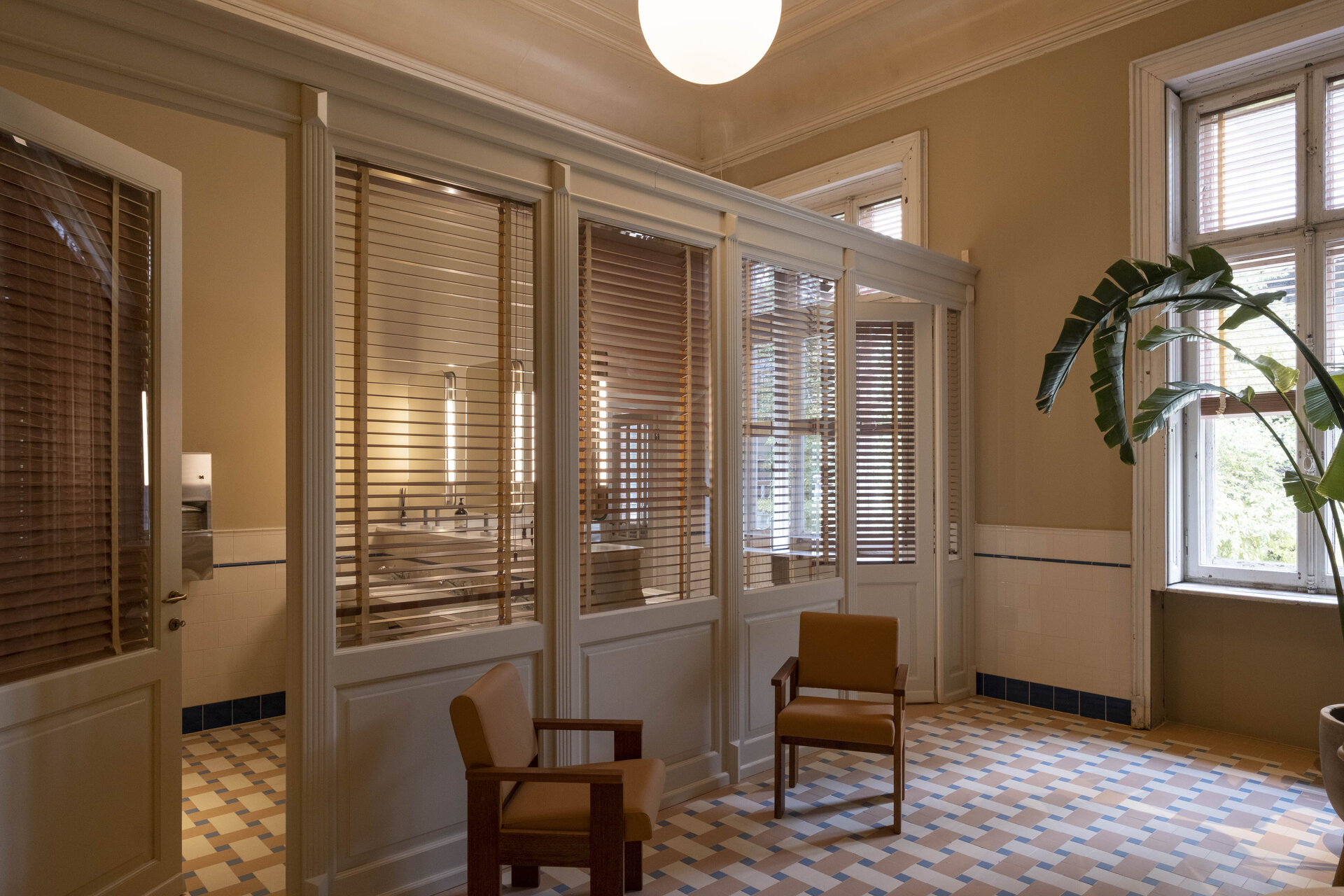
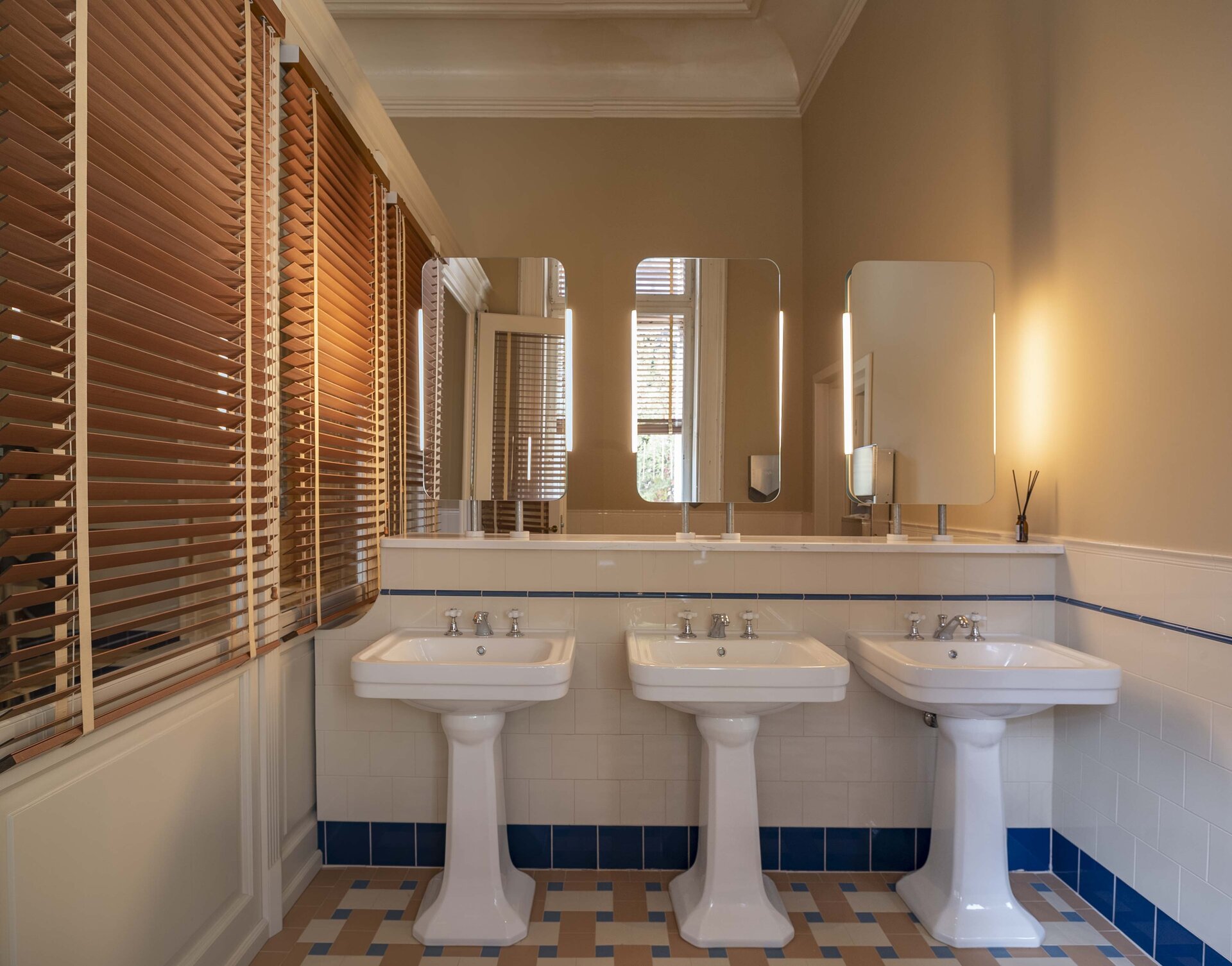
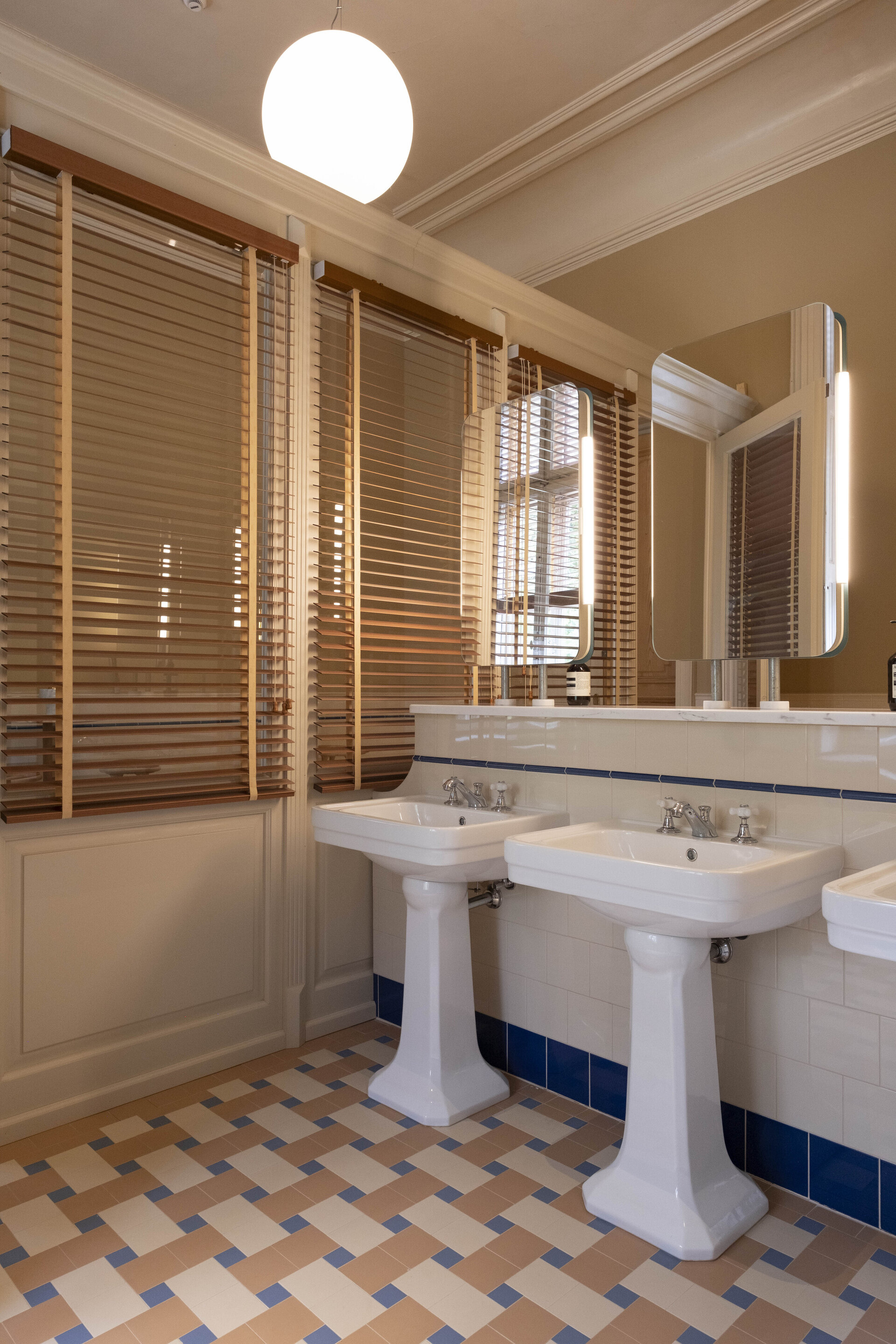
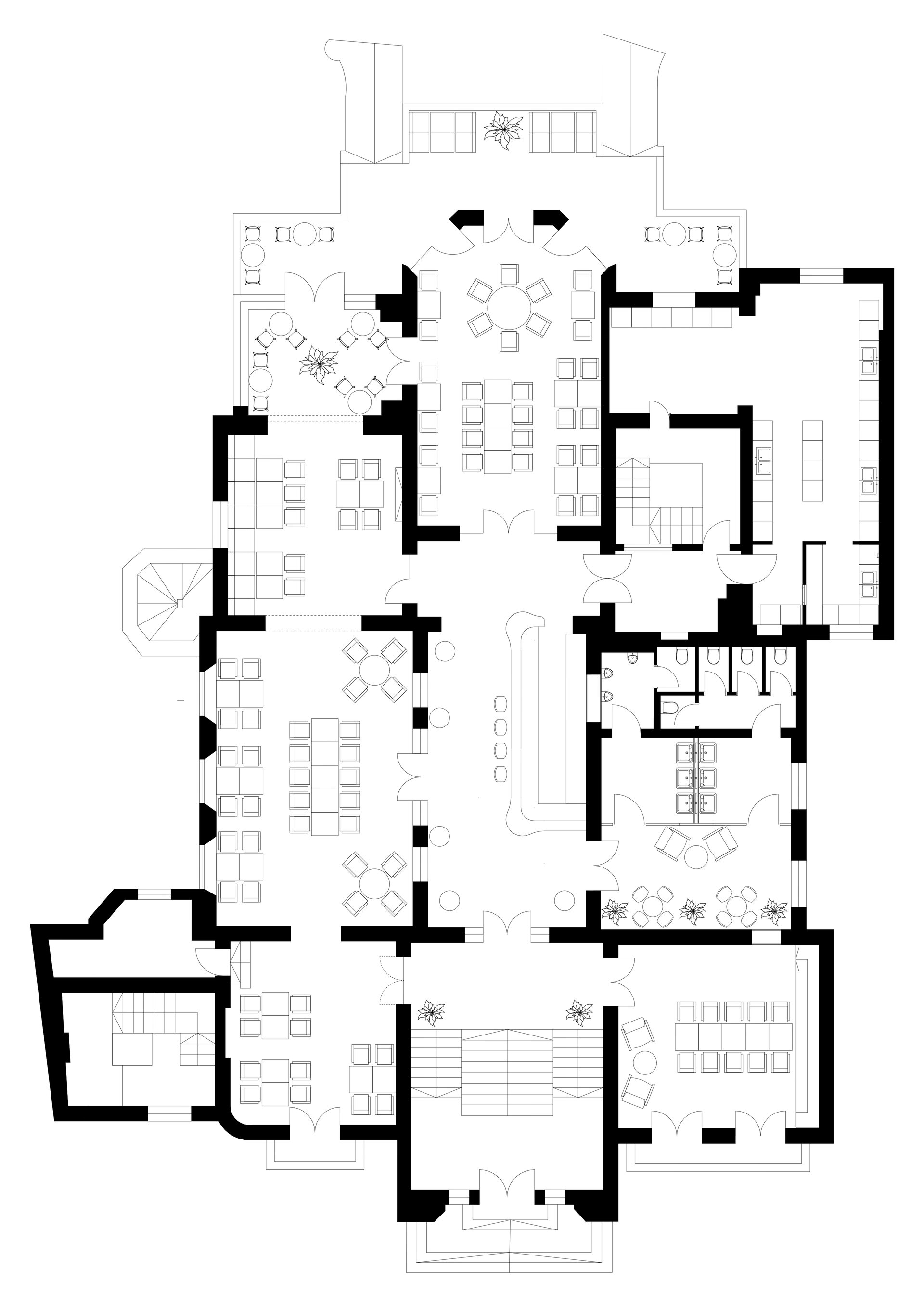
There were no restrooms on the floor so we sacrificed a grand room for them, as space is the ultimate luxury. The conversion into BUN introduces a contemporary use while maintaining the architectural character and material integrity of the historic building. Ceramic tiles and sanitary were all sourced from companies that still produce the historical catalogue from the 1900.
Restoration materials included Kerakoll Biocalce, a certified natural render based on pure natural lime, suitable for highly breathable applications and historic restoration, and Biocalce Silicato Puro Pittura, a certified natural wall paint based on stabilized potassium silicate, with natural alum and mineral pigments, for historic restoration.
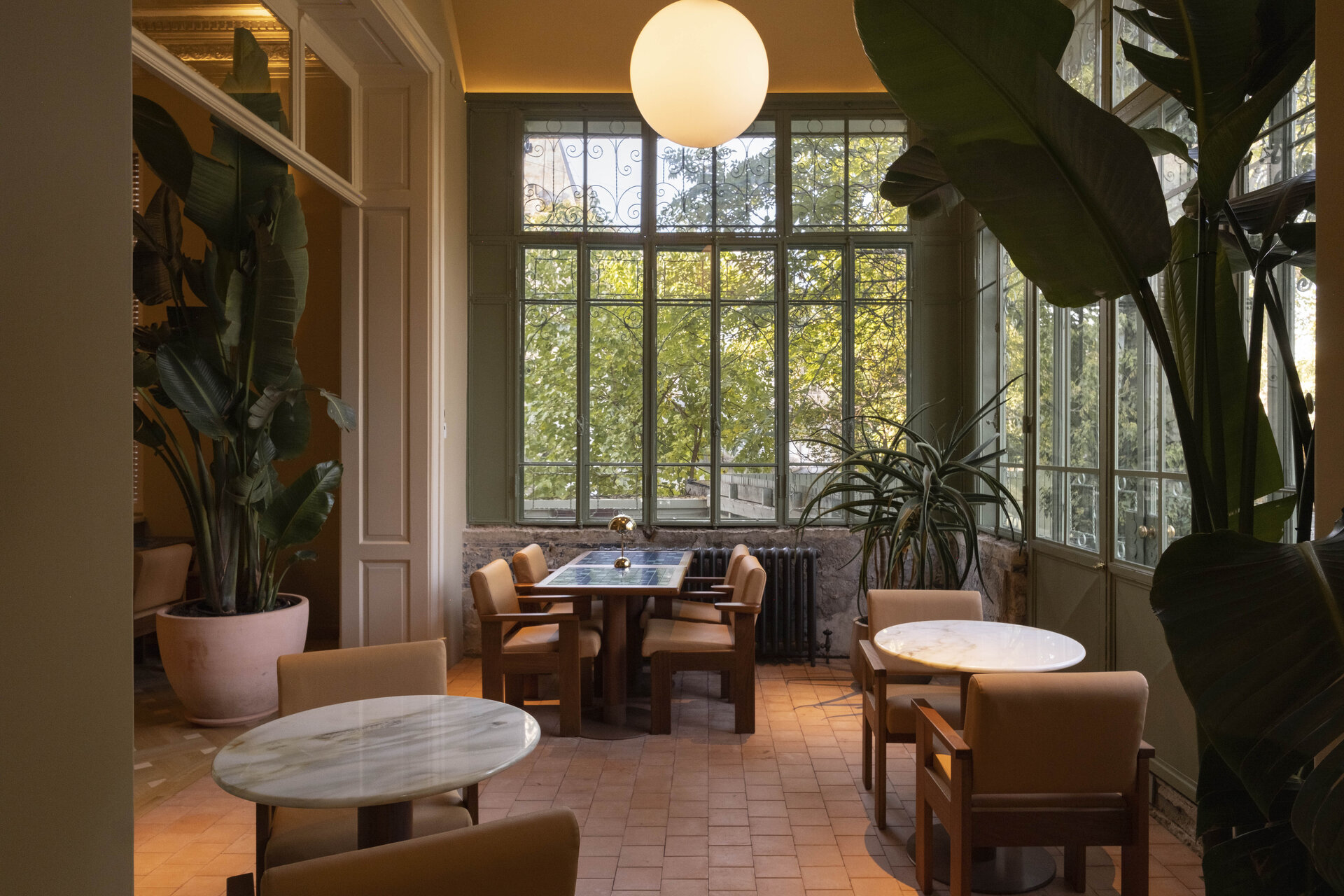
We specially designed the tables and chairs for this project as none on the standard marked seemed appropriate enough, neither contemporary nor period but a little bit of both. The table tops are manually covered in ceramic tiles in the shades of blue from the façade delicate ceramic ornaments.
It is a very singular example in a city famous for the neglect of heritage that such actions can be also commercially viable, that preservation of heritage is not a money wasting hobby as this is a private investment which proved extremely successful with the public.
Architecture and Heritage
- Restoration of the former princely residence – Slatina Monastery
- Administrative palace Bacău
- CARP Alexandria
- Structural Consolidation, Restoration and Adaptive Reuse of the Bărăției Street Building – Bucharest Historic Centre
- Rehabilitation of the Roman Mosaic Building in Constanța
- Adaptive reuse of the “Commissariat Building” of Alba Carolina Citadel as the Headquarters of Alba County Council
- BUN Restaurant
- Restoration and Extension of a Single-Family Home on Madrid Street, Bucharest


