RAD Sculpture Park 2026
Authors’ Comment
The Sculpture Garden as Temporal Distortion. Spatial Recontextualisations at Caro
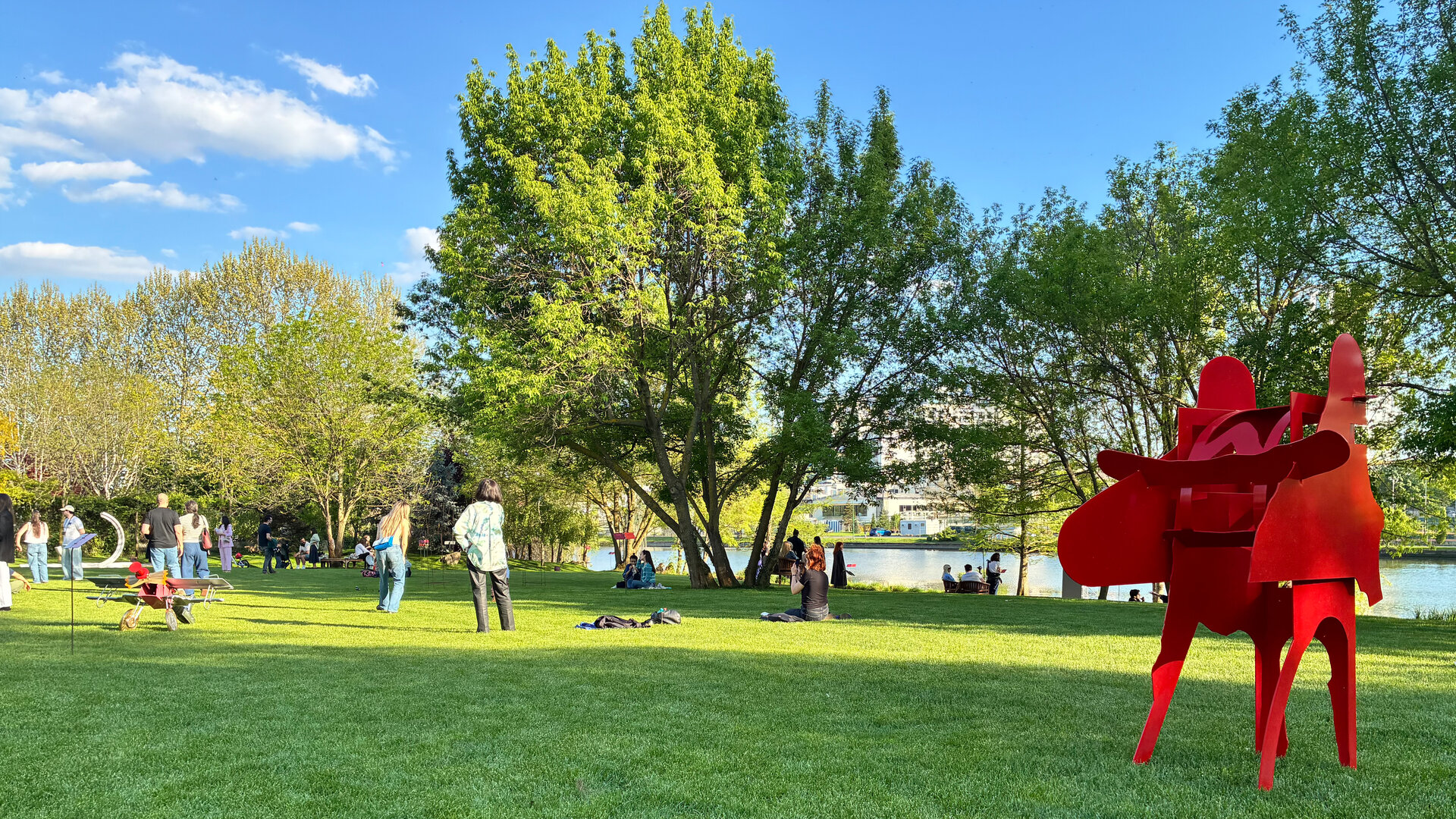
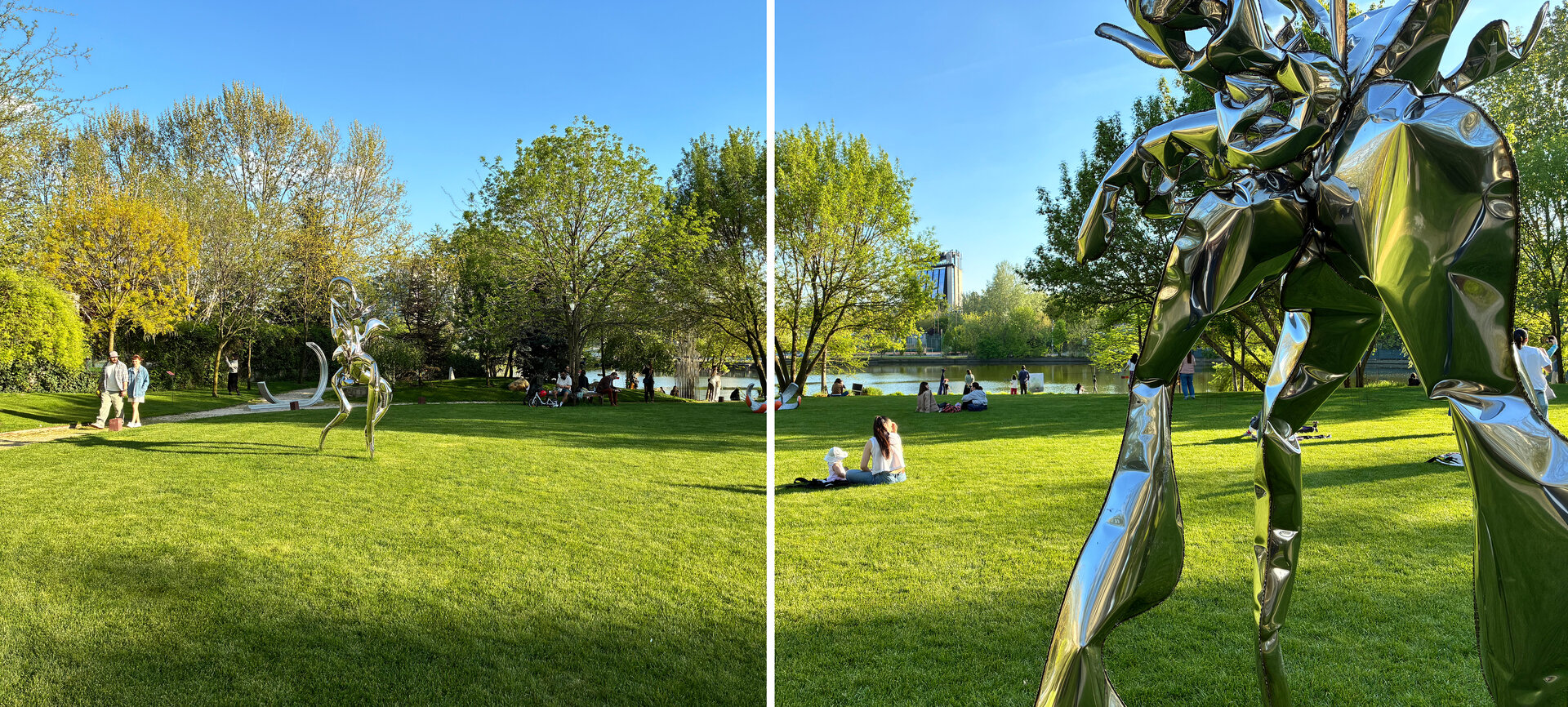
The curatorial operation within the Caro complex in Bucharest rejects the paradigm of landscape design or exterior decoration. We are not attempting to modify the garden, but rather to undertake an exercise in semantic recontextualisation. Within a site marked by historical layers, from exposed brick and reclaimed industrial halls to contemporary hotel insertions, the existing architecture and vegetation remain intact.
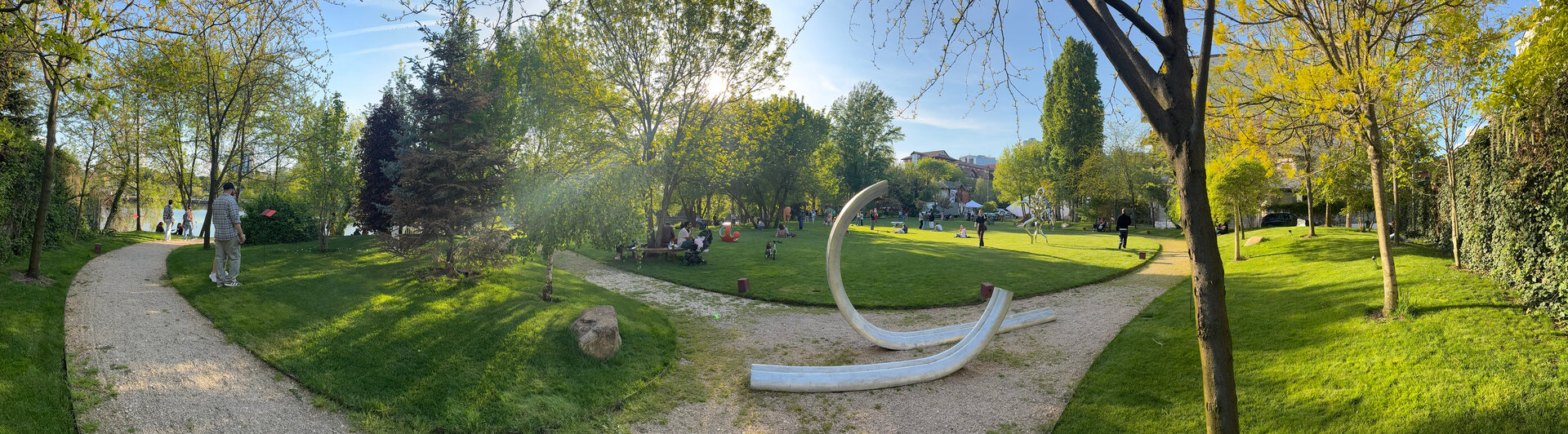
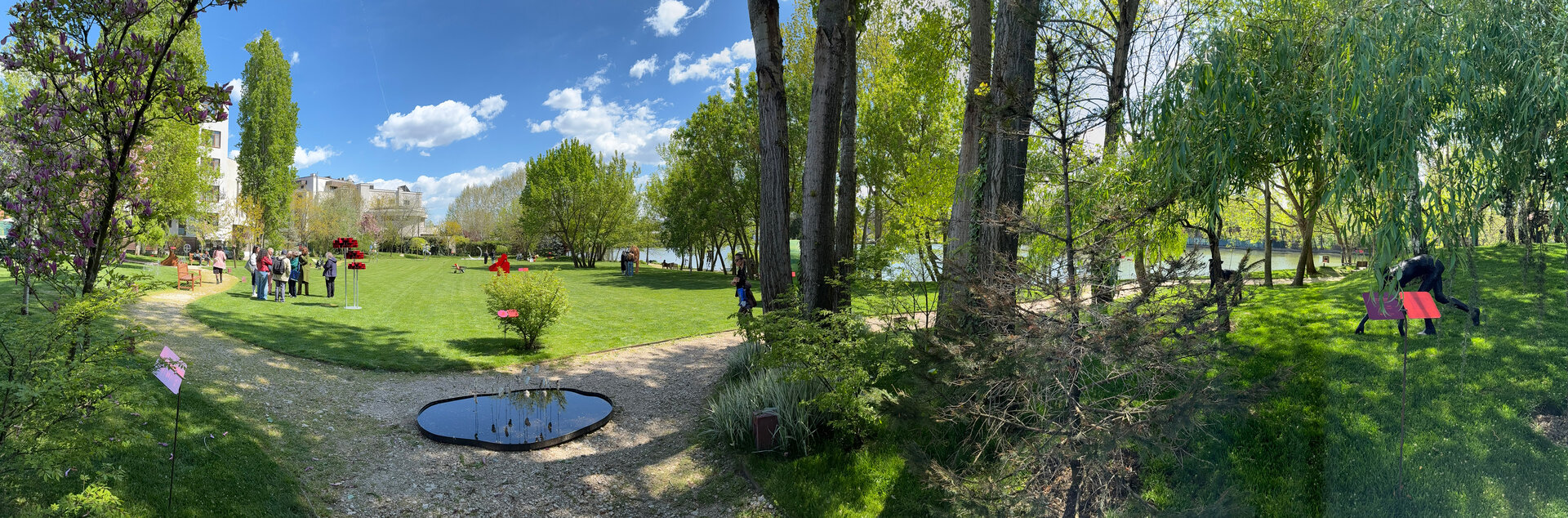
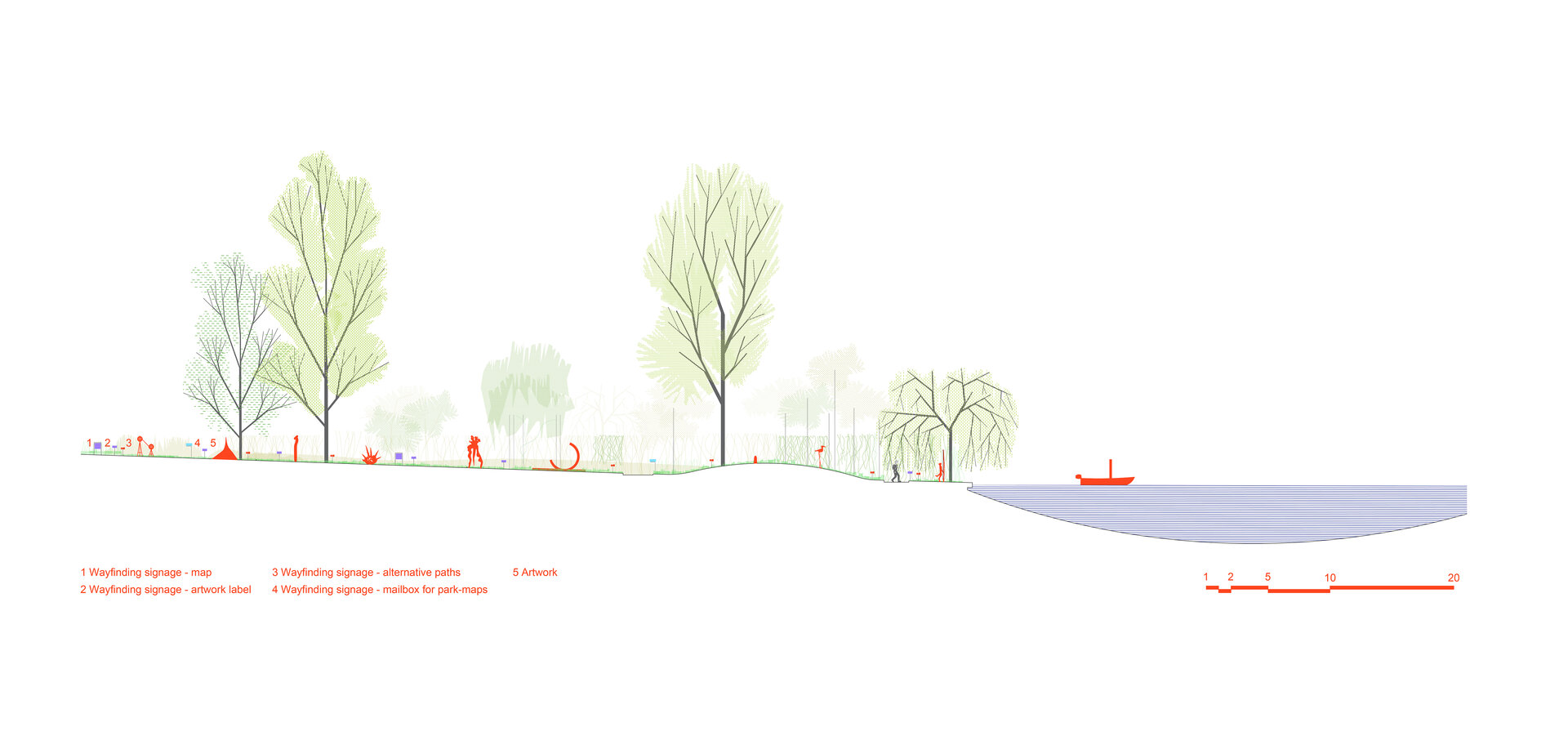
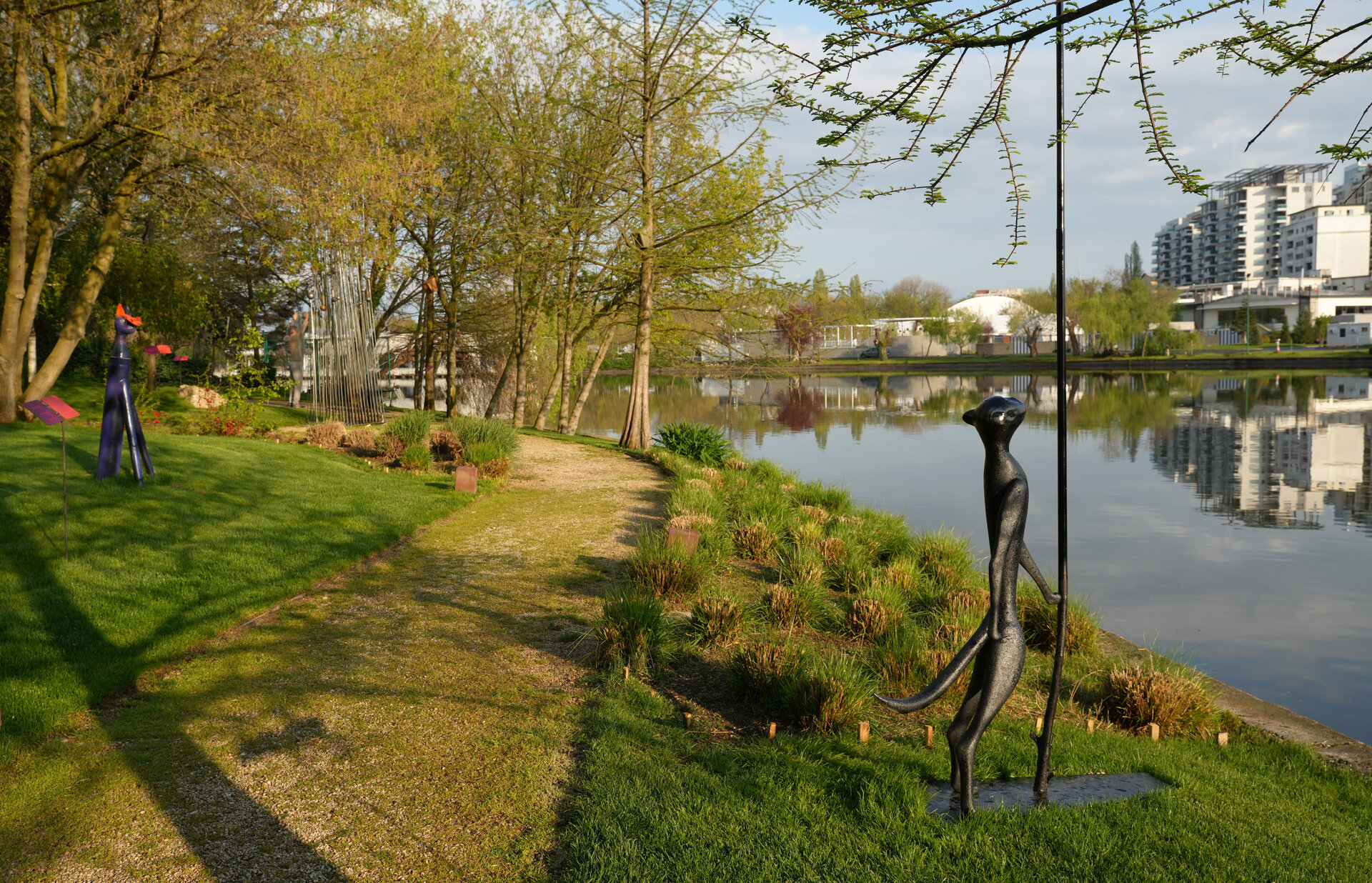
The pathways retain their routes, while the vegetation is left unaltered. The intervention consists of positioning three-dimensional objects intended to distort the perception of movement through time and generate places where the dynamics of the site previously imposed only transit.
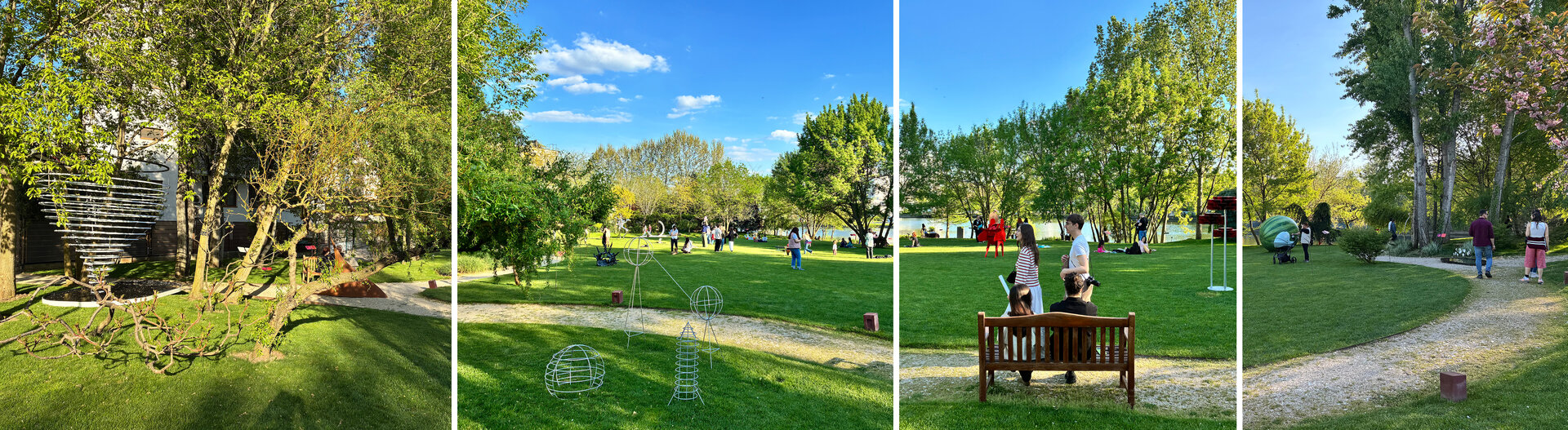
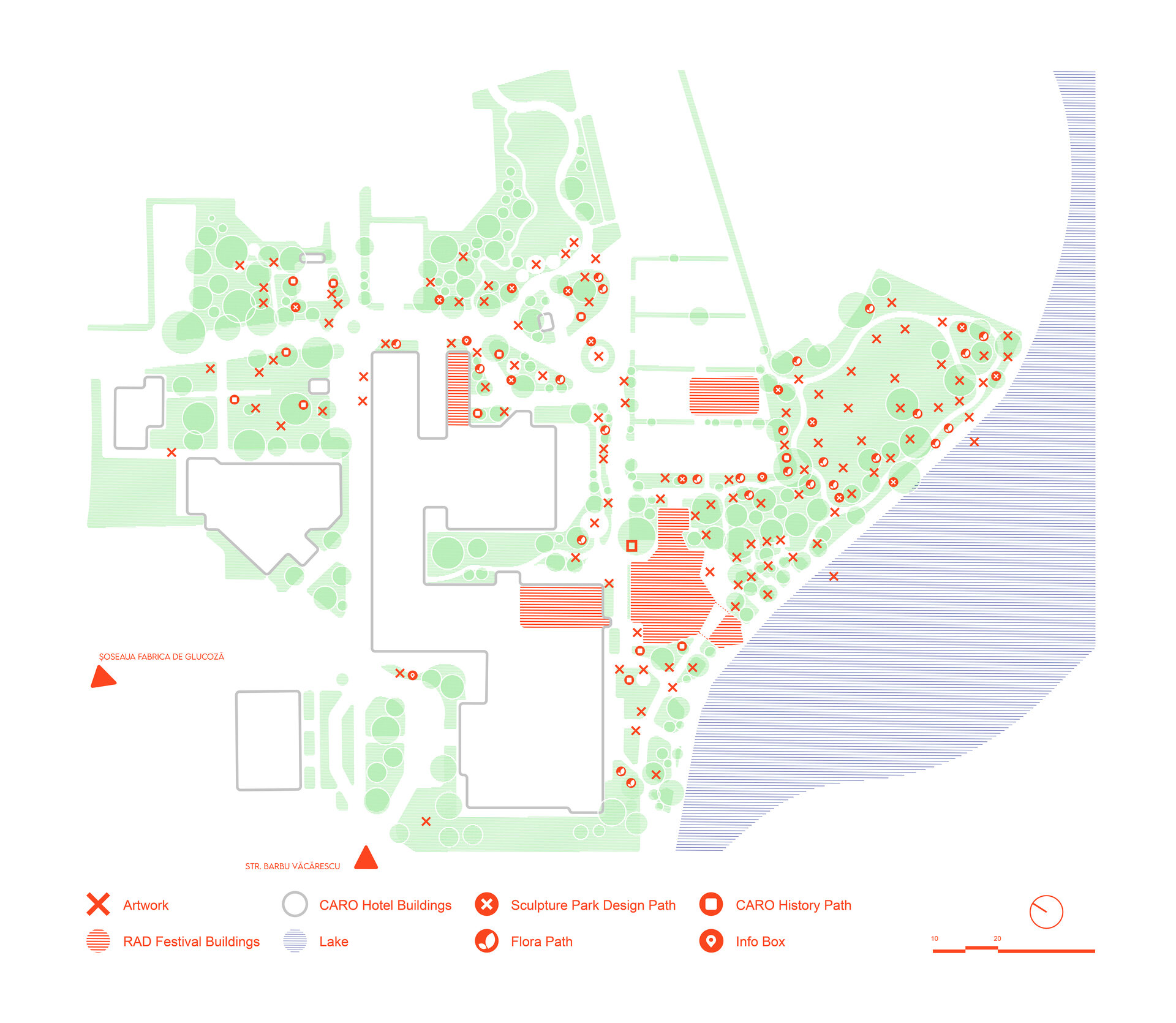
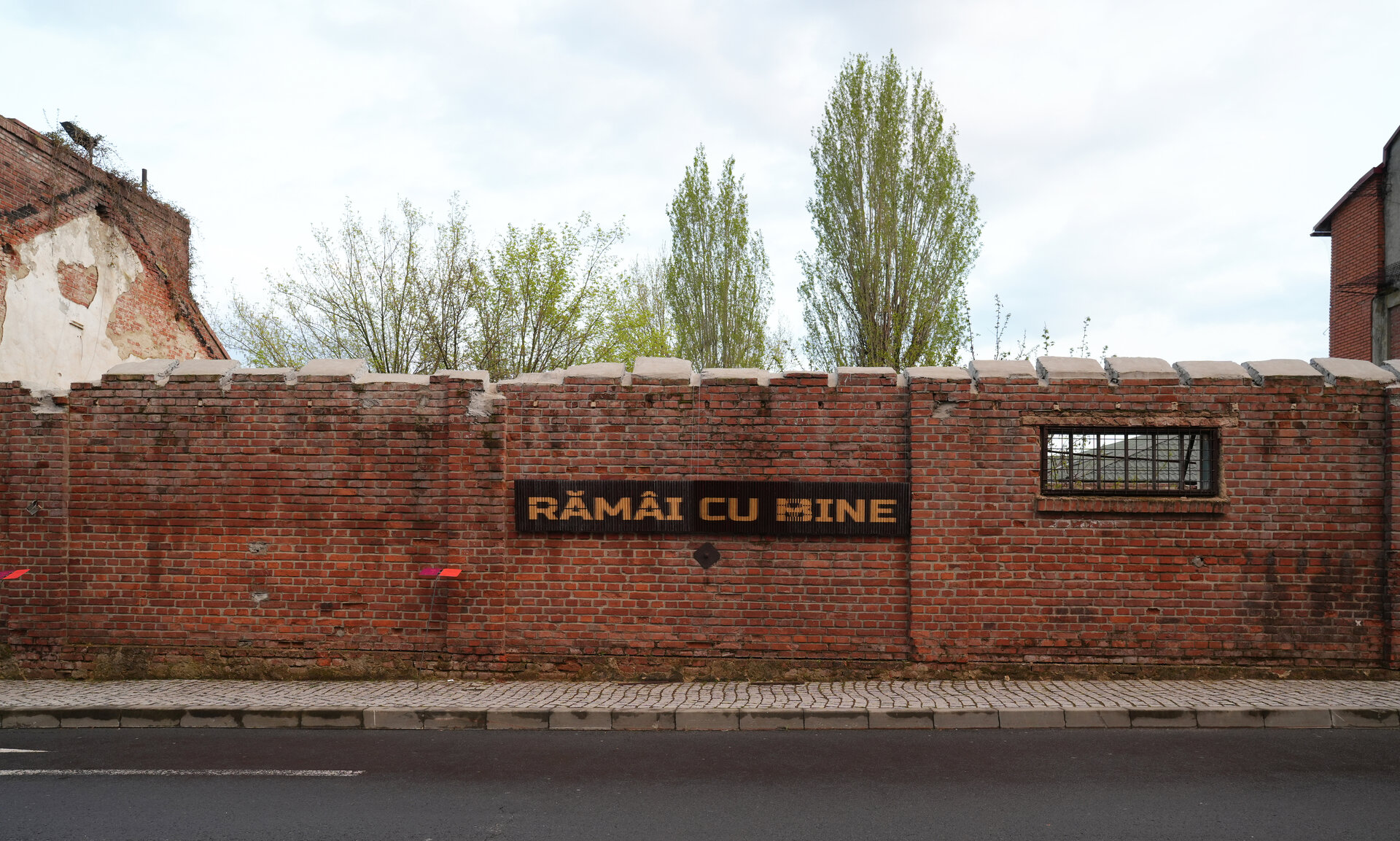
The project approaches the park as a “striated space”. Over the existing two-dimensional network, represented by the system of pathways, a network of three-dimensional nodes is superimposed. Positioned at points of convergence, on brick parapets, technical infrastructure elements or suspended within the tree canopy, the sculptures function as interval switches, imposing physical pauses at points of transition.
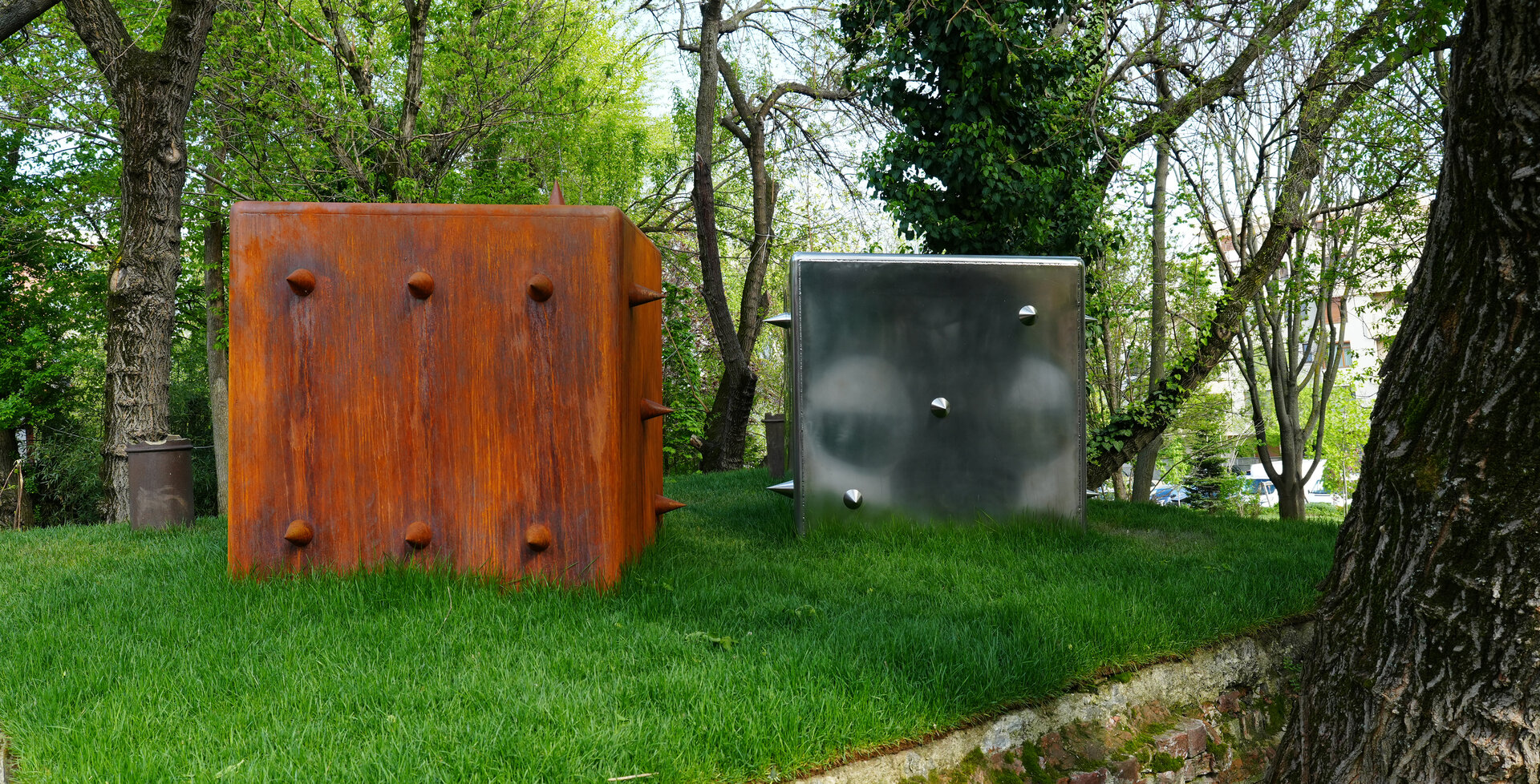
The relationship between object and site becomes one of controlled parasitism. When a hybrid volume, composed of natural grass and geometric metal components, occupies the roof of a raw-concrete utility structure, the result is not an embellishment of the utilitarian object, but a new form of monumentalisation and a diversion of its original architectural meaning.
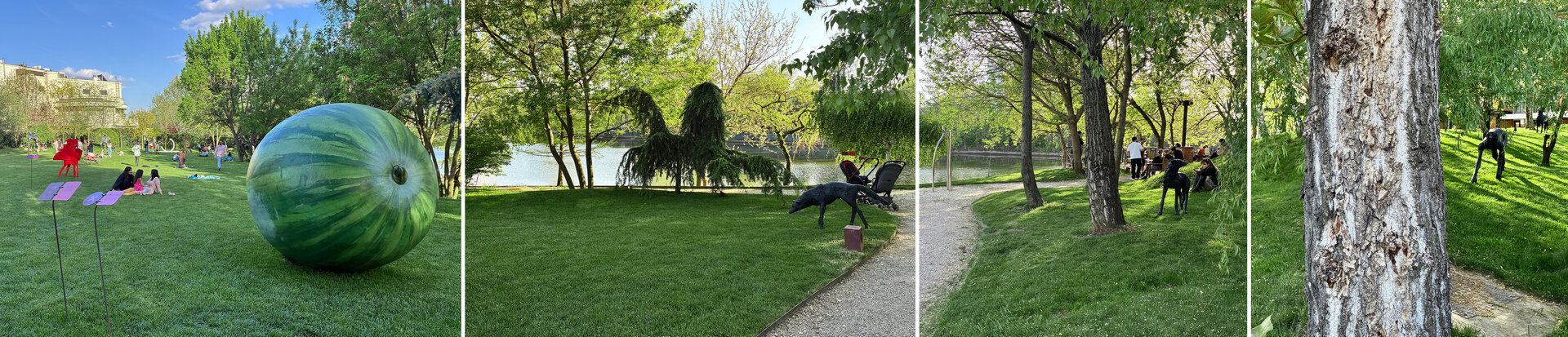
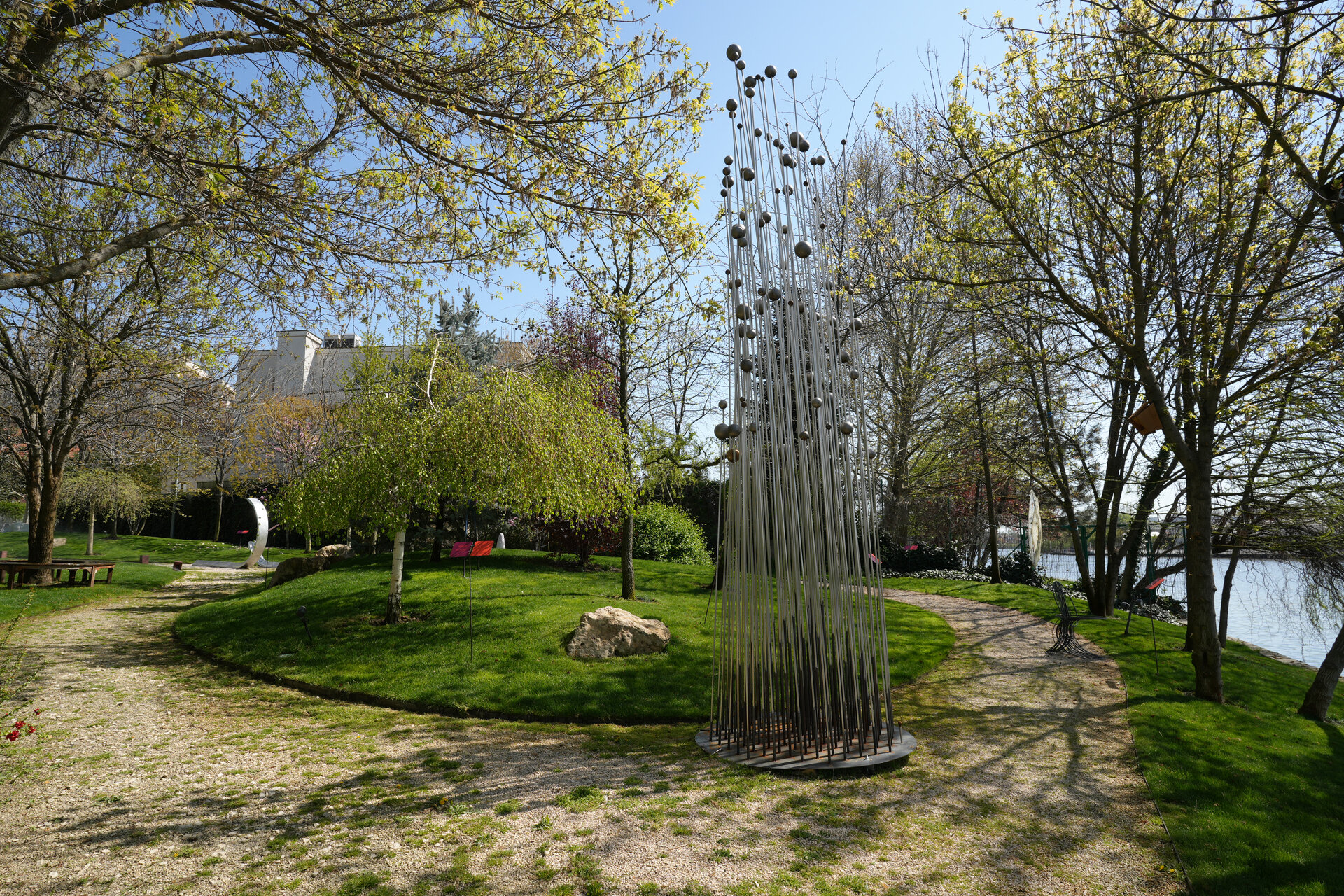
Avoiding small-scale works, which risk falling into the triviality of the garden ornament, required a rigorous selection of scale. The park operates with medium-sized elements and several large-scale works, used as orientation markers and sufficiently massive to enter into dialogue with the scale of the industrial hall or the openness towards the water’s edge.
Although the main exhibition structure is temporary, the site develops a system of progressive accumulation. Certain works remain permanently, becoming landmarks embedded in the memory of the place. Albert Kaan’s neon silhouette, integrated into a tree trunk; Alexandru Ranga’s patinated bronze wasp; the two “stone geometry” guards made of fibreglass; and Adrian Piorescu’s concrete pope, withdrawn into a birch grove, already function as permanent landmarks.
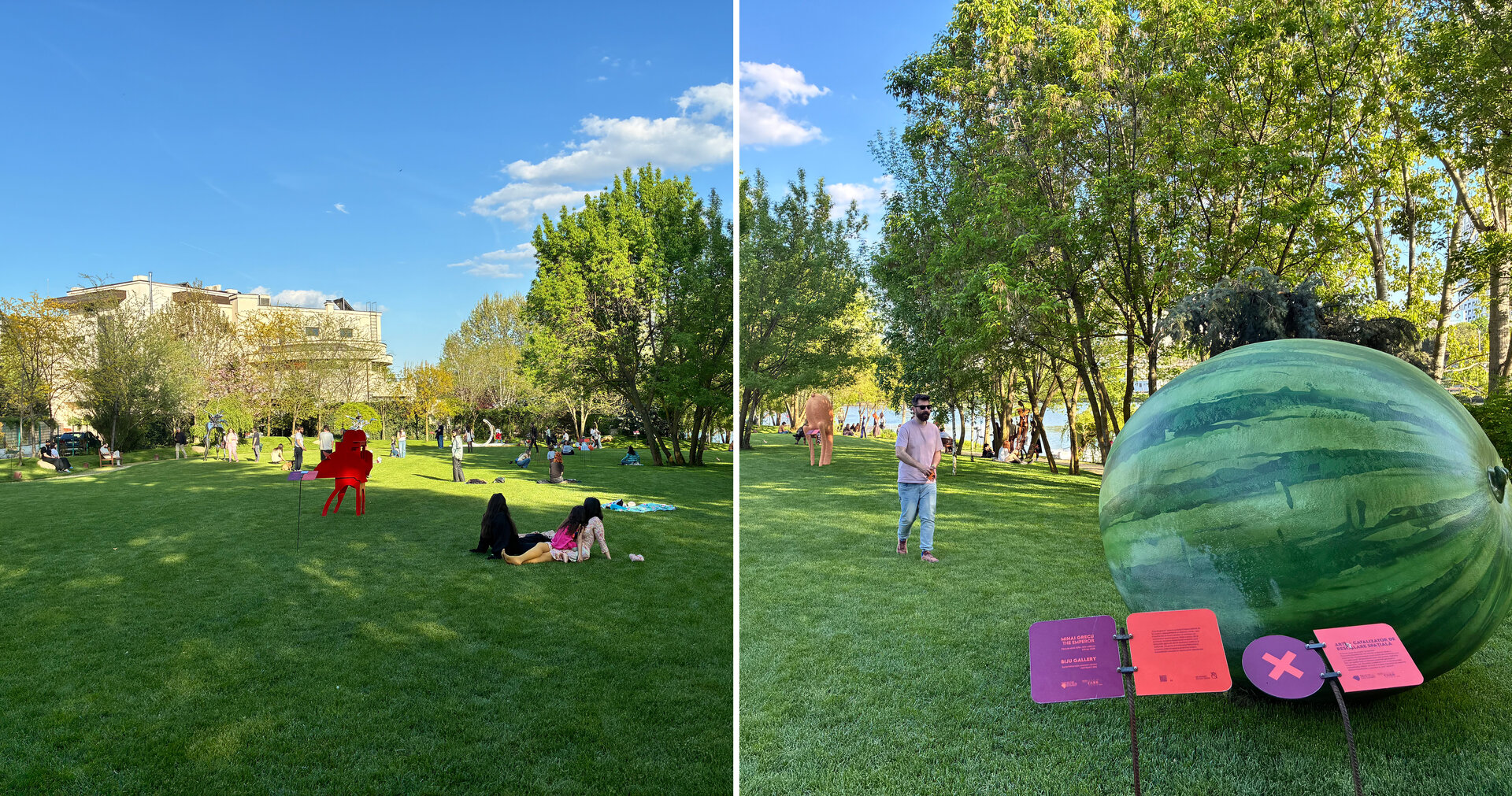
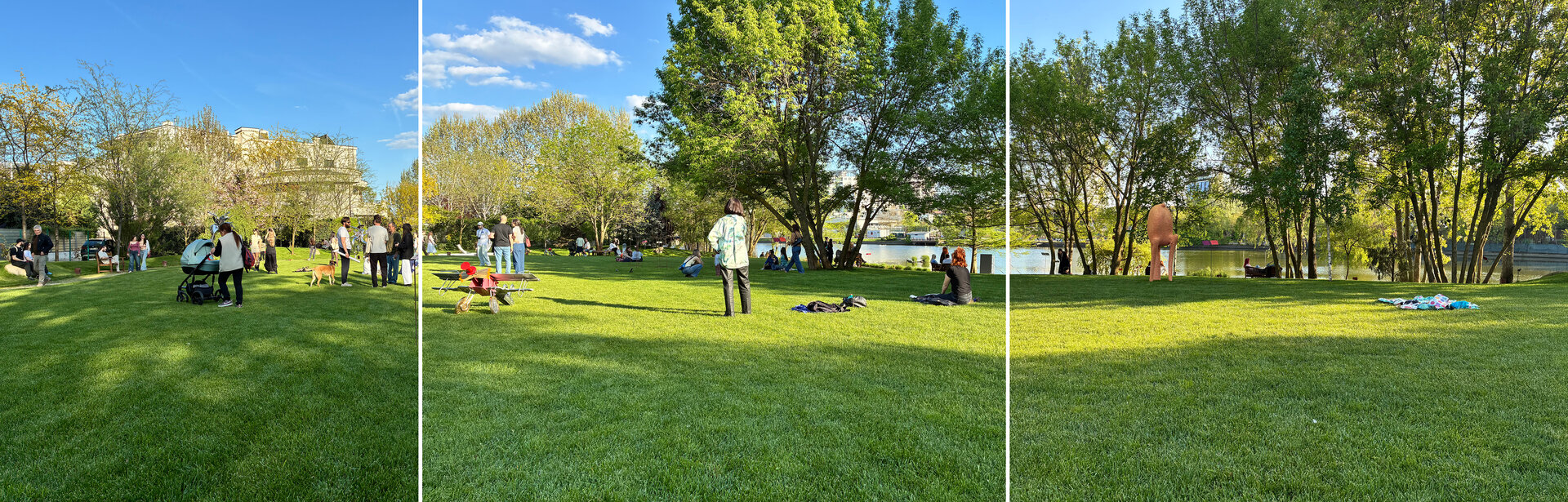
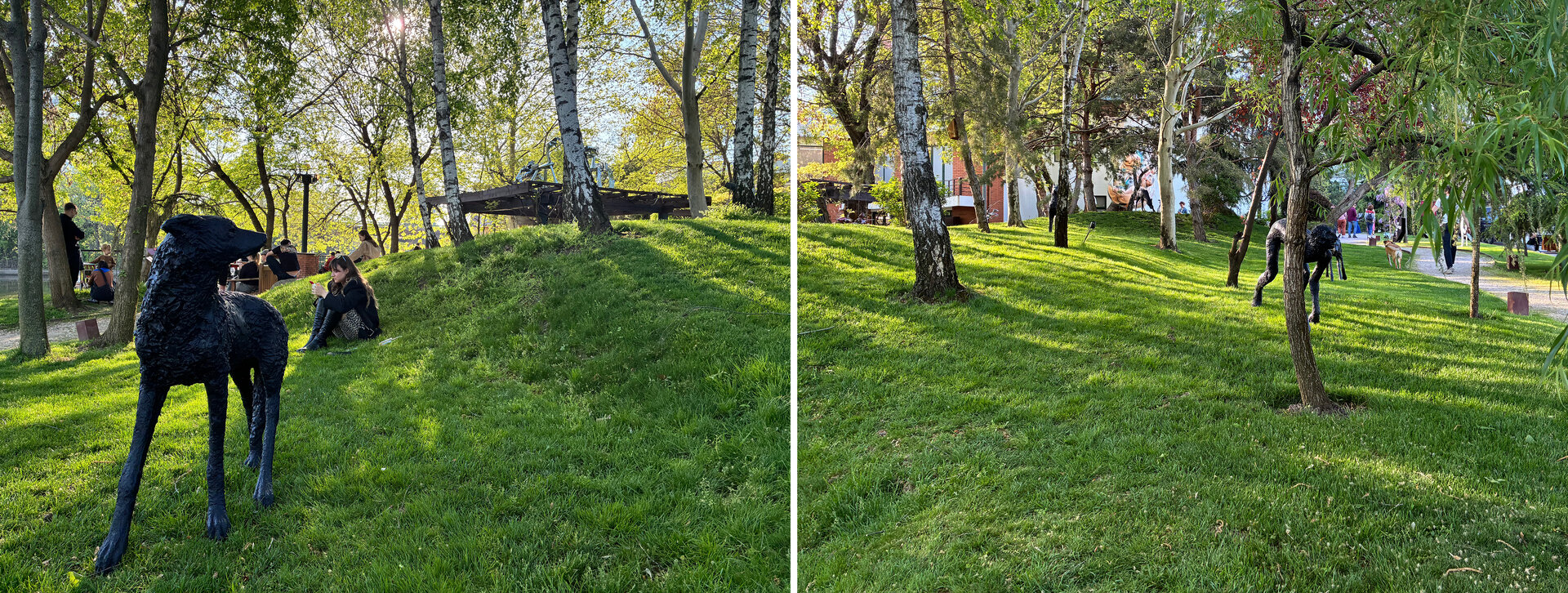
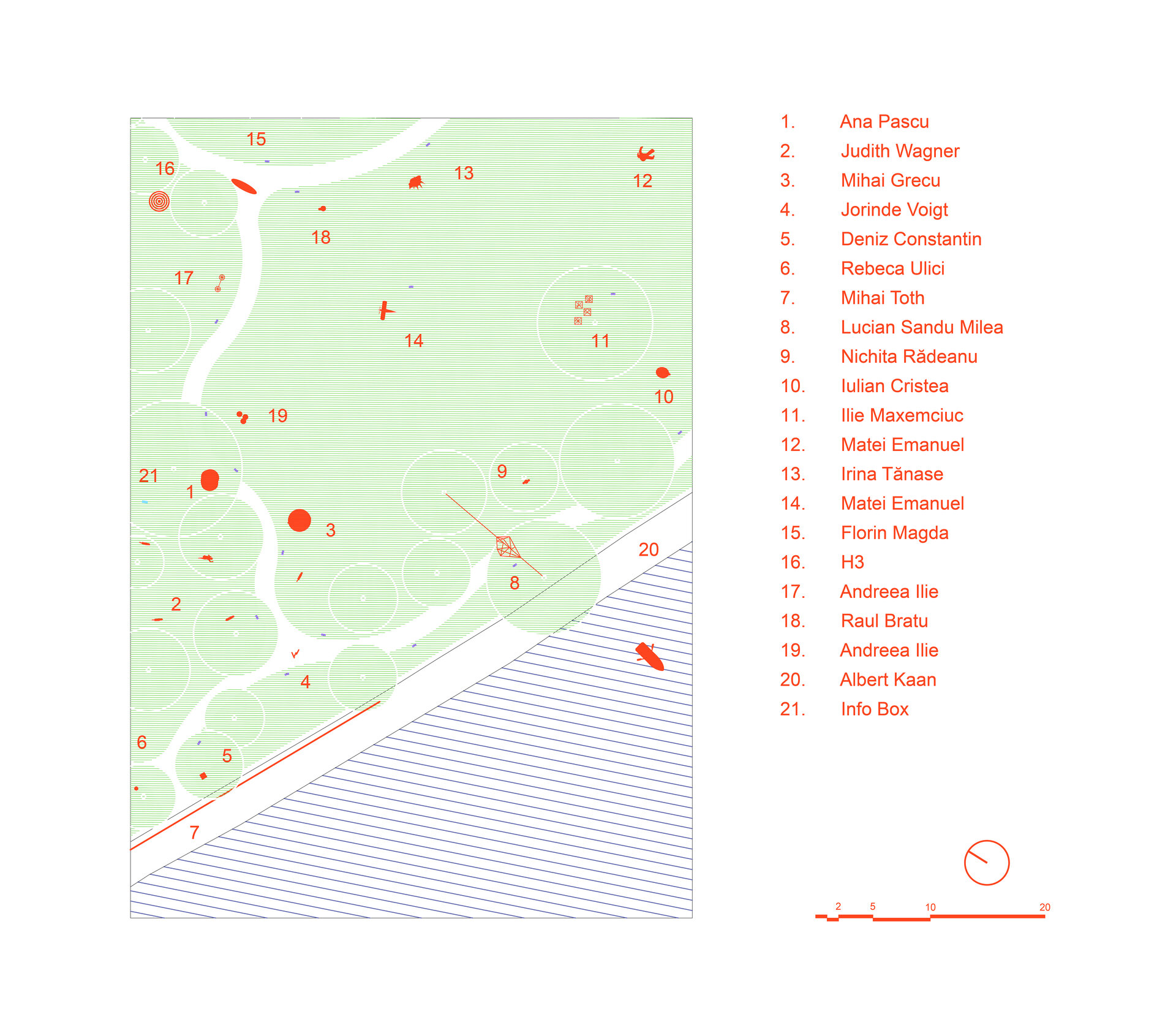
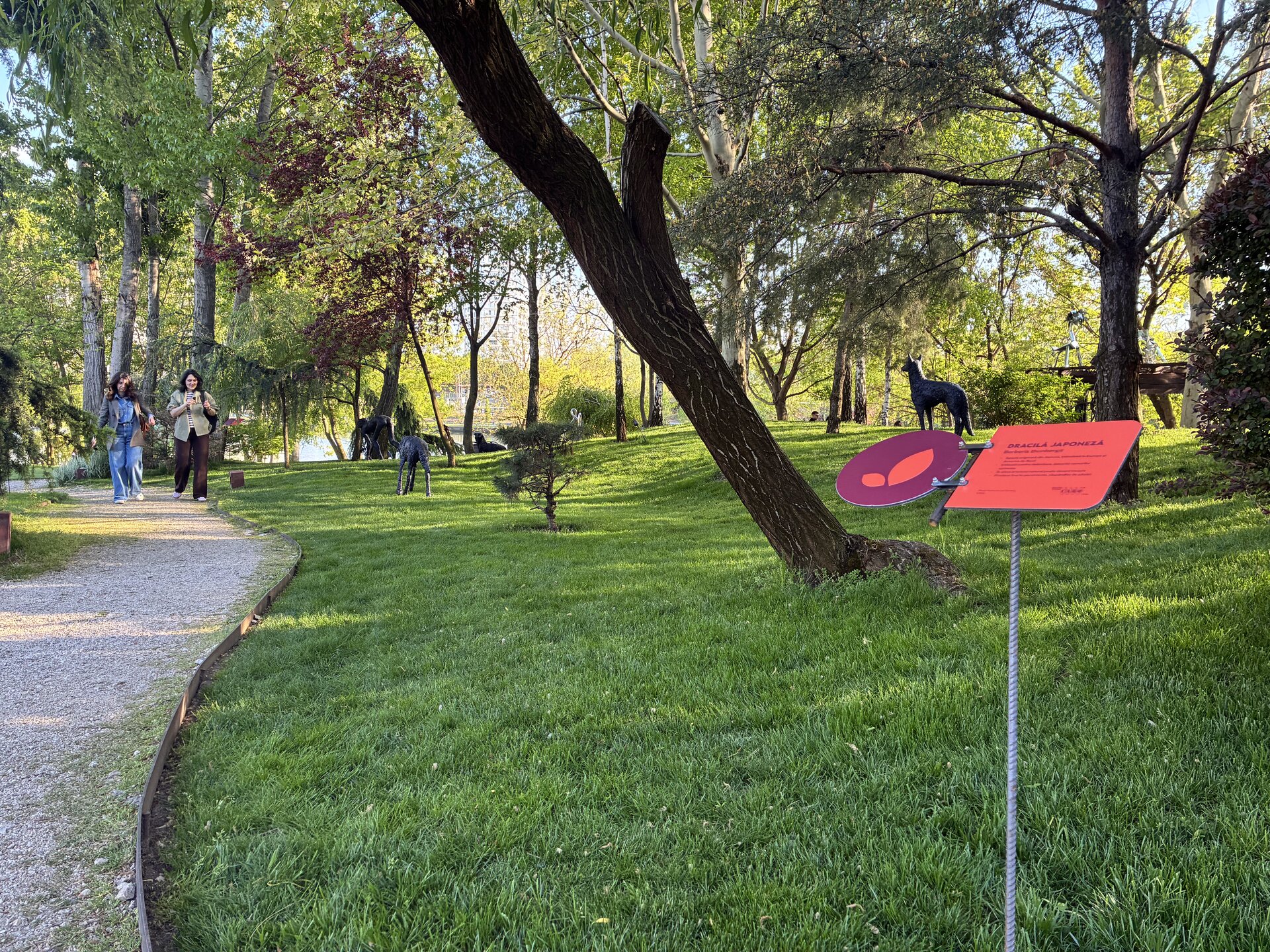
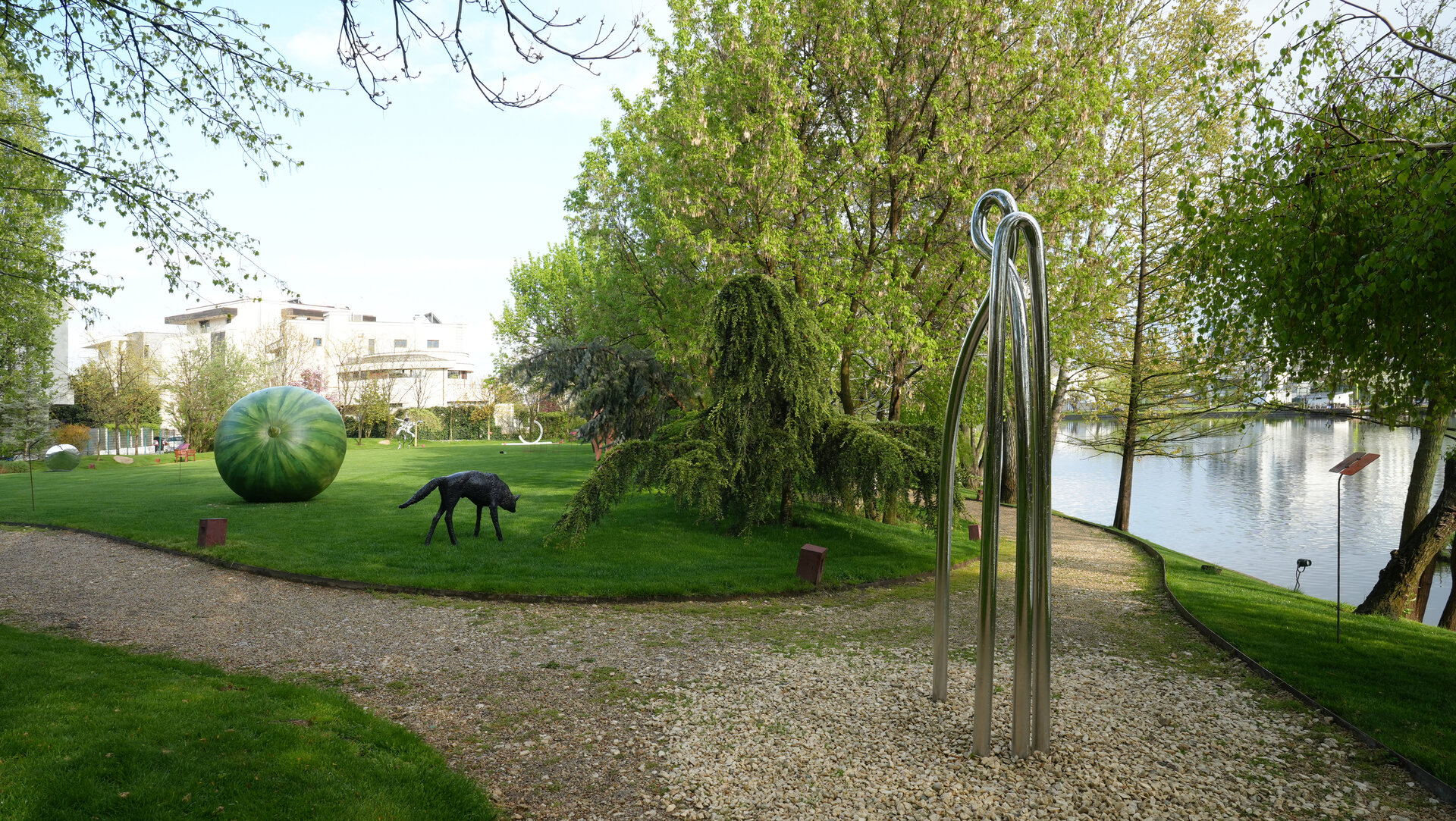
In 2026, the group of trees at the edge of the lake was colonised by a pack of six bronze wolves by Judith Wagner. Hidden among trunks, shrubs and topographical shifts, the wolves can never be perceived as a whole. Positioned to mark contour lines, subtle changes in slope and vegetal accents, they work together with the garden and have become part of the site’s collection of surprises. The hill at the edge of the lake thus becomes a “plinth” and a filter for an art that can no longer be perceived as a sculptural ensemble or installation, but rather as a game of hide-and-seek with its environment. With one exception: a wolf emerging from the trees and wandering across the lawn in search of an oversized watermelon: “The Wolf and the Watermelon”, one of the possible juxtapositions of semantic fields that could occur in Caro Park only in 2026.
Unlike the neutrality of a traditional gallery, the open space proposes overlapping structural fields. The relationships between the works are non-narrative, based on morphology, materiality and contrasting scales. The pieces are continuously recontextualised according to the visitor’s trajectory. The absence of prescribed routes liberates movement, while the surprise of locating an object on a wall, attached to a façade or hidden towards the lake, becomes the “engine” of the walk. Time is no longer that of a hurried passage towards a hotel function, but becomes the time of waiting. Through the combination of movable objects and permanent residents, the garden transformed into a public gallery puts sculpture to work, allowing groups of works to occupy spaces in order to (de)construct or (re)construct places.
Architecture and Public Space
- Lacul Morii Island Park
- Invisible Topometries
- Joy Pavilion
- CG_CV
- Hexagonal Playground
- Milestones
- RAD Sculpture Park 2026


