- Nomination for the “Interior Space Architecture / Object Design” section
Crângași Herbarium
Authors’ Comment
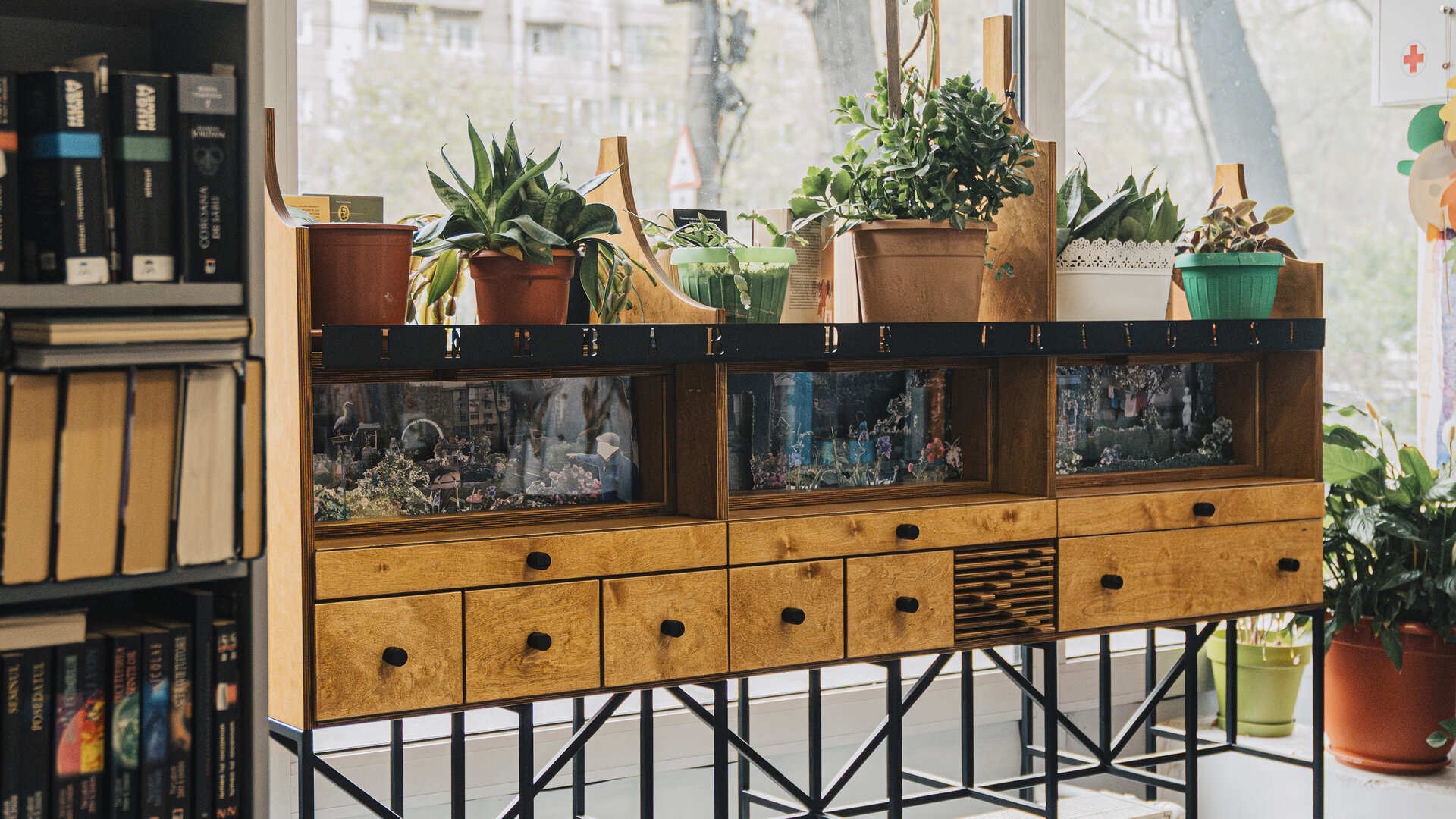
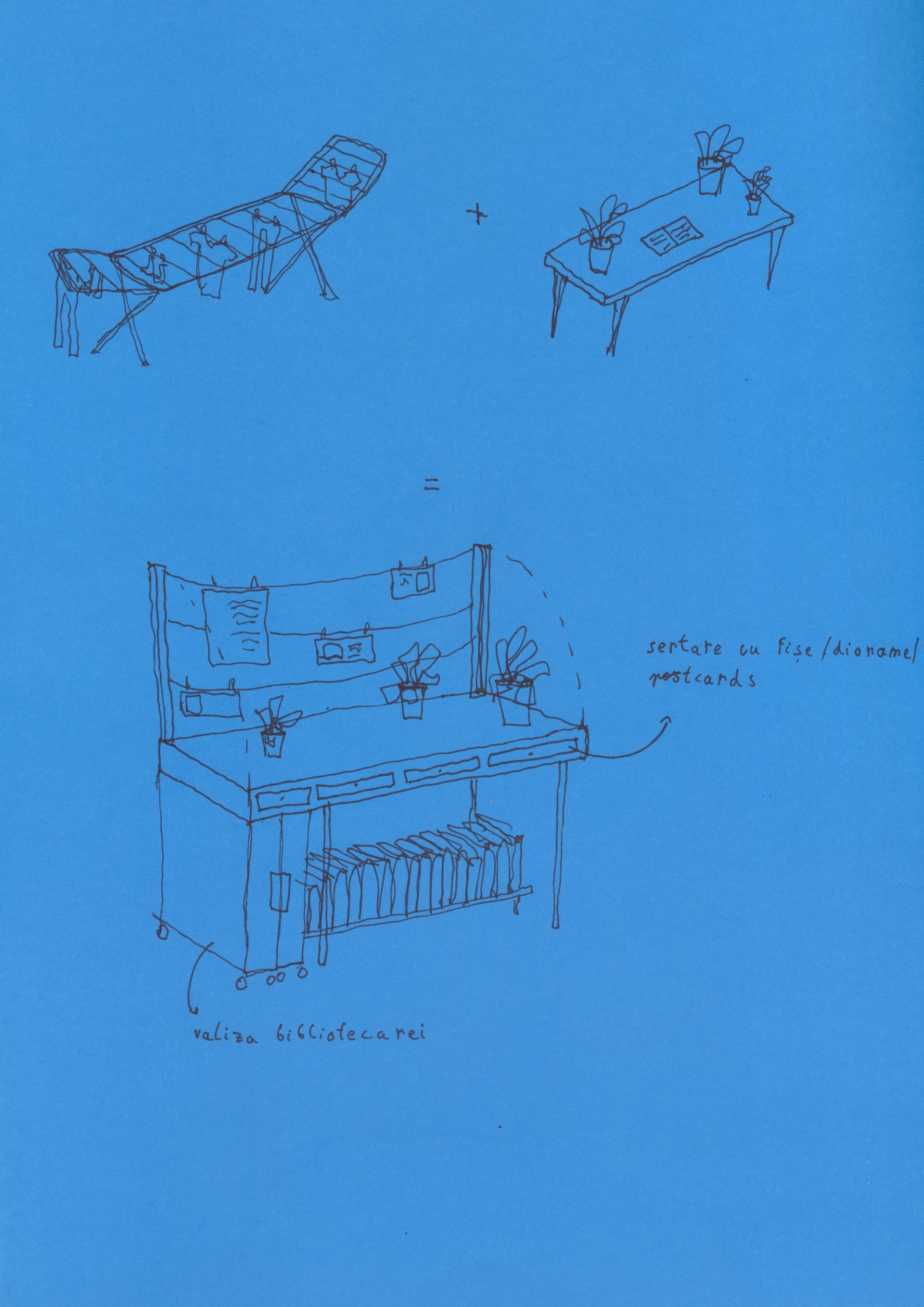
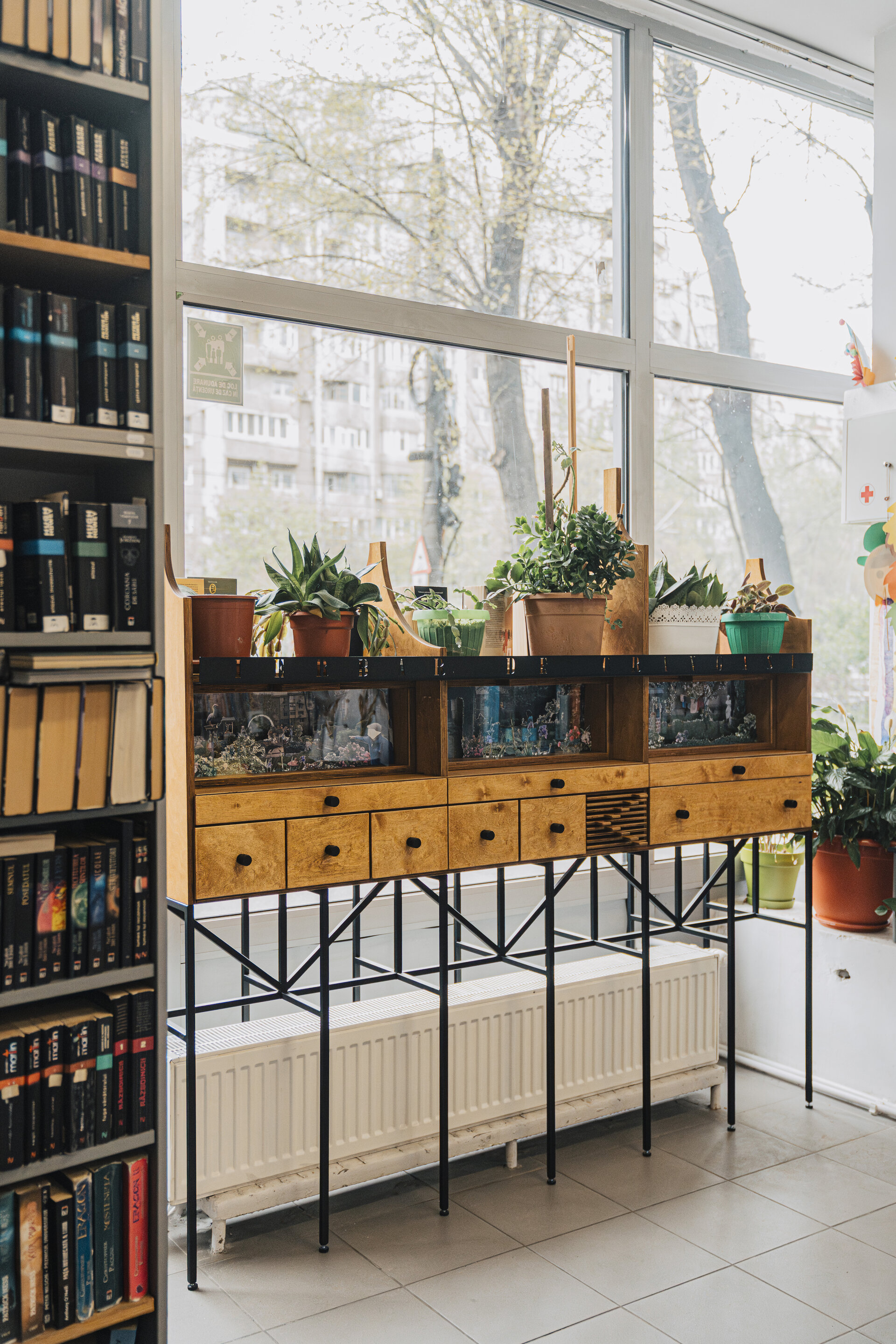
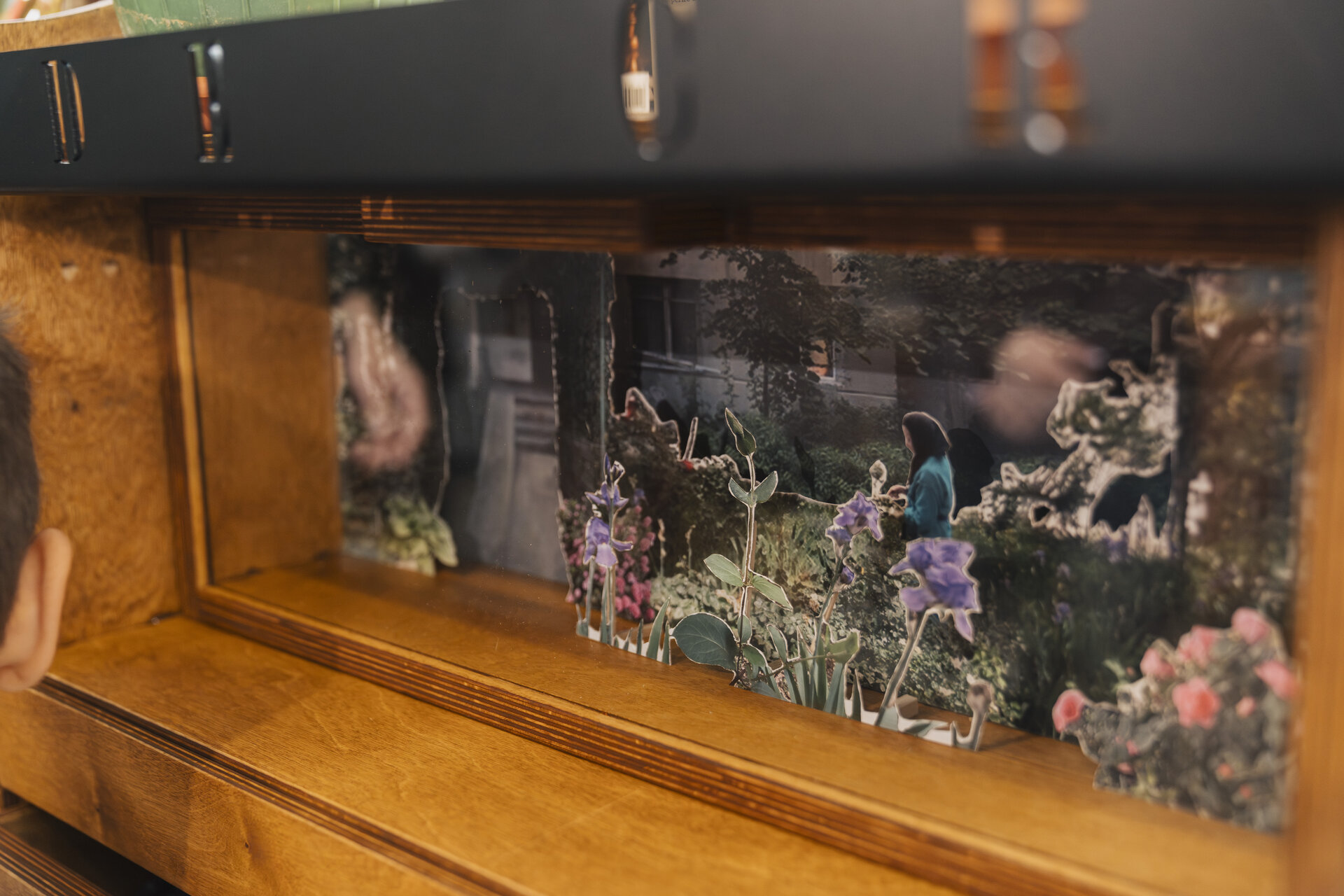
The Crângași Herbarium is a piece of furniture situated at the intersection of a filing cabinet, a display case, and a bookshelf. It showcases and communicates the conclusions of a 2024 research project that investigated the informal practices supporting (environmental) commons in the Crângași neighborhood. As a result of observing and analyzing these practices, the Crângași Herbarium was created — a curated collection of drawings, maps, photographs, analyses, texts, and dioramas displayed in a small piece of furniture located inside the Nichita Stănescu Library in the neighborhood.
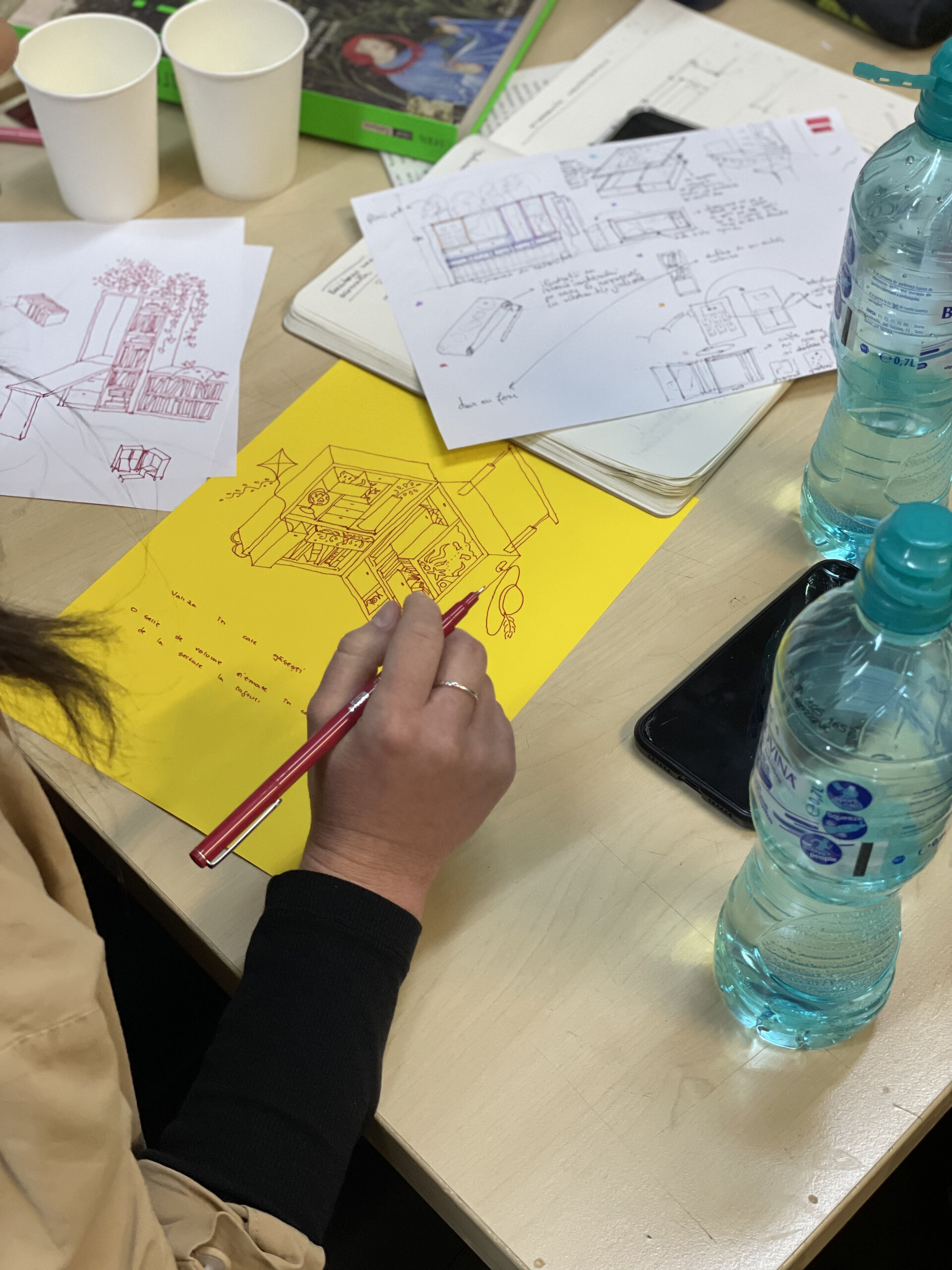
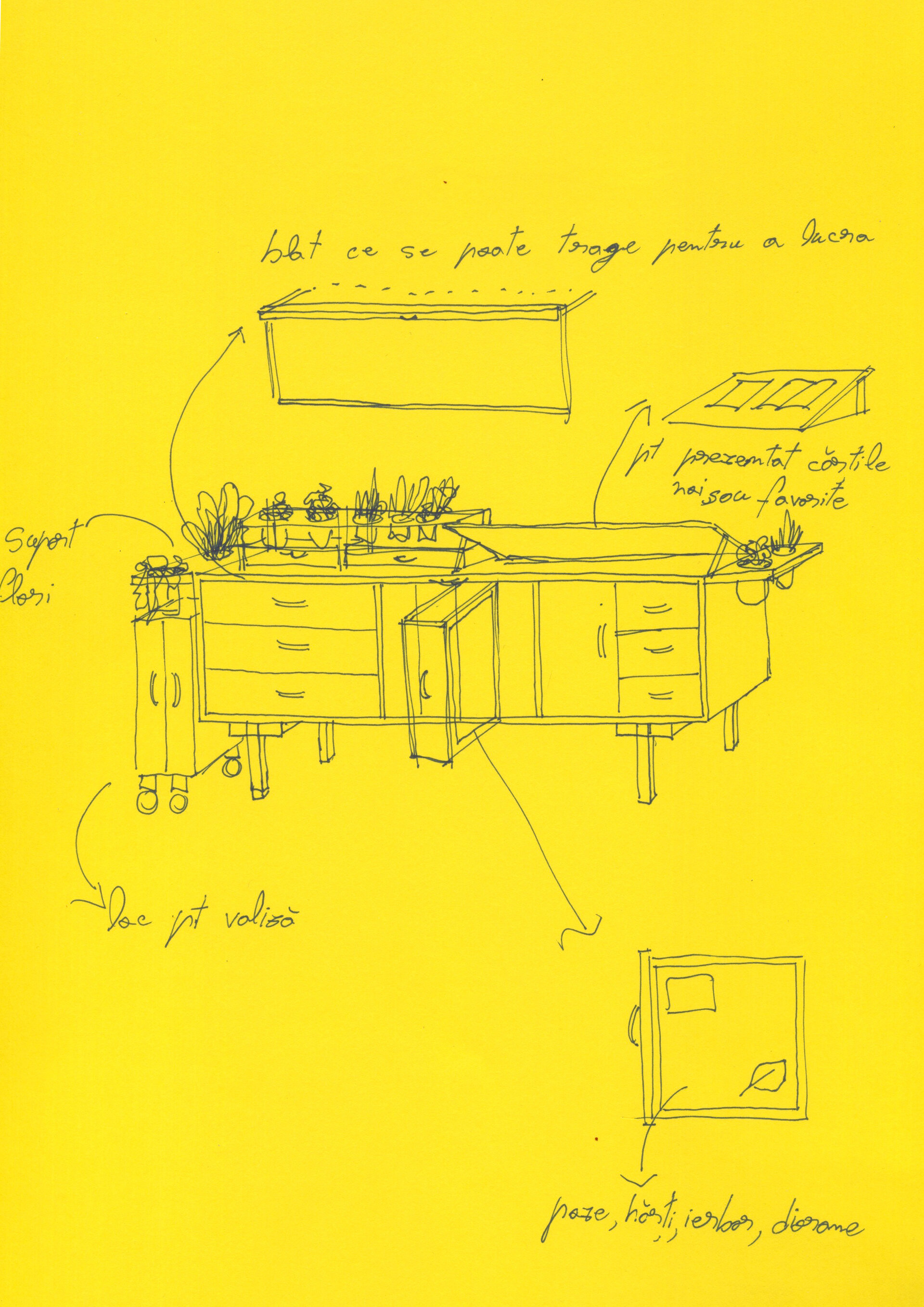
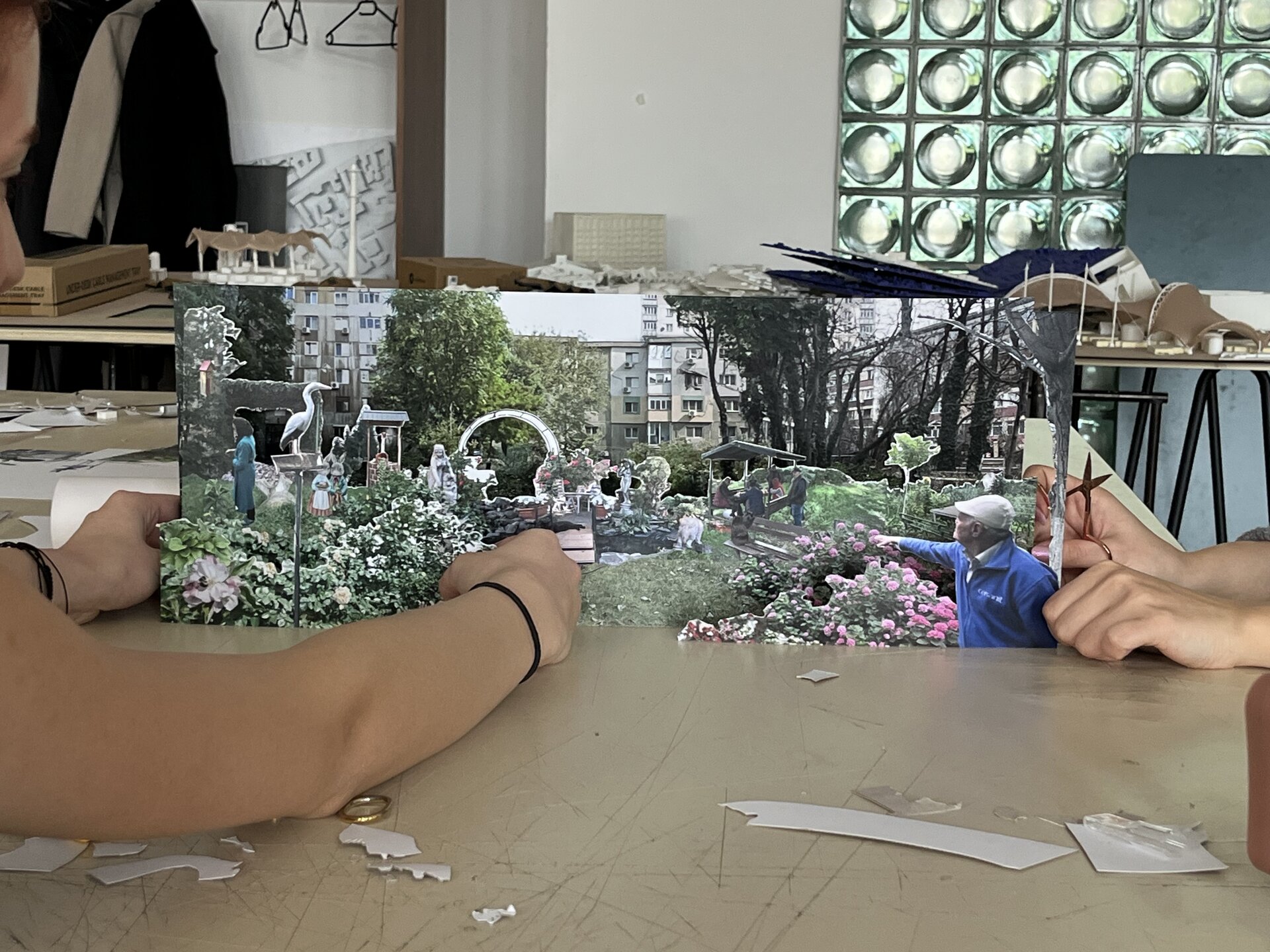
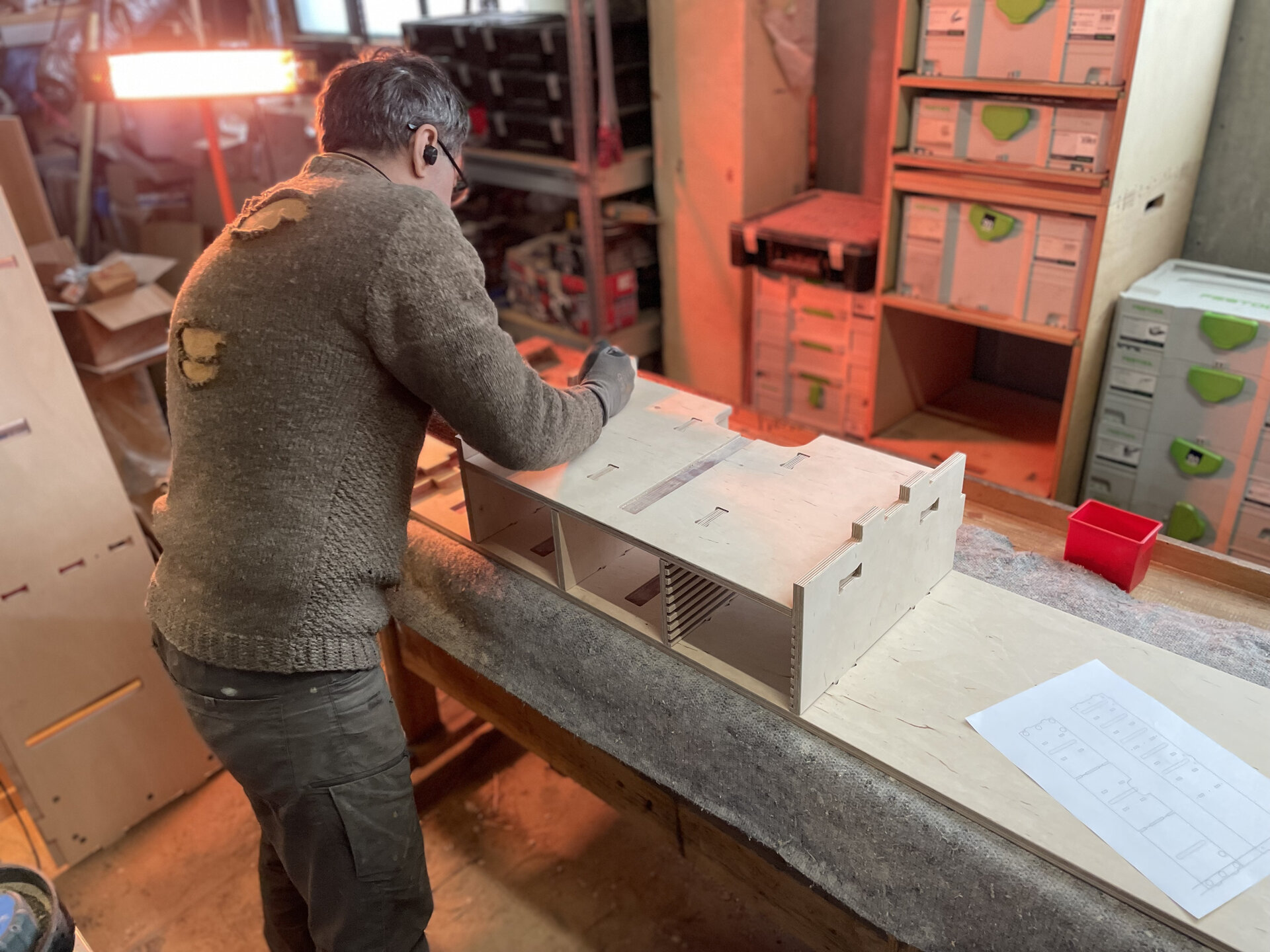
The Herbarium was developed following a series of workshops with third-year architecture students, focused on designing the object and curating its contents. The design was a participatory proces, and was based on discussions with the librarian, who explained how the library functions, what types of activities are organized, who the users are, how the space is used, what needs exist, and where the object could be placed within the library. Later, the design was validated by the librarian and the library management, and was ultimately even adapted post-installation.
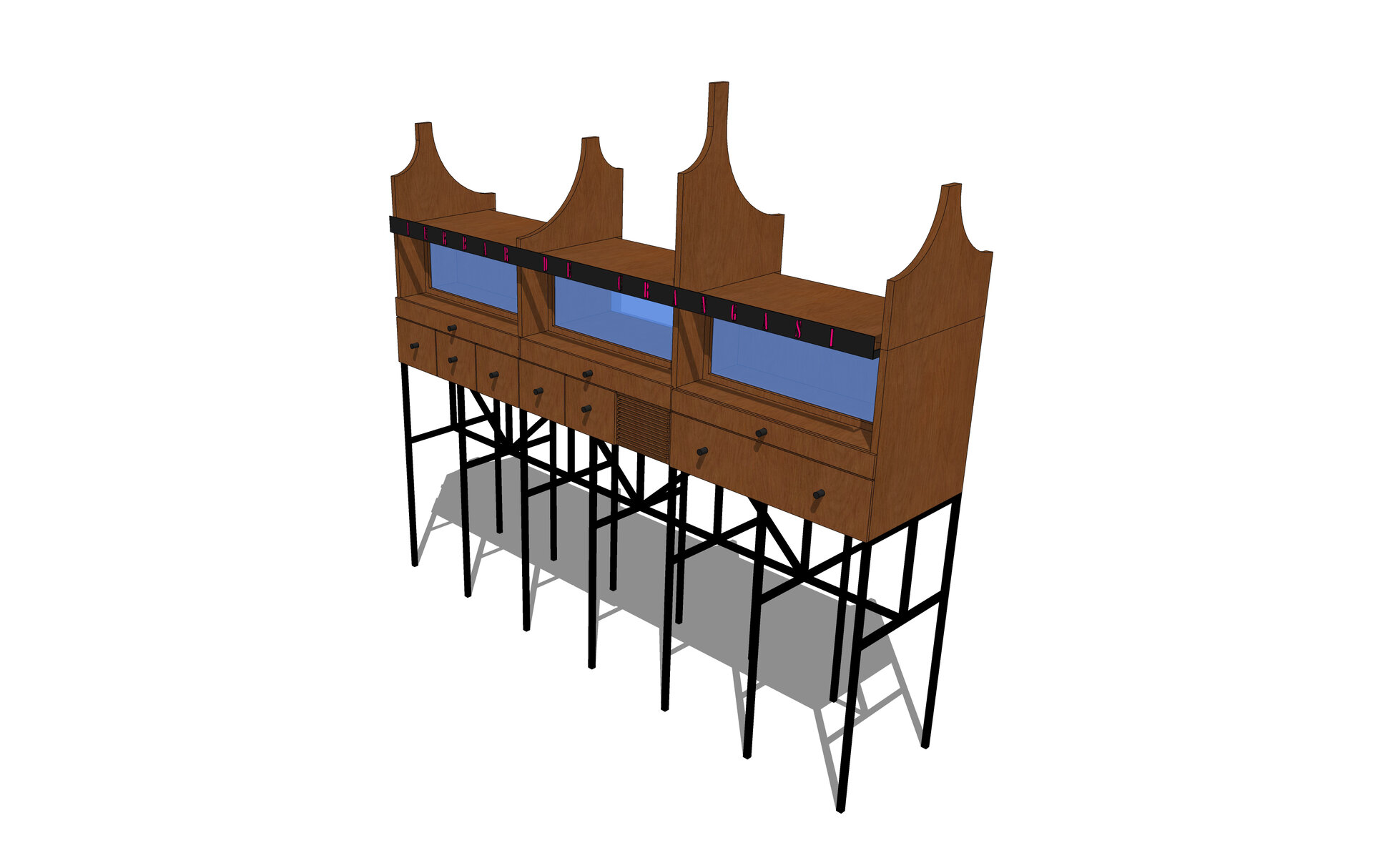
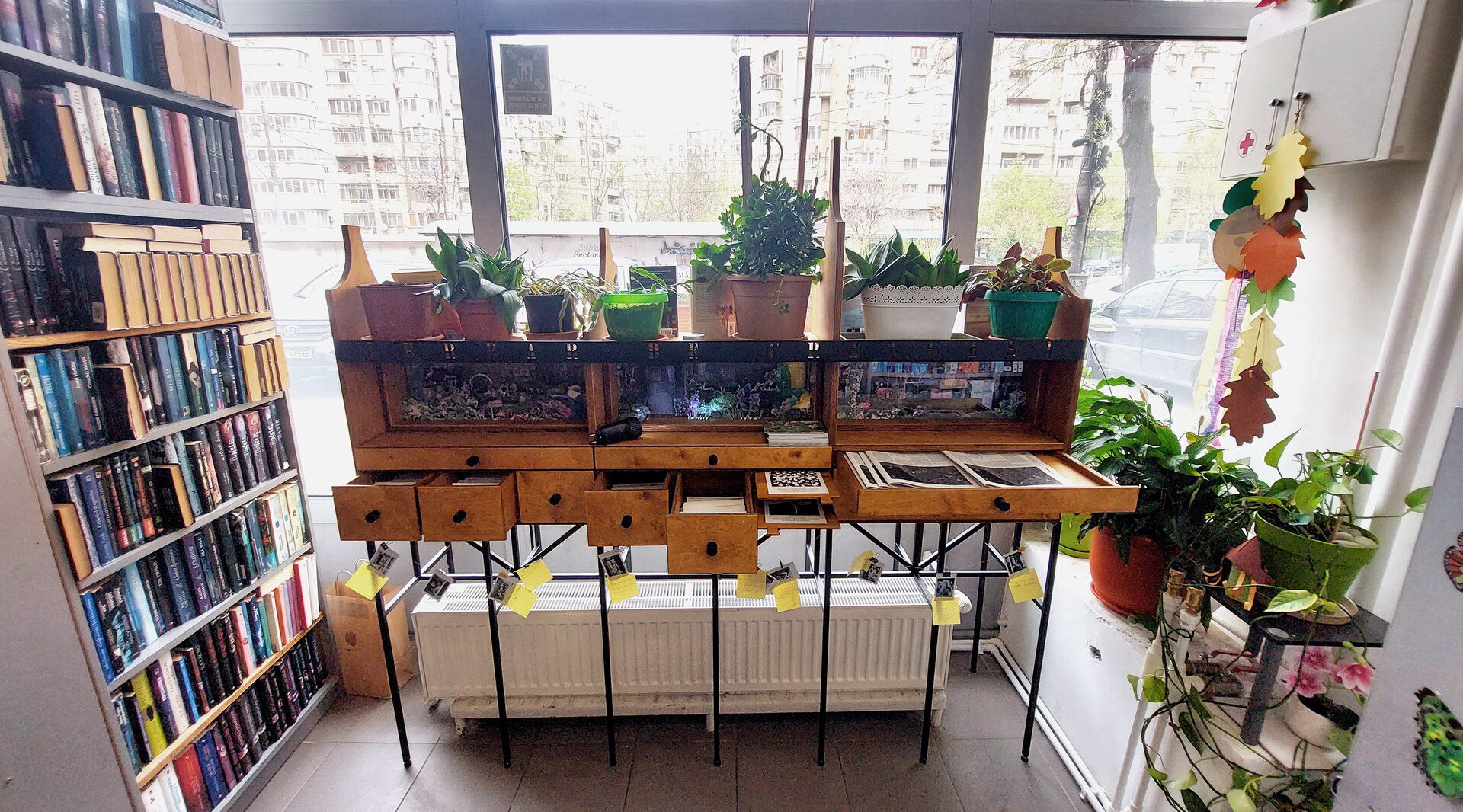
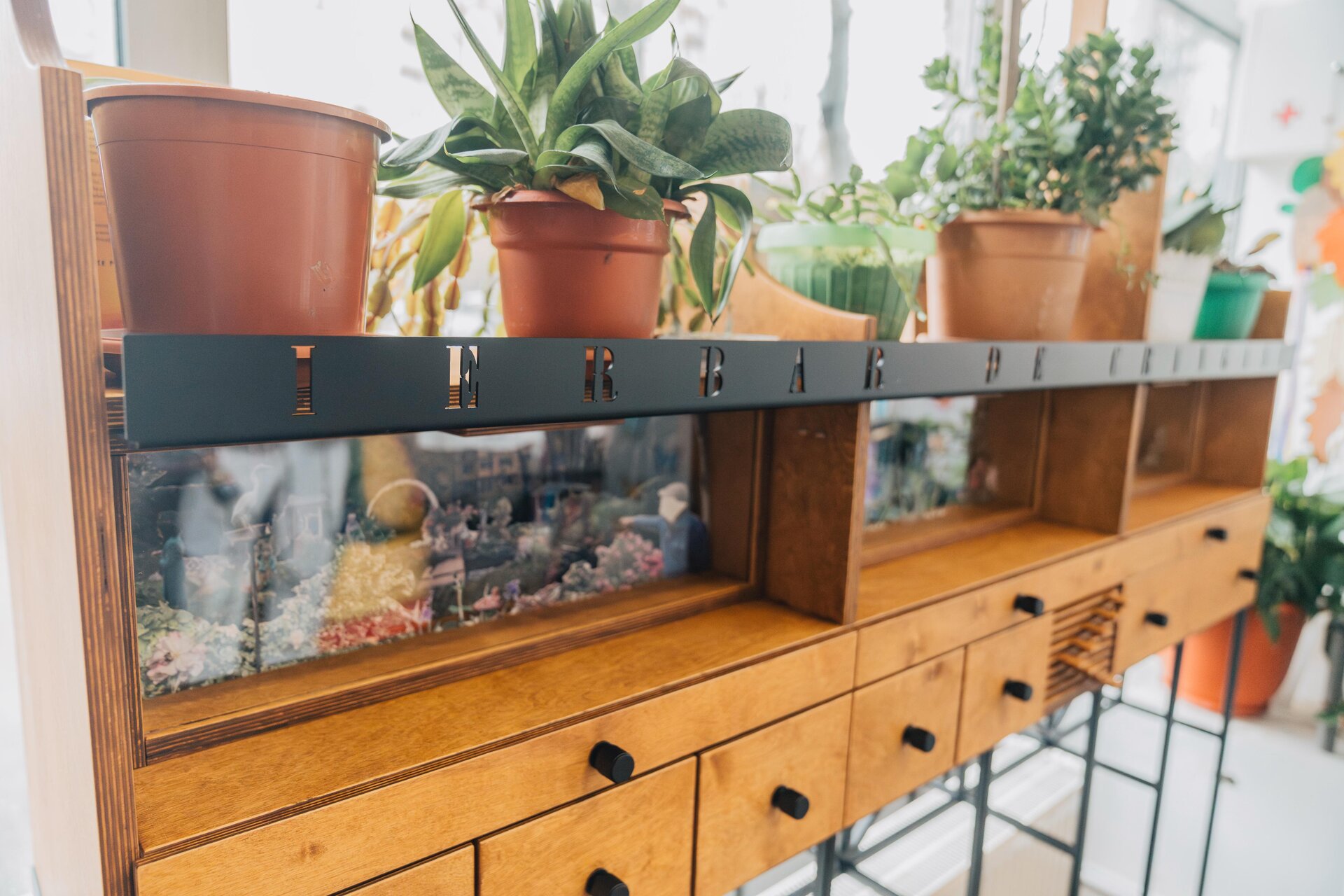
Made of wood plywood and metal, the Herbarium is, on one hand, inspired by the standard library furniture of the 1970s, and on the other, it seeks to bring a fresh design into the library’s existing furniture landscape. Its visual identity is also emphasized by the lettering cut from a metal strip at the top of the piece, using the same font as the old volumetric letters on the library’s façade — one of the few still preserved in the city. The construction was carried out by a team of architects-turned-carpenters who creatively designed every detail.
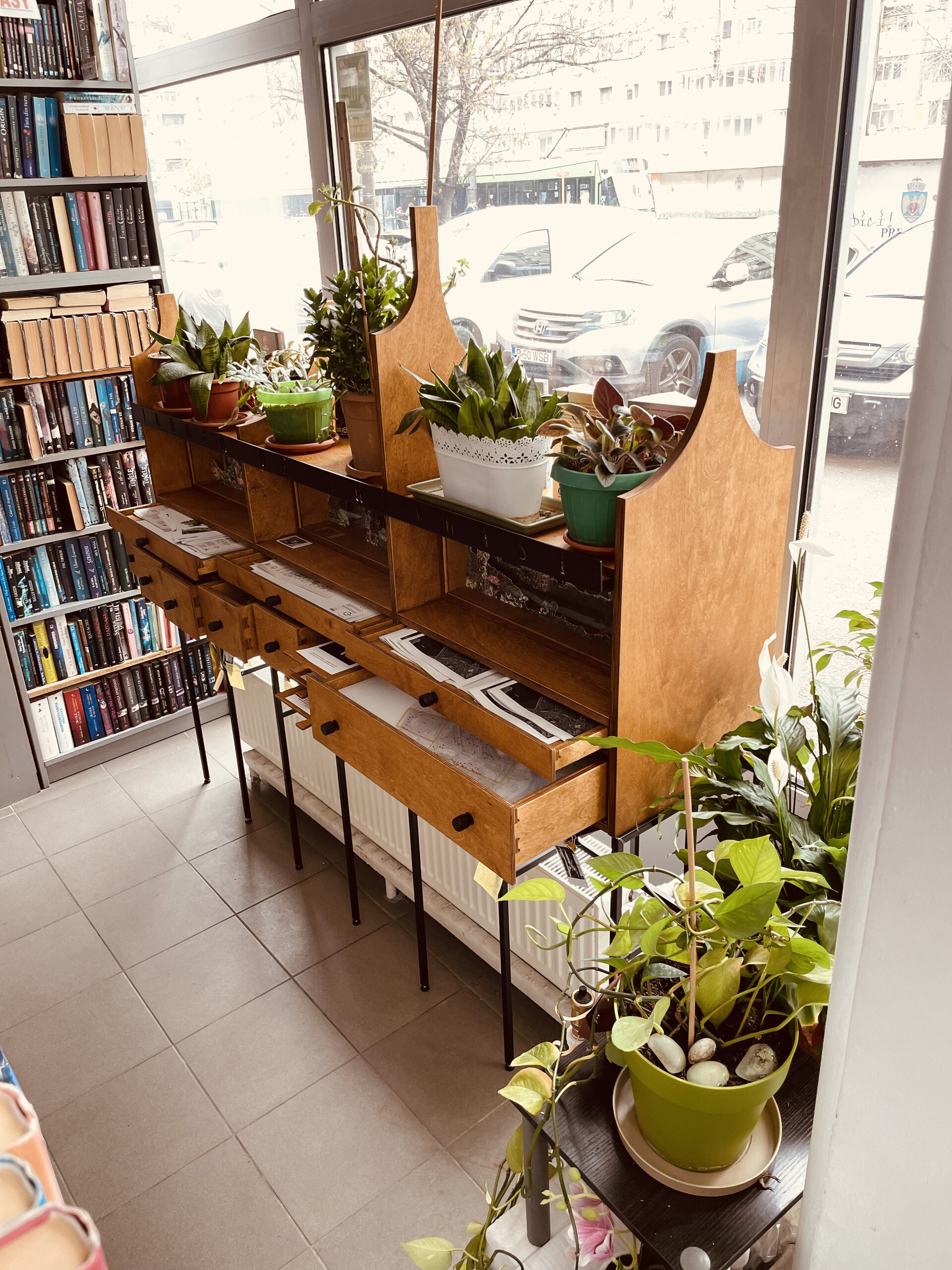
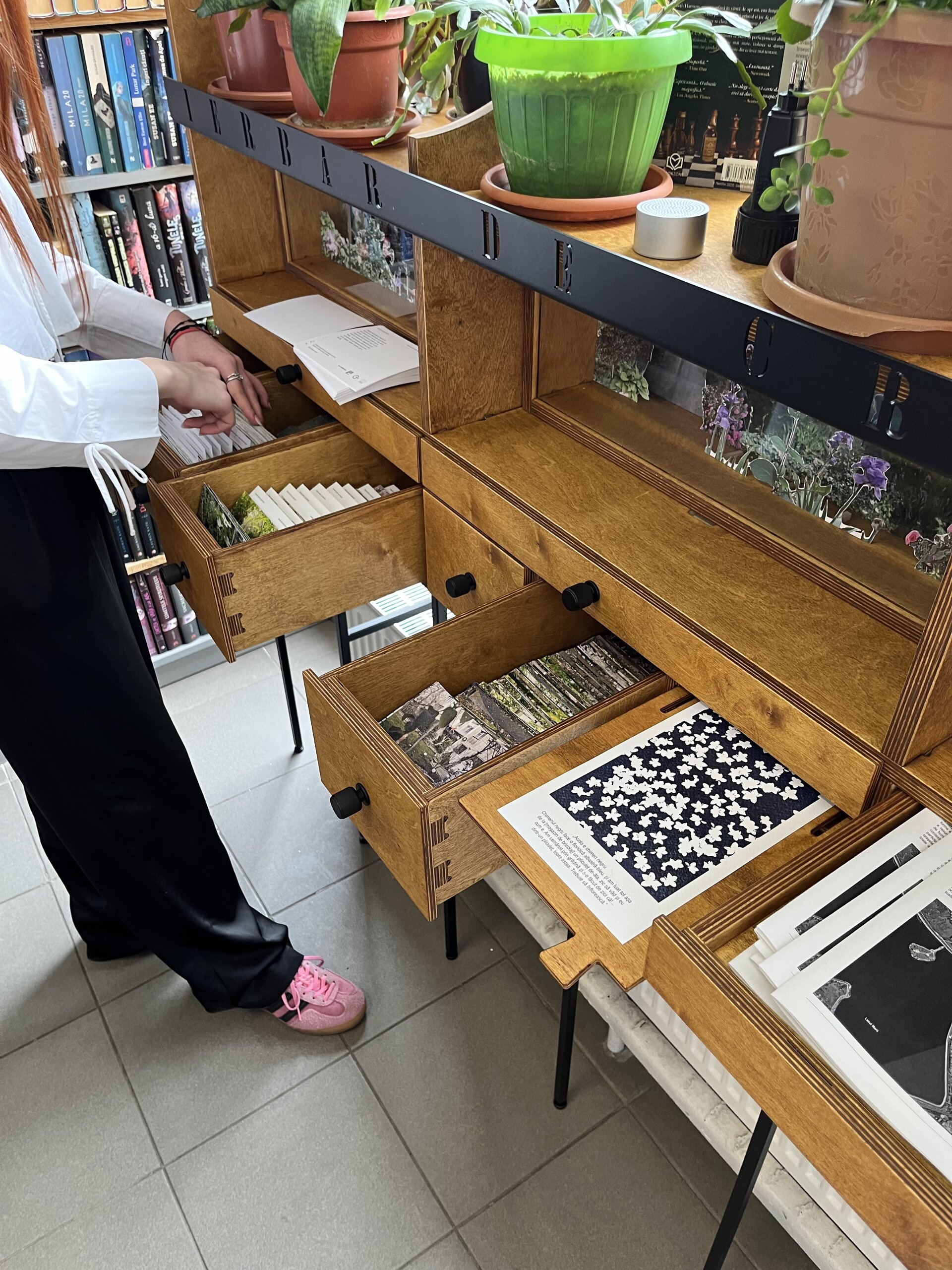
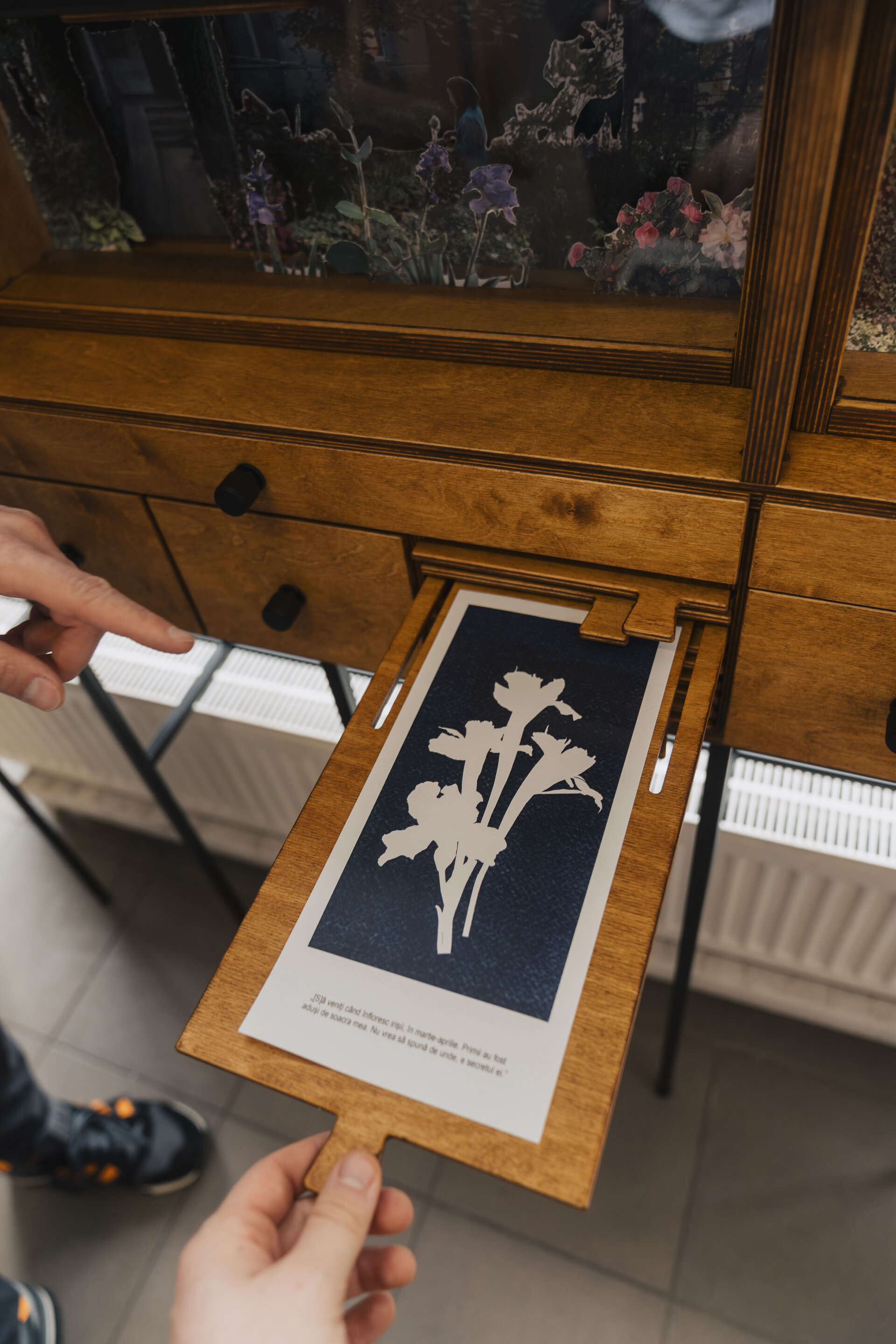
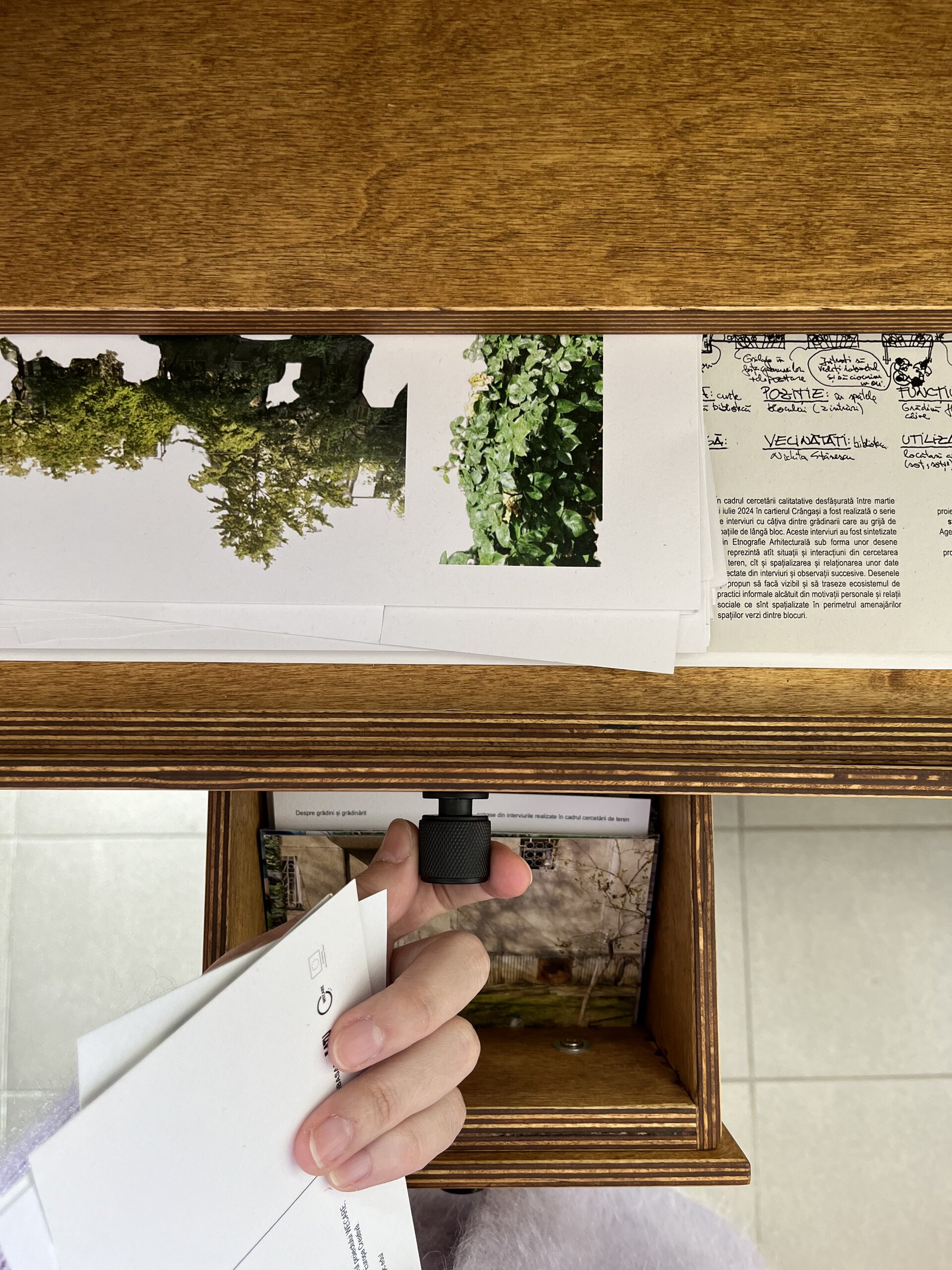
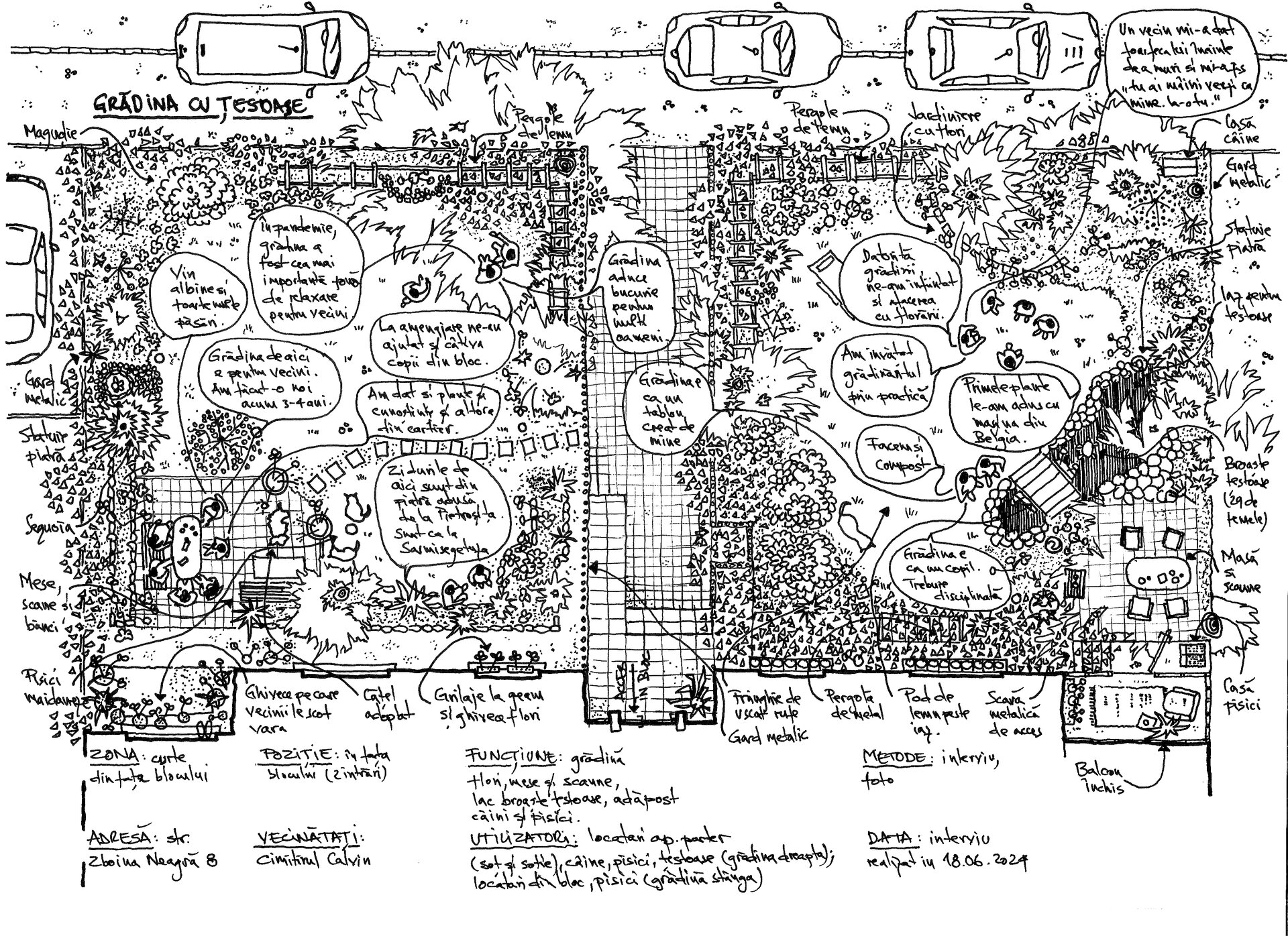
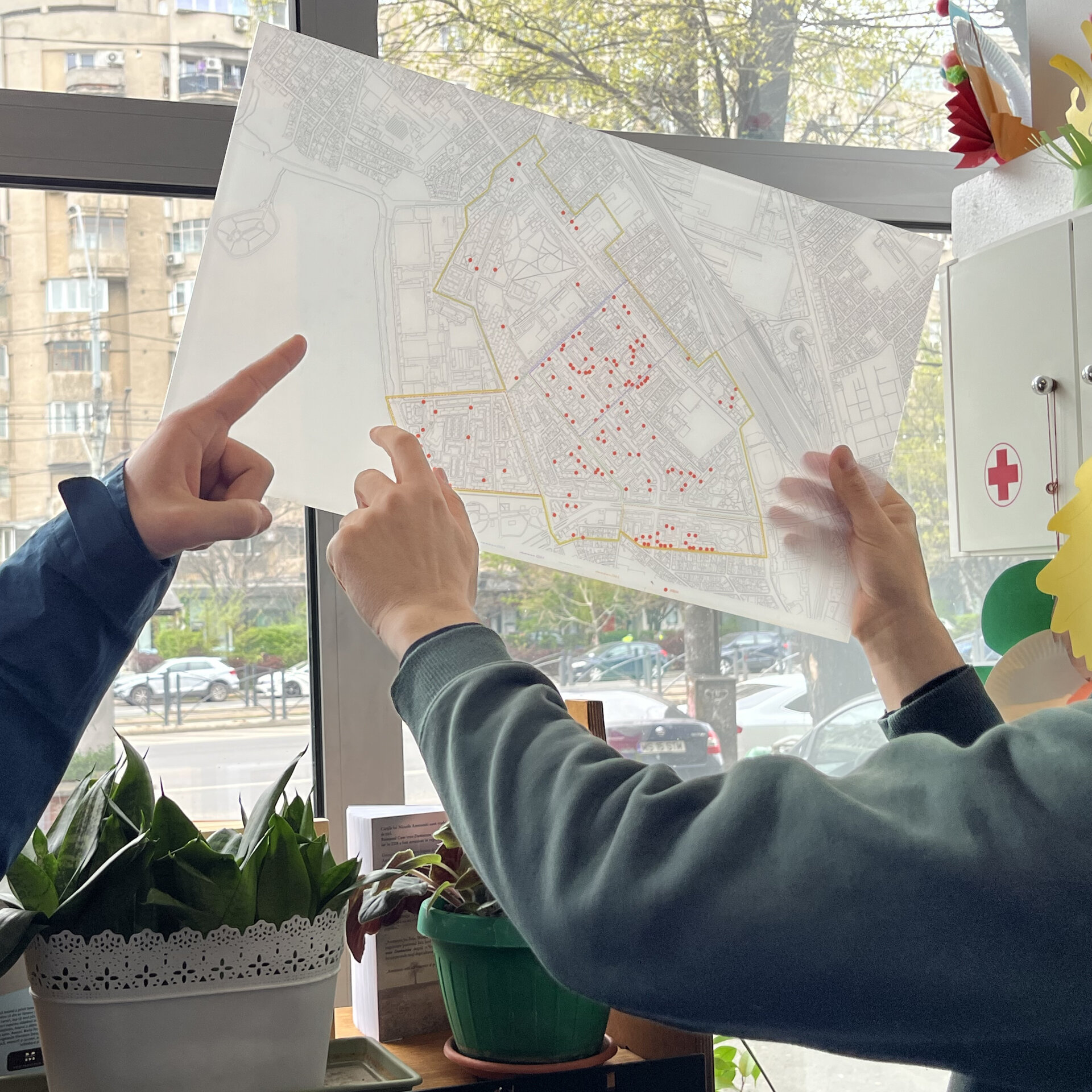
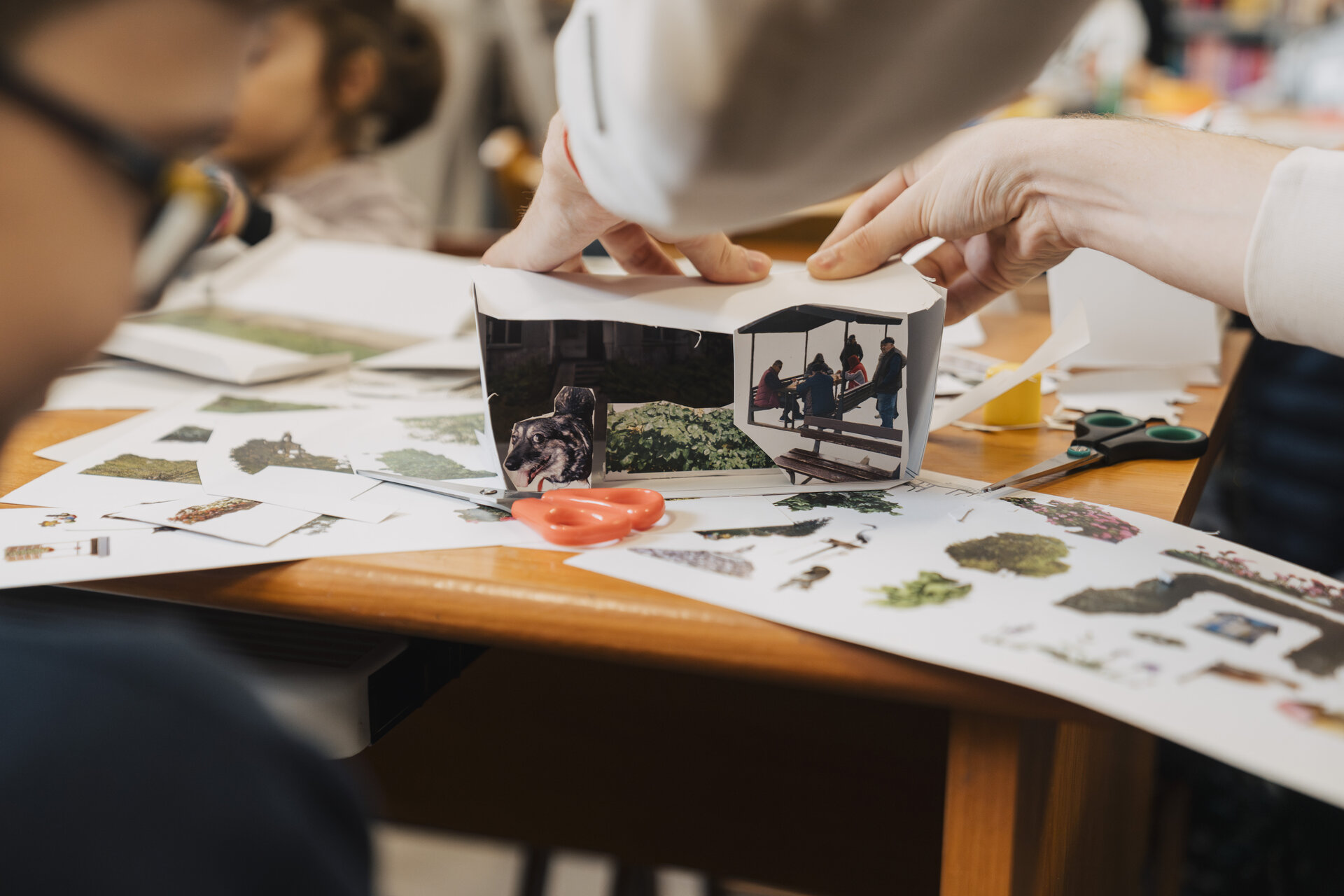
The Herbarium is an unconventional piece of furniture for a public library and functions as an interactive device that contributes to transforming the way knowledge is accessed in a public cultural institution. For instance, drawers can be opened to reveal maps marking informal practices in the neighborhood, ethnographic sketches and postcards of those practices, as well as the research report. A key feature is the set of six dioramas of apartment block gardens made by students, which are displayed both inside the library and toward the street. The top exterior part of the Herbarium also allows for the integration of flower pots and books — a special request from the librarian, which was fulfilled the very first morning after installation.
One of the characteristics of local BMB (Bucharest Metropolitan Library) branches is their small size, which often makes interior spaces in neighborhood libraries cramped and crowded with furniture. The placement options for the Herbarium were therefore quite limited. After discussions between the team and the librarian, the area near the glass façade facing the street, above the radiator, was chosen as the most suitable location. Its placement by the façade also allowed the object to respond to two situations: facing inward, the Herbarium unfolds through numerous drawers that reveal stories, histories, drawings, maps, and images of informal spatial practices in the neighborhood; facing the street, it offers a platform for book displays aimed at attracting new users.
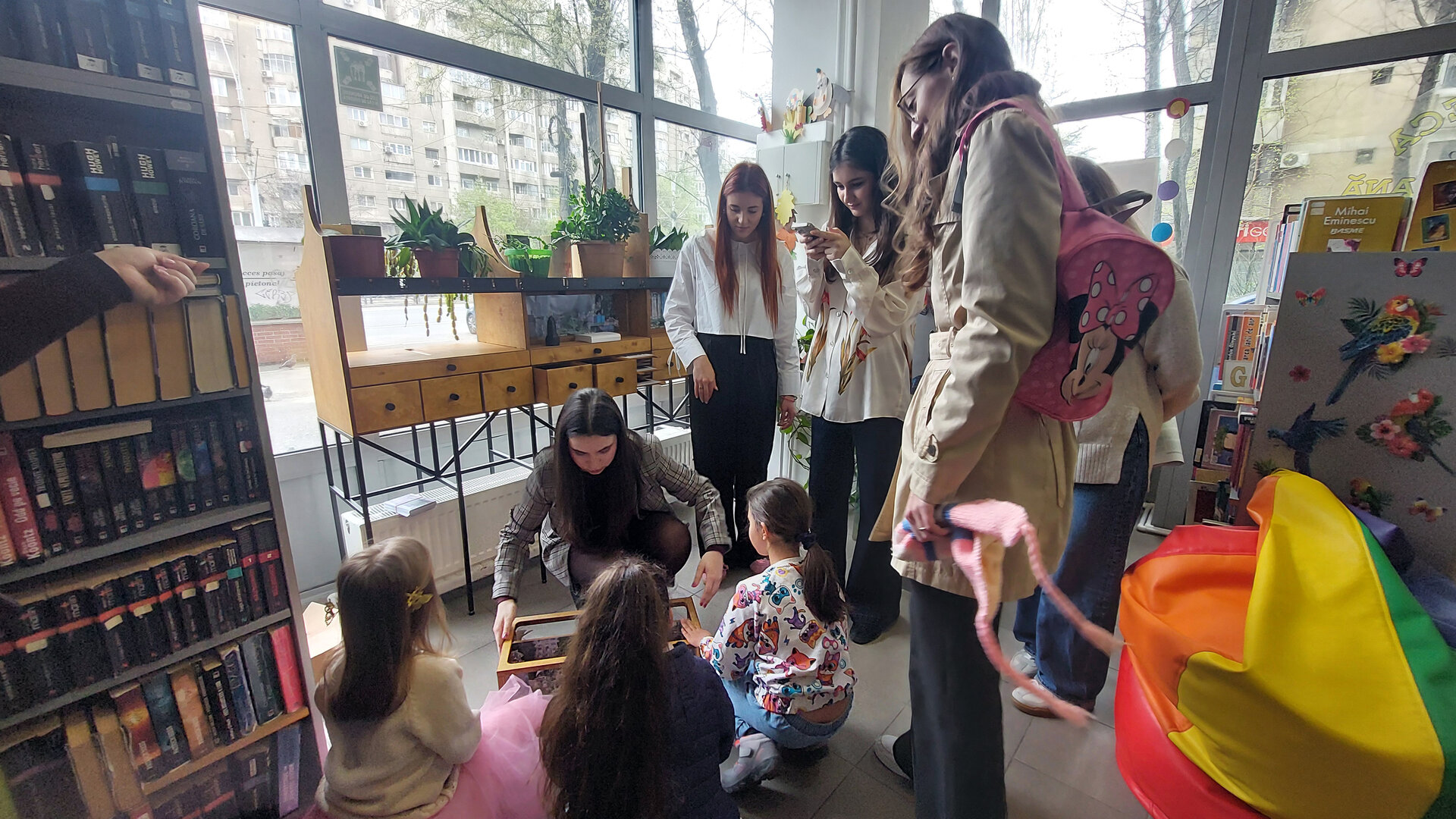
The Herbarium was inaugurated in April 2025 during an event that showcased the potential for using and transforming activities in public libraries, where environmental education can now also be introduced.
Object Design