120°
Authors’ Comment
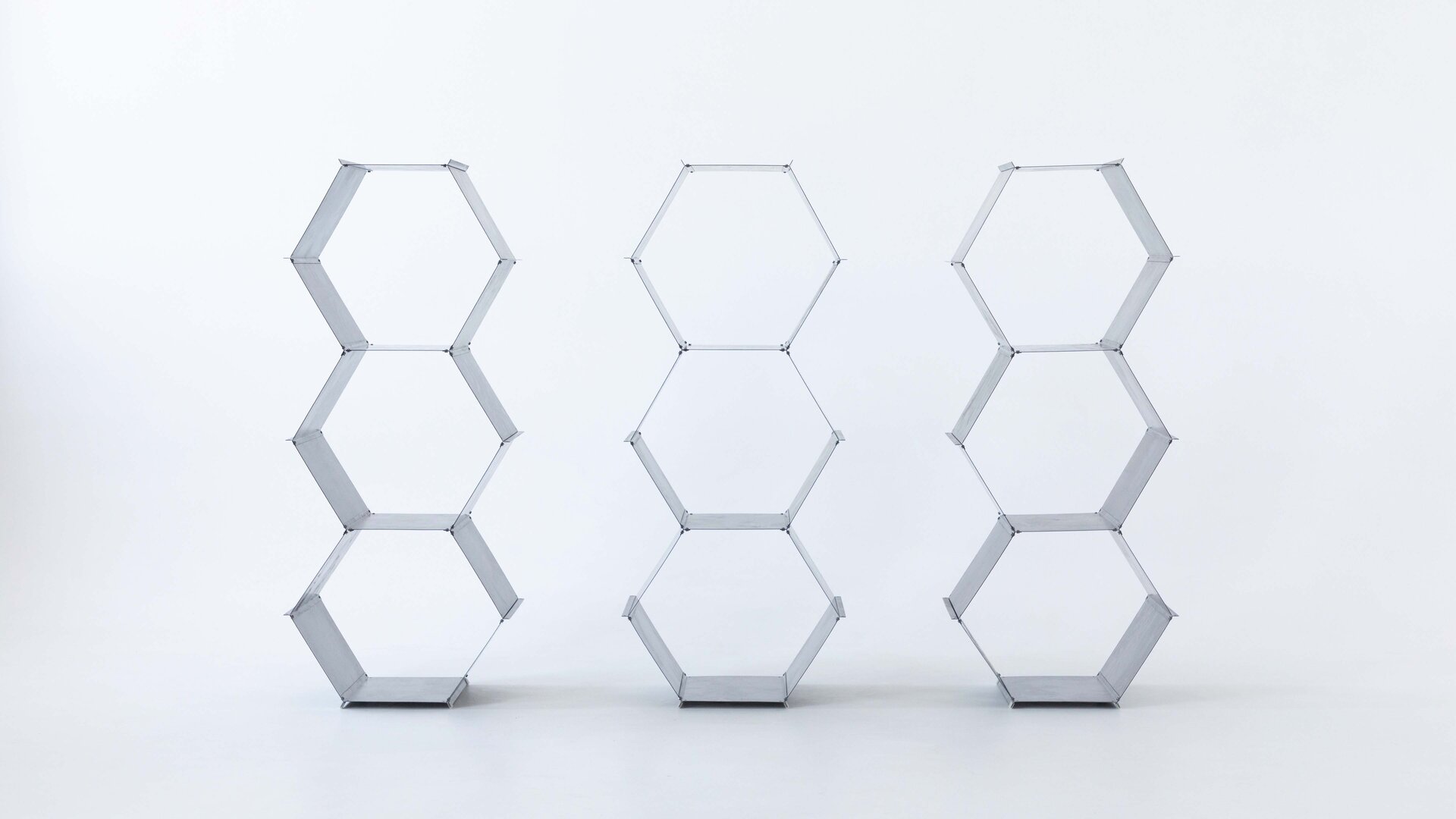
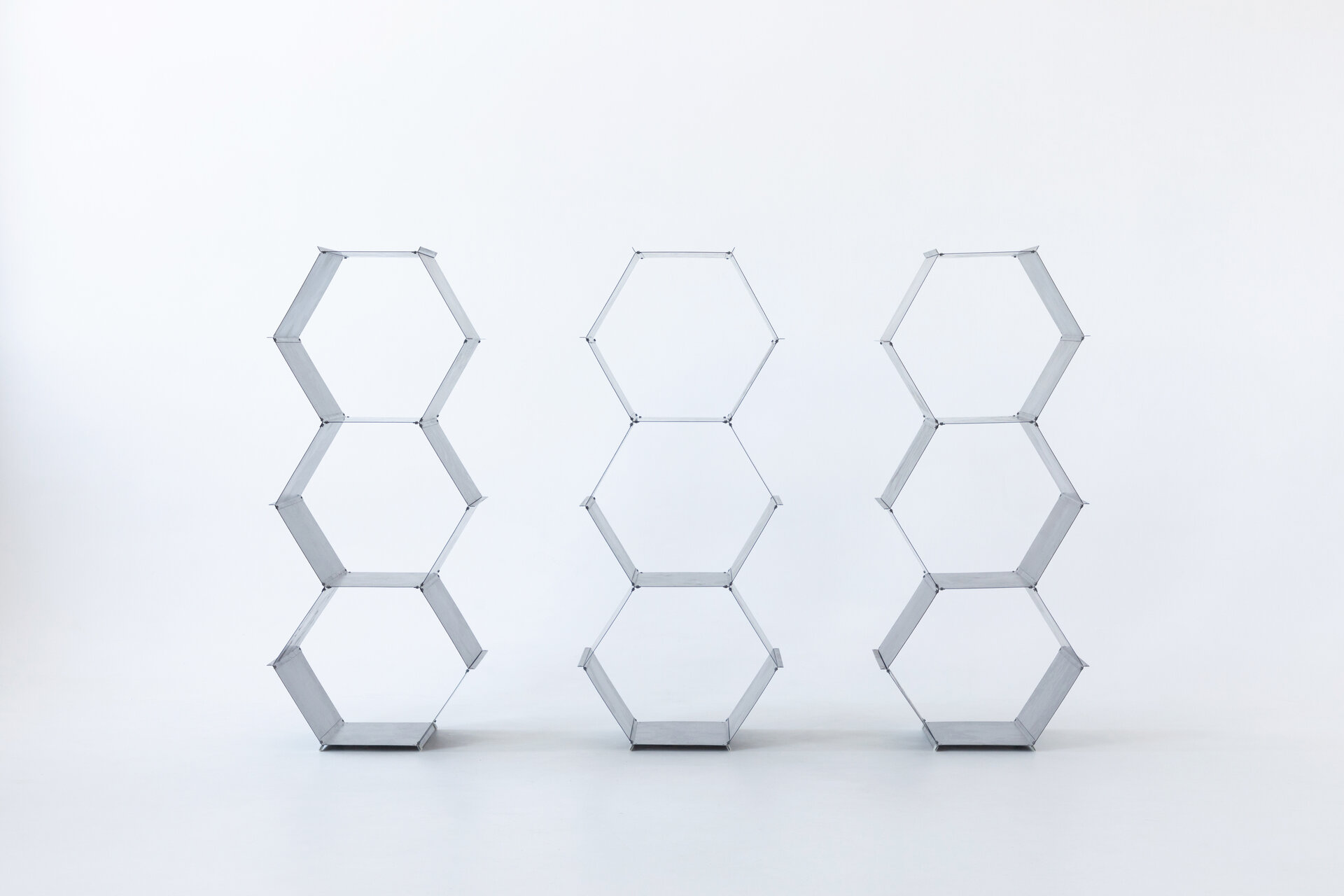
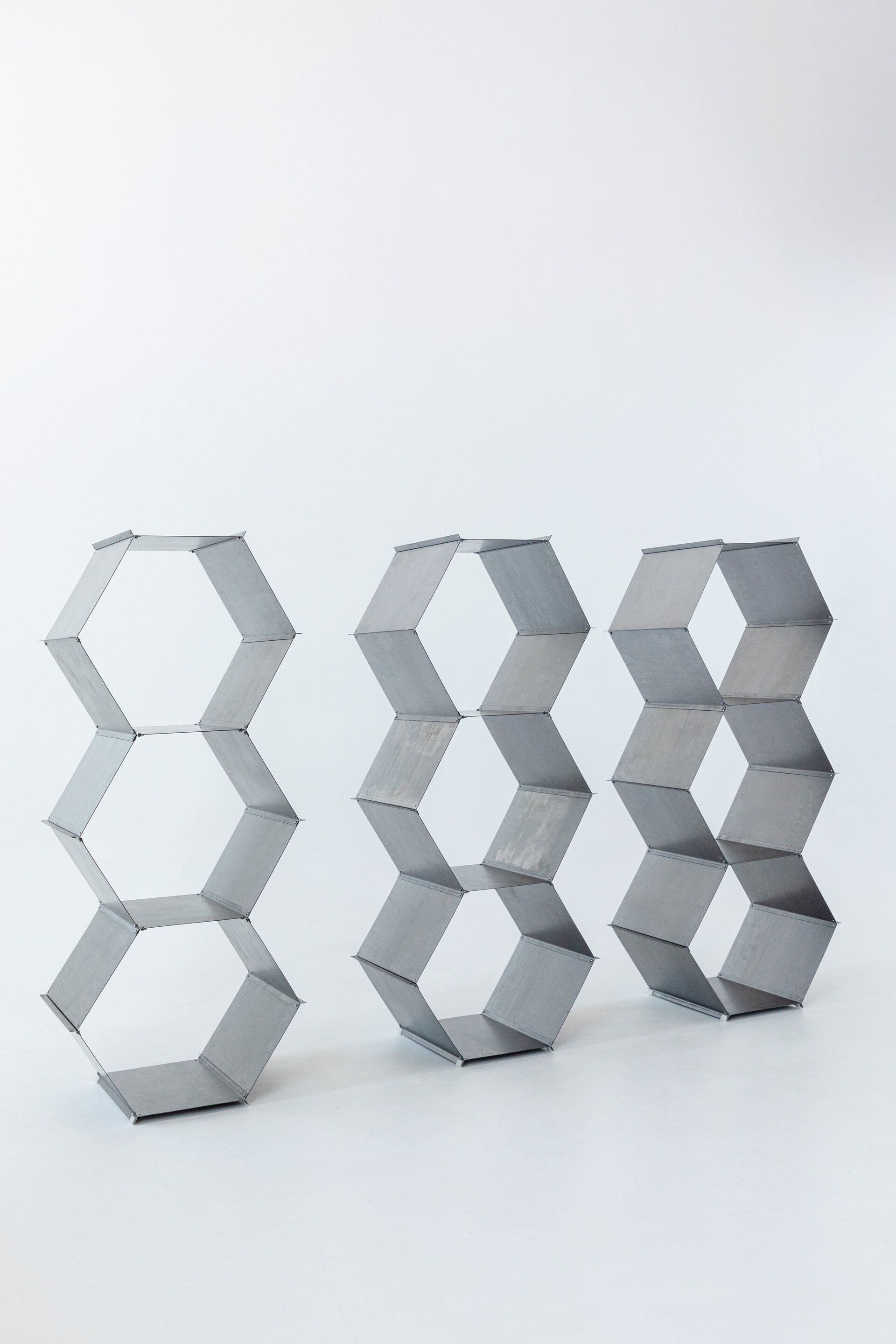
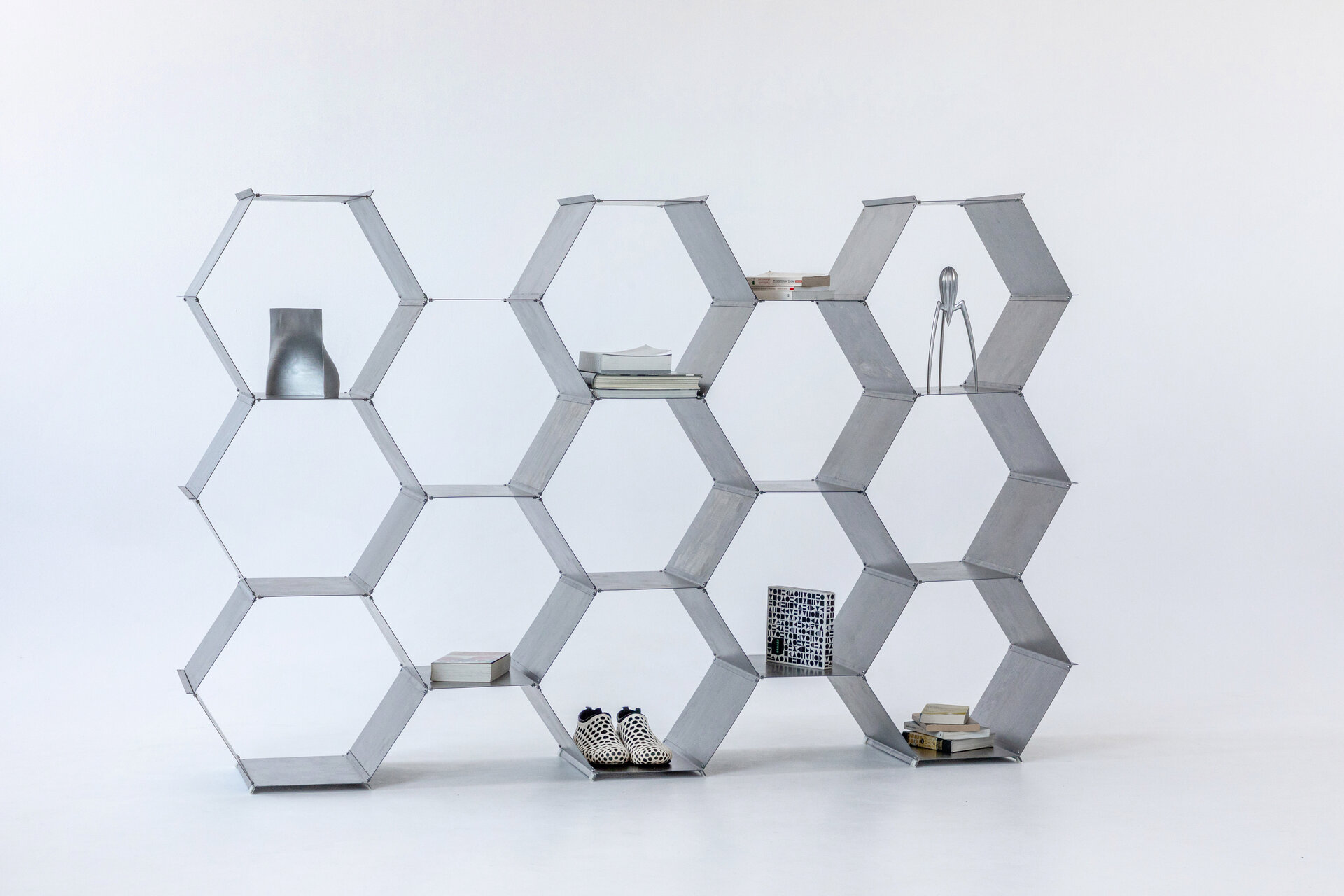
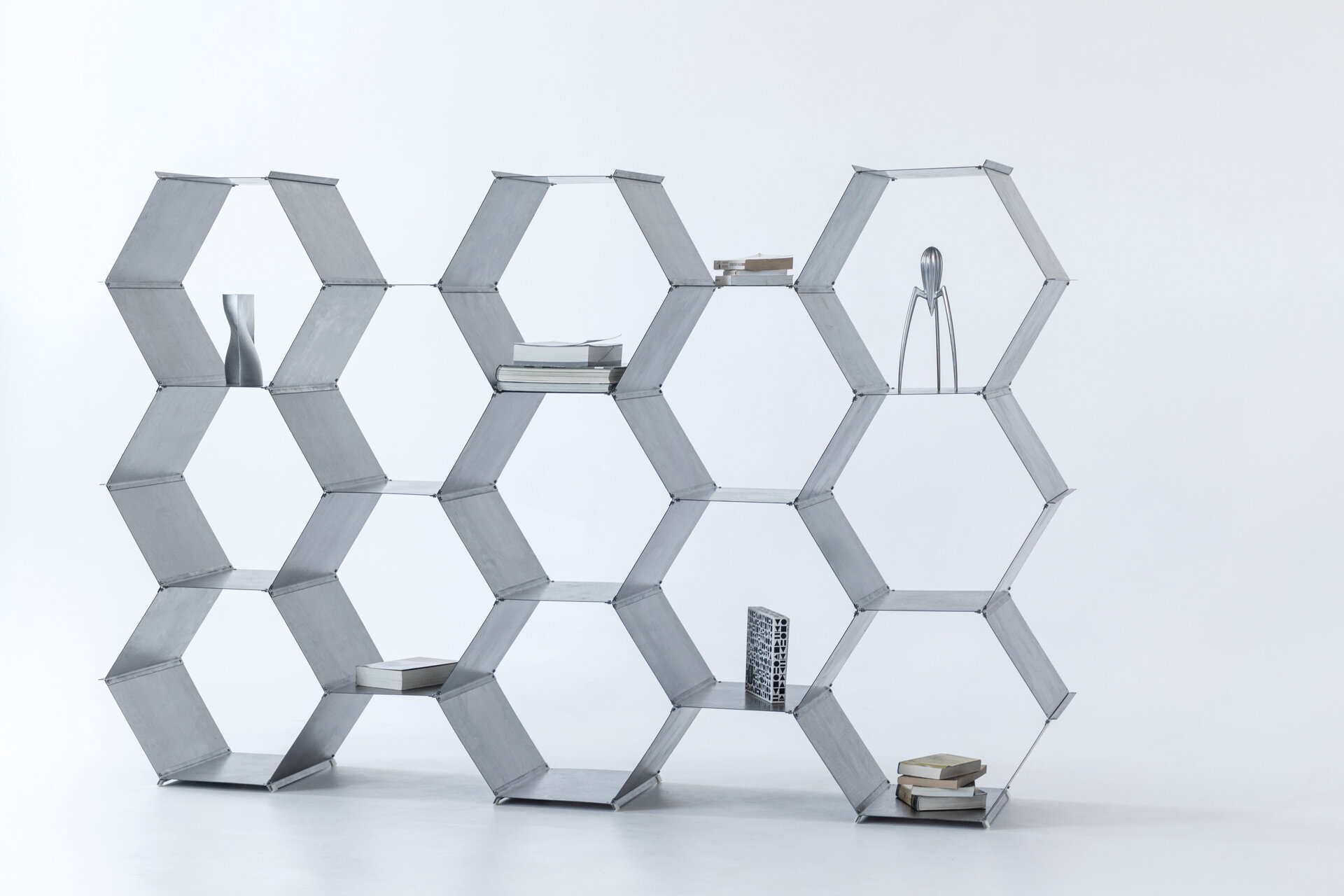
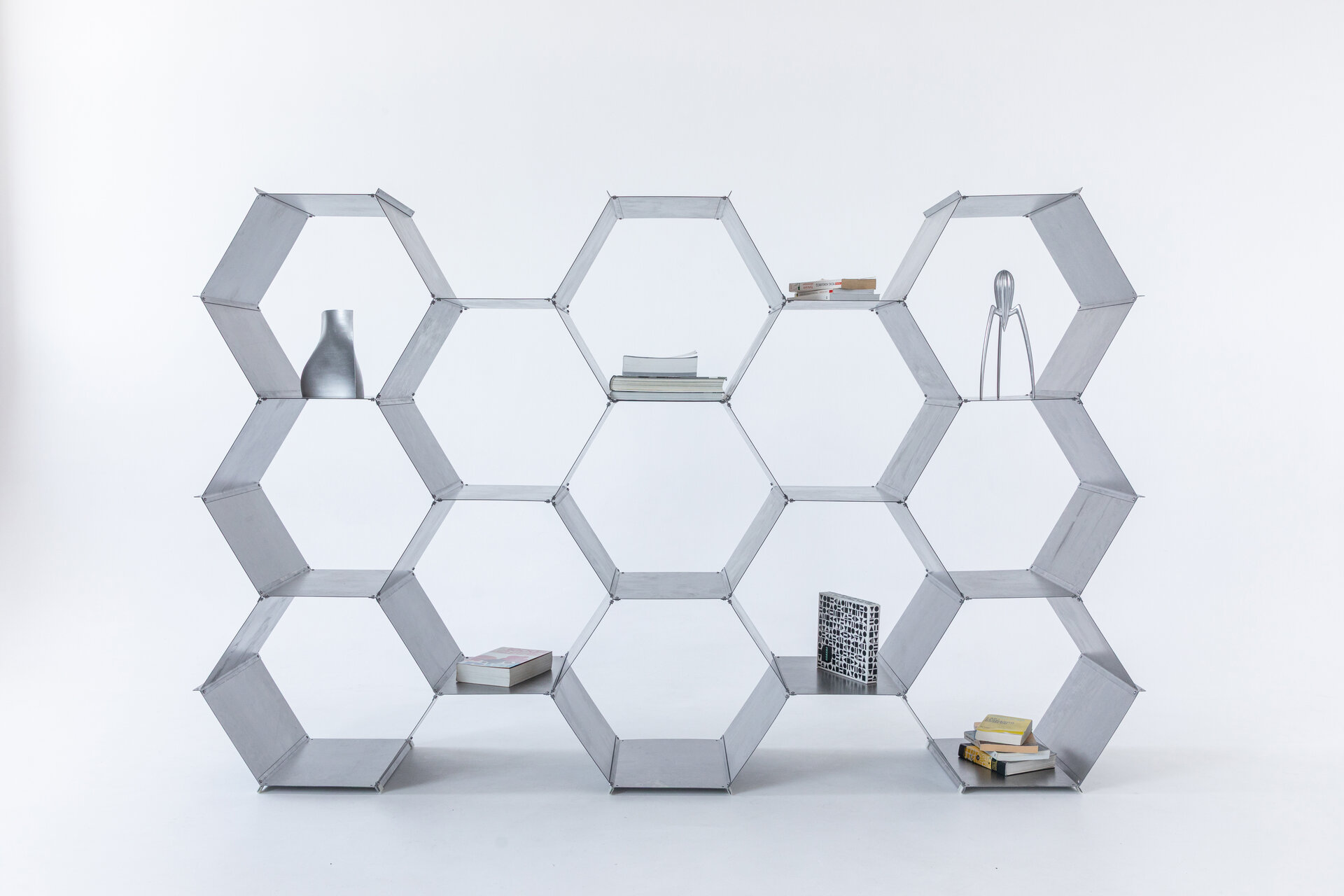
The honeycomb structure is generated using a 120° angle, characteristic of its hexagonal geometry. To scale this concept into a larger spatial object, the design challenge was distilled into creating a single modular segment—a foundational “formula” for infinite hexagonal replication.
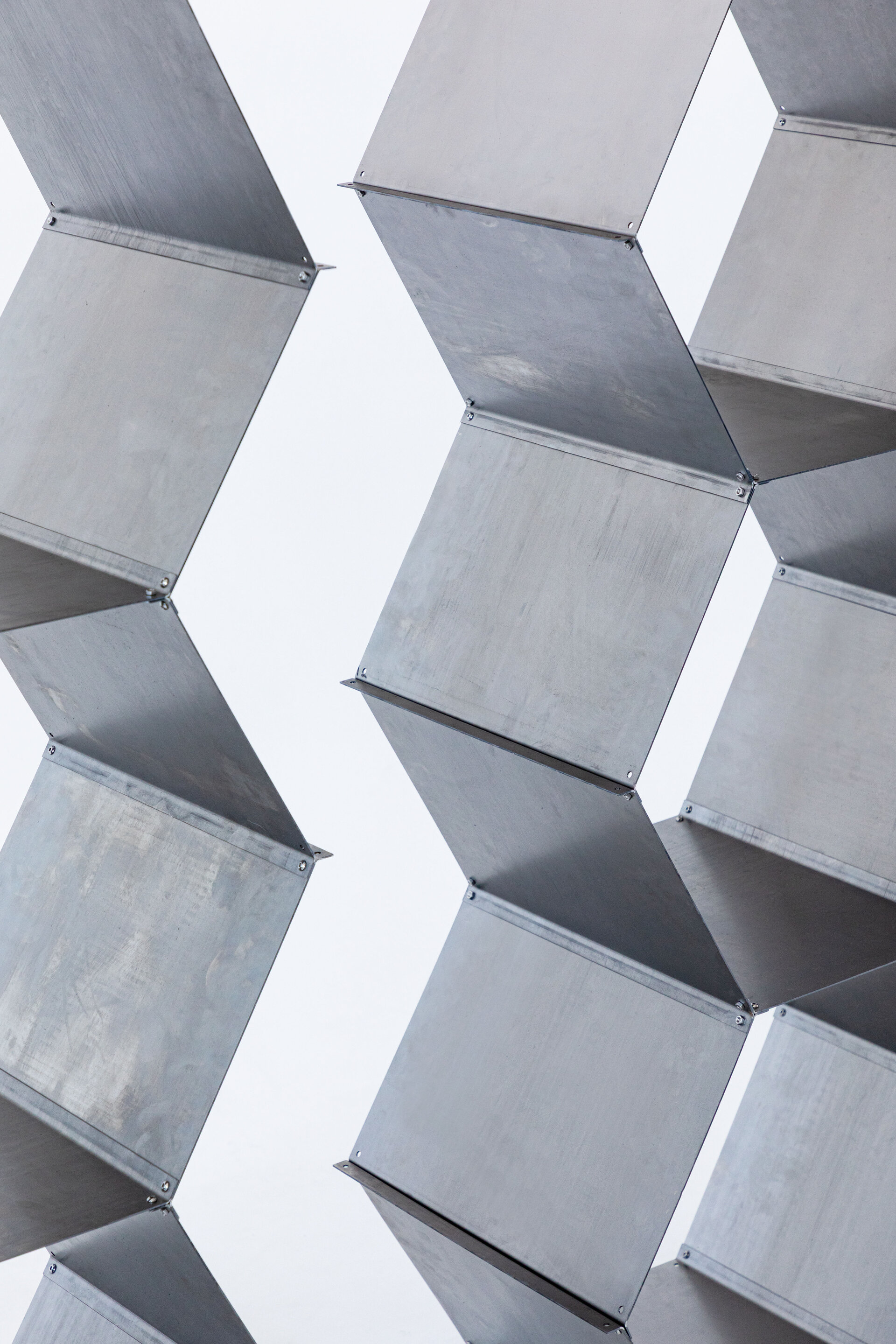
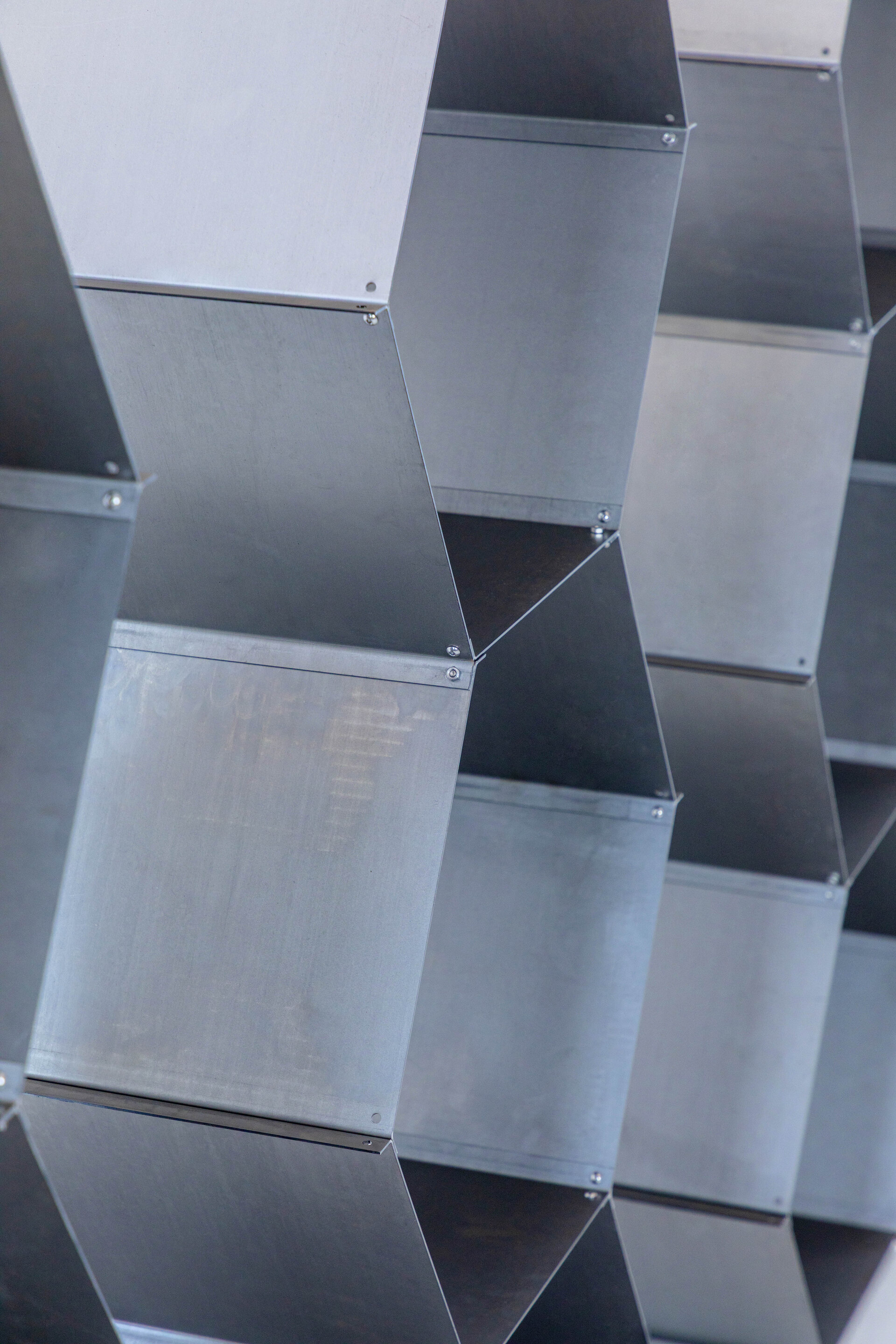
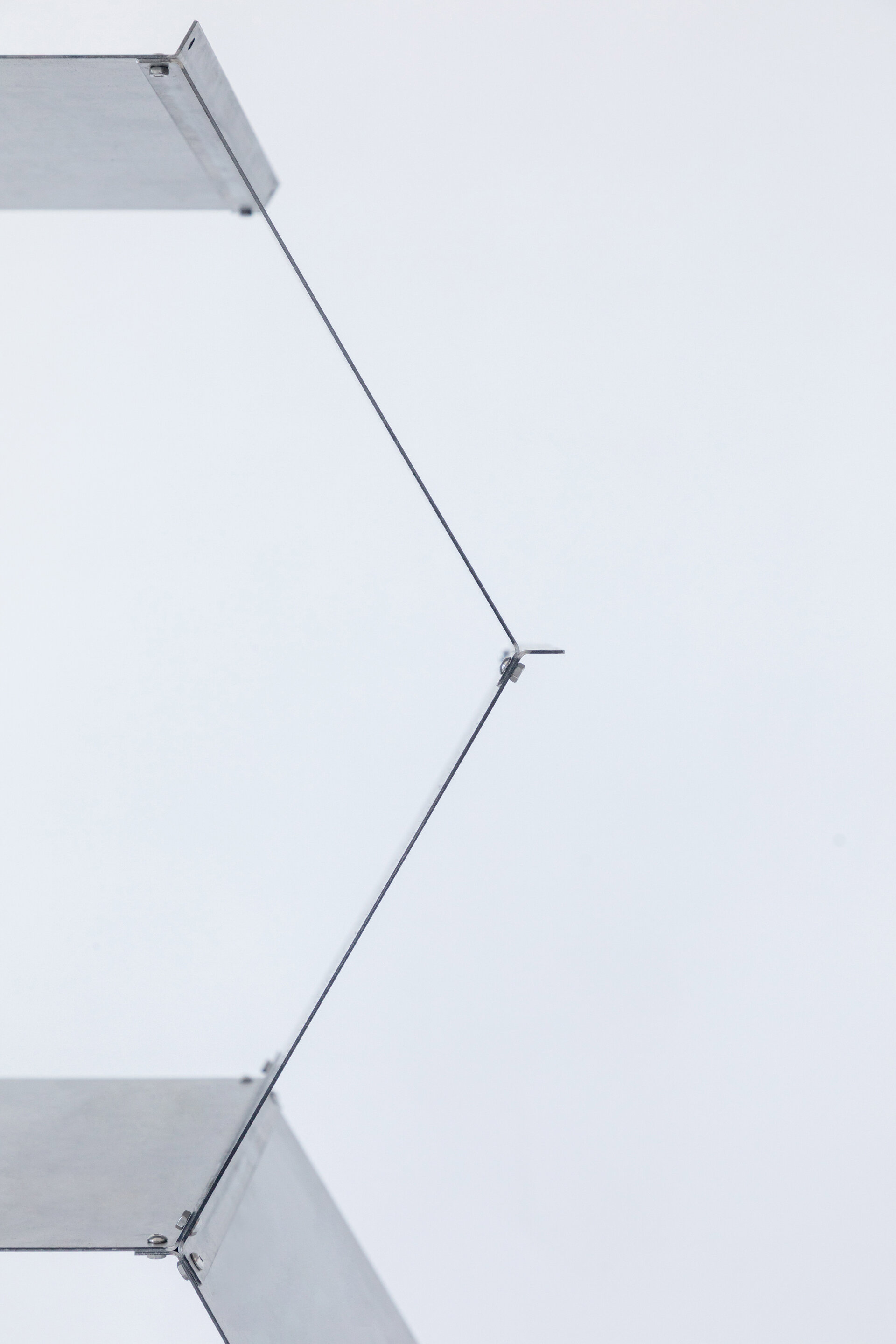
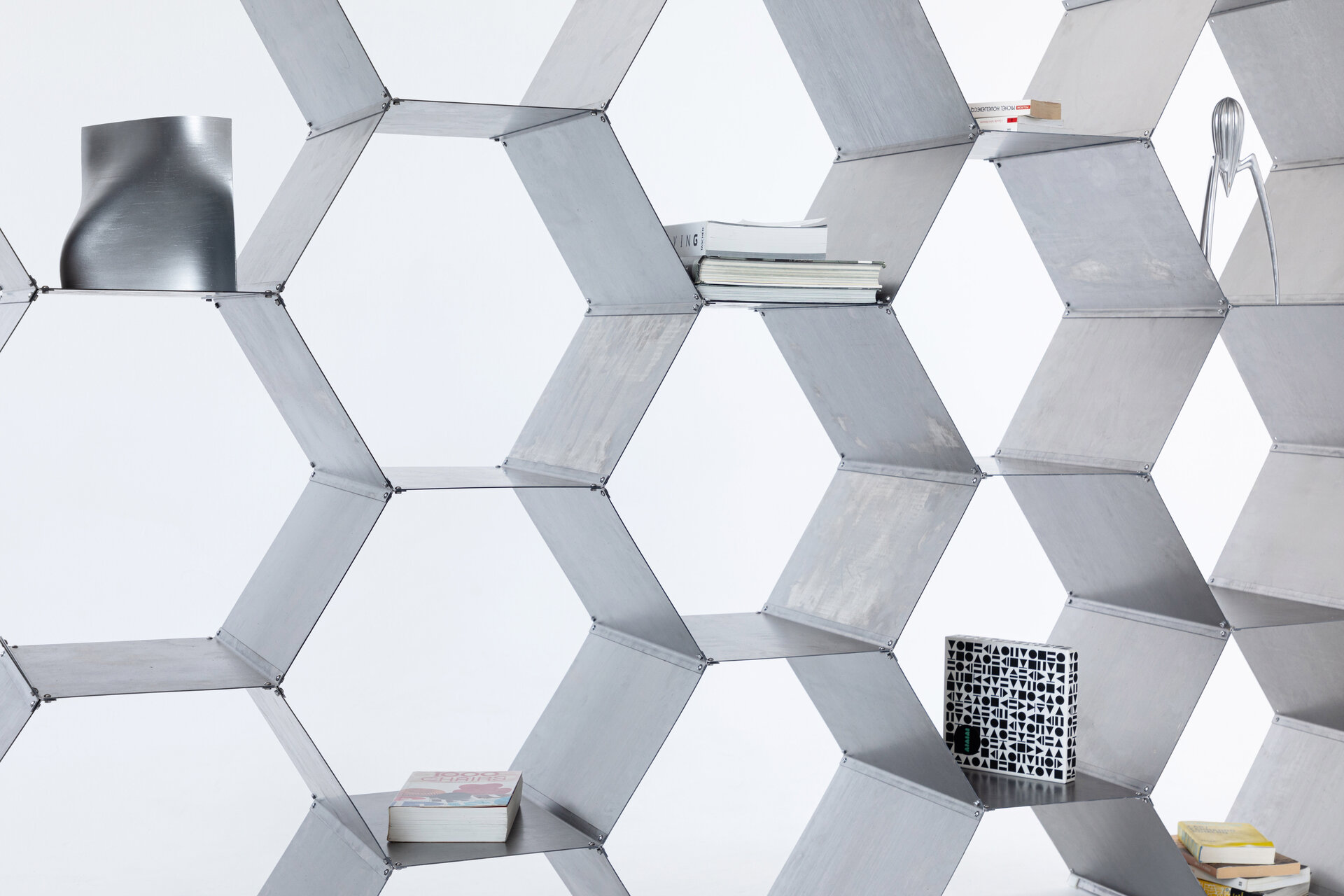
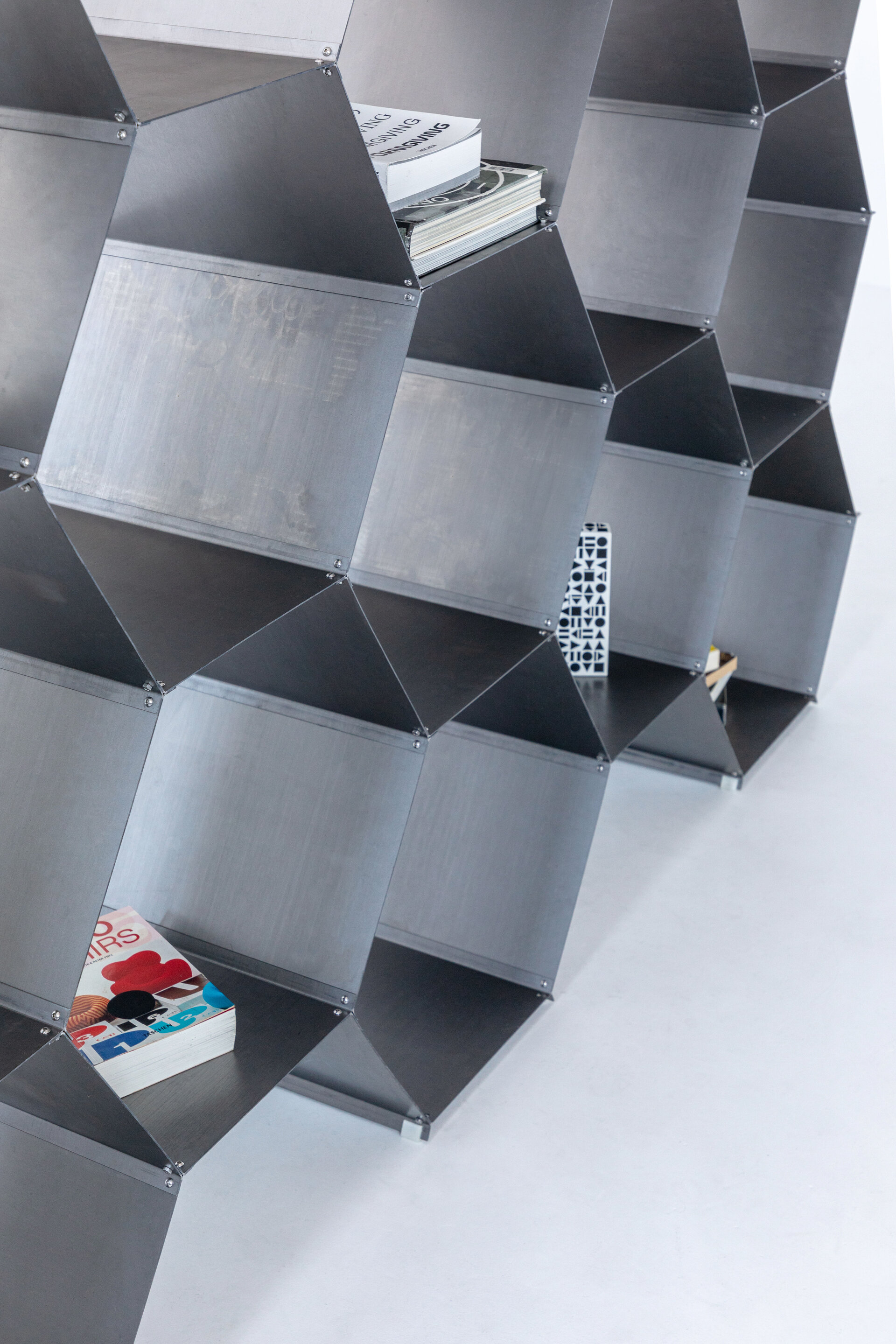
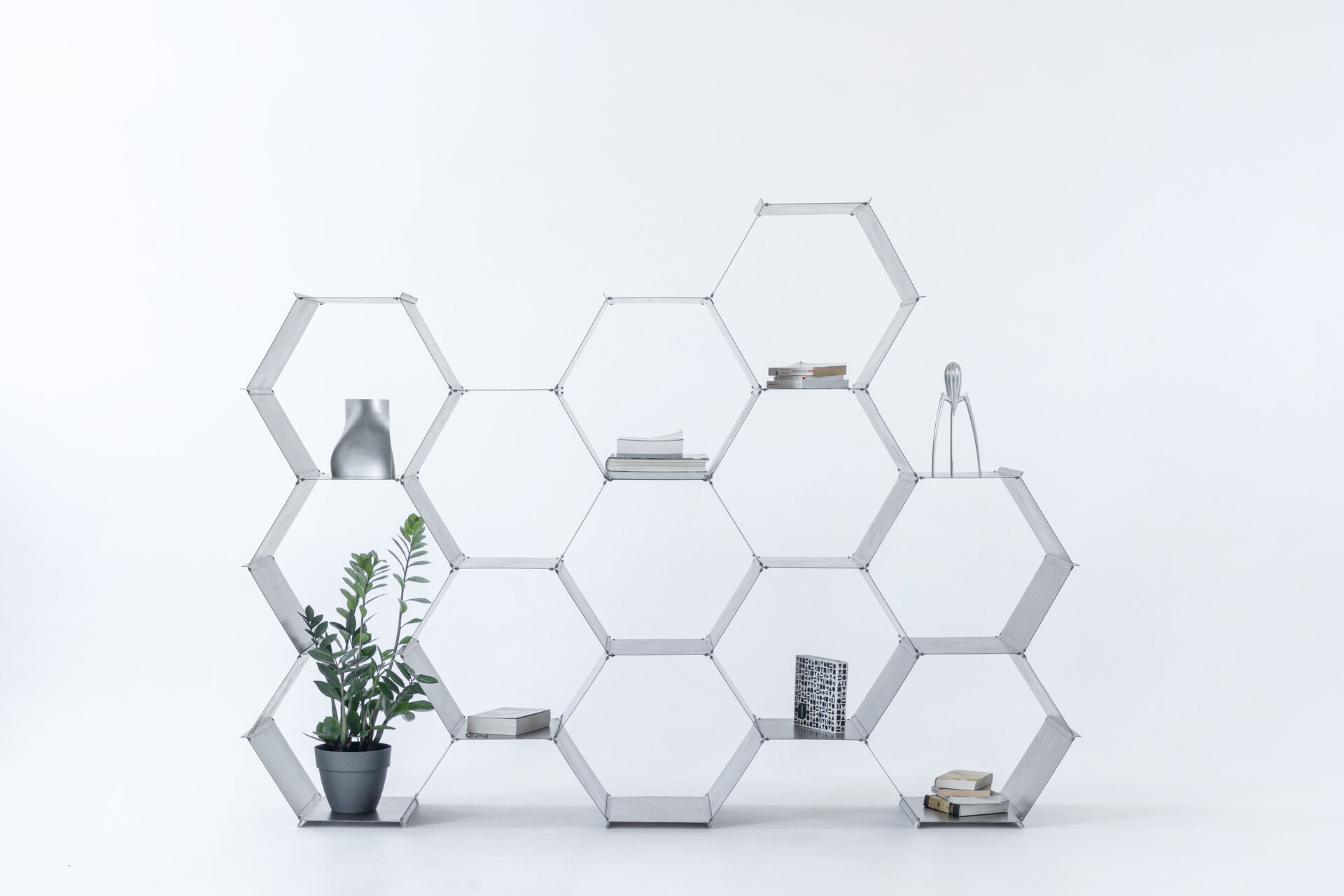
This generating element is crafted from a flat sheet of metal, with two opposite edges bent upward at a 120° angle to form small “wings.” Each bent end features four symmetrically placed holes along the fold axis, enabling secure mechanical attachment to two or three additional segments. These connections form the two primary node types of the honeycomb network.
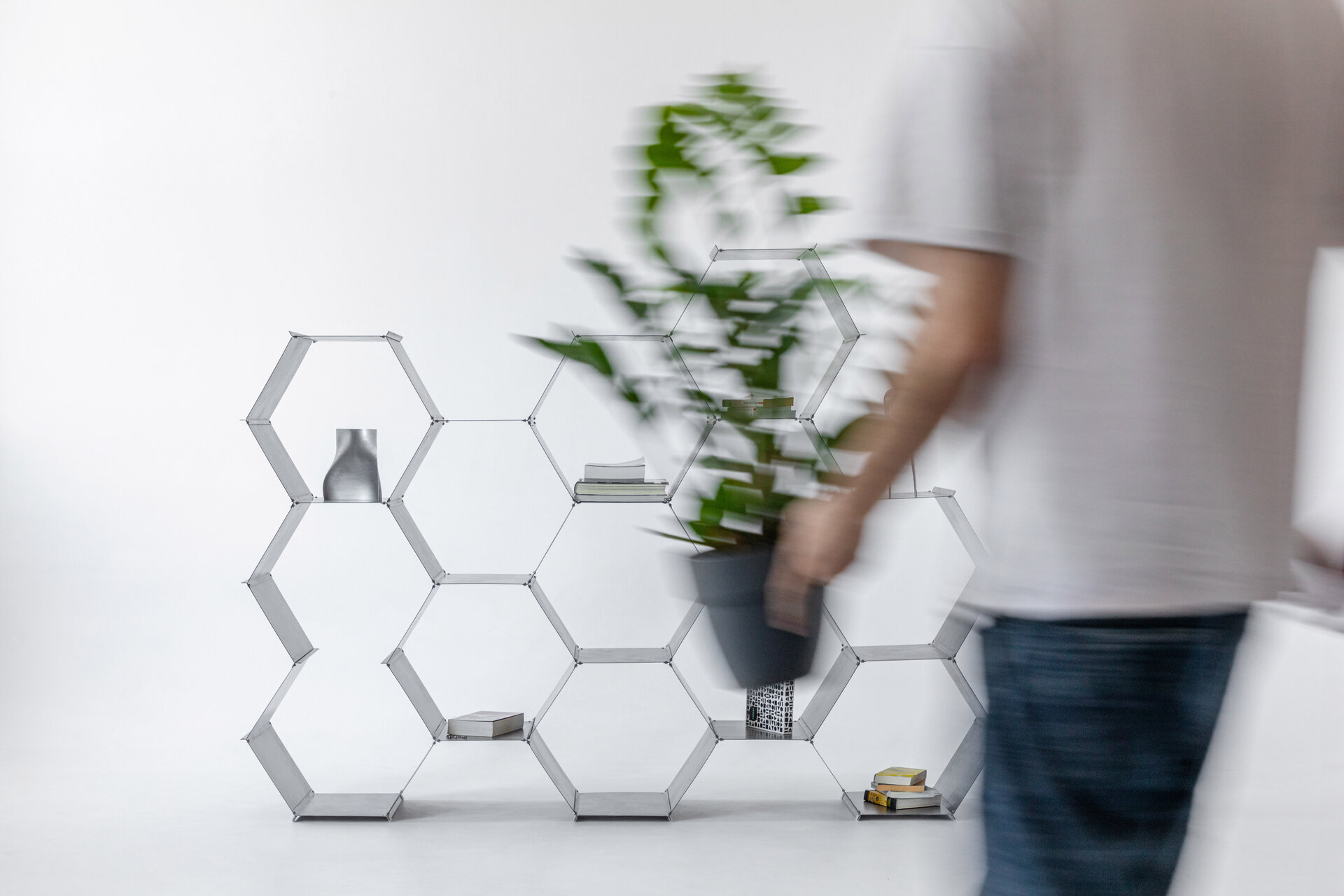
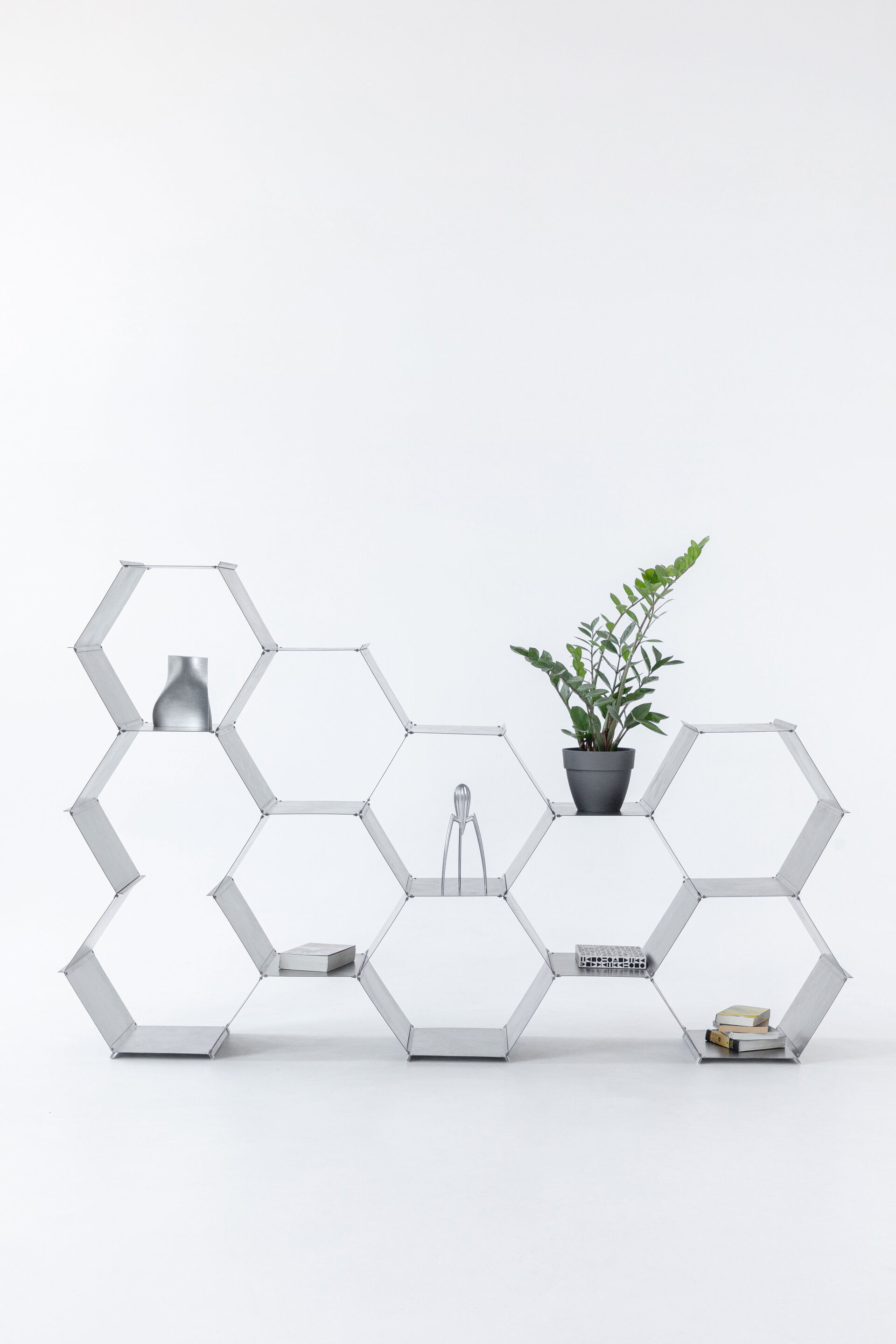
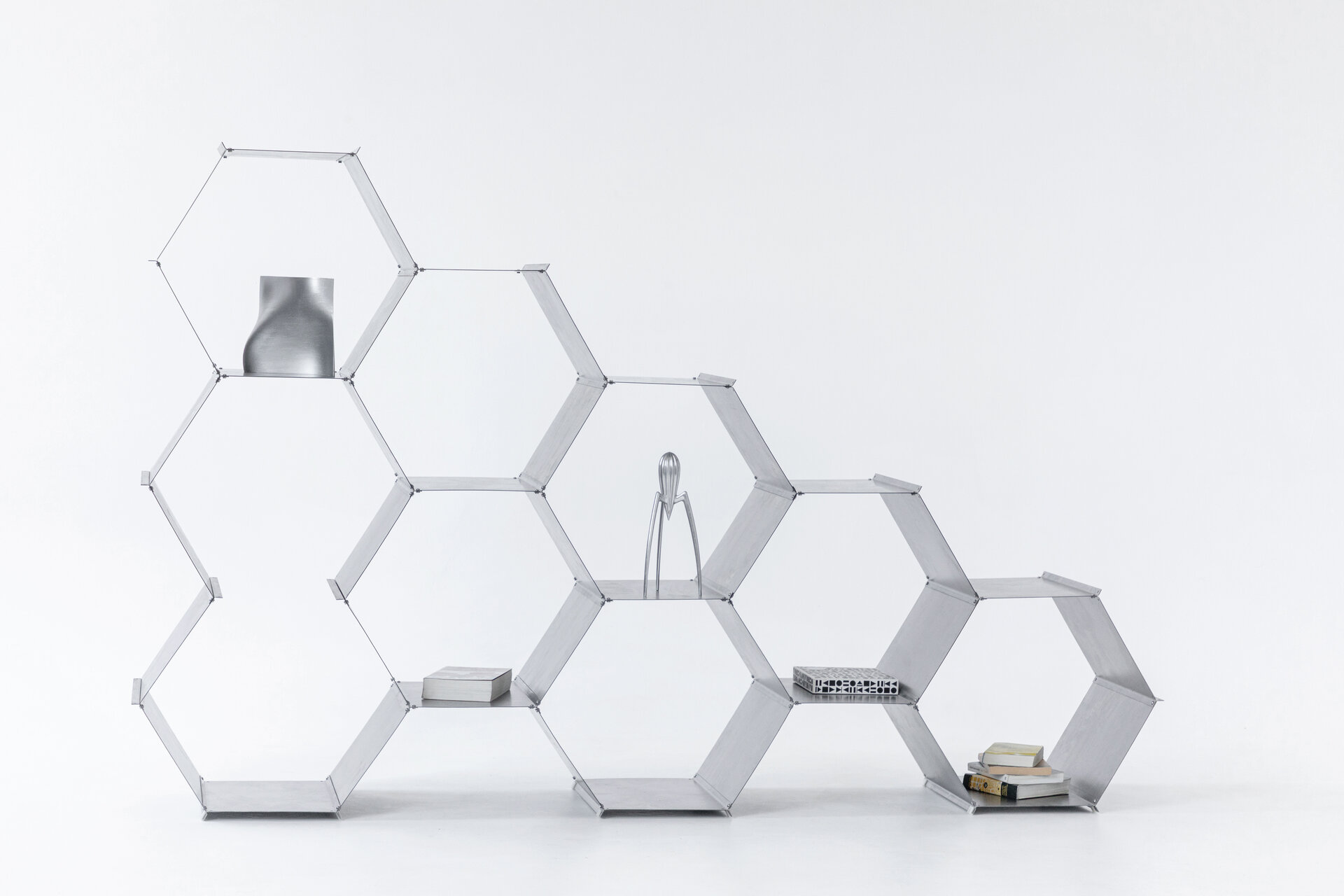
The resulting spatial structure is highly versatile: it can function as a shelving unit, a bookcase, a translucent partition, or even a load-bearing framework. Its applications range from residential interiors to commercial and exhibition spaces. The thinness of the sheet metal introduces a dynamic interplay of materiality—depending on the viewer’s angle, the structure can appear both delicate and strong.
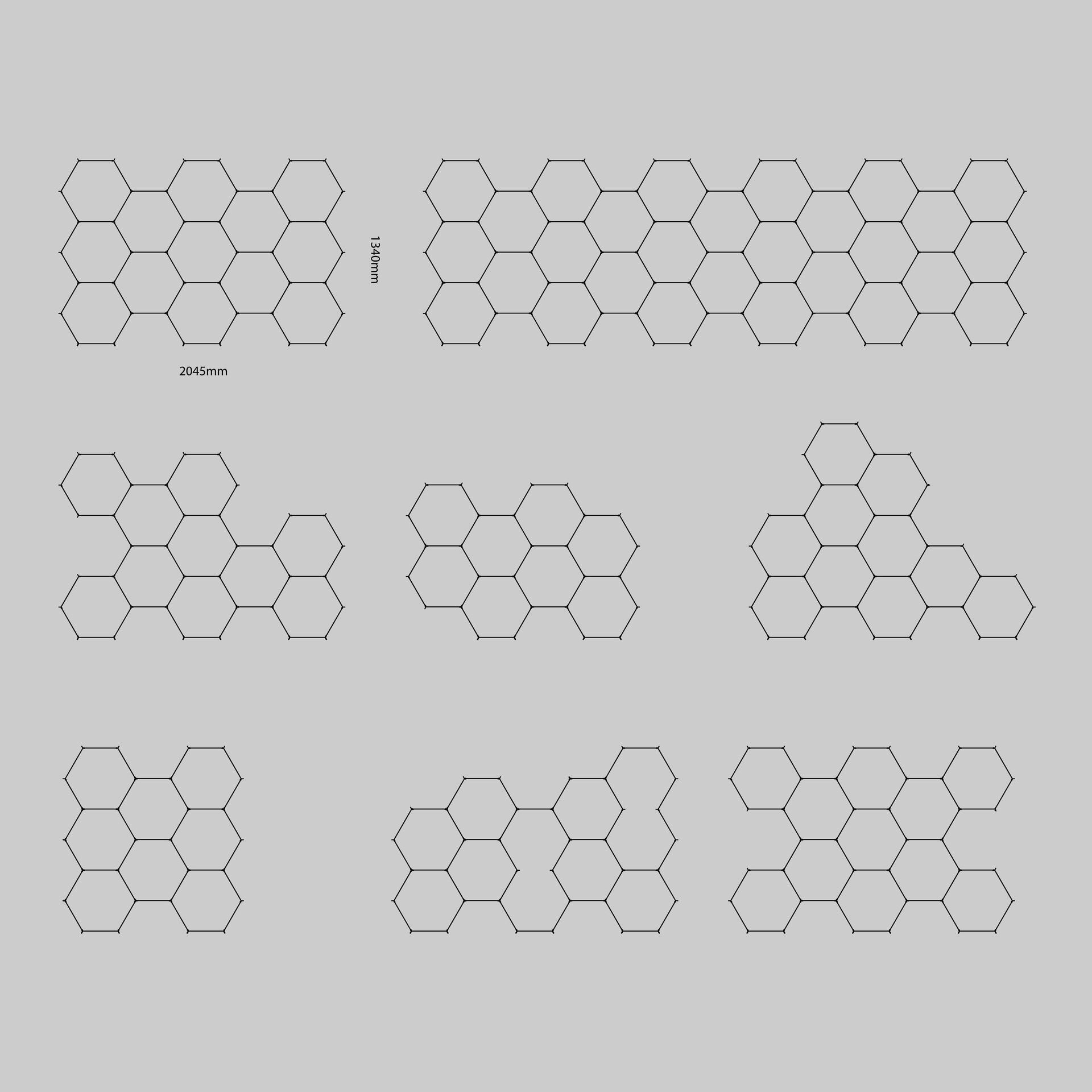
From a sustainability and efficiency standpoint, the use of a single, repeatable element simplifies manufacturing and minimizes volume, optimizing both transport and storage. Assembly is straightforward and supports a wide variety of configurations in terms of shape and scale. For heavier loads, segments made from thicker sheet metal can be strategically placed at the base, ensuring structural integrity where needed.
Object Design