- Nomination for the “Built Architecture / Architecture and Heritage” section
The Old School in Tohani
Authors’ Comment
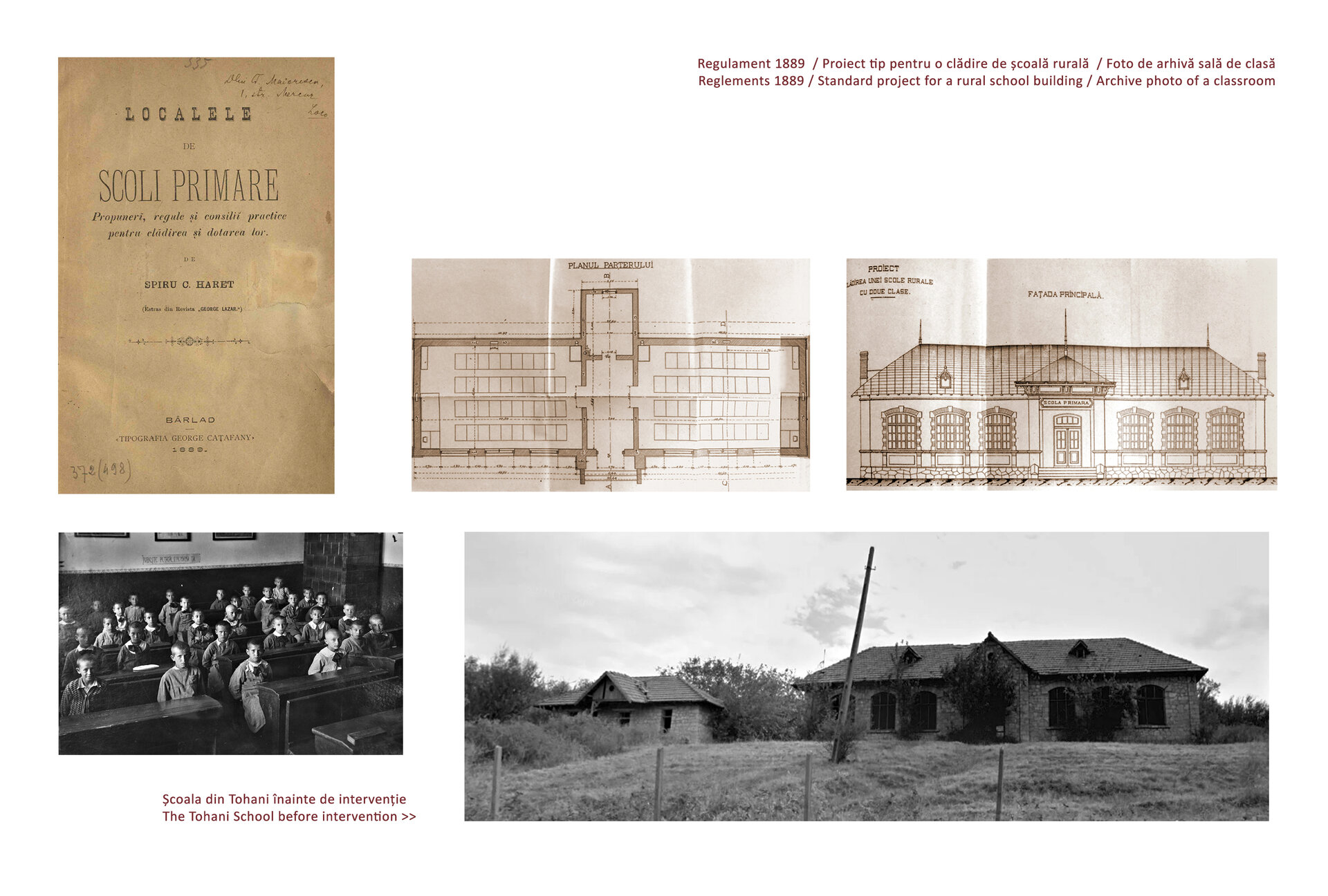
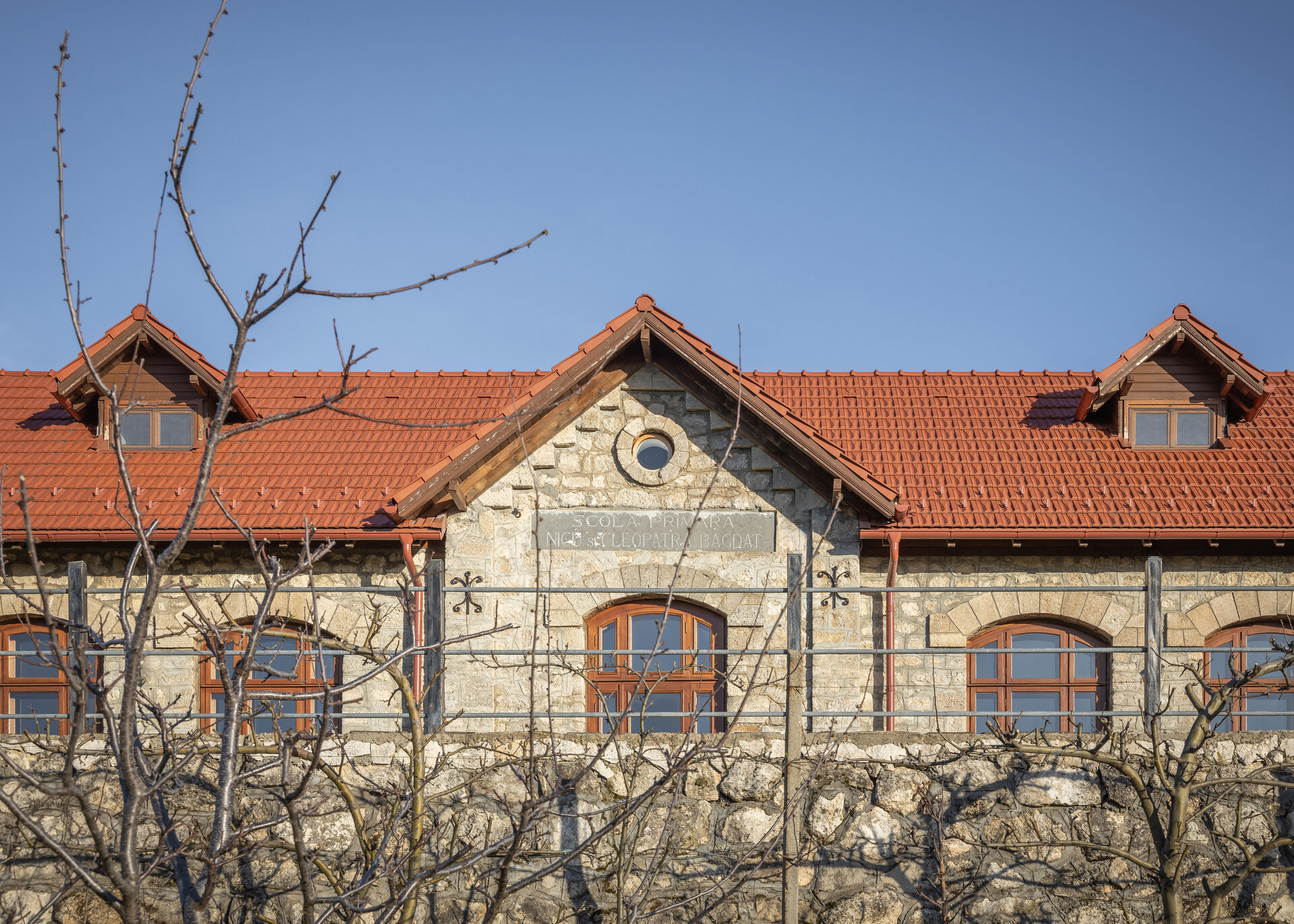
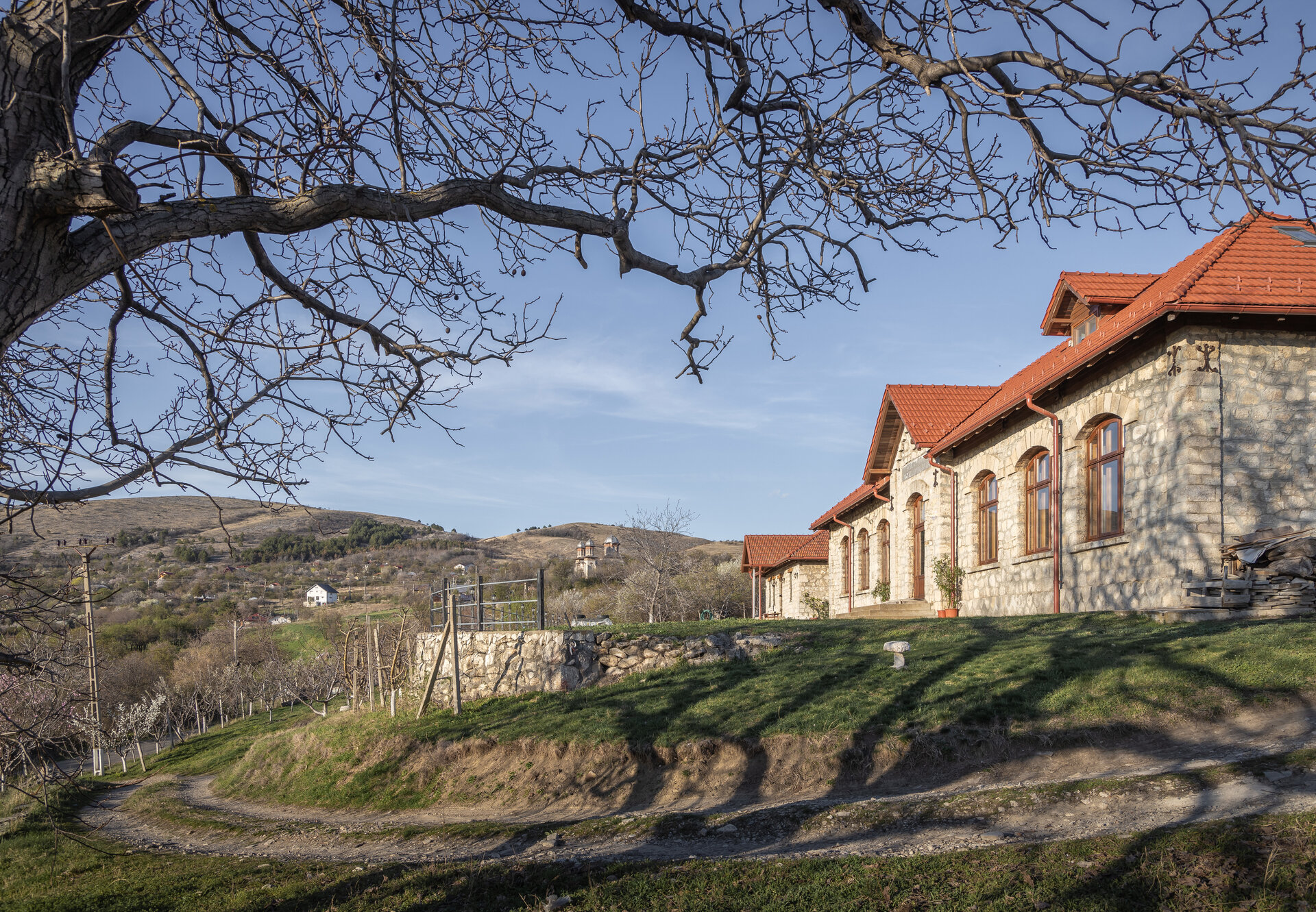
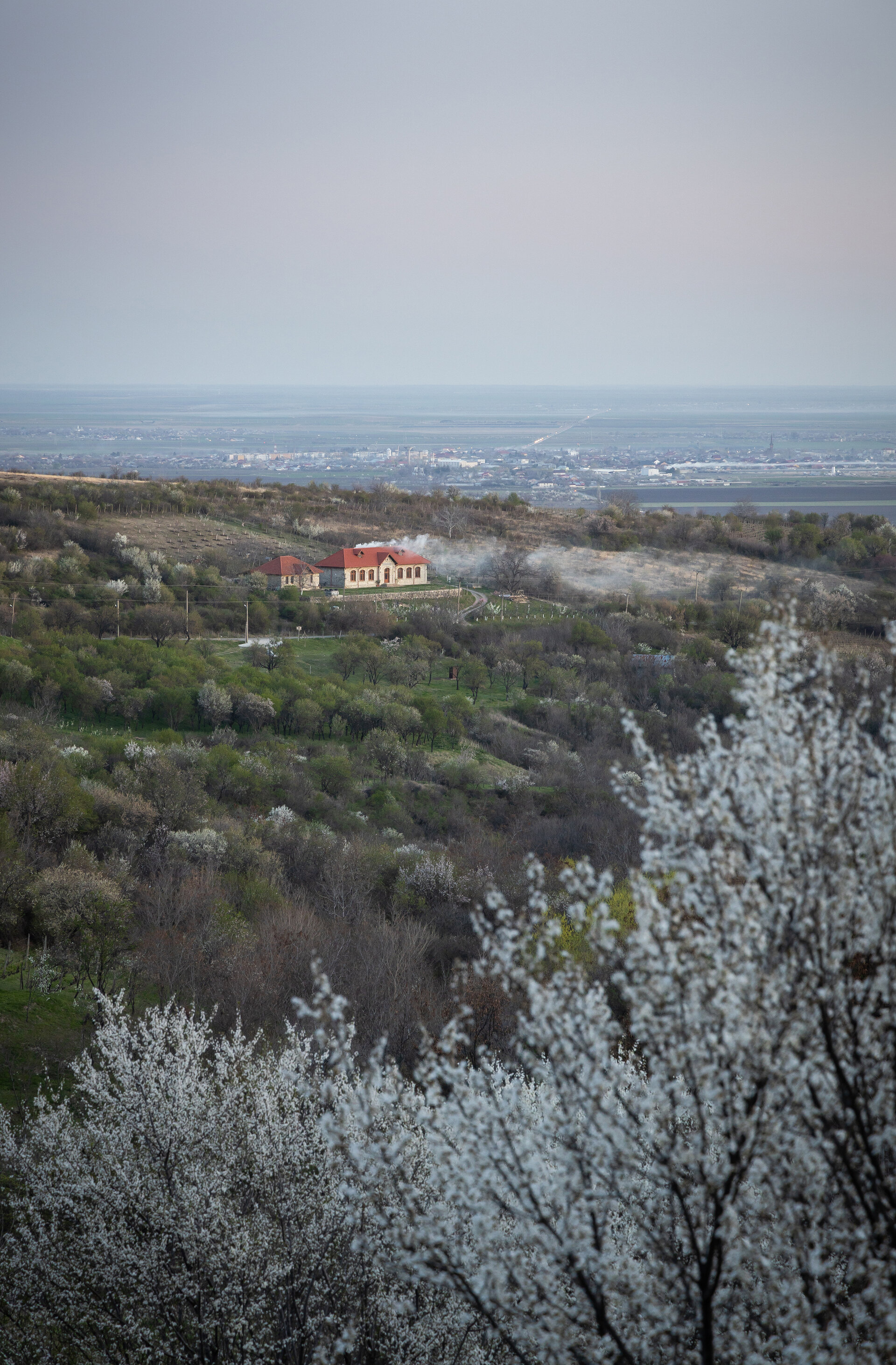
The old school in Tohani belongs to the large family of school buildings built according to standard projects as an important part of the education reform initiated by Spiru Haret at the end of the 19th century. The school was built in 1907 and bears the name of its founders - Nicu and Cleopatra Bagdat - large landowners in Buzău County, with an estate and mansion in Tohani. They donated the land and the money needed for the construction site.
The bearing masonry of the walls was made of local lstrița limestone in two layers - hewn stone for the apparent exterior facing and boulder masonry to the interior, plastered with lime. The facades are austere, with only a few elements in relief such as the corner quoins, the stone window cills and the stone arches above the openings.
In the years after the fall of the socialist regime, amid the depopulation of the villages, the school remained for a while unused, abandoned, and became a spontaneous source for firewood and other goods of interest. Doors and sashes, floors and stoves have thus disappeared.
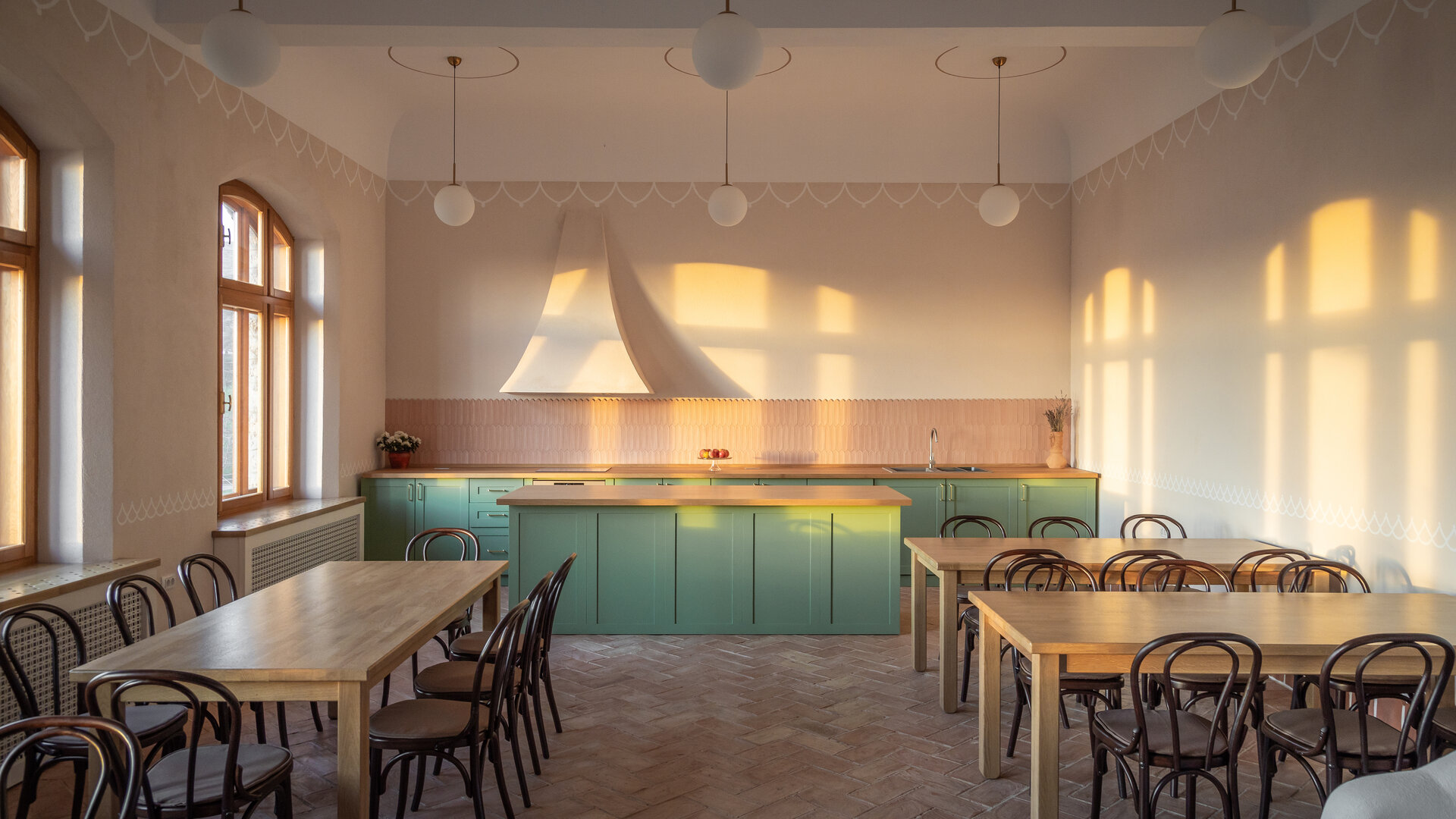
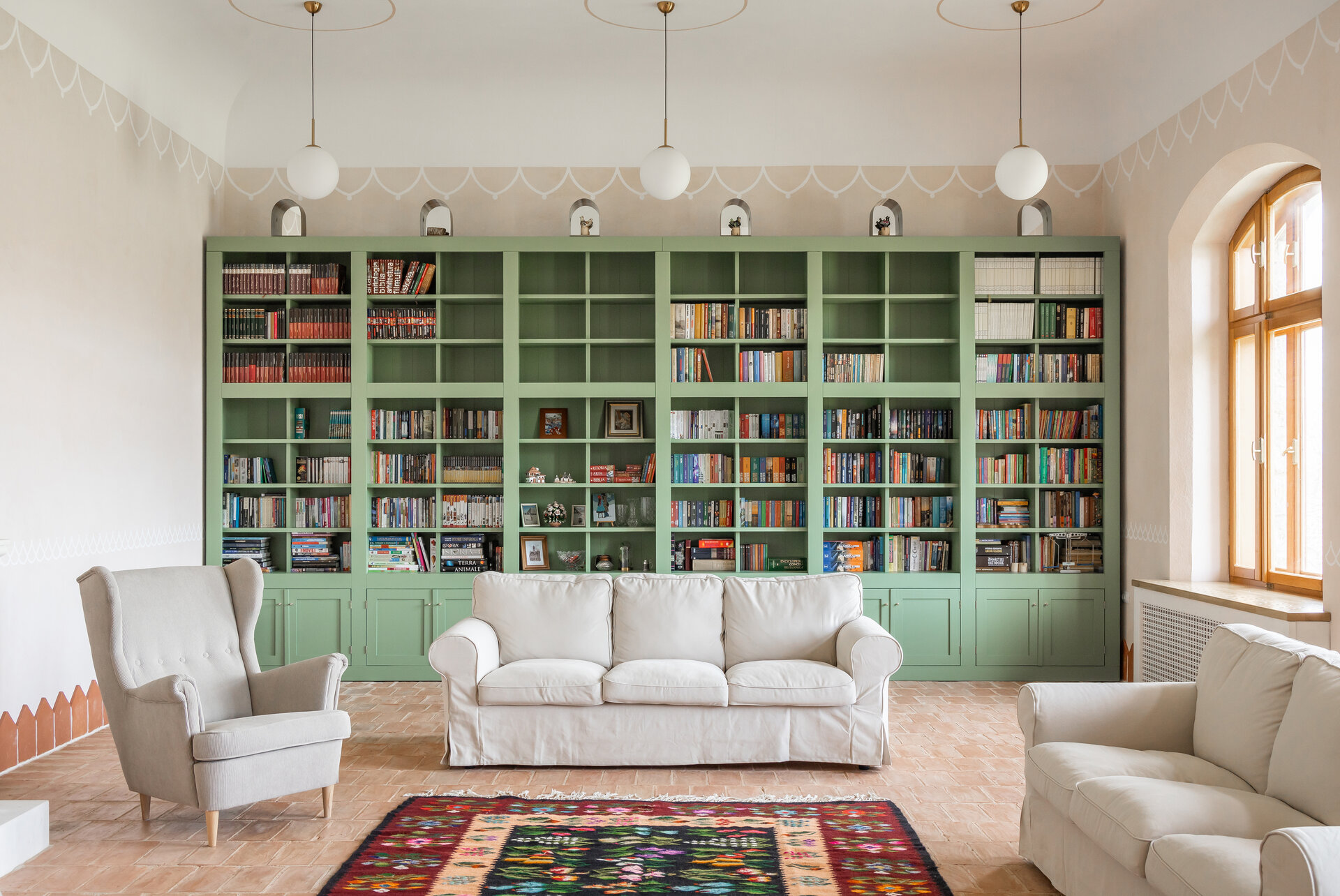
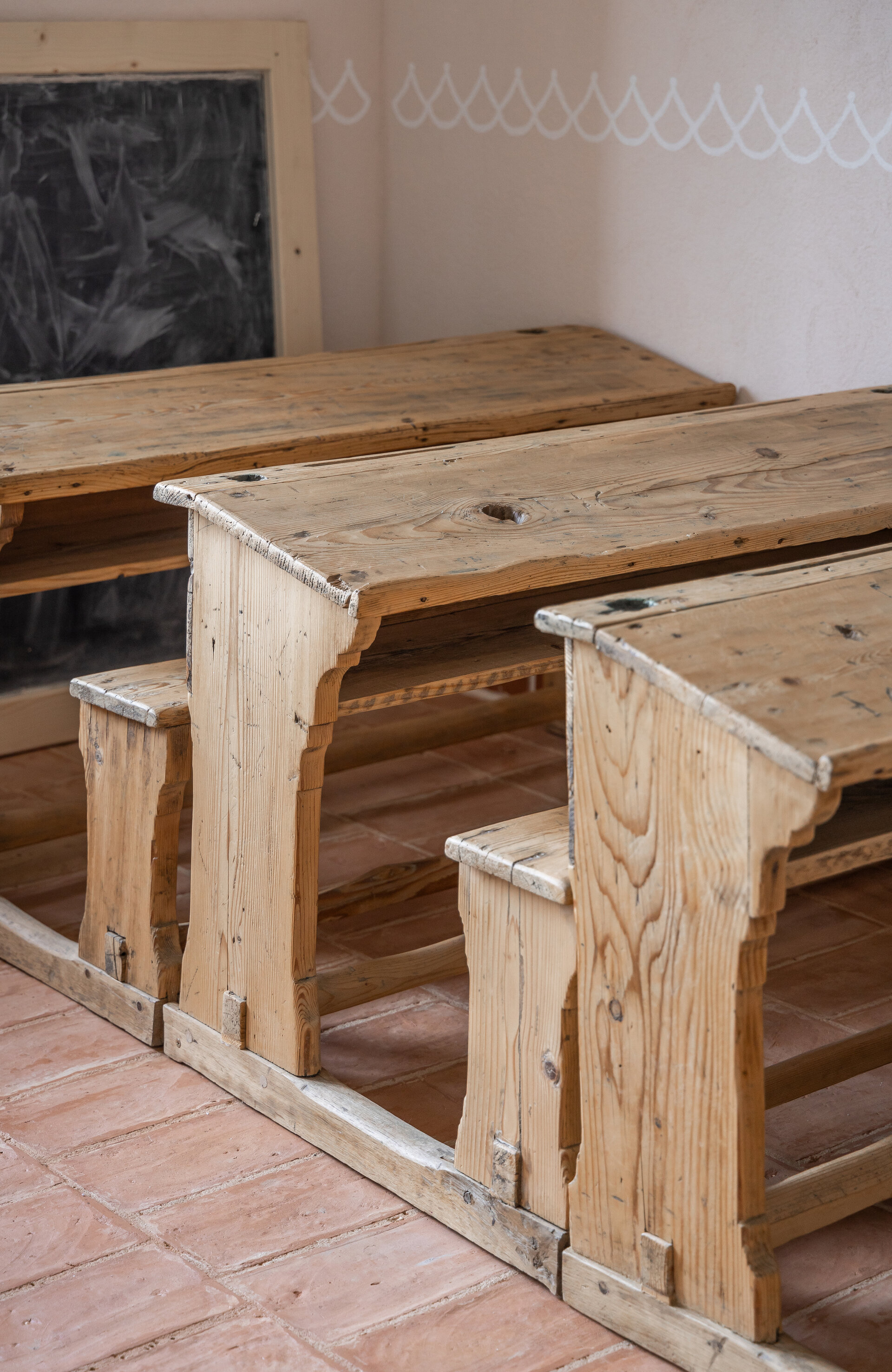
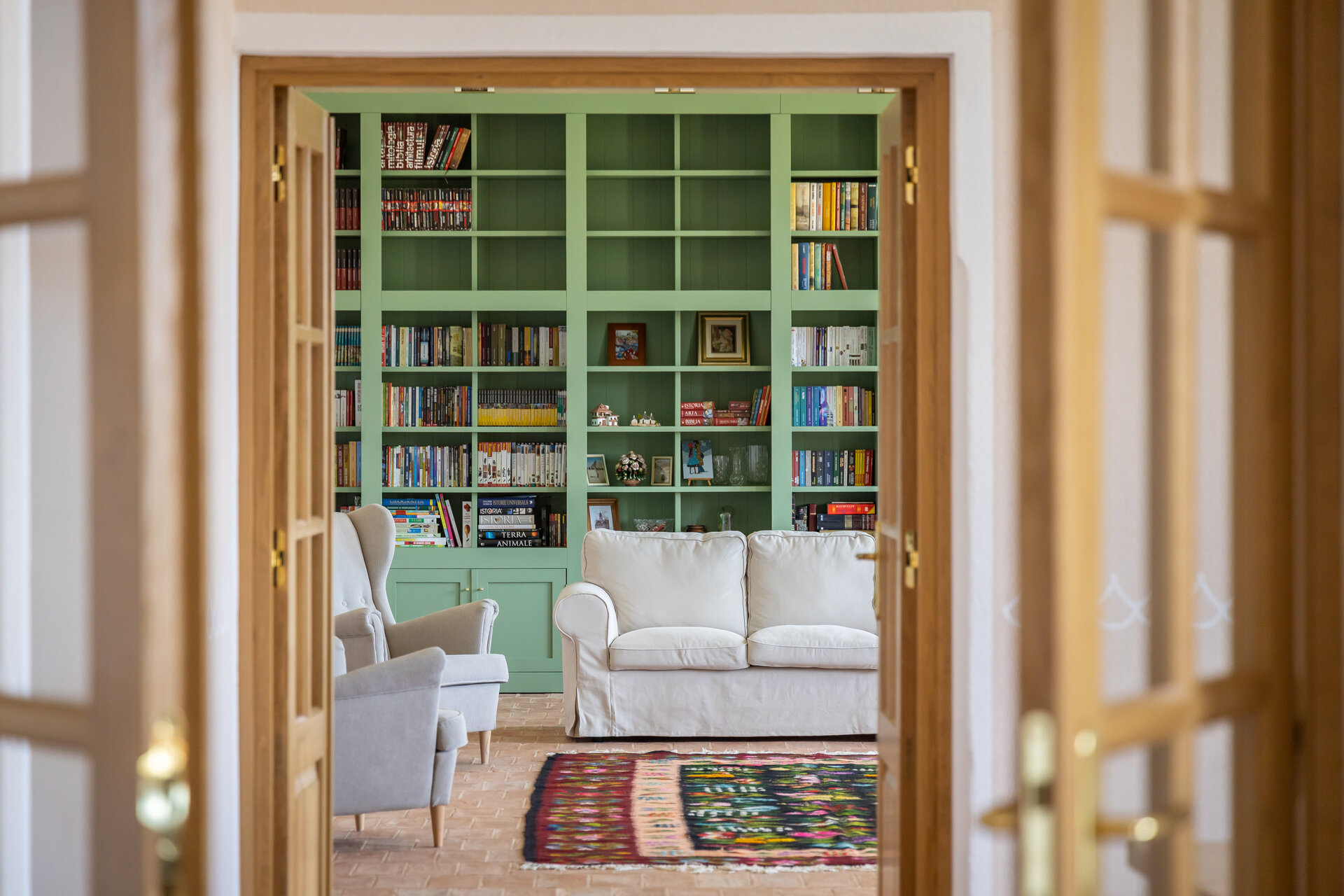
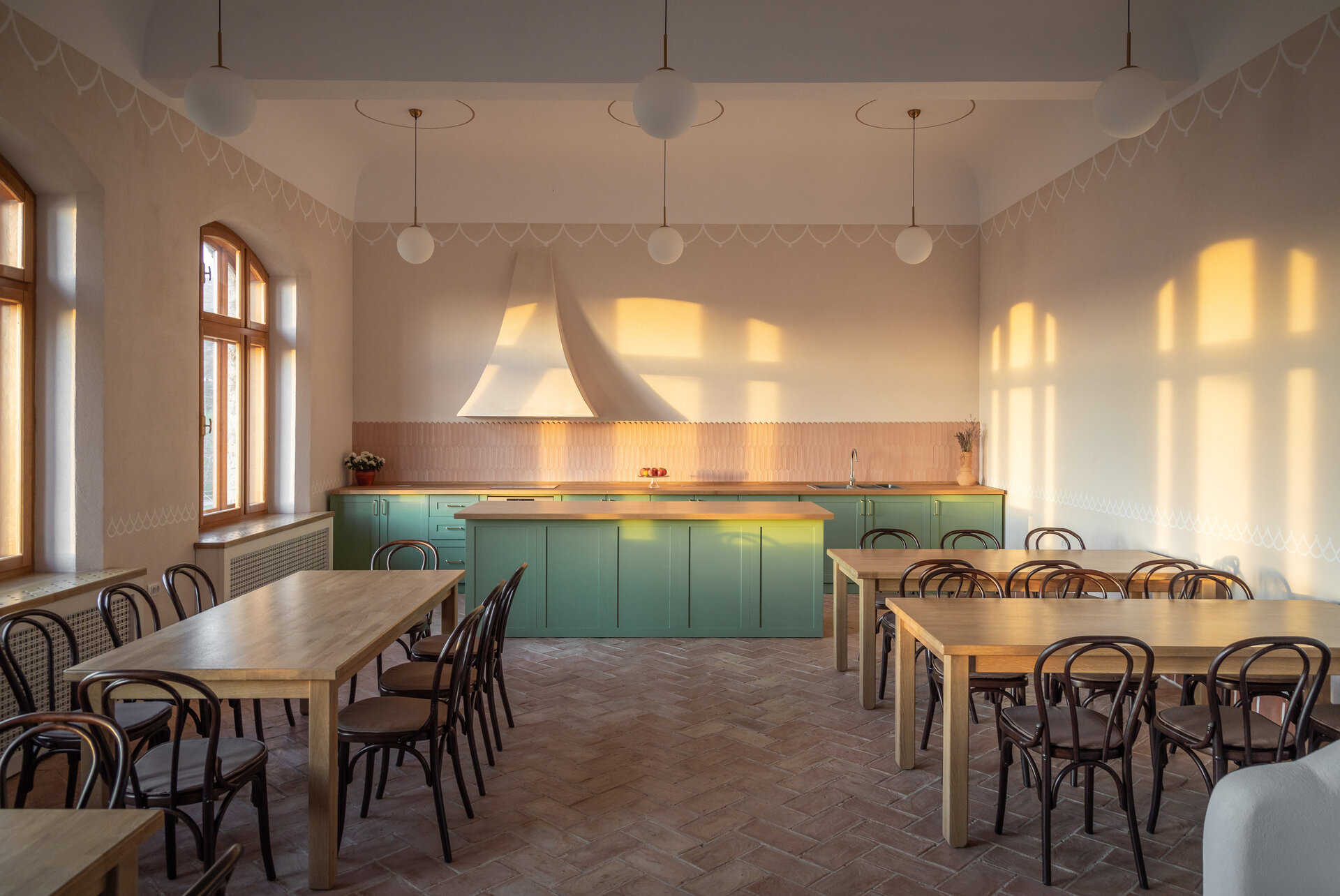
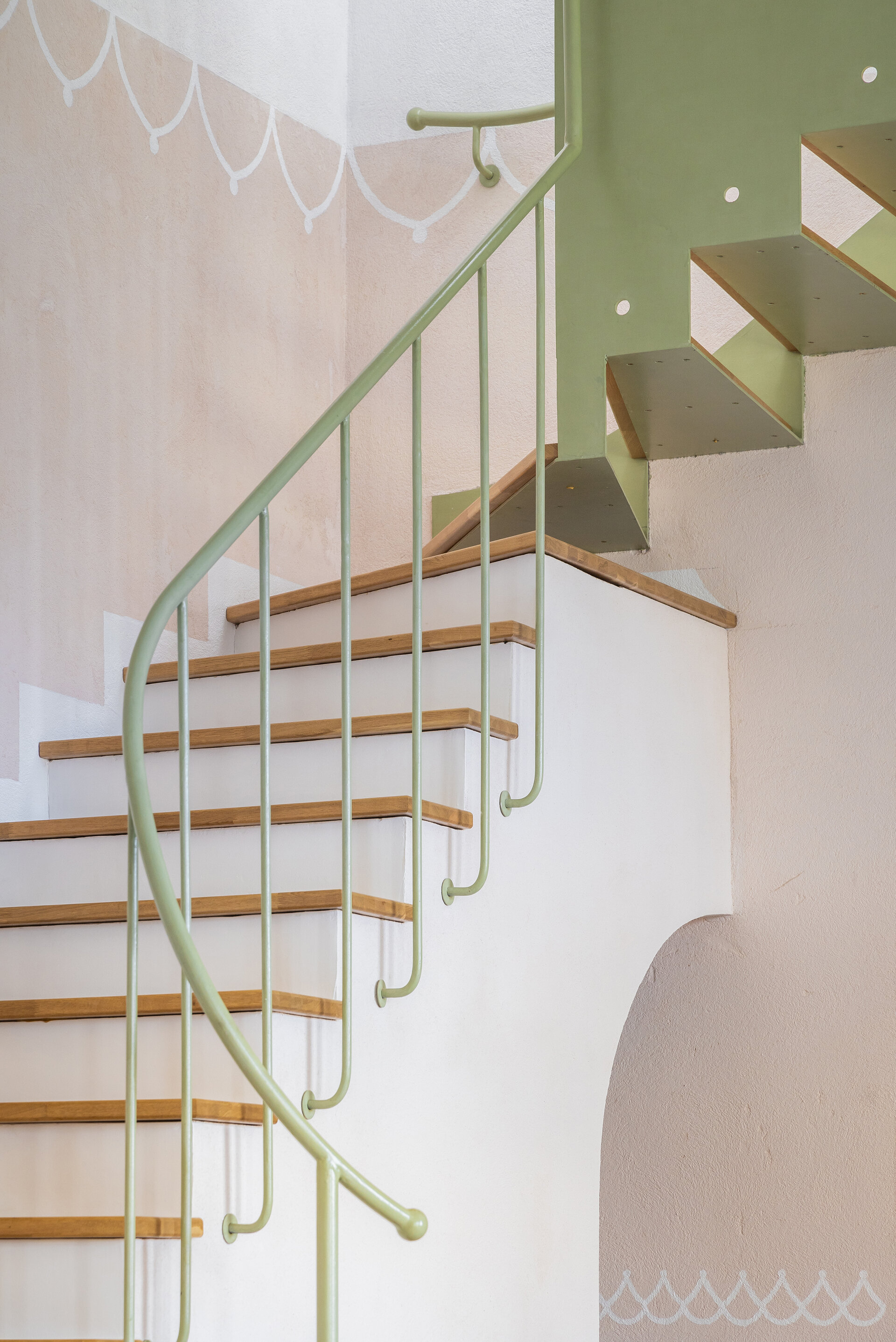
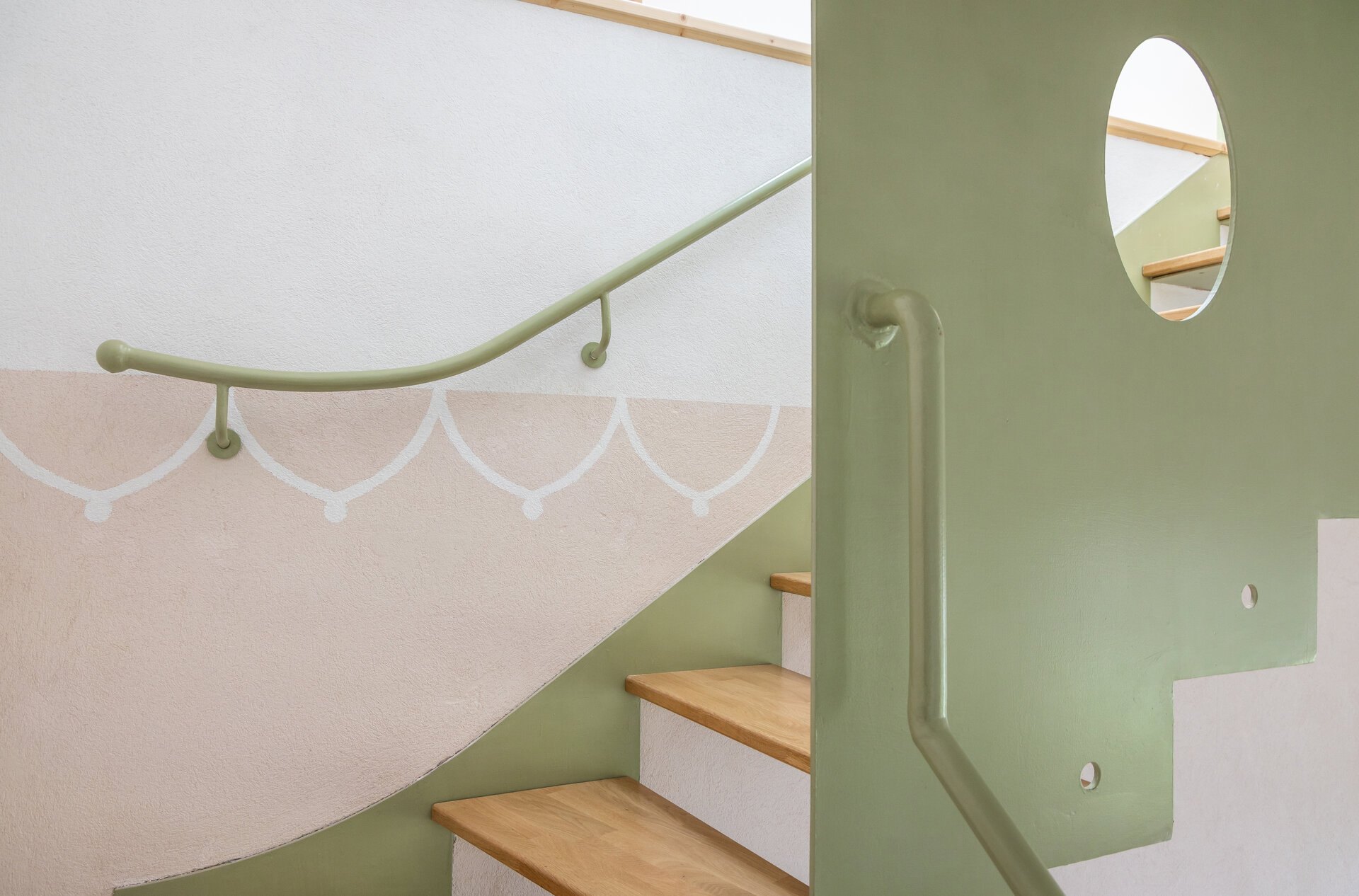
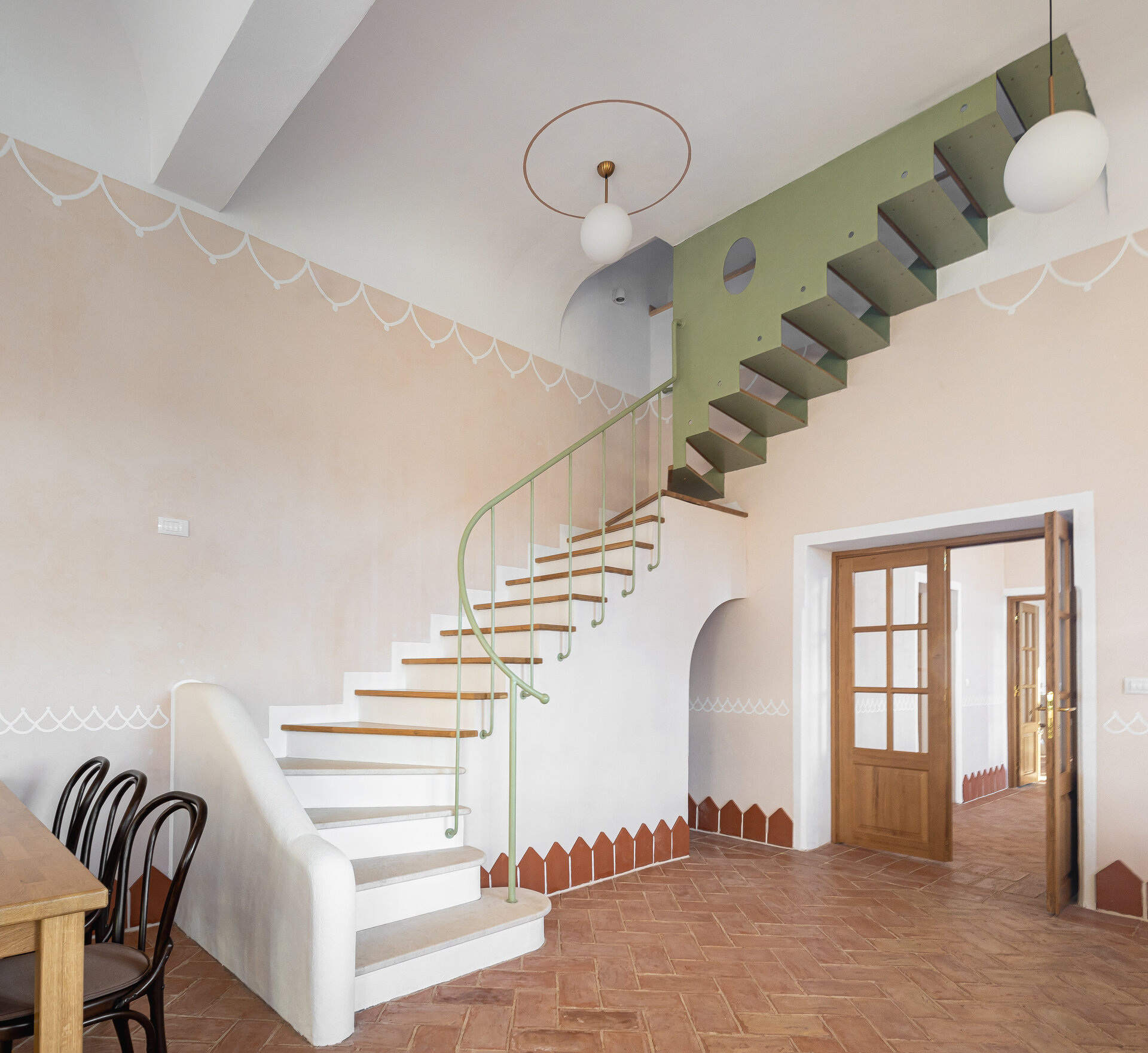
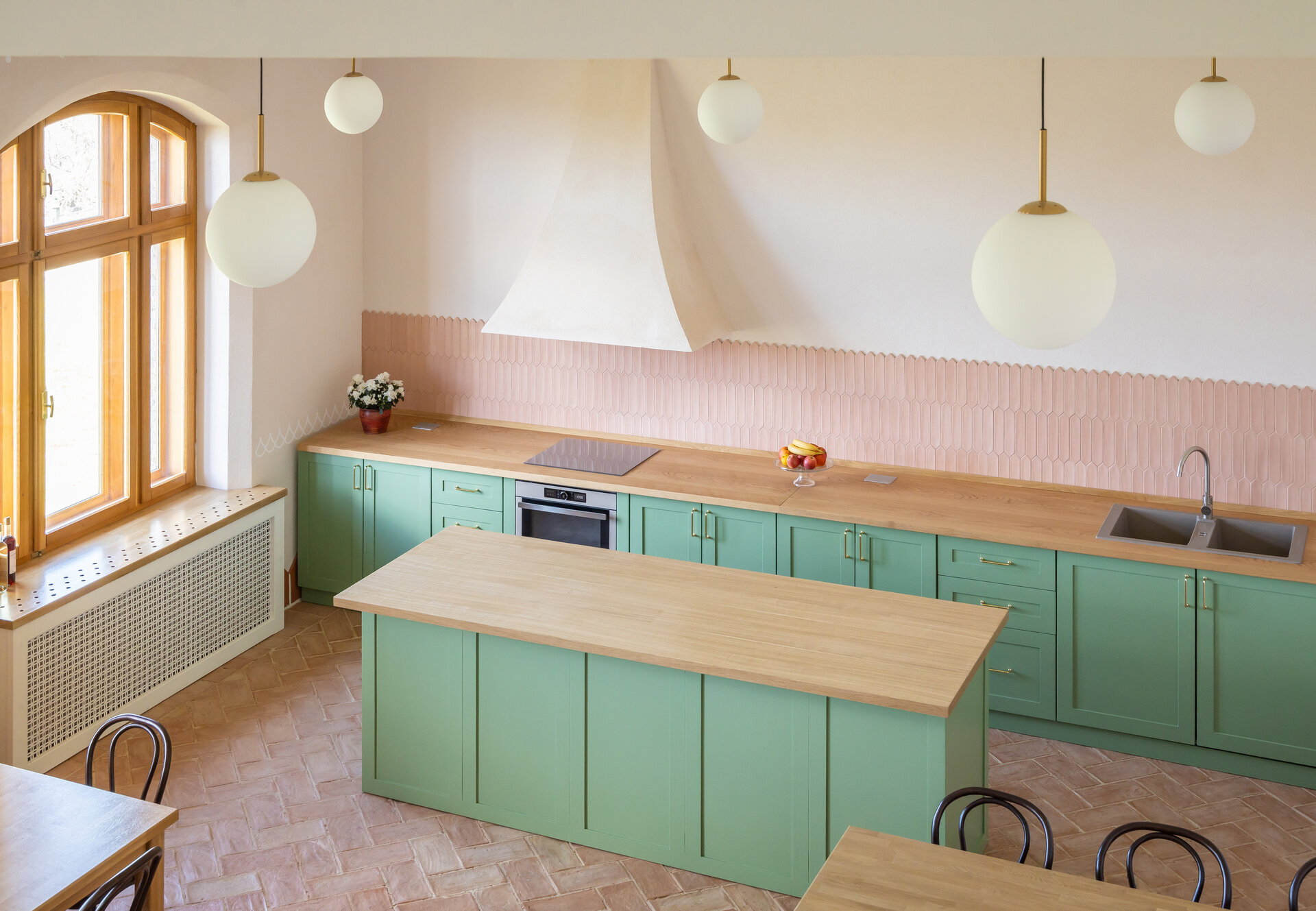
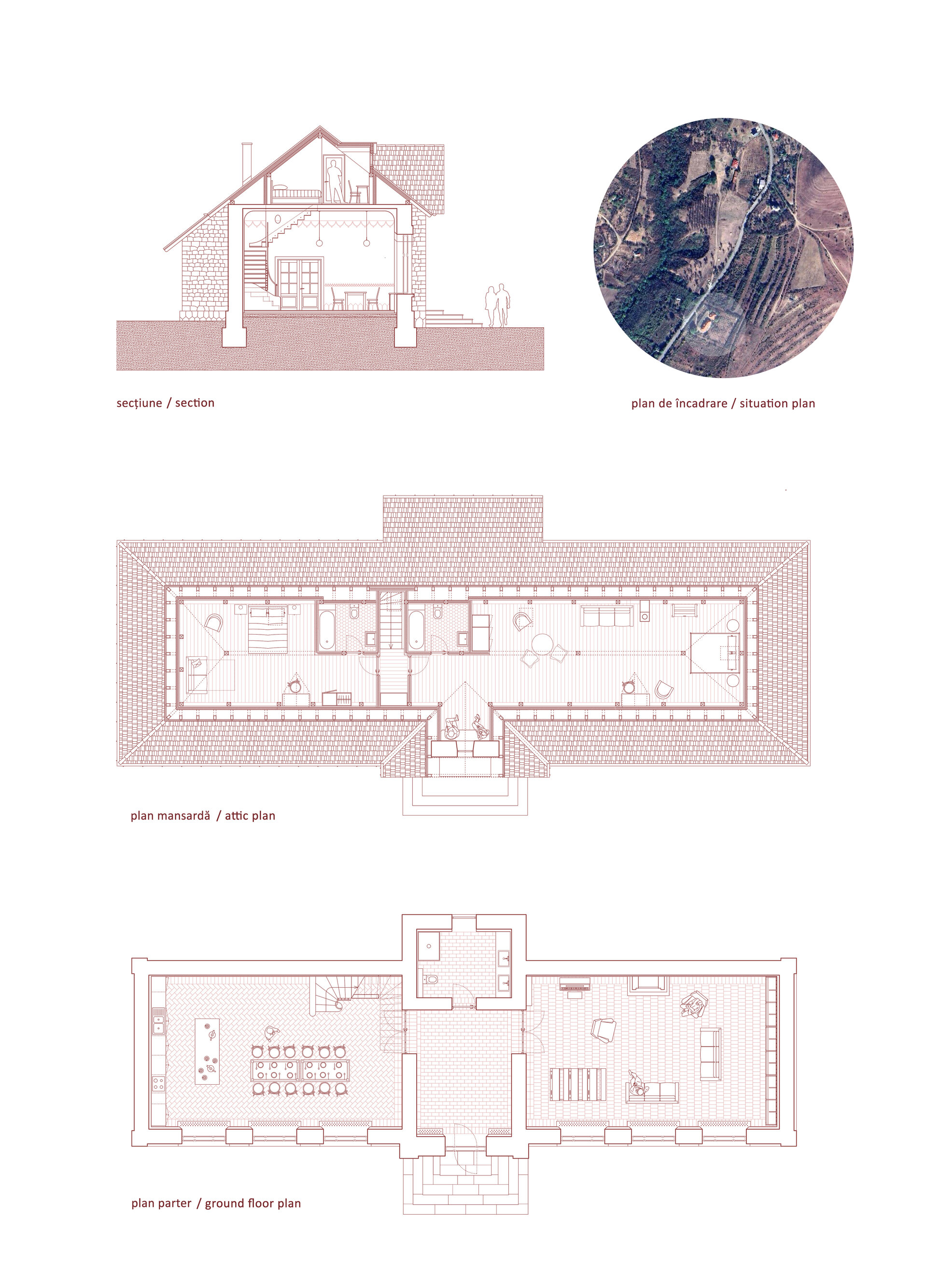
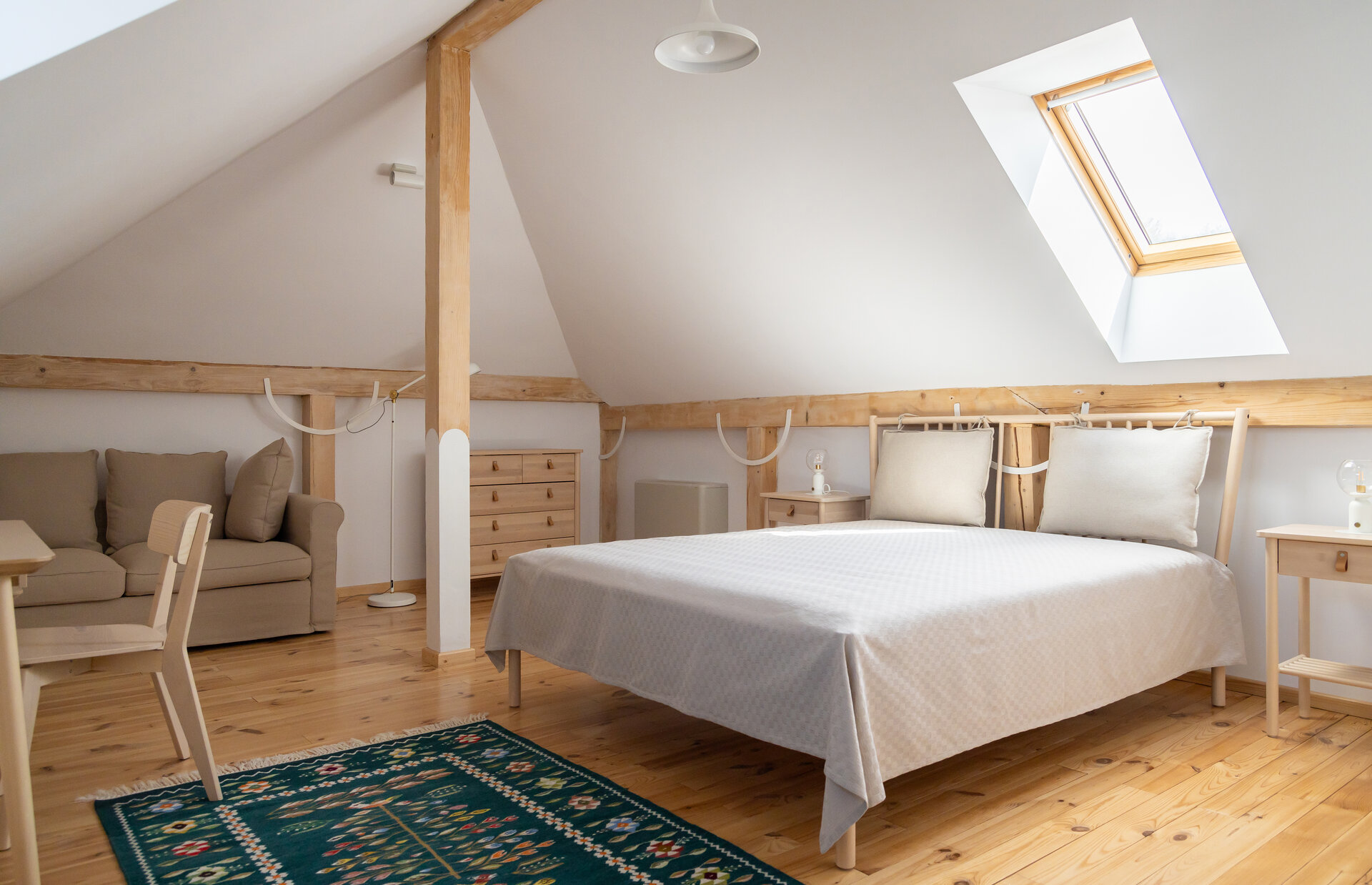
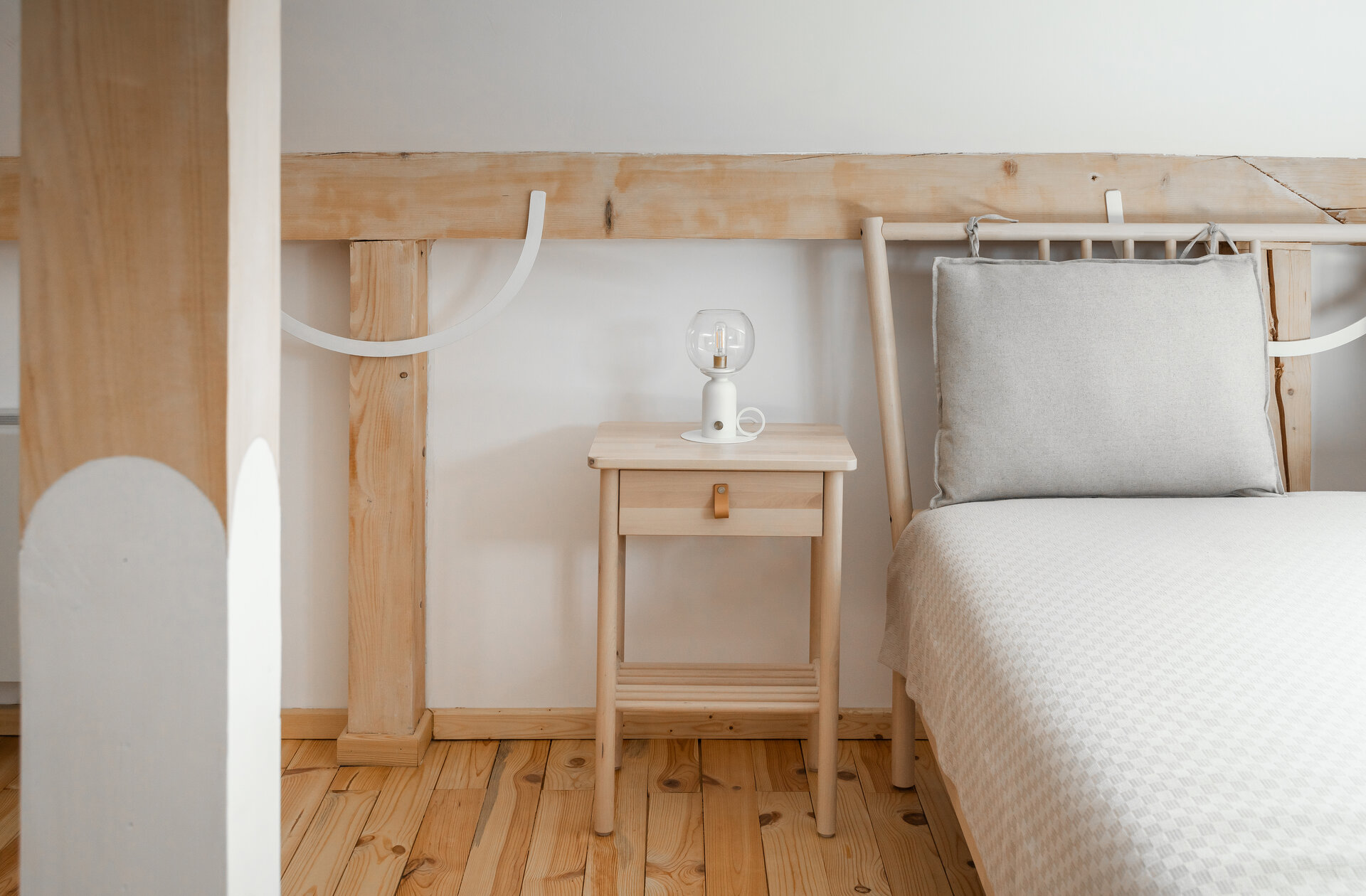
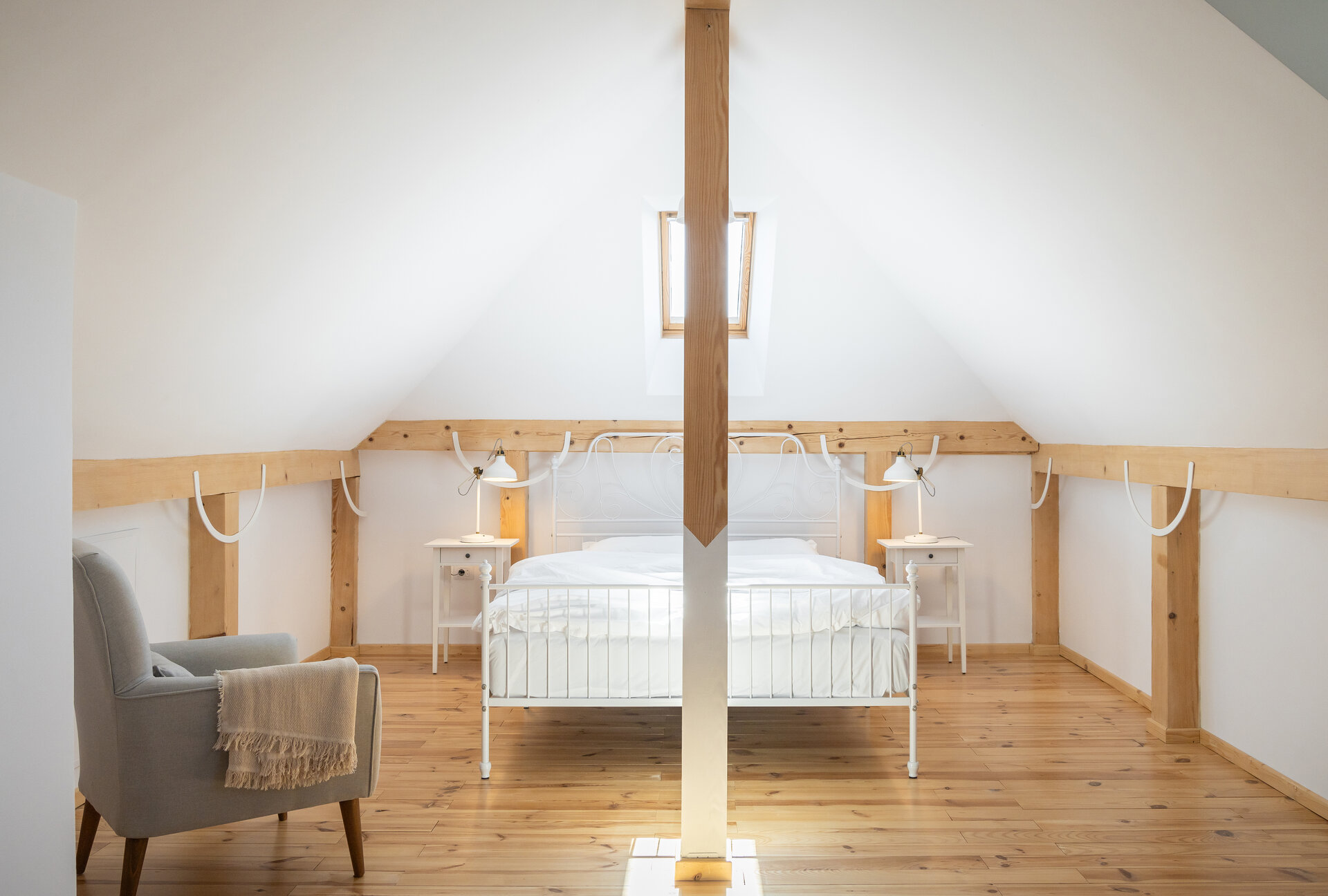
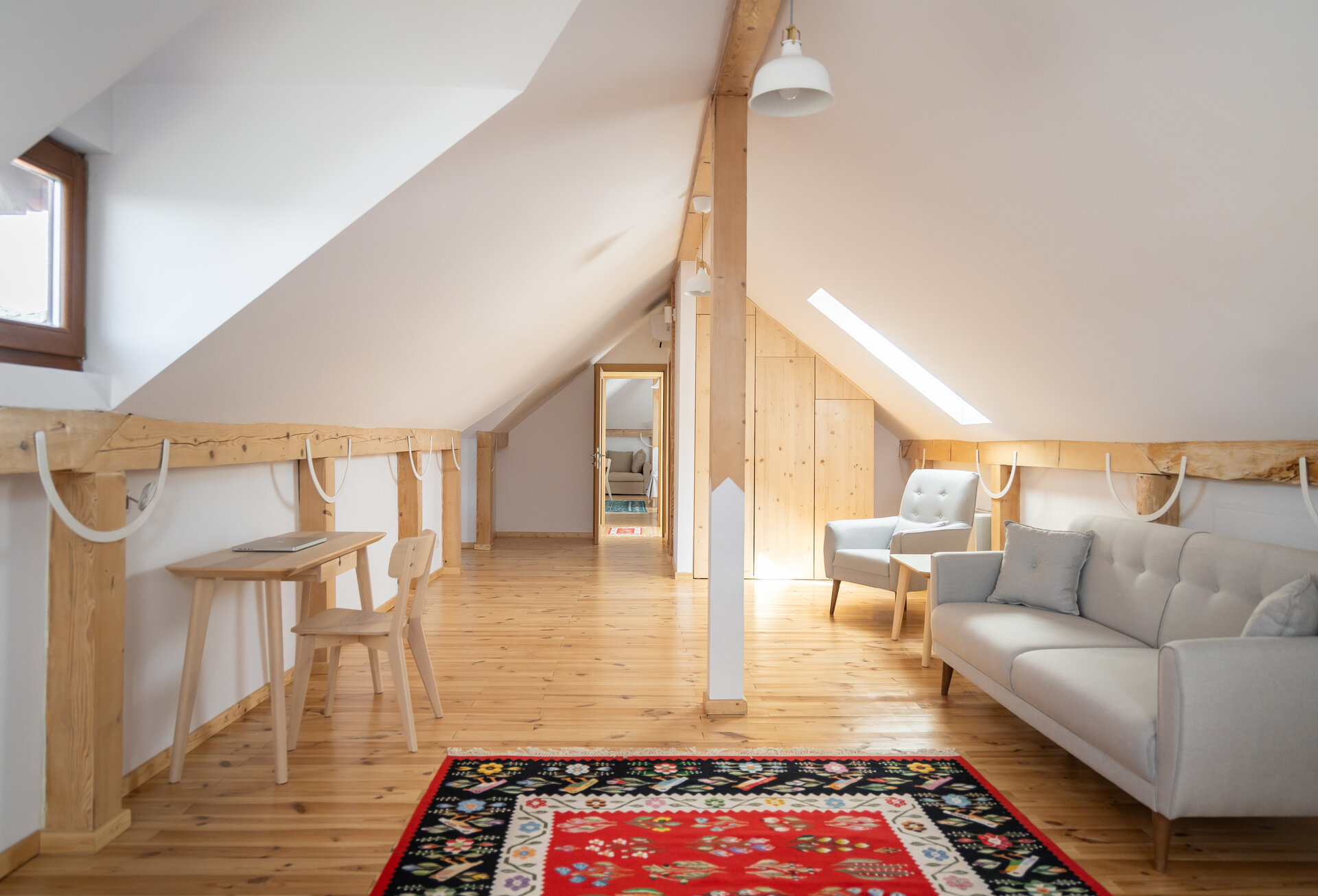
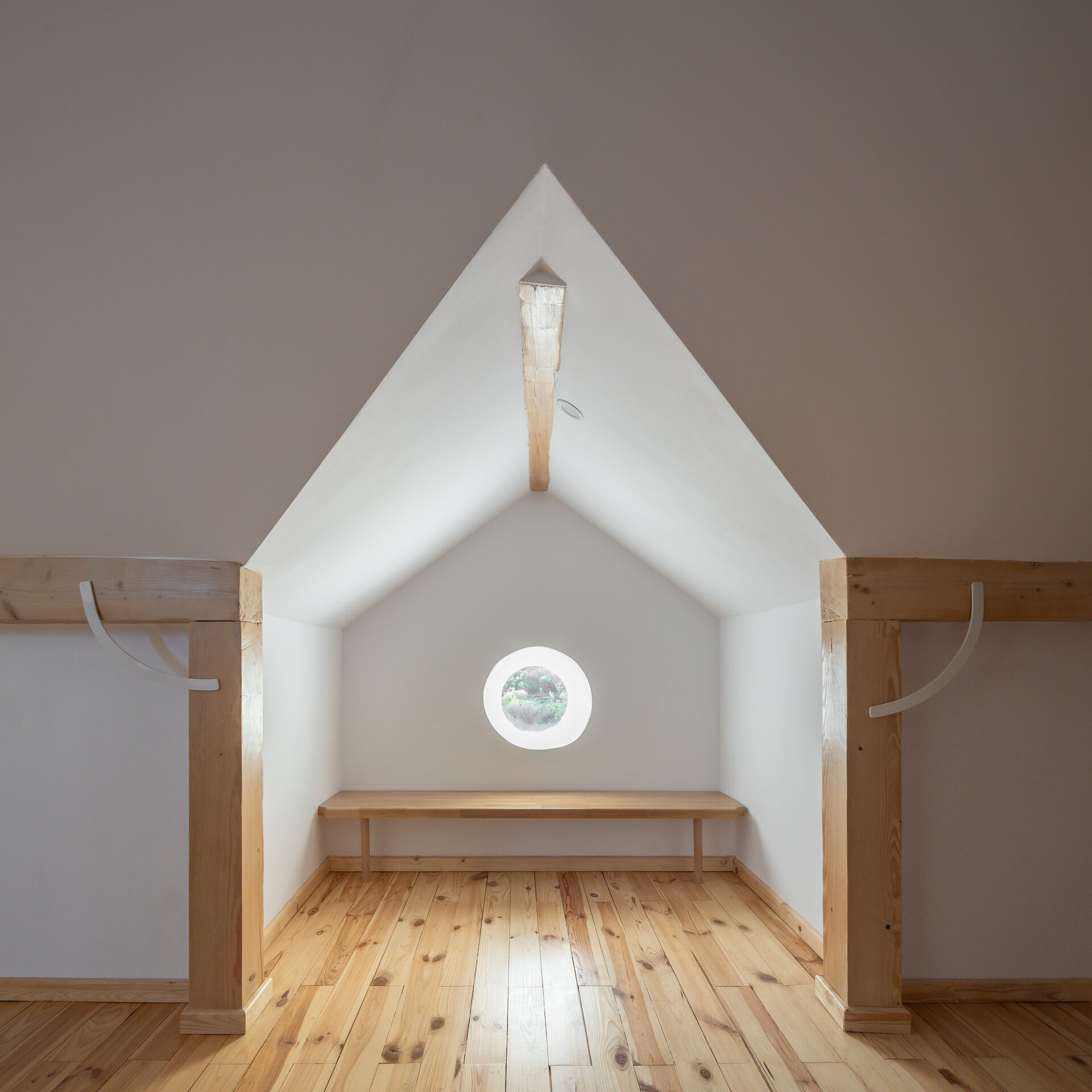
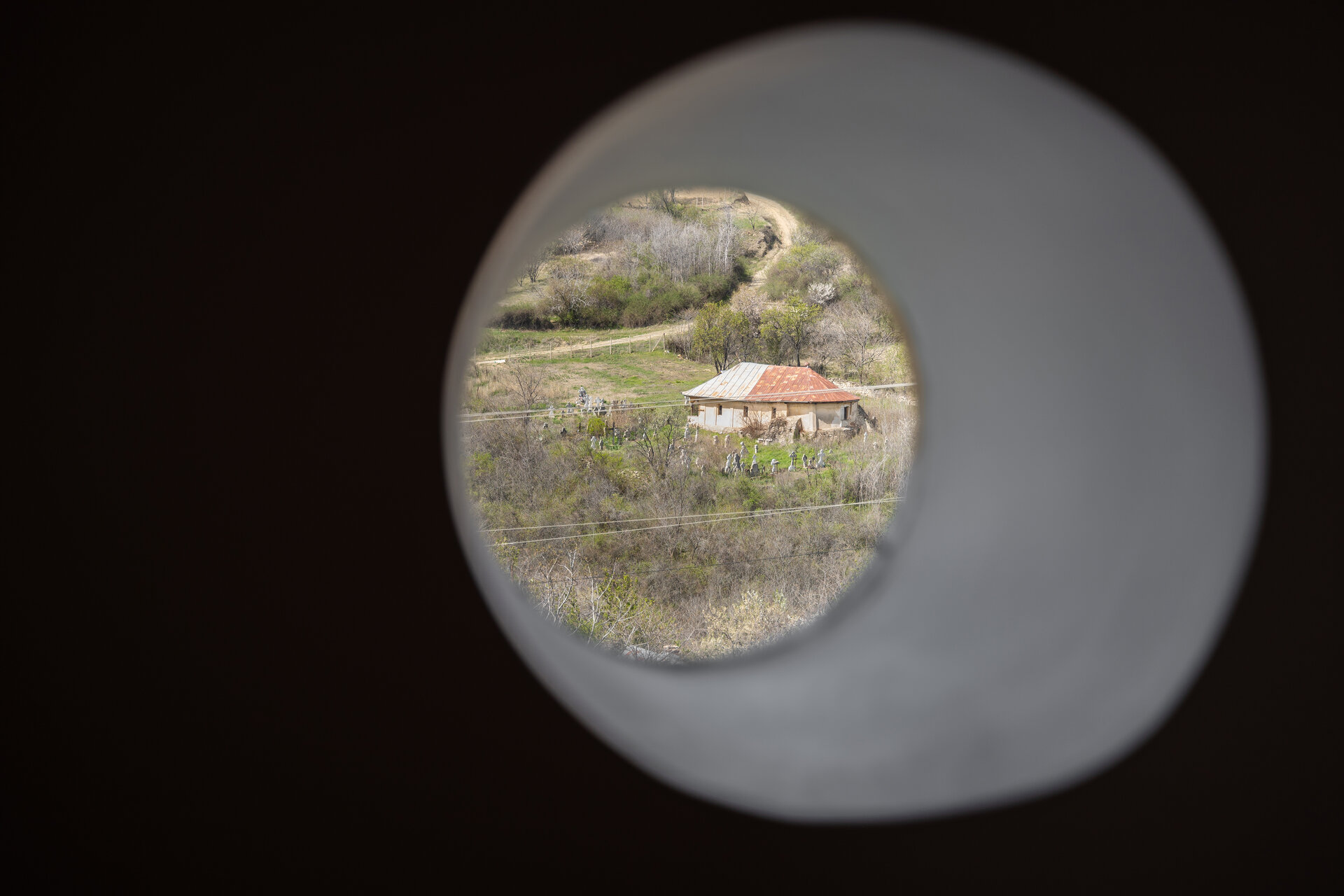
The current owners, a family from the area, bought the building and the land, charmed by the beauty of the walls and the atmosphere and panorama of the place. Work was initiated to strengthen the masonry (on the interior) and the structural slab above the ground floor, the framework and the roof were restored to the original dimensions. Coming from the imperative to modify the ground floor spaces as little as possible and somehow let the memory of the classrooms reside - through their light, color and echo - the decision to transform them into two large common rooms of the future guest house came naturally and necessary, even with the disadvantage of having only two bedrooms, installed in the attic. The former classroom on the right is intended for sitting, reading, conversation. The staircase, placed in the corner of the room on the left - that became a kitchen and dining place - is seeking to manage through a suite of geometric transformations, of structure and material, the great height and the effort of climbing, in an experience of transition to another type of space, of discovery and disappearance.
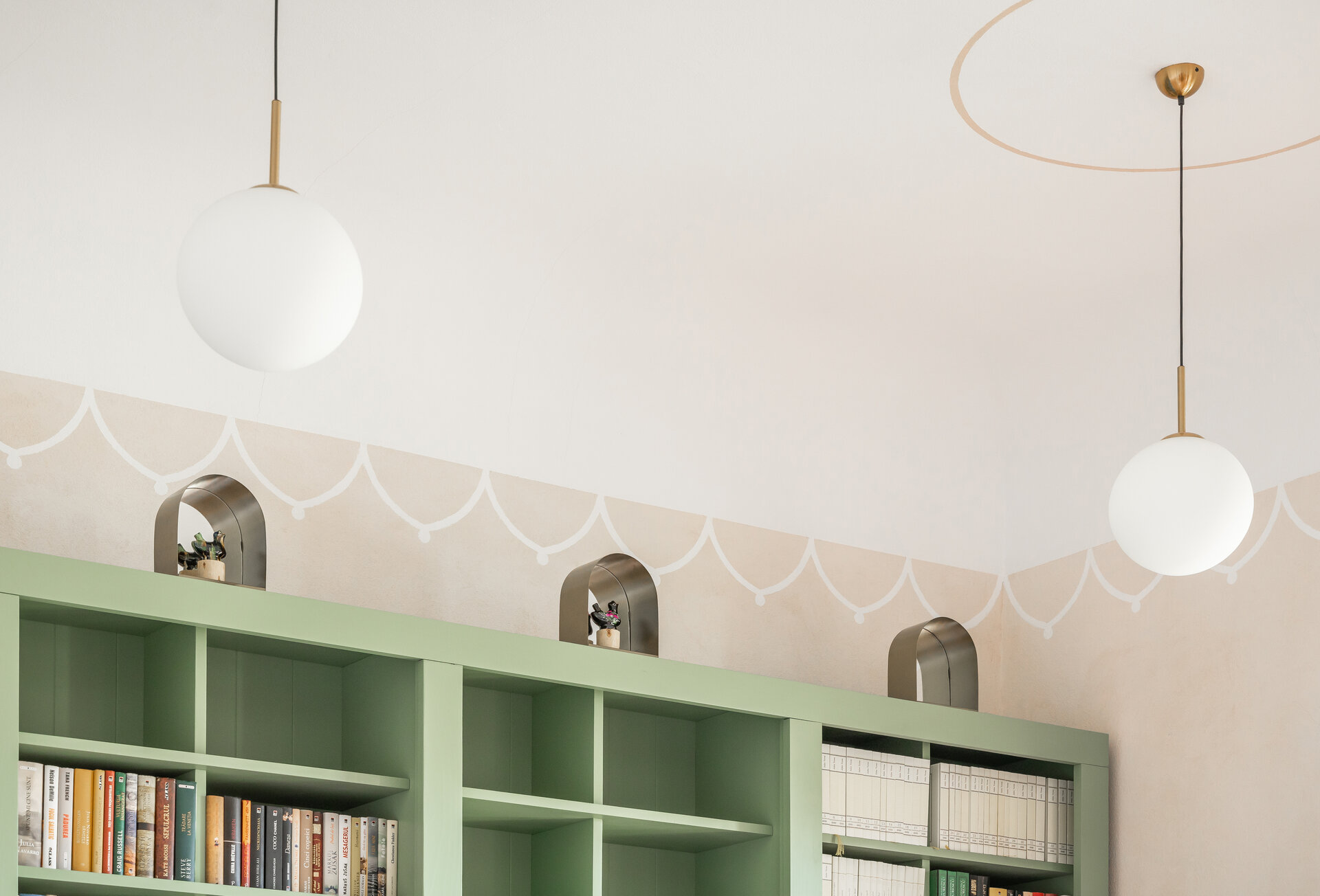
The perspective on the two rooms on the ground floor is a stable, balanced one, both having an even occupation of the background wall - the kitchen worktop on one side and the library on the other. The common rooms were not furnished, but rather introduced into another affective situation, which takes over through color, drawing, rhythm a sum of the banal qualities of the place of learning, transposed otherwise also into a place of leisure - the word school derives from Greek skholē ‘leisure, philosophy, lecture place’. A side step from those of the world, and an entry into a quiet time, in which contemplation, reading, music, walks in the hills are meant to restore.
Sustainable in this project is primarily the saving of the former school. The wide spaces, even without the buzz of children, can still host meetings, discussions, small events. Most of the work was done with local teams, and when a little more patience was needed (as in the case of stenciled decorations) the owner himself became the craftsman. As for the technical aspects, traditional, natural materials are used (wooden and brick floors, ceramic tiles for the roof), the walls are insulated on the interior with vapor permeable multipor mineral insulation, rainwater is collected, stored and used for the garden, the heating system is using wood and pellets, and the electricity is provided by ground mounted photovoltaic panels.
Architecture and Heritage

- The Restoration of the church in Pătrăuți (UNESCO)
- House for a collection
- The Restoration of Secu Monastery
- A house in Cotroceni
- The Old School in Tohani
- Restoration and extension of a house in Tugomir Voievod St., Bucharest
- Rosenthal House
- Rehabilitation, change of function, interior and exterior design for Restaurant Parc
- The recovery of the architectural ensemble in Plantelor St. No. 4, Bucharest
- Little garden house
- ALEXE 2-4-19


