- Prize of the “Built Architecture / Architecture and Heritage” section (ex aequo)
House for a collection
Authors’ Comment
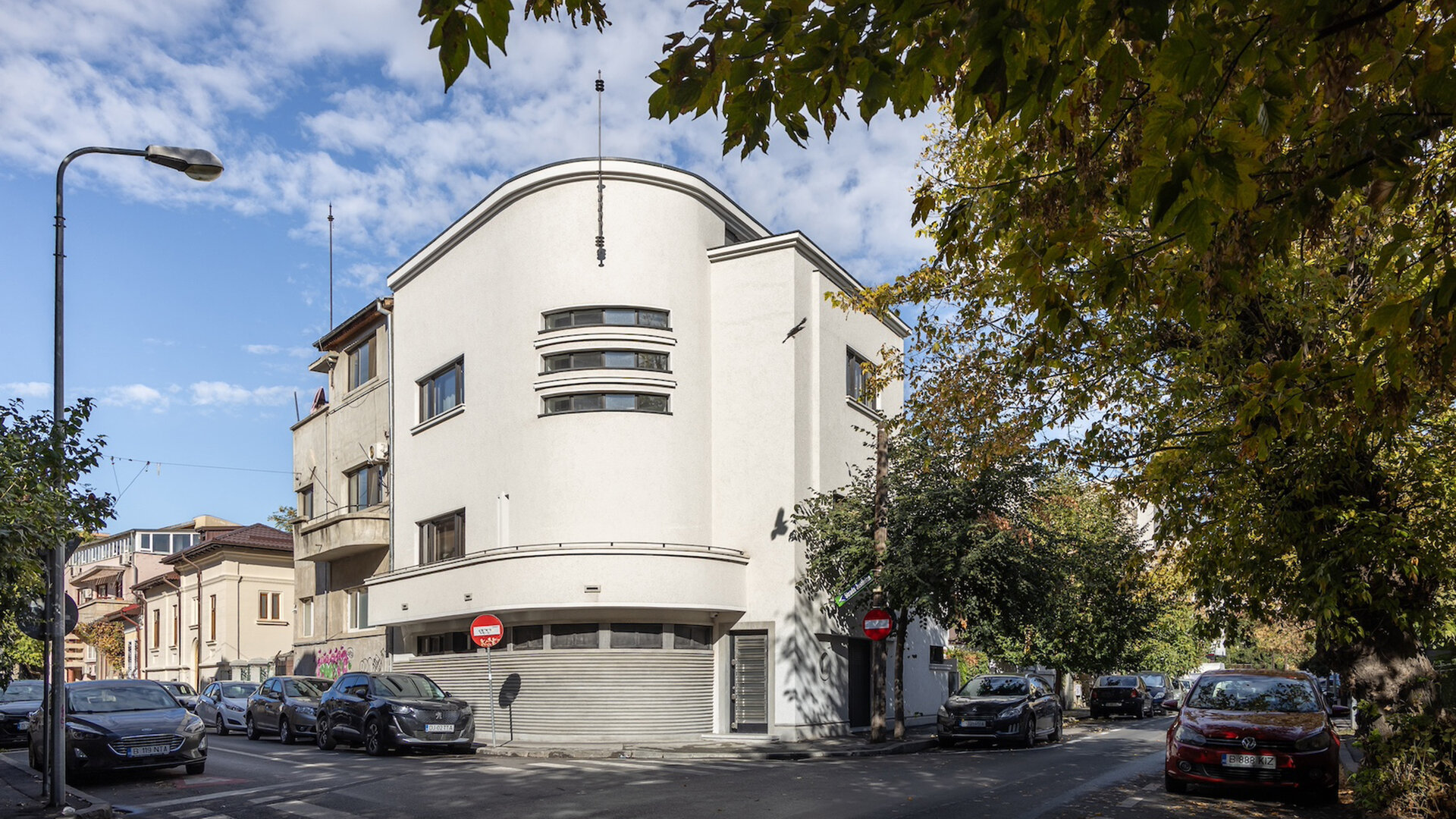
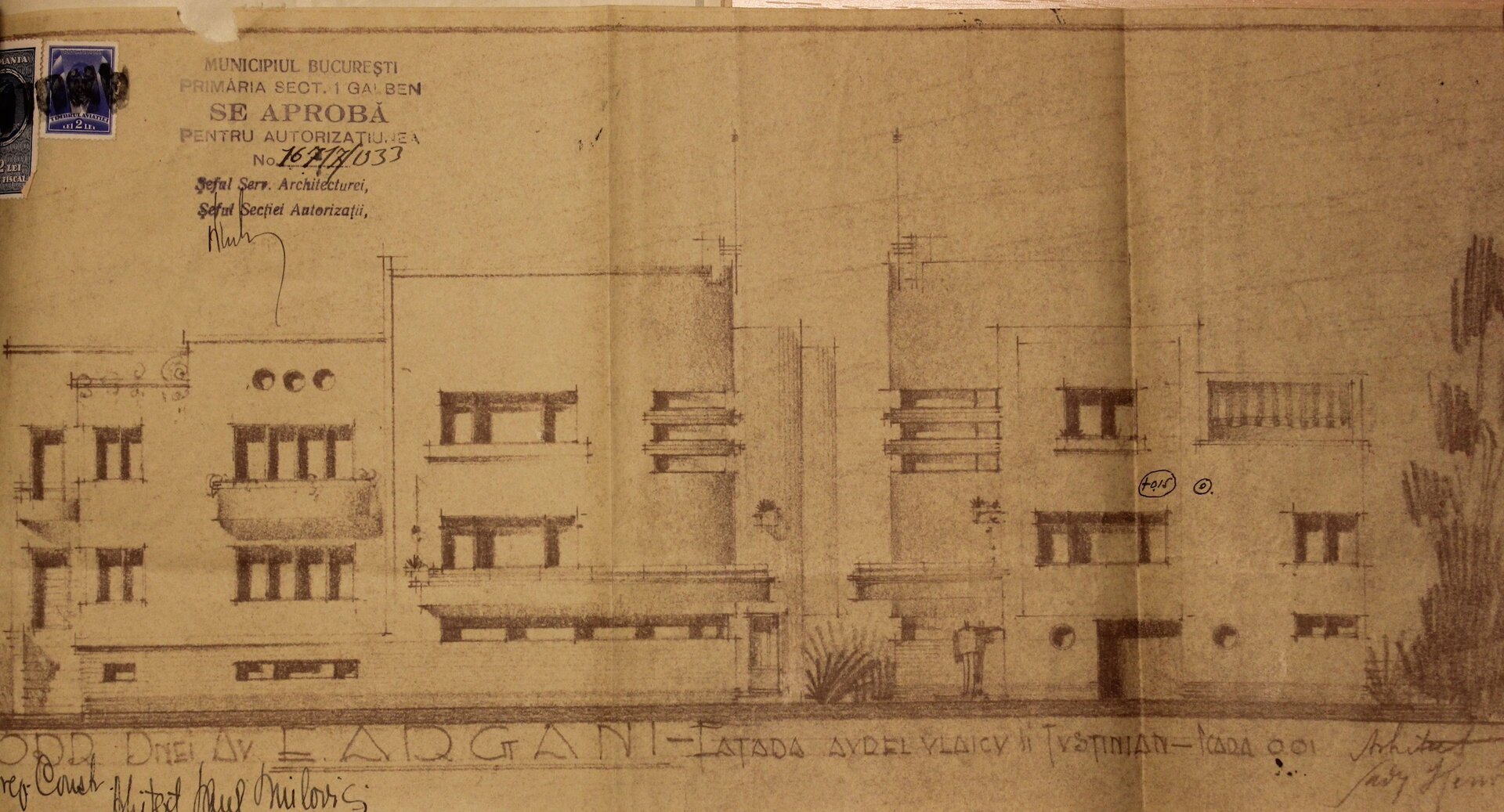
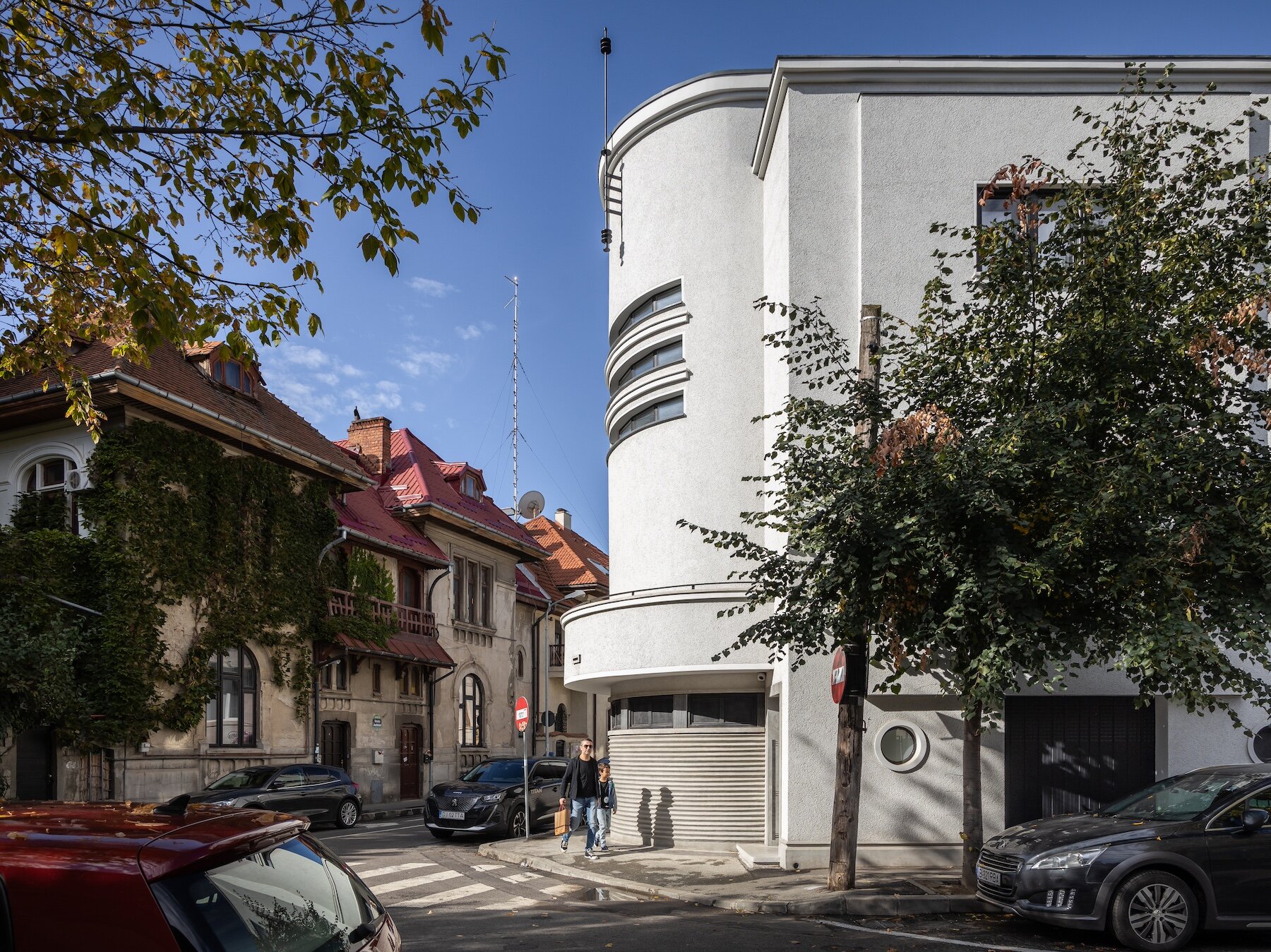
In 1933, the architect Sady Herivan obtained the building permit for a 2-story house, with an exceptionally elegant silhouette, located at the intersection of Aurel Vlaicu and Iustinian streets. The two main facades were designed with different rules, also being two different volumes, whose composition stands out primarily due to the rounded articulation between the two, an intersection that marks the access to the house and becomes the vertical accent of the building.
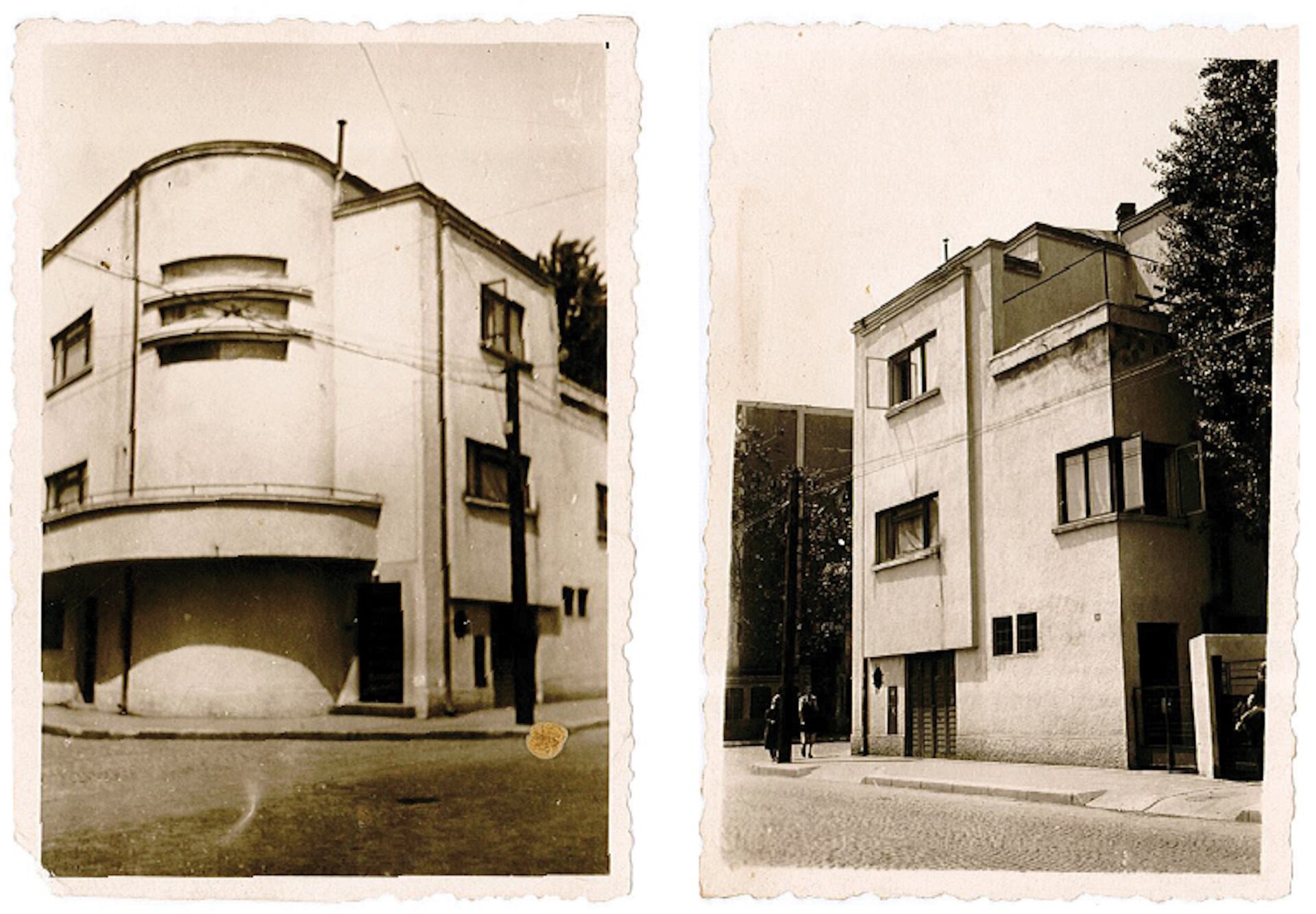
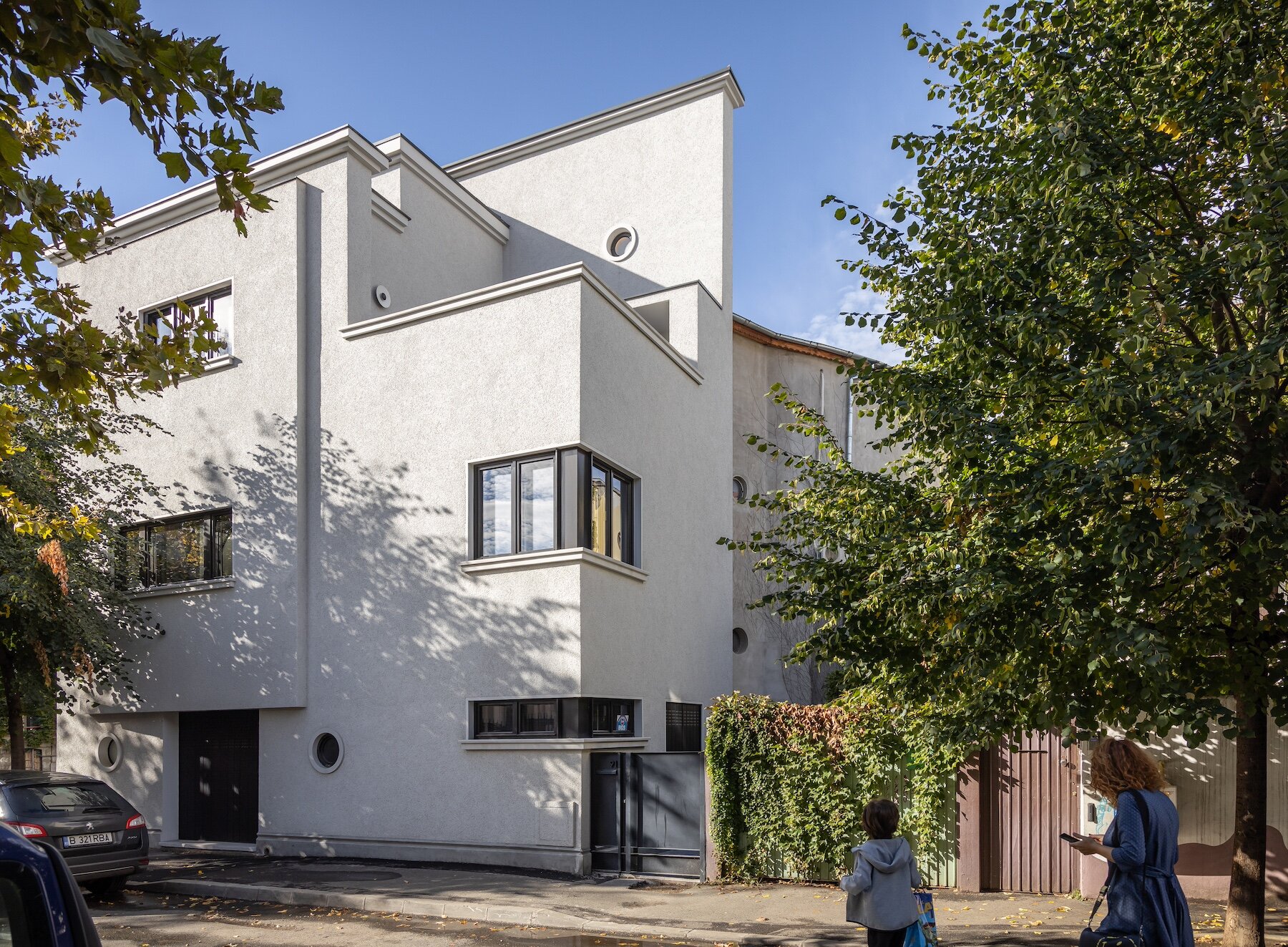
For unknown reasons, at the time of construction, the commissioner of the house did not respect the architect's original project and, as visible in the photos from 1940, the result was a slightly different house from the authorized project. The changes effected especially the windows and some compositional elements of the facades, which have an essential stilistic role in the overall architectural definition.
Fortunately, the internal functional relations were kept and were not altered even during the communist period.
In 2016, the house was bought by an art collector, with the aim of being part of, but also to host, his permanent collection.
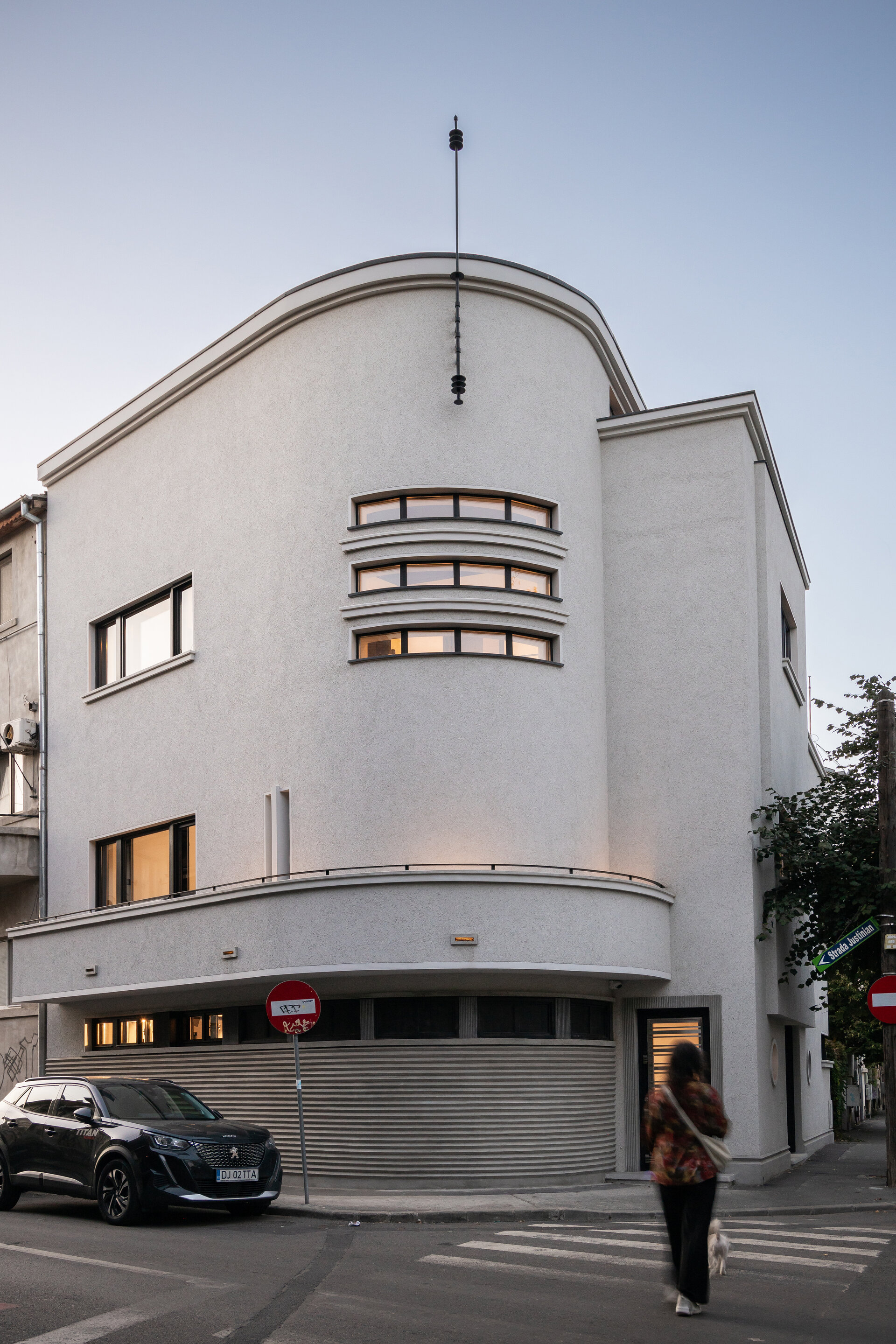
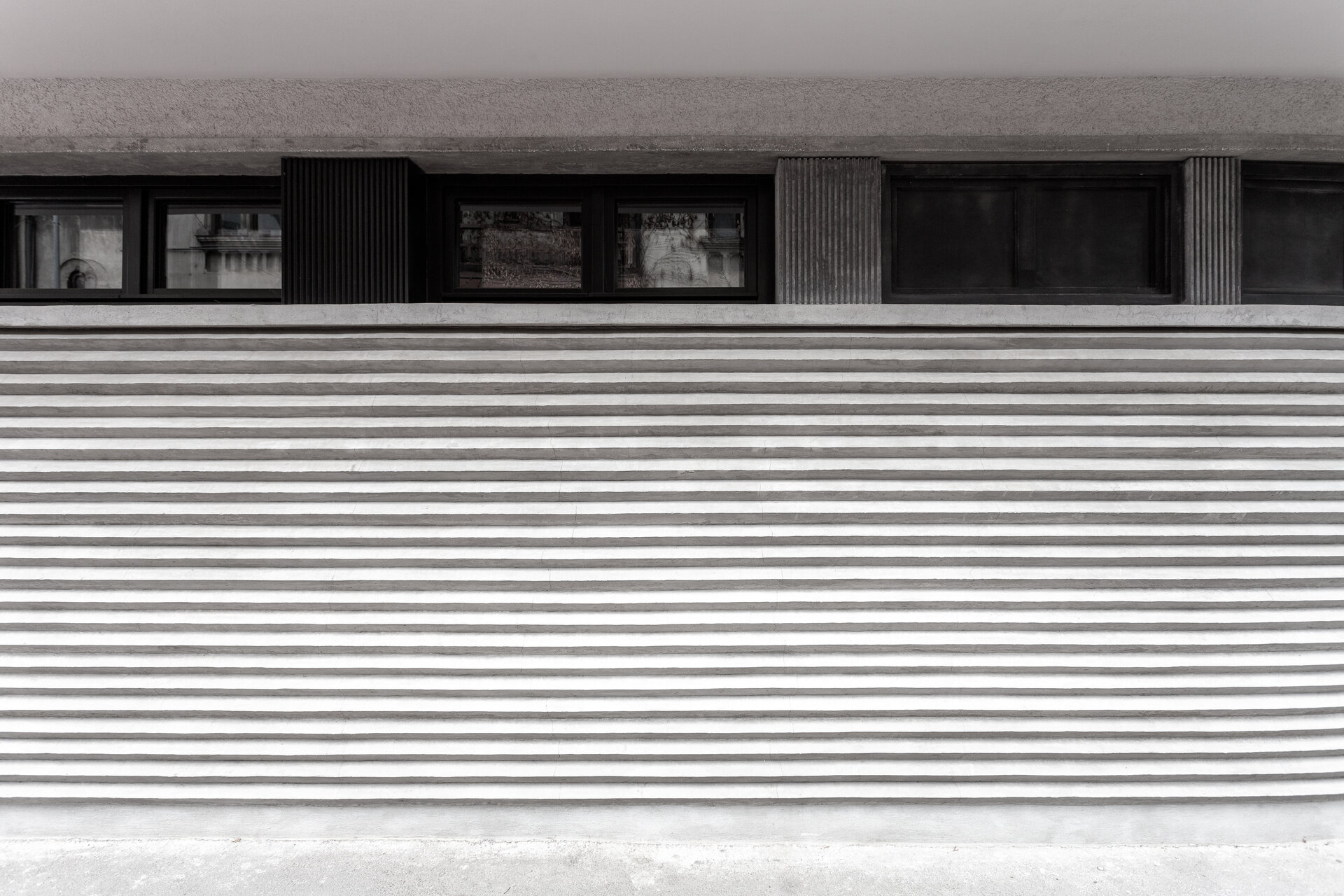
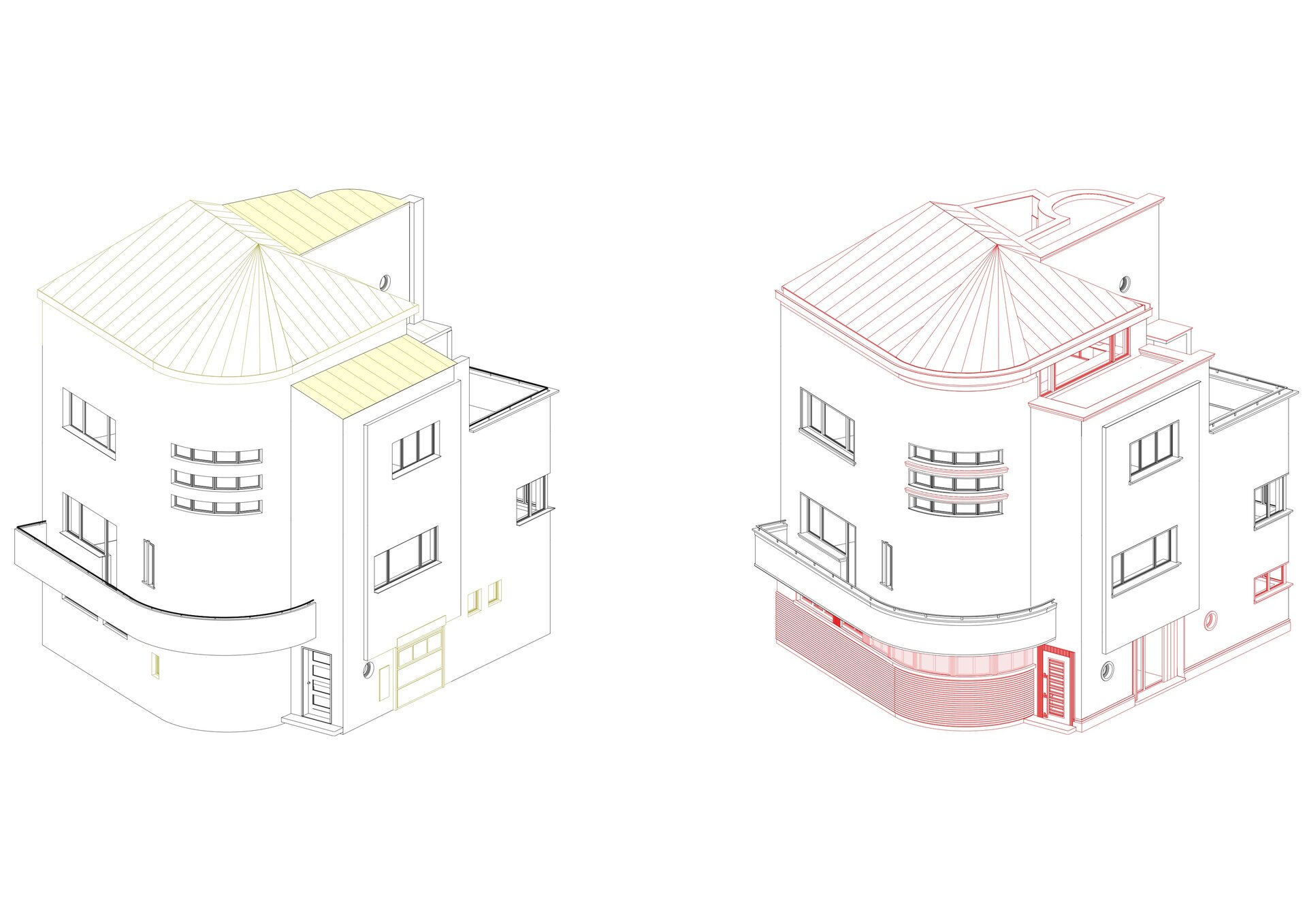
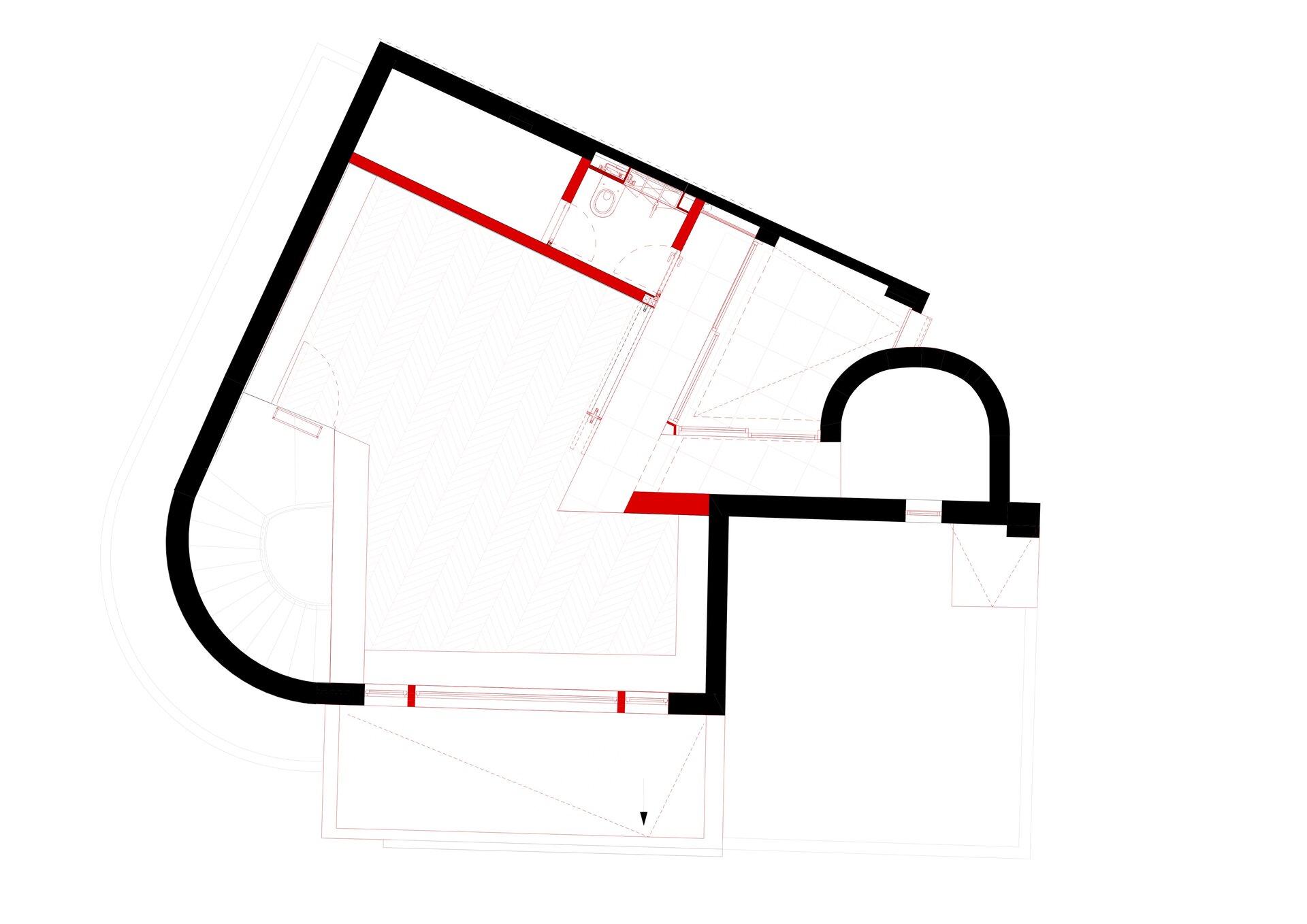
Our intervention, that followed the already finished consolidation of the house, proposes a less common approach in the contemporary architectural practice, and has in the foreground the desire to bring the house to its original form, the one imagined by Sady Herivan and also approved by the authorities, by realizing the main facade elements omitted during construction. The most visible missing element, compared to the original drawing, was the long, continuous modernist window, placed on a high plinth, formed by horizontal lines, right under the balcony of the 1st floor, emphasizing its volume.
For structural reasons, the long window could not be completely realized today, but we proposed for the areas where the facade could not be cut out, a black pigmented apparent concrete bas-relief insert, which copies the real windows and the dividing decotartive elements. The newly realised high plinth, also made of visible concrete, is inspired by the lines drawn by Sady Herivan, and consists of horizontal strips with a triangular section, typical of the art deco period. Other facade elements, that were created according to the original project are the second round window on the Aurel Vlaicu facade, next to the former entrance to the garage (also made only as suggestion using a bas-relief insert) and last but not least, the replica of the living room window from the first floor 1, the new corner window on the ground floor, initially canceled by a secondary entrance.
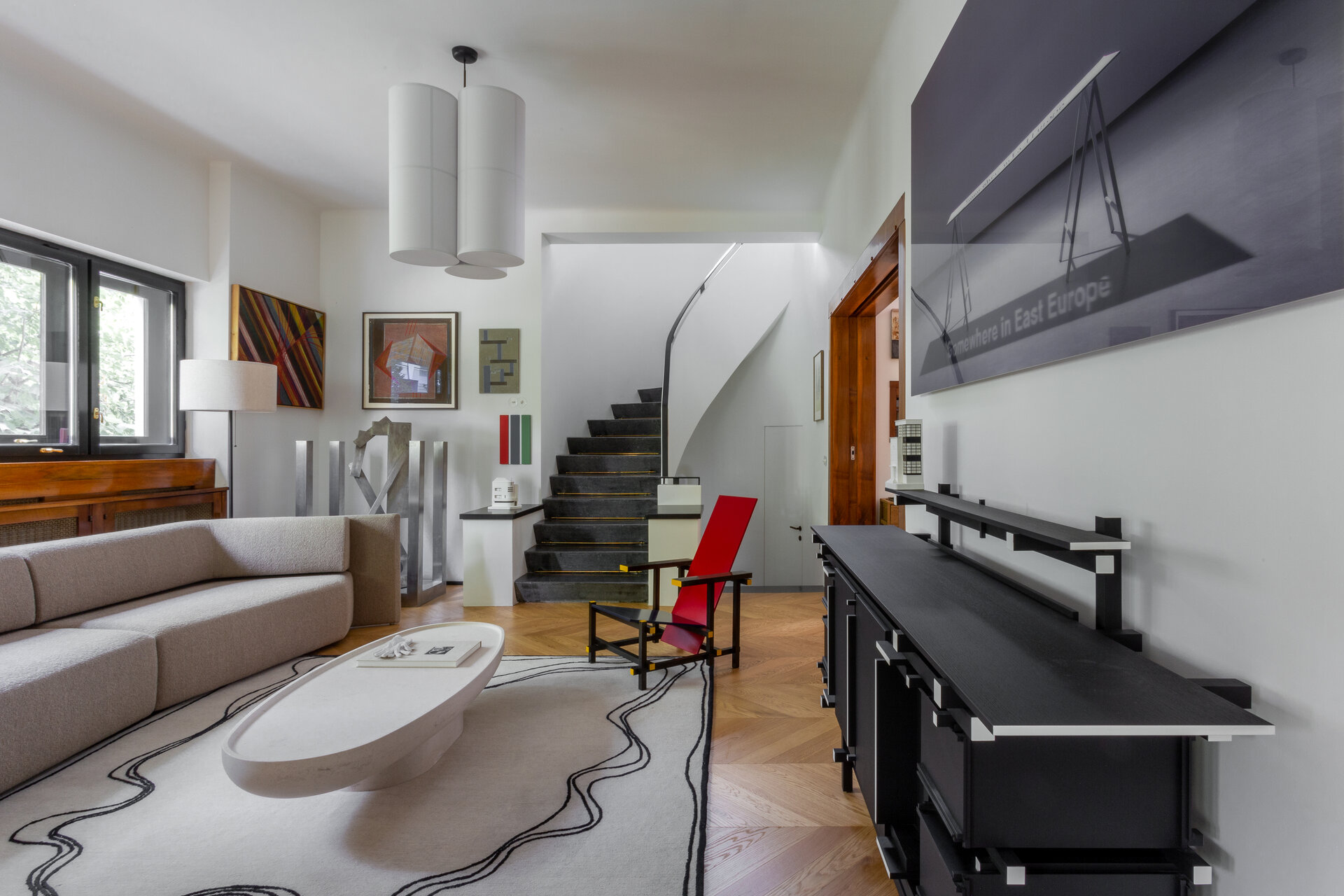
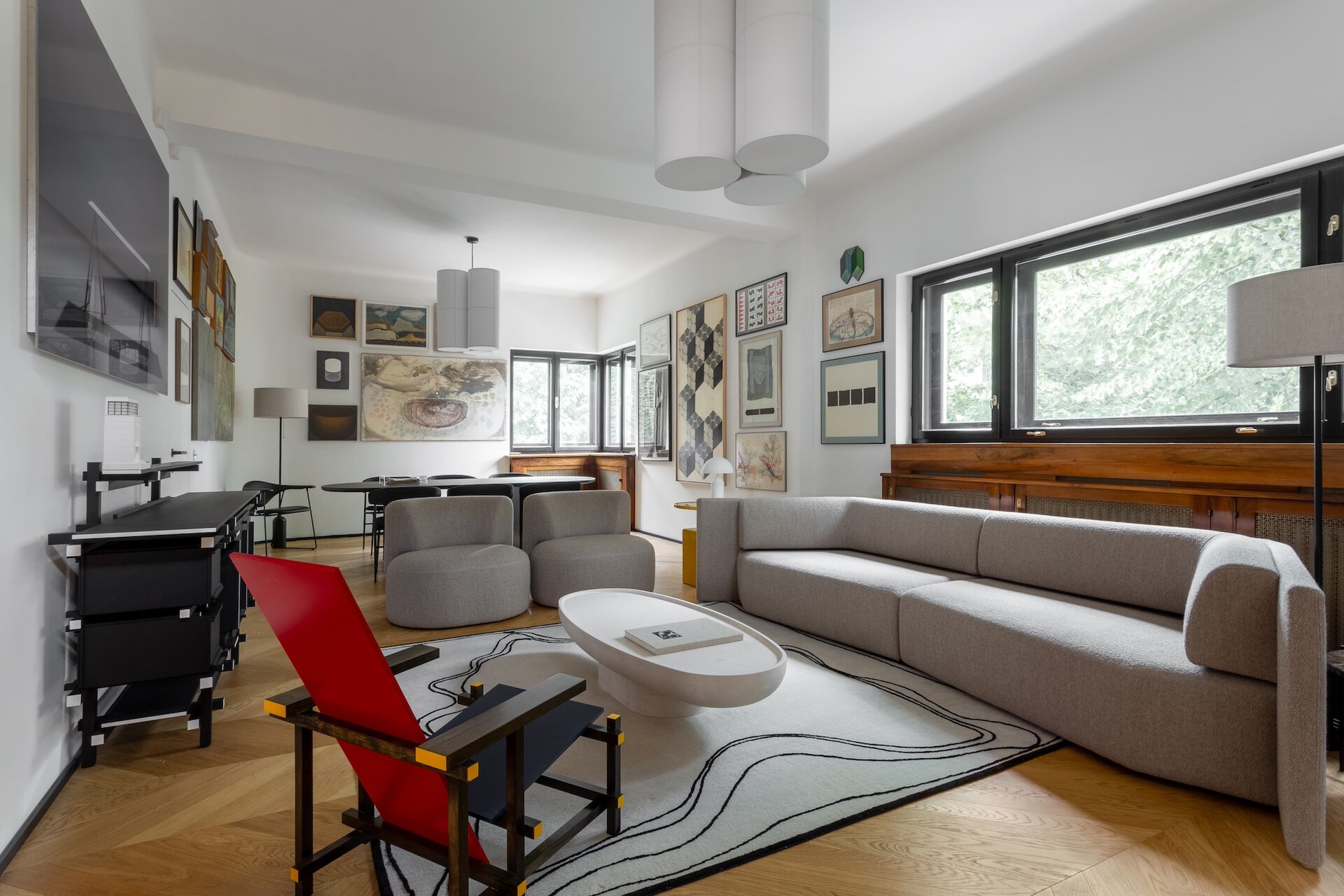
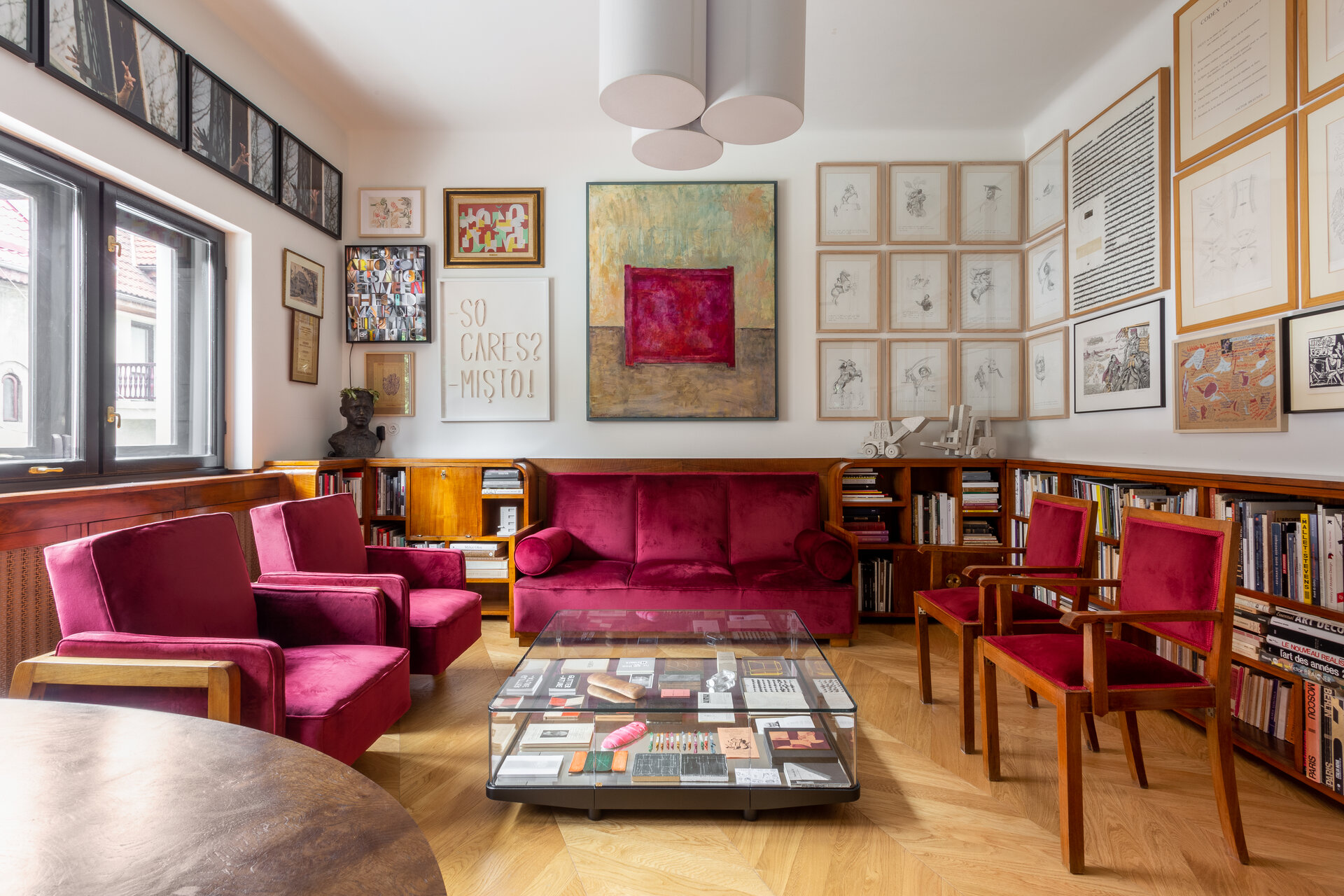
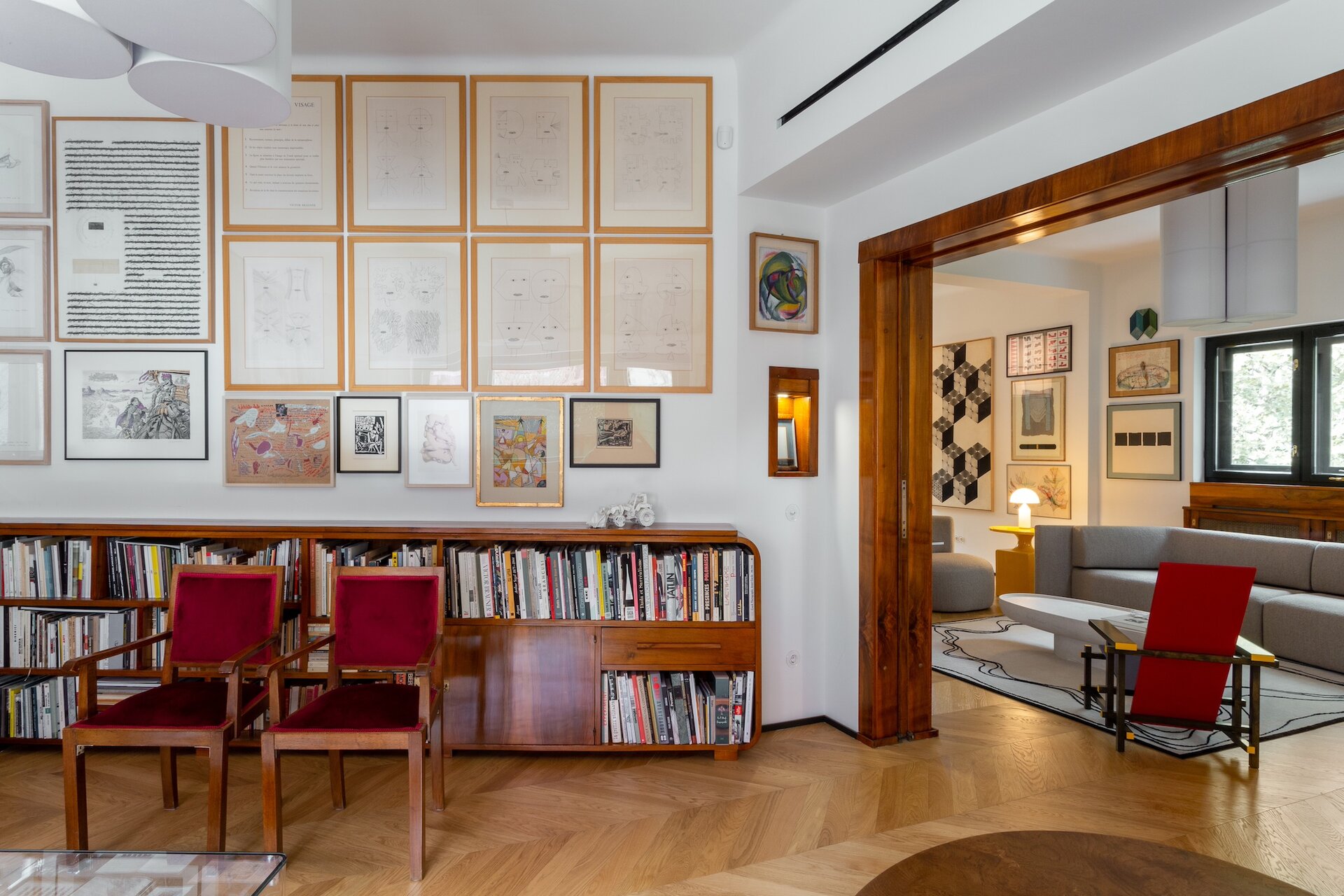
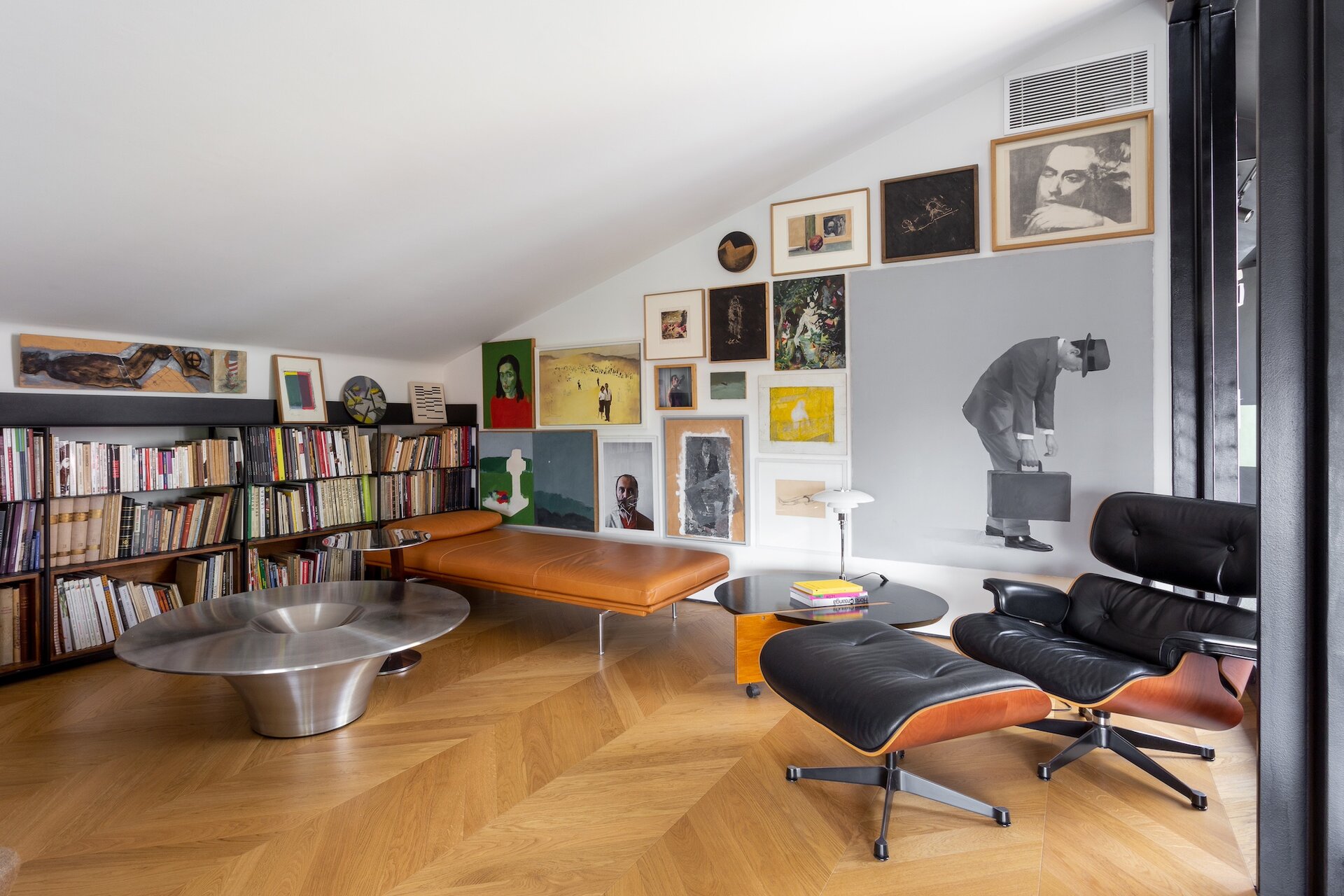
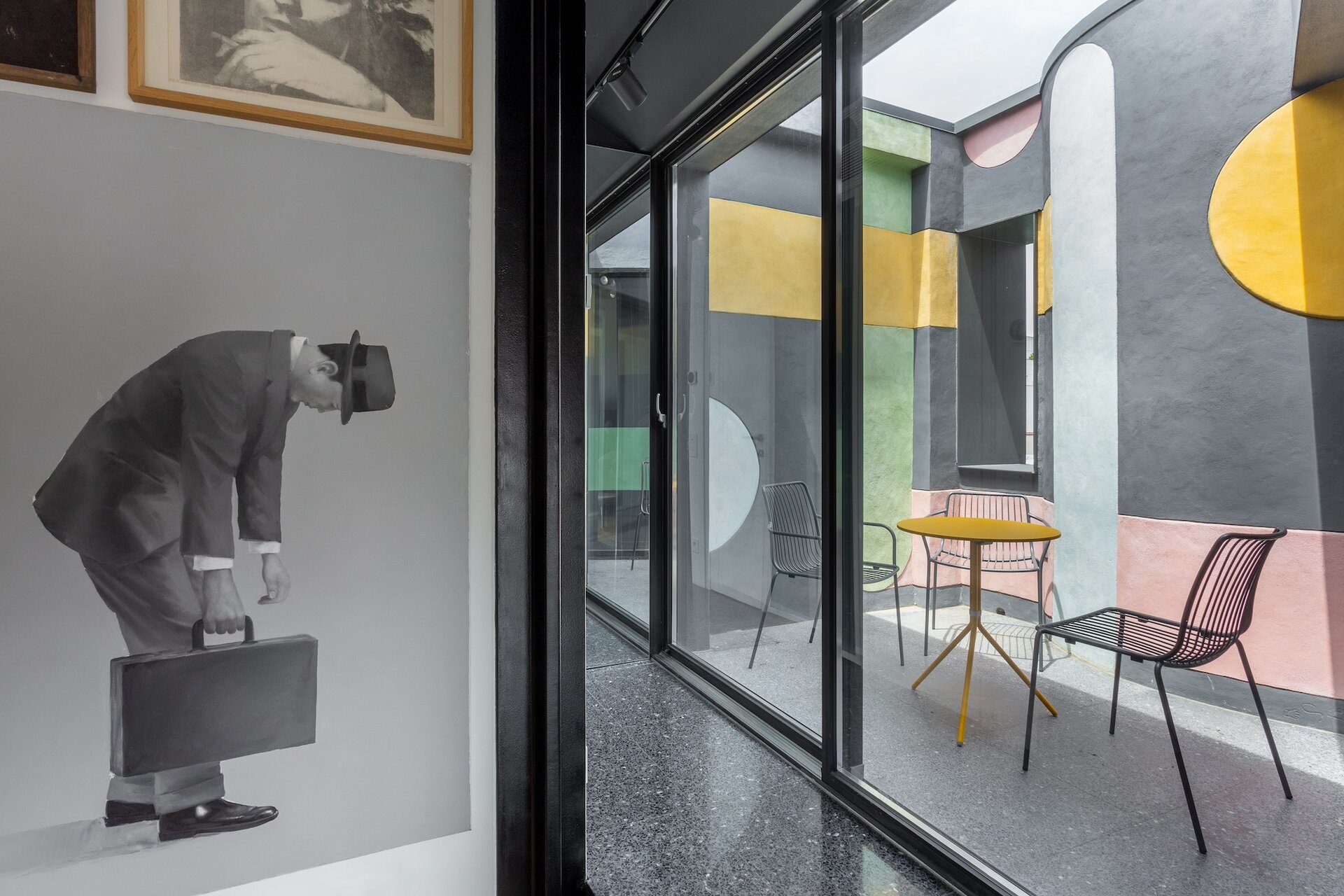
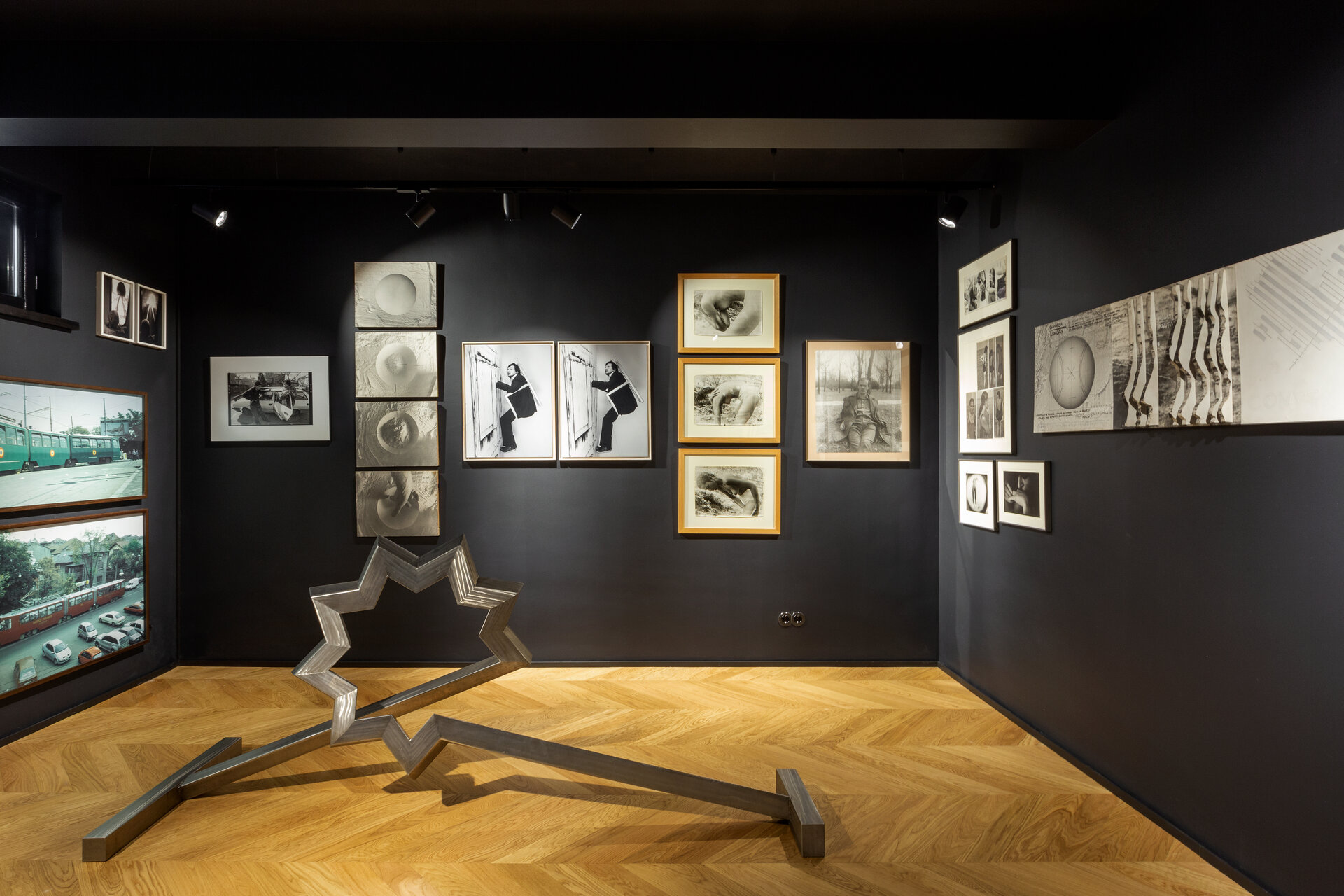
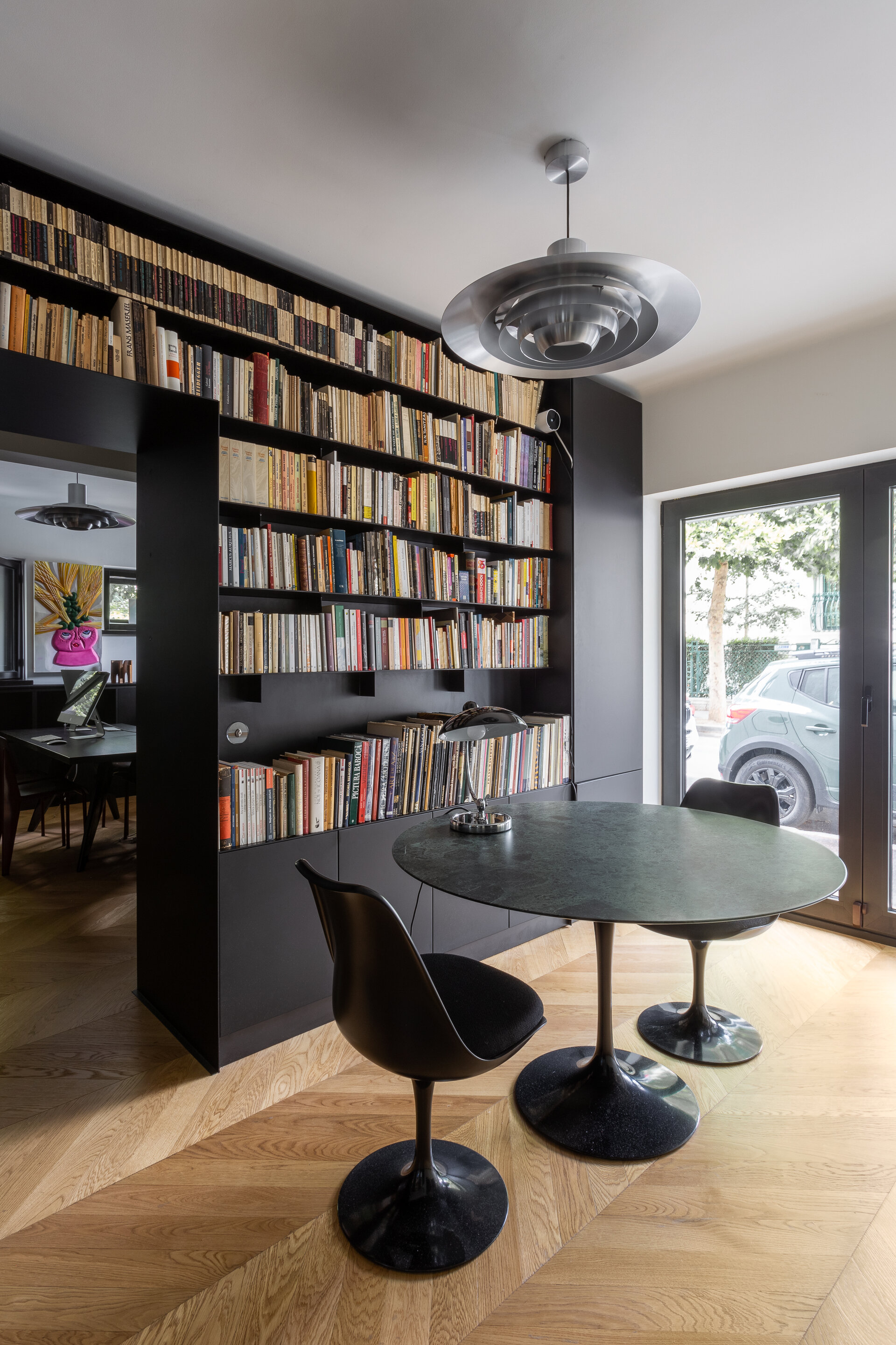
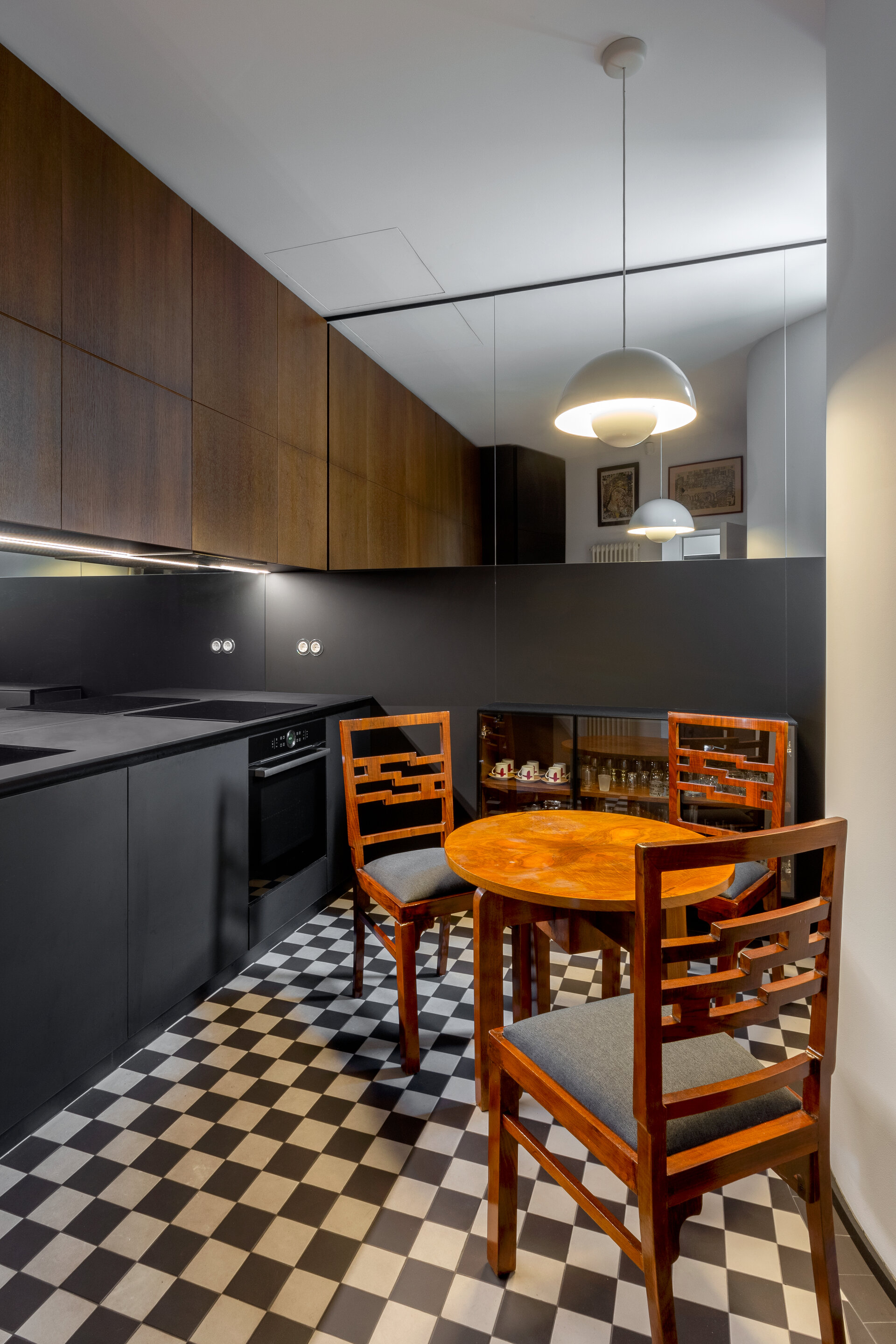
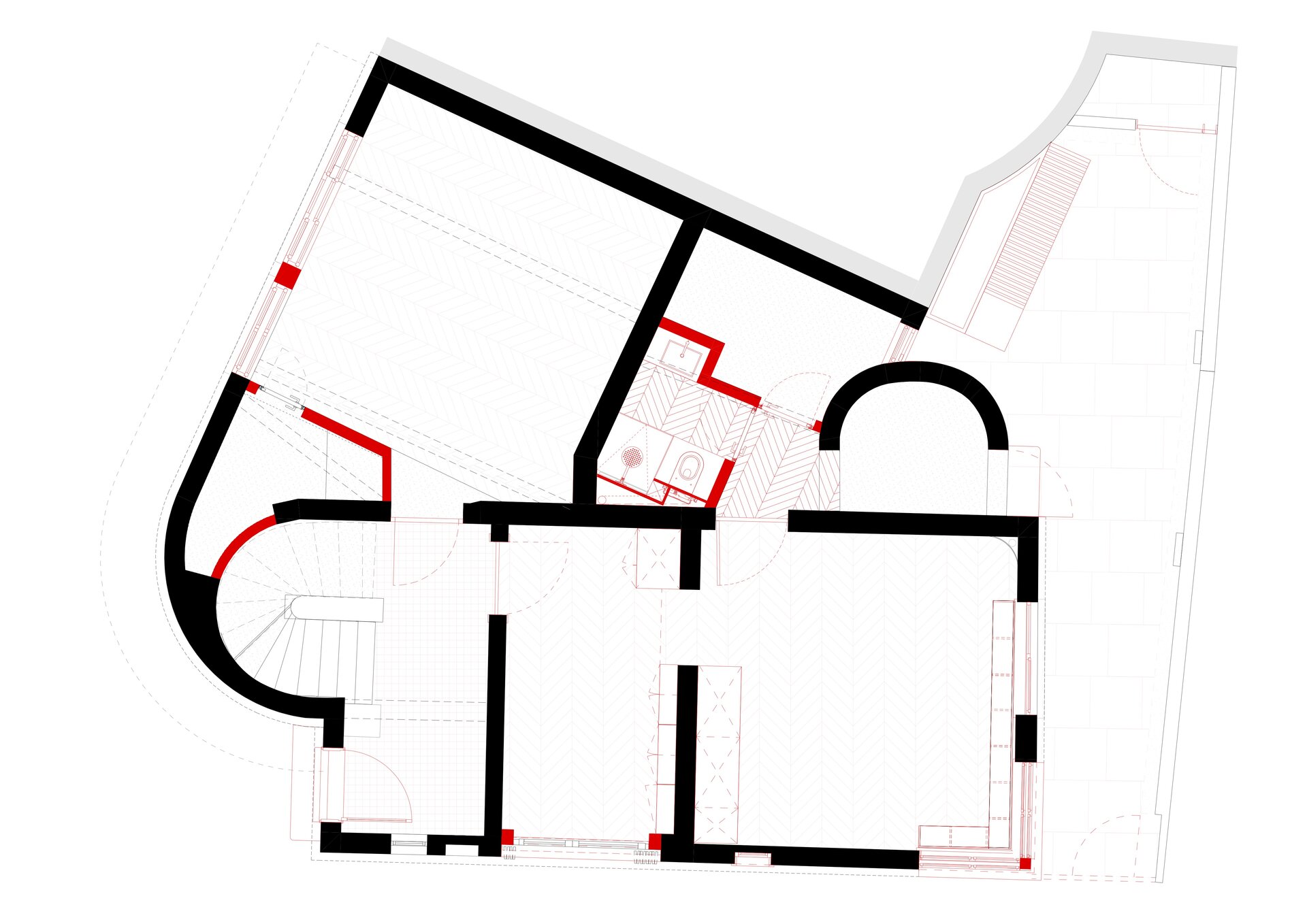
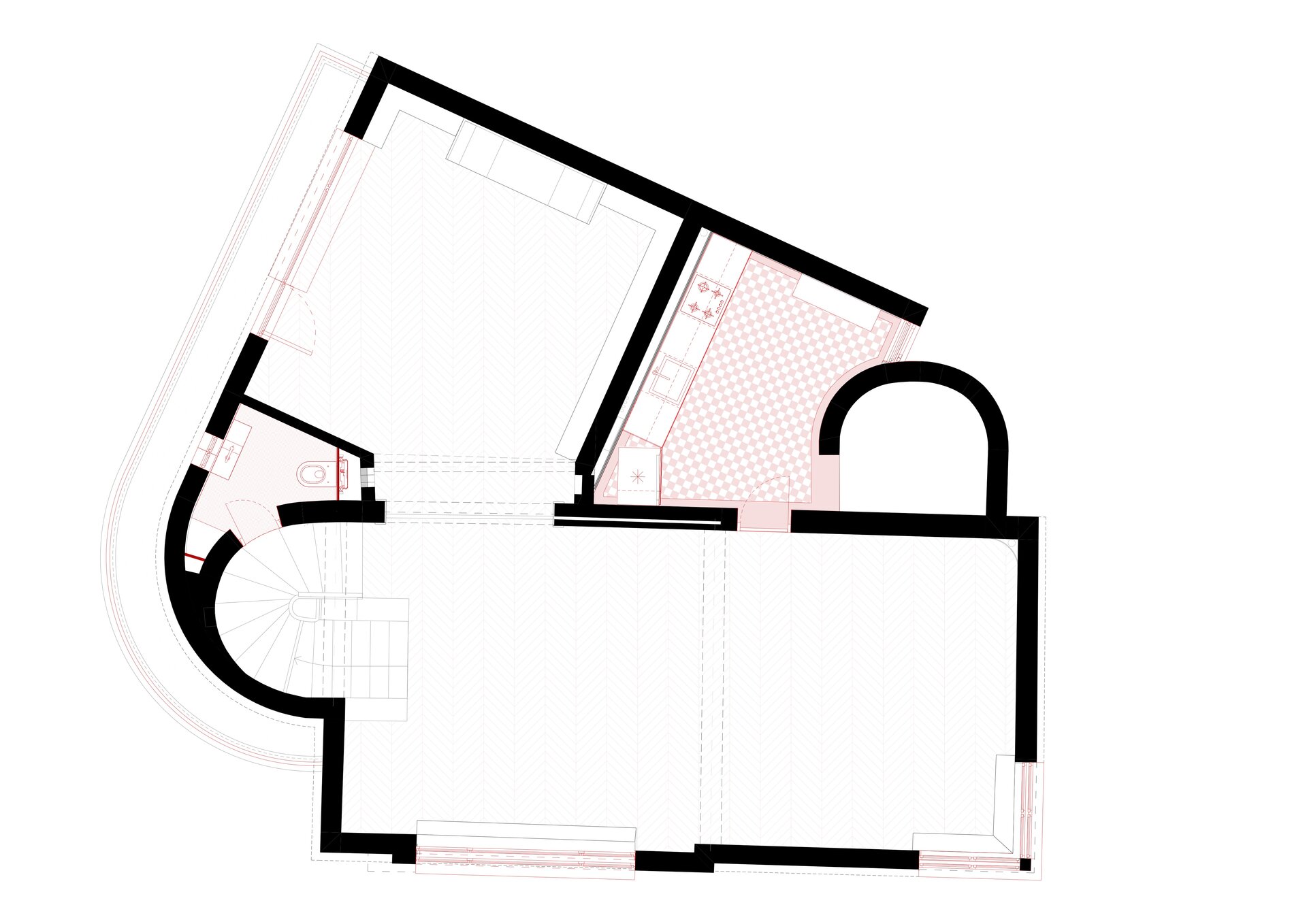
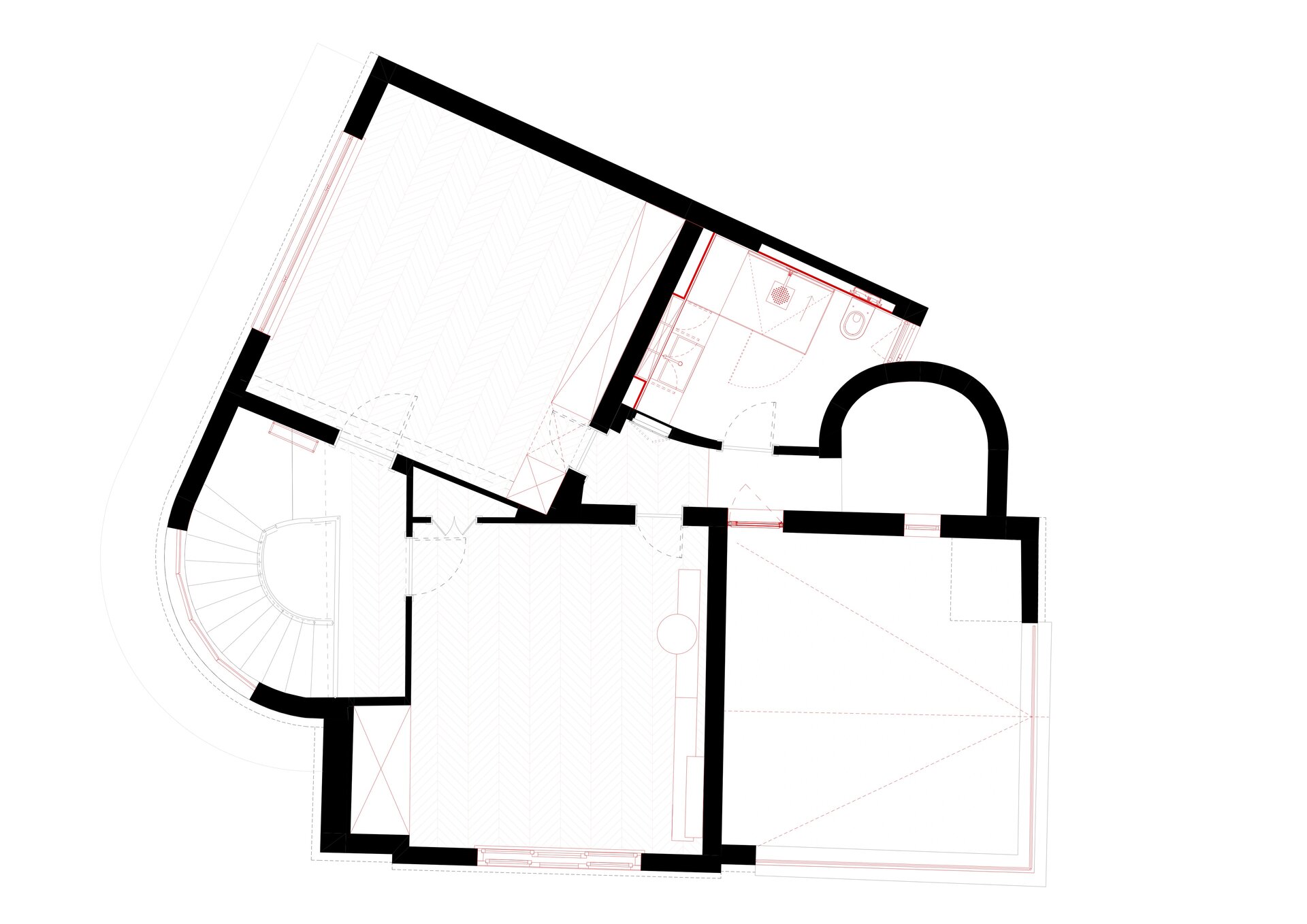
From a functional point of view, the ground floor, which includes a small art gallery, a workshop and an office space set up in the former garage, is a semi-public area. The first floor, also connected to the semi-public circuit, consists of the living room, the main office and kitchen. The second floor and the attic are completely private, consisting in the night area and a private living room. The attic was transformed into a living area connected with the main staircase by cutting out the slab above. Also we created an inner courtyard, that transforms this private living room into a luminous oasis.
The project aims on one hand to create a suitable context for exhibiting the art collection, in a typical modernist setting, and on the other hand to bring back to life a valuable architectural project, which did not have the chance to be realised at the time of initial conception.
Architecture and Heritage

- The Restoration of the church in Pătrăuți (UNESCO)
- House for a collection
- The Restoration of Secu Monastery
- A house in Cotroceni
- The Old School in Tohani
- Restoration and extension of a house in Tugomir Voievod St., Bucharest
- Rosenthal House
- Rehabilitation, change of function, interior and exterior design for Restaurant Parc
- The recovery of the architectural ensemble in Plantelor St. No. 4, Bucharest
- Little garden house
- ALEXE 2-4-19


