- Prize of the “Portfolio Architecture / Residential Architecture” section
Transylvanian guesthouse with greenhouse and sauna
Authors’ Comment
In a Transylvanian homestead, located in a village along the Via Transilvanica, with an existing, recently renovated historic house, the brief called for the addition of a guesthouse and shared common spaces.
The intervention began with the clients’ desire to preserve the spirit of the place and the architectural composition of the old homestead, while introducing contemporary functions to support slow tourism and guest accommodation.
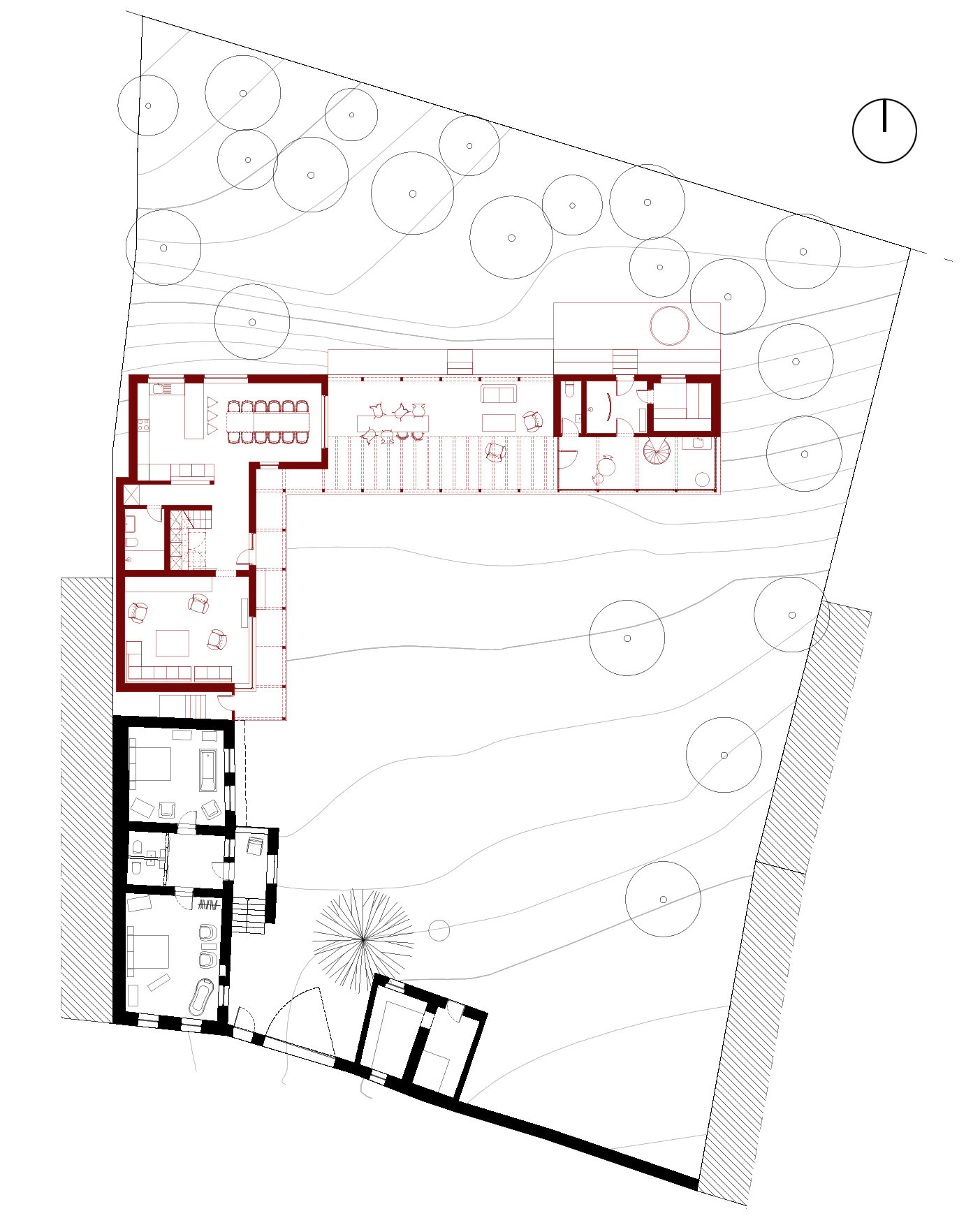
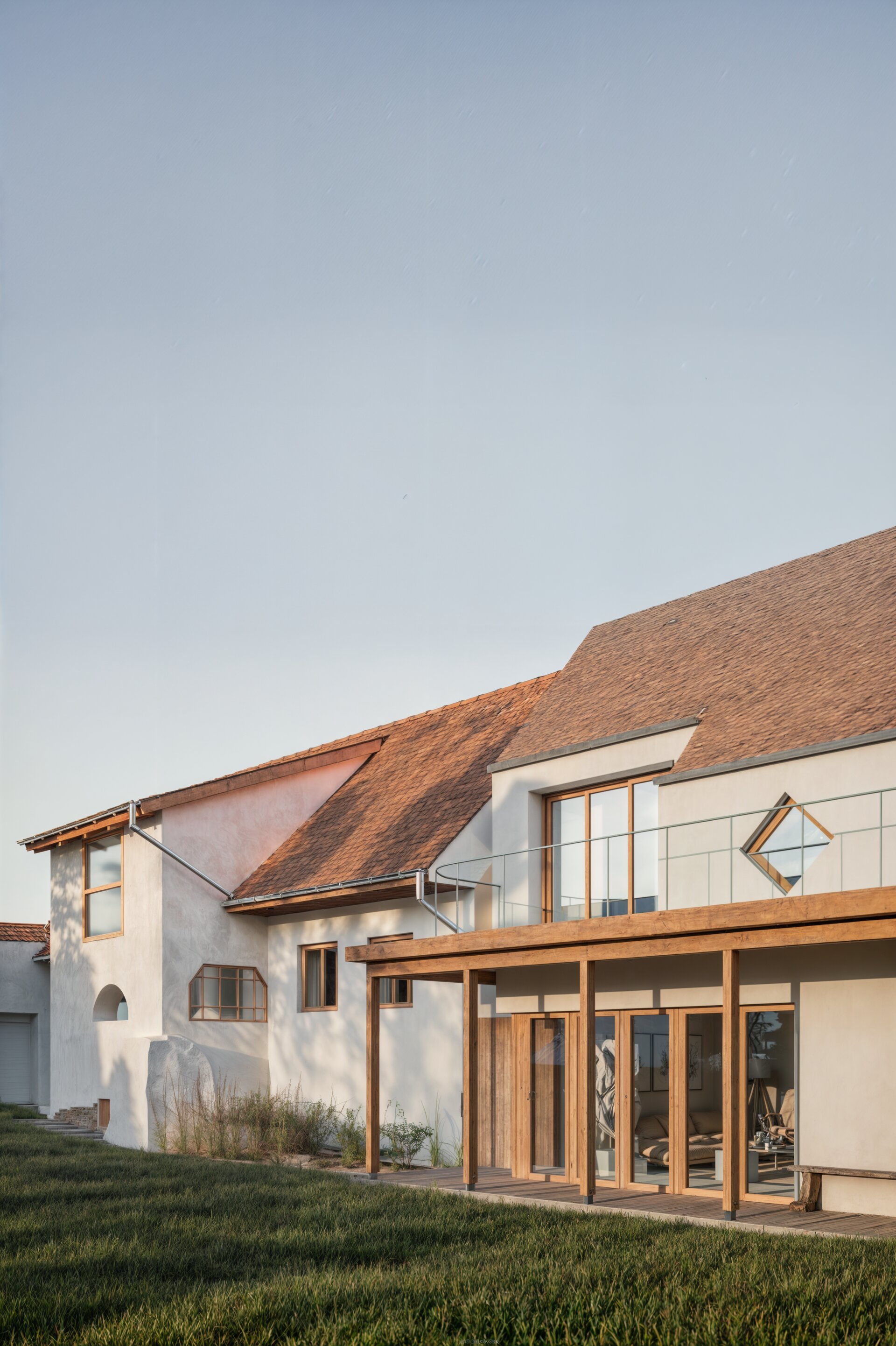
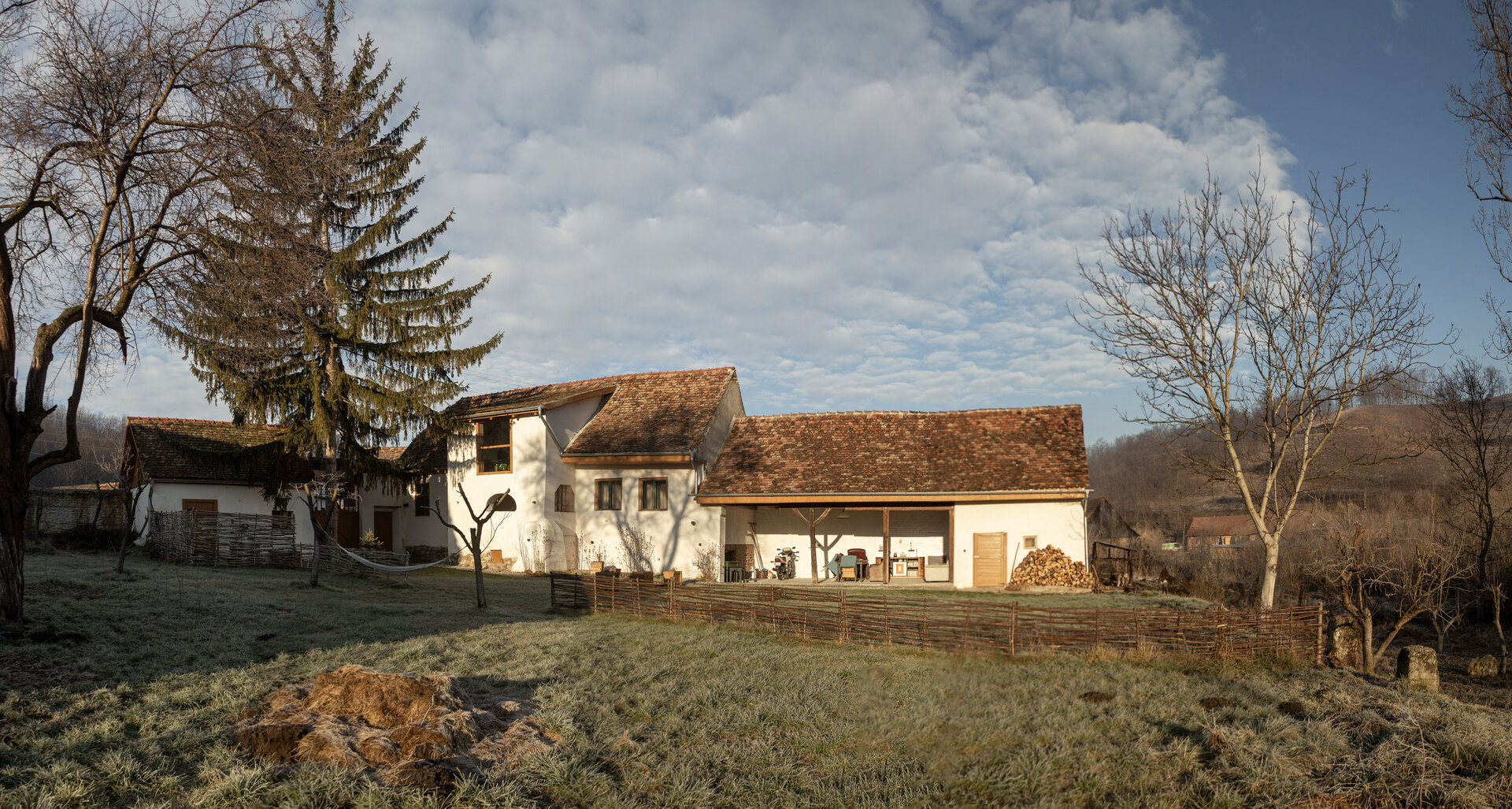
The original house, built in the style characteristic of the 12th–13th century Saxon settlers, has been preserved in its entirety: a structure made of stone and brick, with a semi-underground cellar, an elevated ground floor organized simply around a central hallway, and an attic. The porch, the bread oven, and the courtyard well are essential elements in defining the identity of the homestead and have been carefully preserved.
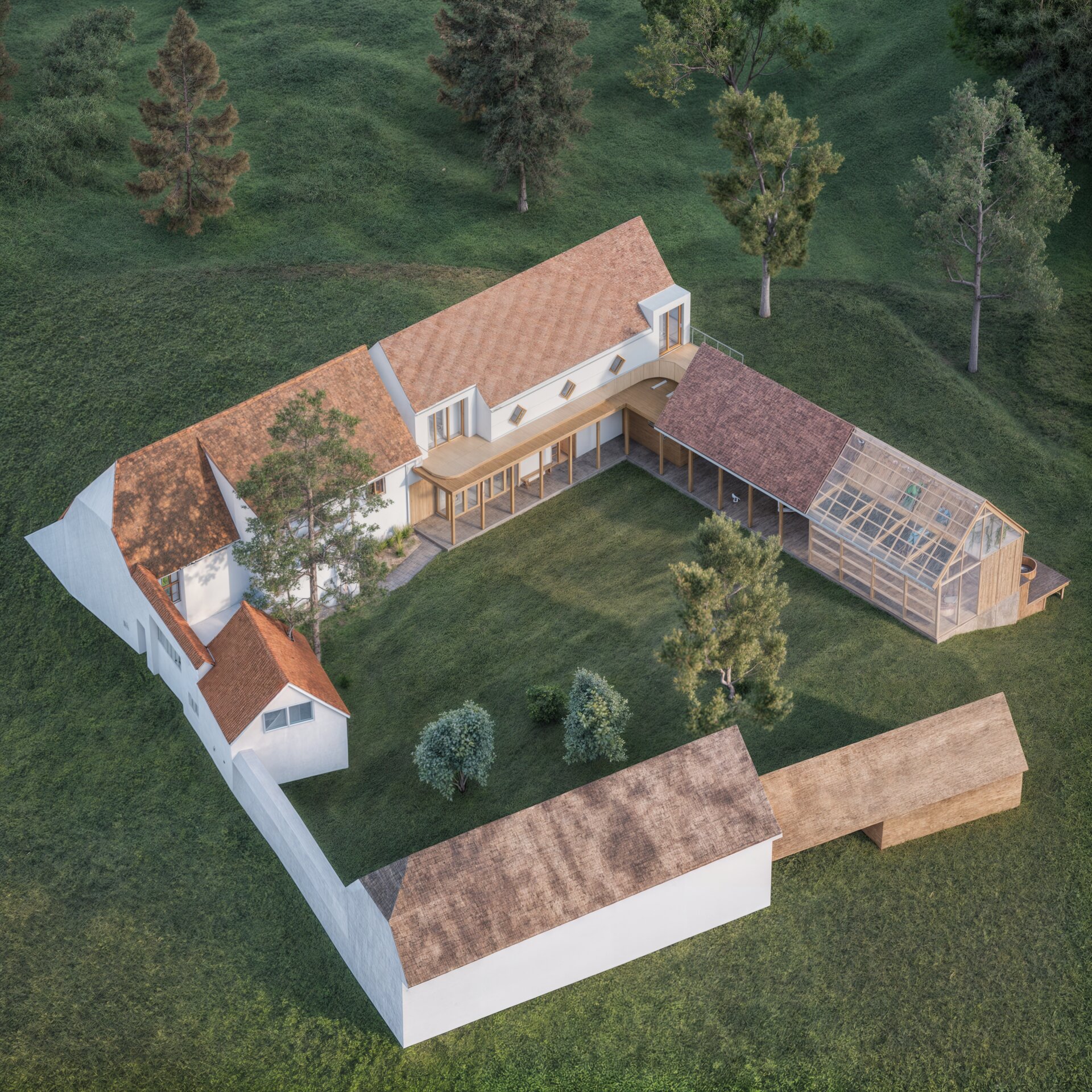
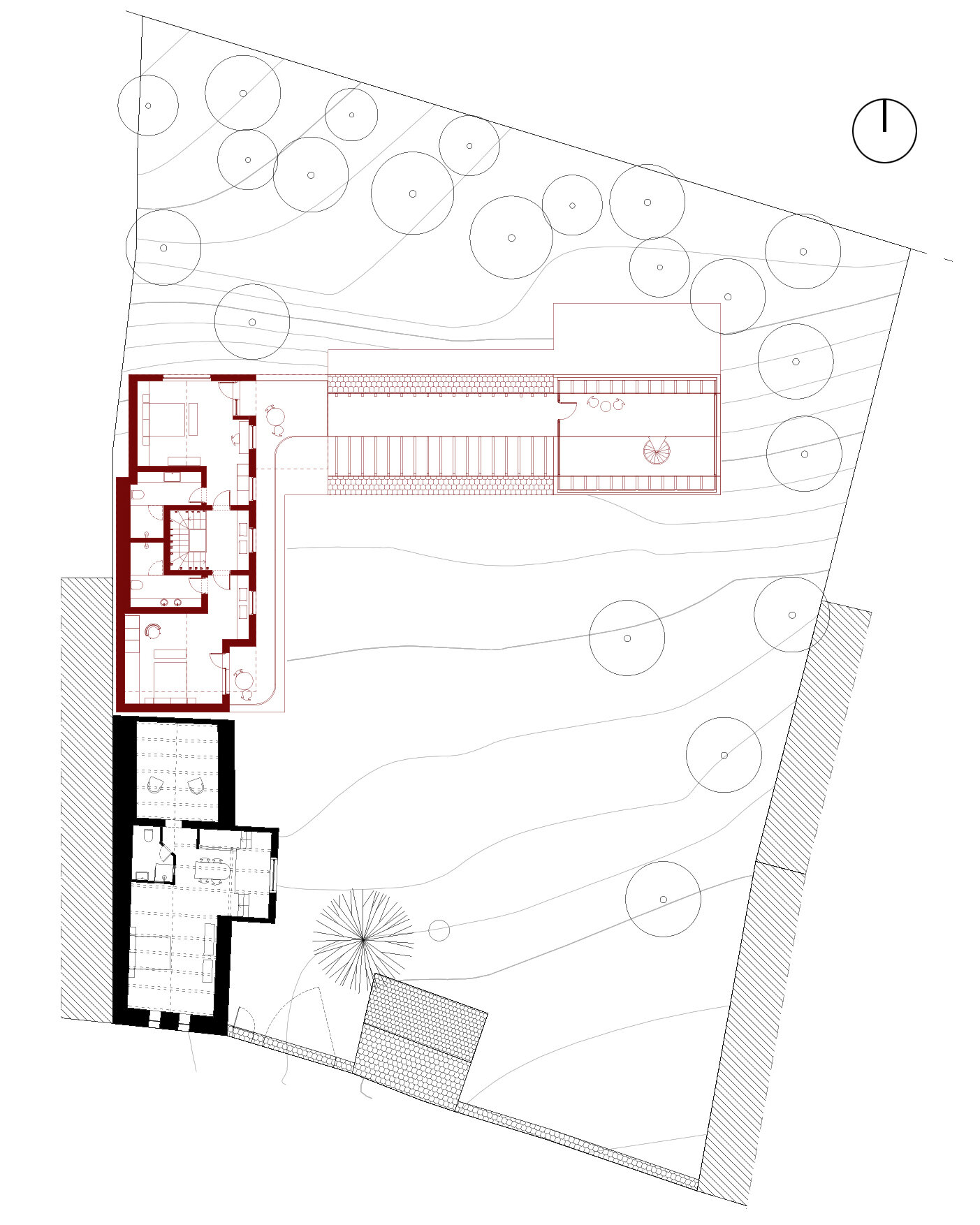
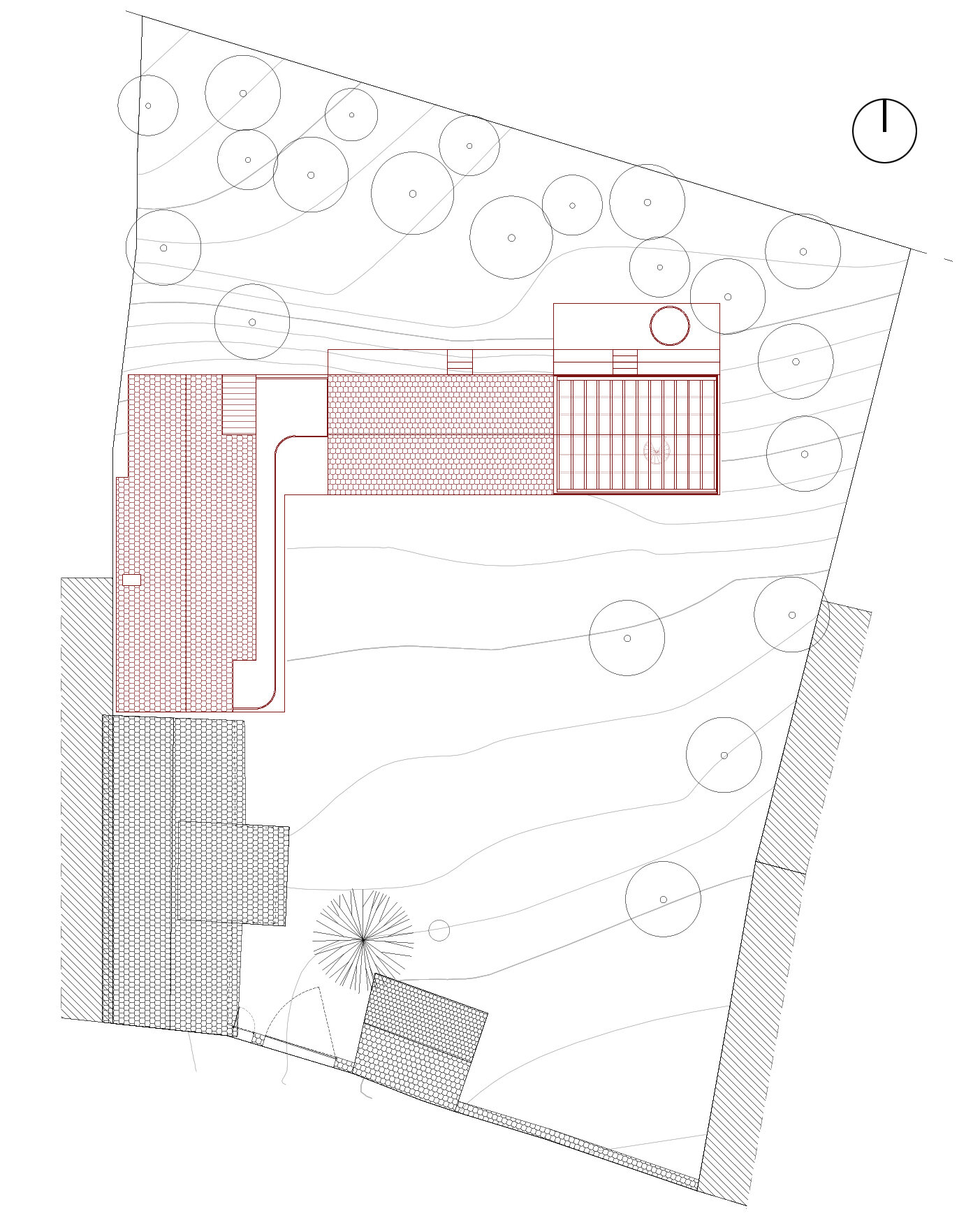
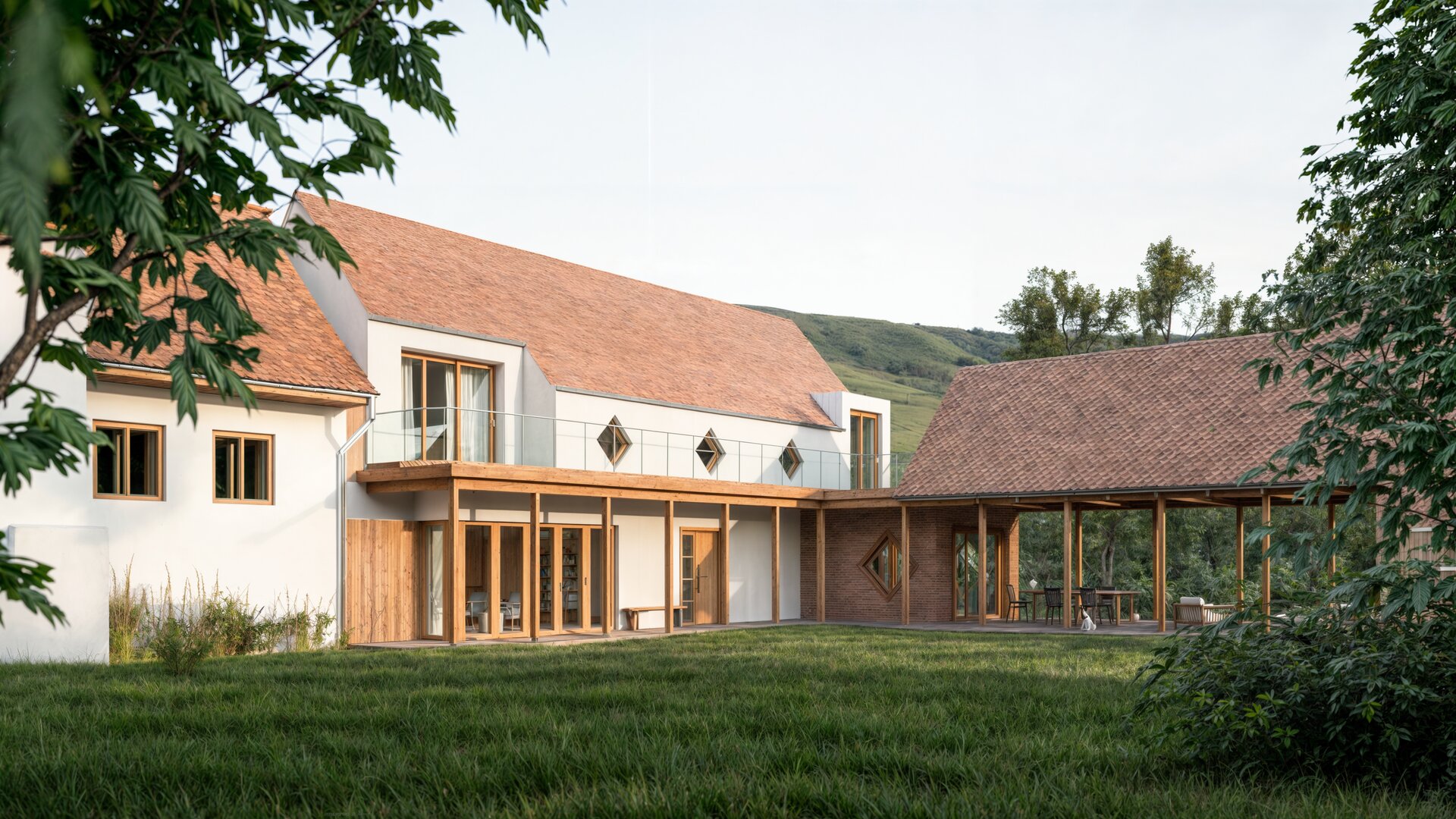
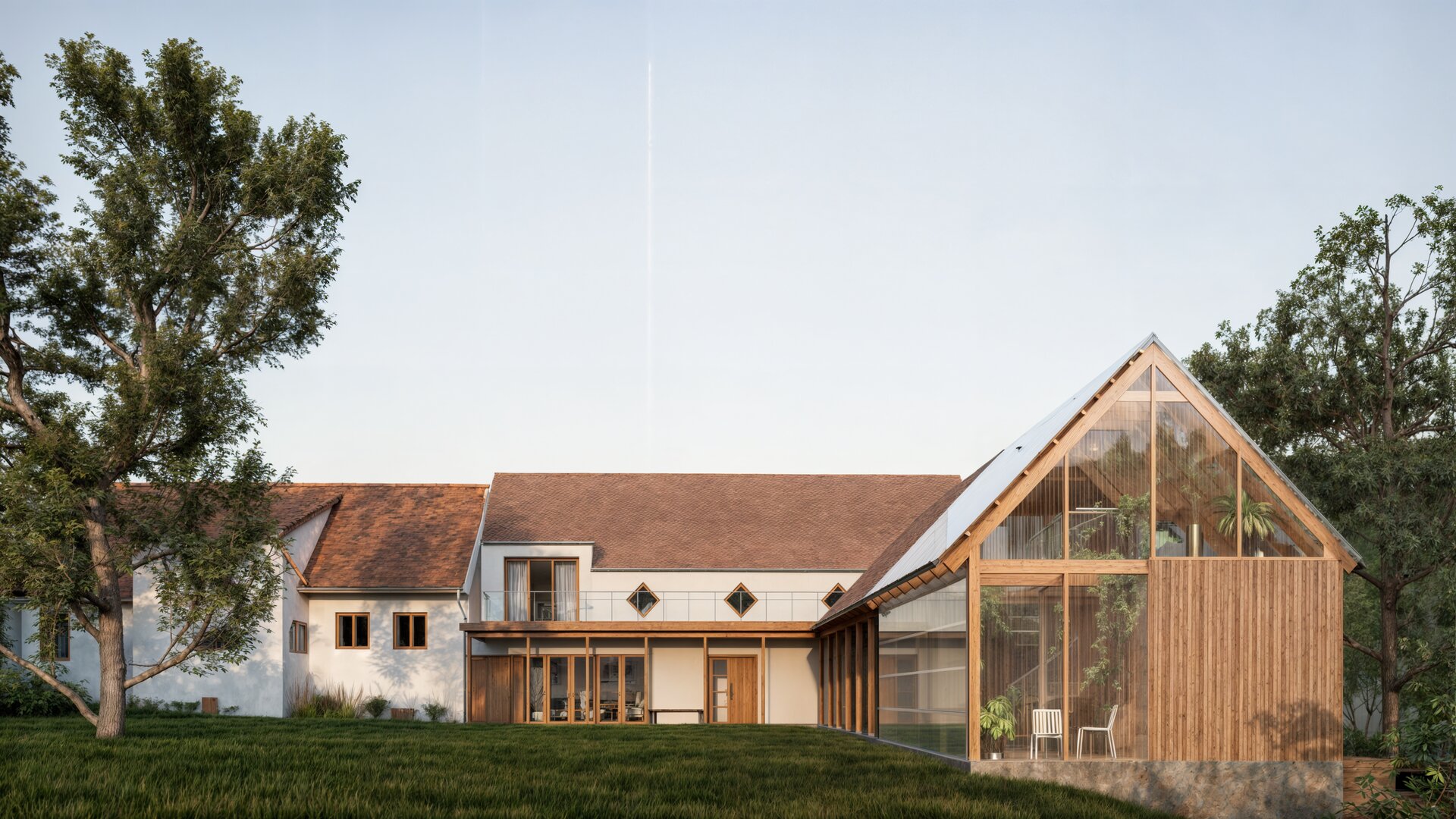
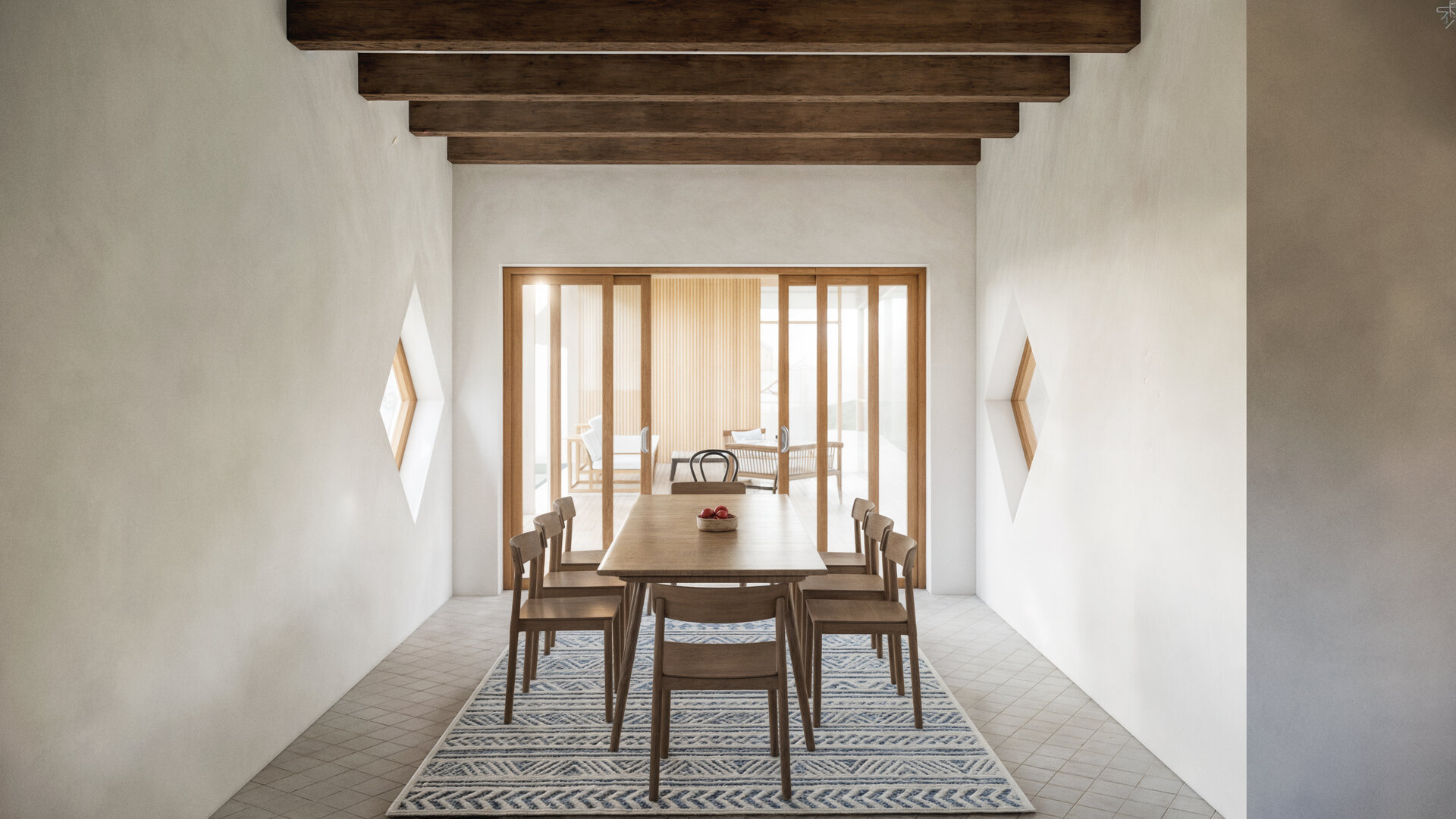
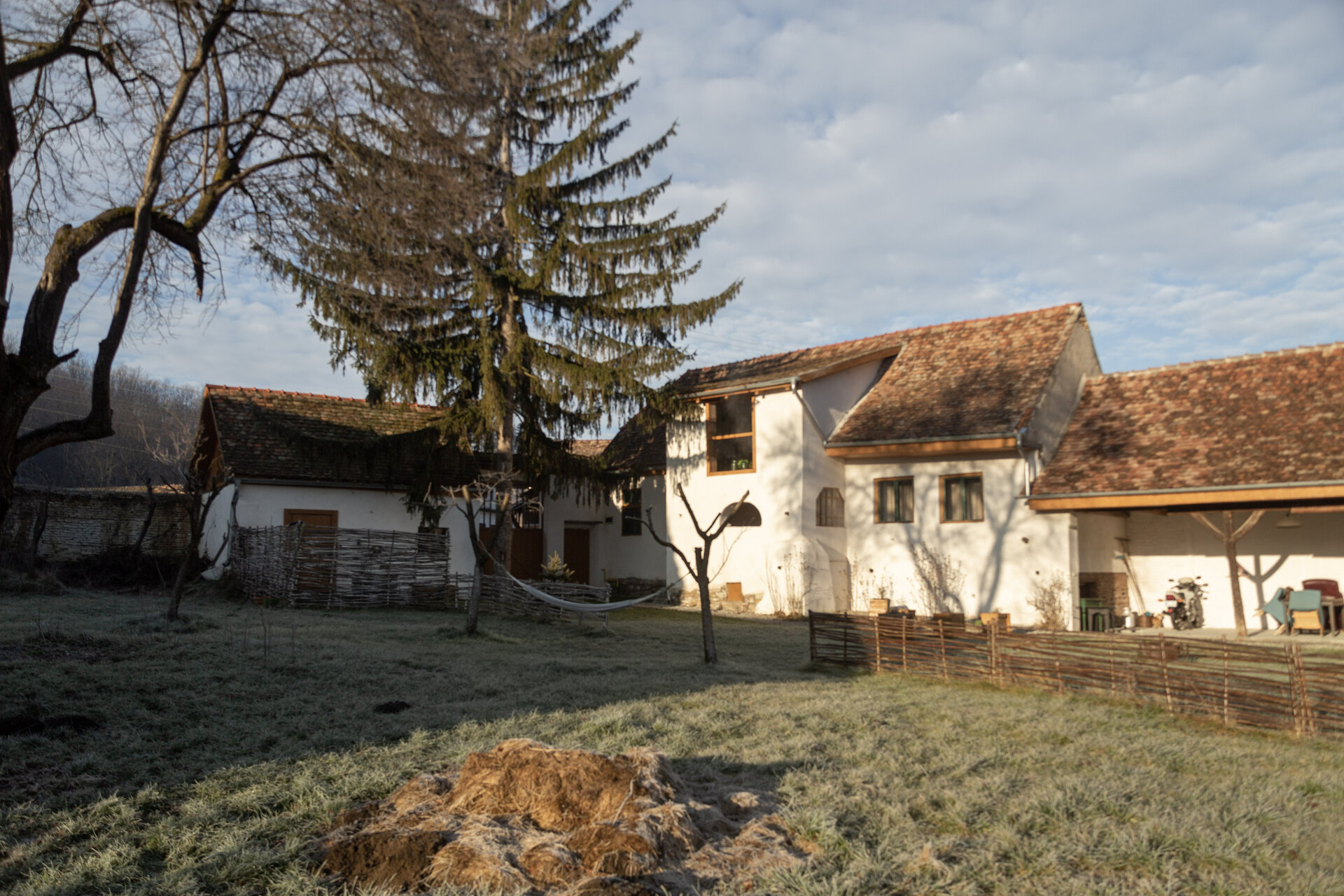
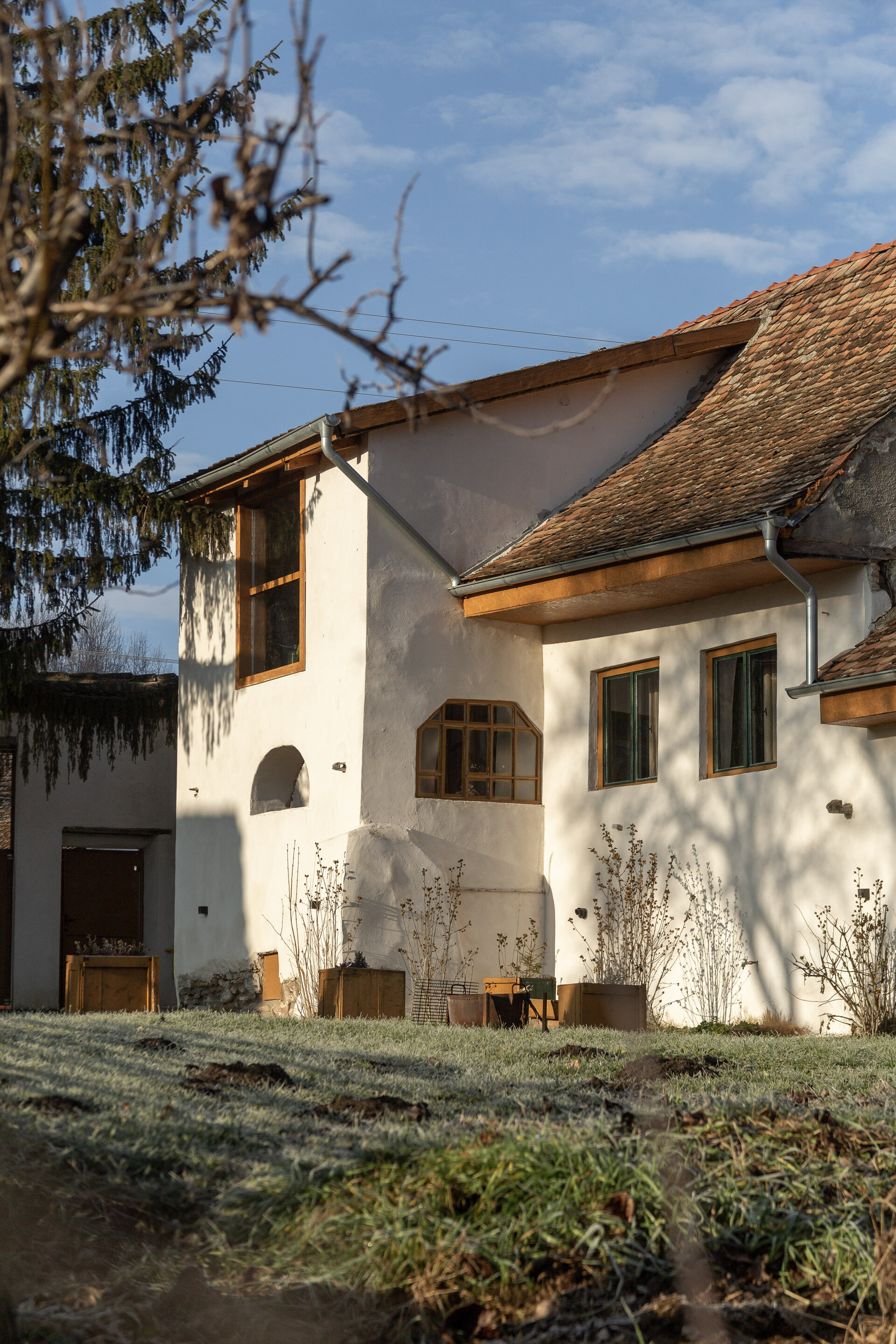
The new intervention consists of adding a guesthouse – a two-storey volume – aligned with the existing house and placed along the northern edge of the property. This layout respects the traditional typology of Saxon farms, where buildings are aligned along the perimeter, forming a long and clearly defined courtyard. At the same time, this positioning maximizes sunlight for the interior spaces and leaves open a generous courtyard, adaptable for various uses.
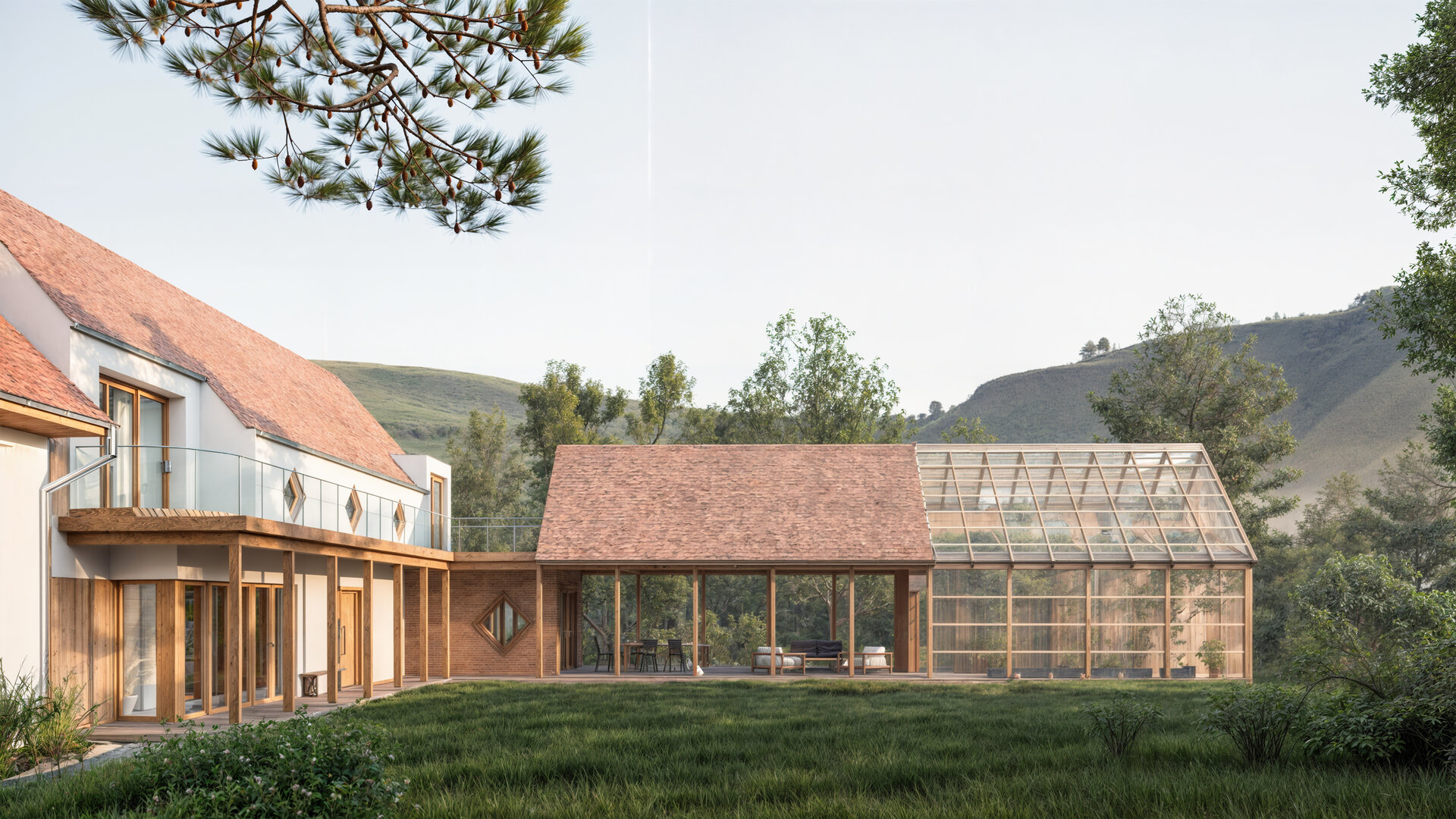
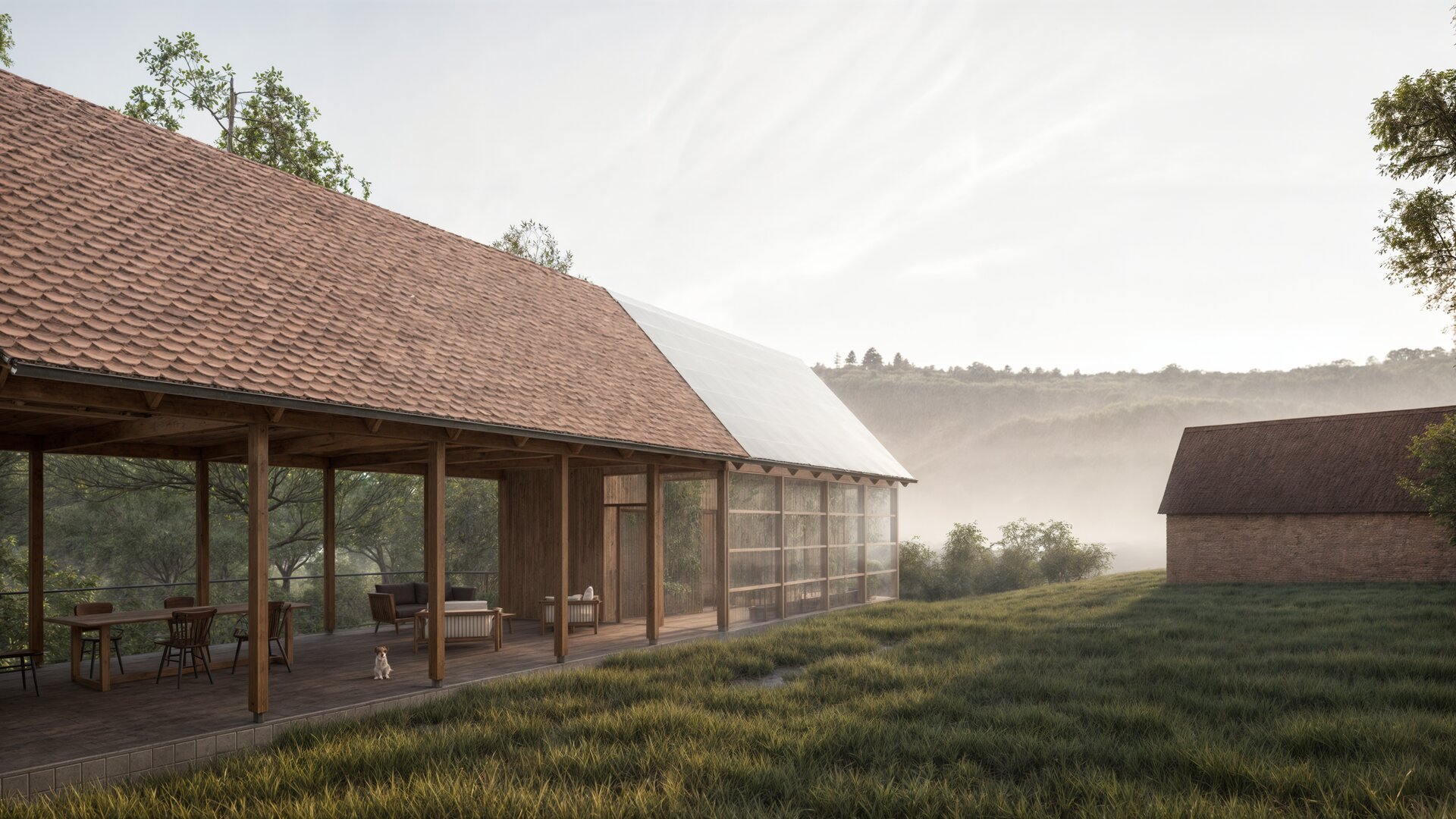
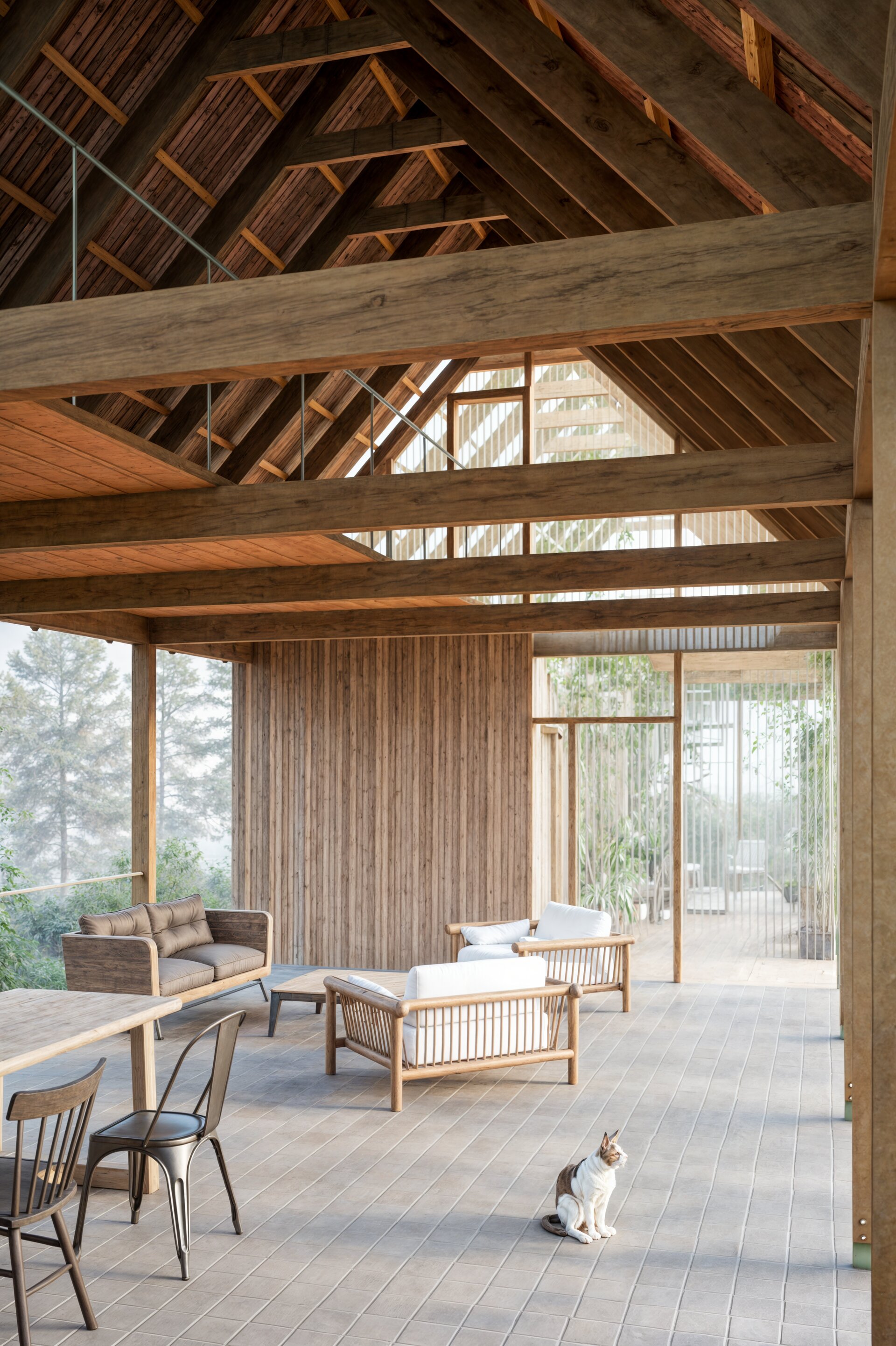
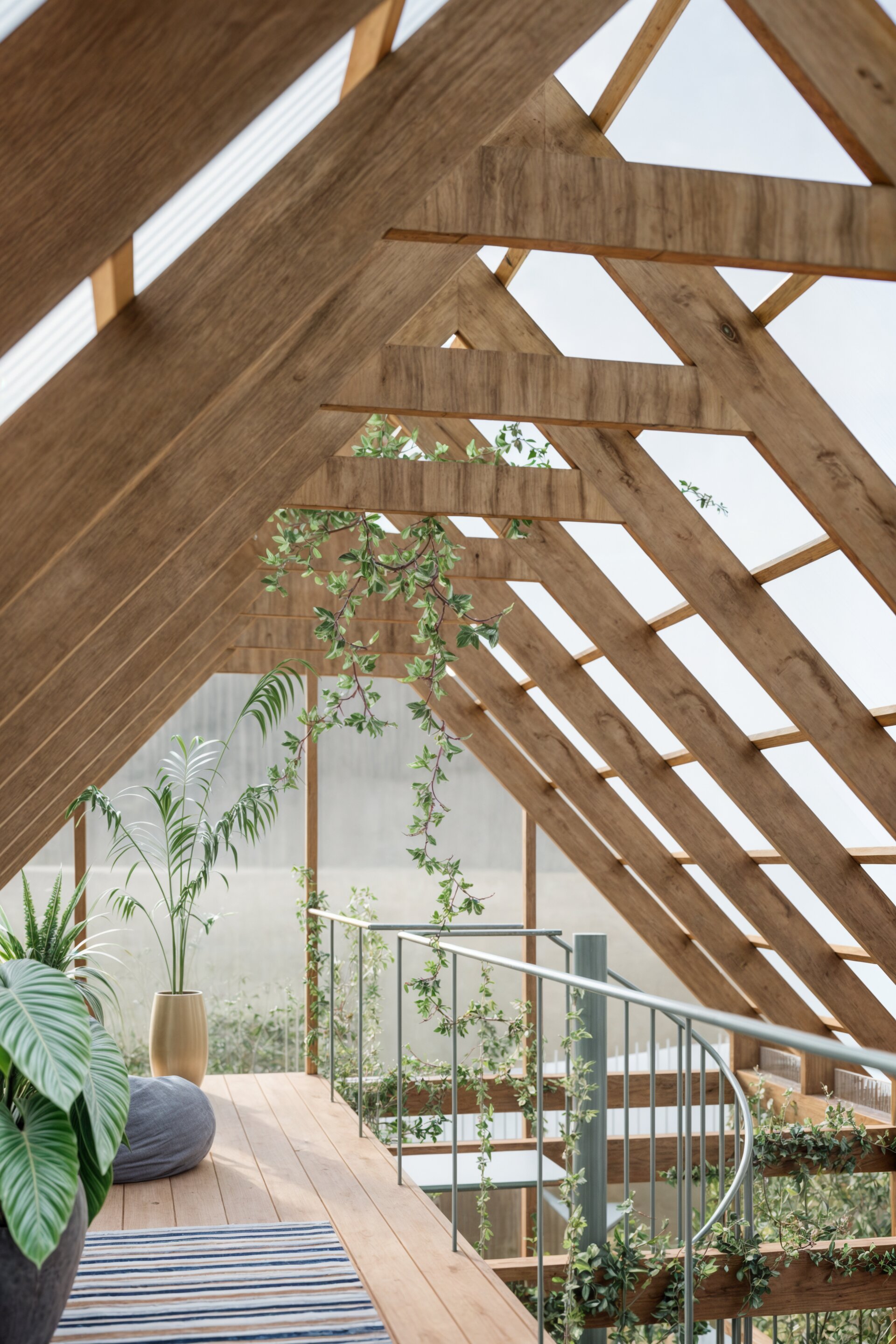
Complementing the guesthouse, a secondary volume was introduced, set perpendicular to the main house and organized on a single level. This new structure houses a covered terrace, a sauna, and a greenhouse. Its placement generates two distinct outdoor areas: a main courtyard for daily activities and guest reception, and a more private rear courtyard, where the terrain slopes and wild vegetation takes over. This layout subtly revives the traditional configuration of Saxon courtyards, where this secondary volume would often be the large barn (șură), and behind it, the vegetable garden or orchard would unfold.
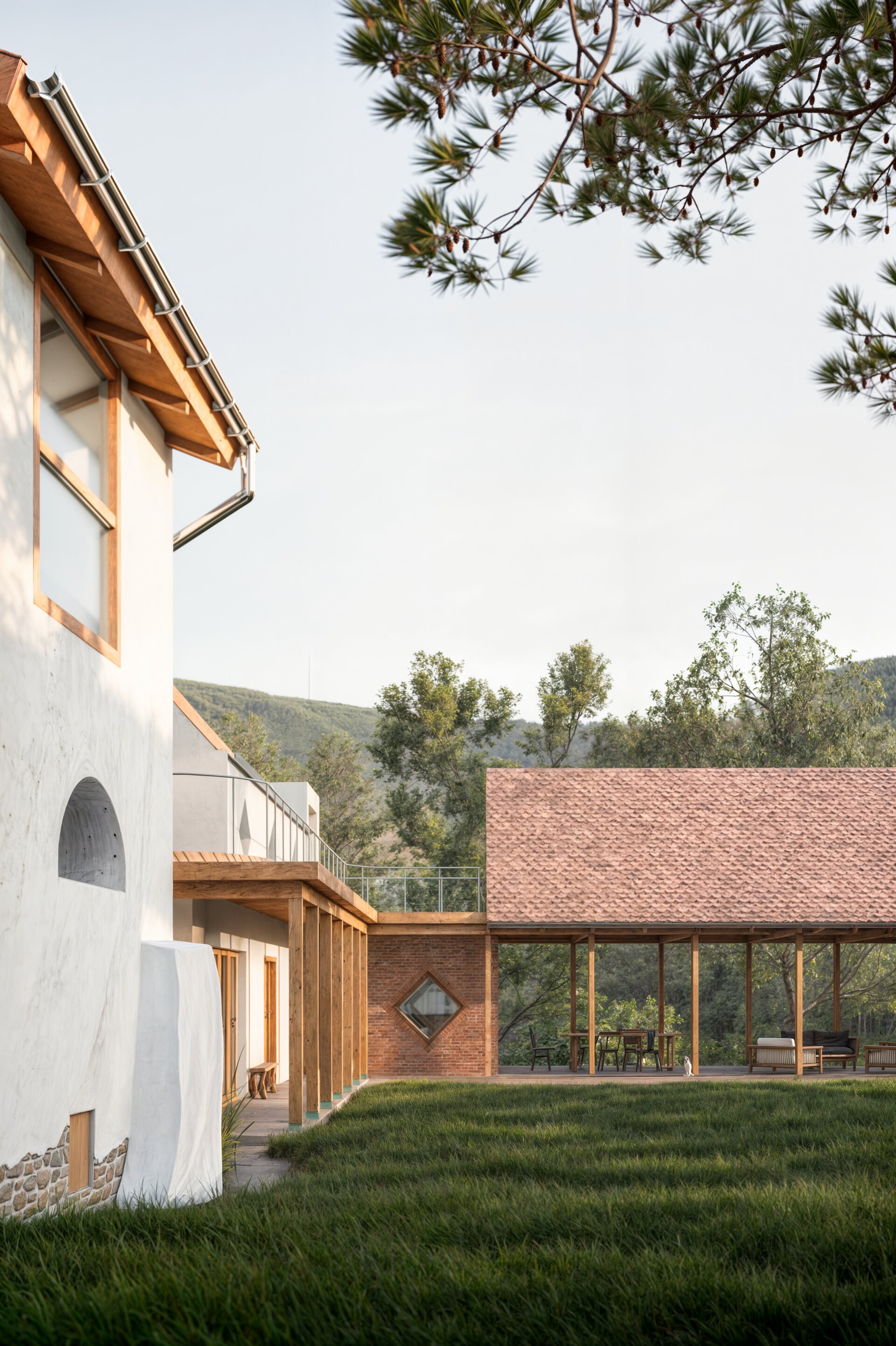
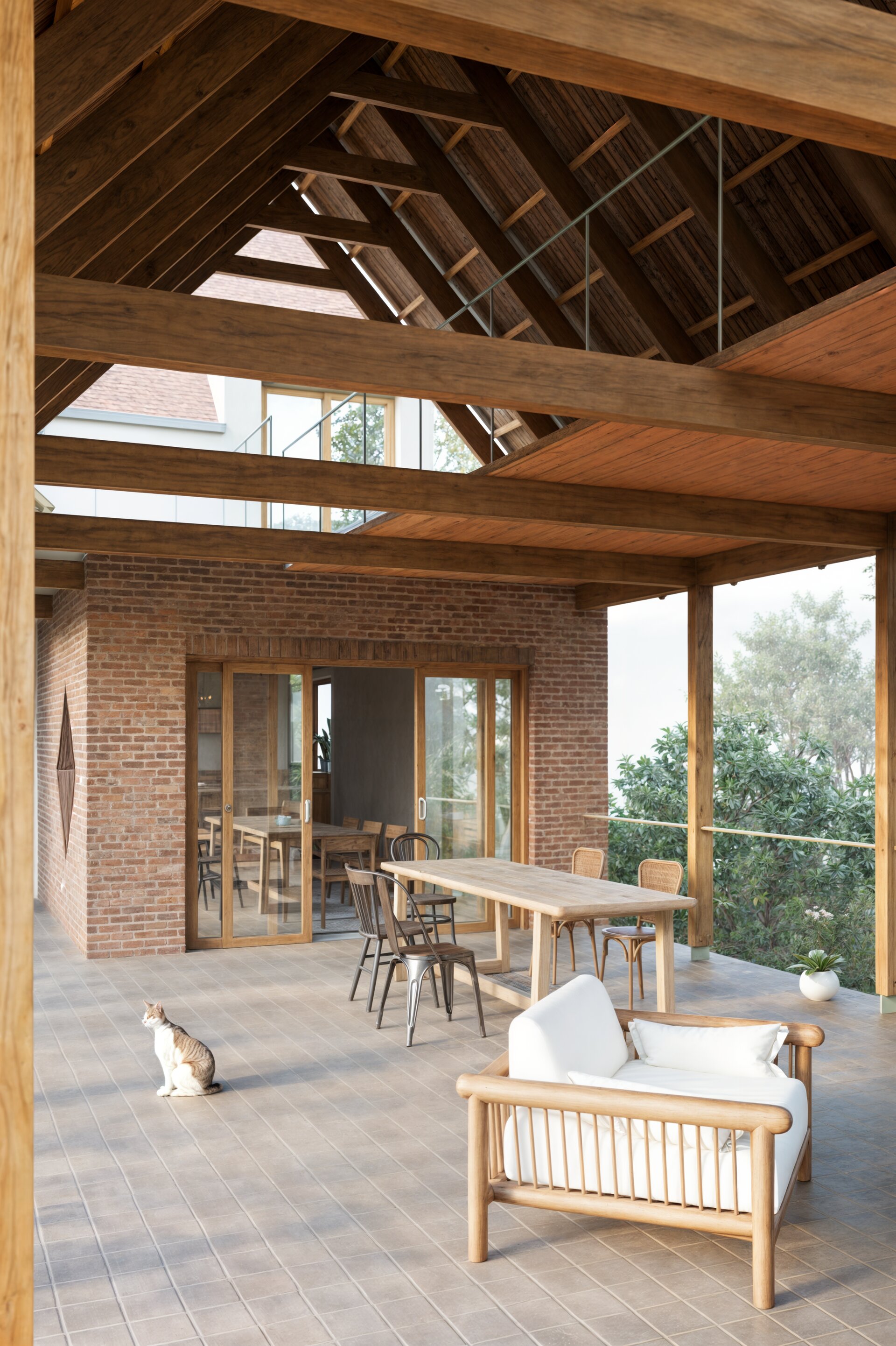
This secondary structure plays a key role in shaping the daily life of the new homestead. The covered terrace – a contemporary reinterpretation of the traditional porch– opens toward both courtyards. With its generous proportions, it offers a flexible-use space, ideal for long communal meals, gatherings, workshops, or simply shaded relaxation.
At the far end of the porch, the greenhouse and sauna are envisioned as spaces for retreat and restoration. The greenhouse can be accessed directly from the terrace or via an interior route that begins in the guesthouse, traverses the attic, and reaches the sauna – adding a playful, unexpected dimension to the spatial experience.
Together, these elements create a transition zone between old and new, inside and outside, bringing depth to a homestead that harmoniously blends rural tradition with the needs of contemporary living.
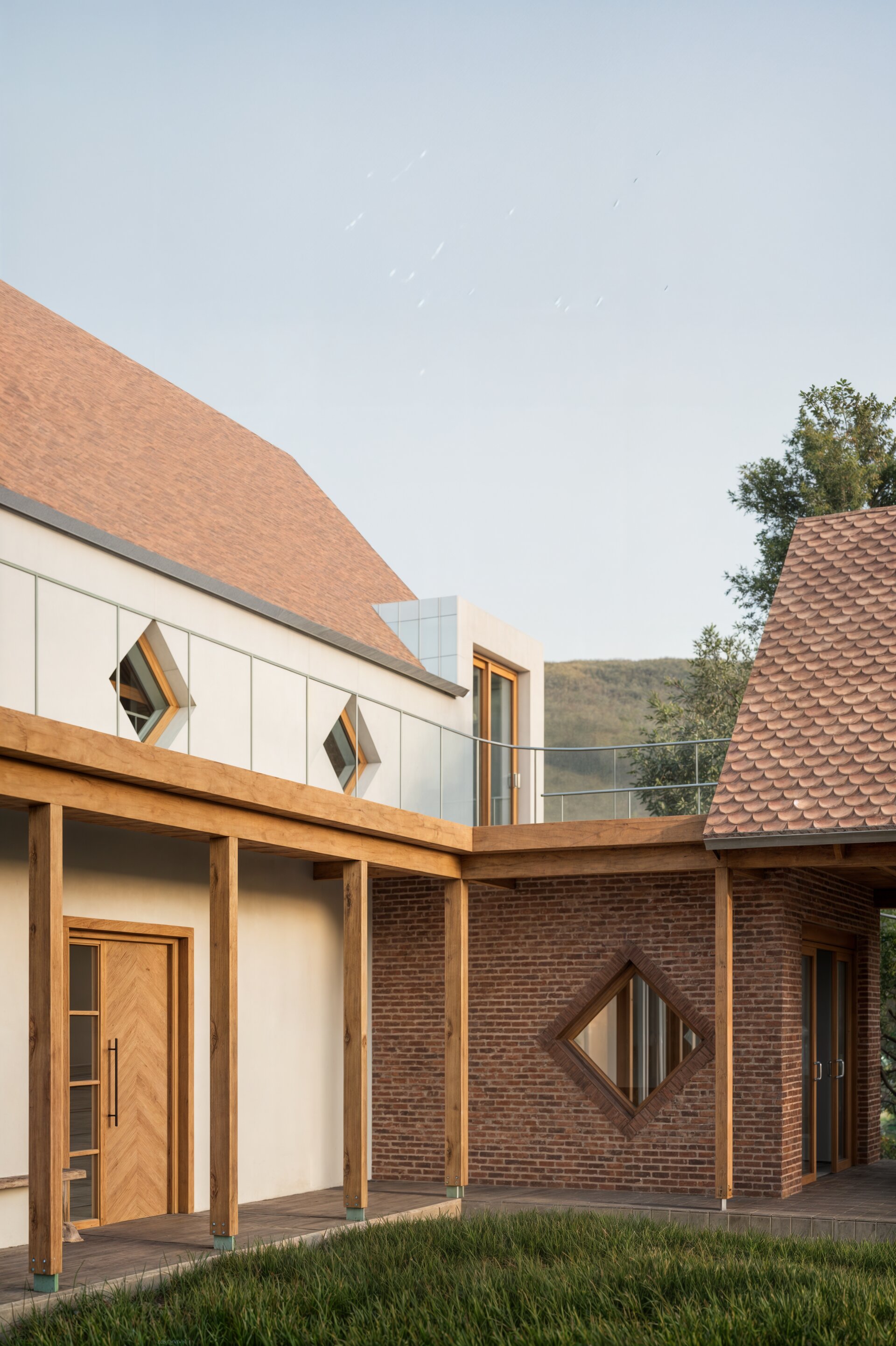
The materials chosen for the new constructions – wood, exposed brick, white plaster, and clay tile roofing – continue the vocabulary of the existing homestead in a natural yet contemporary and understated expression. The new is present, but does not dominate – it complements the ensemble through balanced contrast and a deep respect for place.
The project seeks not only to reactivate a traditional household, but also to support a slower lifestyle, grounded in nature and the memory of the land. It is an invitation to coexistence, continuity, and dialogue between past and present.
Residential Architecture

- Transylvanian guesthouse with greenhouse and sauna
- Omnia. Redefining Shelter
- House in the Outback
- Totem. Adaptive Structural System
- Tower house
- House NC
- Between Field and Sky: House in the Irish Rural Landscape
- An Interstitial House
- Creative residency – temporary dwelling in nature
- AR House
- Pod House
- House P
- Single-Family House in Cotroceni – Consolidation and Extension
- Atria Promenada
- CS23B House


