Single-Family House in Cotroceni – Consolidation and Extension
Authors’ Comment
Contemporary Living in Dialogue with Built Heritage
Architectural intervention on an interwar residence in Cotroceni, Bucharest
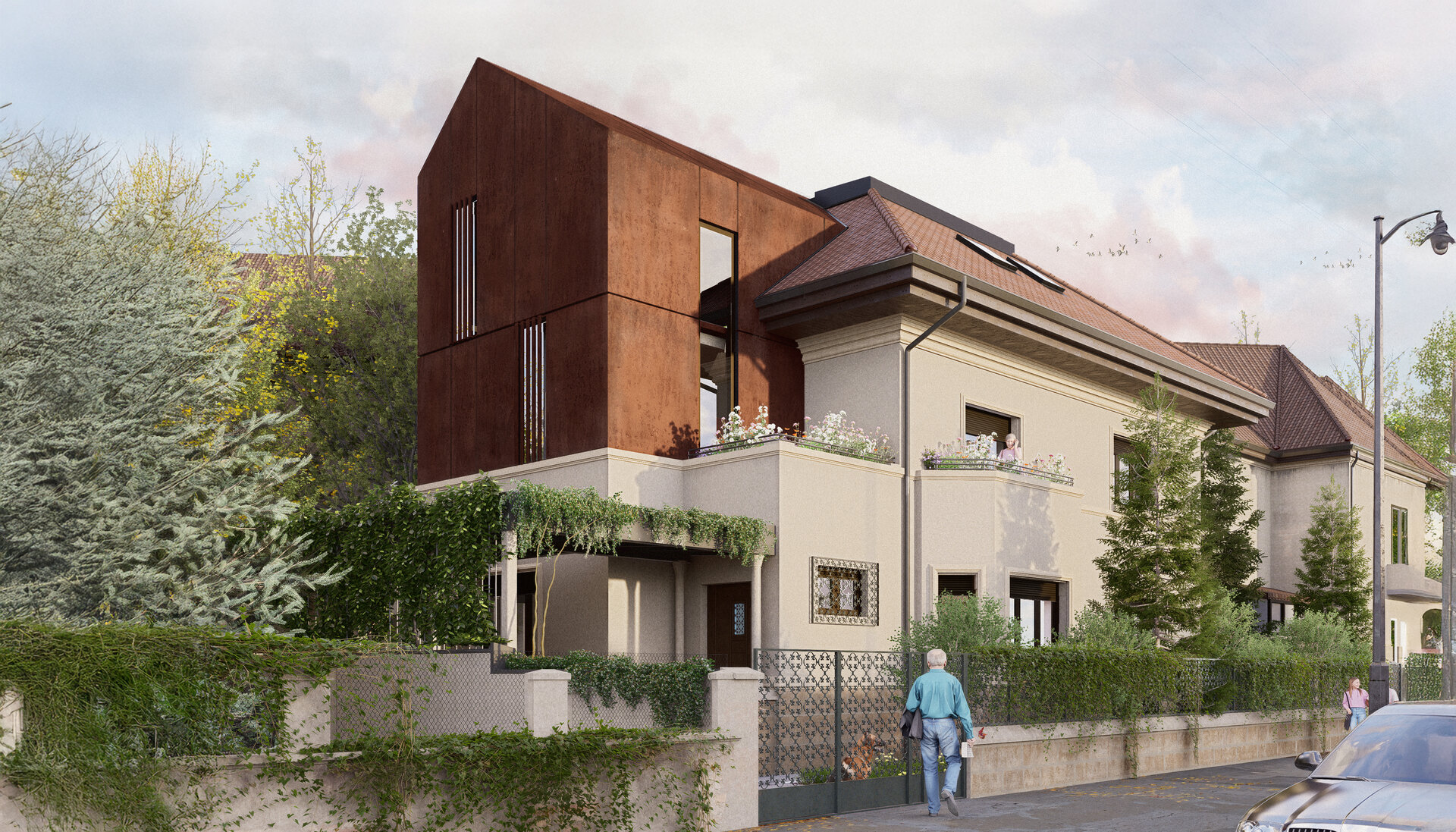
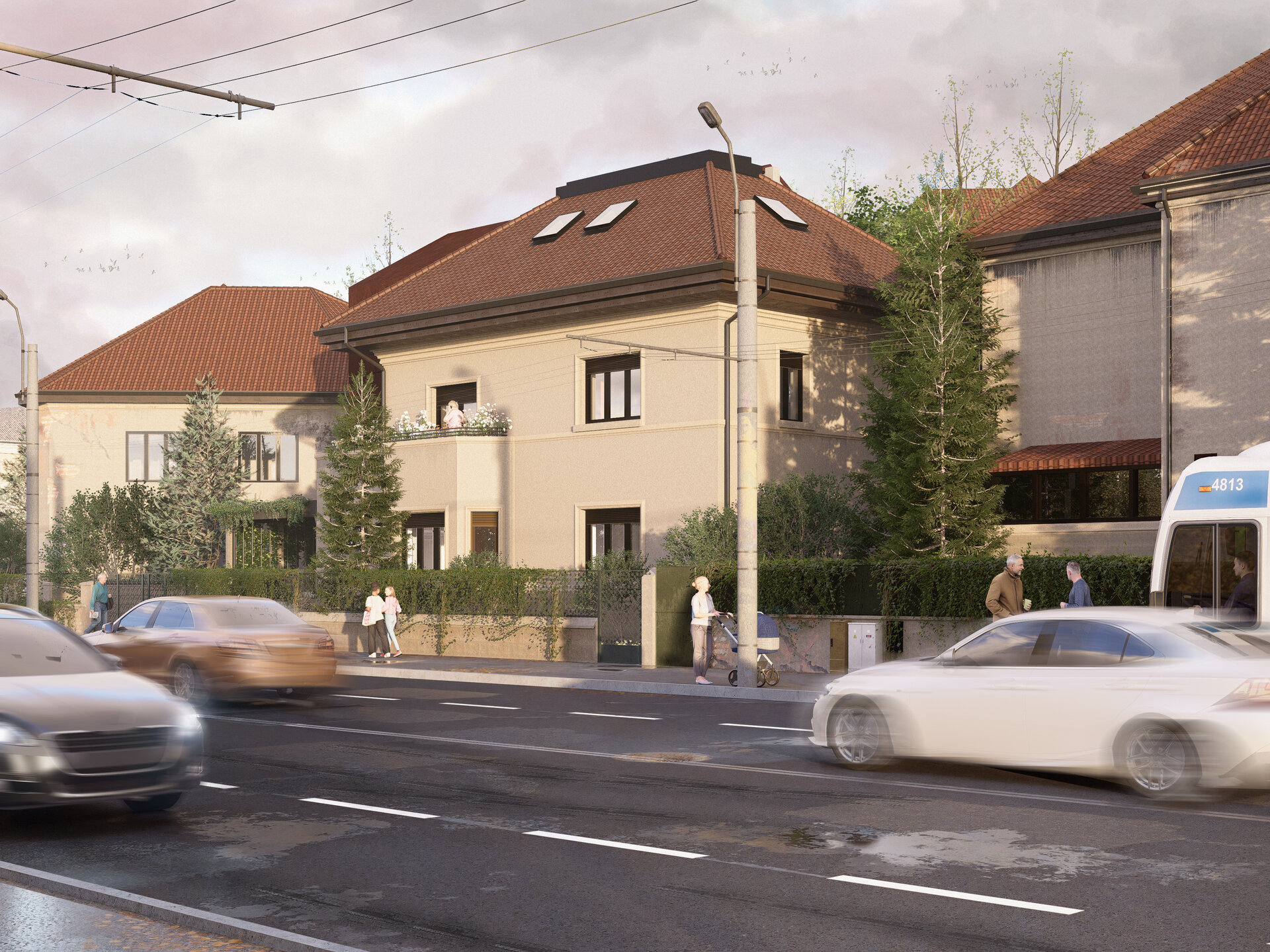
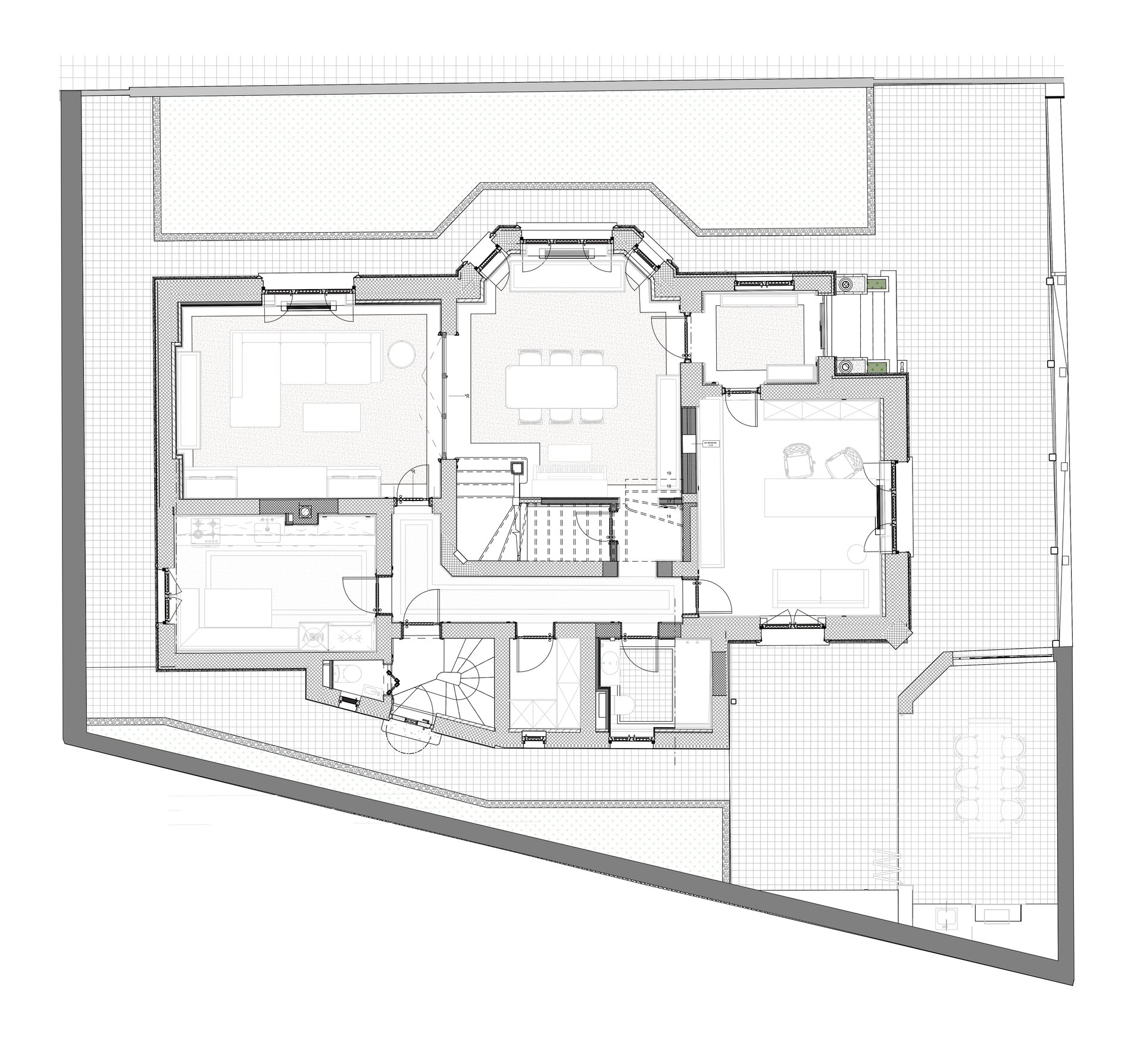
The project explores one of the key themes in contemporary urban architecture: how interventions in protected built environments can enhance existing heritage while embracing a contemporary architectural language. The case in point—an interwar house in the Cotroceni subdivision—offers an urban context with a clear identity, defined by a coherent street frontage and a balanced expression of architectural diversity.
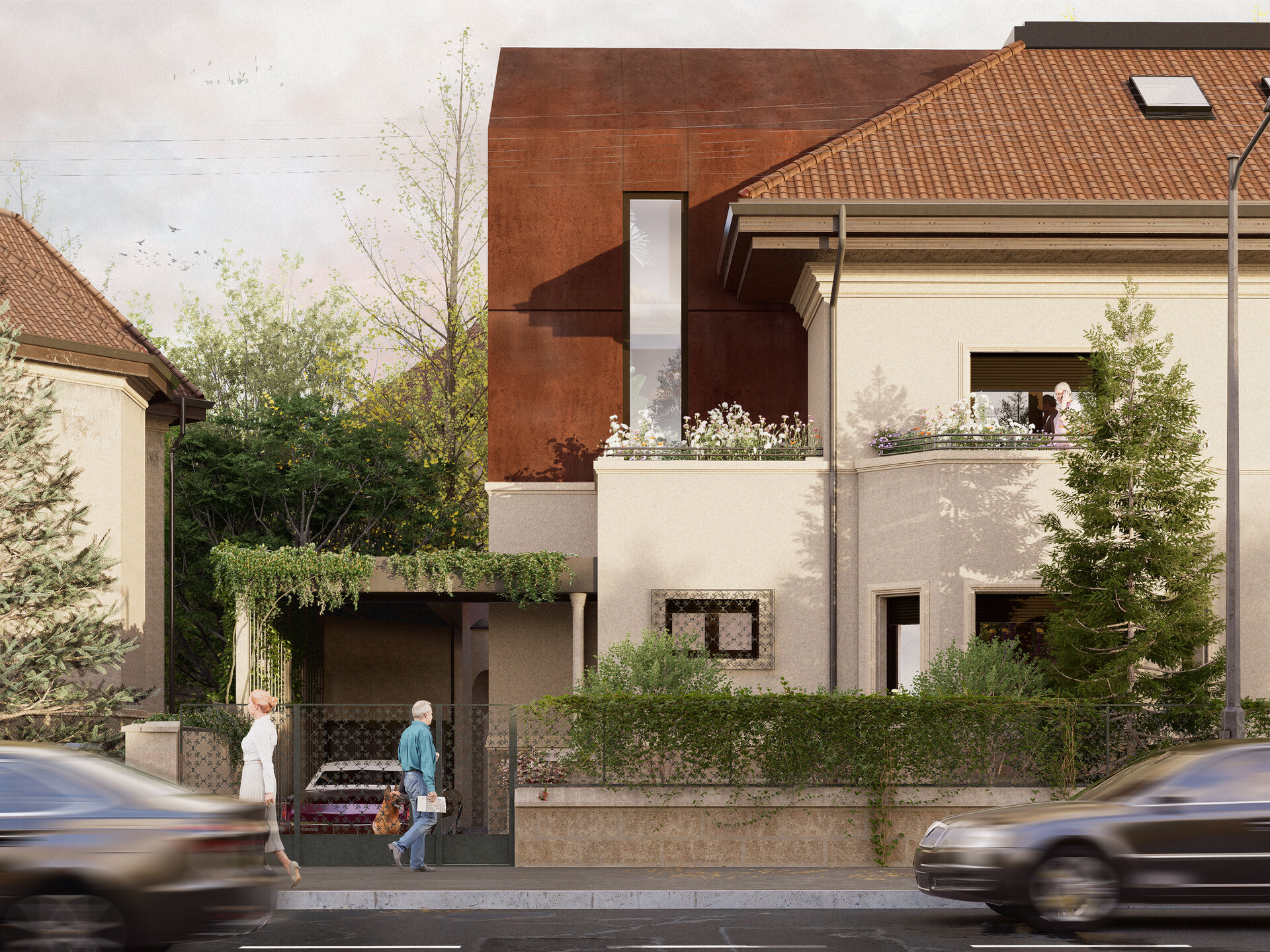
The intervention involves a carefully proportioned extension, respectfully integrated with the existing building and the rhythm of neighboring façades. The new volume is set back from the street alignment and delicately articulated using corten steel panels—a material that subtly evokes the passage of time.
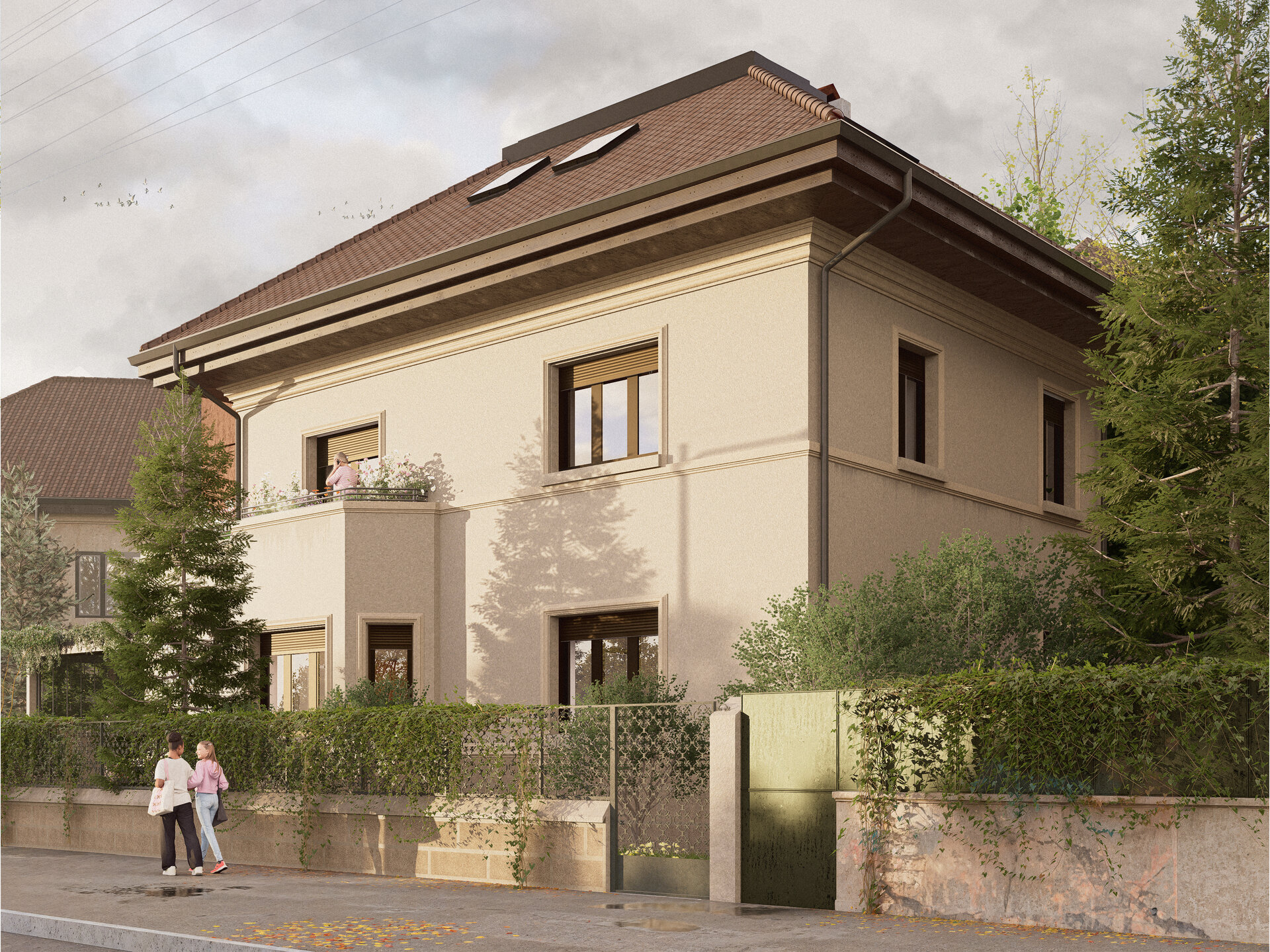
The familiar massing, materials inspired by the existing fabric, and discreet detailing create a natural transition between old and new. The intervention does not seek to stand out, but rather to maintain a harmonious relationship with its surroundings, contributing to the morphological continuity of the historic fabric and enhancing the quality of living. Through a balanced interplay of transparency, shading, greenery, and built mass, the dwelling sensitively responds to contemporary needs.
Beyond formal preservation, the project aims to reactivate the values of urban living, where architectural identity is preserved and naturally evolves. In this sense, the intervention becomes an example of contextual integration and thoughtful heritage renewal, aligned with present-day priorities: sustainability, accessibility, and functionality.
The presented images illustrate this balanced relationship between heritage and the contemporary, where the new does not compete with the old but supports its presence through controlled contrast and complementarity. It is an approach that favors coherent continuity over opposition, actively contributing to the vitality of urban architecture in protected areas.
Residential Architecture

- Transylvanian guesthouse with greenhouse and sauna
- Omnia. Redefining Shelter
- House in the Outback
- Totem. Adaptive Structural System
- Tower house
- House NC
- Between Field and Sky: House in the Irish Rural Landscape
- An Interstitial House
- Creative residency – temporary dwelling in nature
- AR House
- Pod House
- House P
- Single-Family House in Cotroceni – Consolidation and Extension
- Atria Promenada
- CS23B House


