An Interstitial House
Authors’ Comment
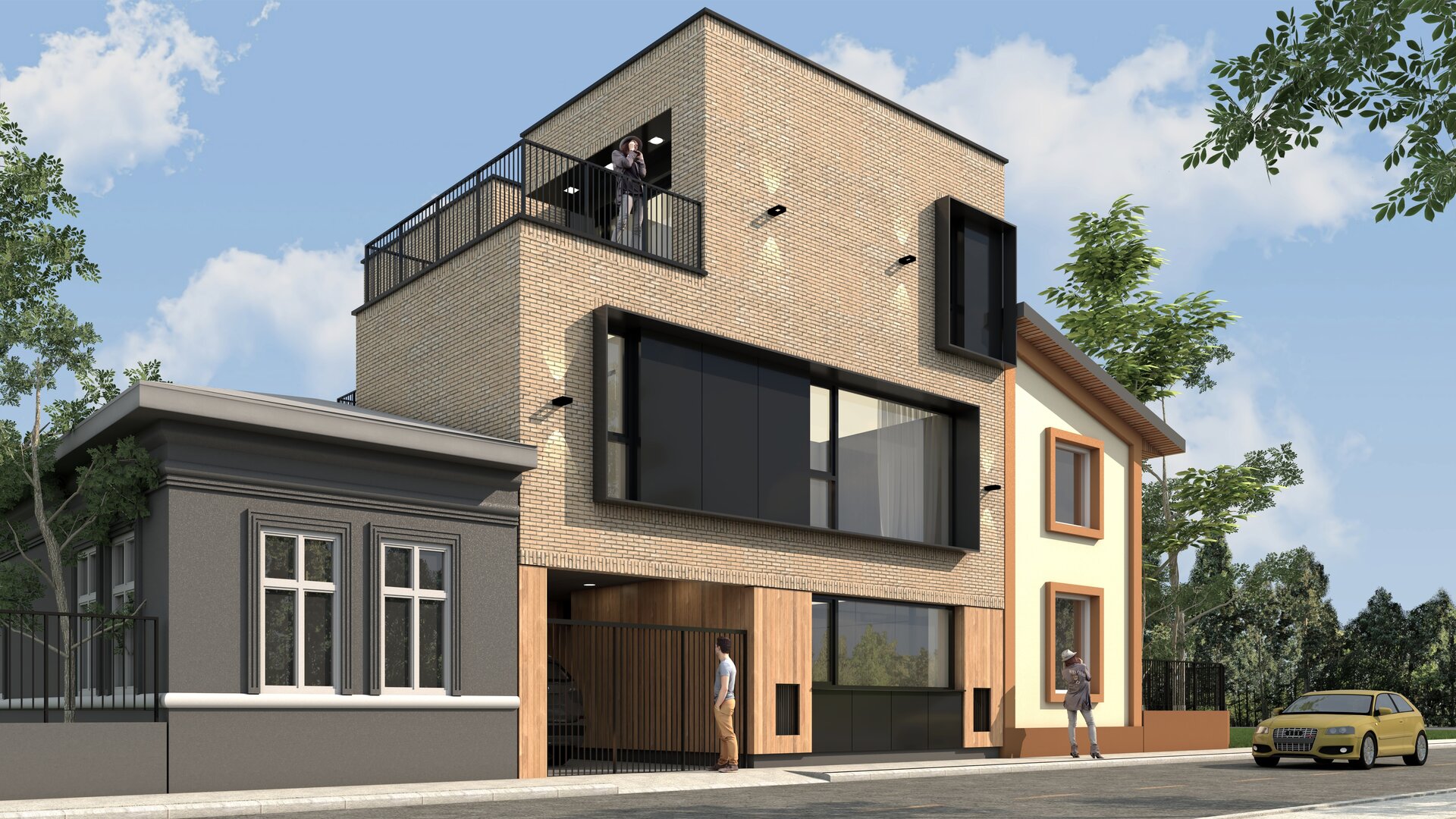
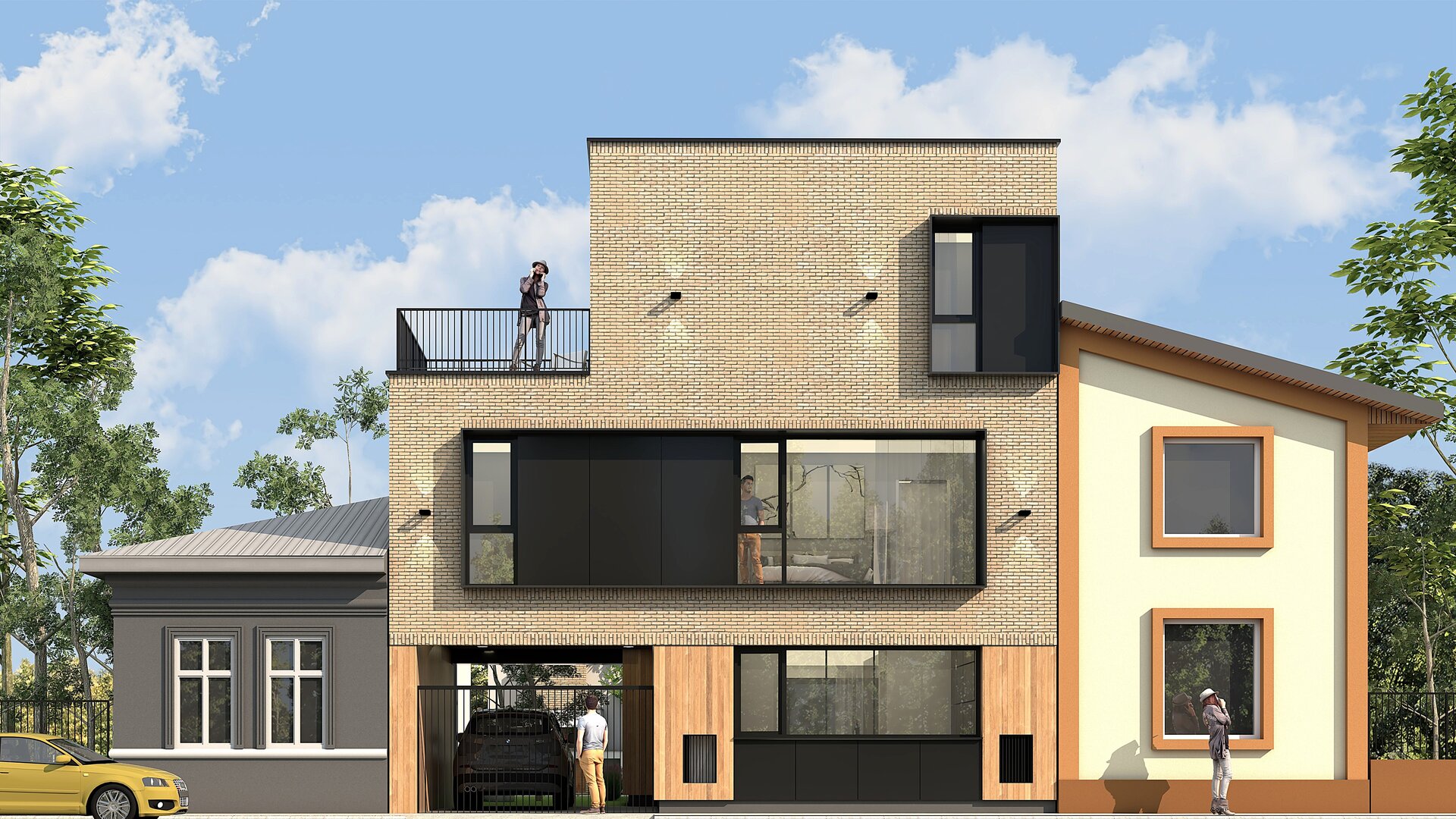
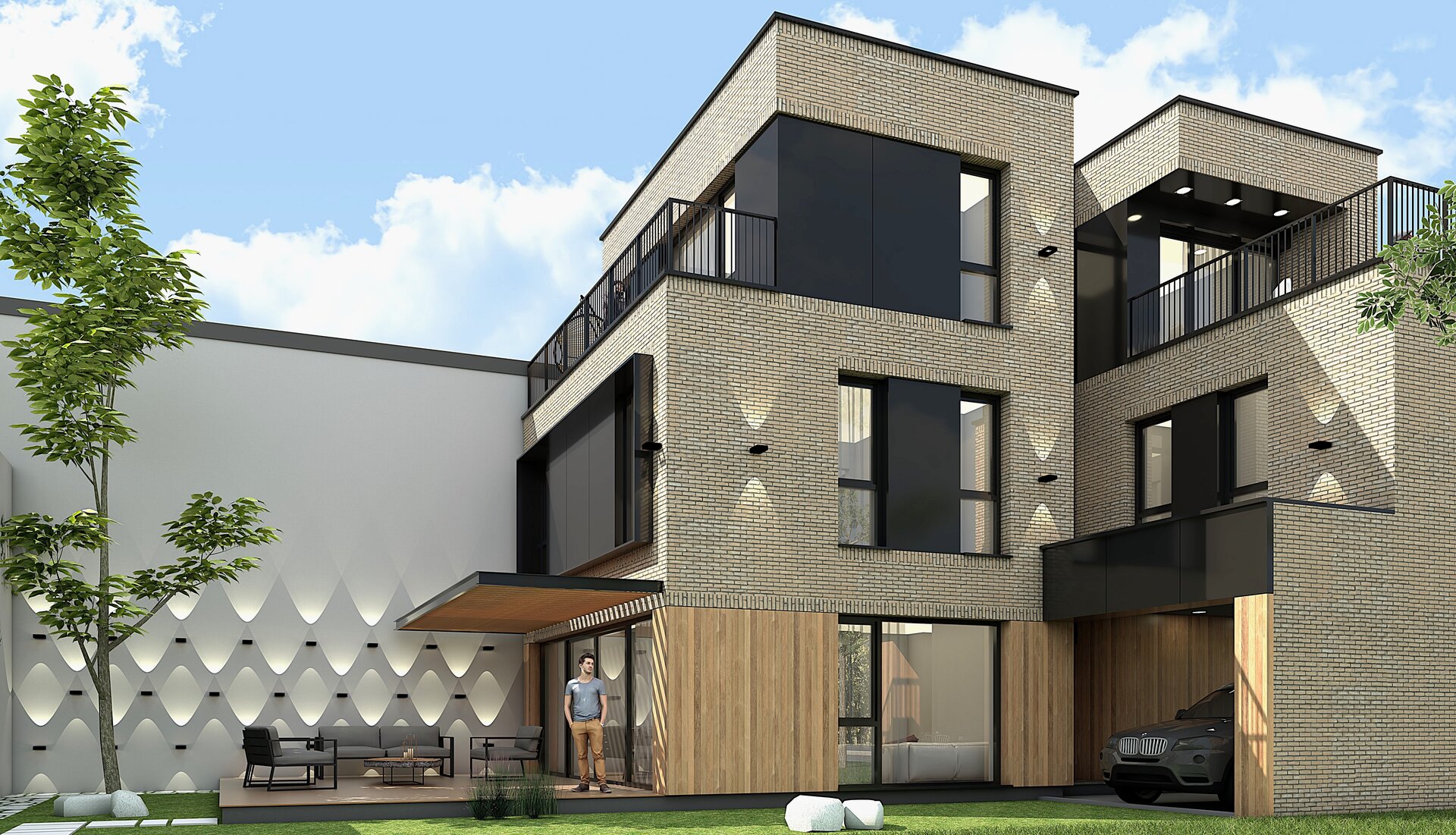
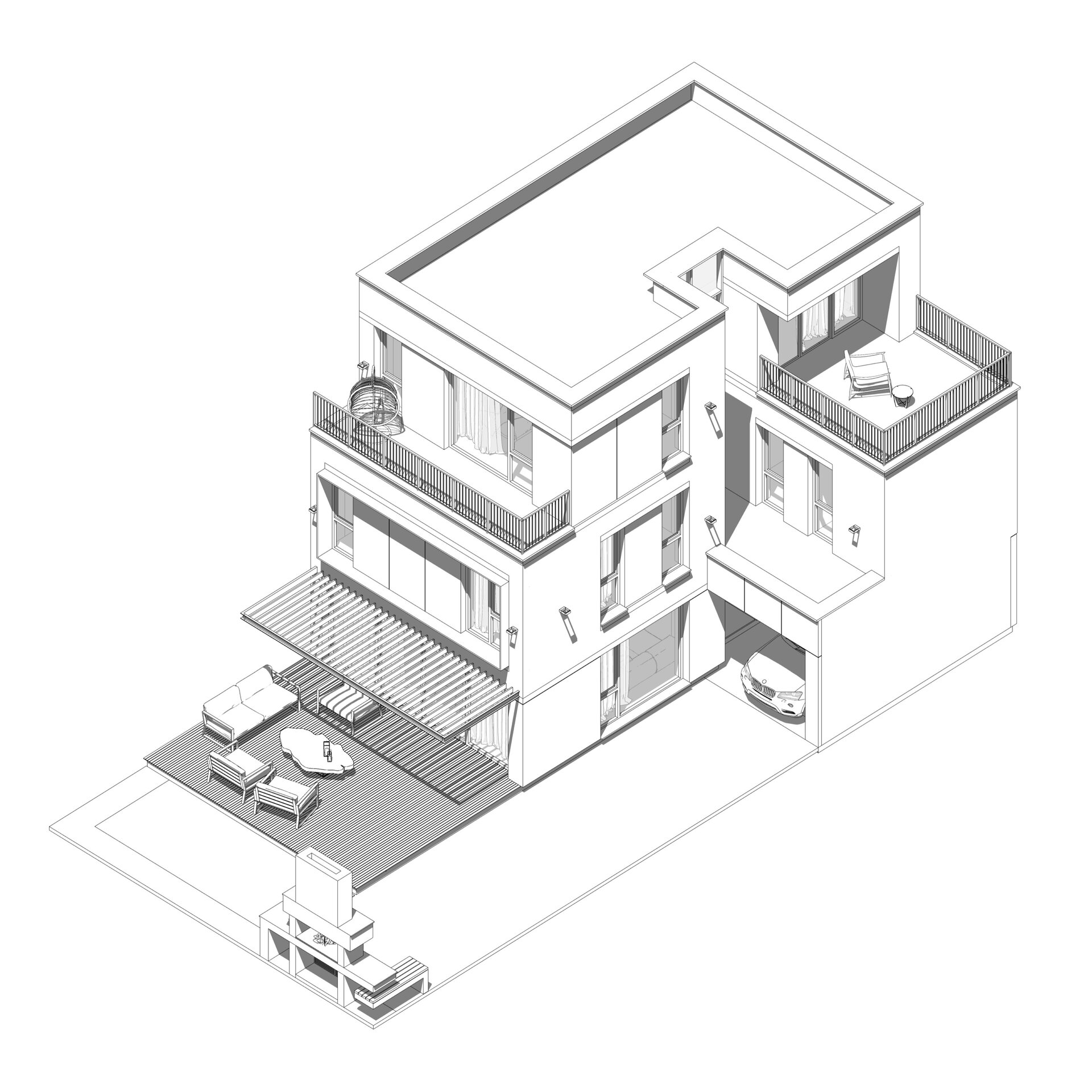
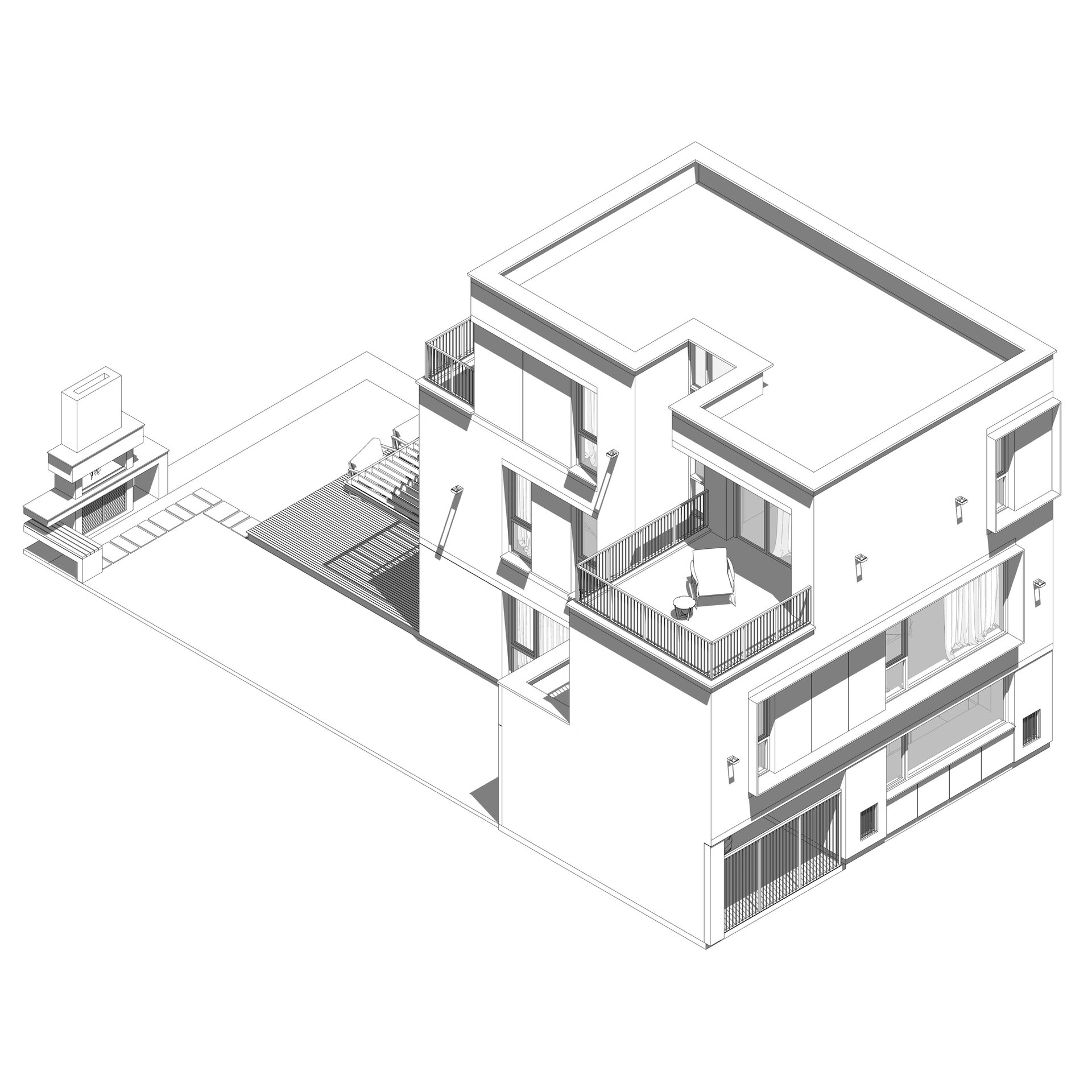
The project proposal is a compact single-family residence located in the heart of Bucharest, on a narrow 200 sqm urban plot. The site is typical for many parcels in Bucharest’s older residential districts, bordered by a patchwork of early 20th-century "wagon houses" and newer low-rise constructions. Flanked on both sides by existing buildings with blind walls, the plot offers no opportunity for lateral openings, presenting a typical urban infill condition common throughout the city.
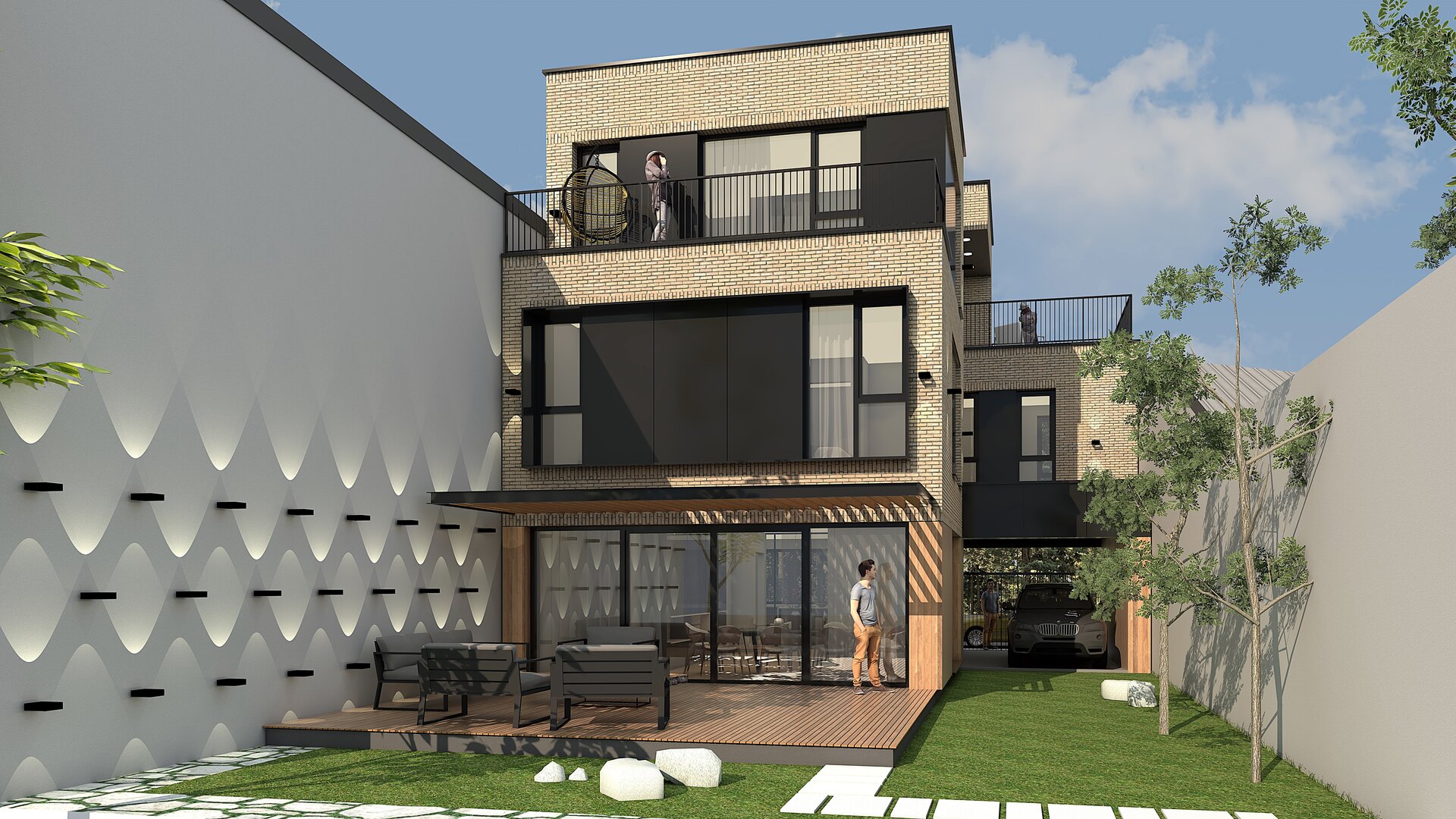
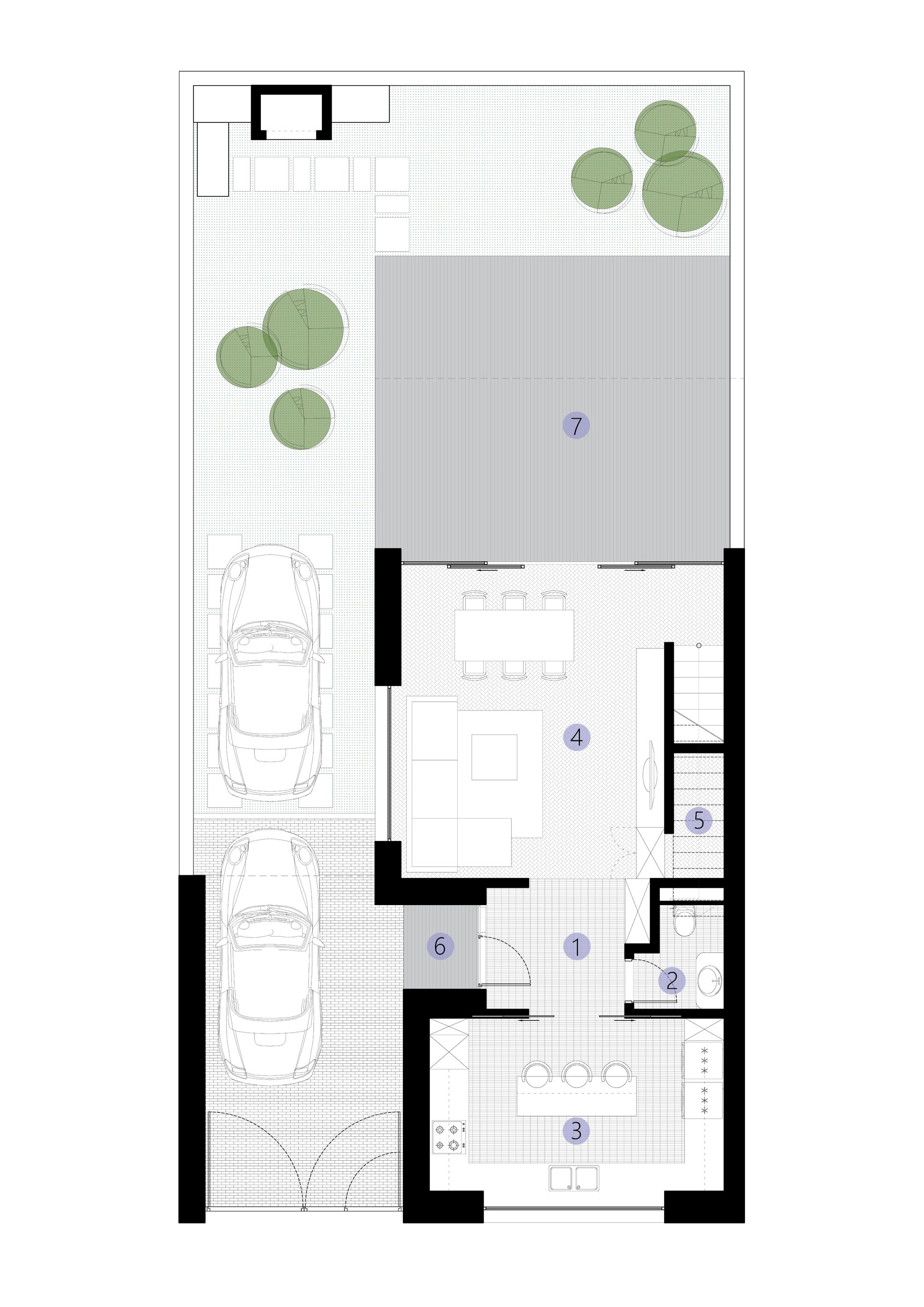
In response to these constraints, the house is designed as a party-wall structure, fully attached to the neighboring buildings on both the left and right. This strategic move maximizes the available footprint while respecting the urban fabric. A modest rear courtyard provides a rare and valuable pocket of private outdoor space, serving as the home’s primary source of light, greenery, and exterior connection. The layout orients key living spaces toward this courtyard, fostering both privacy and intimacy within a dense urban setting.
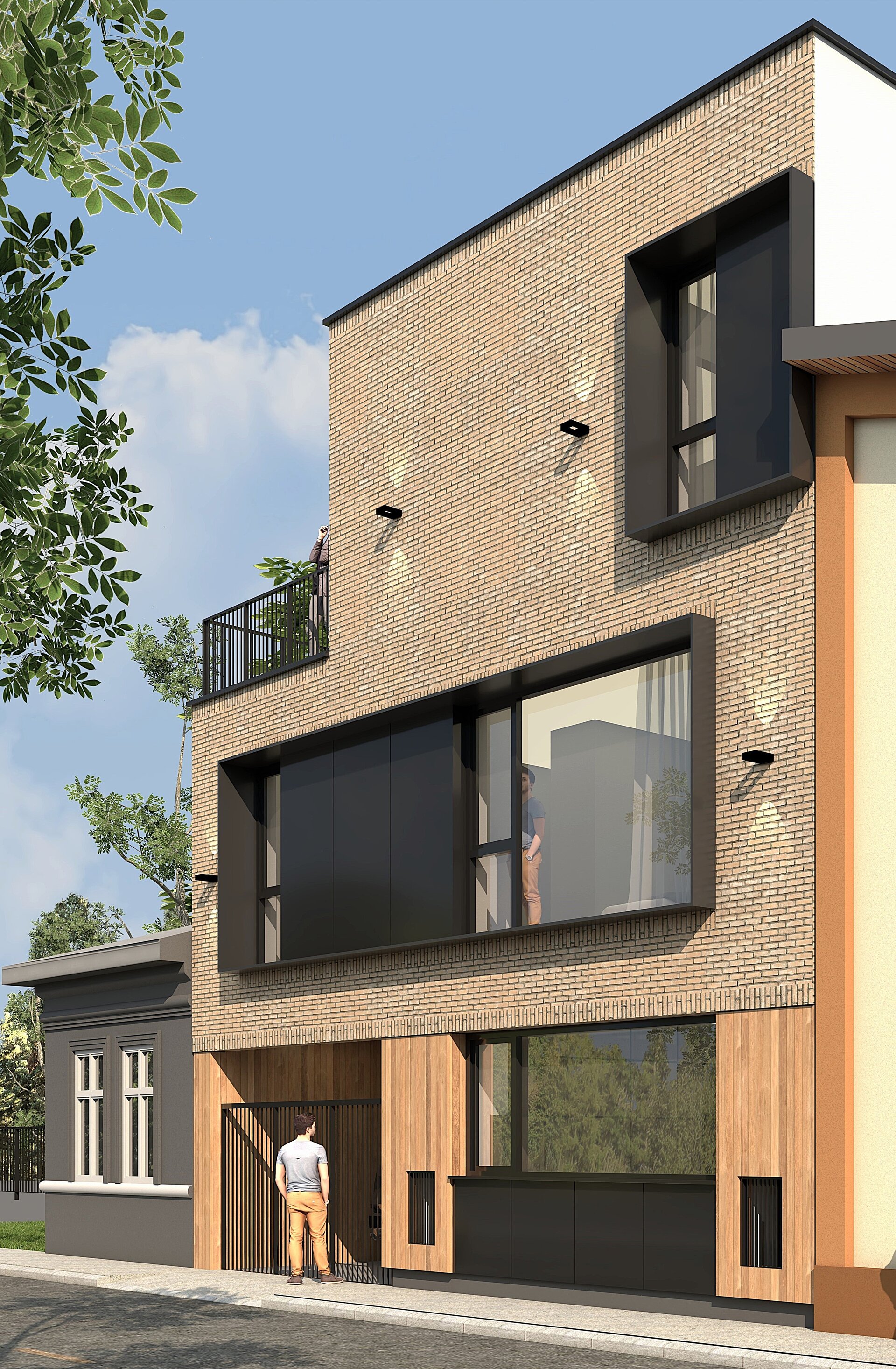
The volume is modern yet restrained, maintaining a contextual dialogue with its surroundings without resorting to mimicry. Clean lines, a flat roof, and generous glazed surfaces define the exterior, while subtle material contrasts and recessed balconies bring depth and rhythm to the façade. The visual lightness of the upper levels is carefully balanced against the solidity of the street-facing elevation.
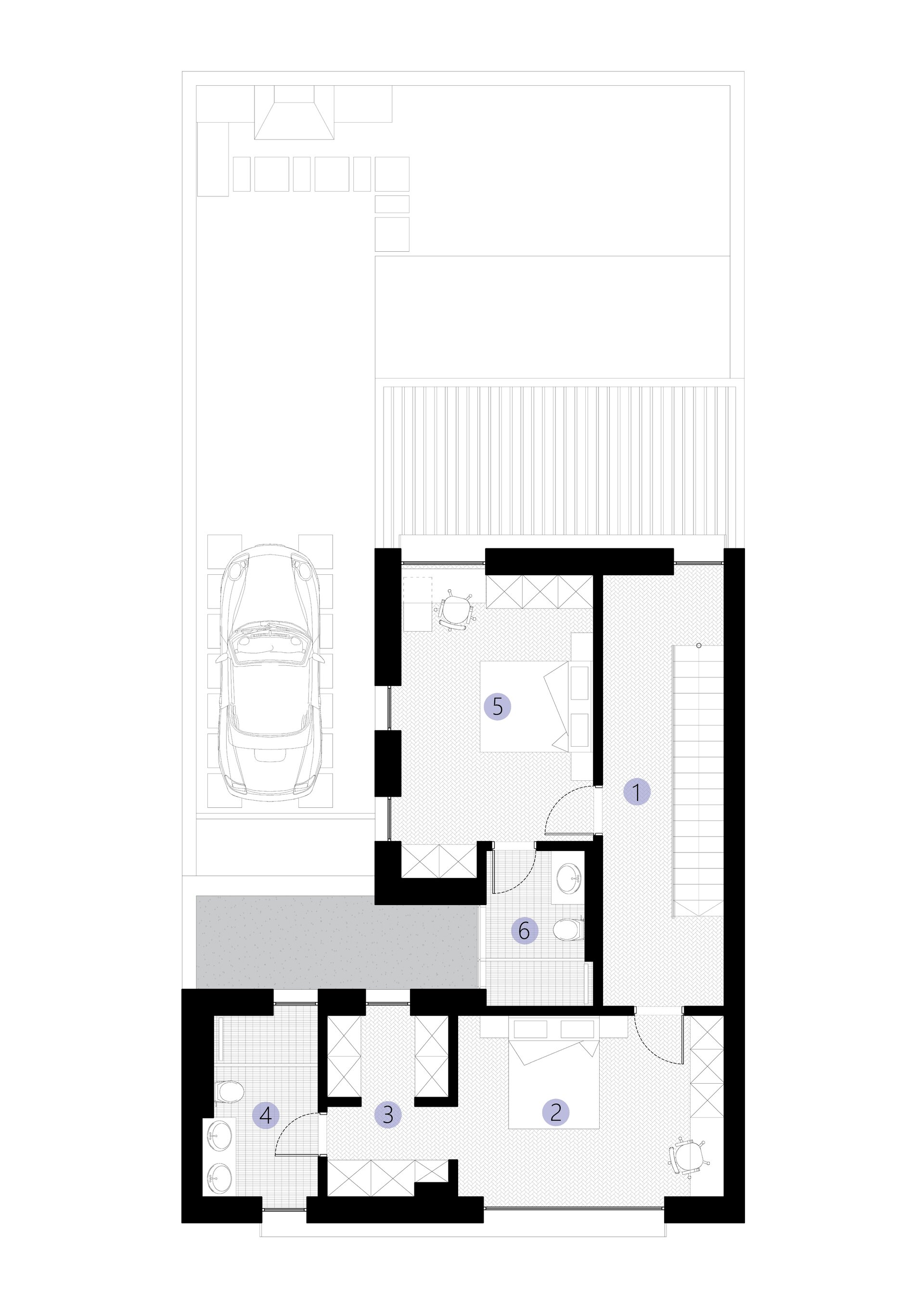
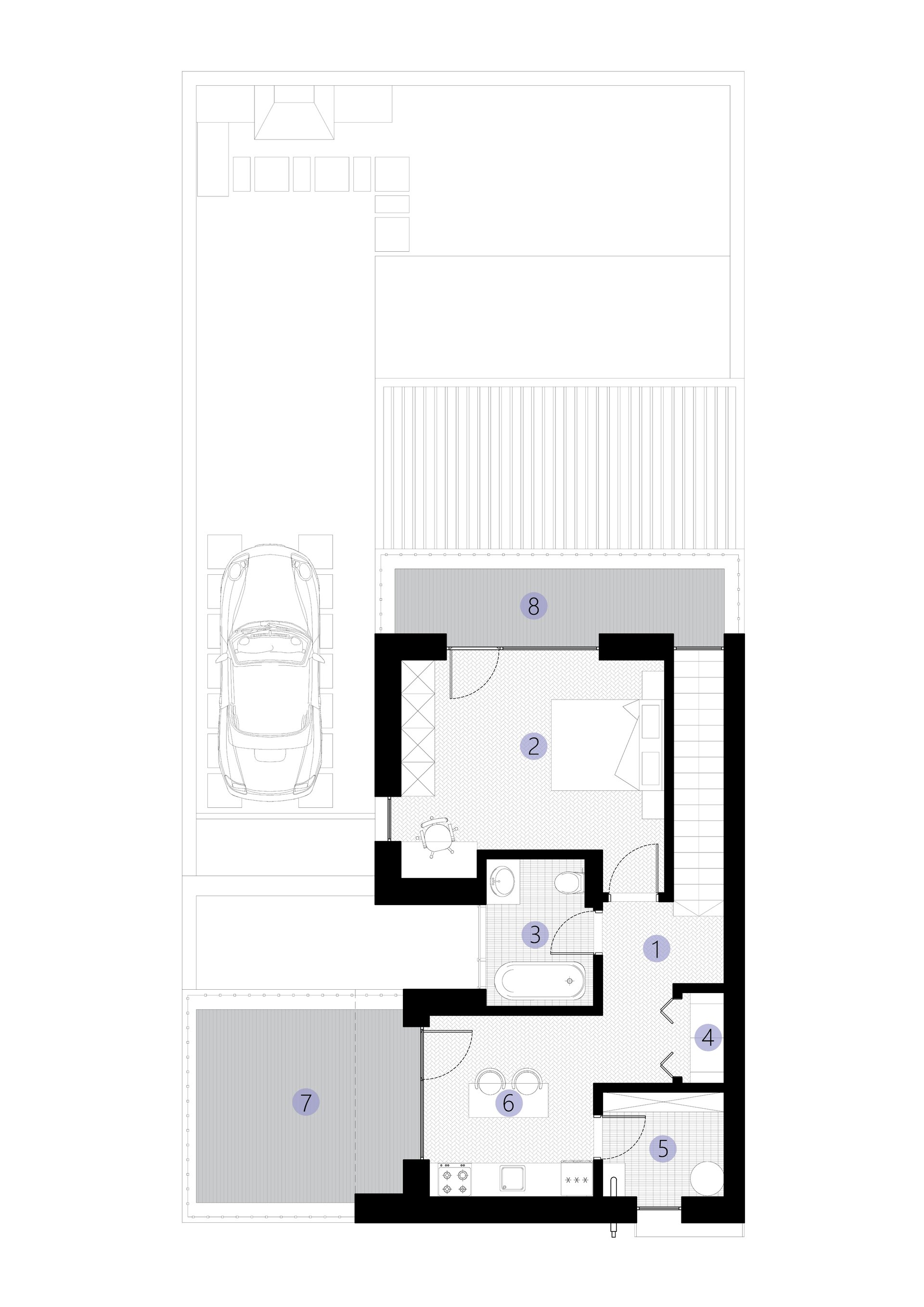
Inside, the plan is organized efficiently, tailored to the narrow width of the plot. The ground floor is primarily devoted to shared family spaces, while private areas are vertically stacked above, culminating in a rooftop terrace that offers unexpected openness in an otherwise compact footprint.
The project integrates sustainability principles through both architectural design and building systems. Passive strategies such as optimized building orientation, high-efficiency insulation, and natural lighting significantly reduce energy demand. The building envelope was designed to balance transparency and thermal performance, enhancing occupant comfort while minimizing heat gain and loss.
From an M&E perspective, the systems are conceived to minimize environmental impact and improve long-term efficiency: high-efficiency HVAC systems, LED lighting, and smart control systems ensure reduced energy consumption and improved operational performance. Water-saving fixtures and the preparation for integration of photovoltaic panels support long-term sustainability goals. Materials were selected with consideration for durability, low environmental impact, and regional availability, further reinforcing the building’s sustainable footprint.
The “Interstitial House” serves as a sensitive and scalable prototype, a replicable urban solution for similar narrow plots across Bucharest, offering a viable model for infill development that respects the city’s existing character. By addressing the particularities of narrow urban sites with thoughtful design, the project demonstrates that high-quality living environments are achievable even within restrictive and complex contexts.
Residential Architecture

- Transylvanian guesthouse with greenhouse and sauna
- Omnia. Redefining Shelter
- House in the Outback
- Totem. Adaptive Structural System
- Tower house
- House NC
- Between Field and Sky: House in the Irish Rural Landscape
- An Interstitial House
- Creative residency – temporary dwelling in nature
- AR House
- Pod House
- House P
- Single-Family House in Cotroceni – Consolidation and Extension
- Atria Promenada
- CS23B House


