- Nomination for the “Portfolio Architecture / Residential Architecture” section
House in the Outback
Authors’ Comment
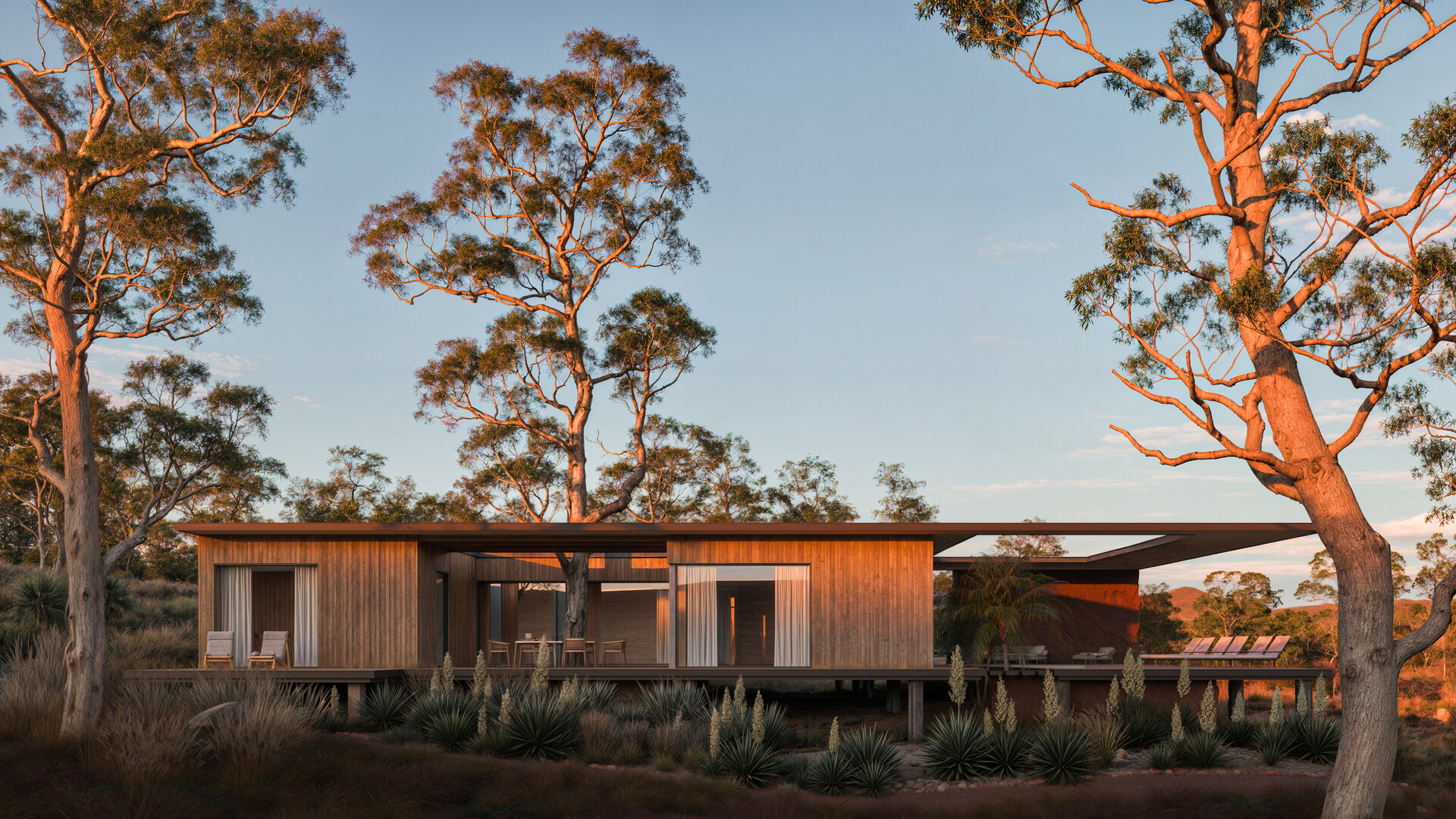
House in the Outback is the result of a continuous dialogue our studio maintains with the Australian landscape – a dwelling that does not simply sit on the land, but seems to emerge from it. Positioned on an arid ridge above the coastal scrub, this house is both a retreat and a statement: a celebration of remoteness, material authenticity, and landscape-anchored architecture.
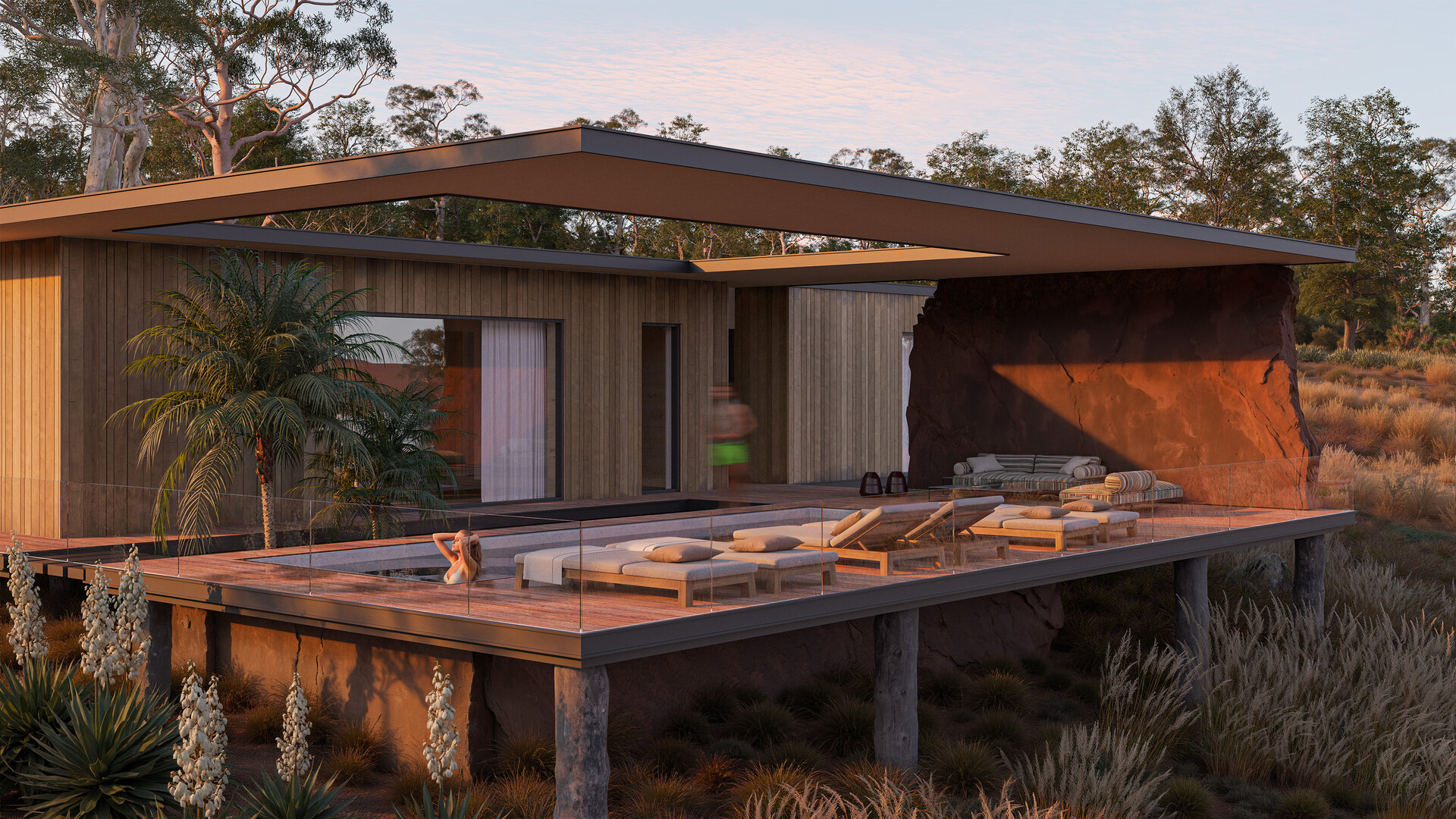
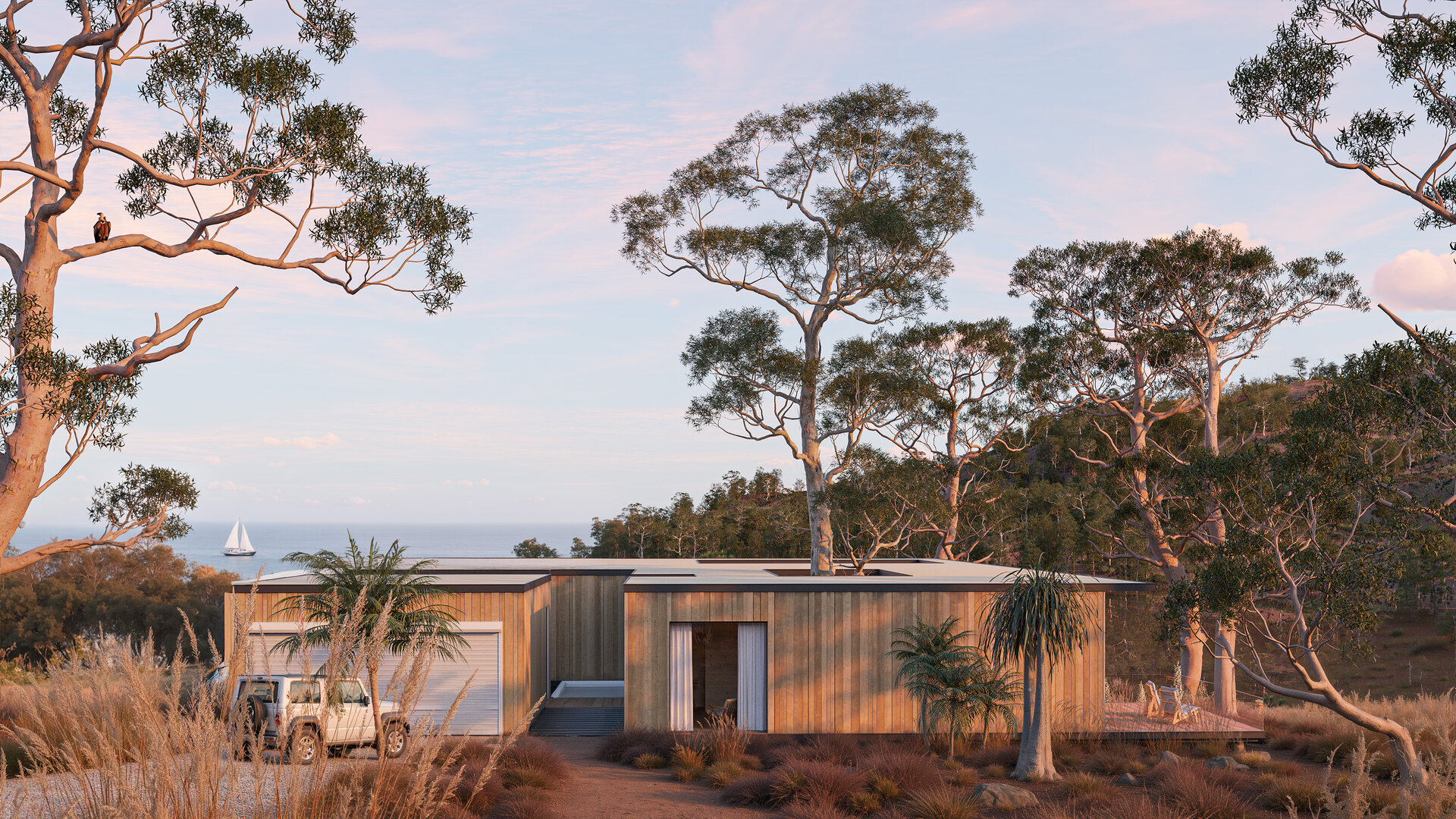
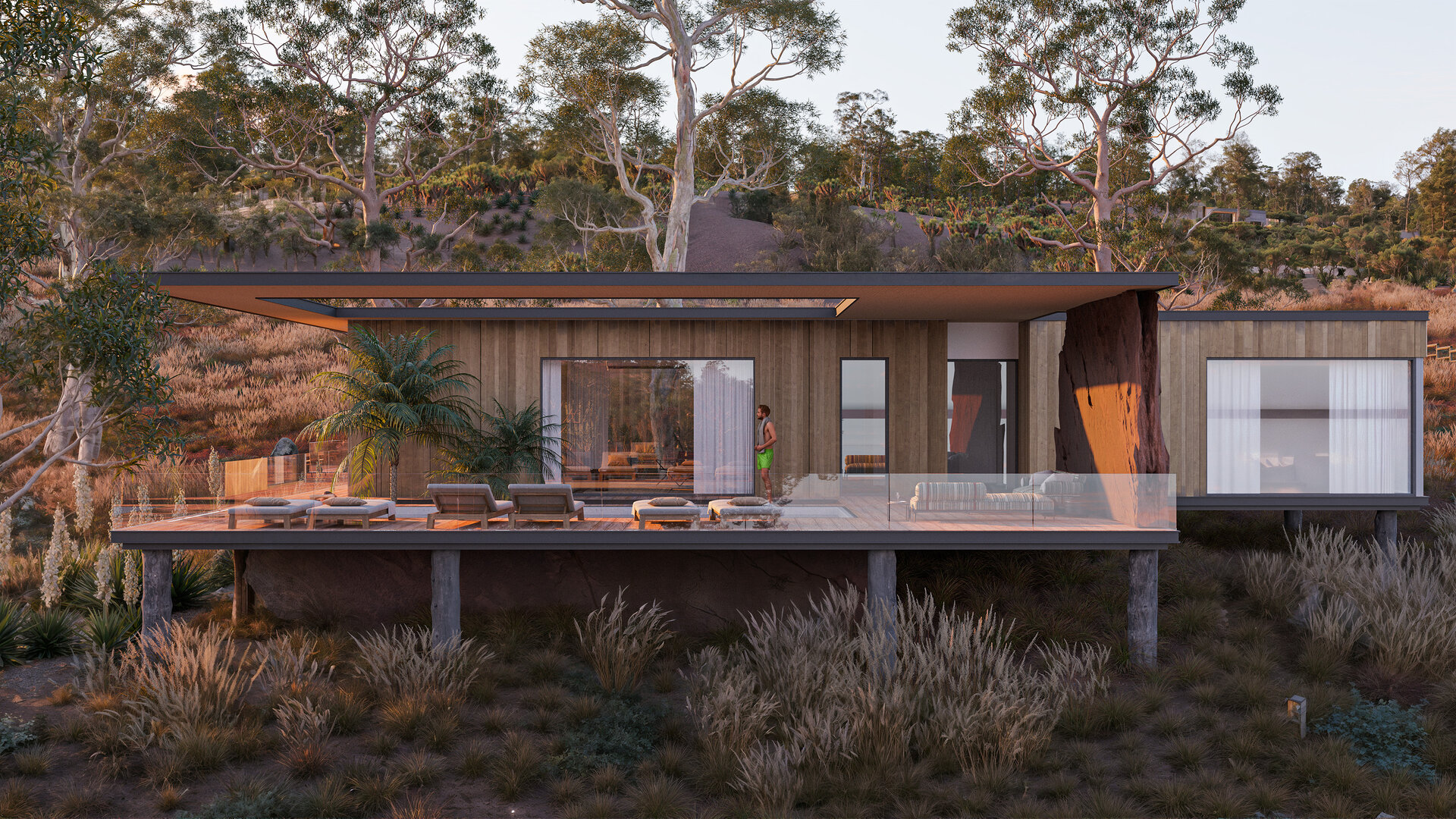
Our initial intention was to yield to the terrain. The land is characterized by rugged topography and dramatic vegetation – mature eucalyptus trees, rocky outcrops, native grasses. Rather than imposing a harsh presence, we allowed the house to integrate discreetly, elevated on stilts to protect the tree roots and native vegetation. This strategy not only reduces the ecological footprint but makes the dwelling appear suspended above the ground, touched only by air and light.
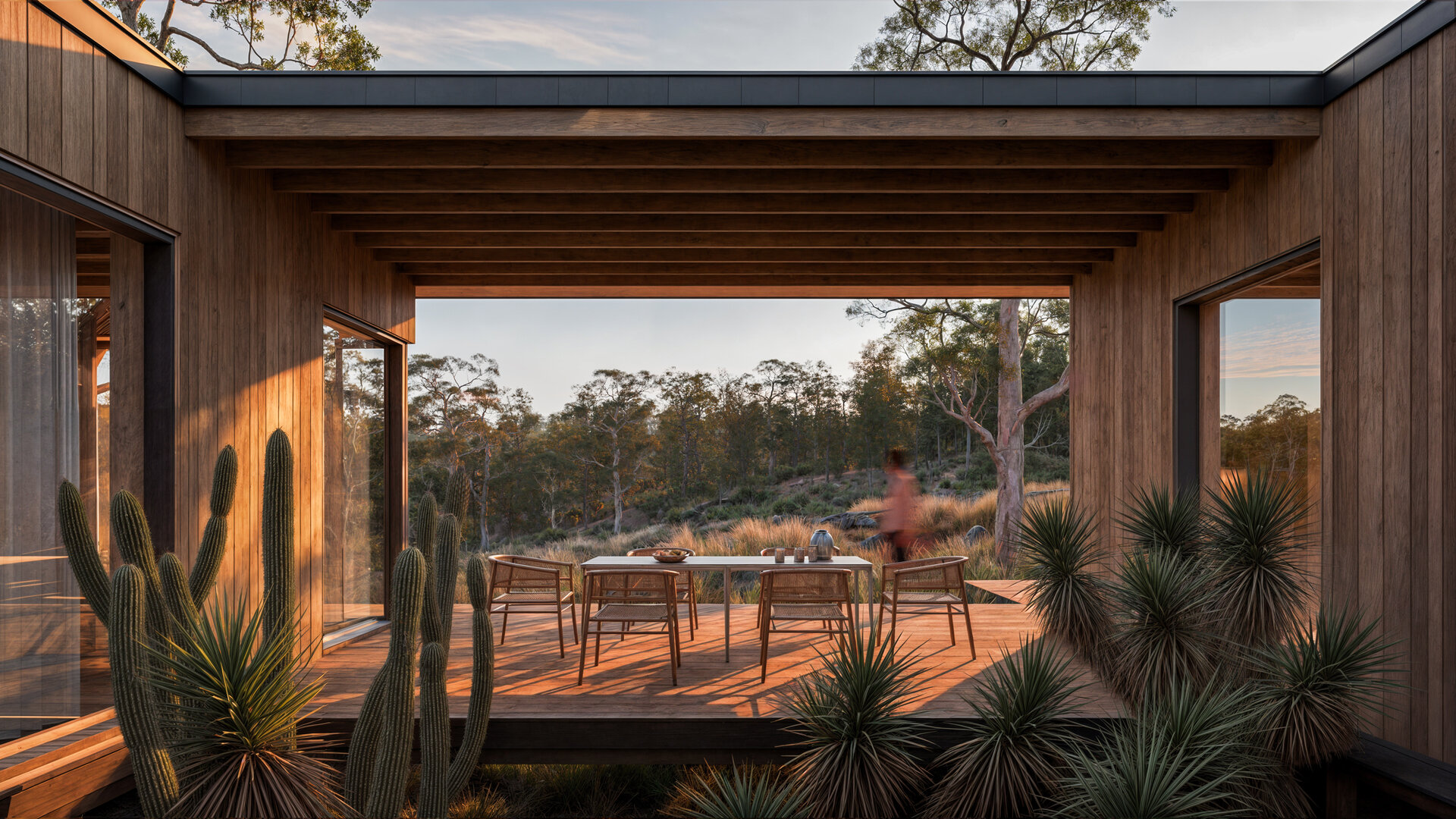
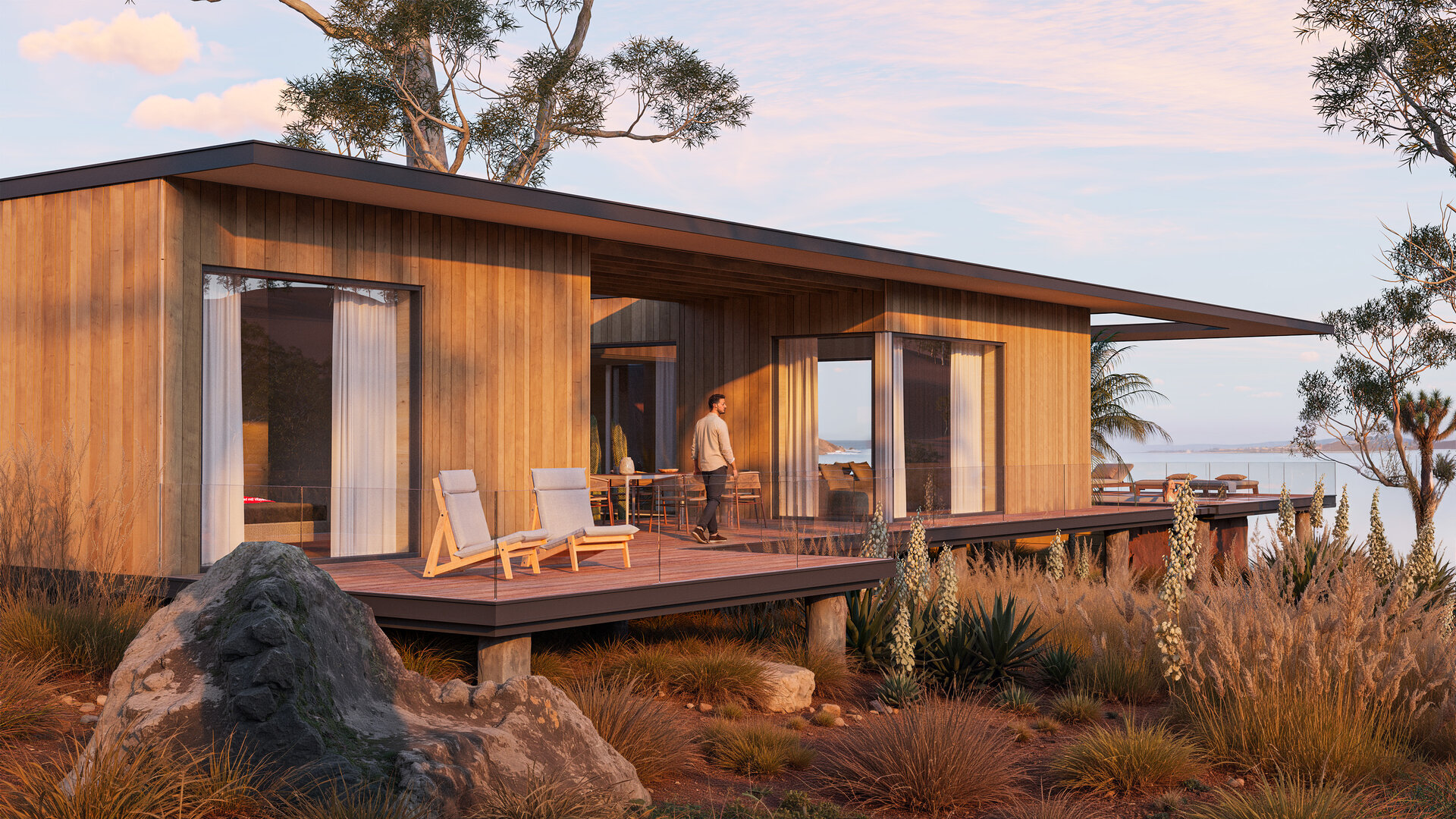
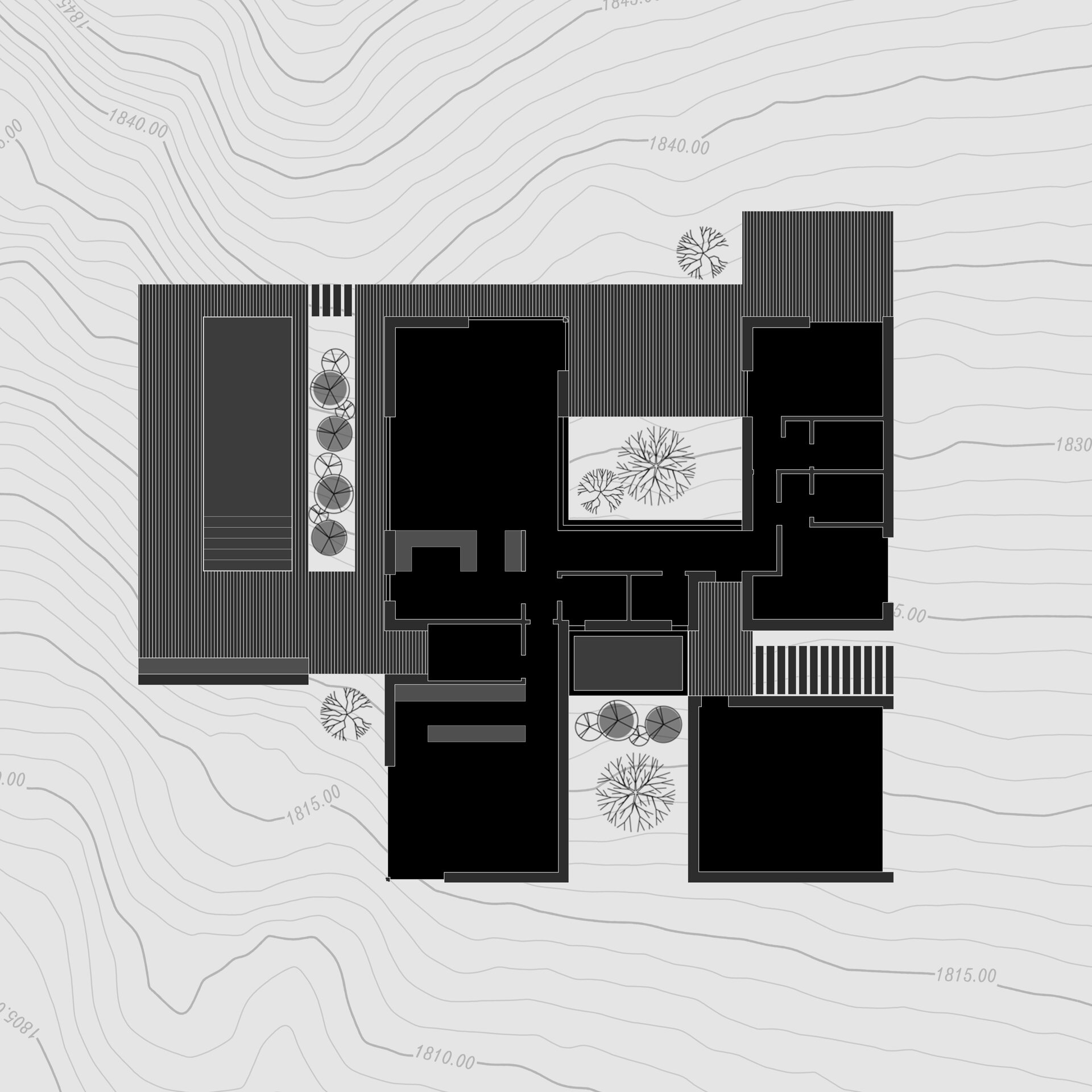
The architecture is linear and low-lying, a deliberate choice to harmonize with the horizontality of the landscape. The plan unfolds as a series of pavilions connected by walkways and terraces, creating a rhythm between enclosed and open spaces, between intimacy and outward openness. This strategy provides natural ventilation, frames carefully curated views, and celebrates the cinematic play of light and shadow.
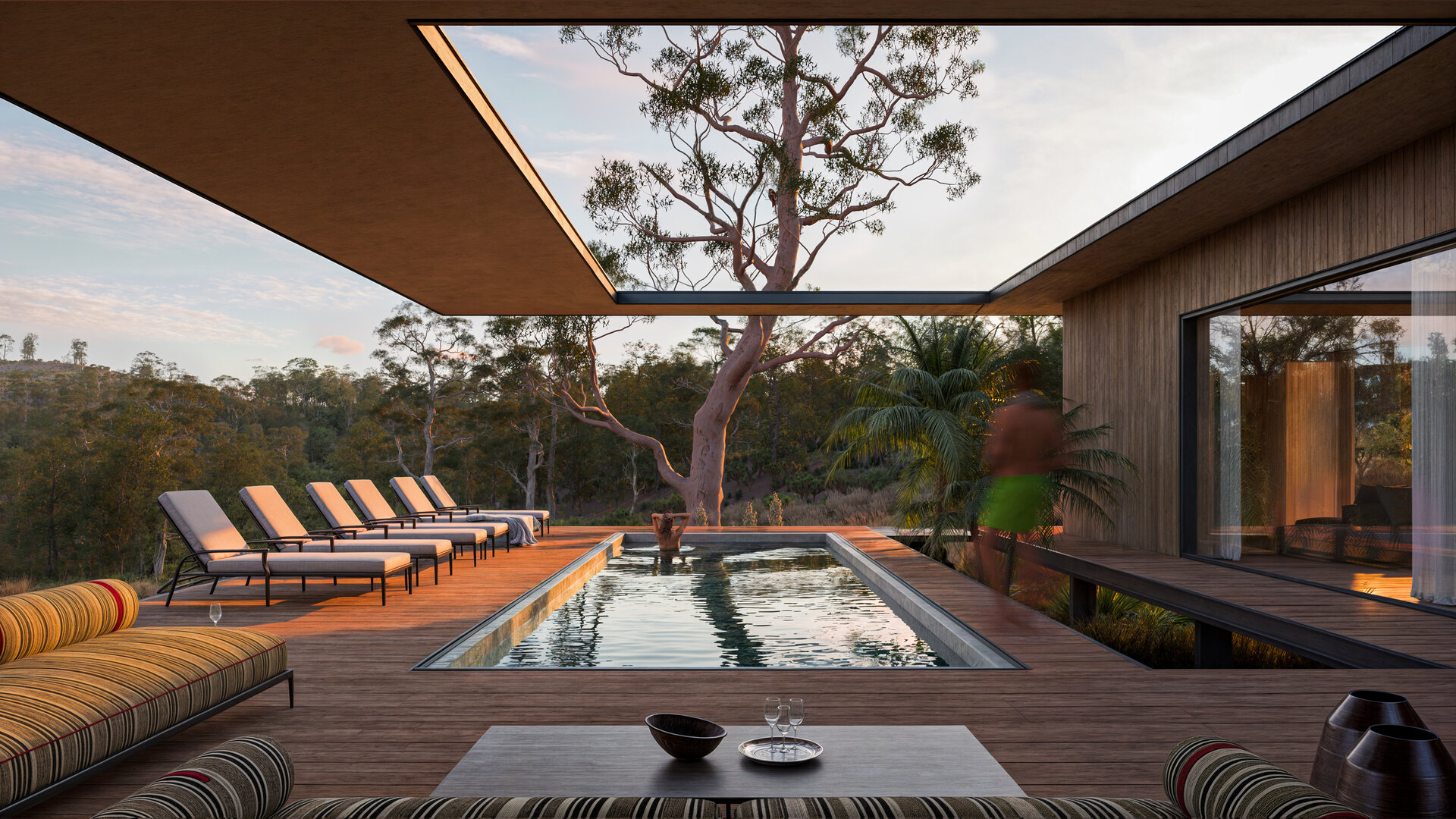
At the heart of the house is an open courtyard – an outdoor room that becomes a space for daily rituals. It is flanked by living areas and bedrooms, each with sliding glass walls that dissolve the boundary between interior and exterior. A defining element of the home is the wide roof, with carefully positioned openings that allow trees to pierce through and the sky to flood the interior. It provides shade while highlighting natural elements as central architectural characters.
From a material standpoint, we chose a restrained, natural palette. Rammed earth, natural timber façades, and oxidized steel – all reflect the surrounding tones: the red of the soil, the grey of bark, and the golden hues of grasses. These materials are left in their raw form so they can age with dignity, supporting an architecture that is alive and in constant transformation. Sustainability was not an afterthought, but a guiding principle in every decision – from orientation and thermal mass to natural ventilation, water harvesting, and energy independence.
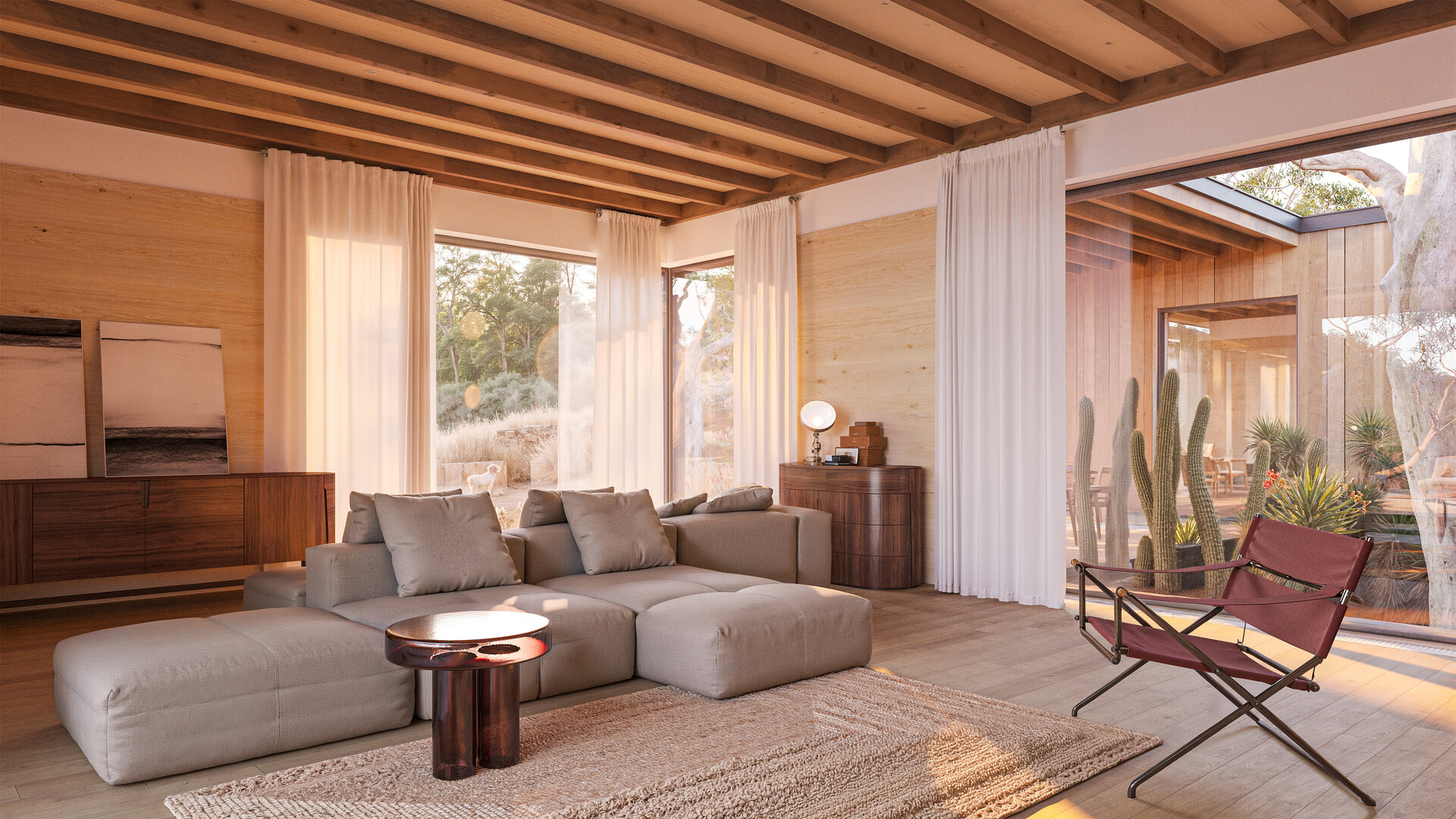
The interior continues the same philosophy of calm and simplicity. Each room is oriented toward nature and bathed in natural light. Textures prevail over decoration: linen curtains, polished wood, plant fibers, and handcrafted ceramic fixtures. The living room becomes a natural extension of the outdoors, with openings perfectly aligned with the terrain and the horizon line.
At the edge of the structure, a linear pool stretches toward the eucalyptus forest – a feature that provides both visual and functional cooling. The adjacent terrace, wrapped in frameless glass railings, becomes a suspended observatory, a space for stillness and contemplation.
Ultimately, Outback House is not defined by grandeur, but by quiet confidence – a design that amplifies the voice of nature rather than its own. It is a place where one can listen to the wind, watch the ever-changing sky, and live in harmony with the bush.
Residential Architecture

- Transylvanian guesthouse with greenhouse and sauna
- Omnia. Redefining Shelter
- House in the Outback
- Totem. Adaptive Structural System
- Tower house
- House NC
- Between Field and Sky: House in the Irish Rural Landscape
- An Interstitial House
- Creative residency – temporary dwelling in nature
- AR House
- Pod House
- House P
- Single-Family House in Cotroceni – Consolidation and Extension
- Atria Promenada
- CS23B House


