- Nomination for the “Portfolio Architecture / Interior Design” section
Symbiosis
Authors’ Comment
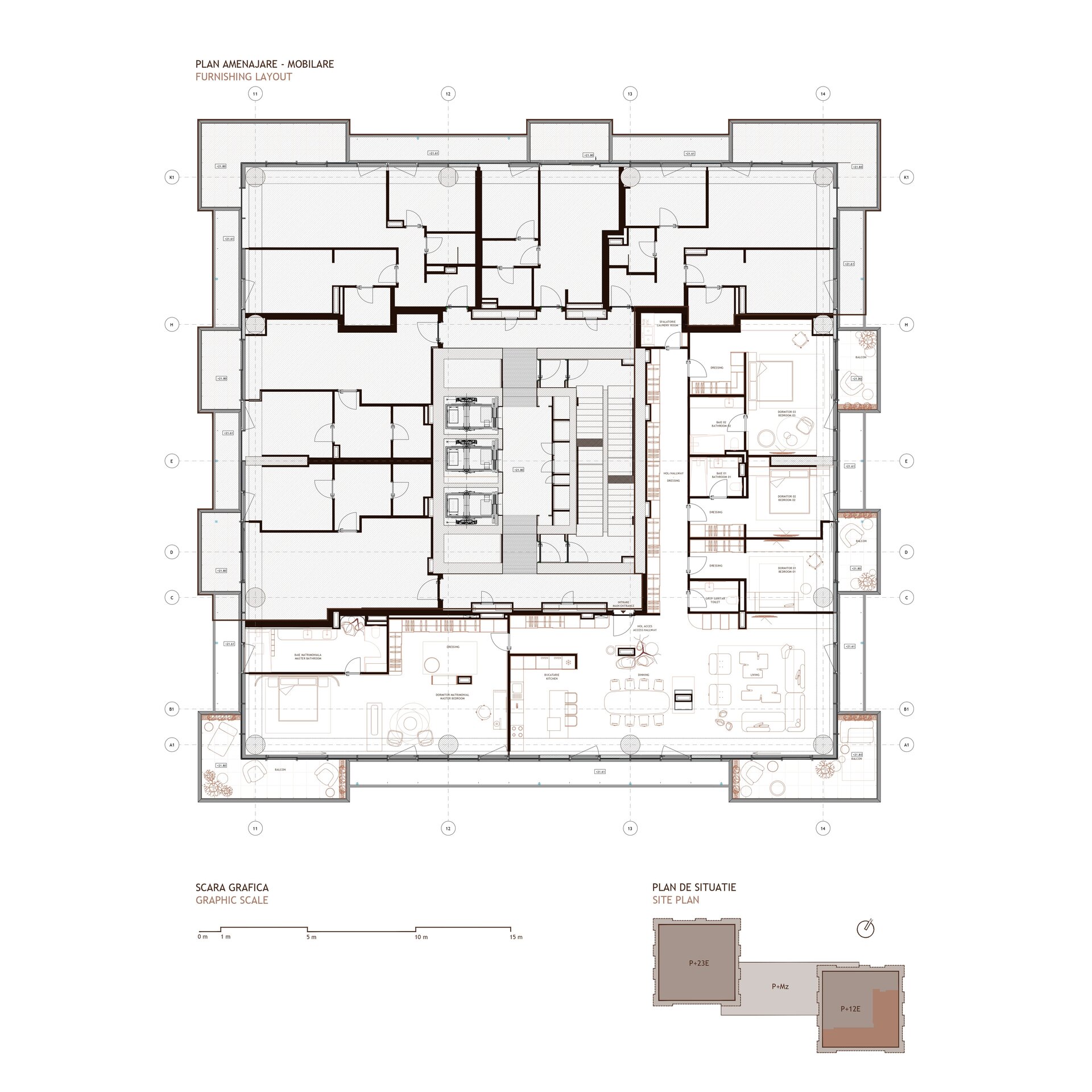
The project proposes the conversion of four adjacent apartments into a single residential unit with a total area of 300 sqm, located on the 5th floor of the Up-Site building, developed by Atenor. Since the building is still under construction, the intervention remains at the concept stage, proposing an alternative scenario in which the domestic space is reimagined from a compositional and functional perspective.
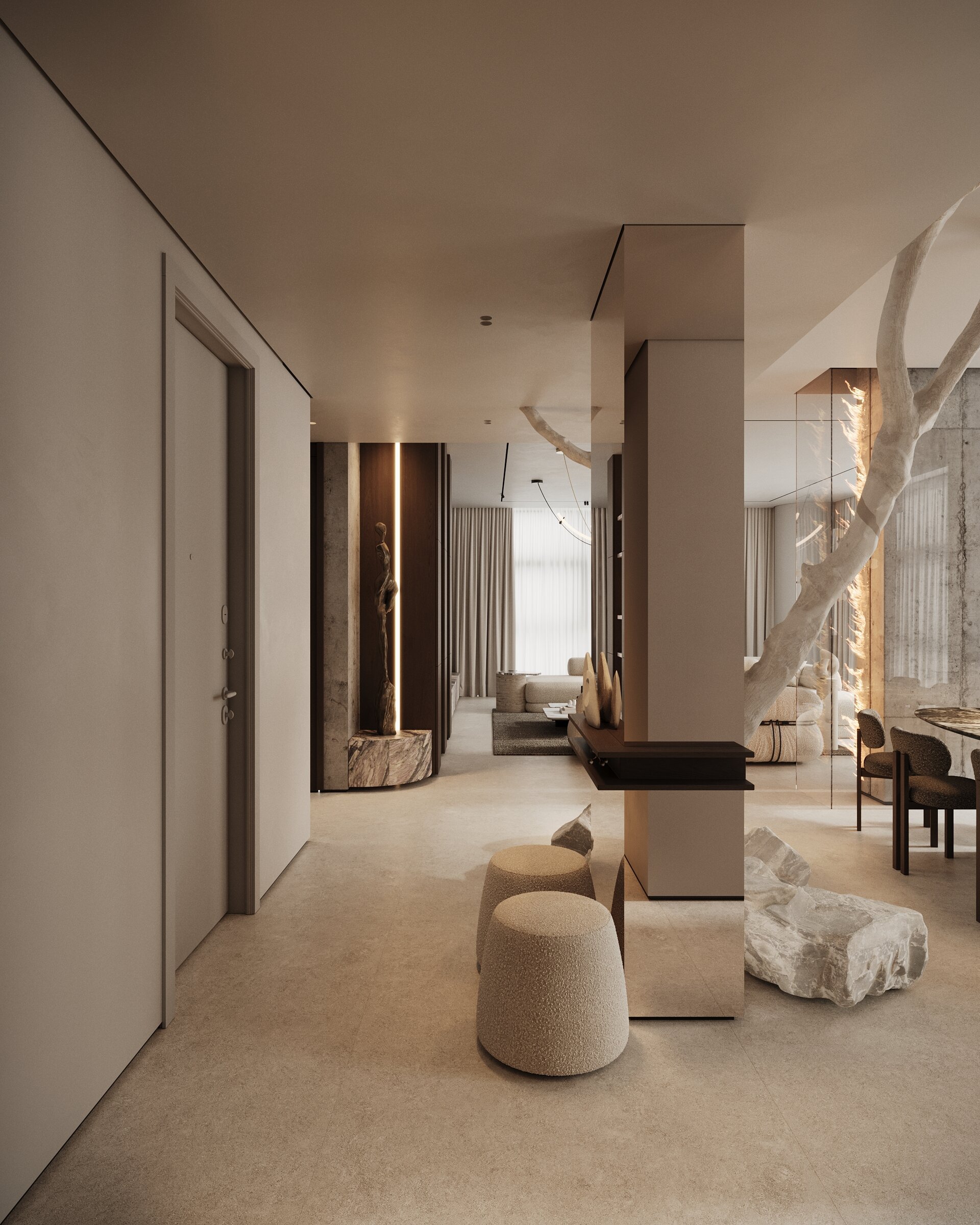
The new layout emphasizes spatial potential by organizing the apartment around a central core, the day area, with direct access from the vertical circulation.
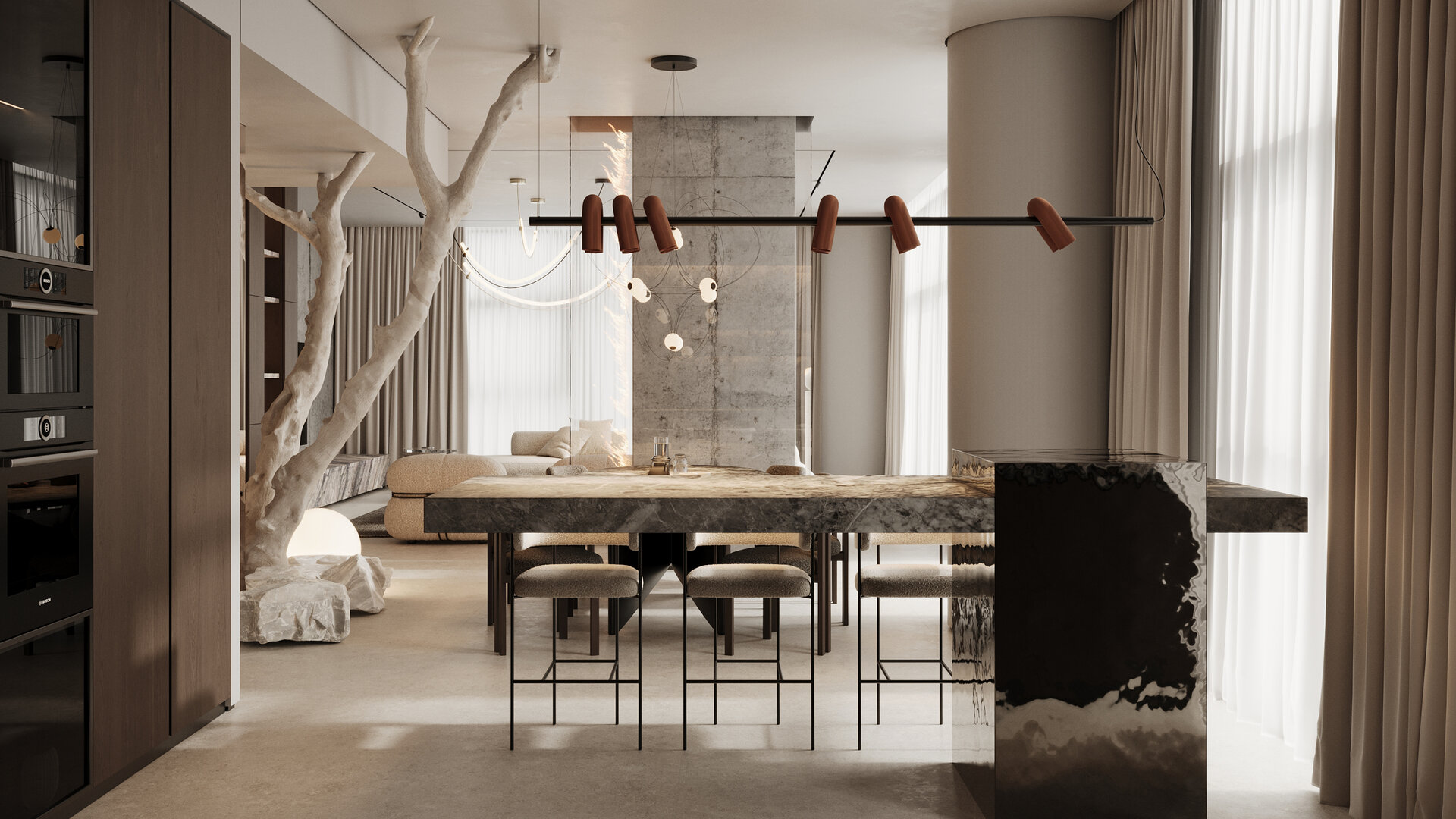
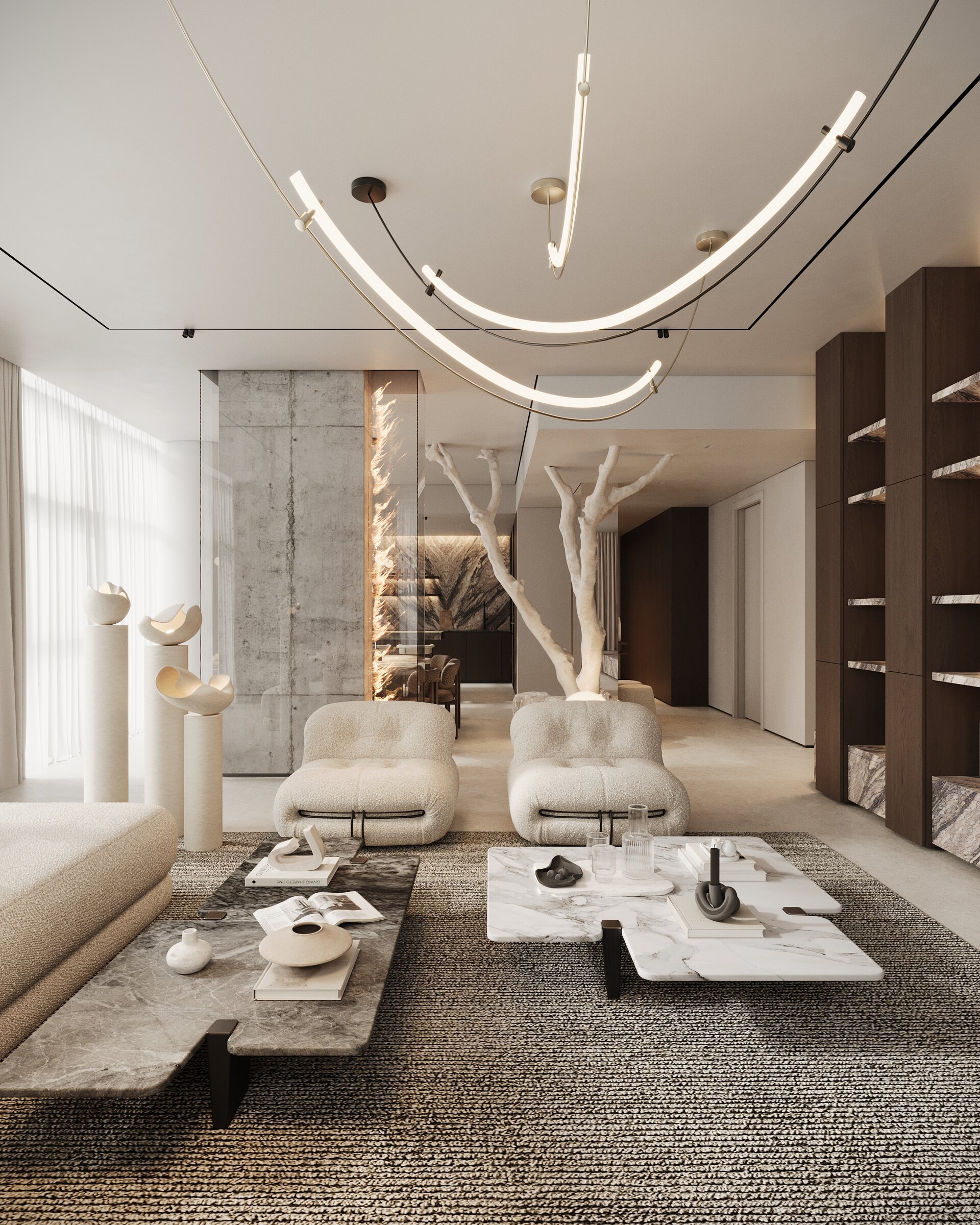
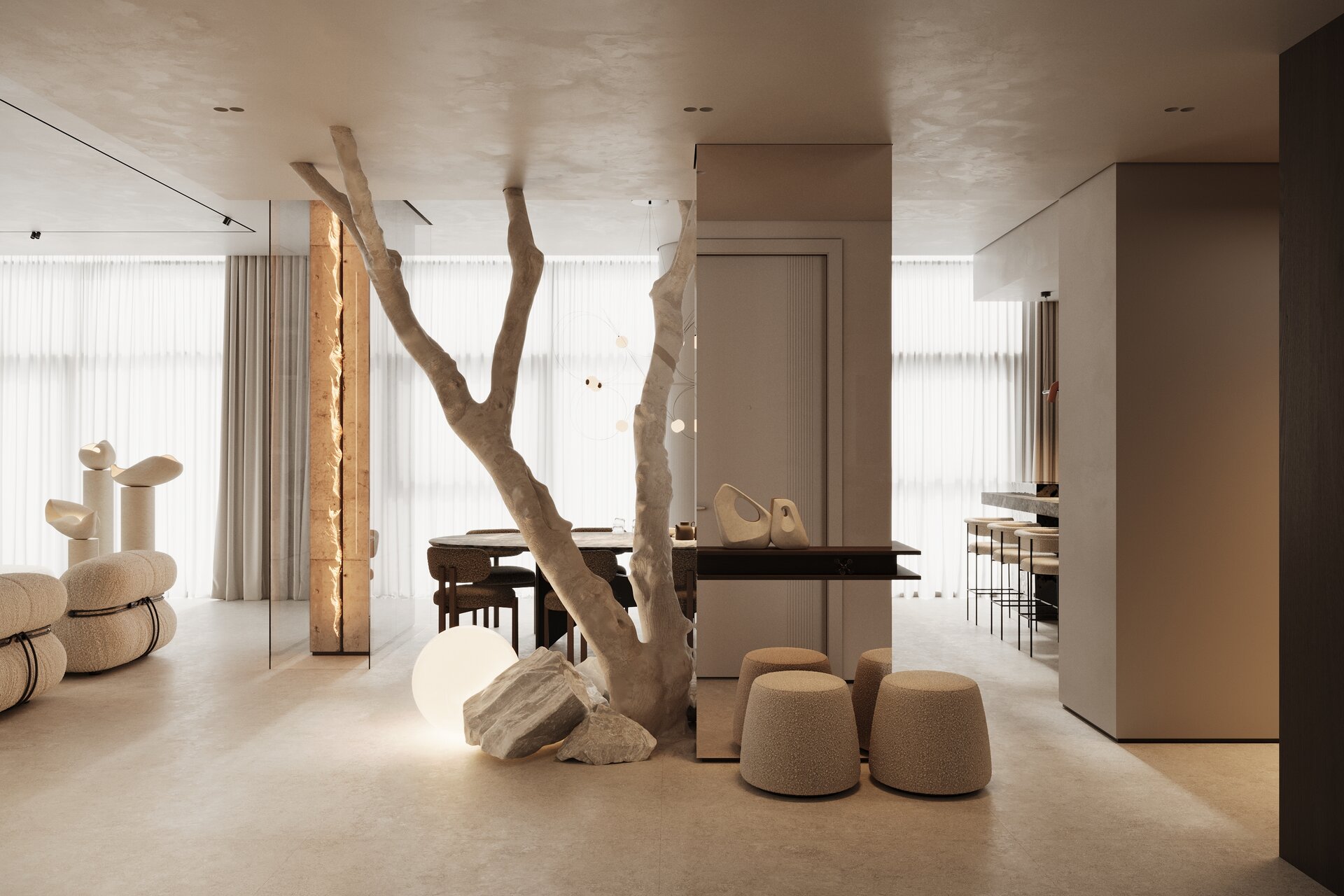
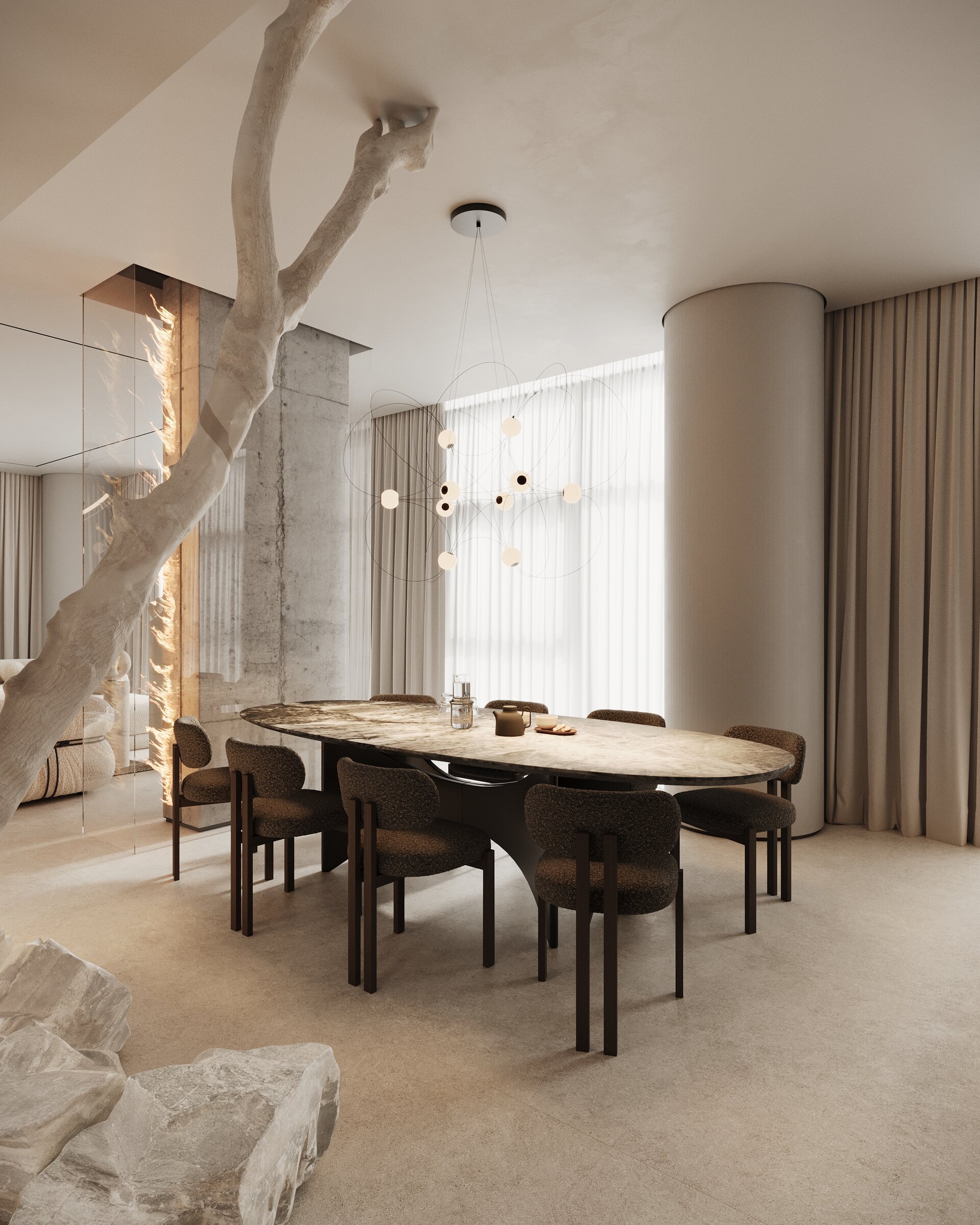
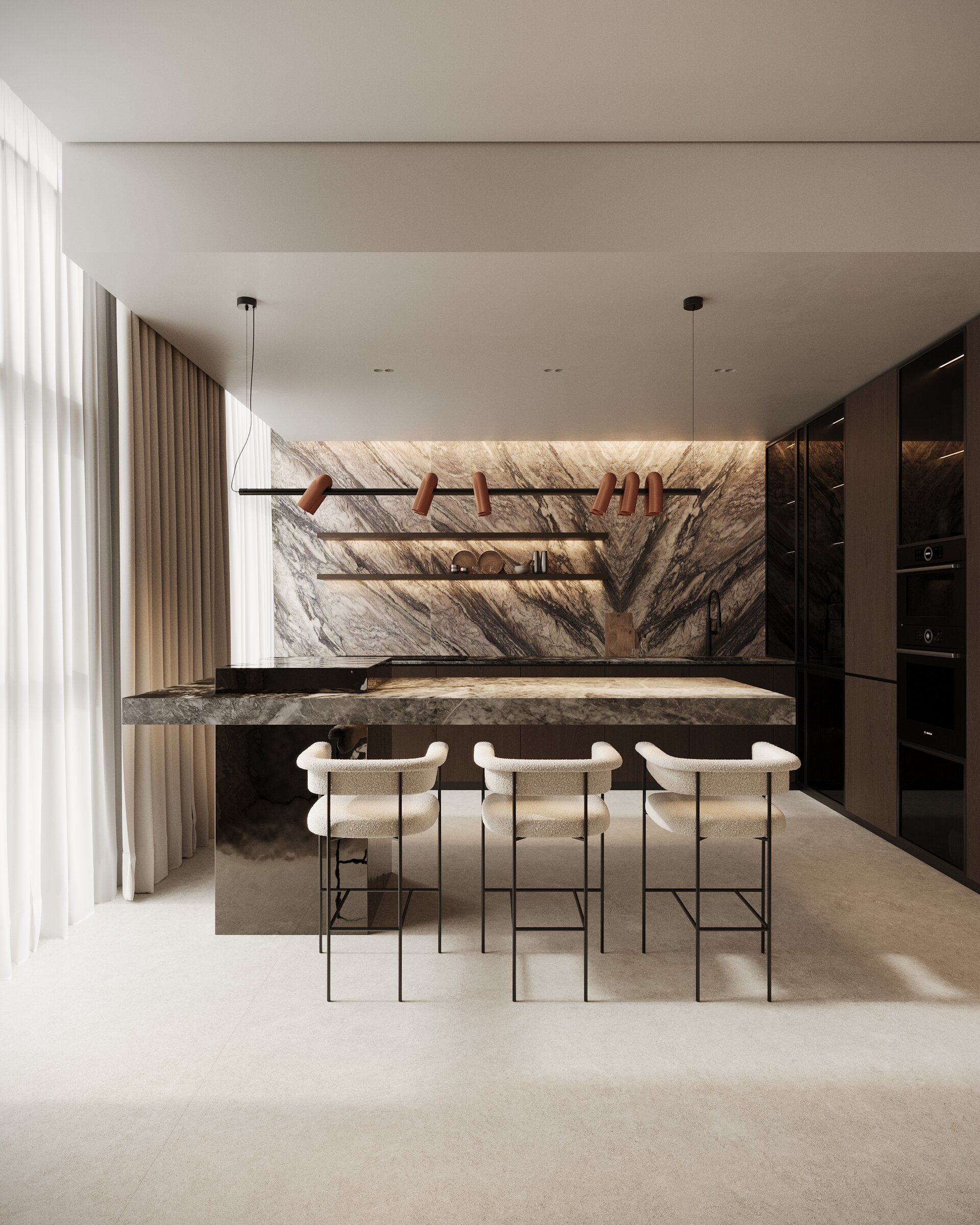
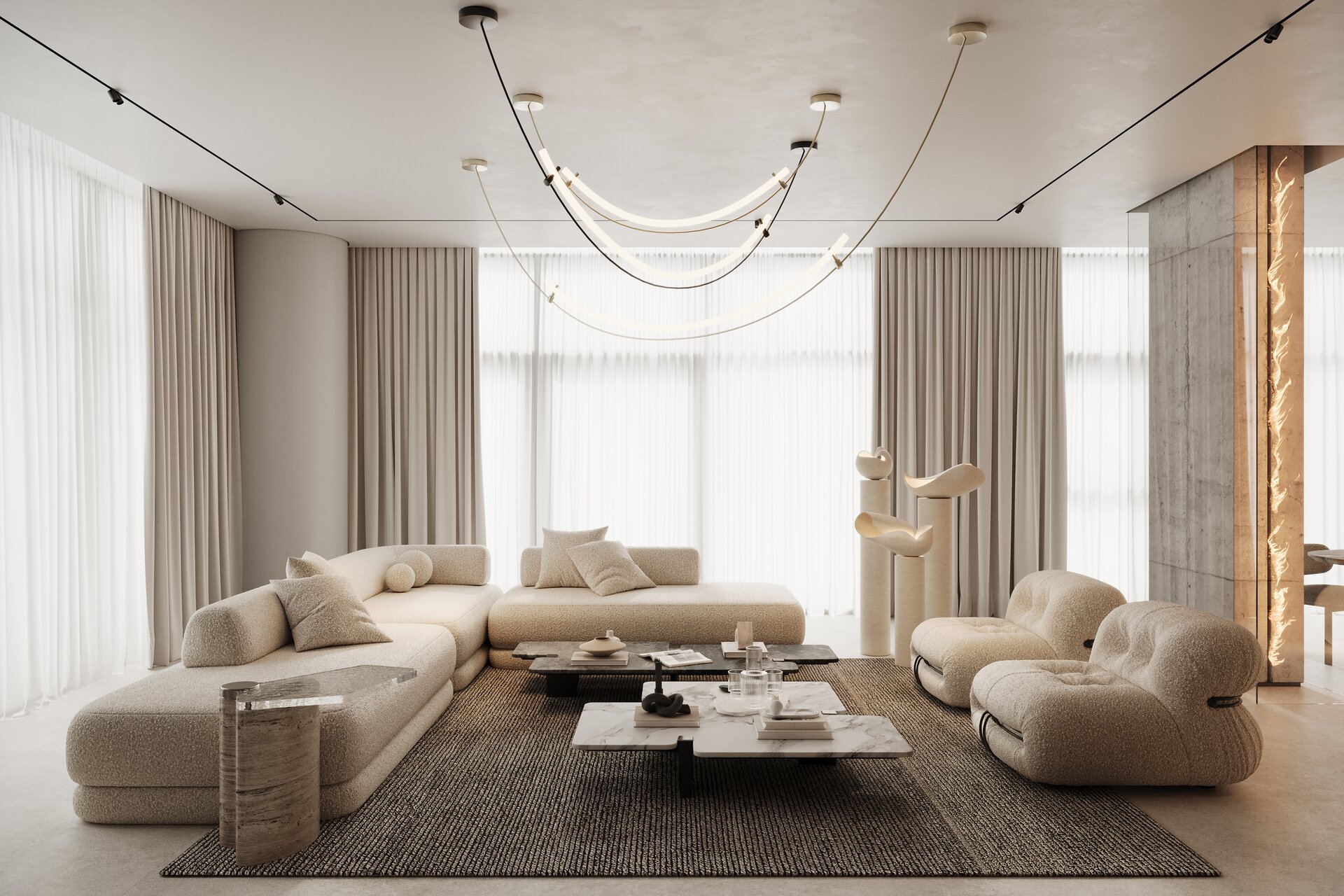
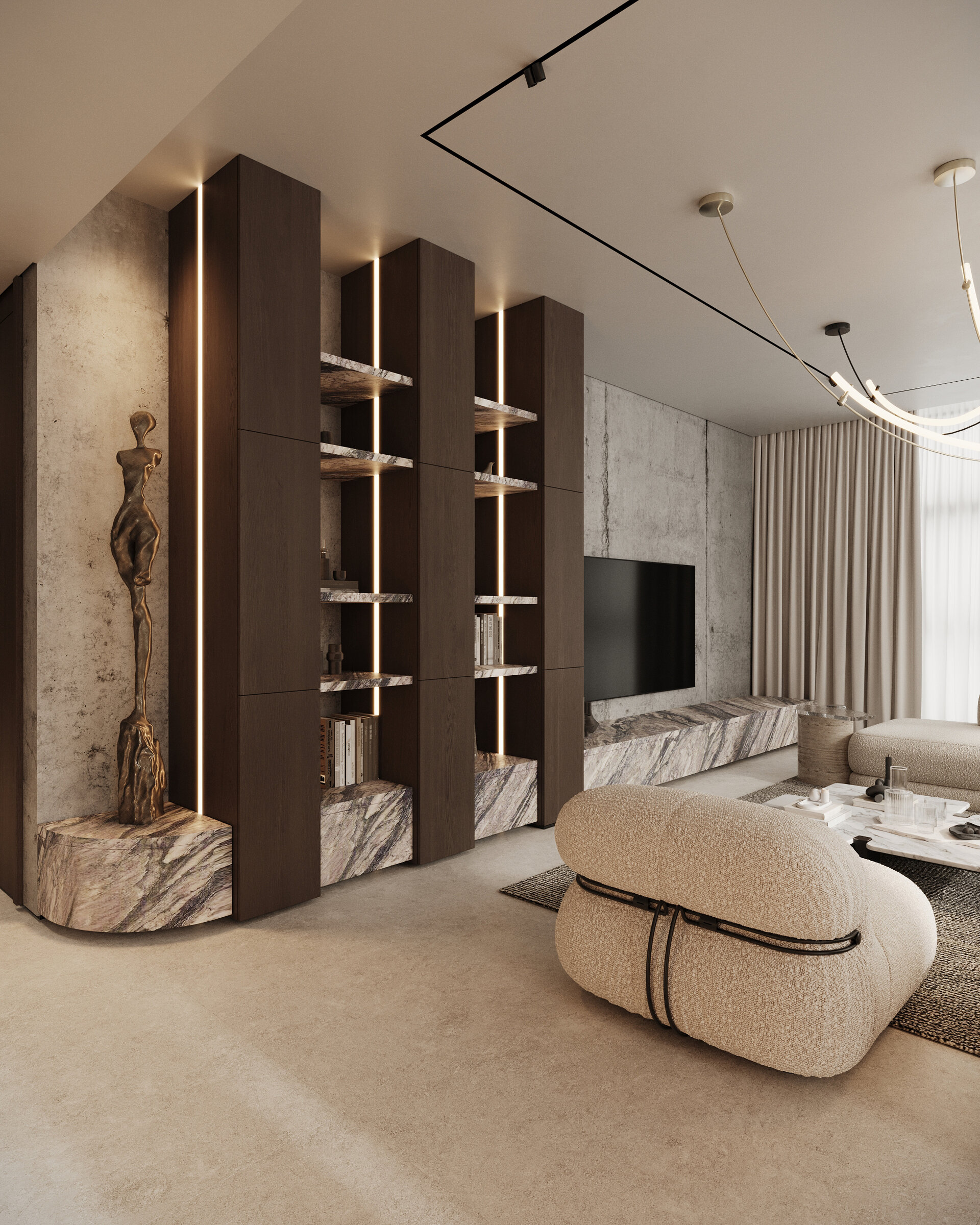
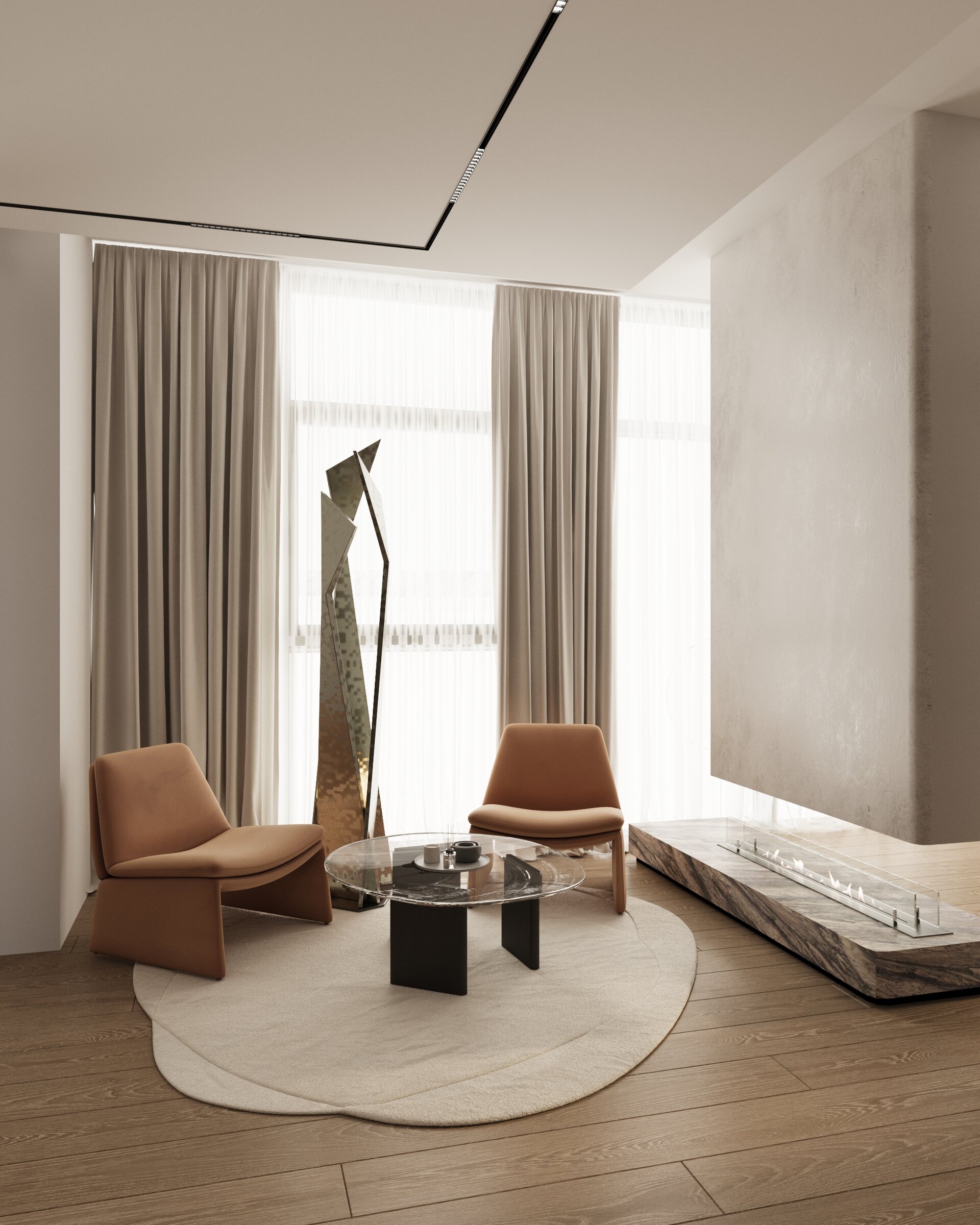
This core brings together the living room, dining area, and kitchen in an open-plan configuration, oriented to the south, where the linear geometry of the furniture, vertical accents, and abstract reinterpretations of natural elements generate visual and material continuity.
The two night zones are articulated in relation to the central space:
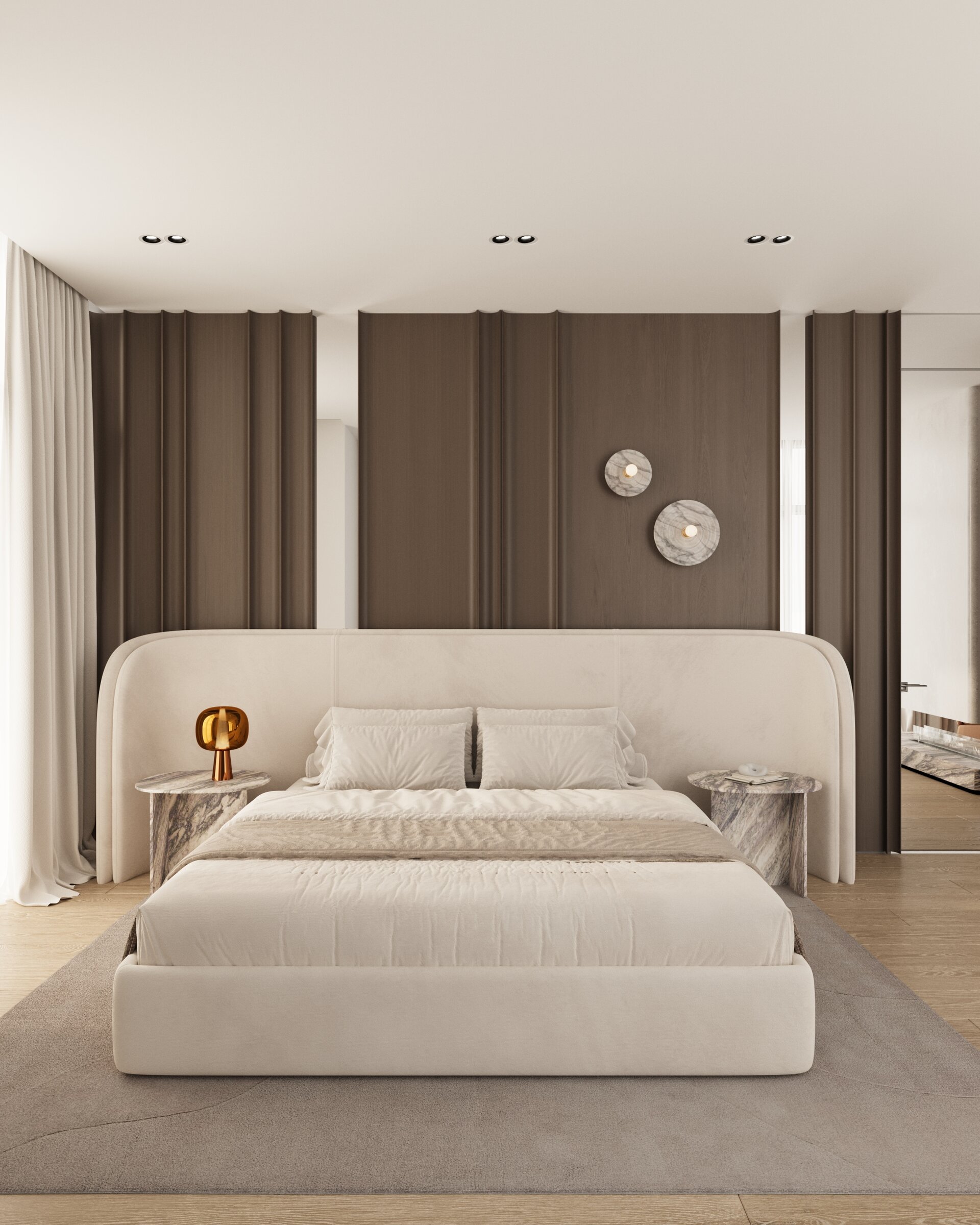
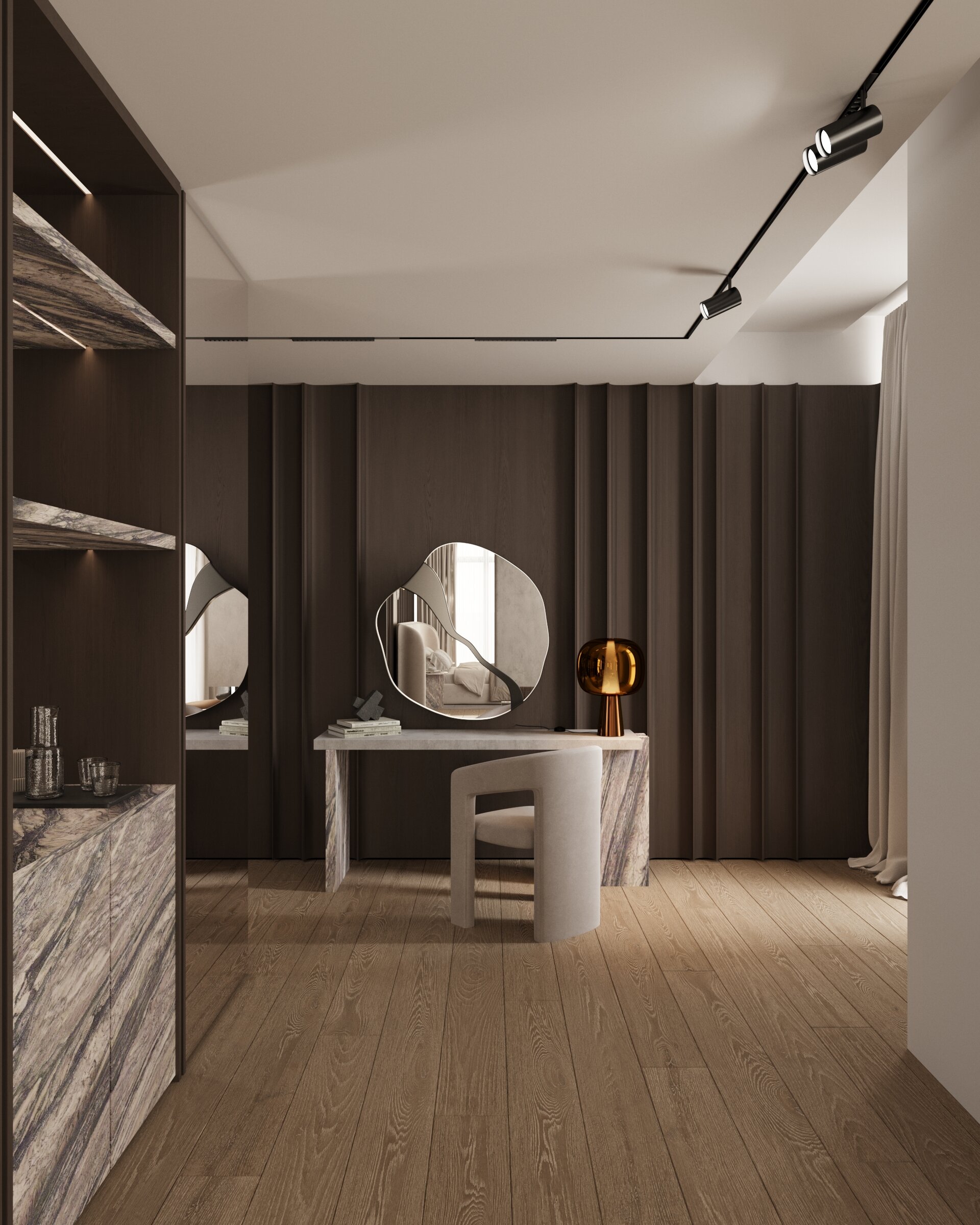
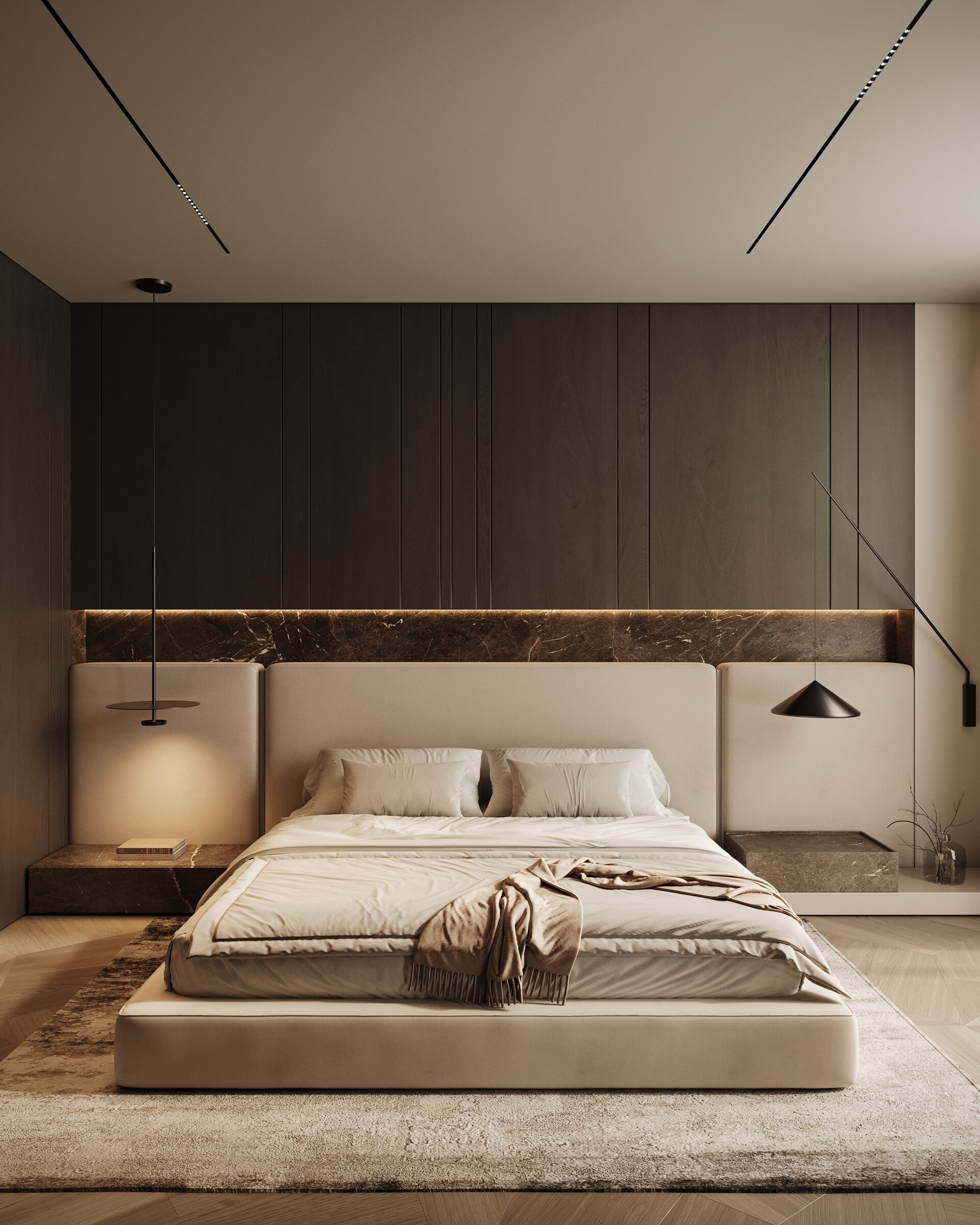
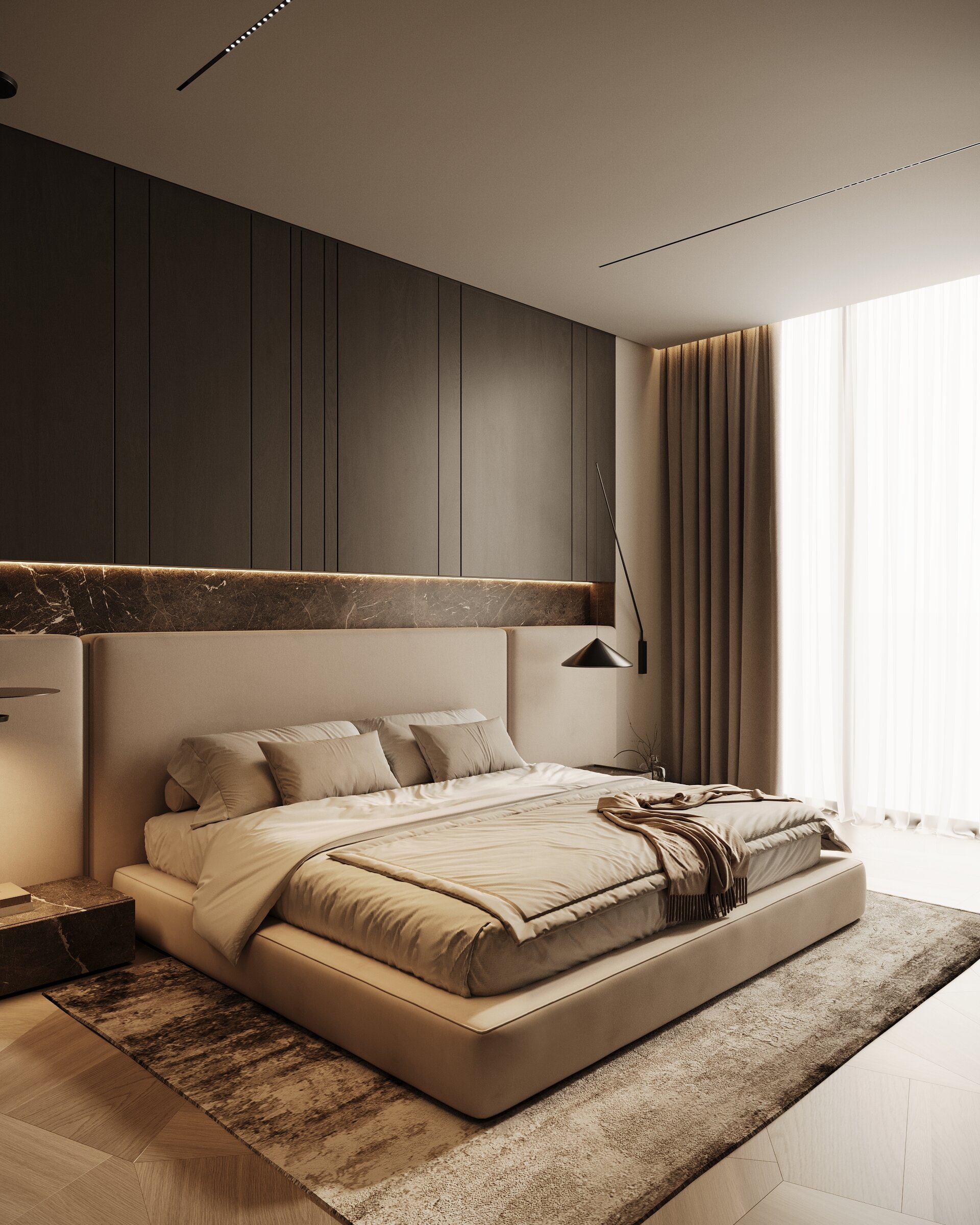
• The master bedroom, oriented to the southwest and opened towards Lake Floreasca, is configured as an extended private area, with a warm atmosphere created by wood cladding and diffuse light. The fluidity of the space allows for a subtle transition from the dressing area to a seating zone, separated from the sleeping area by a vertical partition element, the fireplace.
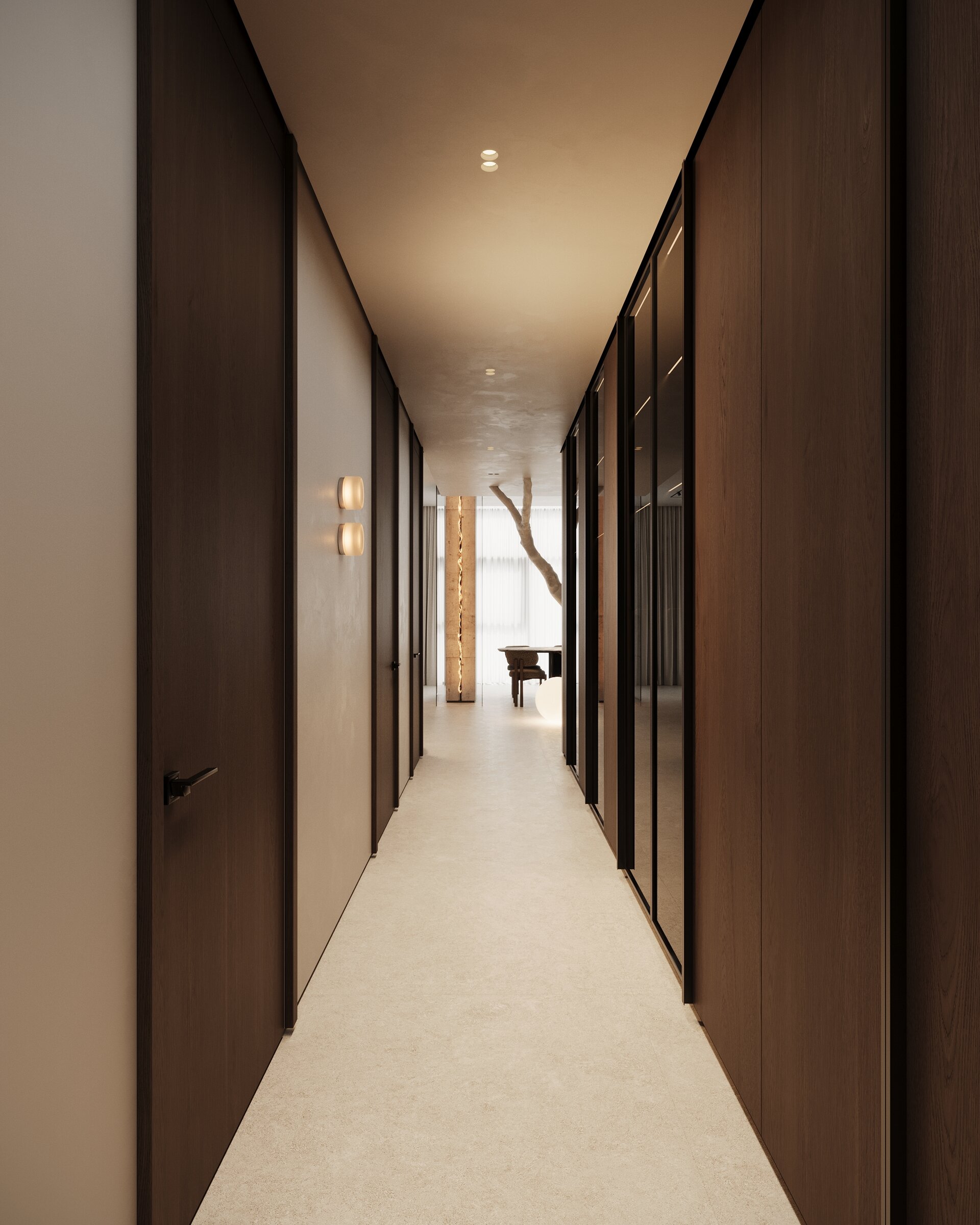
• The second night zone, extending longitudinally to the east, comprises three bedrooms connected by a walk-through wardrobe corridor, functioning both as a distribution space and as an intermediate zone between functions.
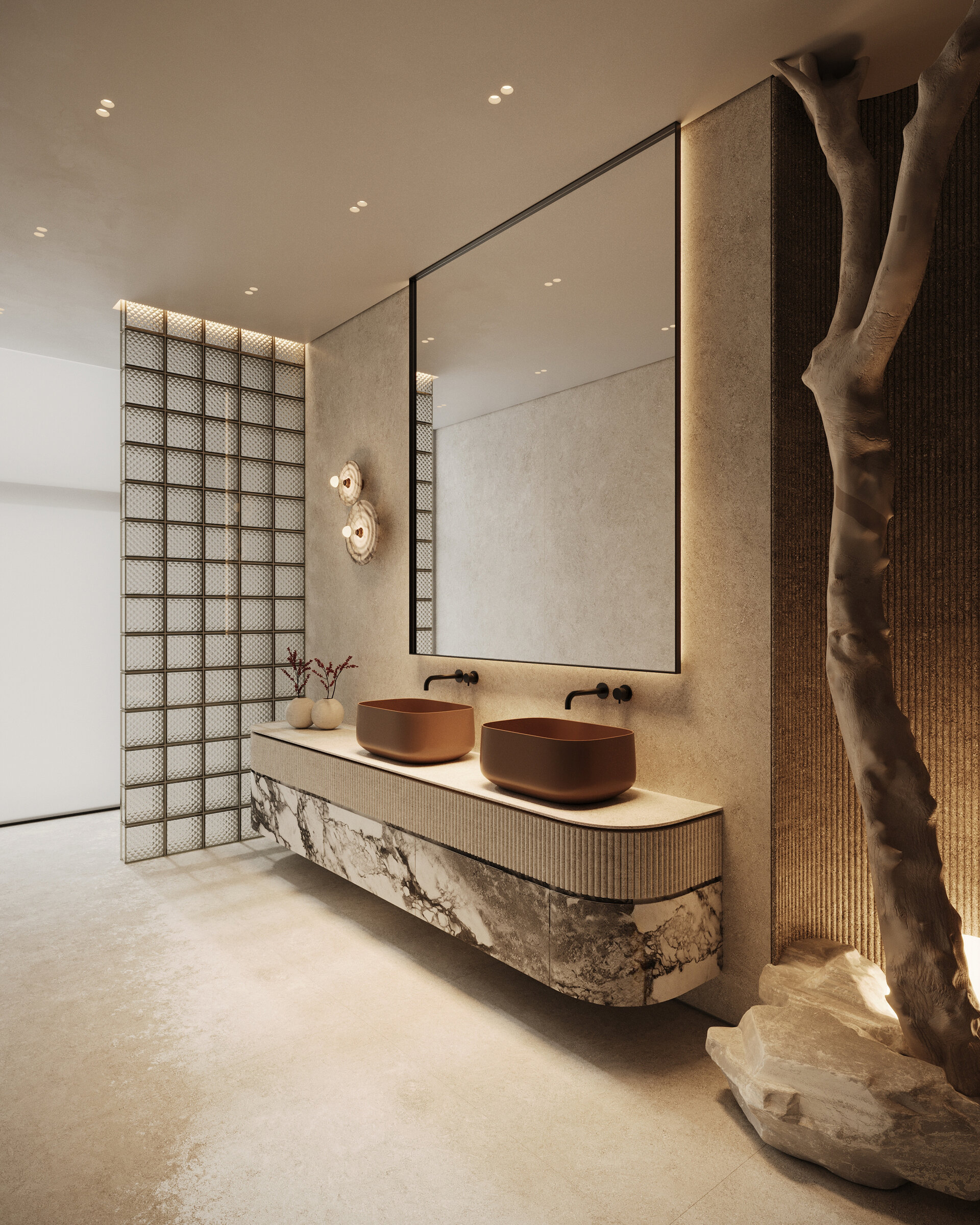
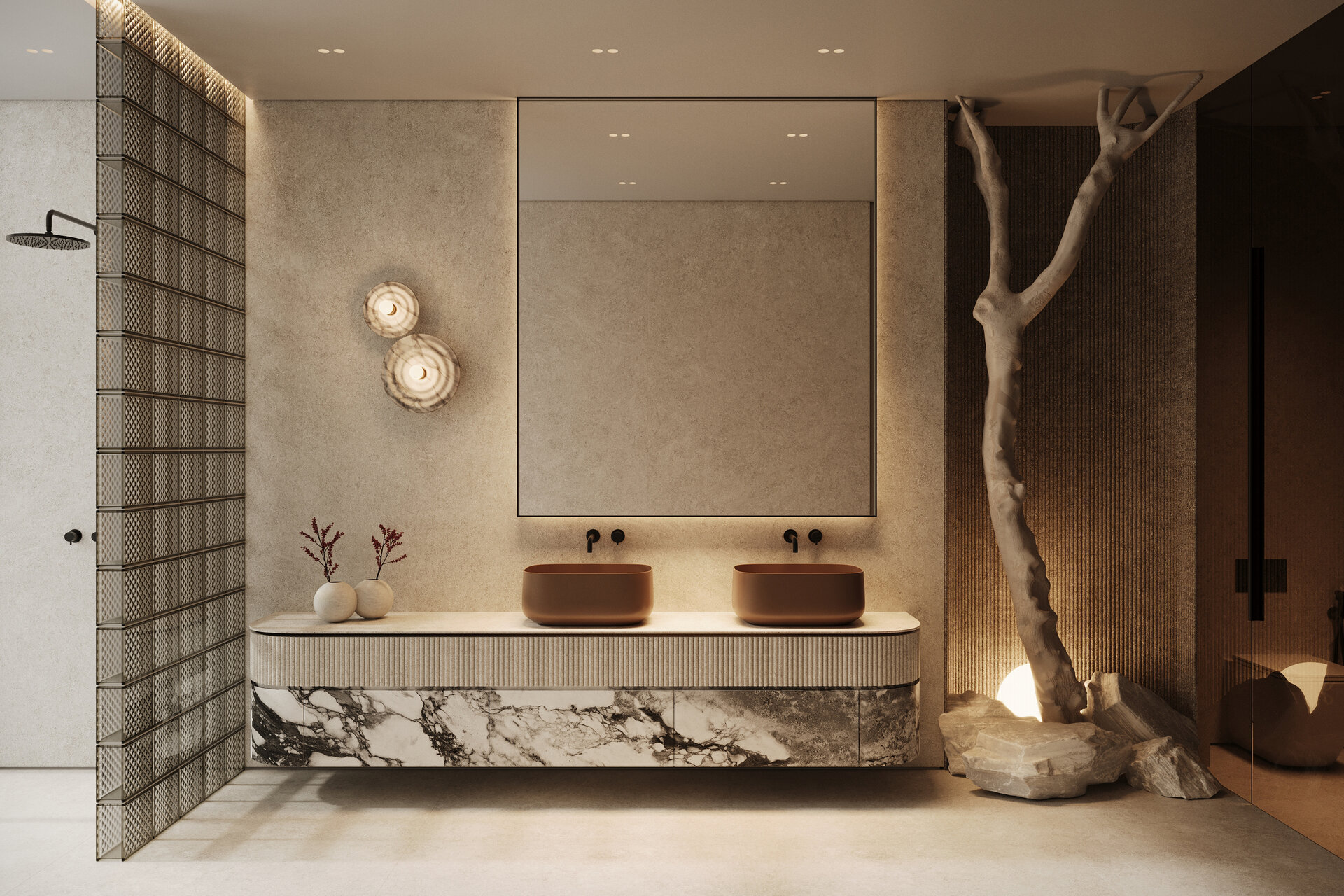
The concept aims to establish a balance between the formal rigor of contemporary minimalism and the tactility of materials inspired by natural morphologies. The space is conceived as a calm interior landscape, where architecture is expressed through controlled volumes, raw textures, and precisely calibrated details.
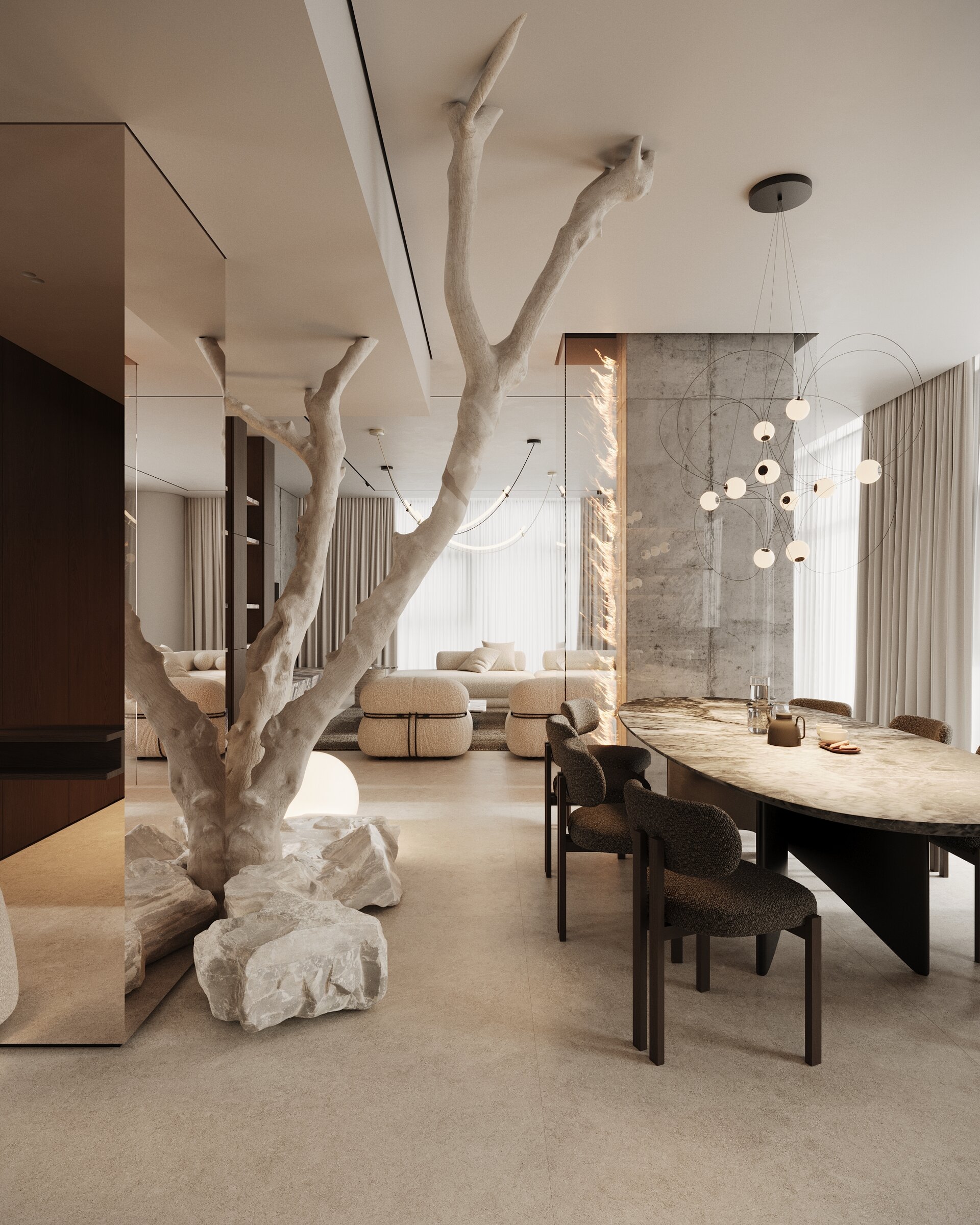
The central element in the day area acts as a compositional anchor, evoking primary forms found in natural structures. Around it gravitates the vertical fireplace, mineral inserts, and lighting objects with simplified geometries, all contributing to the definition of a symbiotic atmosphere, in which every intervention plays an active role in shaping the space.
Materiality results from a selection of natural textures, wood veneer, stone, and a neutral color palette, which supports spatial coherence and highlights the relationship between light, texture, and proportion.
Interior Design

- Atelier Amzei 13
- Terrarium 707
- Symbiosis
- Tins and Tonic - Gin Bar
- House in Amber Forest
- Wabi-Sabi Penthouse
- Japandi Apartment
- Beauty Clinique
- House Sf. Gheorghe Delta
- The Other Otter
- Cram
- DentOne Oral Rehabilitation Centre
- Narcissus
- Apartament 3L
- CP Interior design
- Apartment B.S.
- House S interior design
- Color Motion


