Apartament 3L
Authors’ Comment
This apartment is designed for a couple of artists who, after a life surrounded by imagery, wished for a calm, coherent home—a space where "home" is not just a necessity, but a true refuge.
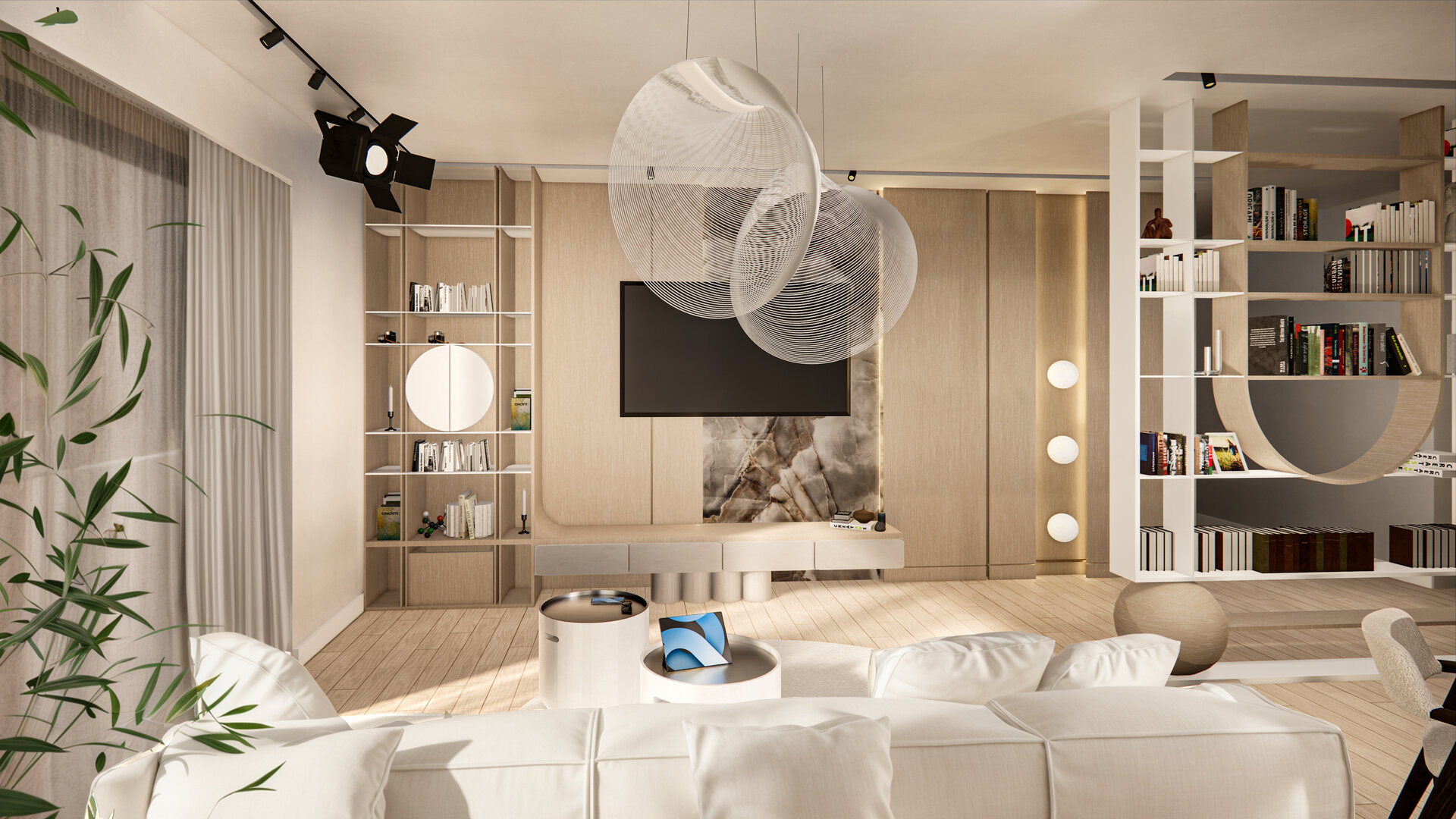
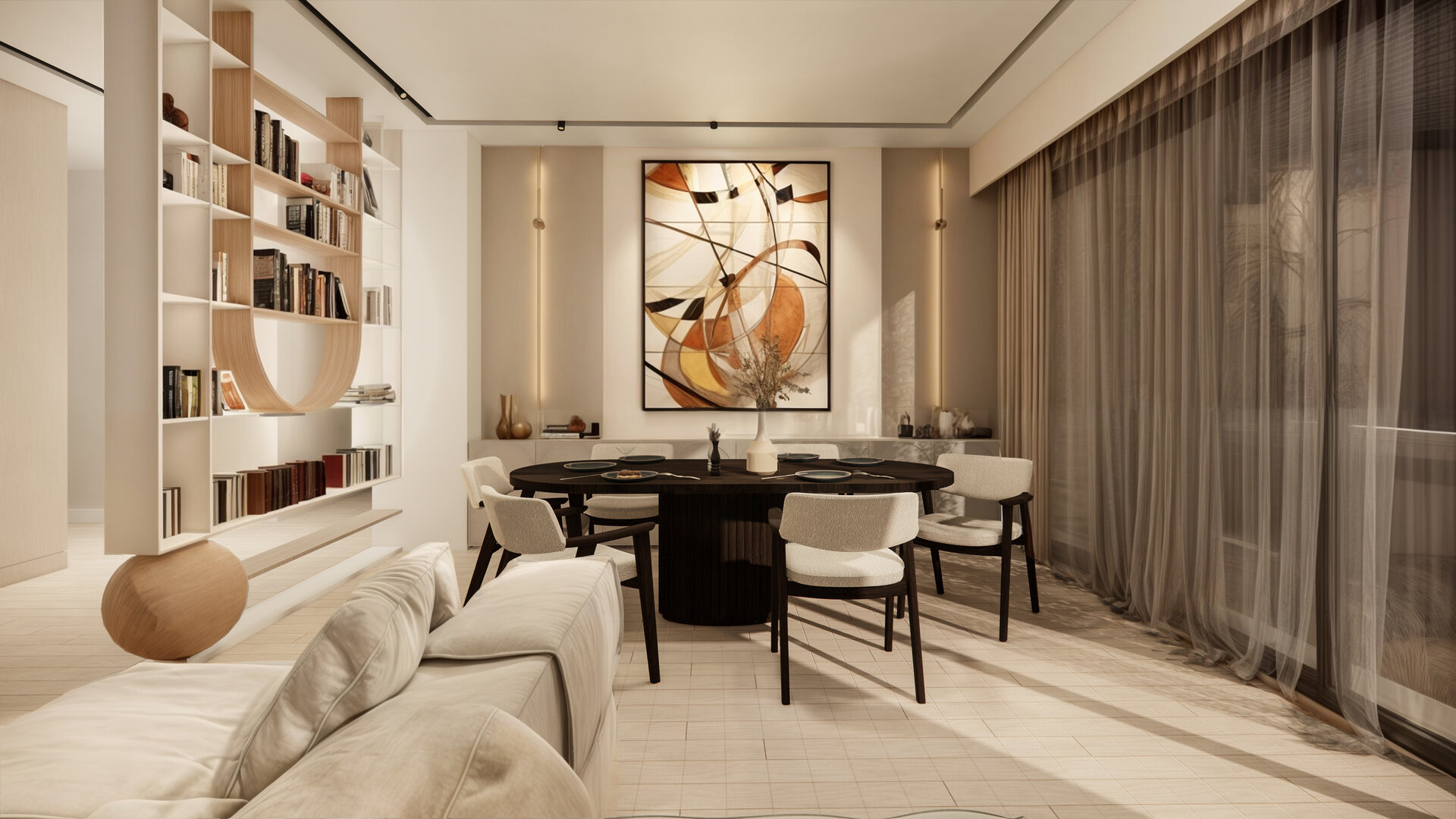
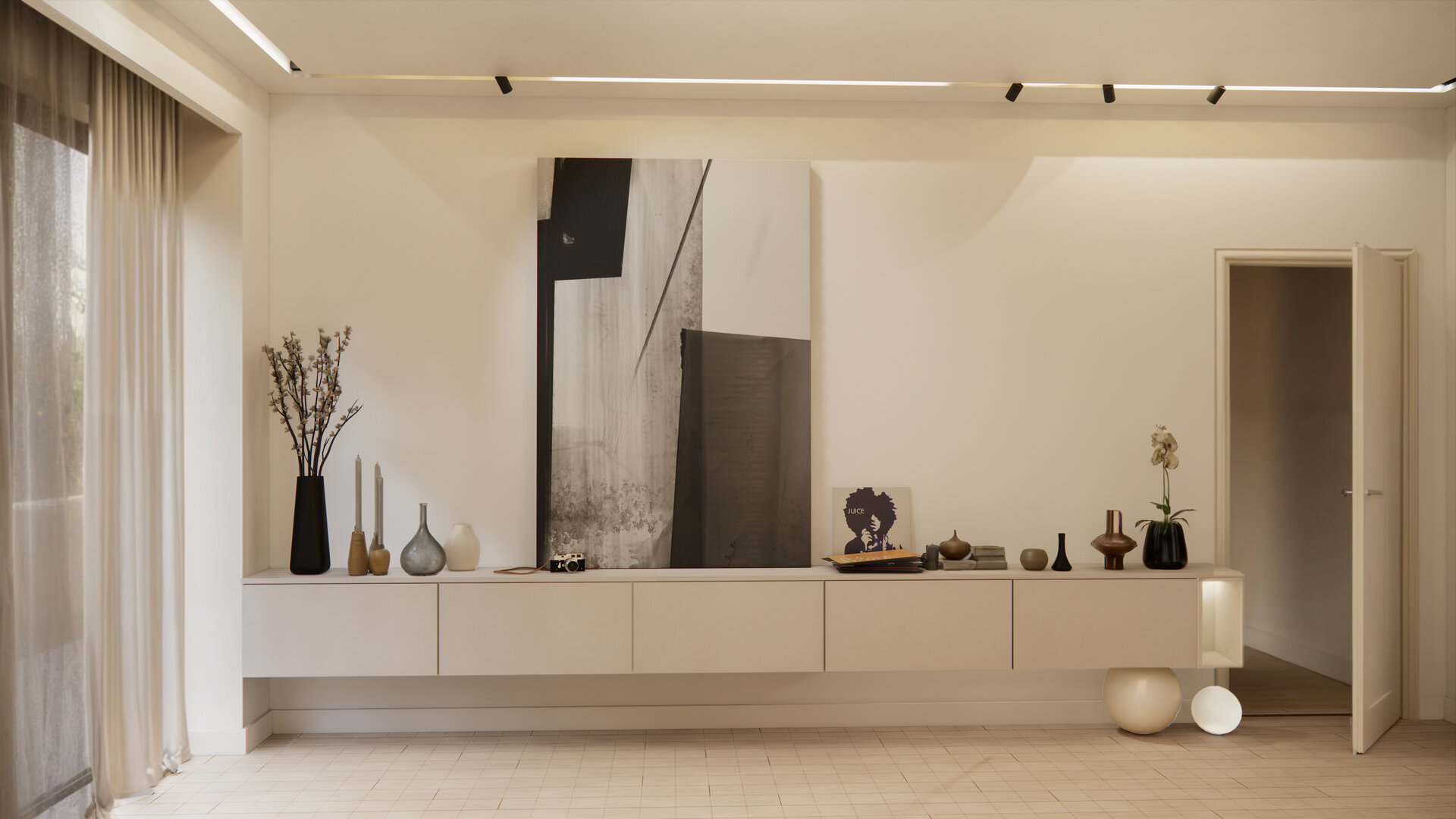
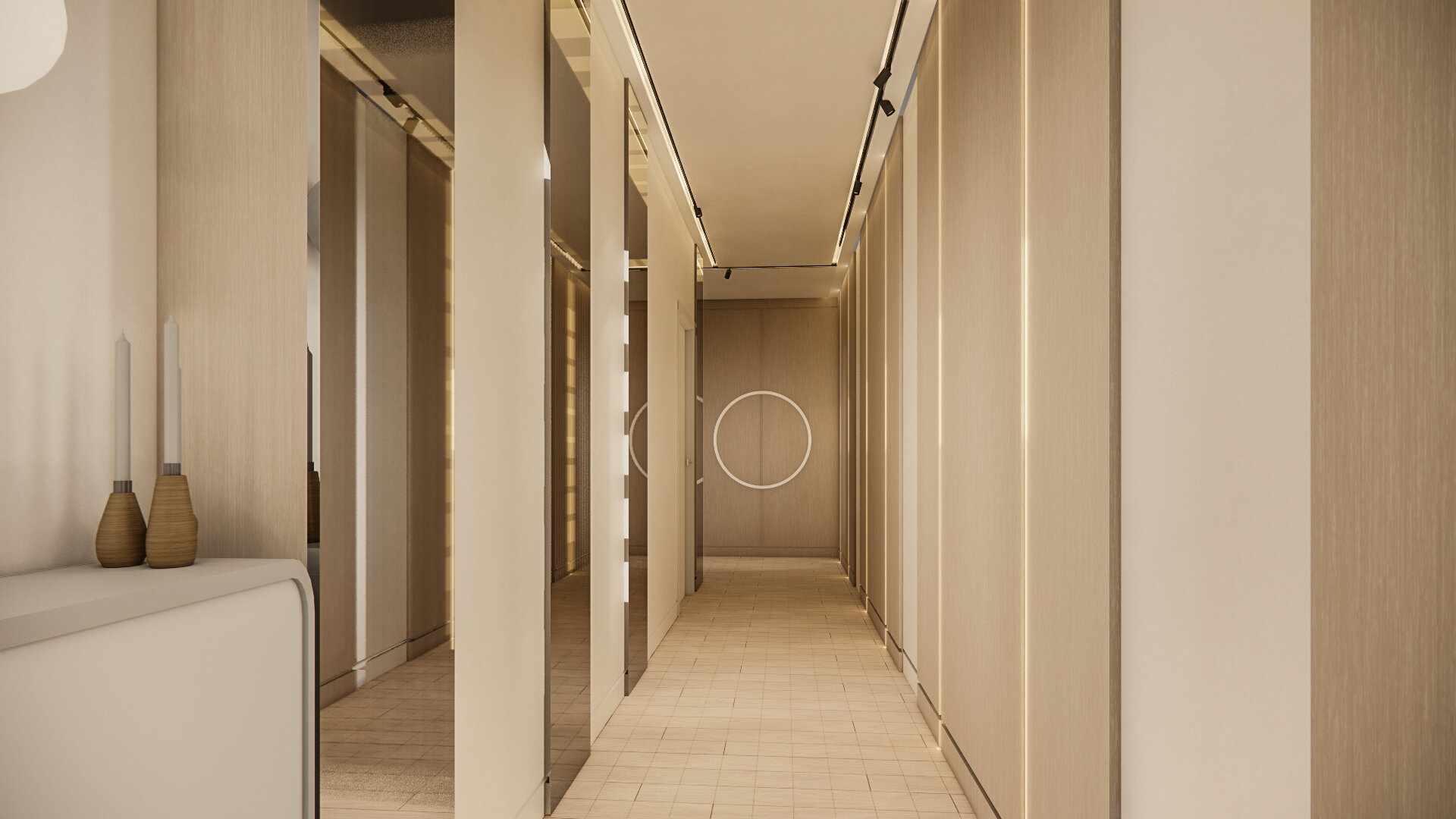
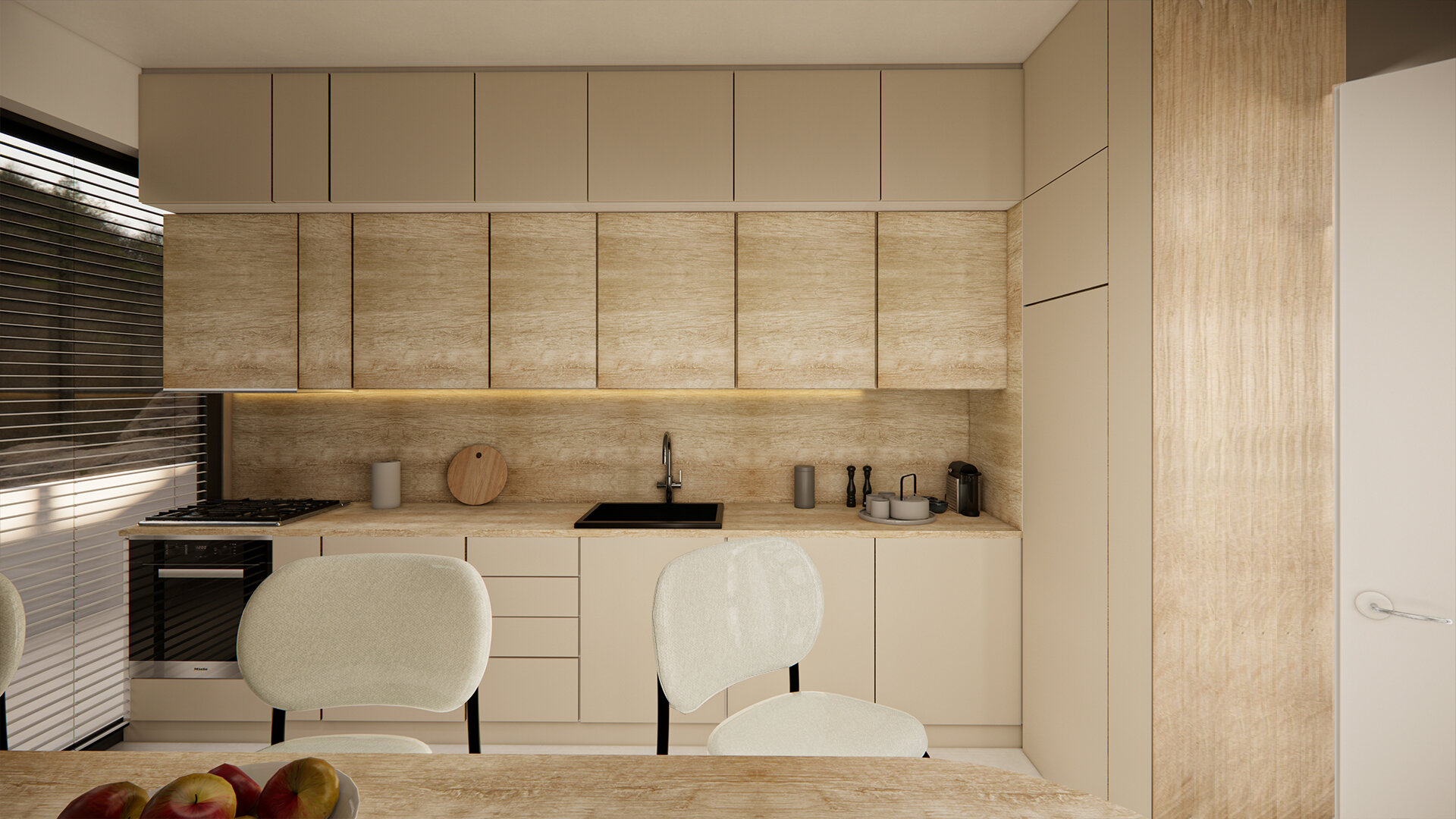
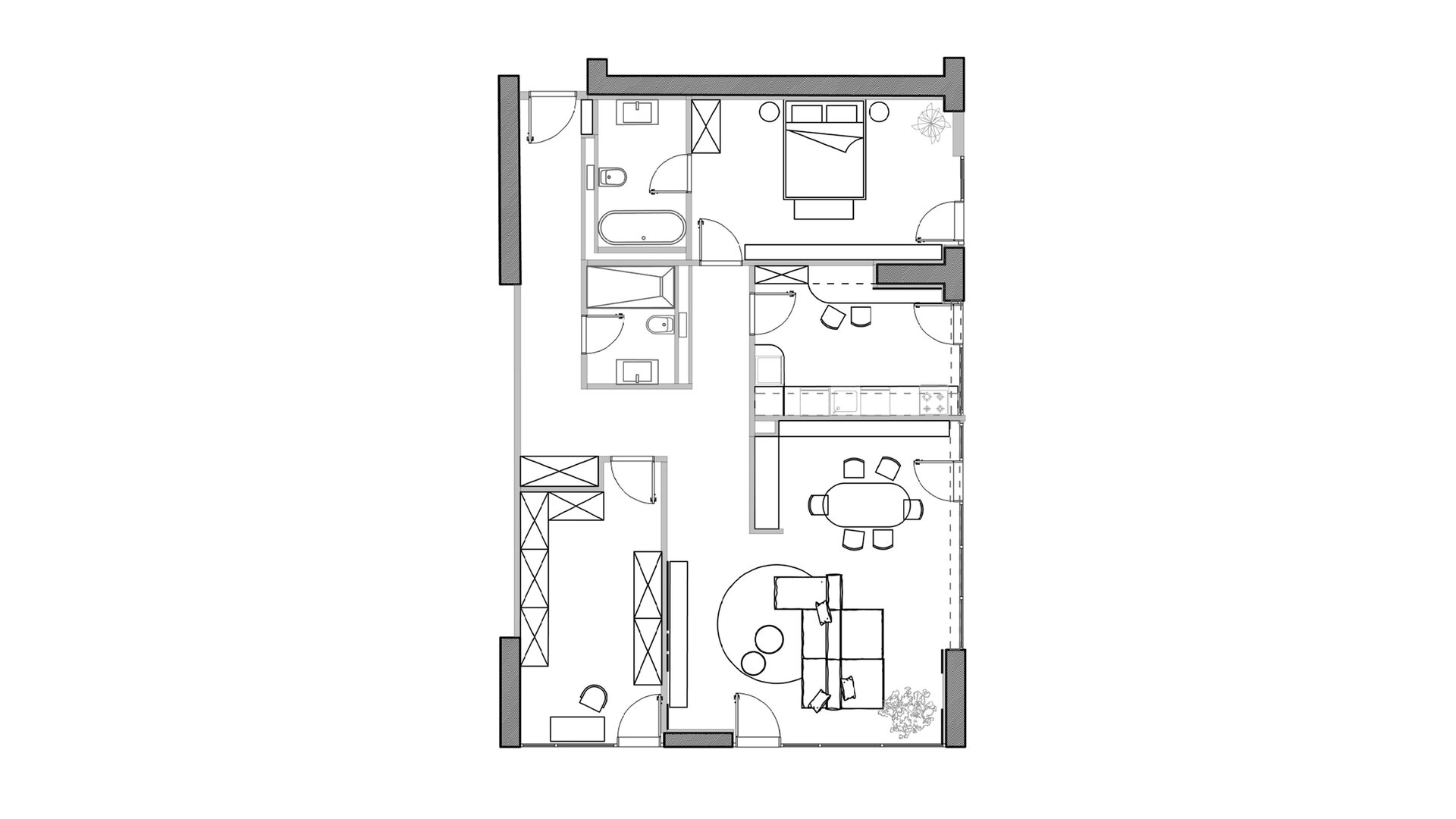
The concept stems from a need for clarity and open spaces. The apartment features a clear functional segregation, yet the formal language restores its unified character. The kitchen is fully separated and accessible through the hallway—simple, enclosed, with clean geometry. The living area—comprising the living room, dining area, and library—forms an open, warm space that flows naturally without harsh boundaries, in a fluid rhythm marked by natural light and mineral tones.
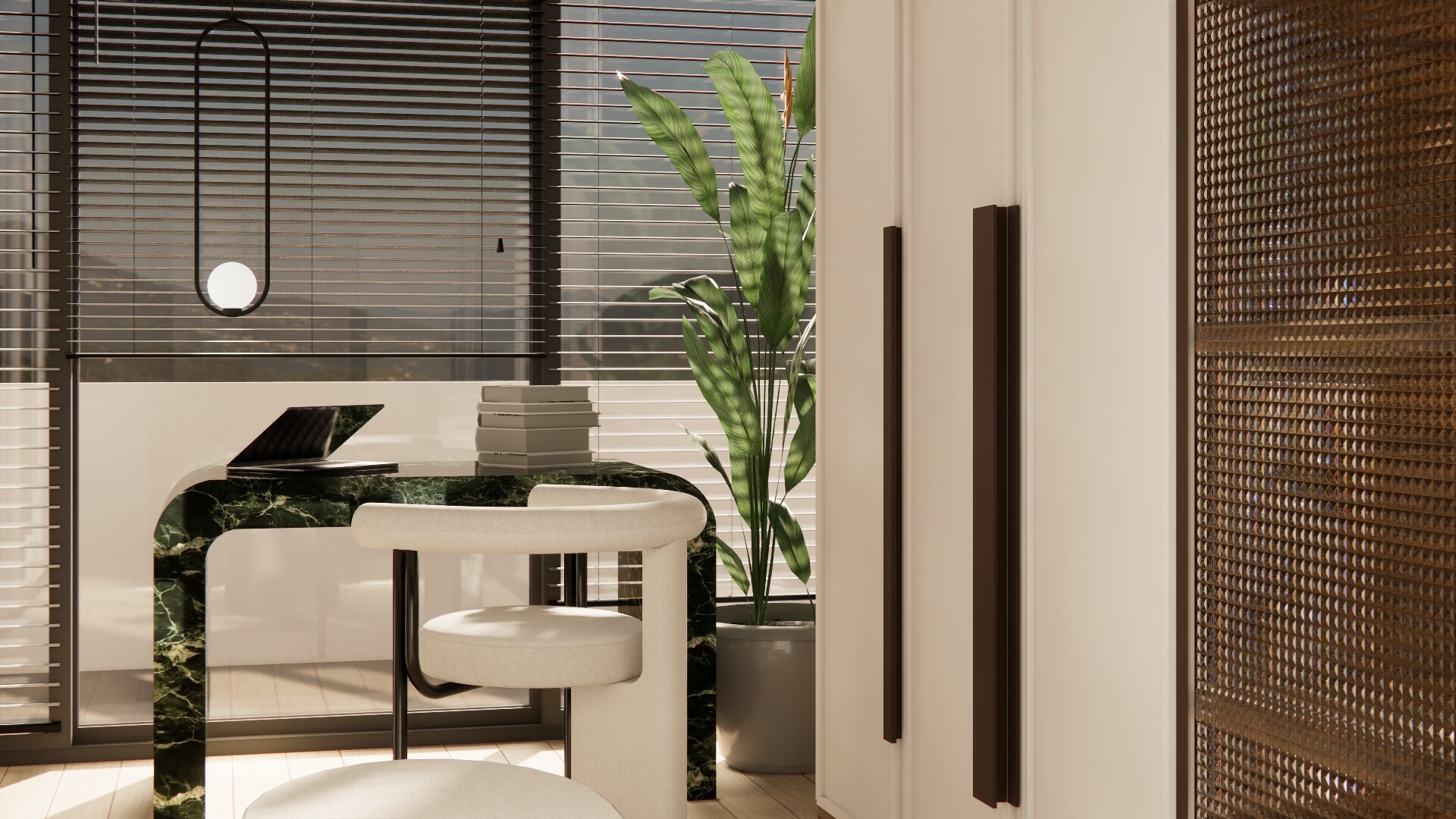
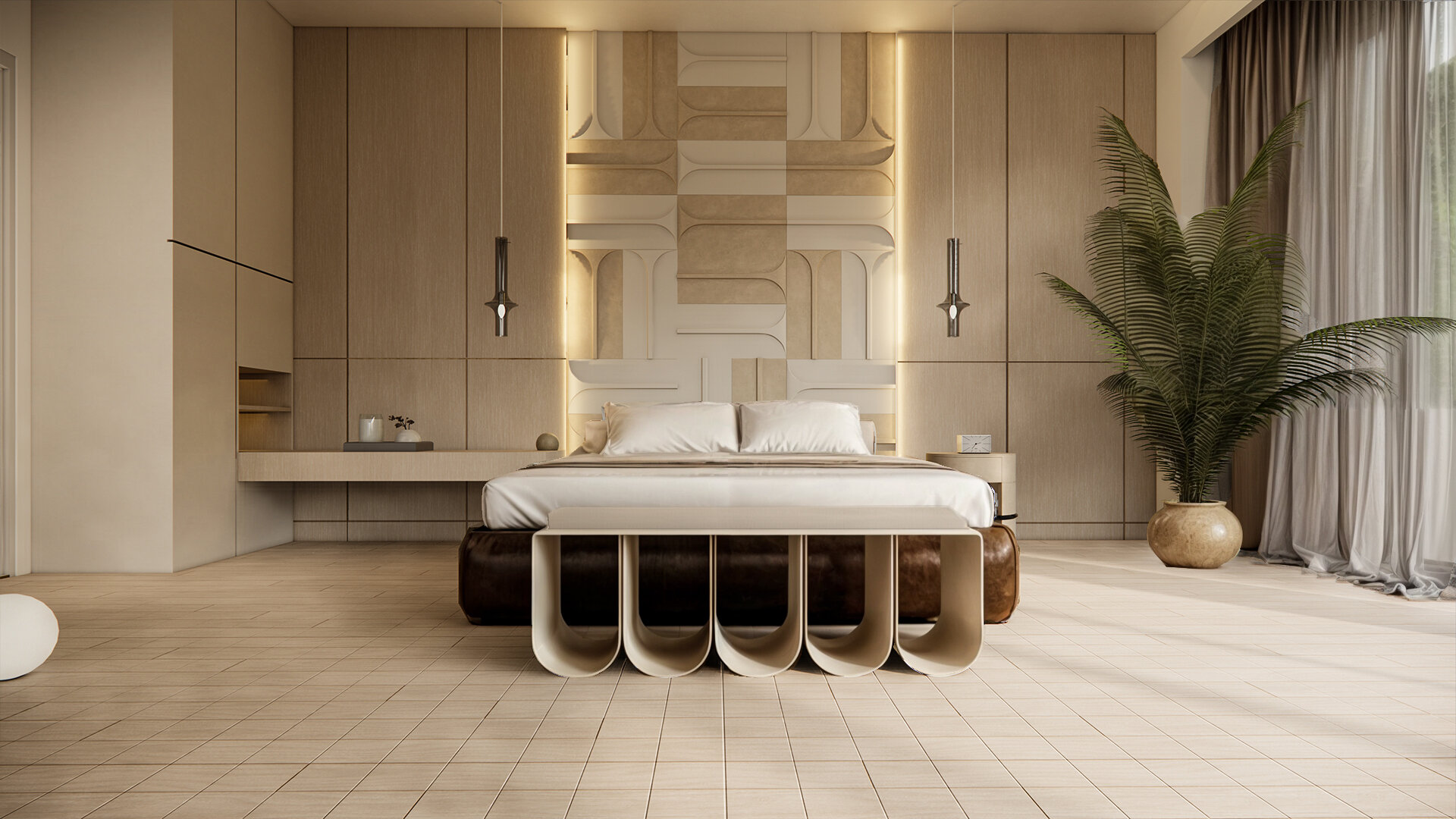
The bedroom is conceived as a space of complete retreat, with a sculptural wall behind the bed, composed of arched volumes softly illuminated. The dressing room is a distinct space with more than just a utilitarian role—it also carries an aesthetic quality. It includes a sculptural desk with a green marble top, which becomes a central piece of the design.
The integration of green marble emerged organically, inspired by the owners' desire to keep an olive tree in the home—a living, warm element that shaped the color palette of the entire project. The marble is used as an accent in key areas, providing visual coherence and subtly linking organic textures with mineral ones.
The understated yet refined character of the design is achieved through a color palette limited to warm, muted tones, ivory, beige, and oak textures, as well as matte, porous surfaces without shine. Minimalist details—hidden joints, rounded edges, and handleless furniture—reinforce this quiet sophistication.
The arch shape becomes a recurring element—a fluid geometry present in the transitions between spaces, in the volumes of the library, and in the contours of the furniture. This design element is not merely decorative, but also structural, creating a formal continuity throughout the rooms.
Light, both natural and artificial, has been treated as an architectural element in its own right. Thanks to the clients’ input, the two types of lighting—natural and artificial—have become fundamental parts of the project. In addition to large windows and the neutral treatment of walls and furniture that absorb and reflect natural light, both primary and ambient artificial lighting solutions have been integrated into the living area.
In the living area, the olive tree—the emotional and visual starting point of the project—highlights a bright corner of the home. It is a living presence within an architecture designed to support, not dominate. Thus, the interior design describes a quiet home, yet one with strong identity.
Interior Design

- Atelier Amzei 13
- Terrarium 707
- Symbiosis
- Tins and Tonic - Gin Bar
- House in Amber Forest
- Wabi-Sabi Penthouse
- Japandi Apartment
- Beauty Clinique
- House Sf. Gheorghe Delta
- The Other Otter
- Cram
- DentOne Oral Rehabilitation Centre
- Narcissus
- Apartament 3L
- CP Interior design
- Apartment B.S.
- House S interior design
- Color Motion


