- Nomination for the “Portfolio Architecture / Interior Design” section
House in Amber Forest
Authors’ Comment
Interior and Garden for a House in Amber Forest
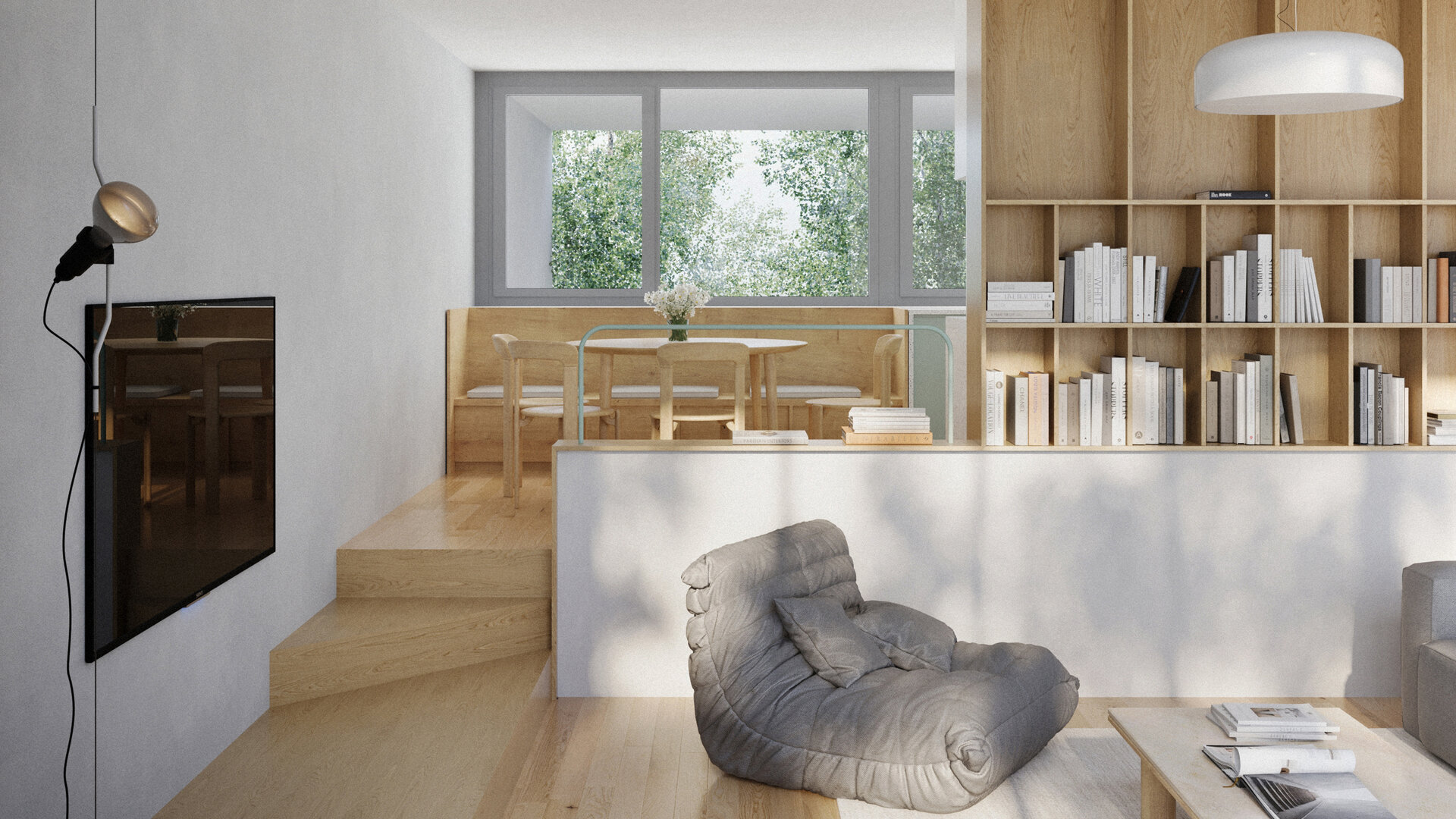
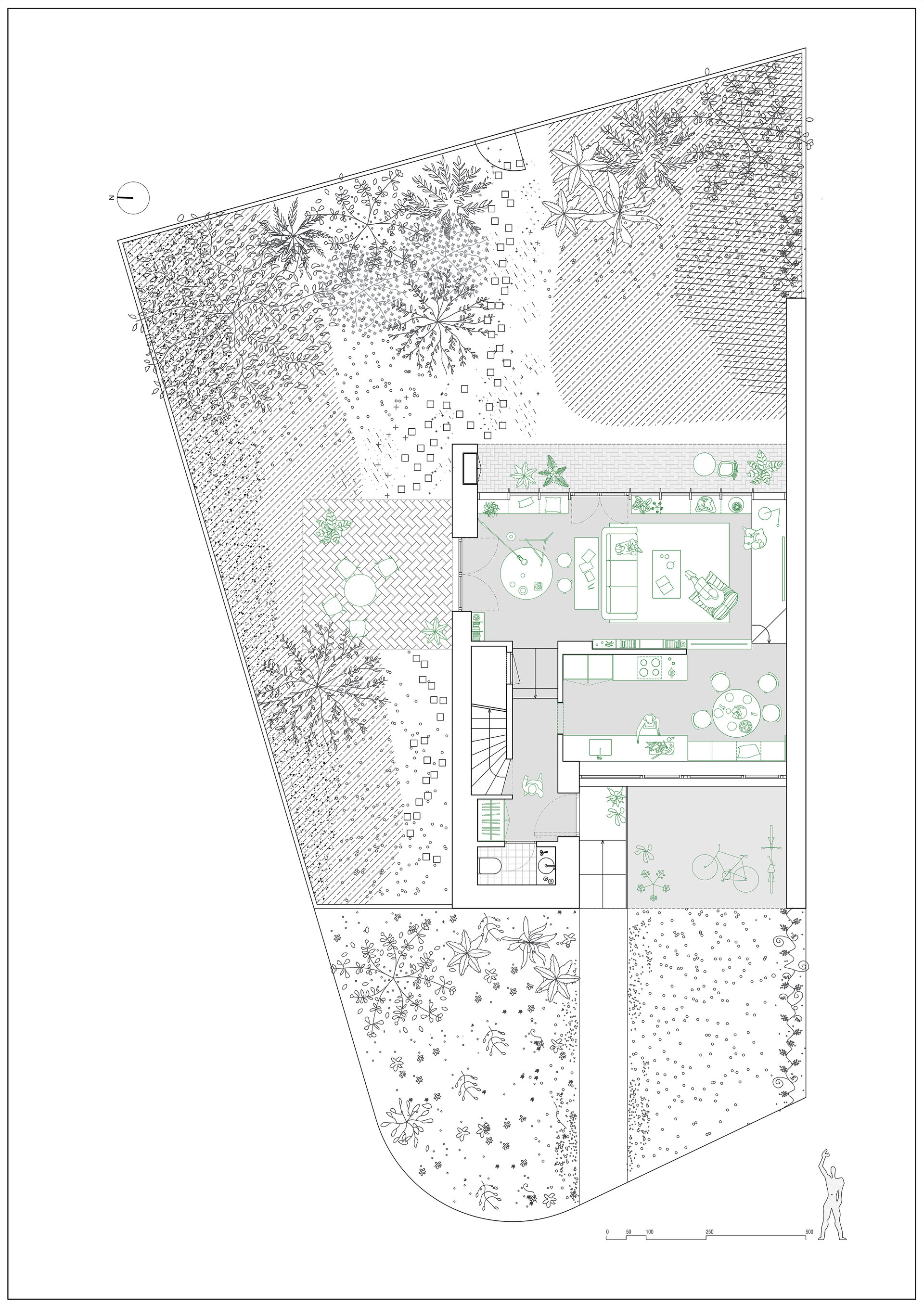
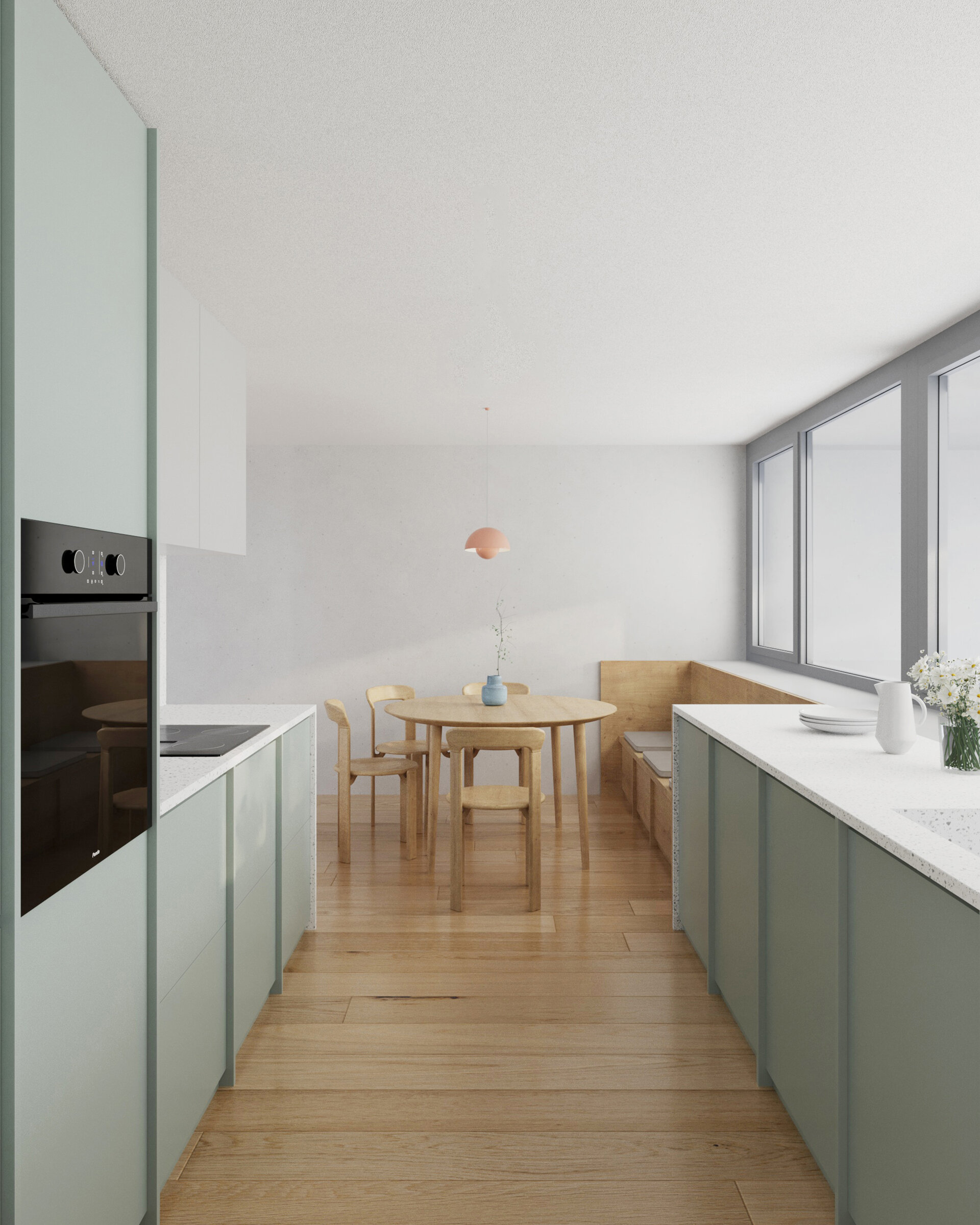
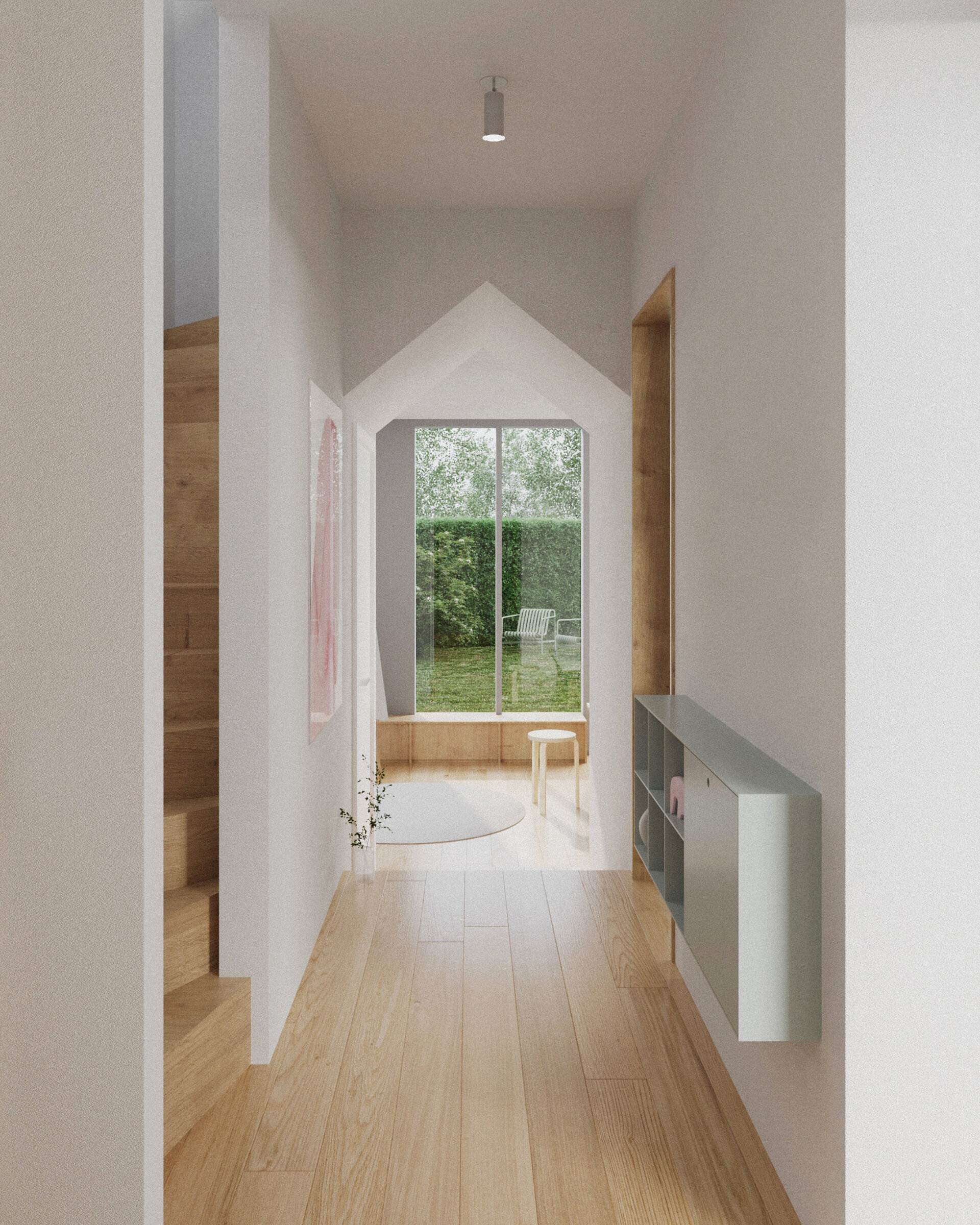
This project is an interior design for a private home located in Amber Forest, a new residential development on the outskirts of Bucharest, for a corner row house. The intervention includes not only the interior but also the schematic design of the garden, establishing a continuous relationship between inside and outside, between the rhythms of domestic life and the surrounding landscape.
The project is structured around a few core principles: adaptability of use, clear but open-ended spatial organisation, and the careful framing of everyday domestic rituals. The architecture does not impose, but suggests possible rhythms, from the quiet routine of making coffee, to shared meals, reading, or simply watching the garden shift with the seasons. The layout prioritises lived sequences over rigid function.
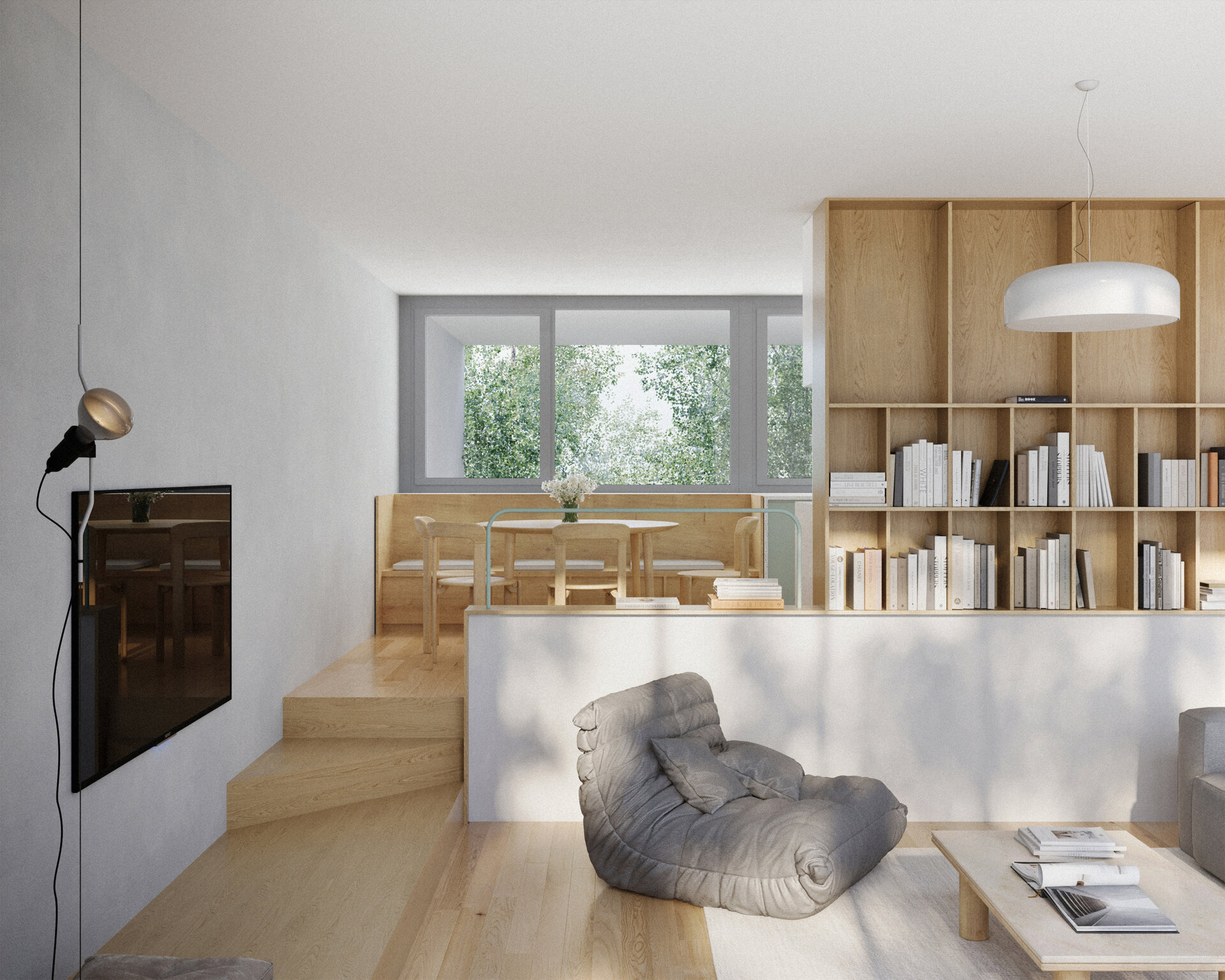
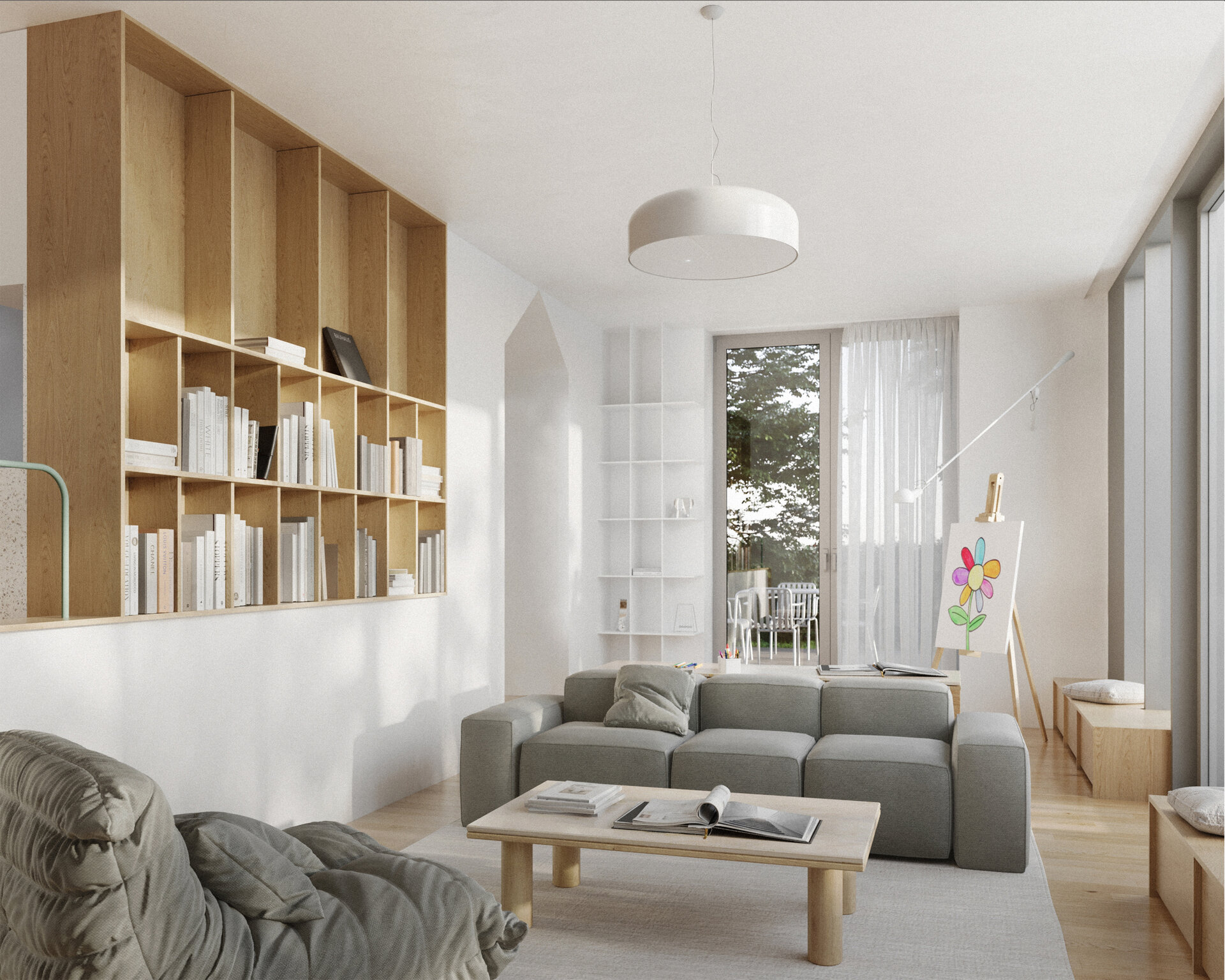
The house opens toward two gardens: a public one near the entrance and a more private one to the back. This dual orientation defines the plan and creates moments of pause and thresholds. A subtle shift in level, with the living area sunken to garden level, marks a spatial transition, giving weight and intimacy to the room without enclosure.
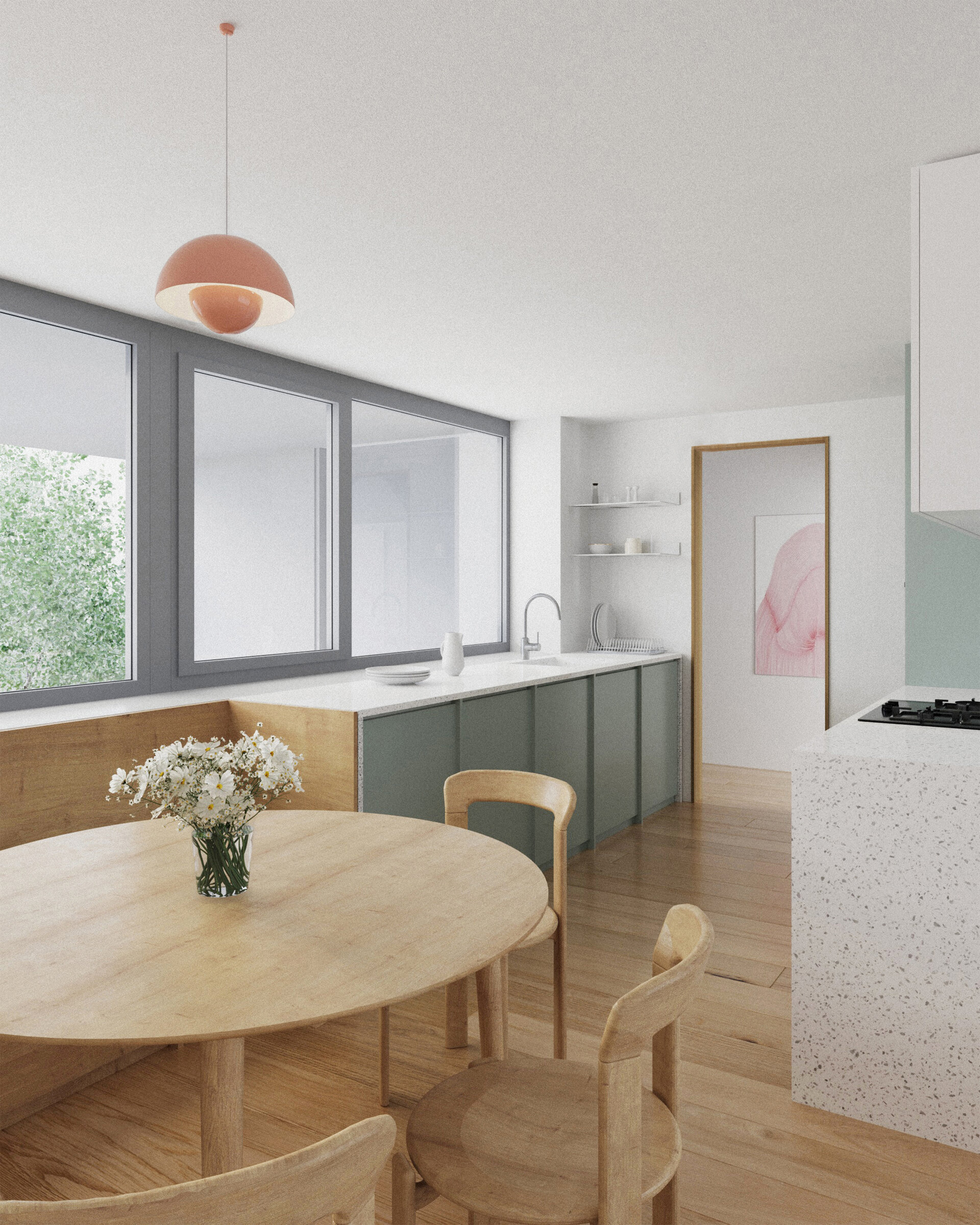
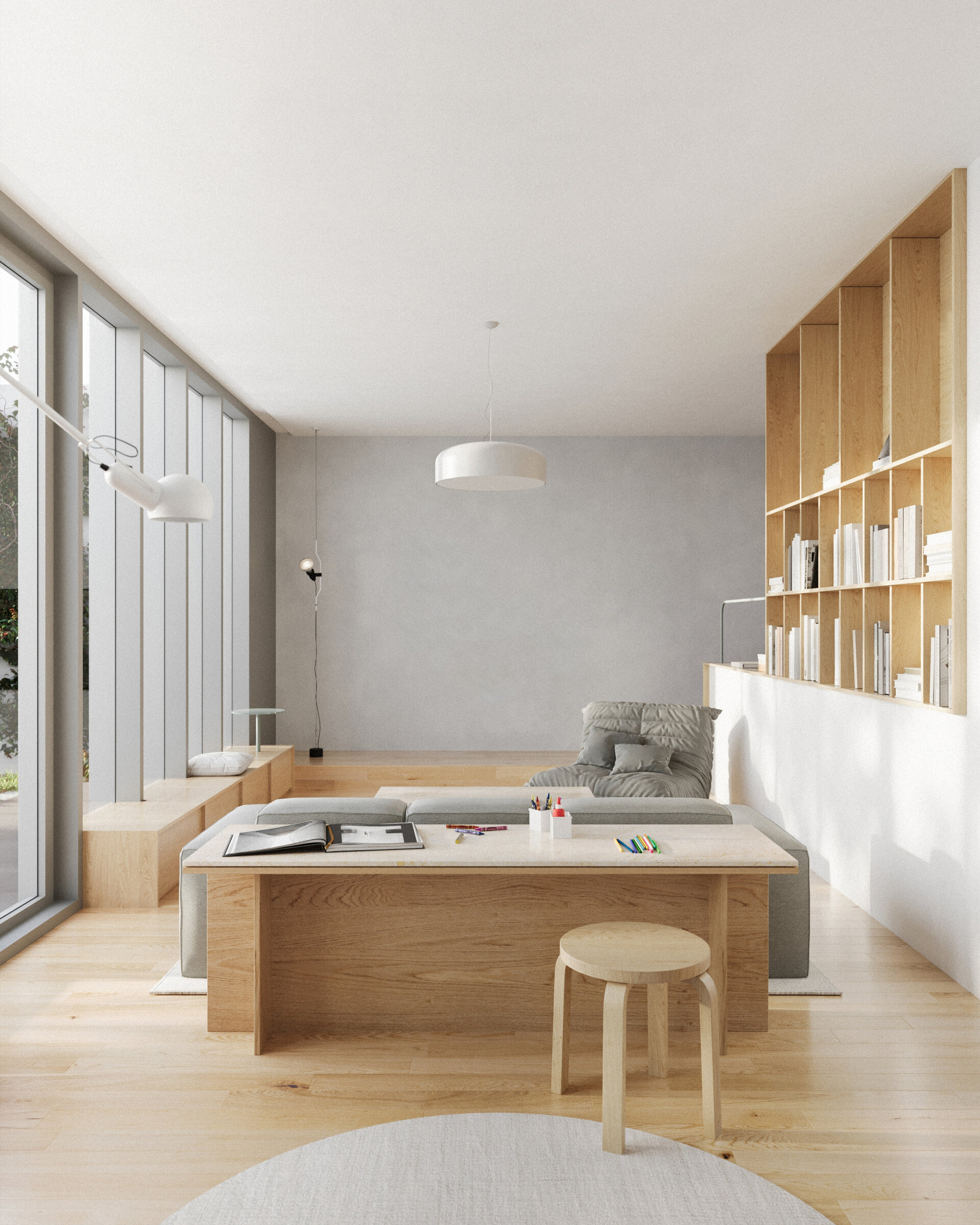
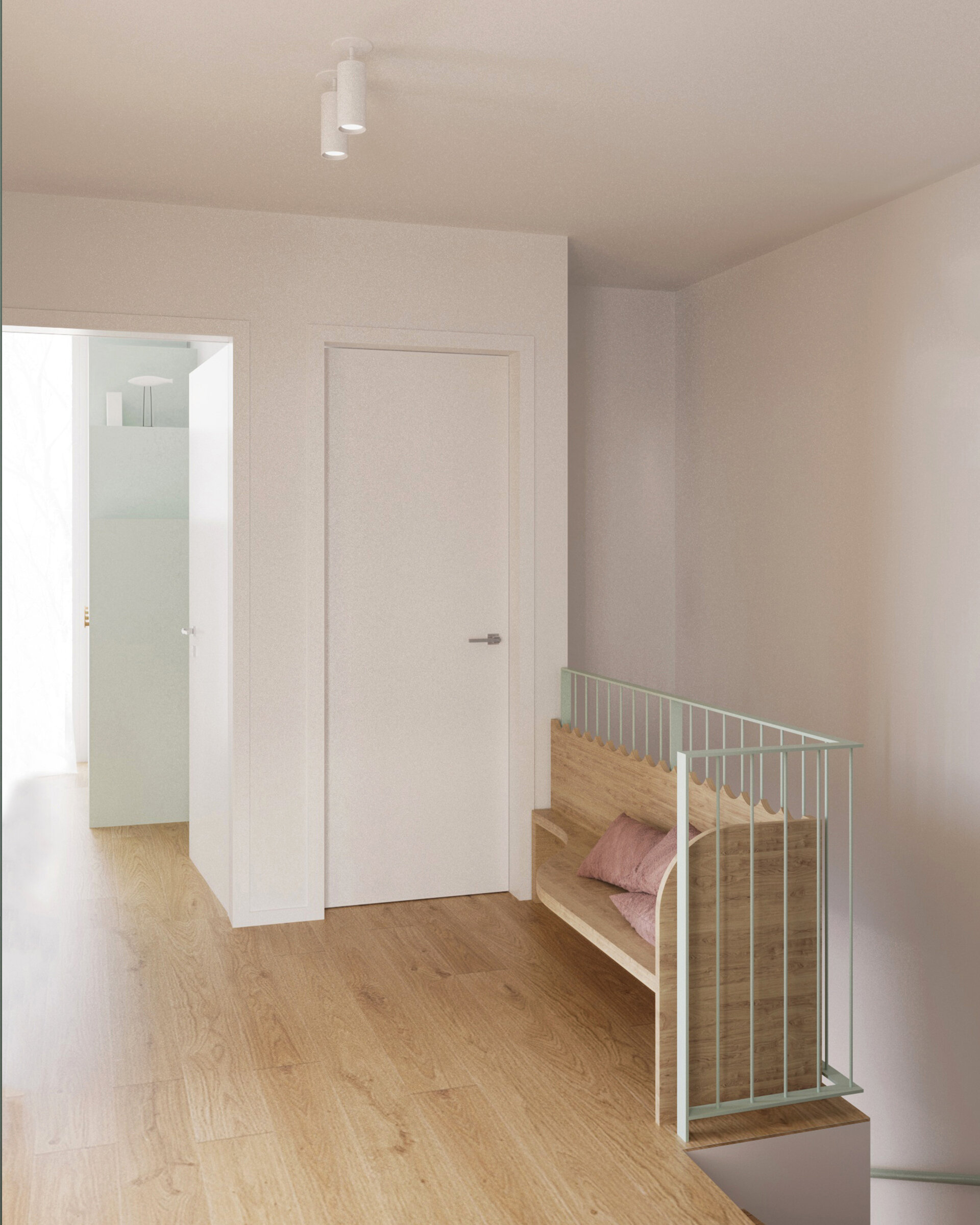
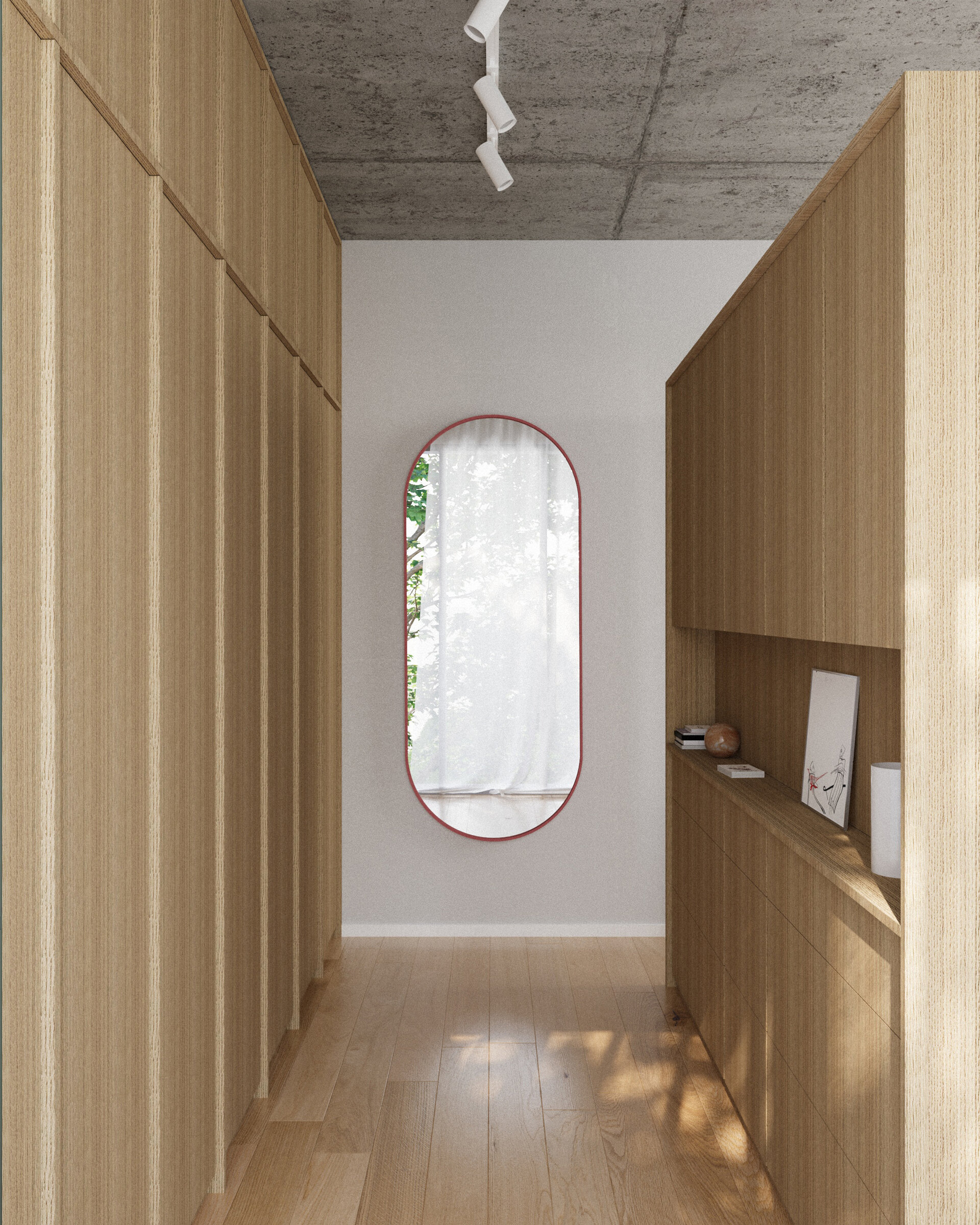
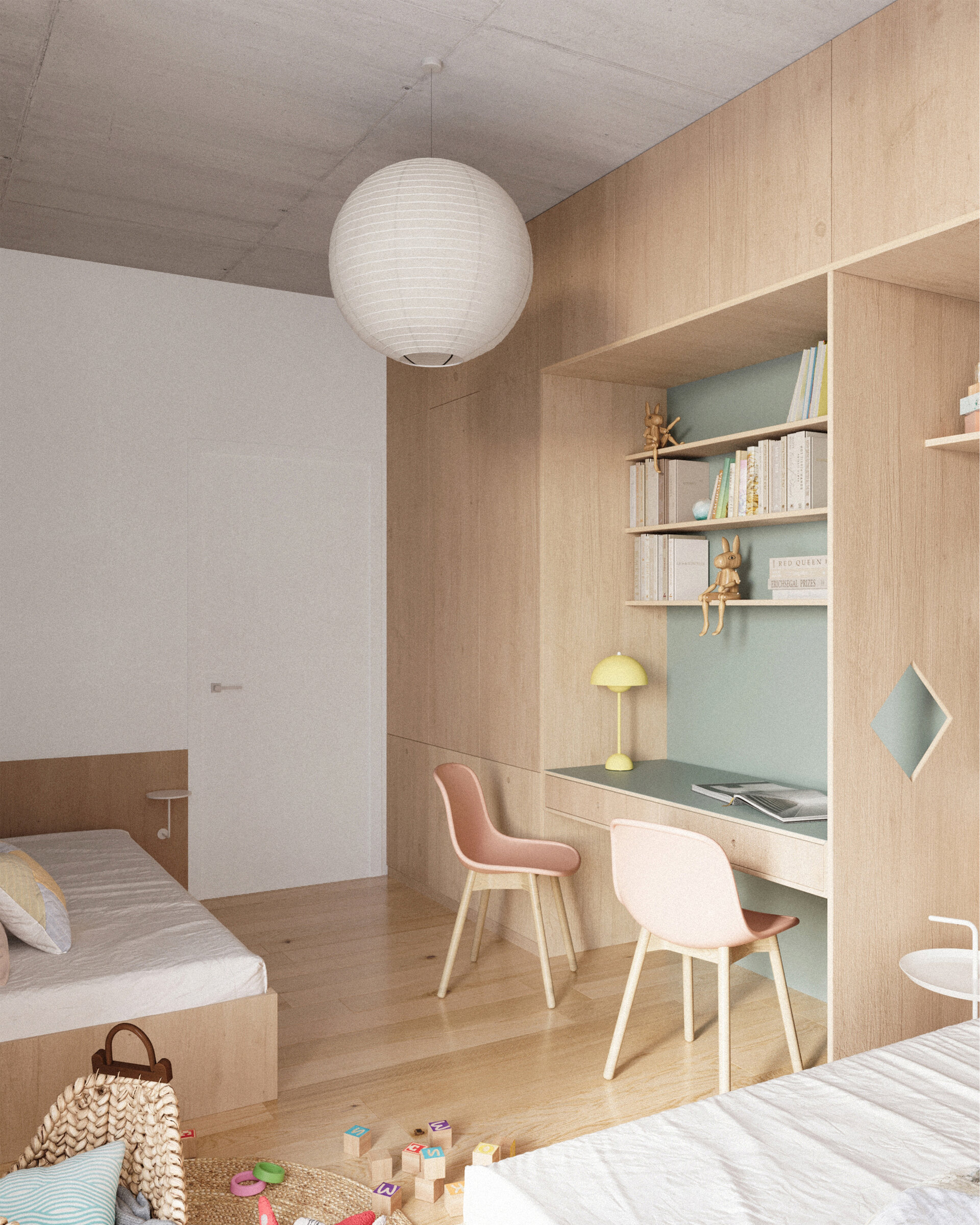
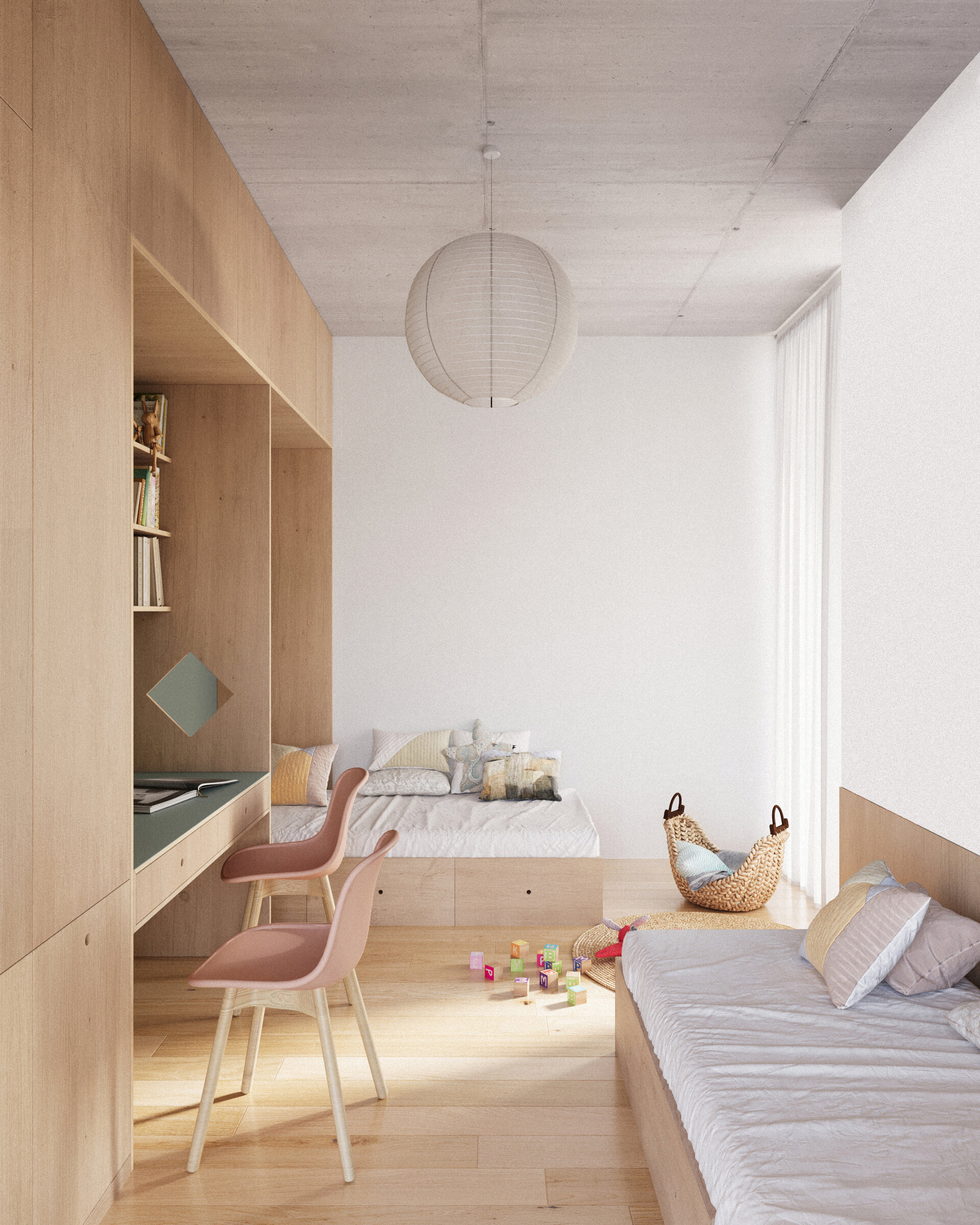
Integrated furniture is part of the architecture itself, rather than a decorative addition. It is conceived as a system of fixed elements that define and calibrate the space. Each piece serves a primary function but allows for variation and reinterpretation in daily use. Through positioning, proportion, and materiality, these elements do more than equip rooms, they establish relationships within them.
The garden follows the same spatial logic as the interior: it is inhabitable, an extension of the home. Layered vegetation, shaded areas, and gravel paths shape a free yet flexible geometry. Seating areas by the windows and terraces fade the boundary between inside and outside, making the act of crossing between interior and exterior part of everyday life.
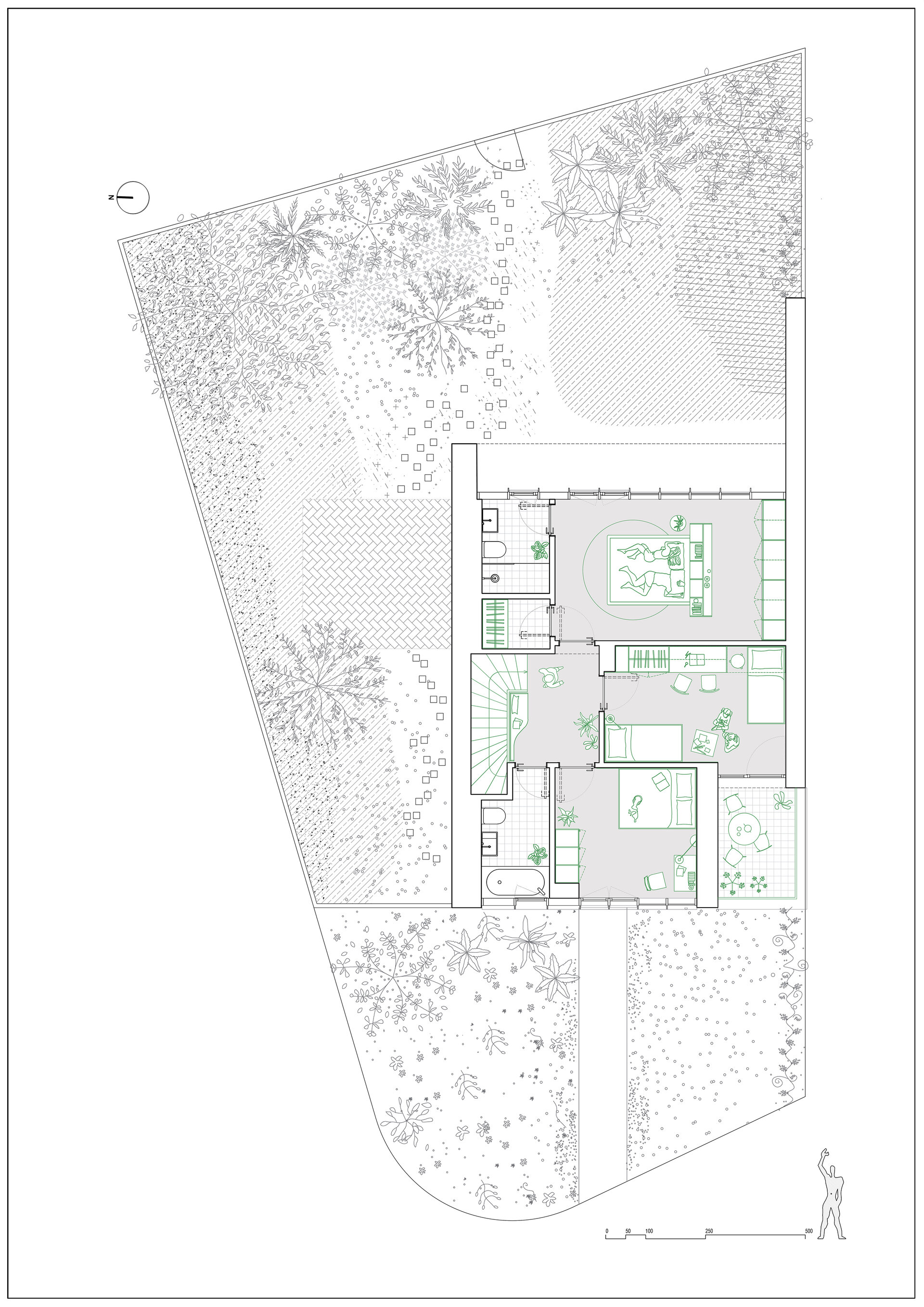
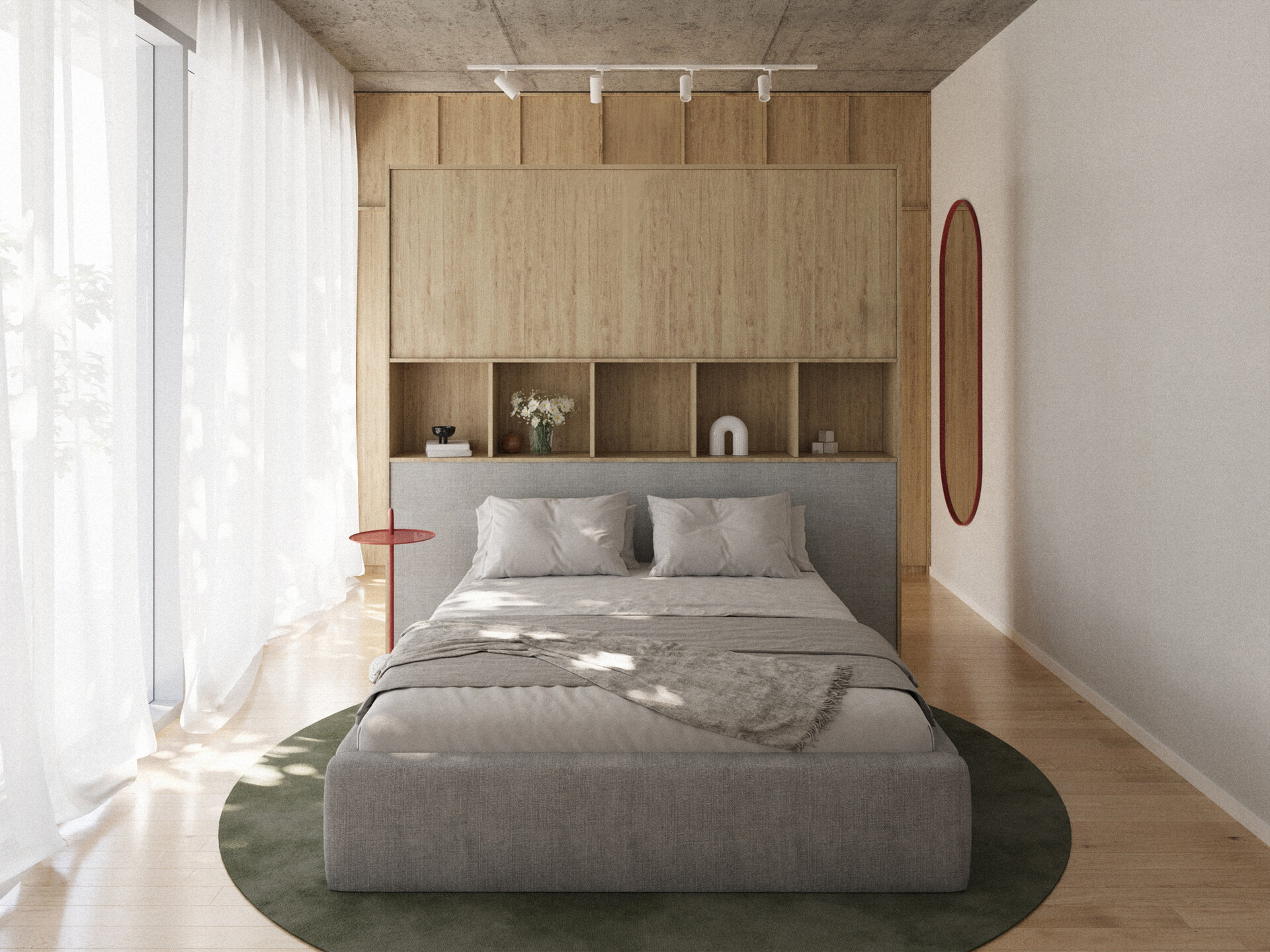
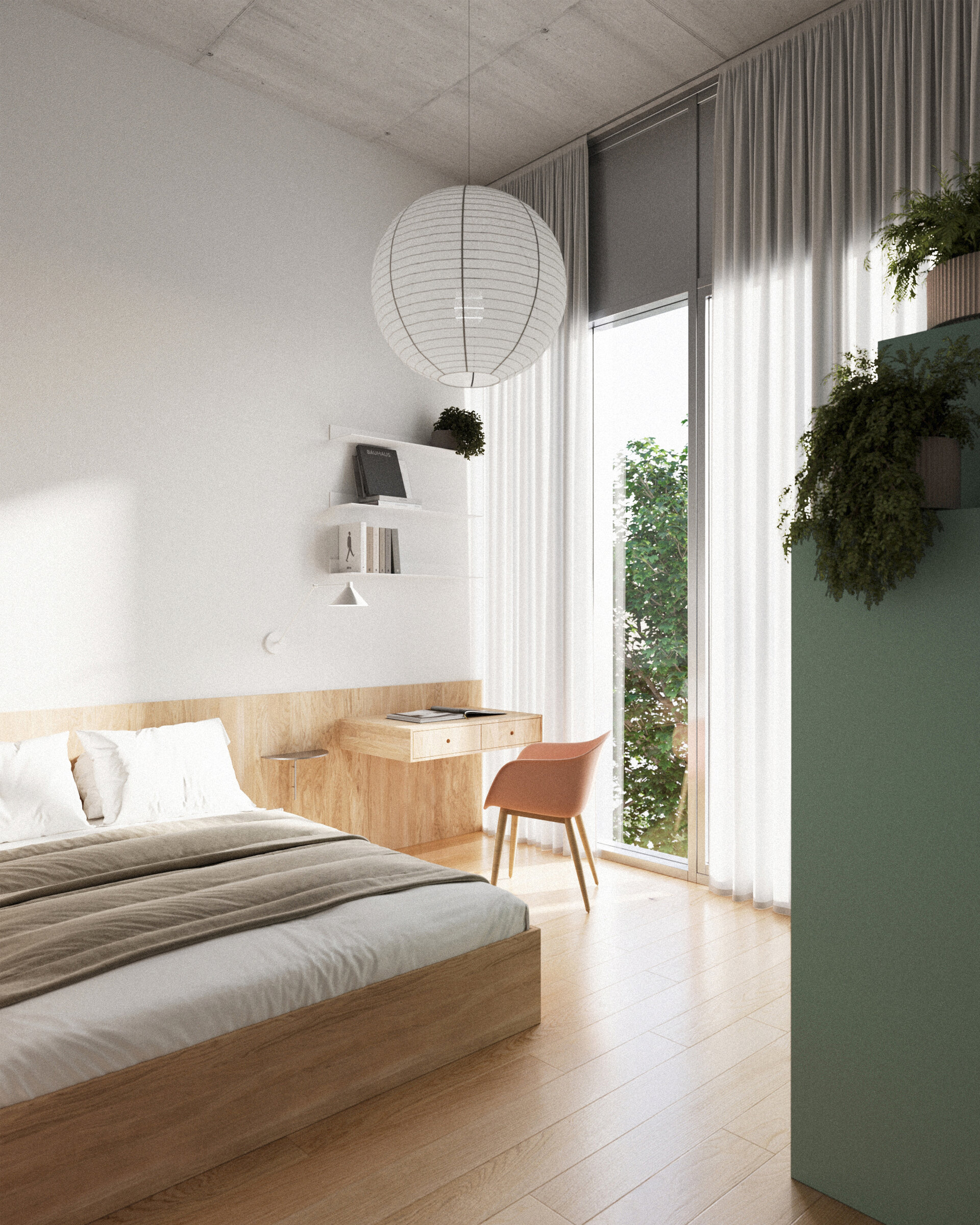
On the upper level, spaces become more private. The floor is arranged for a family with twin girls sharing a bedroom. A second multifunctional room serves as a guest bedroom or office, used as needed. The rooms are compact and clear, fostering an atmosphere of restraint and intimacy.
The material palette reinforces the domestic mood and reflects a consistent concern for coherence and sustainability. Natural materials, mineral plasters, engineered wood flooring, and warm pastel tones create a tactile and serene ambiance. The exposed concrete ceiling, preserved as a visible structural element, becomes part of the architectural expression. It also integrates a radiant heating and cooling system - a technical solution that ensures comfort without unnecessary additions.
The project offers a spatial framework, a defined but open infrastructure where life unfolds at its own pace. Drawings were made not only to communicate layout, but also to describe these moments of life. These are not accessories to the architecture, but its very content.
Interior Design

- Atelier Amzei 13
- Terrarium 707
- Symbiosis
- Tins and Tonic - Gin Bar
- House in Amber Forest
- Wabi-Sabi Penthouse
- Japandi Apartment
- Beauty Clinique
- House Sf. Gheorghe Delta
- The Other Otter
- Cram
- DentOne Oral Rehabilitation Centre
- Narcissus
- Apartament 3L
- CP Interior design
- Apartment B.S.
- House S interior design
- Color Motion


