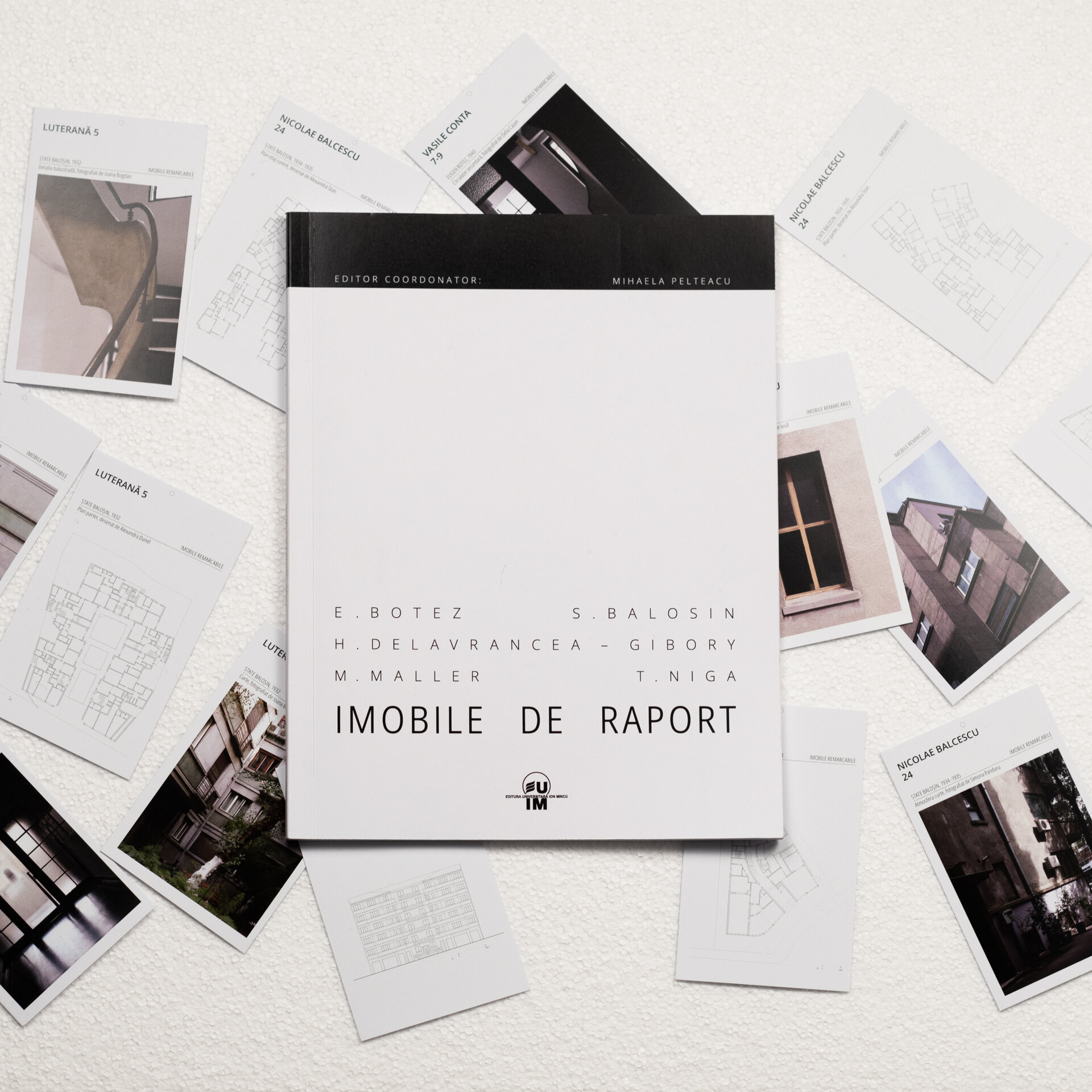
Block of flats: E. Botez, S. Baloșin, H. Delavrancea-Gibory, M. Maller, T. Niga
Authors’ Comment
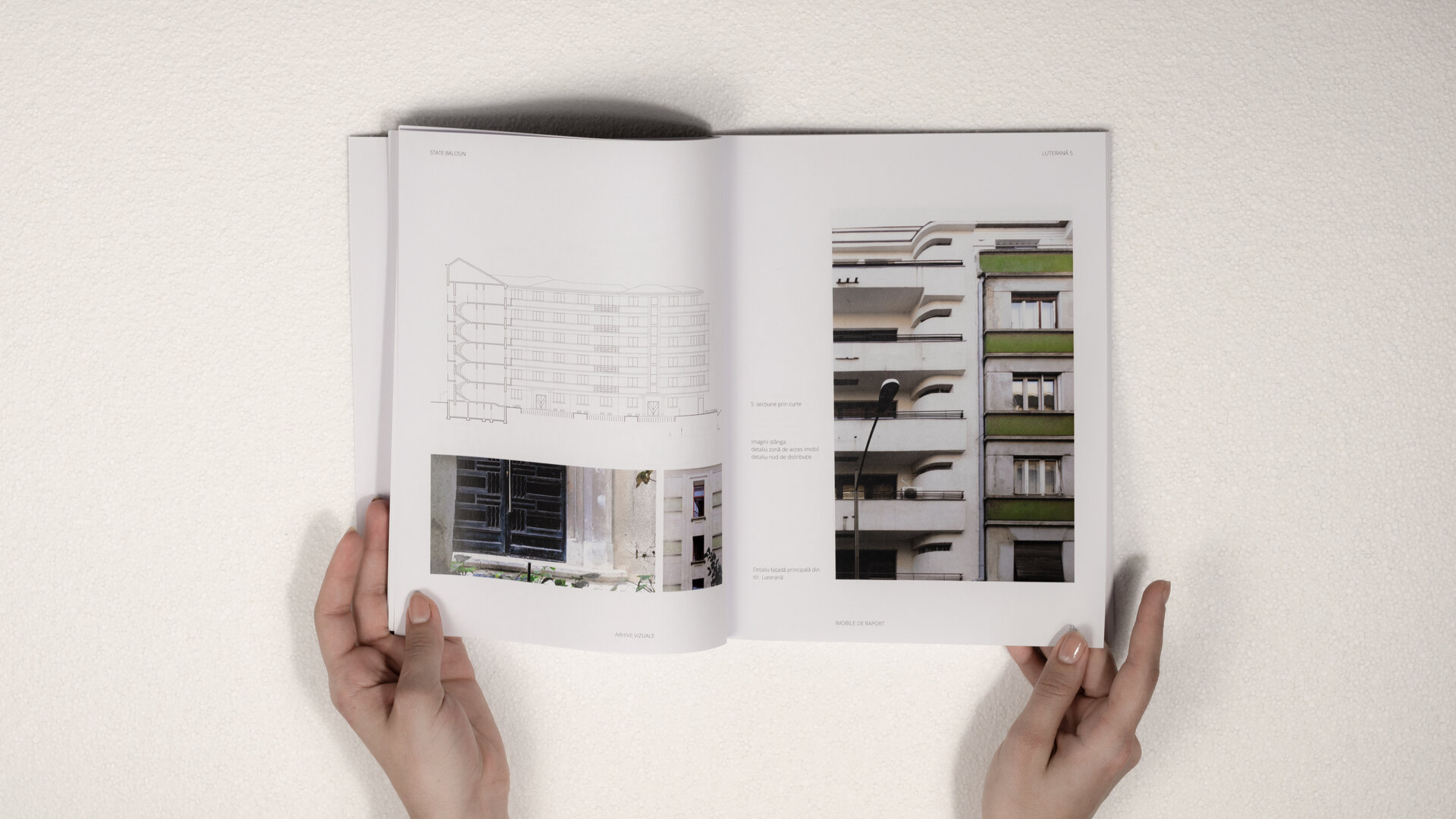
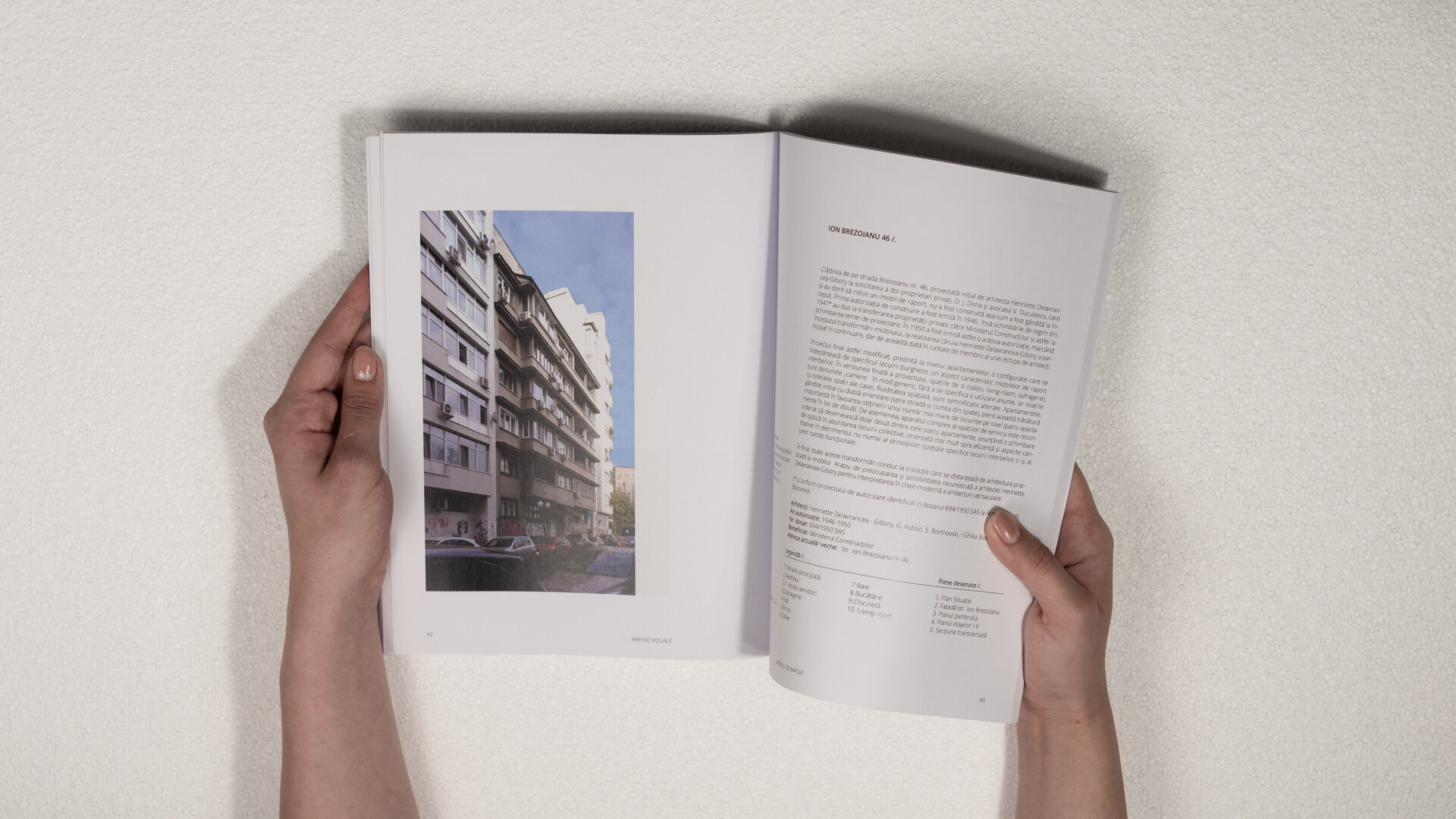
The publication ‘Block of flats’ presents 10 interwar buildings constructed in Bucharest between 1932 and 1946, documented in the PMB archives, bearing the signature of renowned Romanian architects (Tiberiu Niga, Henriette Delavrancea-Gibory, Marcel Maller, State Baloșin and Eugen Botez).
The theme proposal, research coordination and published texts are signed by architect Mihaela Pelteacu, associate professor at the Faculty of Architecture of the UAUIM. The research team included PhD student Alexandra Diana Dunel and PhD student Alexandra Diana Stan, who also coordinated the preparation of the graphic elements, vectorisation, photography and editing, and their organisation in the publication layout, together with third-year students.
The work was published in 2024 as part of the CULTADISER project run by the Ion Mincu University of Architecture and Urbanism, through institutional development funds (FDI).The buildings were selected from the period 1932-1946 and are examples of one of the most interesting and significant typologies in the history of urban housing — not only in Bucharest but also in Europe — and, last but not least, they are valuable local references today for what we understand by dense housing.
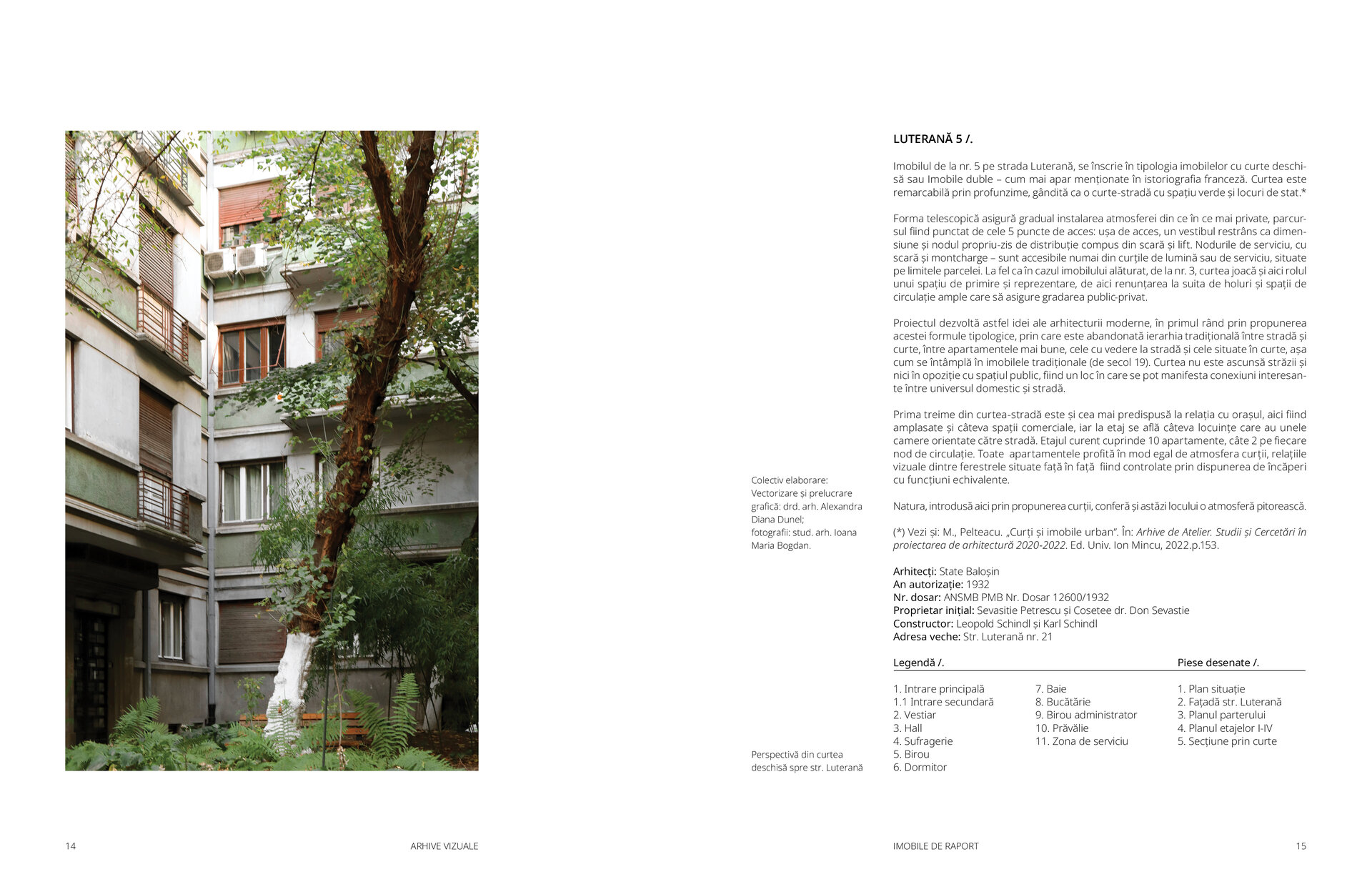
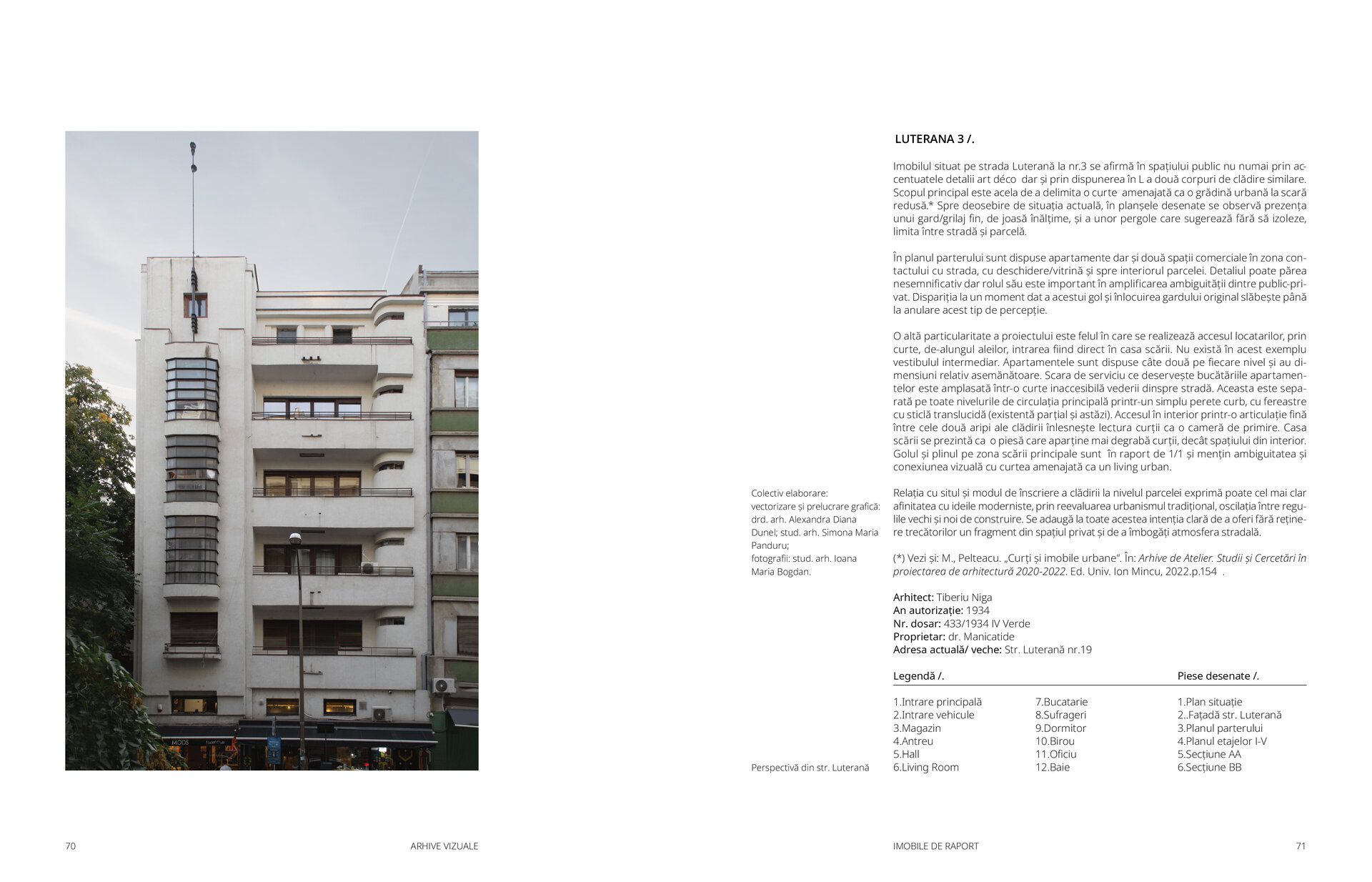
These buildings stand out either through their uniqueness or originality in Bucharest architecture (as is the case with buildings with open courtyards), or through the integration of important ideas of the Modern Movement (see the buildings at 5 and 3 Luterană Street, architects State Baloșin and Tiberiu Niga, respectively), or a particular way of inserting themselves into the urban fabric.
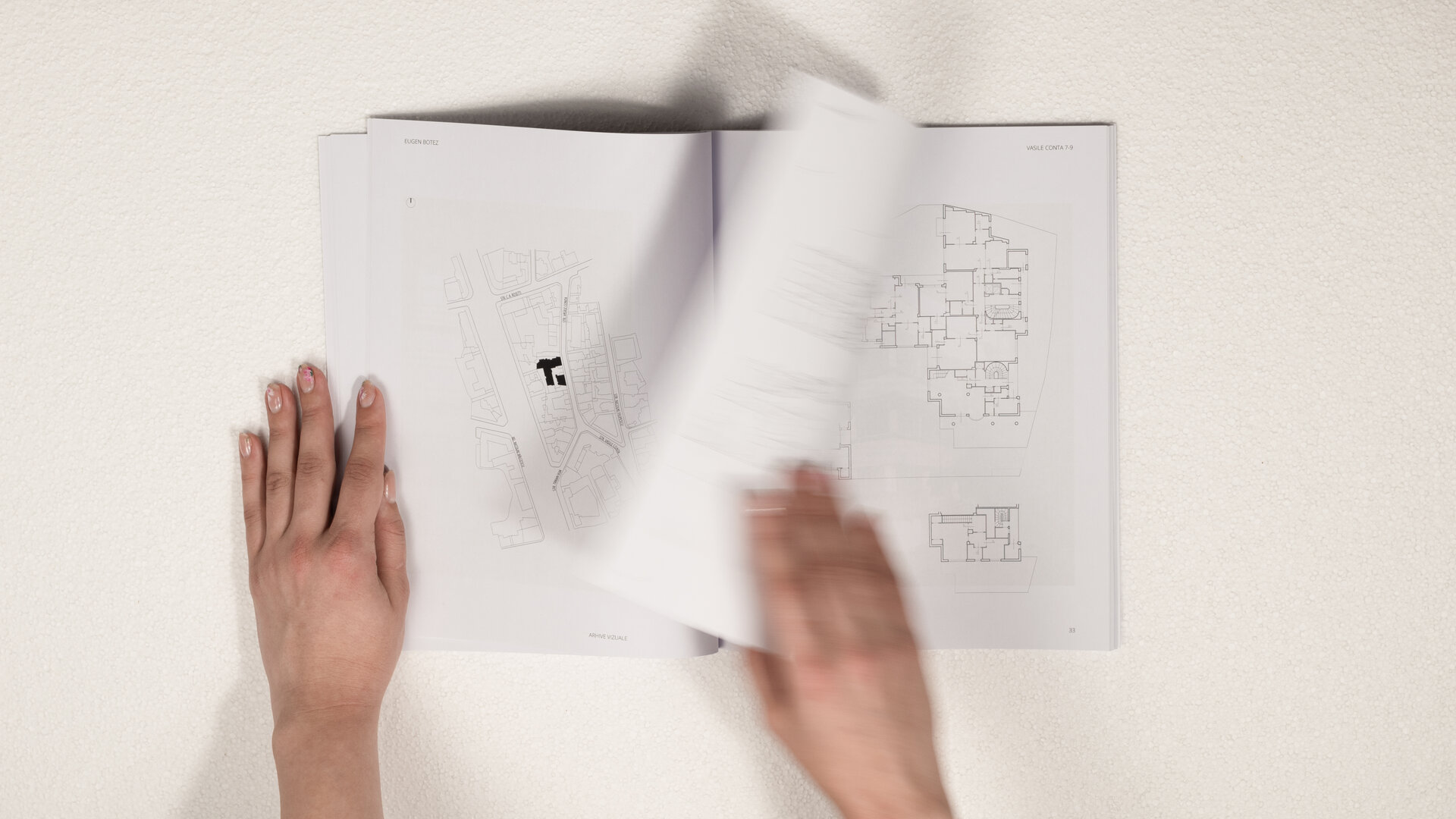
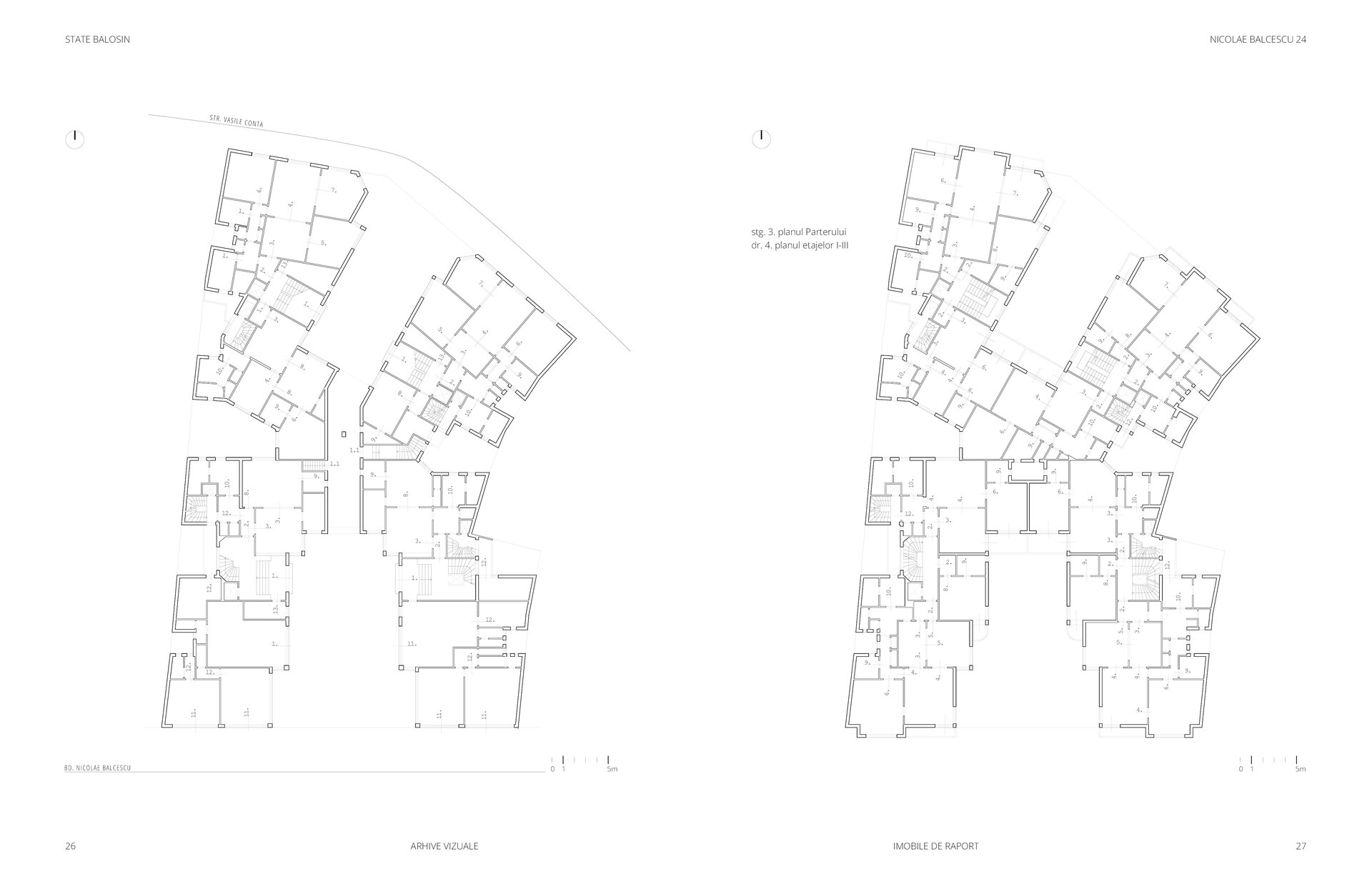
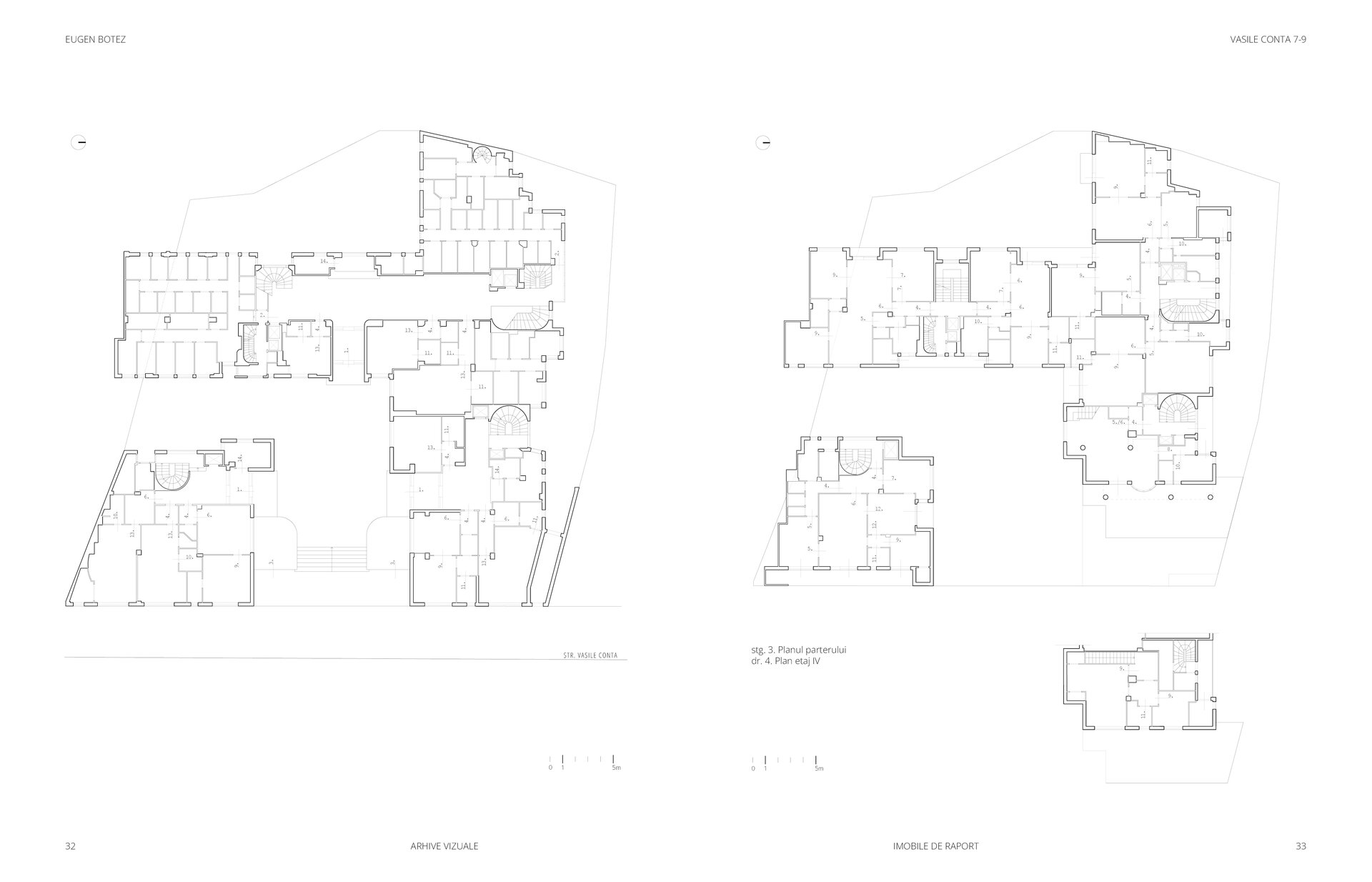
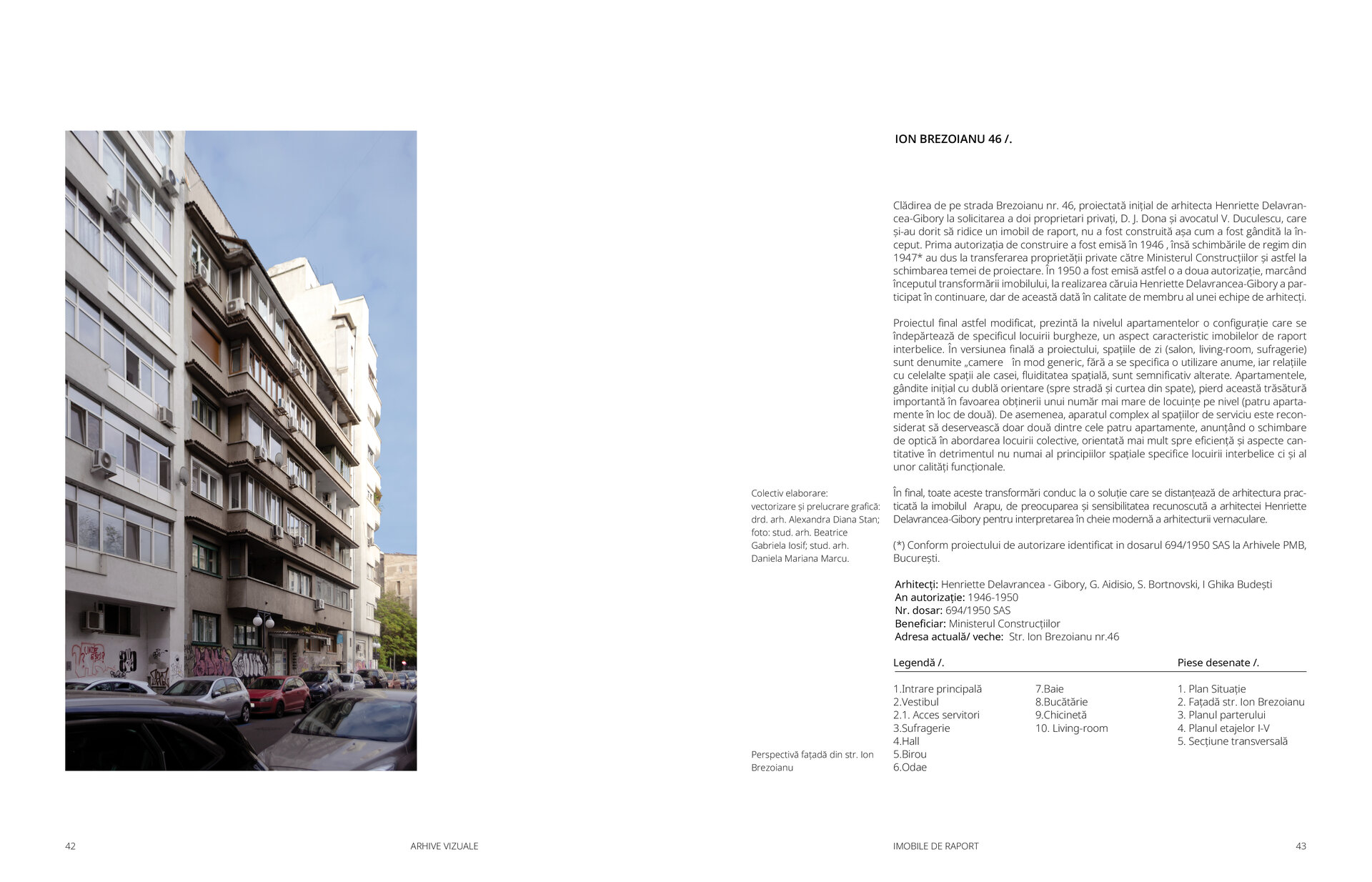
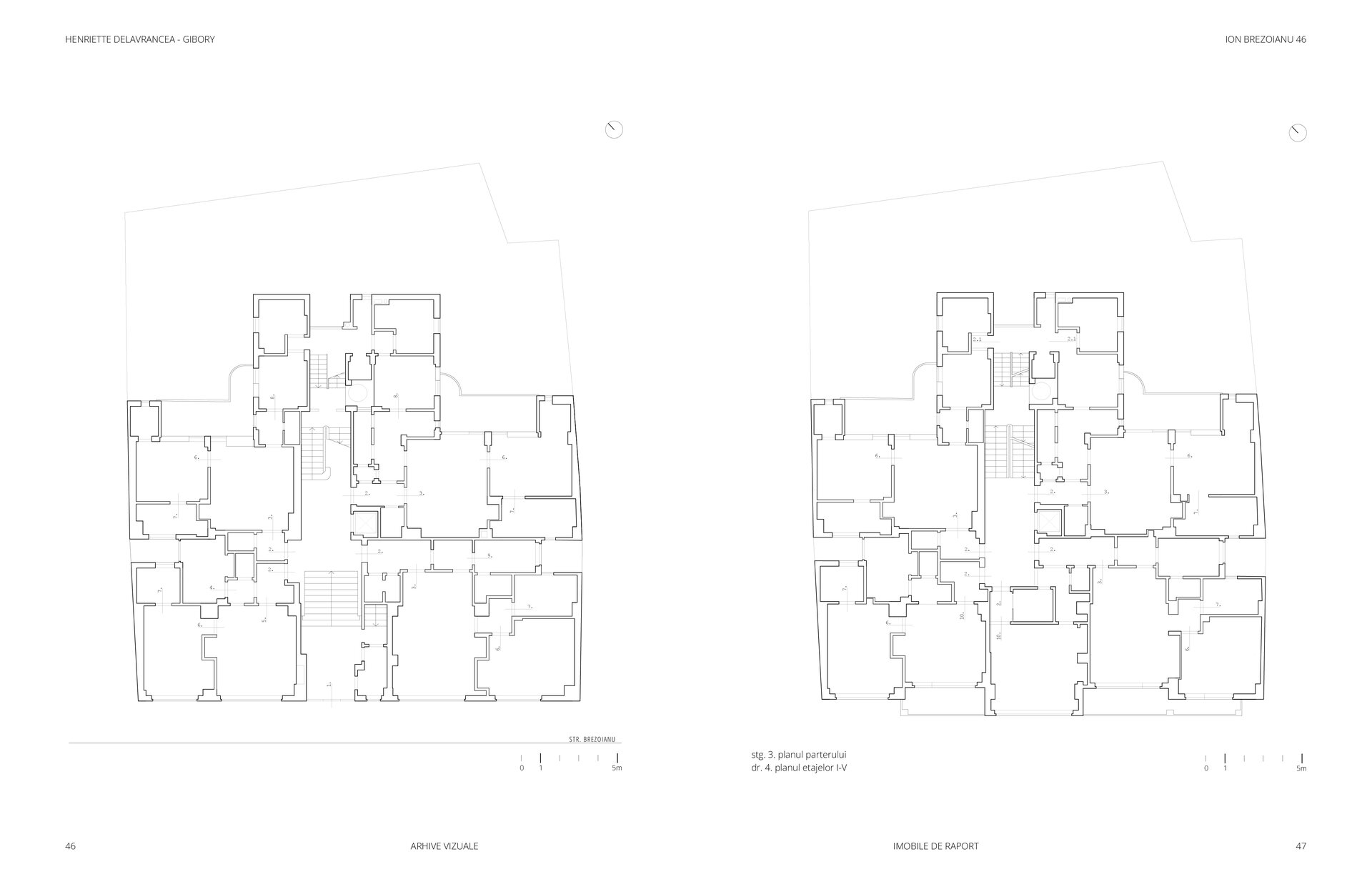
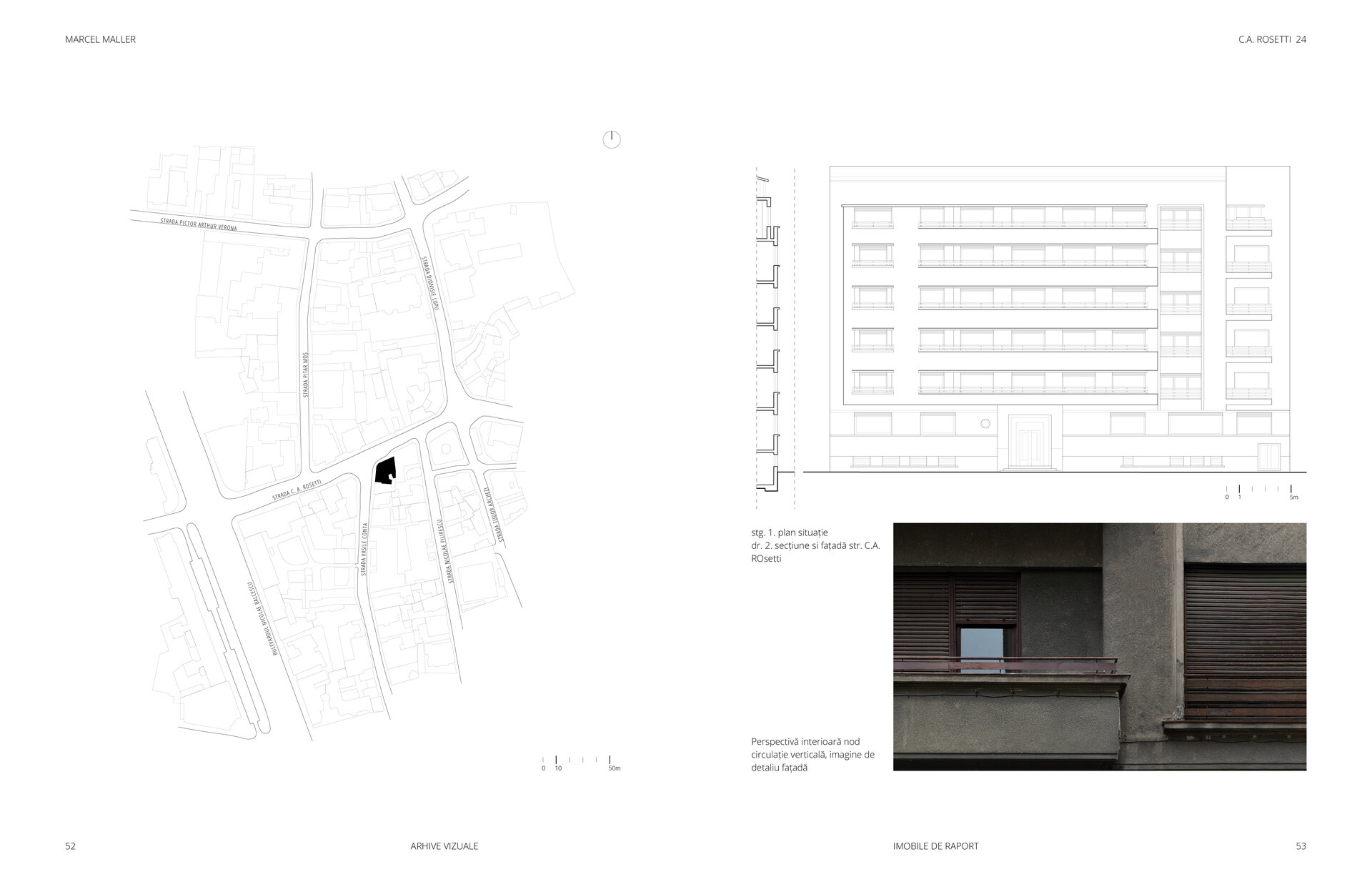
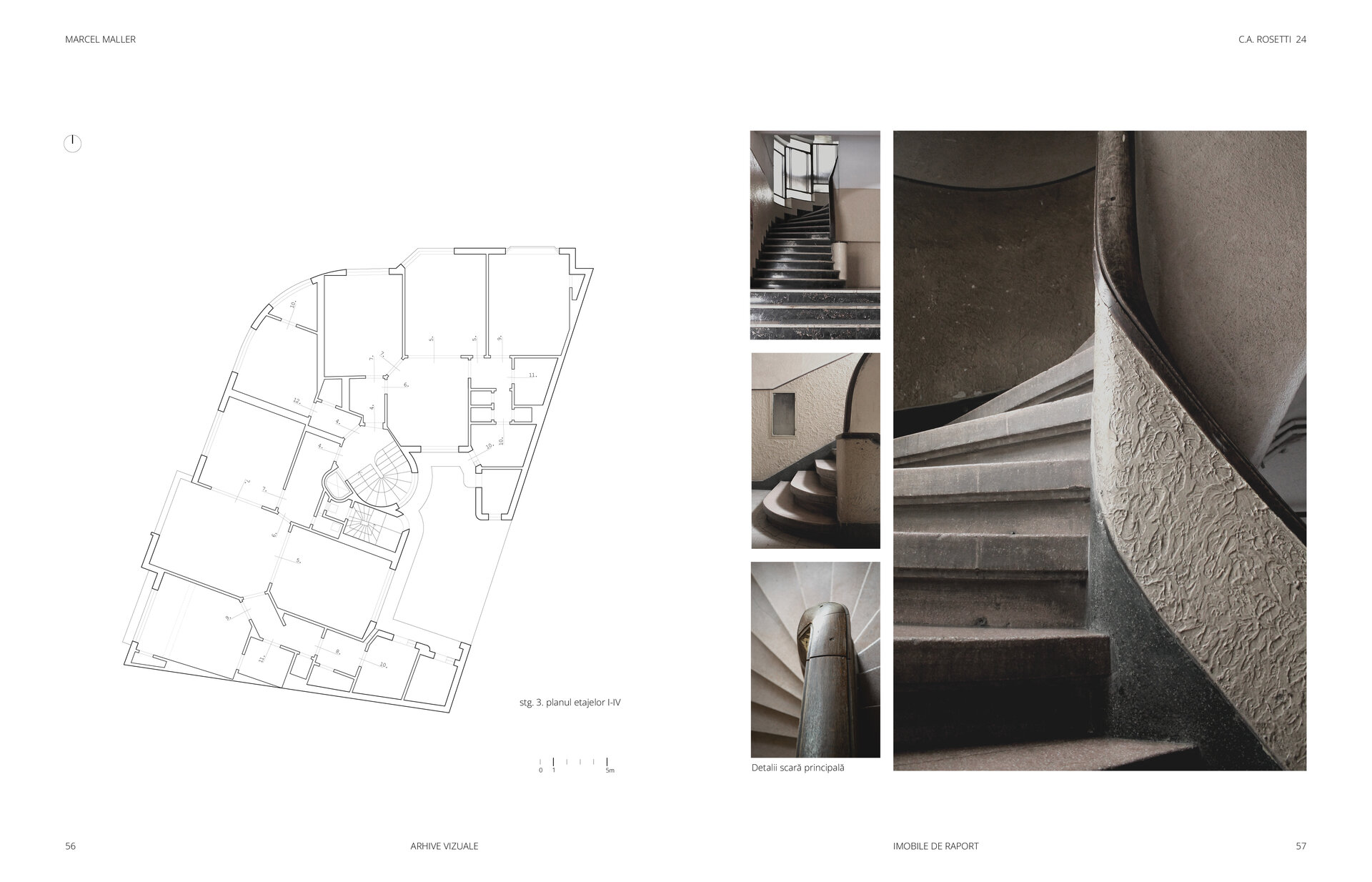
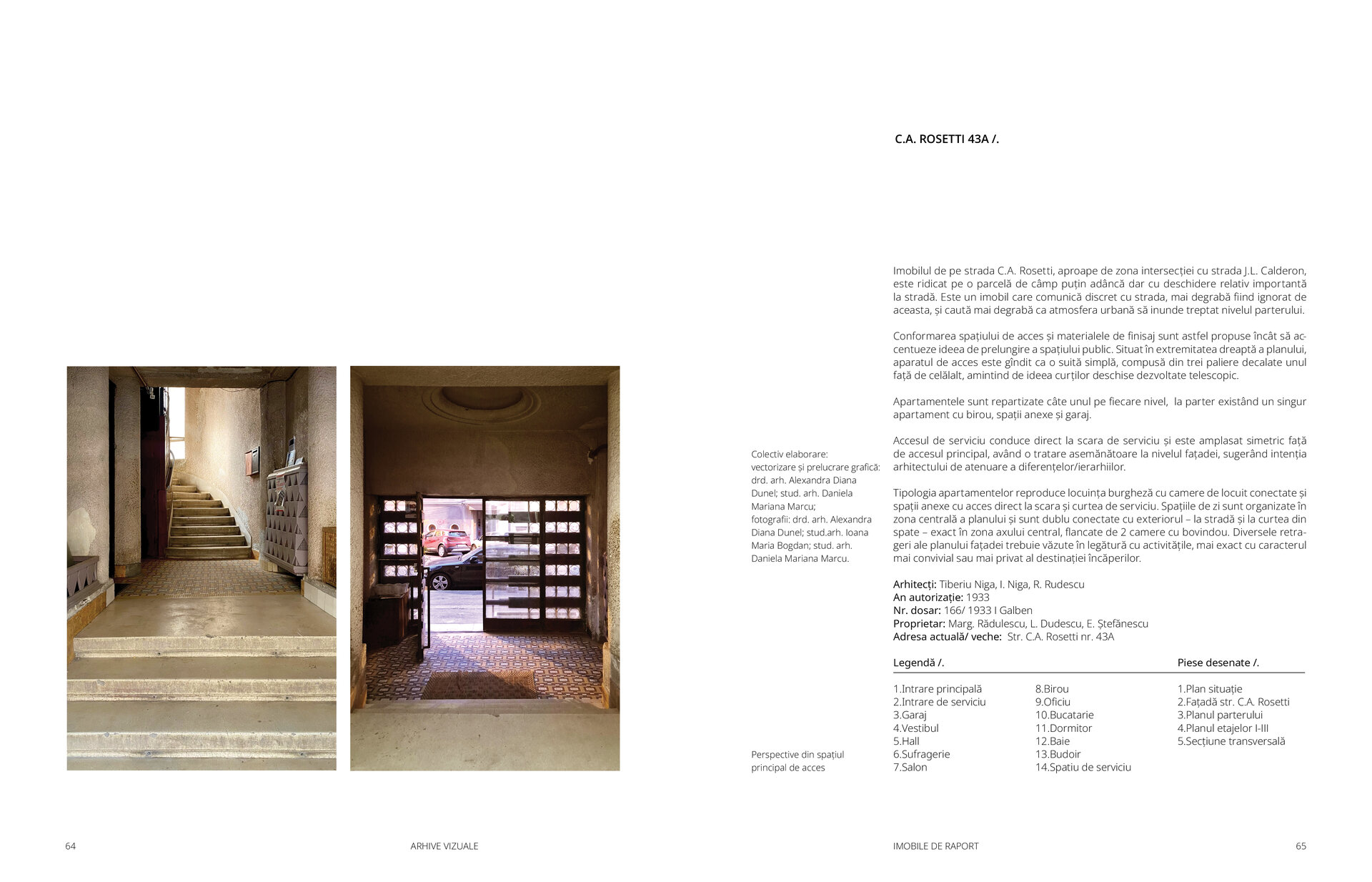
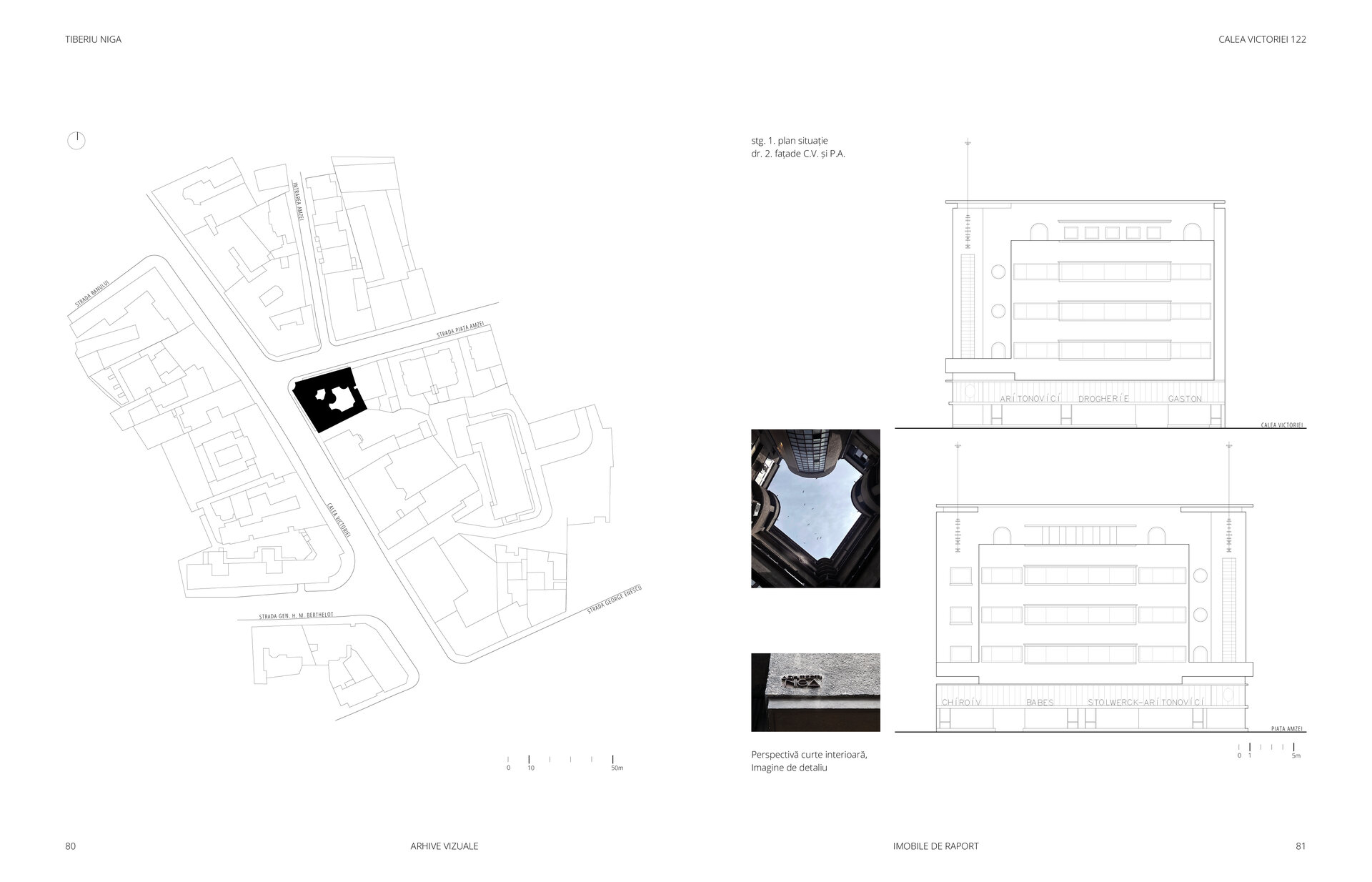
This publication provides architects, students, doctoral students and the general public interested in the history of the city with an important archive of images that brings together 10 of the most significant buildings in Bucharest, which, in addition, bear the signature of renowned Romanian architects. The results of the documentation and analysis of these buildings are presented in an introductory text and a graphic presentation of the main parts of the projects in the version prepared for the building permit, vectorised from the plans photographed in the archive, in a legible form.
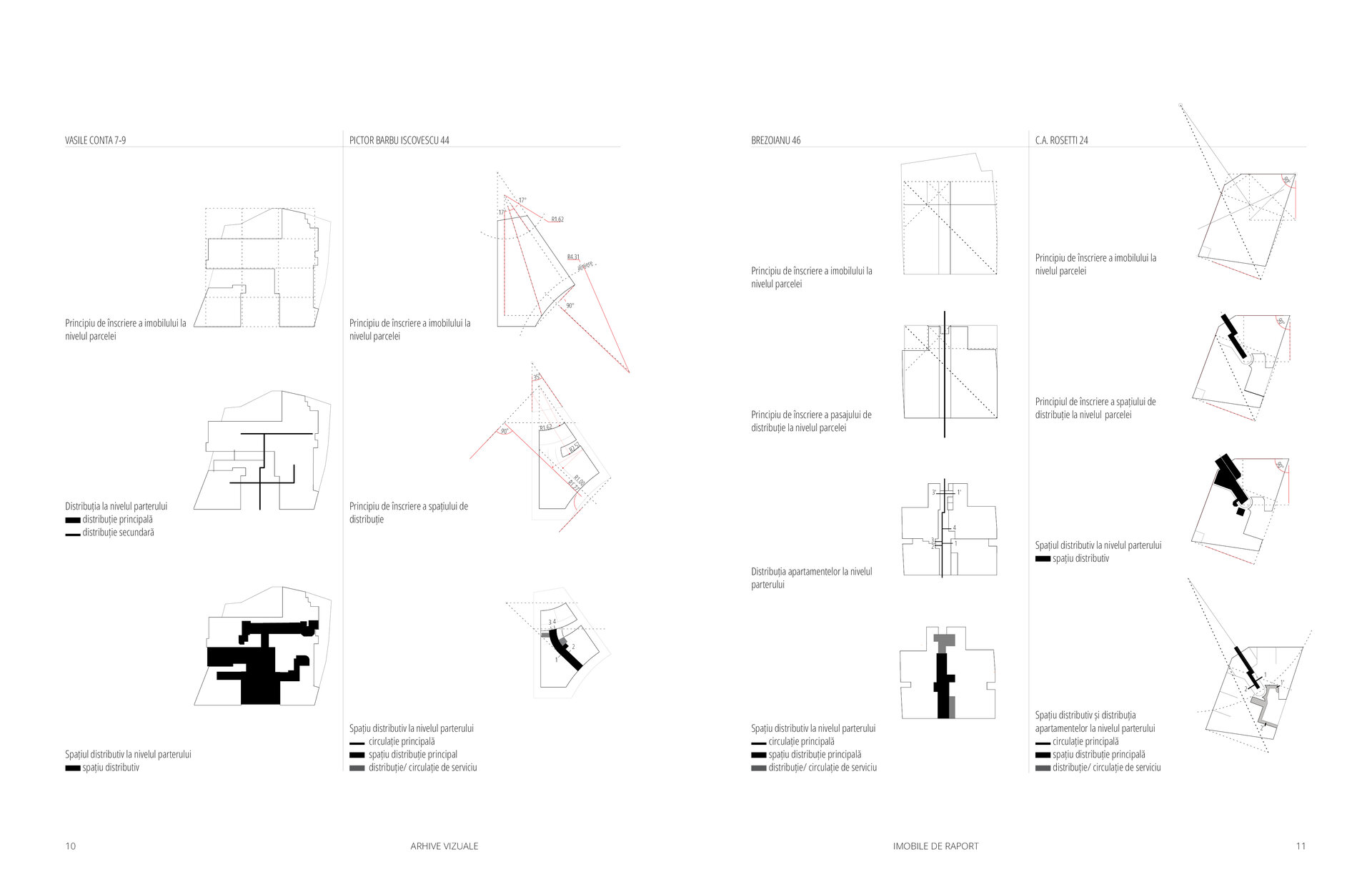
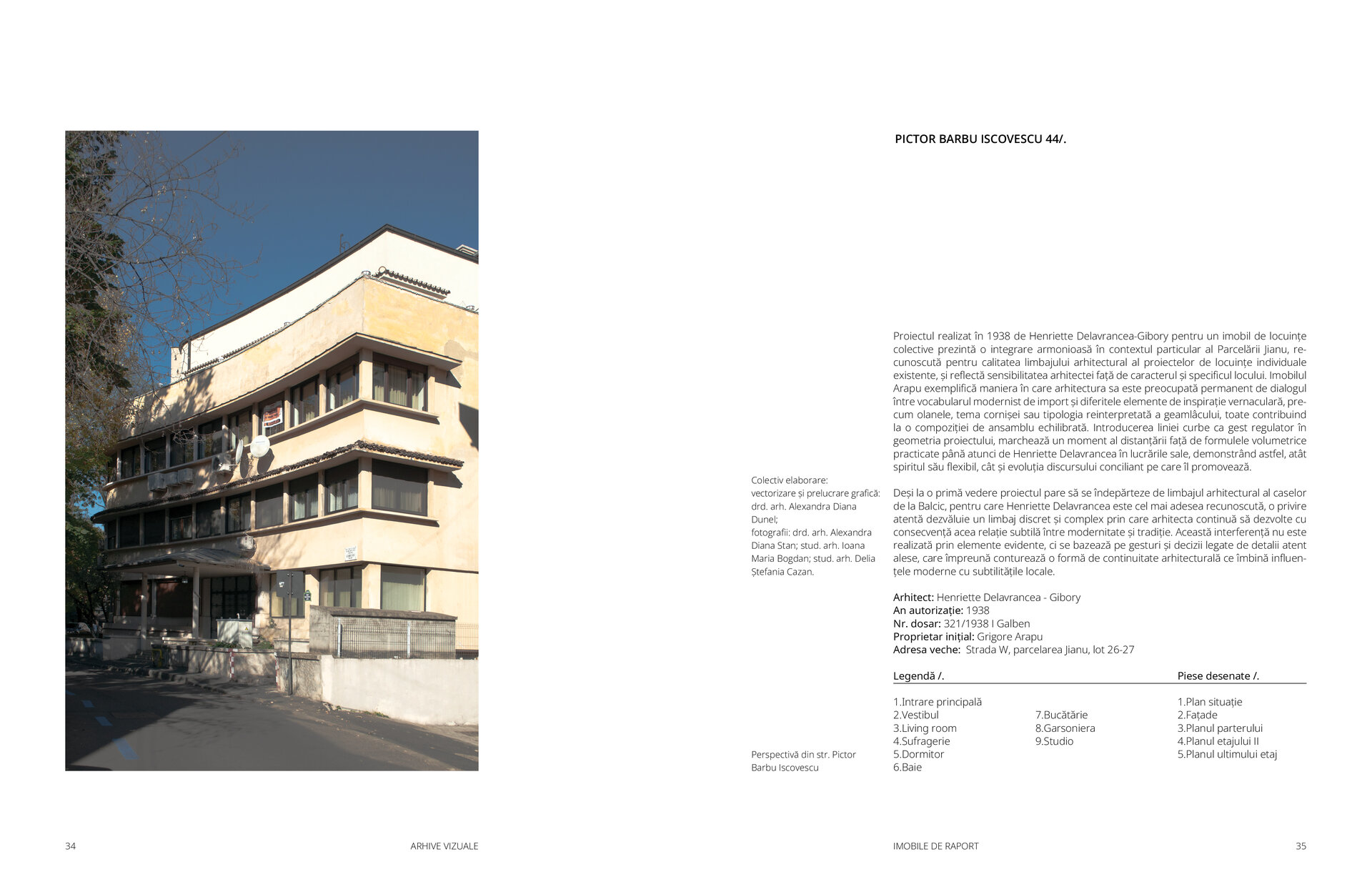
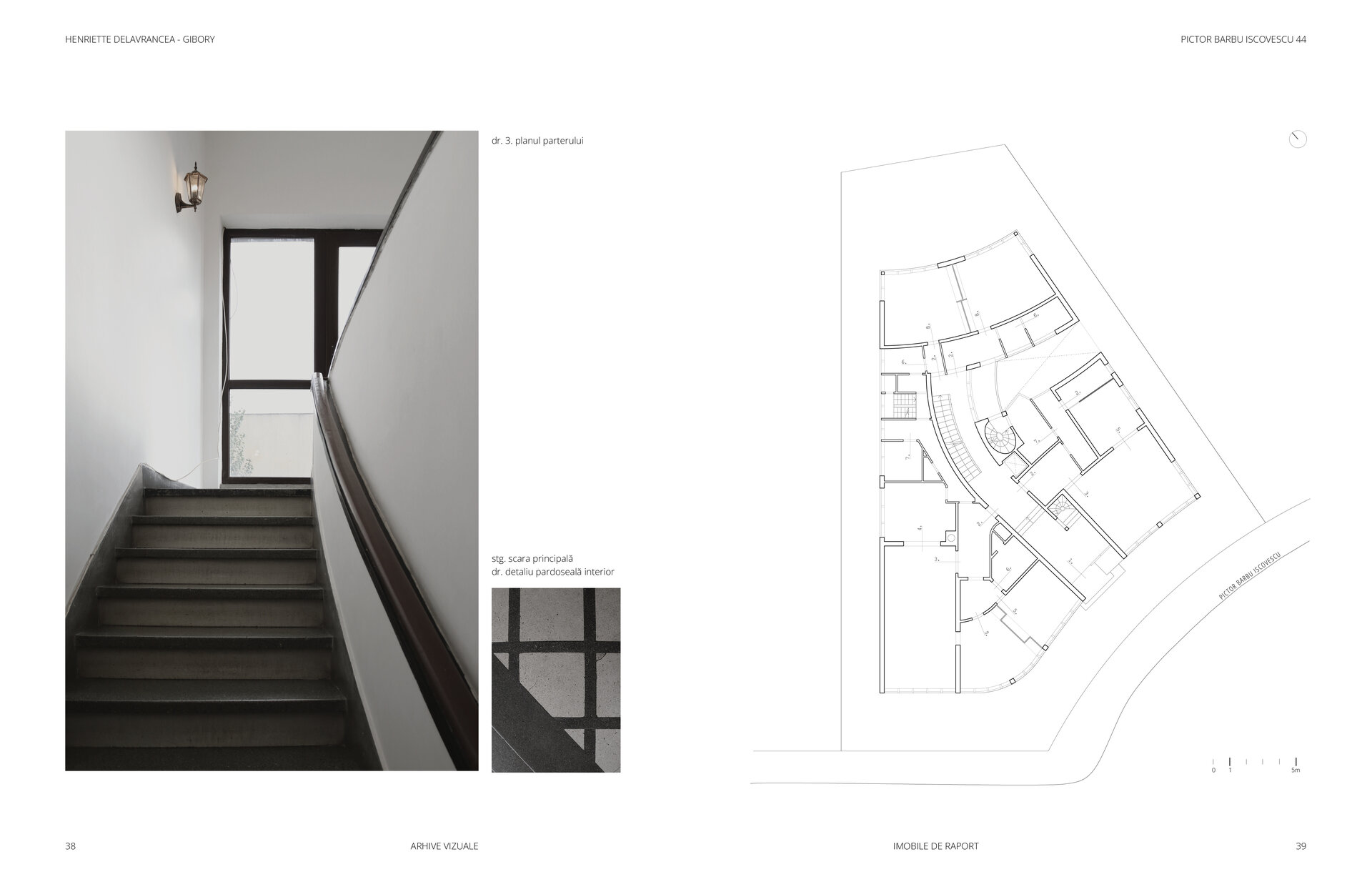
Some plans are published here for the first time, thus contributing to the enrichment of culture regarding projects carried out in the interwar period. This is the case of the Arapu Building designed by Henriette Delavrancea in 1938 (year of authorisation, according to File No. 321/1938 I Galben) and others.Along with the representation of the 10 buildings in the report, the work also proposes a method of analysis based on knowledge of them from the perspective of spatial perception, as well as the use of drawing as a research tool for understanding certain principles of composition, seeking to identify and understand the rules that essentially guided the construction of the buildings, considering them in the broader context of the theoretical ideas of the Modern Movement.
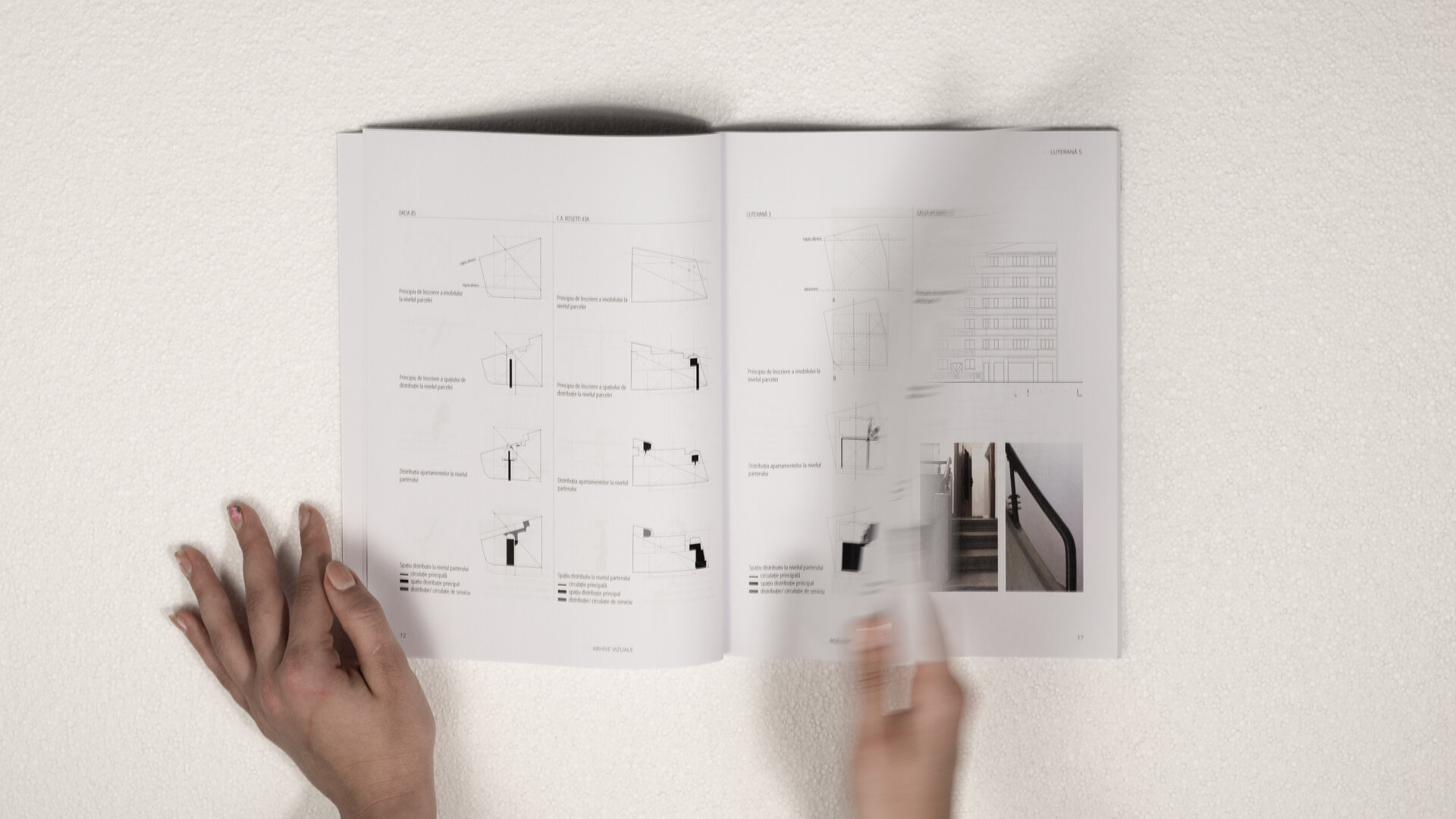
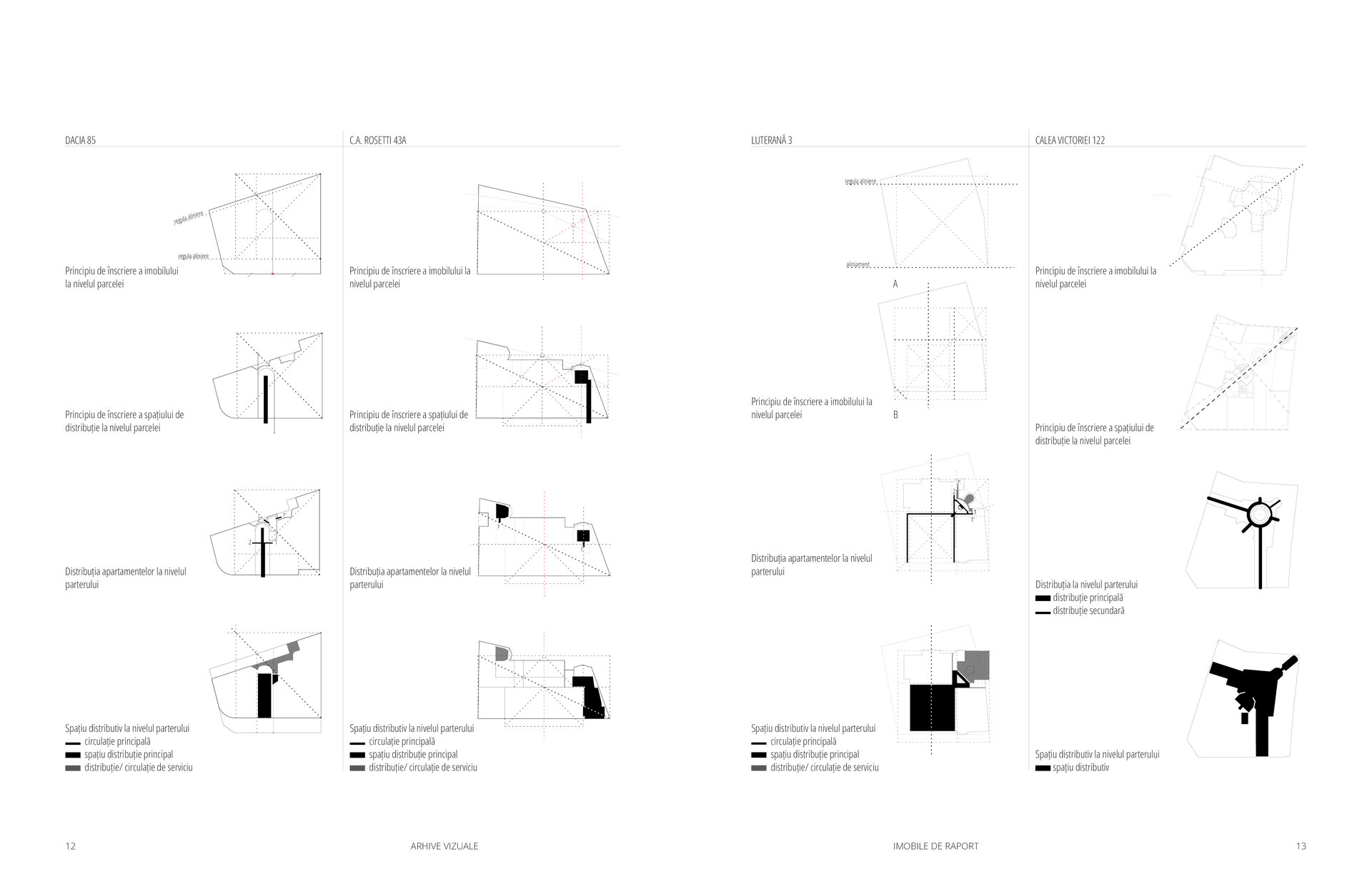
The publication begins with an inventory in which each of the 10 buildings is introduced by a floor plan diagram and related information, which formed the basis of the documentation. The introductory text presents the premises of the study and the working hypothesis regarding the possibility of a specific working method, based on mathematical rules, which Romanian architects adopted in the design of these buildings. The introduction is followed by a graphic representation of the method of testing the plans against the regulatory route, a method discussed at the time by architects (see Le Corbusier, Vers une Architecture) for correcting the design and justifying the architects' directions or options in the party proposal.
These rules were highlighted through a series of a posteriori projections, a hypothesis regarding the way in which the building or courtyard was inscribed at the plot level, and the distribution system at the ground floor level.
All these aspects are then highlighted, for each project individually, in the text introducing each of the 10 buildings. The in situ documentation also revealed another interesting aspect, related to the resistance of this architecture over time, in the face of various factors that the architects certainly did not anticipate. Likewise, the tension between interior and exterior appears as a favourite theme identifiable at the level of the facades and mentioned in the presentation texts. The entire analysis, focused primarily on spatial-architectural understanding, reveals an undisguised interest in the pedagogy of architectural design.
The publication is part of a series of works by Mihaela Pelteacu on this distinct urban layer of the city's palimpsest, which deserves a recognised place in the history of Bucharest's housing, and began with the article entitled Courtyards and Urban Buildings (see the collective volume ‘Arhive de Atelier: Studii și cercetări în proiectarea de arhitectură, 2020-2022’, published by Ed. univ. Ion Mincu) and the publication ‘3 Imobile Remarcabile din București. Caiet de însemnări’, also published by Ed. univ. Ion Mincu in 2023.
Architecture Books

- Conversions. A Laboratory-Book
- Beyond Norms. Non-standard dwellings in Communist Romania
- Ironwork. Bucharest 1890-1945
- The connection of the healing architecture. The hospital built by Dăruiește Viață
- Beyond Perimeter: 12 Complementary Pedagogies for a Sustainable Architecture
- Landscape blog 2014 - 2019. LE:NOTRE news
- The dual element water and the inclusion in architectural programs in the first half of the 20th century
- Digital architecture history of the first half of the 20th century in Europe, Second revised edition
- Individual All-Around
- Aldo Rossi – A Critical Inquiry “Call Me Aldo.”
- The crumbling of the faces of the fortress. Busts from Bucharest
- The Oltenian Tower Houses. Potential Landmarks of the UNESCO World Heritage
- Visual Archives
- Block of flats: E. Botez, S. Baloșin, H. Delavrancea-Gibory, M. Maller, T. Niga
- 1000


