- Prize of the “Research through Architecture / Architecture and Experiments” section
A Roof for St. Michael / Ein Dach für die Burgkirche
Authors’ Comment
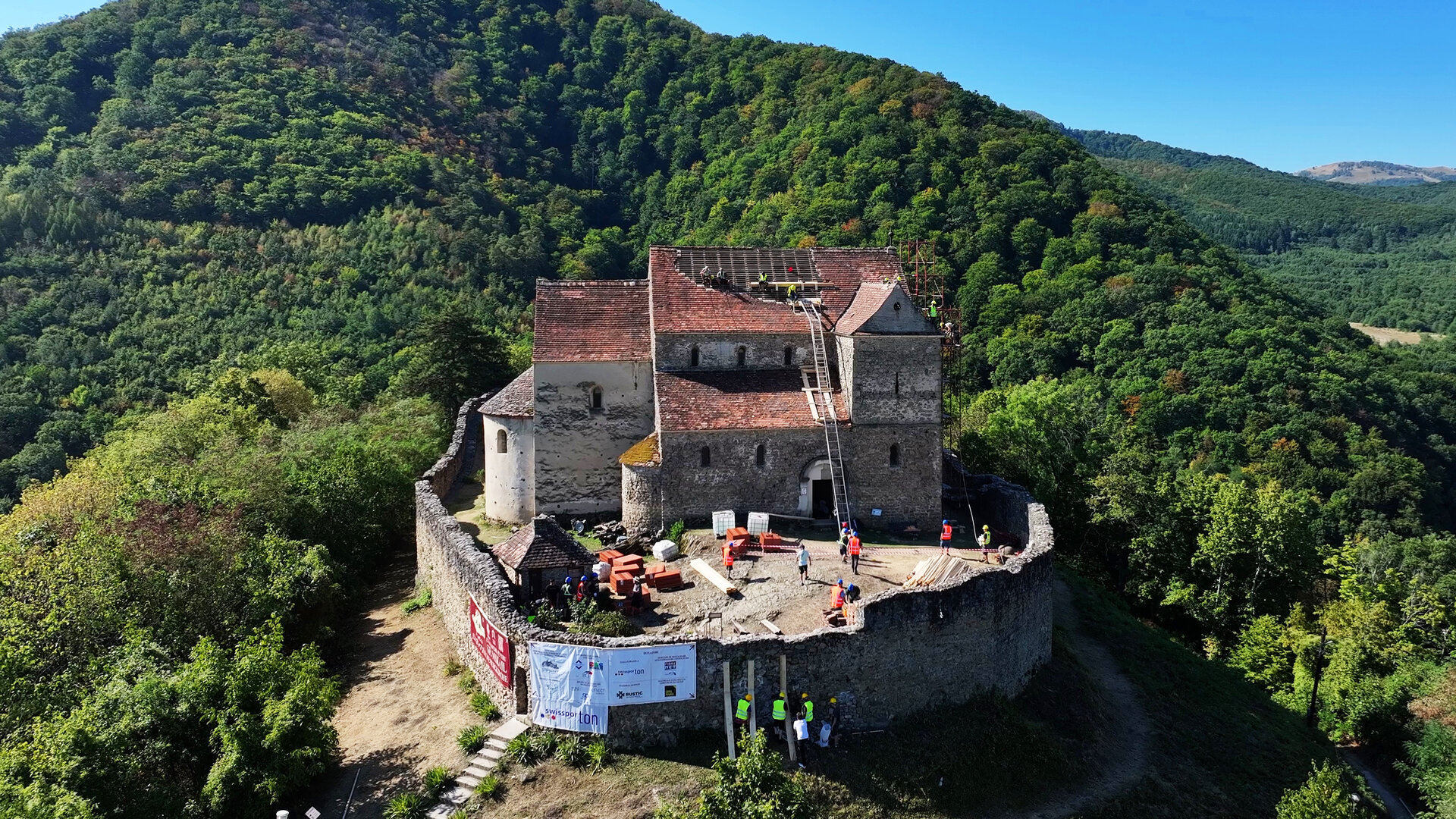
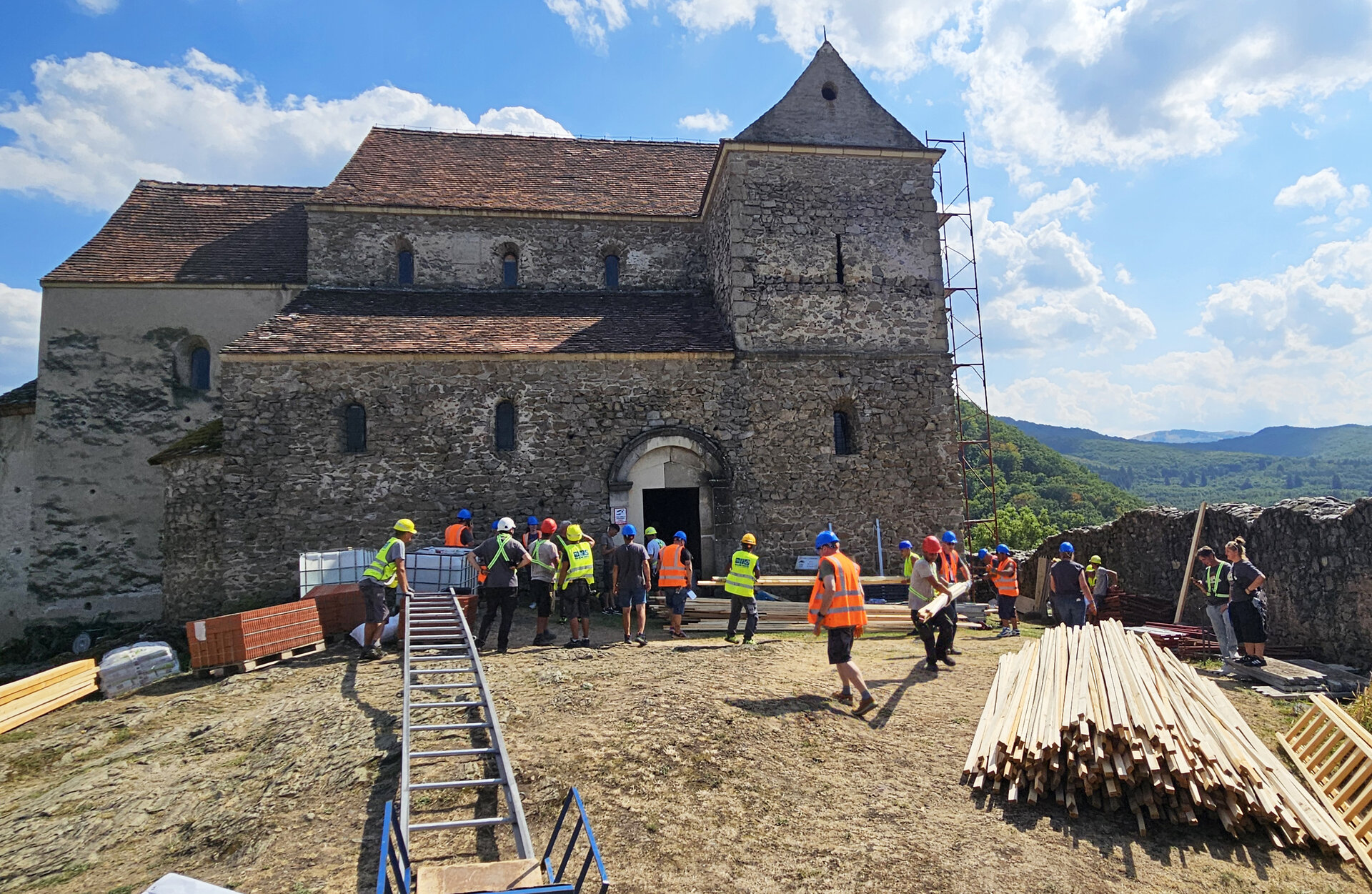
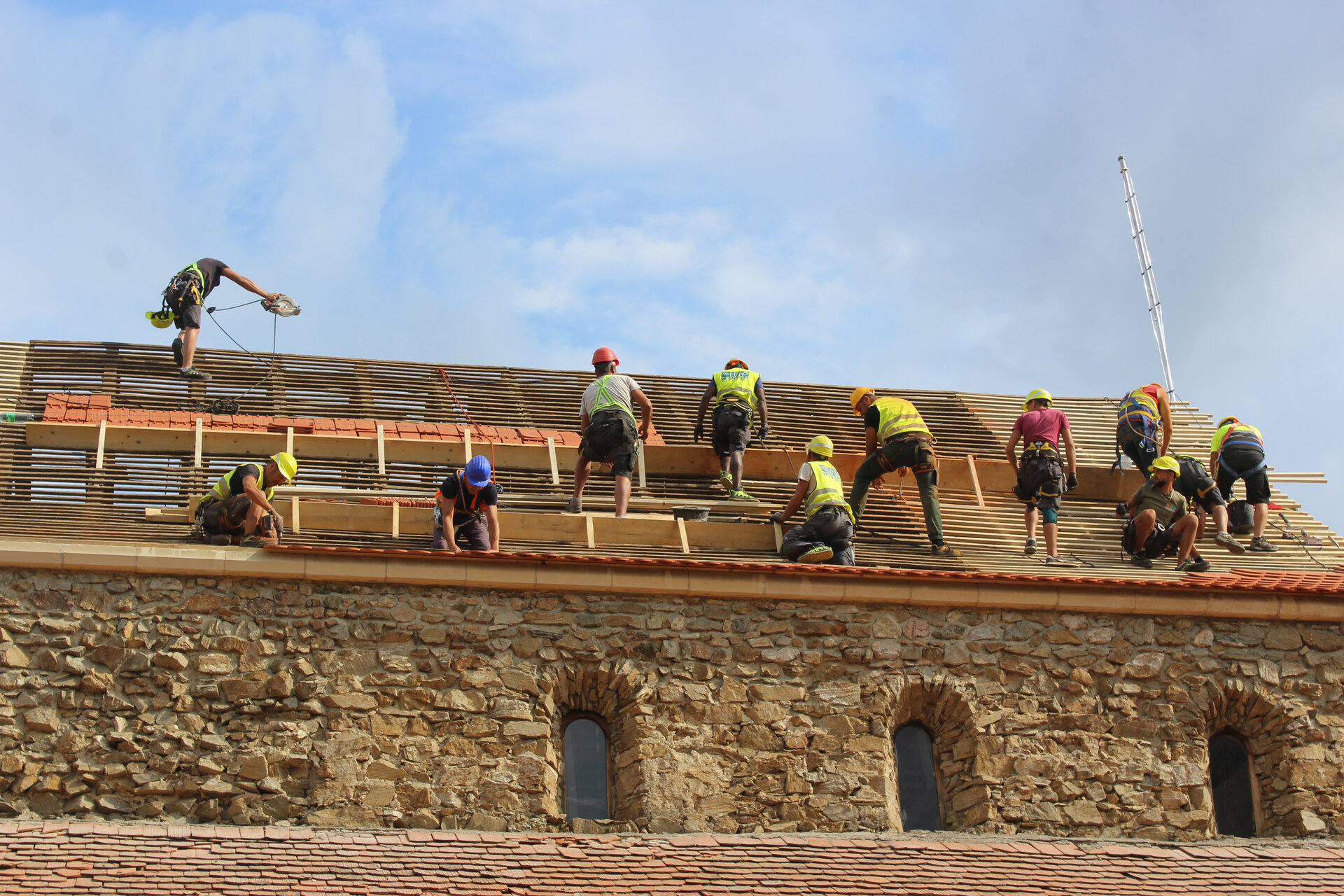
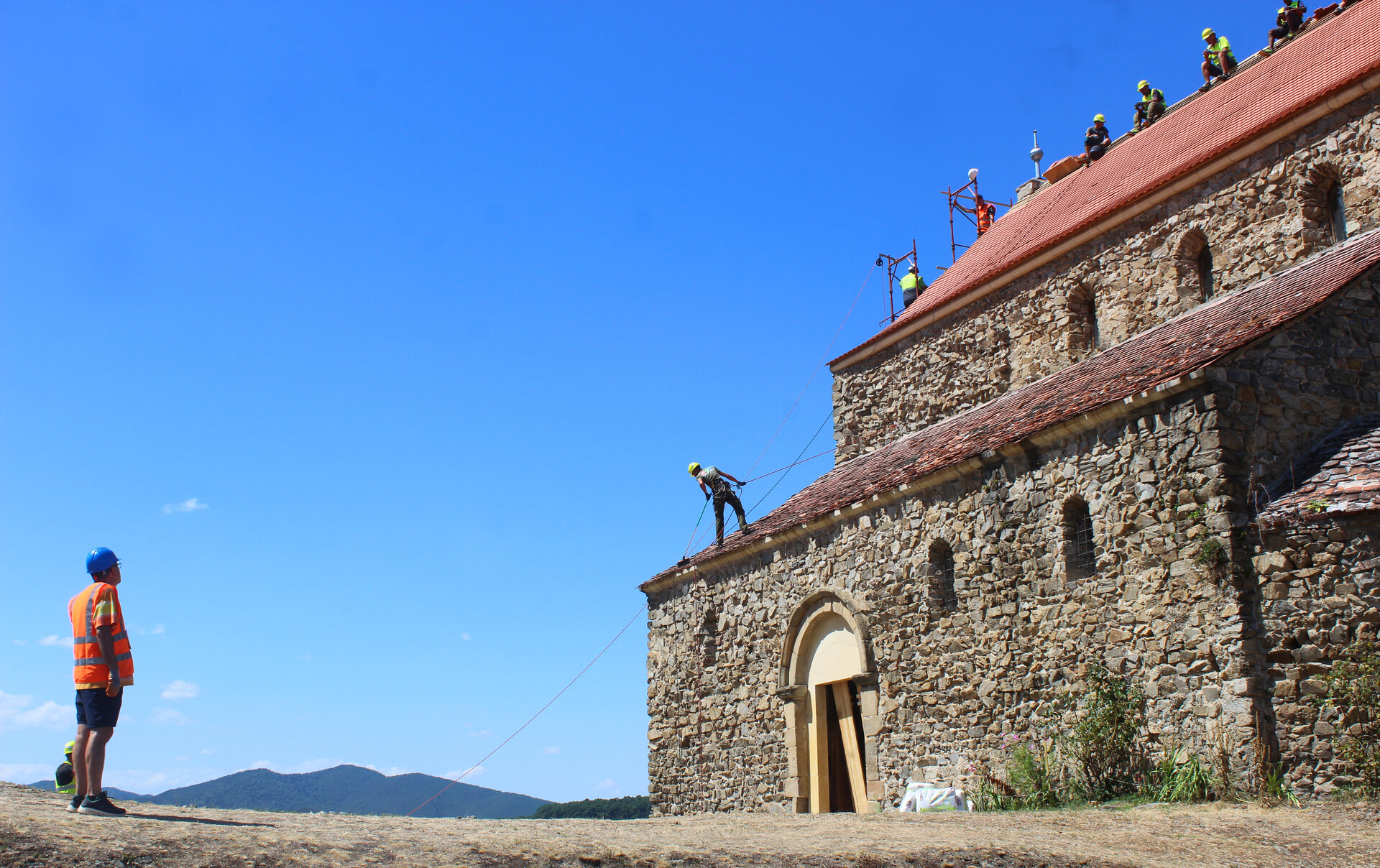
“A Roof for St. Michael” was conceived as more than an emergency intervention on the roof of the Romanesque basilica in Cisnădioara, a historic monument of national importance. It developed as an open restoration workshop and a participatory social experiment in which conservation became a collective practice, reconnecting the monument with the community that surrounds it.
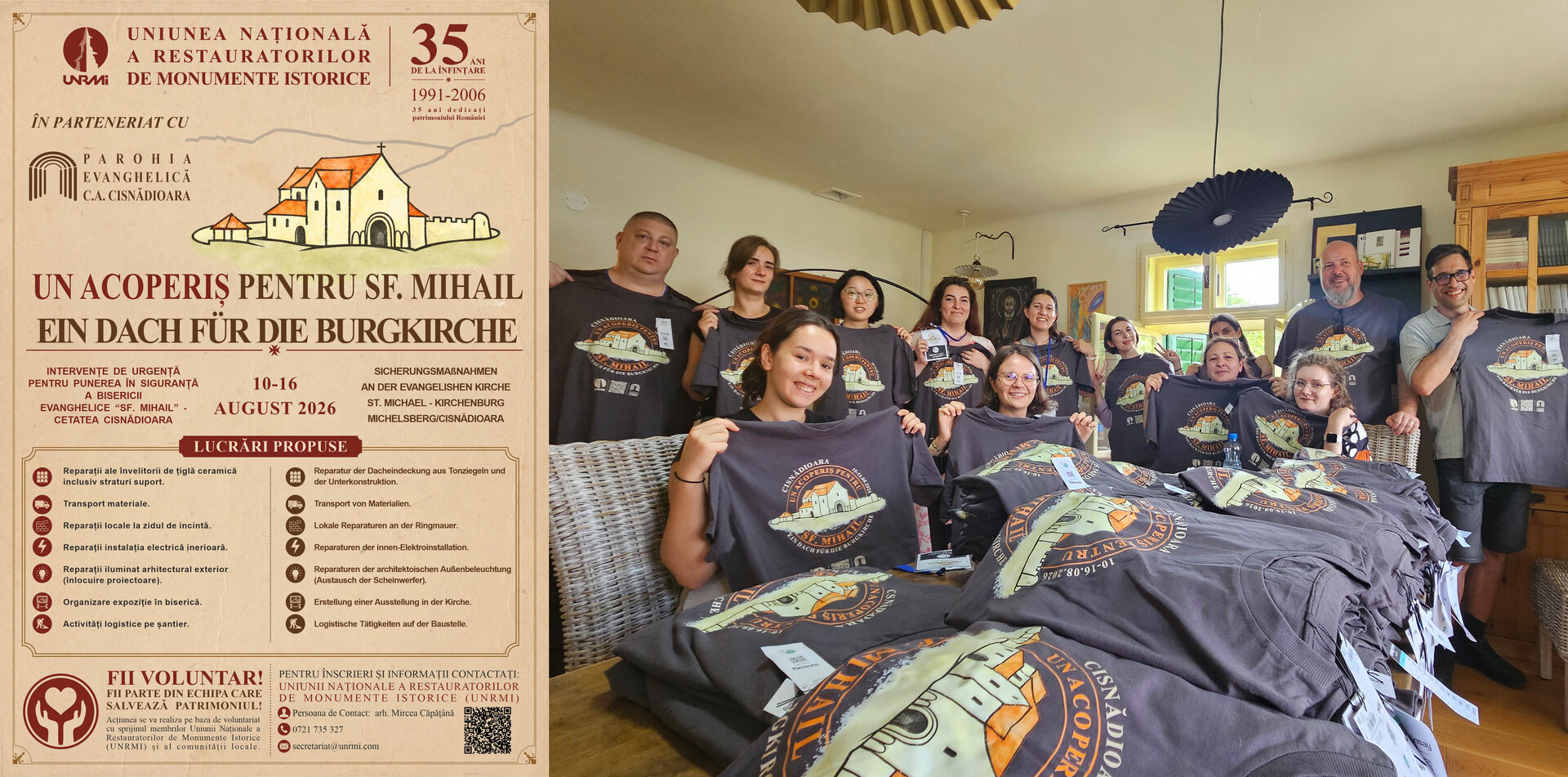
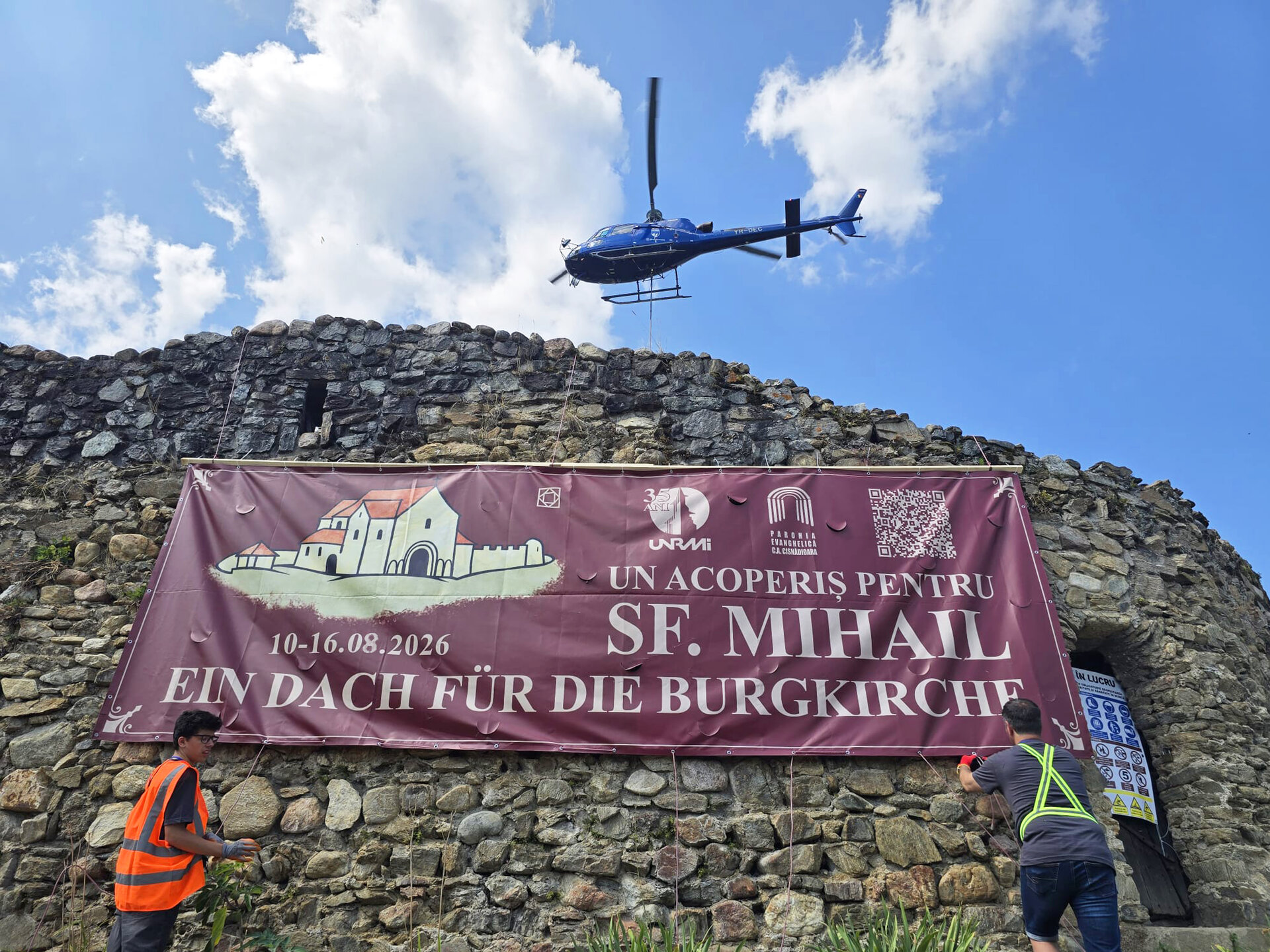
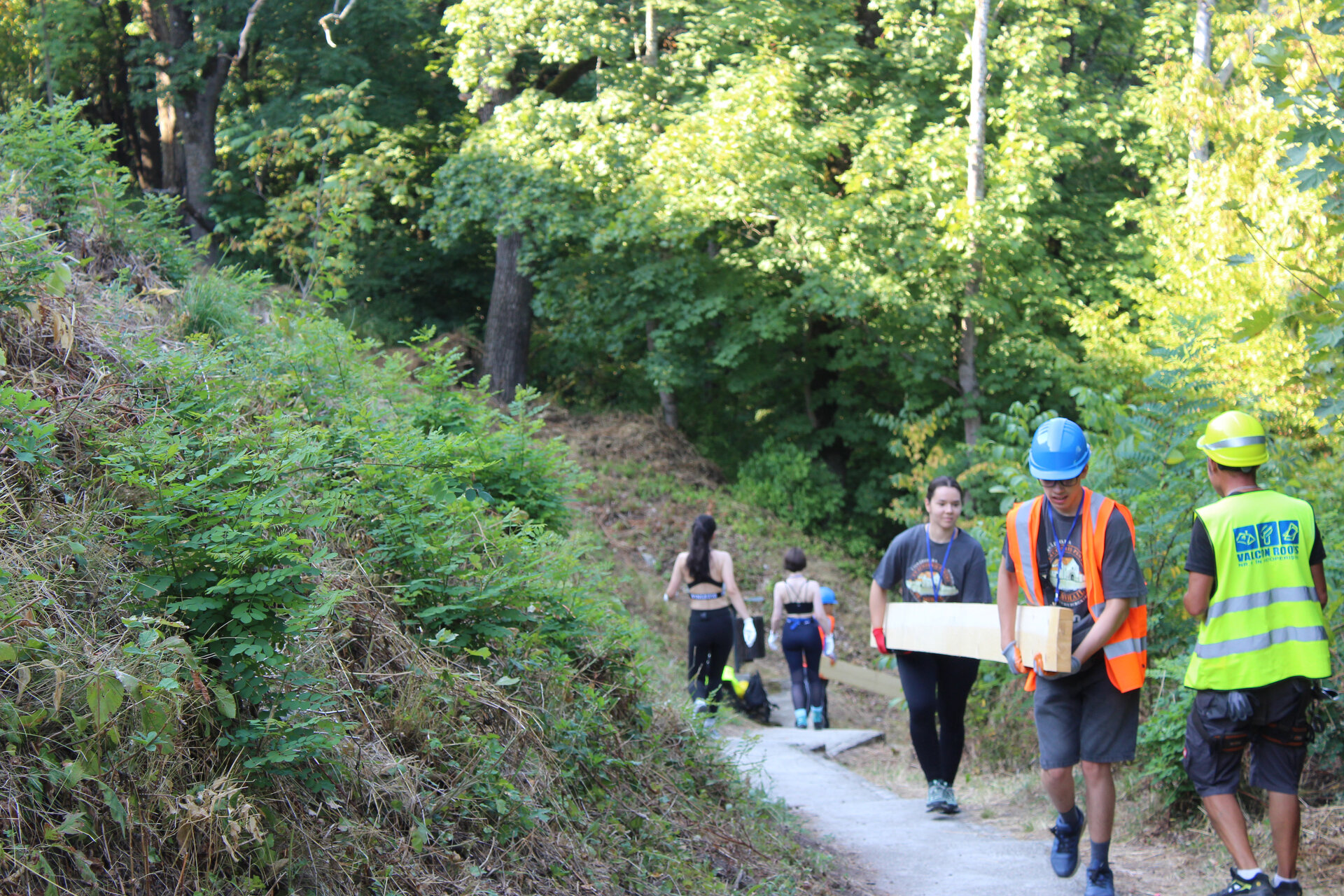
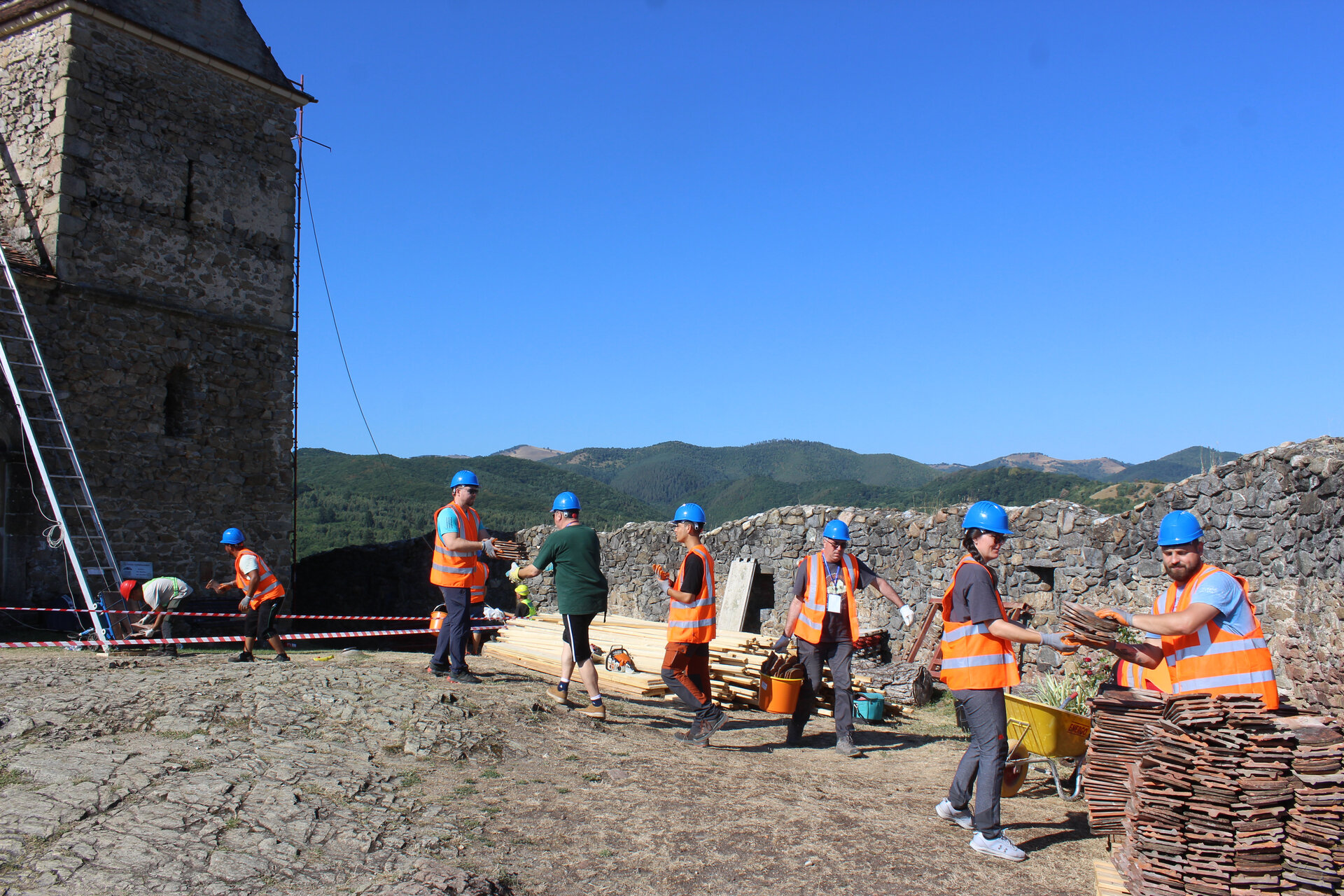
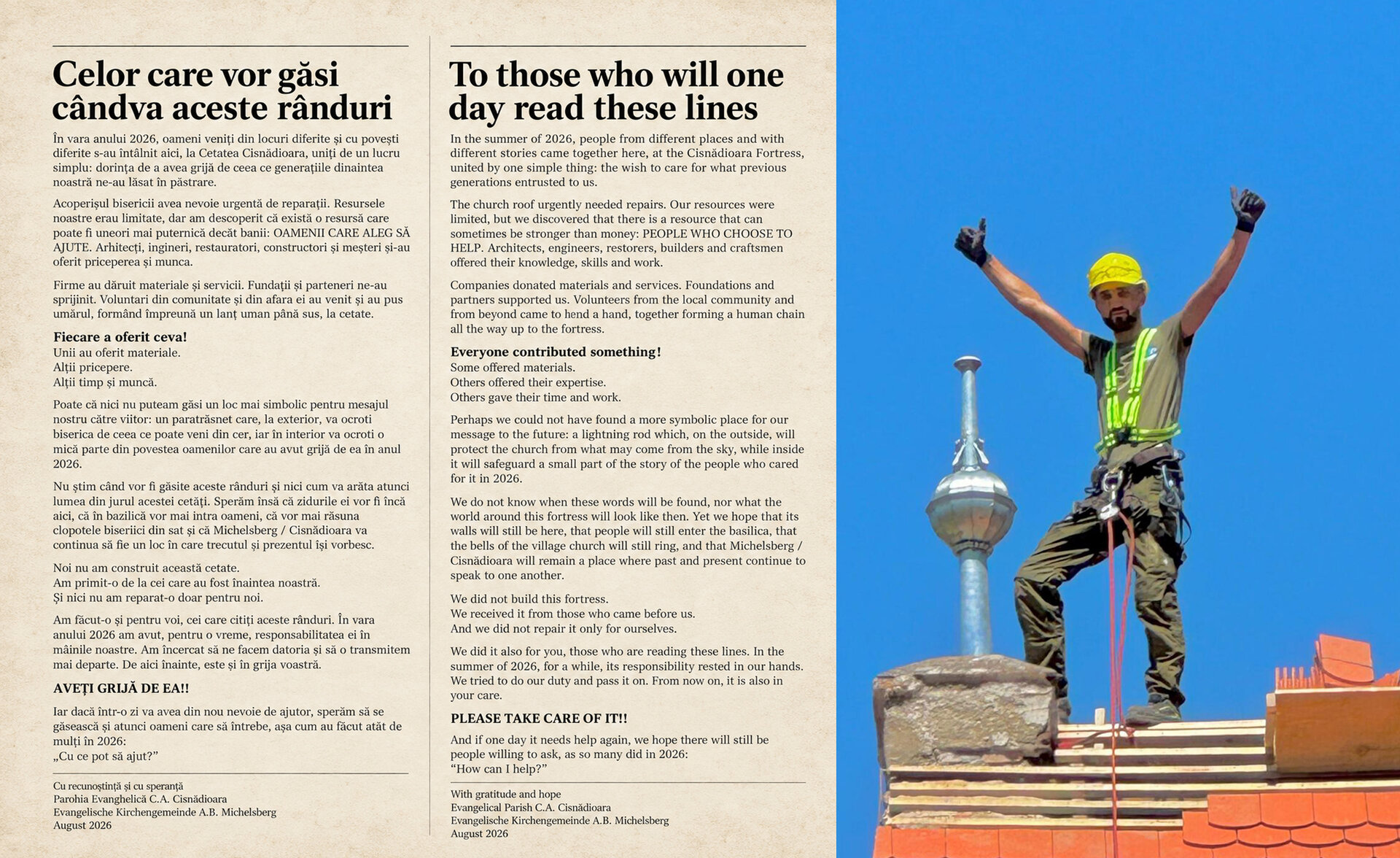
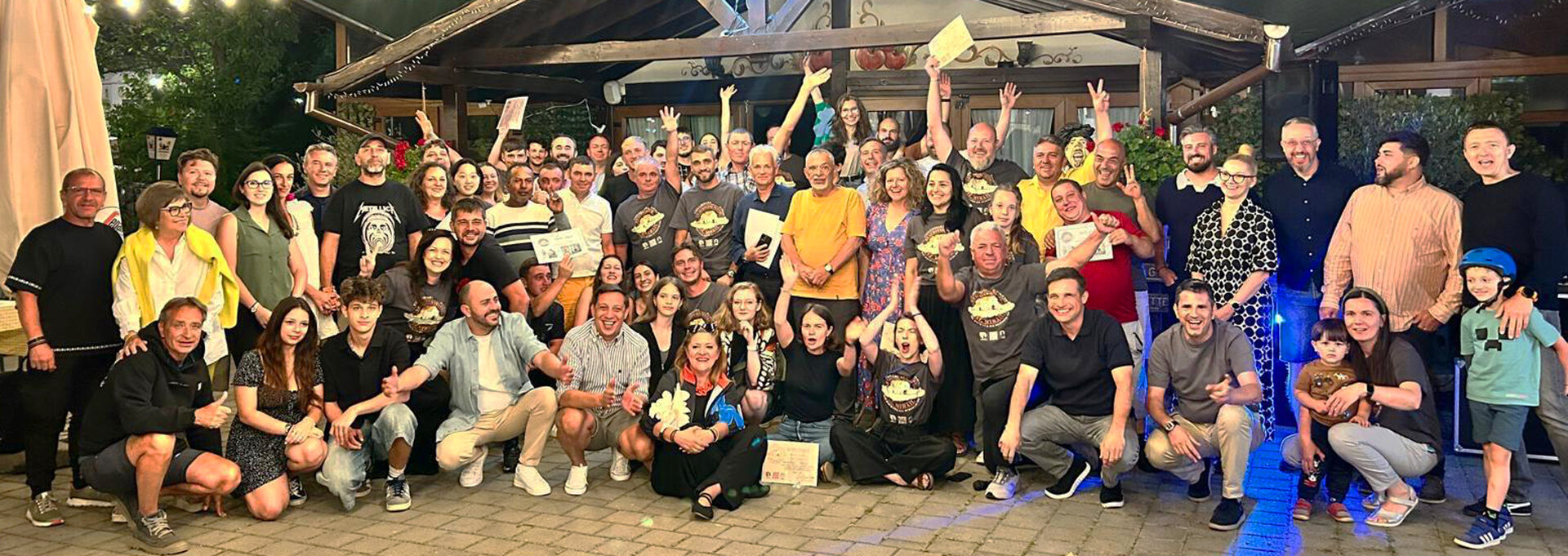
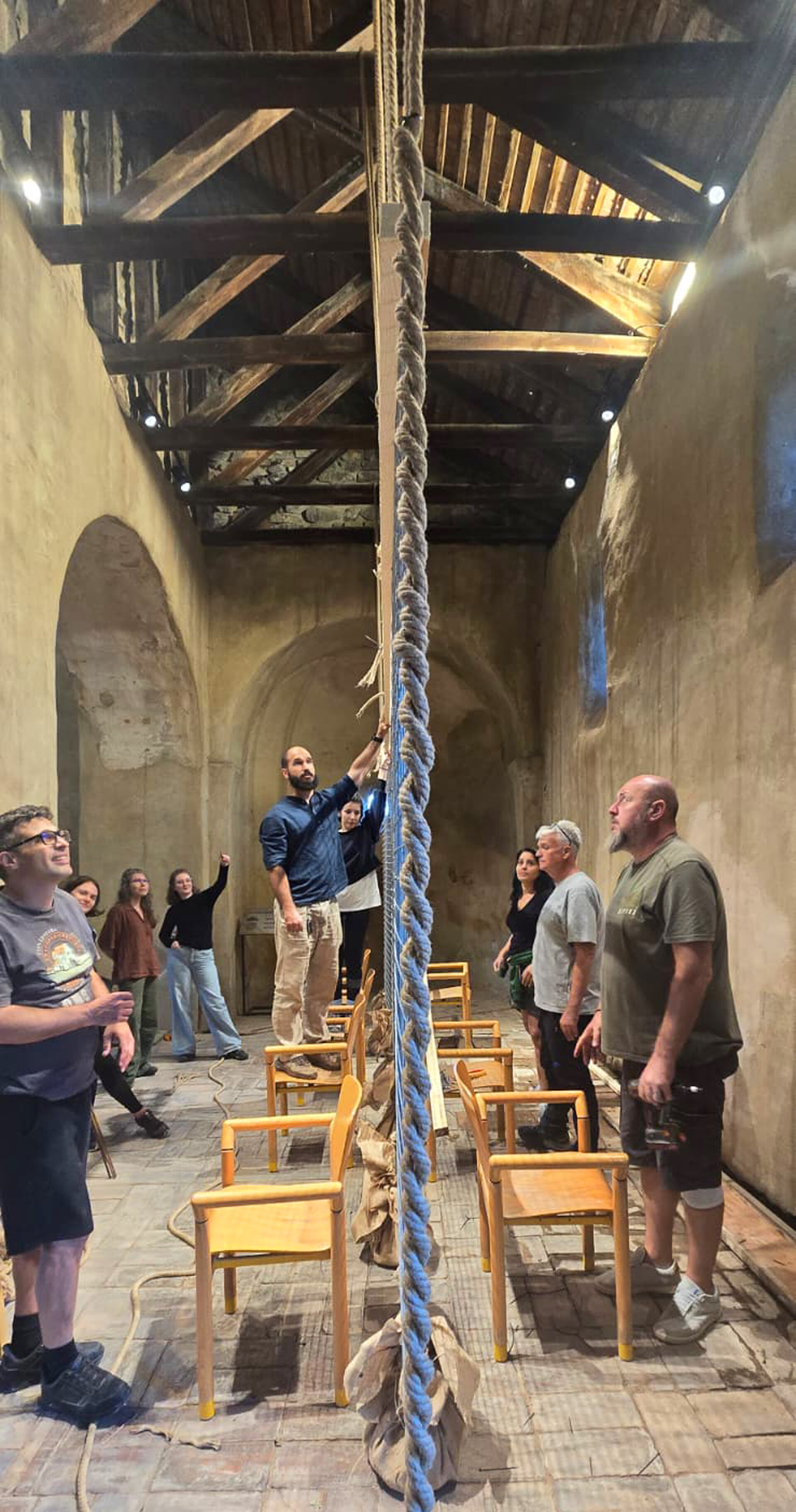
Between 10-16 August 2026, approximately 150 people took part in the project through the involvement of the National Union of Historic Monument Restorers, including at least 50 volunteers from the local community. Architects, engineers, restorers, craftsmen and local residents of different ages and backgrounds worked together directly on the monument. Participation was not limited to assisting with the works; it became an active process of learning, observation, conservation and shared responsibility.
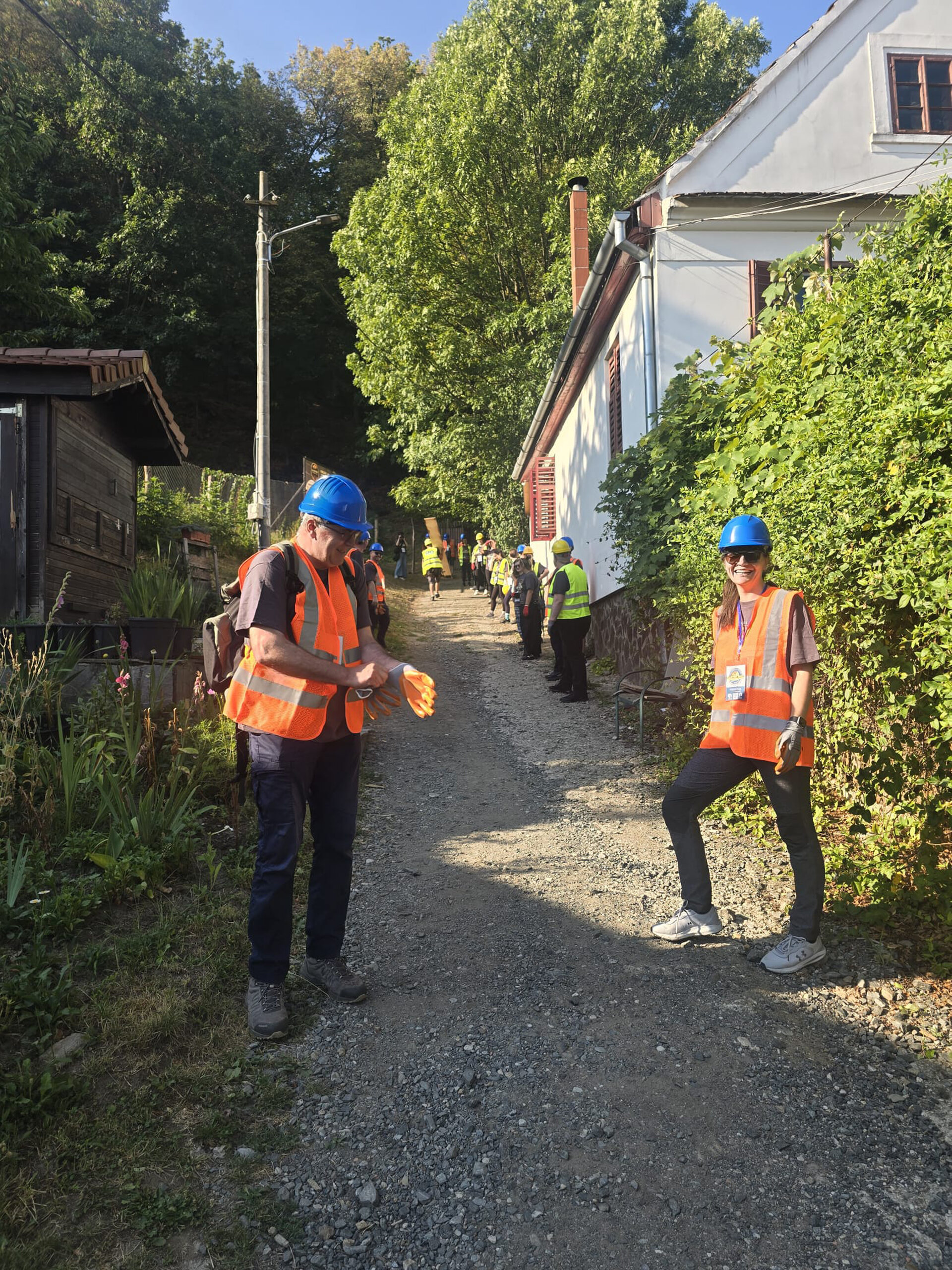
The construction site gradually became a space in which conventional professional hierarchies were suspended. In direct contact with historic fabric, practical knowledge often carried greater weight than formal roles. Experienced craftsmen became mentors, while architects and volunteers became apprentices. Knowledge circulated through demonstration, dialogue and hands-on work. Forming a human chain, people worked side by side, with enthusiasm and a sense of pleasure, even during periods of extreme heat, without fatigue defining experience of the intervention.
The project also generated new professional and personal relationships. Within the Union of Restorers, strong working teams emerged between colleagues who had known one another for years but had never previously worked together on site. At the same time, the workshop created lasting connections and friendships between professionals and members of the local community.
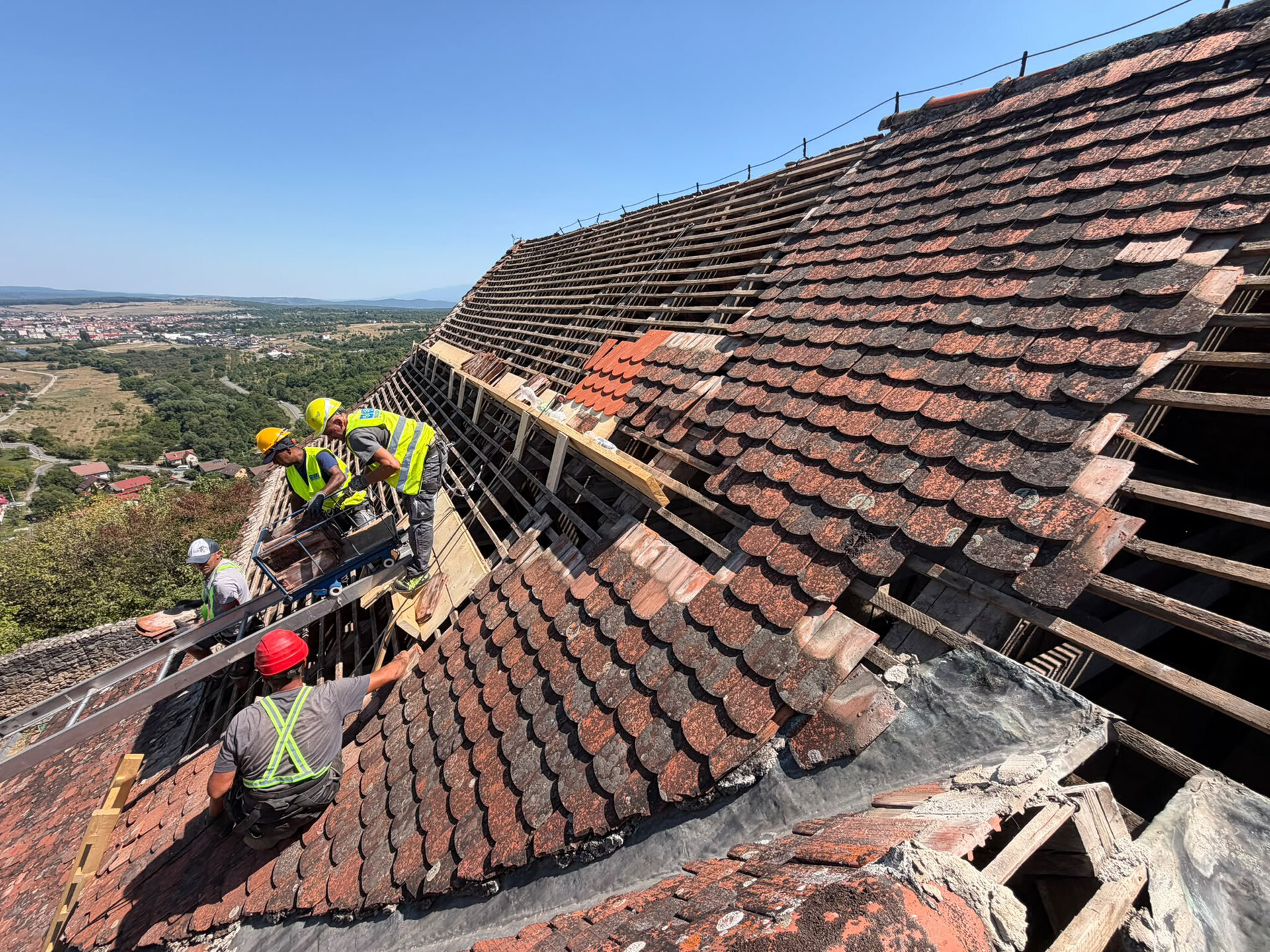
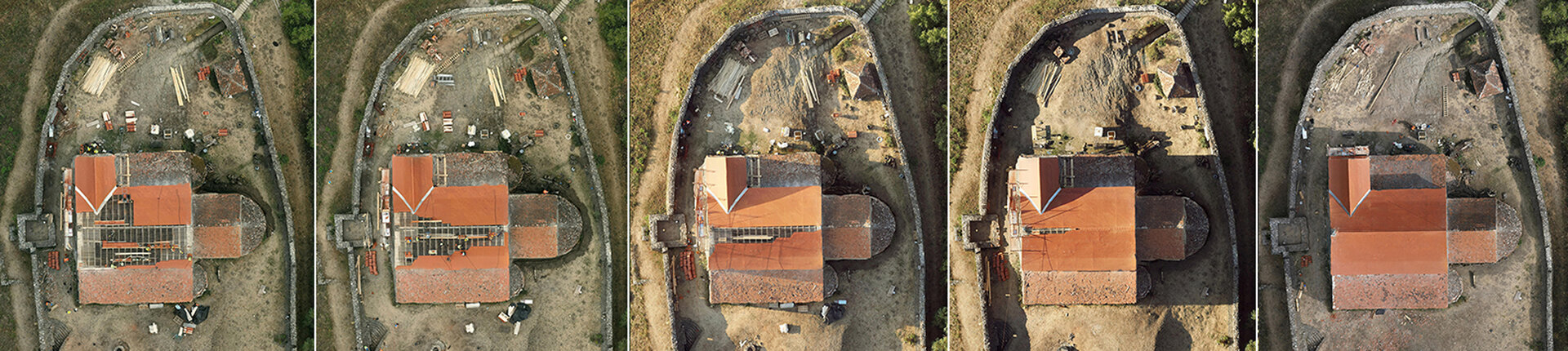
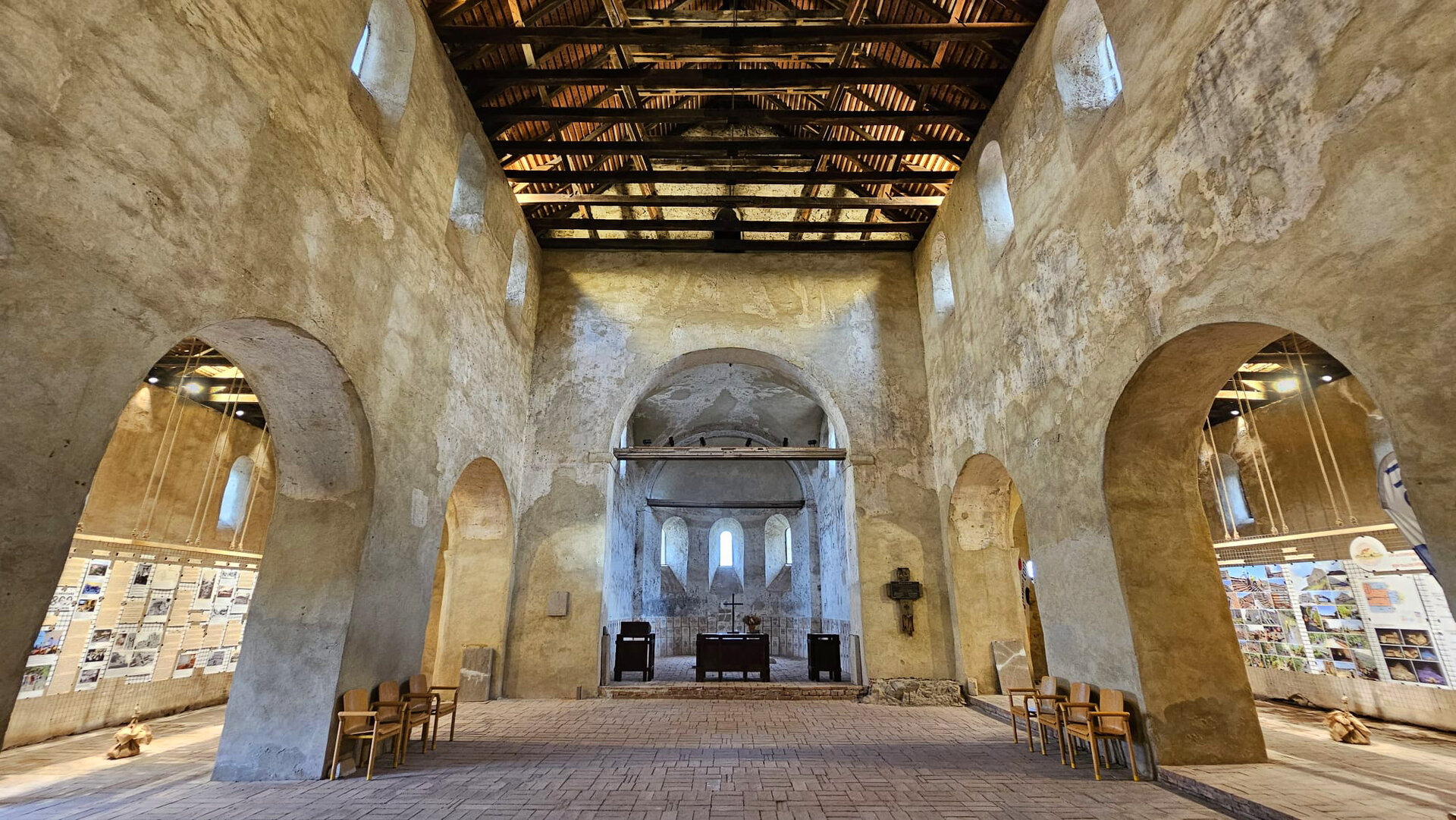
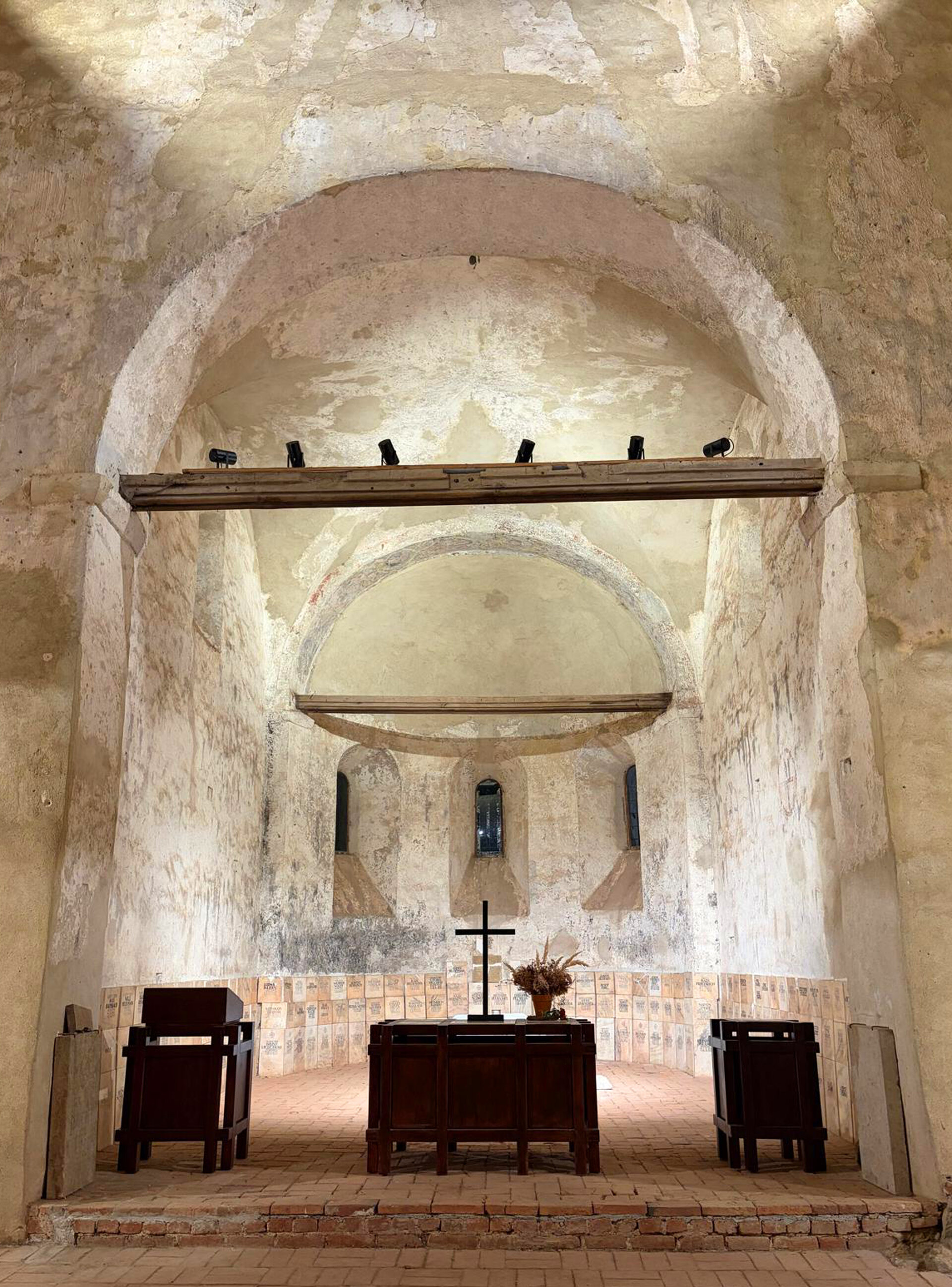
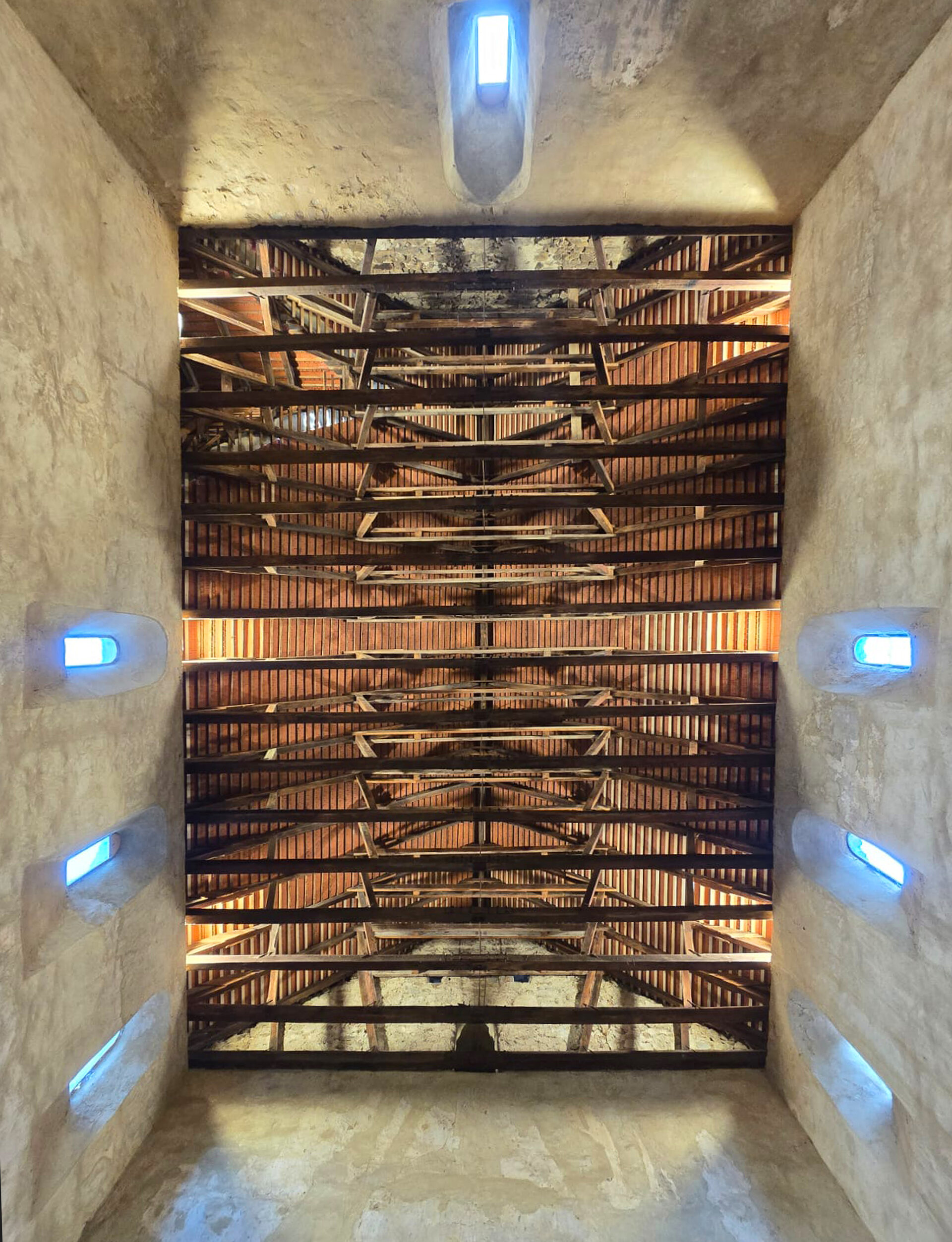
The intervention on the roof addressed water infiltration through partial replacement of the tiles and repairs to the timber roof structure. Yet the project extended beyond repair. Together with the volunteers, an interior architectural lighting scheme was developed in order to reveal the historic roof structure and reinforce the spatial qualities of the Romanesque basilica.
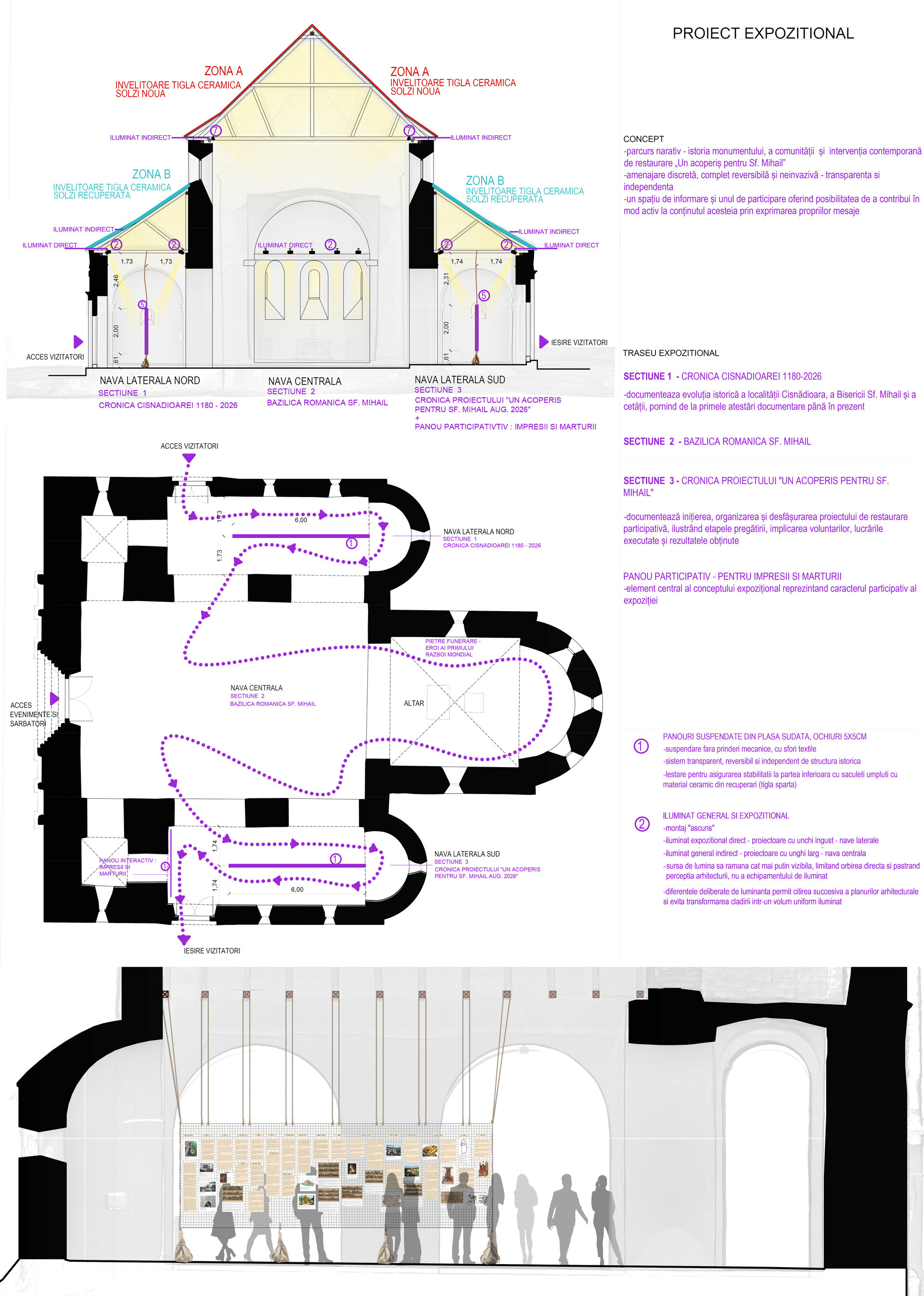
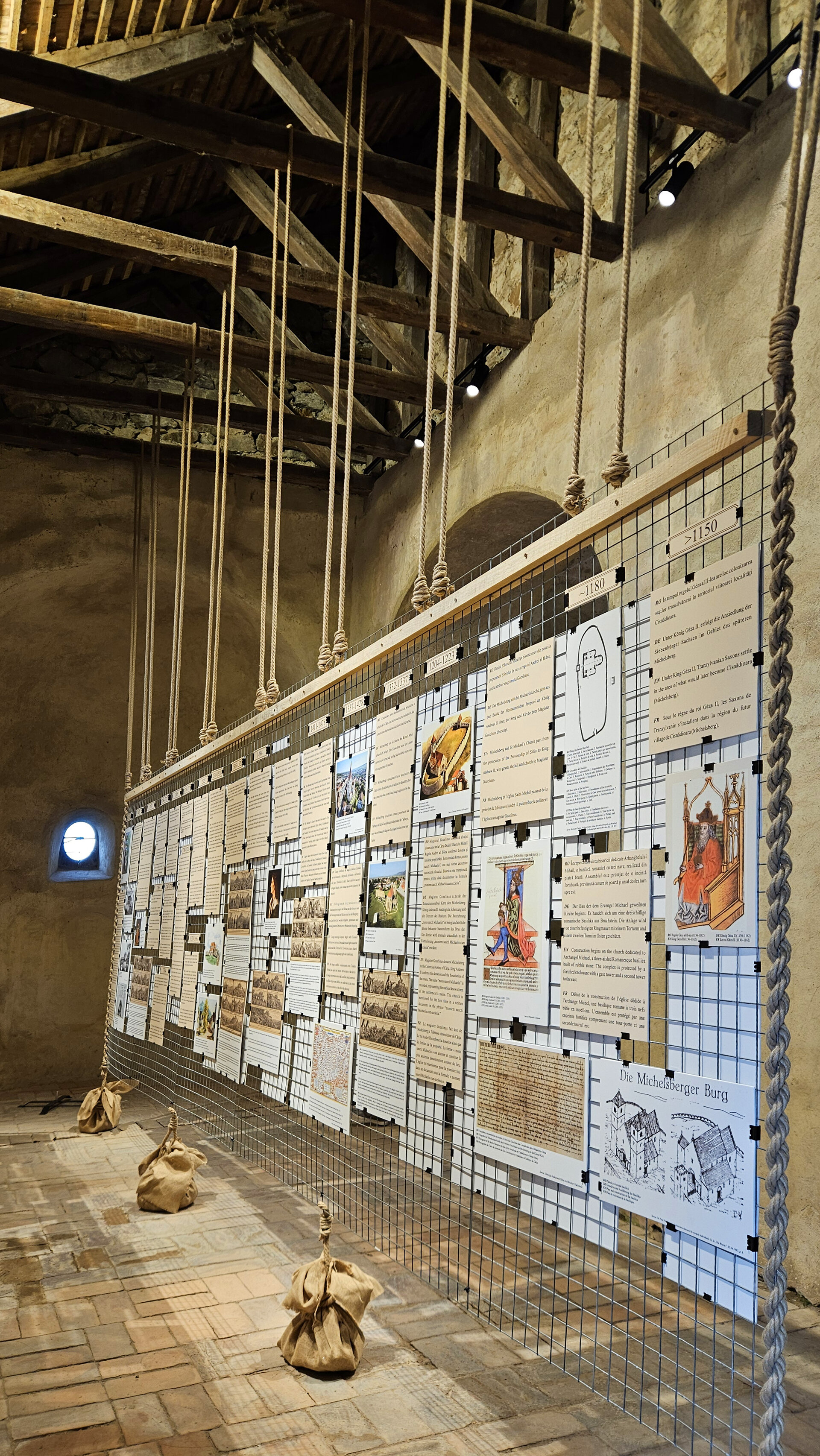
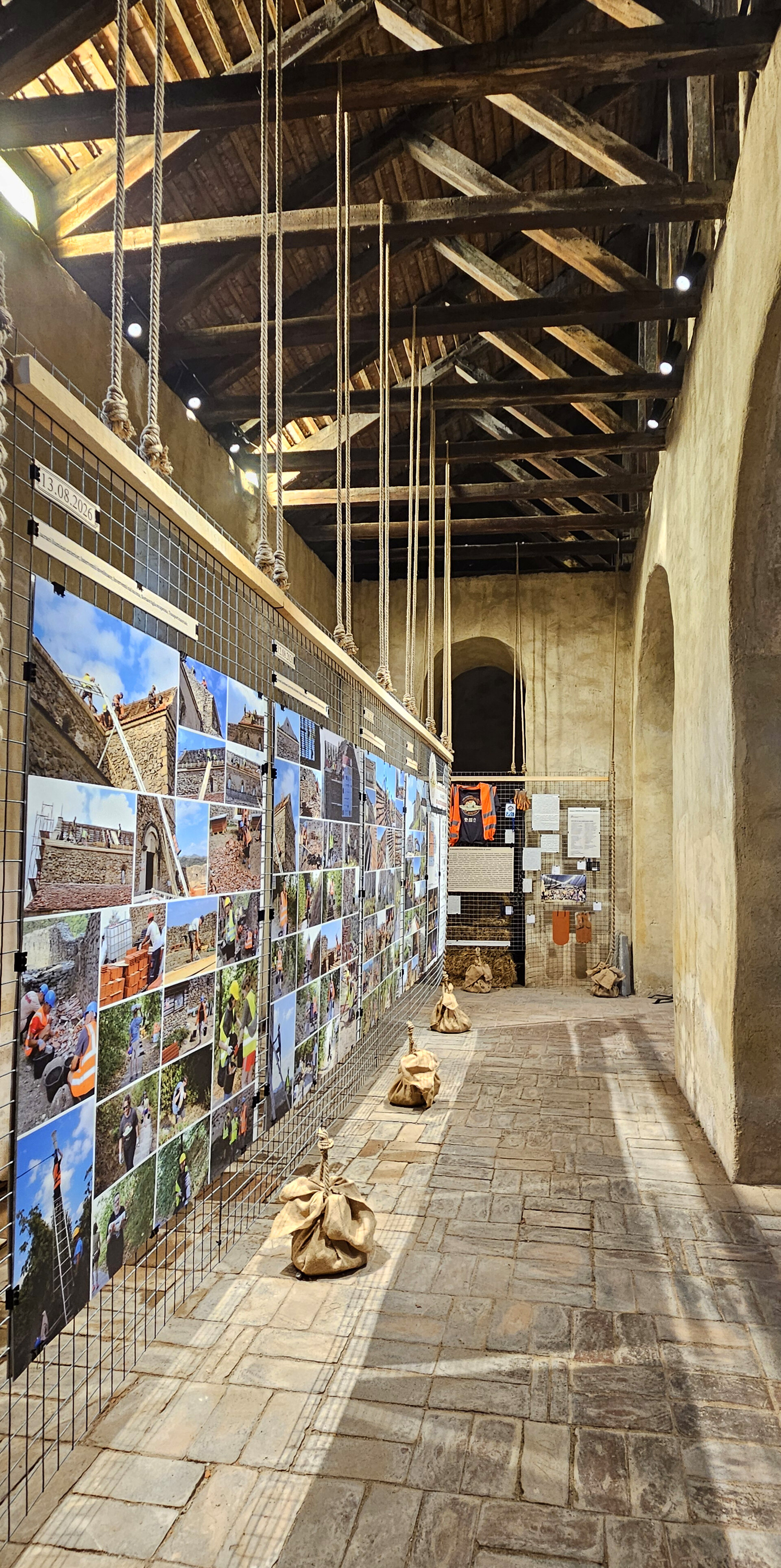
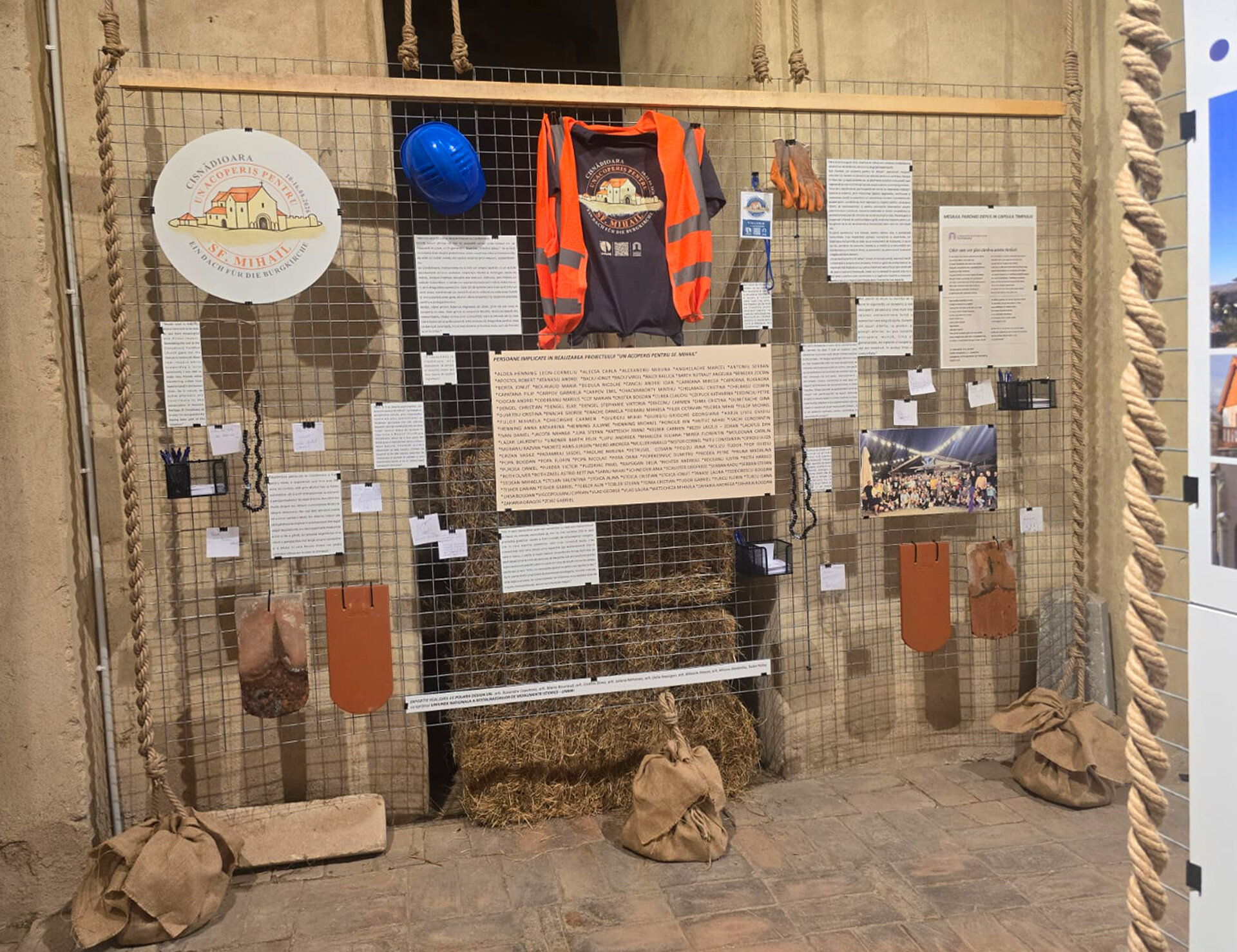
In parallel, the volunteers and the project team conceived and installed an exhibition that brings the history of the monument and its community into dialogue with the intervention carried out during the workshop. The exhibition was designed as a discreet, fully reversible and non-invasive, respecting both the historic fabric and the principles of conservation.
Rather than functioning solely as a display, the exhibition was conceived as an open framework for participation. Visitors are invited to contribute their own thoughts, memories and reflections, allowing the exhibition to evolve over time. It does not compete with the architecture of the church, but acts as a light interpretative layer within it, suggesting that heritage is not a fixed object, but a living cultural process continually enriched by new forms of use, memory and collective experience.
A central ambition of the project was the active involvement of the local community. Through daily presence on site, direct contact with the works and participation in the workshop, the monument began to be understood not simply as a historic object of value, but as part of the cultural identity of the local community.
A monument cannot be sustained through isolated interventions alone. It remains alive when those who live around it understand its significance, develop an emotional and practical relationship with it, and assume a degree of responsibility for its future.
“A Roof for St. Michael” therefore approaches restoration as a collective act, a form of learning through participation, and a process of rebuilding relationships around heritage. The repaired roof, the space revealed through light and the exhibition are its visible outcomes. More importantly, however, the project created a temporary community of practice and renewed the bond between the monument and the people around it. It is this bond that can ultimately keep the monument alive for future generations.
Architecture and Experiments
- A Roof for St. Michael / Ein Dach für die Burgkirche
- ARCHY FEST_QUINETWORK 2026
- Civic Bucharest
- (H)ODAIA – A Rural Hub for the Rehabilitation of Cultural Landscapes
- Model 10
- Workshop AI in Architecture
- Video Mapping and Heritage. Empúries, Costa Brava: ancient ruins, media, and artificial intelligence
- GEMA – Geometric Experimentation with Architectural Morphology. A European Experience
- I can’t talk right now. I’m busy
- Disco Blast
- Limanu Summer School 2026 – Multicultural Heritage on the Edge
- Bucium Summer University 2026, 14th Edition. Safeguarding Rural Heritage through Education
- Camping and Research Kit on Șimian Island
- Cantacuzino Estate Summer School 2026, 8th Edition


