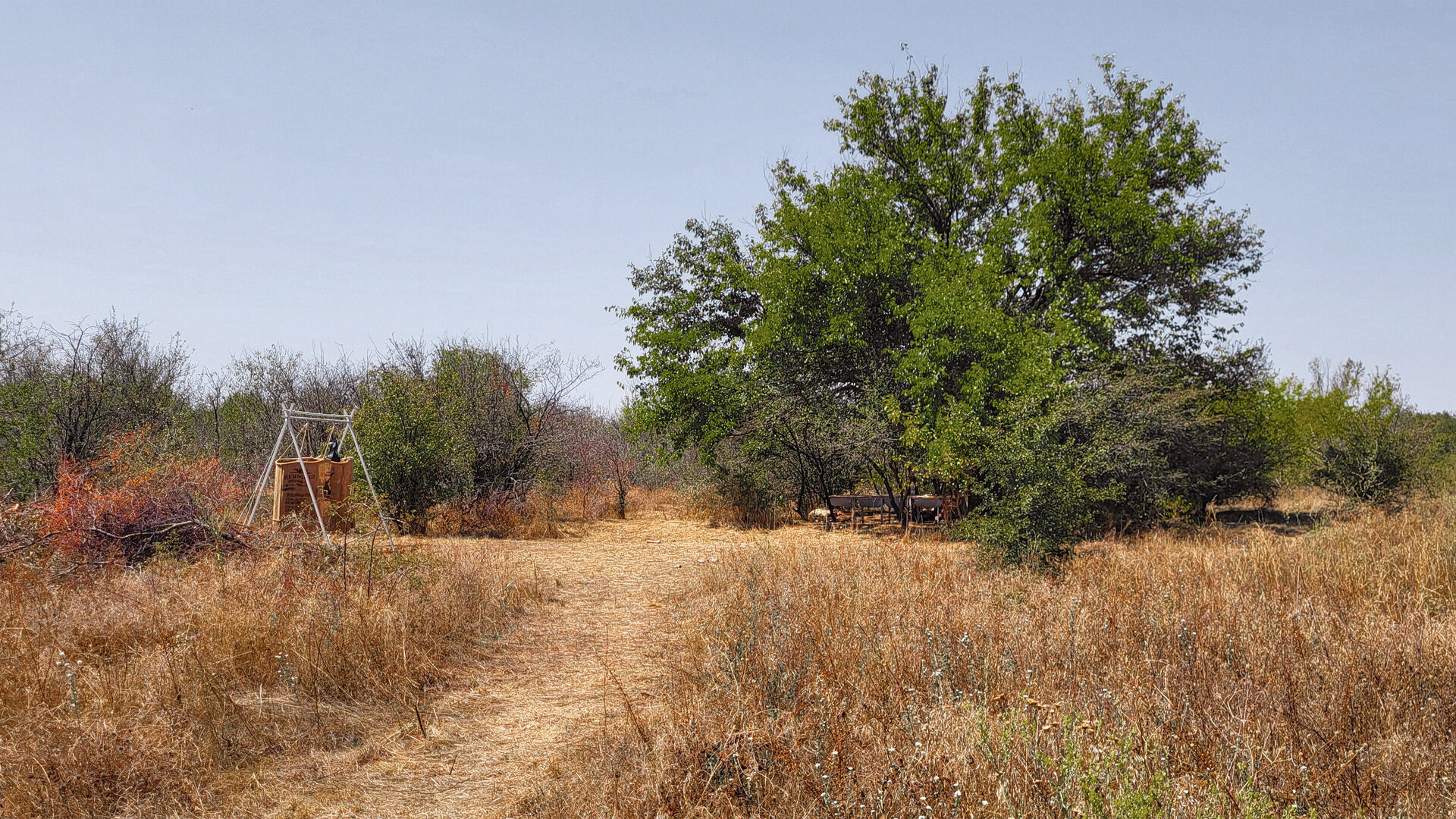
Camping and Research Kit on Șimian Island
Authors’ Comment
The camping and research kit for Șimian Island was selected through an international competition with a multidisciplinary jury, organized in accordance with the good practices of the Order of Architects of Romania and inspired by the principles of “Leave No Trace.”
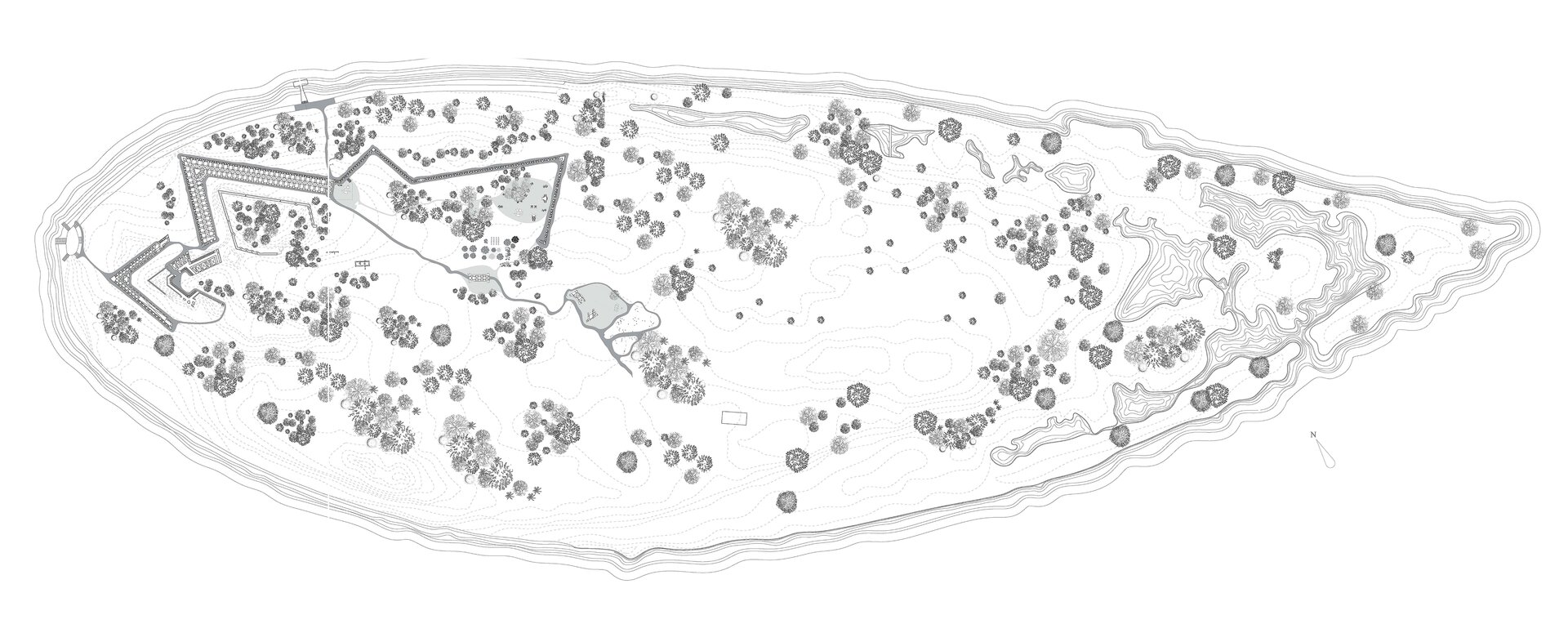
The unique character of the place is shaped by the memory of Ada Kaleh Island, which disappeared beneath the waters following the construction of the Iron Gates I Dam. Today, Șimian Island preserves fragments of this past through the ruins of the fortress and the island’s cemetery, while also hosting a rich and wild natural landscape.
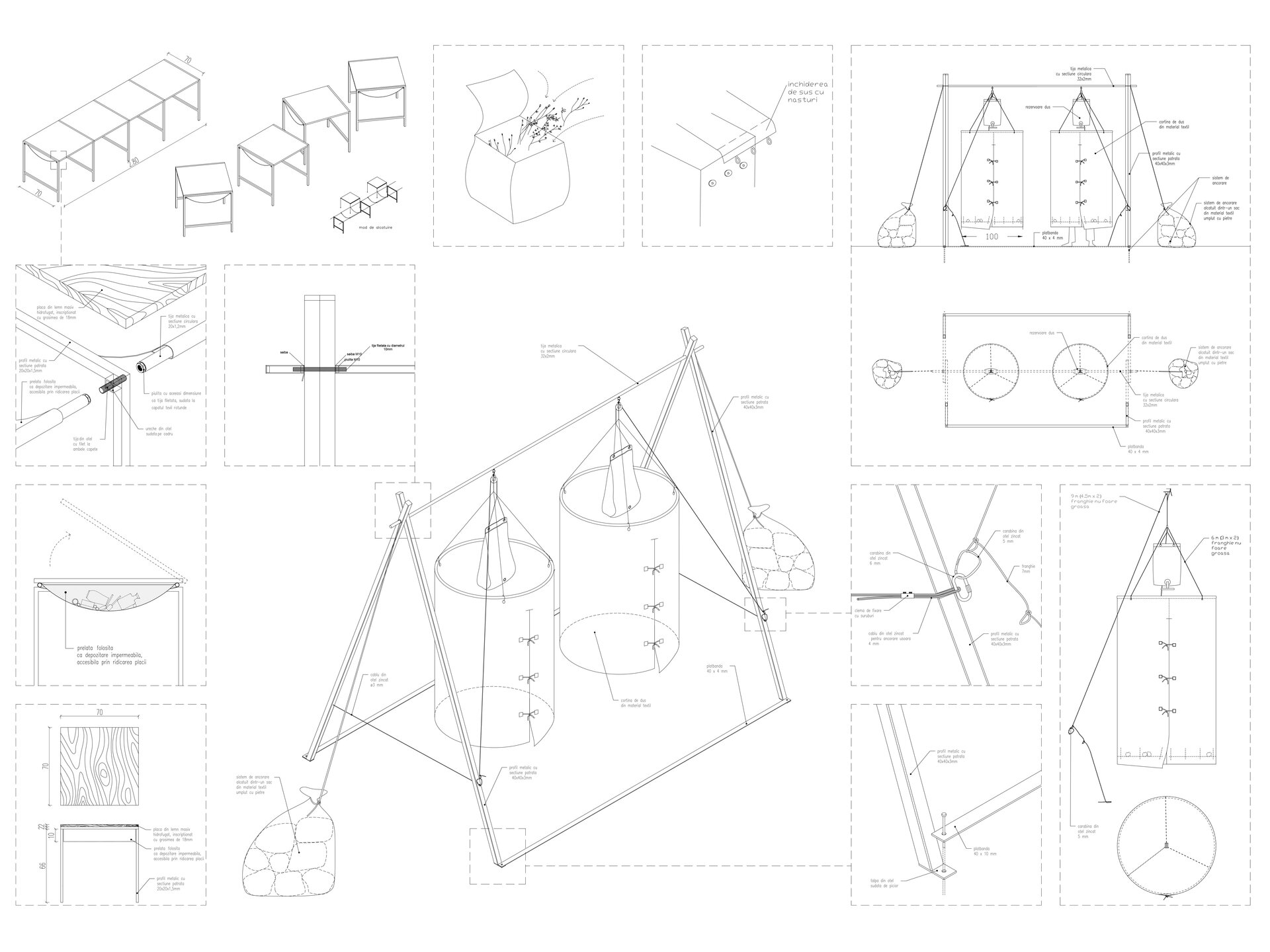
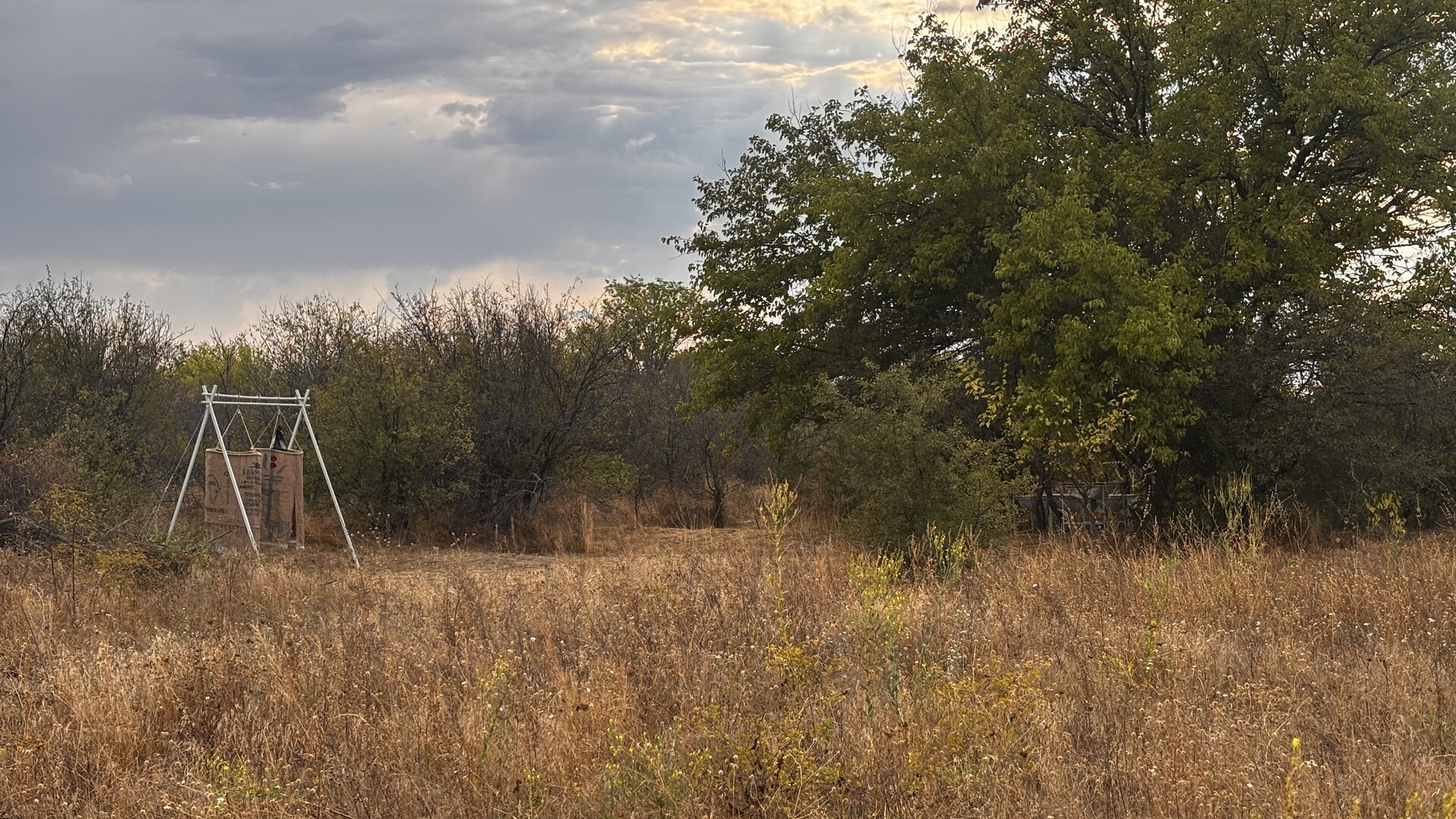
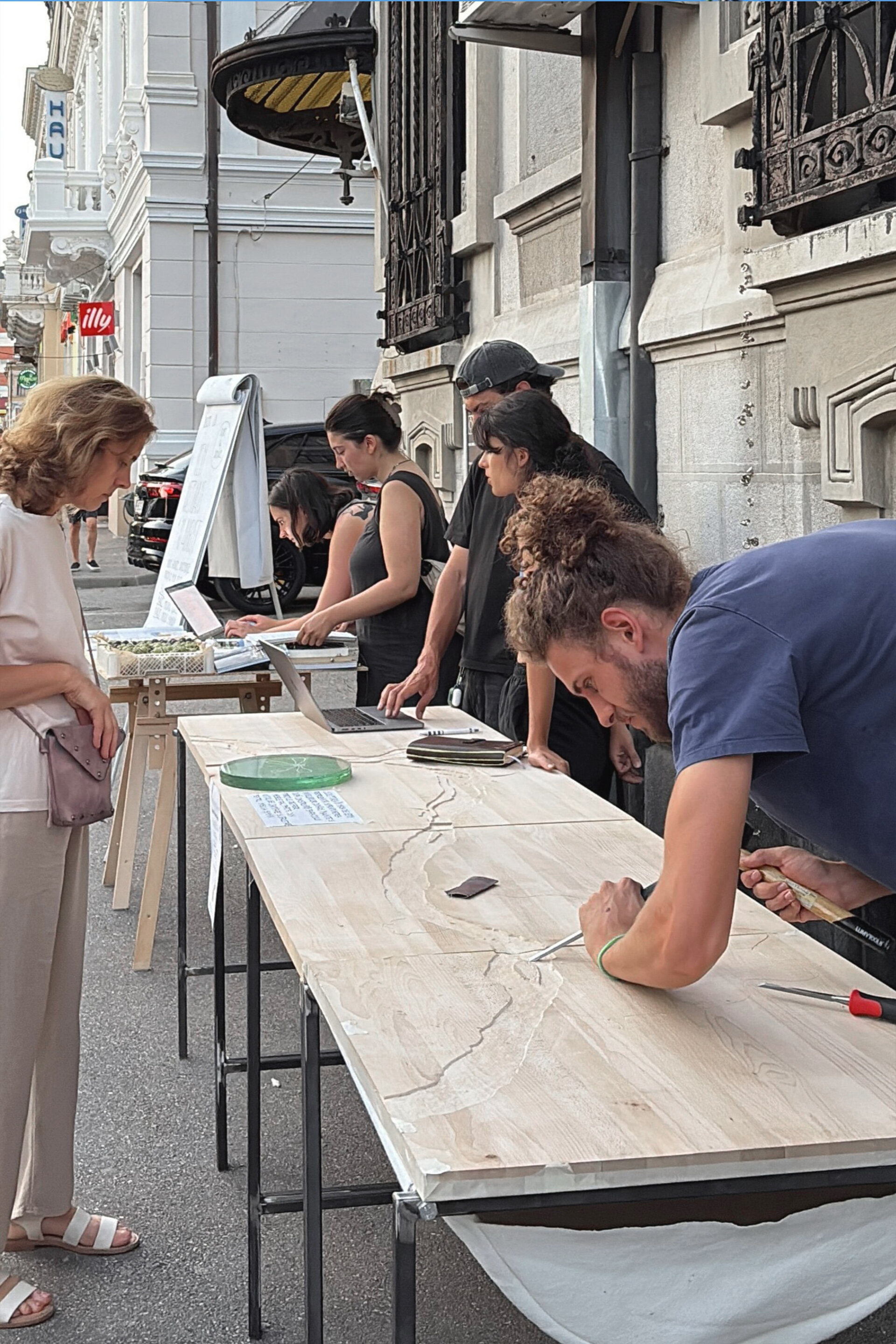
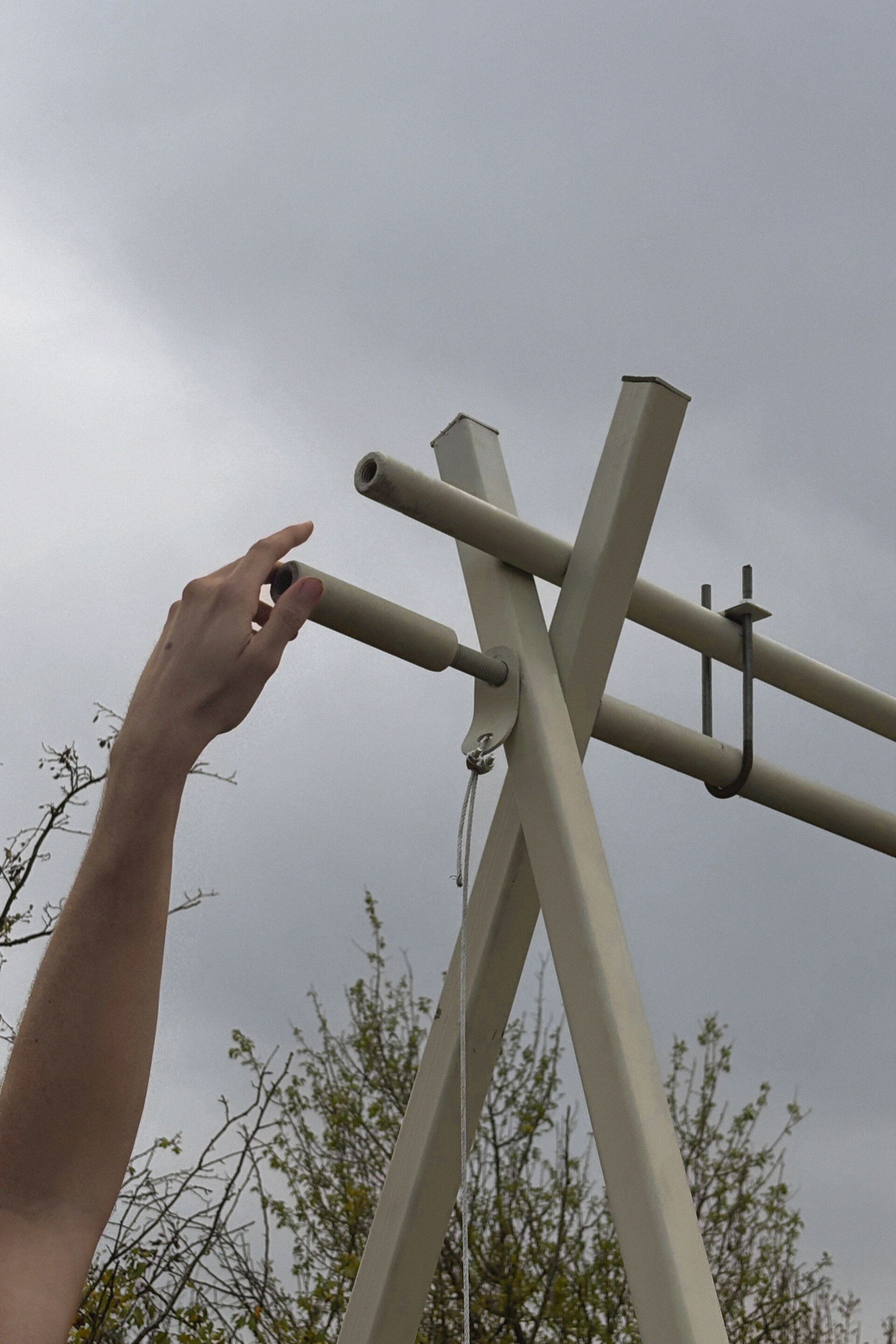
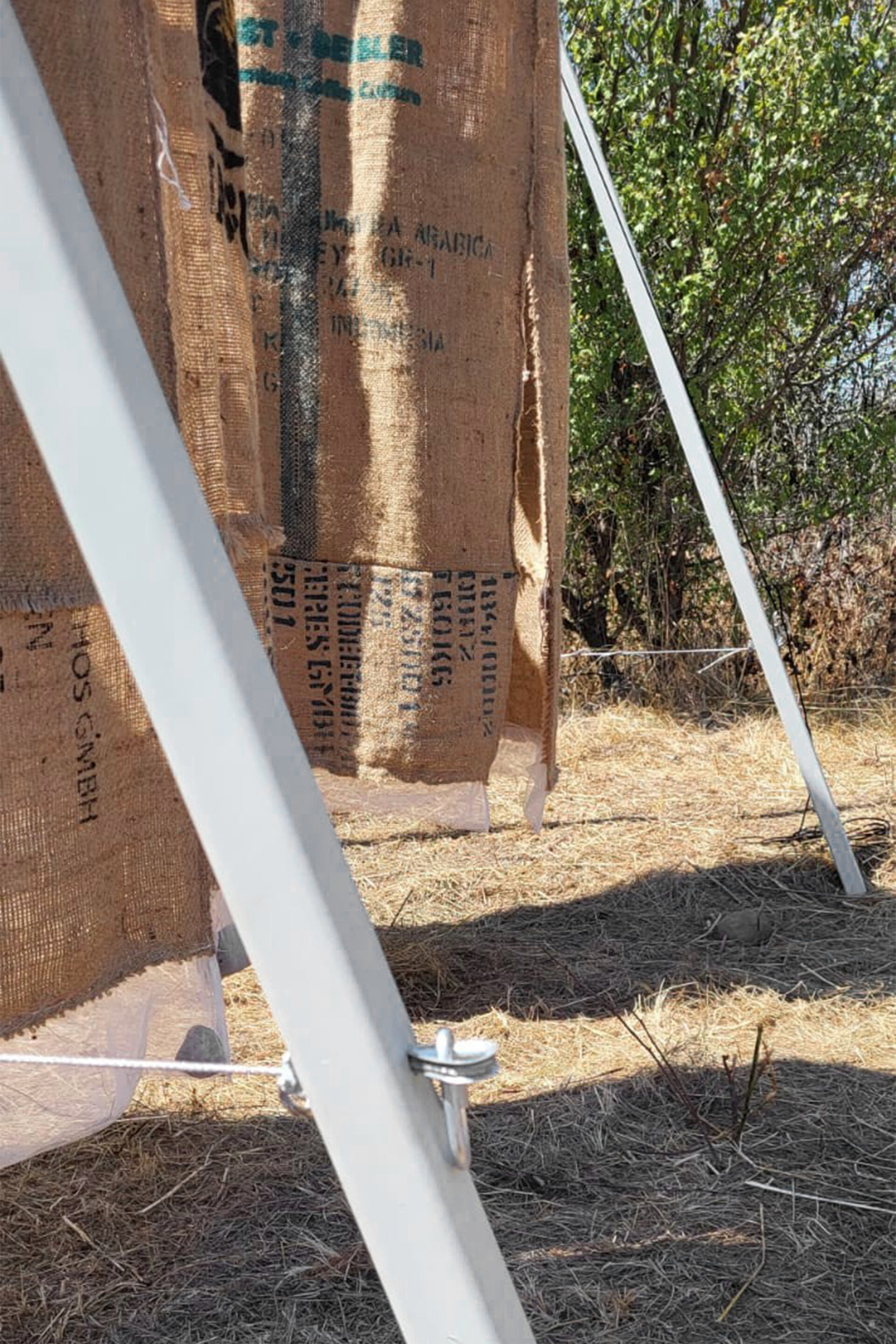
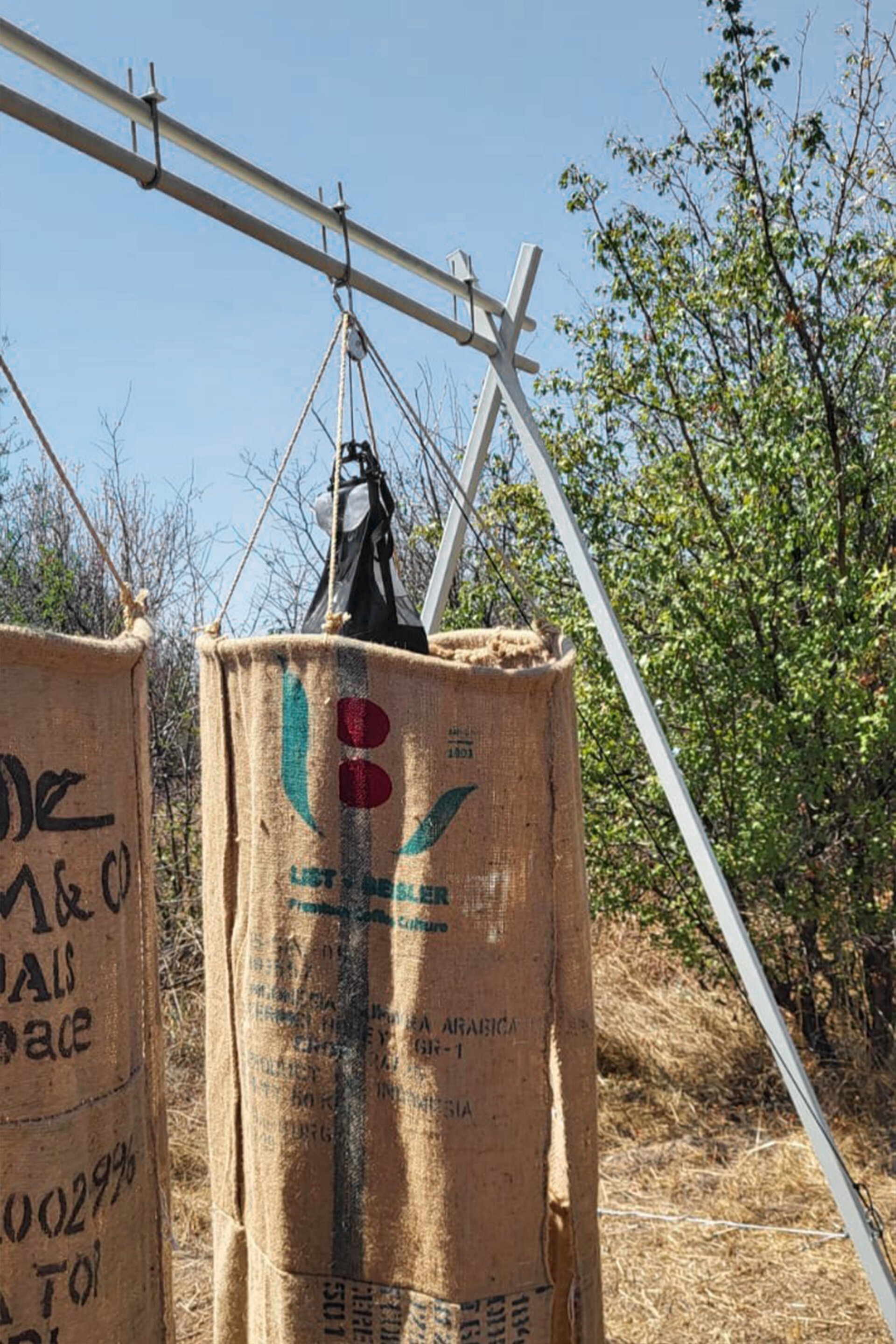
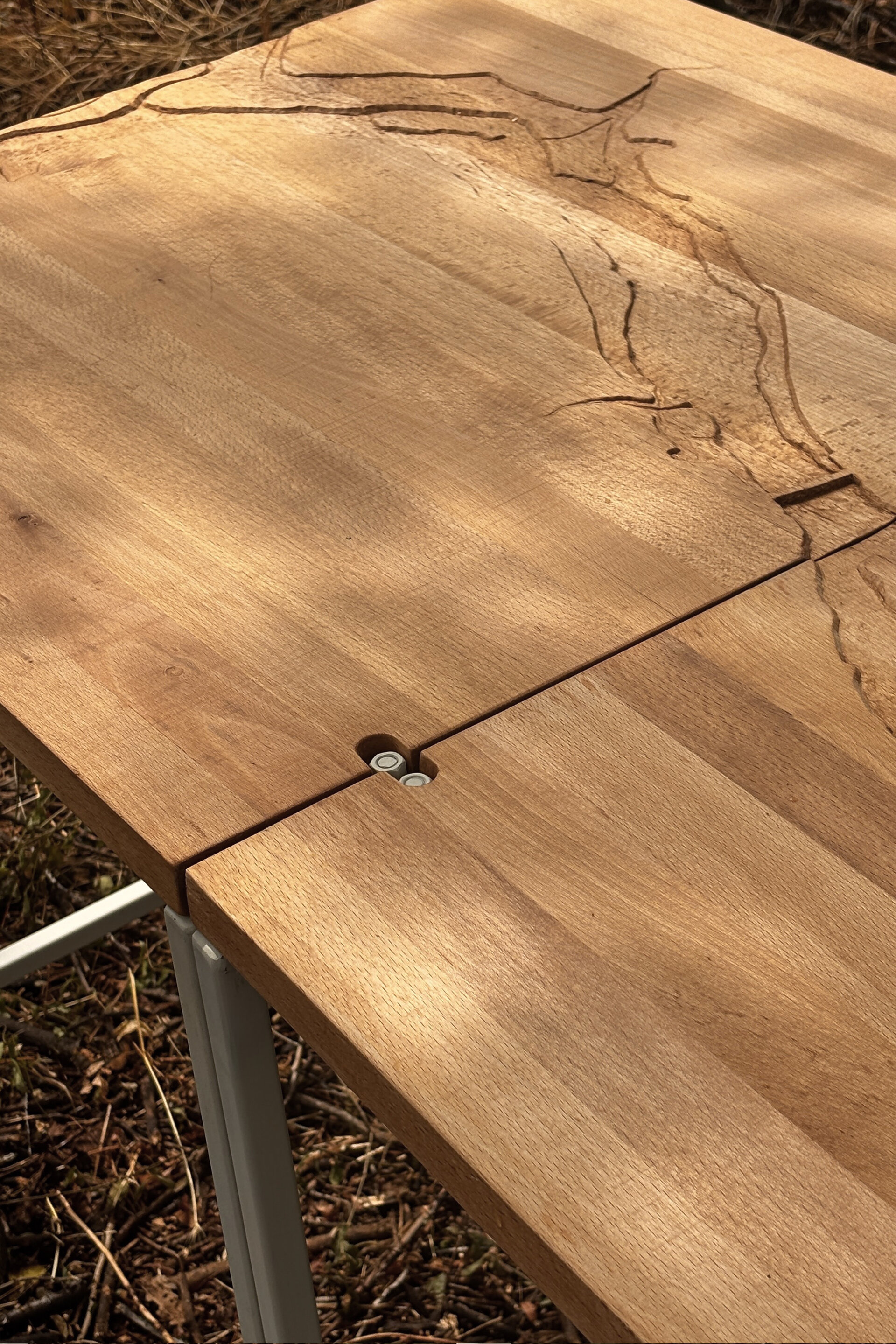
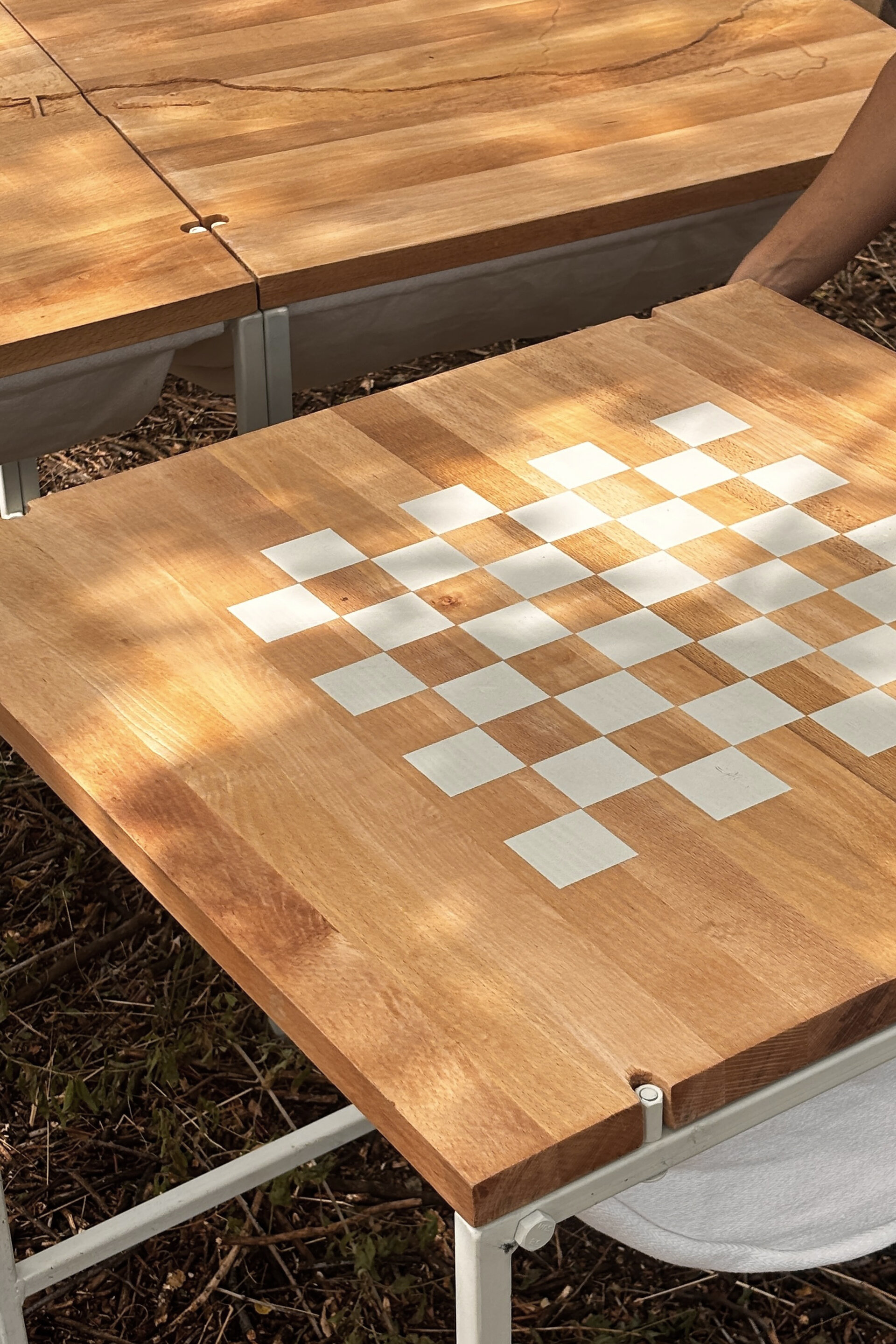
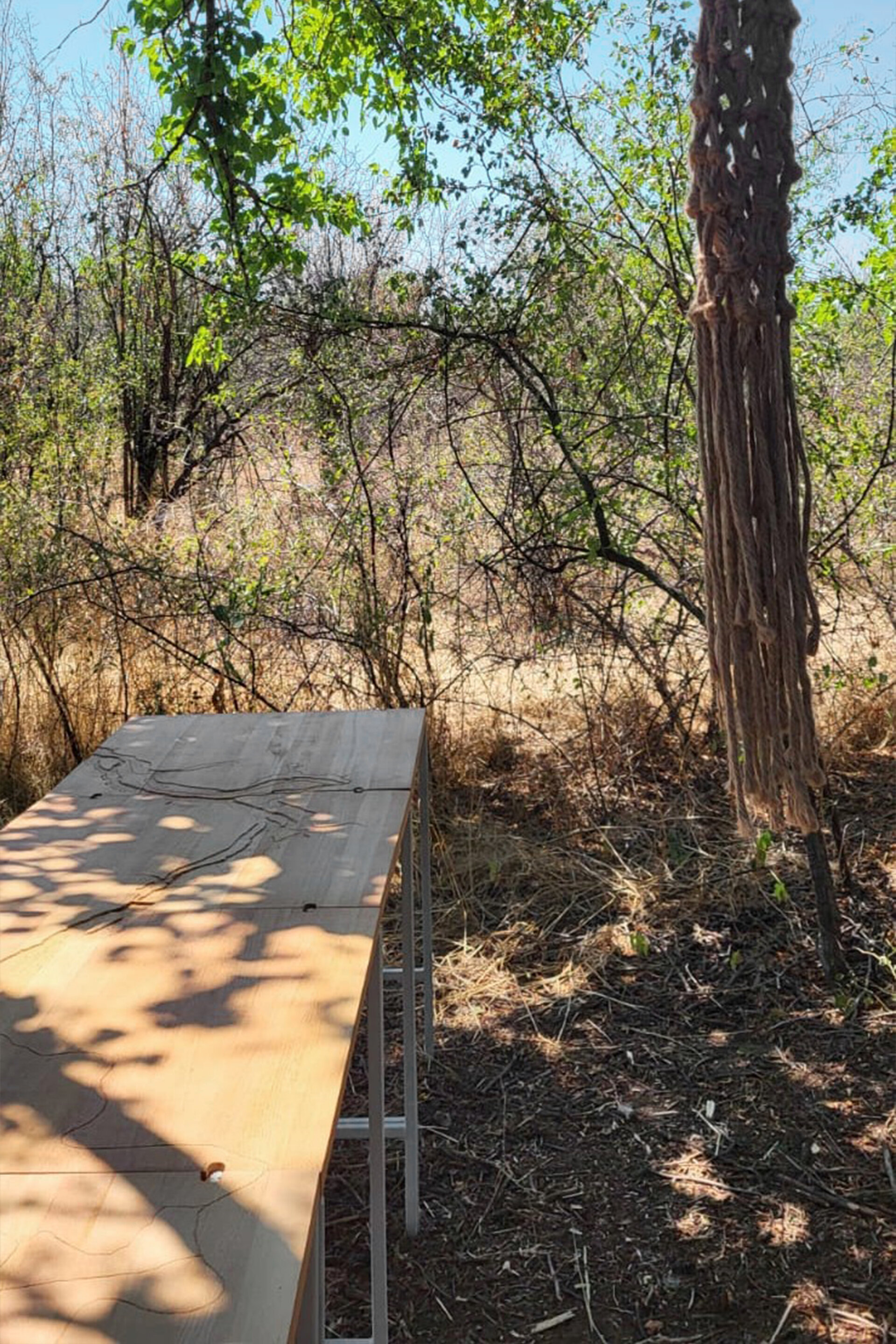
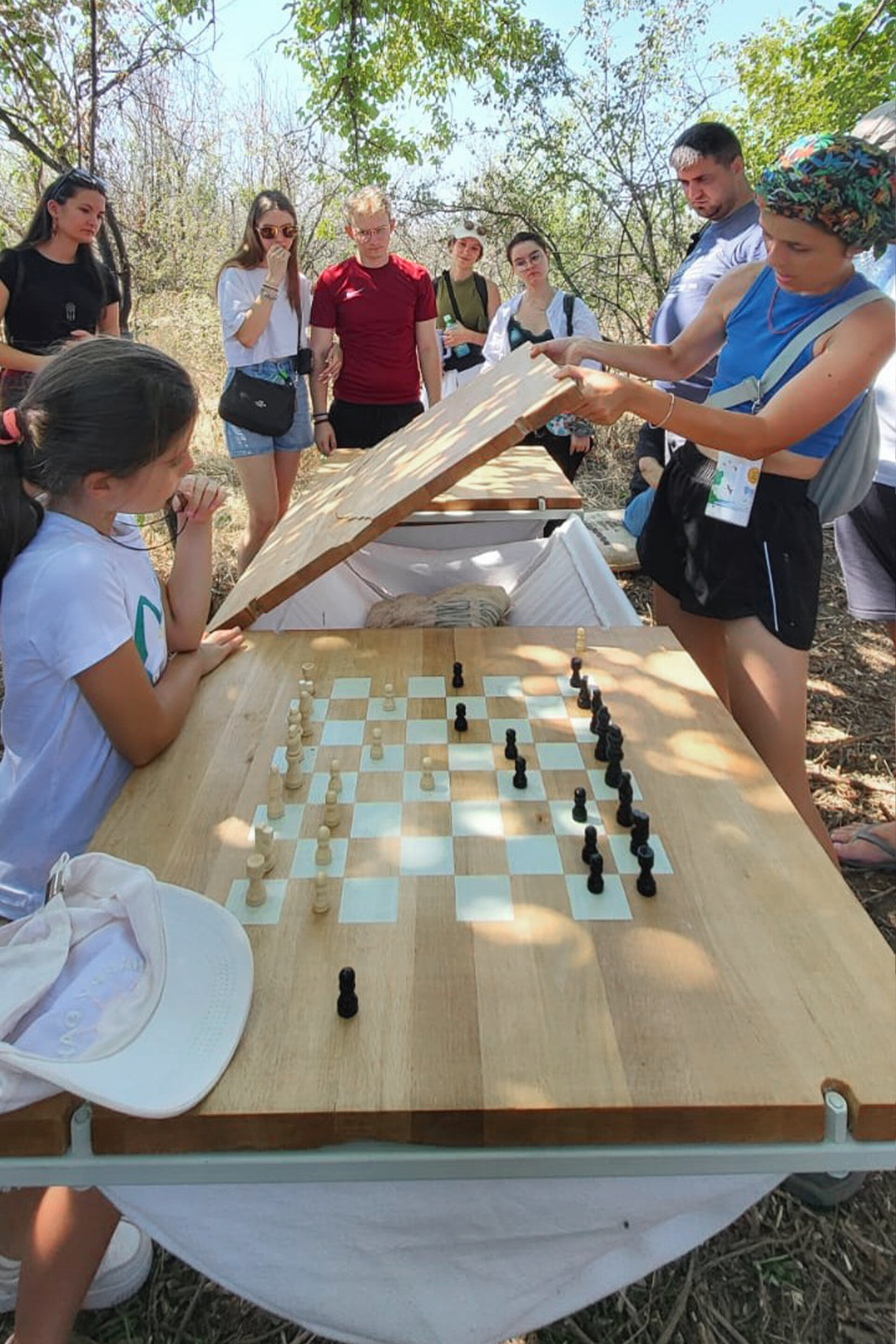
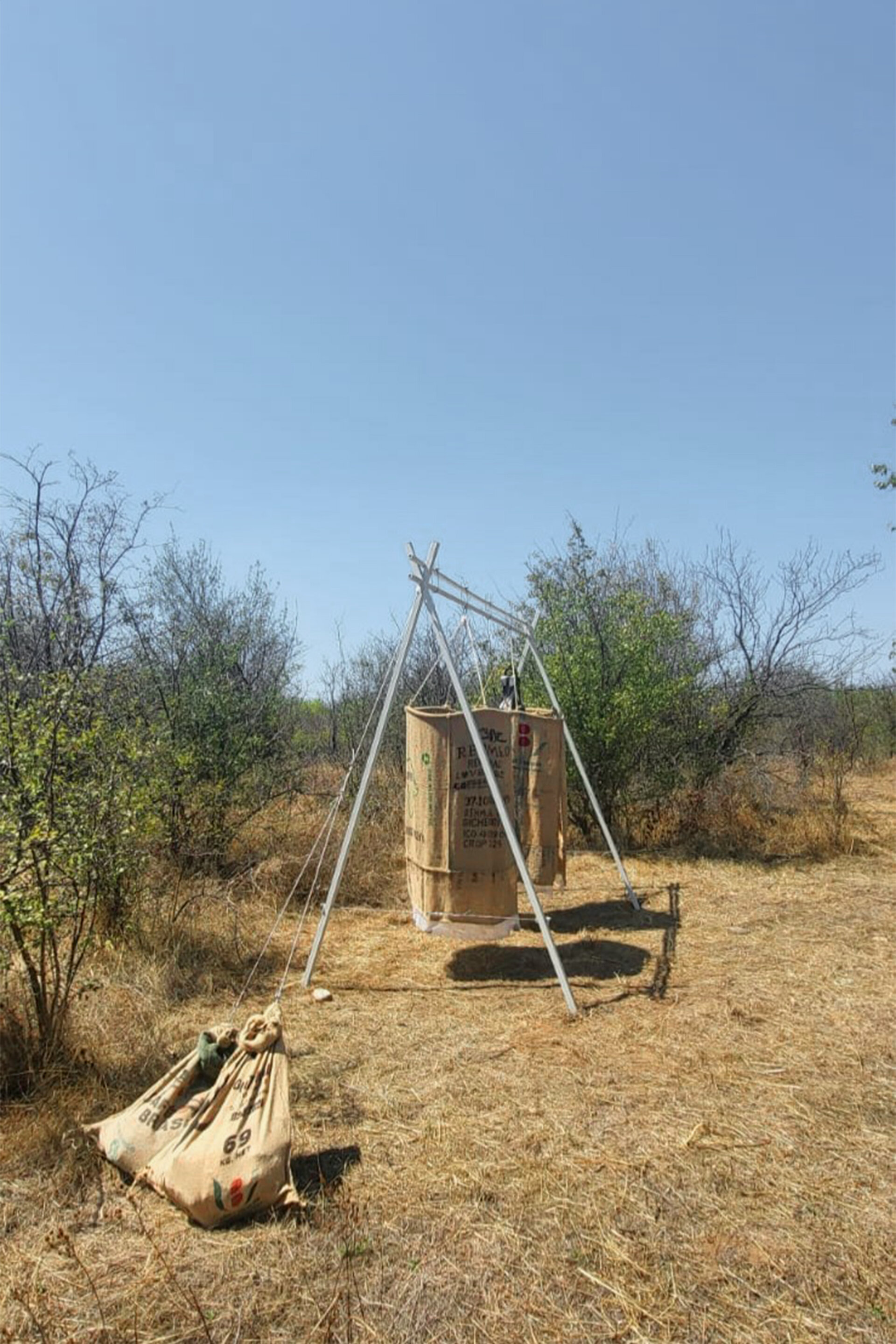
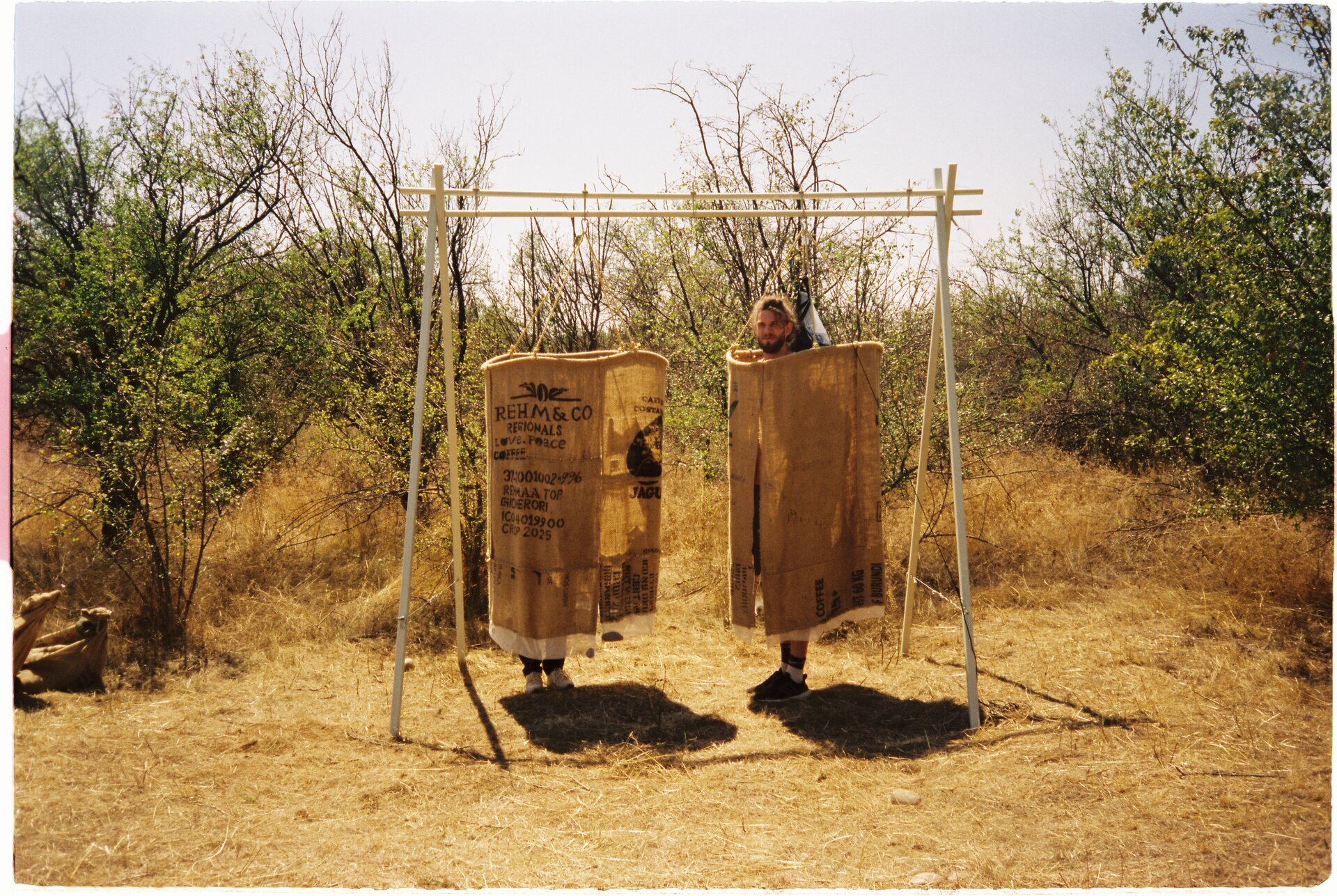
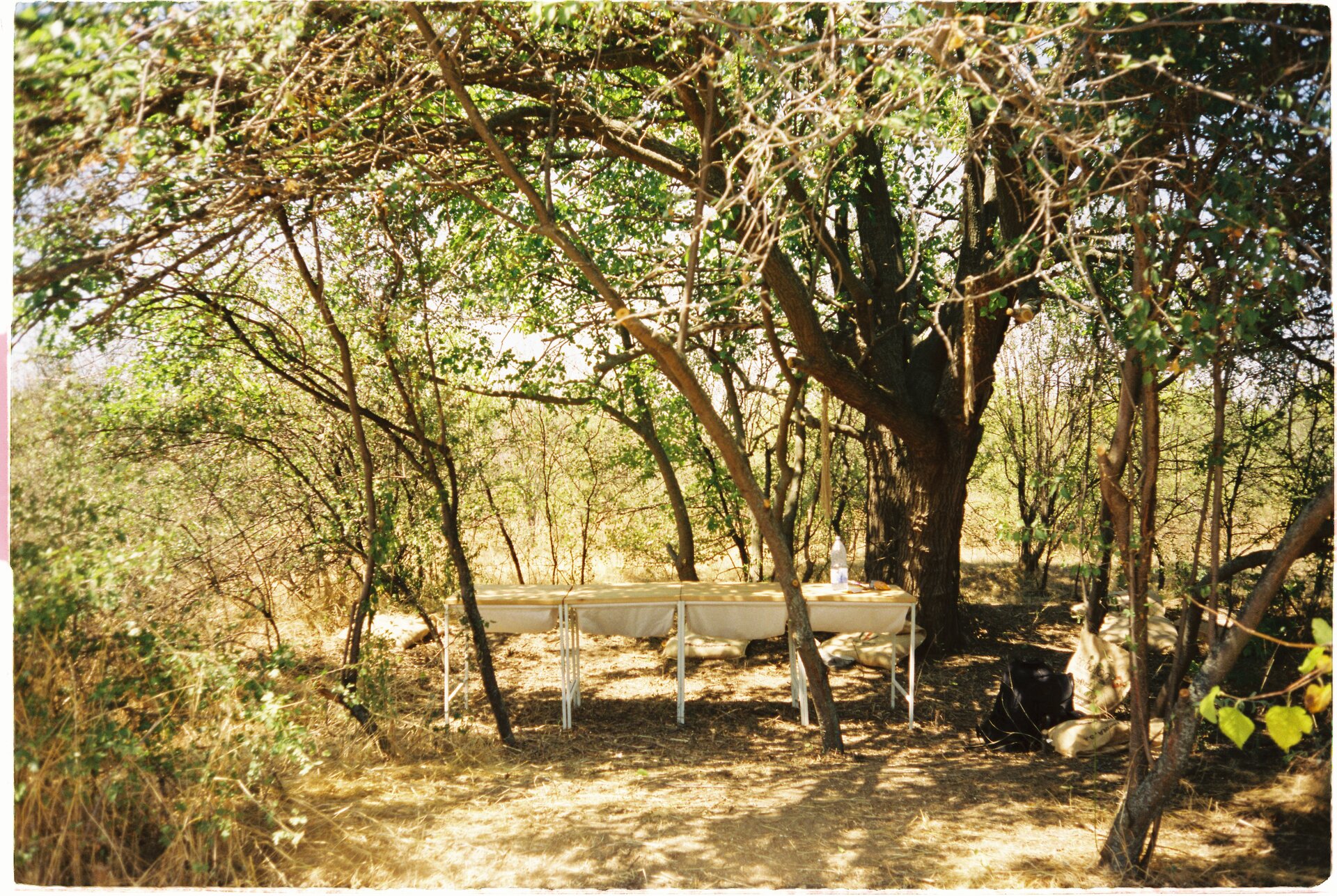
Built with a minimum of materials, the kit provides only the essentials: camping showers, tables, and storage space for research. The tables were designed as modular and mobile elements, with integrated textile storage spaces beneath the removable tabletops. When assembled together, the tabletops illustrate the course of the Danube, including the areas flooded following the construction of the dam. The showers were made using coffee sacks, stiffened with a hose and suspended from the metal structure. To ensure minimal impact, materials found on the island were used, such as cut grass, used to fill the seating elements, and bags filled with stones to anchor the shower structure, thus avoiding the construction of permanent foundations.
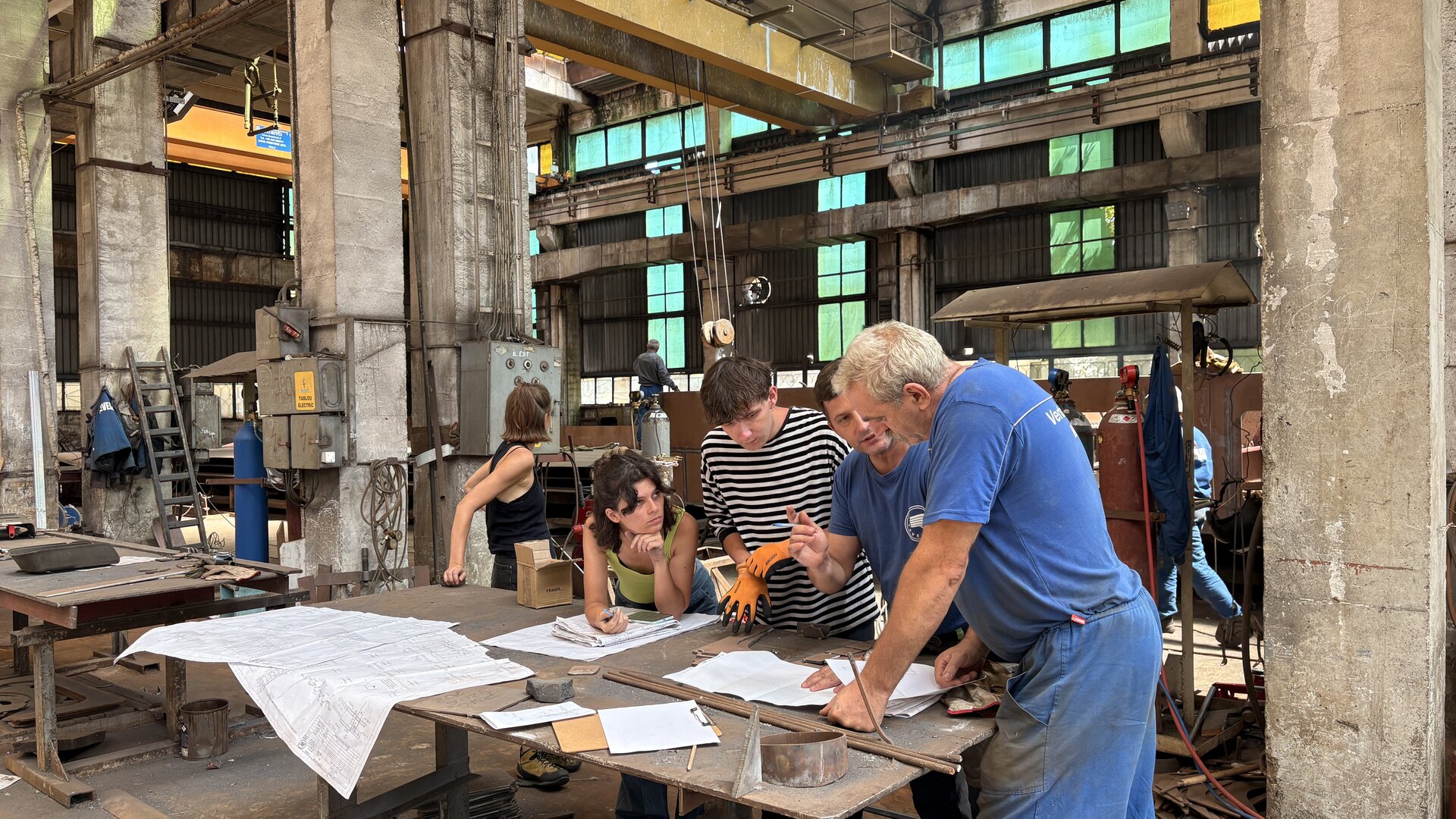
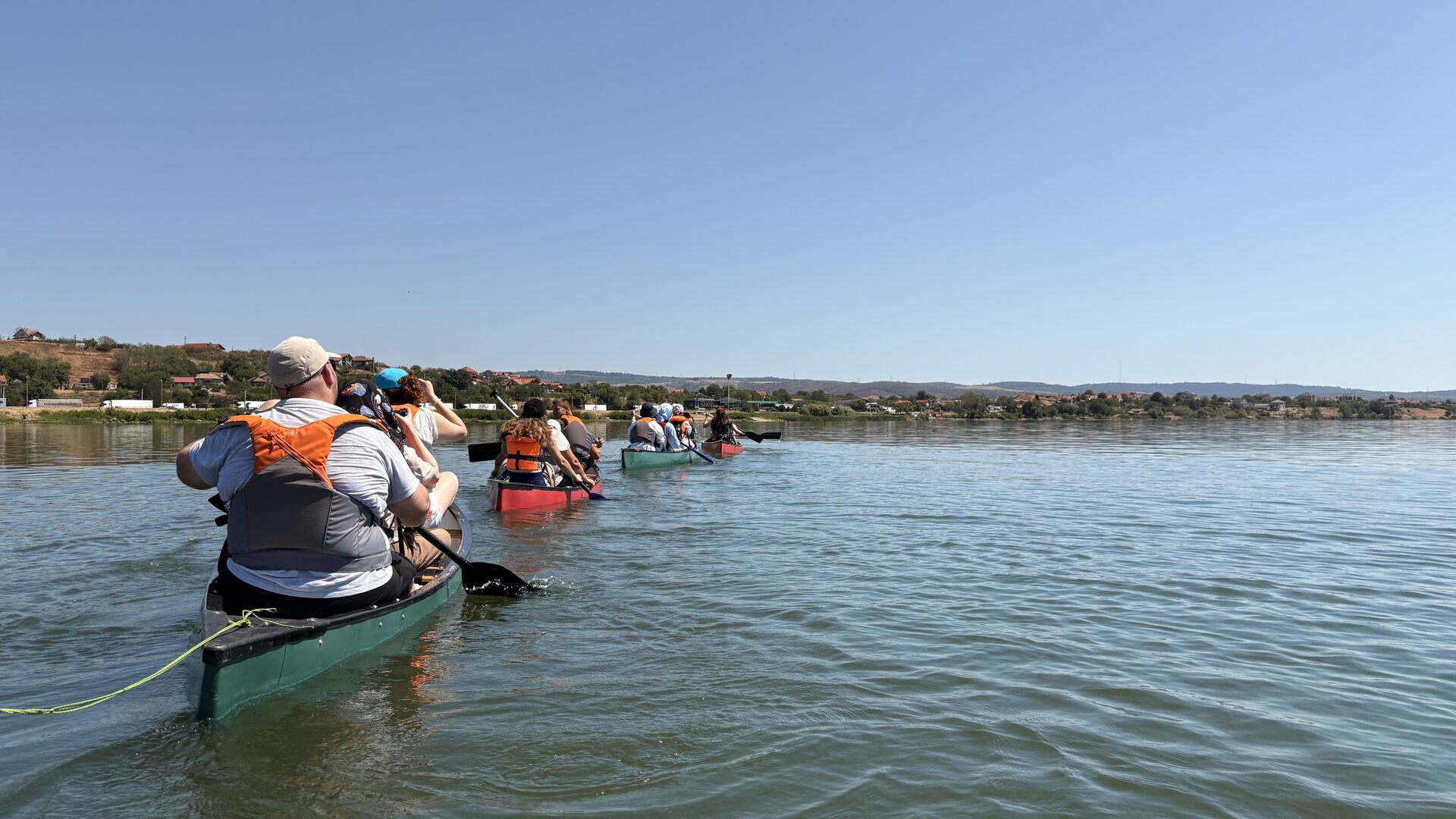
More than an architectural object, the kit becomes an educational and cultural tool, intended to reactivate the island through responsible practices and respect for the environment and heritage. Its reduced and essential character creates a temporary framework for exploration and reflection, without leaving permanent traces. The most important objective was to reconnect the community with the Danube, its memory, and its often-contested history, through a process of co-creation that brought together former shipyard workers, researchers, artists, and local residents in a shared effort to rediscover and reactivate the island.
Architecture and Experiments
- A Roof for St. Michael / Ein Dach für die Burgkirche
- ARCHY FEST_QUINETWORK 2026
- Civic Bucharest
- (H)ODAIA – A Rural Hub for the Rehabilitation of Cultural Landscapes
- Model 10
- Workshop AI in Architecture
- Video Mapping and Heritage. Empúries, Costa Brava: ancient ruins, media, and artificial intelligence
- GEMA – Geometric Experimentation with Architectural Morphology. A European Experience
- I can’t talk right now. I’m busy
- Disco Blast
- Limanu Summer School 2026 – Multicultural Heritage on the Edge
- Bucium Summer University 2026, 14th Edition. Safeguarding Rural Heritage through Education
- Camping and Research Kit on Șimian Island
- Cantacuzino Estate Summer School 2026, 8th Edition


