I can’t talk right now. I’m busy
Authors’ Comment
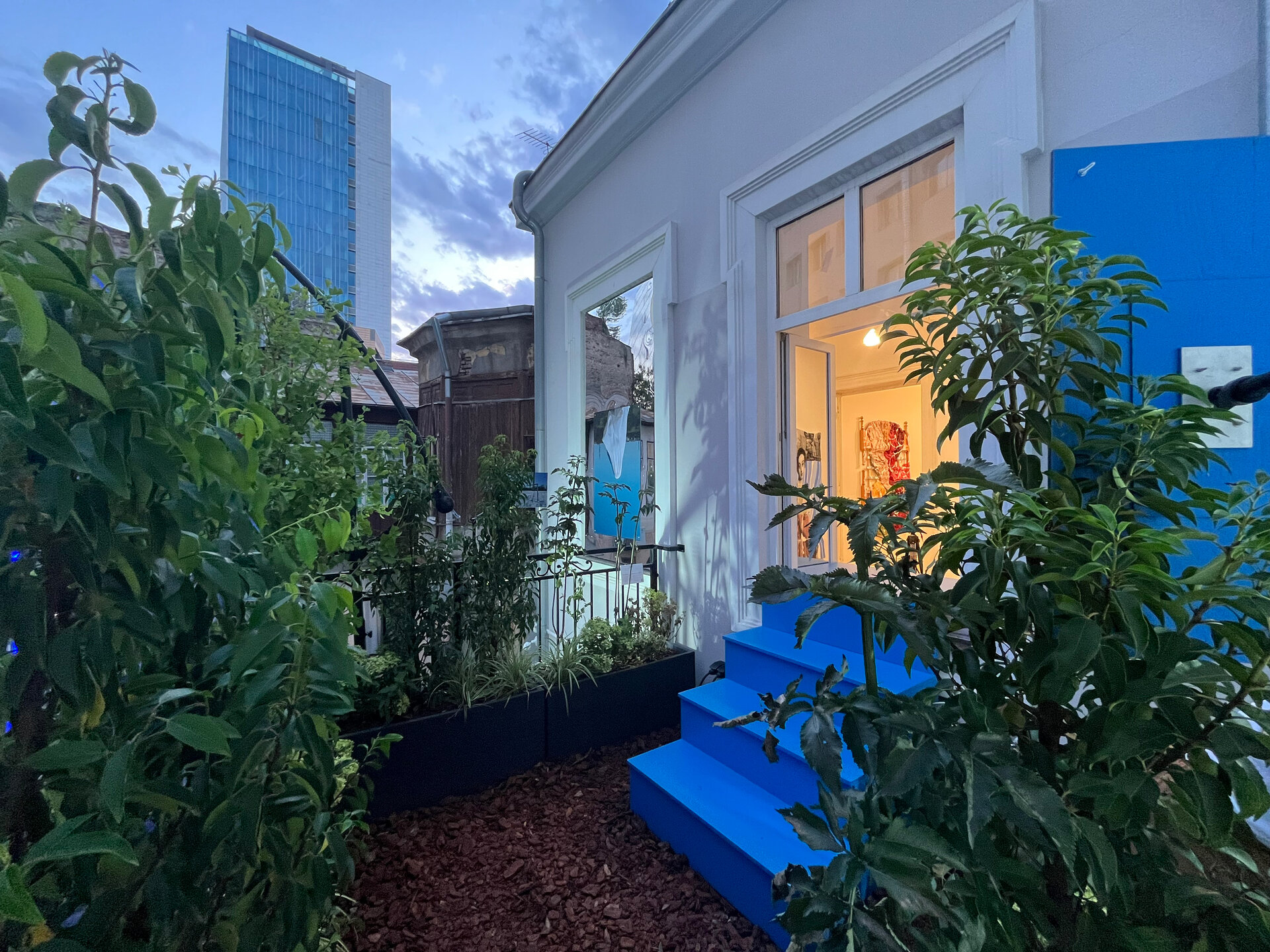
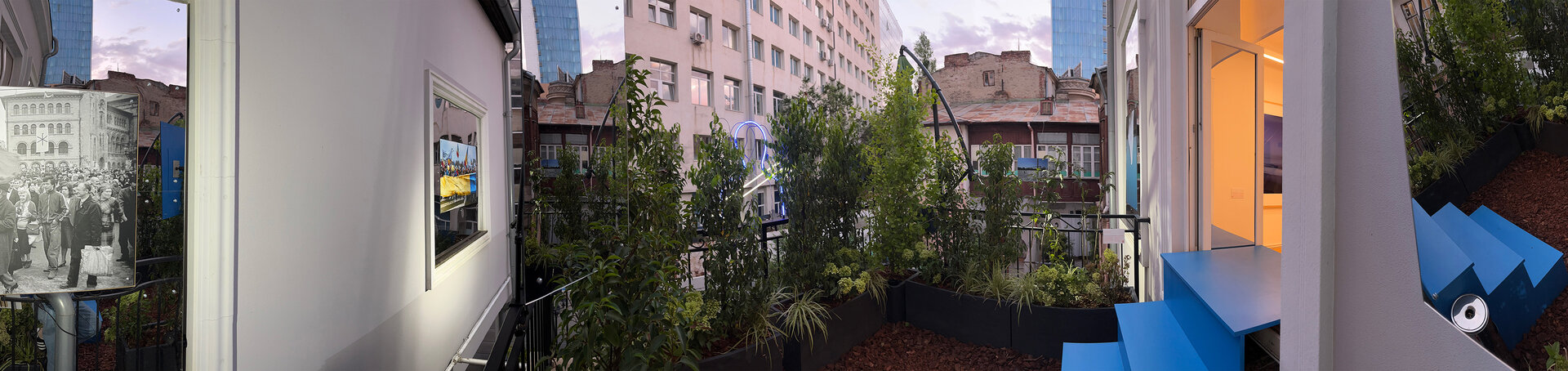
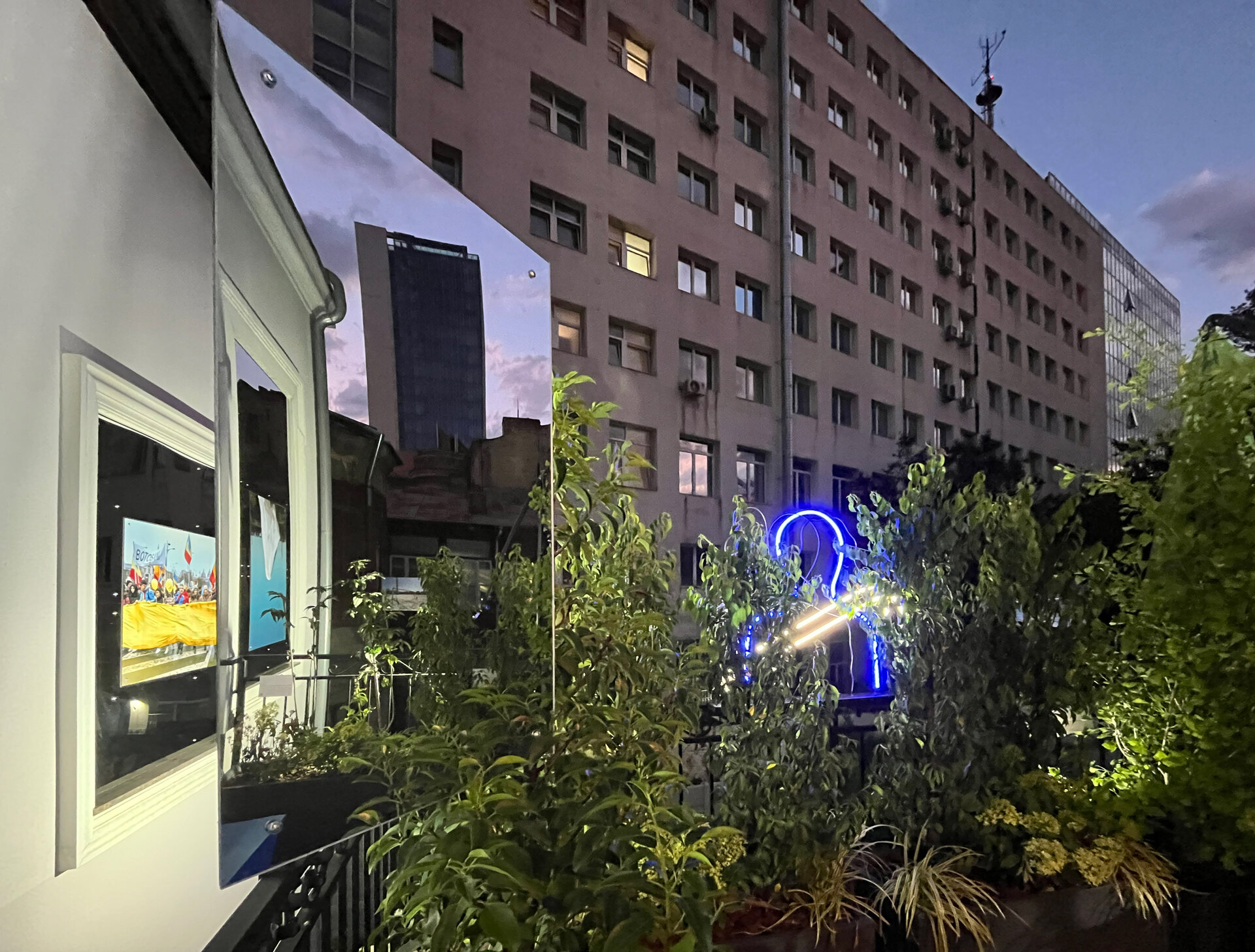
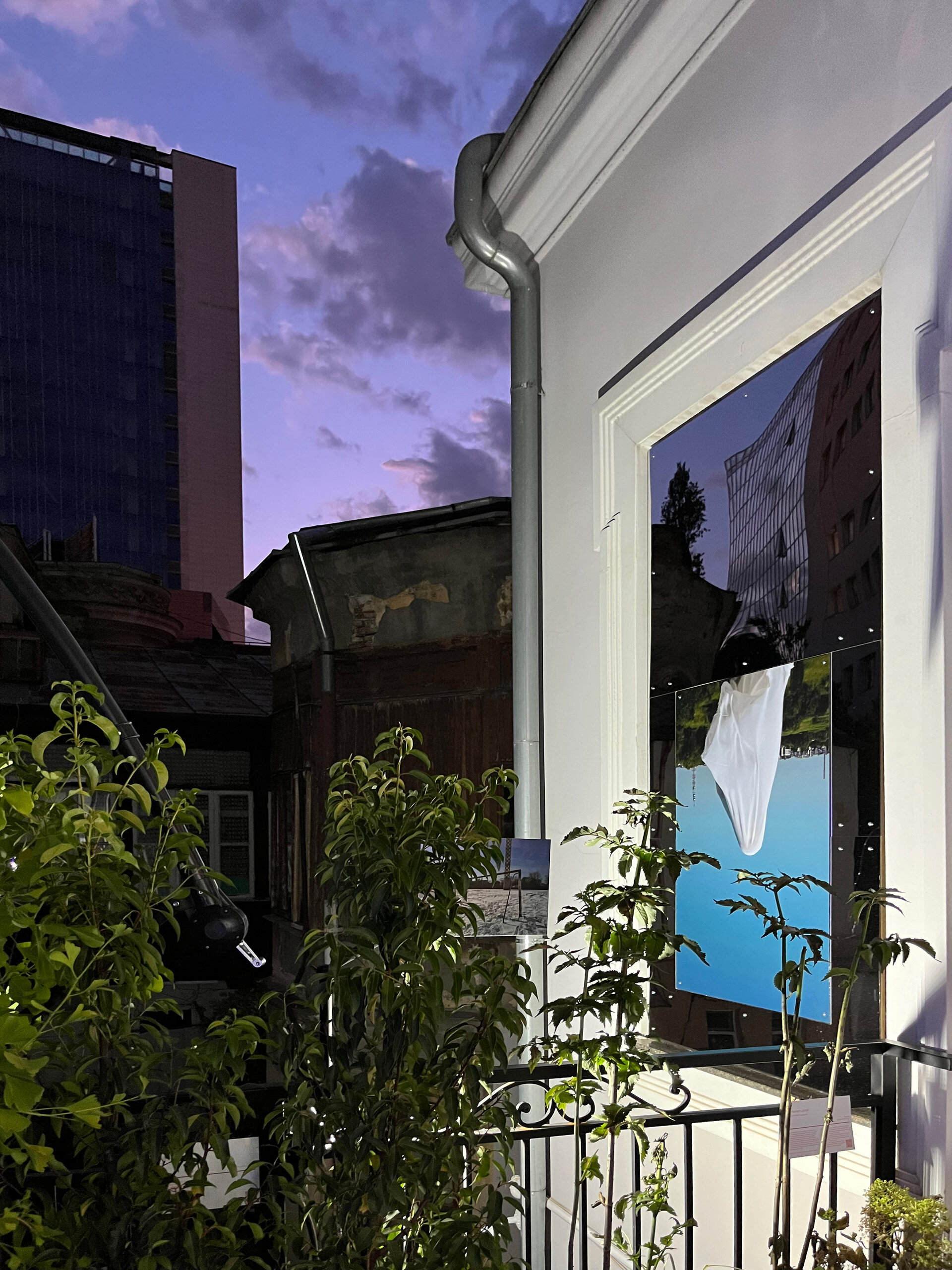
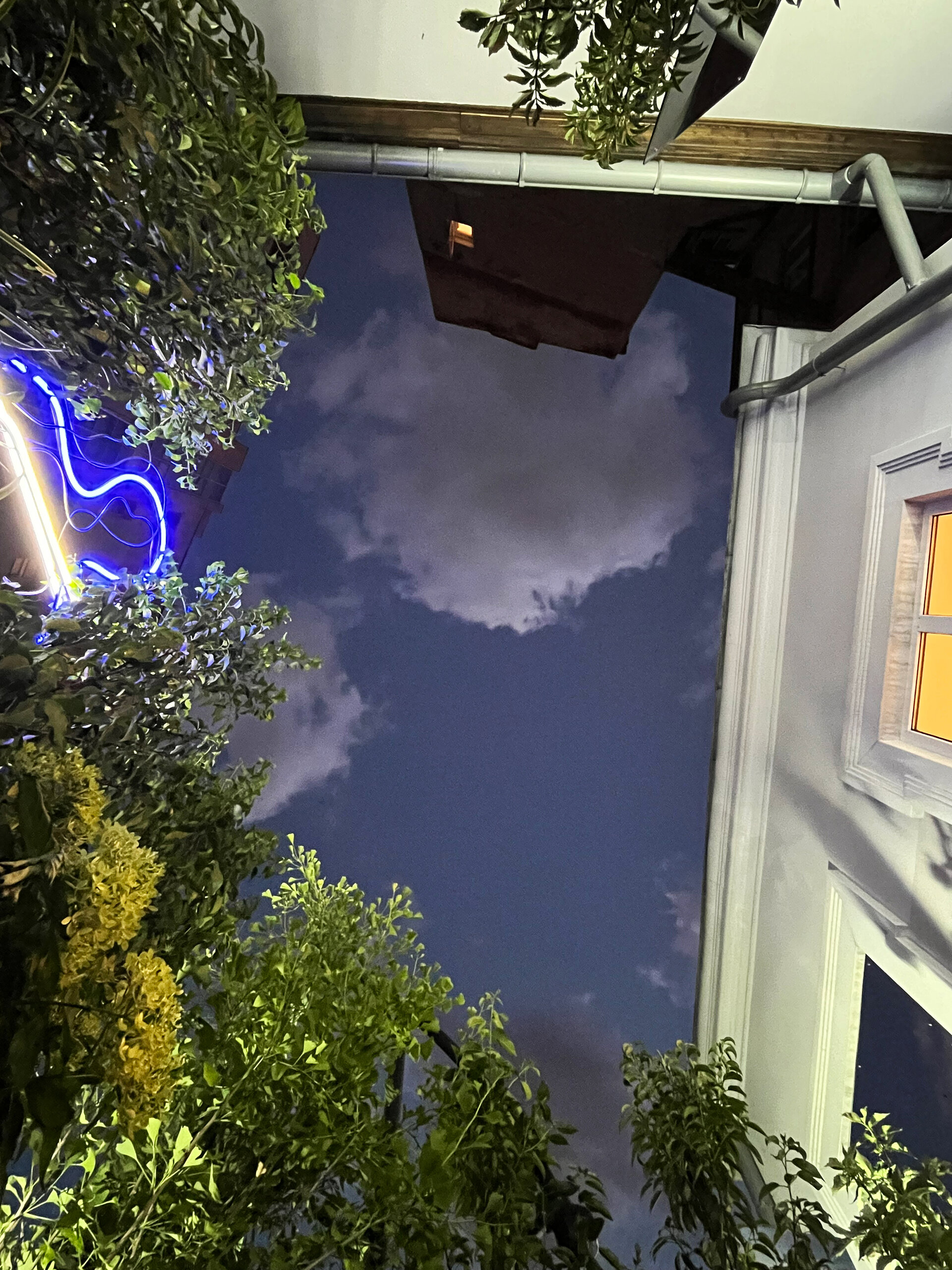
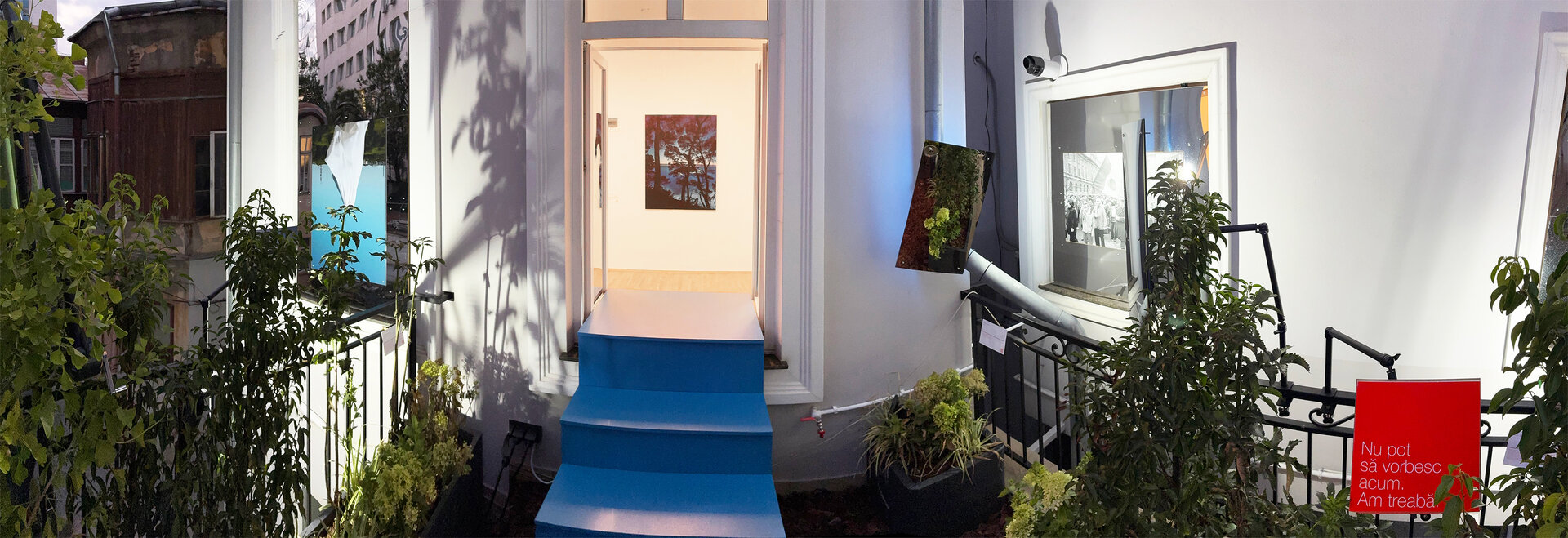
“I can't talk right now. I'm busy. I'm going out the window on a blue ladder, into a balcony without a door. It's crowded: 7 horizon lines come in through the window, and 32 go out. I'll call you back.”
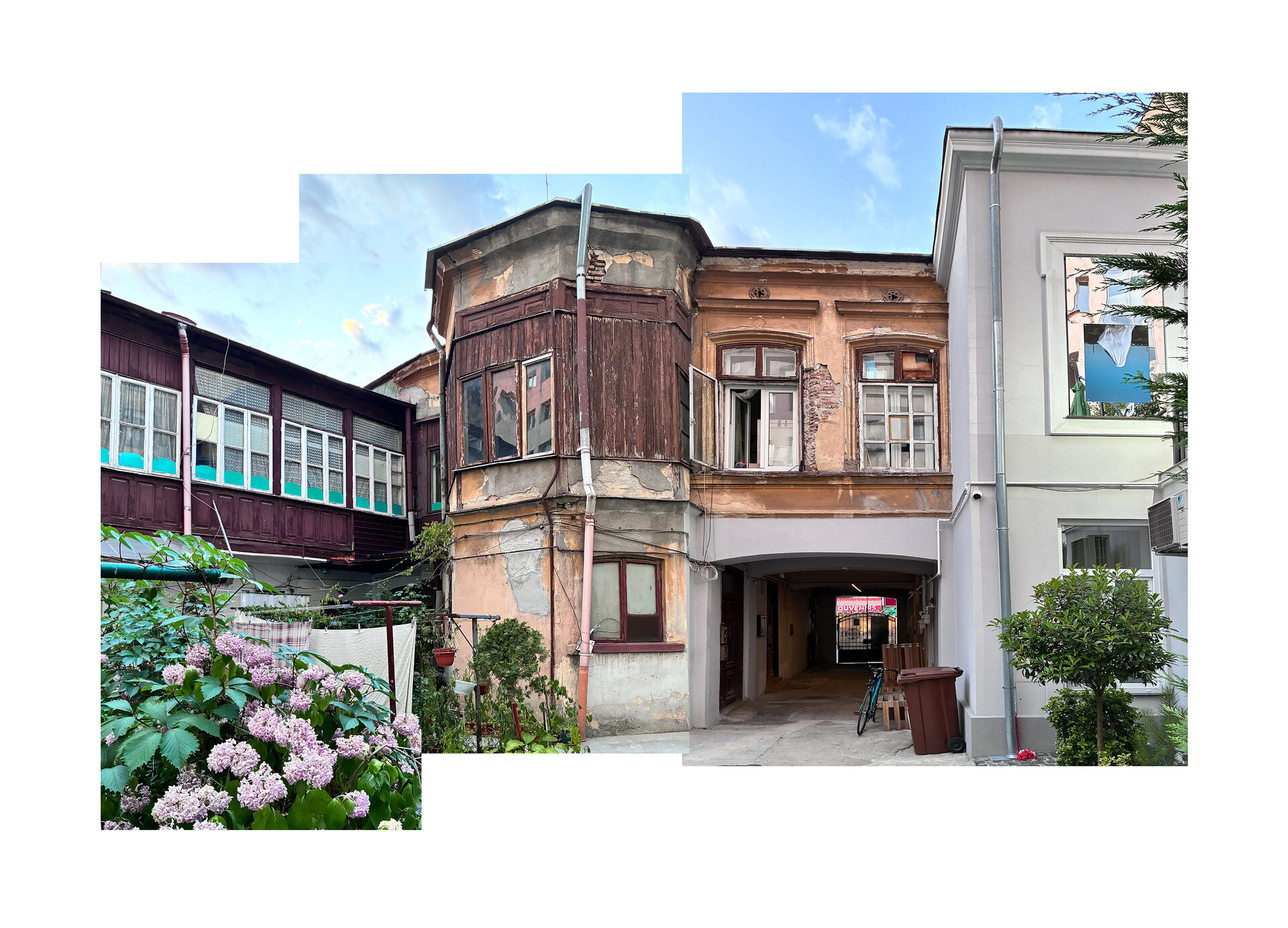
The installation places Bucharest’s identity under the lens, presenting the city’s contradictions as opportunities for dialogue. It explores how the urban fabric can become exhibition material and a way of reading the city.
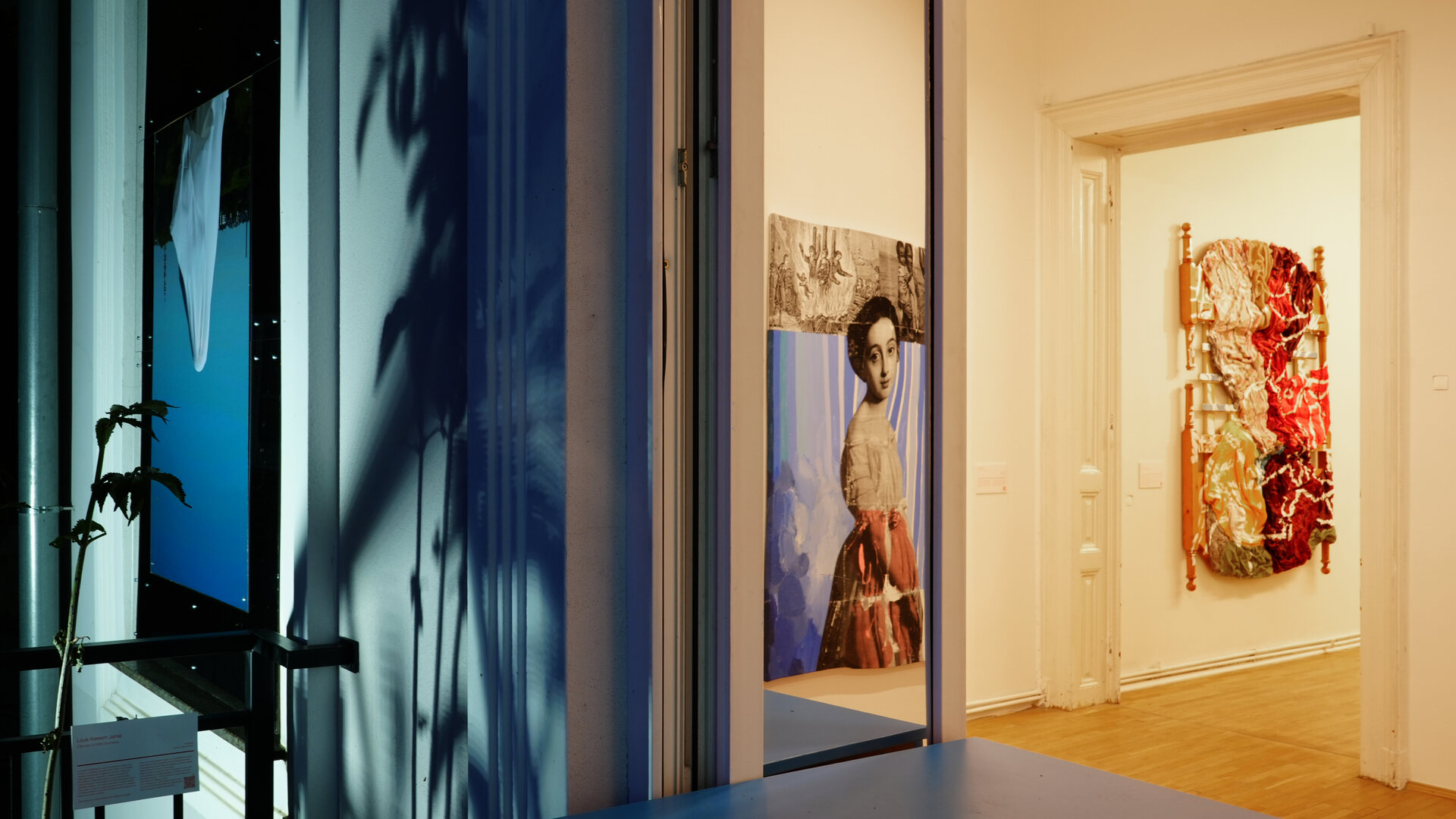
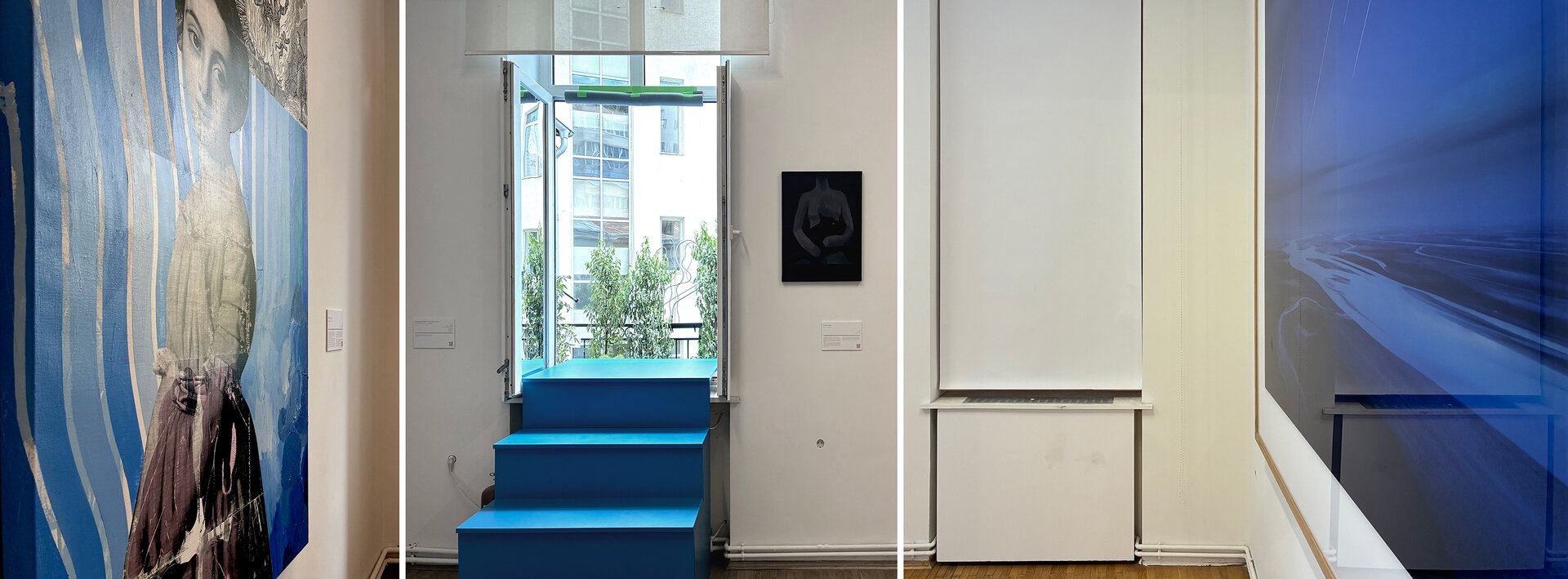
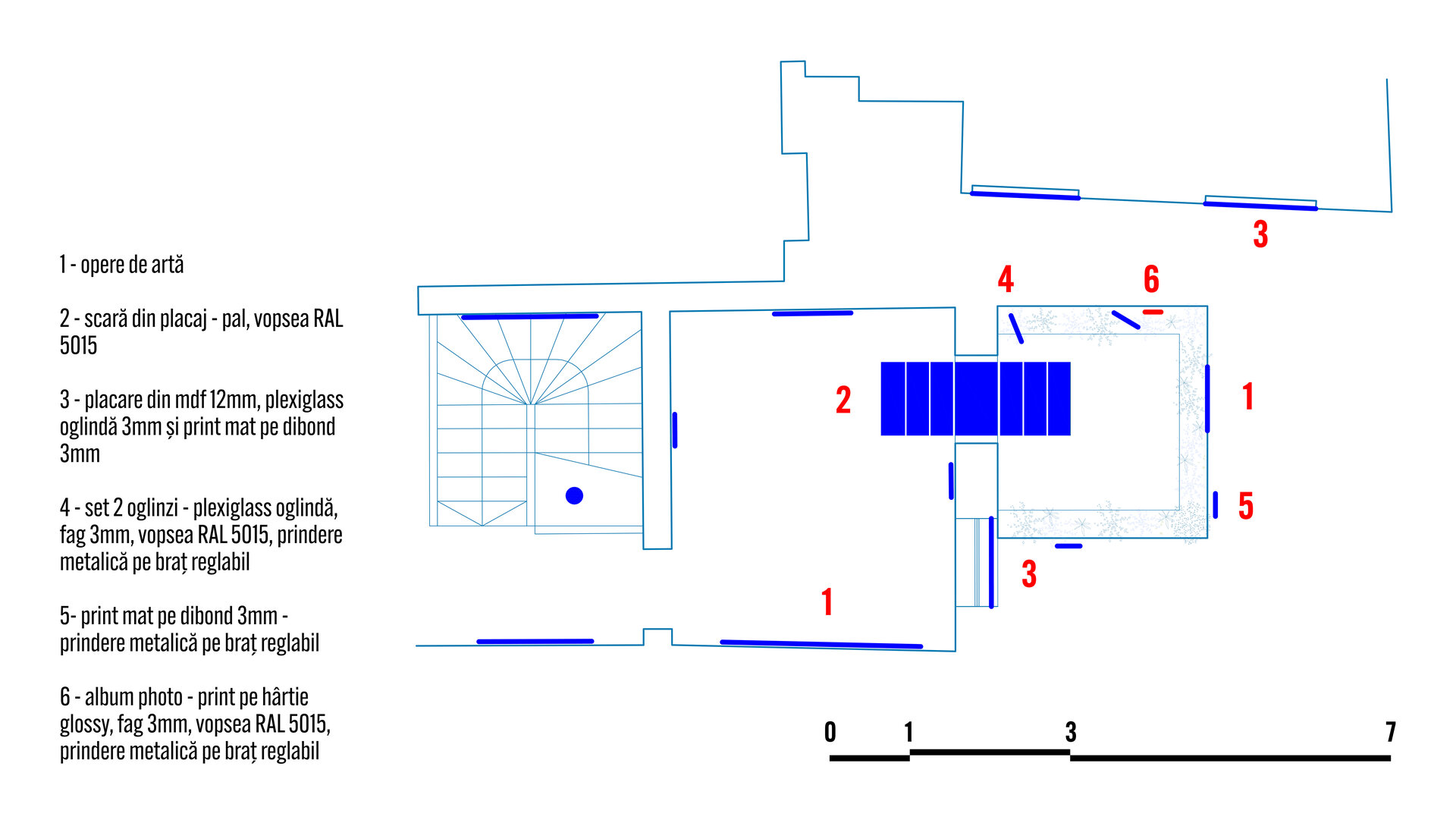
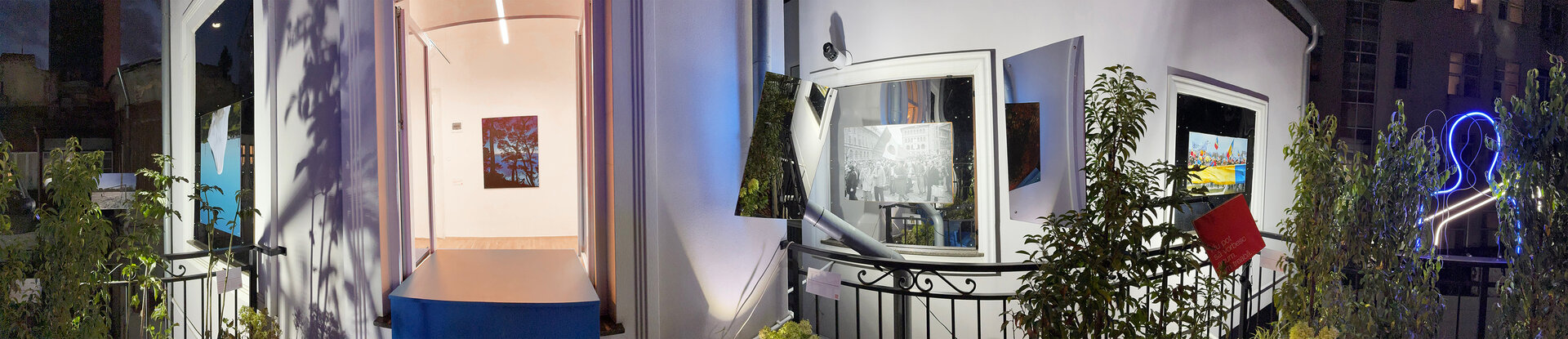
The site carries an absurd charge: a 4 sqm walkable terrace belonging to a first-floor room within an exhibition space, created by extending a room from the neighbouring apartment. Its connection to the interior was only through a window. A detachable painted-wood staircase extends the gallery into an outdoor photography space.
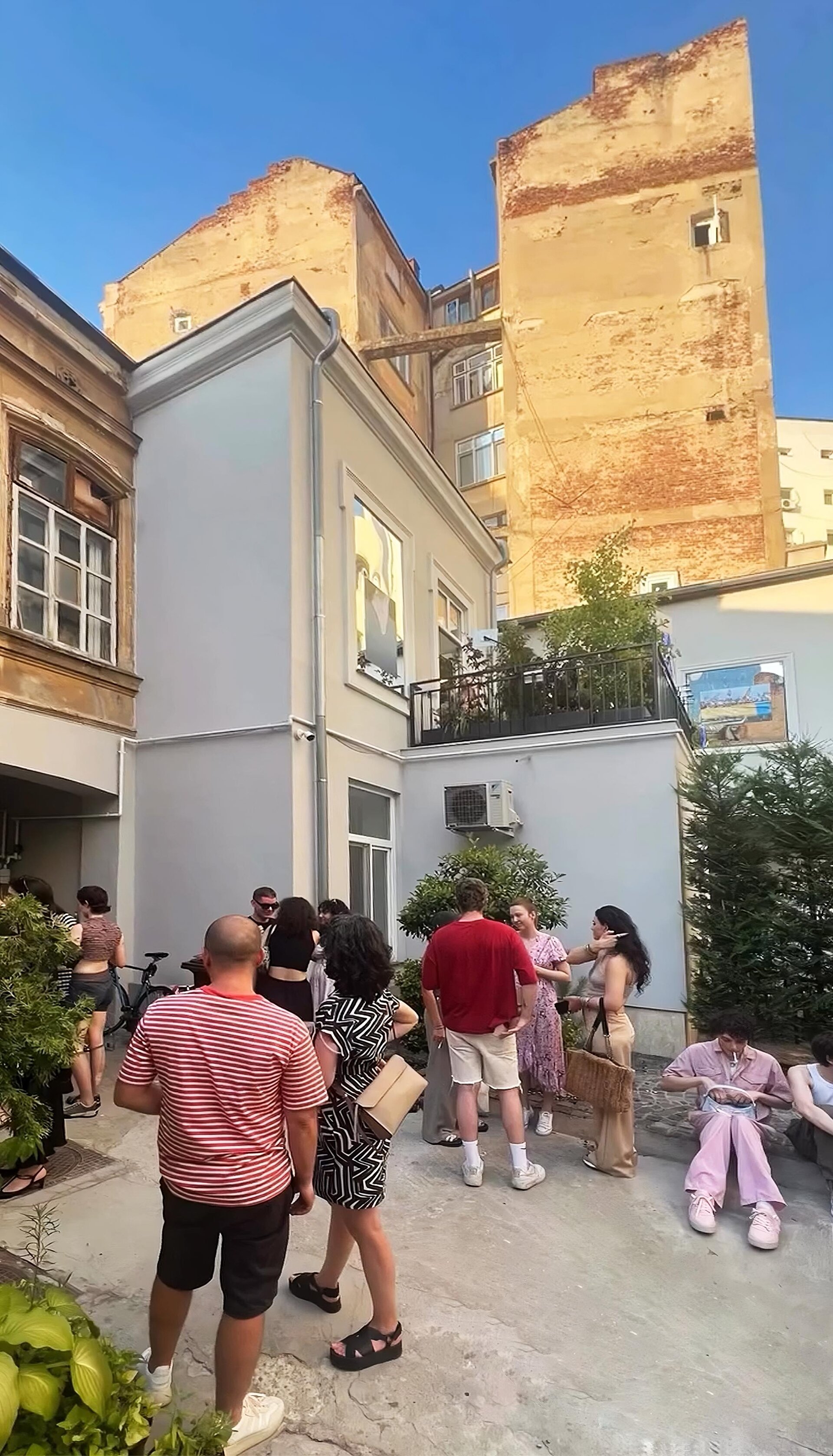
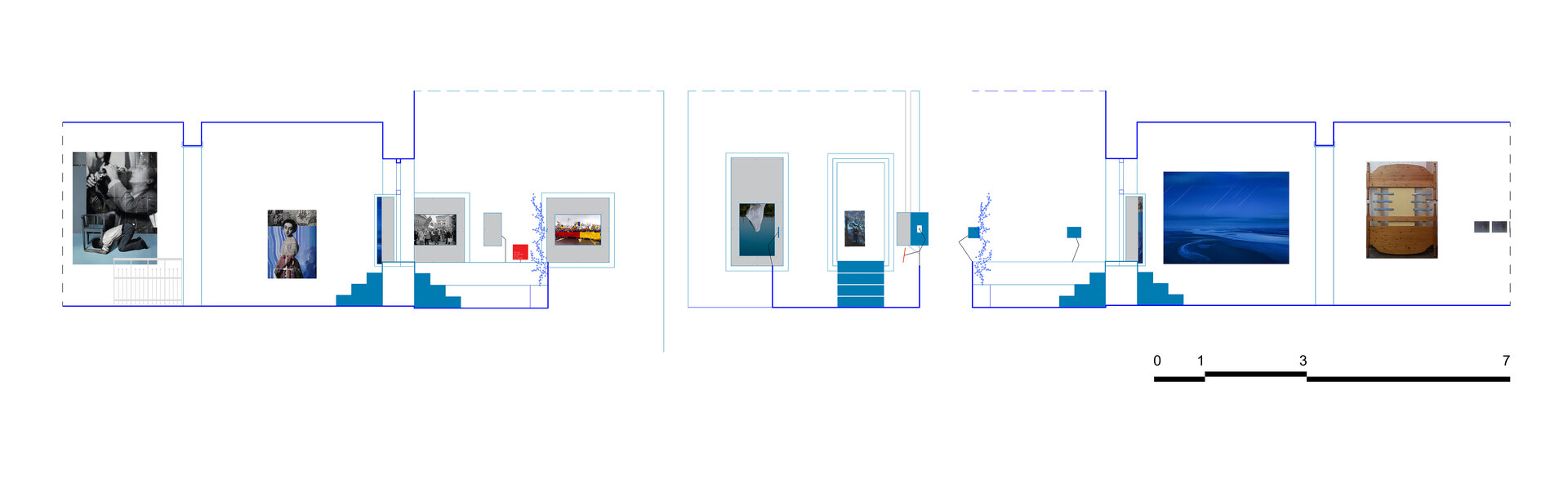
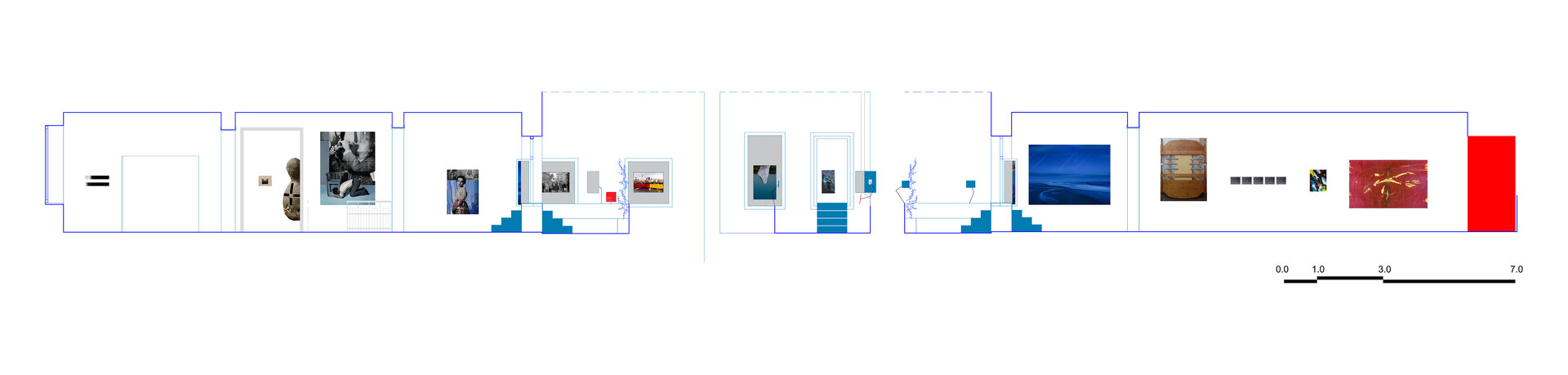
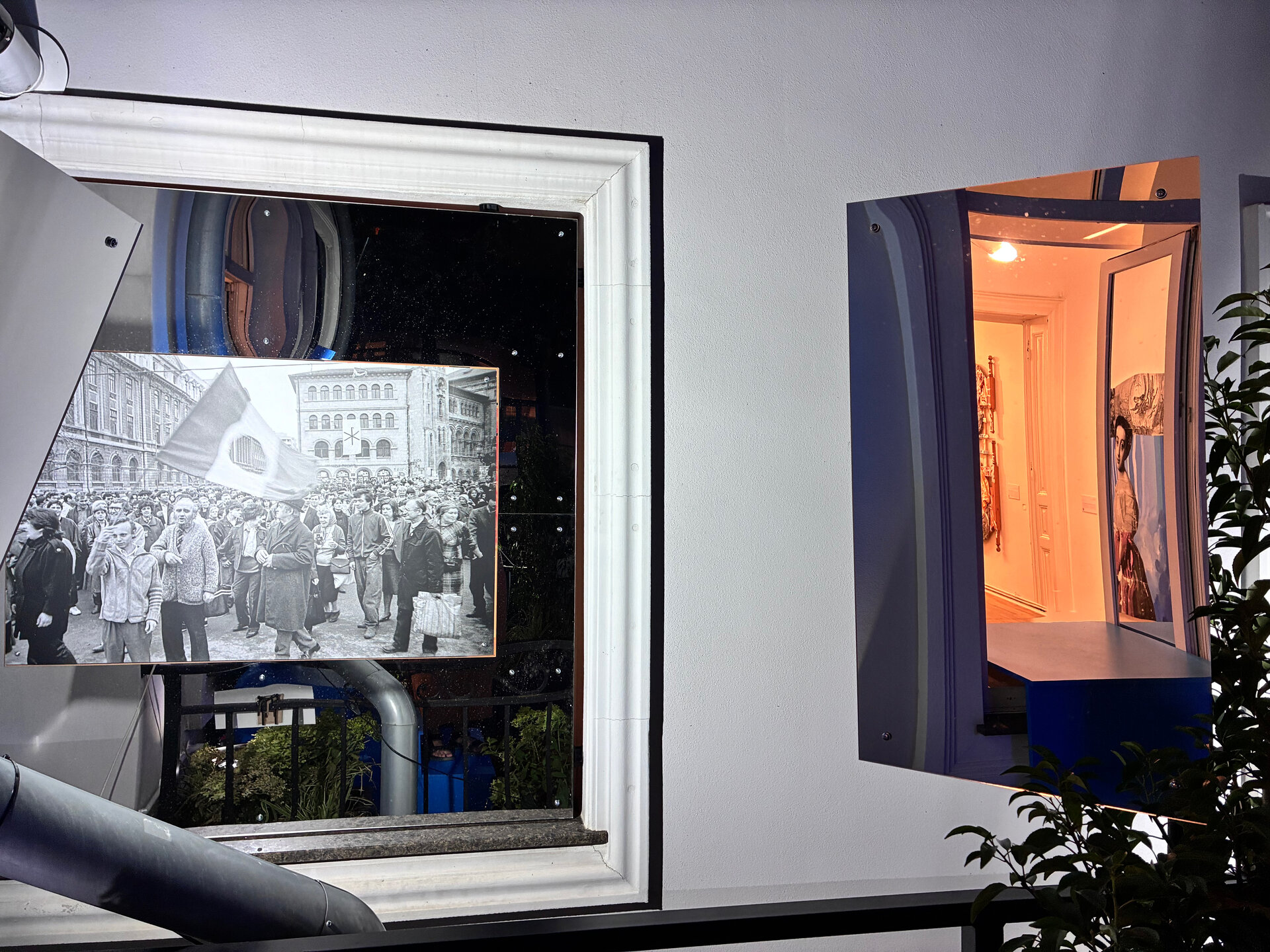
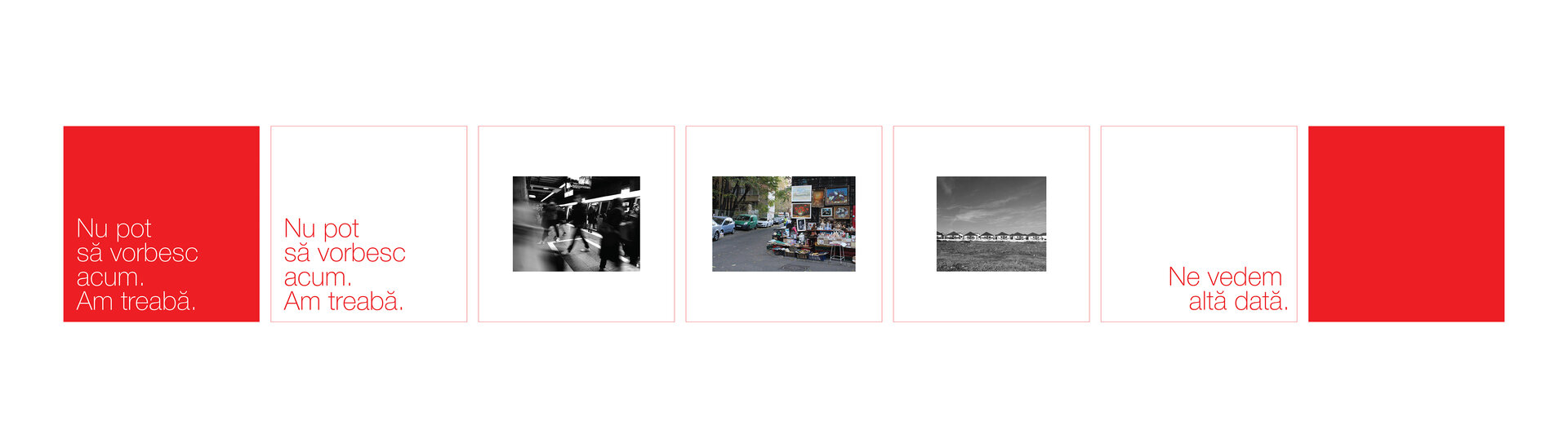
An open call expanded the installation beyond the authors’ perspective, allowing Bucharest to be narrated through its inhabitants’ viewpoints. Photography captures the city’s thin thread lines: each image reveals how its contradictions are negotiated in everyday life.
The photographs bring together temporalities: traces of the socialist city, the post-1990 transition, redevelopment pressures, and residents’ attempts to reclaim coherence. By integrating publicly submitted images, the terrace becomes a shared viewing device. Its improvised architecture mirrors Bucharest’s negotiation of growth, dysfunction, adaptation, and chance, turning it into a collective reading of the urban condition.
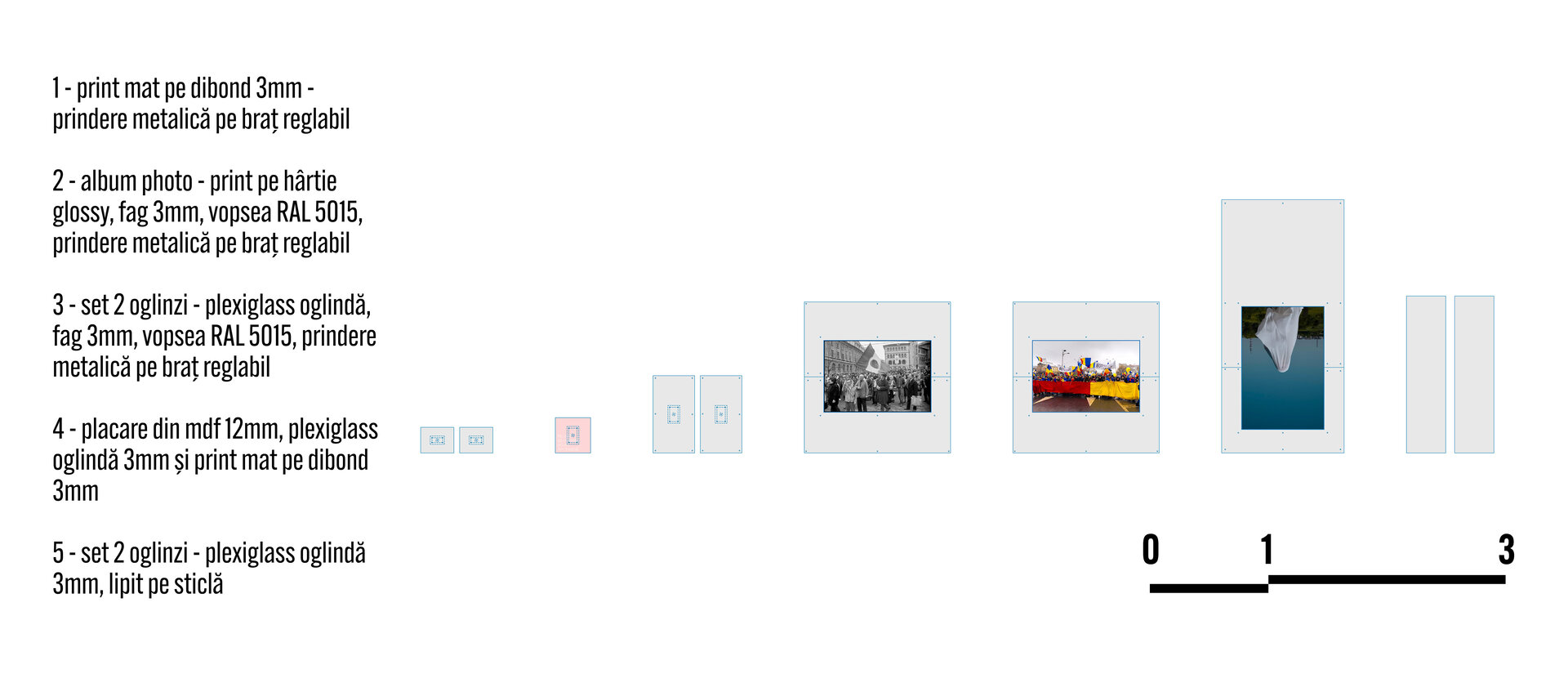
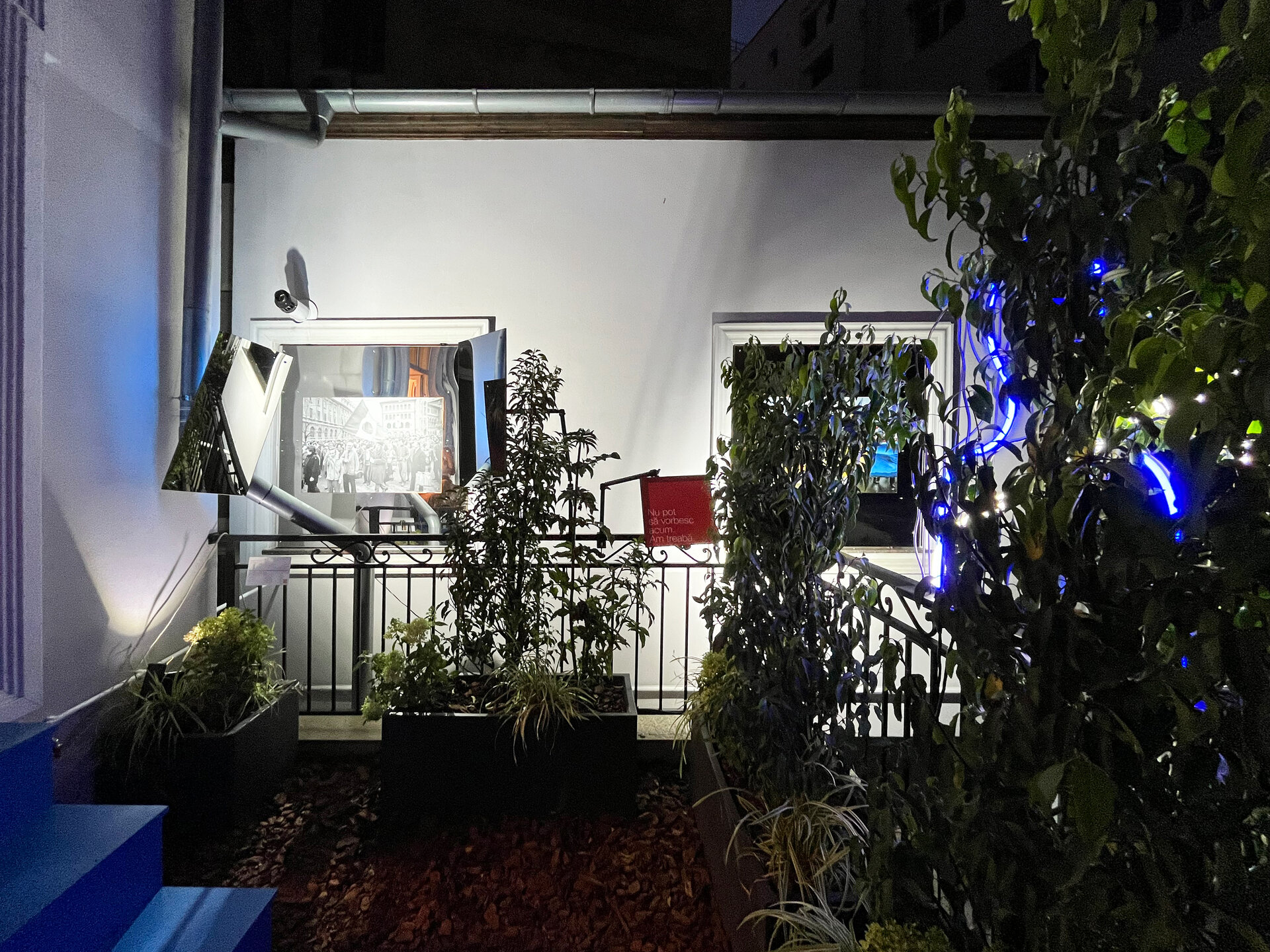
Three window openings and a wrought-iron parapet become display surfaces, generating views from the gallery, terrace, and courtyard. After the exhibition, the platform can be dismantled and the window closed, allowing the intervention to remain compatible with the gallery’s future needs.
The mirror becomes the installation’s main instrument. It reflects the sky, walls, and the visitor suspended between inside and outside, revealing the rupture between promise and reality. Reflections overlay fragments of Bucharest onto the viewer, transforming the terrace into a framework for questioning life in the contemporary city.
Caught between mirrors, window frames, and photographic fragments, the visitor’s reflection is broken, multiplied, and reassembled. Each angle produces a different city: socialist façades, post-transition architectures, or speculative skylines. No viewpoint remains stable. Every reflection becomes memory, observation, and projection, positioning the visitor as both inhabitant and witness.



Architecture and Experiments
- A Roof for St. Michael / Ein Dach für die Burgkirche
- ARCHY FEST_QUINETWORK 2026
- Civic Bucharest
- (H)ODAIA – A Rural Hub for the Rehabilitation of Cultural Landscapes
- Model 10
- Workshop AI in Architecture
- Video Mapping and Heritage. Empúries, Costa Brava: ancient ruins, media, and artificial intelligence
- GEMA – Geometric Experimentation with Architectural Morphology. A European Experience
- I can’t talk right now. I’m busy
- Disco Blast
- Limanu Summer School 2026 – Multicultural Heritage on the Edge
- Bucium Summer University 2026, 14th Edition. Safeguarding Rural Heritage through Education
- Camping and Research Kit on Șimian Island
- Cantacuzino Estate Summer School 2026, 8th Edition


