Ercolano - Preserving Memory
Authors’ Comment
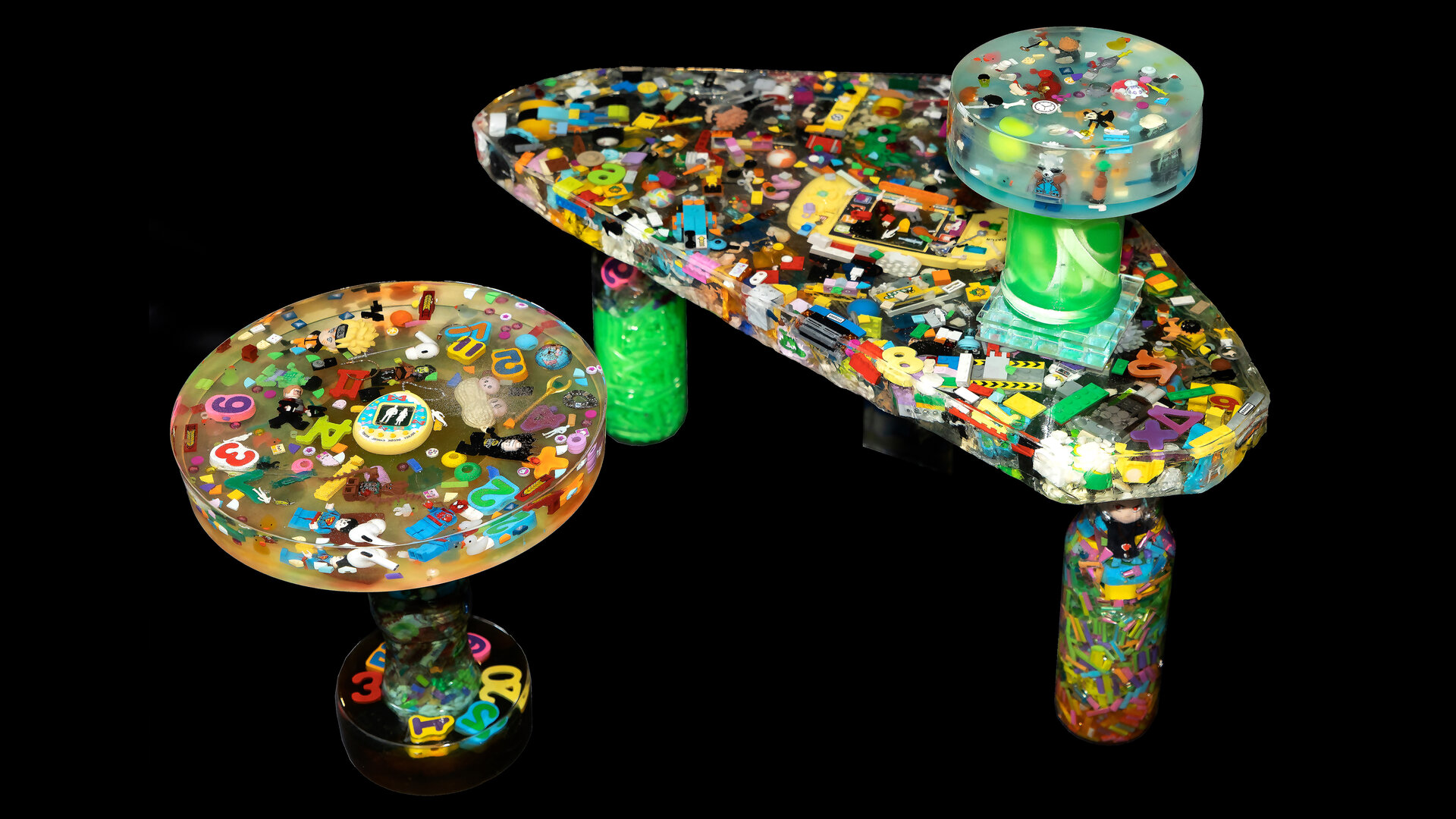
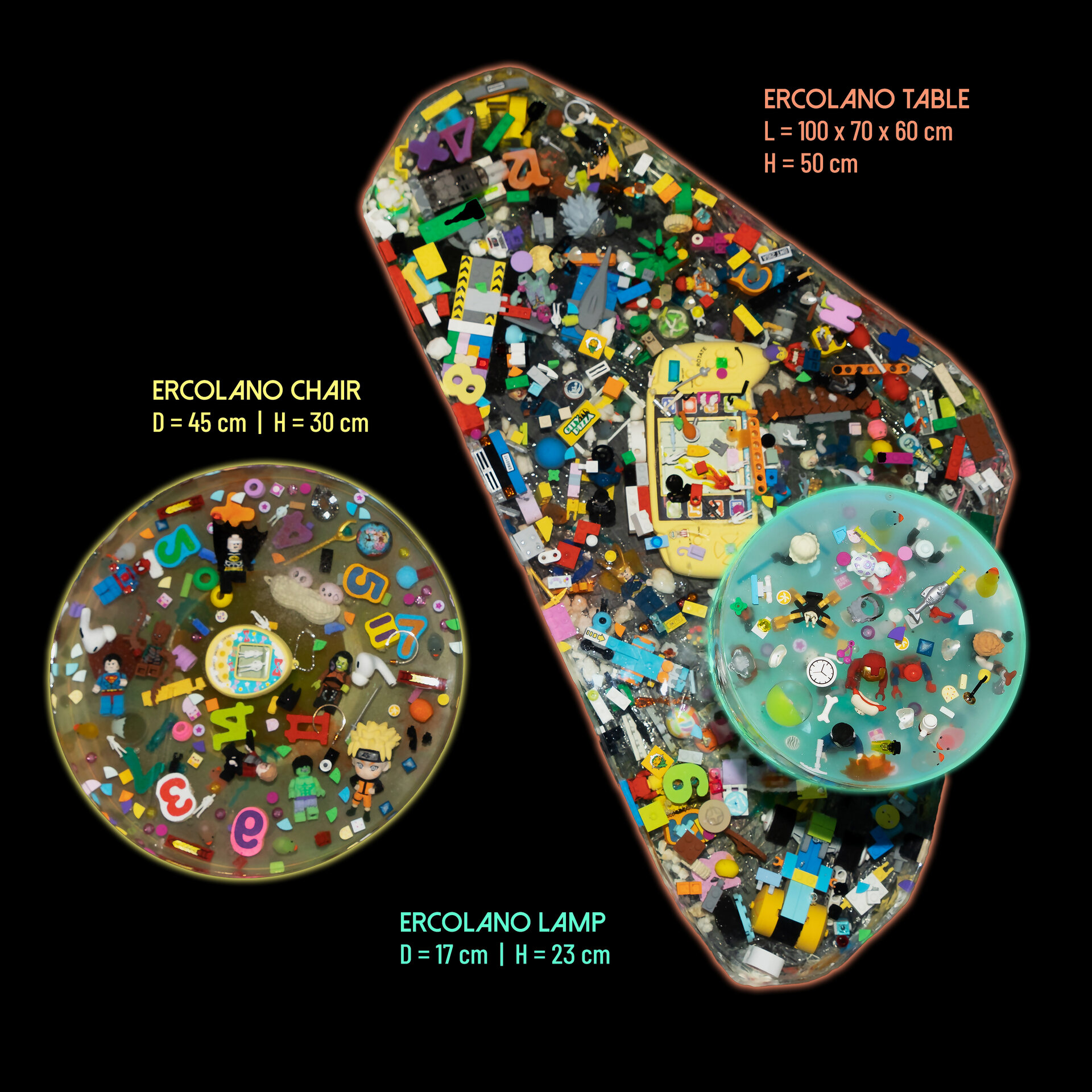
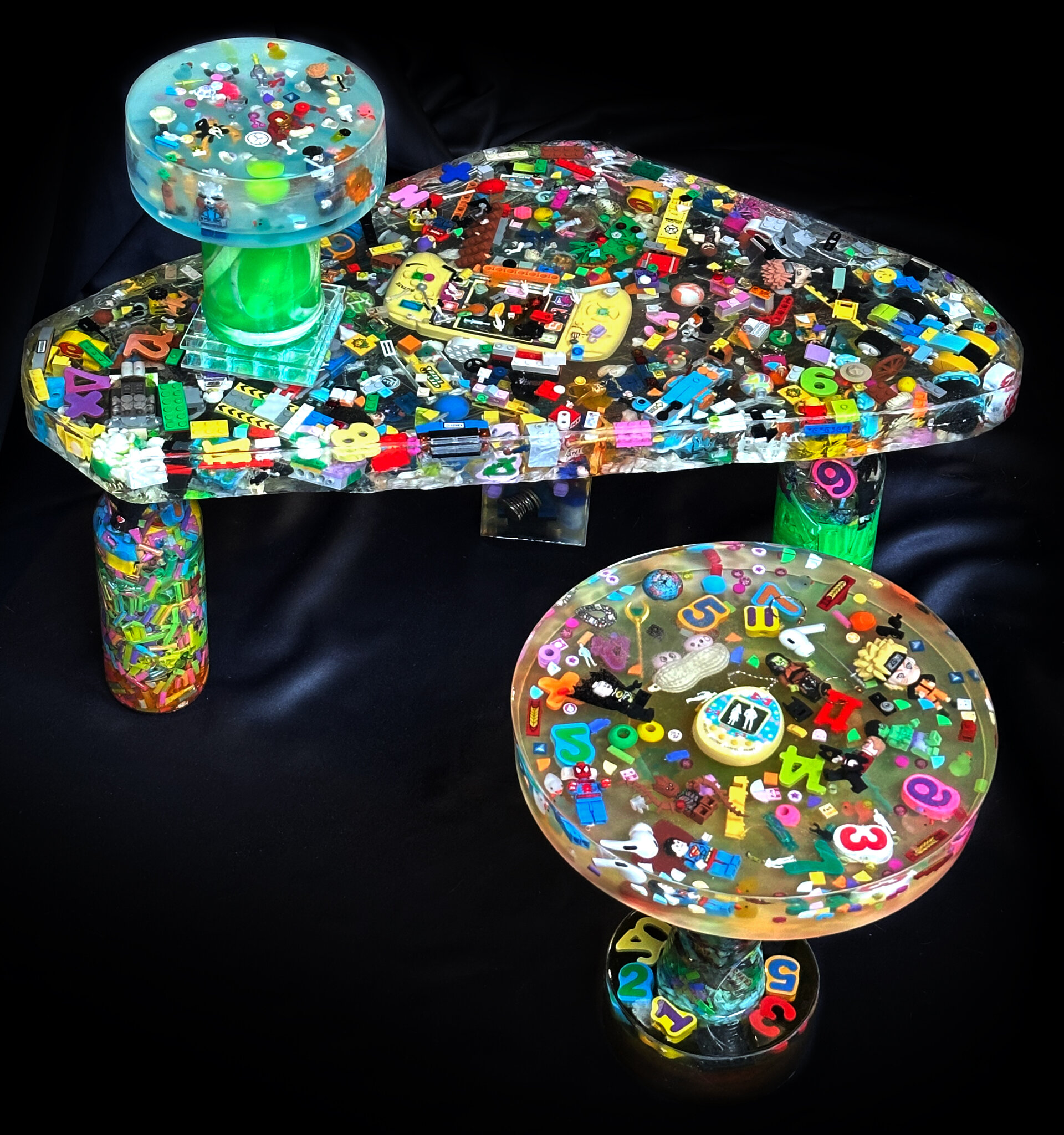
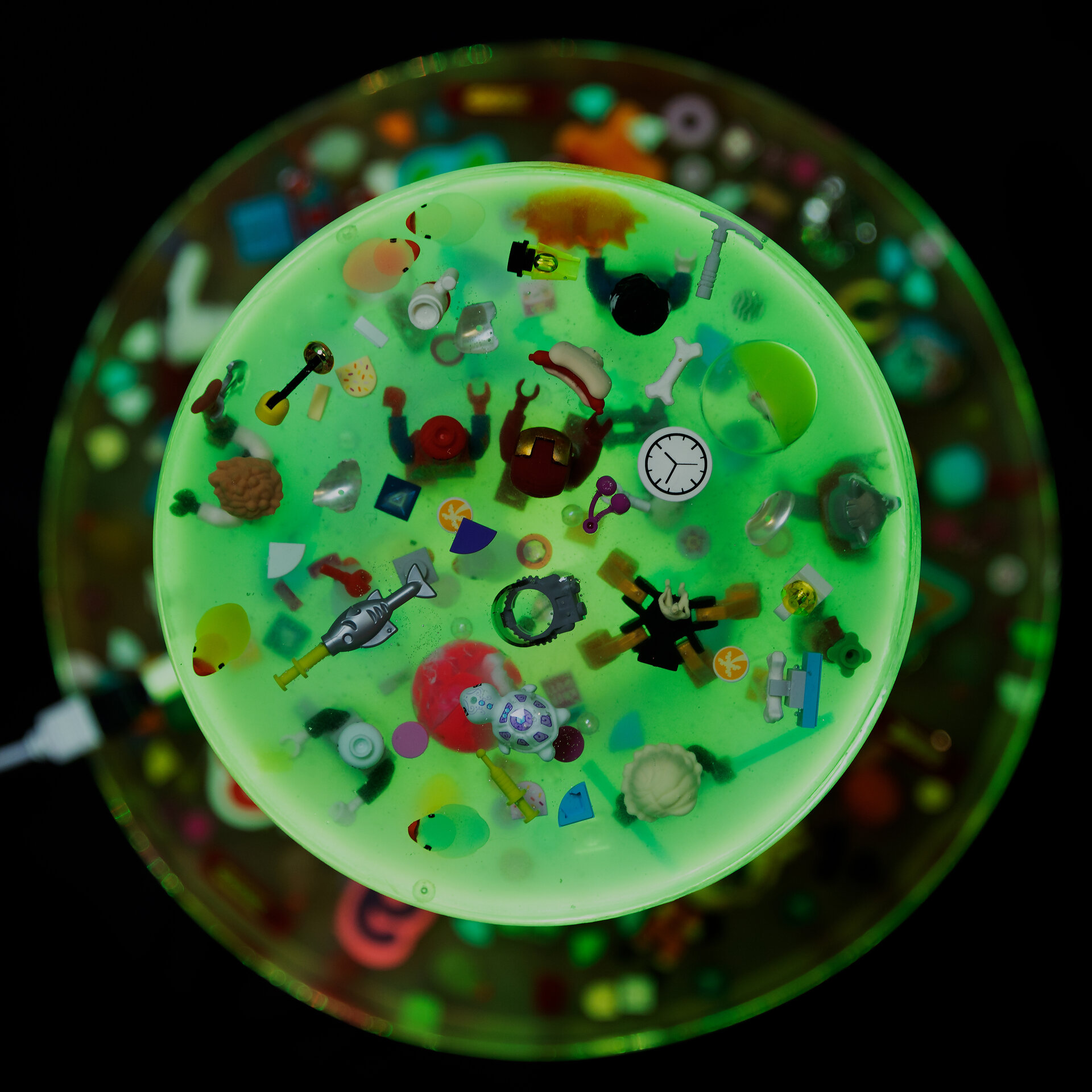
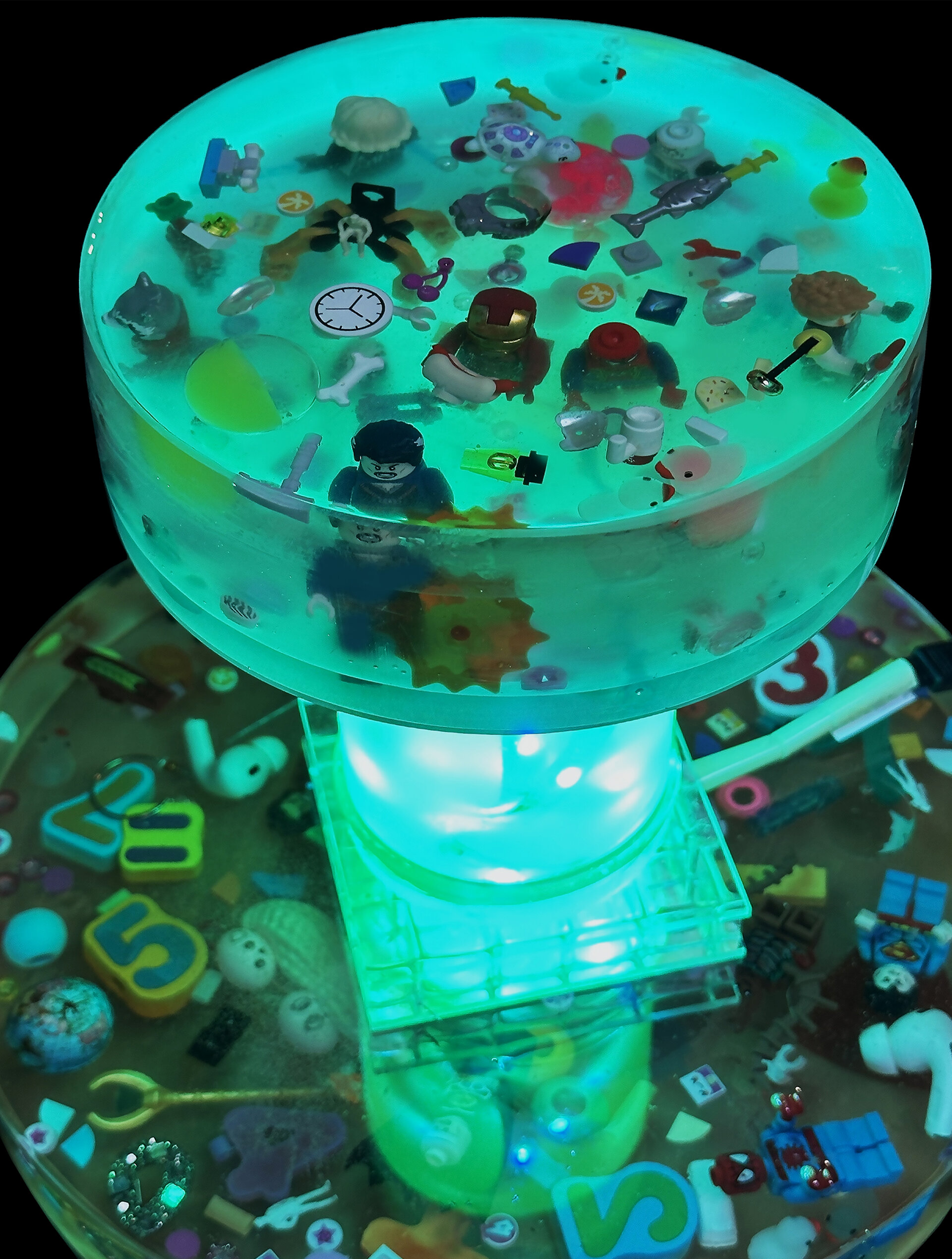
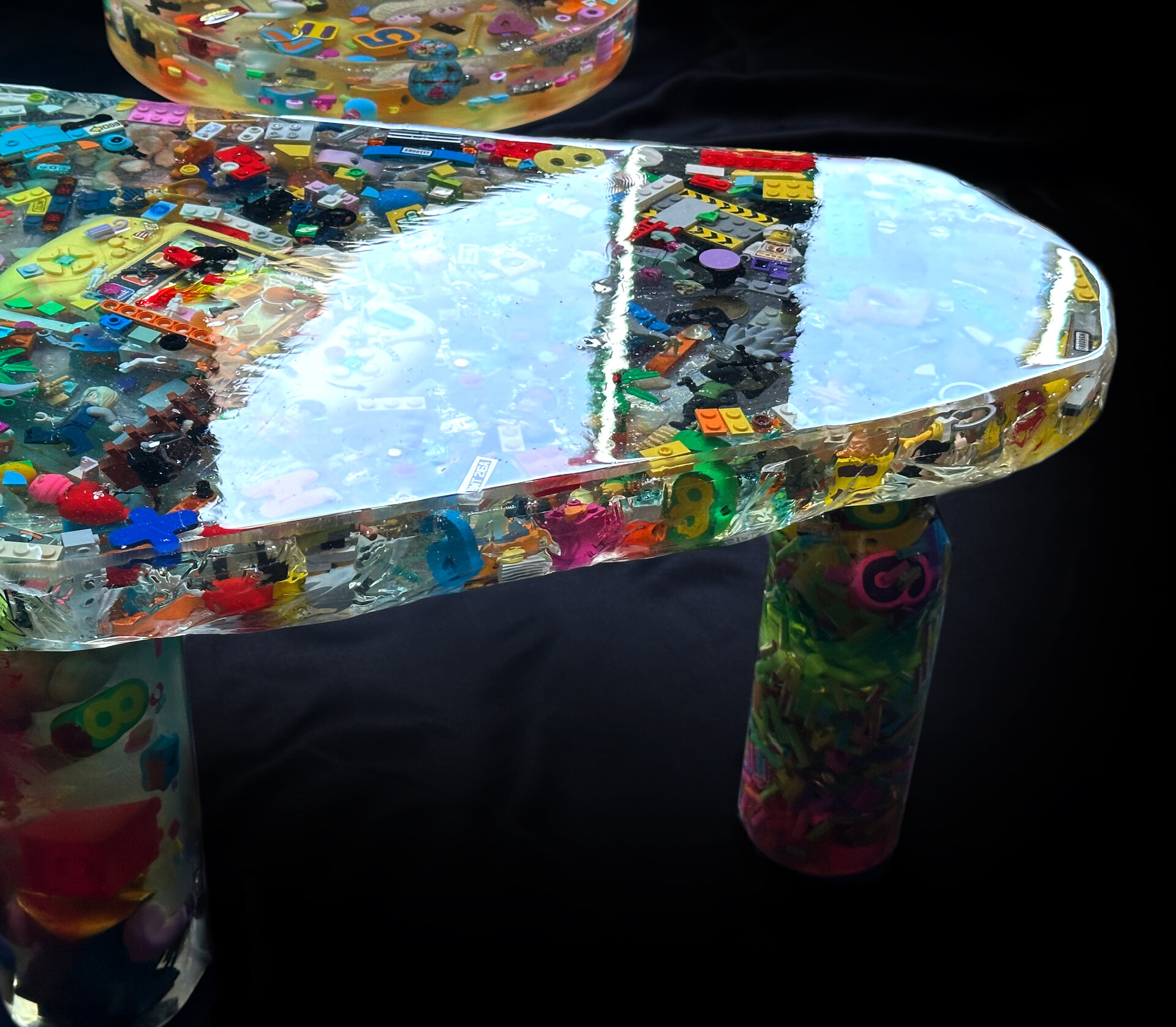
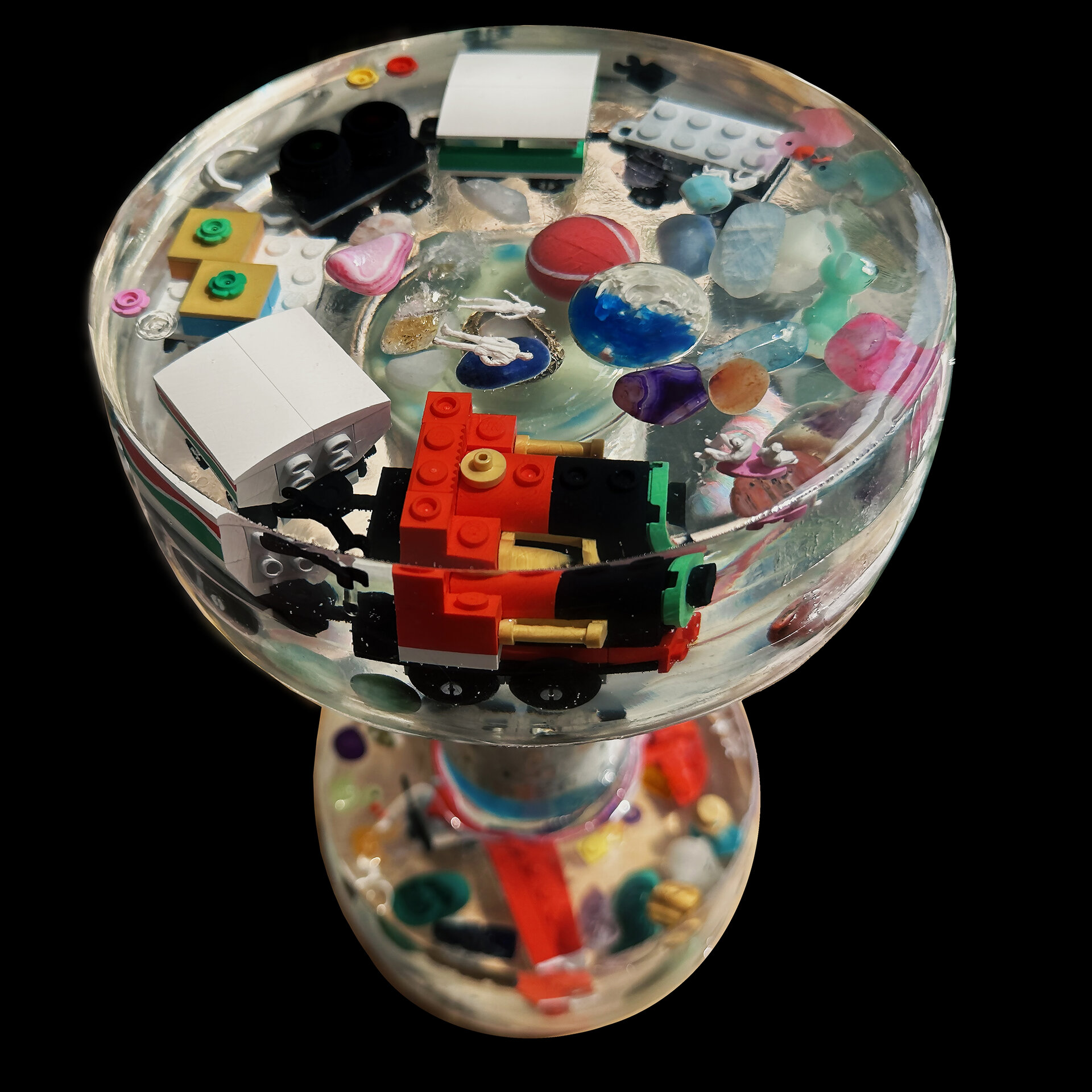
The furniture collection “Ode to Plastic – Ercolano” recontextualizes plastic through a series of functional objects that explore the relationship between consumer culture, memory and material permanence. Comprising three prototypes — Ercolano Table, Chair & Lamp — the collection starts from familiar forms of everyday furniture and transforms them into a visual critique of excess: plastic is not concealed, but preserved, exposed and turned into an aesthetic component of the object.
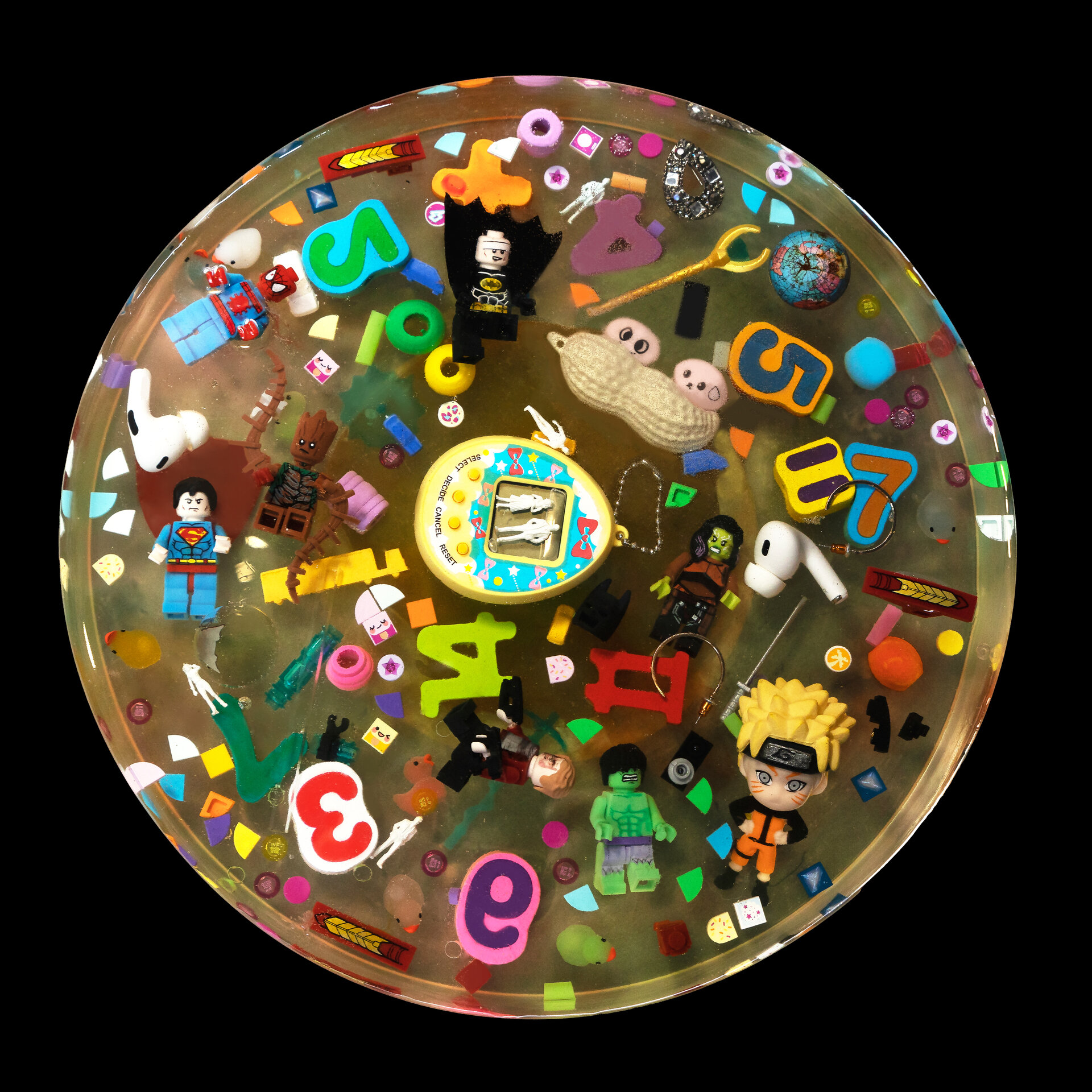
The project critically engages with contemporary approaches to reuse and upcycle, exploring how objects can extend their existence beyond their original function. Toys and personal belongings preserved as fragments of memory, are recovered and integrated into functional objects while retaining their identity and emotional value. Furniture thus becomes a medium for preserving memory, giving seemingly obsolete objects a renewed presence and meaning.
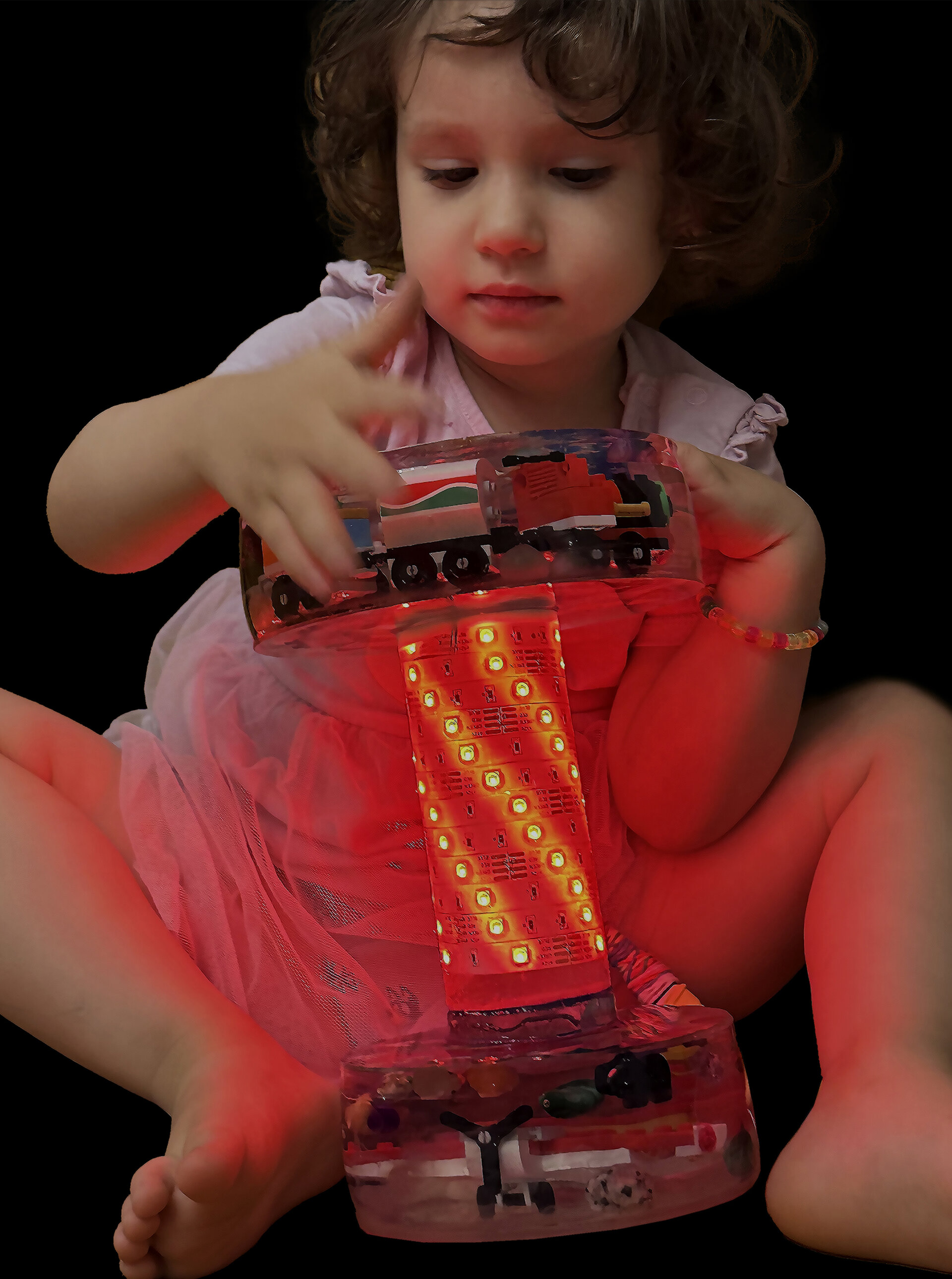
The collection originates in the universe of childhood - where furniture is simultaneously a functional object, memory holder and a tool for visual education, yet remaining adaptable to users of all ages. Initially conceived at children’s scale, the pieces incorporate toys and familiar objects as elements of the composition and prompts for observation and discovery. Plastic is reinterpreted and encourages awareness of consumption and discovery of reuse possibilities.
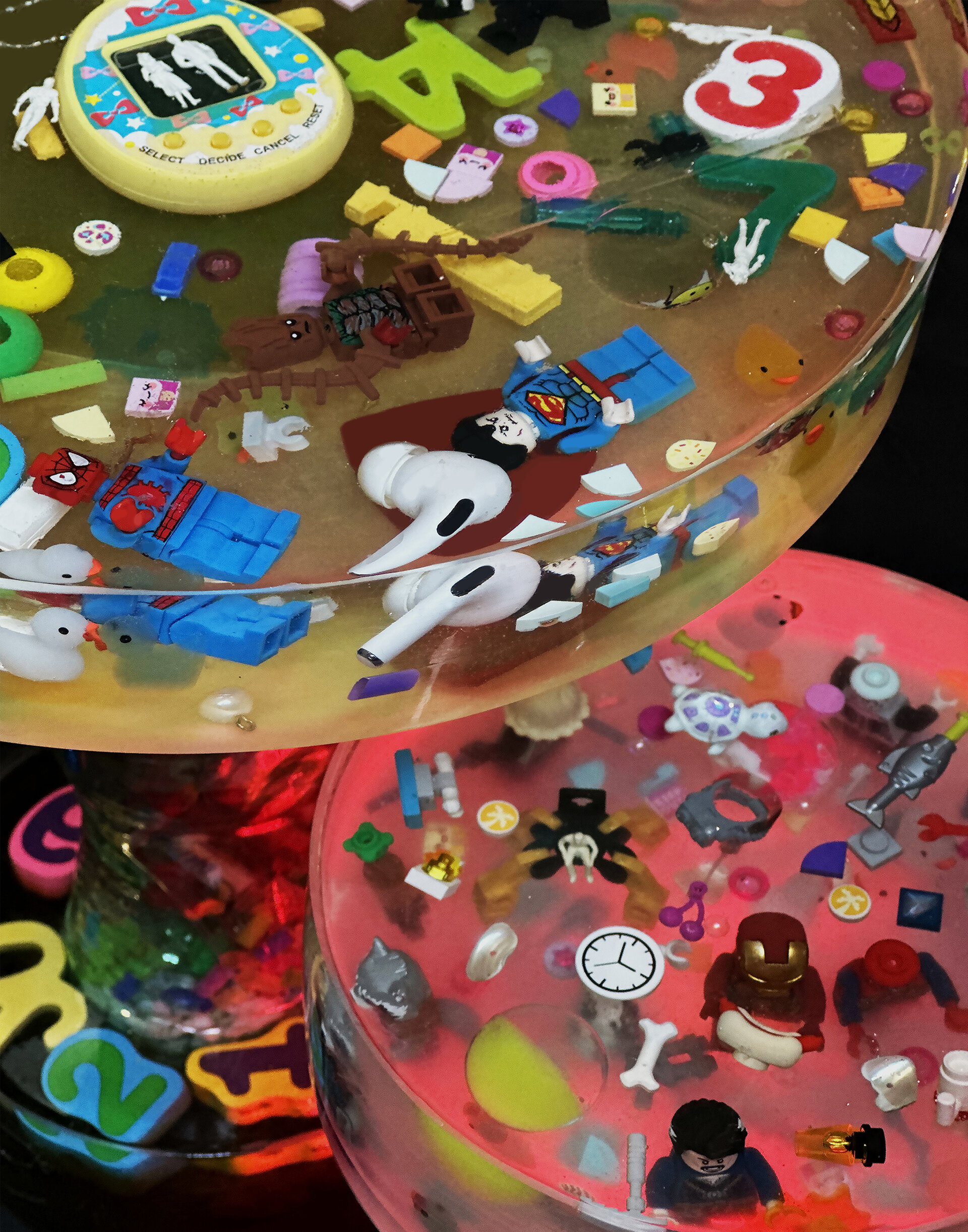
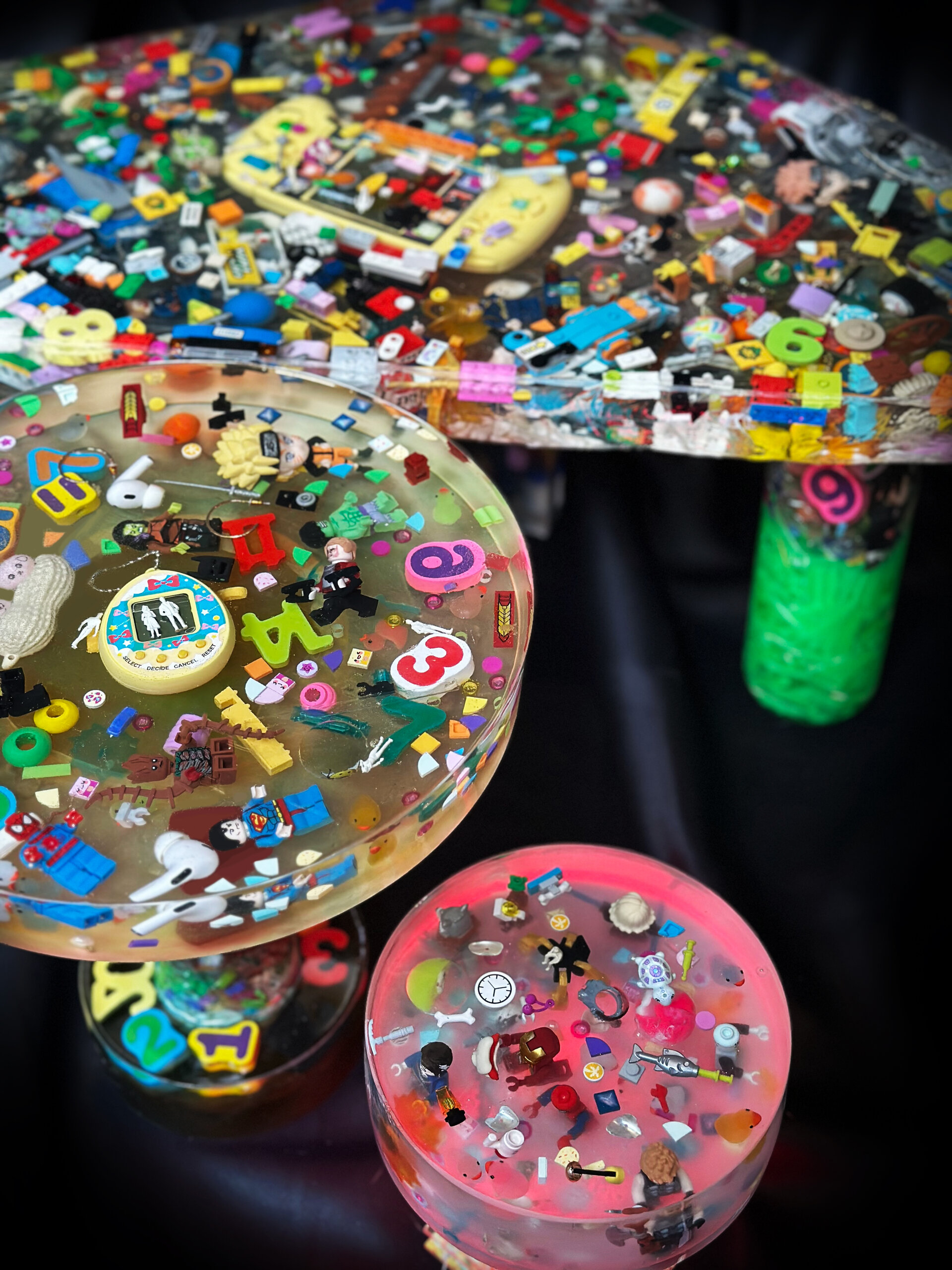
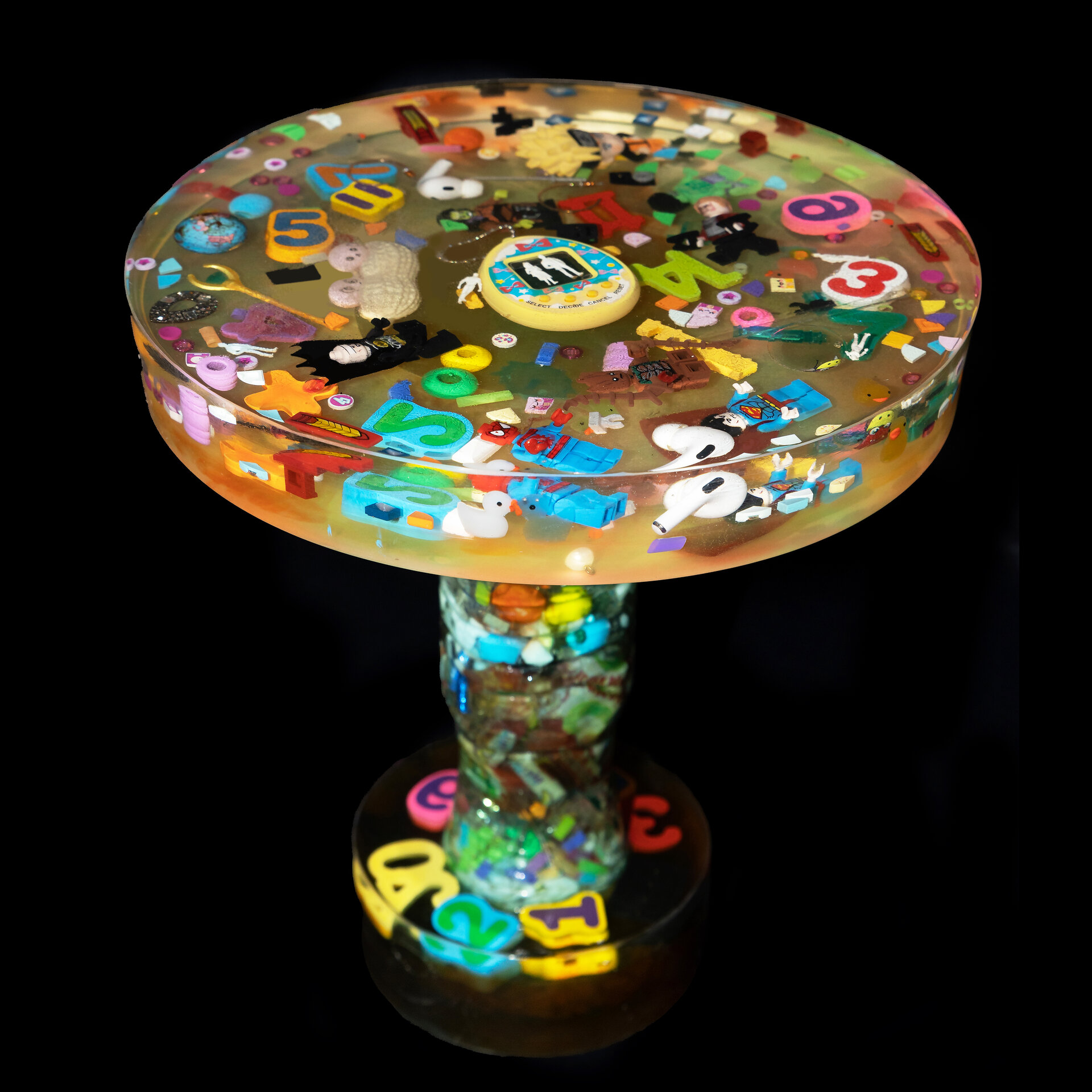
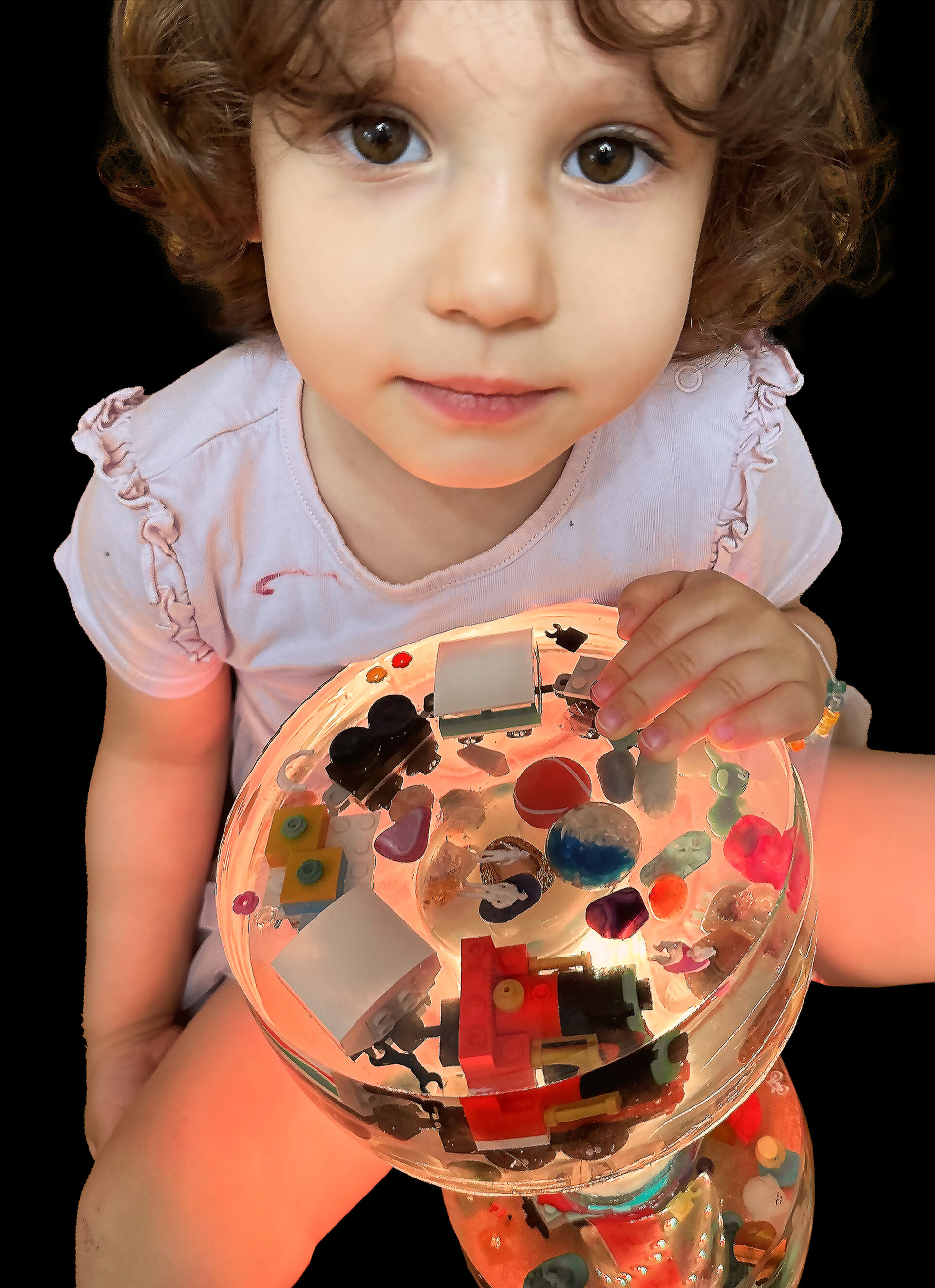
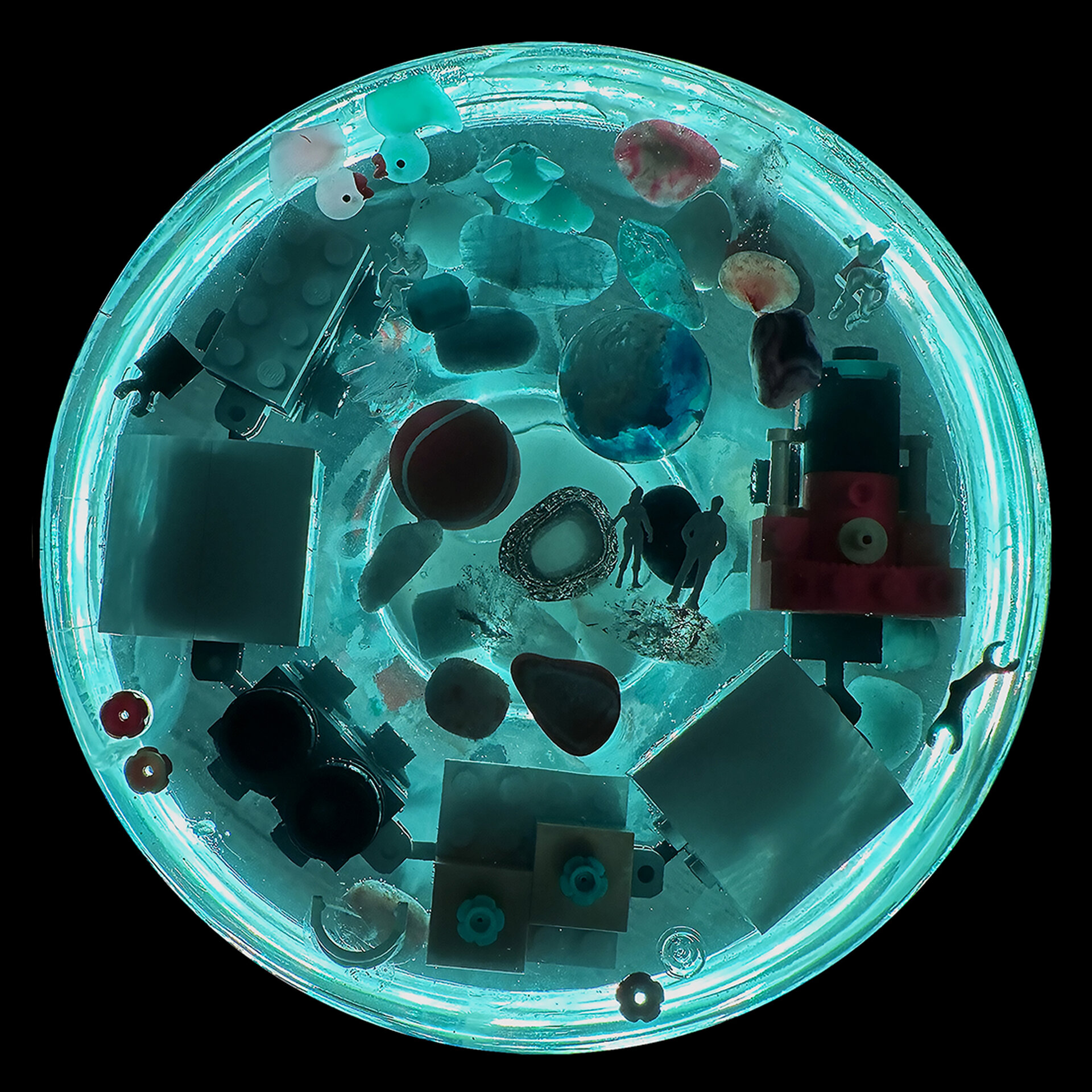
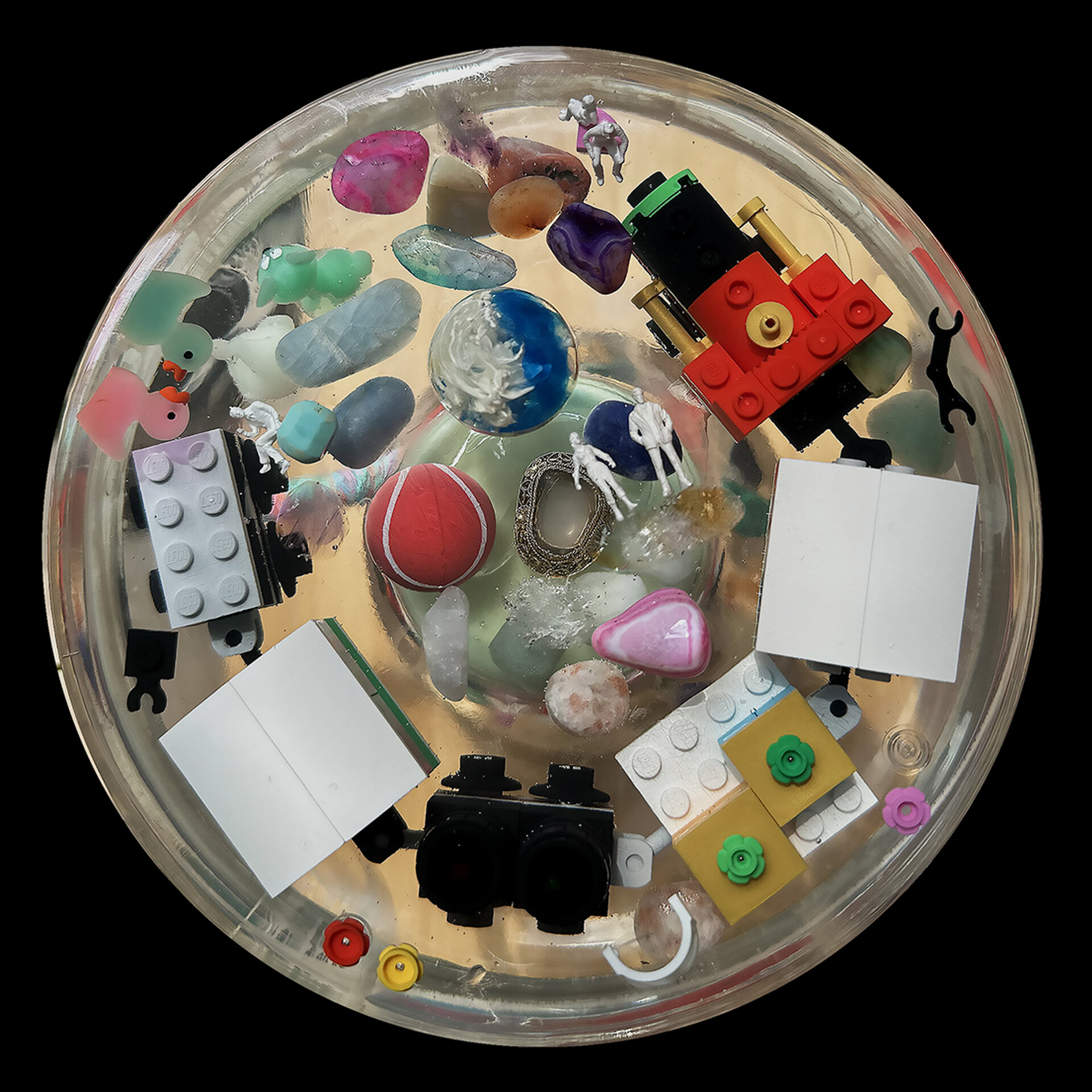
The concept originated from a visit to the archaeological site of Herculaneum (Ercolano), a city that was preserved following the eruption of Mount Vesuvius in 79 AD. The pyroclastic layer preserved objects, furniture and fragments of everyday life, turning matter into an archive of a vanished civilization. Similarly, the collection’s objects become contemporary memory capsules: donated toys and objects are encapsulated in resin, recovering what might otherwise become waste and giving it renewed value and longevity.
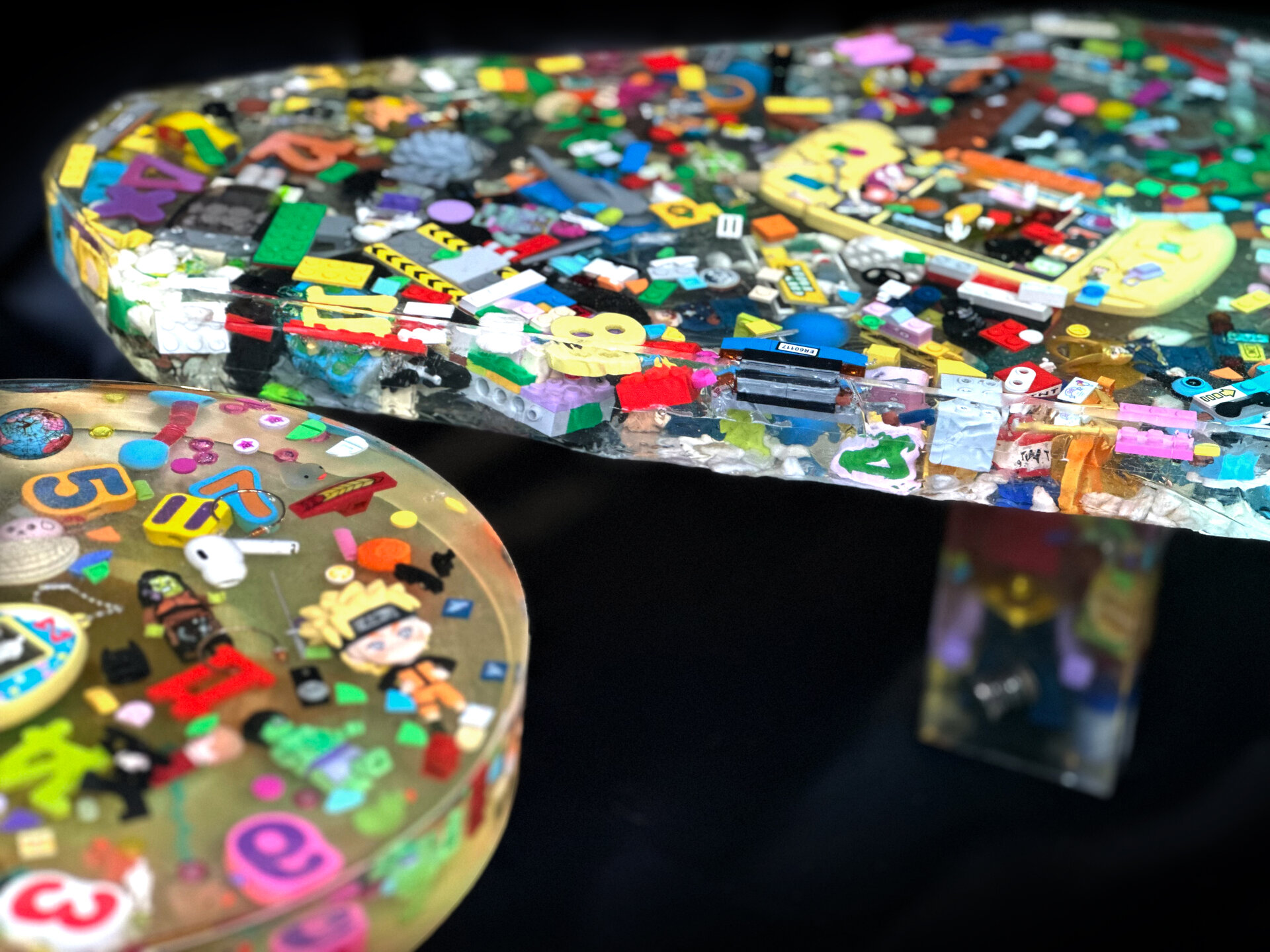
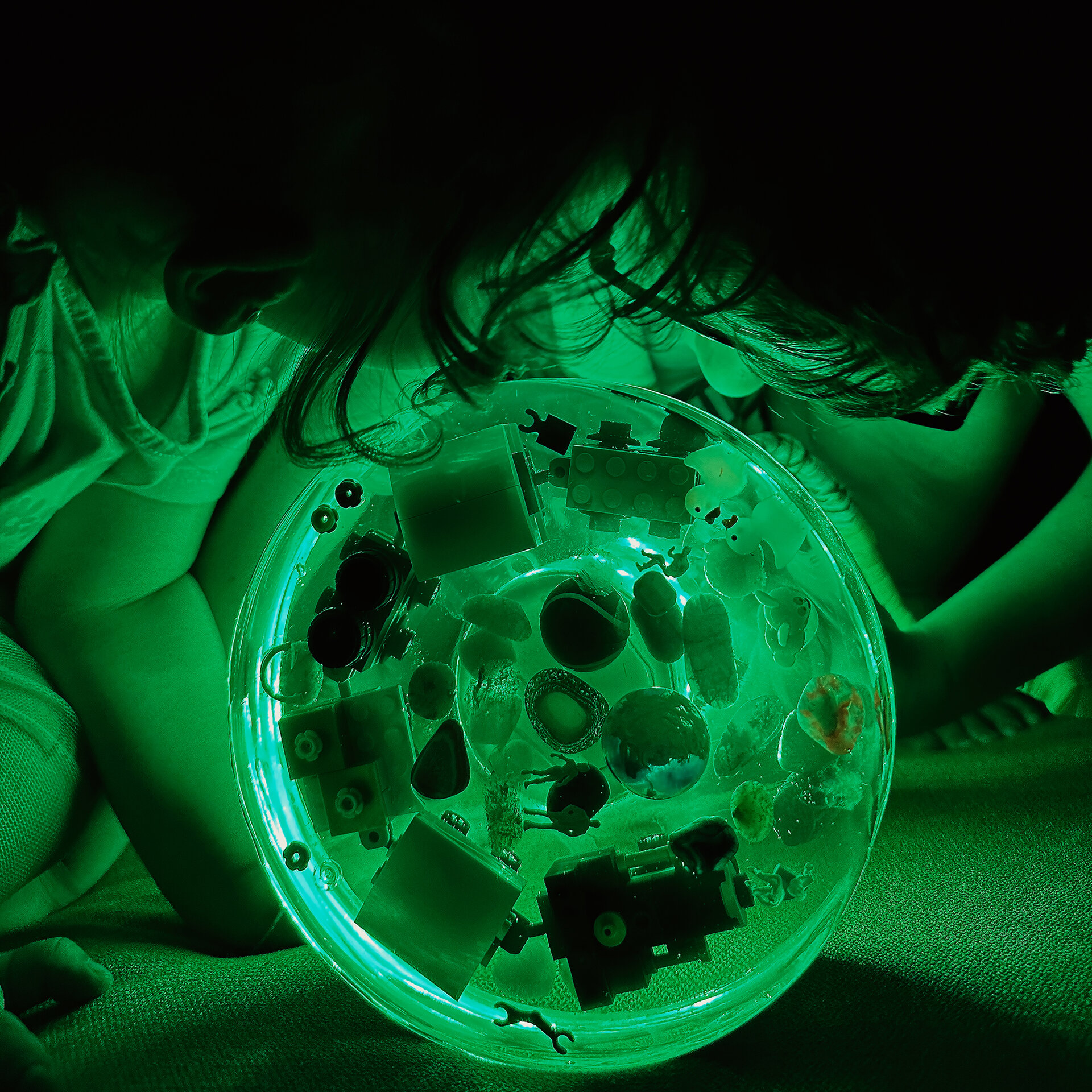
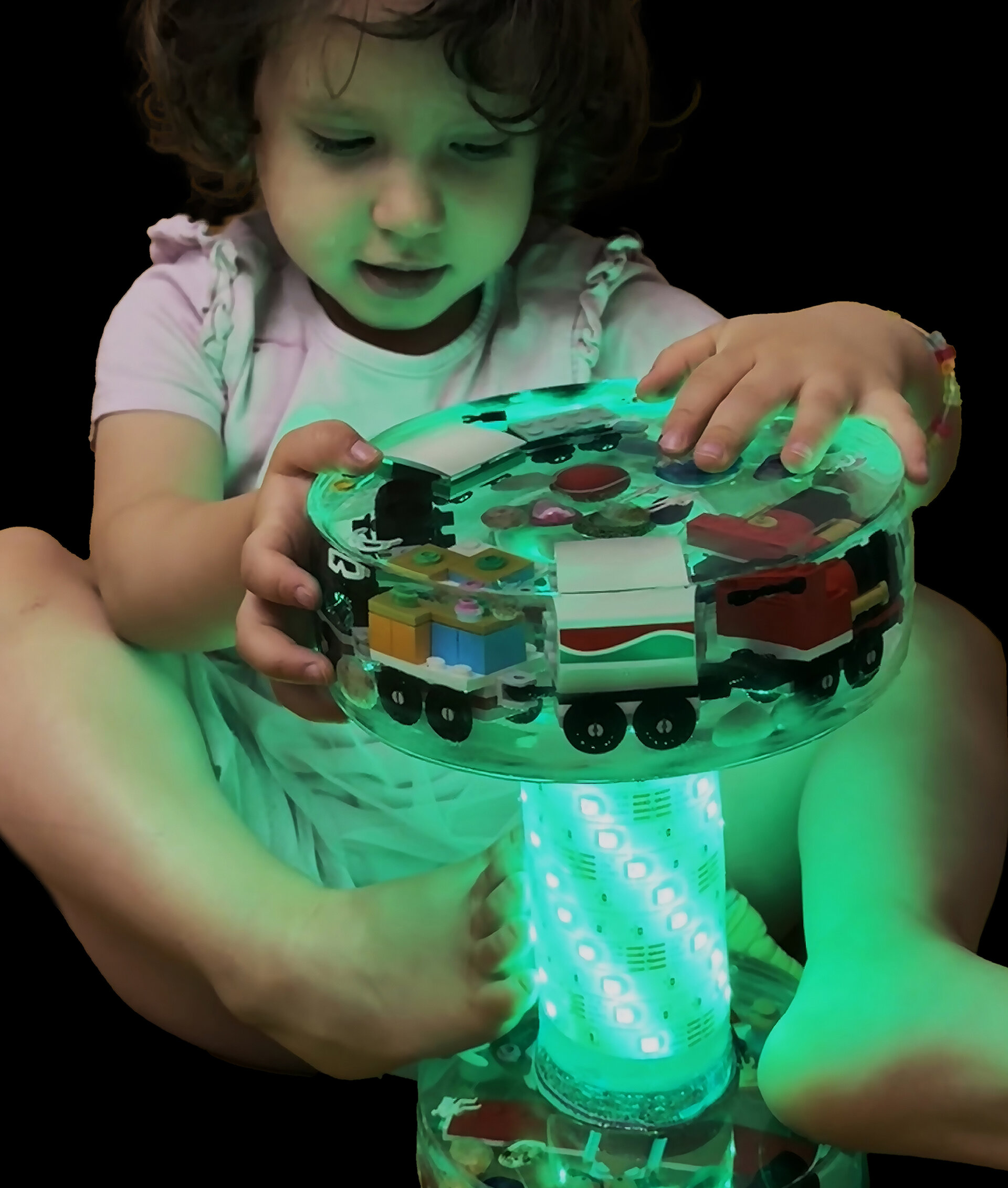
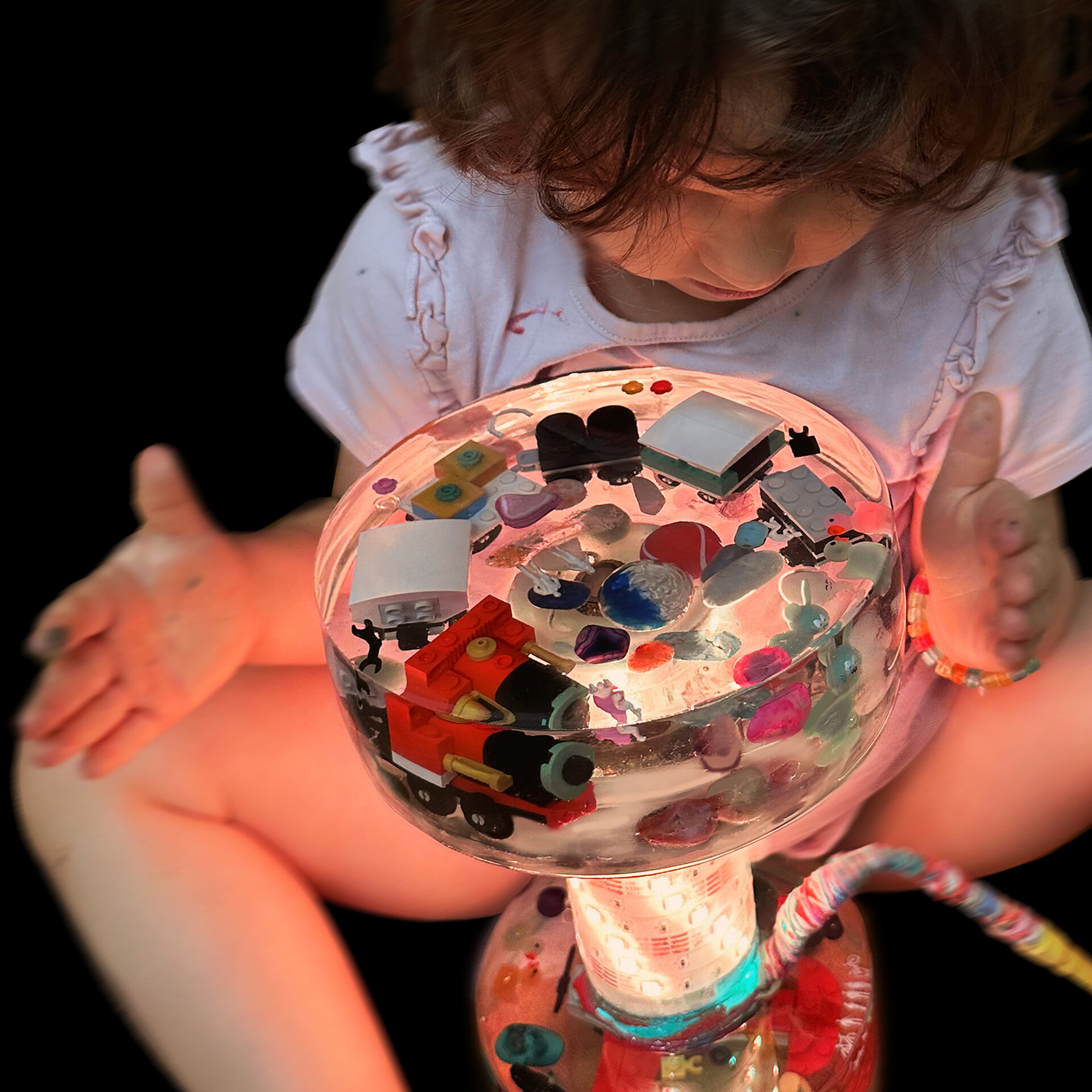
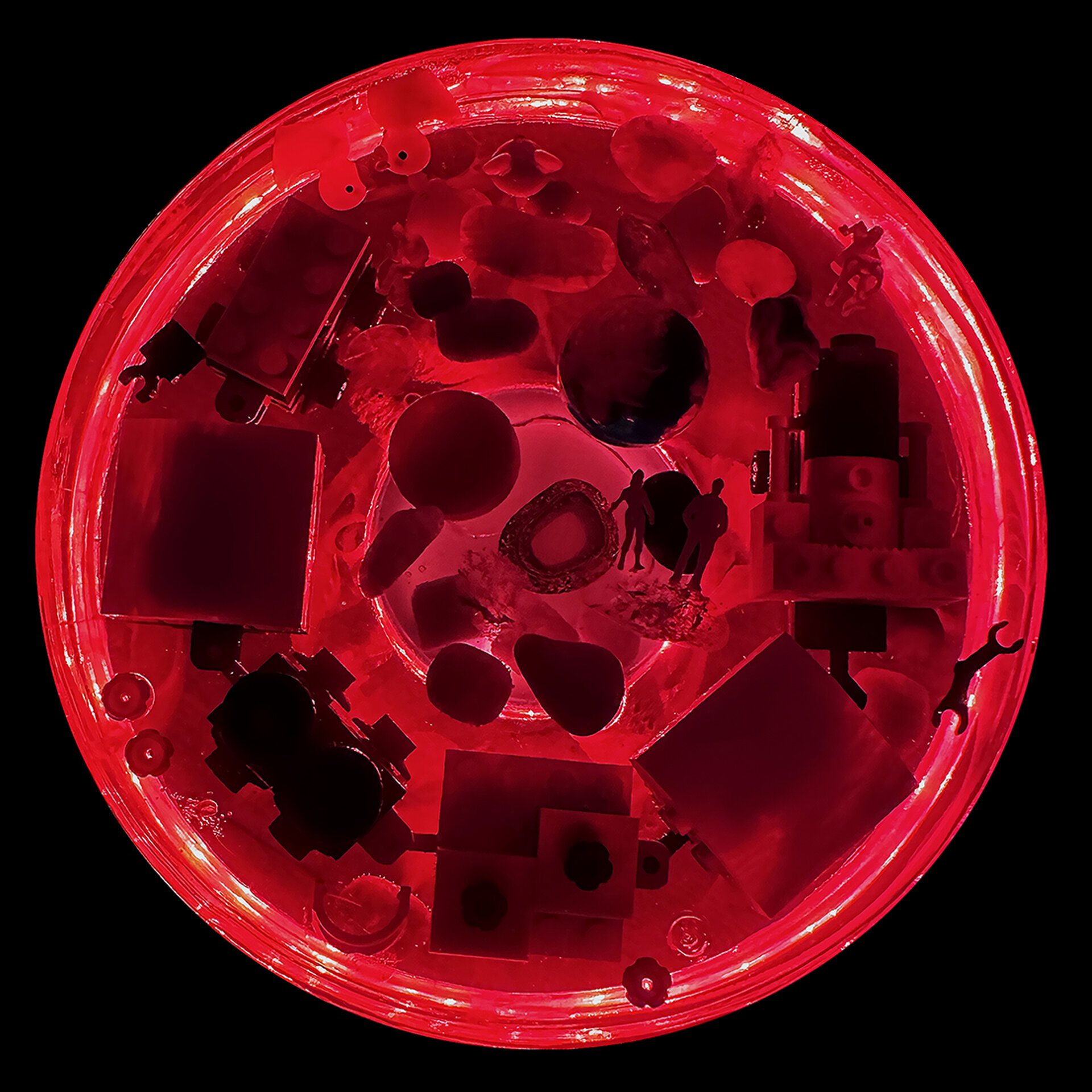
Epoxy resin is used both as a finishing material and as medium for preservation, display and spatial construction. Successive casting in layers embeds objects at different depths, creating a visual depth in which they appear suspended within the material. Transparency, surface reflections and optical distortions change with the viewing angle, transforming the furniture into a dynamic perceptual object. Chromatic and UV pigments introduce playful visual effects, amplified in the lamp through the integration of colored LEDs within the resin.
The properties of the resin allow the exploration of form, depth and image. Silicone molds, as well as molds made by reusing plastic containers, enable geometric control while also producing irregular edges that reveal the manufacturing process.
The collection evolved into custom pieces in which clients’ personal memories and objects are integrated into the furniture. The lamp presented in this project was created for a young girl, transforming her personal objects into an affective archive, permanently embedded in the material. The object becomes functional, sculptural and mnemonic: it does not simply preserve an object, but a relationship with it.
“Ode to Plastic” proposes a shift in perspective on recycling: from a disposable object to matter with memory, and from furniture as a static object to furniture as a medium for experience, narrative and identity.
Object Design
- Palm Bench
- Templates / Site Jewels
- Wunderkammer
- YOU and ME Collection
- Modular stairs / SP(L)INE - Anatomy of Vertical Structure
- Luminous geometries – a lighting collection
- OAR Exhibition System
- Tiny House DWELLII TR_1
- Tiny House DWELLII TR_2
- Gériane
- Pixel
- Ercolano - Preserving Memory
- Lighting installation for Frudisiac Brod
- Carpenter’s Chair
- The STEREO Chair
- Altar
- Spectrum: Modular Table Top
- Eclair Family
- The COOKIE Chair
- Y Chair
- Architect bag ZIGSAK
- Shoe box Il Passo
- KLEPSYDRA Chair
- Urban Frame
- IMA
- Alma Halo


