Carpenter’s Chair
Authors’ Comment
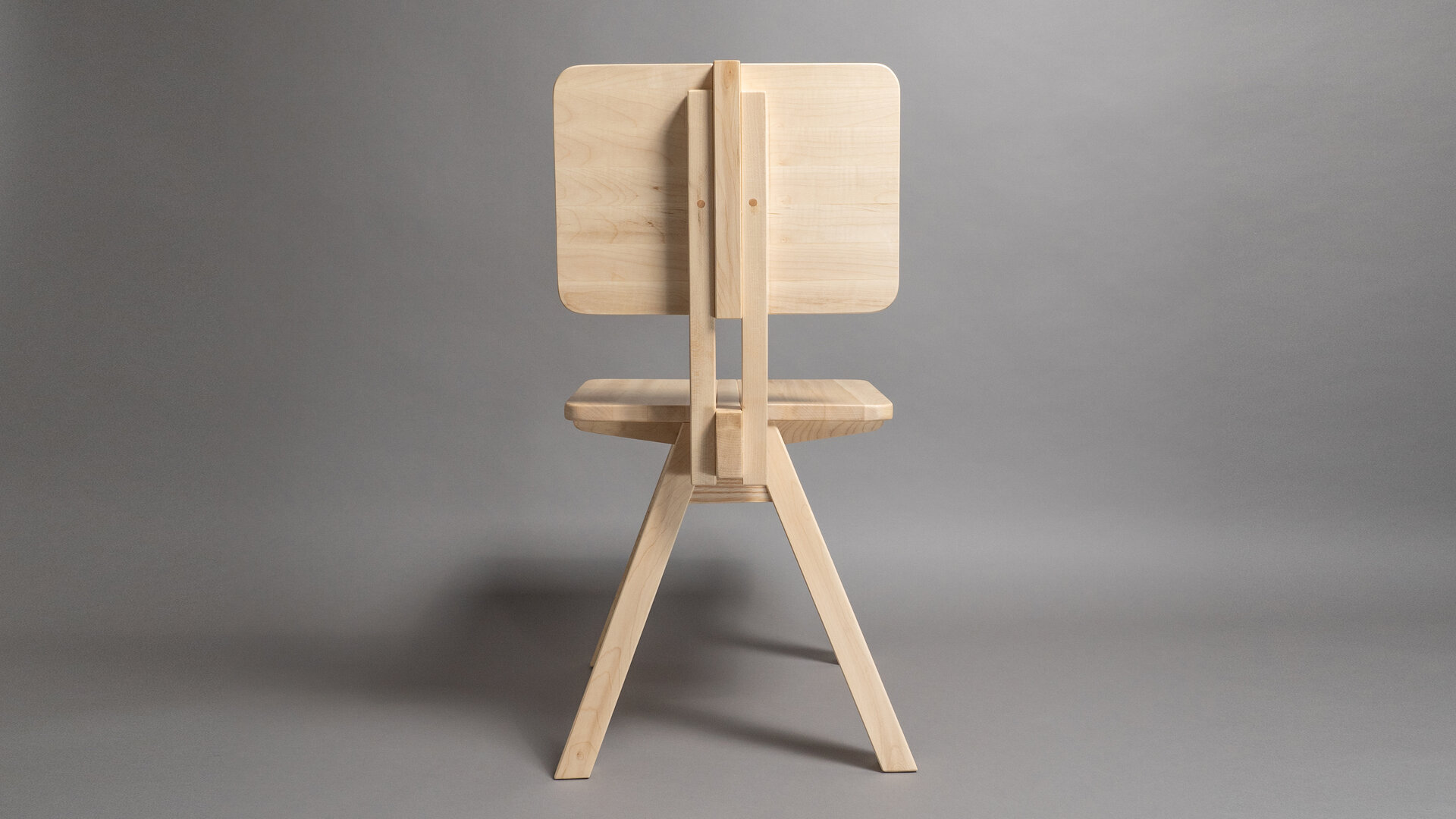
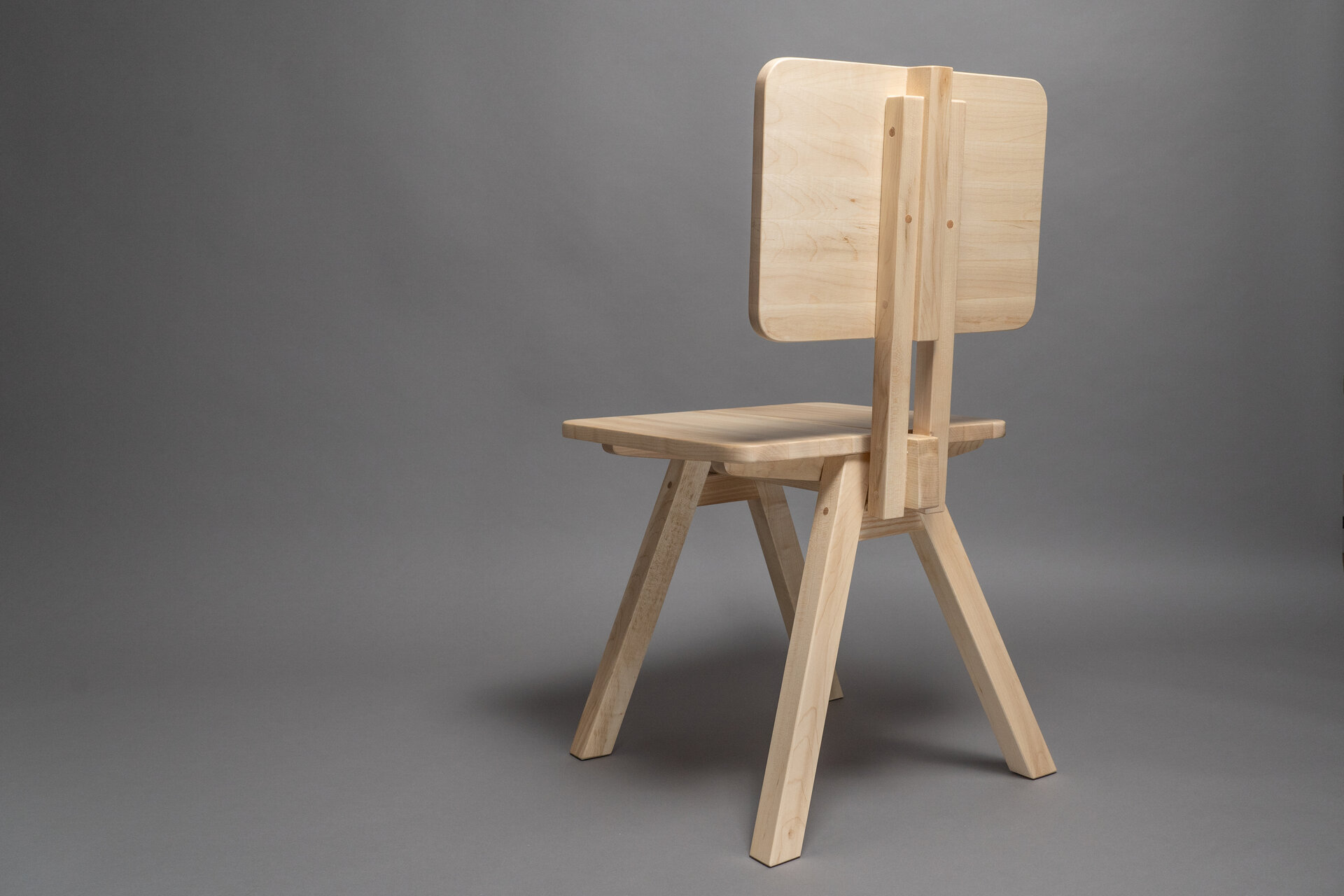
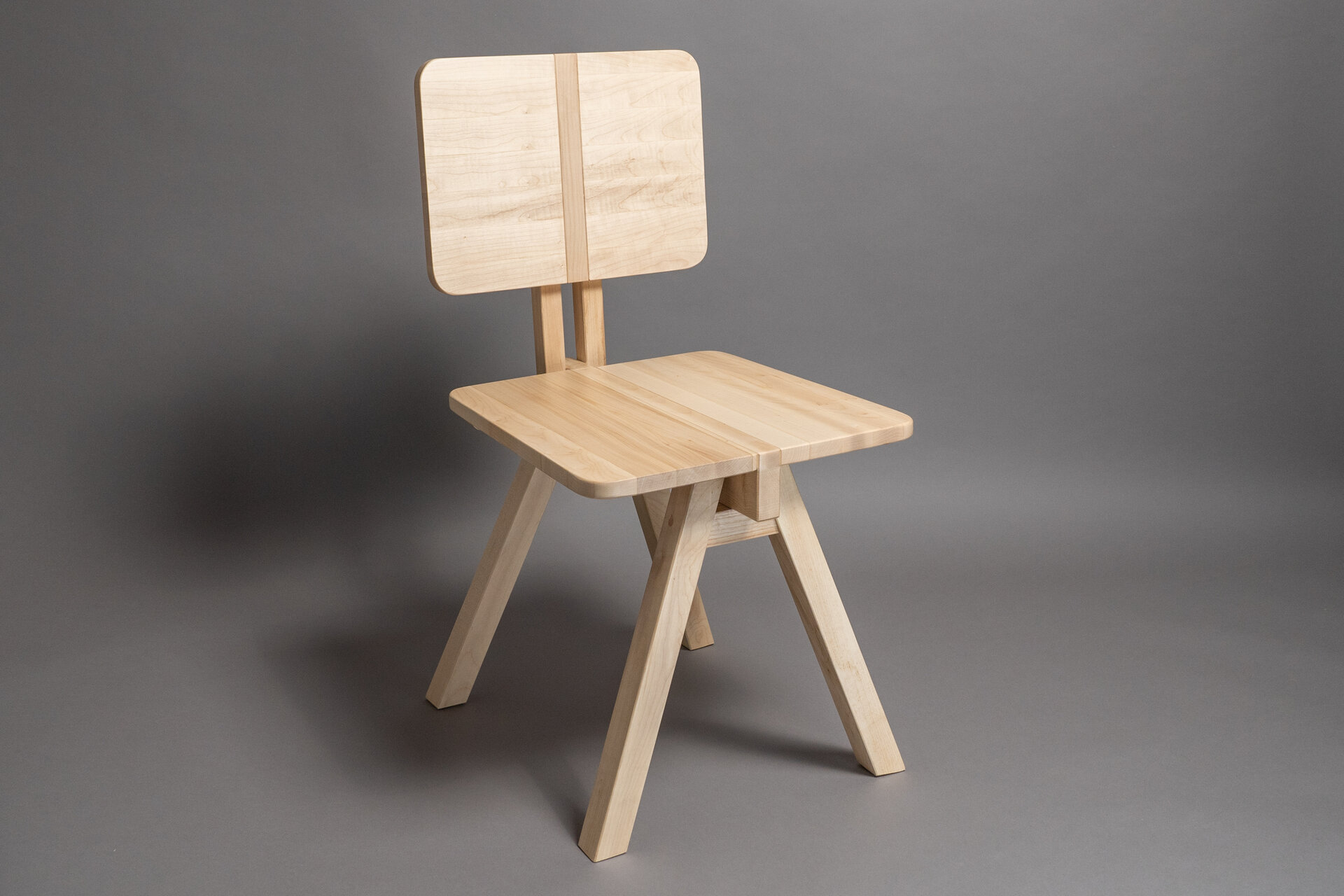
The chair starts from a simple question: what would happen if a carpenter, rather than a furniture maker, made a chair? The logic is no longer that of interior furniture, with hidden joints and continuous surfaces. It is the logic of the roof frame and the sawhorse, where each piece shows its role and the joint stays visible as part of the expression.
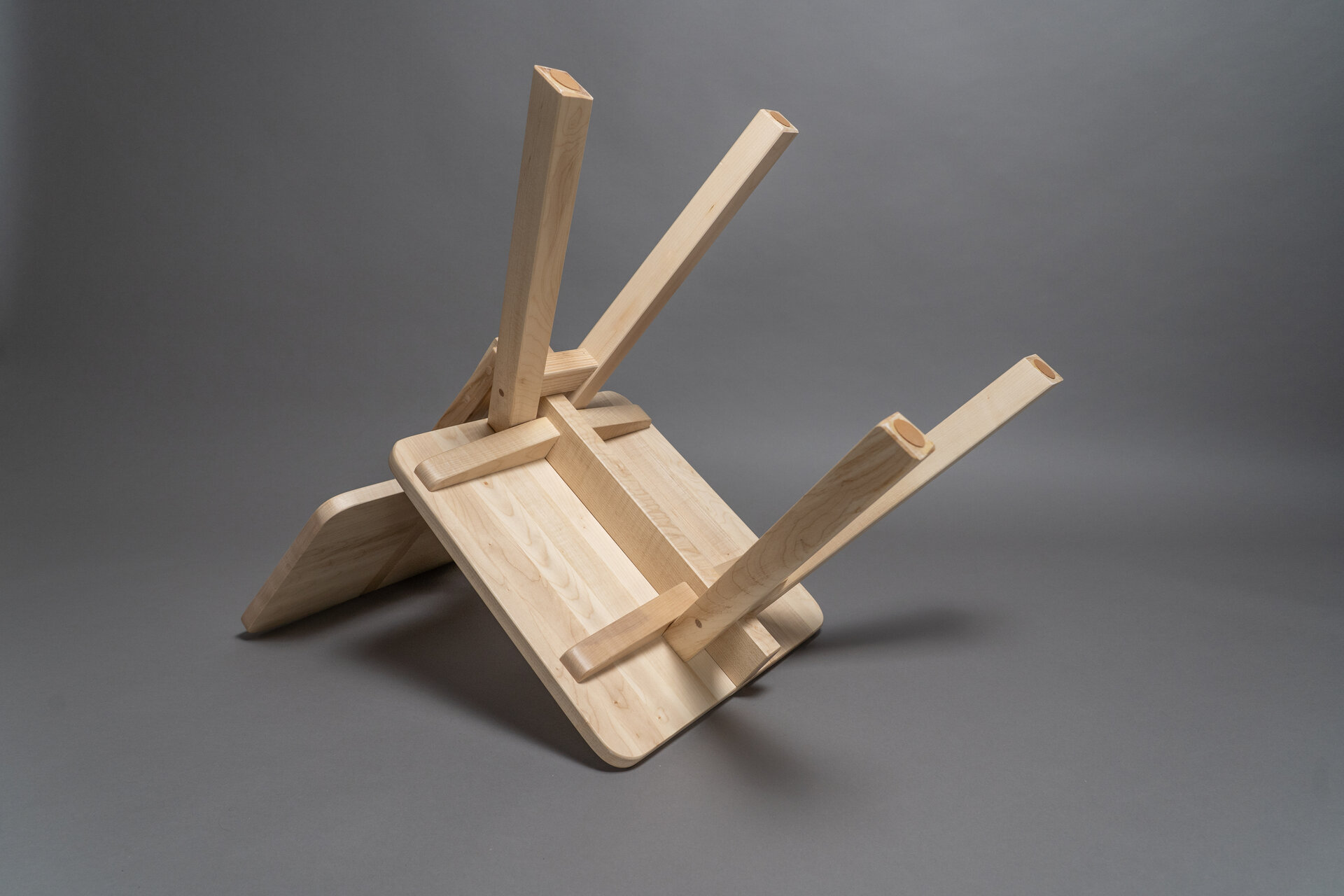
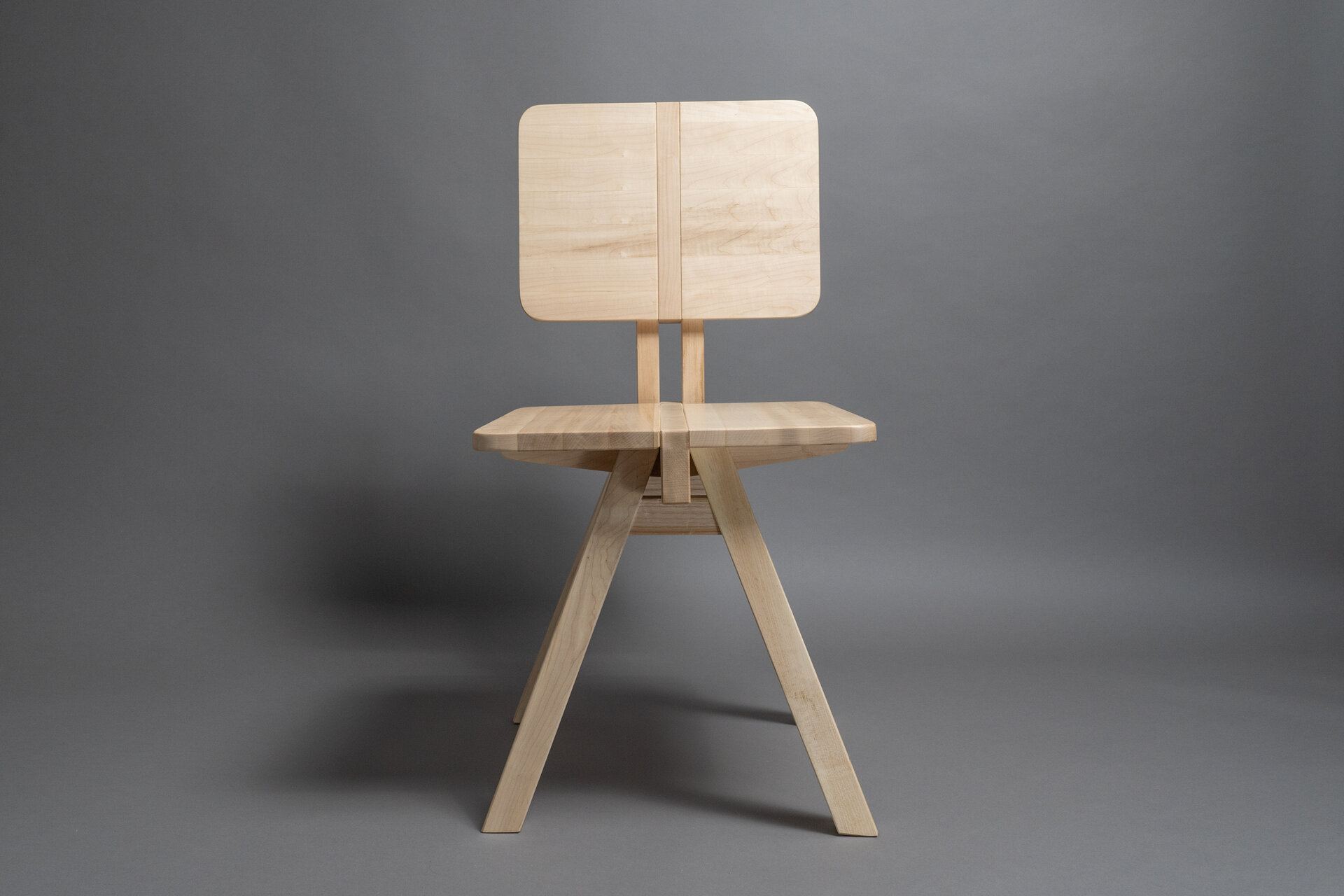
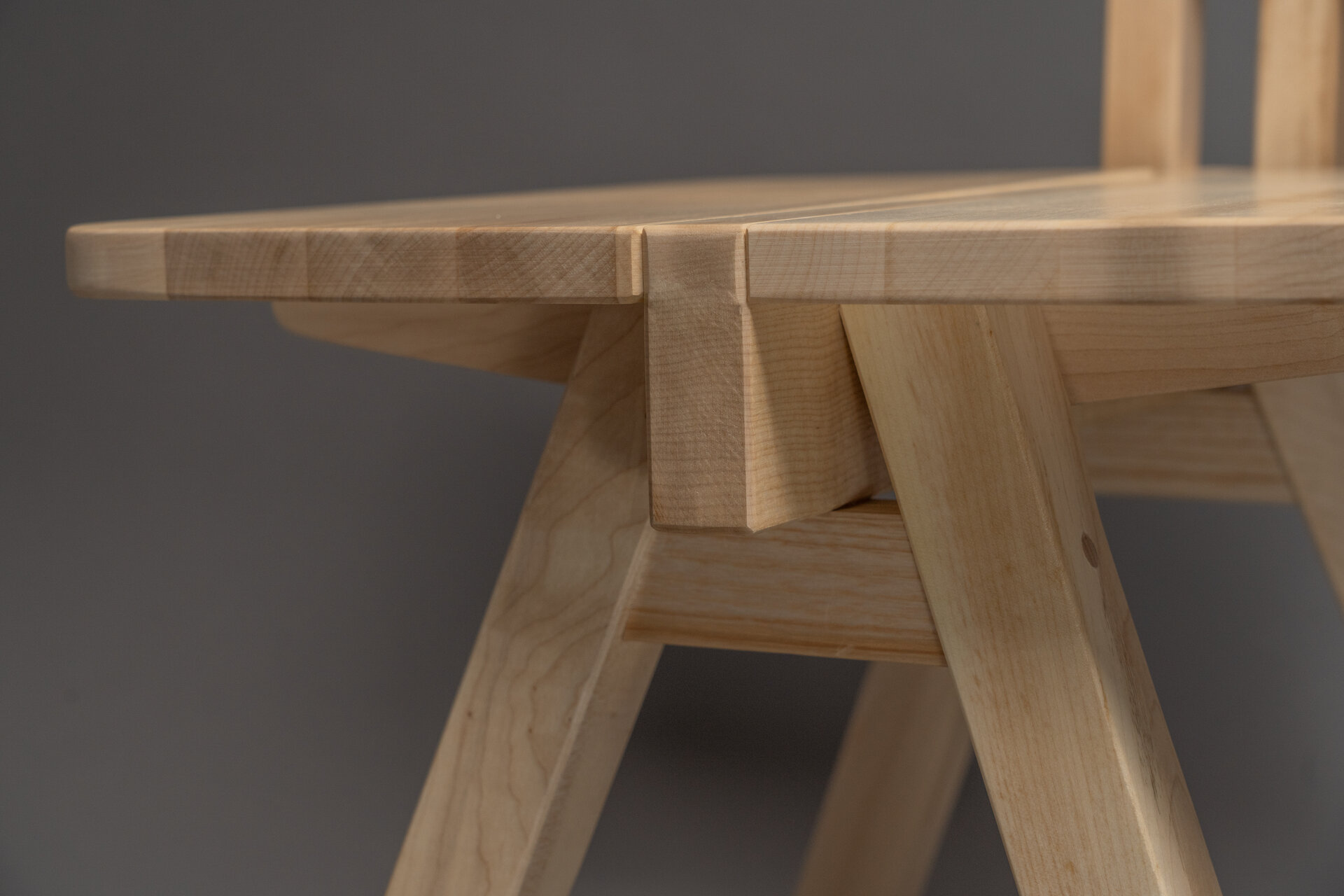
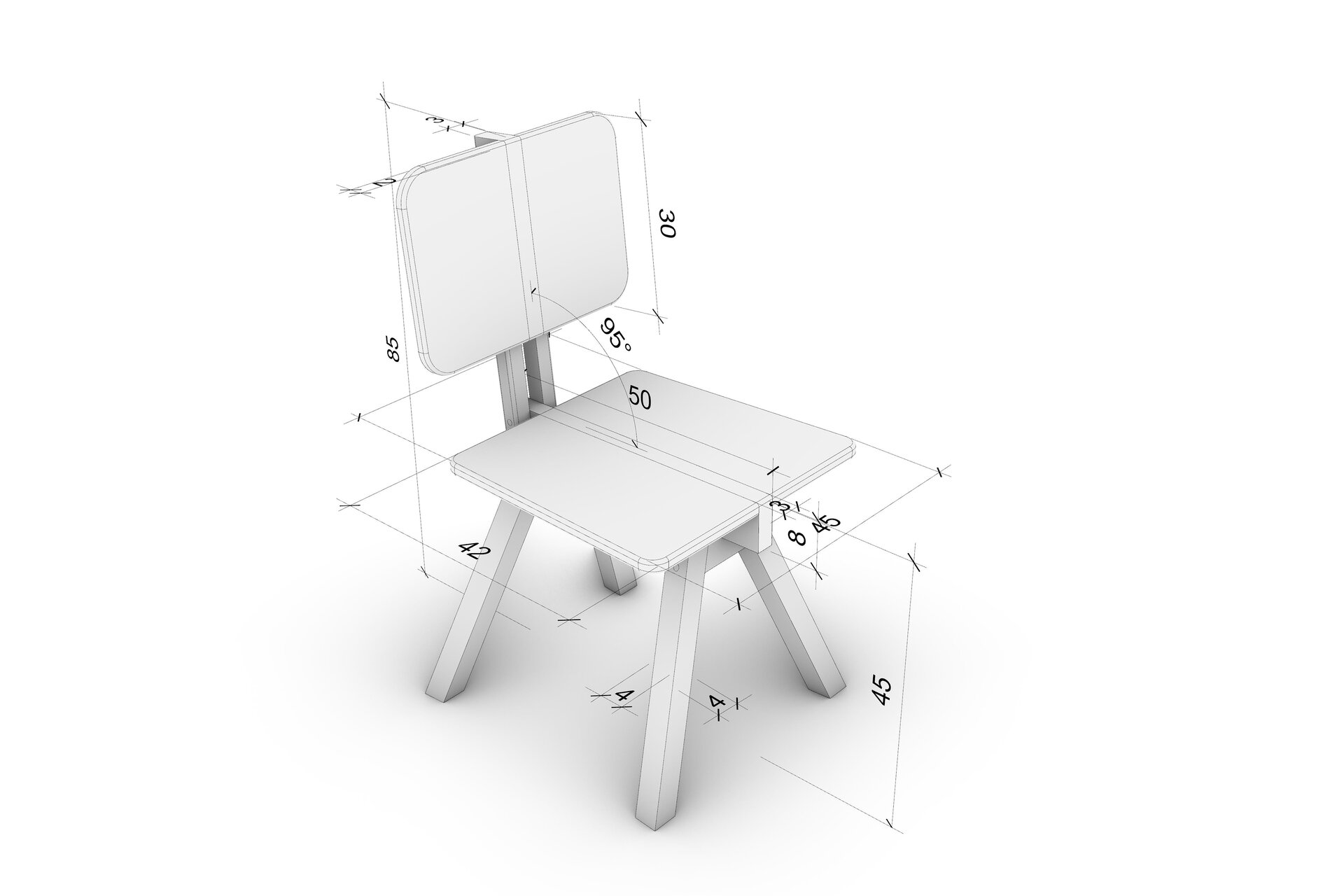
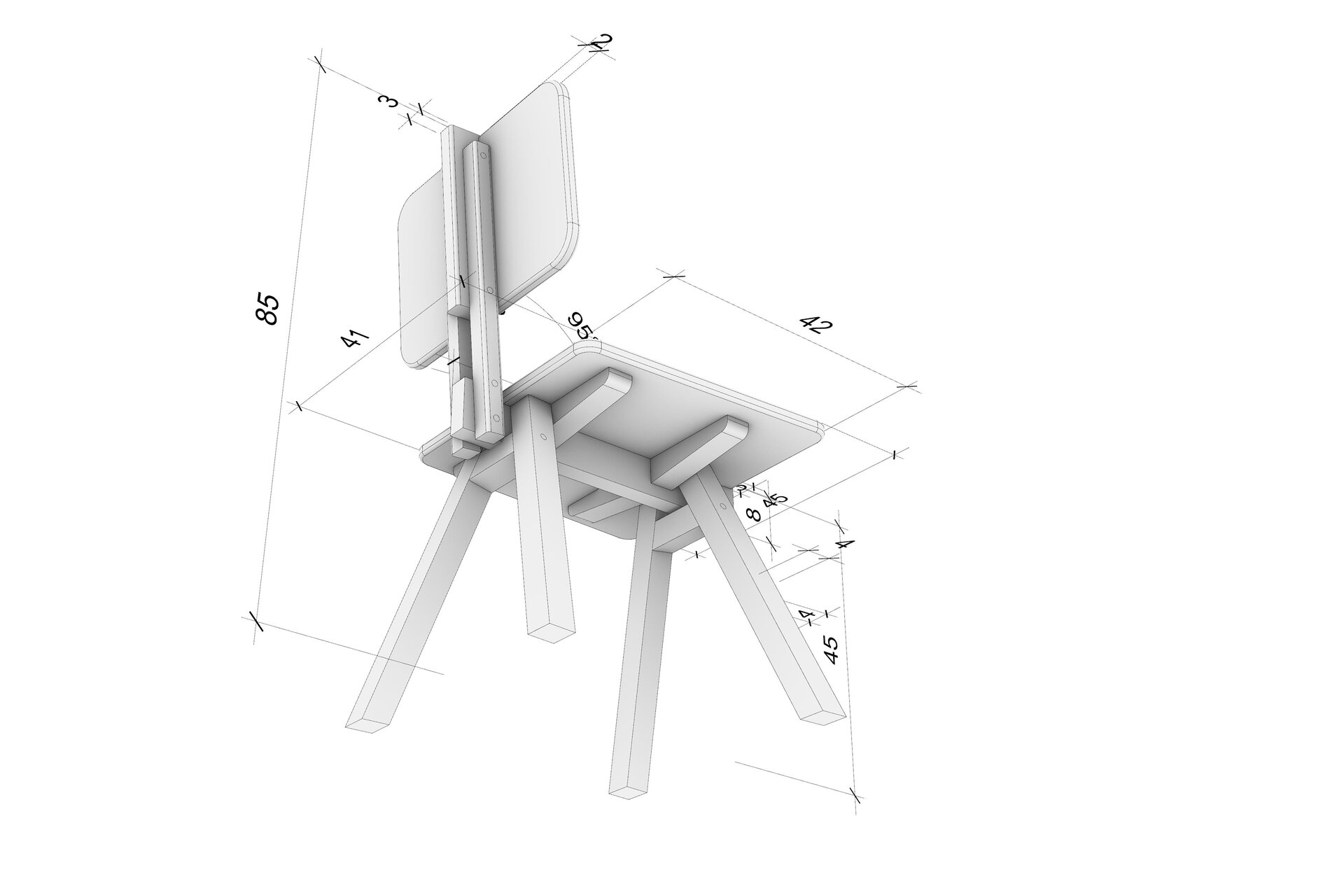
The structure beneath the seat is conceived as a small roof frame. The legs, set at an angle in pairs, meet like rafters at the ridge and grip a longitudinal beam between them, which takes the weight of the seat and passes it down into the legs. In its build, it is a carpenter's sawhorse, the trestle on which the timbers of every roof frame are prepared.
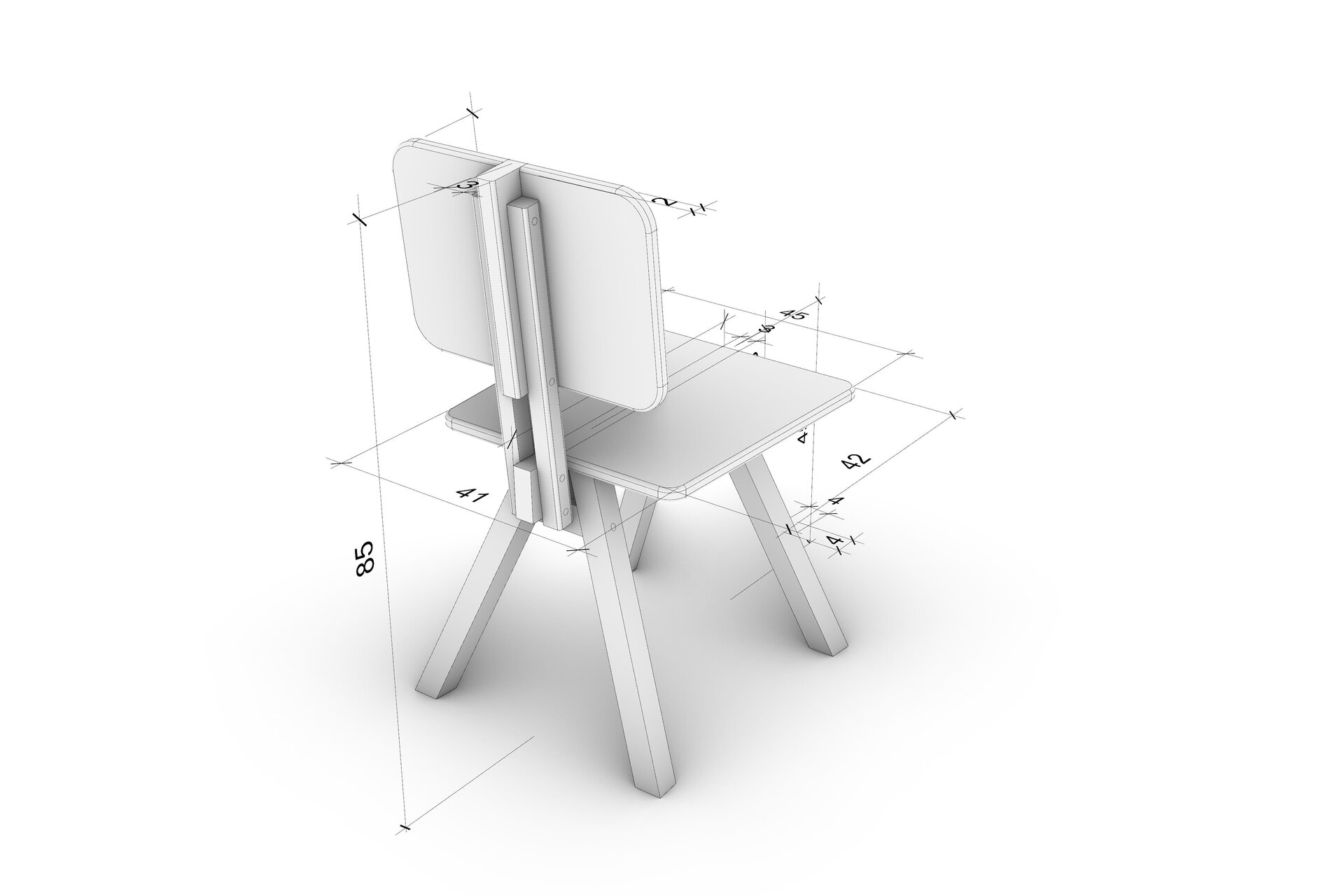
The backrest borrows another element from the carpenter's vocabulary: the clamp. Two vertical uprights grip a central rail between them, to which the two backrest panels are fixed. The same clamp continues down into the seat, where it joins the central beam.
The material is solid ash, a hard and elastic wood with a straight grain that holds up under repeated stress. The wood is left in its natural colour, with no paint or stain. The grain and the end cuts of each piece remain legible, and the edges are slightly rounded only where they meet the body.
The chair is part of the studio's ongoing interest in the craft of timber framing. The object does not reproduce a historical form. Instead, it tries to apply the principles of this trade at the scale of furniture.
Object Design
- Palm Bench
- Templates / Site Jewels
- Wunderkammer
- YOU and ME Collection
- Modular stairs / SP(L)INE - Anatomy of Vertical Structure
- Luminous geometries – a lighting collection
- OAR Exhibition System
- Tiny House DWELLII TR_1
- Tiny House DWELLII TR_2
- Gériane
- Pixel
- Ercolano - Preserving Memory
- Lighting installation for Frudisiac Brod
- Carpenter’s Chair
- The STEREO Chair
- Altar
- Spectrum: Modular Table Top
- Eclair Family
- The COOKIE Chair
- Y Chair
- Architect bag ZIGSAK
- Shoe box Il Passo
- KLEPSYDRA Chair
- Urban Frame
- IMA
- Alma Halo


