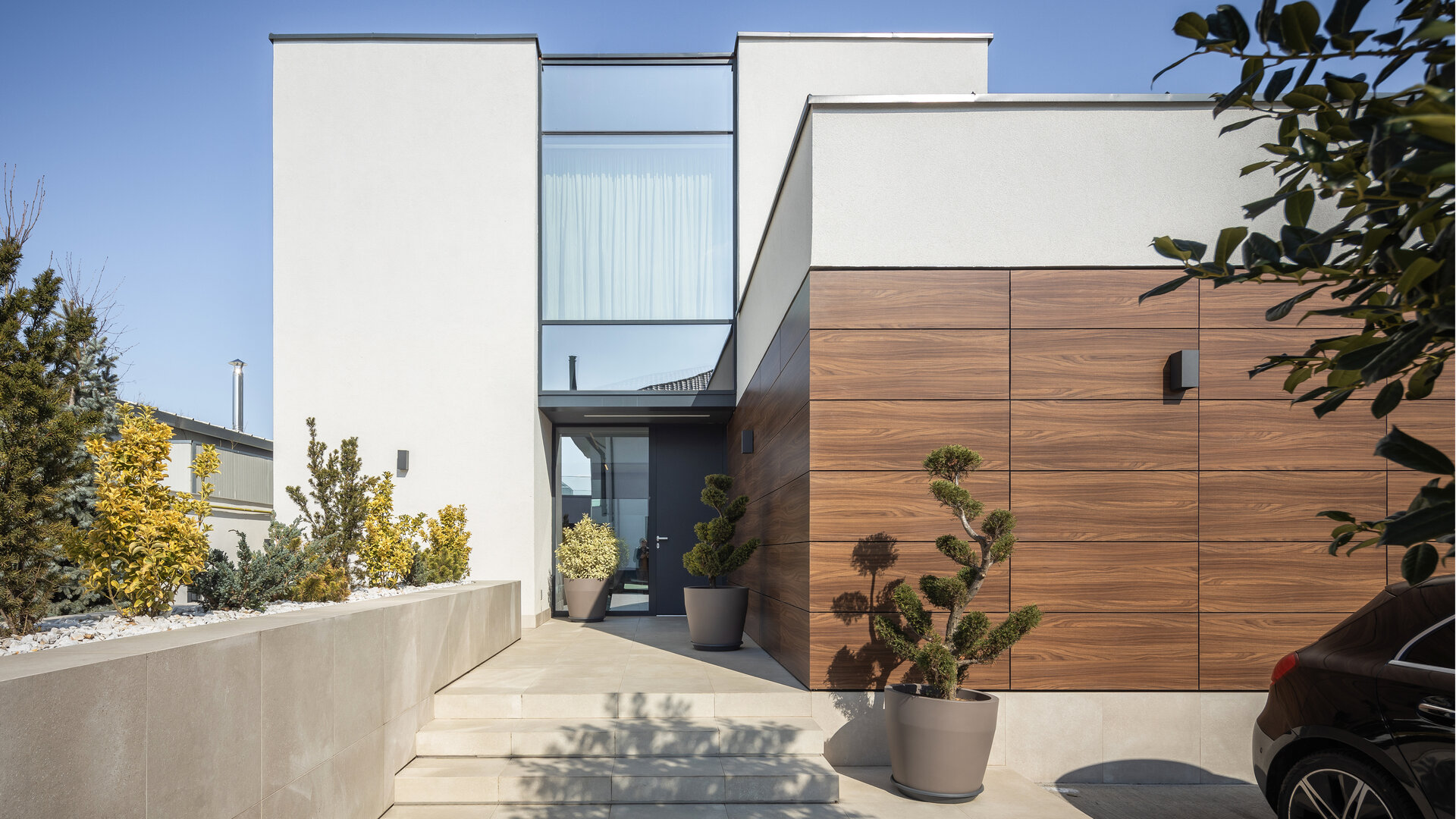
DMF House
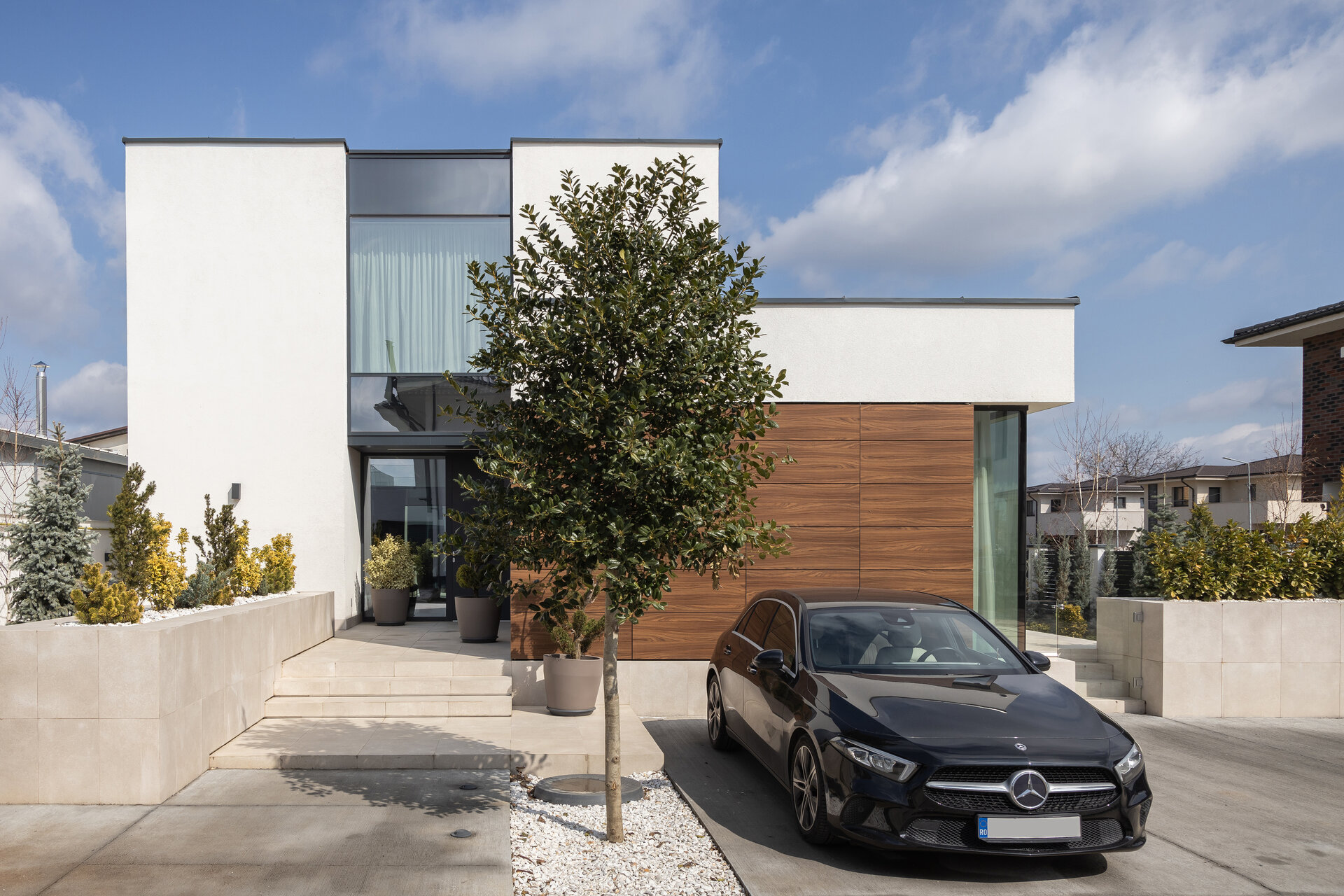
Authors’ Comment
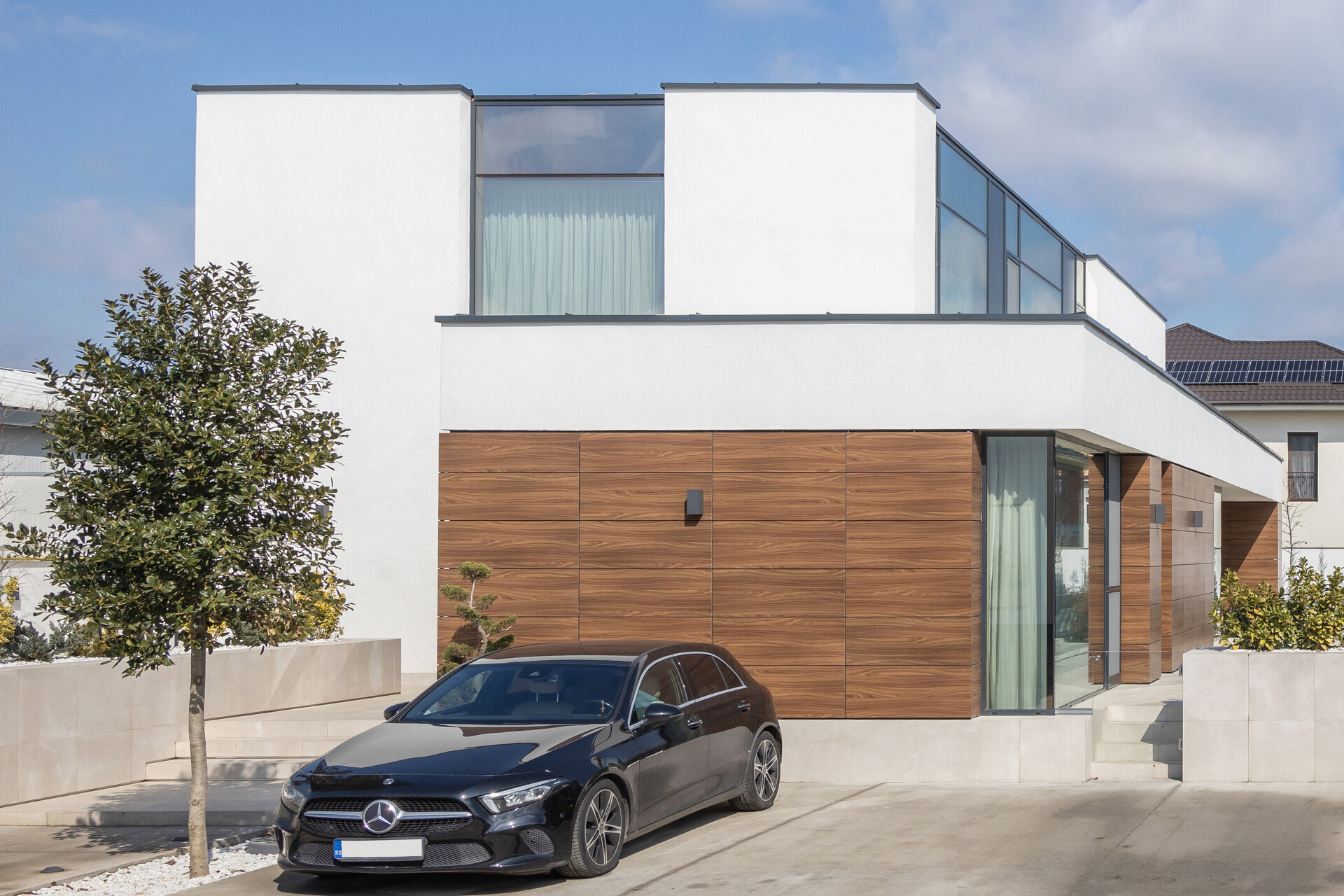
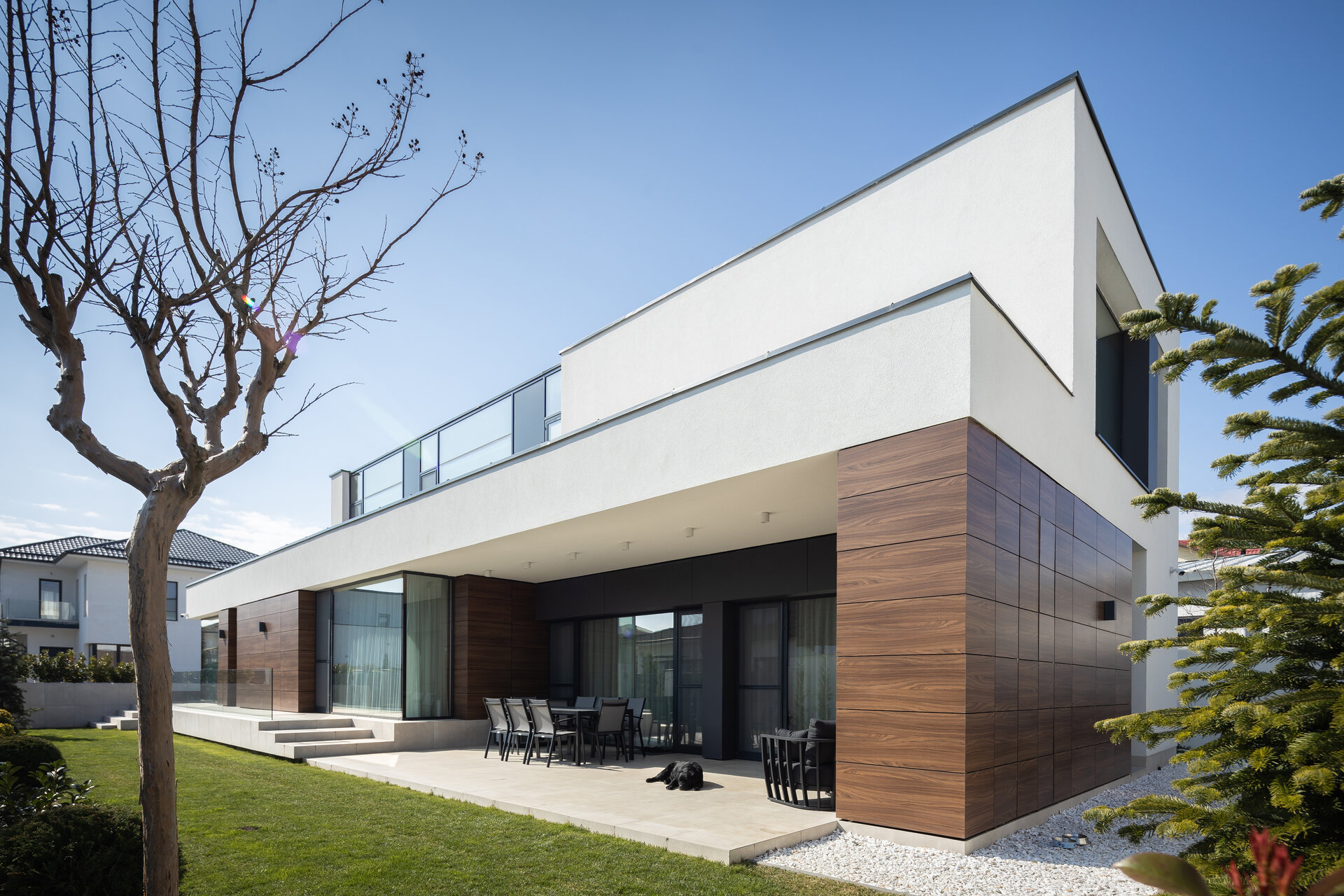
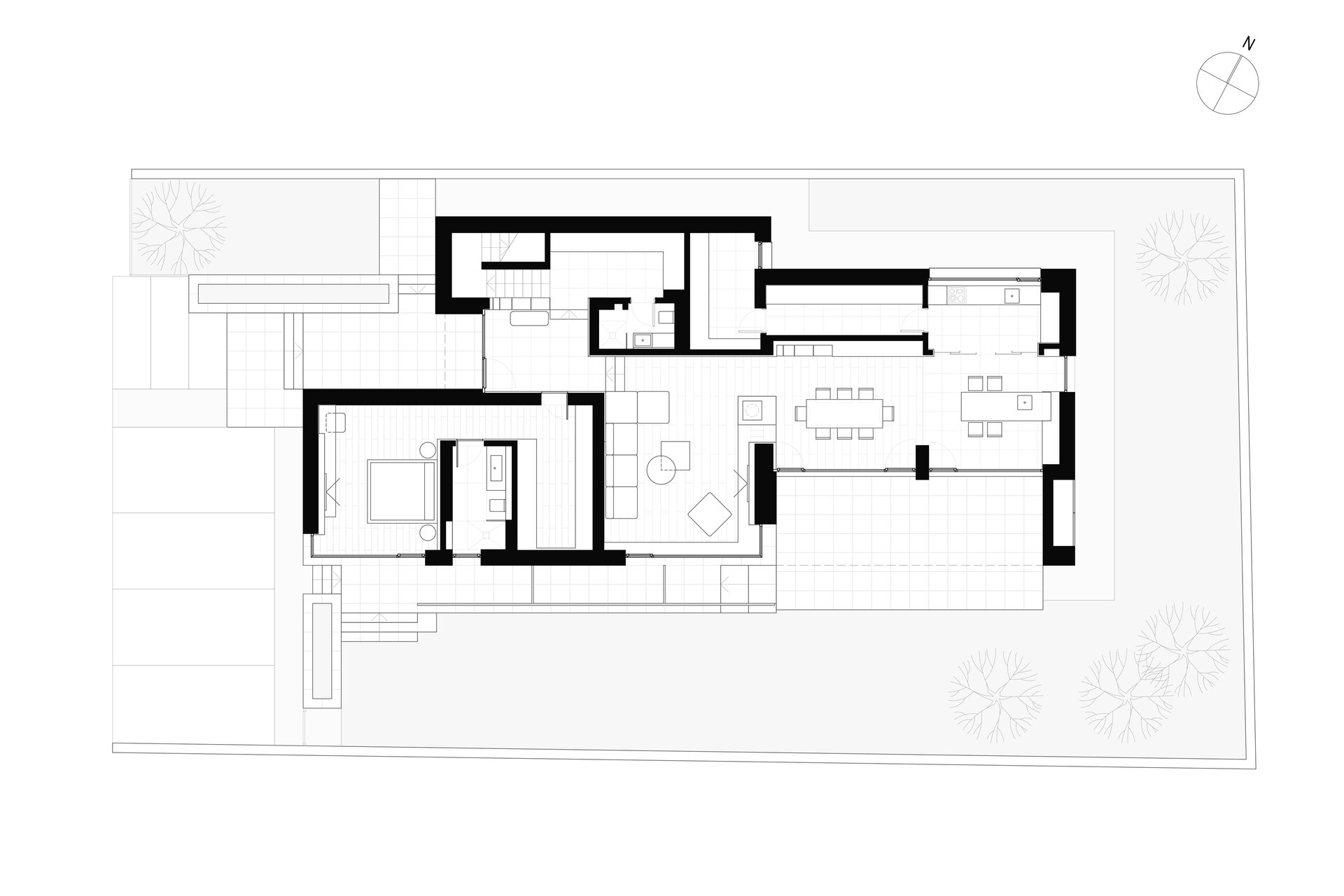
The architectural solution had to take into account a number of constraints, both from the configuration of the plot on which it was located and from the requirements imposed by the beneficiaries. The plot of land, located in the "Paradisul Verde" neighbourhood, Corbeanca, has an elongated proportion and a reduced width towards the street. This configuration, together with the desire to ensure a generous garden, led to the design of the building in the form of a two-storey volume, following a linear configuration, with the orientation of the main rooms predominantly on the south side. The resulting volume provides a balanced relationship between the building and the exterior space, even though the project is placed in a context characterised by high fabric density.
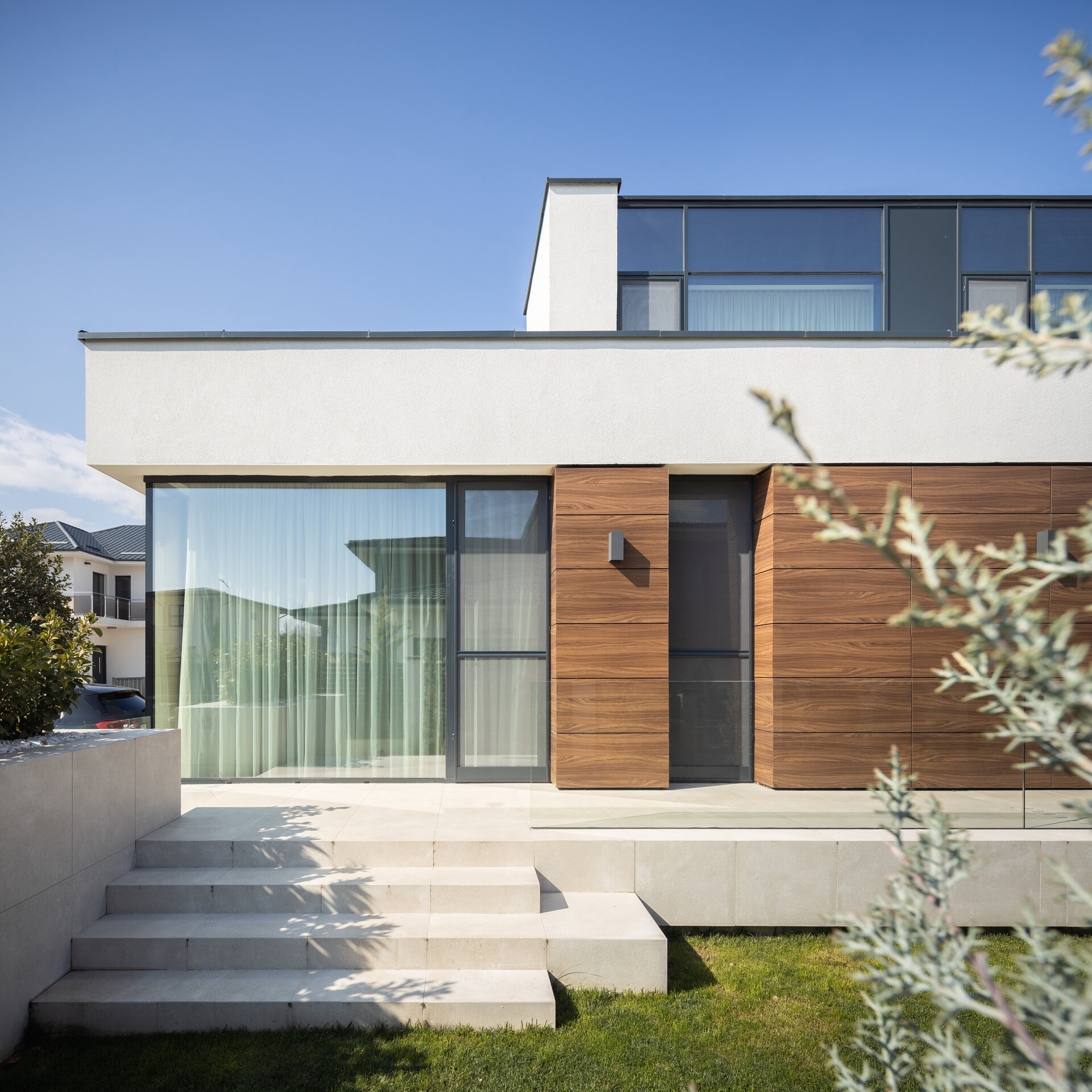
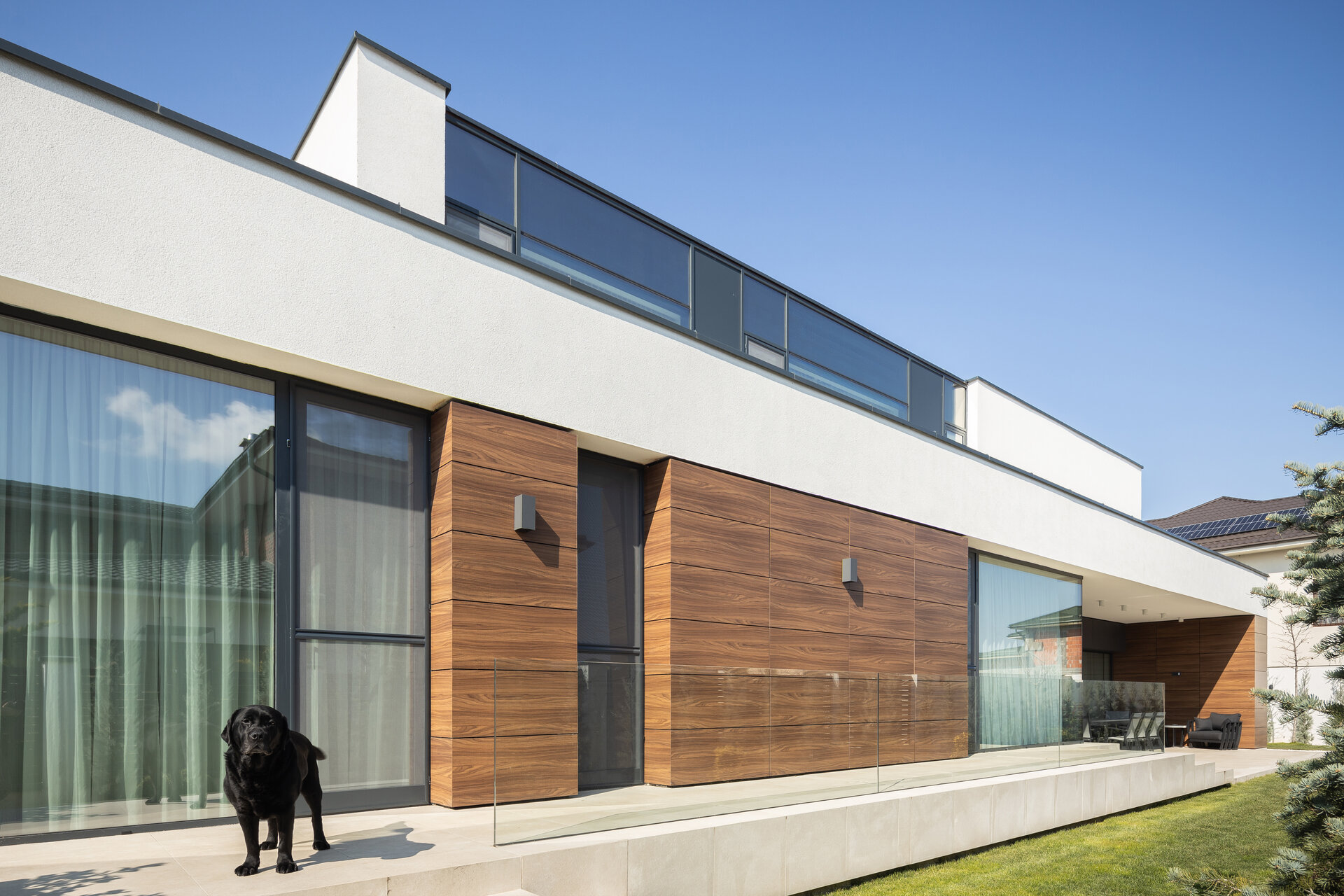
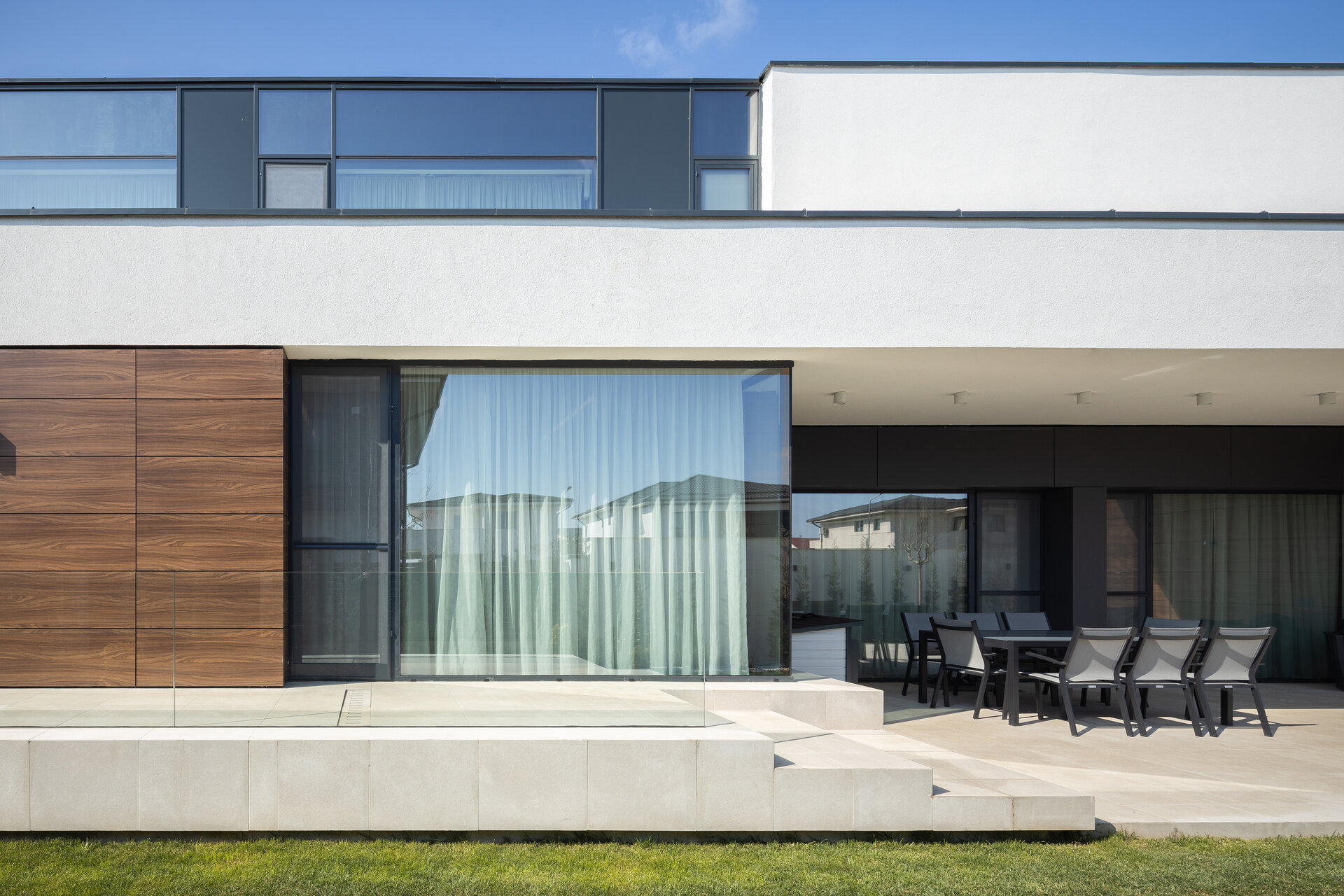
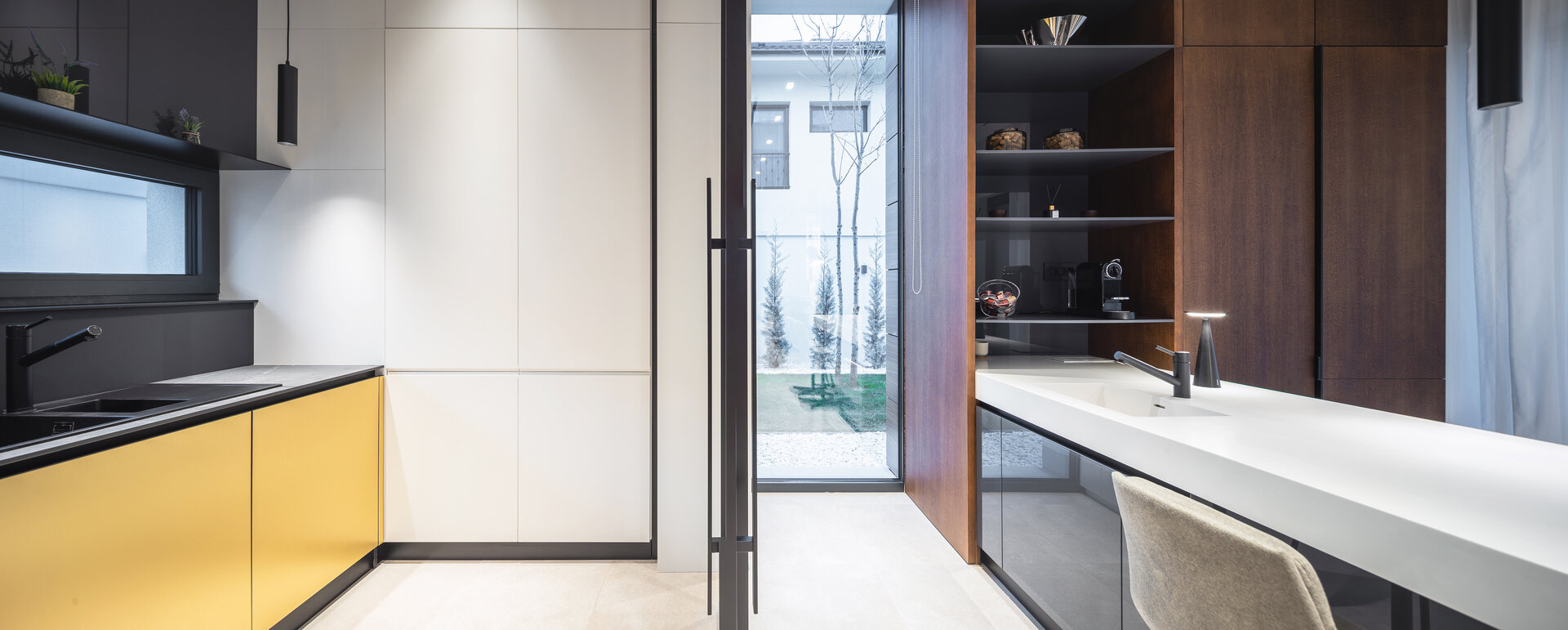
The ground floor level integrates a covered terrace with a generous depth. The day areas are placed in direct relation with the garden, ensuring a gradual and natural indoor-outdoor transition from the dining area and the cold kitchen to the yard, providing high-quality living spaces.
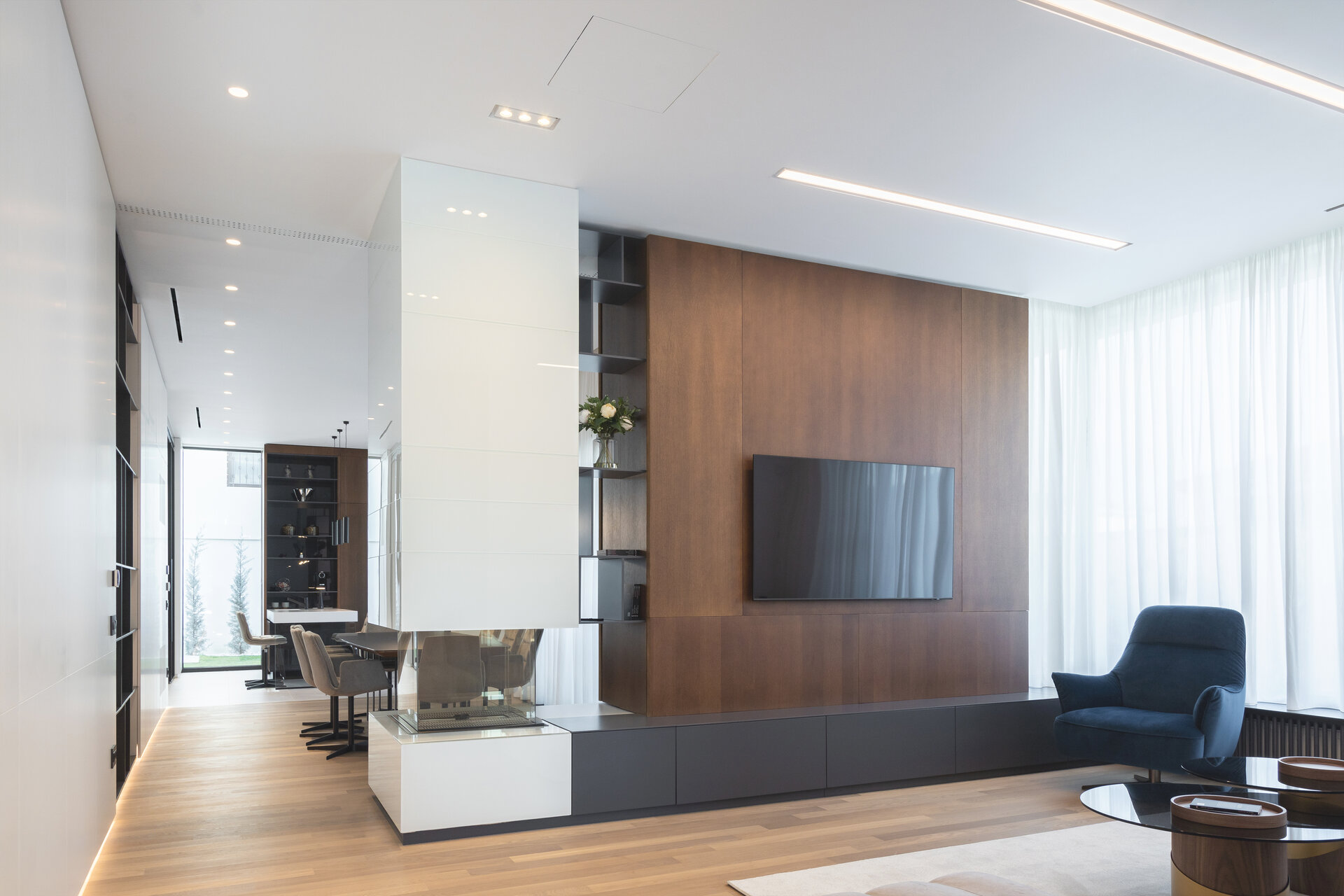
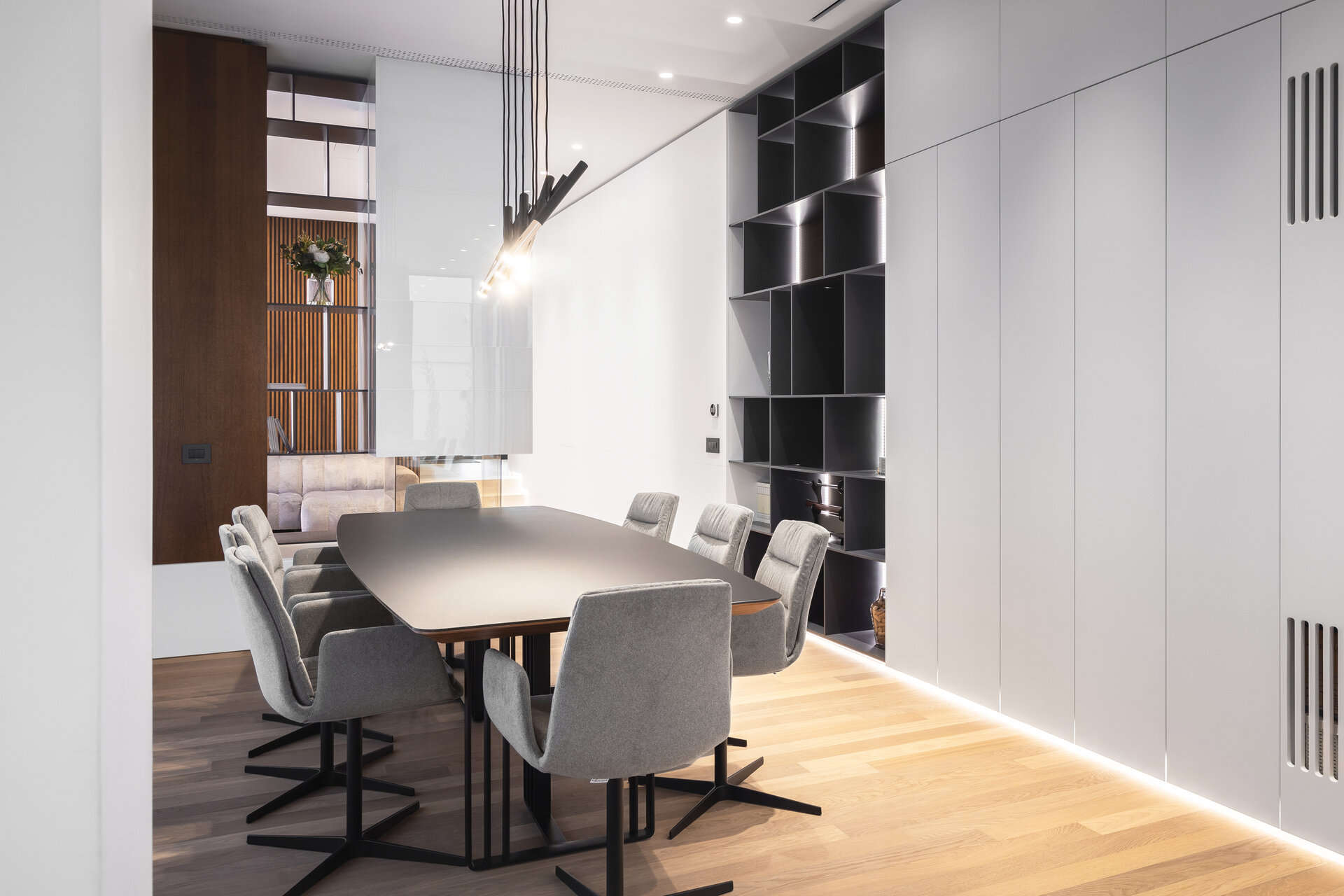
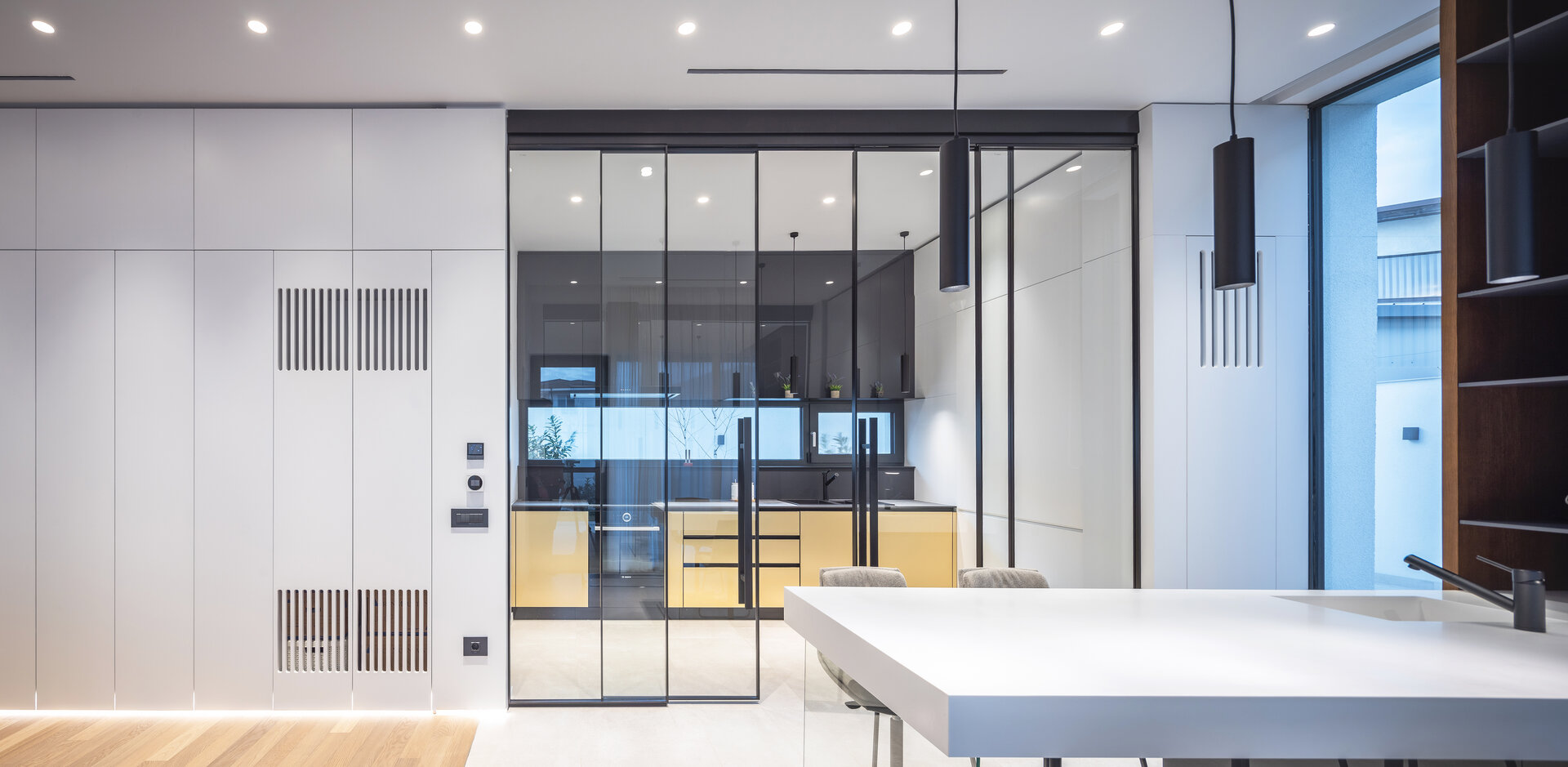
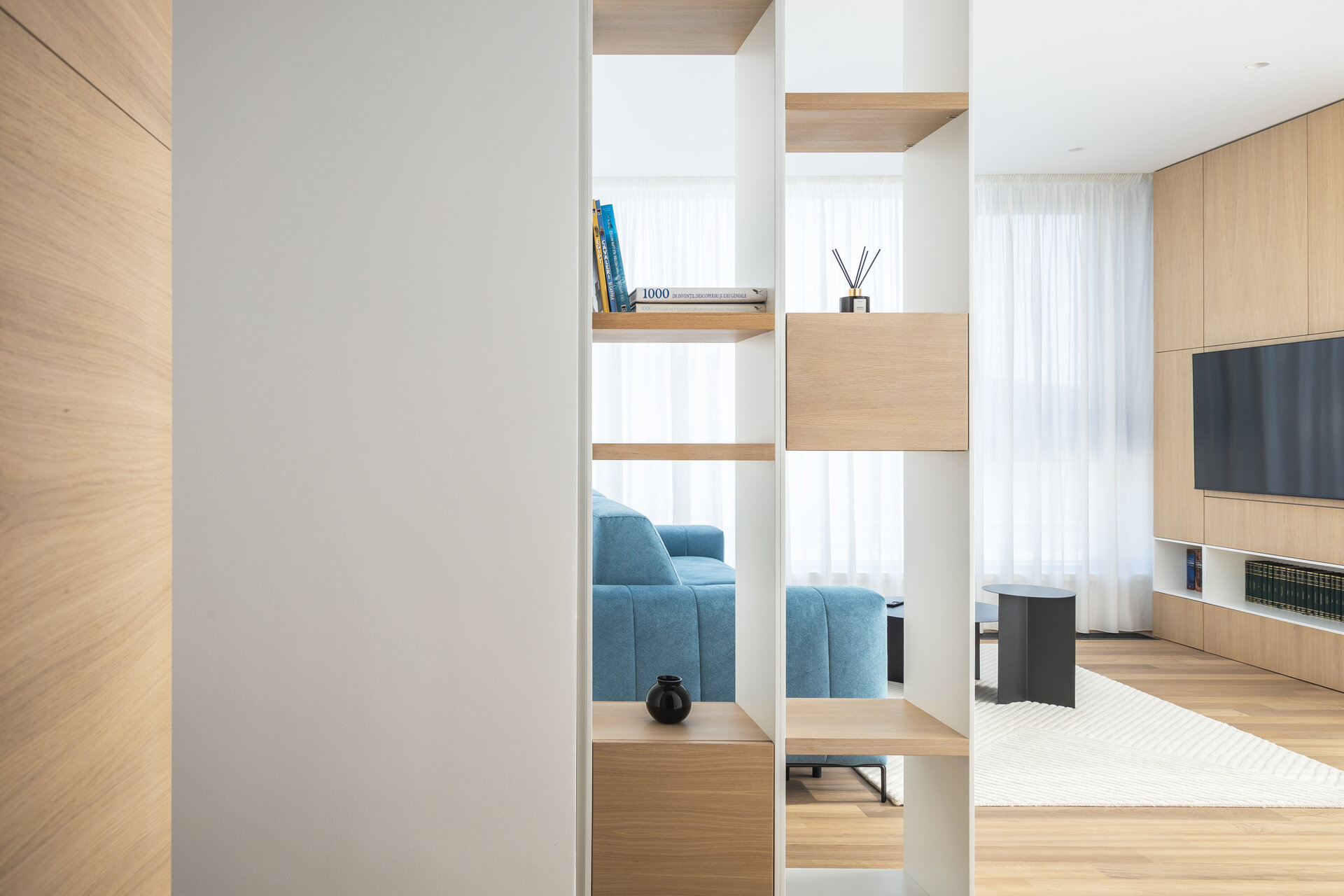
The volume influenced the way the interior and the visual mediation between various areas were configured, choosing a solution based on transparency and spatial fluidity. The ground floor was designed on the basis of an open plan, which, through the visual continuity of the rooms, contributes to perceiving the space in an ample way. The living room is in direct visual relation with the dining area and the open cold kitchen and it is articulated with the latter by means of the furniture and the suspended four-sided fireplace.
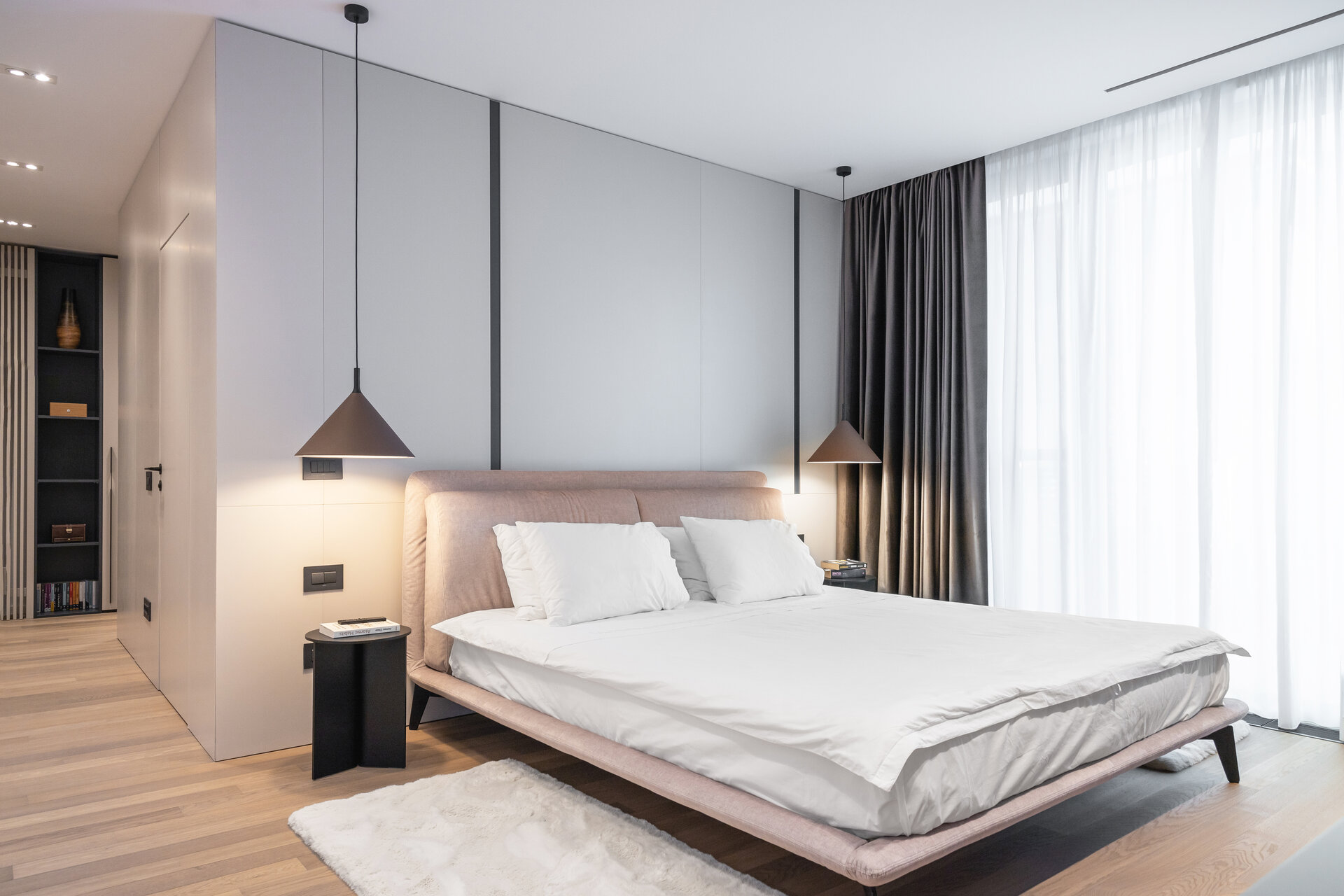
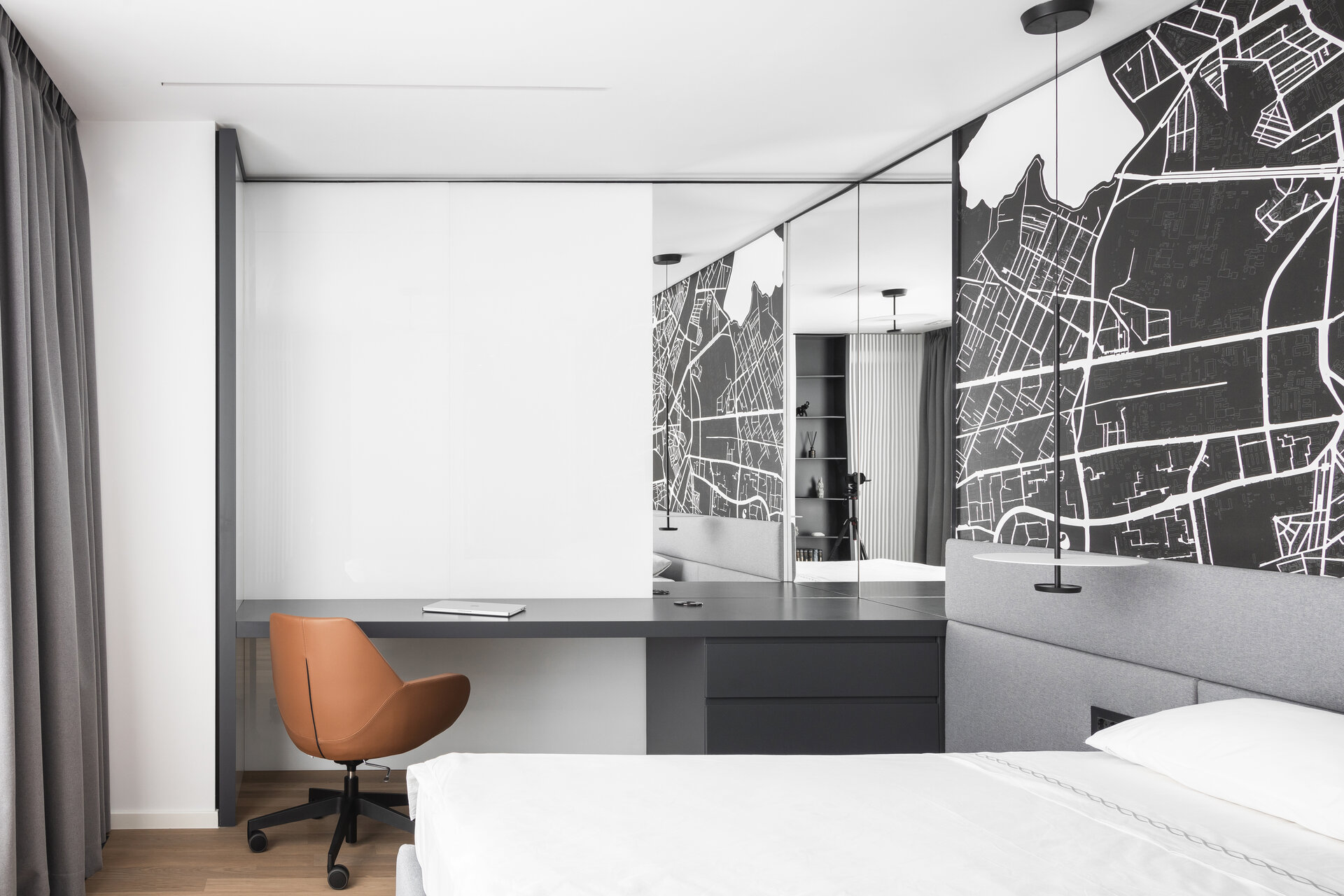
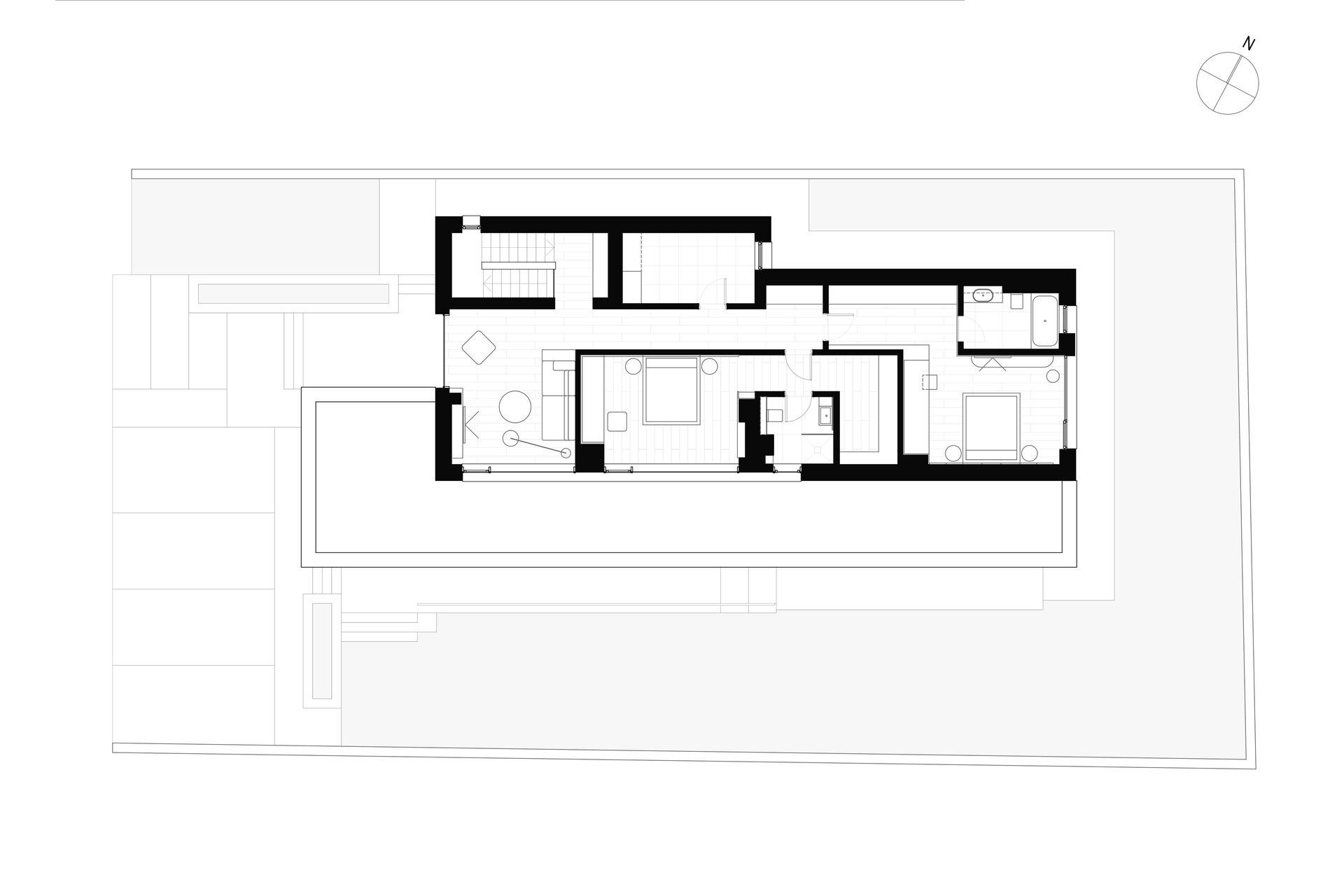
Another precondition came from the specific housing needs of the beneficiaries, which made it necessary to ensure the functional independence of the spaces intended for the parents and those intended for their two teenagers. Thus, on the ground floor level, both the main living area of the house and the matrimonial unit were placed, while the upstairs was exclusively dedicated to the two teenagers. This separation was determinant in designing the access area - with the staircase node in close proximity to the access - and the location of the master suite on the west side of the house, in order to minimally intersect the specific traffic flows and to ensure optimal functionality.
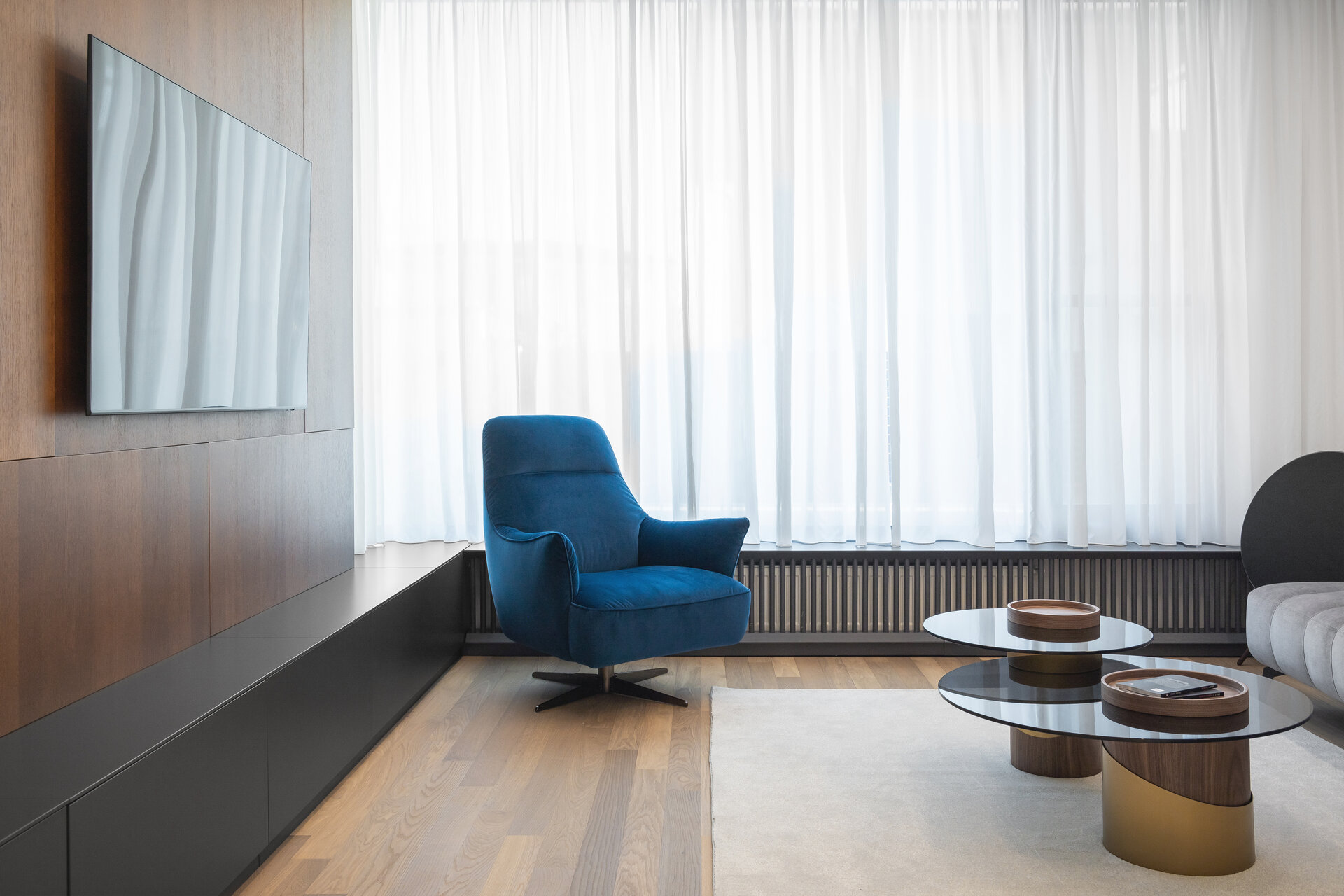
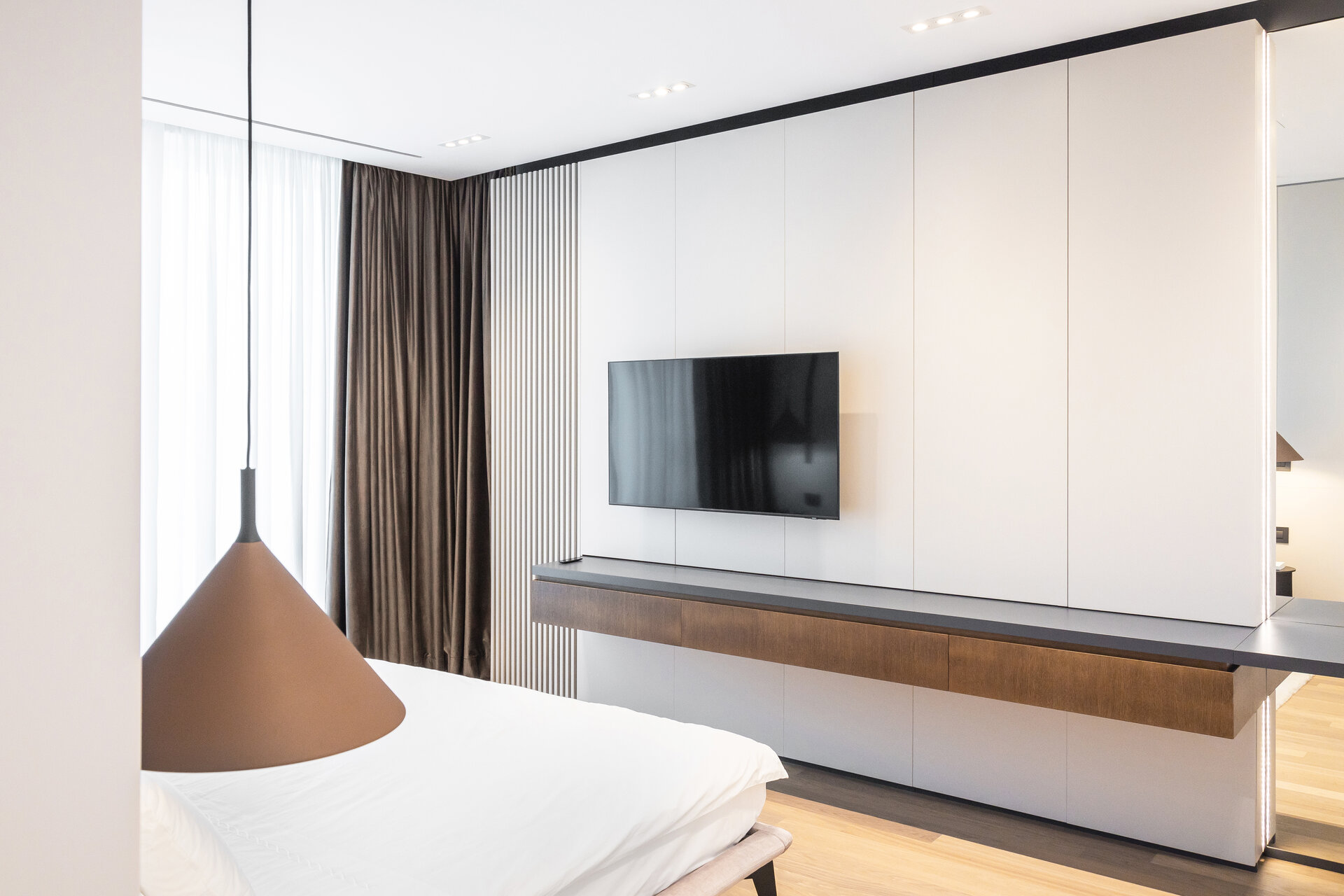
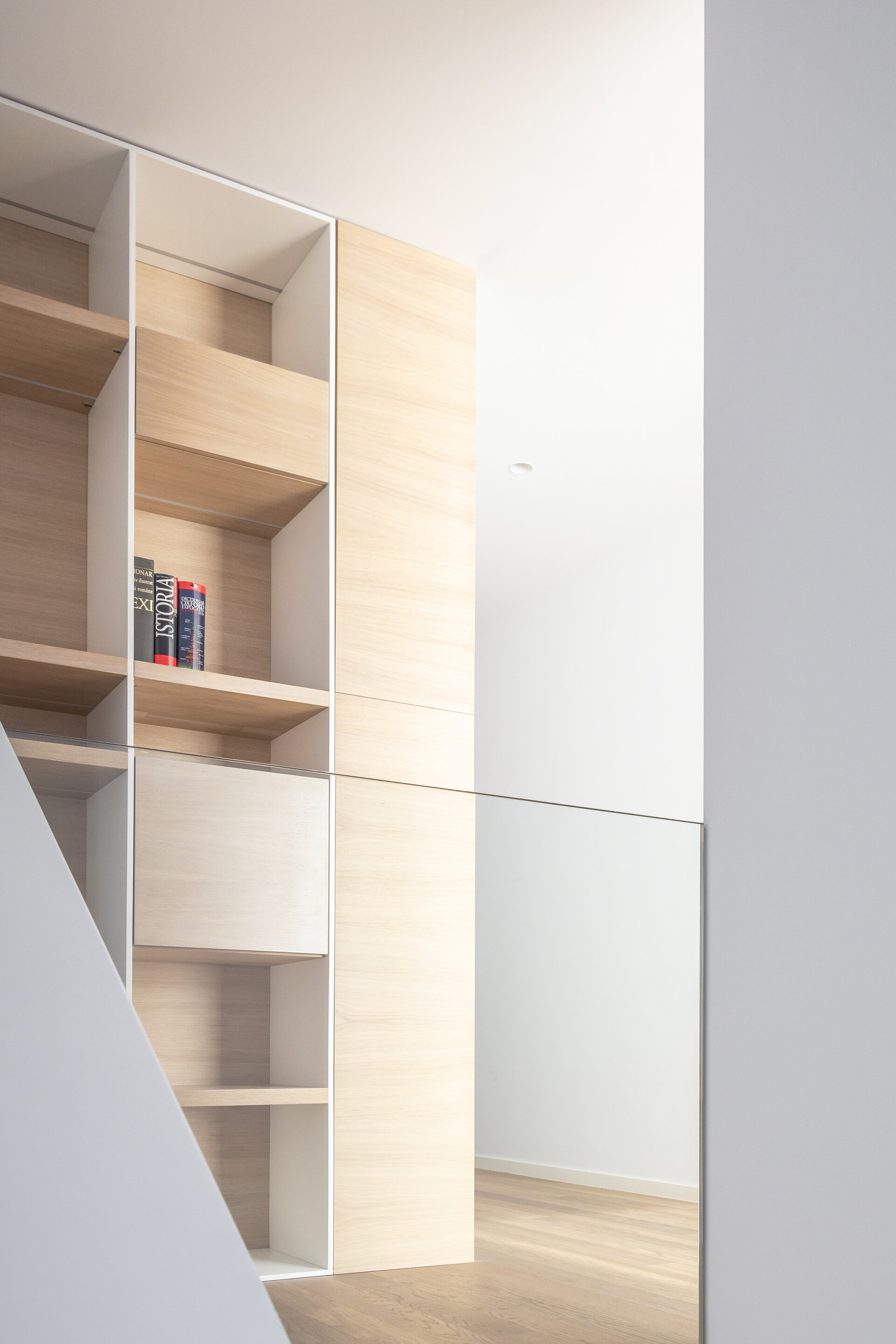
The decorative interior cladding and custom-made furniture are subordinated to the general plasticity of the architecture of the dwelling, generating well-contoured spaces, with integrated storage, filo-muro doors and accents of glass insertions to emphasise reflections, the transparency of the space and its visual amplification.
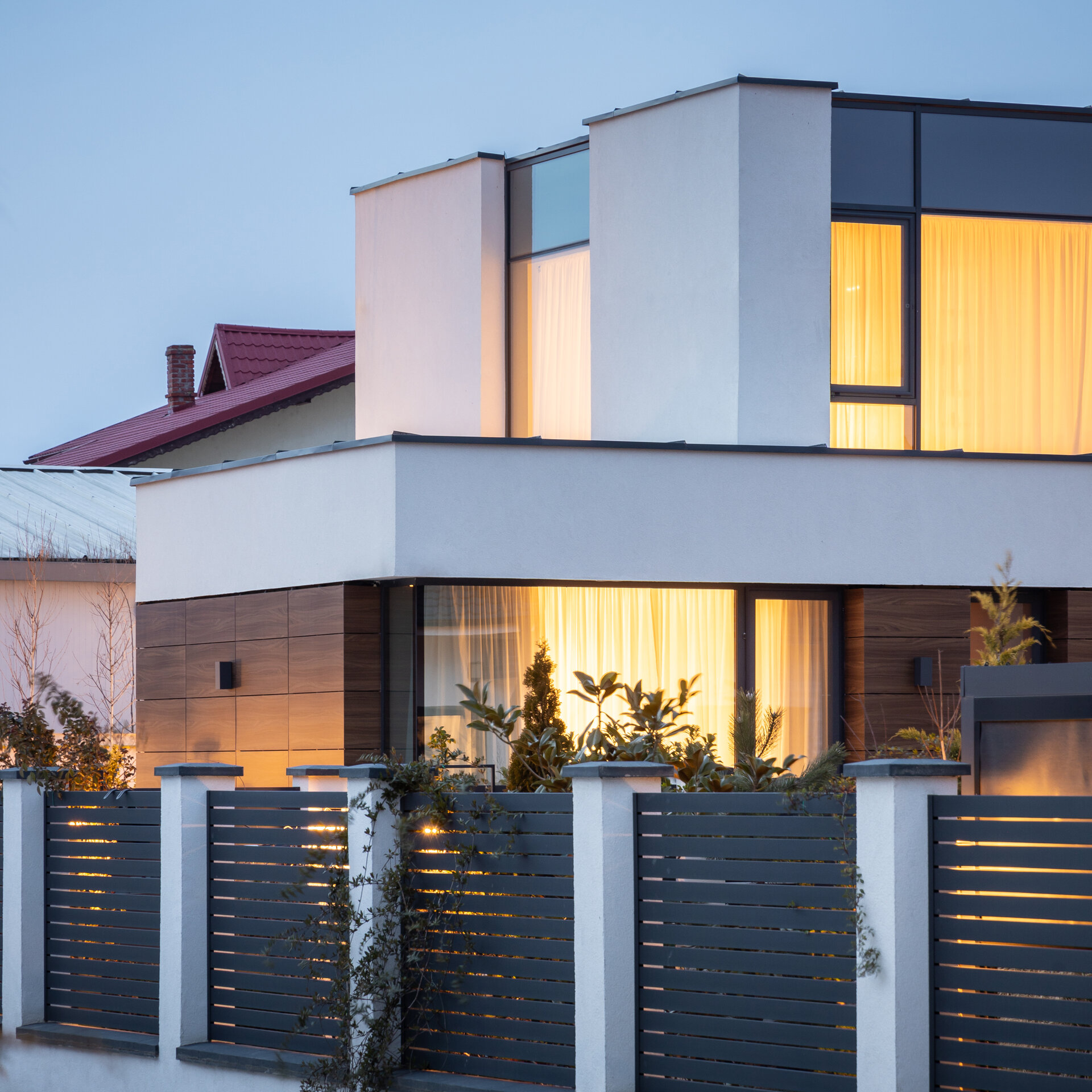
The articulation between the exterior area towards the street - occupied by parking area and pedestrian access - and the private garden, towards which the main functions of the ground floor are oriented, is achieved by means of custom-planters that allow controlled visual transparency.
In terms of the building exterior insulation and finish systems, sustainable solutions have been provided in the project through the use of stone wool façade systems and HPL ventilated façade at ground level. The exterior aluminium triple-glazed windows help to manage energy consumption. The project has also foreseen the future implementation of energy supply by photovoltaic panels, the related infrastructure being already in place.
Individual House Architecture



