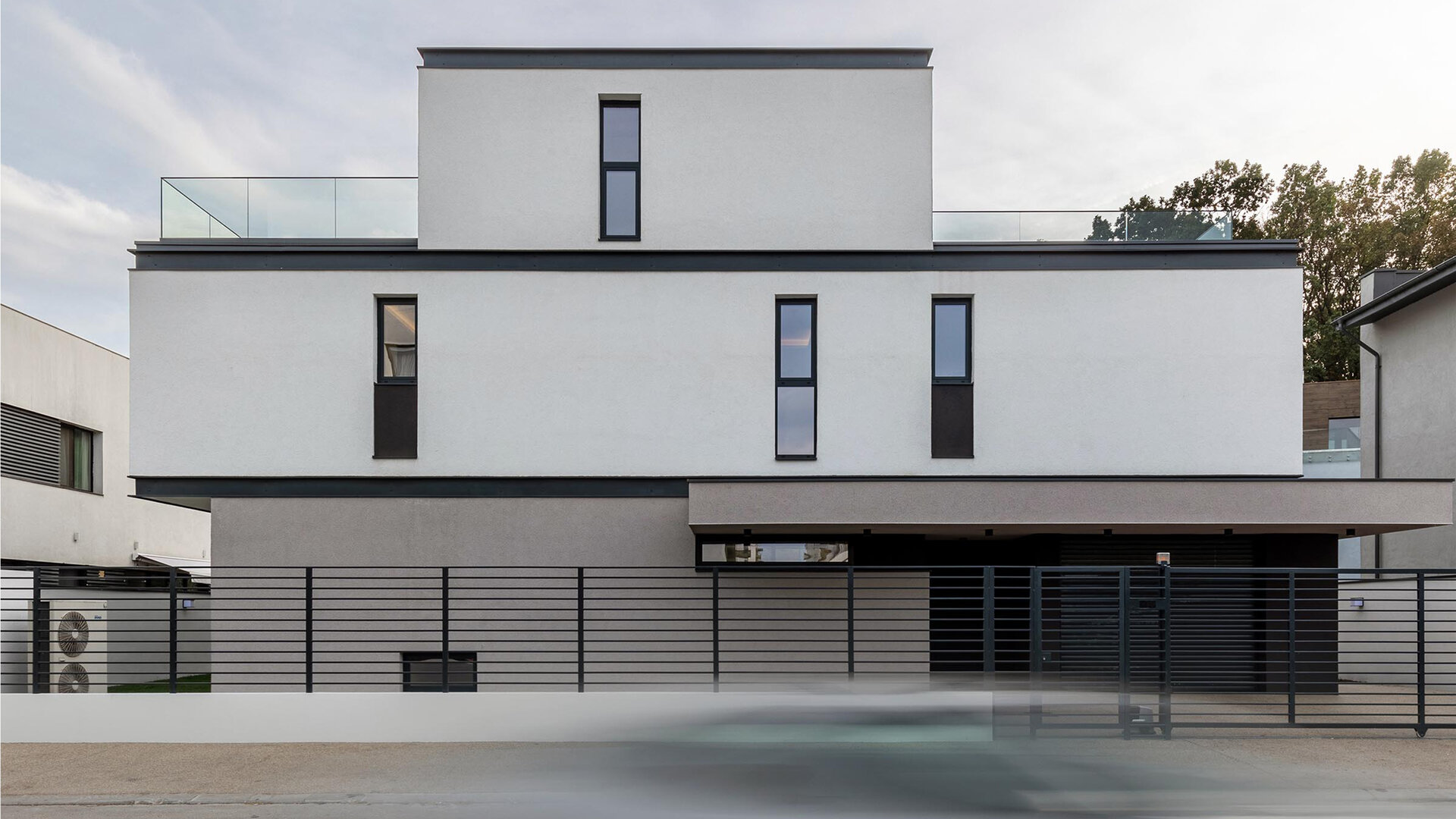
intro|extro.vert
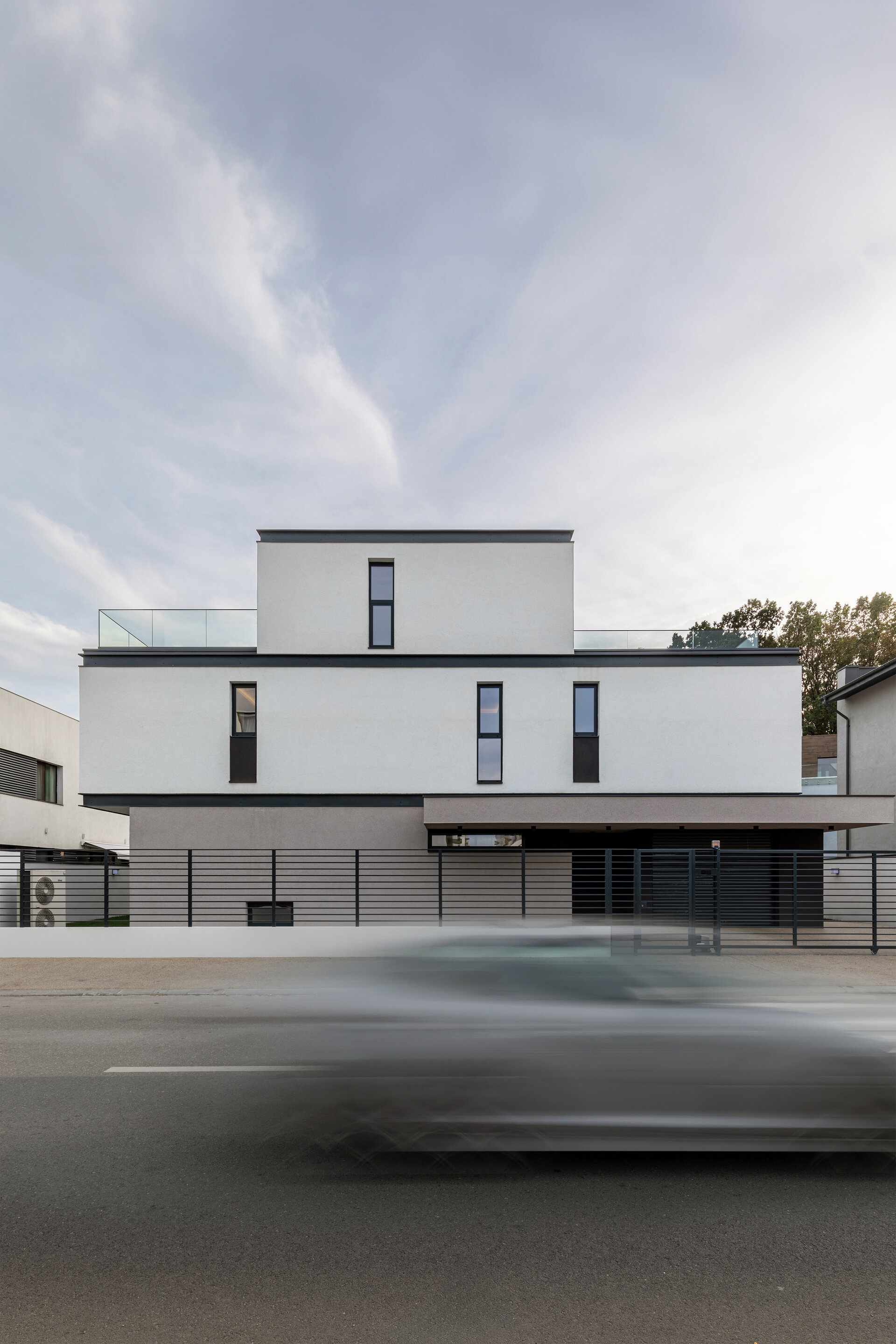
Authors’ Comment
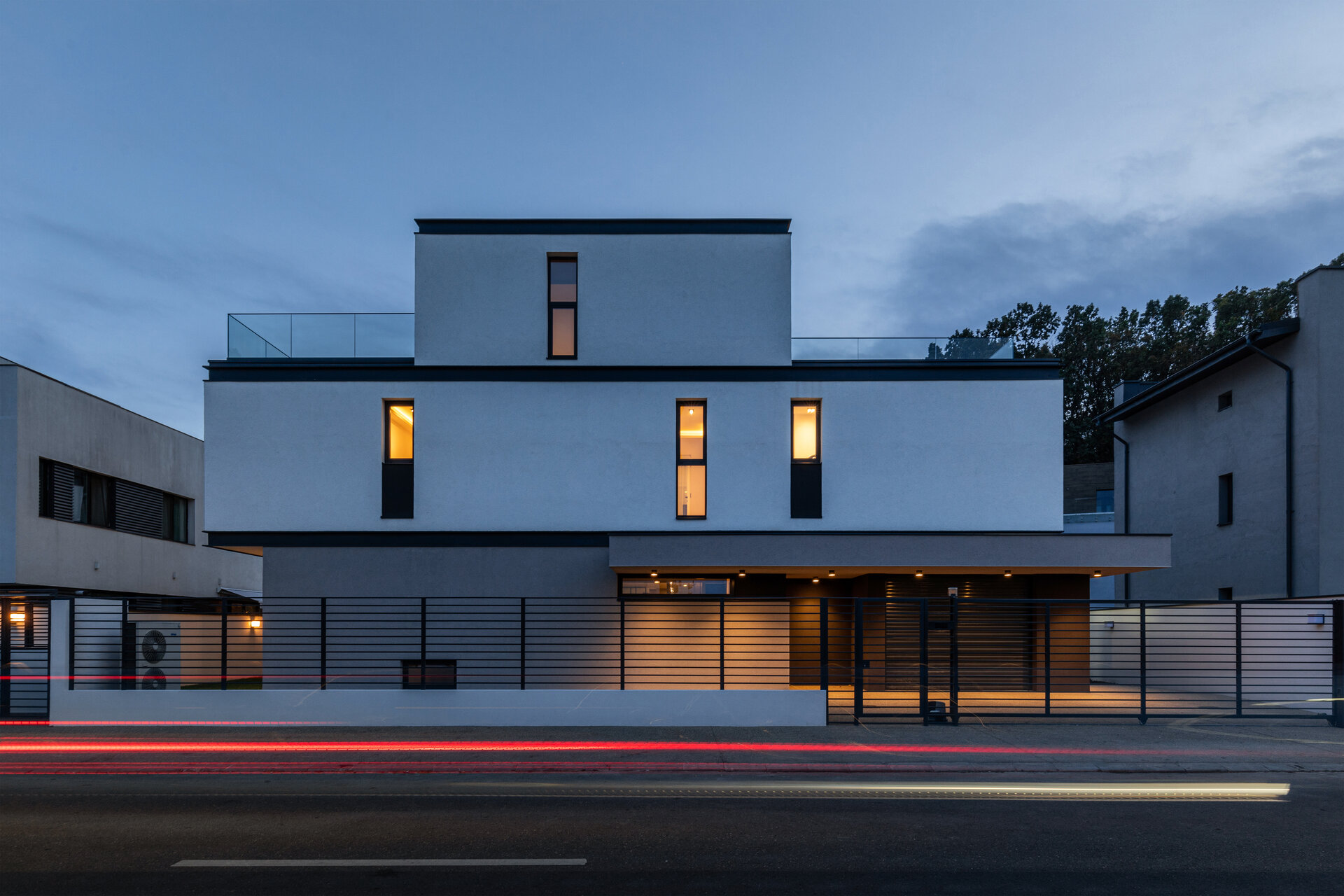
The residence is located in a neighborhood in the northern part of Bucharest, with an orientation almost perfectly aligned to the cardinal points. Notably, to the south of the site lies a forest, a decisive element for the clients in choosing this particular plot of land.
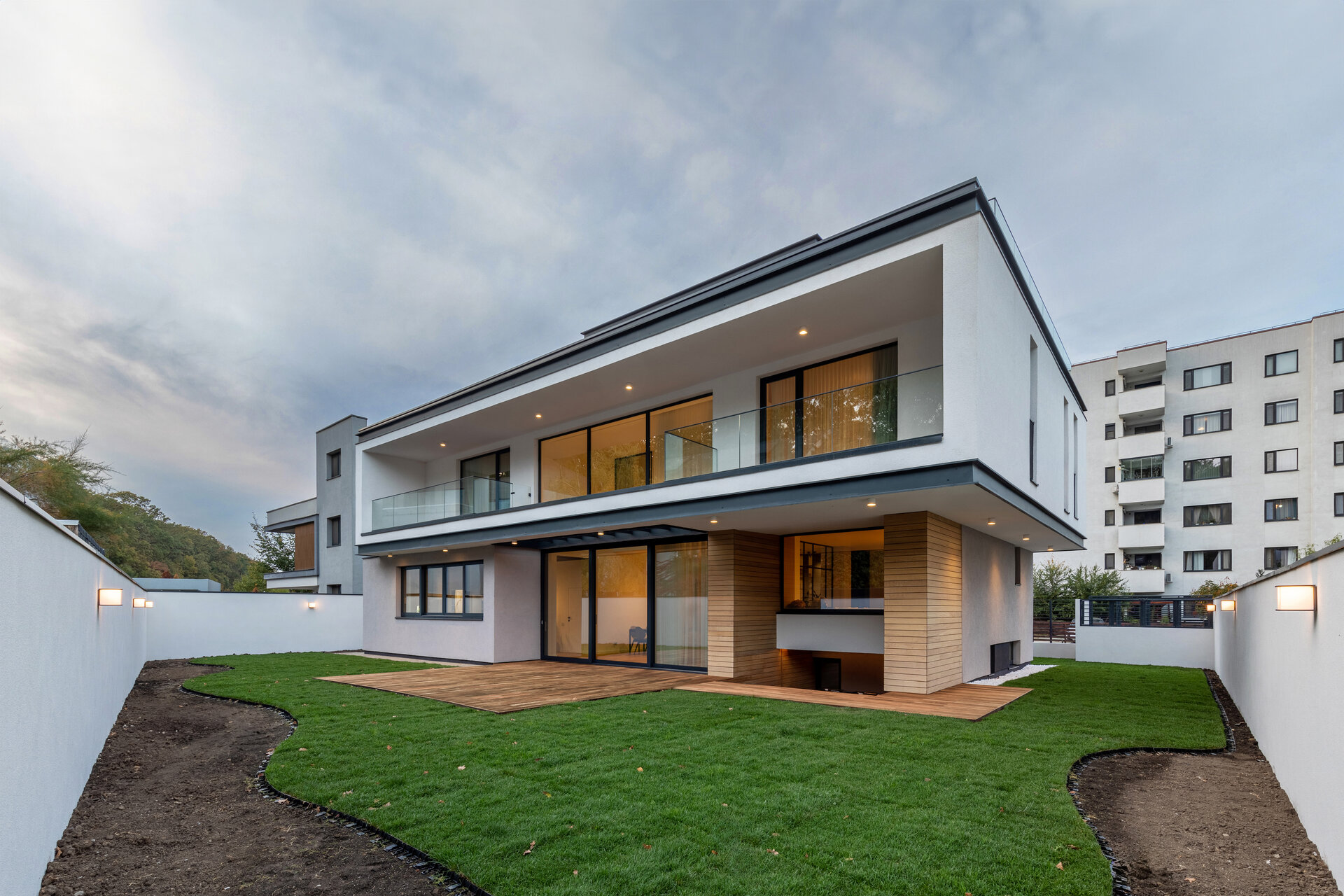
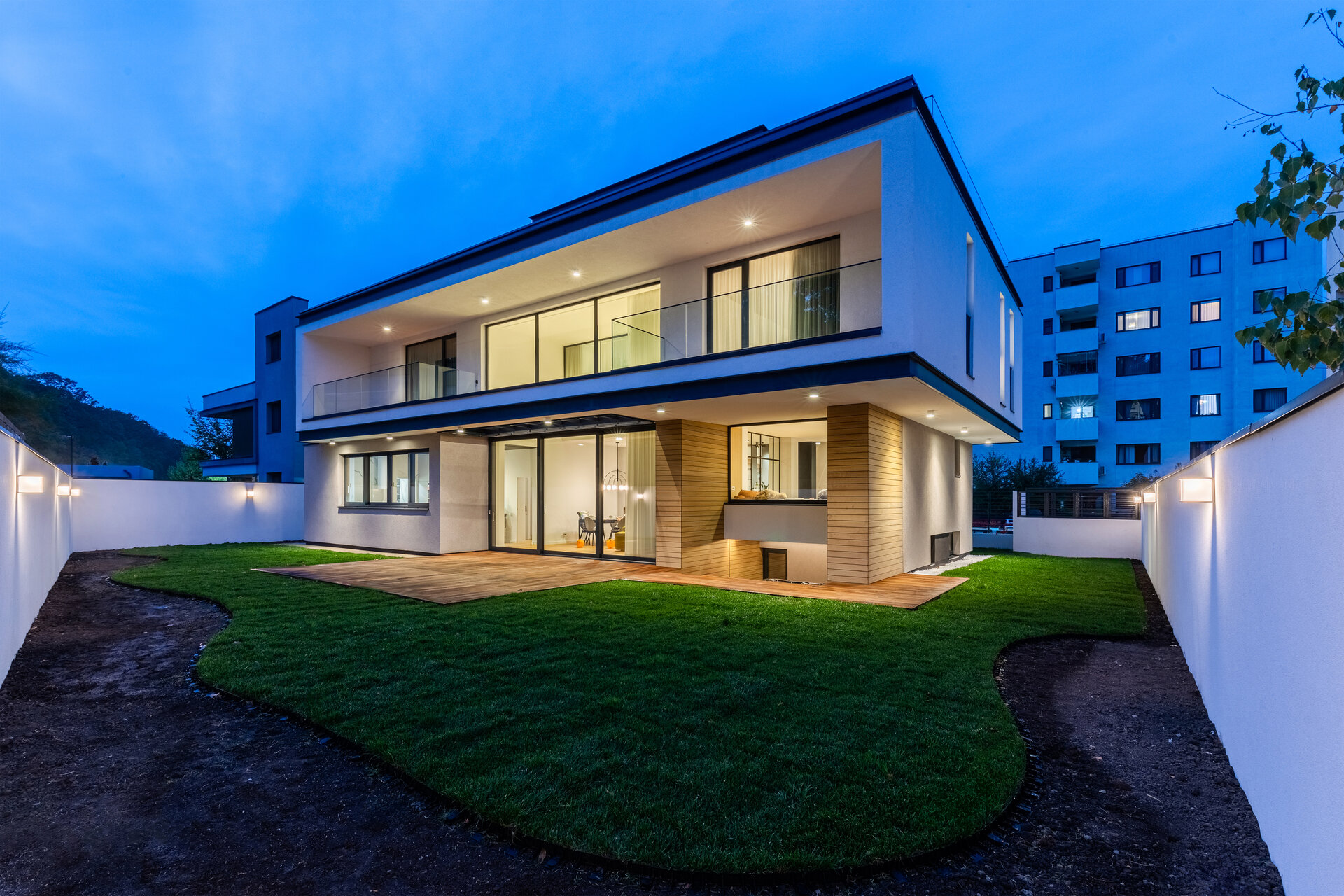
The project proposes a spatial and volumetric solution based on the clients' brief, in the form of a house that maximizes the garden space and its proximity to the forest, engaging differently with its surroundings.
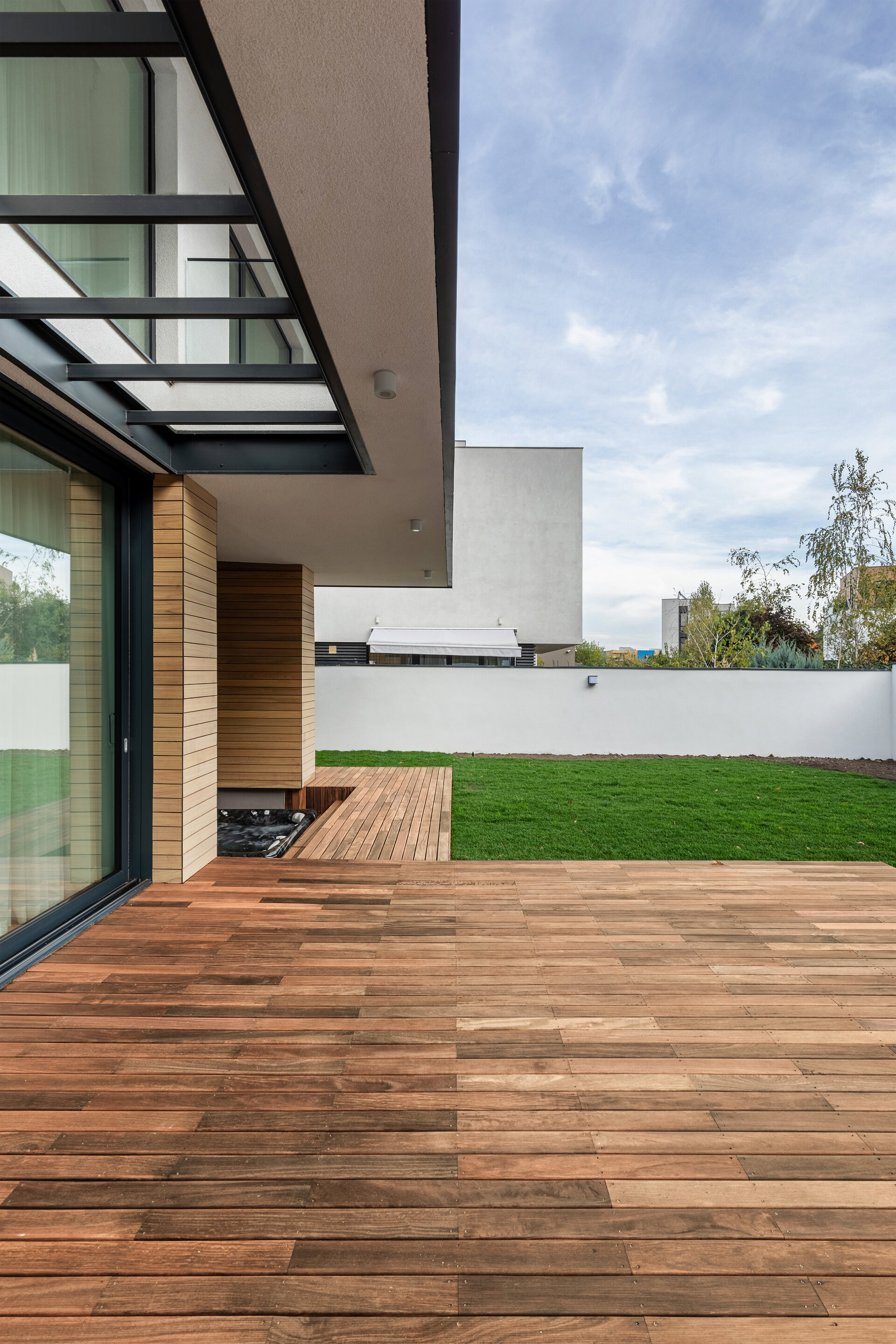
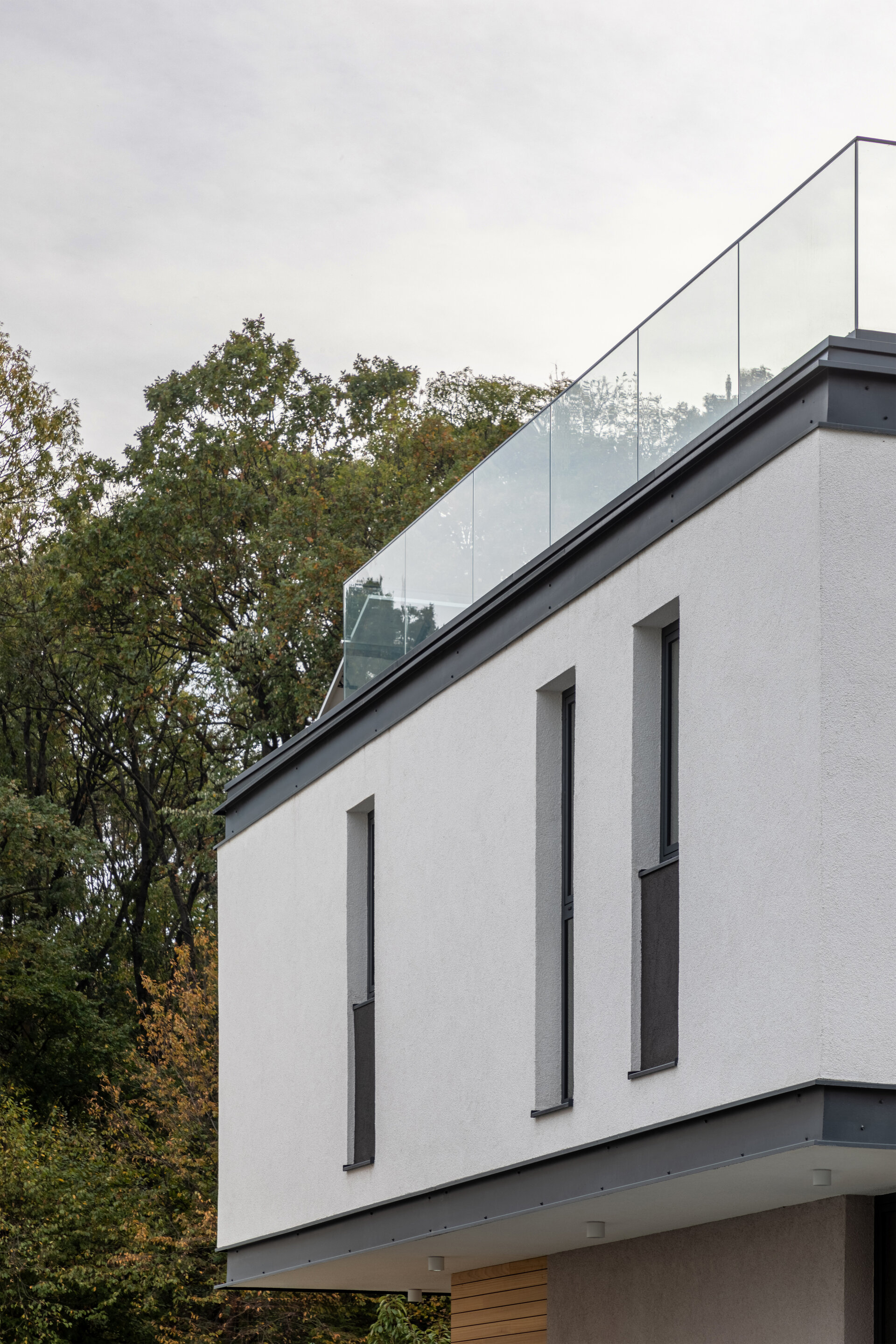
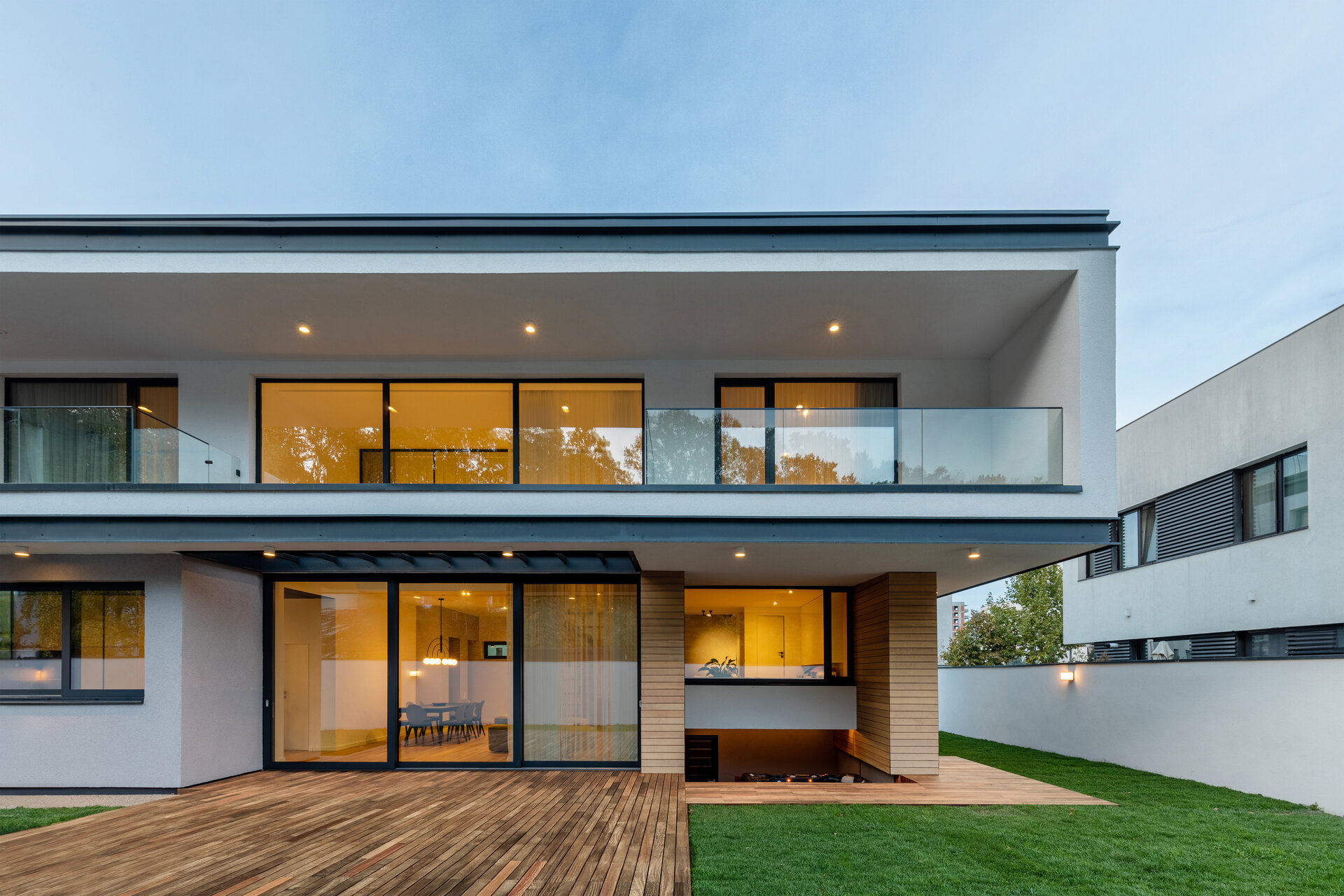
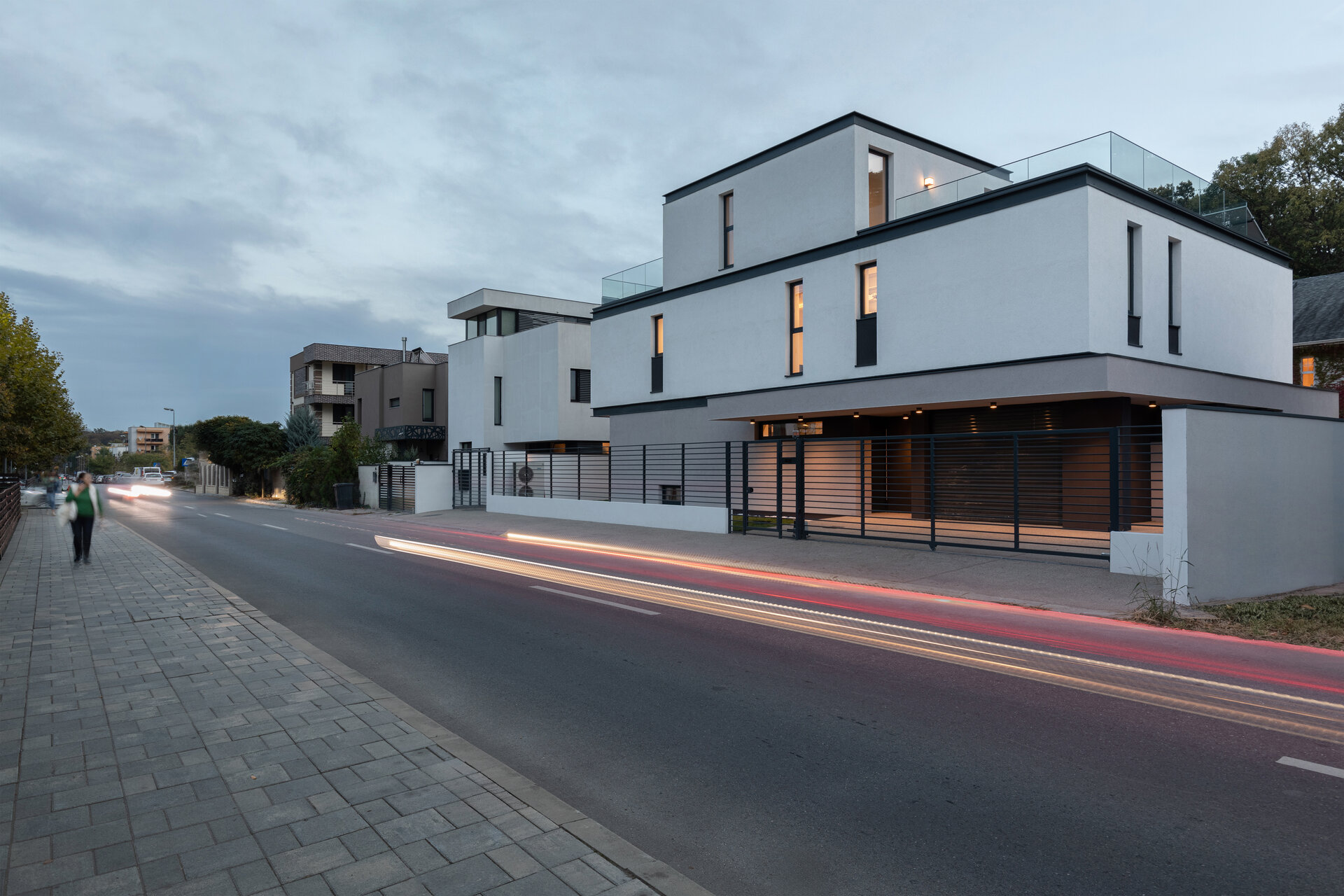
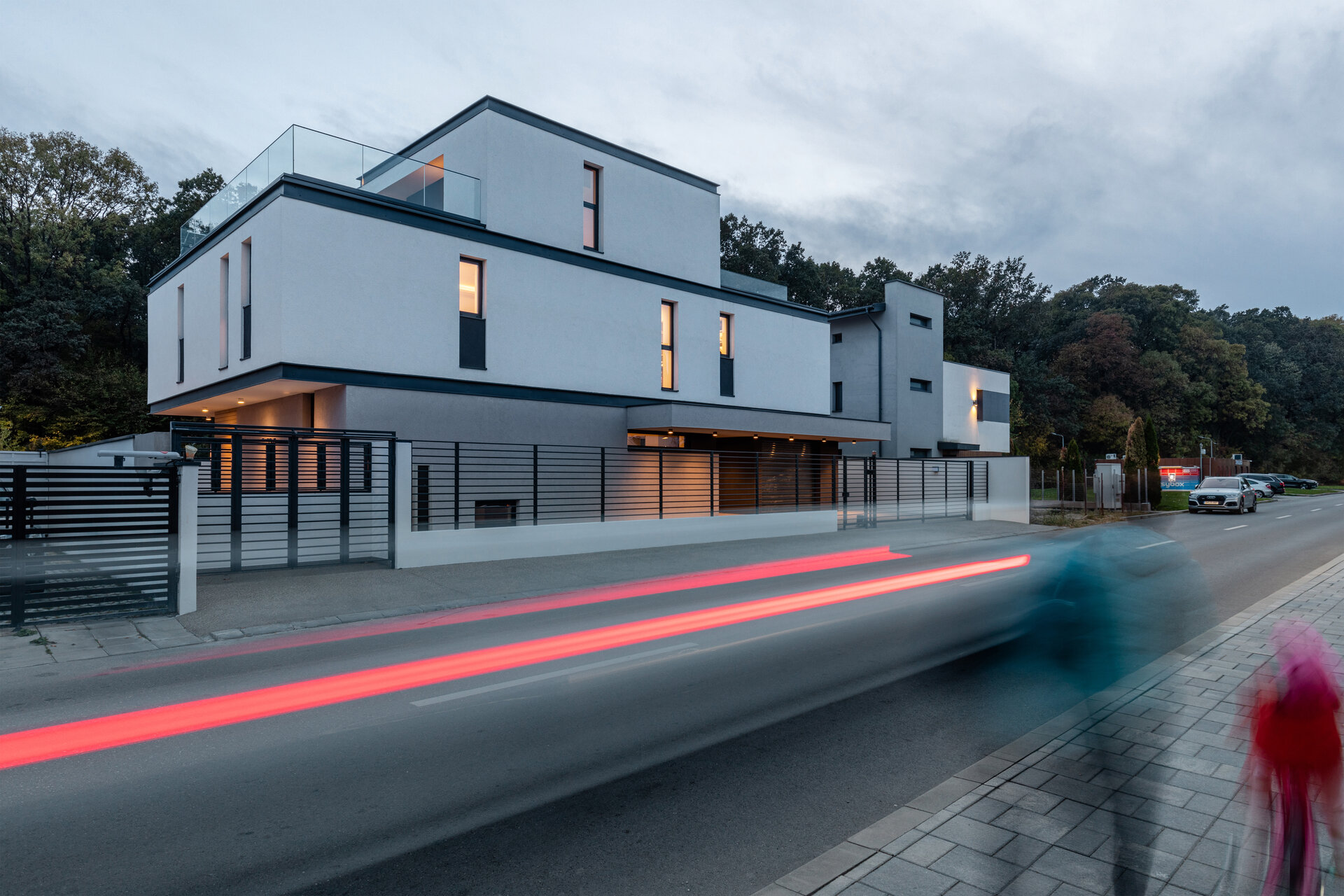
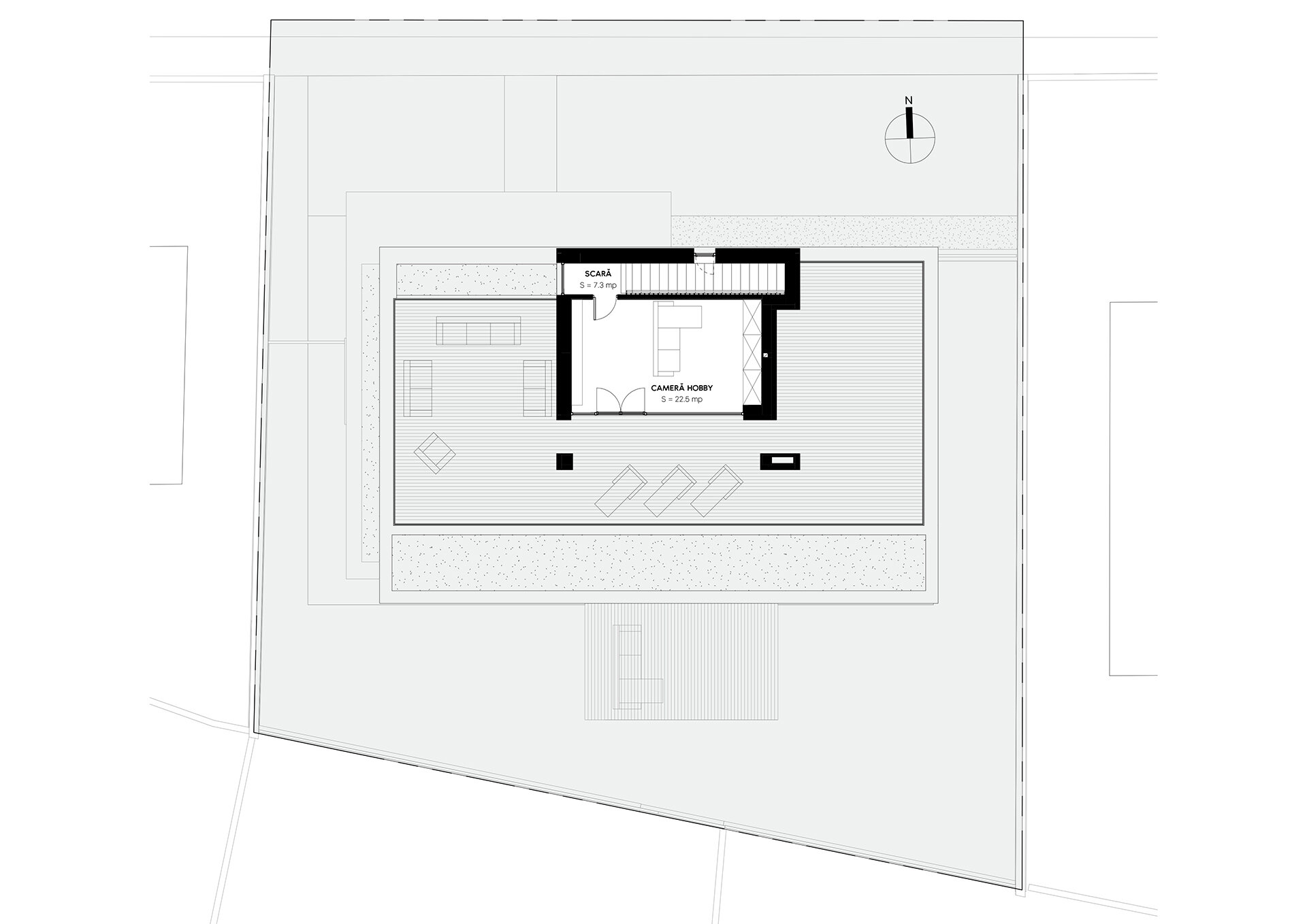
The proposed volume harmoniously combines two distinct facade types: the northern facade, facing the street, is introverted, featuring a stark, closed design with small windows, while the southern facade, facing the garden and forest, is extroverted, with oversized windows that foster a strong connection to the outdoors. In terms of façade materials, we aimed for a selective treatment of surfaces using neutral colors and contrasting accents in terms of materials—wood and metal. The finishing material for the ground floor facade is a gray plaster with wooden accents, creating a robust base that supports the proposed composition. The rest of the facade is finished with white plaster, providing a pleasant contrast for both the ground floor and the metal detailing (window frames, sills). Additionally, on the southern facade, the first-floor projects outwards, further distinguishing the two levels. These cantilevers limit direct sunlight exposure for the oversized windows facing the garden. The second floor, set back from the southern facade, is perceived only from the street, creating a terrace that maintains the southern orientation and offers views towards the forest. Elements such as "C" profiles on the facade mark the building's levels and facilitate transitions between different materials or colors within the same plane of the facade.
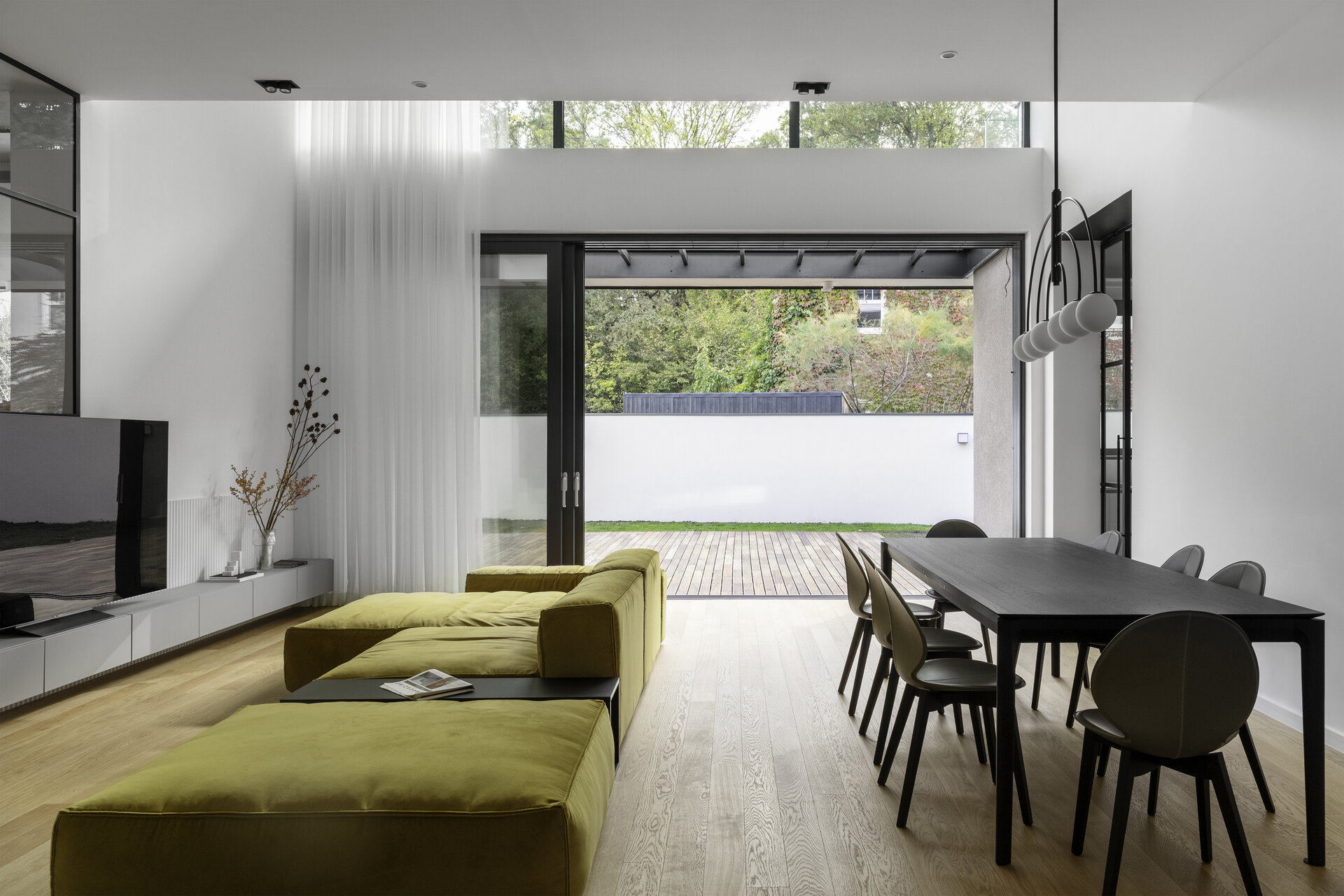
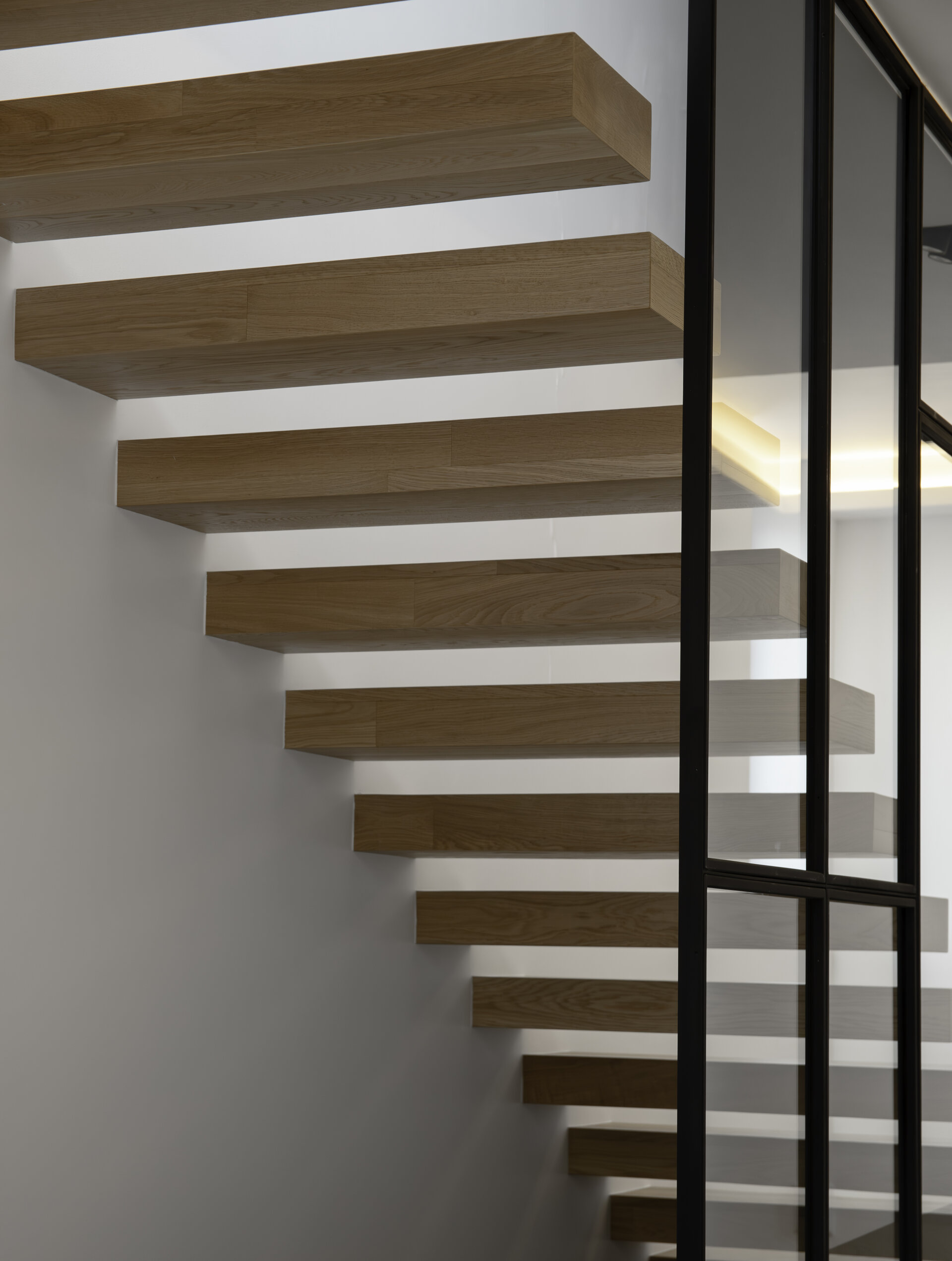
The interior volume is defined by level changes and double-height spaces, resulting in generous rooms of varying heights that blend harmoniously, achieving a balanced relationship between the two facade types.
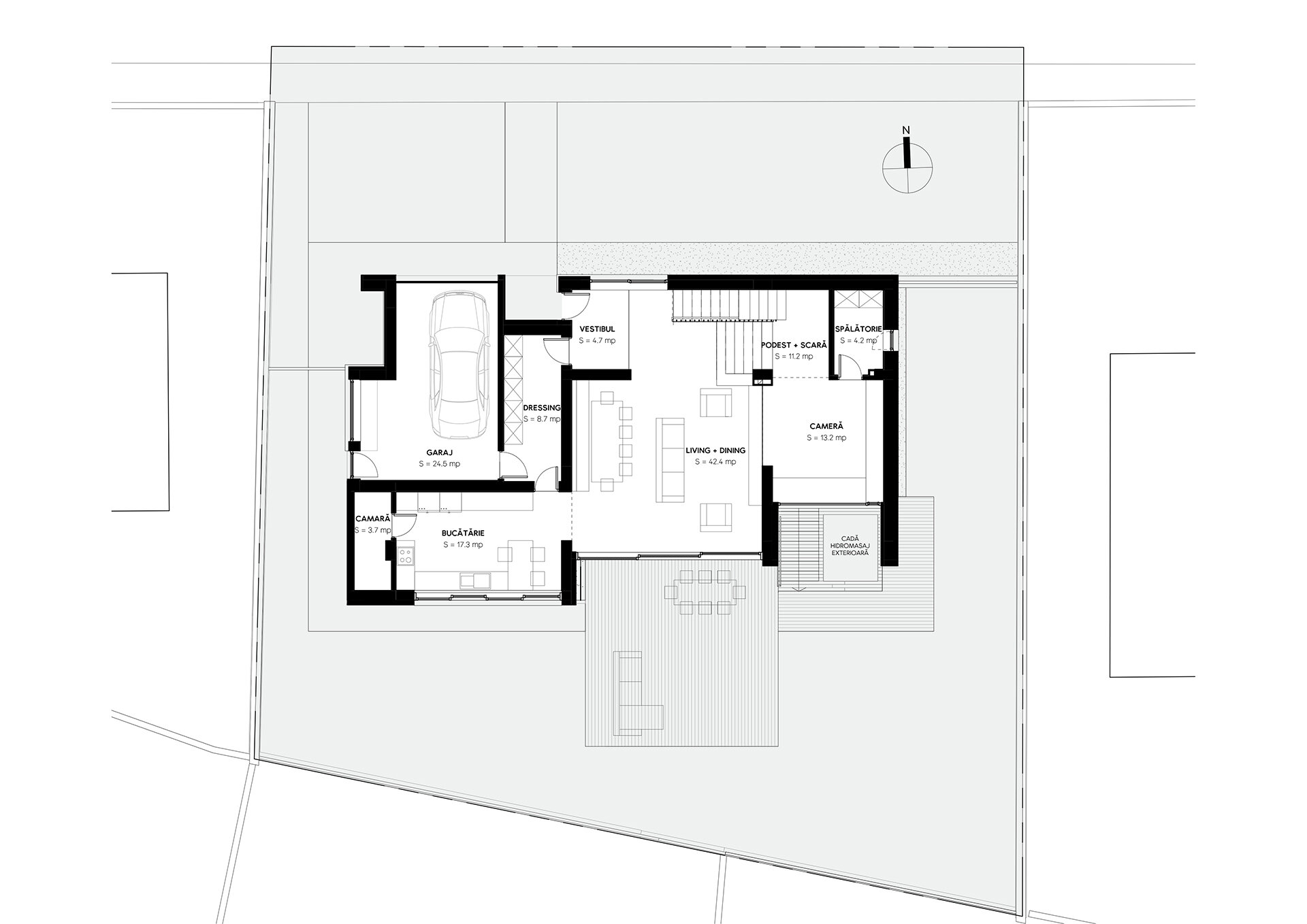
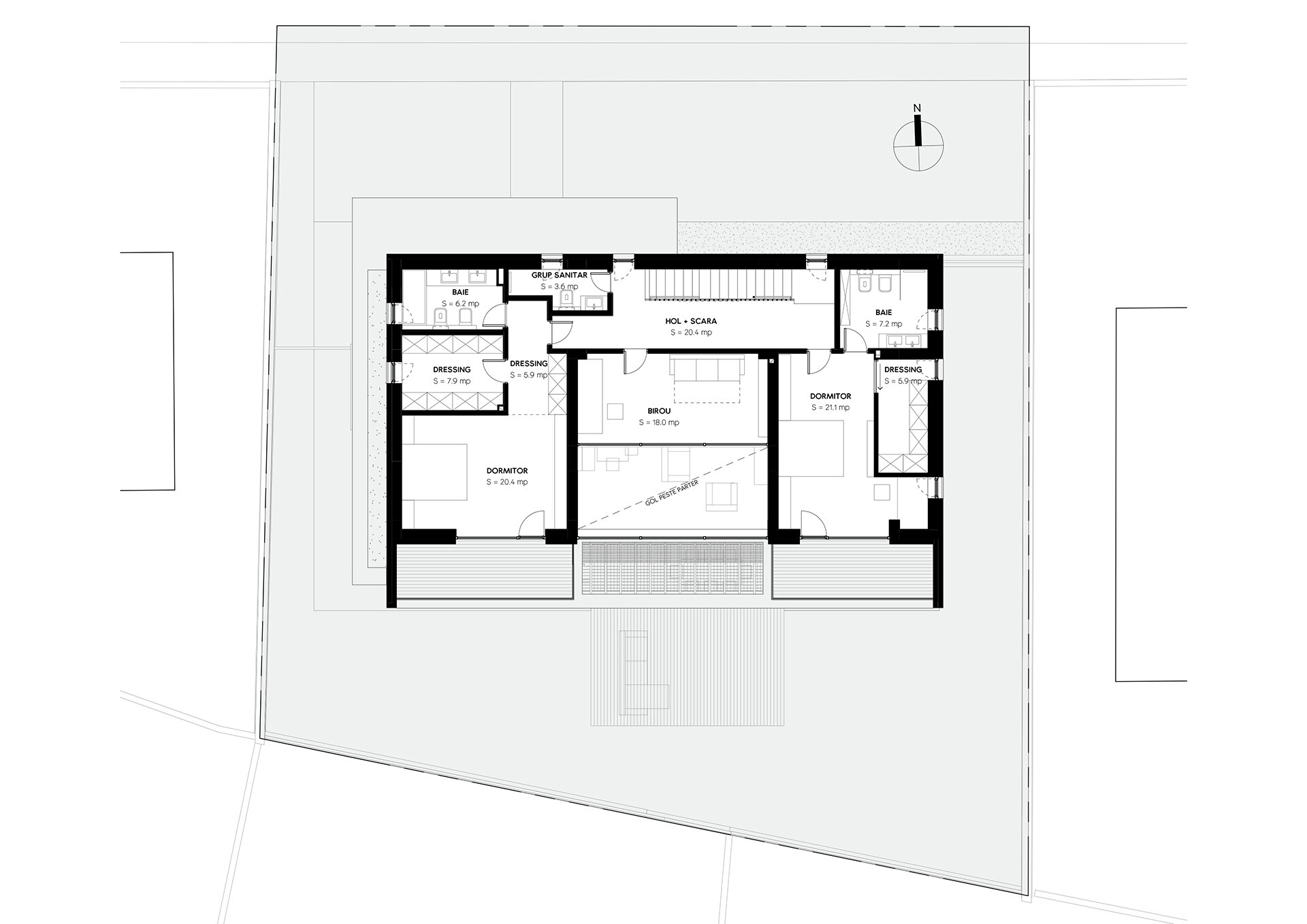
The ground floor is dedicated to the living area, with the kitchen located near the main entrance, while the living/dining area is positioned centrally and has a double-height space. The first-floor features two bedrooms, each with its own bathroom and dressing room, along with an office. All rooms face south, with the office also offering a view over the living area. The 2nd floor has one single room, referred to as a hobby room, which can also serve as a second office.
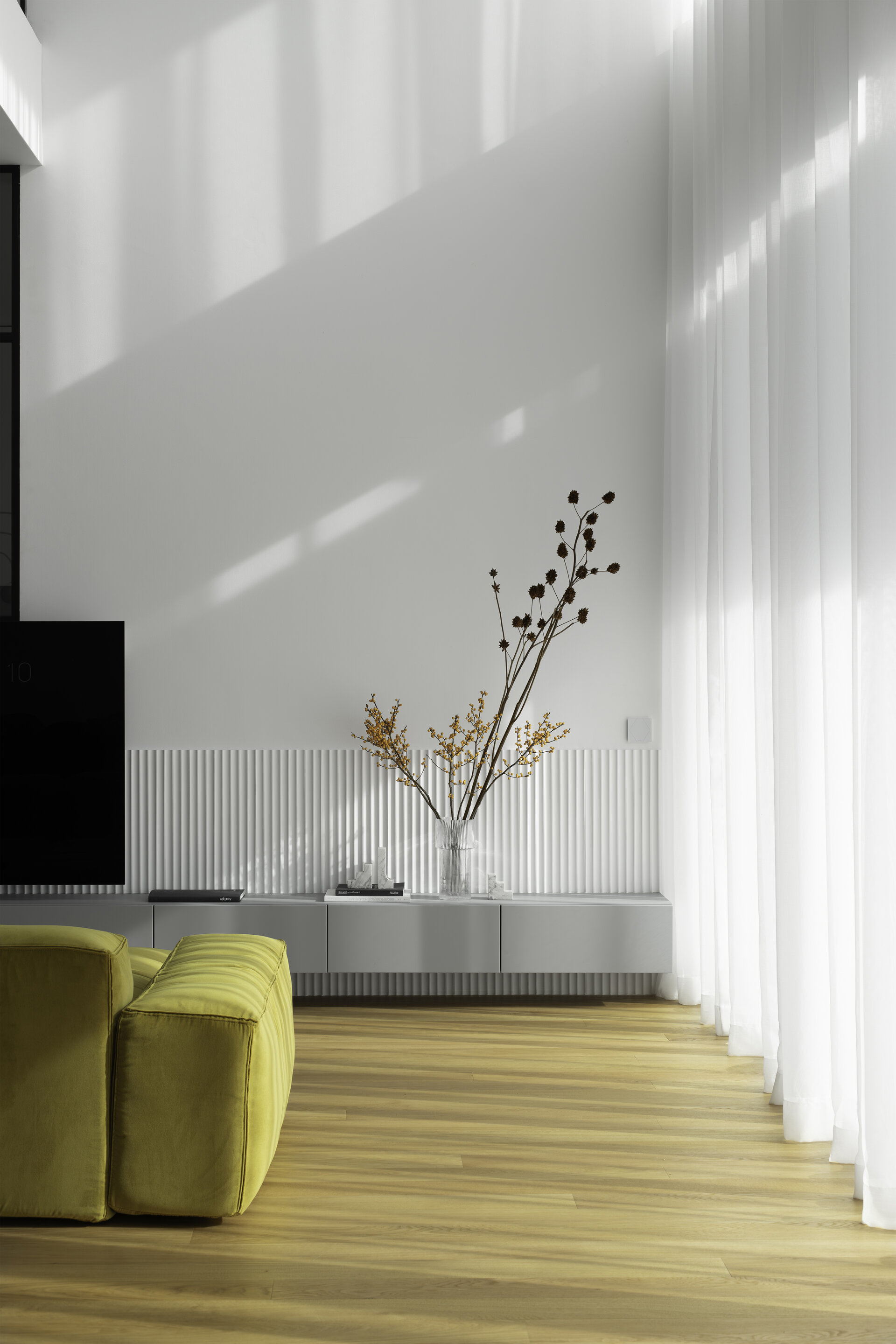
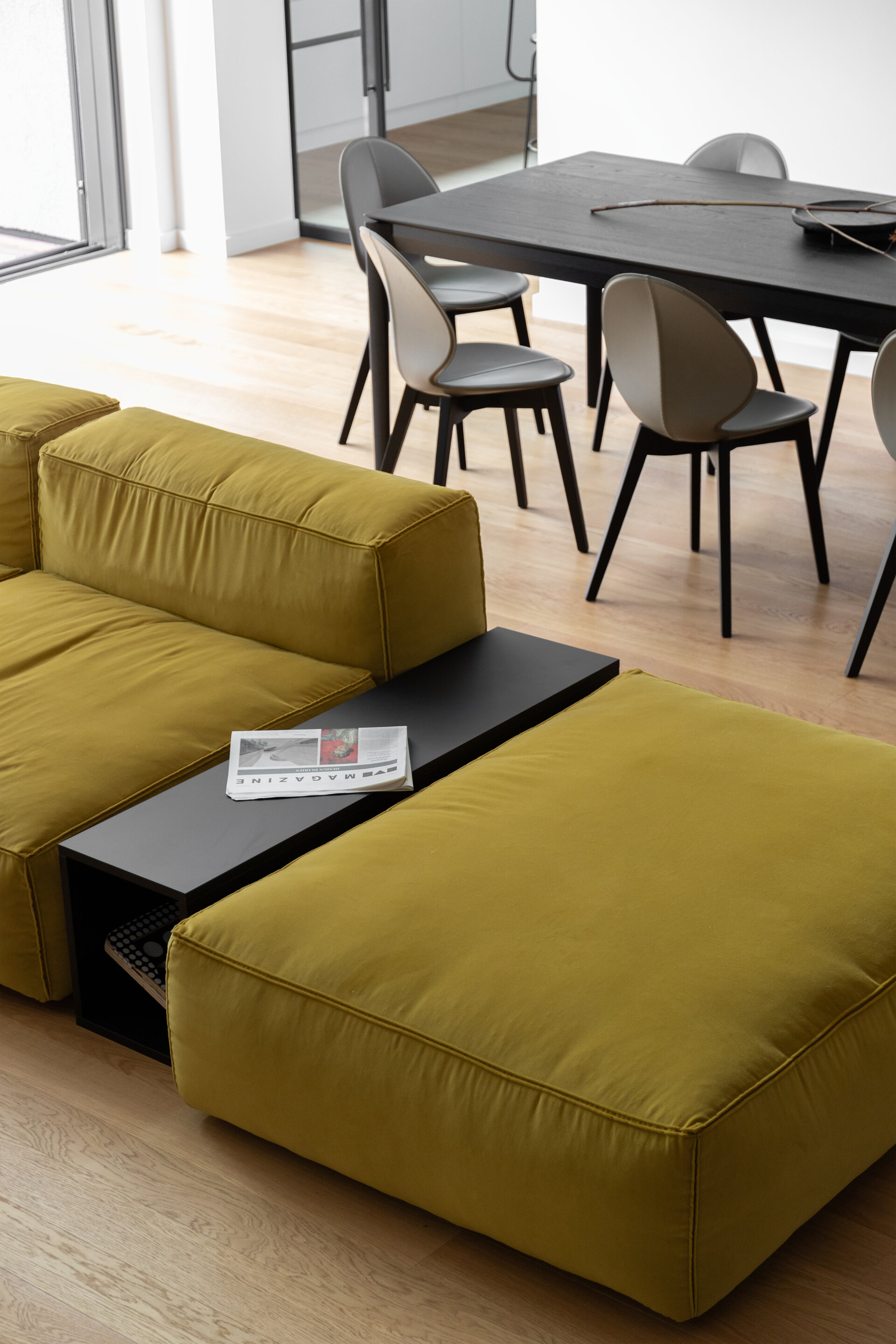
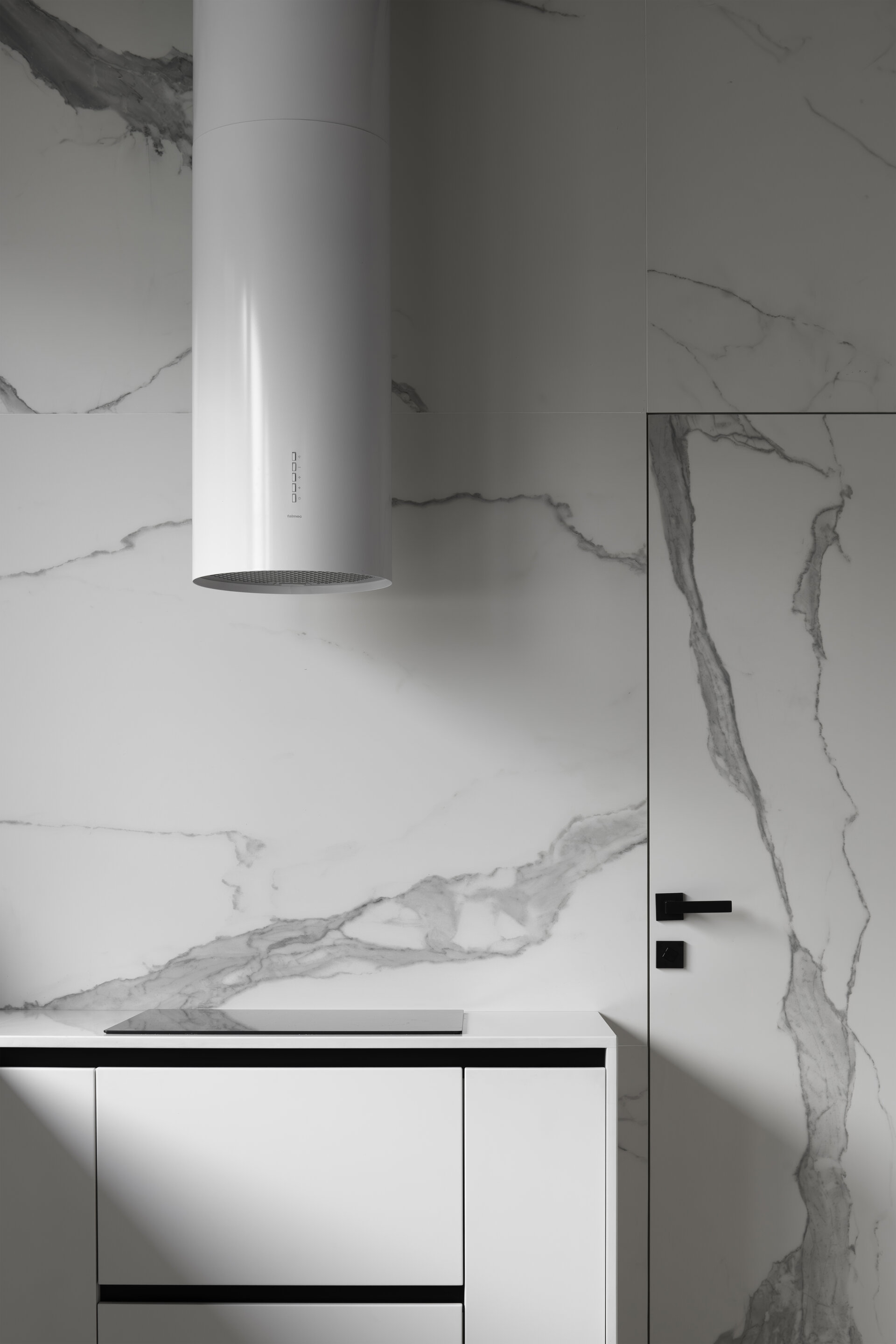
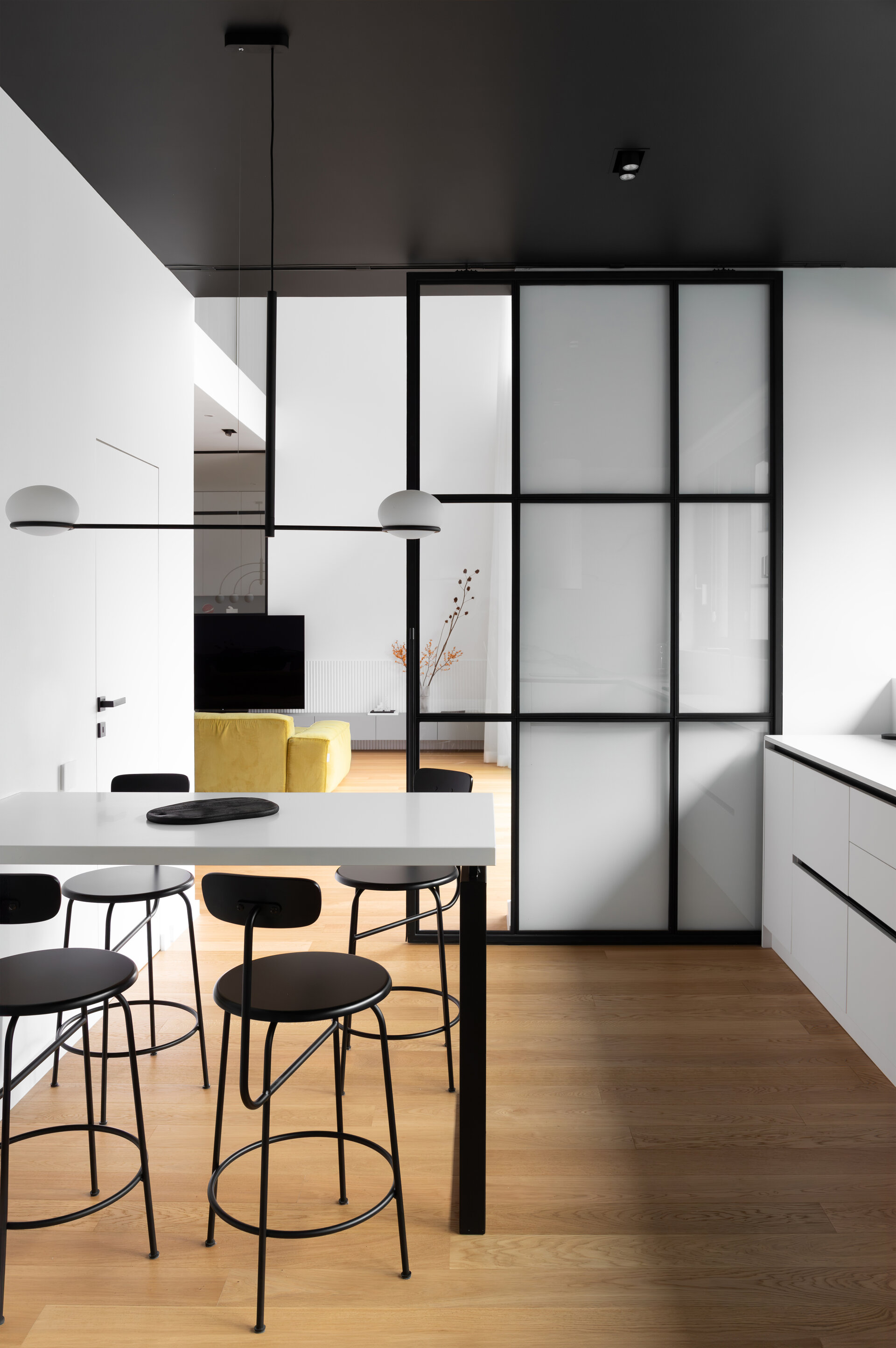
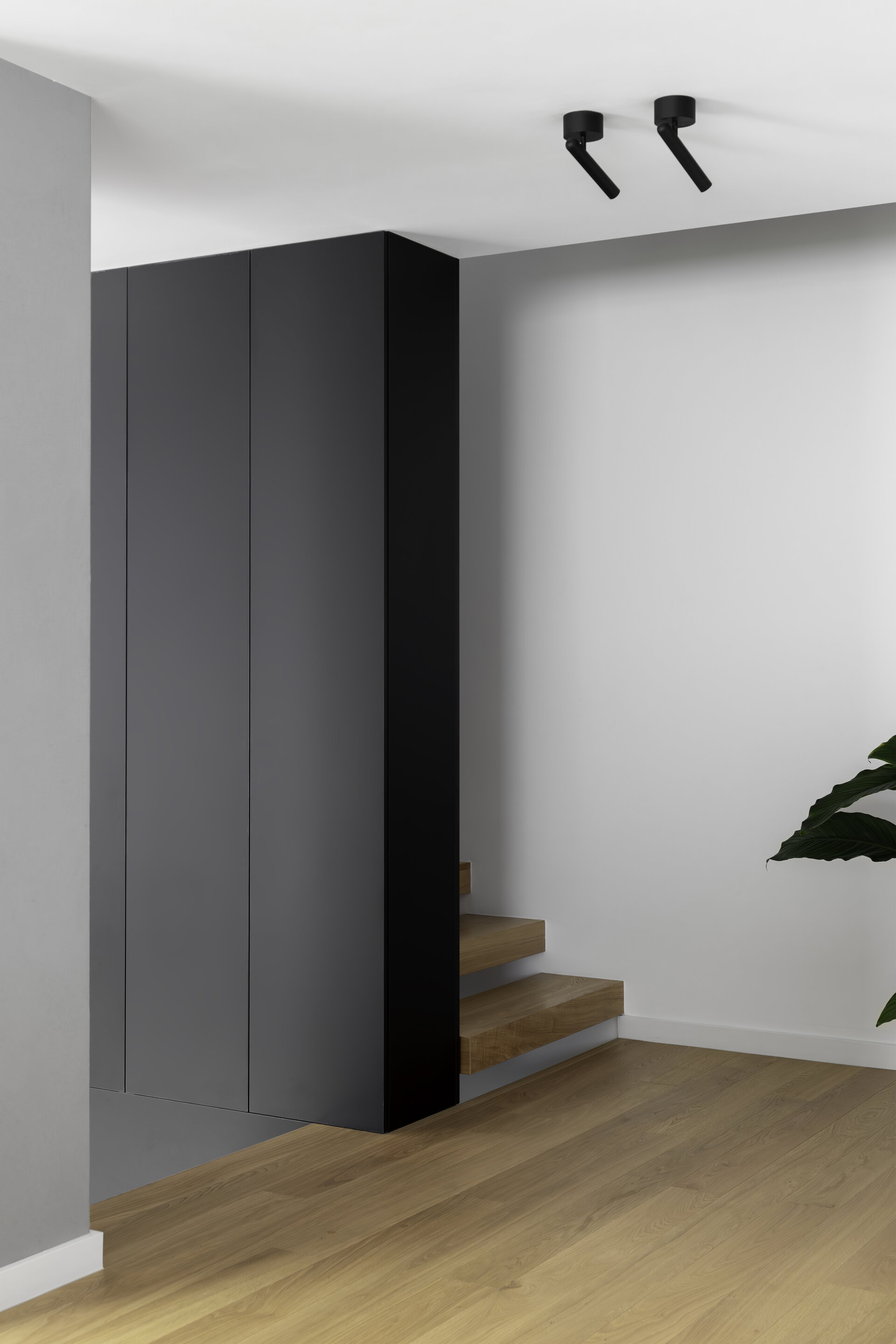
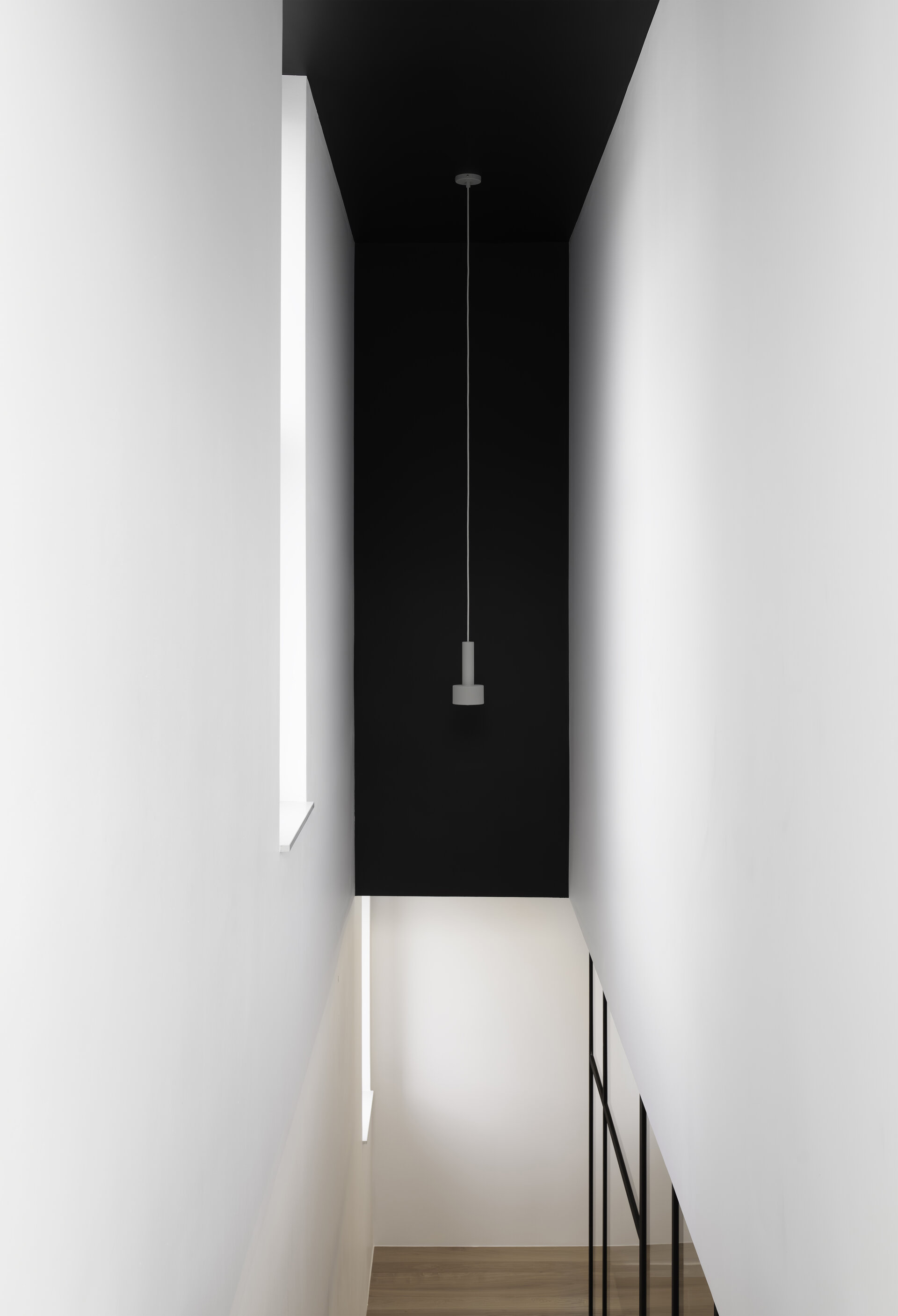
Finally, the interior design is characterized by simple, clean volumes, with a color palette dominated by white, black, and shades of gray, creating coherence between the exterior appearance and the interior atmosphere. The floor finished with layered parquet adds warmth to the overall design.
Individual House Architecture



