- Prize of the “Portfolio Architecture / Public Architecture” section
Rulmentul Brașov
Authors’ Comment
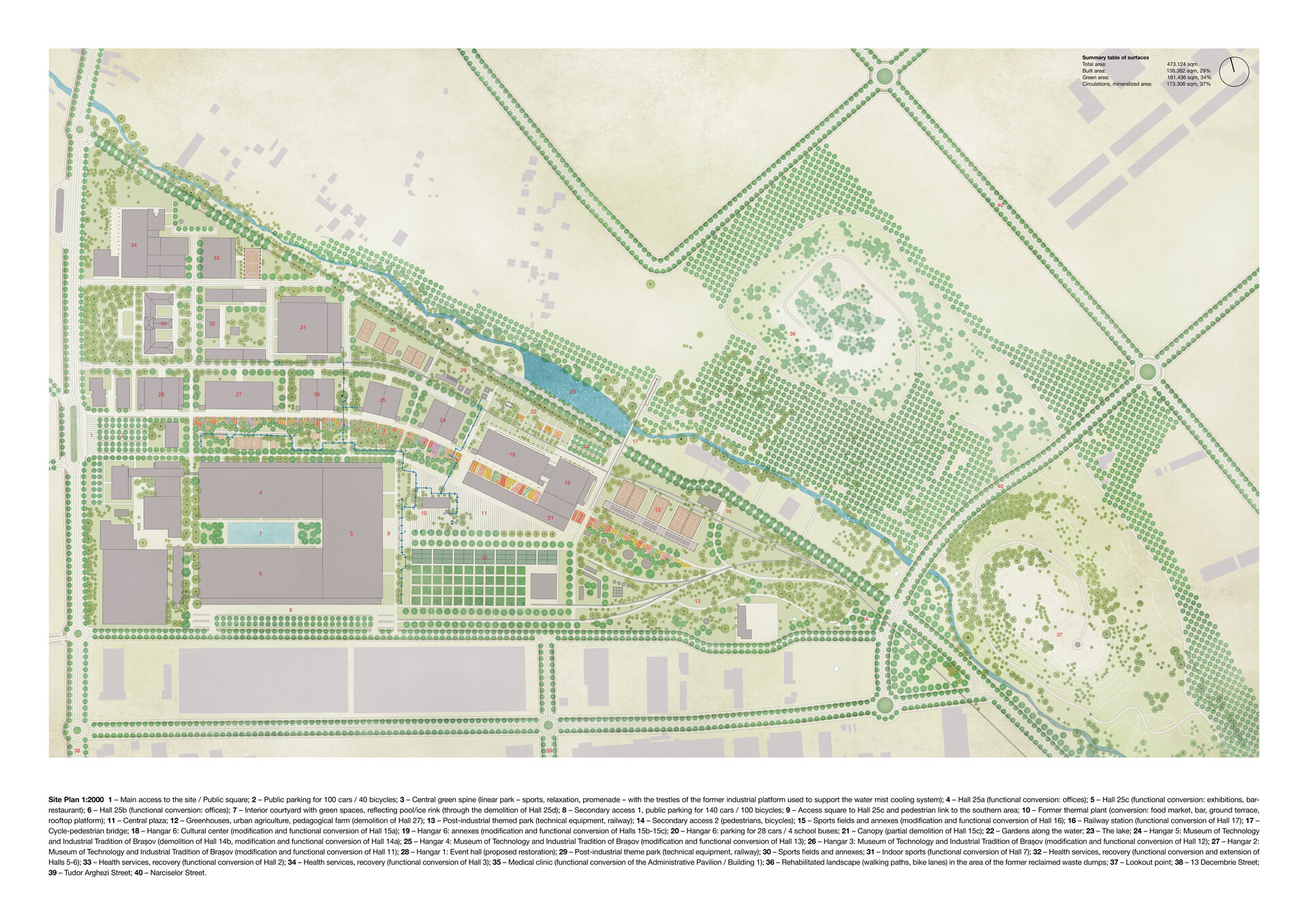
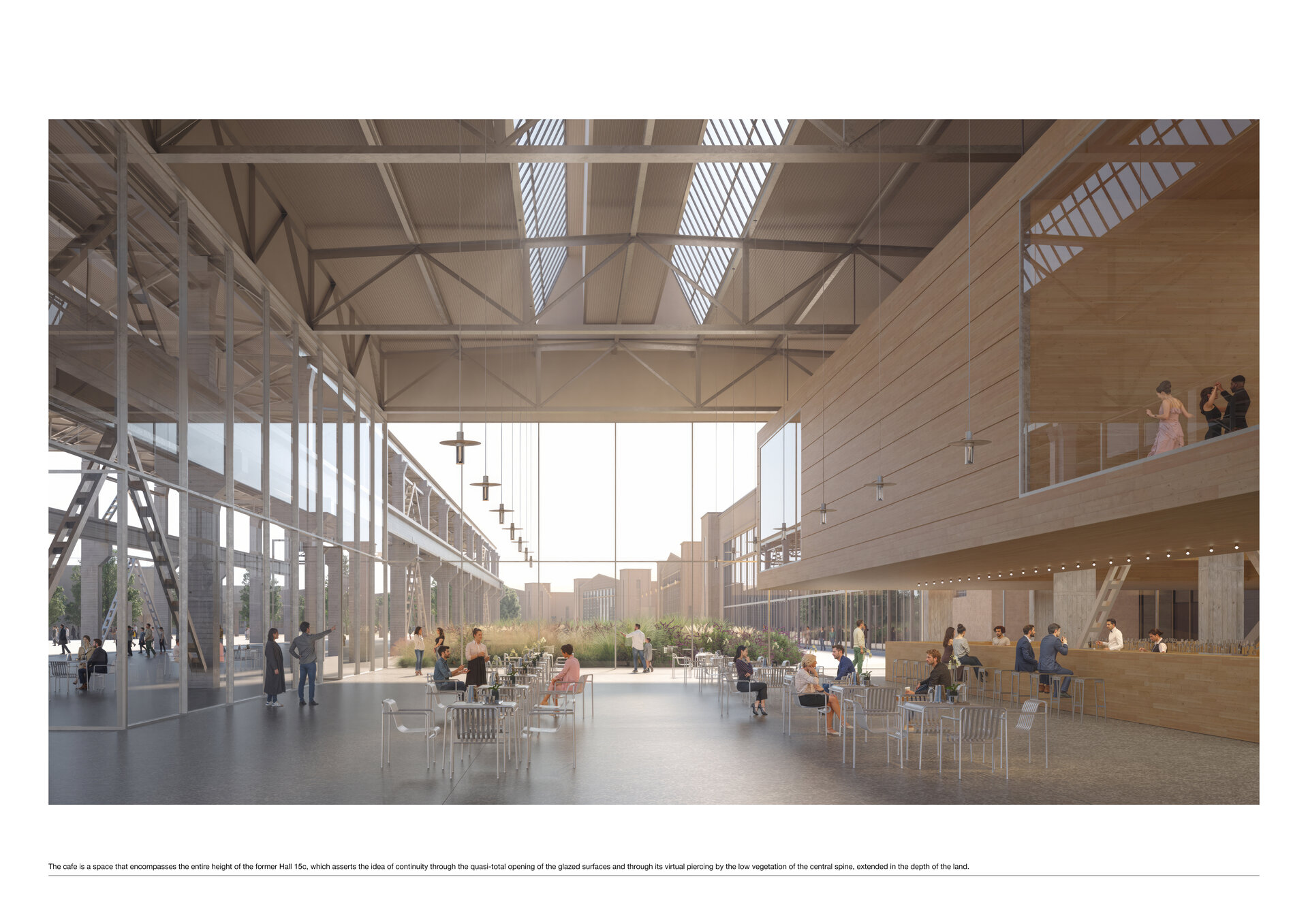
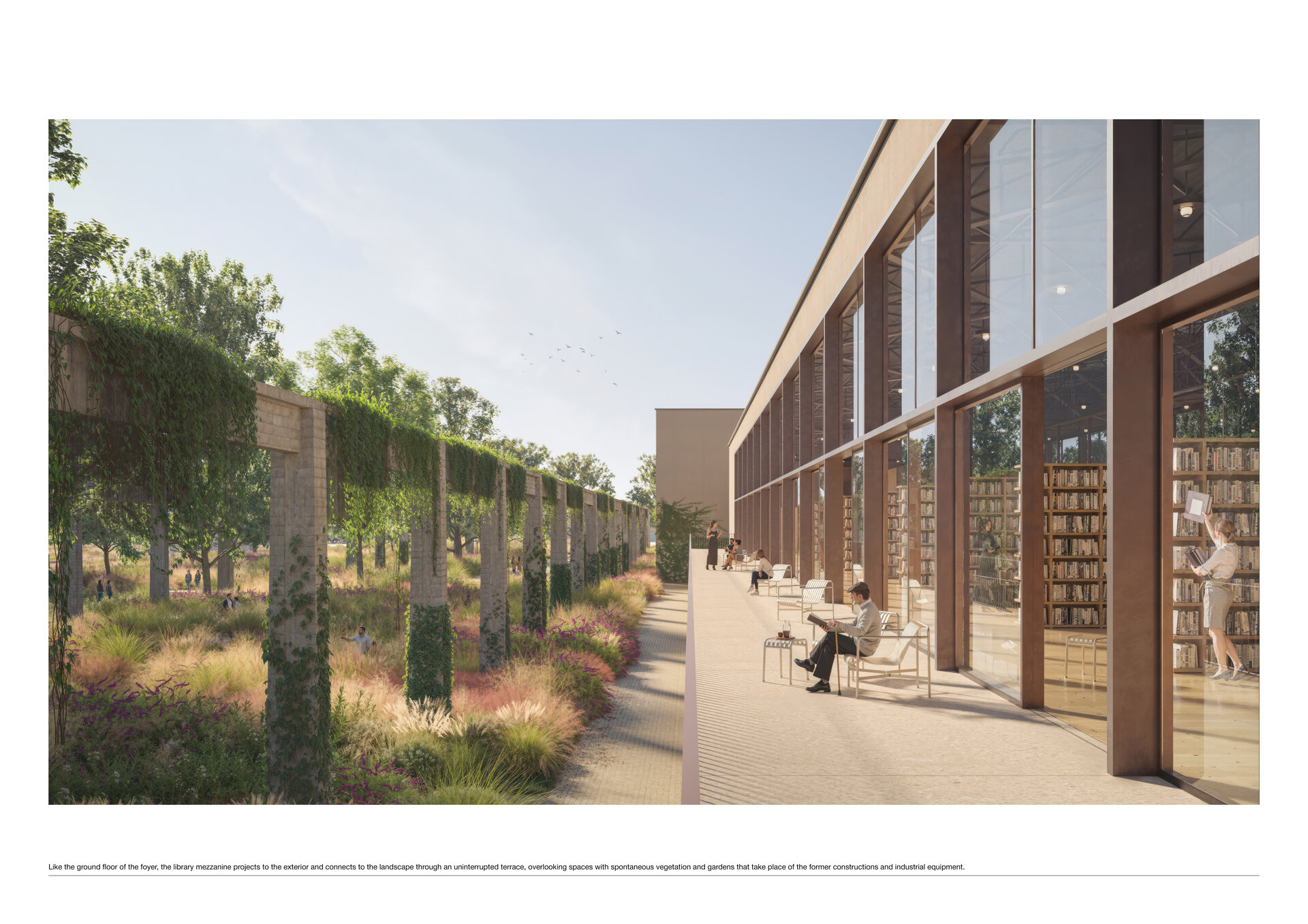
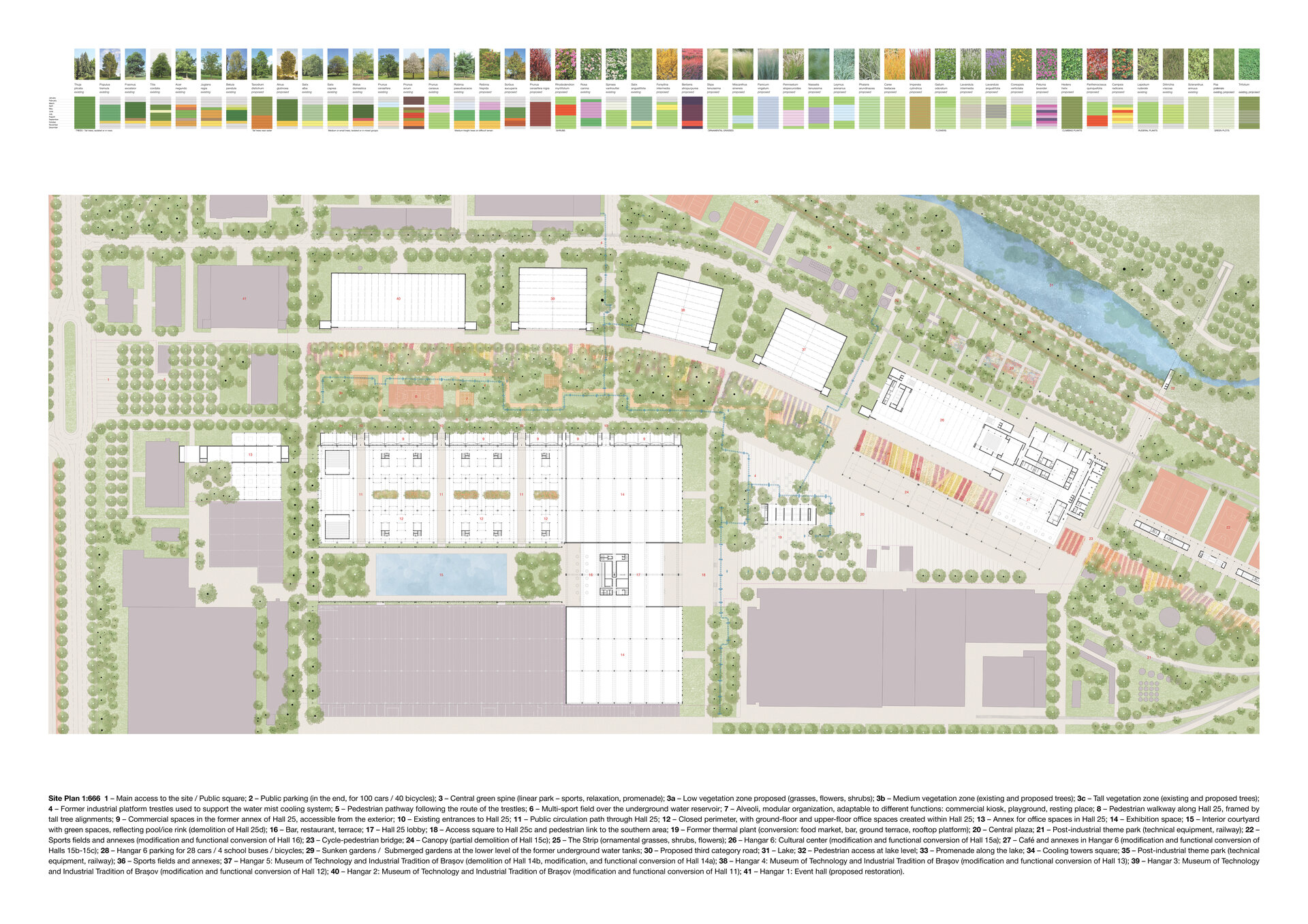
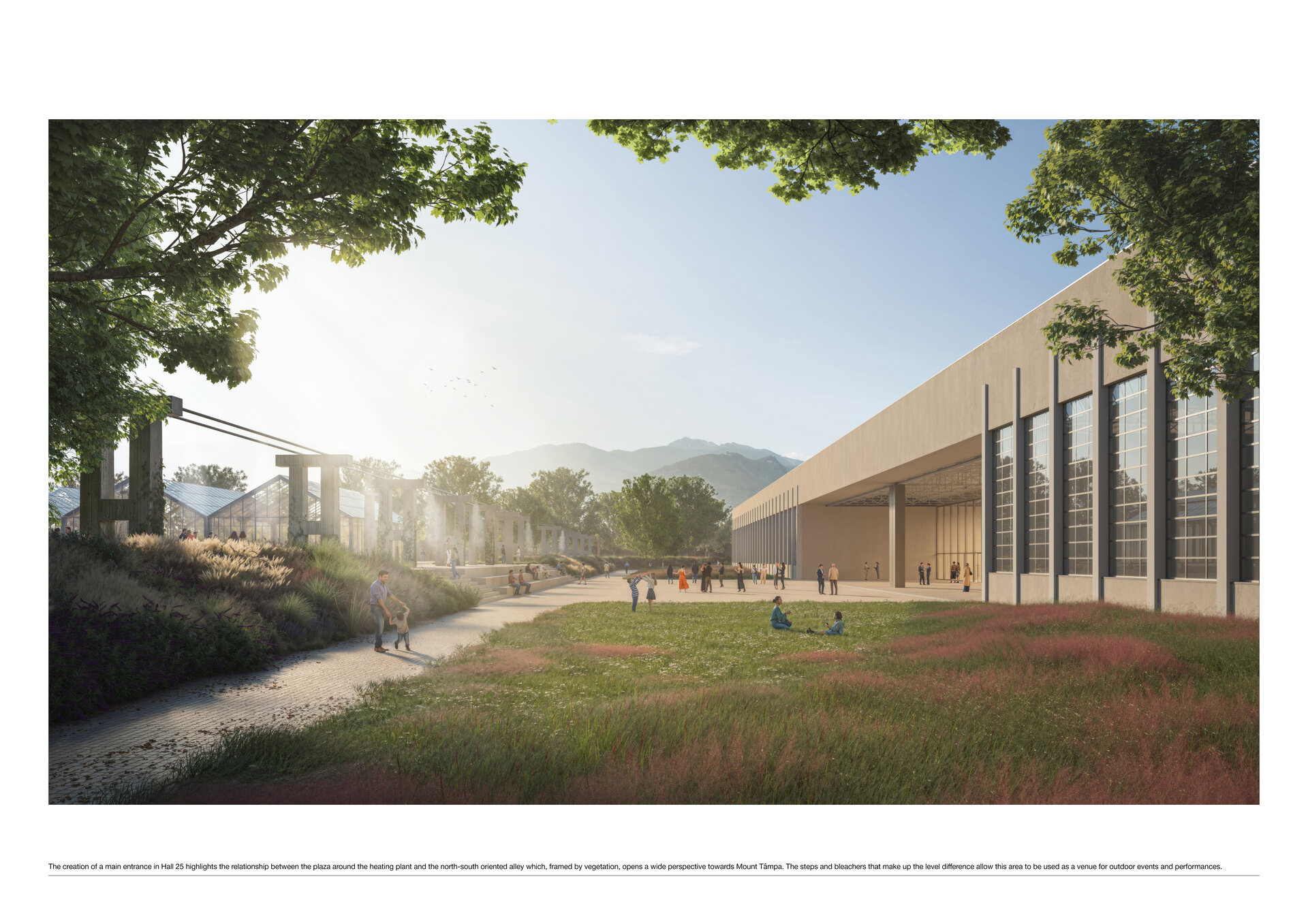
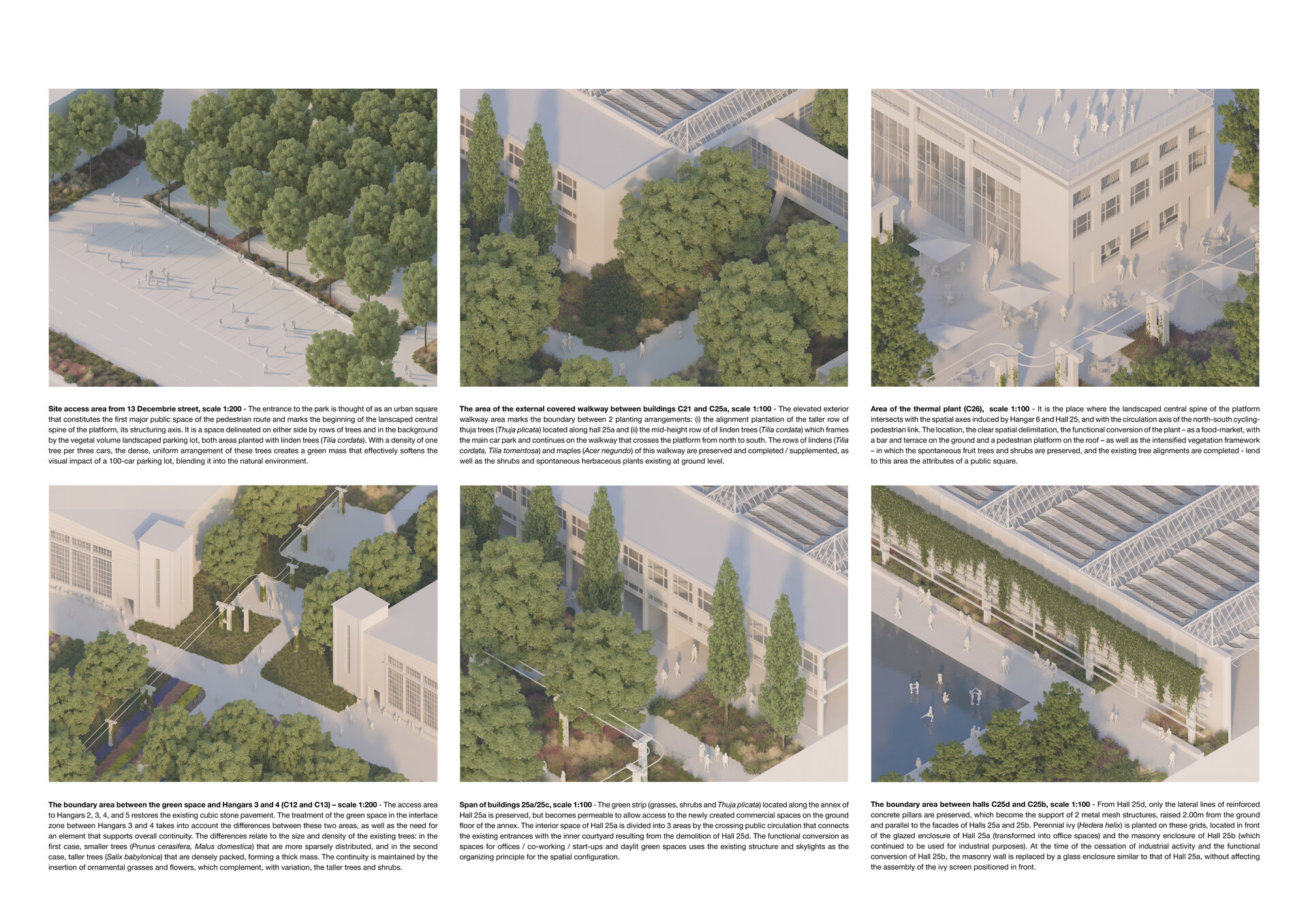
The regeneration project of the Rulmentul industrial platform reflects the boundary condition of this site, balancing between two major directions: the valorisation of the industrial heritage and the implicit urban quality of the ensemble, while simultaneously amplifying the vegetal component and the relationship with the natural landscape. The proposal’s principles, listed without hierarchy, can be summarized as follows:
1. Recycling and Sustainability
The project aims to limit demolitions by preserving buildings and equipment that can be reused or reinterpreted. Key elements include:
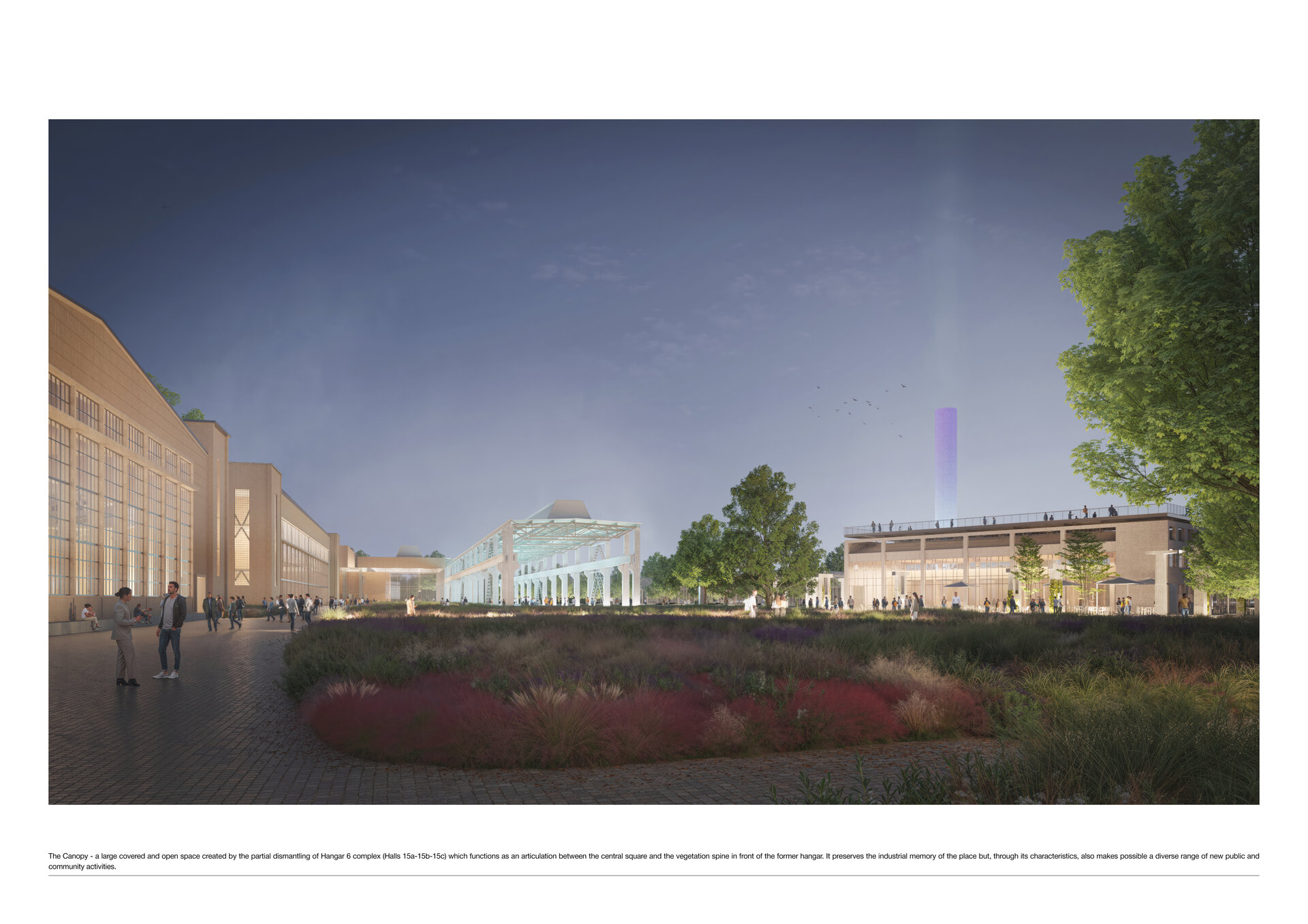
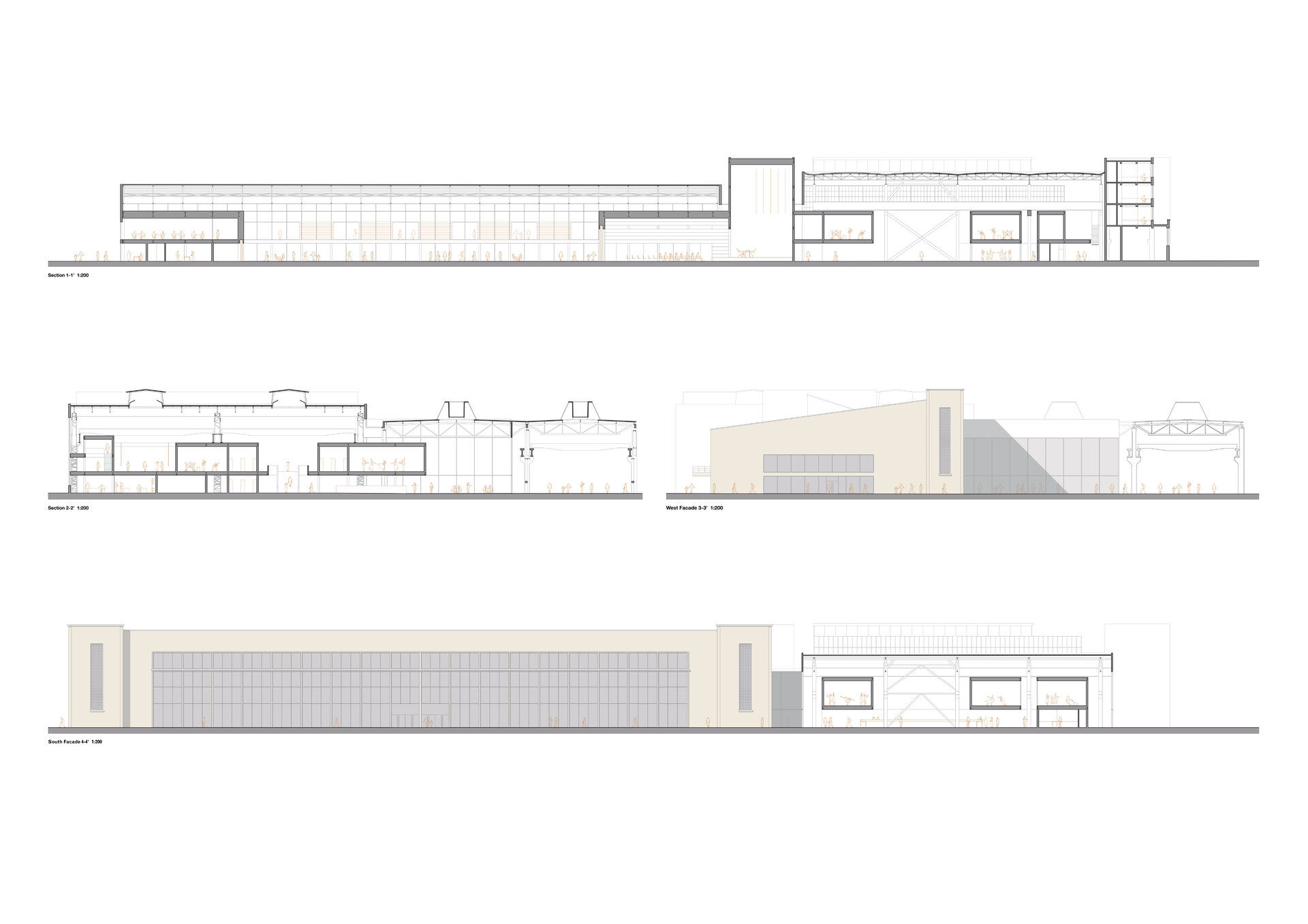
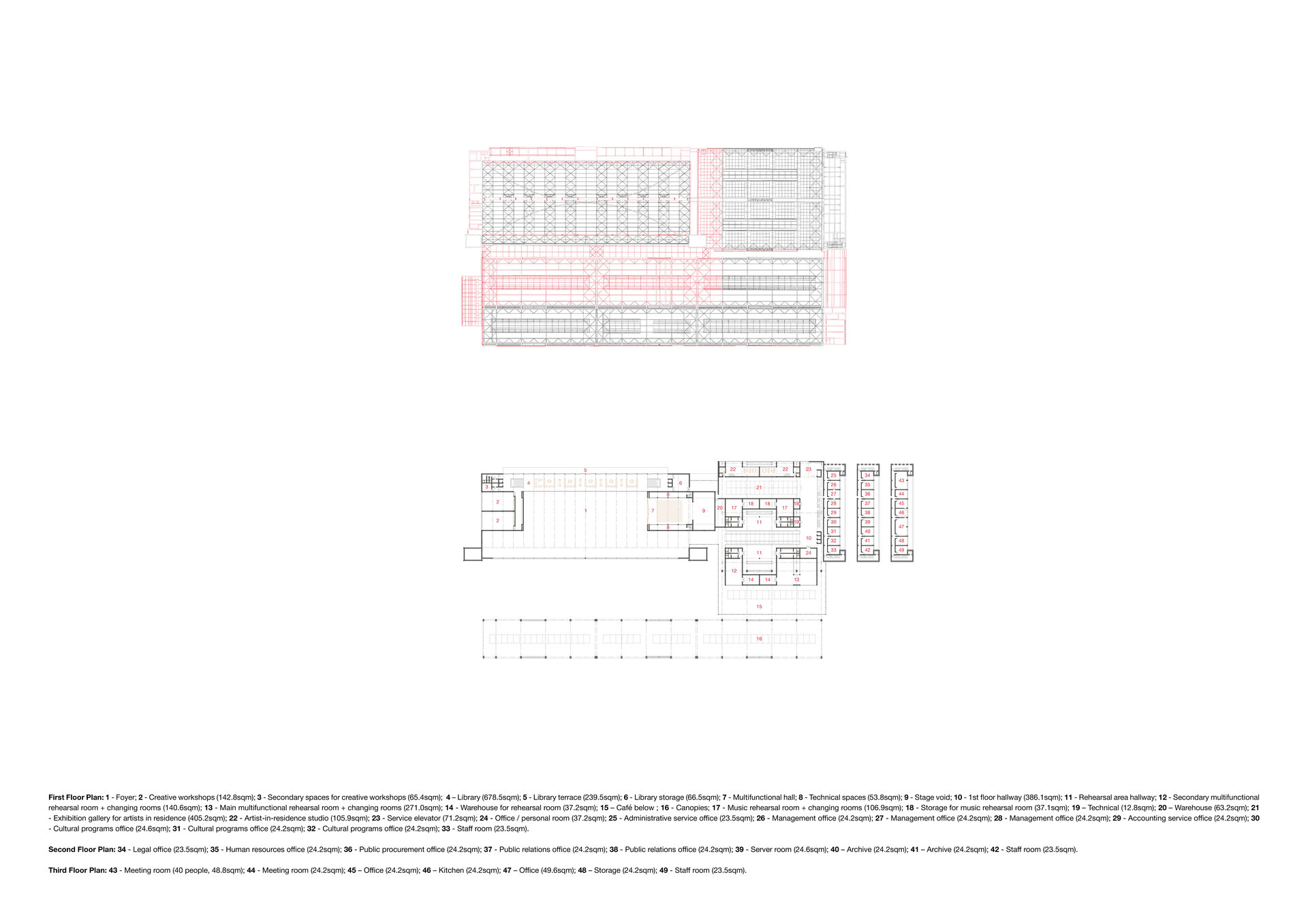
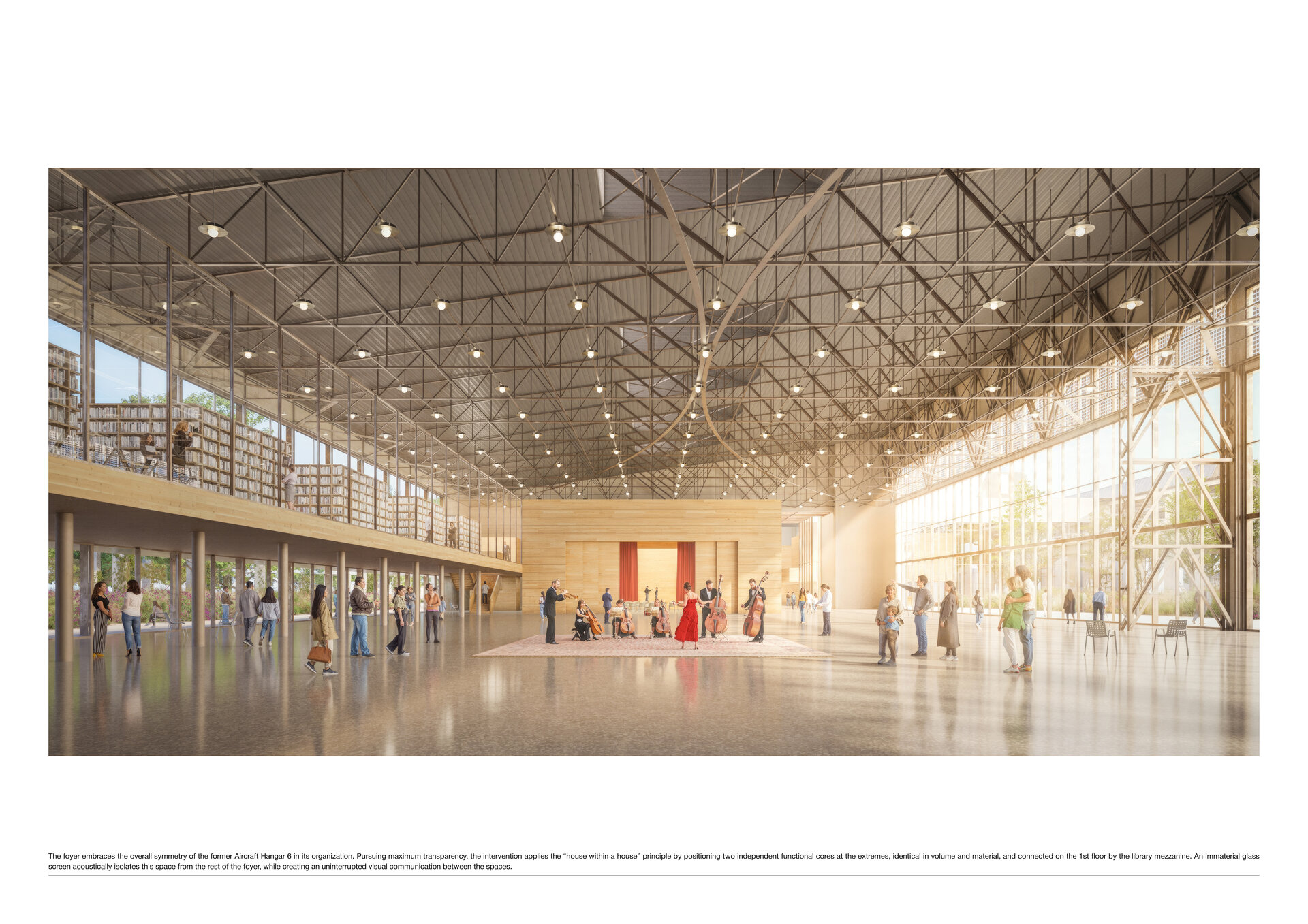
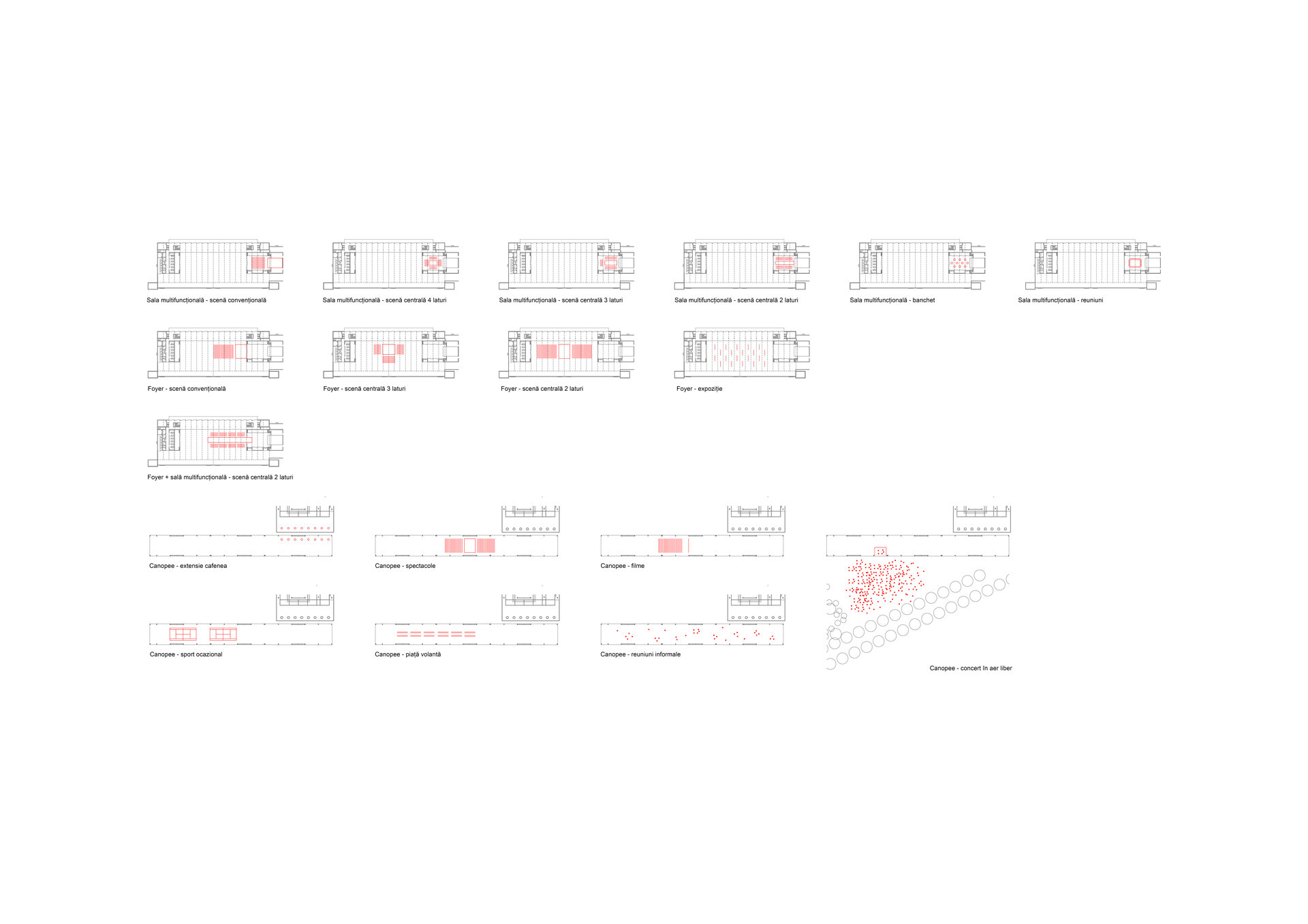
– partially demolishing sections of Hangar 6 (C15) to restore the original form of the aviation hangar and create a large, open, covered space (the canopy).
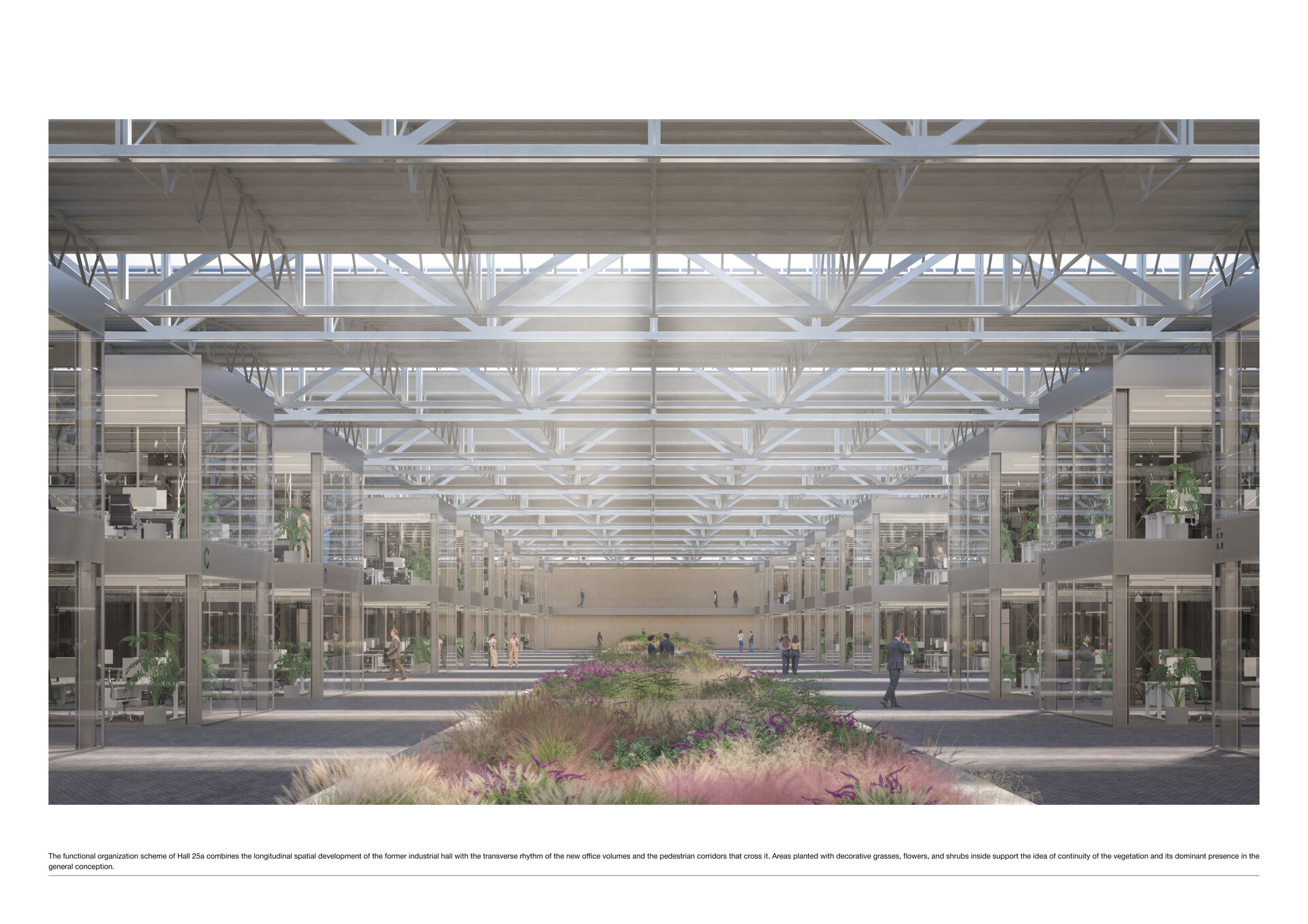
– partially demolishing Halls 16a-b and 25a-b-c-d for functional conversion.
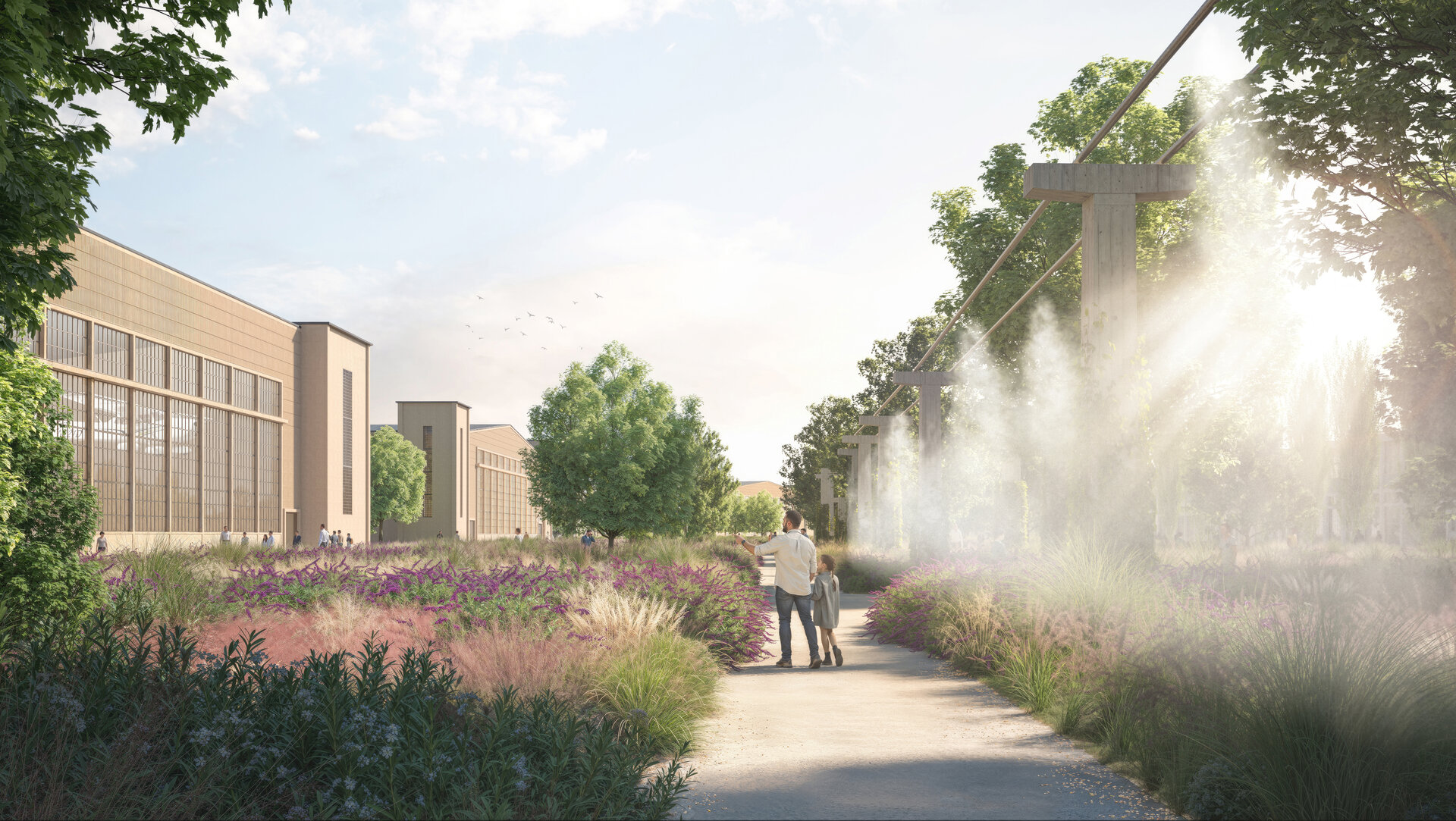
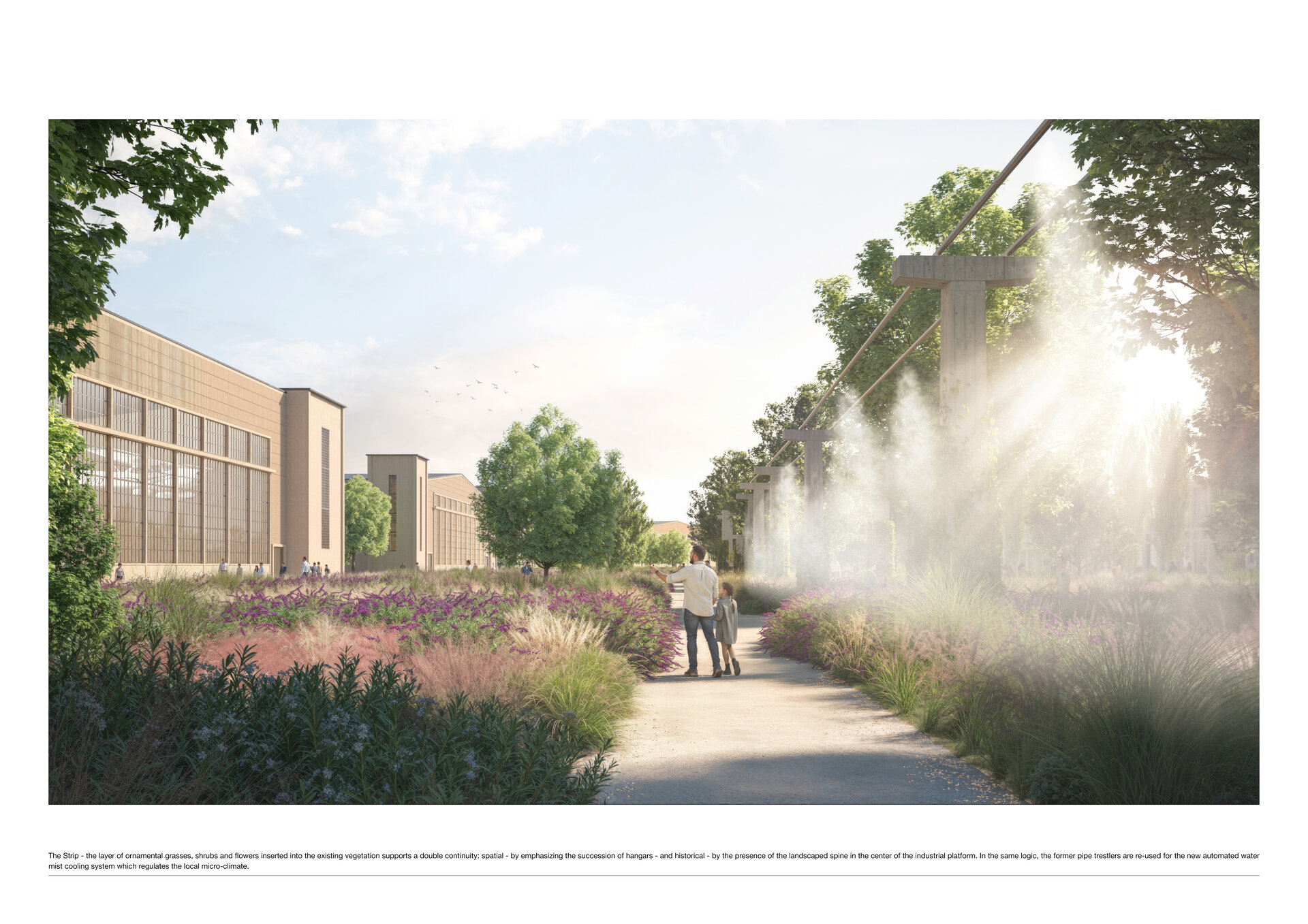
– transforming the concrete trestles into a support for the water mist cooling system which, depending on the day’s temperature, creates a microclimate in the planted and pedestrian areas.
– reusing existing roads, railway tracks, stairs, and technical equipment (water tanks, fuel tanks, cooling towers), repurposing them as pedestrian paths, public spaces, and new iconographic references.
2. Functional Mix
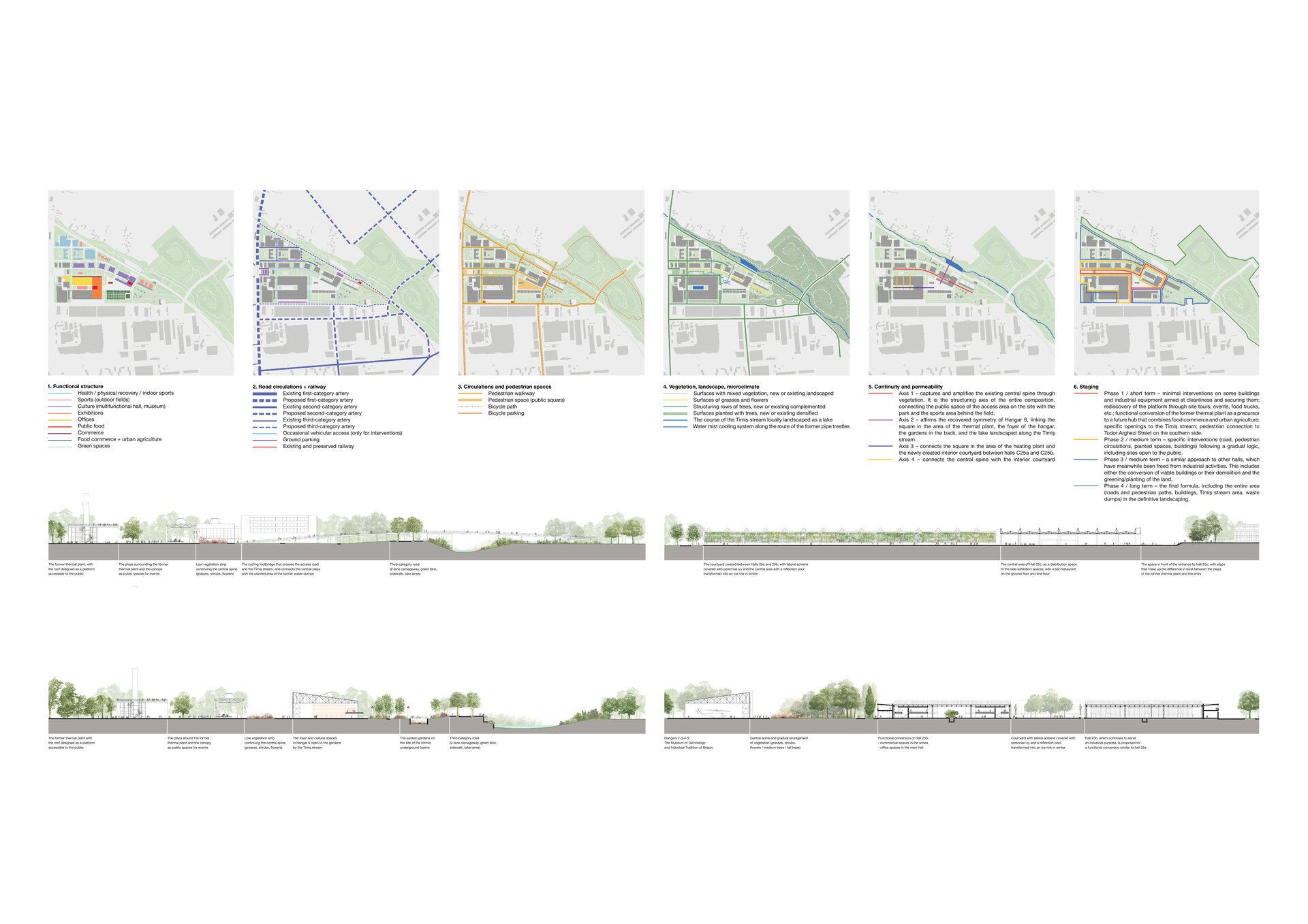
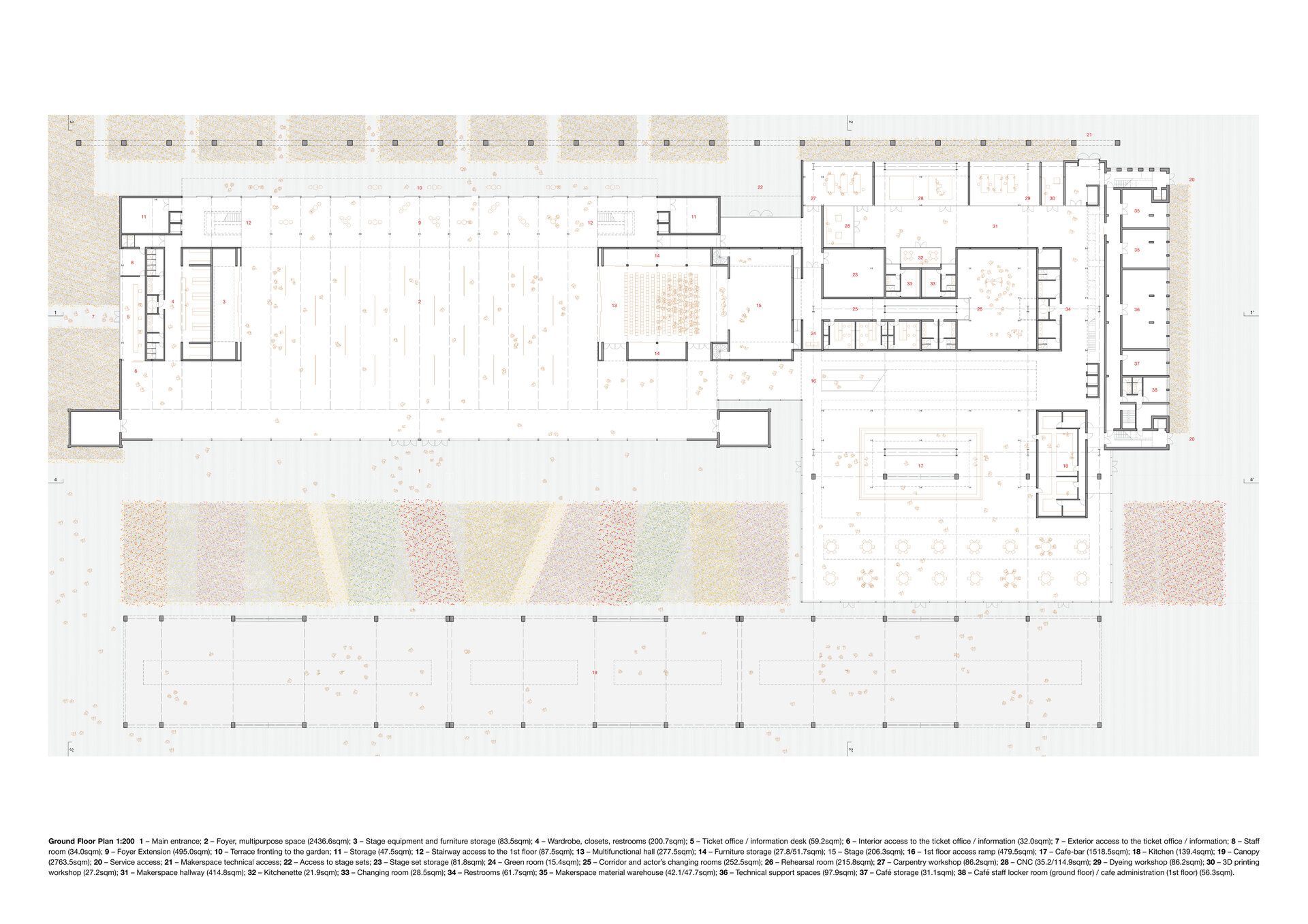
The central spine of the platform transforms into a linear park with a pedestrian pathway that follows the route of the former concrete trestles, repurposed as a water mist cooling system. Along this path, there are rest areas, playgrounds, small pavilions, and other amenities. On both sides of this structuring axis, the proposed activities, both inside and outside the former industrial halls, support the platform’s attractiveness and economic viability through diversity and complementarity. These activities include community spaces, offices, retail, public dining, culture, sports, and leisure.The south-eastern extremity of the site and the waste dumps area emphasize their vegetal character, transforming into a park dedicated to industrial relics and ecological themes.
3. Morphological Clarity
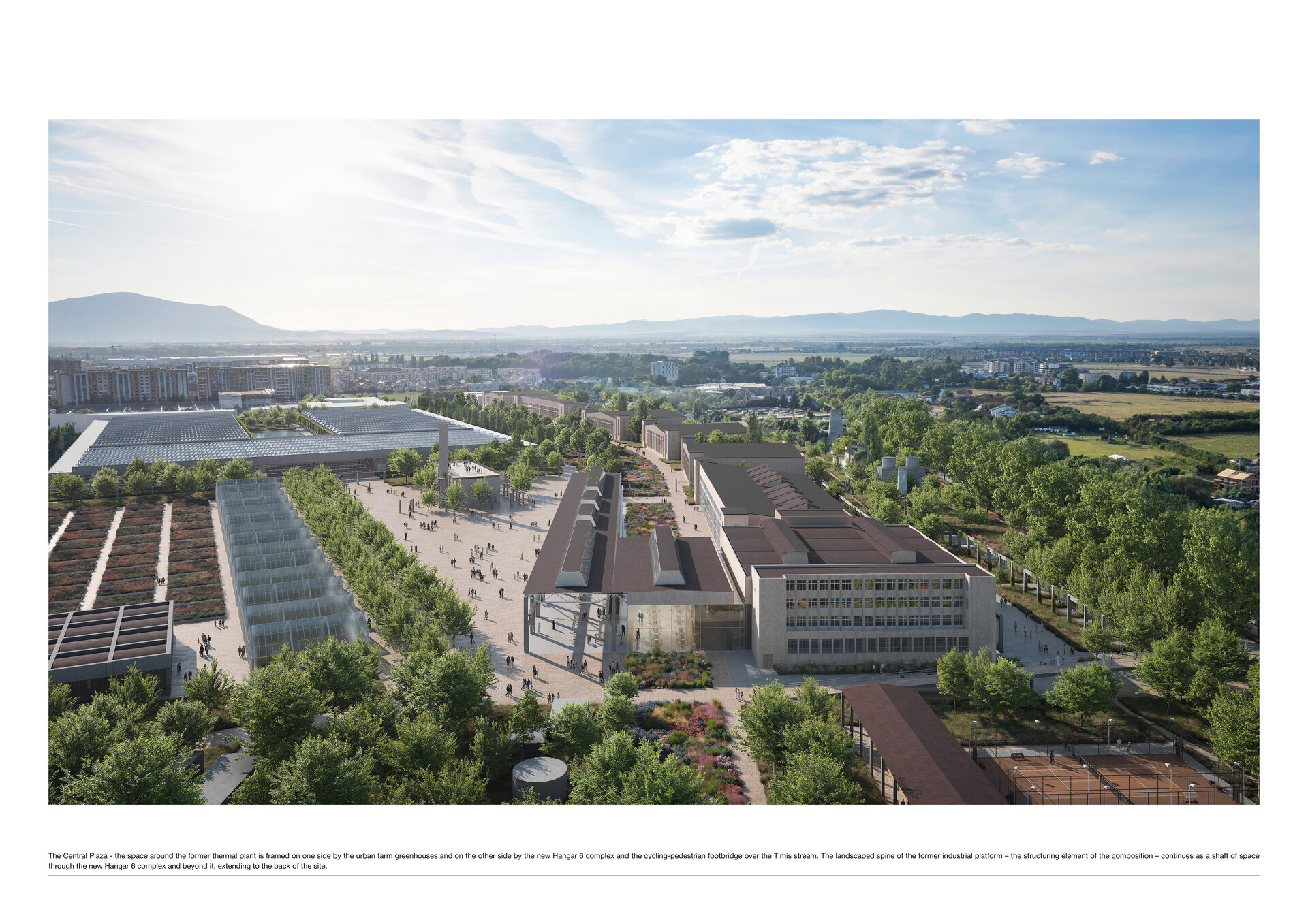
A coherent structure of paths-nodes-landmarks / circulations-spaces-buildings with functional and formal identity: the entrance Plaza, the Strip, the Airsheds, the central Plaza, the Rooftop platform, the Canopy, the Lake, the Footbridge, the Cooling Towers square.
4. Soft Mobility
In line with integrating neighbouring areas while preserving current boundaries and enhancing the green character, major motorized traffic through the Rulmentul platform is not considered. Consequently:
– car access is limited to the perimeter, with restricted local entry points.
– the extension of Tudor Arghezi Street, proposed by the Traffic Study, is replaced by a bypass road connecting to the Sânpetru area via the route of Narciselor Street.
– the connection to the northern area – Timiș Creek and the former waste dumps
– is pedestrian and bicycle-only, via a footbridge that starts from the plaza around the former thermal plant and crosses the Timiș River, visually and physically integrated into the ensemble’s design.
- the connection to the southern area – Coresi residential complex – also starts from the plaza around the former thermal plant, following a pedestrian and cycling route connected to Tudor Arghezi Street. The railway remains an additional option, with the existing tracks being preserved and integrated into a new post-industrial scenario.
5. Vegetal Dominance
The interventions on green areas follow two complementary directions. The first is ecological:
– removing invasive plants that have developed chaotically over time,
overshadowing valuable vegetation.
– planting trees resistant to pollution and other harsh factors, characterized by tolerance to high temperatures, low water regimes and limited soil volume.
– introducing trees beneficial to the local biodiversity during blooming and fruiting periods, particularly in winter when food sources are scarce, such as rowan (Sorbus aucuparia).
– planting tree alignments that will eventually replace the mature trees, many of which are either at maturity or in biological decline.
– introducing pioneer plants such as white acacia (Robinia pseudoacacia) and pink acacia (Robinia hispida), which can thrive on degraded or low-nutrient soils, alongside small-scale soil improvement operations.
– planting a mix of low-maintenance herbaceous species (Trifolium, Poa pratensis) in shared green spaces to replace turf that doesn’t require mowing maintenance.
The second direction is aesthetic and aims to:
– support the spatial structure of the complex through sectional organization and maintaining the continuity of the central lanscaped spine:
(i) preserving the current distribution of vegetation, which varies from taller trees along Hall 25 to medium-height trees and shrubs that visually clear the hangars;
(ii) densifying shrubs and medium-height trees in the central area;
(iii) planting ornamental grasses, shrubs, and flowers near the hangars that, as they progress into the site, form a continuous strip highlighting the compositional flow.
– differentiating the vegetation through a colour palette and flowering schemes that rotate throughout the year;
– enhancing the main axes and circulatory paths of the complex through tree alignments, either complementing existing ones or creating new ones;
– retaining ruderal species in distinctly industrial areas to emphasize their specific atmosphere;
– extensive planting in the areas around the former waste dumps.
6. Landscape Valuing
The interaction of industrial and natural landscapes through:
– conserving major structural elements (central lanscaped spine, tree alignments)
and creating new spaces with specific characteristics and atmospheres (alleys, local niches, sunken gardens, etc.), which can be independent or associated with former industrial equipment (tanks, trestles, cooling towers).
– crossing the Timiș stream via a cycle-pedestrian bridge to establish a direct link with the reclaimed waste dumps and the planted area around them, offering an overarching view of the landscape.
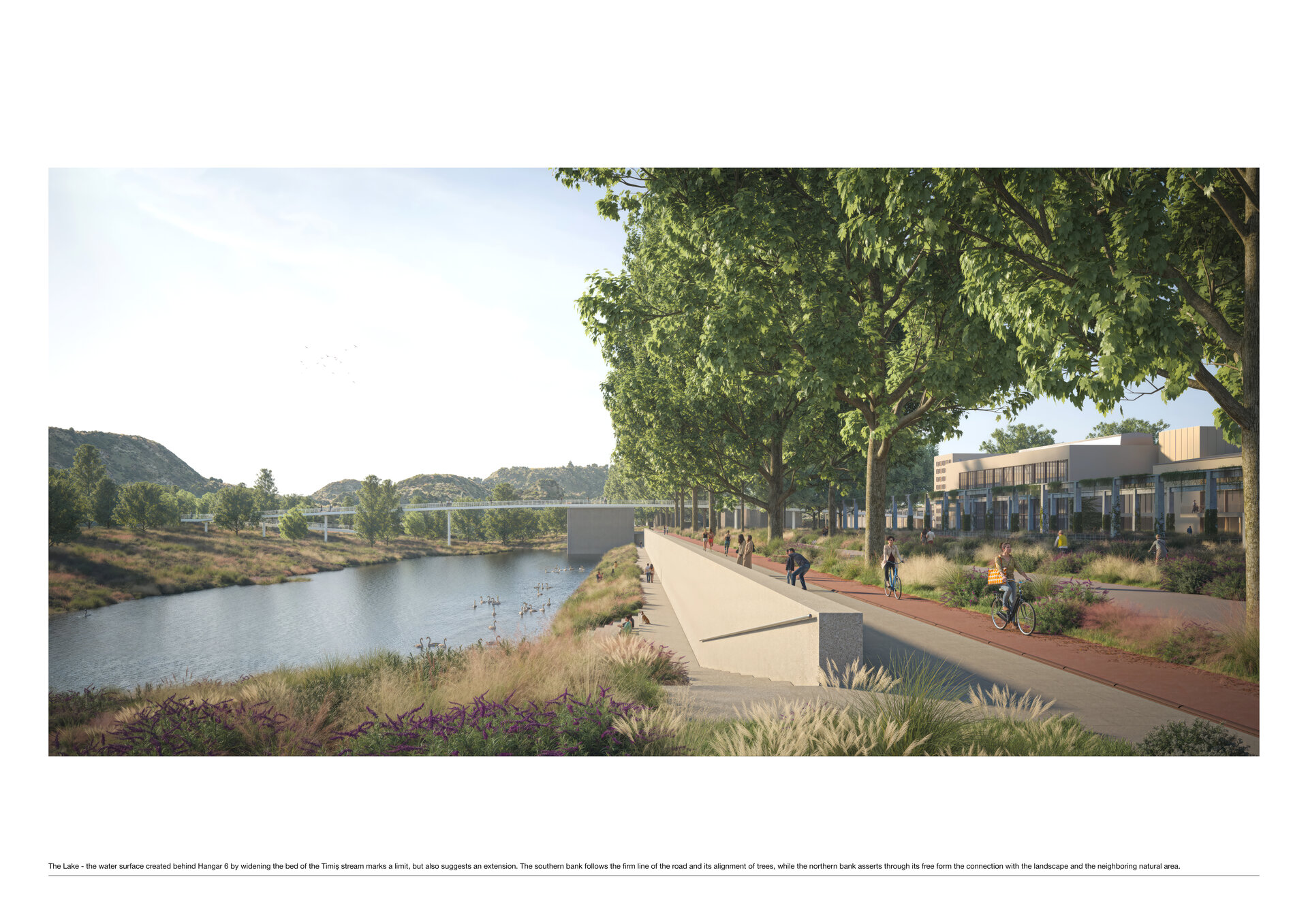
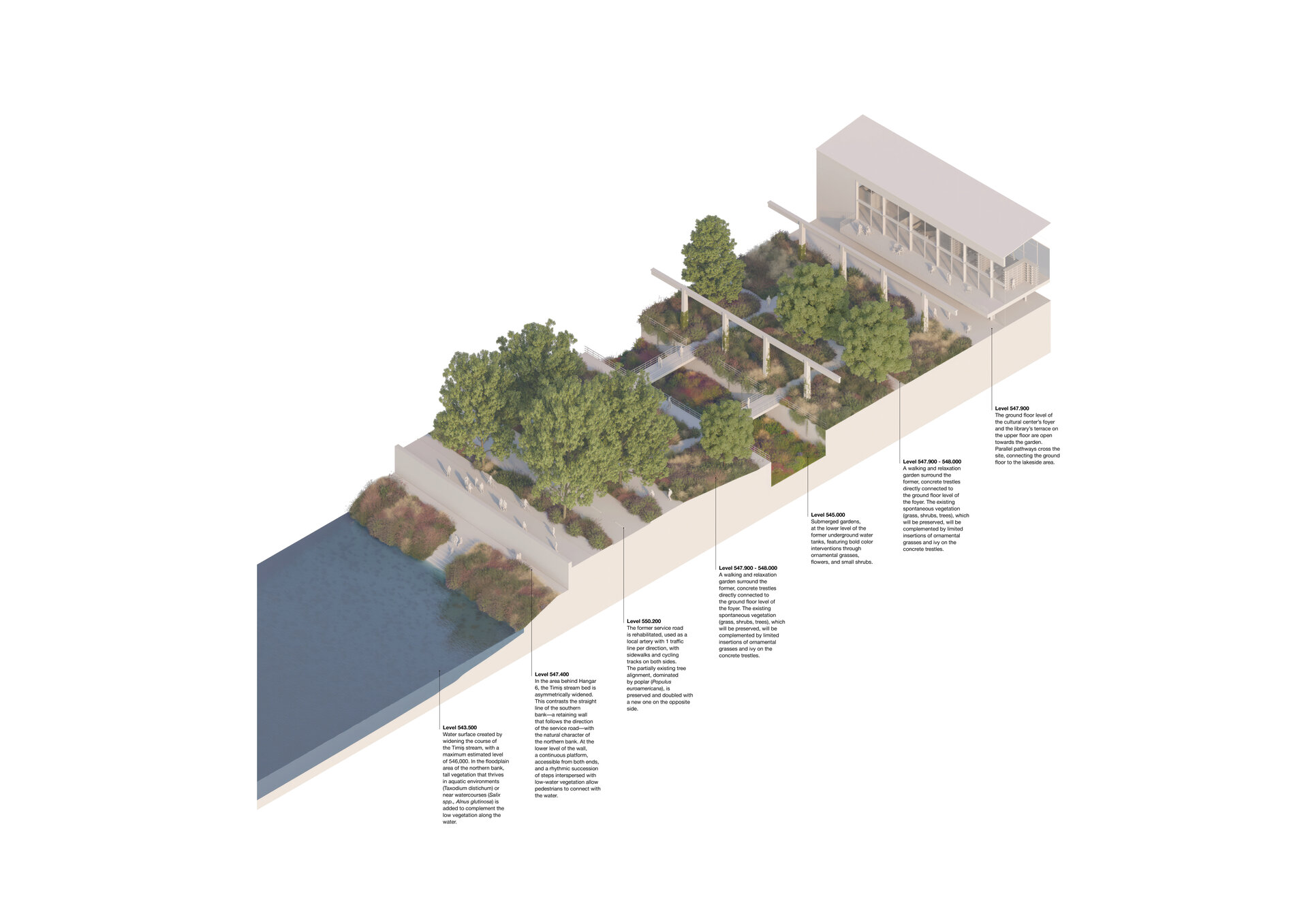
– activating the the banks of the Timiș stream by:
(i) widening its course behind the Hangar 6 complex;
(ii) creating a platform that descends to the water level, serving as a place for promenade, observation, and meditation;
(iii) including the opposite, naturally preserved bank in a complete pedestrian circuit;
(iv) planting vegetation specific to watercourses and lakes to add value to the renovated space and stabilize the soil through root systems.
7. Continuity and Permeability
Supporting the continuity of the central lanscaped spine and the succession of the former aviation hangars through differentiated treatment of vegetation: in plan, through linear shape and colour palette, and in section, through variations in height. Permeability is created through traversing axes – virtual (the sequence
of central plaza – canopy – Hangar 6 complex – Timiș stream) or physically manifested (entry points through Hall 25) – allowing for multiple connections.
8. Experiential Quality
Multisensory experiences varying throughout the day or by season, associated with: – water (the water mist cooling system along the former pipe trestles / the reflection pool in the courtyard of Hall 25, transformed into an ice rink during winter / the lake created by the local widening of the Timiș stream bed).
– colour (the chromatic insertion in the landscaped spine / the diversity of the colour palette and its variation over time through continuous blooming and interesting tableaux, primarily at the level of the landscaped spine).
– light (night-time illumination / the atmosphere created during summer by the presence of water mist).
– smell (the planted areas along the central spine, with different blooming periods).
– materials (the raw materiality of former industrial buildings vs. the refined materiality of new insertions).
9. Heritage Protection
The option for a ”progressive authenticity” that does not aim for an ideal recovery, but rather acknowledges the valuable stages in the history of an object or place.
Alongside the restoration, rehabilitation, and adaptive treatment of the ensemble and major buildings, the recovery of objects and technical equipment is equally important, integrated into new usage scenarios.
10.Cultural Promotion
The symbolic use of the old aviation hangars as spaces for a Museum of Technology and Industrial Tradition of Brașov.
11. Operational Staging
A gradual approach with short-, medium-, and long-term objectives, combining public engagement actions (rediscovery, appropriation, consultation) with specialized interventions (vegetation and natural setting, iconic buildings, circulations, public spaces).
Public Architecture

- Rulmentul Brașov
- Kinesis
- “Grigore Moisil” National College, Bucharest
- Polyvert. Cycles of Innovation - Info Point Pavilion
- Carousel. Signage and Design Solutions Gabroveni Inn
- HORIZN. Troll’s Tongue Observation Platform
- Water tower Hemmesta
- Povodi Vltavy operational centre in Strakonice
- A „back-and-forth” between heaven and earth...
- Buzău Courthouse
- Hive Garden
- Hive Garden
- West Africa Resort
- Voronet Community Center
- Look Inside - an Urban Canvas
- Azure Zanzibar
- Lazli Bay Retreat
- Hotel Mercure Bacău
- Parásitos - integrative microarchitecture in the urban space
- Relocation, Development, and Construction of “New Medical Complex” – Fundeni Clinical Institute, Bucharest
- Camping kit on Șimian Island
- Framework Garden


