FOMO - Sala Palatului
Authors’ Comment
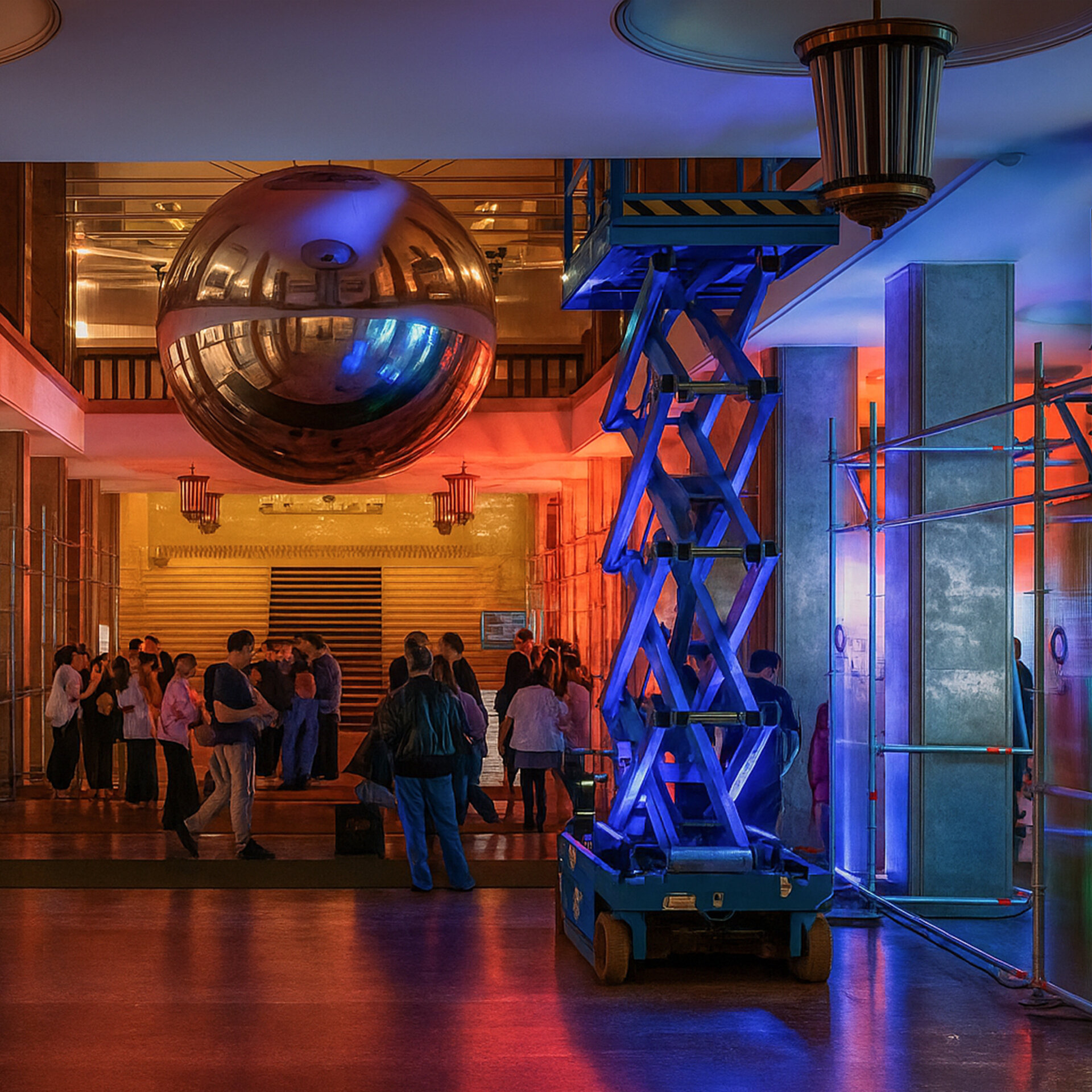
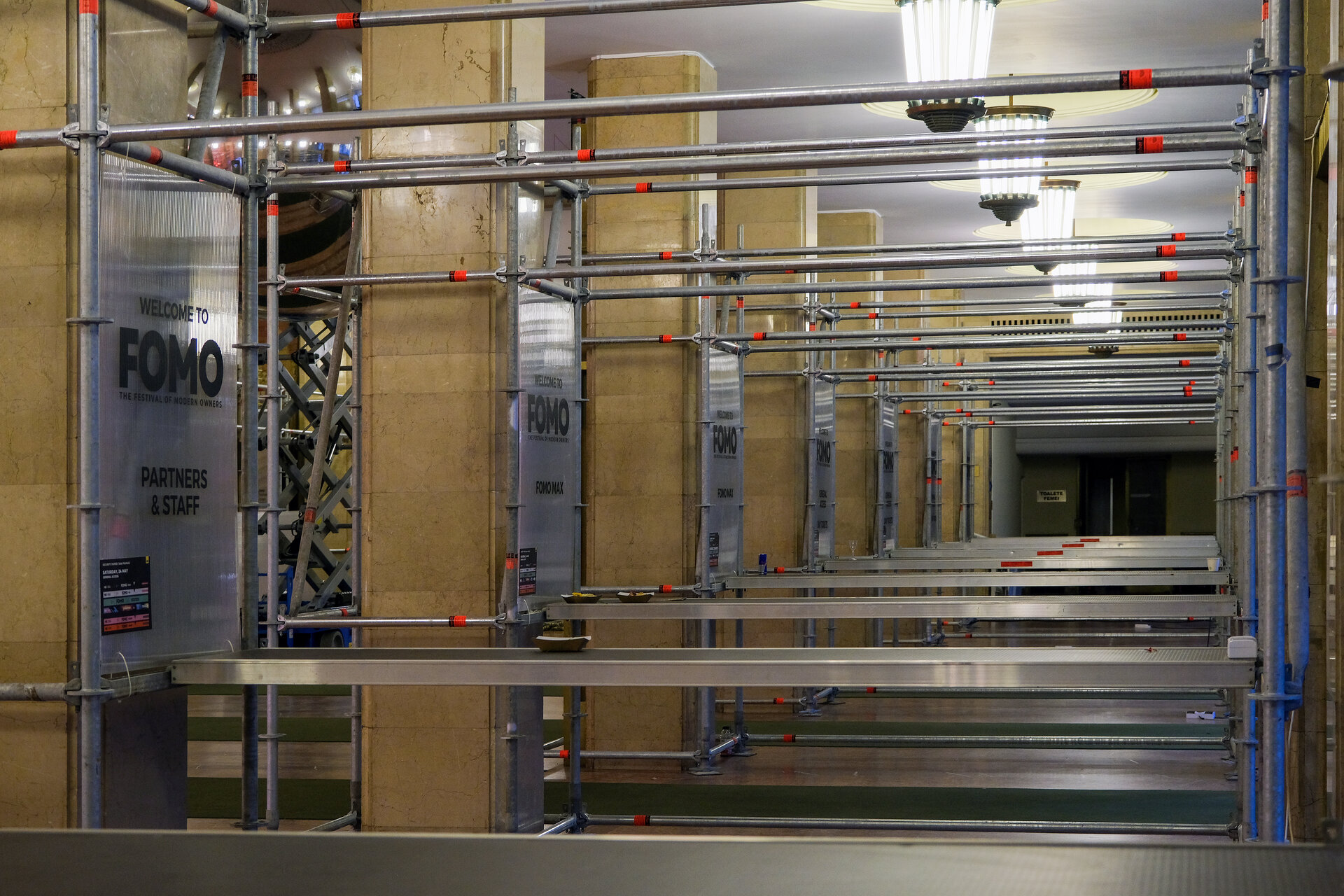
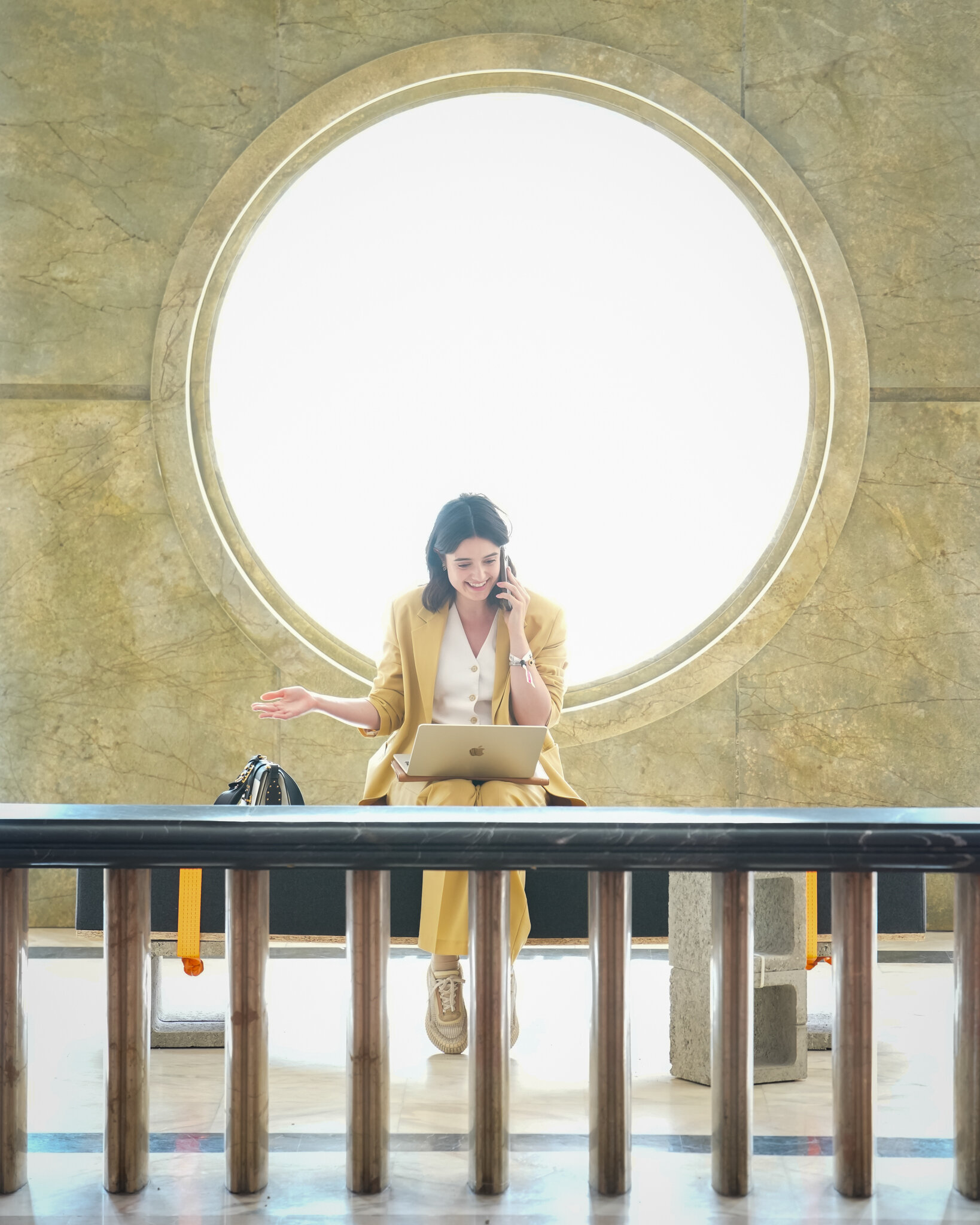
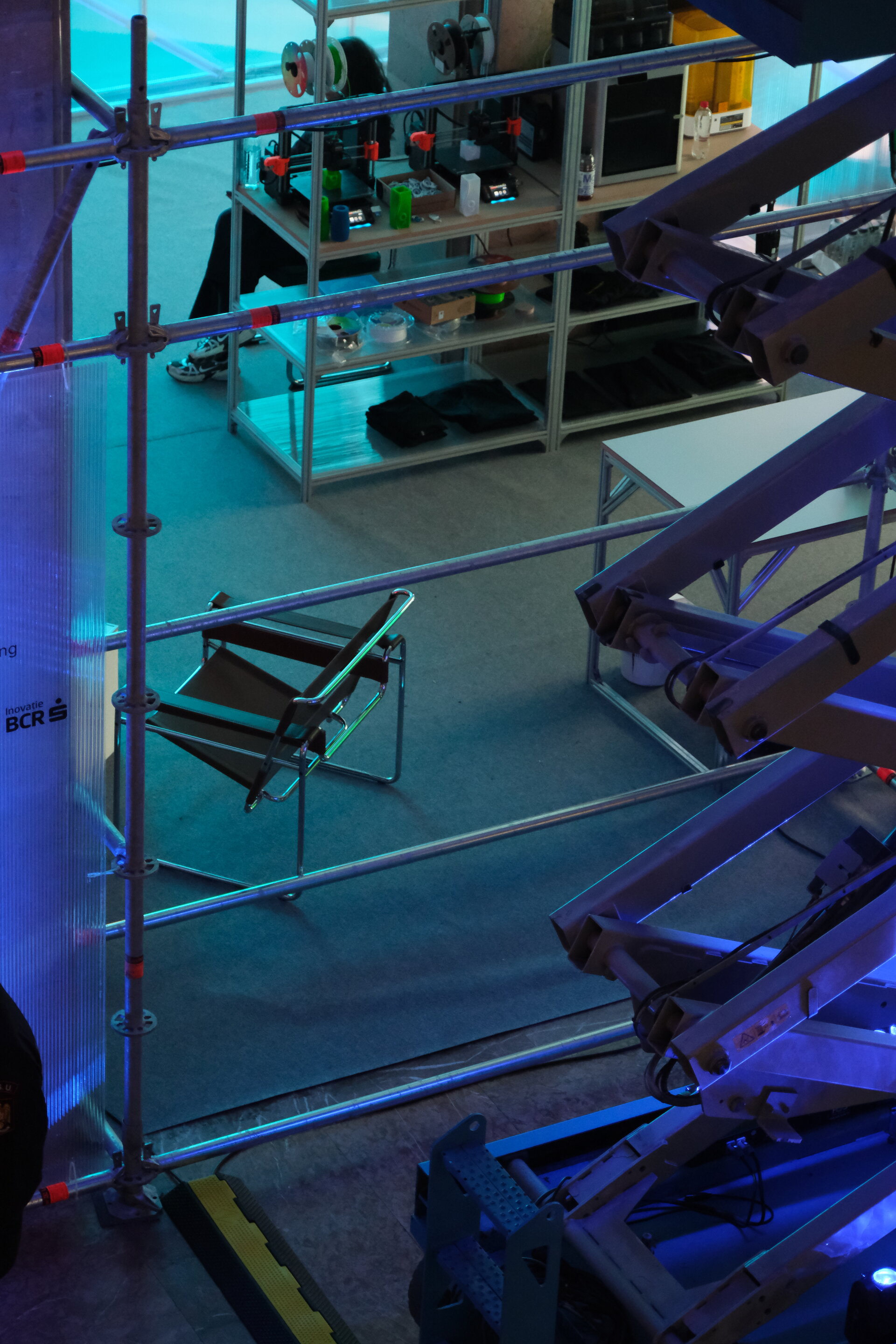
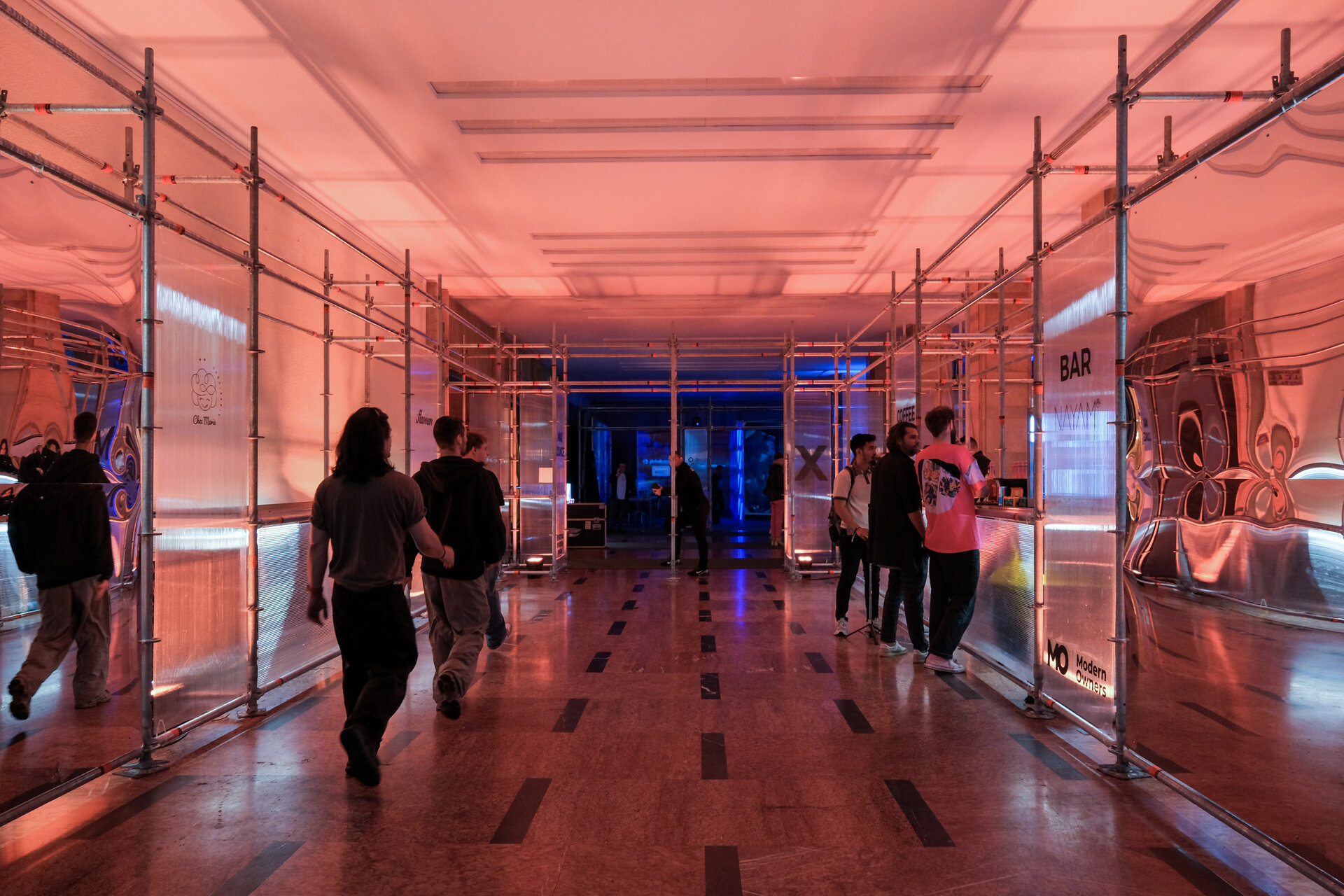
The FOMO (Festival of Modern Owners) project, held in the Palace Hall in Bucharest, proposes a radical, but temporary, reconfiguration of an emblematic public space, through an architectural intervention built around the idea of work in progress – a state of affairs, arising from the festival concept and the micro-temporal character of the intervention, compared to the temporal scale of the existing framework.
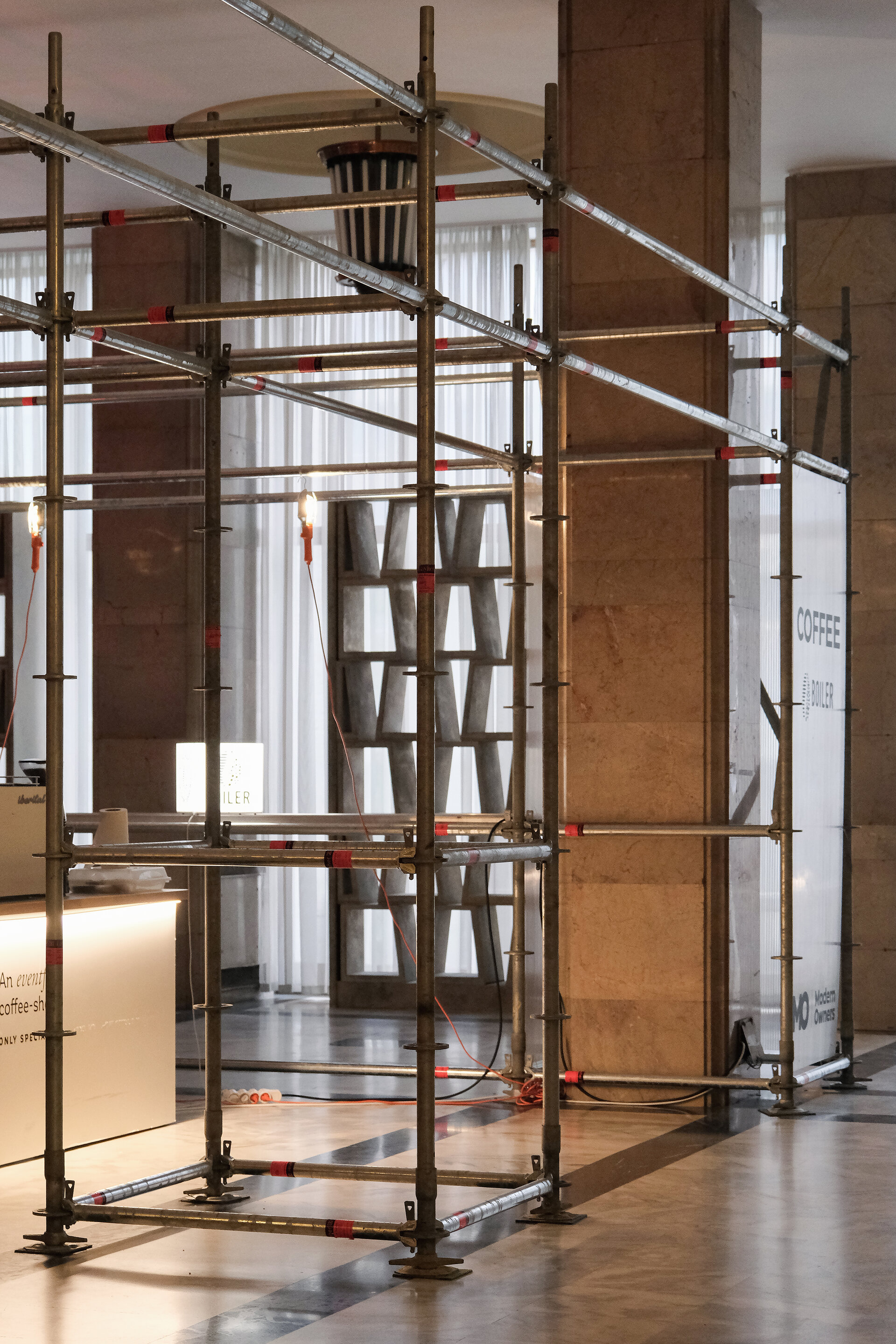
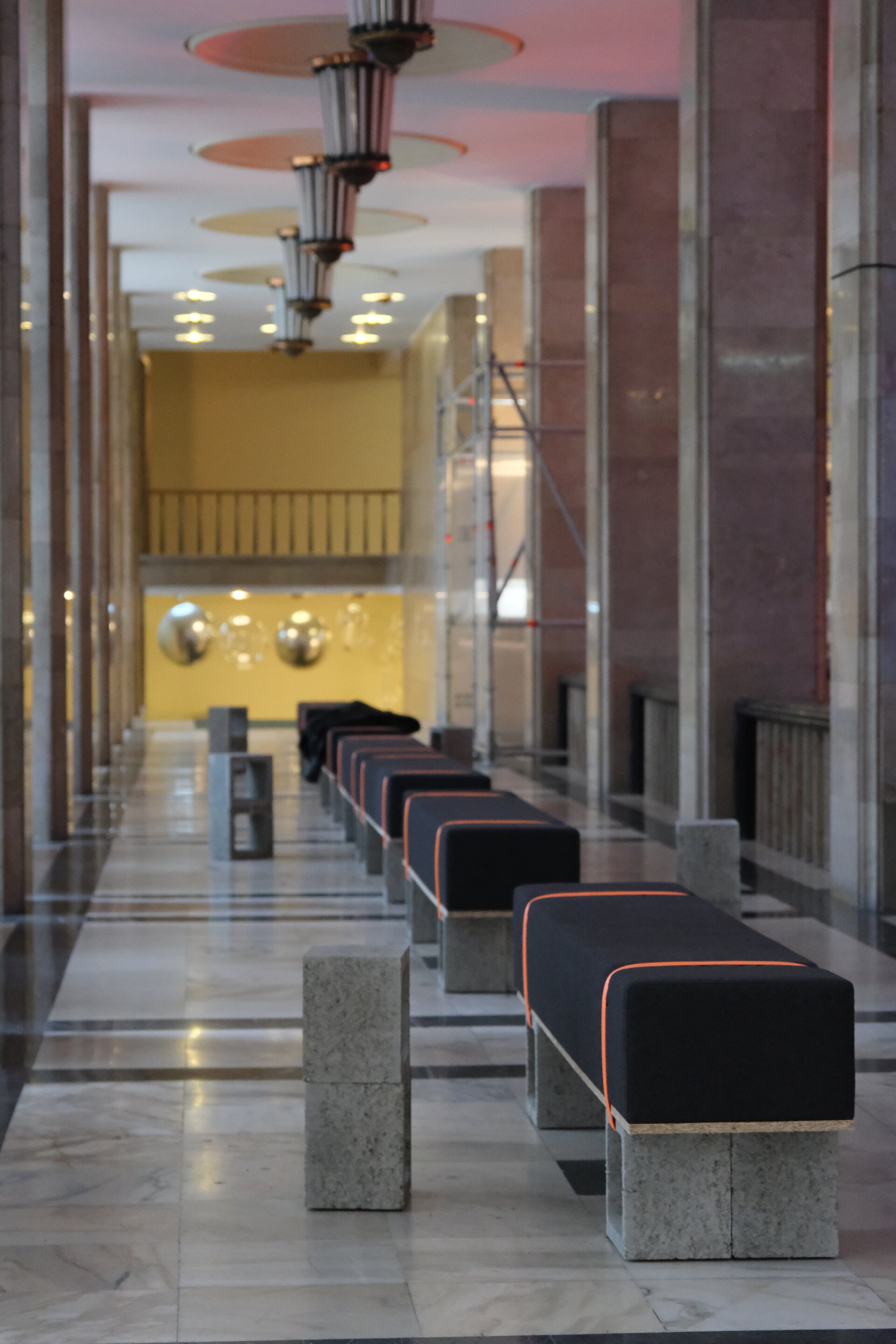
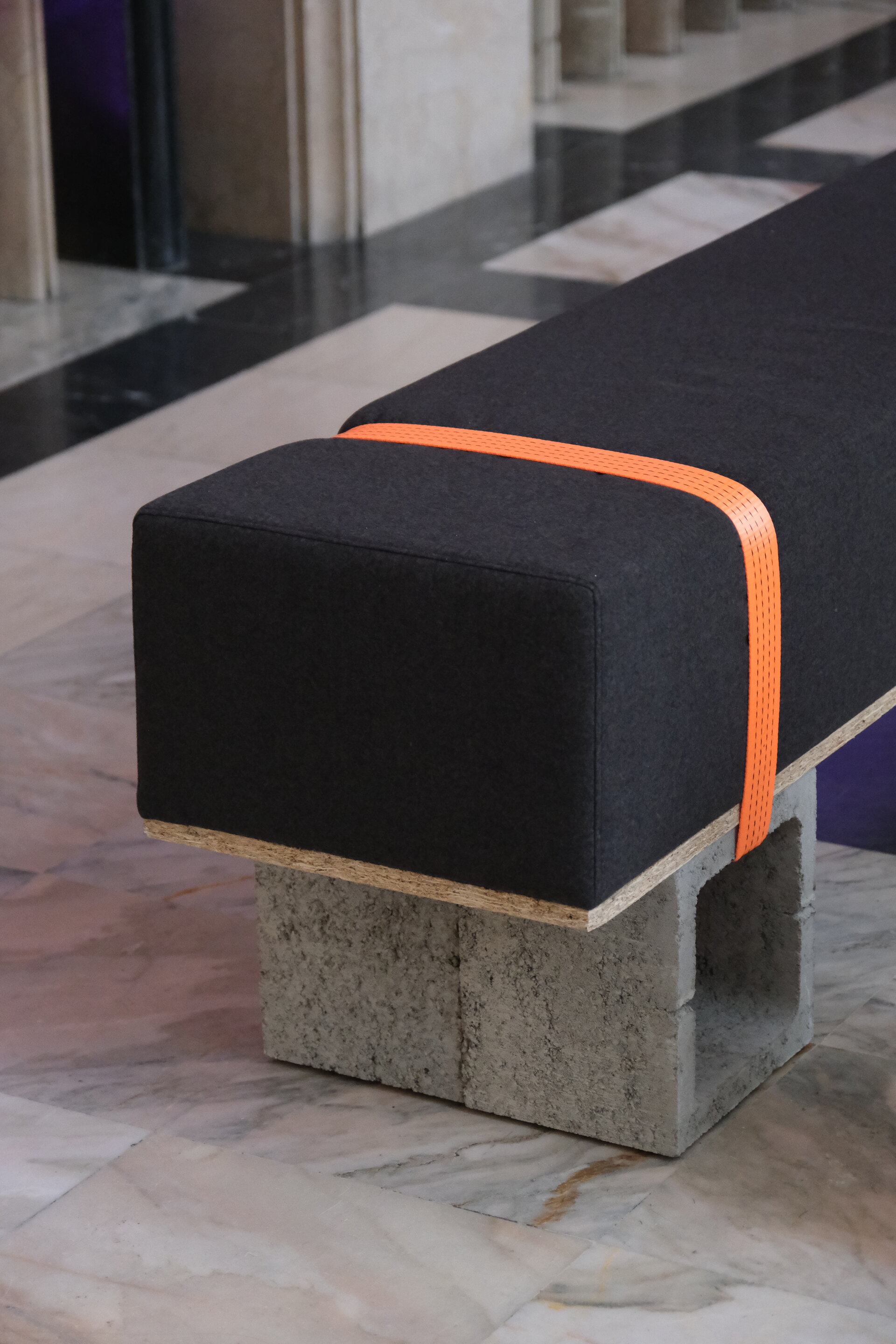
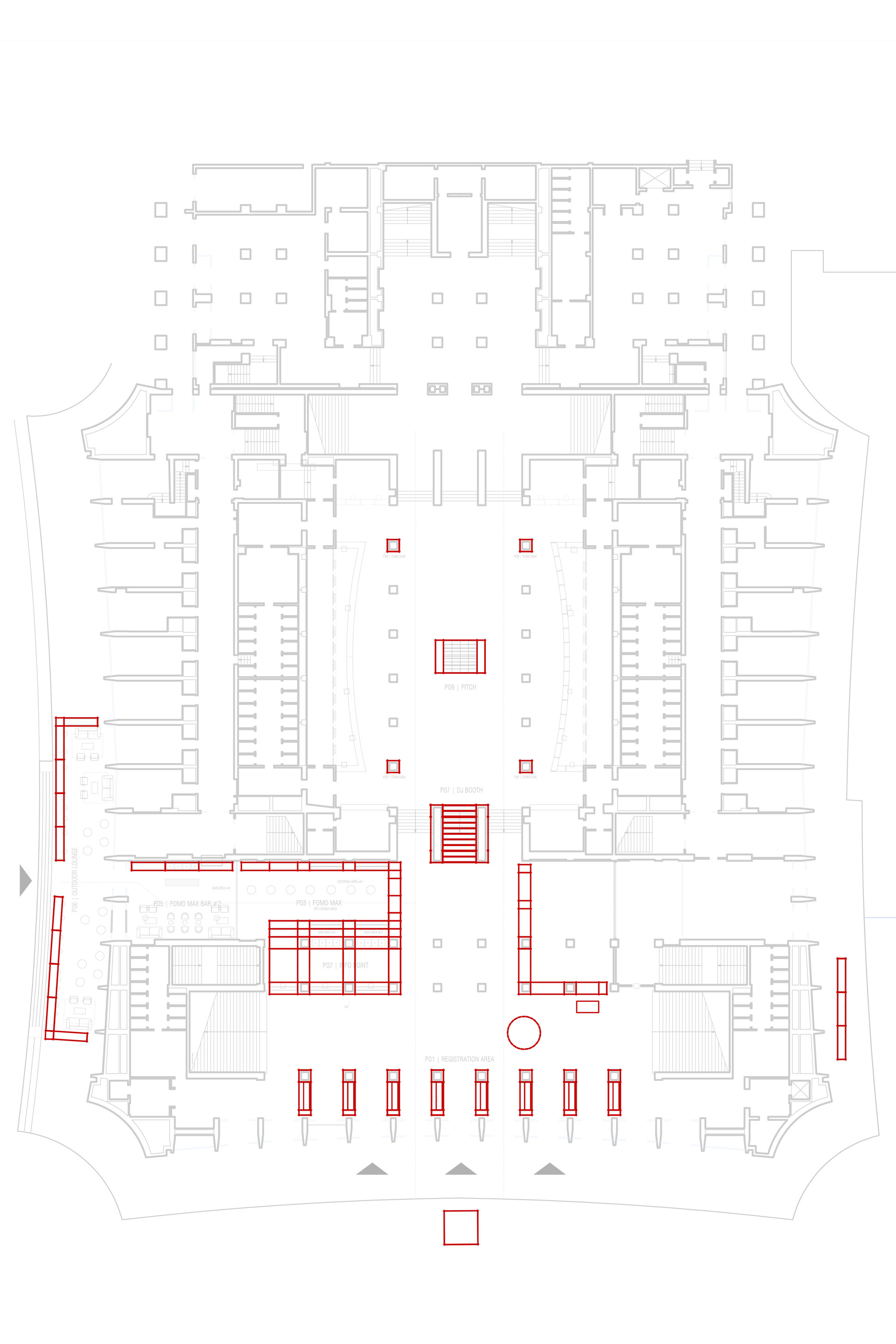
The event, dedicated to the new generation of contemporary entrepreneurs and creators, transformed for three days a monumental and conventional edifice, into a flexible, ephemeral territory, open to reinterpretation. The design theme was formulated in itself as a satisfaction of functional needs - at a logistical level as well as leisure, entertainment, etc. through an interior architecture formula that is not at all invasive with the existing space, does not require major purchases or subsequent storage of furniture/material, can be reused entirely, in an economic and sustainable spirit and, last but not least, can be assembled and disassembled in two days.
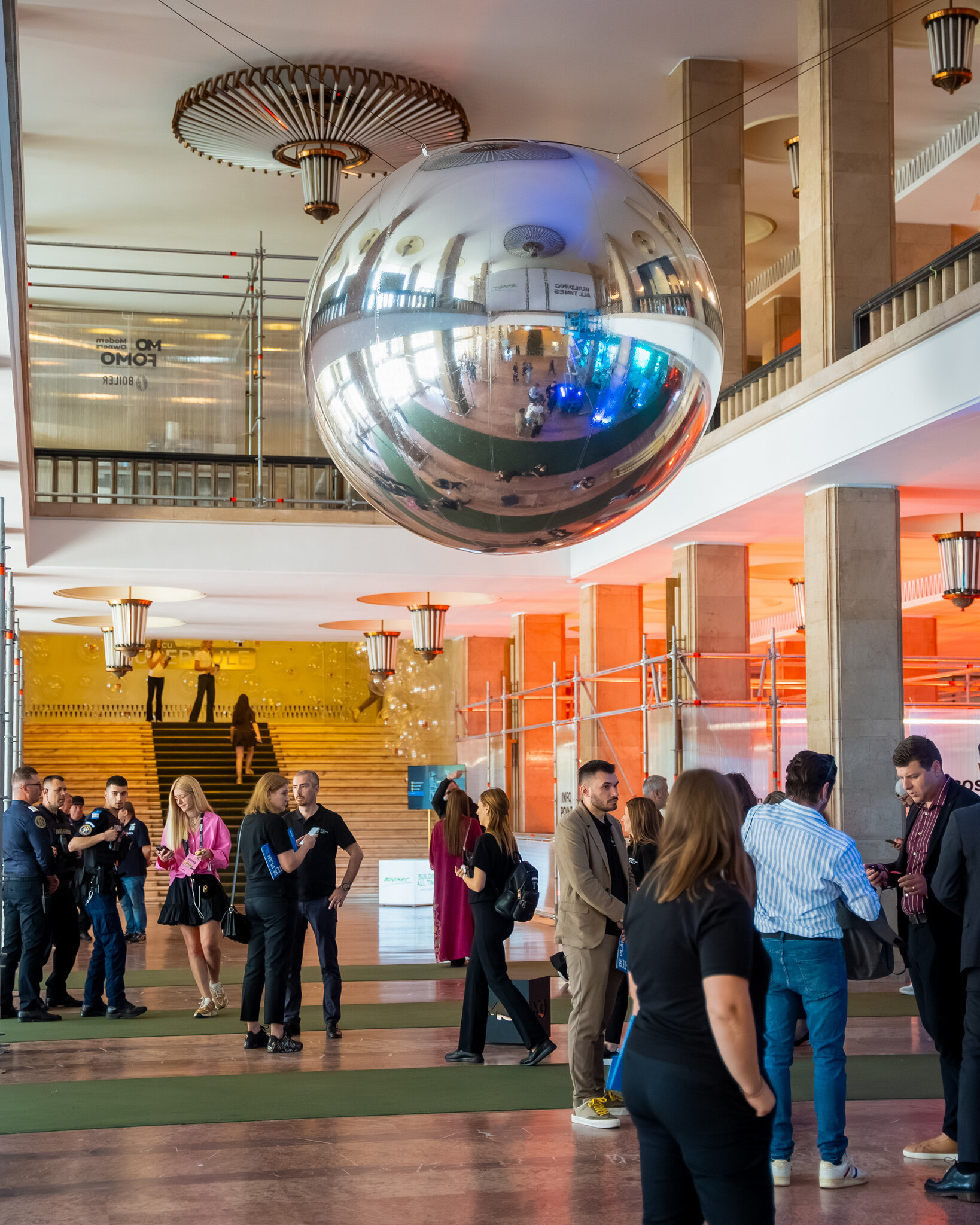
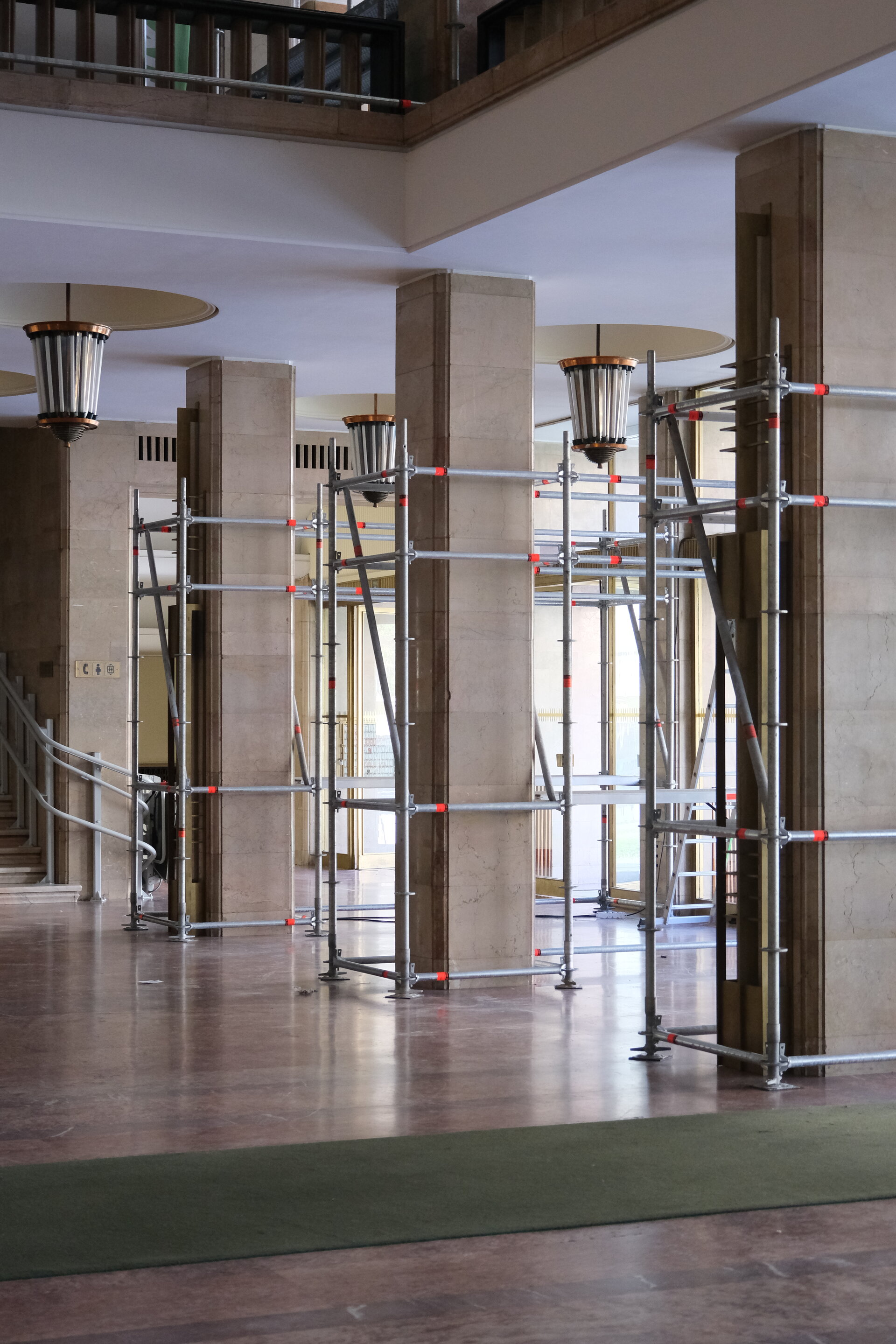
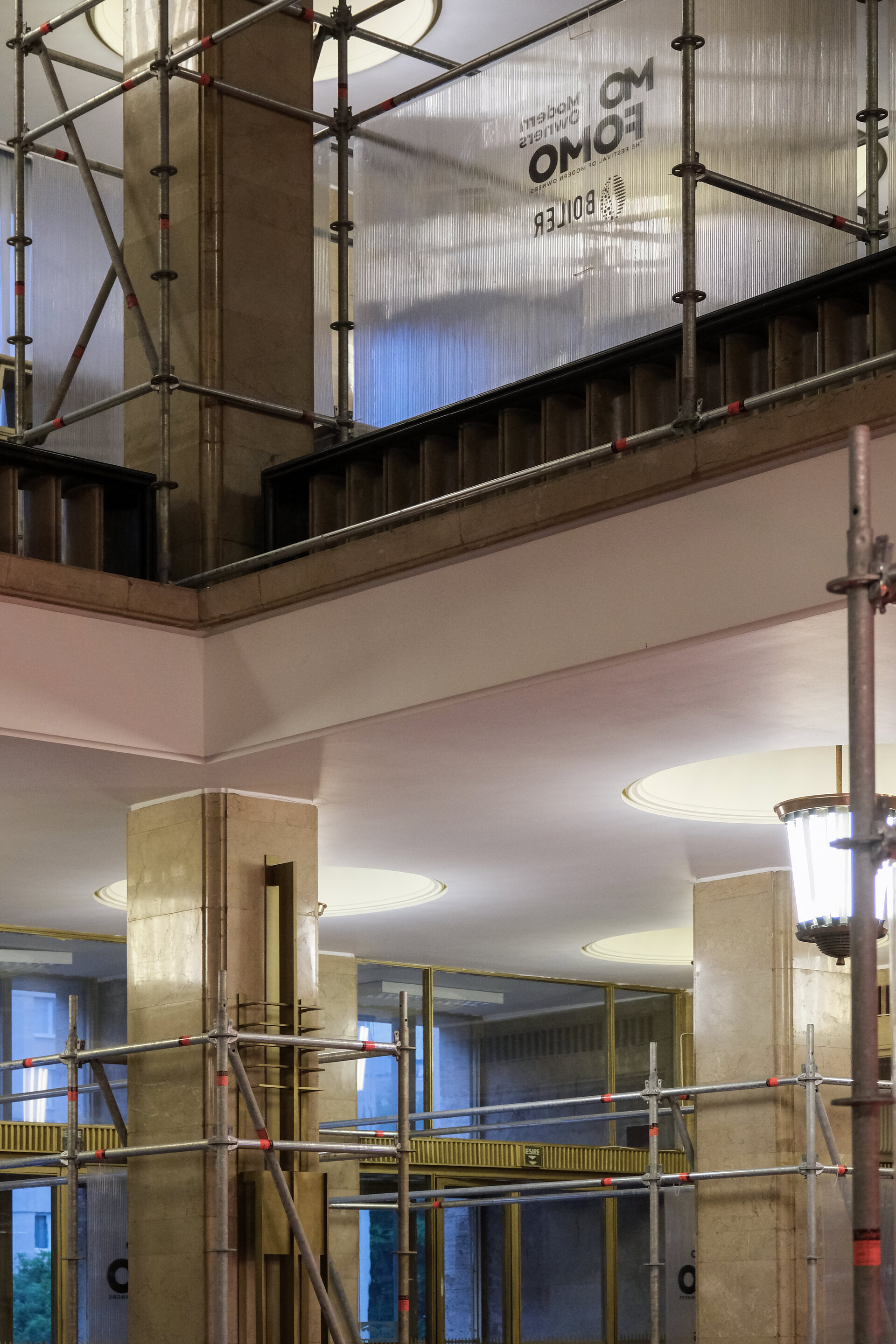
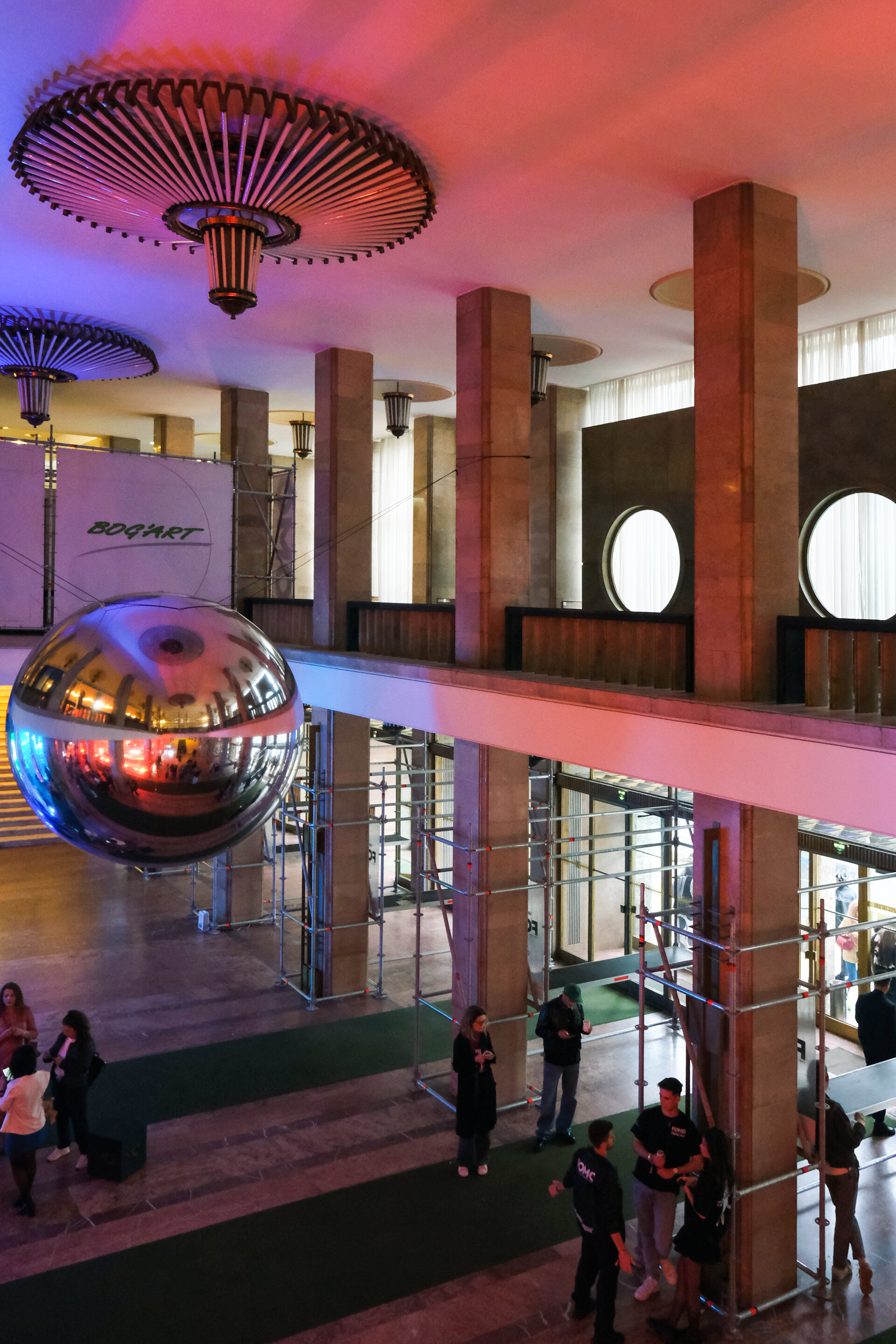
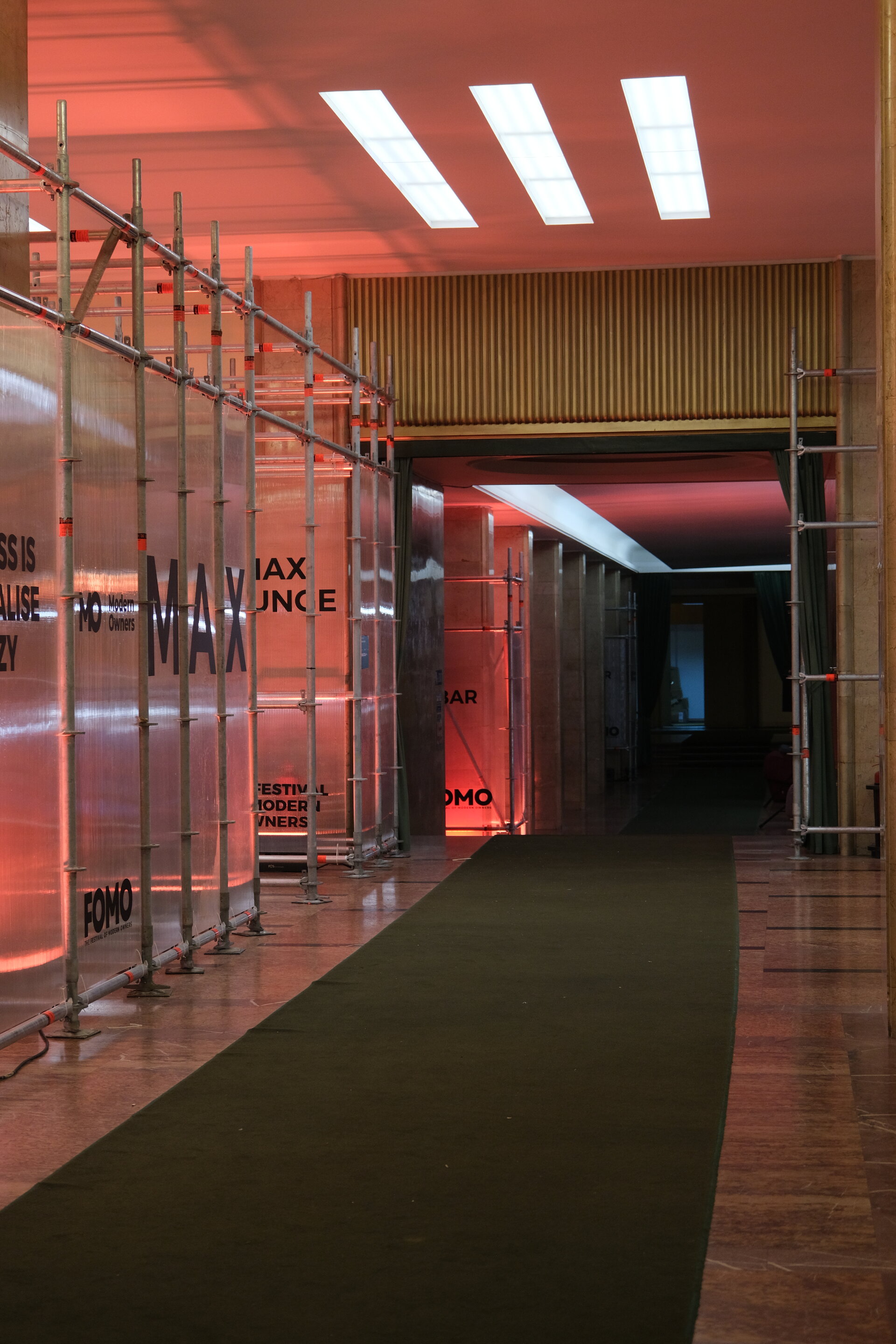
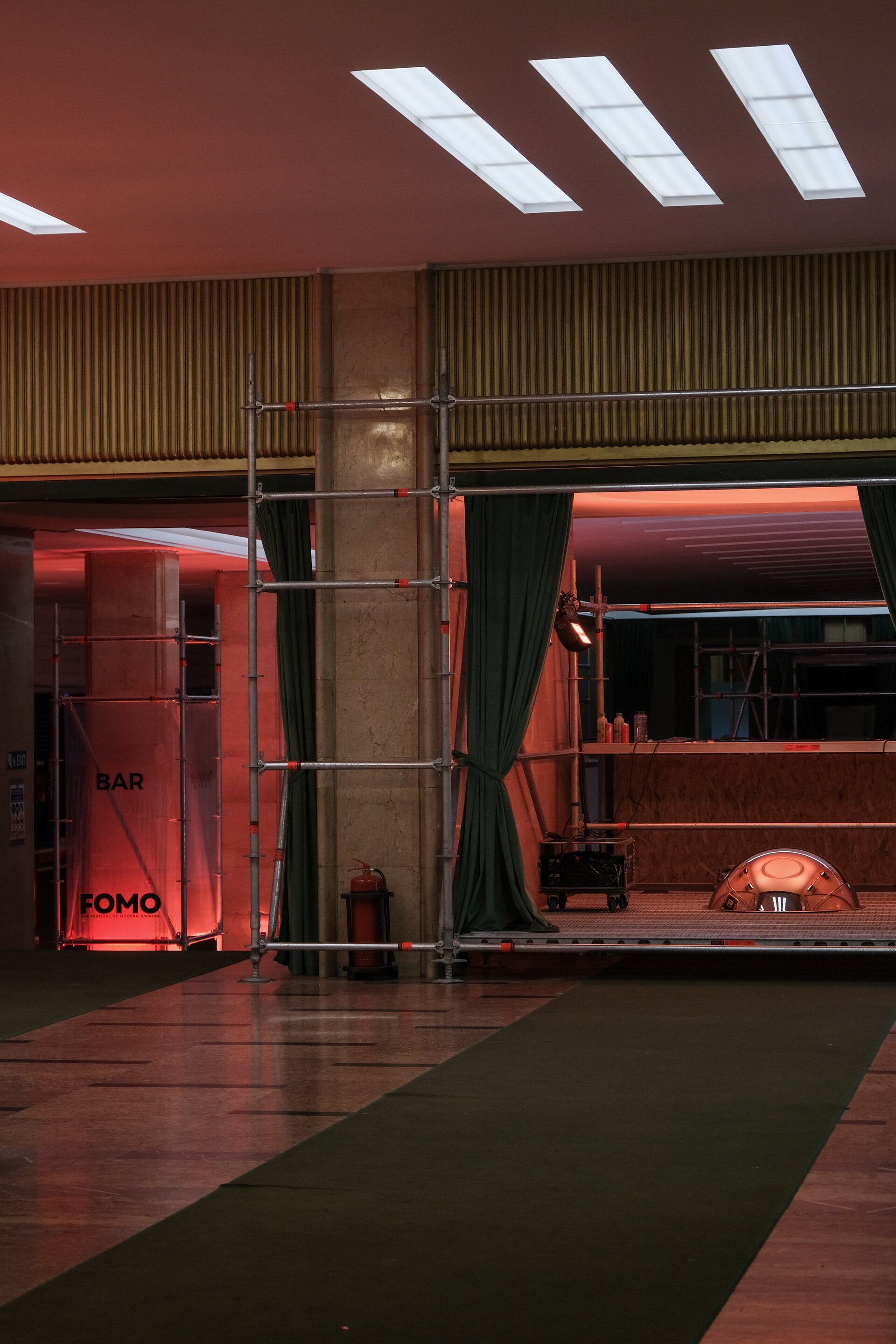
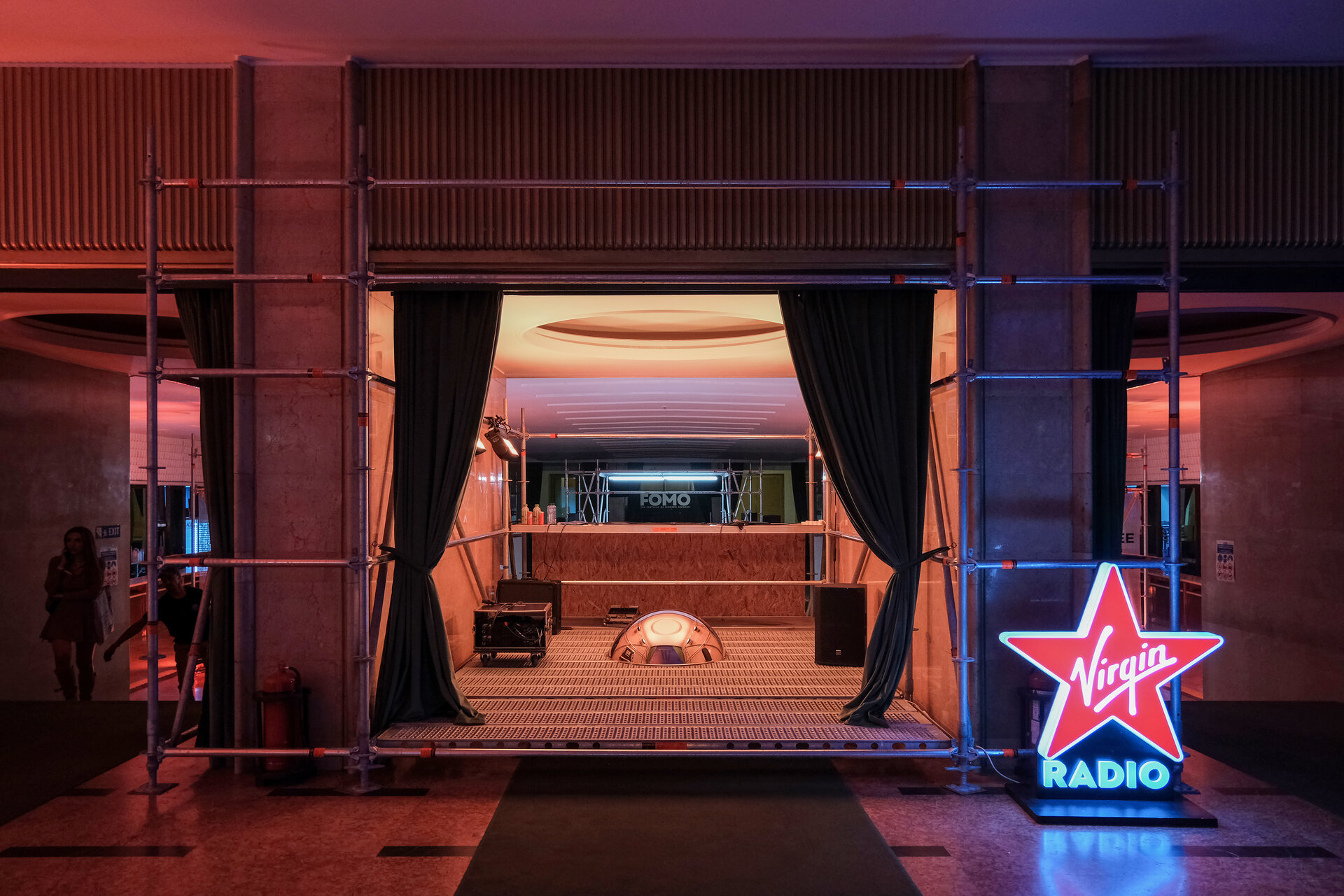
The intervention capitalized on and took over architectural and geometric elements specific to the Palace Hall – the outer dome cap, part of a large sphere, the circular lighting fixtures, their linear elements, the fluted surfaces, the stereotomy of the marble floor cladding, the type of indirect lighting as well as the well-defined rhythm given by the structural grid – to insert a coherent temporary architecture. The modulation of the space allowed for a natural integration of the Layher structure, reinterpreted as a primary architectural language, in dialogue with the original geometry, giving a new meaning to a space well formulated in the collective memory.
The contrast between the existing and the proposed had as its stake once the creation of a temporary structure that would become useful, functional and would be formed in support of a collective evolution, through meaning and form, and then to highlight the existing architecture, to become an example of bringing together different generations, who can work together for a common purpose.
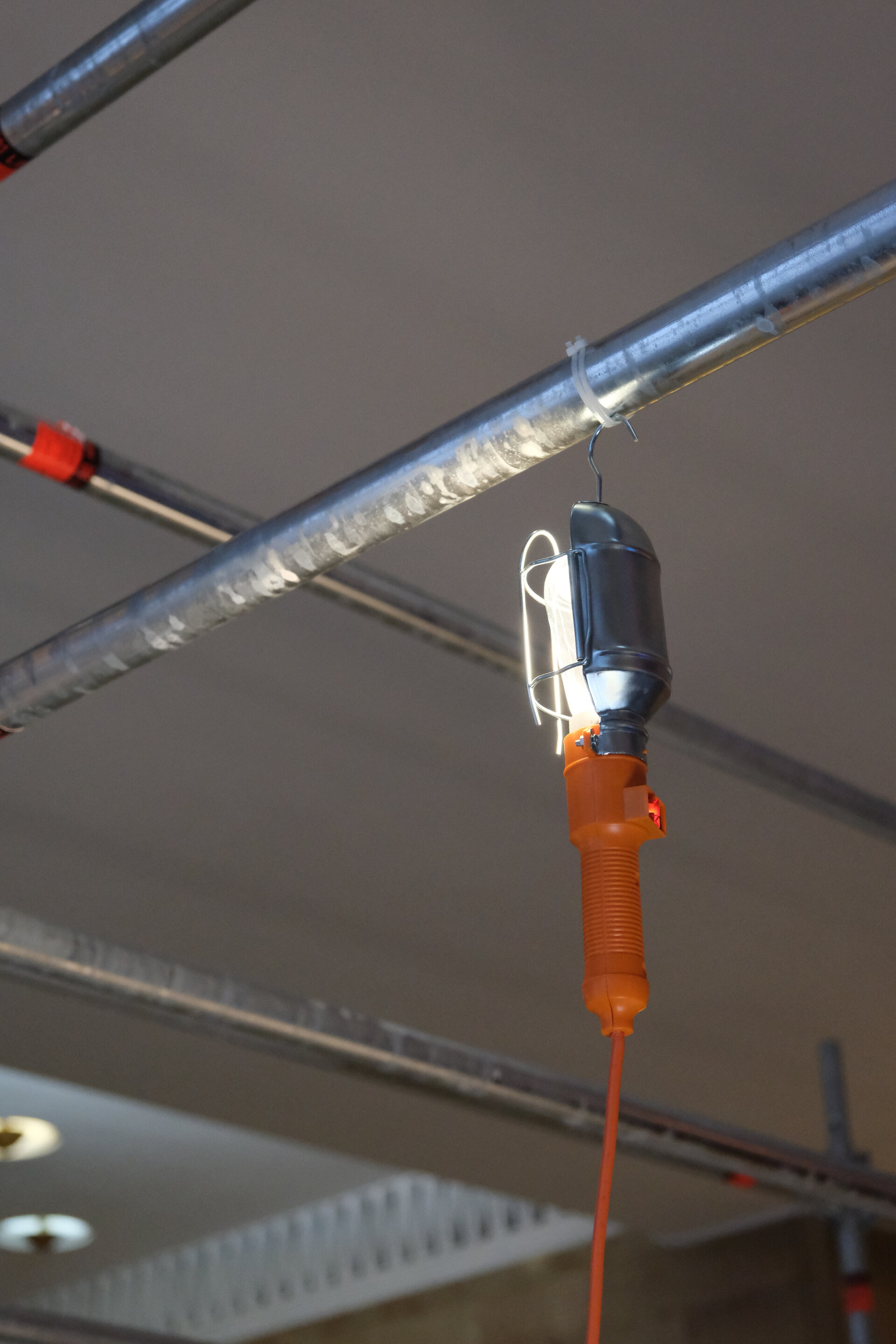
The materials used – translucent polycarbonate panels, OSB panels, tubular LEDs, large-scale graphics, banners and meshes – generated a raw but controlled urban scenography. Together, they created a coherent spatial system that contrasts but also complements the existing monumentality.
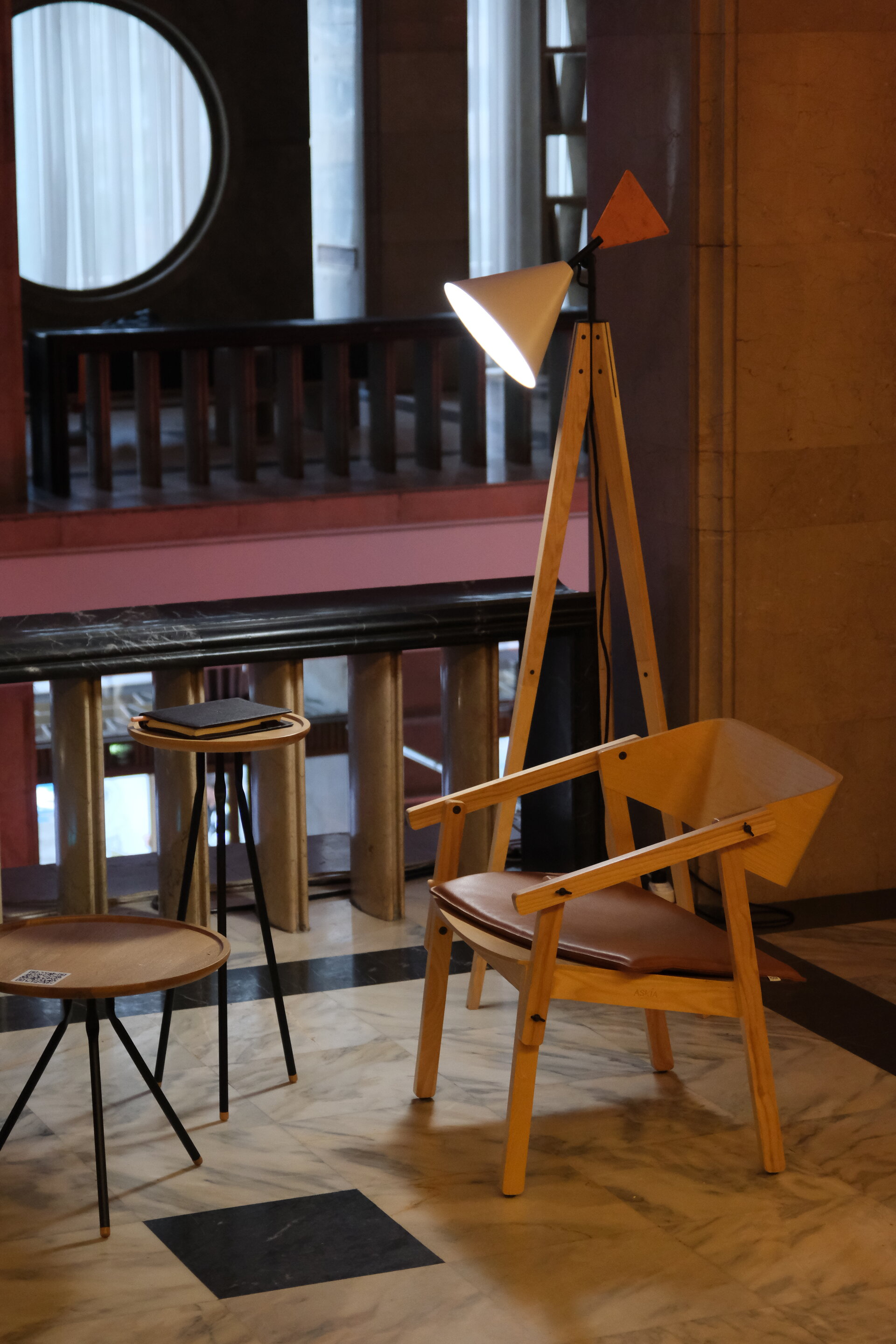
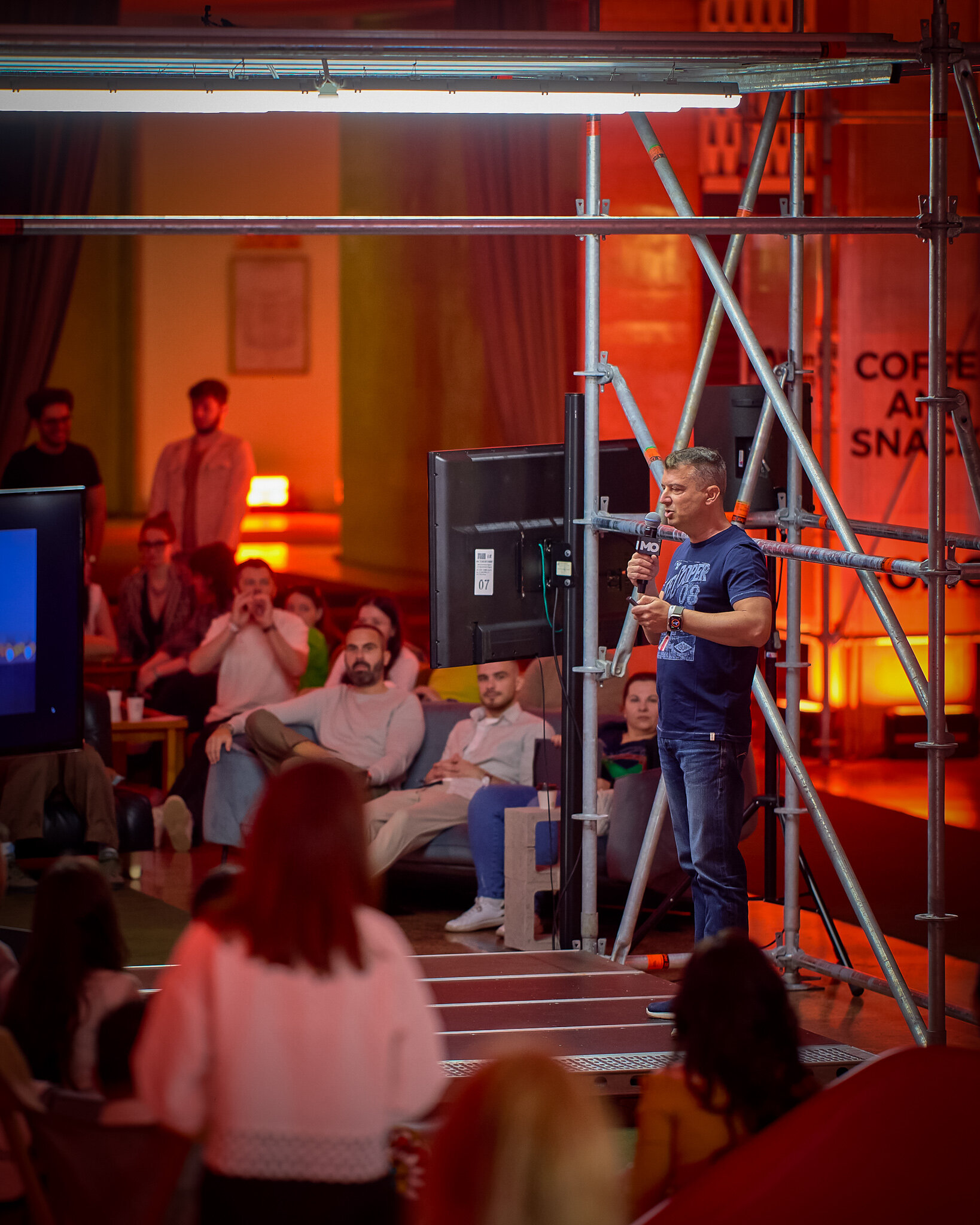
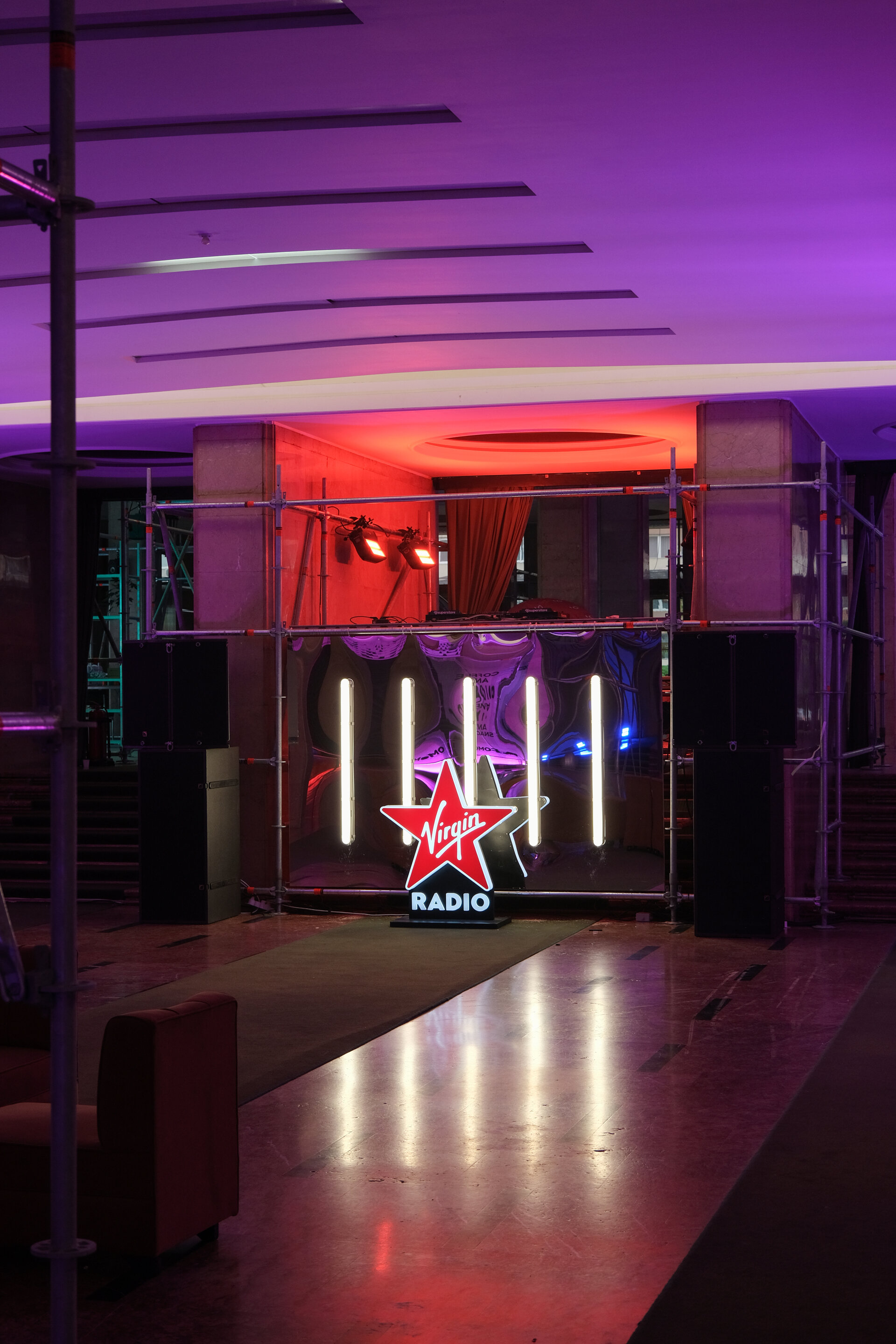
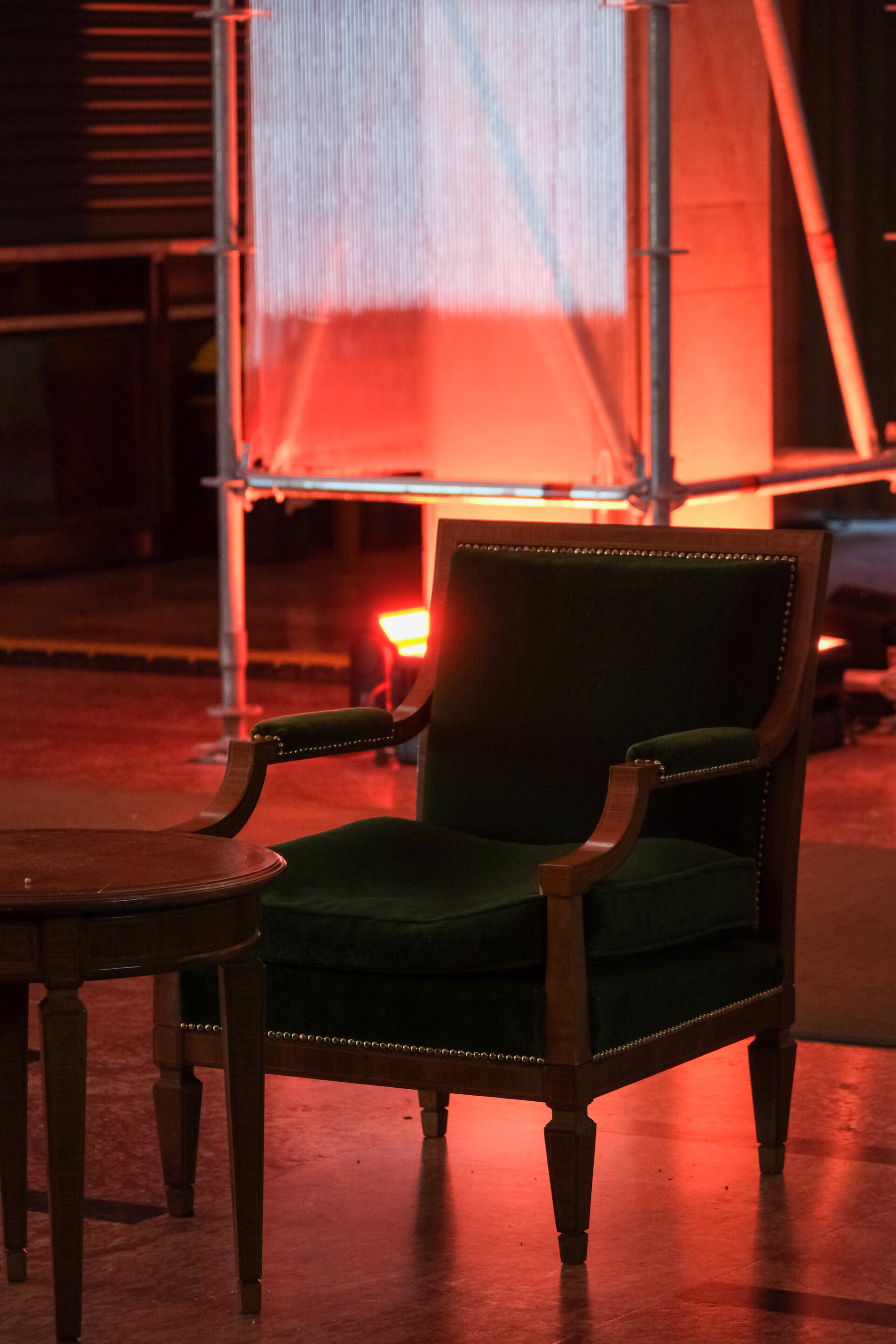
The key functions of the event – registration areas, info points, bars, lounges, stage, DJ booth, exhibition spaces – were conceived as autonomous architectural installations, easy to assemble and disassemble. They articulated a fluid route and built a new hierarchy of space, offering visitors an atypical experience, in a familiar but radically reinterpreted setting.
The Palace Hall thus became an urban laboratory in which the monumental is re-signified through minimal but powerful gestures. The project proposes an alternative formula for occupying existing cultural infrastructures, in which the temporary, adaptability and reversible assembly become architectural instruments.
FOMO was not just an event, but a manifesto: a critical reflection on how we (our) use public spaces, on the ephemeral as a regeneration strategy, and on architecture as an act of direct communication.
Exhibition and Scenography Design

- From Craft to Music
- Art Encounters Biennial - Garrison Command
- The Country We Come From. The First 35 Years
- Pop-up Gallery at Point - two exhibitions
- Monuments with a tail
- Original spaces | Legalized gestures
- Edges of identity
- Notes from Underground
- STD_BIG-S
- The Mosaic of the National Cathedral - Architecture of a traveling exhibition
- Collector’s Attic (/SAC booth at RAD - Romanian Art Dealers)
- T_SM
- Stage Design - Deliric X Silent Strike III @ Arenele Romane
- (RE)ST_24
- The Thin Red Line
- Dacia
- RDW & The City
- 10 Years of Concéntrico
- Exhibition Design “My hand is your spoon. It feeds you”
- Beauty festival installation at Magazinul București
- Archaeology and History Museum in Piatra Neamț Permanent Exhibition
- Temporary exhibition “Twisted Histories - Rewritten Destinies. The Built Heritage of Bucharest under the Communist Regime”
- FOMO - Sala Palatului


