Intervention on the Frankfurt Opera
Authors’ Comment
1 Historical and Urbanistic Context
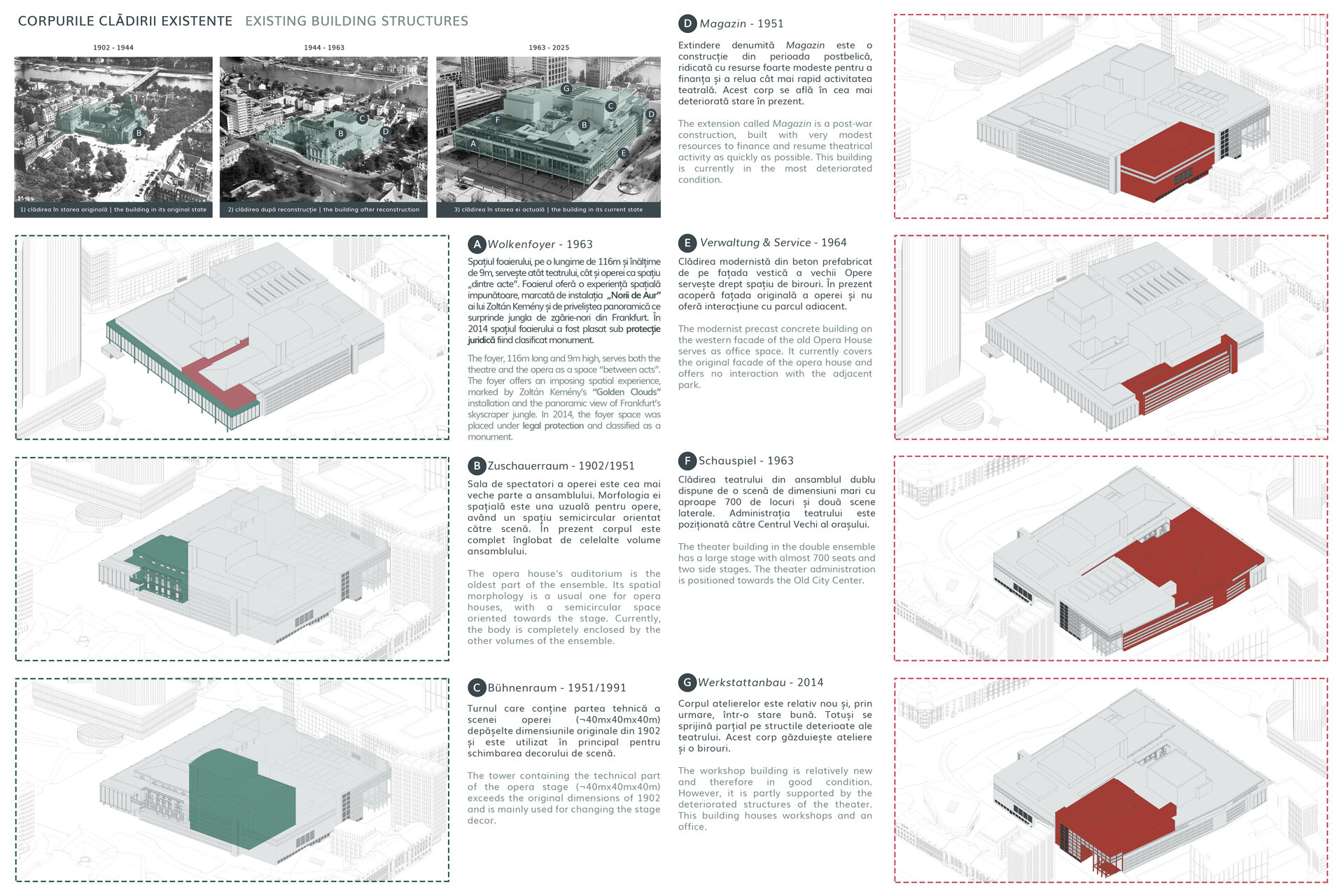
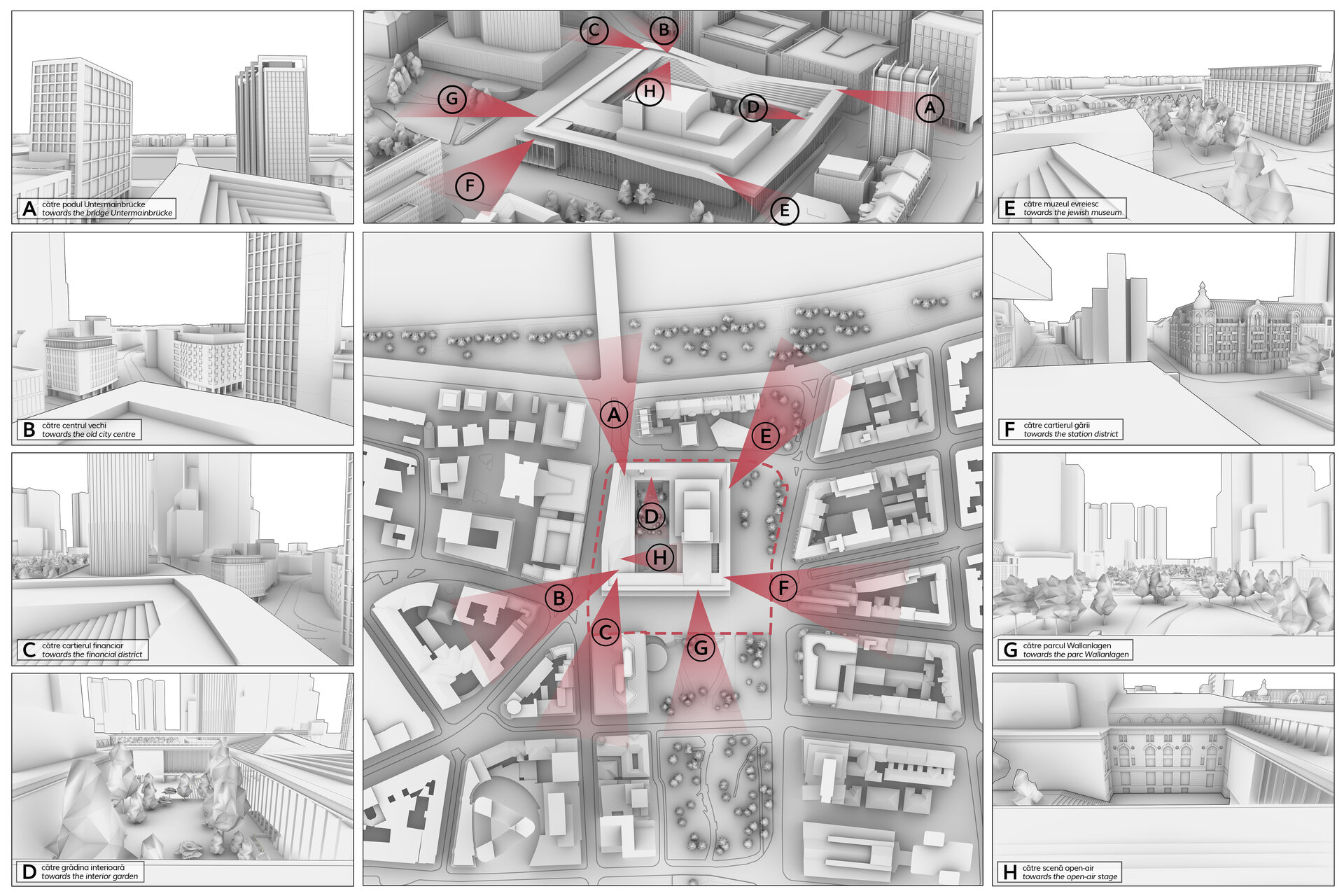
The site is centrally located in Frankfurt, at the intersection of two major parks, Wallanlagen and Untermainkai, and currently accommodates a theater and an opera house. The original building, erected in 1902 in the Jugendstil style, has suffered from bombings, fires, and demolitions, with only 10% of the original structure remaining. This remnant consists of the side facades of the opera's audience hall, which are currently obscured by various annexes. These annexes exhibit structural issues, water infiltration, inadequate thermal insulation, and a lack of space. Consequently, due to the high costs associated with a comprehensive renovation, the city initiated the "Kulturmeile" (Culture Mile) master plan, which proposes (at least) a partial demolition of the opera house and a relocation of the theater.
2 Rationale for the Intervention Concept
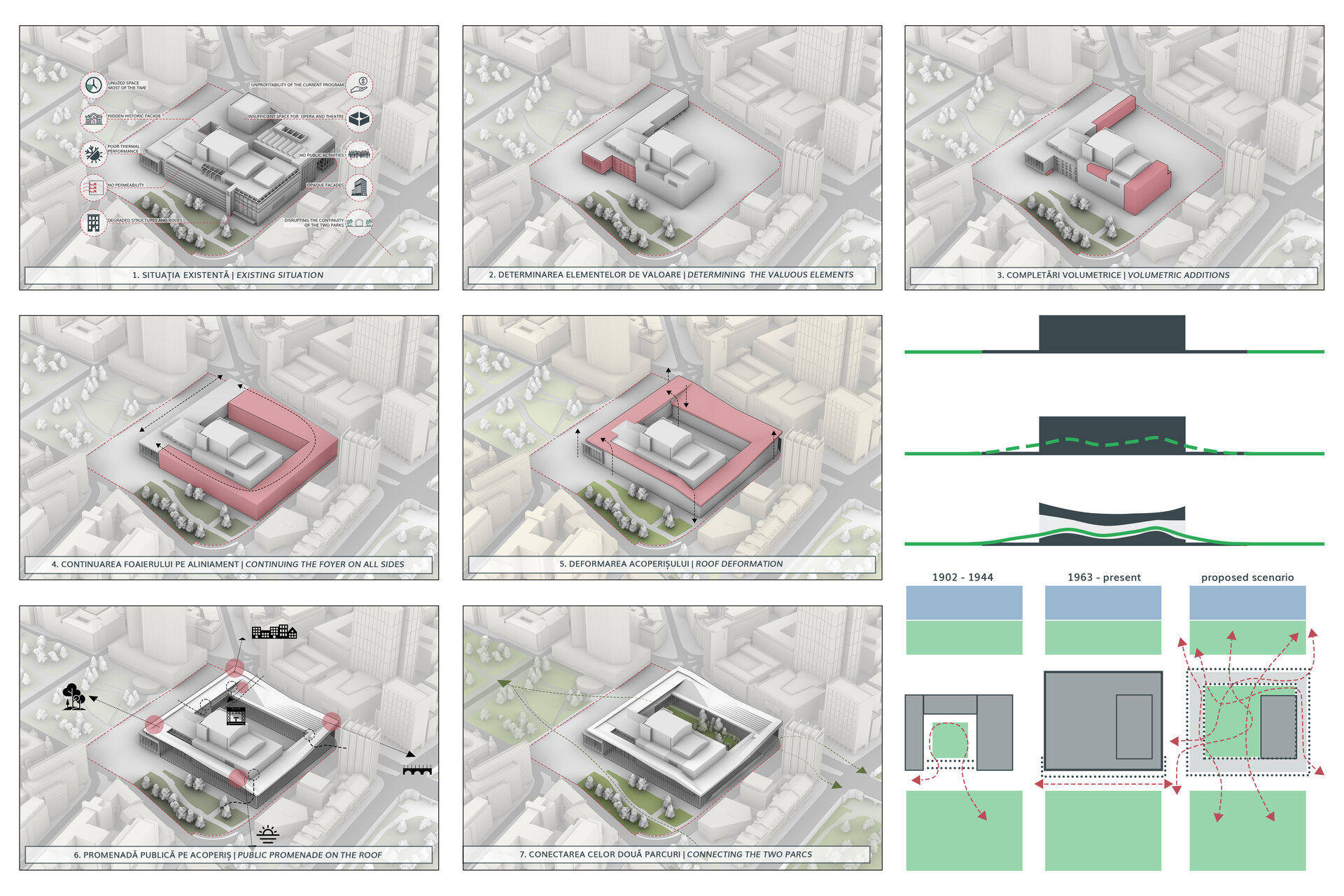
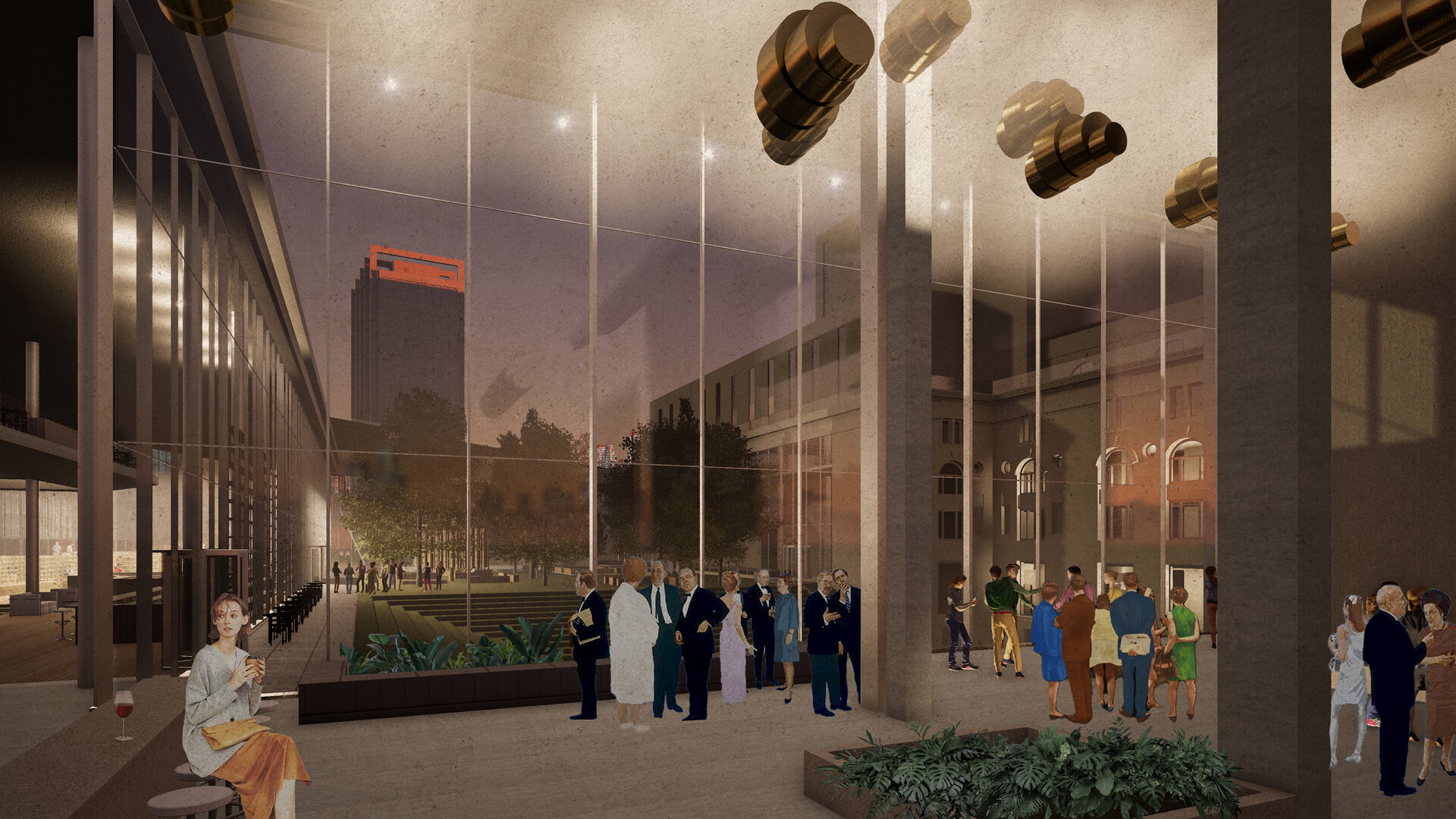
Beyond its technical and structural deficiencies, the current complex is characterized by notable inefficiencies in space utilization, a suboptimal relationship with the surrounding urban environment, and a decline in the popularity of the lyric theater program. Thus, the intervention aims to revitalize the opera house by enhancing its connection to public space, implementing an all-day public accessibility, and diversifying its cultural offerings. Such a strengthened connection between the city and the opera is to be facilitated through the foyer, which serves as a link between ordinary urban life and the artistic realm of the opera. Its role is to mediate interaction between these two spheres when the curtain is down and to prepare the audience for the artistic performance.
3 Proposed Architectural Solution
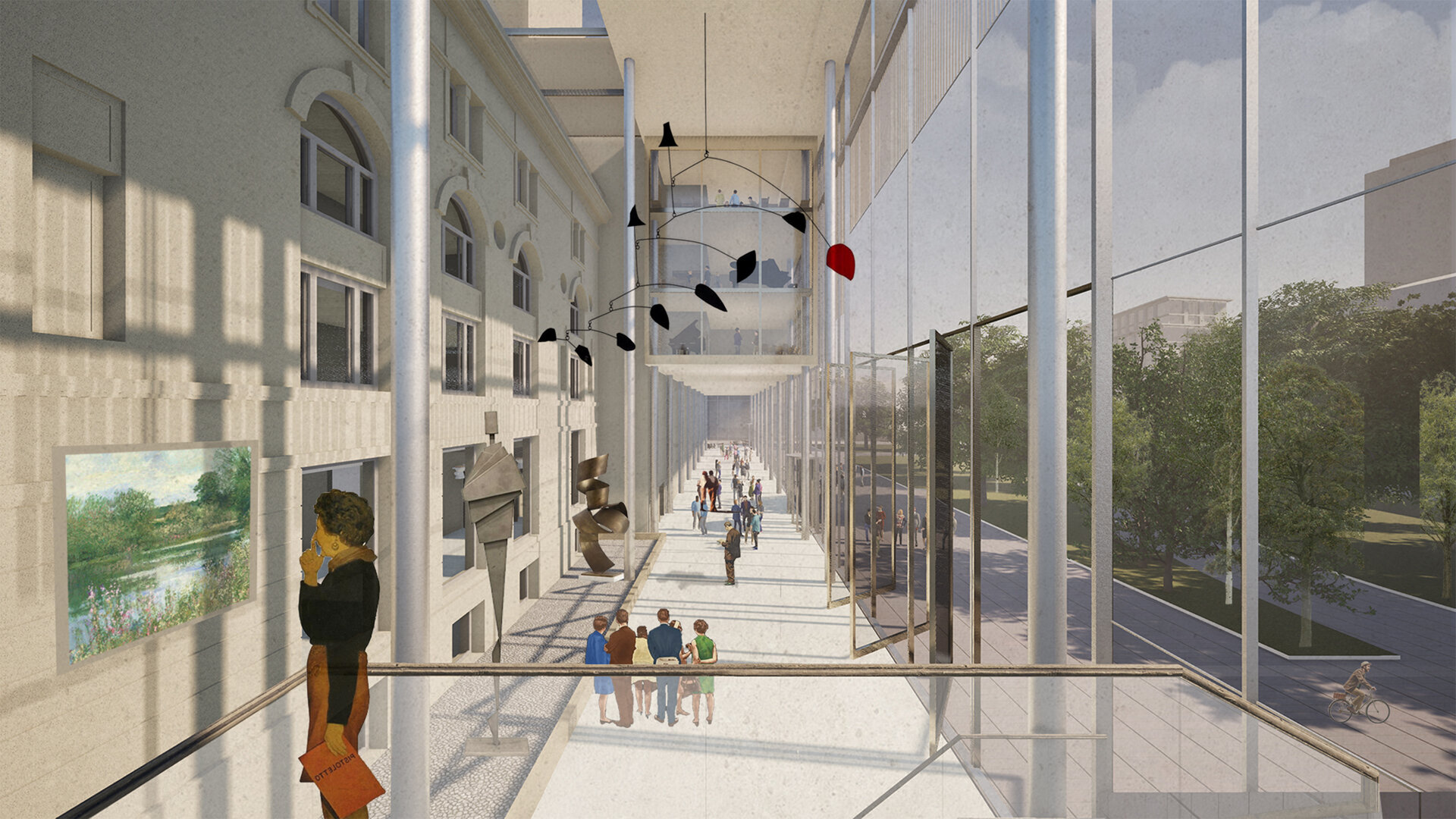
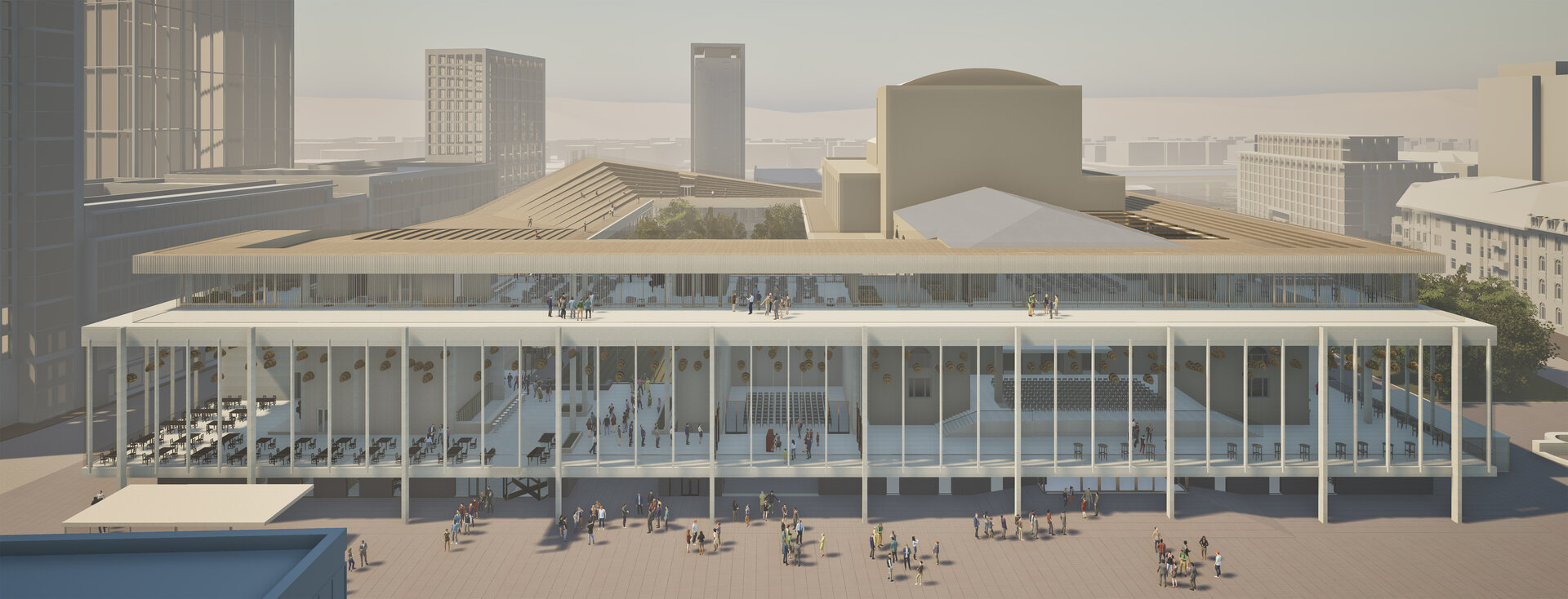
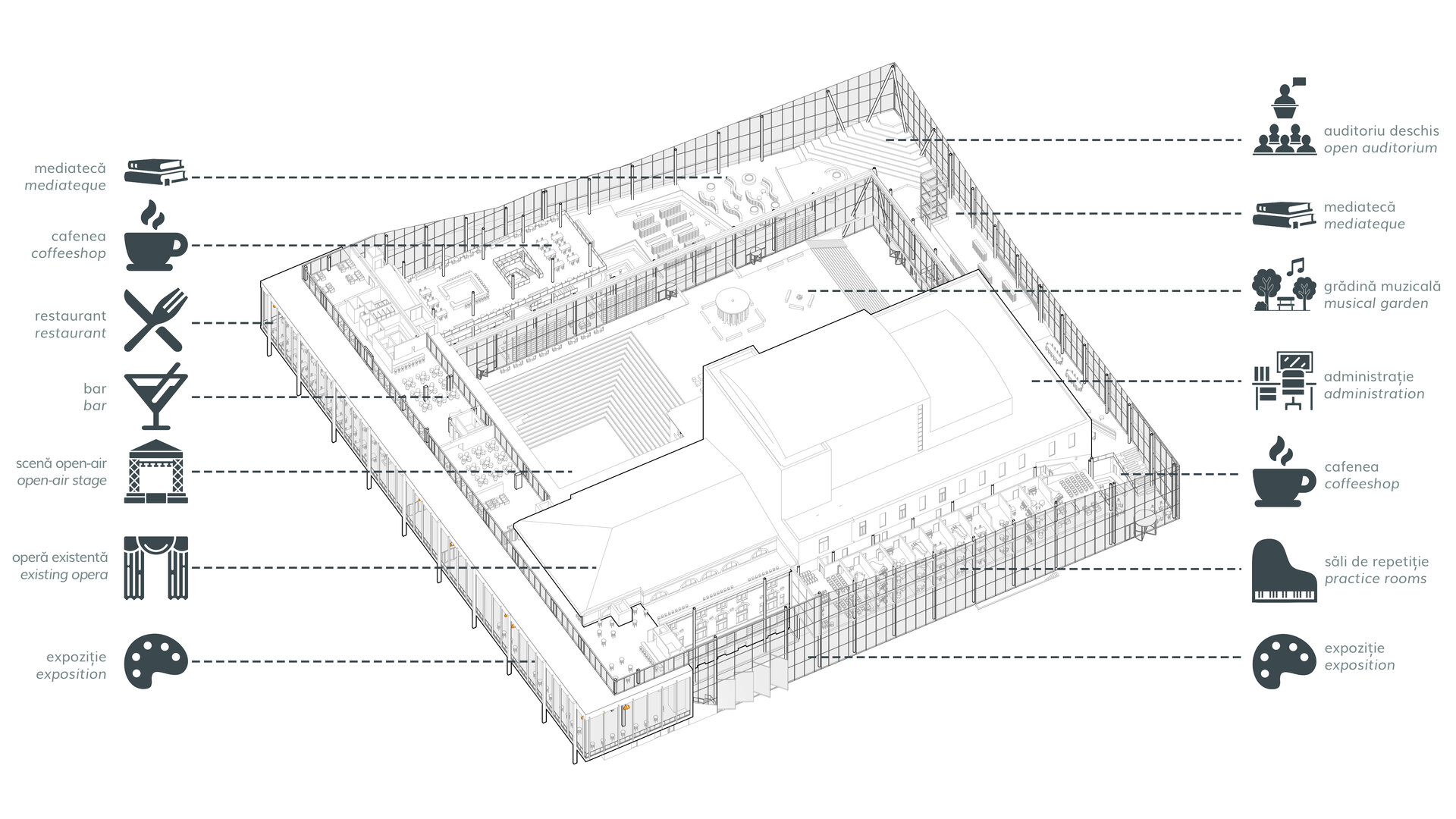
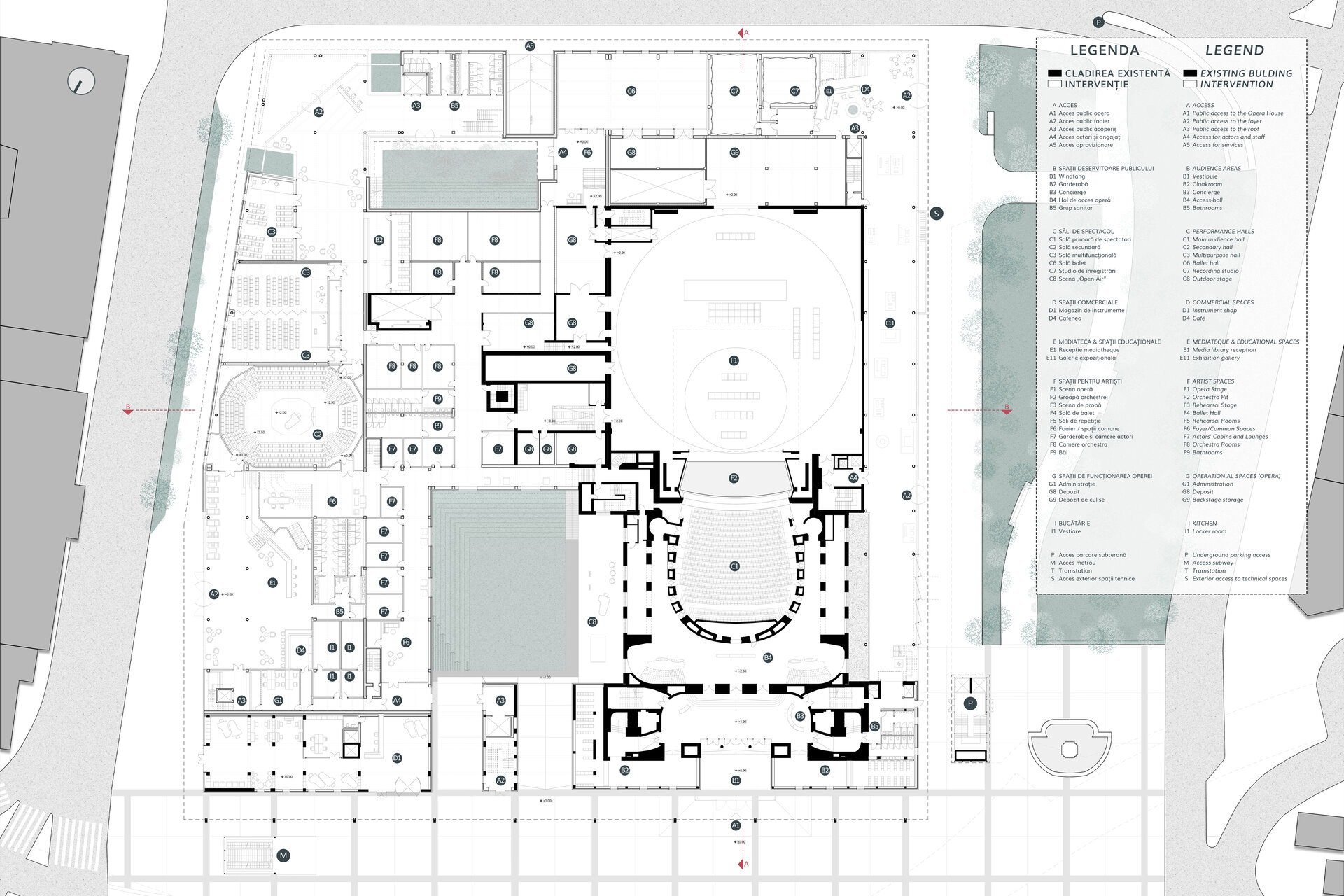
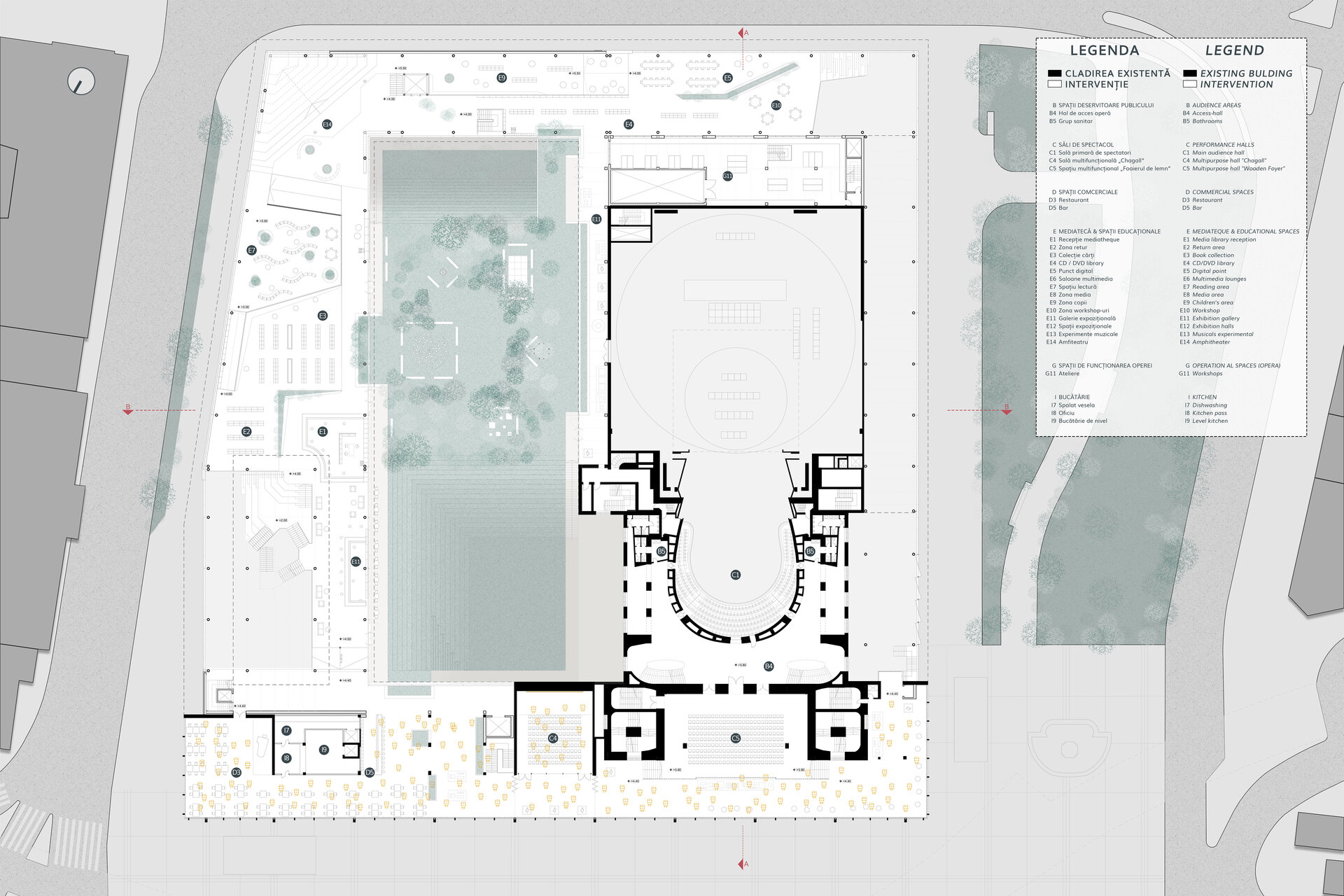
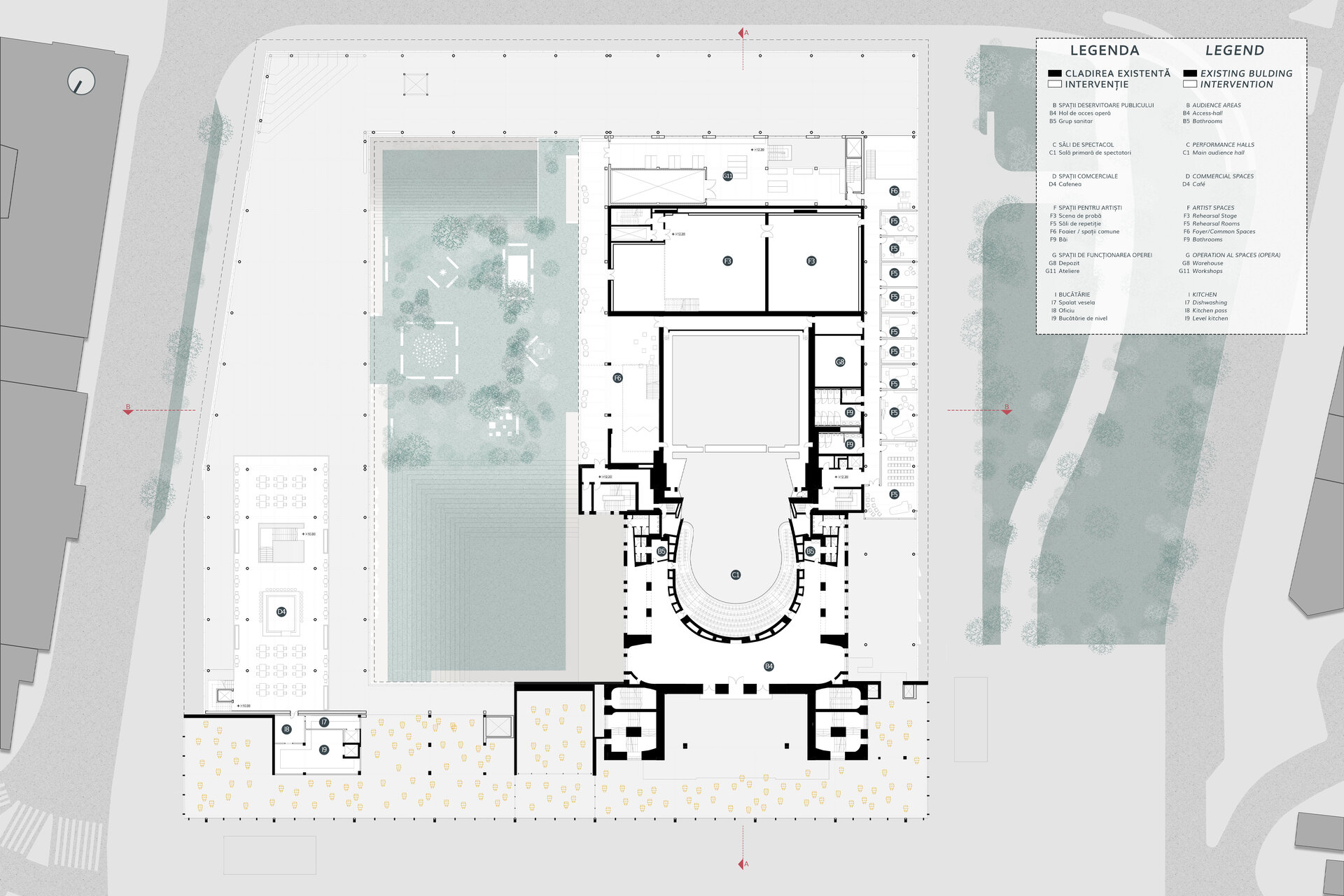
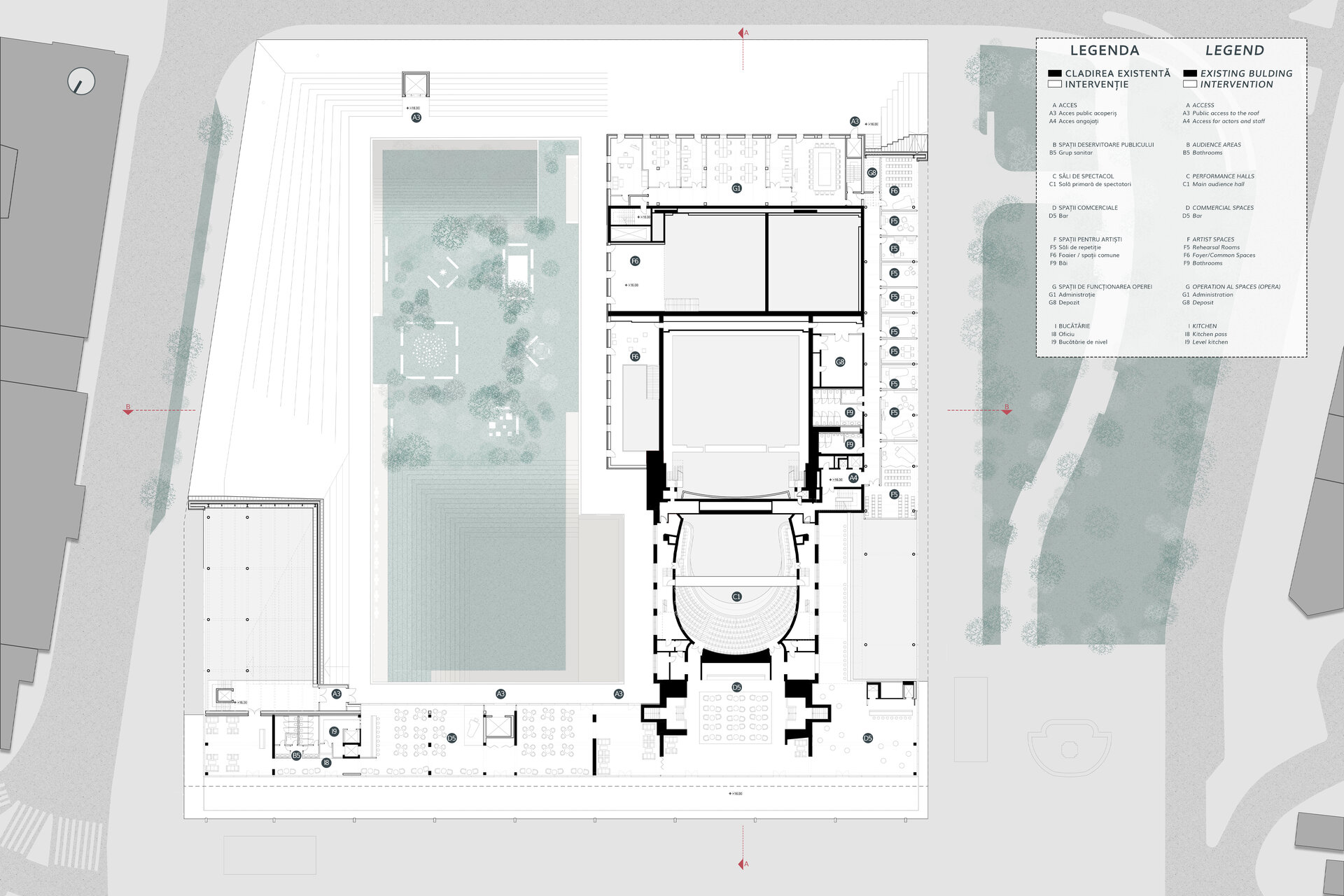
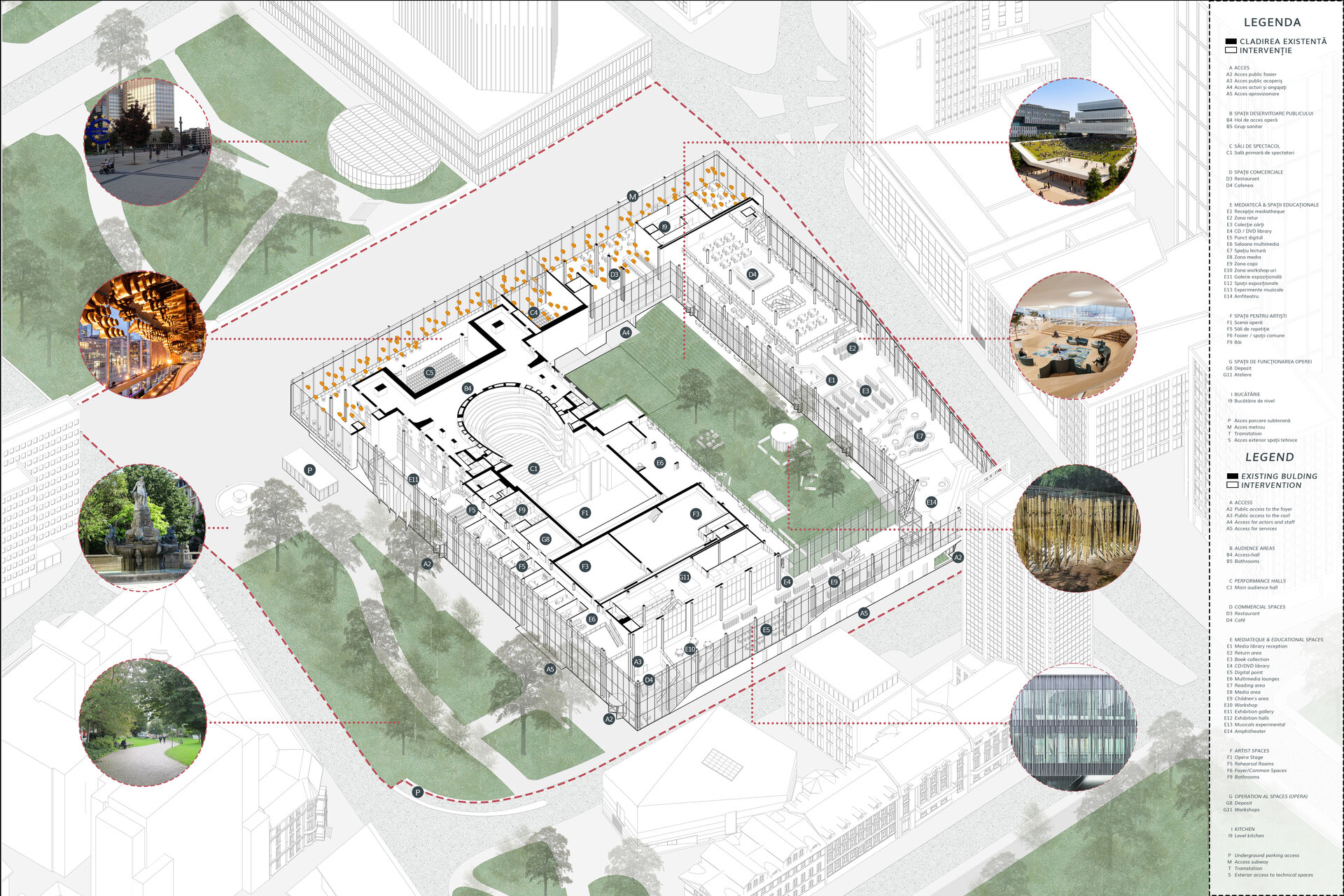
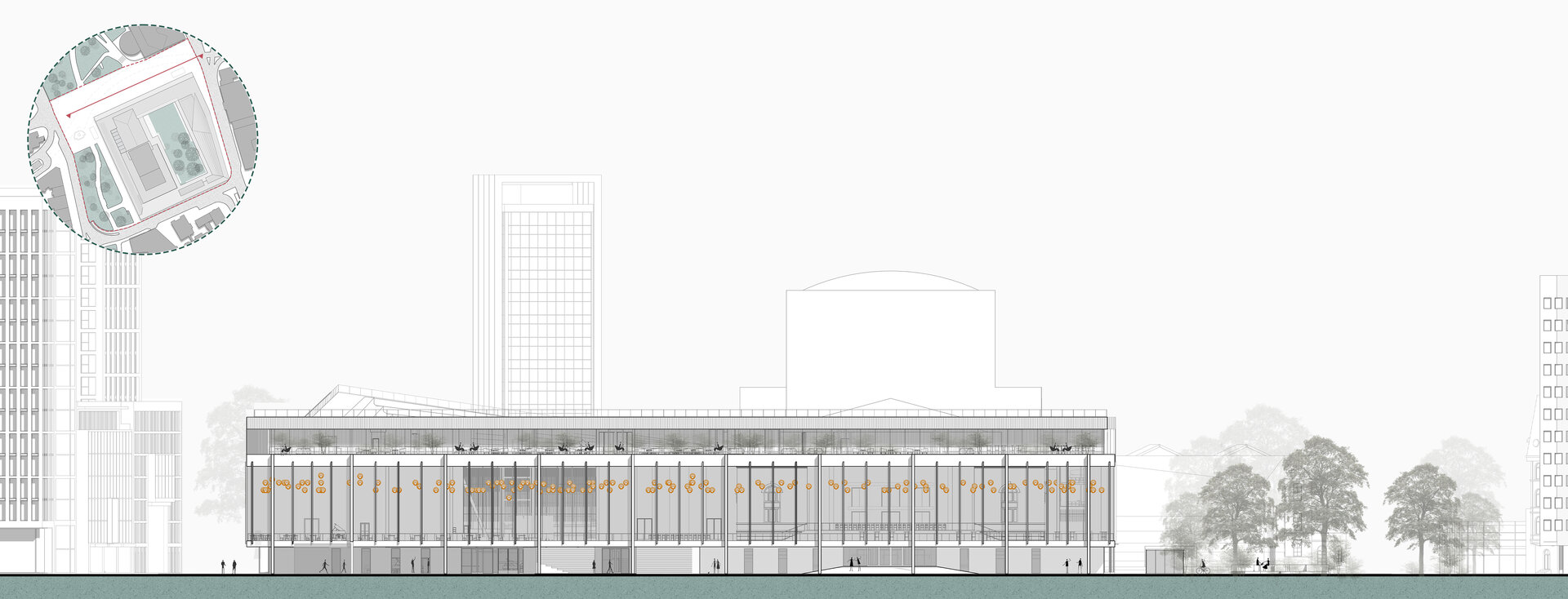
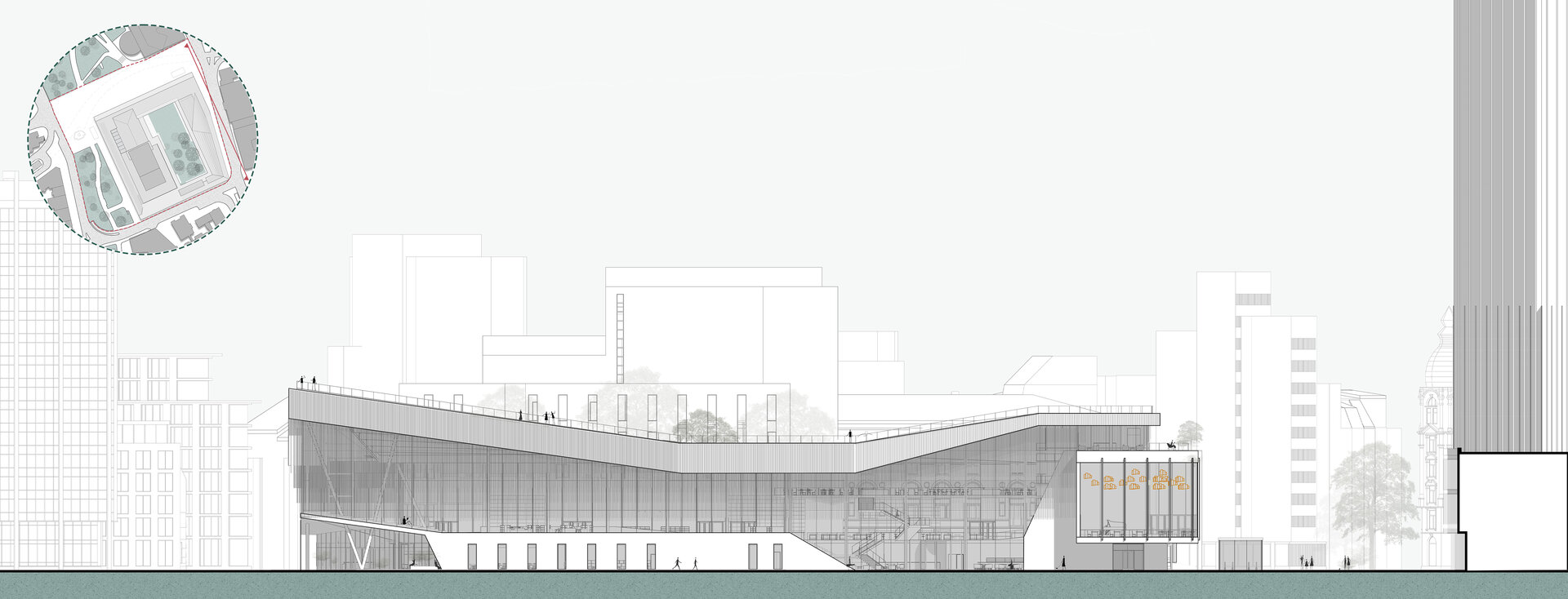
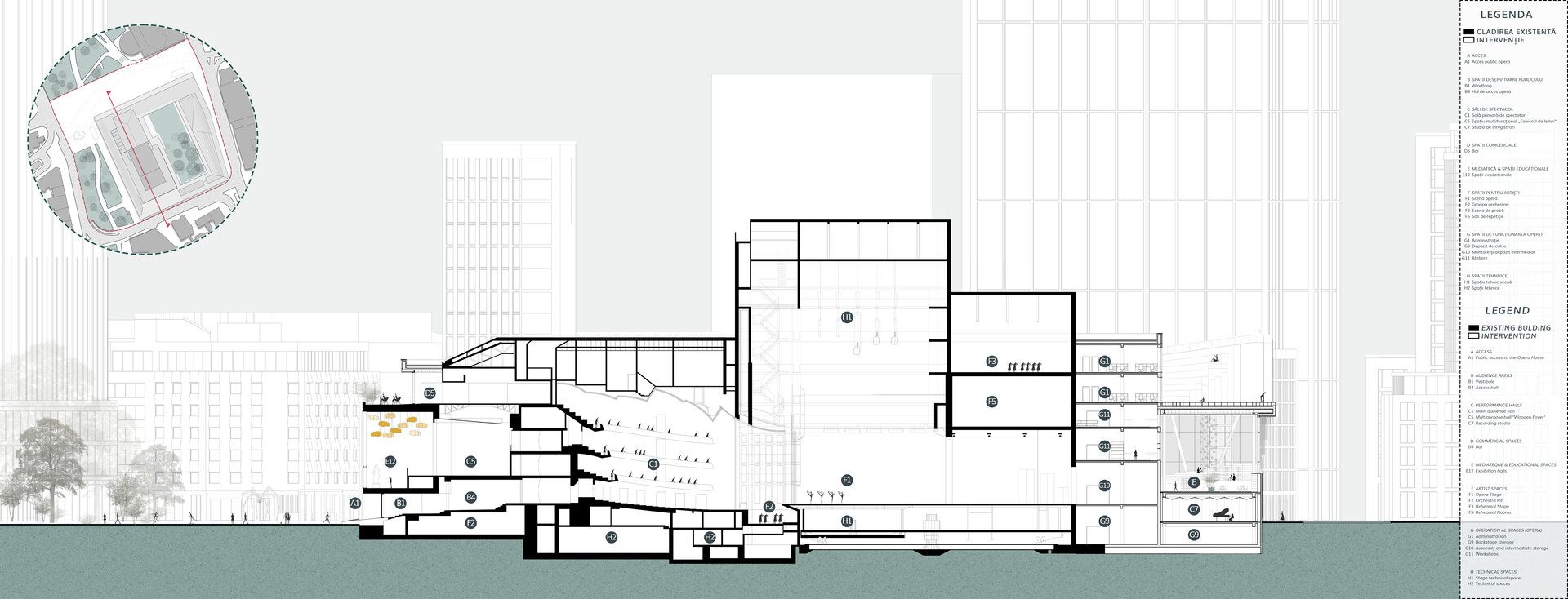
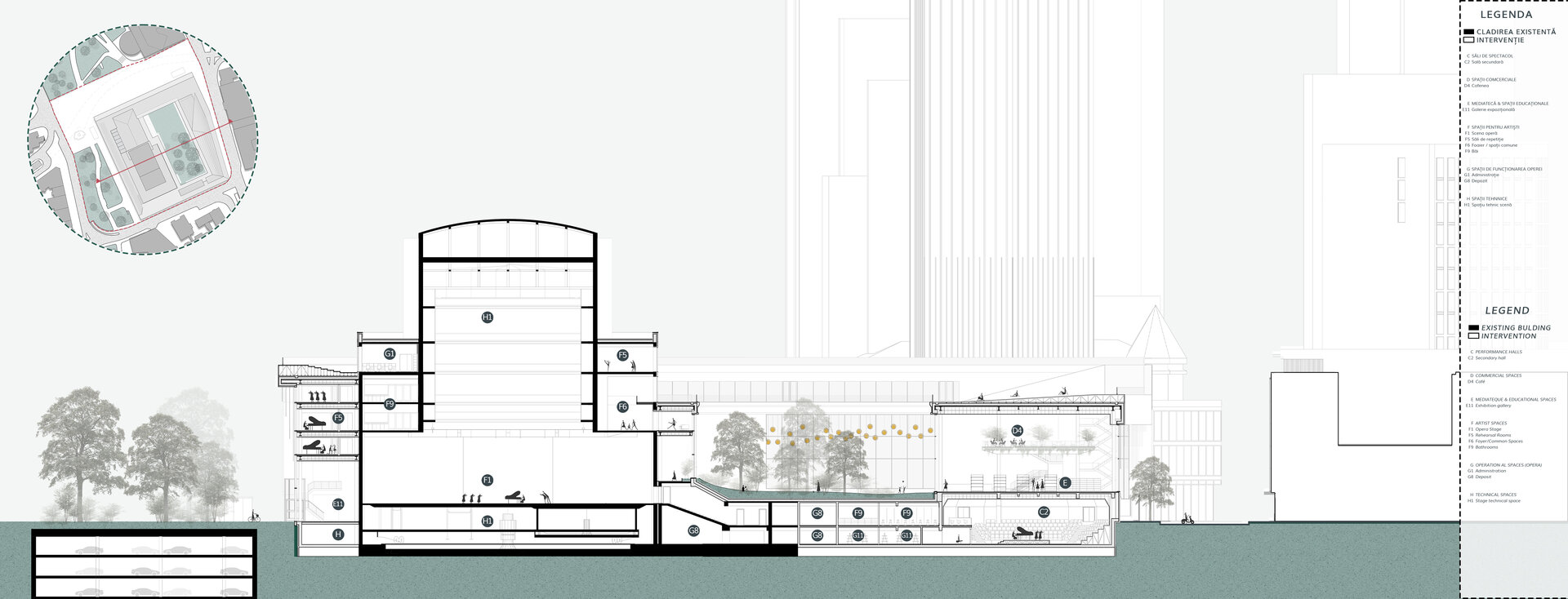
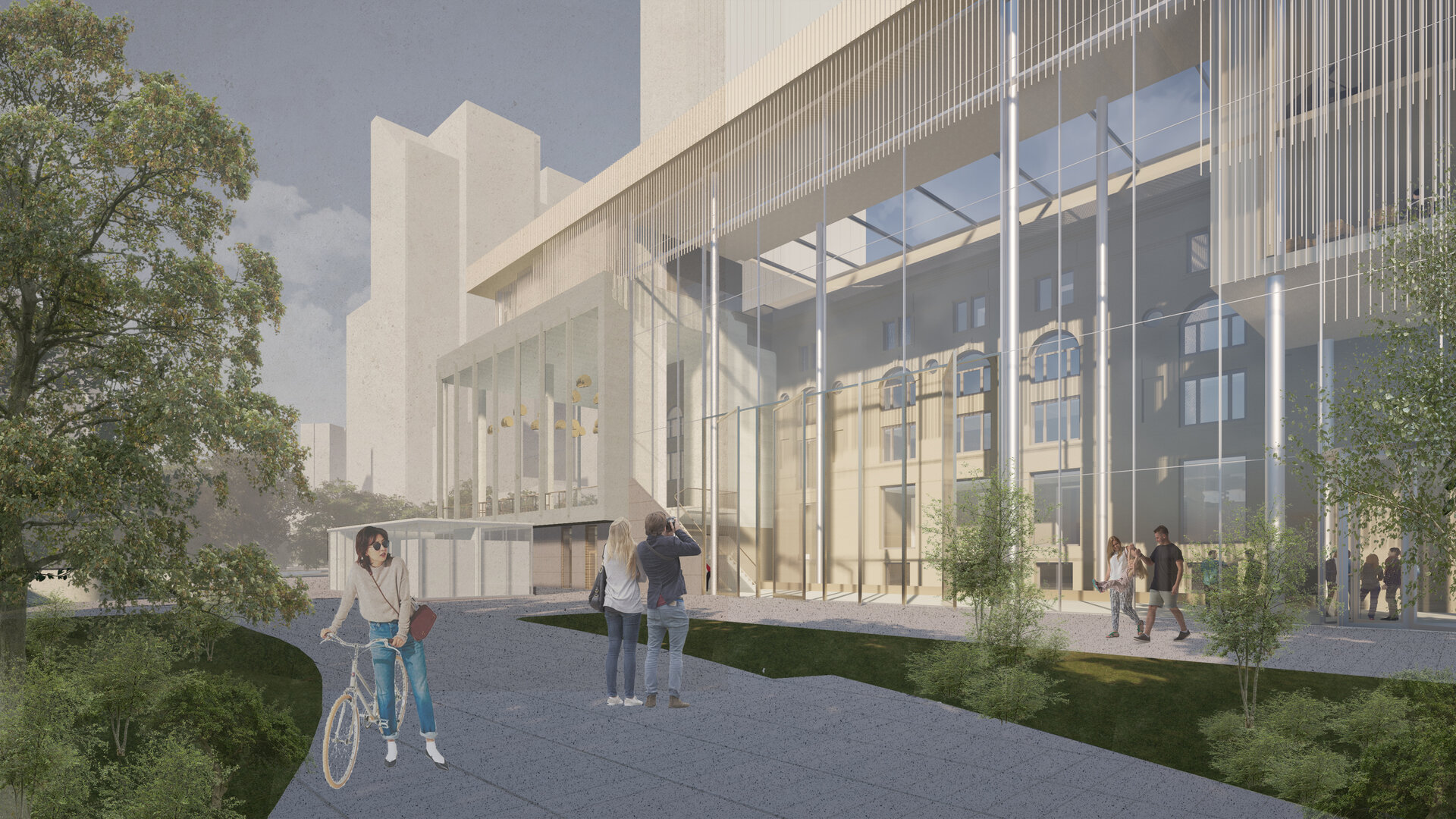
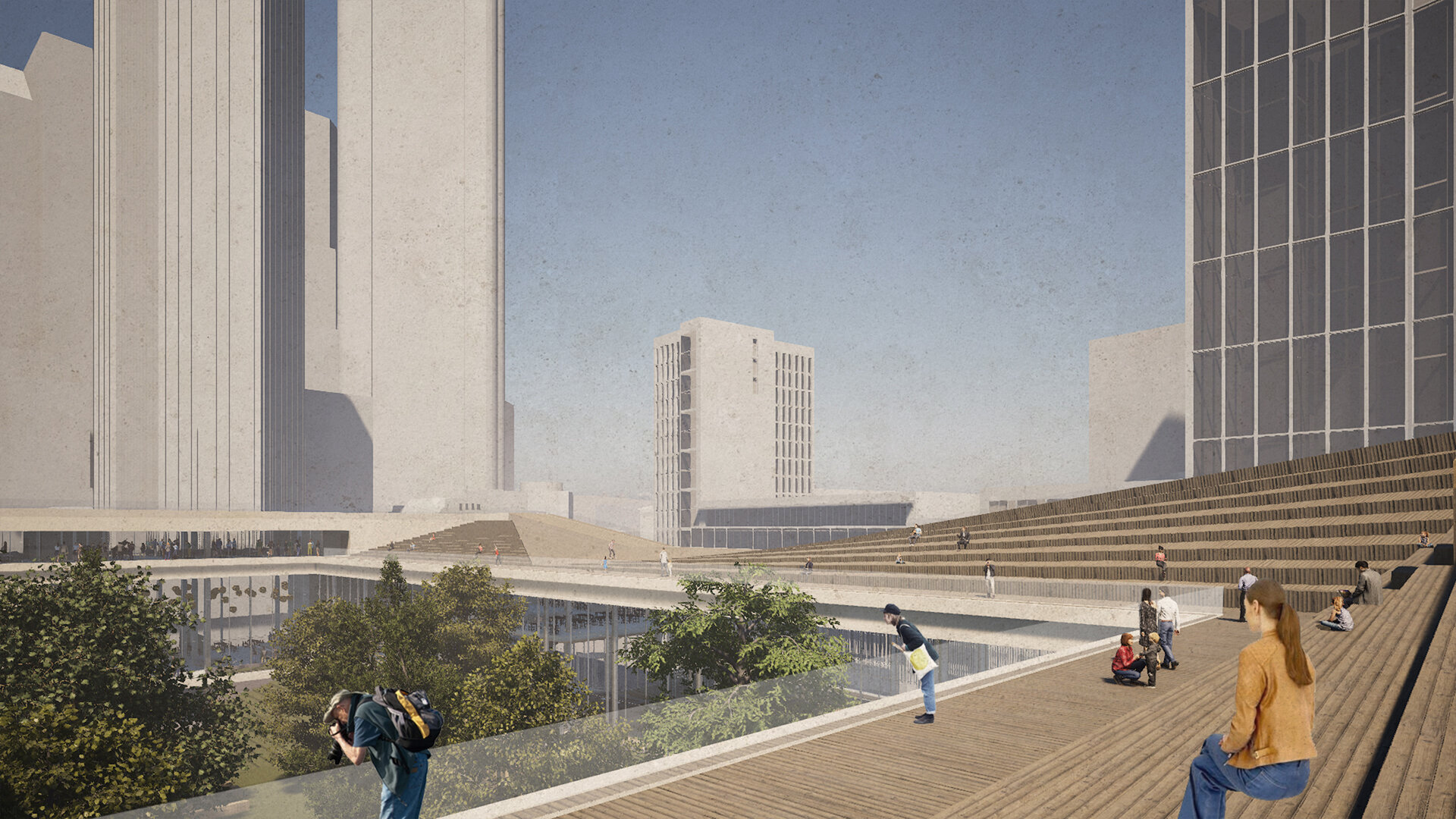
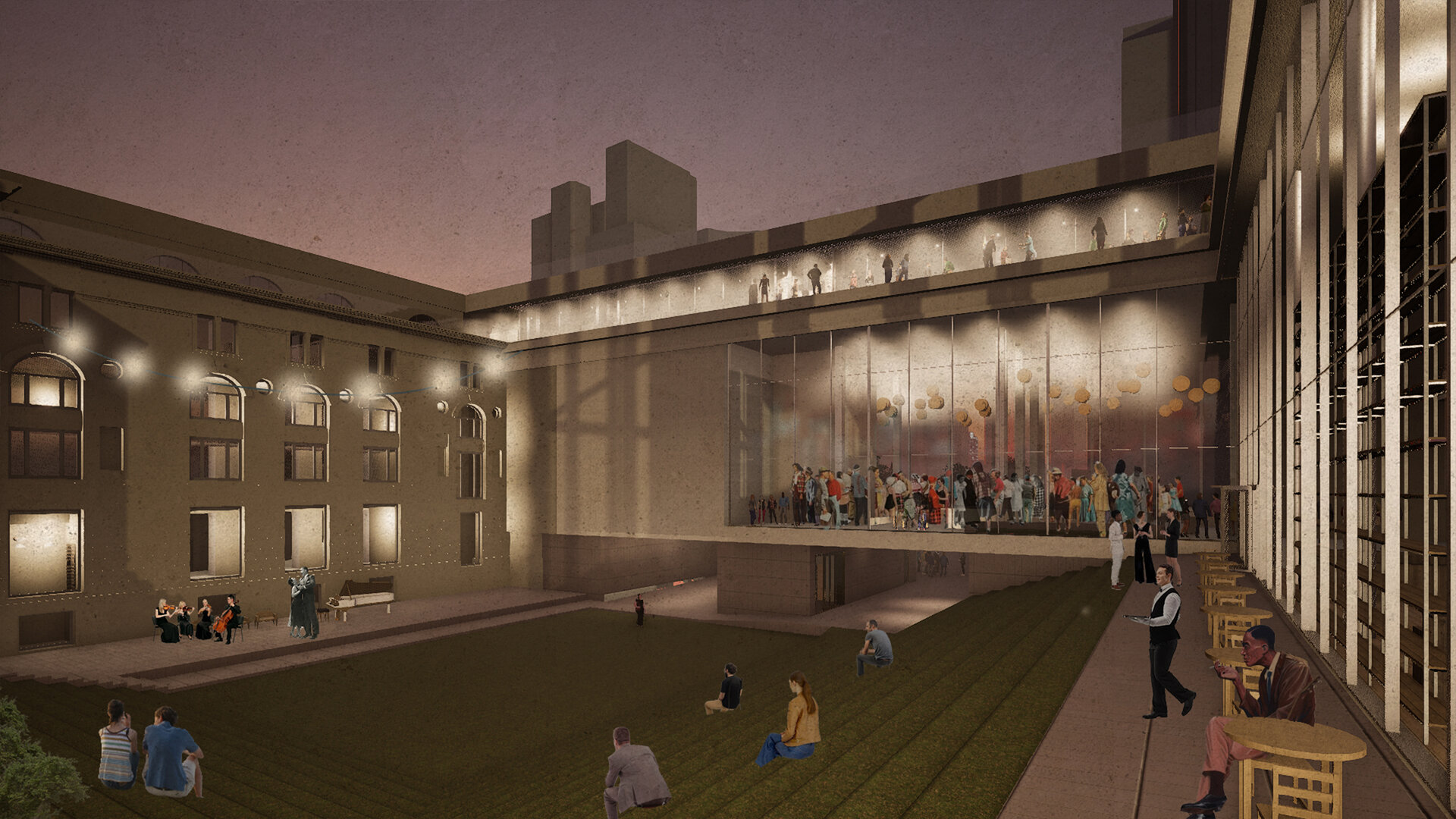
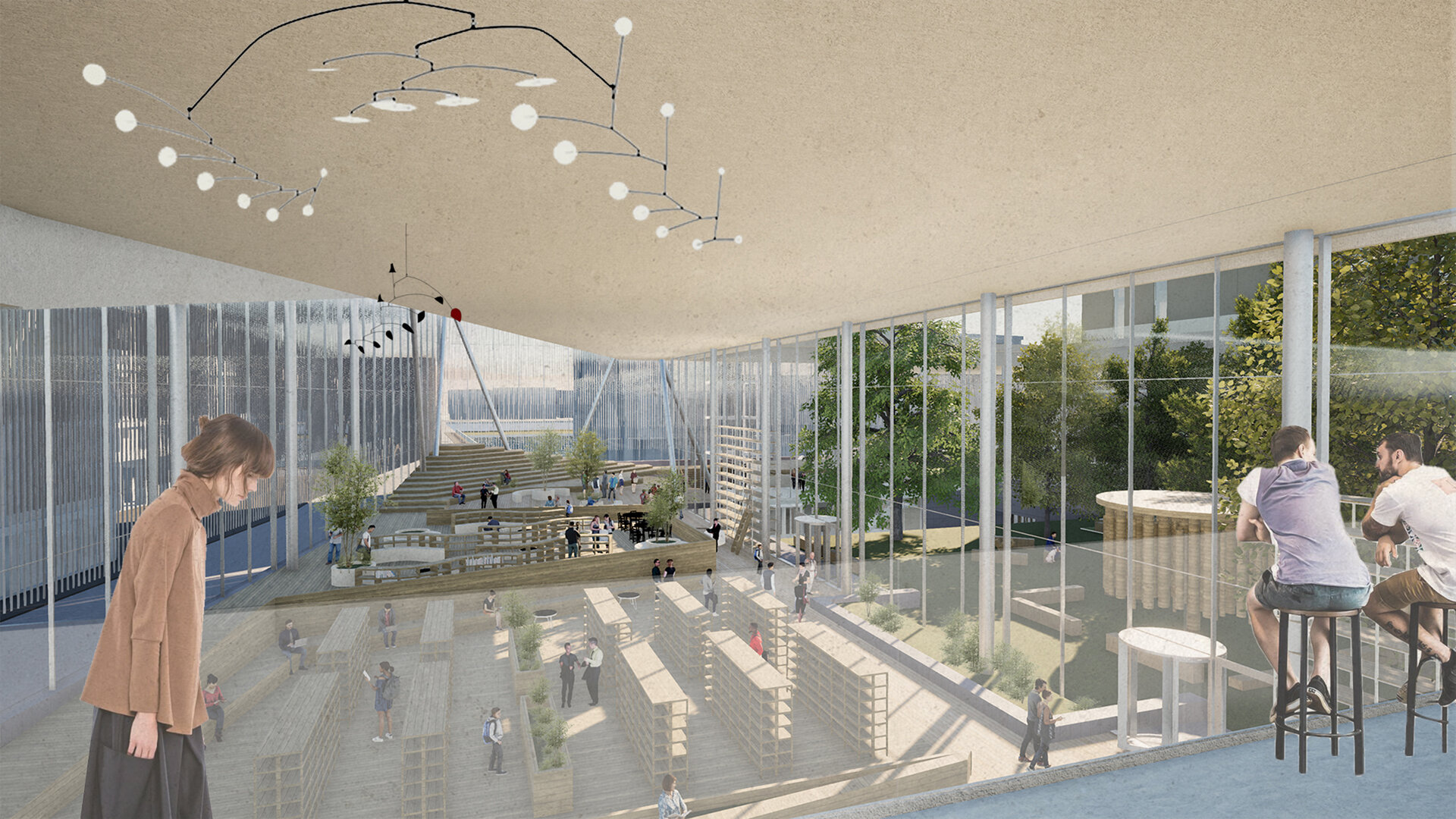
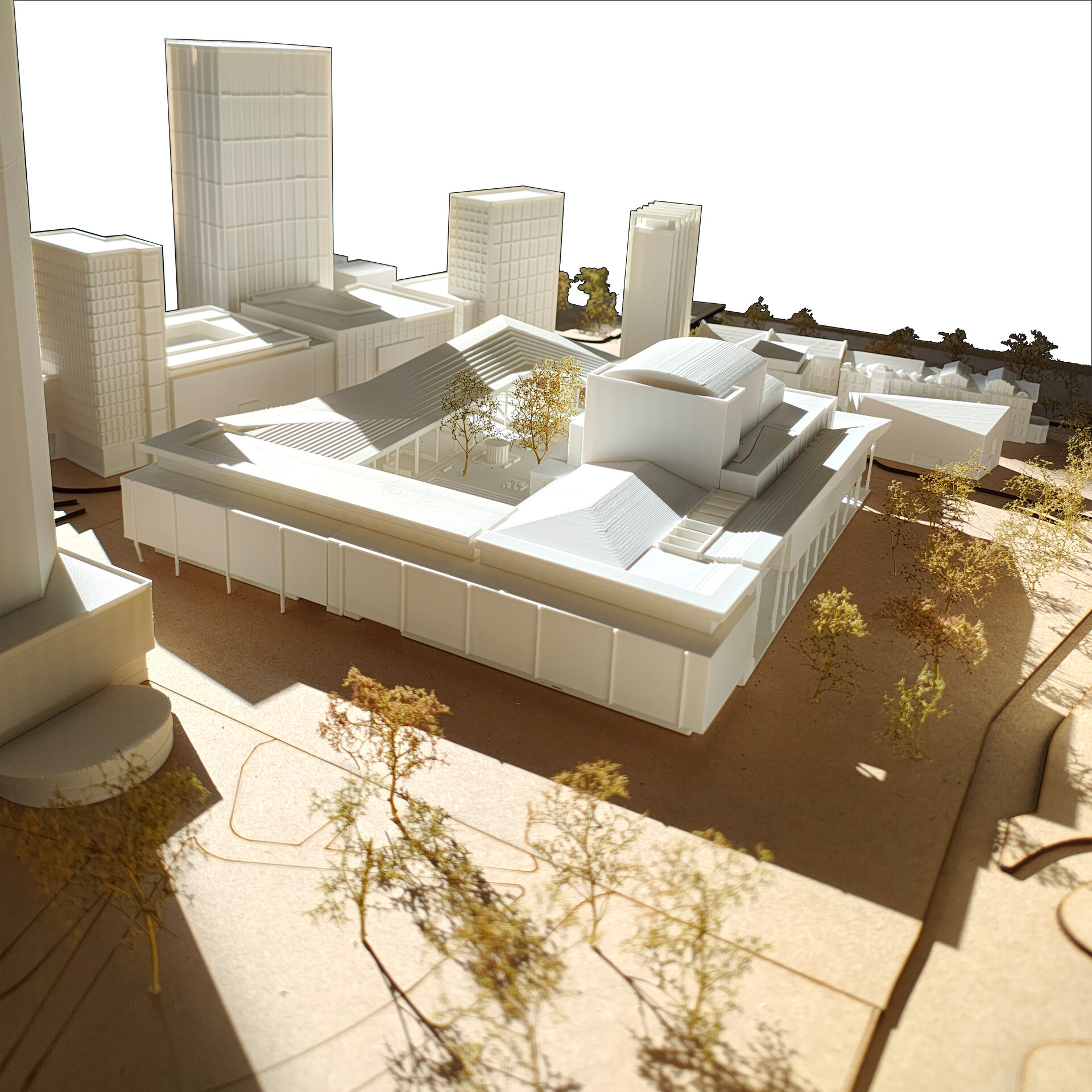
The proposed architectural solution retains the main audience hall and the stage tower, along with the rationalist ”cloud-foyer”, which houses a spatial artwork by Zoltan Kemény and has been under cultural protection since 2015. The intervention involves opening the existing foyer to the public and extending it around all four sides of the site. Its interior accommodates auxiliary programs that complement the opera, such as a media library, cafes, and exhibition zones, alongside its primary function as a foyer. From this space, access is provided to various multifunctional halls, each with a distinct aural architecture. These halls are designed to facilitate the interpretation of various musical styles, with the aim of attracting a broader and more diverse audience. The interior of the complex will feature a public garden, offering a natural soundscape protected from urban noise, complete with an open-air stage and spaces for children's musical experiments. Transparency and permeability enable seamless transition between the two worlds. Concurrently, the roof of the intervention will transform into a public promenade, providing panoramic views of different parts of the city. Thus, the Frankfurt opera, currently active only two evenings per week and limited within the city's spatial context, becomes a public and accessible space that aims to attract and educate a broad audience.
Architecture Diplomas

- Reclaiming Bucharest’s architectural heritage. Student dwellings and cultural establishments along Calea Griviței
- Rusticitas Et Urbanitas. Conversion and Expansion of the Solacolu Inn: Cultural Center for Arts and Architecture
- ONEF Stadium: an active method of working with history
- Extension of the Bucharest School of Arts
- Tineretului Agora. Rehabilitation and extension of the former Kiseleff Strand
- Diocesano Museum: The Cloisters of Sant’Eustorgio
- Marina Dorćol Educational center and library. Residual spaces. Between the city and the Danube in the post-industrial era
- The |YELLOW| complex - orphanage | placement center
- Extending the cultural space of the city center of Pitești
- Post Partum RetreatCenter / Steveston Hwy 13571
- Designing Learning Spaces for Brăila’s Youth
- Social and Educational Centre for kids
- Grădina Luterană: Dwelling and Workspaces for Creative Industries
- Multifunctional Performing Arts Centre, Berzei 21
- The school as a community core in the Rahova neighbourhood
- Politehnica University of Bucharest extension - Education & Research Centre
- Architecture of Forgotten Memory
- Students’ Sports Palaestra
- Versvs Museum
- Restoration and extension of “King Carol I” rural hospital in Filipestii de Targ
- Studios for artists on Leonida Street
- Luka Cargo Port Hotel and Convention Center, Belgrade, Serbia
- Diocesan Museum Extension
- Museum of the Anti-Communist Revolution of December 1989
- Post-treatment rehabilitation center for assistance and integration of addicted people into the contemporary community in Bucharest
- Immersive Theater – Industrial Heritage Regeneration Through Experimental Cultural Interventions
- Floreasca Olympic Aquatics Center, Bucharest
- Revitalisation of the Radák-Brukenthal Ensemble. Multifuncitonal Cultural Center in Micăsasa, Sibiu
- Intermodal Node in Piața Presei Libere – Bucharest
- Reviving the Identity of Ovidiu Island: Spa and Wellness Complex
- Palimpsest - The third cloister
- Casandra – from the memory of the place to a promising future: an initiatory journey of transformation
- The Creative District and the Fashion House in Arnhem, the Netherlands
- Extension and regeneration of the historical and museal space in Turda
- Research Center for the Reclamin of Polluted Mining Sites Baia Mare
- Interface with Lake Morii: Collective Housing
- #2-4 The intersection between community and art
- Reconnecting the City to the Water. Ferry Terminal in Zimnicea
- Tourist Complex in Sulina
- Arts Center. Revitalization of the Prohaska Mill in Timișoara
- Vitrum & Charta - The cultural library as a mediation between transparency and memory
- Urban Nodes
- Conversion of the former Bragadiru brewery
- Intervention on the Frankfurt Opera
- Bucharest Architecture Center
- Urban Liminality and The Cultural Turn: Vesterport Between Transit and Event
- Revitalization of the Courtyard of Domnița Bălașa Church in Bucharest
- Cito Sanum. Medical recovery center on Calea Moșilor
- Archaeological Research Institute Constanța
- In defence of the fortified church - Community center in Țapu village
- Cultural-Educational Forum - Extention of the Argeș County Museum, Pitești
- Dialogue Between Generations – Vatra Luminoasă Intergenerational Center
- Educational Community Center for children
- Reclaiming the boundary, Văcărești Delta
- Rehabilitation and Extension: Polyvalent Cultural Center - Chisinau, Republic of Moldova
- The Archive of Collections. A blueprint for recovering Bucharest’s cultural heritage
- The Bastion of Artists. A community centre dedicated to arts and crafts, located in the historic distric of Brașov
- Cultural laboratory for heritage studies in the historic center of Brașov
- Domaine les Ormes. Rural revitalization through artisan workshops and agrotourism in Allan, Drôme Provençale, France
- Külliye in time: the Ottoman complex in Medgidia between recovery and reinvention
- GabroArt Han. Archives of Tradition. The restoration of Gabroveni Inn and the socio-cultural activation of the nearby bazaar
- Cultural Establishment. Reactivation of Pompiliu Eliade House through conversion and extension
- The Center of an Edge. Restructuring the Commercial Market and Relocating the Neighbourhood Library
- The city around the colony. Reconversion and extension of the post office and the colony
- House of Film. The Rediscovery of the Cinematic Ritual in the Intimacy of Dwelling
- Game development center and interactive technology museum
- Conversion and Extension of the Radák-Brukenthal Noble Ensemble in Micasasa, Sibiu County. Socio-Medical Residential Center for Elderly People
- Forma: Operative fragment for the regeneration of urban memory
- Extension and Rehabilitation of Technical High Schools. Workshops for Vocational Education


