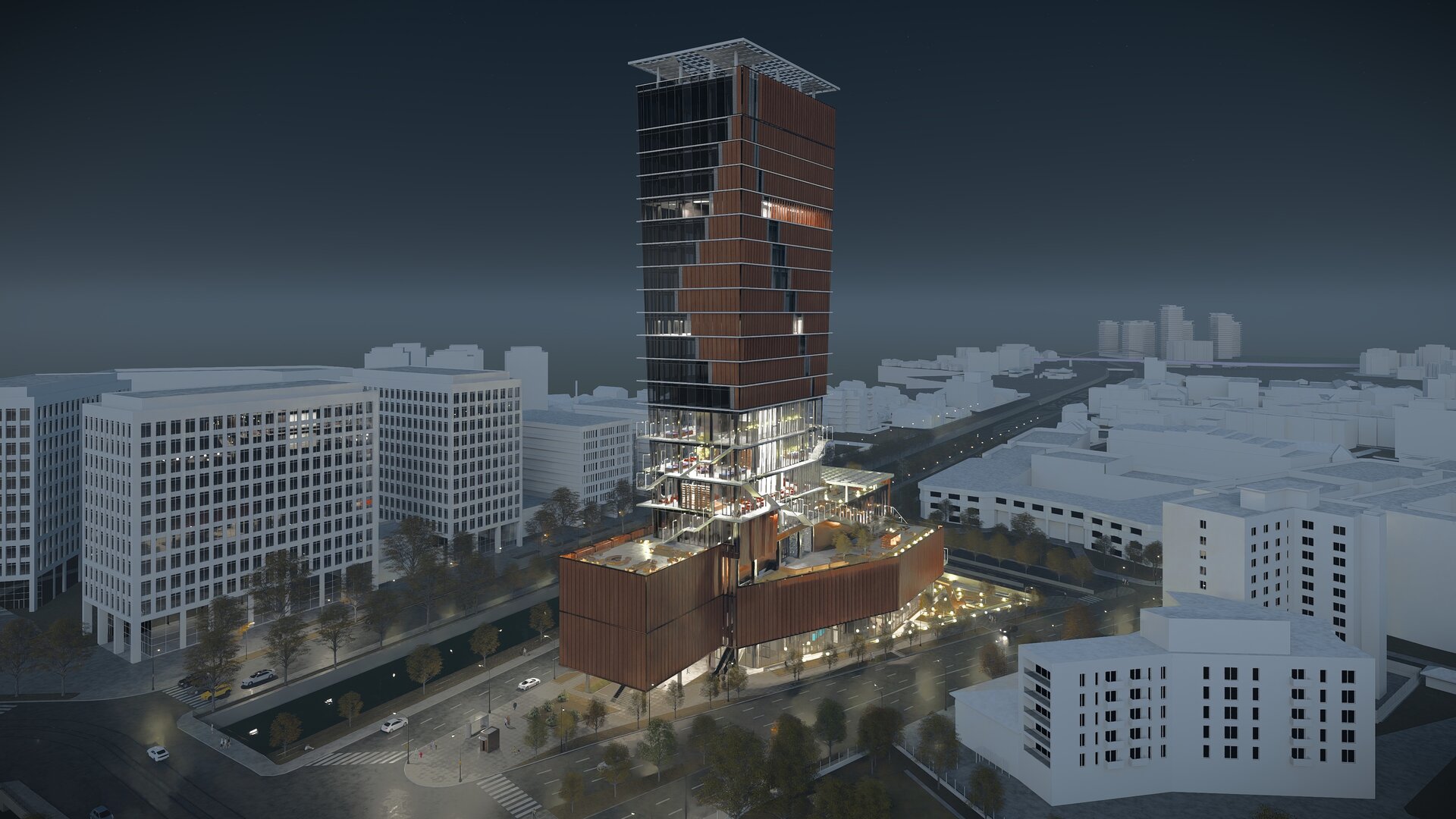
Game development center and interactive technology museum
Authors’ Comment
Site location and urban context
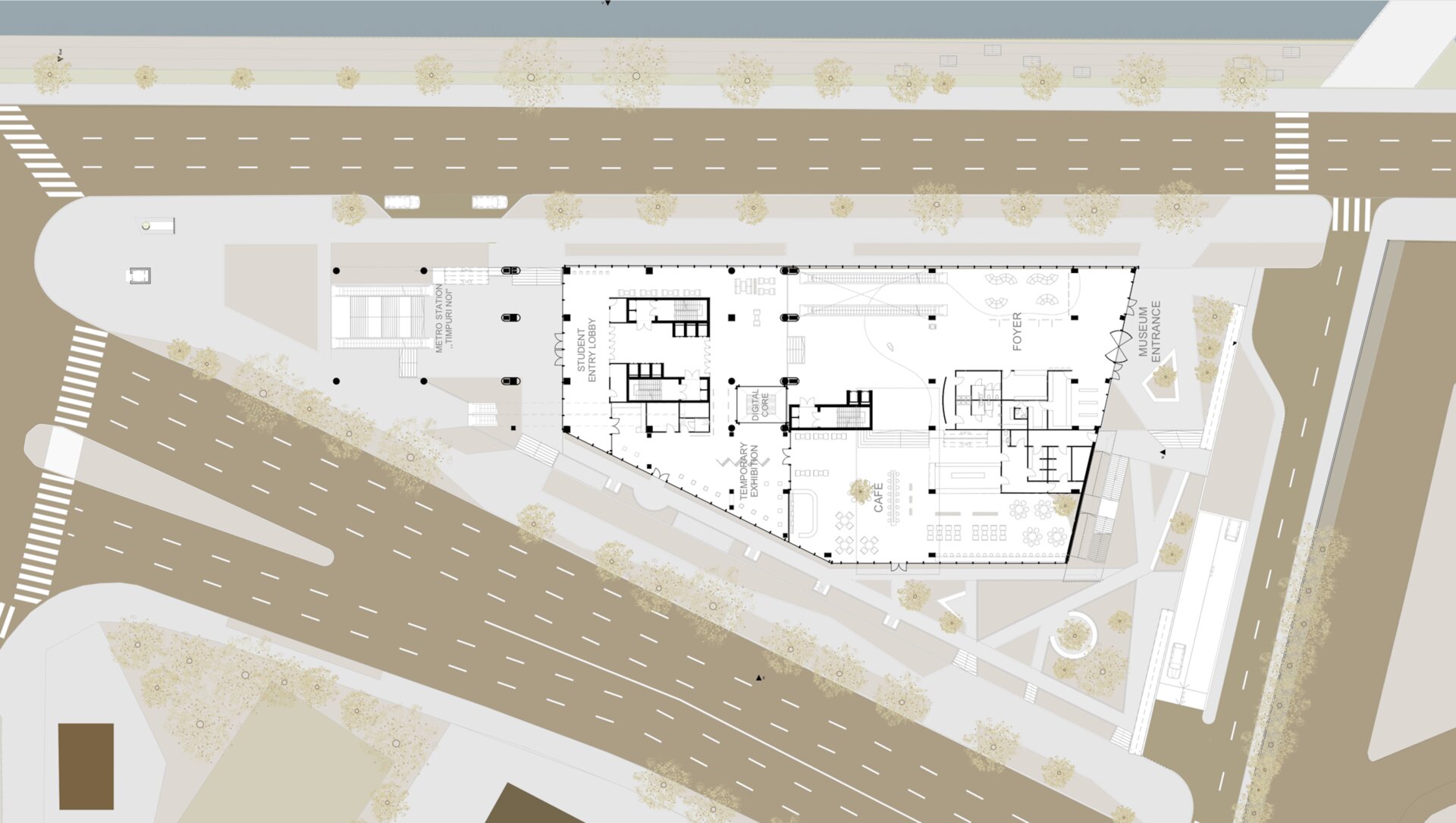
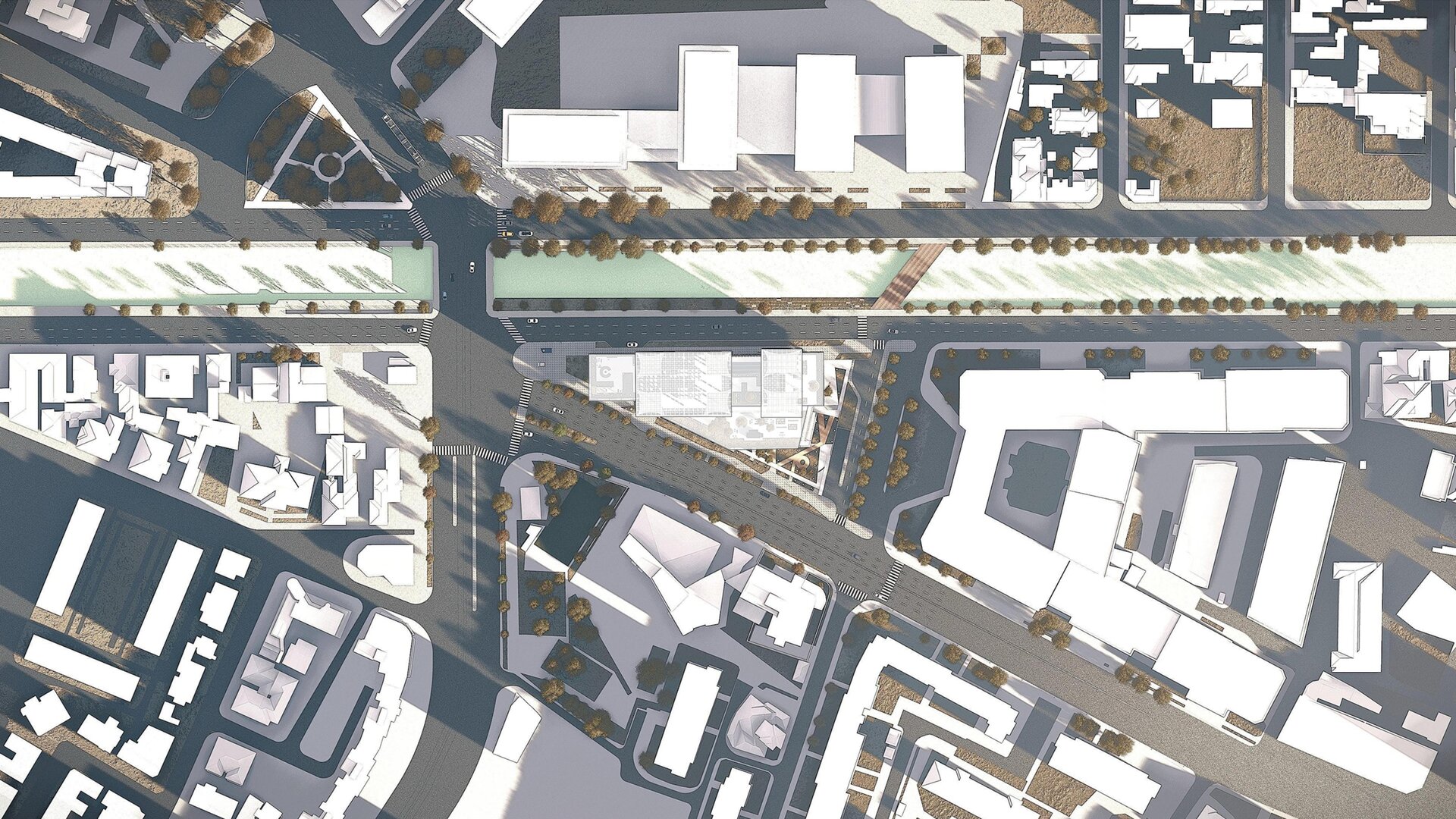
The project is located in the Timpuri Noi area of Bucharest, at the intersection of Splaiul Unirii and Calea Văcărești, an important urban node with high visibility and excellent accessibility. Historically an industrial hub, this area is undergoing a transition toward new urban functions centered on education, culture, and innovation.
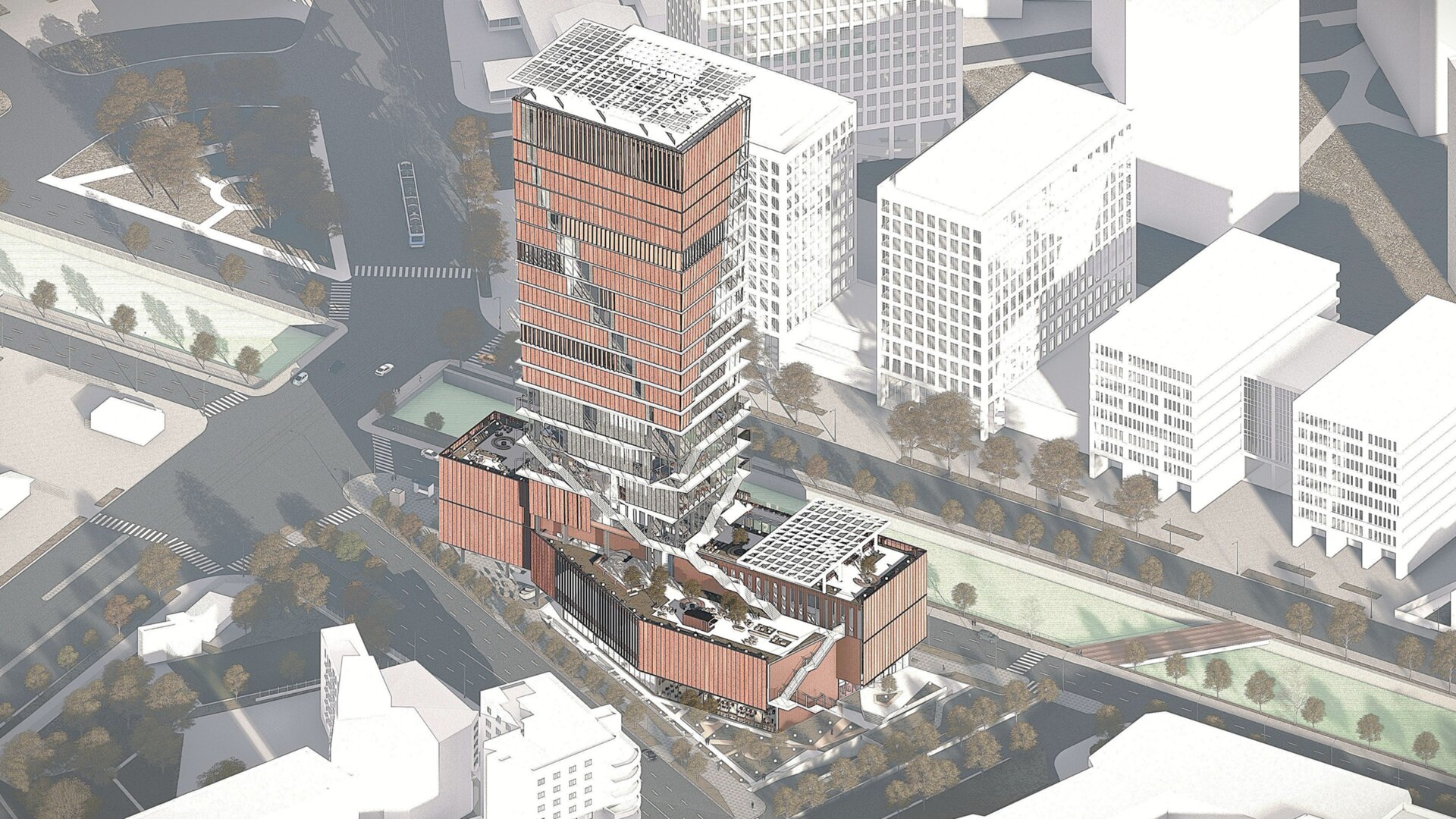
The approximately 7,000 m² site currently hosts a fuel station, an incompatible use given the proximity to educational institutions and residential neighborhoods. The site enjoys high urban exposure and excellent access: it is traversed by the Dâmbovița river corridor, currently being reconverted into an urban greenway, and integrates the Timpuri Noi metro station directly into the proposal, both functionally and formally.
The relationship with the Dâmbovița offers a substantial urban opportunity: activating its riverbanks, creating pedestrian and cycle paths, ensuring green continuity, and opening up to an urban tech-park. This strategic site forms a junction between the historic city, transport infrastructure, and a future hub of educational and digital development.
Concept and vision
In a tech-driven, digitally evolving era, architecture must offer more than functional spaces, it must create scenarios that foster creativity, collaboration, and innovation. The proposed design meets these needs through a dual program: a Game Development Center and a Contemporary Technology Museum.
These complementary uses serve as an urban catalyst: education and digital culture merge into an integrated ecosystem that supports youth development, draws in the general public, and collaborates with the tech industry. The goal is to create an accessible, open, stimulating space, a new model of a city campus where the urban environment enters into dialogue with education and innovation.
This project is an architectural proposition with significant social and urban impact: a prototype for regenerating a transforming area and a model for future educational spaces in Romania, inspired by the dynamism of leading European cities.
Functionality and spatial organisation
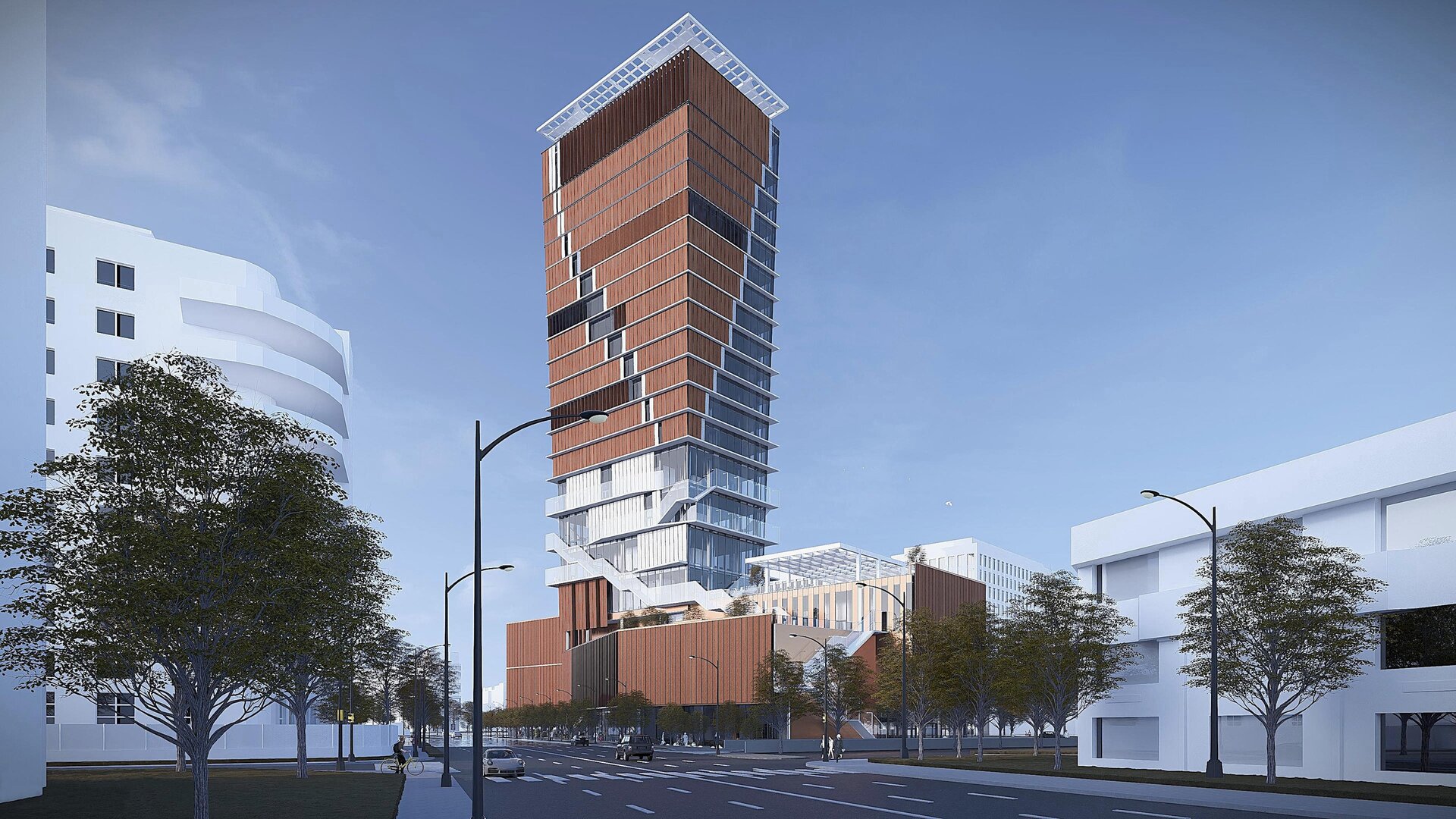
The architectural composition features two main volumes:
Vertical Volume, The Skyscraper
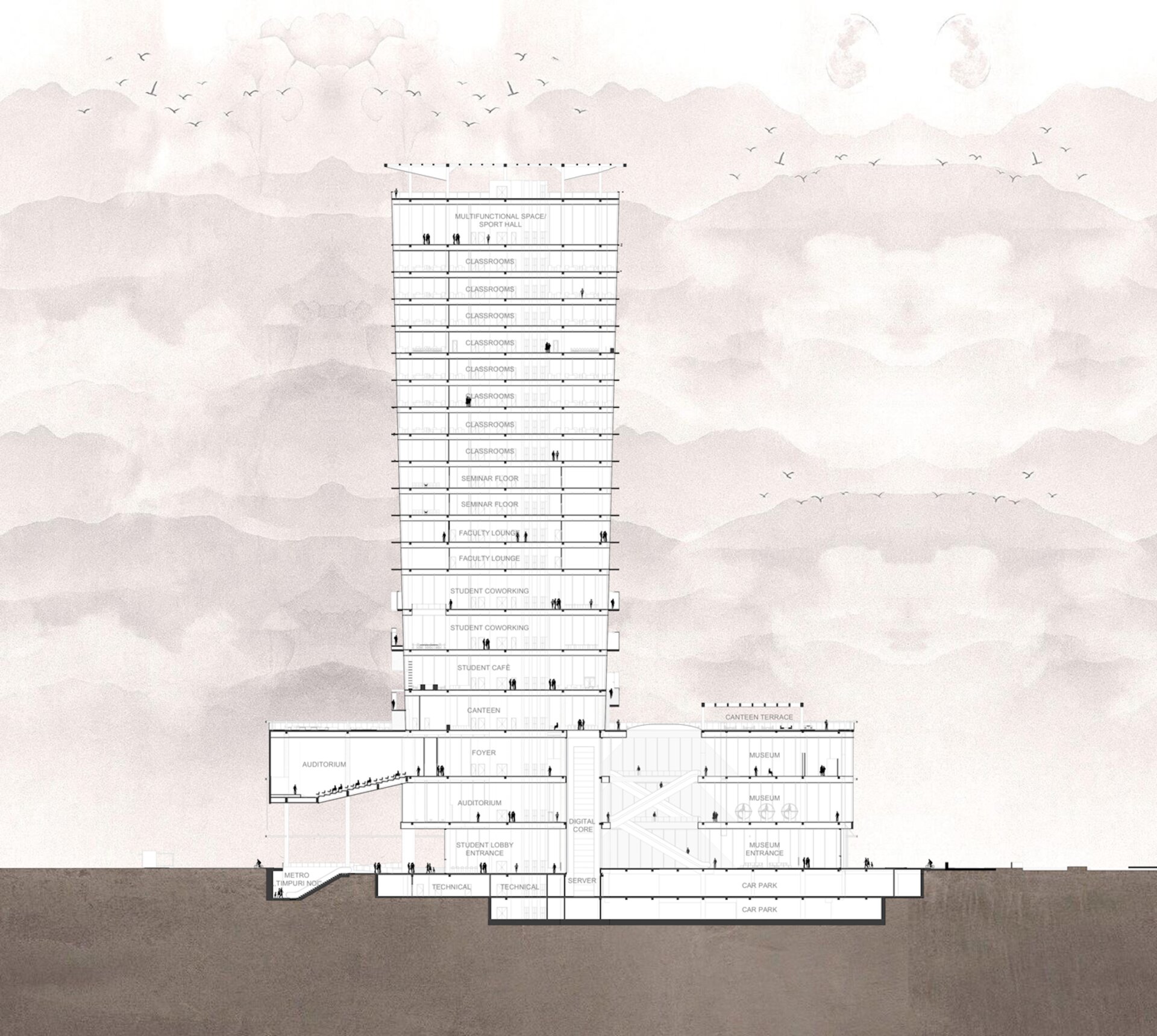
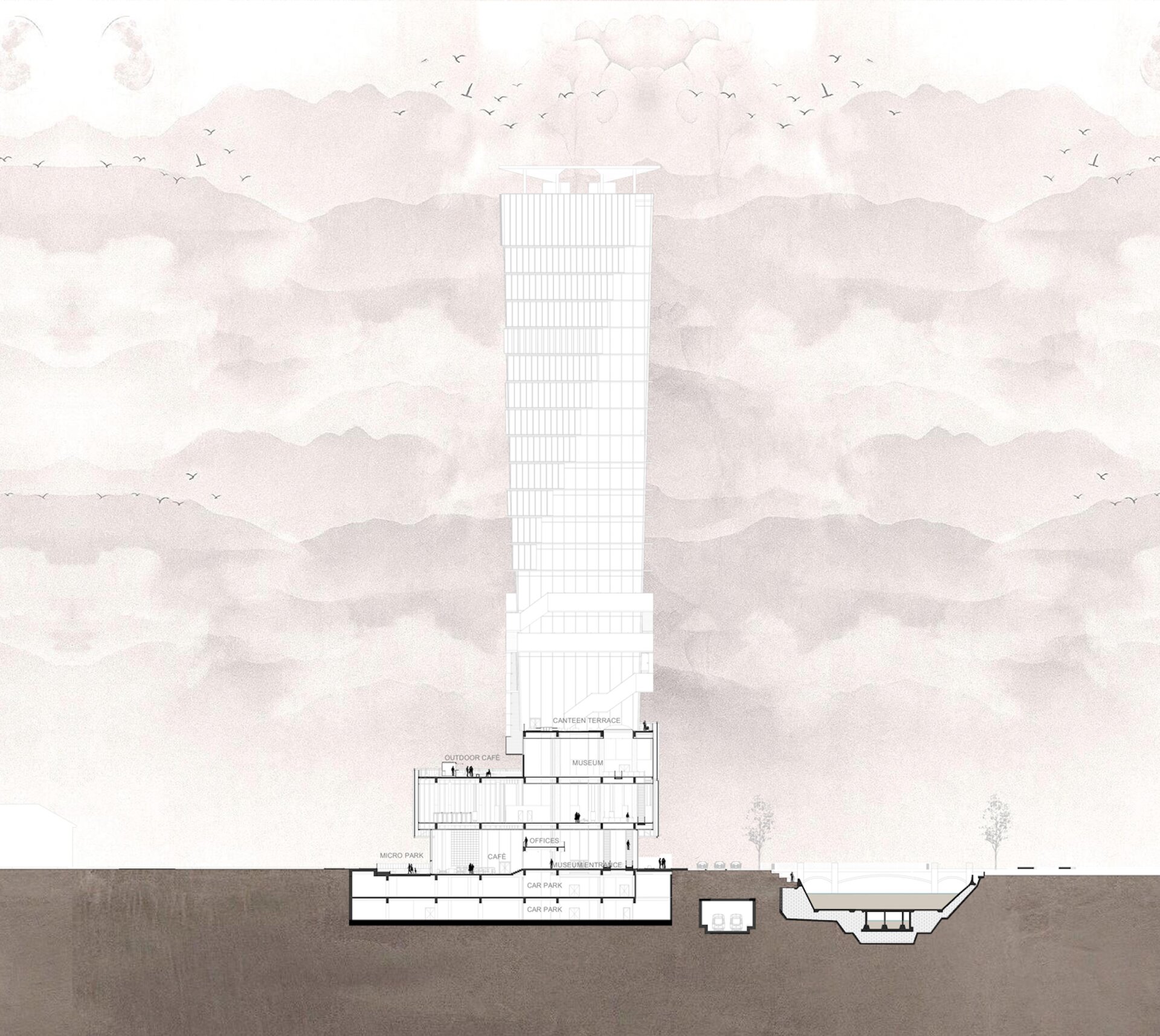
A high-rise building (G+20) housing educational labs, collaborative workspaces, classrooms, startup offices, and temporary student housing.
Modular and flexible structure to adapt spaces to evolving user needs.
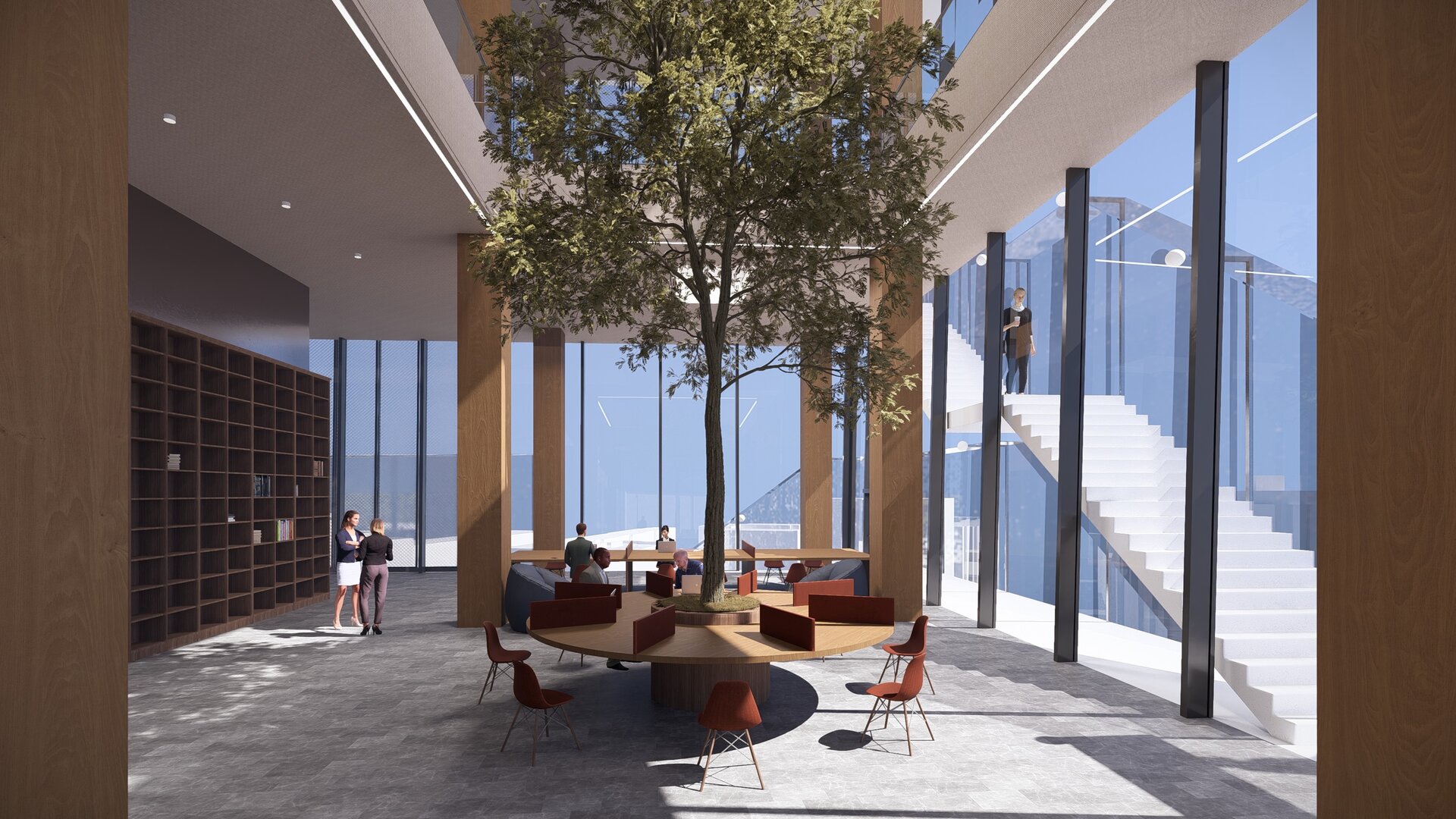
Includes common areas, lounges, and tiered terraces that encourage cross-disciplinary collaboration and social interaction.
Horizontal Volume – THE MUSEUM / PAVILION
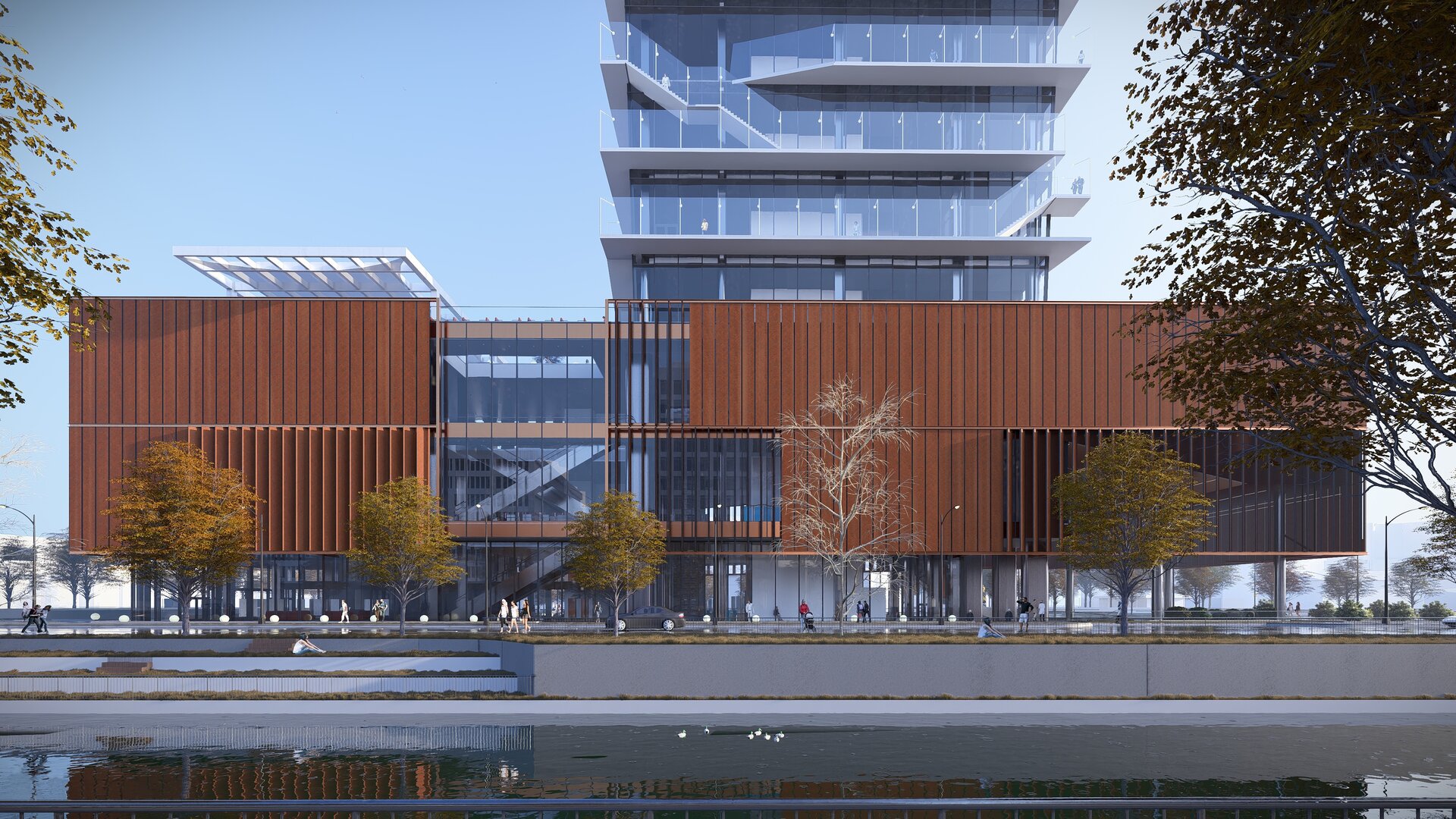
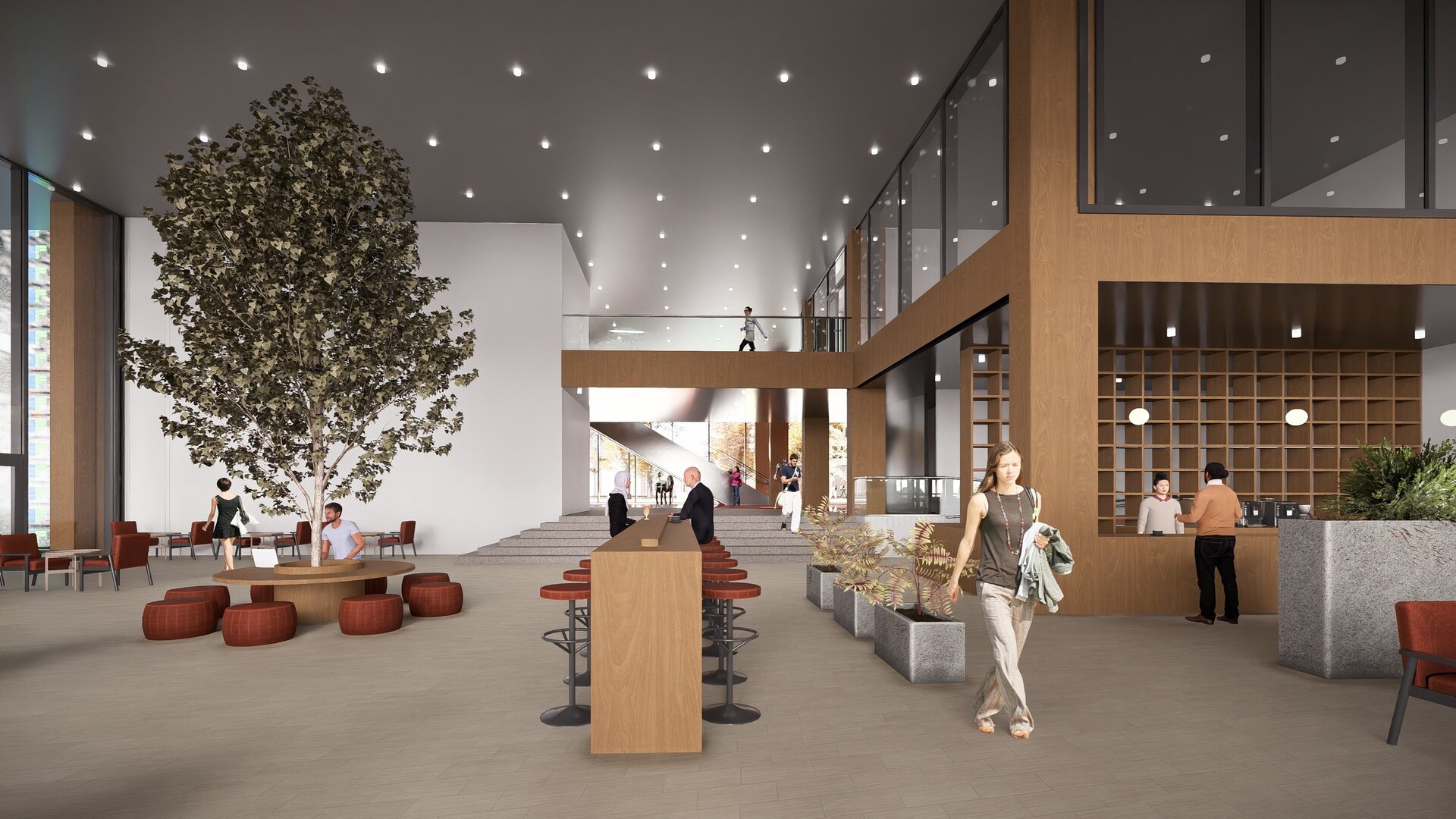
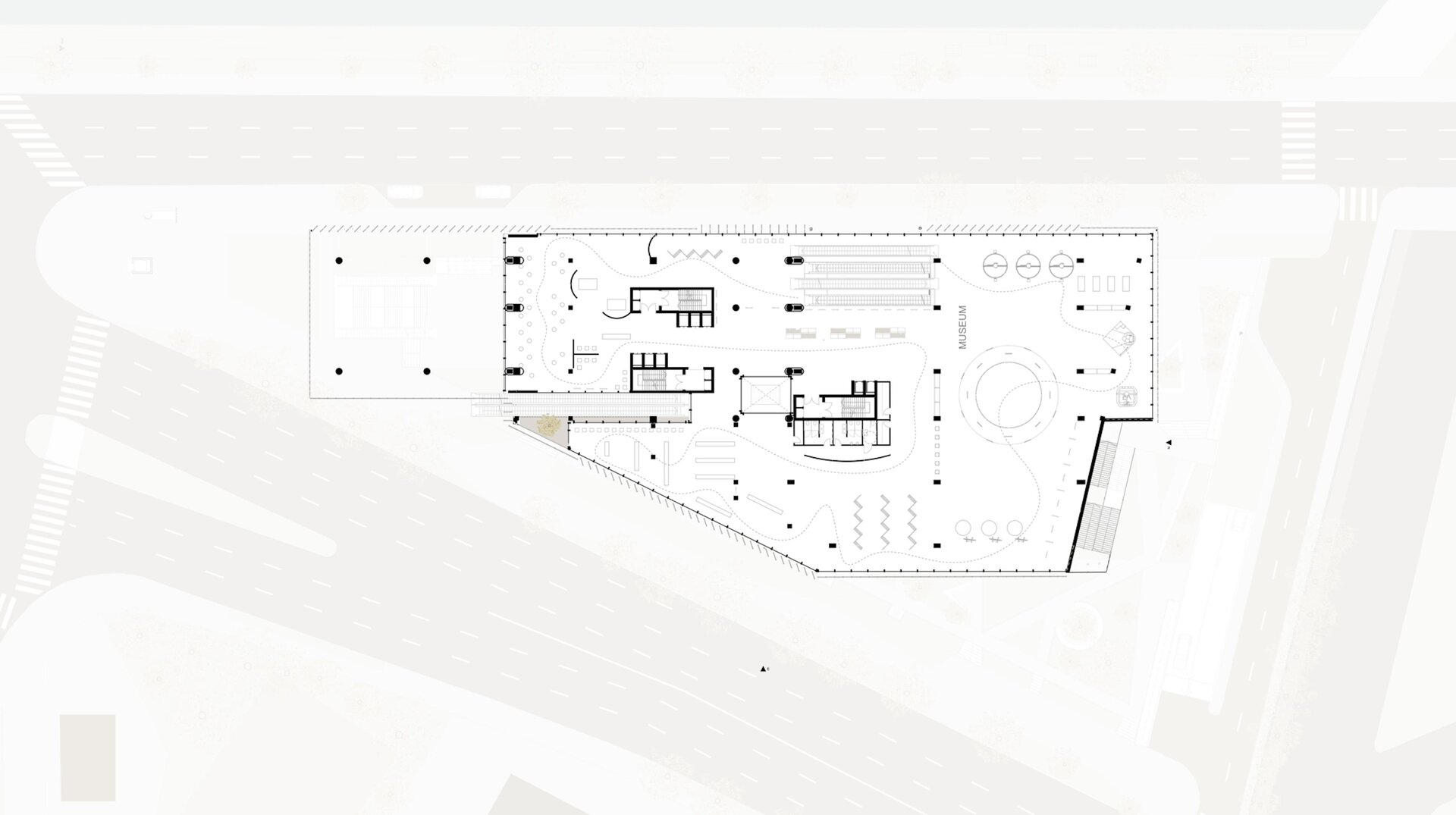
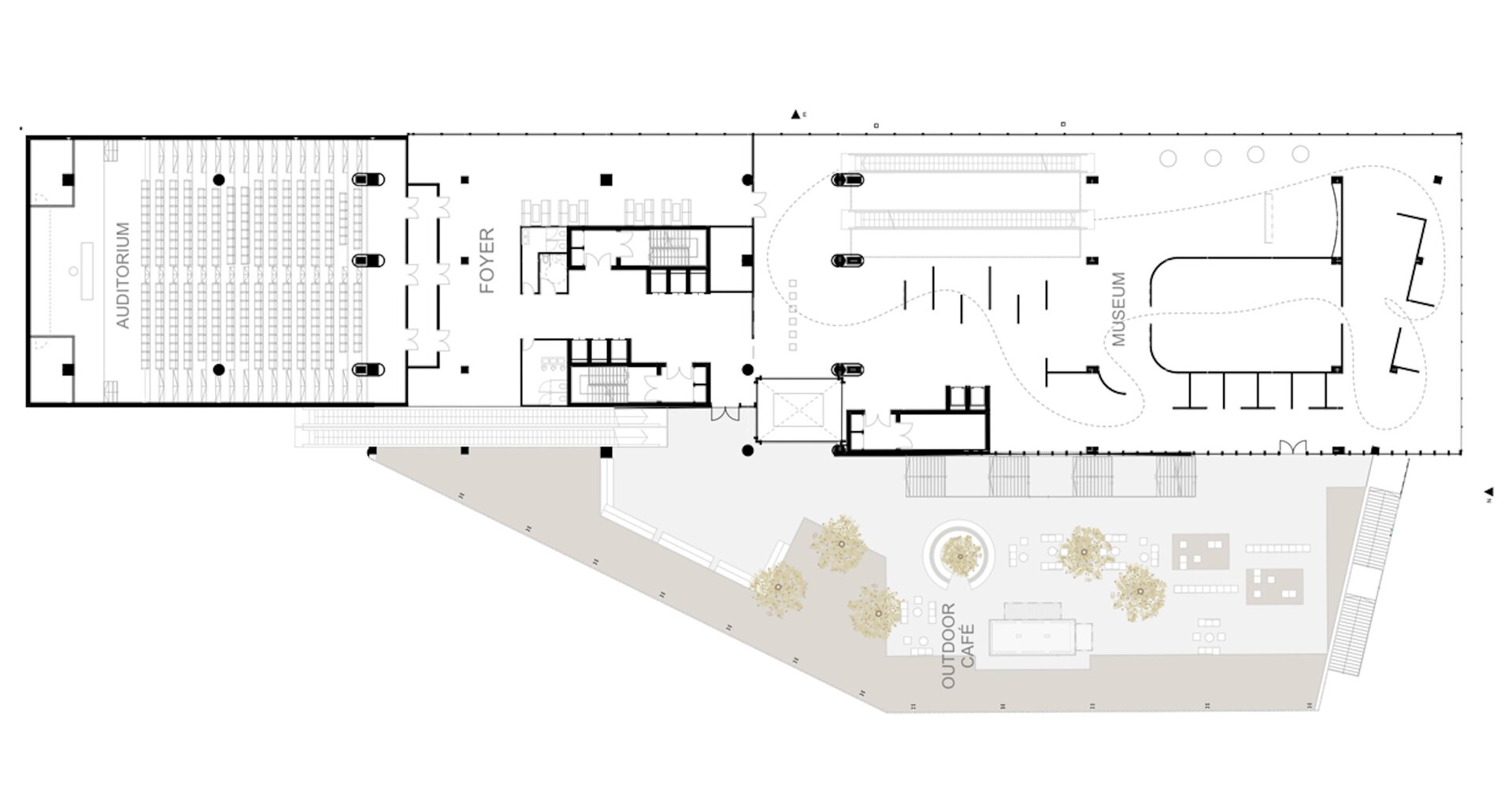
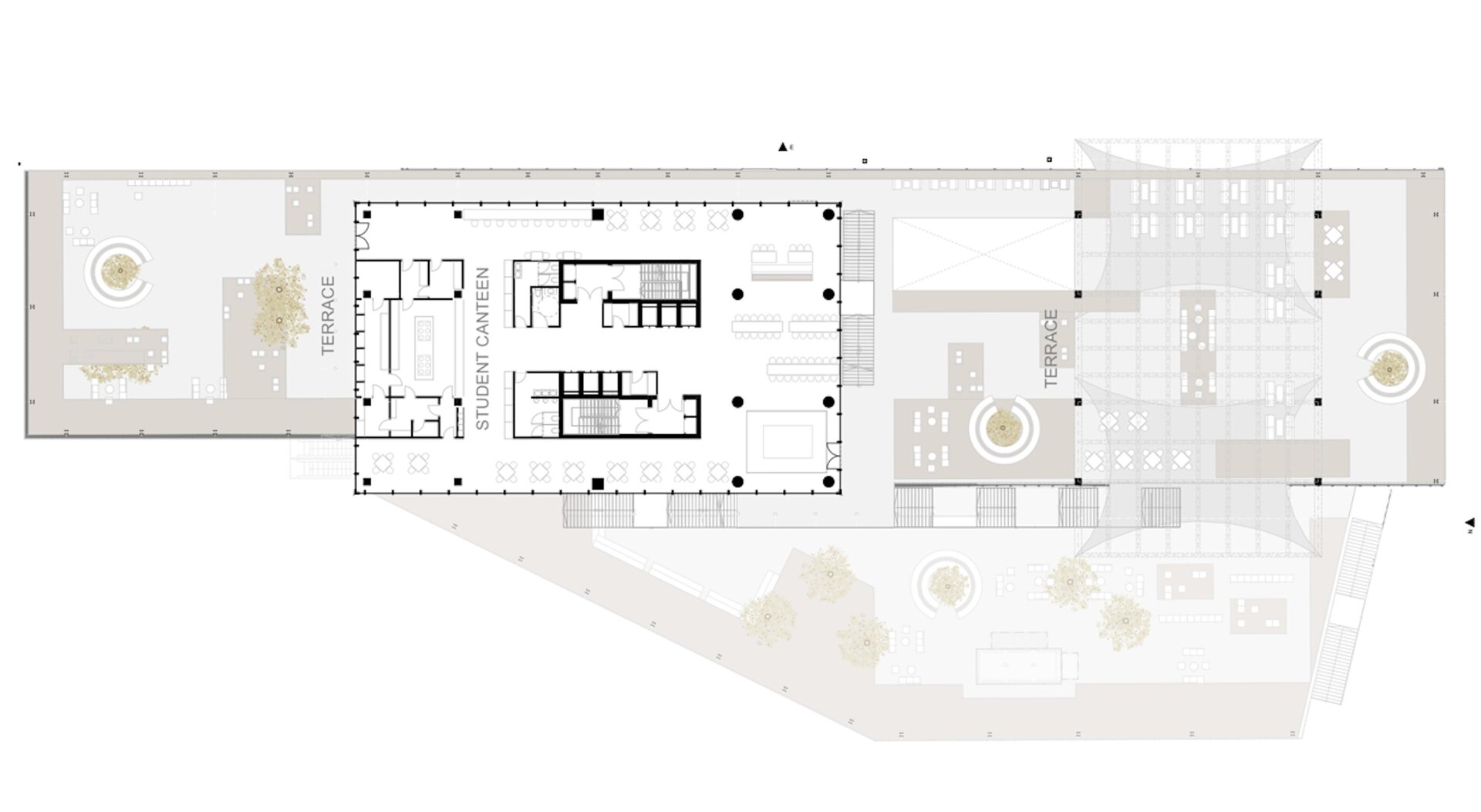
A two-story pavilion (G+2) housing an interactive technology museum, digital exhibition spaces, immersive rooms, media galleries, as well as public functions like a café, a bookstore, and prototype testing zones.
Fully accessible to the public, offering a meeting place between technology and culture, between education and entertainment.
Features permanent and temporary exhibitions, VR/AR zones, interactive presentations, and an outdoor terrace exhibition space.
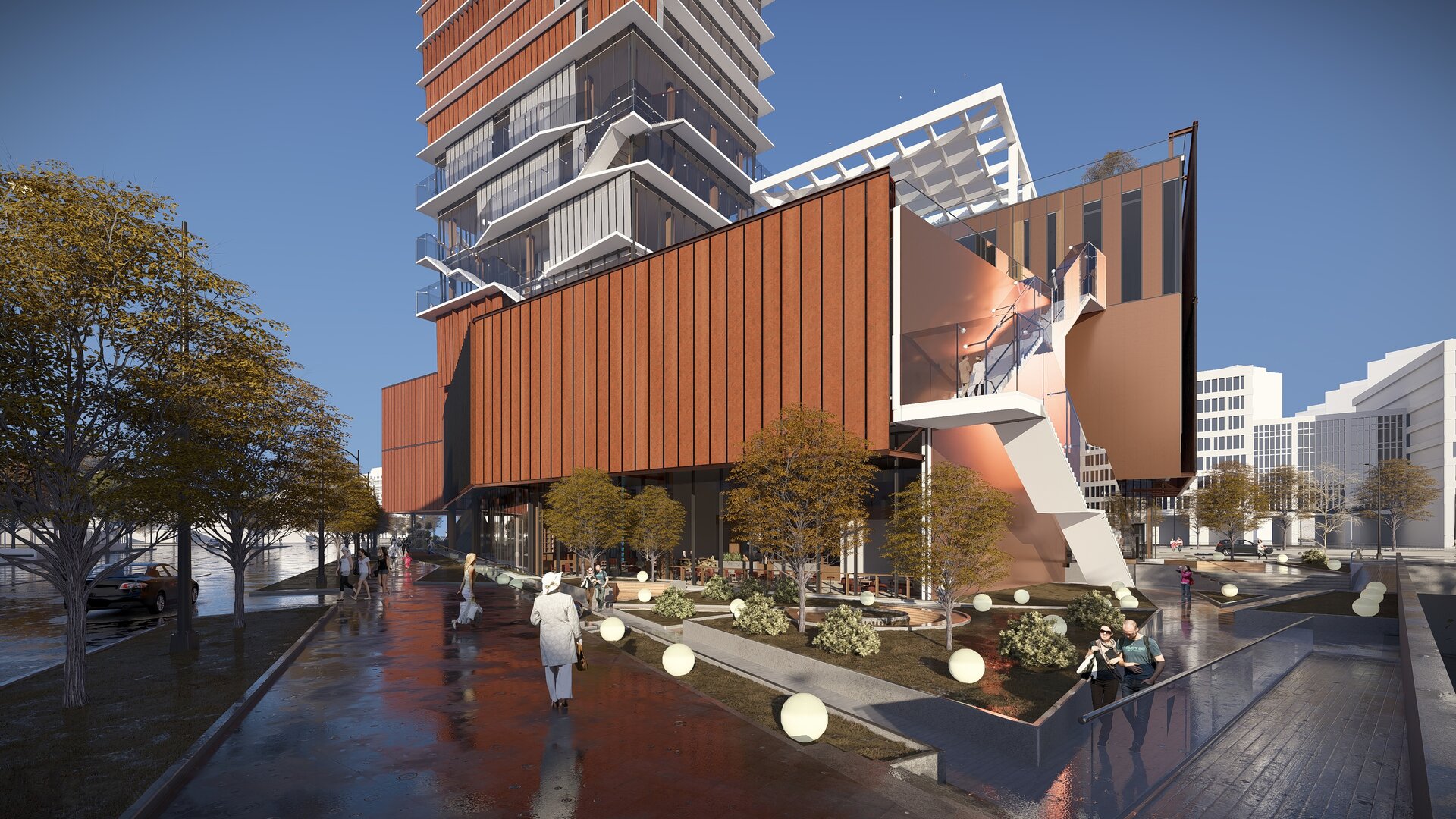
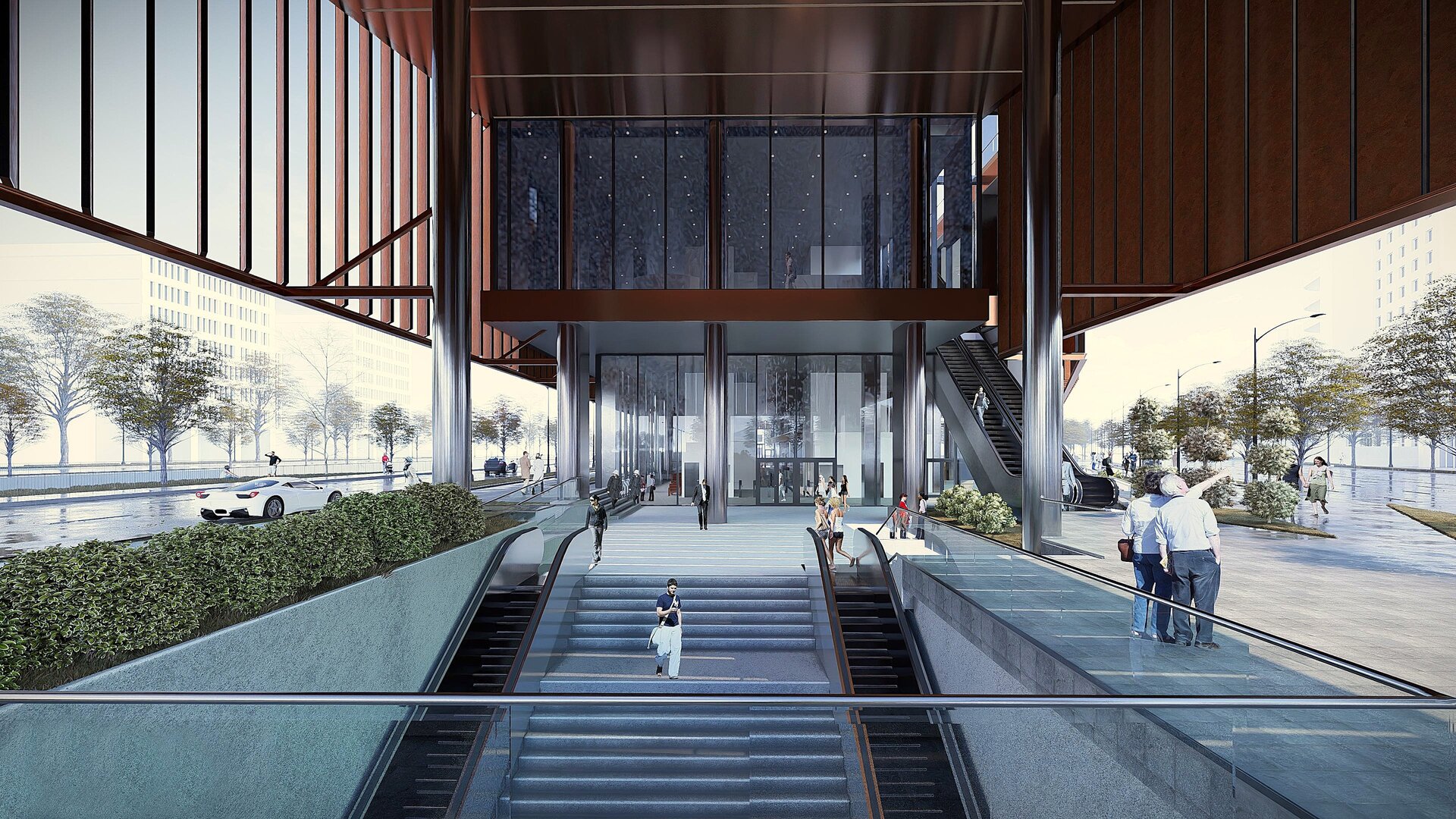
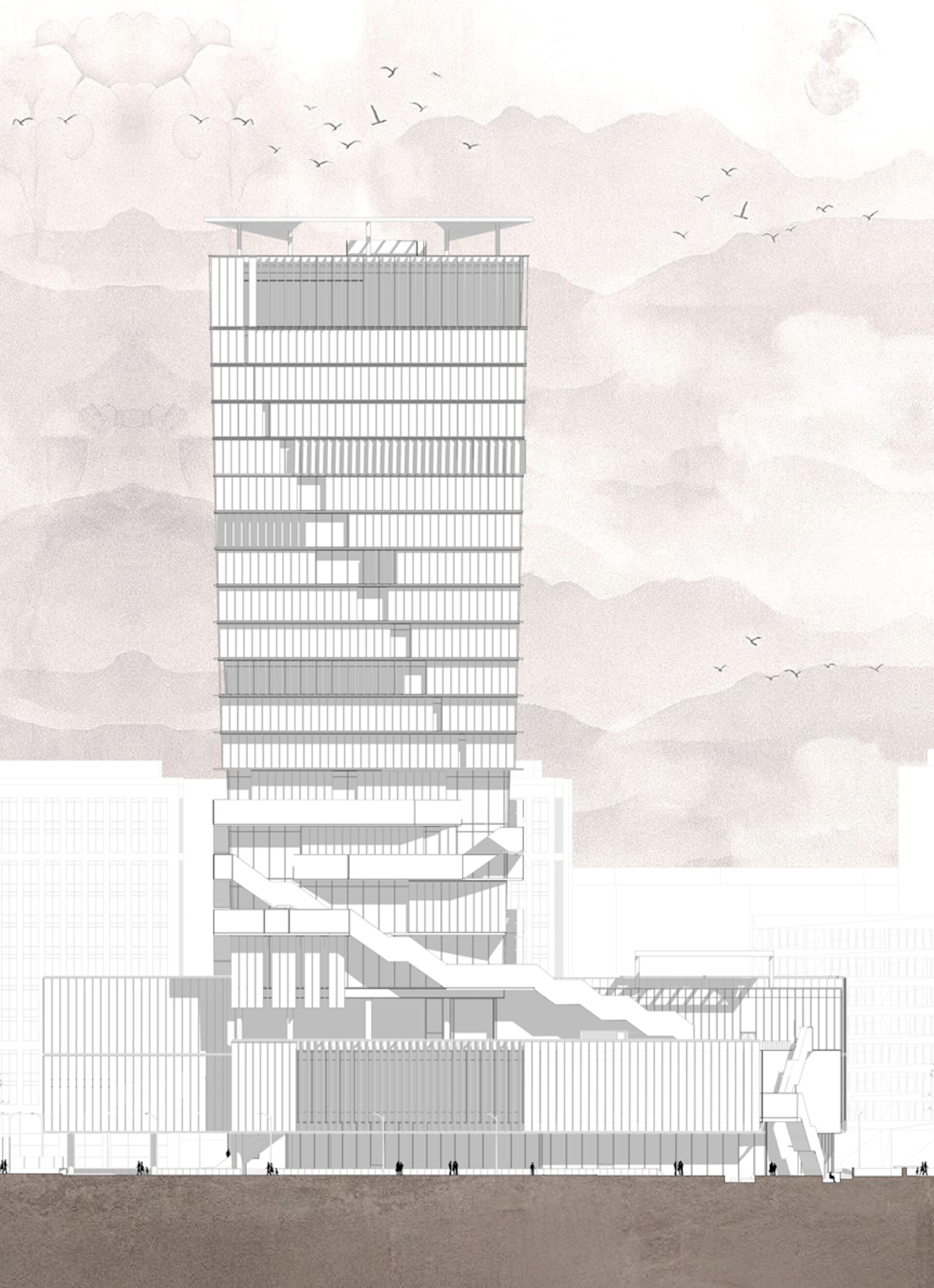
Functions are arranged progressively: the ground floor is entirely public and city-facing, while higher levels become increasingly specialized. Dynamism is emphasized by exterior vertical circulation—stairs wrapping around the tower to the 6th floor—connecting platforms, terraces, and outdoor workspaces.
Architectural language and materiality
The architectural language is contemporary and minimalist, featuring formal clarity, exposed structure, and rhythmic composition. Key elements include:
Kinetic façade: aluminum mobile panels serving both aesthetic and functional roles (shading, ventilation, daylight control). The façade adapts to external conditions and interior activity.
Exterior stairs: dynamic circulation routes expressing movement, openness, and transparency—publicly accessible up to the 6th floor.
Towering terraces and green platforms: intermediate social, informal work, and relaxation spaces underpinning the concept of a vertical campus.
Server room “heart”: the technological core of the building, showcased across three levels, visible from the outside—a symbolic information nucleus of the ensemble.
Material palette is sustainable and expressive: aluminum, fair-faced concrete, tempered glass, perforated panels, and treated wood in interior spaces. Construction and finishes reinforce the image of a technological yet warm, inviting, and accessible space.
TECHNICAL PERFORMANCE AND SUSTAINABILITY
The project incorporates high-performance, sustainable solutions:
Photovoltaic panels on the tower roof
Natural ventilation systems and automated solar control
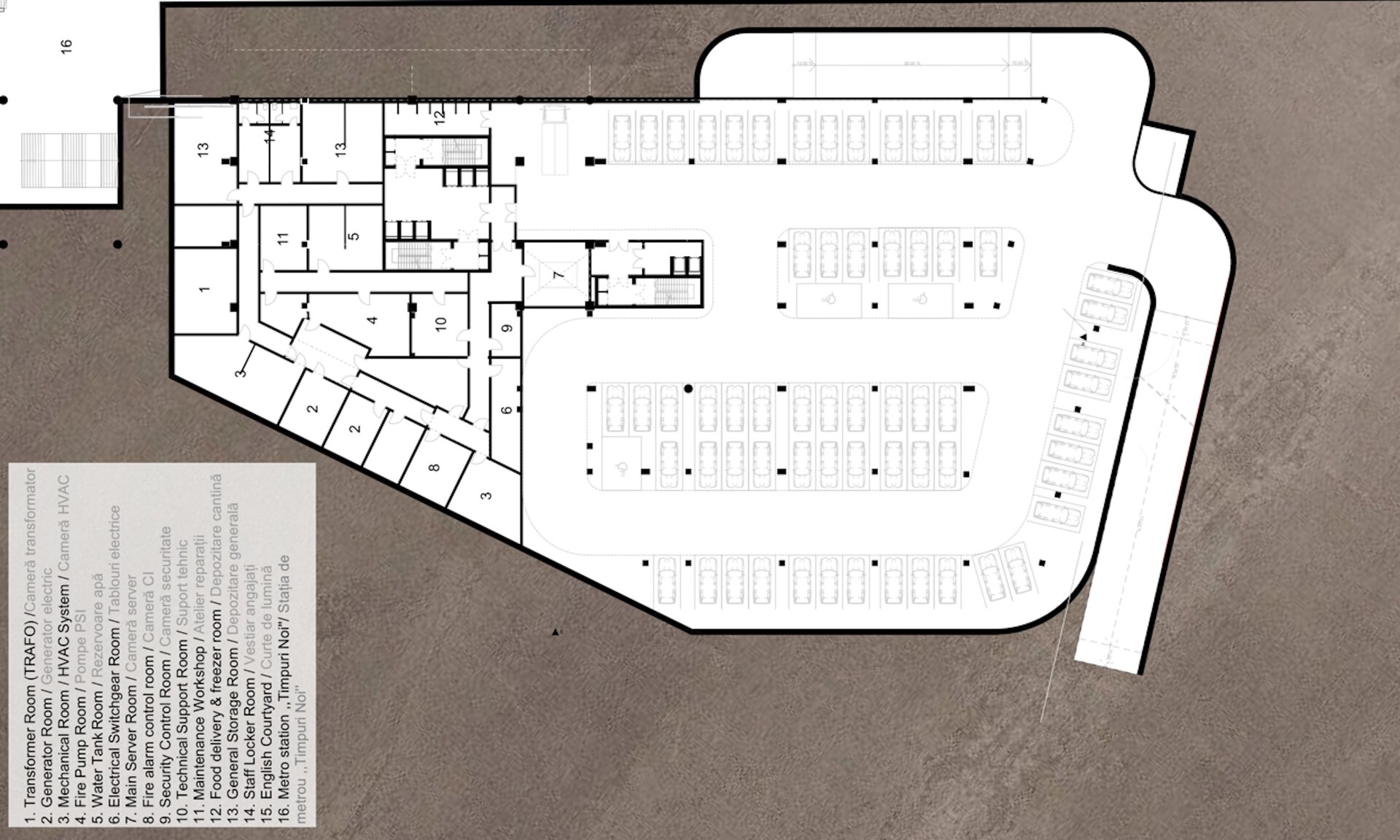
Rainwater harvesting for irrigation and sanitary facilities
Double-skin ventilated façade and recyclable materials
Bicycle and electric scooter parking
Potential integration of vertical-axis wind turbines on terraces
Beyond energy performance, the project proposes social sustainability: it offers genuine opportunities for young people, encourages innovation, reduces functional segregation, and promotes experiential learning.
SOCIAL AND CULTURAL IMPACT
The project features strong urban and social integration:
Becomes an educational and technological hub, close to universities and student residences
Creates an open campus, integrated into the urban fabric and accessible to all users
Offers community spaces: exhibitions, conferences, prototype testing, hackathons, cultural events
Provides a model of collaboration among academia, private sector, and public authorities
Activates an underutilized urban area, transforming it into a future landmark
CONCLUSION
This proposal represents architecture of the near future: a place where education, technology, culture, and the city converge. It is an urban intervention with a dual role: spatial regeneration and functional innovation. A building that adapts, communicates, inspires, and evolves with the city.
In the current context of digital transition and the growing need for innovative educational spaces, this design offers a coherent, scalable solution deeply rooted in the contemporary urban and social realities of Bucharest.
PROJECT DATA
Gross Floor Area: 22,200 m²
Site Coverage (POT): 31.25%
Floor Area Ratio (FAR/CUT): 3.47
Height Regime: G+20 (tower) / G+2 (museum pavilion)
Structure: Steel frame encased in concrete (tower and pavilion)
Museum floor grid: 7.2 × 15.8 m
Columns: 50 × 50 cm steel, double-glued along length
Floor-to-ceiling heights: 5 m (tower floors), 8 m (museum floors)
Architecture Diplomas

- Reclaiming Bucharest’s architectural heritage. Student dwellings and cultural establishments along Calea Griviței
- Rusticitas Et Urbanitas. Conversion and Expansion of the Solacolu Inn: Cultural Center for Arts and Architecture
- ONEF Stadium: an active method of working with history
- Extension of the Bucharest School of Arts
- Tineretului Agora. Rehabilitation and extension of the former Kiseleff Strand
- Diocesano Museum: The Cloisters of Sant’Eustorgio
- Marina Dorćol Educational center and library. Residual spaces. Between the city and the Danube in the post-industrial era
- The |YELLOW| complex - orphanage | placement center
- Extending the cultural space of the city center of Pitești
- Post Partum RetreatCenter / Steveston Hwy 13571
- Designing Learning Spaces for Brăila’s Youth
- Social and Educational Centre for kids
- Grădina Luterană: Dwelling and Workspaces for Creative Industries
- Multifunctional Performing Arts Centre, Berzei 21
- The school as a community core in the Rahova neighbourhood
- Politehnica University of Bucharest extension - Education & Research Centre
- Architecture of Forgotten Memory
- Students’ Sports Palaestra
- Versvs Museum
- Restoration and extension of “King Carol I” rural hospital in Filipestii de Targ
- Studios for artists on Leonida Street
- Luka Cargo Port Hotel and Convention Center, Belgrade, Serbia
- Diocesan Museum Extension
- Museum of the Anti-Communist Revolution of December 1989
- Post-treatment rehabilitation center for assistance and integration of addicted people into the contemporary community in Bucharest
- Immersive Theater – Industrial Heritage Regeneration Through Experimental Cultural Interventions
- Floreasca Olympic Aquatics Center, Bucharest
- Revitalisation of the Radák-Brukenthal Ensemble. Multifuncitonal Cultural Center in Micăsasa, Sibiu
- Intermodal Node in Piața Presei Libere – Bucharest
- Reviving the Identity of Ovidiu Island: Spa and Wellness Complex
- Palimpsest - The third cloister
- Casandra – from the memory of the place to a promising future: an initiatory journey of transformation
- The Creative District and the Fashion House in Arnhem, the Netherlands
- Extension and regeneration of the historical and museal space in Turda
- Research Center for the Reclamin of Polluted Mining Sites Baia Mare
- Interface with Lake Morii: Collective Housing
- #2-4 The intersection between community and art
- Reconnecting the City to the Water. Ferry Terminal in Zimnicea
- Tourist Complex in Sulina
- Arts Center. Revitalization of the Prohaska Mill in Timișoara
- Vitrum & Charta - The cultural library as a mediation between transparency and memory
- Urban Nodes
- Conversion of the former Bragadiru brewery
- Intervention on the Frankfurt Opera
- Bucharest Architecture Center
- Urban Liminality and The Cultural Turn: Vesterport Between Transit and Event
- Revitalization of the Courtyard of Domnița Bălașa Church in Bucharest
- Cito Sanum. Medical recovery center on Calea Moșilor
- Archaeological Research Institute Constanța
- In defence of the fortified church - Community center in Țapu village
- Cultural-Educational Forum - Extention of the Argeș County Museum, Pitești
- Dialogue Between Generations – Vatra Luminoasă Intergenerational Center
- Educational Community Center for children
- Reclaiming the boundary, Văcărești Delta
- Rehabilitation and Extension: Polyvalent Cultural Center - Chisinau, Republic of Moldova
- The Archive of Collections. A blueprint for recovering Bucharest’s cultural heritage
- The Bastion of Artists. A community centre dedicated to arts and crafts, located in the historic distric of Brașov
- Cultural laboratory for heritage studies in the historic center of Brașov
- Domaine les Ormes. Rural revitalization through artisan workshops and agrotourism in Allan, Drôme Provençale, France
- Külliye in time: the Ottoman complex in Medgidia between recovery and reinvention
- GabroArt Han. Archives of Tradition. The restoration of Gabroveni Inn and the socio-cultural activation of the nearby bazaar
- Cultural Establishment. Reactivation of Pompiliu Eliade House through conversion and extension
- The Center of an Edge. Restructuring the Commercial Market and Relocating the Neighbourhood Library
- The city around the colony. Reconversion and extension of the post office and the colony
- House of Film. The Rediscovery of the Cinematic Ritual in the Intimacy of Dwelling
- Game development center and interactive technology museum
- Conversion and Extension of the Radák-Brukenthal Noble Ensemble in Micasasa, Sibiu County. Socio-Medical Residential Center for Elderly People
- Forma: Operative fragment for the regeneration of urban memory
- Extension and Rehabilitation of Technical High Schools. Workshops for Vocational Education


