Cito Sanum. Medical recovery center on Calea Moșilor
Authors’ Comment
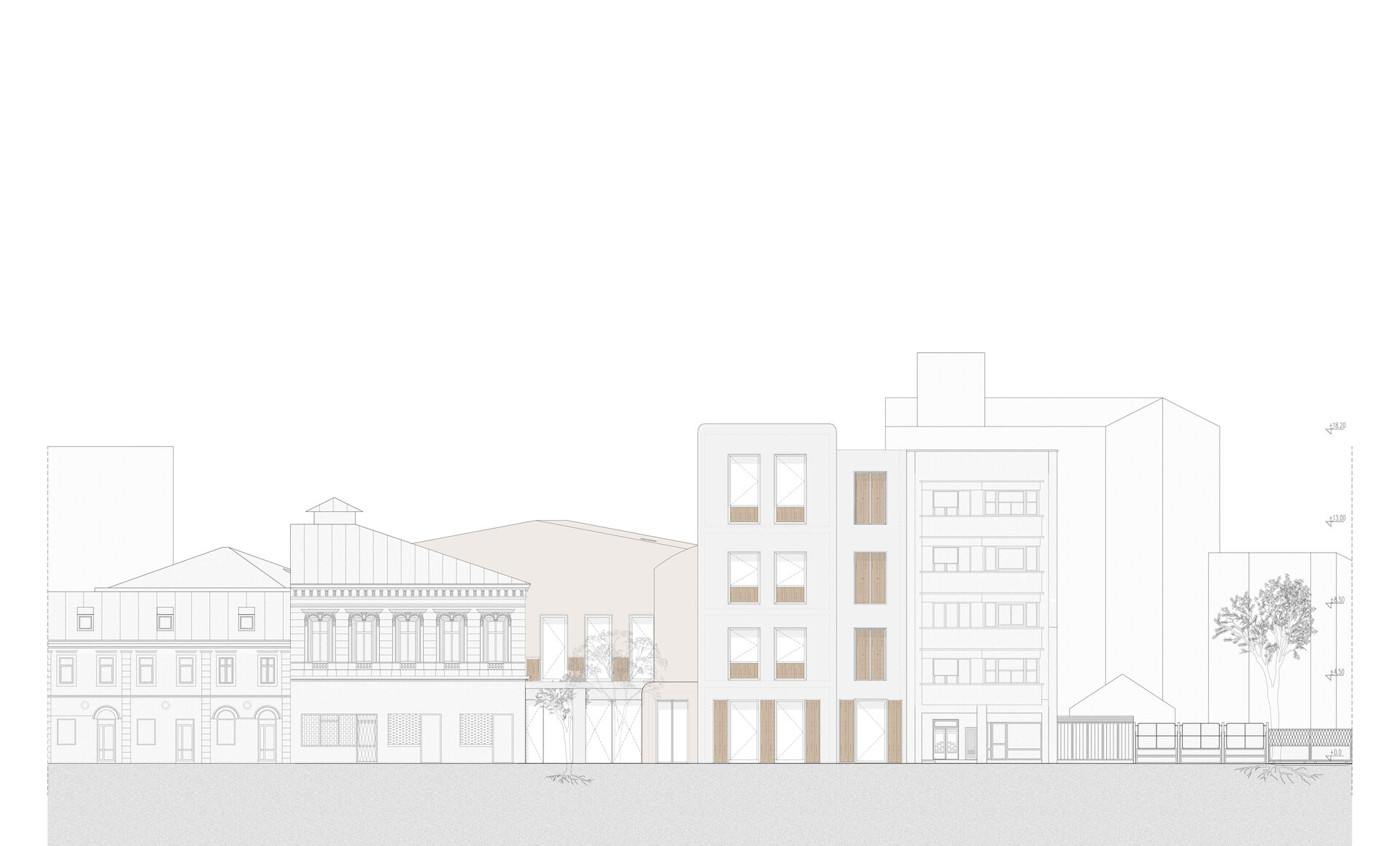
The Calea Moșilor area represents a valuable segment of Bucharest’s historical fabric, yet decades of uncoordinated interventions have led to a loss of morphological coherence and the ability to ensure urban continuity. In this context, the proposed project takes on the role of contributing to the revitalization of a deteriorated portion of this artery, by capitalizing on the local character and responding to both the built memory and the contemporary needs of the city.
The chosen site is located in the southern part of Calea Moșilor and stands out through its proximity to the Christo Gherghief House, a historical monument, as well as its dual frontage on two important streets: Calea Moșilor and Radu Calomfirescu Street. This dual orientation, together with the presence of a valuable heritage building, turns the site into a strategic point for initiating a coherent urban regeneration process.
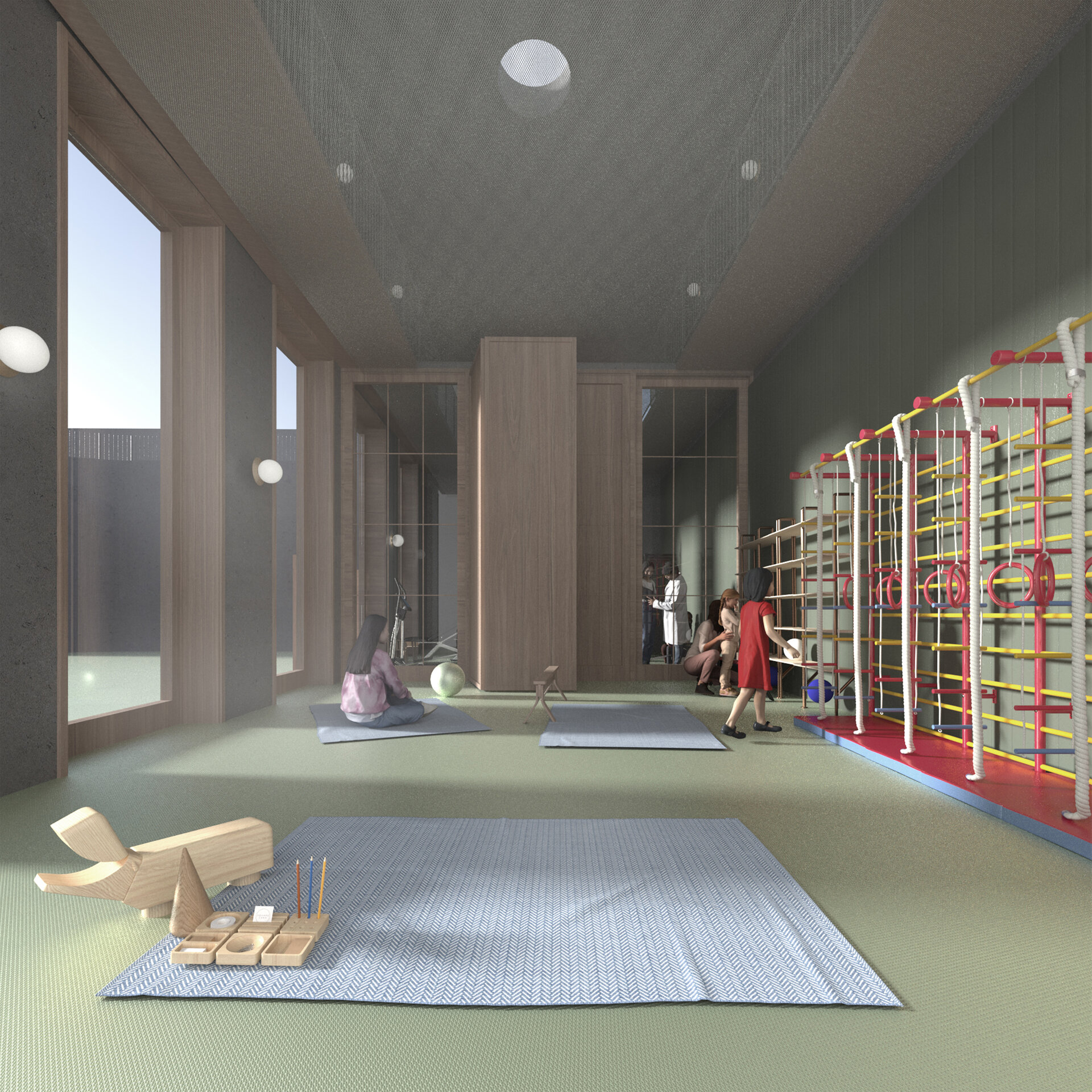
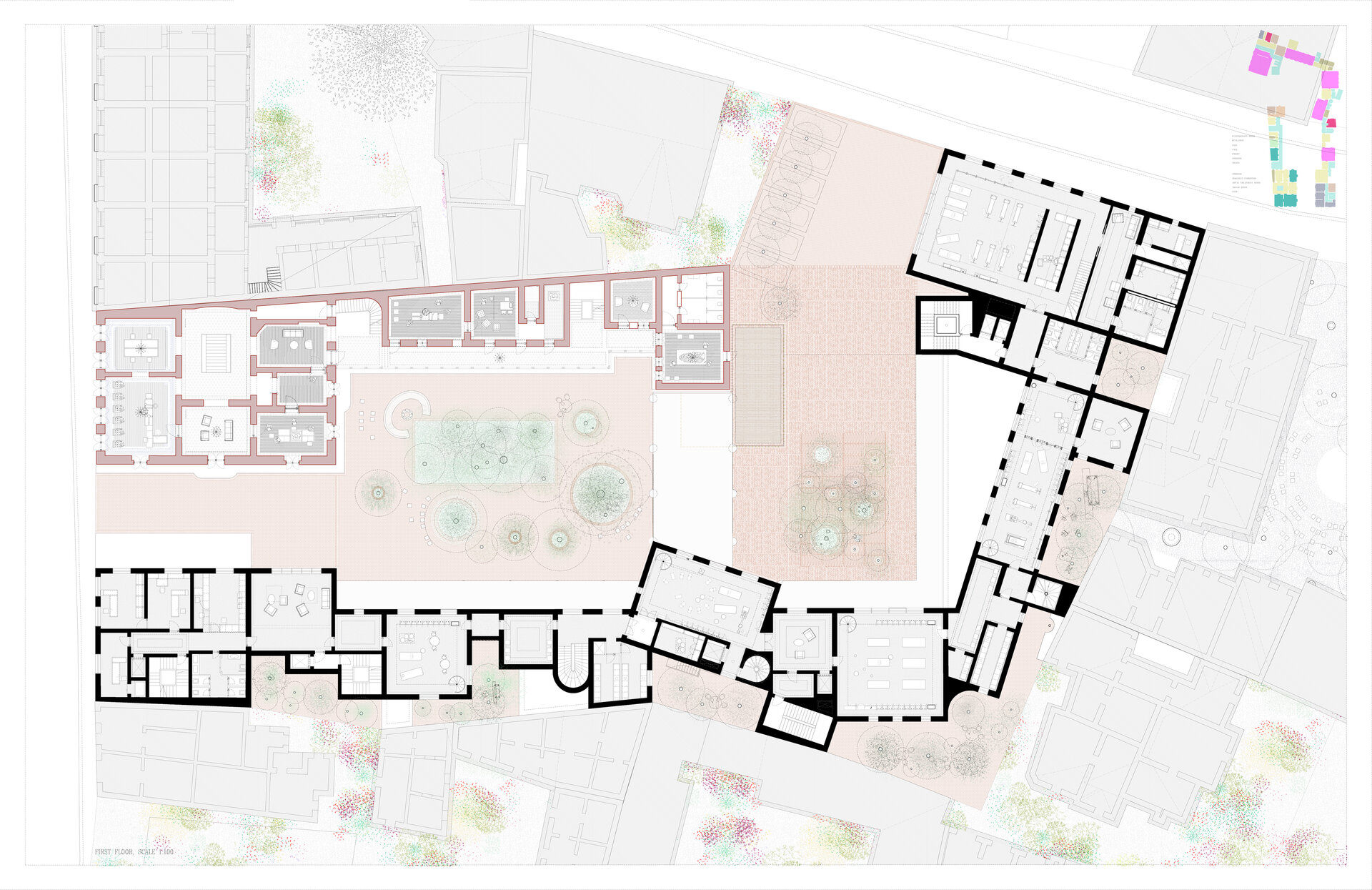
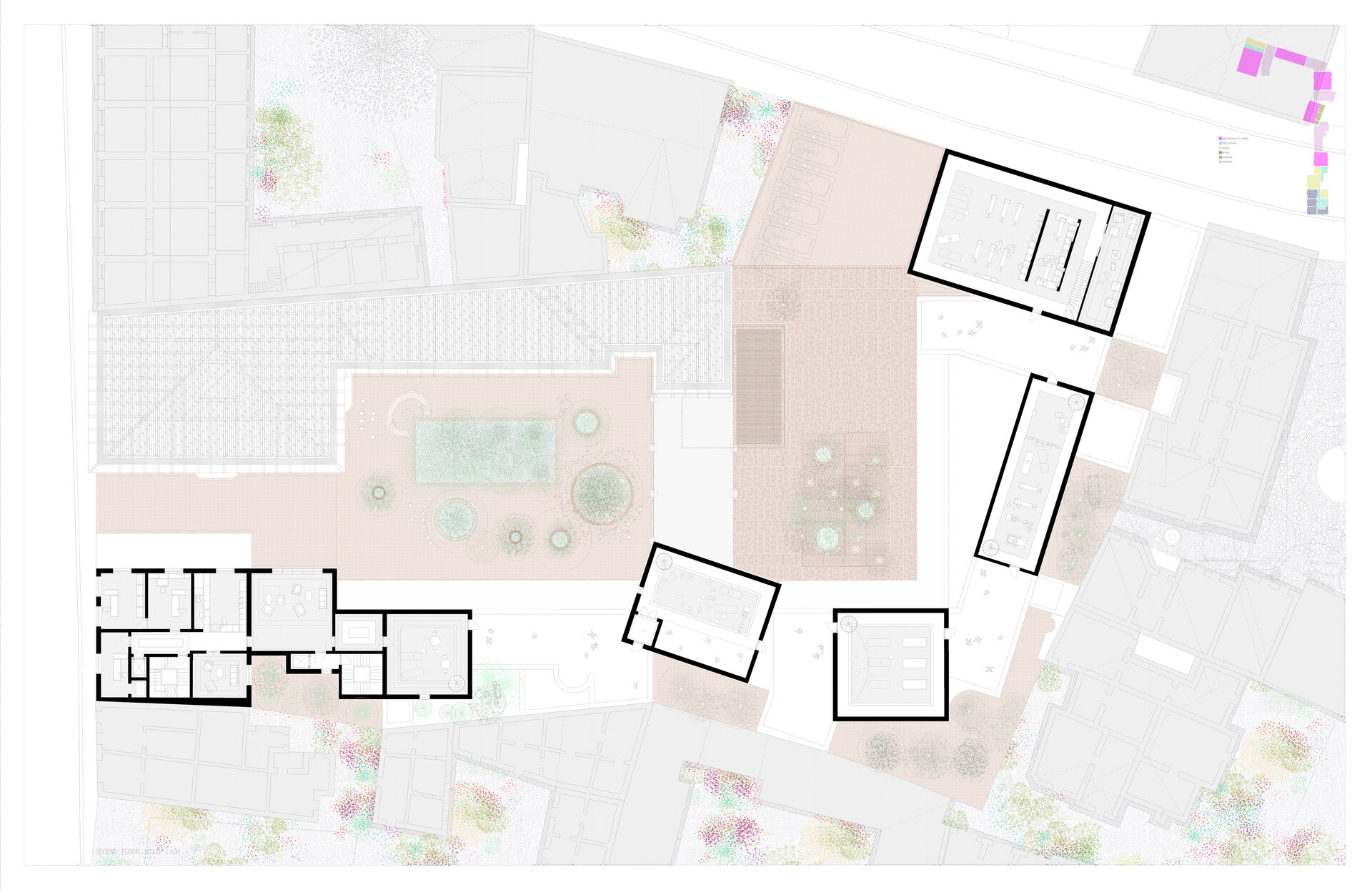
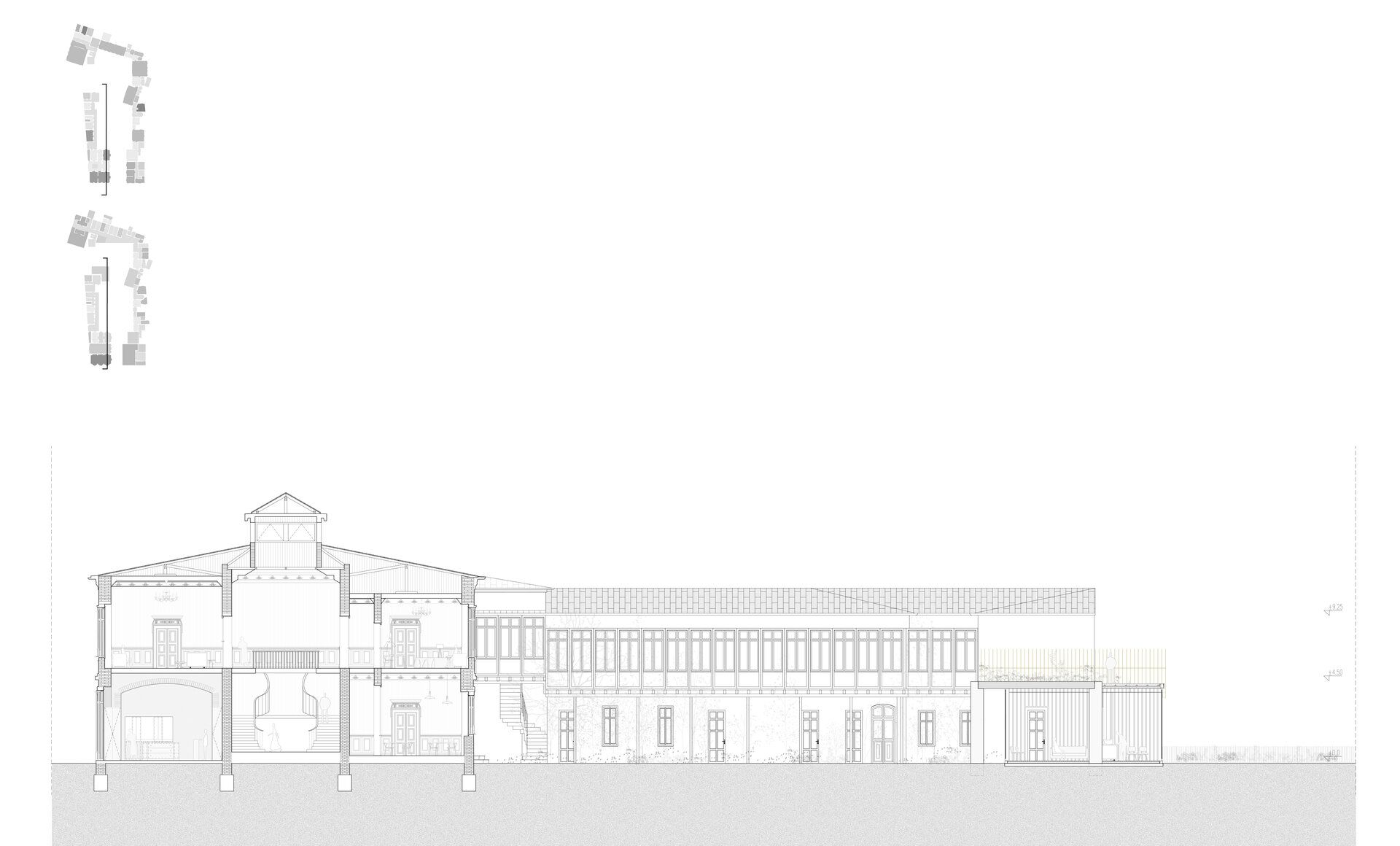
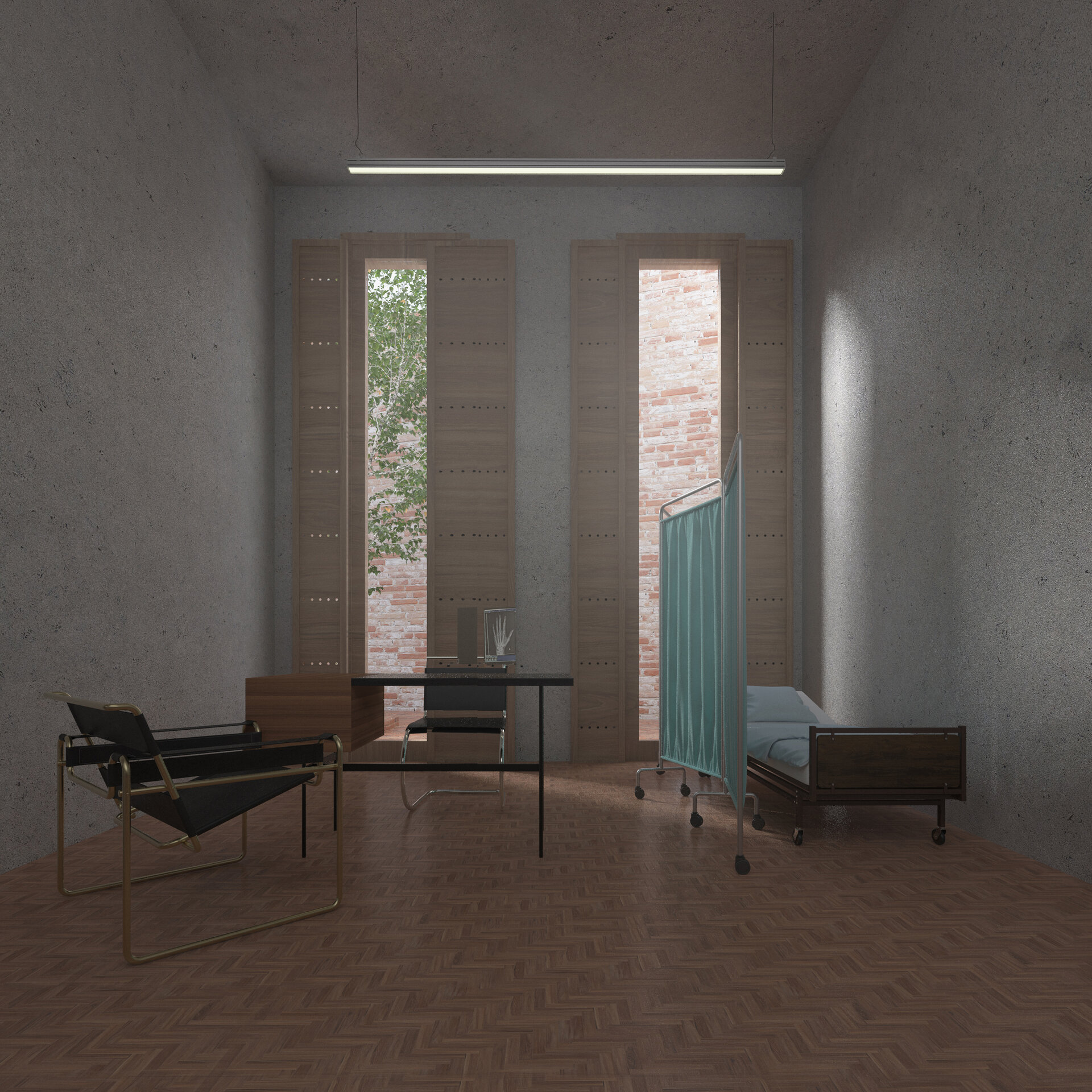
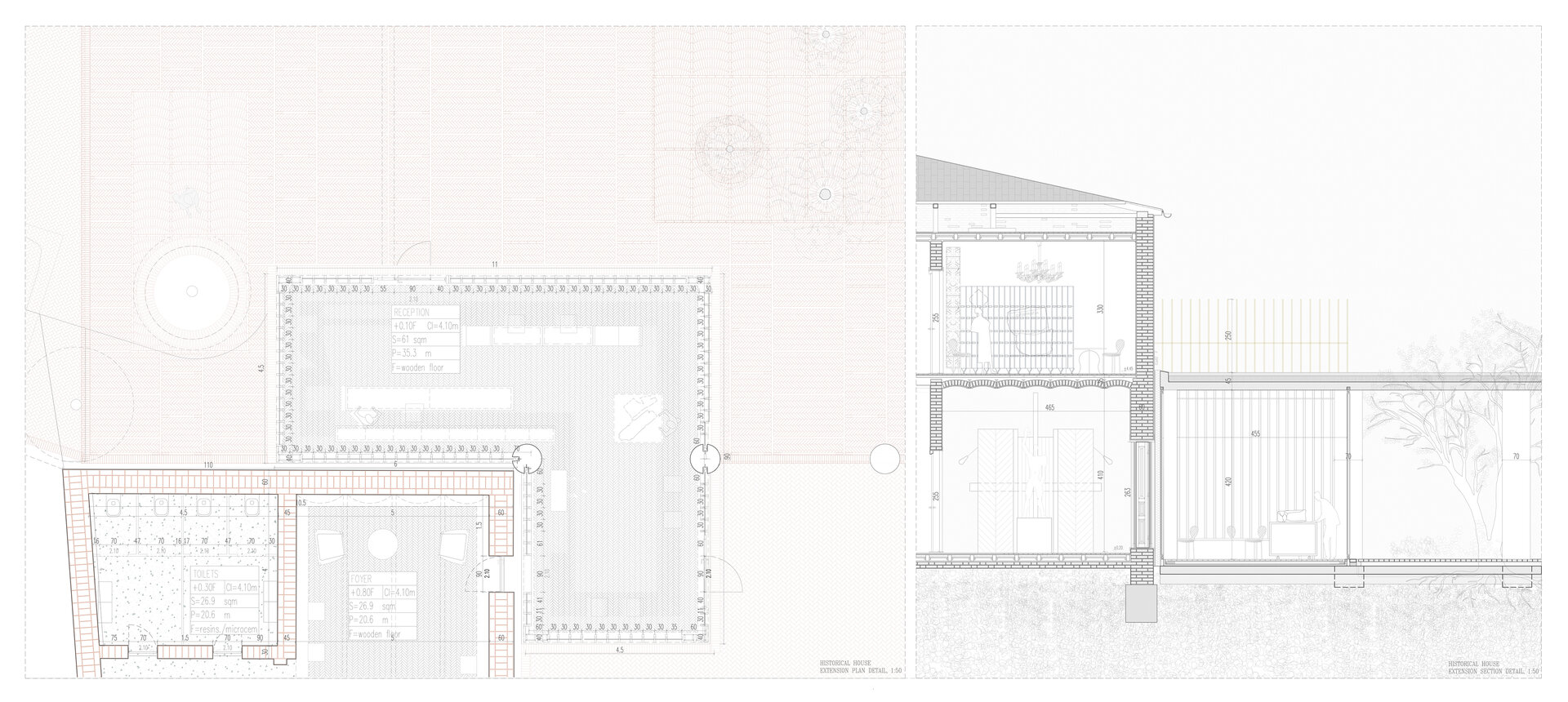
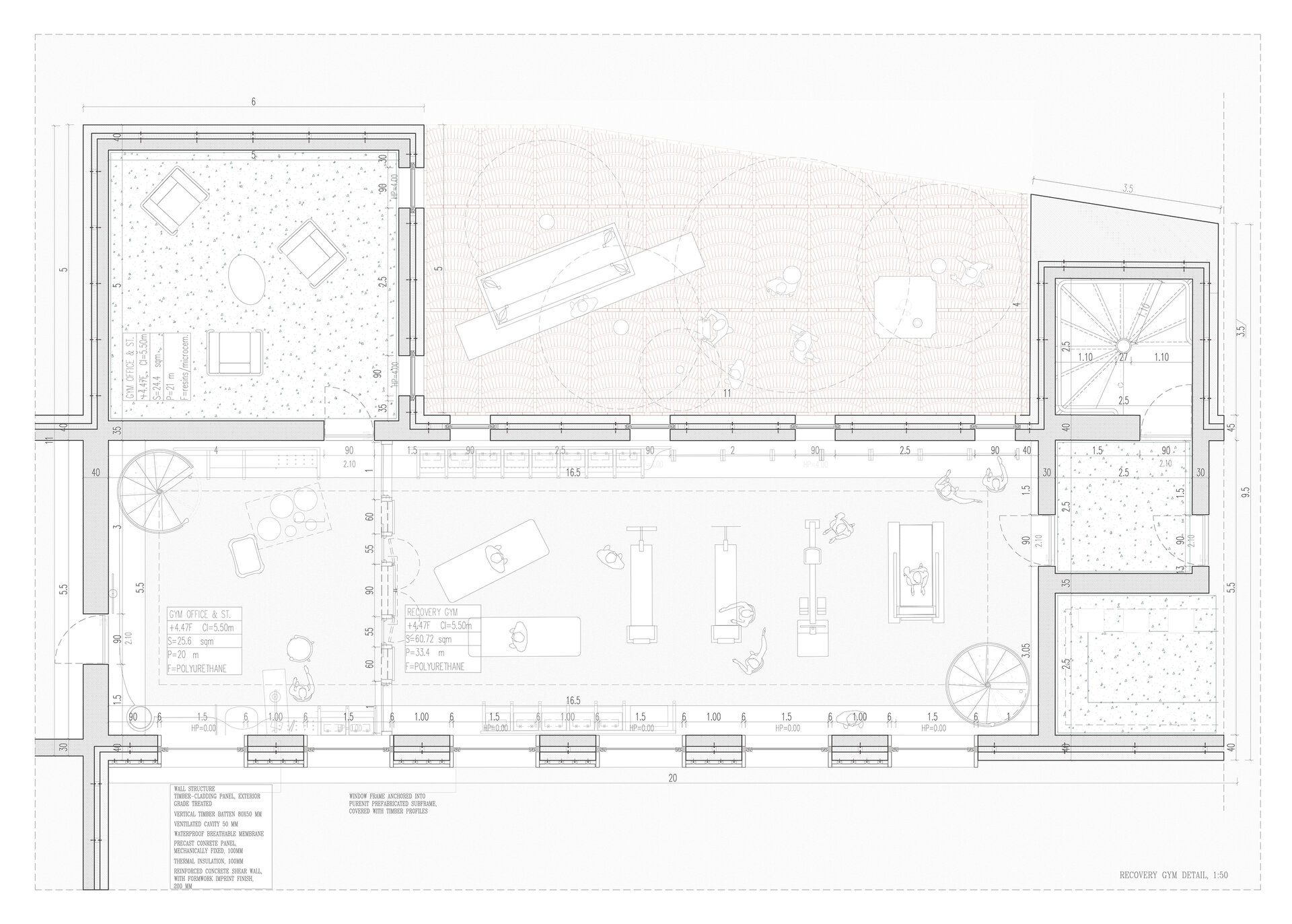
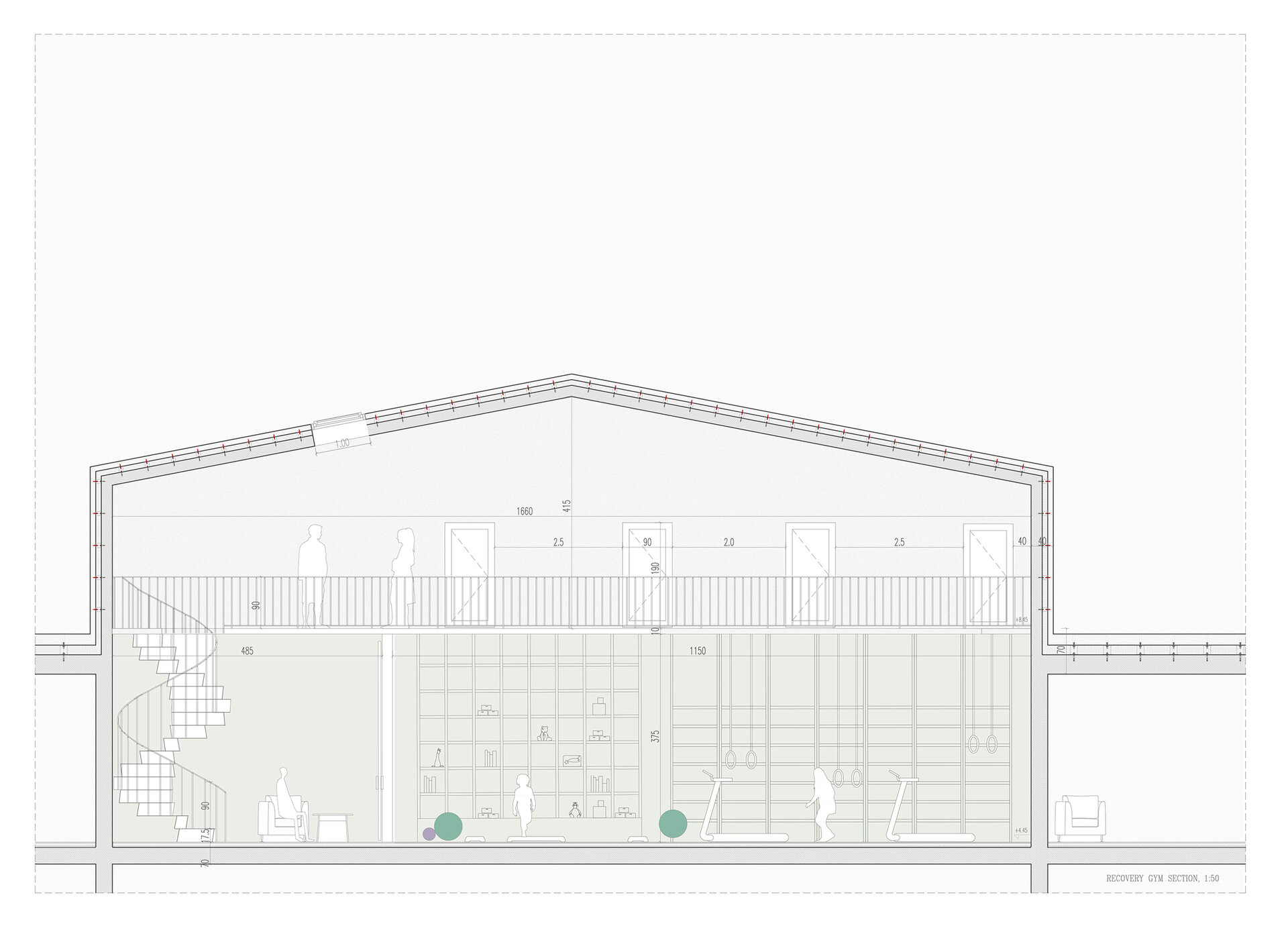
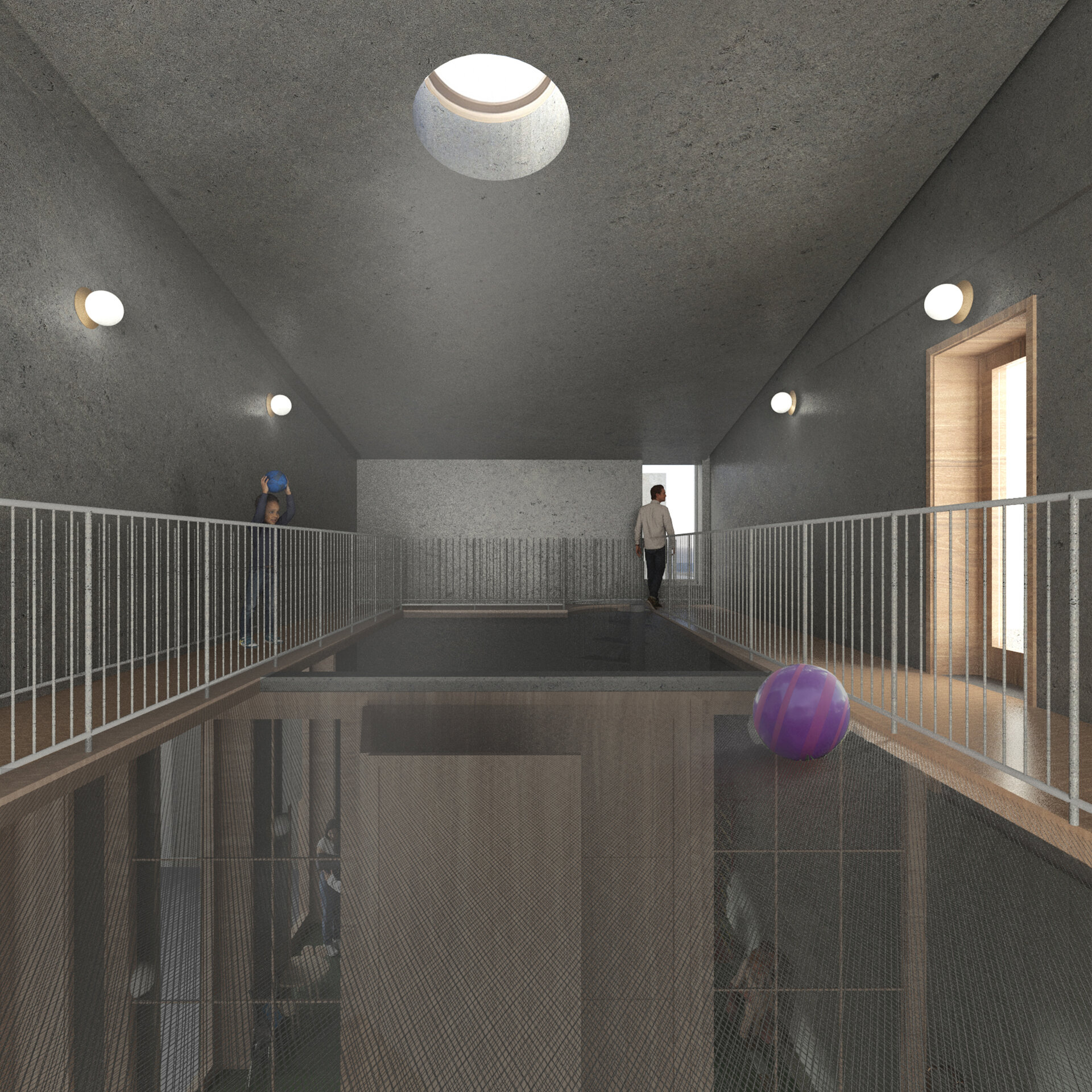
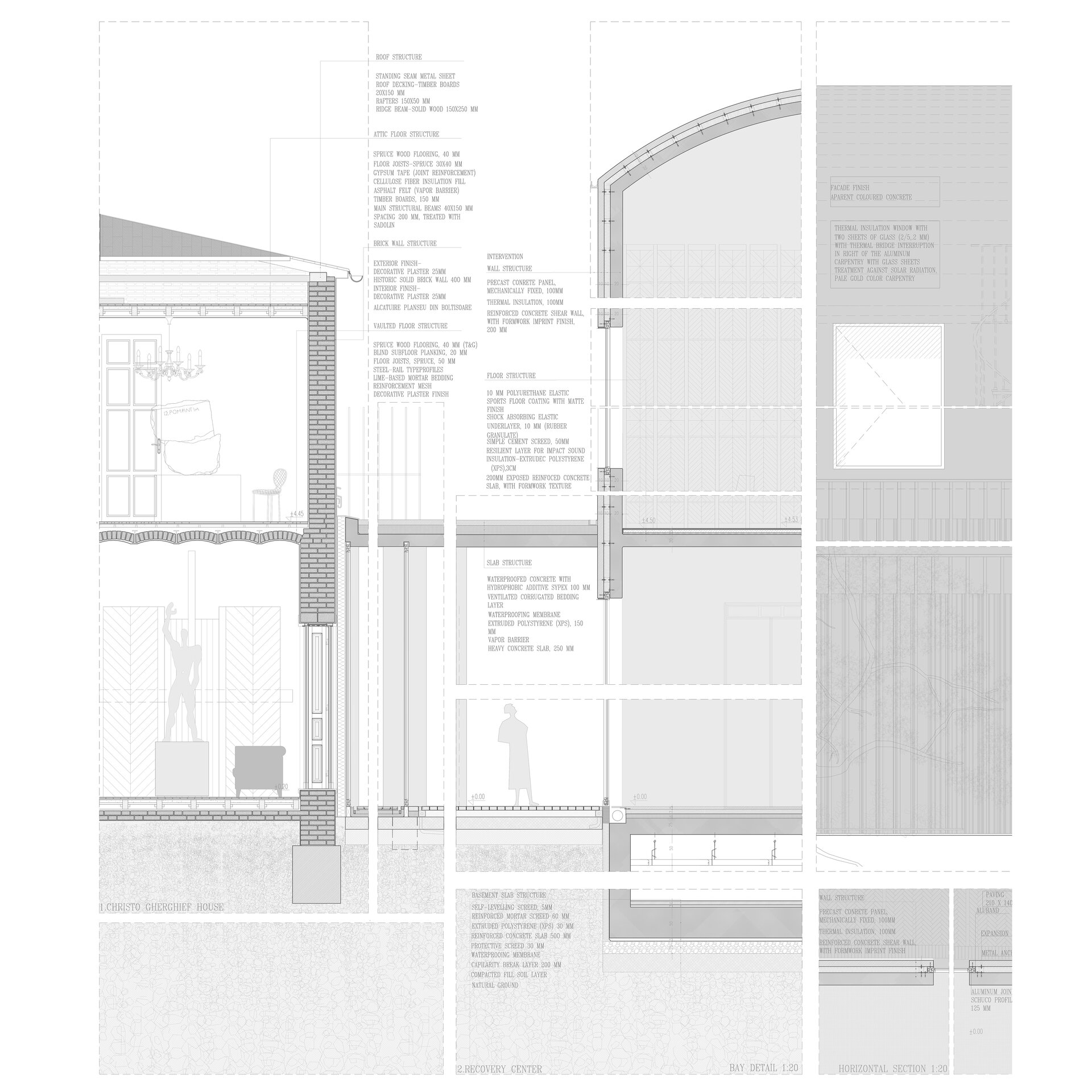
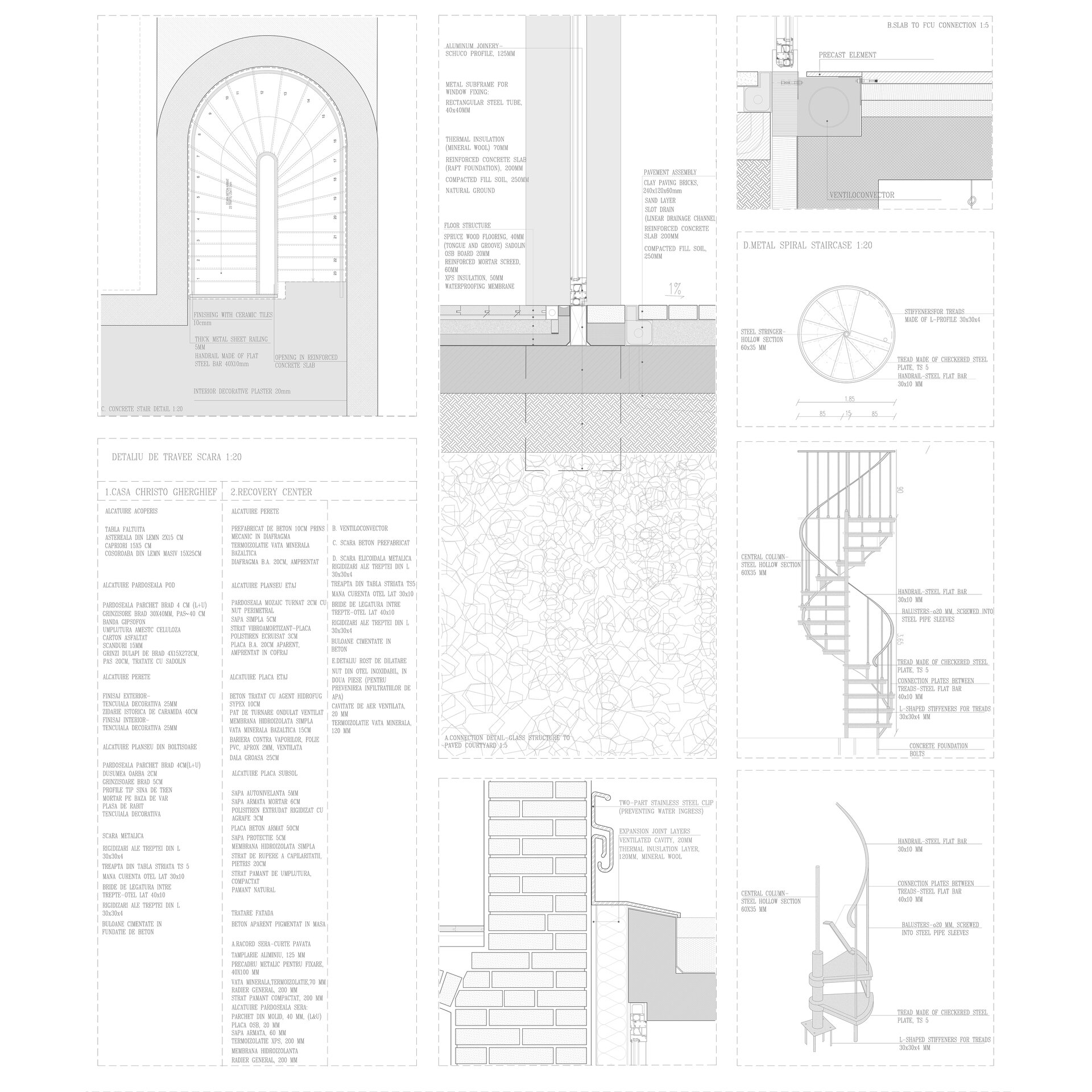
The intervention aims to activate the memory of the place not solely through preservation, but through a thoughtful and functional recontextualization. Thus, the project proposes the conversion and extension of the Christo Gherghief House into a medical recovery center, incorporating various functions – from consultation and treatment rooms to specialized physiotherapy areas. Simultaneously, the historical house gains an educational role, hosting theoretical seminars for students in rehabilitative medicine. This multifunctional use reflects an interdisciplinary approach where past and present collaborate.
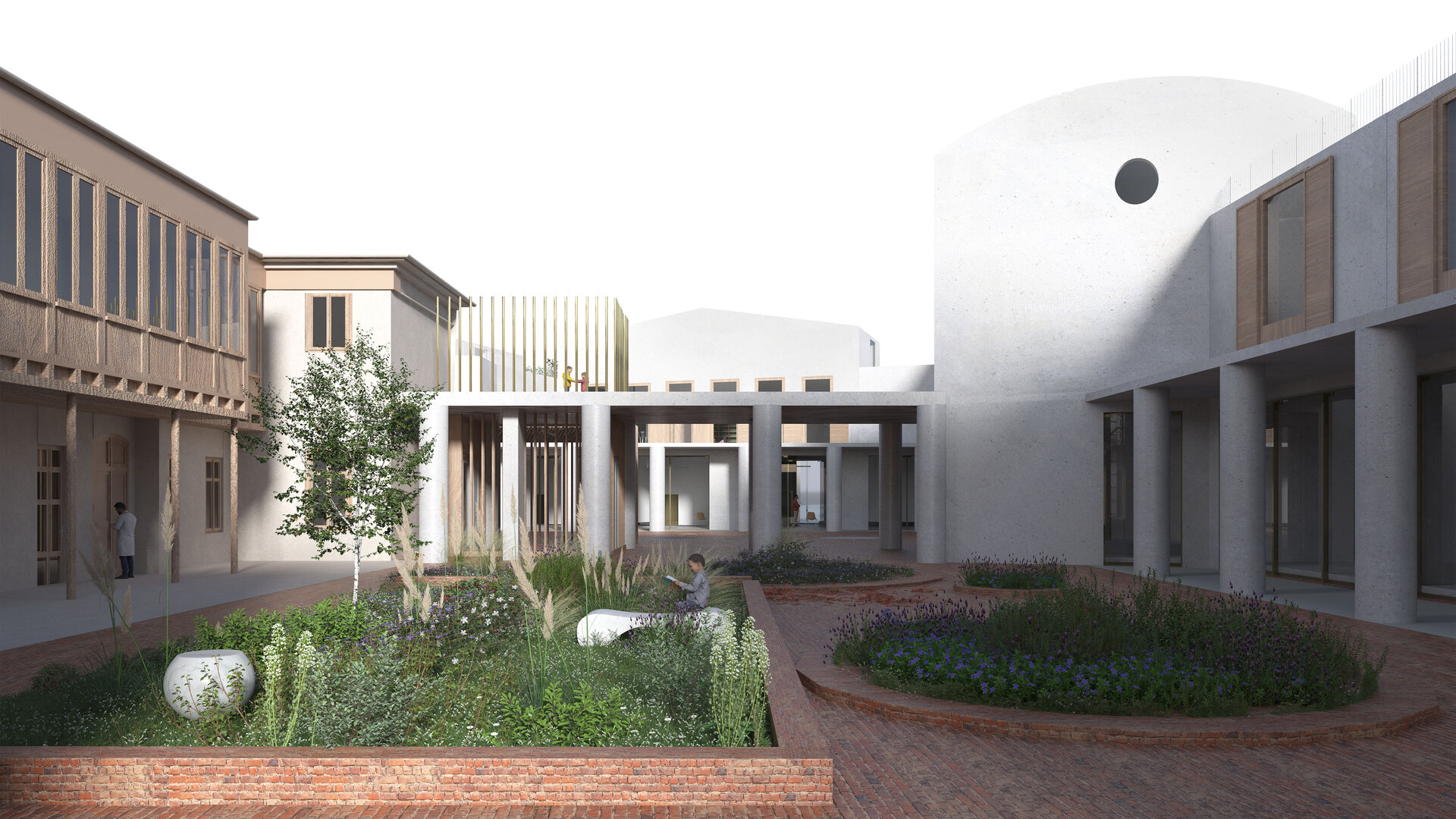
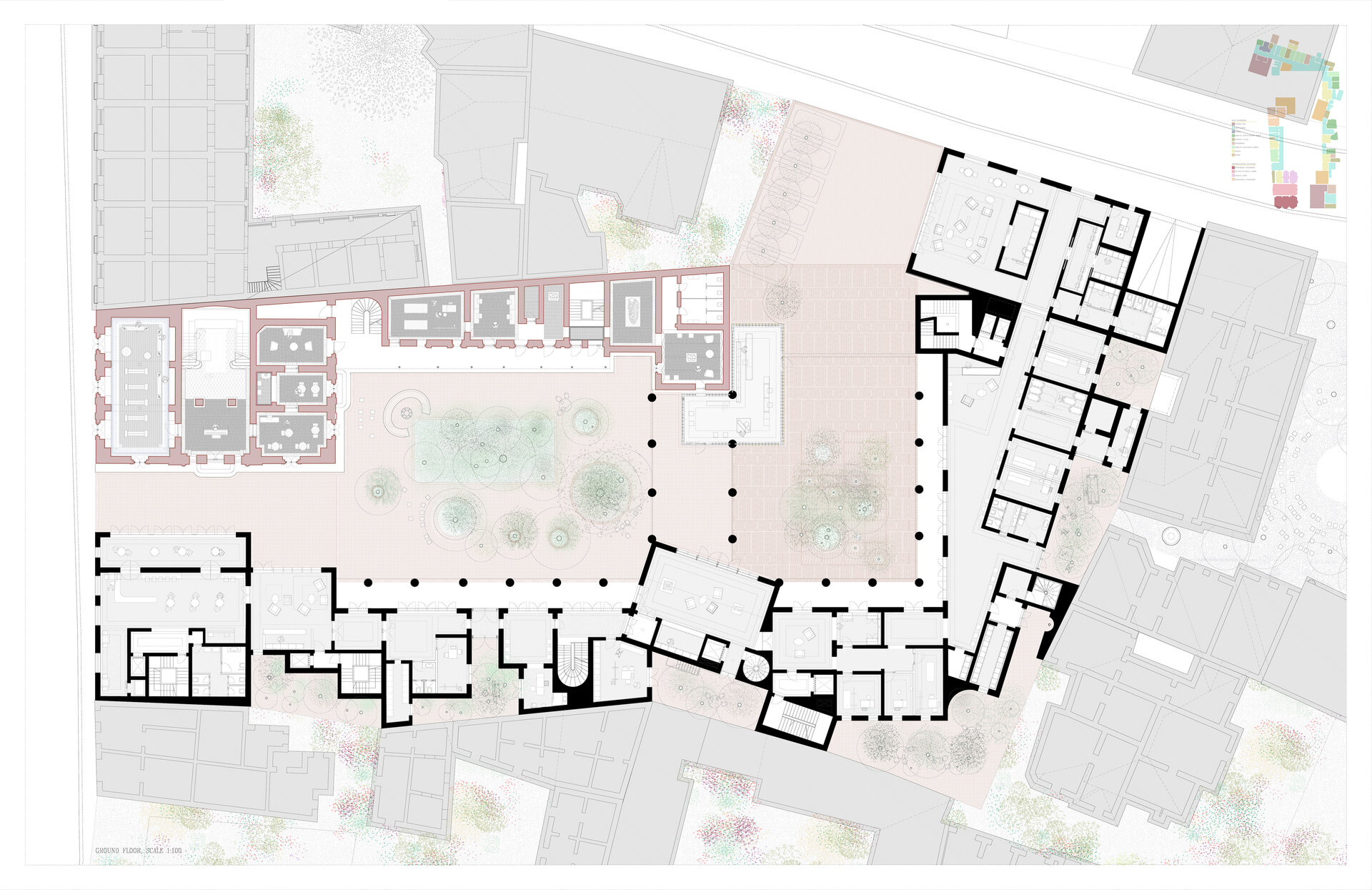
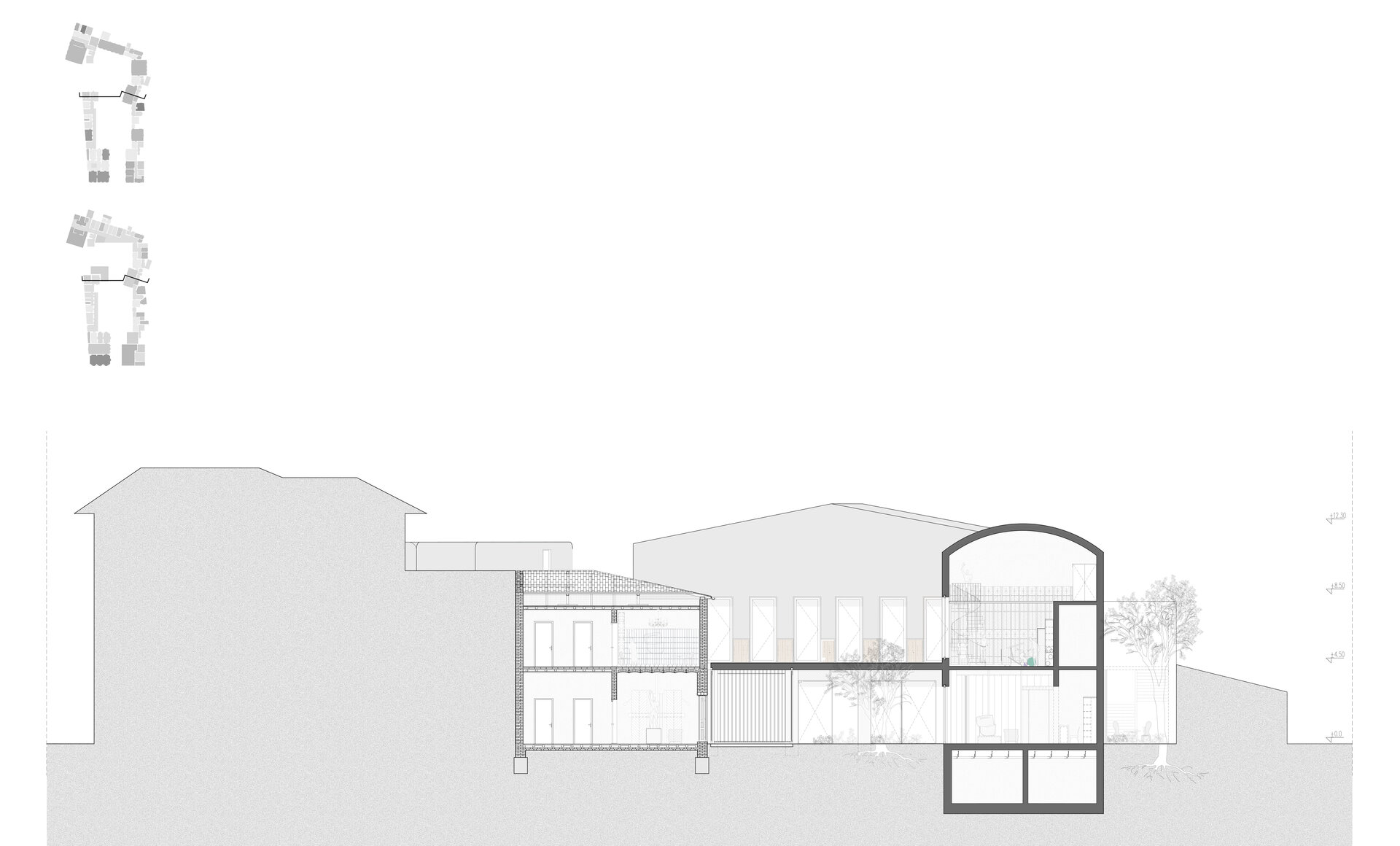
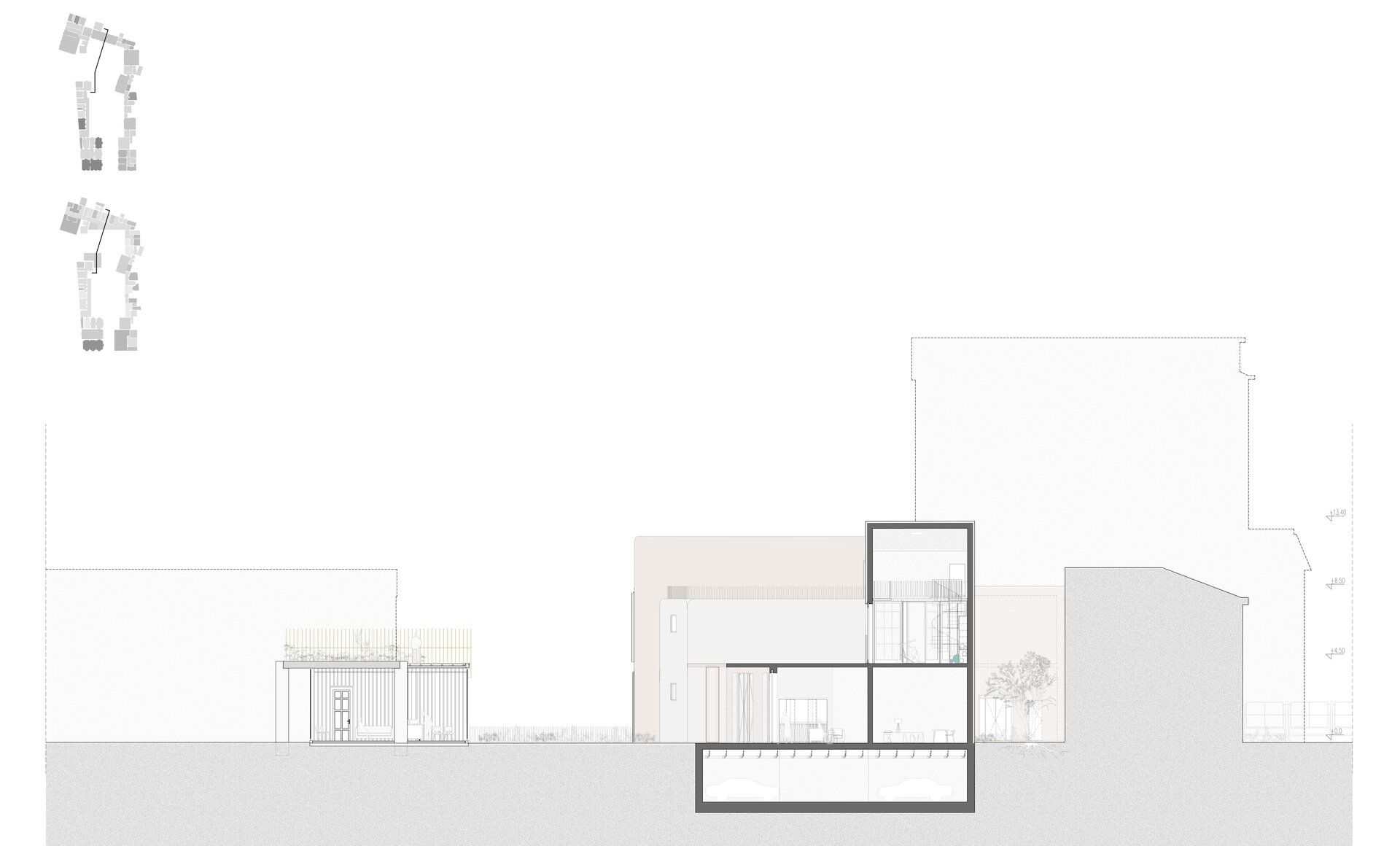
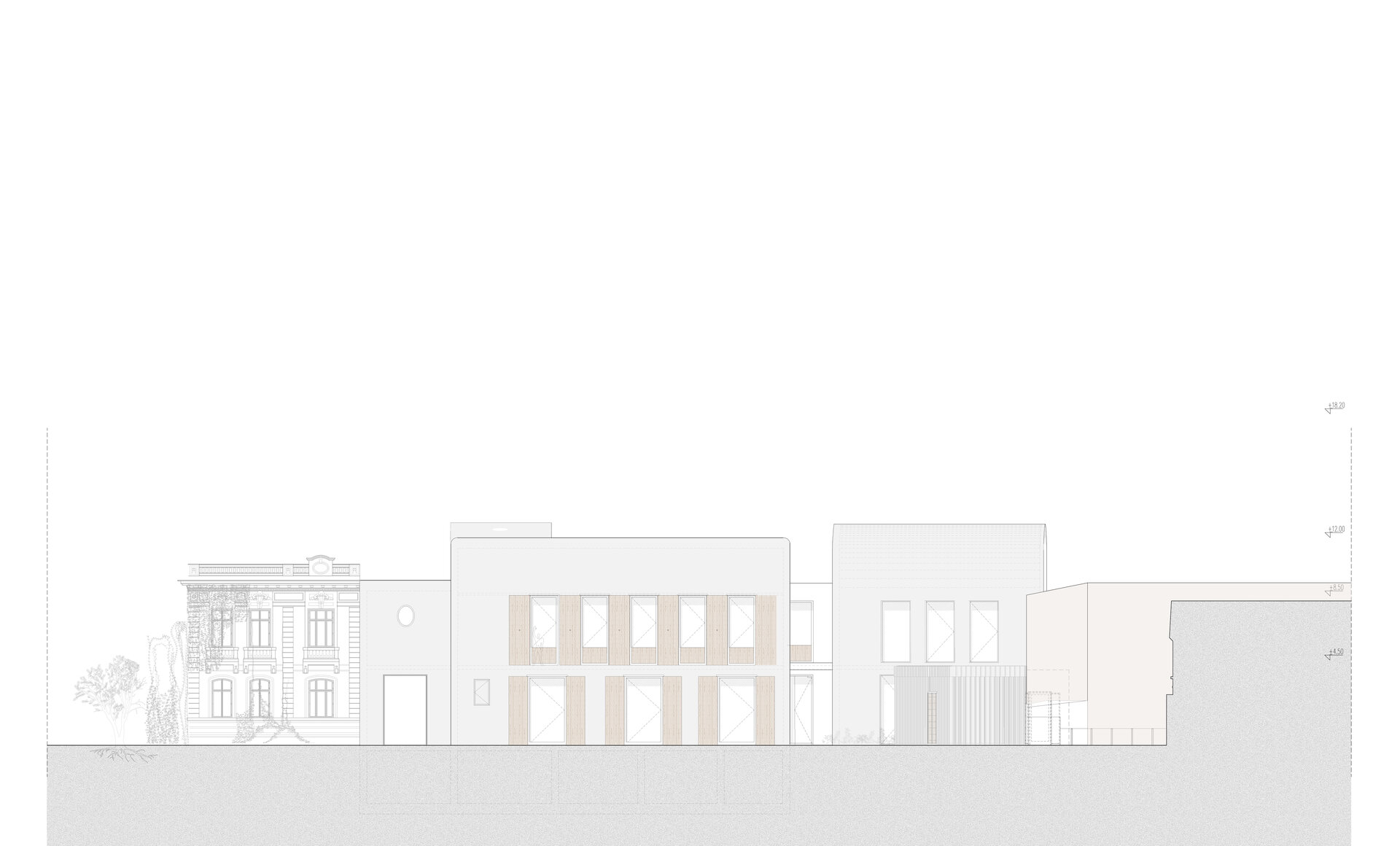
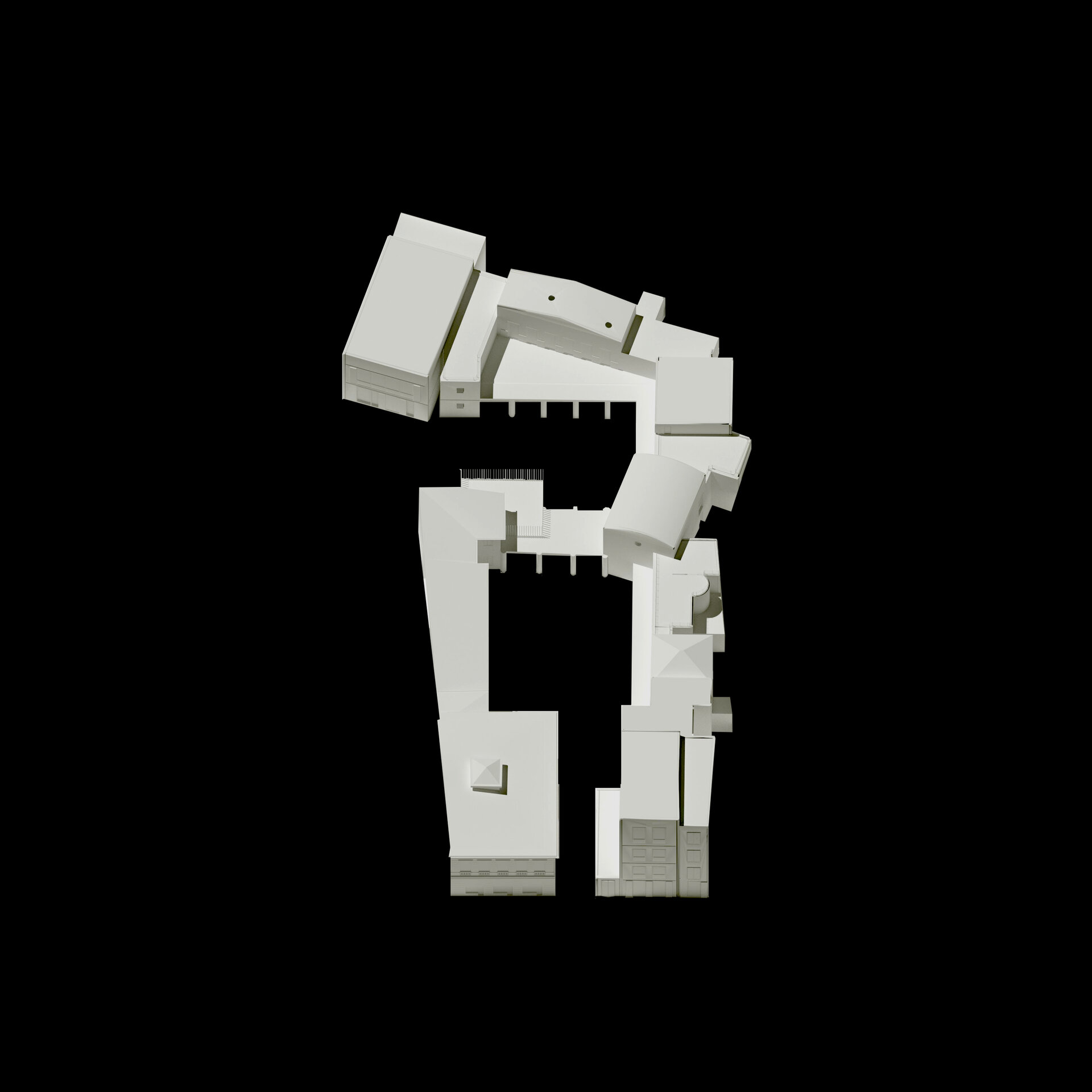
The project places strong emphasis on spatial morphology. The typology of courtyards, specific to the area, is used as a tool for restoring urban coherence. The two resulting courtyards – each corresponding to one of the adjacent streets – are activated through porticos: the existing one belonging to the historical house, and the newly introduced one within the proposed intervention. A continuous visual and functional link between the two spaces is ensured by an extended portico, symbolically reinforcing the connection between old and new.
Another key design strategy is the balanced relationship with the site’s boundaries, especially with the existing blind walls. Rather than enclosing the site through a rigid perimeter, the project generates courtyards along the blind walls, reflecting the logic of an organic urban fabric. These serve the medical offices and are conceived as autonomous spatial units – reminiscent of individual houses with private yards, each vertically developed and functionally connected to the upper levels.
Access is mediated by street-front volumes that mark the transition from public to semi-public space. These include functions such as a pharmacy (located at the ground floor of the historical house) and a gastro-bar (at the base of the new volume), contributing to an active street frontage. The architectural insertion seeks to create coherent spatial relationships between the existing house, the new extension, and the surrounding urban fabric. The volumes are arranged to clearly define two main courtyards, each with its own identity but forming a unified ensemble.
Thus, the project proposes a model of urban revitalization through the revalorization of a heritage building and its integration into a contemporary program, supporting the idea of spatial and functional continuity within a fragmented context. The intervention does not aim for a mimetic restoration but rather generates a dialogue between past and present, between memory and modernity, between heritage and current urban needs.
Architecture Diplomas

- Reclaiming Bucharest’s architectural heritage. Student dwellings and cultural establishments along Calea Griviței
- Rusticitas Et Urbanitas. Conversion and Expansion of the Solacolu Inn: Cultural Center for Arts and Architecture
- ONEF Stadium: an active method of working with history
- Extension of the Bucharest School of Arts
- Tineretului Agora. Rehabilitation and extension of the former Kiseleff Strand
- Diocesano Museum: The Cloisters of Sant’Eustorgio
- Marina Dorćol Educational center and library. Residual spaces. Between the city and the Danube in the post-industrial era
- The |YELLOW| complex - orphanage | placement center
- Extending the cultural space of the city center of Pitești
- Post Partum RetreatCenter / Steveston Hwy 13571
- Designing Learning Spaces for Brăila’s Youth
- Social and Educational Centre for kids
- Grădina Luterană: Dwelling and Workspaces for Creative Industries
- Multifunctional Performing Arts Centre, Berzei 21
- The school as a community core in the Rahova neighbourhood
- Politehnica University of Bucharest extension - Education & Research Centre
- Architecture of Forgotten Memory
- Students’ Sports Palaestra
- Versvs Museum
- Restoration and extension of “King Carol I” rural hospital in Filipestii de Targ
- Studios for artists on Leonida Street
- Luka Cargo Port Hotel and Convention Center, Belgrade, Serbia
- Diocesan Museum Extension
- Museum of the Anti-Communist Revolution of December 1989
- Post-treatment rehabilitation center for assistance and integration of addicted people into the contemporary community in Bucharest
- Immersive Theater – Industrial Heritage Regeneration Through Experimental Cultural Interventions
- Floreasca Olympic Aquatics Center, Bucharest
- Revitalisation of the Radák-Brukenthal Ensemble. Multifuncitonal Cultural Center in Micăsasa, Sibiu
- Intermodal Node in Piața Presei Libere – Bucharest
- Reviving the Identity of Ovidiu Island: Spa and Wellness Complex
- Palimpsest - The third cloister
- Casandra – from the memory of the place to a promising future: an initiatory journey of transformation
- The Creative District and the Fashion House in Arnhem, the Netherlands
- Extension and regeneration of the historical and museal space in Turda
- Research Center for the Reclamin of Polluted Mining Sites Baia Mare
- Interface with Lake Morii: Collective Housing
- #2-4 The intersection between community and art
- Reconnecting the City to the Water. Ferry Terminal in Zimnicea
- Tourist Complex in Sulina
- Arts Center. Revitalization of the Prohaska Mill in Timișoara
- Vitrum & Charta - The cultural library as a mediation between transparency and memory
- Urban Nodes
- Conversion of the former Bragadiru brewery
- Intervention on the Frankfurt Opera
- Bucharest Architecture Center
- Urban Liminality and The Cultural Turn: Vesterport Between Transit and Event
- Revitalization of the Courtyard of Domnița Bălașa Church in Bucharest
- Cito Sanum. Medical recovery center on Calea Moșilor
- Archaeological Research Institute Constanța
- In defence of the fortified church - Community center in Țapu village
- Cultural-Educational Forum - Extention of the Argeș County Museum, Pitești
- Dialogue Between Generations – Vatra Luminoasă Intergenerational Center
- Educational Community Center for children
- Reclaiming the boundary, Văcărești Delta
- Rehabilitation and Extension: Polyvalent Cultural Center - Chisinau, Republic of Moldova
- The Archive of Collections. A blueprint for recovering Bucharest’s cultural heritage
- The Bastion of Artists. A community centre dedicated to arts and crafts, located in the historic distric of Brașov
- Cultural laboratory for heritage studies in the historic center of Brașov
- Domaine les Ormes. Rural revitalization through artisan workshops and agrotourism in Allan, Drôme Provençale, France
- Külliye in time: the Ottoman complex in Medgidia between recovery and reinvention
- GabroArt Han. Archives of Tradition. The restoration of Gabroveni Inn and the socio-cultural activation of the nearby bazaar
- Cultural Establishment. Reactivation of Pompiliu Eliade House through conversion and extension
- The Center of an Edge. Restructuring the Commercial Market and Relocating the Neighbourhood Library
- The city around the colony. Reconversion and extension of the post office and the colony
- House of Film. The Rediscovery of the Cinematic Ritual in the Intimacy of Dwelling
- Game development center and interactive technology museum
- Conversion and Extension of the Radák-Brukenthal Noble Ensemble in Micasasa, Sibiu County. Socio-Medical Residential Center for Elderly People
- Forma: Operative fragment for the regeneration of urban memory
- Extension and Rehabilitation of Technical High Schools. Workshops for Vocational Education


