Dialogue Between Generations – Vatra Luminoasă Intergenerational Center
Authors’ Comment
What if a building could mend the gaps left by time?
Could architecture bring back something we’ve lost—a sense of belonging across generations?
This diploma project began not with a form or a site, but with a question: what does a sustainable community actually look like? This inquiry reshaped the way I thought about architecture—not only as a spatial discipline, but as a social one. It guided the project through layers of strategy and context, from international agendas down to a forgotten corner of Bucharest: the Vatra Luminoasă neighborhood.
To define social sustainability, I began with the 2030 Agenda, then traced how its principles were reflected in Romania’s National Sustainable Development Strategy. Locally, I worked with Bucharest’s Integrated Sustainable Development Strategy, which revealed two alarming trends in Sector 2: it has the city’s oldest population and the lowest percentage of youth. These patterns were confirmed by the Sector 2 Local Strategy, highlighting Vatra Luminoasă as one of the most affected areas.
The strategies propose solutions: public spaces designed for interaction between generations, social programs for the elderly, and long- or short-term care centers that ease the burden on emergency services. Yet, only three permanent medical centers exist in Bucharest, far from the 69 projected as necessary.
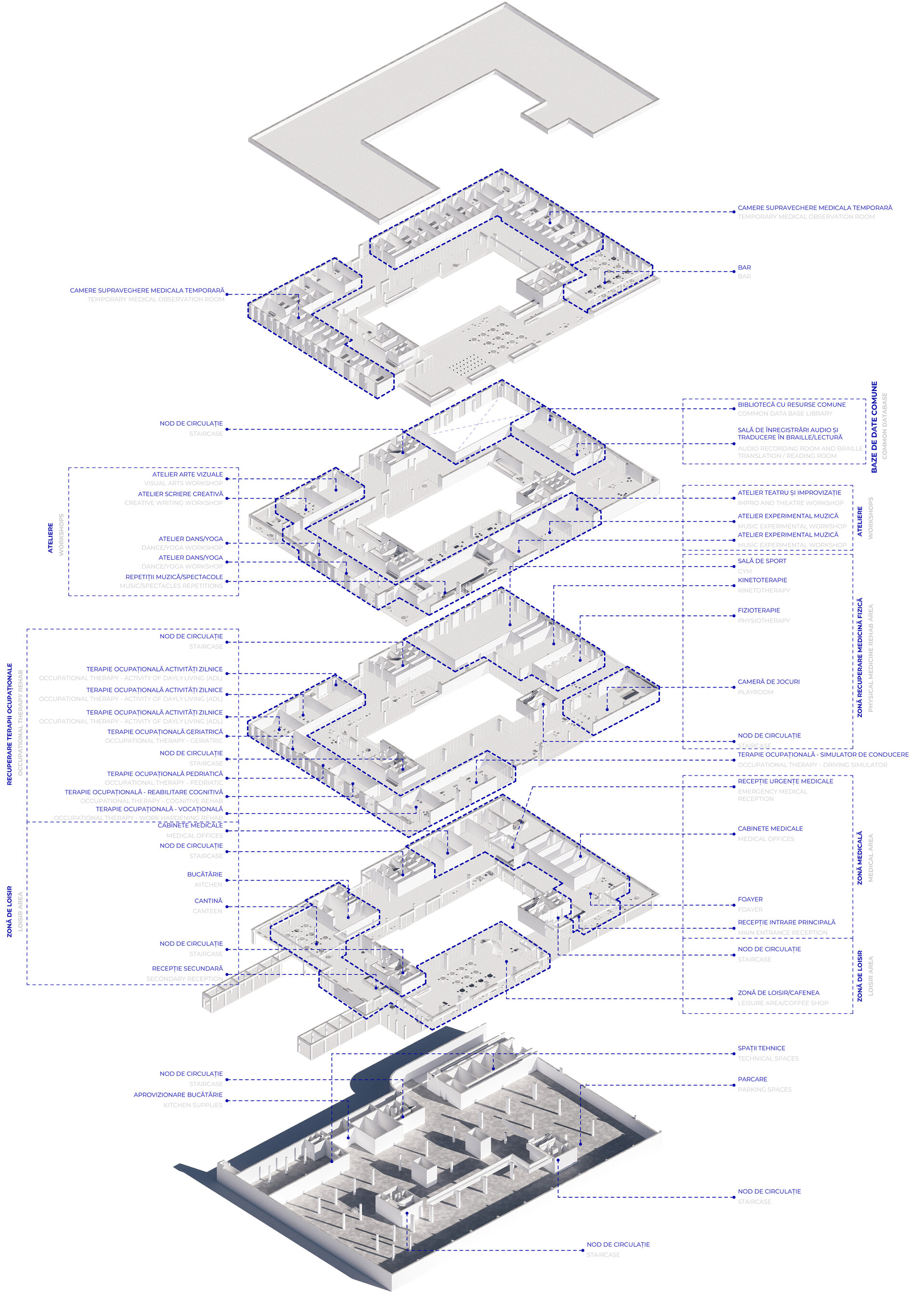
From this emerged the concept of a medico-social infrastructure—a space not only for treatment, but for care, learning, and dignity. The center would offer outpatient and palliative care, rehabilitation, occupational therapy, sensory stimulation, and play-based recovery. These would be supported by creative workshops that bridge therapeutic and cultural engagement.
In exploring the area’s demographics, I noticed a contradiction. Although Sector 2 is aging, it also has one of the highest concentrations of schools in the city—87, equal to Sector 1. The youth are there, but only temporarily. The elderly remain, isolated. This dynamic reveals a fragmented community—a place where people pass by, but don’t connect.
The site choice became clear once I revisited the social history of Vatra Luminoasă. Its name comes from the Vatra Luminoasă Establishment, founded in the early 20th century by Queen Elisabeth to provide housing and workspaces for the blind. Today, only the Special High School for the Blind remains. This legacy of care and inclusion inspired the ethos of my intervention.
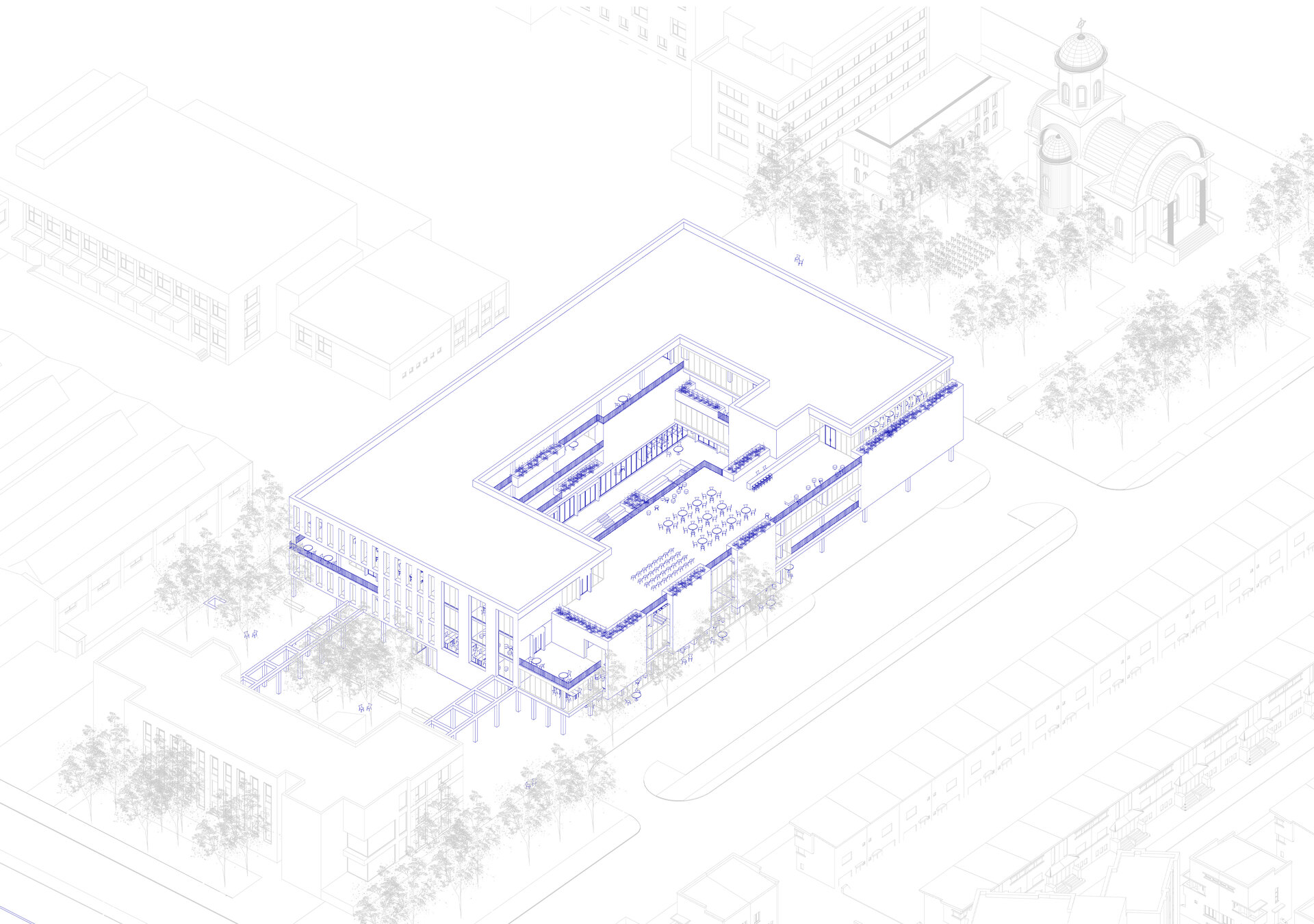
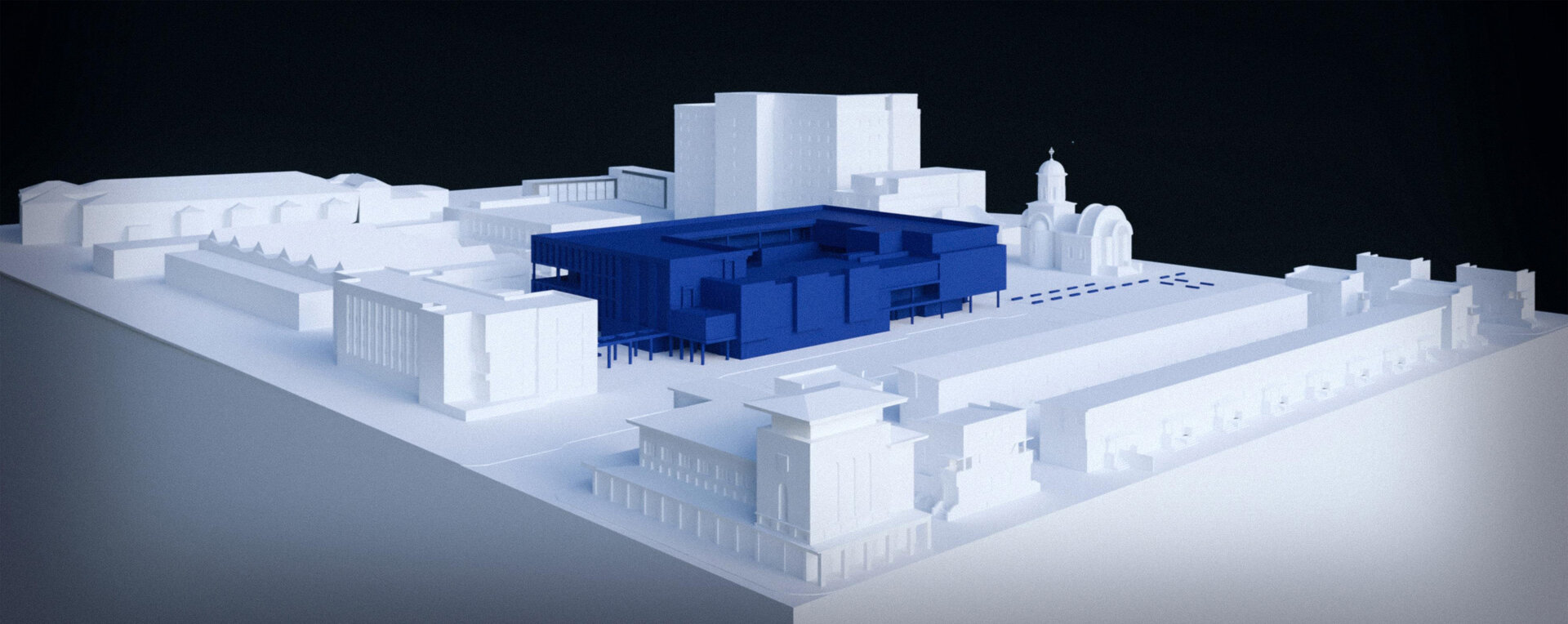
Nearby institutions—Monza Hospital, the Church of Vatra Luminoasă, the Association of the Blind, and the IBIS Education Center—already act as informal support nodes. My proposal seeks to consolidate these efforts into an architectural network.
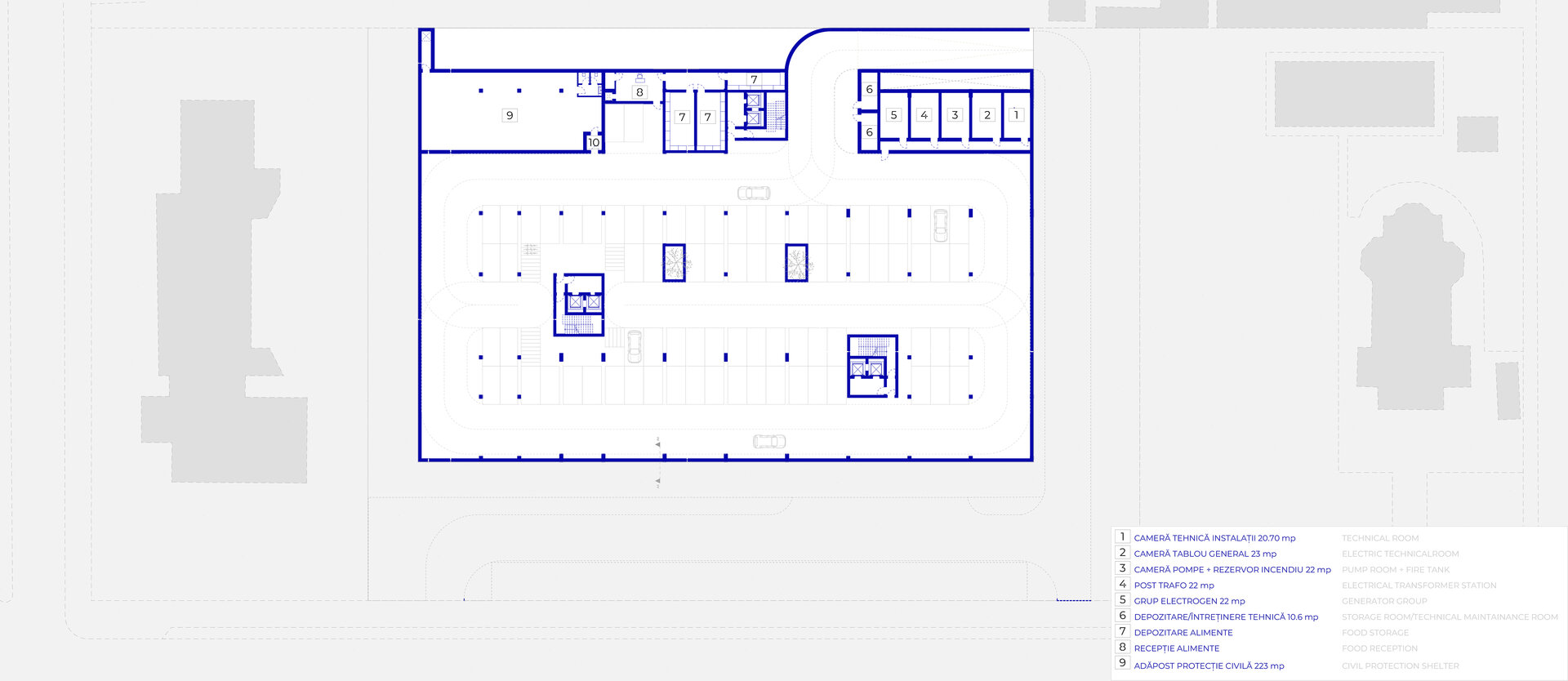
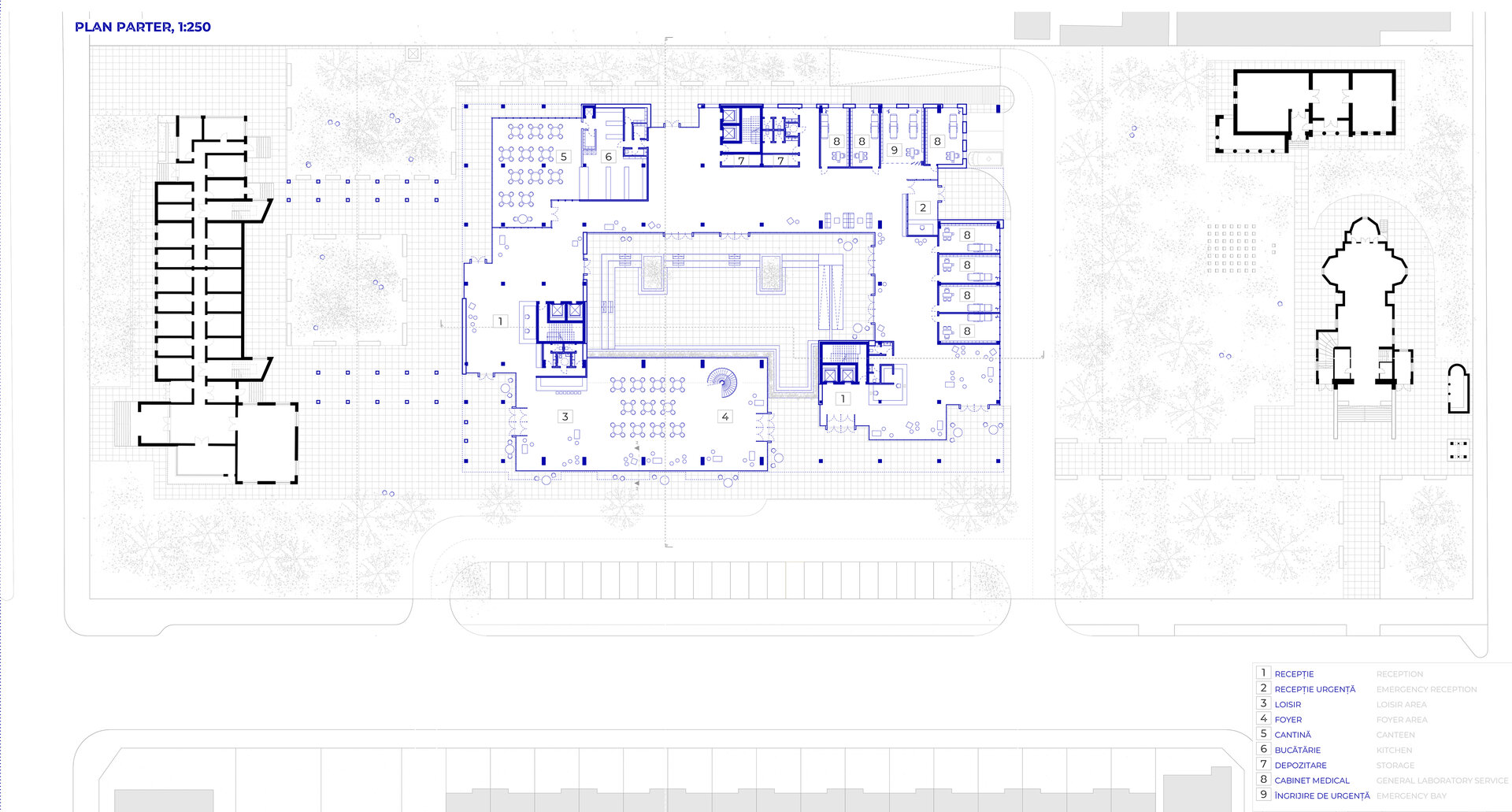
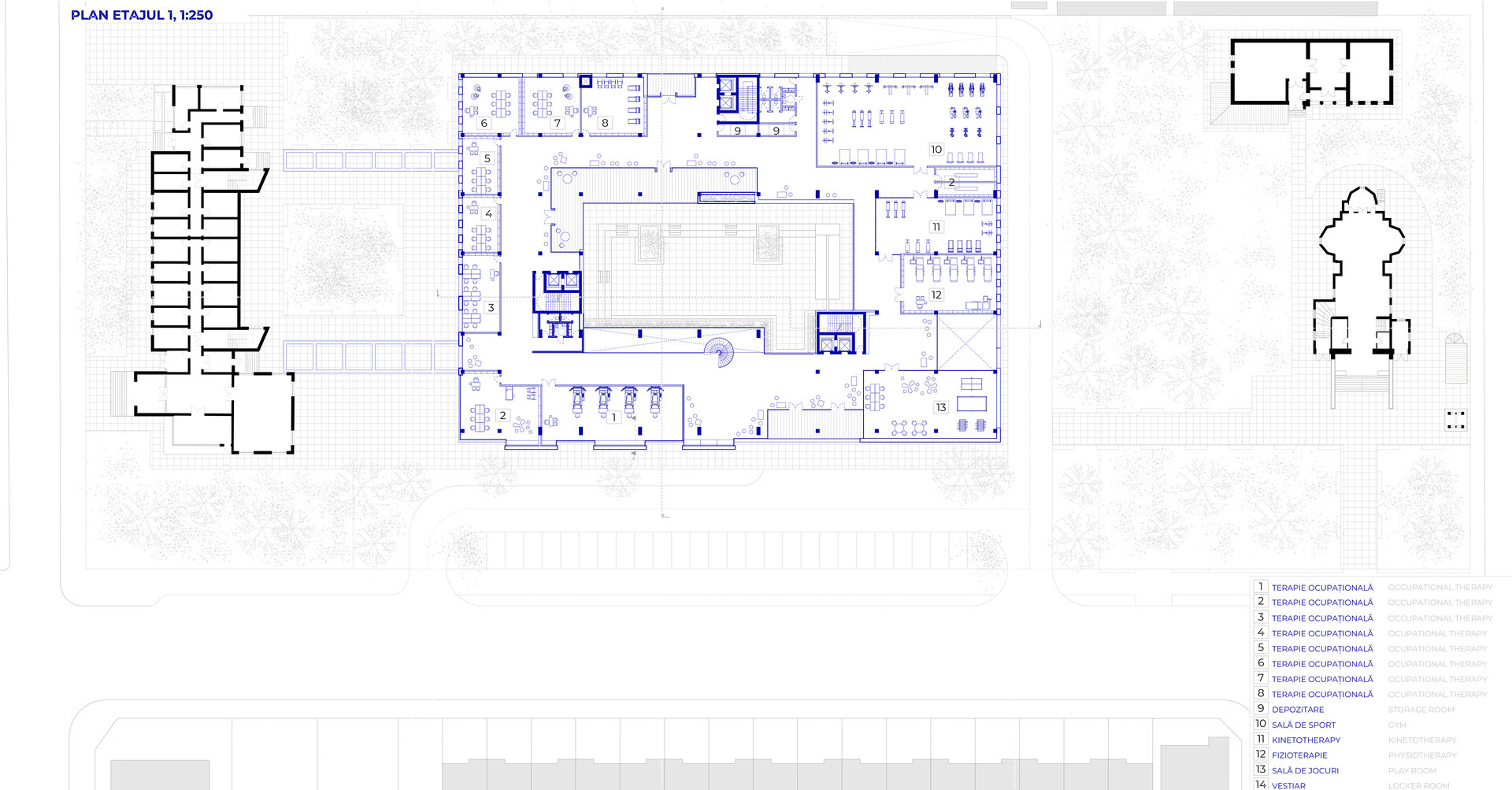
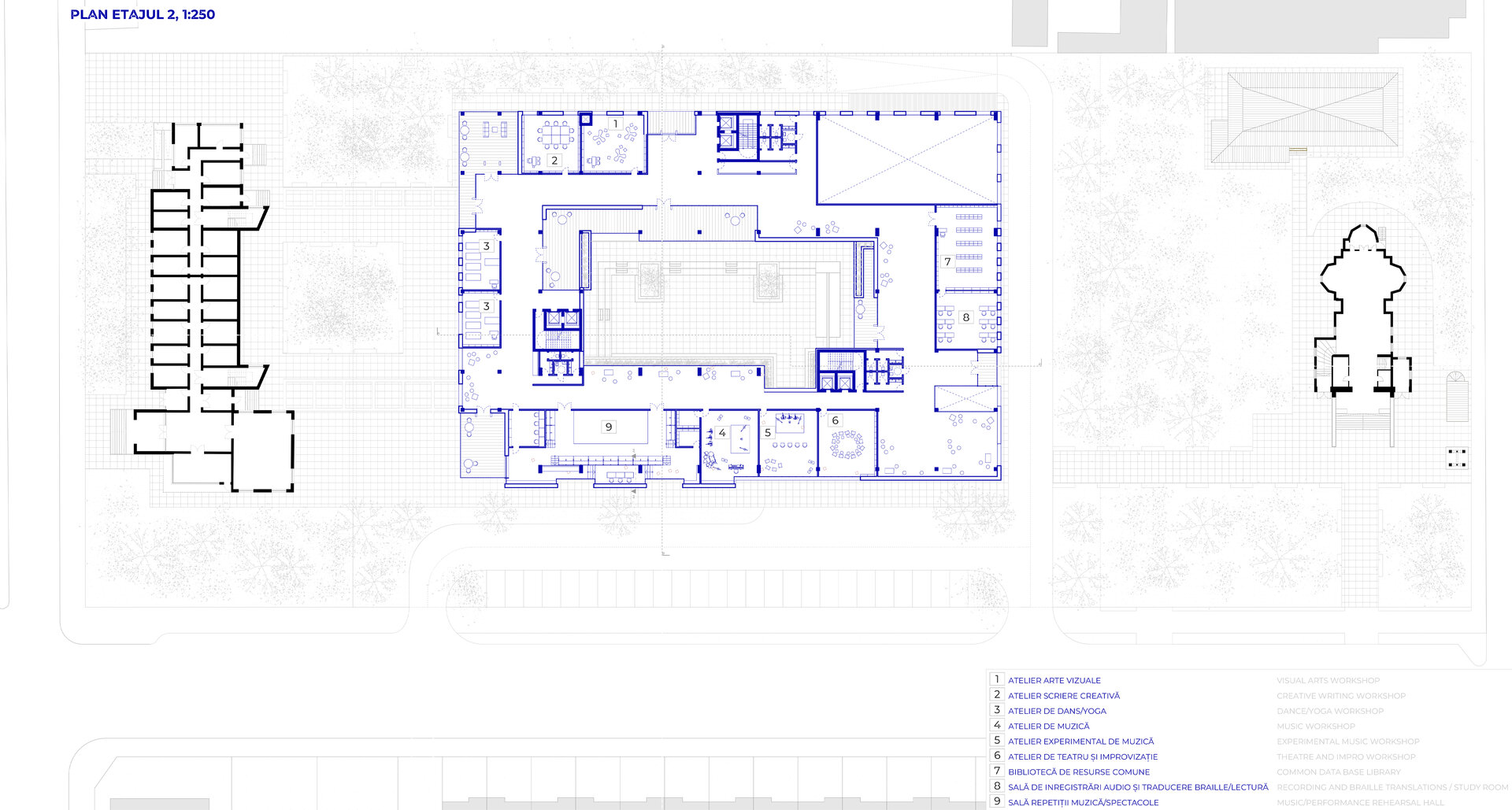
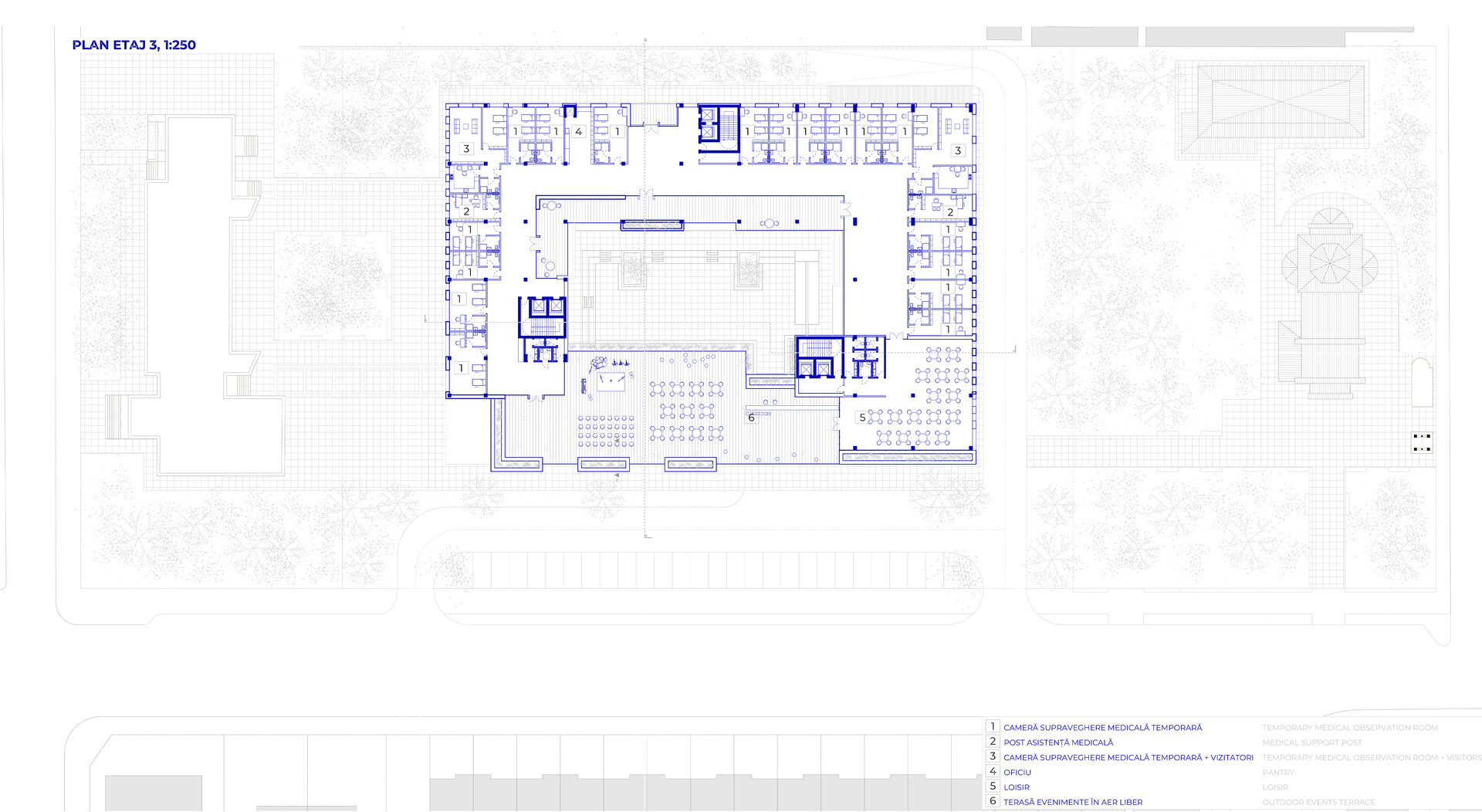
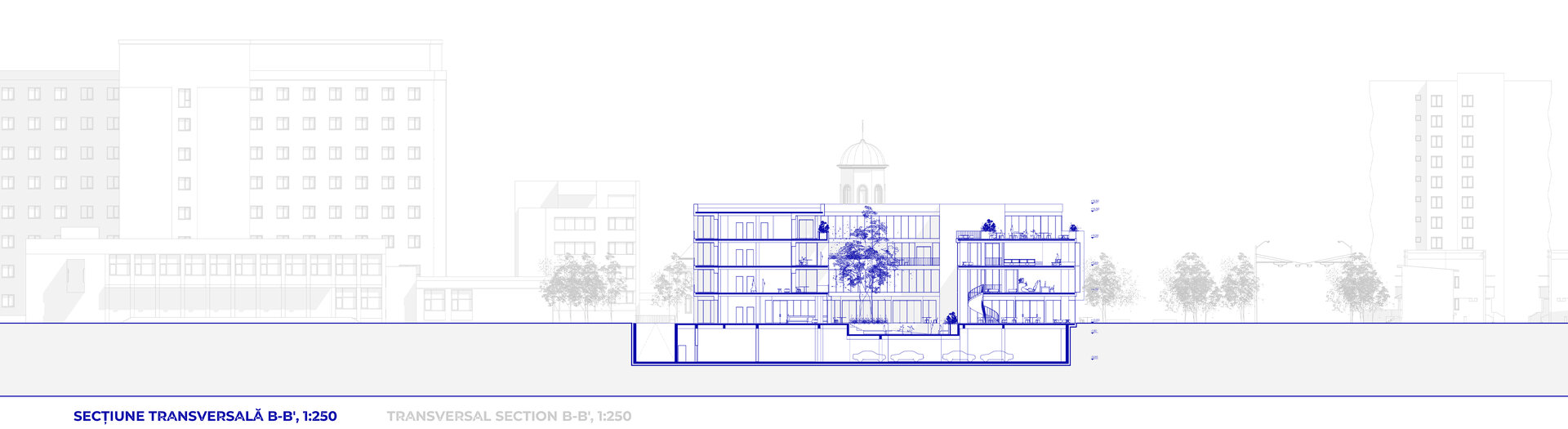
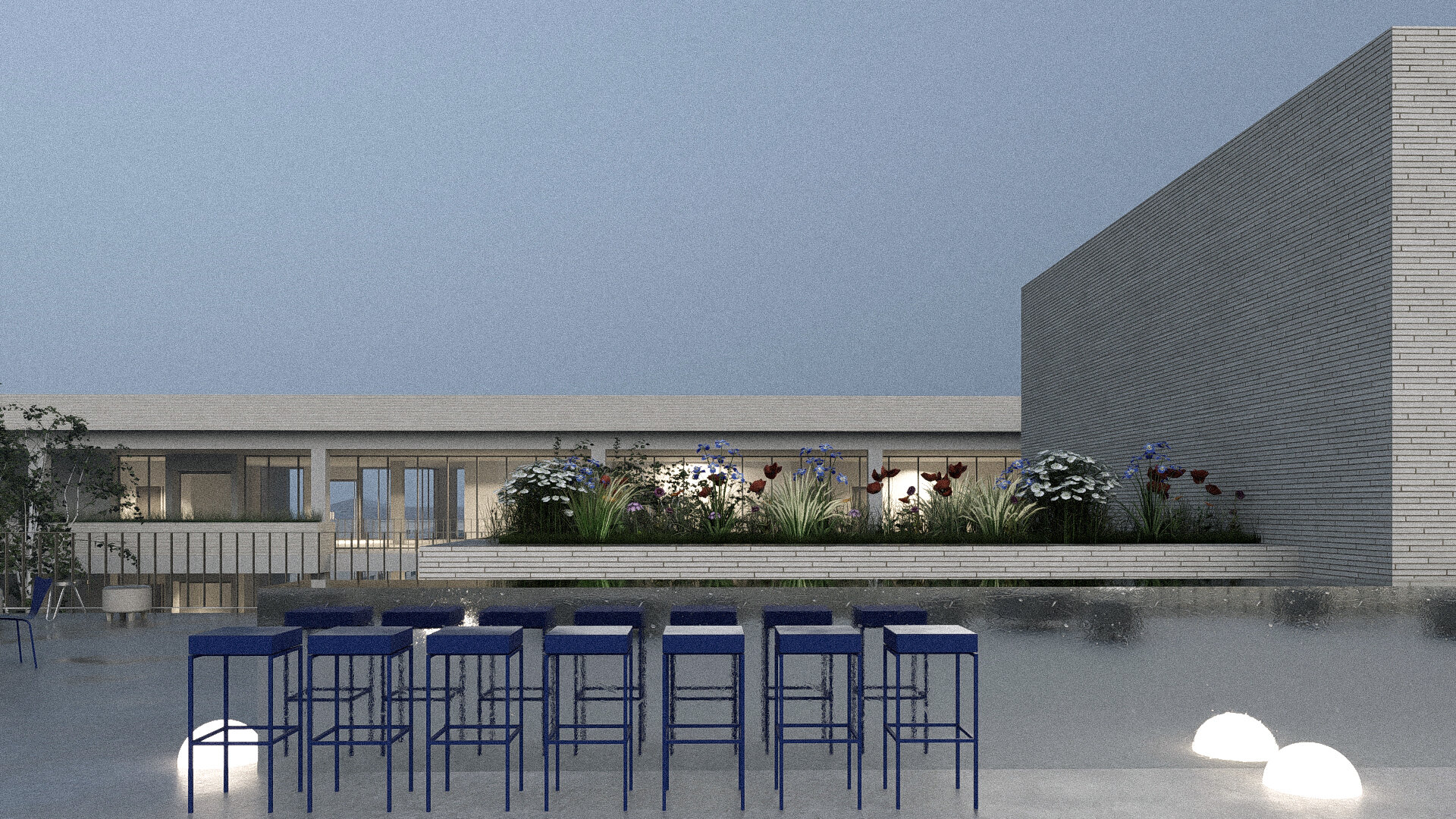
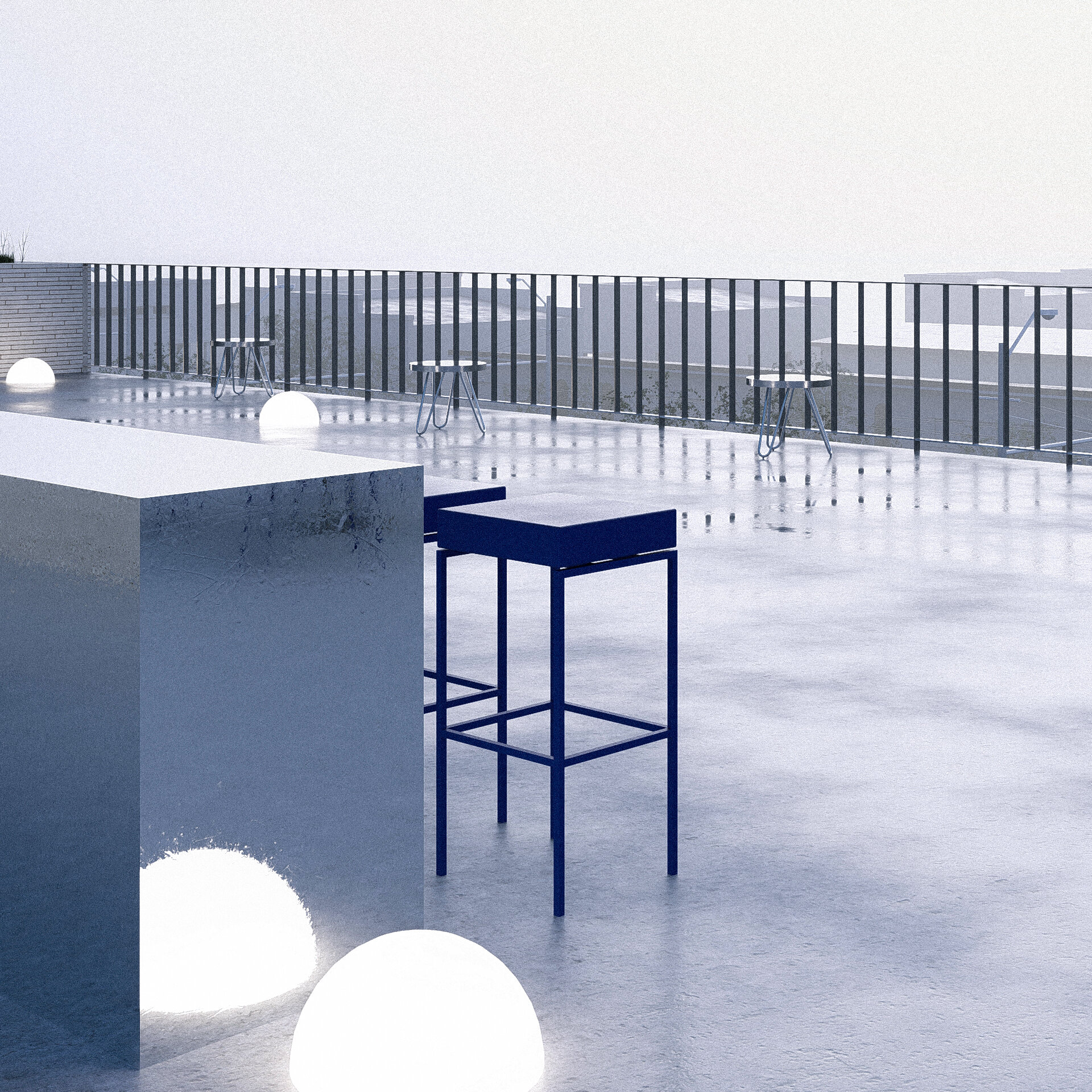
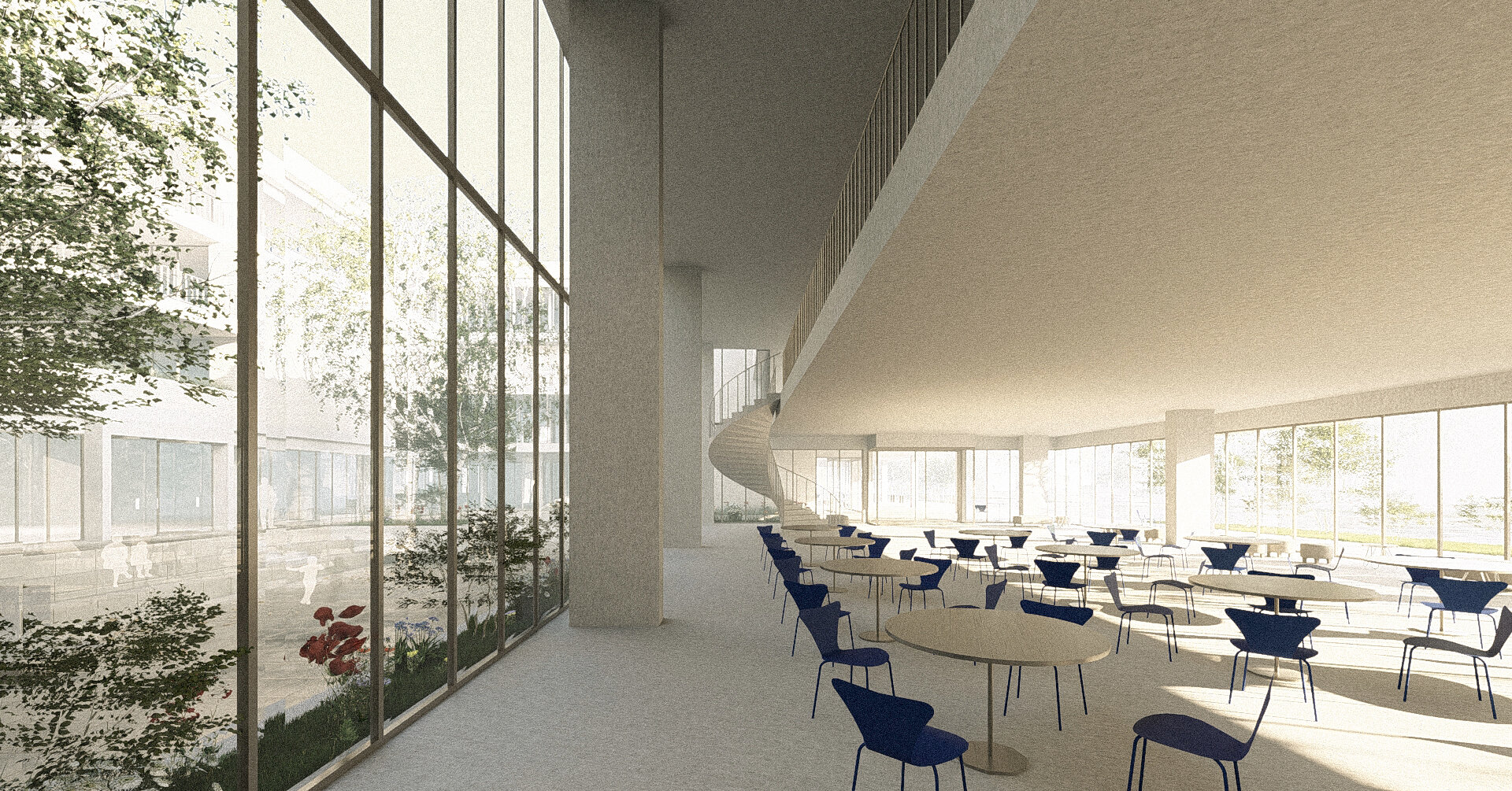
The ground floor of the center is split into medical and leisure areas, connected by a central corridor. The upper level holds therapy rooms, creative spaces, a gym, and a playroom. A shared library, with Braille and audio translation, supports accessible learning. The top floor includes supervision rooms and a rooftop terrace for events, reviving the cultural spirit of the original institution.
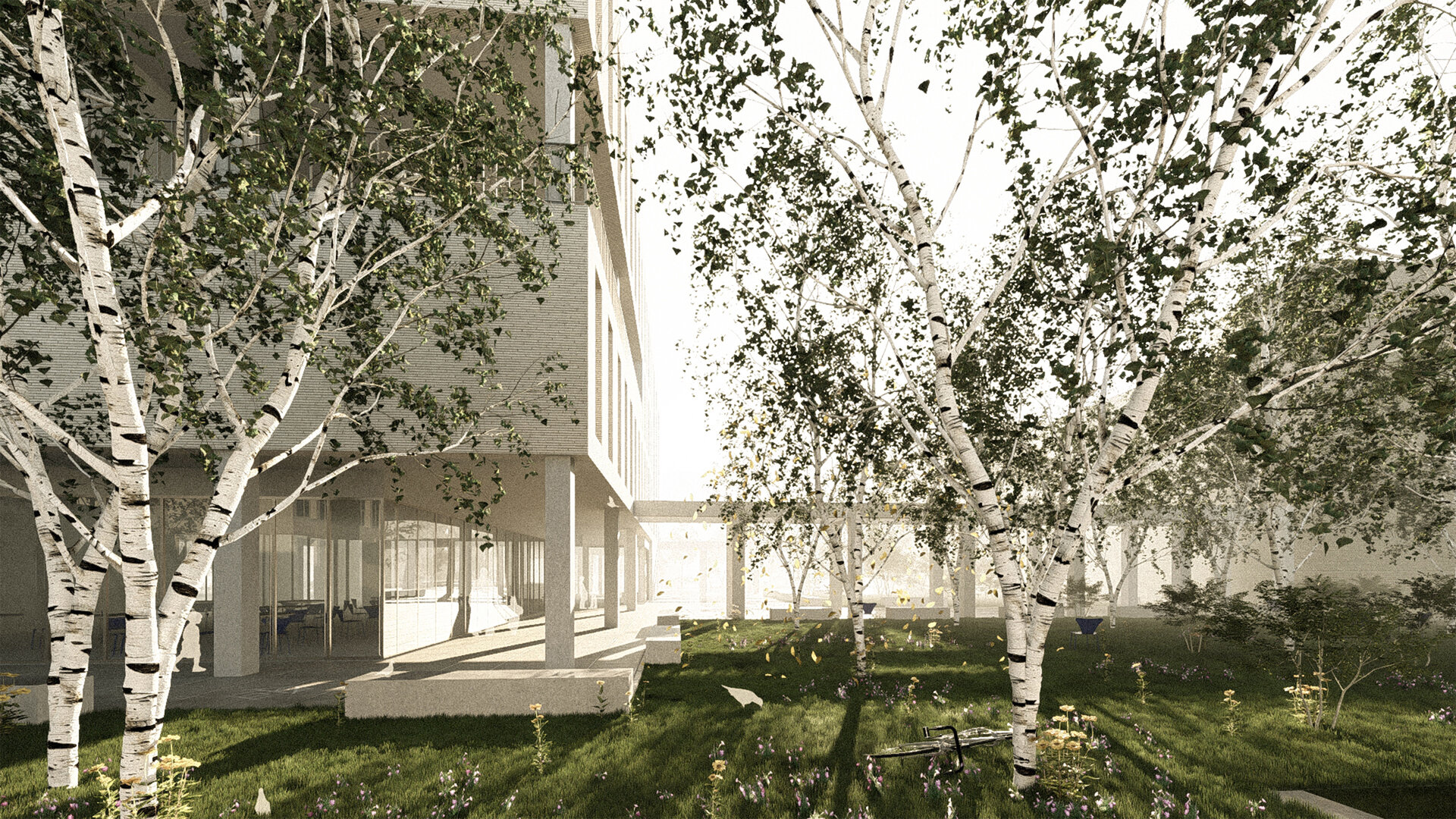
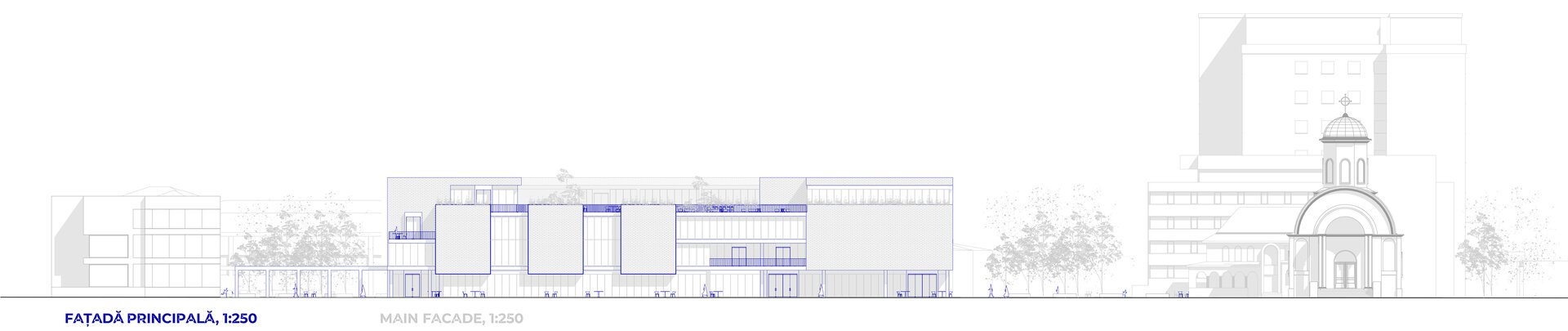
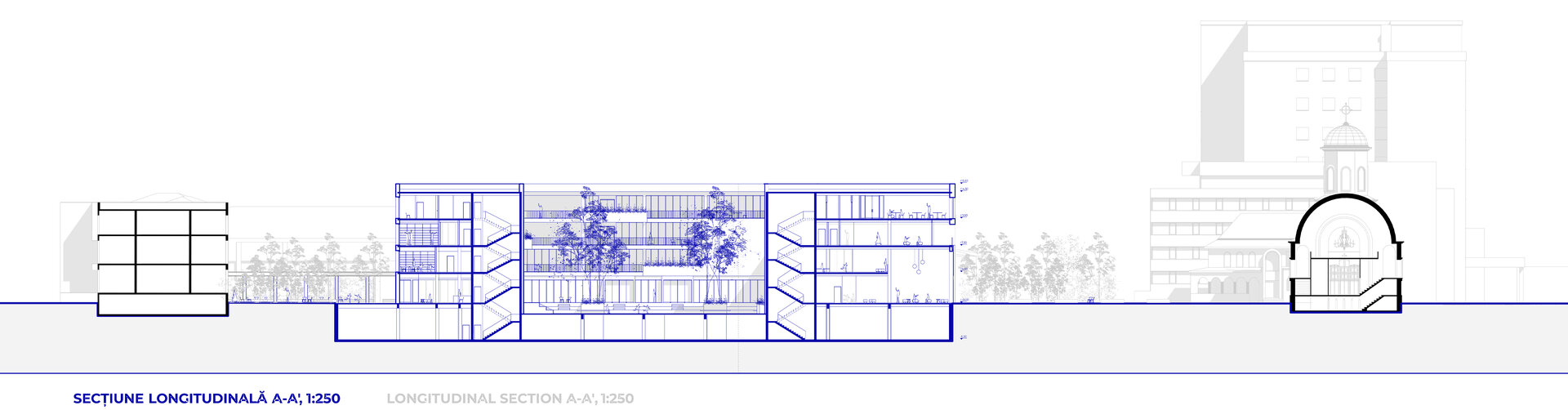
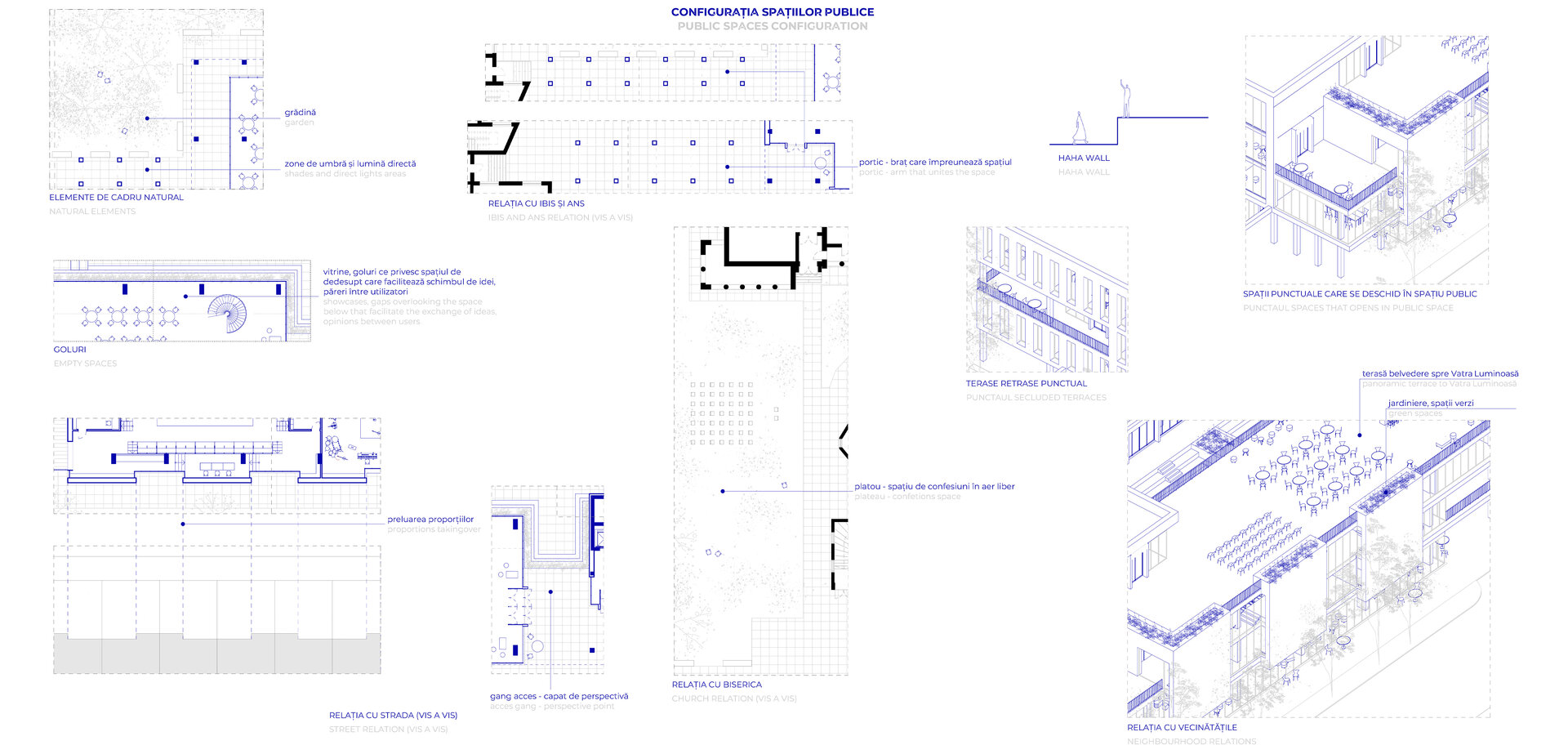
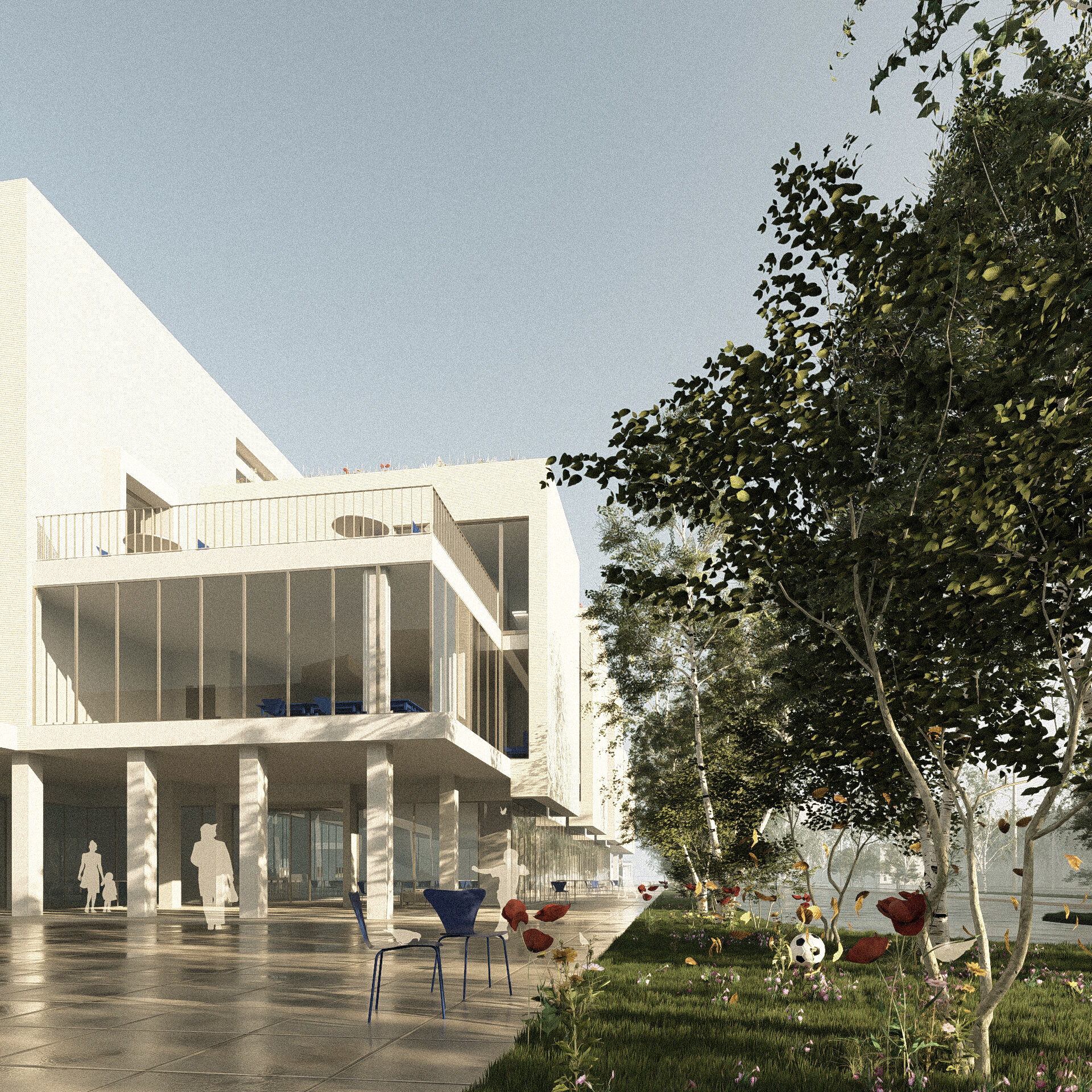
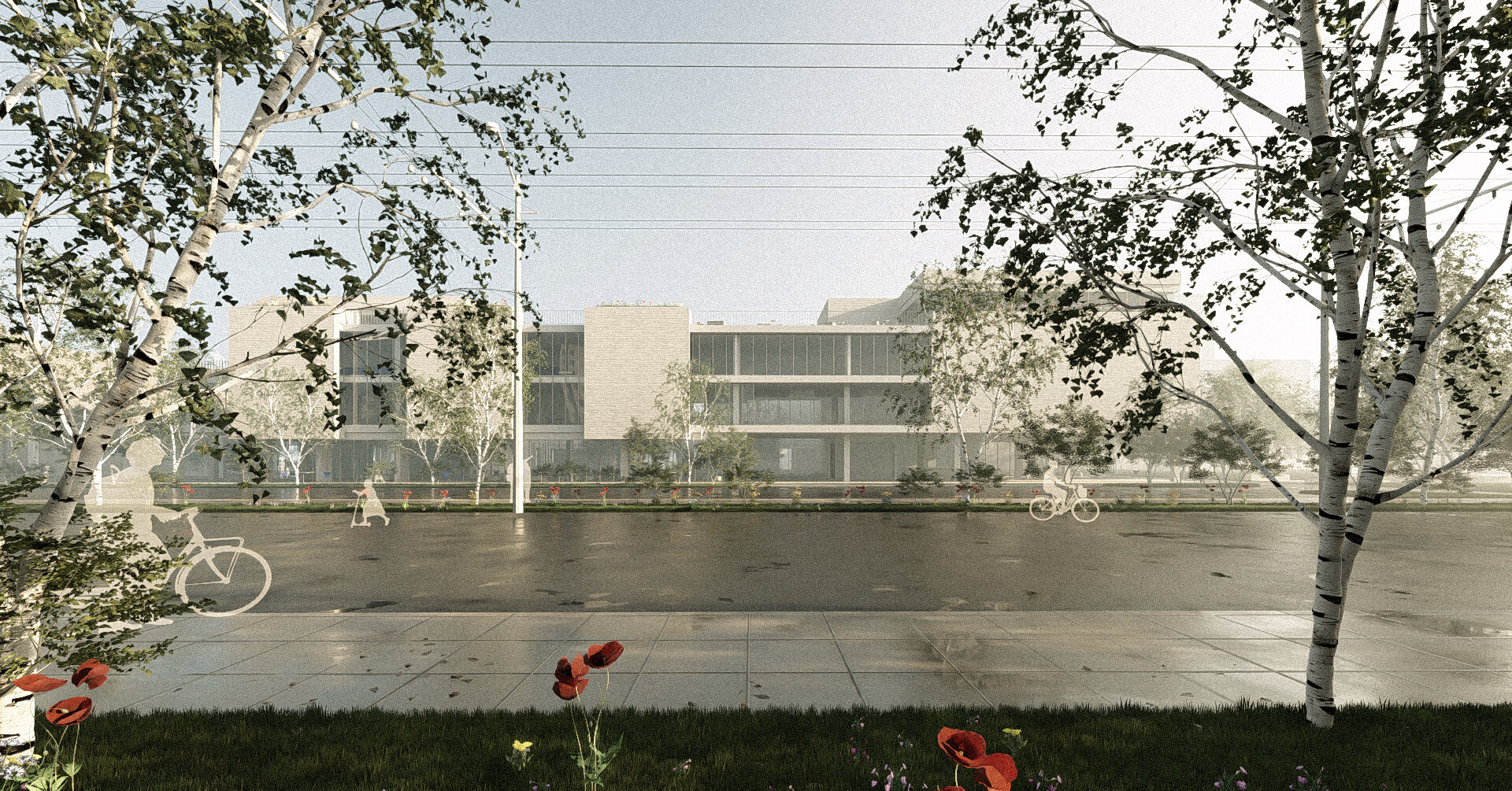
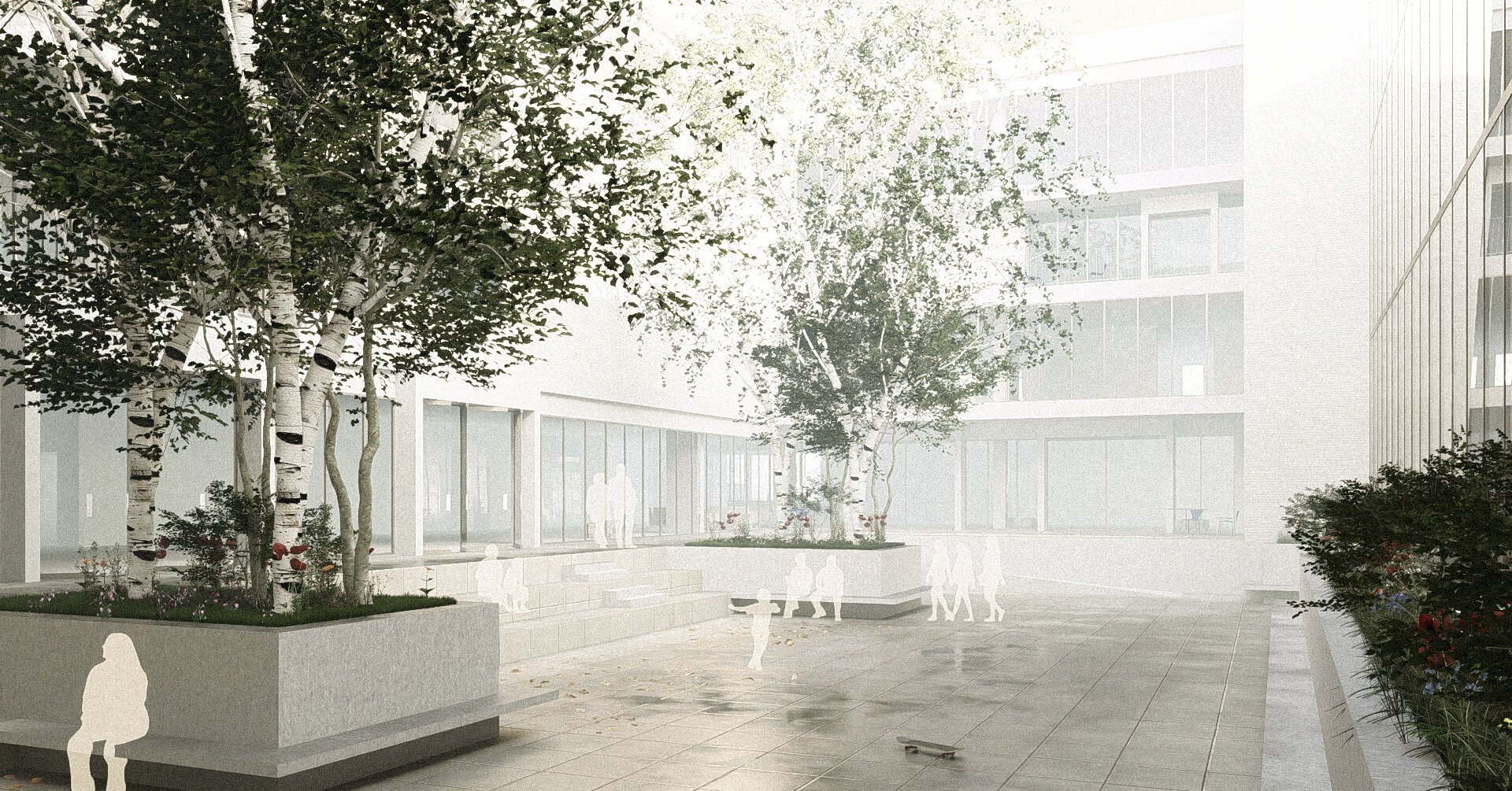
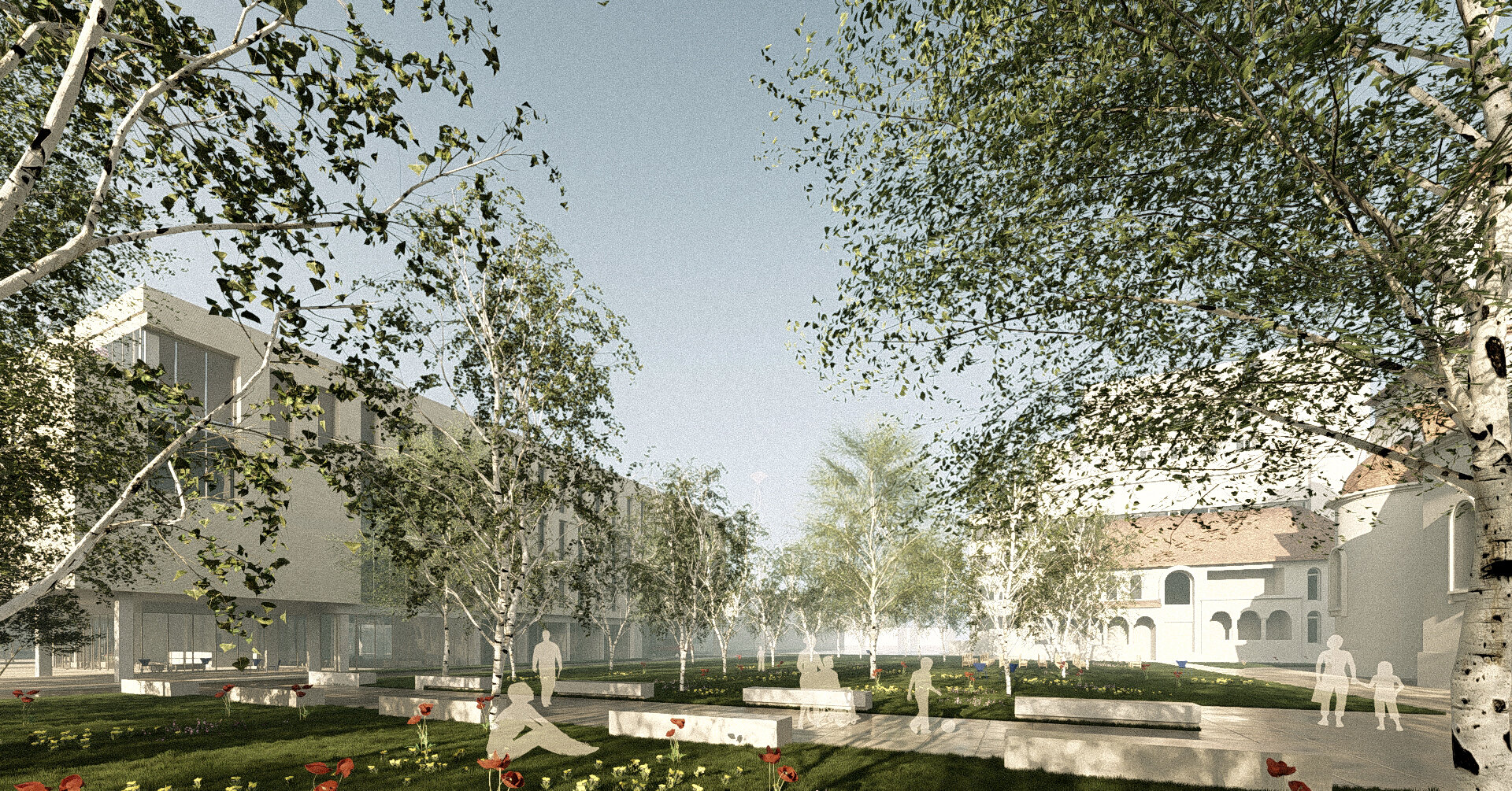
Architecturally, the building acts as a bridge. Two porticoes extend toward the Association of the Blind and the Educational Center, like open arms. A pedestrian axis aligns with the church’s entrance, creating spatial continuity. A green platform offers space for reflection, rest, and community gatherings. Large vertical windows create visual links to the outside. A lowered courtyard, inspired by the “ha-ha wall,” ensures safety without creating walls. Toward the street, the façade reflects the rhythm of the surrounding houses.
This is not just a center—it is a proposal for reconnection. A place where care is not a service, but a structure. A space where generations don’t just coexist, but meet.

Architecture Diplomas

- Reclaiming Bucharest’s architectural heritage. Student dwellings and cultural establishments along Calea Griviței
- Rusticitas Et Urbanitas. Conversion and Expansion of the Solacolu Inn: Cultural Center for Arts and Architecture
- ONEF Stadium: an active method of working with history
- Extension of the Bucharest School of Arts
- Tineretului Agora. Rehabilitation and extension of the former Kiseleff Strand
- Diocesano Museum: The Cloisters of Sant’Eustorgio
- Marina Dorćol Educational center and library. Residual spaces. Between the city and the Danube in the post-industrial era
- The |YELLOW| complex - orphanage | placement center
- Extending the cultural space of the city center of Pitești
- Post Partum RetreatCenter / Steveston Hwy 13571
- Designing Learning Spaces for Brăila’s Youth
- Social and Educational Centre for kids
- Grădina Luterană: Dwelling and Workspaces for Creative Industries
- Multifunctional Performing Arts Centre, Berzei 21
- The school as a community core in the Rahova neighbourhood
- Politehnica University of Bucharest extension - Education & Research Centre
- Architecture of Forgotten Memory
- Students’ Sports Palaestra
- Versvs Museum
- Restoration and extension of “King Carol I” rural hospital in Filipestii de Targ
- Studios for artists on Leonida Street
- Luka Cargo Port Hotel and Convention Center, Belgrade, Serbia
- Diocesan Museum Extension
- Museum of the Anti-Communist Revolution of December 1989
- Post-treatment rehabilitation center for assistance and integration of addicted people into the contemporary community in Bucharest
- Immersive Theater – Industrial Heritage Regeneration Through Experimental Cultural Interventions
- Floreasca Olympic Aquatics Center, Bucharest
- Revitalisation of the Radák-Brukenthal Ensemble. Multifuncitonal Cultural Center in Micăsasa, Sibiu
- Intermodal Node in Piața Presei Libere – Bucharest
- Reviving the Identity of Ovidiu Island: Spa and Wellness Complex
- Palimpsest - The third cloister
- Casandra – from the memory of the place to a promising future: an initiatory journey of transformation
- The Creative District and the Fashion House in Arnhem, the Netherlands
- Extension and regeneration of the historical and museal space in Turda
- Research Center for the Reclamin of Polluted Mining Sites Baia Mare
- Interface with Lake Morii: Collective Housing
- #2-4 The intersection between community and art
- Reconnecting the City to the Water. Ferry Terminal in Zimnicea
- Tourist Complex in Sulina
- Arts Center. Revitalization of the Prohaska Mill in Timișoara
- Vitrum & Charta - The cultural library as a mediation between transparency and memory
- Urban Nodes
- Conversion of the former Bragadiru brewery
- Intervention on the Frankfurt Opera
- Bucharest Architecture Center
- Urban Liminality and The Cultural Turn: Vesterport Between Transit and Event
- Revitalization of the Courtyard of Domnița Bălașa Church in Bucharest
- Cito Sanum. Medical recovery center on Calea Moșilor
- Archaeological Research Institute Constanța
- In defence of the fortified church - Community center in Țapu village
- Cultural-Educational Forum - Extention of the Argeș County Museum, Pitești
- Dialogue Between Generations – Vatra Luminoasă Intergenerational Center
- Educational Community Center for children
- Reclaiming the boundary, Văcărești Delta
- Rehabilitation and Extension: Polyvalent Cultural Center - Chisinau, Republic of Moldova
- The Archive of Collections. A blueprint for recovering Bucharest’s cultural heritage
- The Bastion of Artists. A community centre dedicated to arts and crafts, located in the historic distric of Brașov
- Cultural laboratory for heritage studies in the historic center of Brașov
- Domaine les Ormes. Rural revitalization through artisan workshops and agrotourism in Allan, Drôme Provençale, France
- Külliye in time: the Ottoman complex in Medgidia between recovery and reinvention
- GabroArt Han. Archives of Tradition. The restoration of Gabroveni Inn and the socio-cultural activation of the nearby bazaar
- Cultural Establishment. Reactivation of Pompiliu Eliade House through conversion and extension
- The Center of an Edge. Restructuring the Commercial Market and Relocating the Neighbourhood Library
- The city around the colony. Reconversion and extension of the post office and the colony
- House of Film. The Rediscovery of the Cinematic Ritual in the Intimacy of Dwelling
- Game development center and interactive technology museum
- Conversion and Extension of the Radák-Brukenthal Noble Ensemble in Micasasa, Sibiu County. Socio-Medical Residential Center for Elderly People
- Forma: Operative fragment for the regeneration of urban memory
- Extension and Rehabilitation of Technical High Schools. Workshops for Vocational Education


