Interface with Lake Morii: Collective Housing
Authors’ Comment
INTERFACE WITH LAKE MORII: COLLECTIVE HOUSING, Bucharest
The construction of the man-made reservoir Lake Morii in Bucharest, affected an area of approximately 240 hectares, demolished over 400 houses, two schools, the Church of Saint Nicholas the Hierarch (built in 1564), and the Crangasi Cemetery.
All of these in less than a year between 1985 and 1986.
Even so, the thrill of living cannot be stopped and the main aim of the project is to emphasize that, supporting housing development and improving the quality of life through public spaces.
*The project is assuming the actual poor condition of the area. Through its process, it took into consideration to become a social housing project, but in the end, it was to promote the potential of a future development.
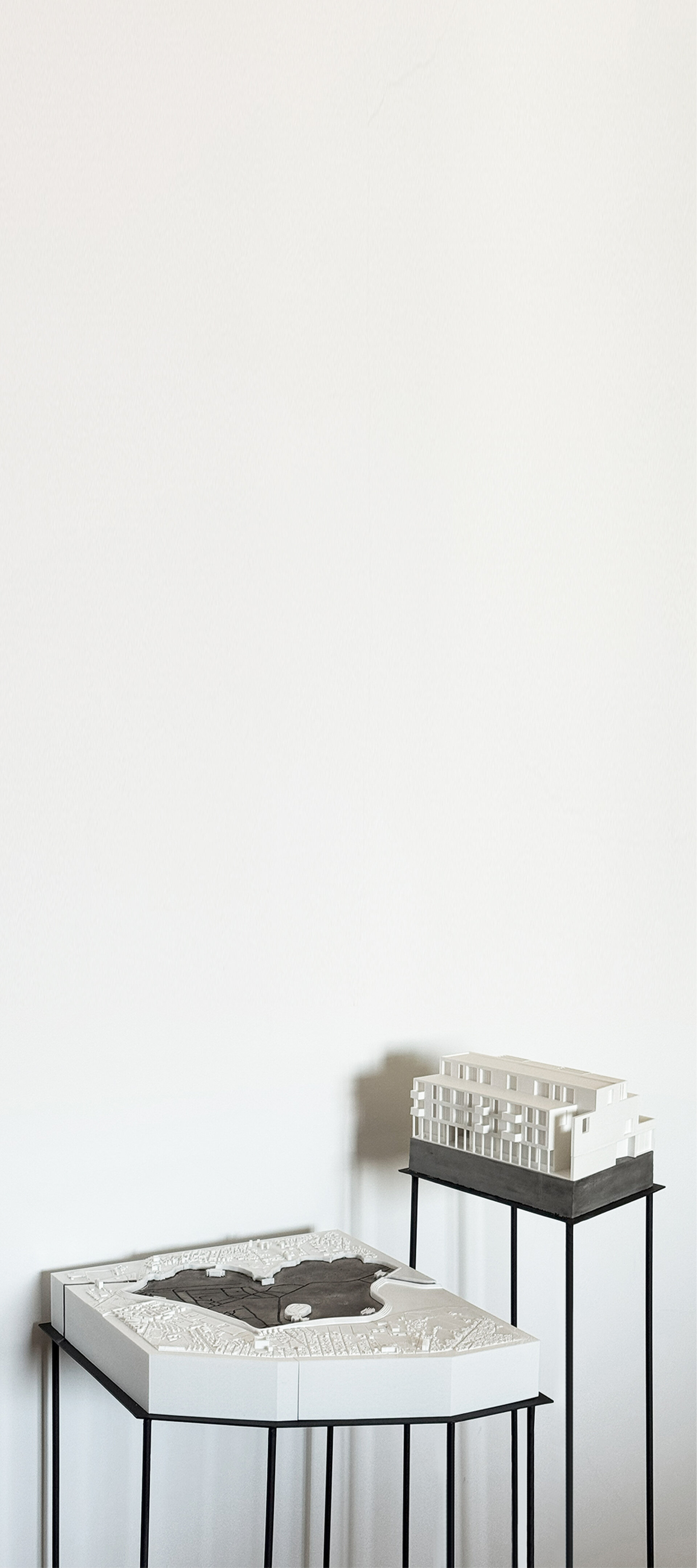
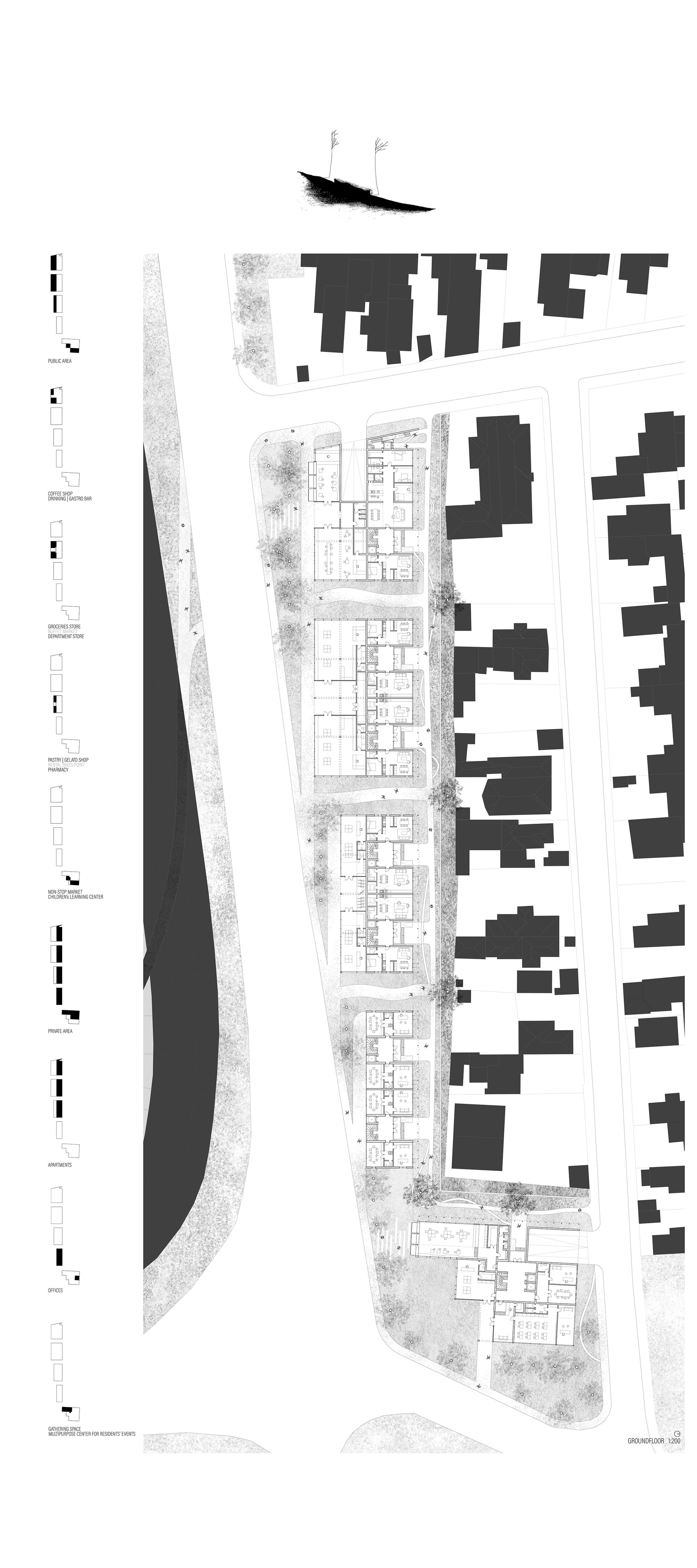
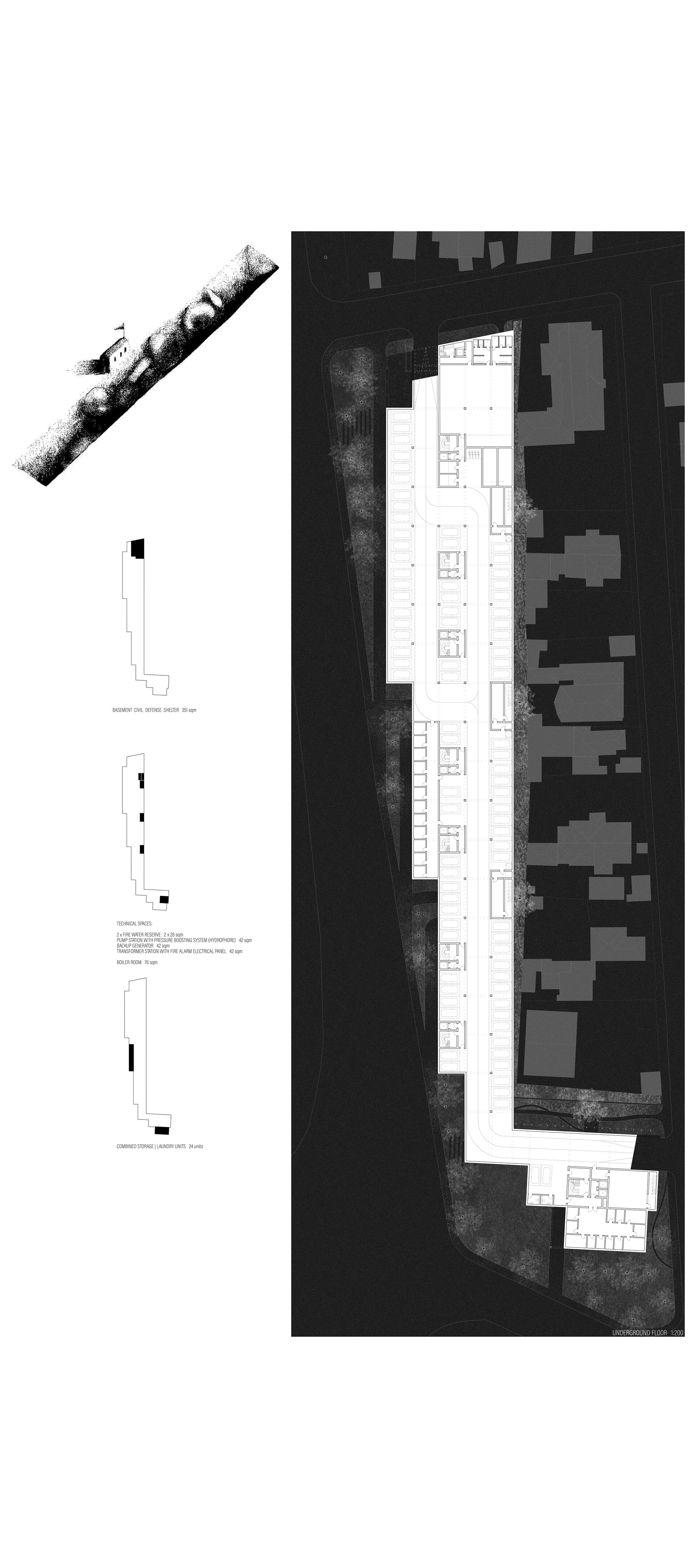
The project site is located between the old urban fabric and the lake. The existing houses in this area are disconnected from the newly planned neighbourhood, lacking both infrastructure and public amenities.
The place I'm talking about is a leftover and at a masterplan scale, it is to be attached to the concrete ring promenade of the lake.
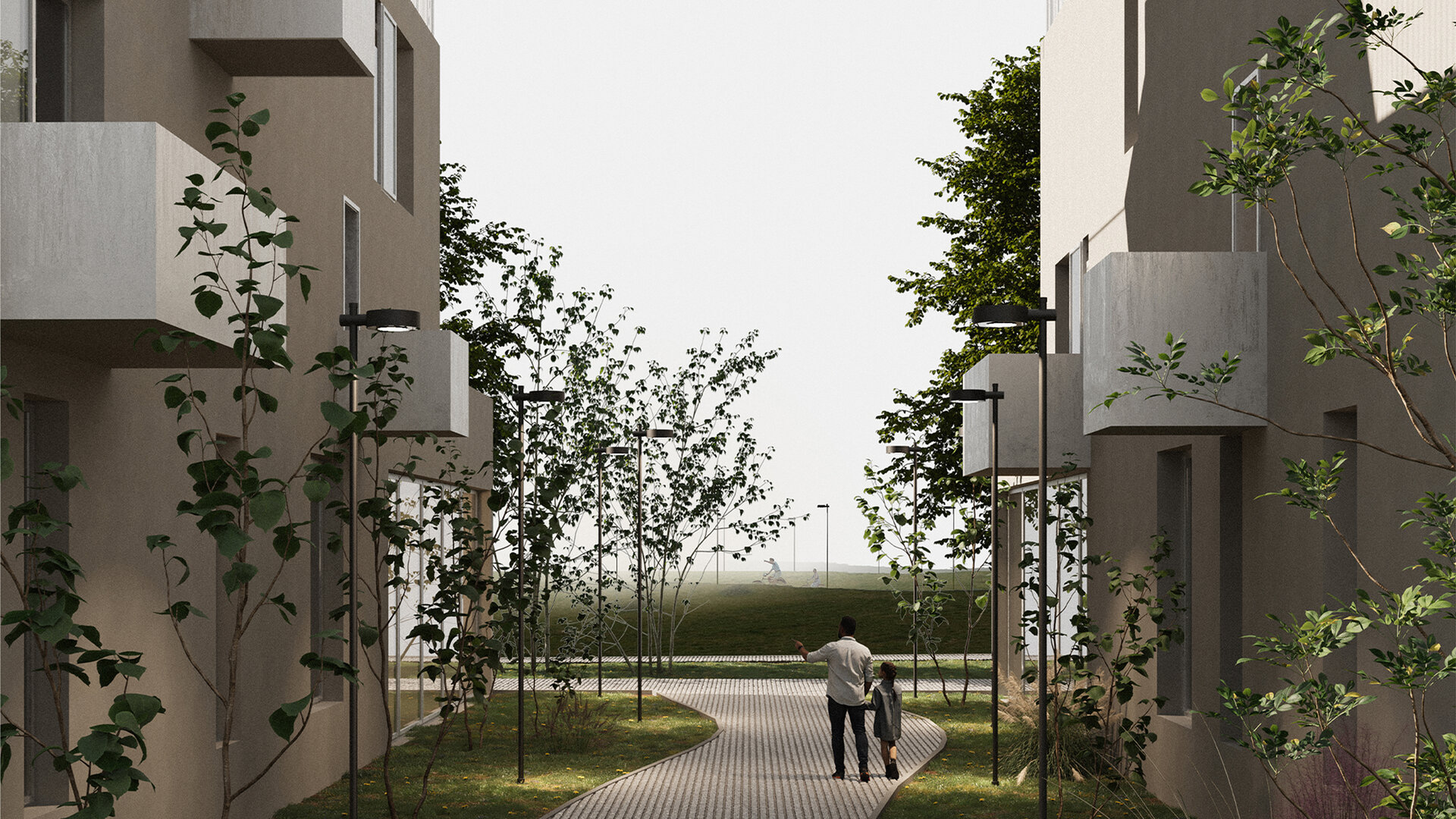
The project stitches the urban fabric back towards the lakeshore, creating ground-level points of interest and green transit areas, while considering the streets that once crossed the site but were abruptly cut off.
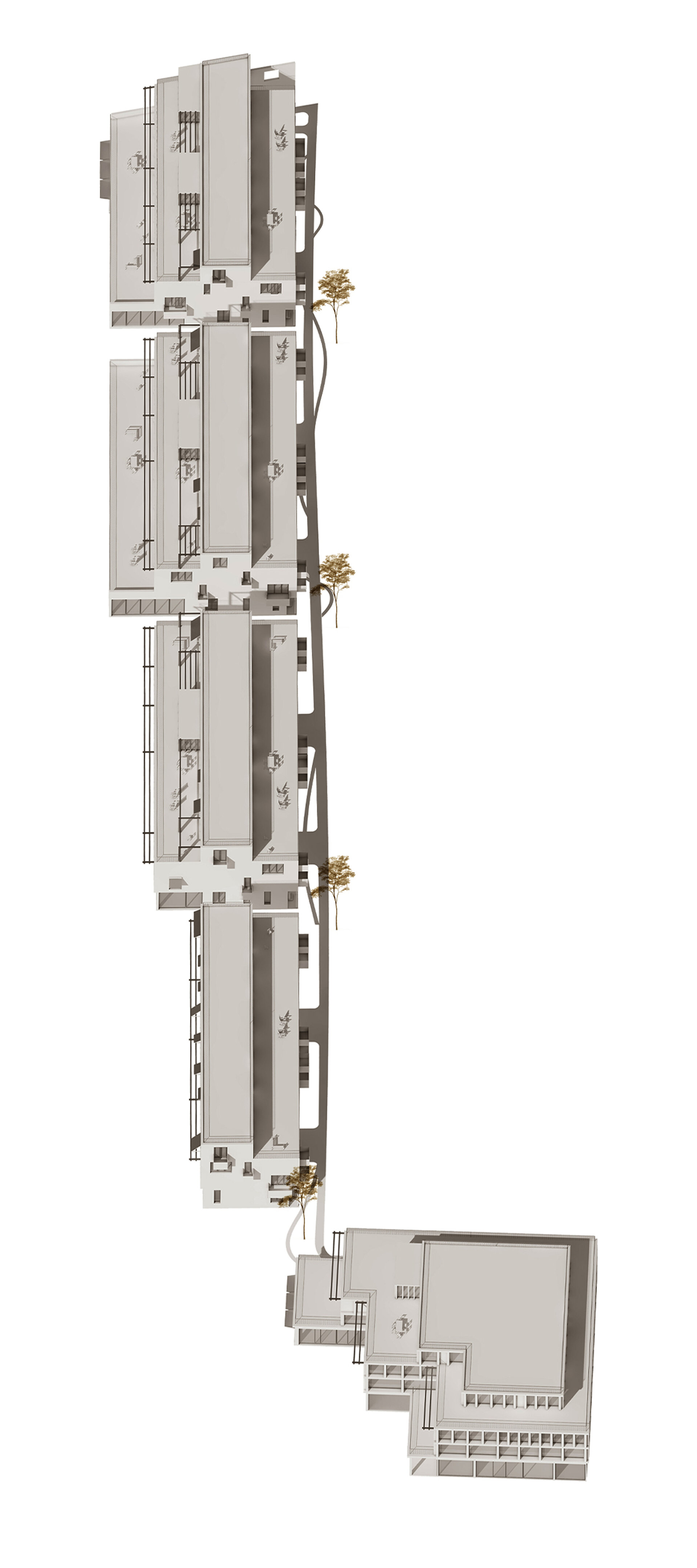
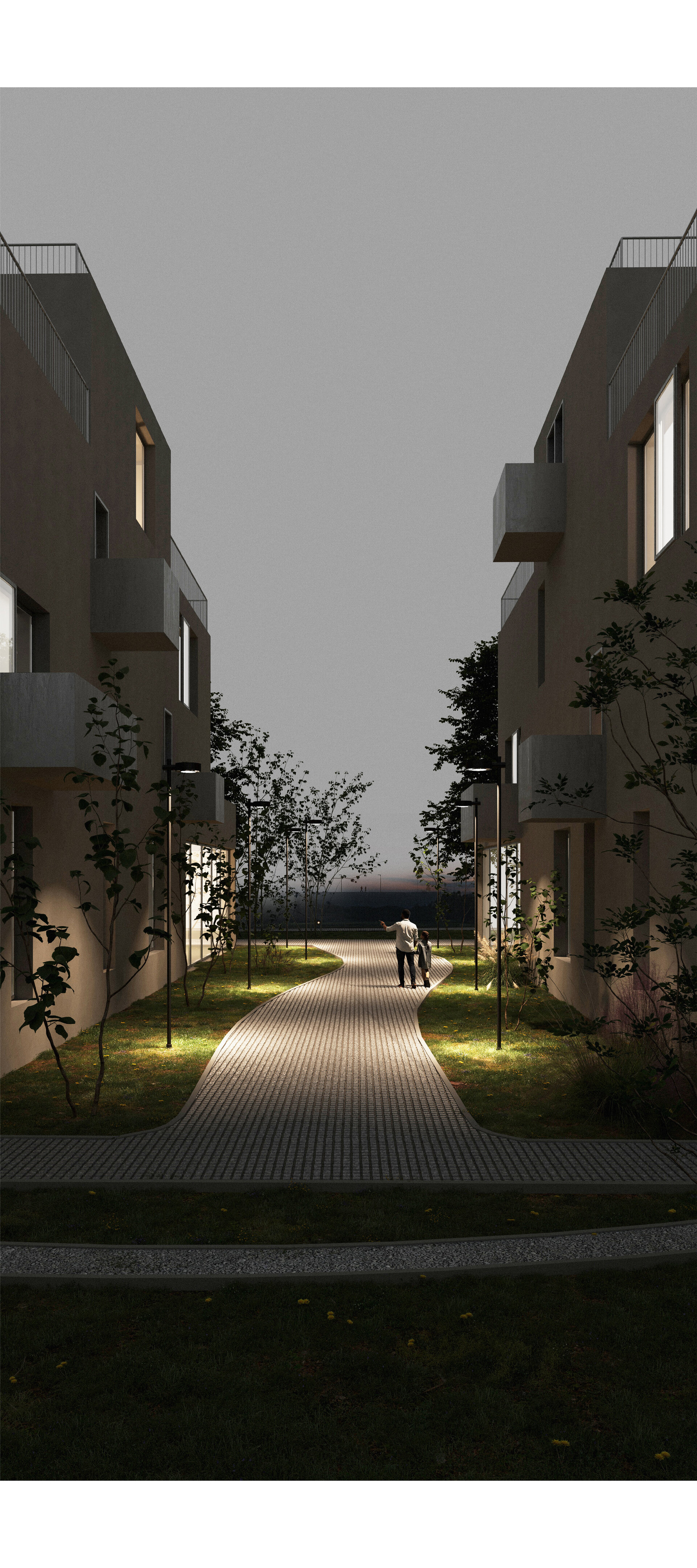
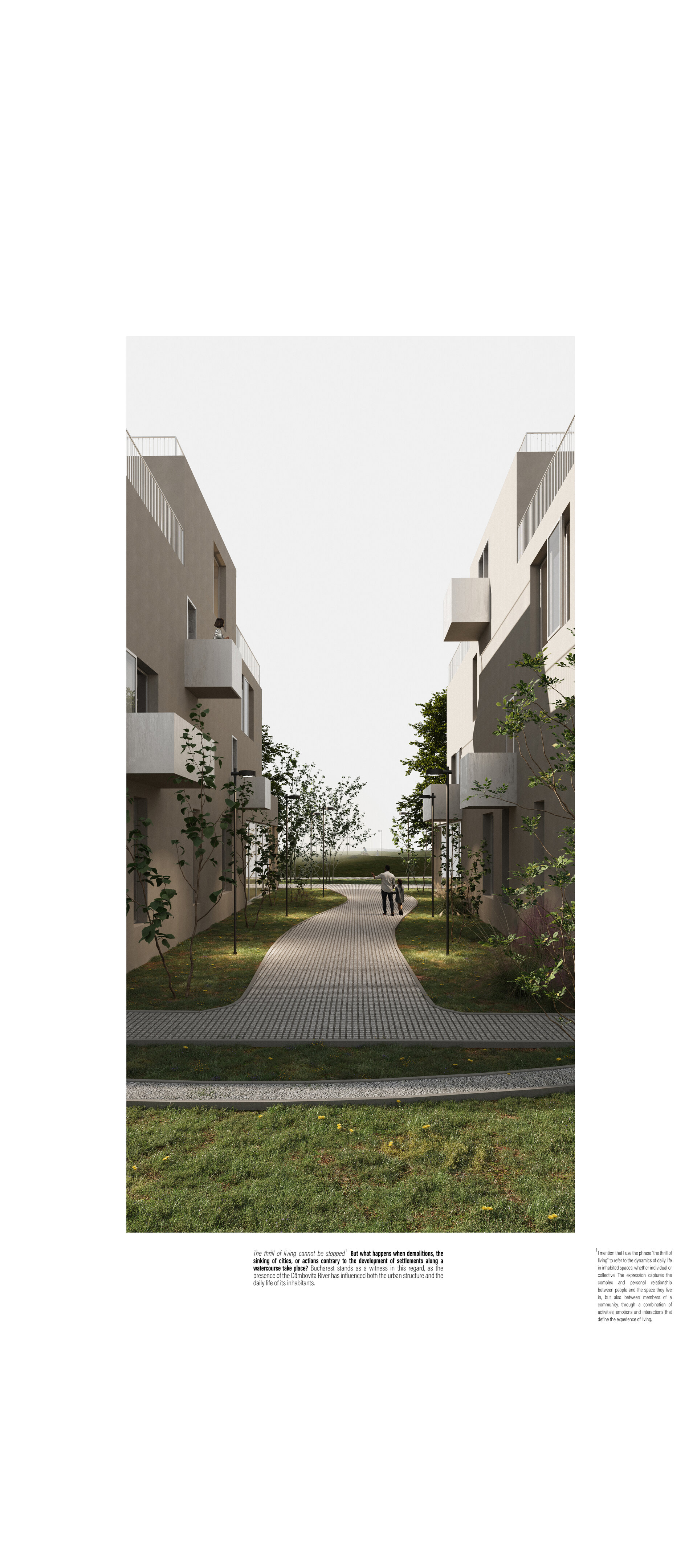
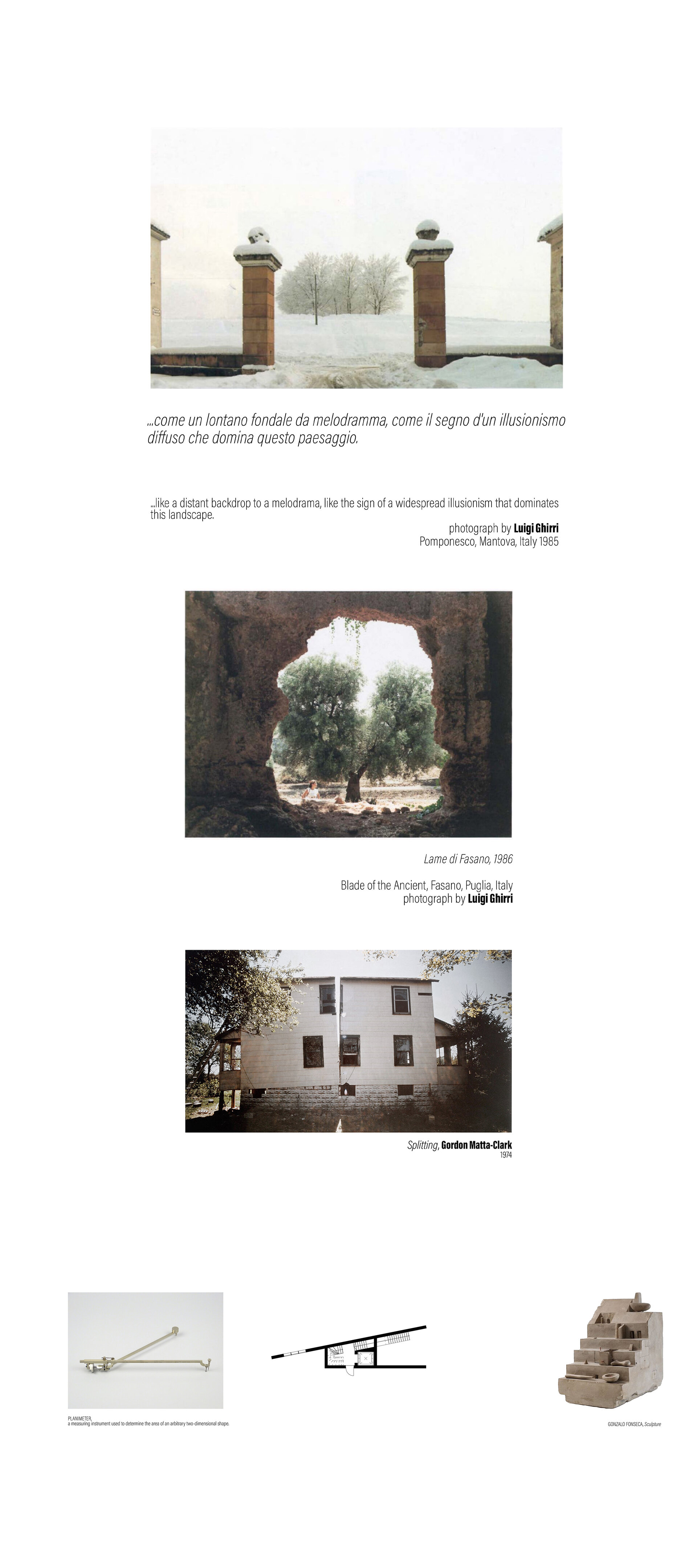
Following the traces of the former streets, the building is split by crevasses that guide movement and evoke the memory of those streets through a series of trees placed at the end of each visual axis. These trees become significant and create a specific atmosphere, as it is captured in the photographs made by the Italian Luigi Ghirri.
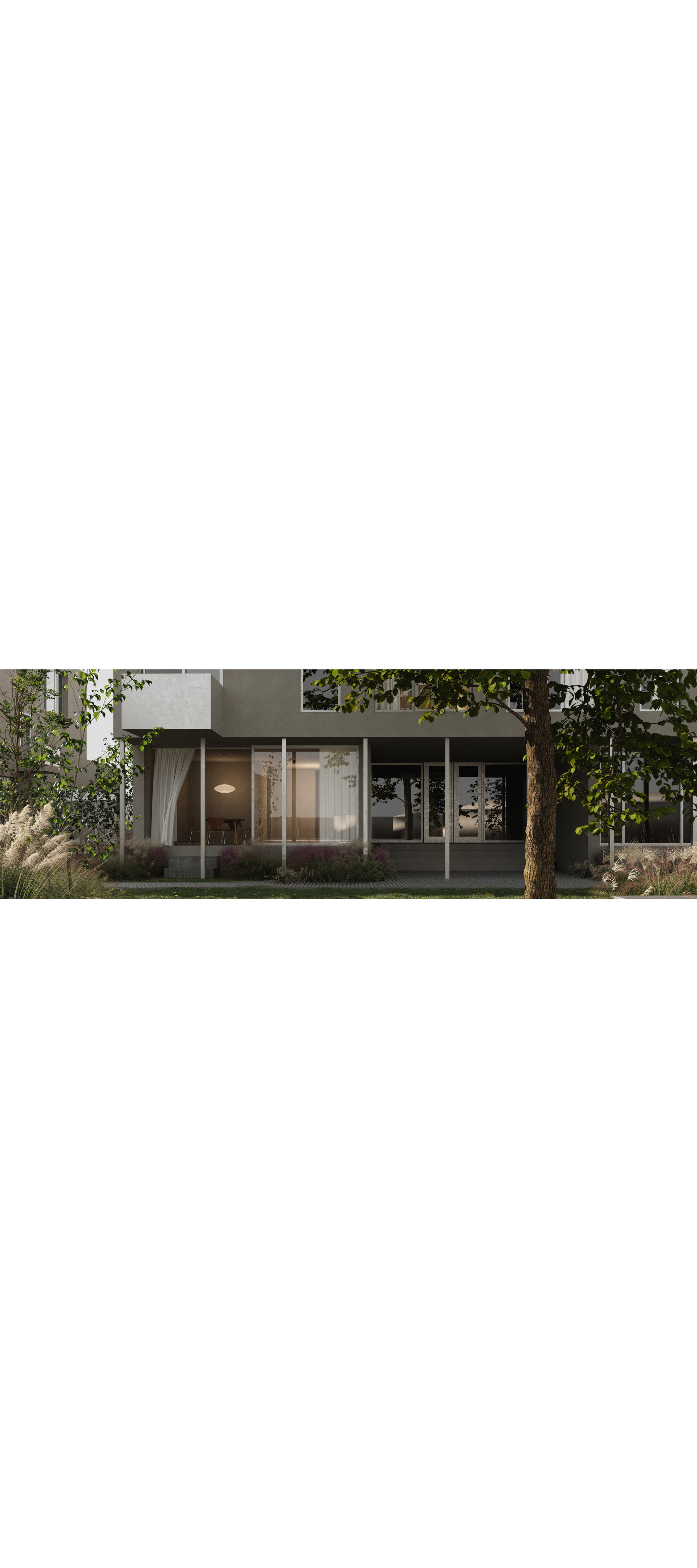
In this way, a linear garden emerges, mediating the relationship between the existing buildings and the building project. All the buildings there, the neighbours, have the rear facades towards the lake, their spatial orientation is towards the other street.
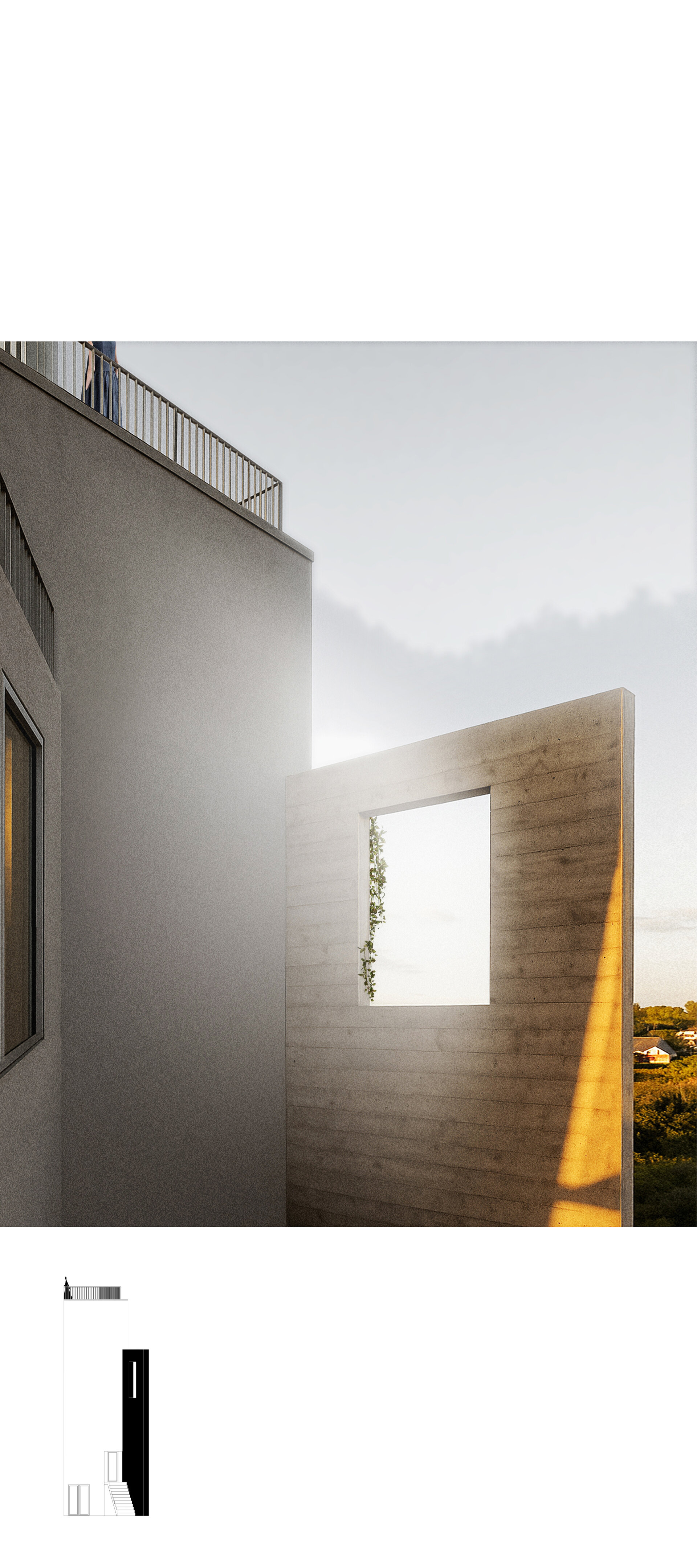
And one more thing, I mentioned about the way building is split, and to this, I considered the “splitting house” artwork by the artist and architect Gordon Matta-Clark as a reference for this project. Through that, the limit between the public and the private space is emphasised. I tried to deconstruct the limit between the project and the actual existing street, create a different access point, as a starting point for the whole built band I have. The building there becomes a screen and beyond it, there is the landscape.
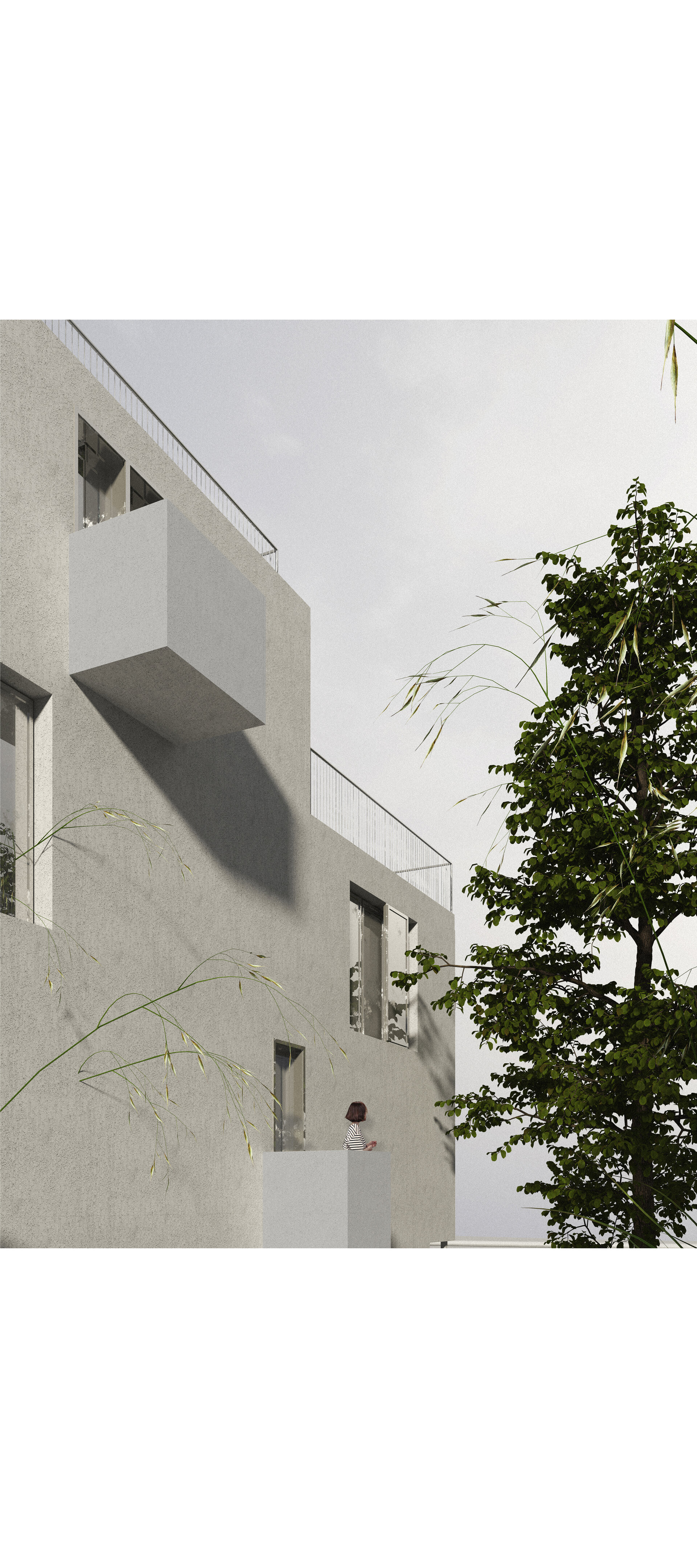
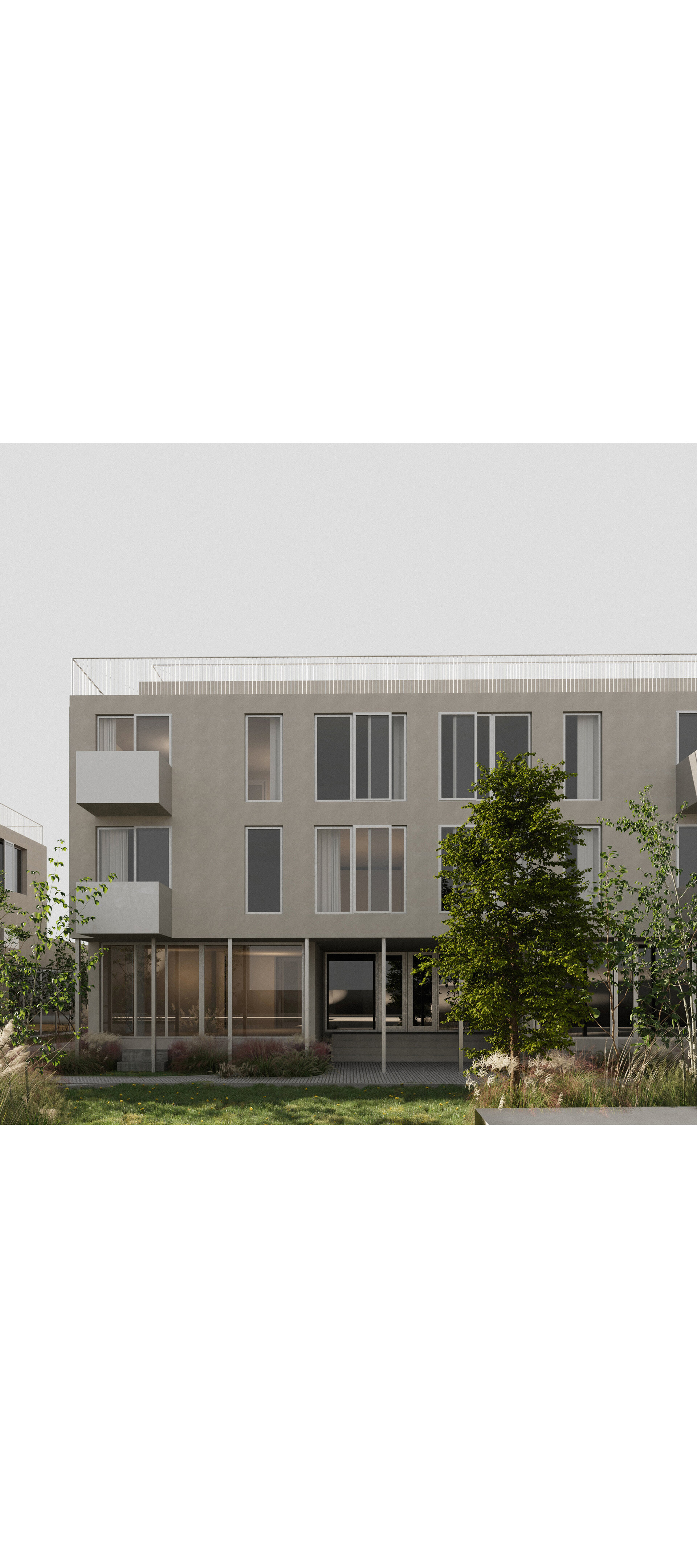
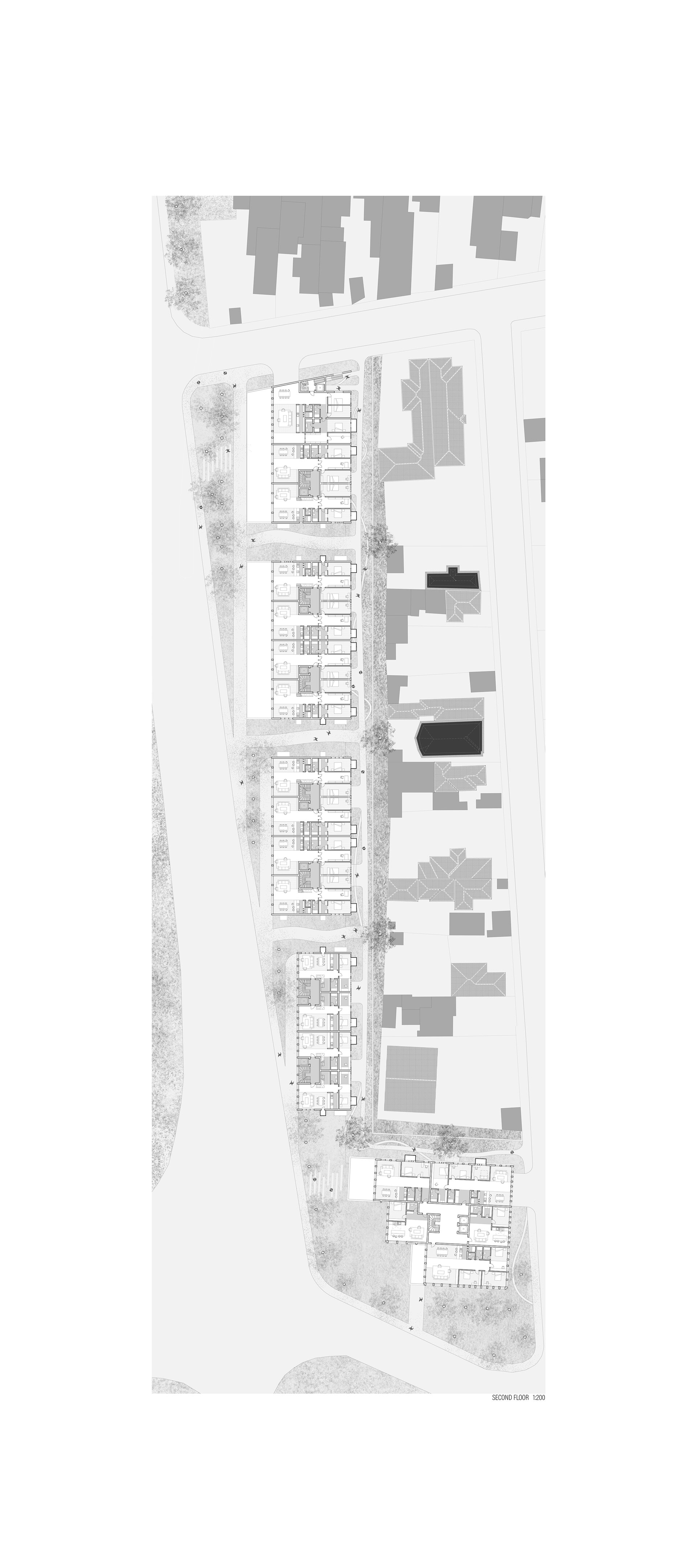
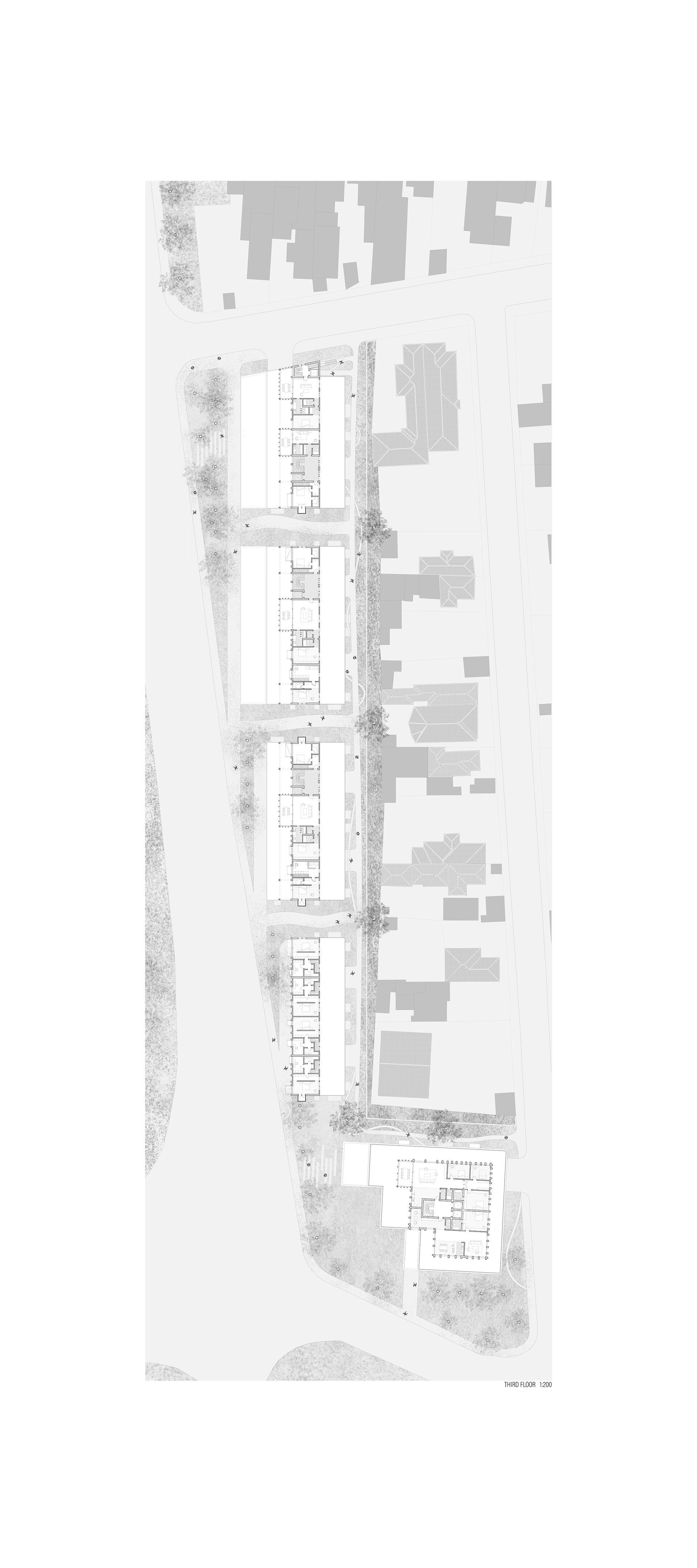
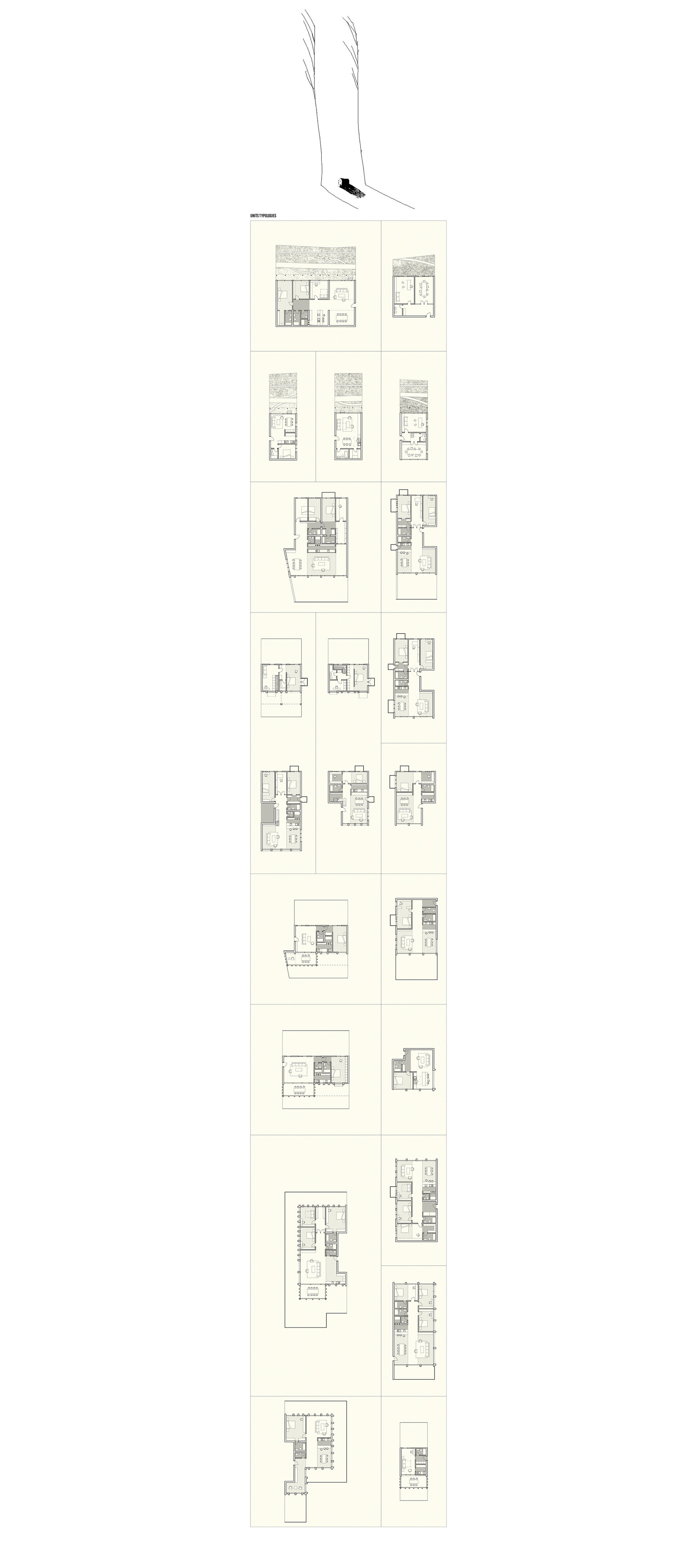
The precise orientation in the north-south direction, facing the lake to the south, stimulated the design of double-sided apartments on the upper floors, featuring large terraces on both facades, conceived as open, blank canvases, awaiting to be filled with personal expressions of domestic life . . .




Architecture Diplomas

- Reclaiming Bucharest’s architectural heritage. Student dwellings and cultural establishments along Calea Griviței
- Rusticitas Et Urbanitas. Conversion and Expansion of the Solacolu Inn: Cultural Center for Arts and Architecture
- ONEF Stadium: an active method of working with history
- Extension of the Bucharest School of Arts
- Tineretului Agora. Rehabilitation and extension of the former Kiseleff Strand
- Diocesano Museum: The Cloisters of Sant’Eustorgio
- Marina Dorćol Educational center and library. Residual spaces. Between the city and the Danube in the post-industrial era
- The |YELLOW| complex - orphanage | placement center
- Extending the cultural space of the city center of Pitești
- Post Partum RetreatCenter / Steveston Hwy 13571
- Designing Learning Spaces for Brăila’s Youth
- Social and Educational Centre for kids
- Grădina Luterană: Dwelling and Workspaces for Creative Industries
- Multifunctional Performing Arts Centre, Berzei 21
- The school as a community core in the Rahova neighbourhood
- Politehnica University of Bucharest extension - Education & Research Centre
- Architecture of Forgotten Memory
- Students’ Sports Palaestra
- Versvs Museum
- Restoration and extension of “King Carol I” rural hospital in Filipestii de Targ
- Studios for artists on Leonida Street
- Luka Cargo Port Hotel and Convention Center, Belgrade, Serbia
- Diocesan Museum Extension
- Museum of the Anti-Communist Revolution of December 1989
- Post-treatment rehabilitation center for assistance and integration of addicted people into the contemporary community in Bucharest
- Immersive Theater – Industrial Heritage Regeneration Through Experimental Cultural Interventions
- Floreasca Olympic Aquatics Center, Bucharest
- Revitalisation of the Radák-Brukenthal Ensemble. Multifuncitonal Cultural Center in Micăsasa, Sibiu
- Intermodal Node in Piața Presei Libere – Bucharest
- Reviving the Identity of Ovidiu Island: Spa and Wellness Complex
- Palimpsest - The third cloister
- Casandra – from the memory of the place to a promising future: an initiatory journey of transformation
- The Creative District and the Fashion House in Arnhem, the Netherlands
- Extension and regeneration of the historical and museal space in Turda
- Research Center for the Reclamin of Polluted Mining Sites Baia Mare
- Interface with Lake Morii: Collective Housing
- #2-4 The intersection between community and art
- Reconnecting the City to the Water. Ferry Terminal in Zimnicea
- Tourist Complex in Sulina
- Arts Center. Revitalization of the Prohaska Mill in Timișoara
- Vitrum & Charta - The cultural library as a mediation between transparency and memory
- Urban Nodes
- Conversion of the former Bragadiru brewery
- Intervention on the Frankfurt Opera
- Bucharest Architecture Center
- Urban Liminality and The Cultural Turn: Vesterport Between Transit and Event
- Revitalization of the Courtyard of Domnița Bălașa Church in Bucharest
- Cito Sanum. Medical recovery center on Calea Moșilor
- Archaeological Research Institute Constanța
- In defence of the fortified church - Community center in Țapu village
- Cultural-Educational Forum - Extention of the Argeș County Museum, Pitești
- Dialogue Between Generations – Vatra Luminoasă Intergenerational Center
- Educational Community Center for children
- Reclaiming the boundary, Văcărești Delta
- Rehabilitation and Extension: Polyvalent Cultural Center - Chisinau, Republic of Moldova
- The Archive of Collections. A blueprint for recovering Bucharest’s cultural heritage
- The Bastion of Artists. A community centre dedicated to arts and crafts, located in the historic distric of Brașov
- Cultural laboratory for heritage studies in the historic center of Brașov
- Domaine les Ormes. Rural revitalization through artisan workshops and agrotourism in Allan, Drôme Provençale, France
- Külliye in time: the Ottoman complex in Medgidia between recovery and reinvention
- GabroArt Han. Archives of Tradition. The restoration of Gabroveni Inn and the socio-cultural activation of the nearby bazaar
- Cultural Establishment. Reactivation of Pompiliu Eliade House through conversion and extension
- The Center of an Edge. Restructuring the Commercial Market and Relocating the Neighbourhood Library
- The city around the colony. Reconversion and extension of the post office and the colony
- House of Film. The Rediscovery of the Cinematic Ritual in the Intimacy of Dwelling
- Game development center and interactive technology museum
- Conversion and Extension of the Radák-Brukenthal Noble Ensemble in Micasasa, Sibiu County. Socio-Medical Residential Center for Elderly People
- Forma: Operative fragment for the regeneration of urban memory
- Extension and Rehabilitation of Technical High Schools. Workshops for Vocational Education


