United Drive workspace
Authors’ Comment
Simultaneously storing and showcasing a collection of cars in a partially decommissioned industrial warehouse is the premise of a design brief as unusual as the programme itself. Beyond any foreseeable constraints that the reusing of an existing space implies, especially when considering uncommon uses, the main goal for the new workspace of United Drive is communicating a very particular visual identity. Though this is not unexpected, it is a rather big challenge when coupled with the ambition of preserving the general atmosphere of the existing space, a restriction that ended up shaping the whole design process.
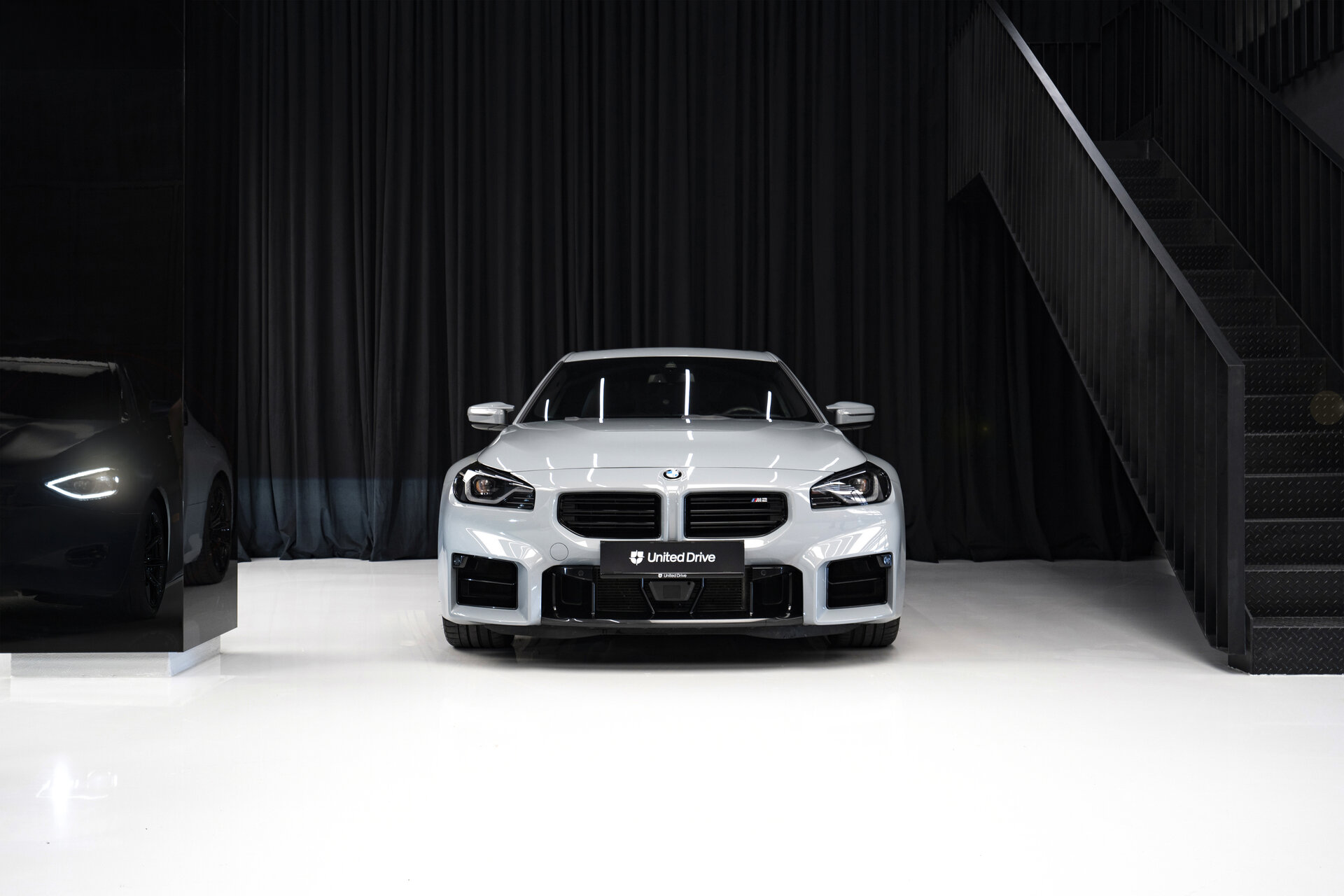
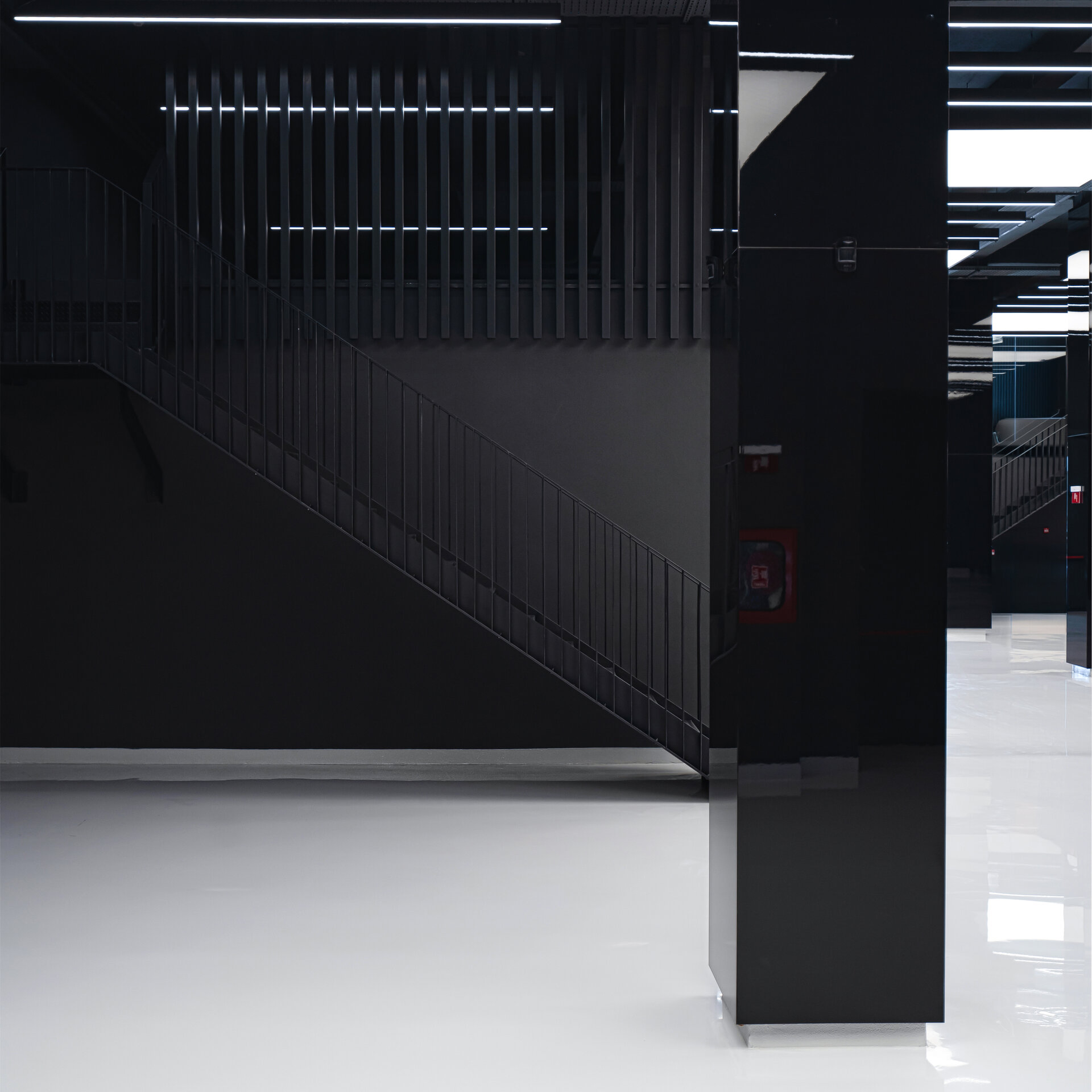
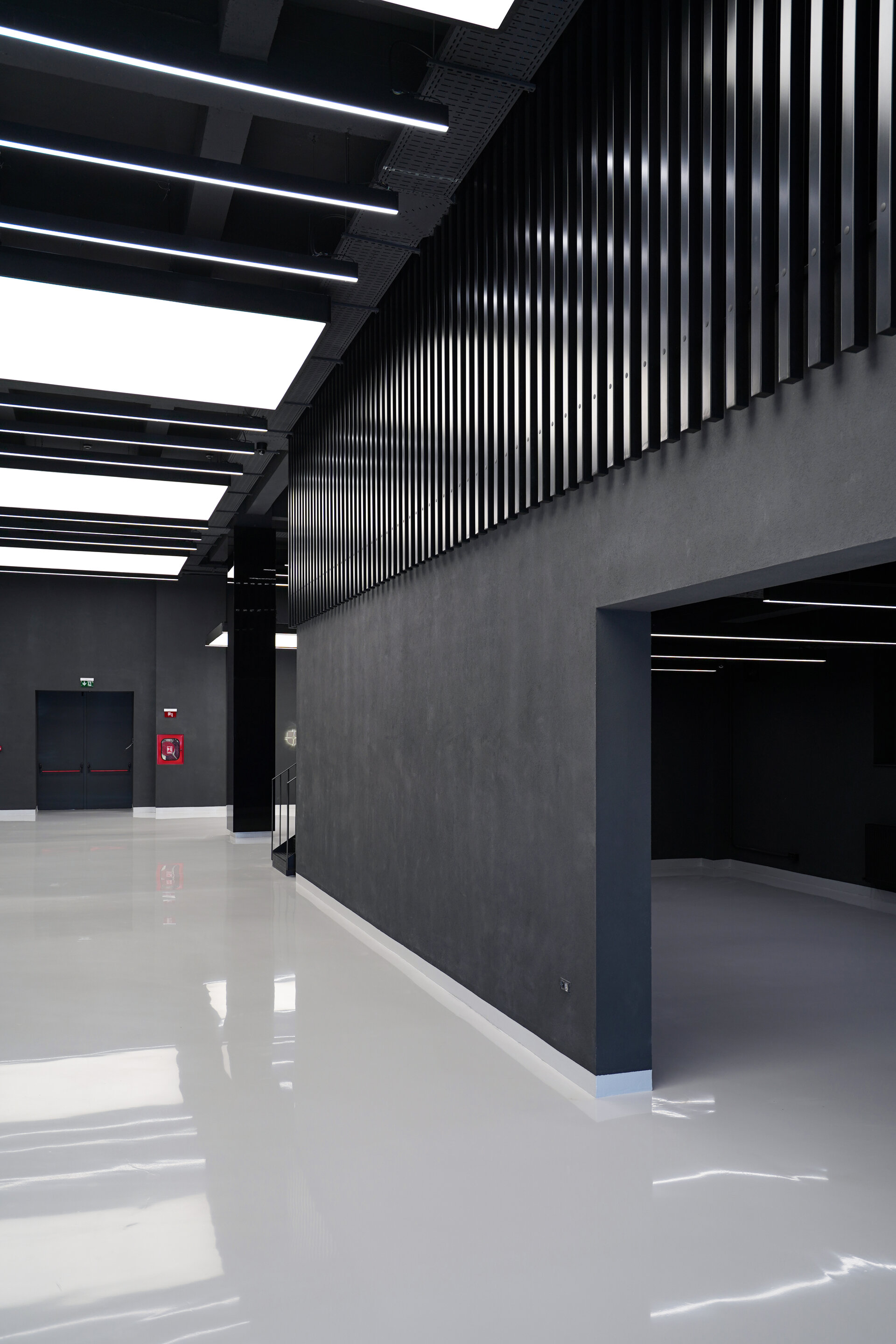
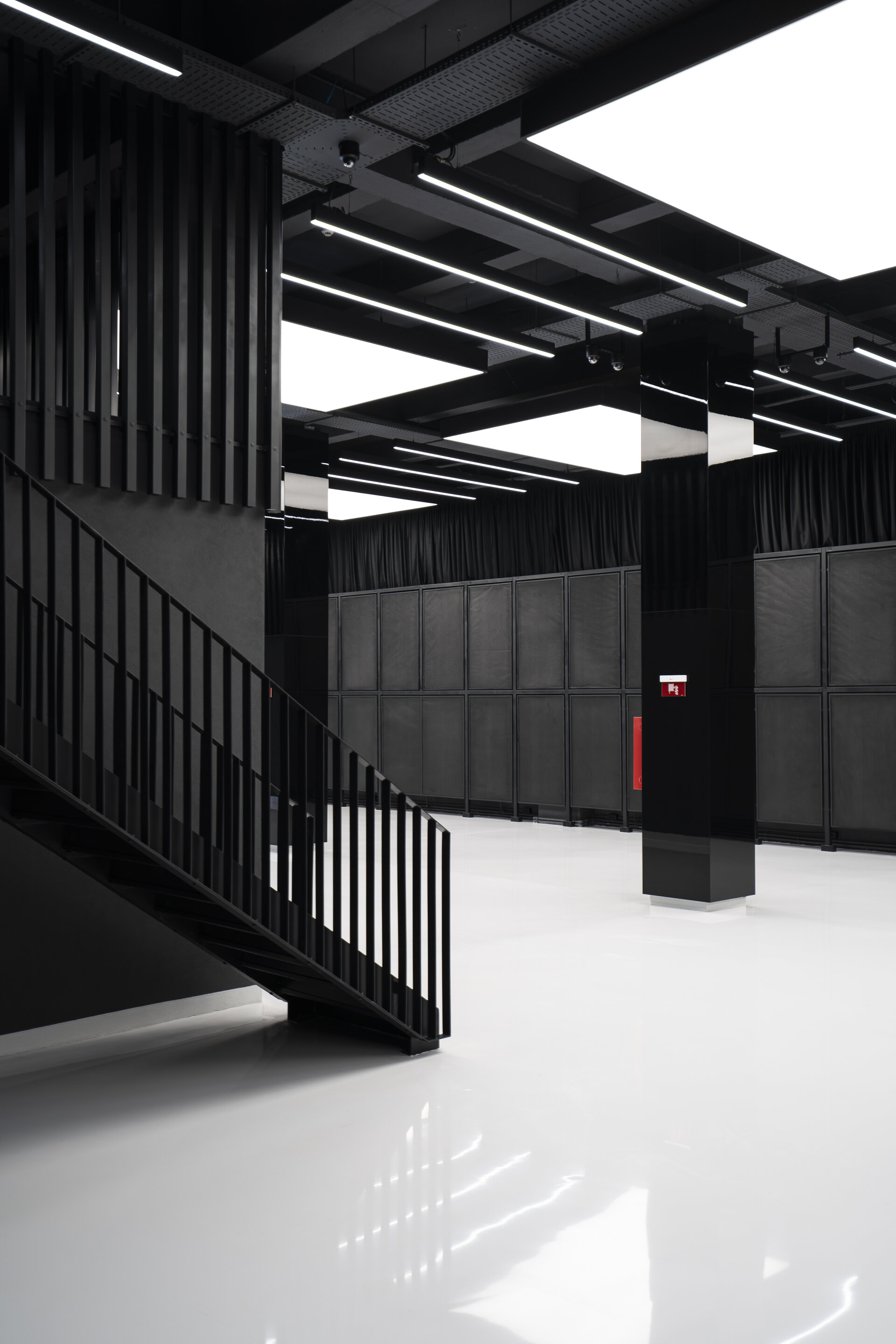
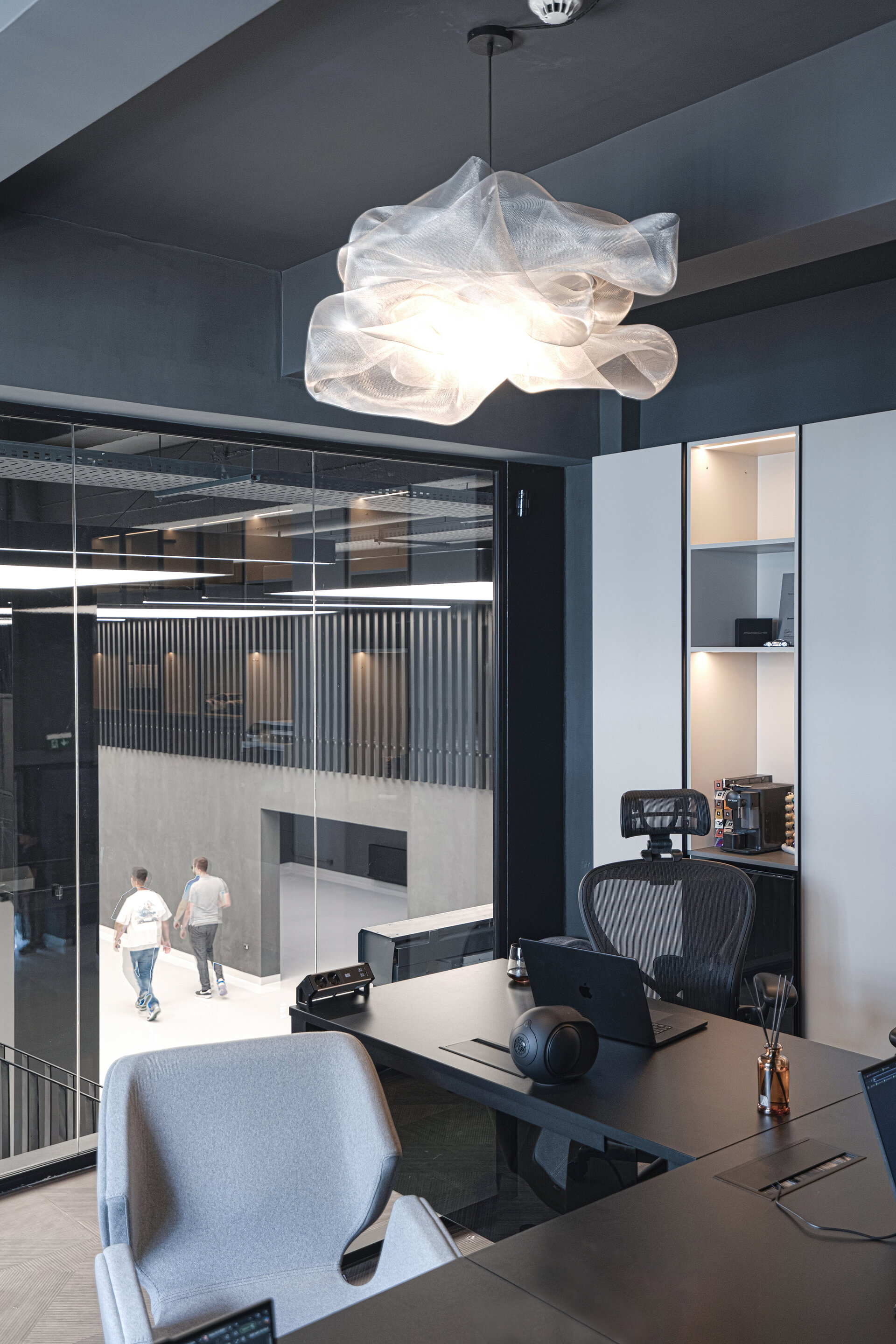
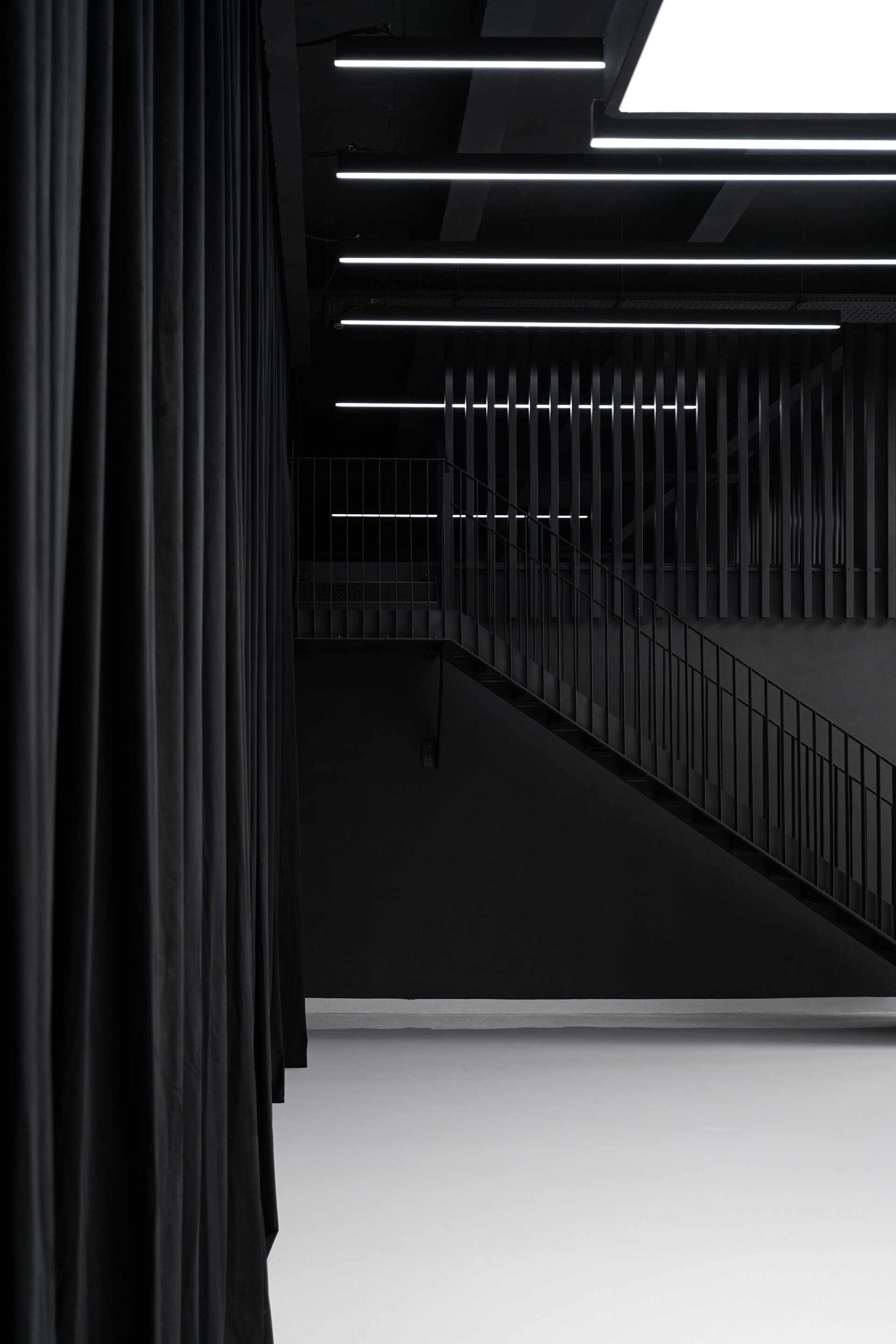
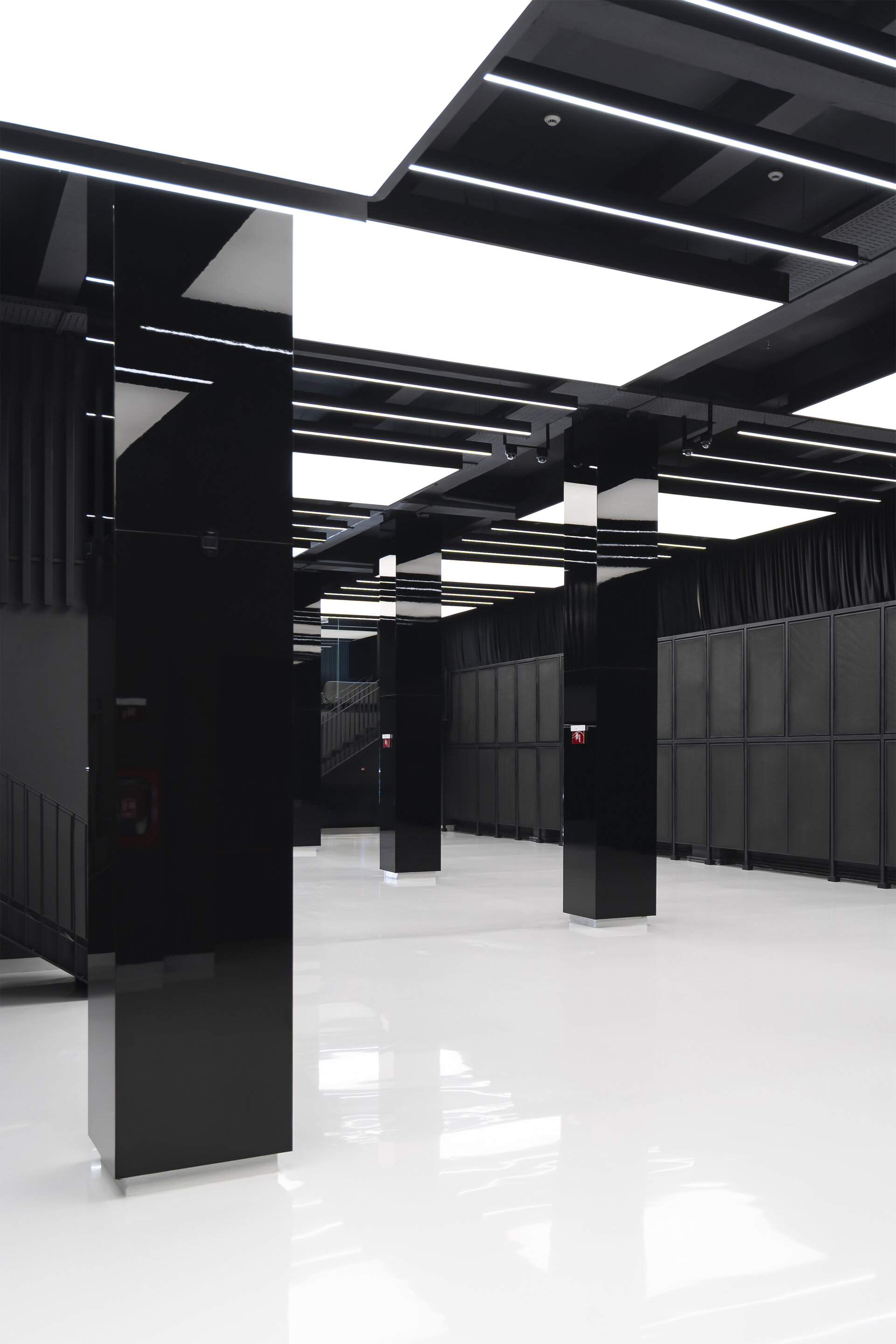
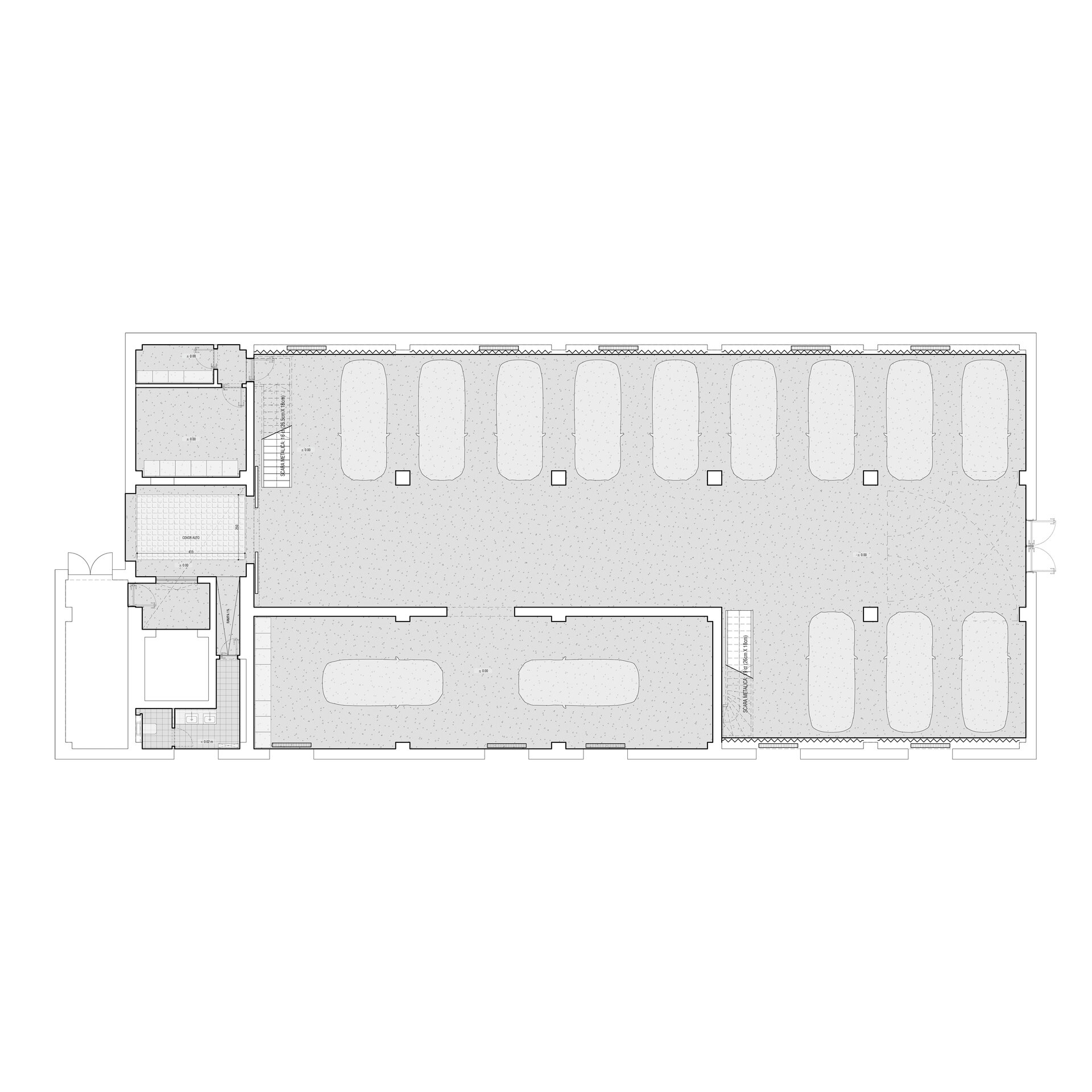
The main interior area of the existing warehouse is redesigned to feel more like a secondary staging area for the main showroom, rather than a strictly functional storage space. The new layout provides improved circulation and an intuitive hierarchy for all required spaces and functions within a larger open – space area, without redistributing any existing rooms. Drawing some inspiration from immersive mediums, the exhibition area features mostly bare assemblies, coming together in a balanced whole that projects a strong visual impact. All the other secondary spaces are similarly designed, following an extension of the same architectural language. Two of these spaces that can be found slightly above the main area, though improperly accessible, are regained using two metallic stairs, assembled according to the same visual configuration.
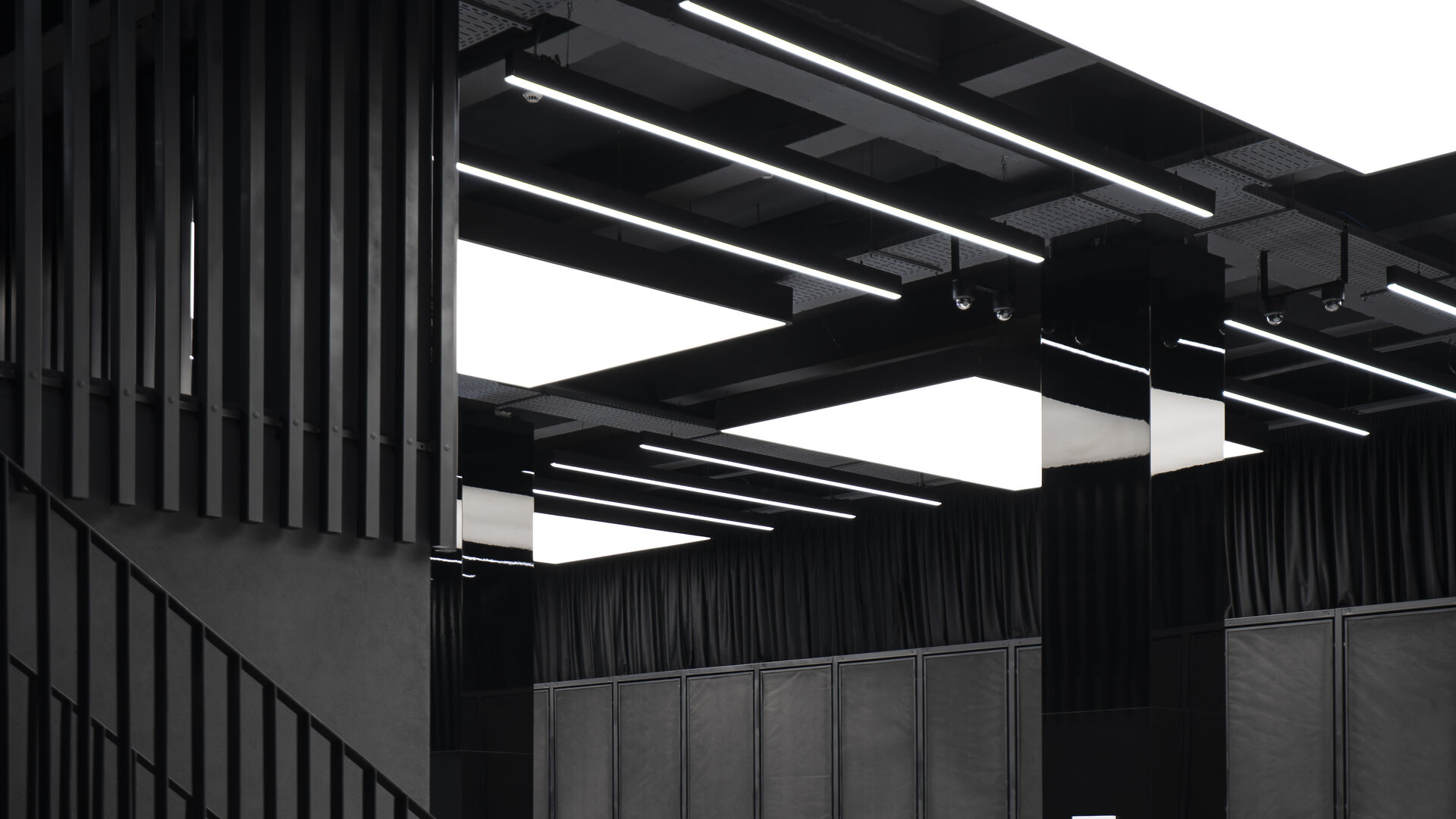
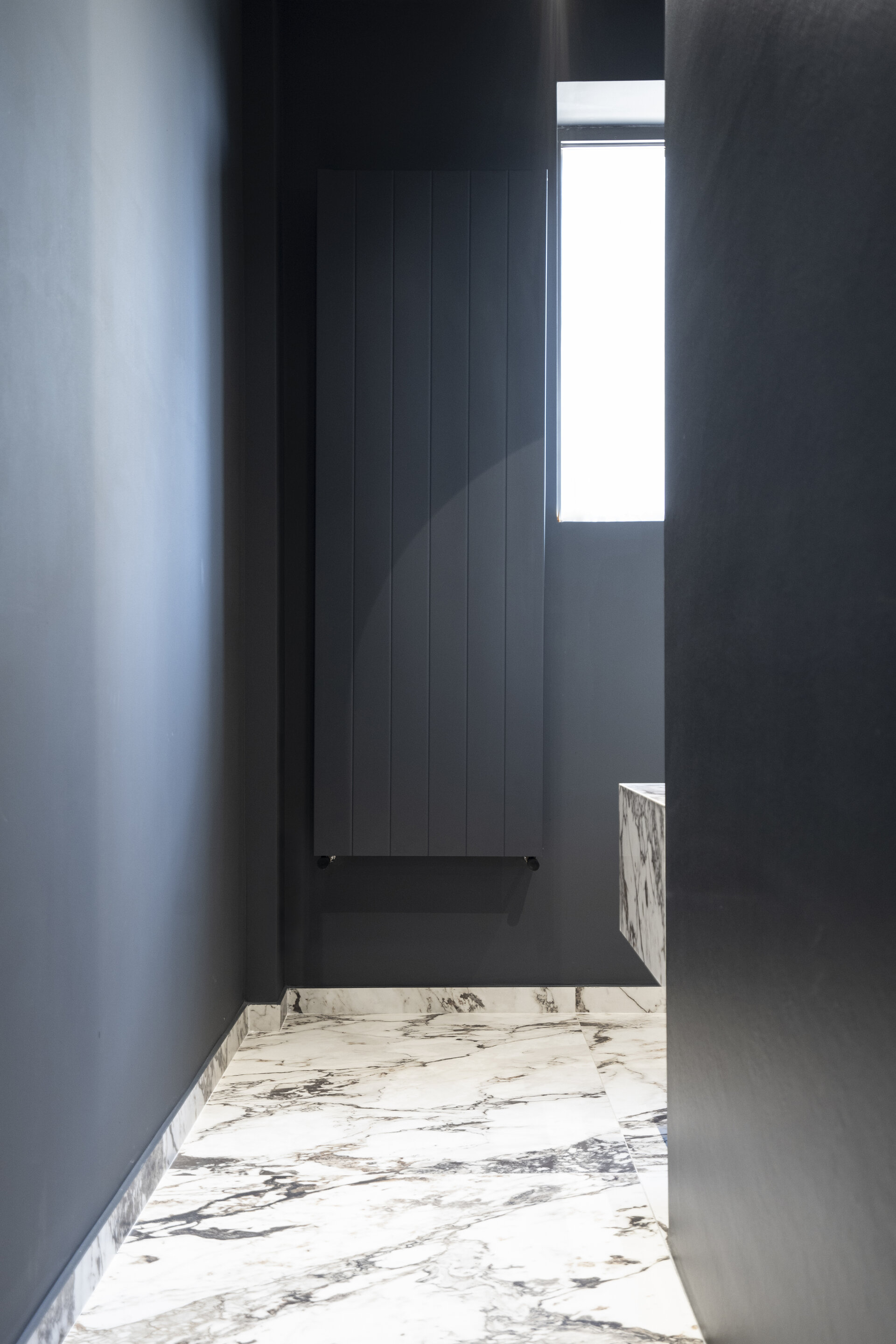
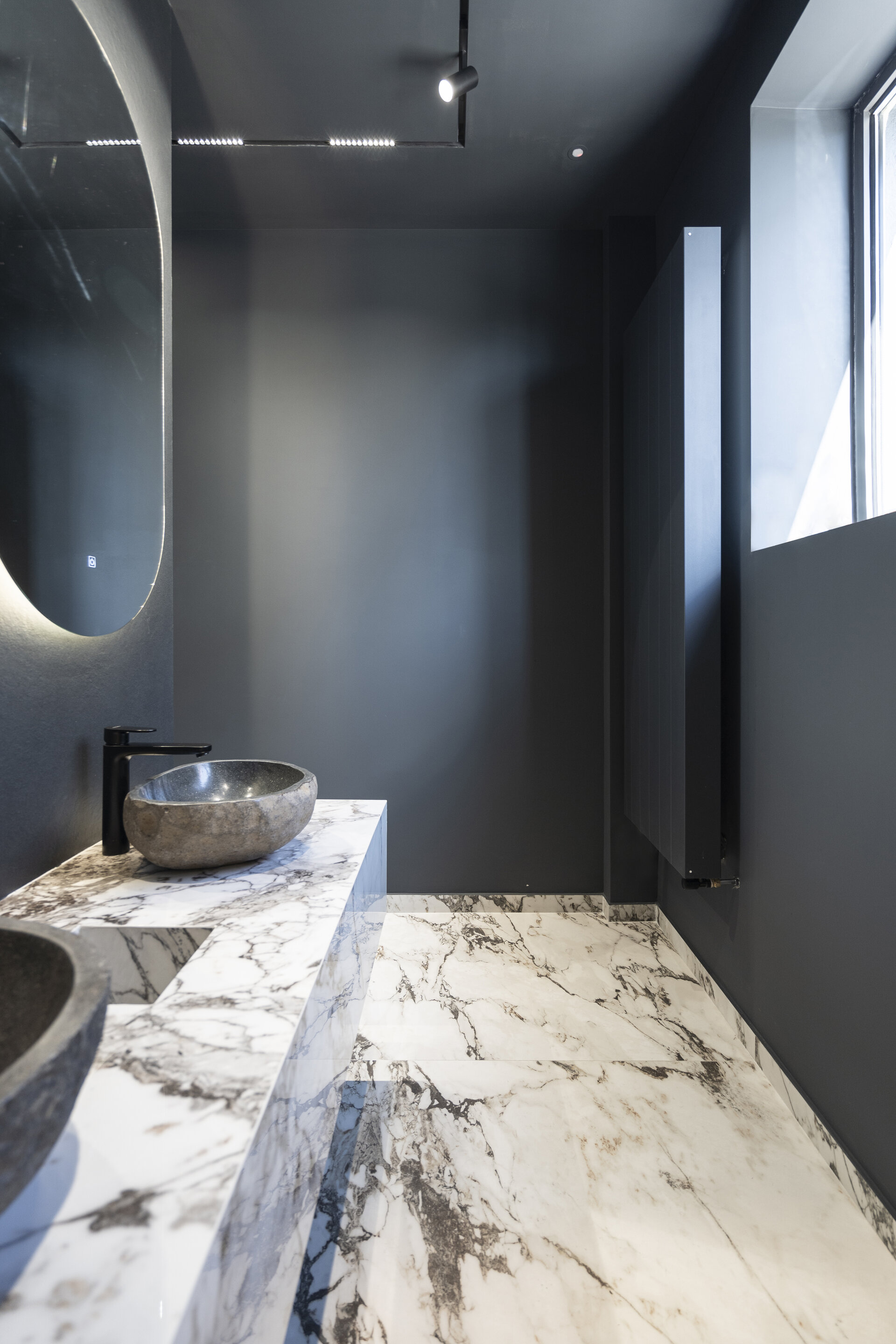
The esthetic qualities of various new assemblies that adjust and recompose the main space are drawn from the technical solutions the interior now requires, delivering an appearance that seems to take after industrial and crafting environments. Inner finishings rely mostly on the bare appearance of the materials used, mimicking a collection of various depths and textures that deliberately resemble industrial scenography. Strong contrasts, clear lines, stark textures, basic shapes, as well as reflective materials, like metal or epoxy, are all balanced by large and sinuous curtains that gently decorate the space and serve as a matte background for the exhibition areas.
The dark and theatrical atmosphere is complemented by the composition of lighting fixtures, which amplifies the longitudinal prominence of the space while also complying with its existing structural logic. The unusually large light surface it provides ensures a wide range of lighting scenarios, covering anything from working conditions to exhibitions and small cinematography productions.
Corporate and Retail Space Design

- Seen Users Flagship Store
- Nostro Spazio
- Alezzi Offices
- Pago Bucharest Office
- Of Love and Yoga
- Artisan HUB
- Information, preparation and response center for incidents, radiological and nuclear events - CIPRIERN
- Bucharest Business Park. Lobby
- HN Services. Premium Plaza
- Beautik
- E.On showroom interior design
- HBC Lobby design
- Office design for the Embassy of Ireland
- Kinstellar office design
- Bank HQ Design
- BLUM Romania Showroom Design
- Apa Nova Bucharest Office Design - Ștefan cel Mare Building - 3rd Floor
- Apa Nova Bucharest Office Design - Ștefan cel Mare Building - 5th Floor
- V.I.P. Collection Center Regina Maria
- Ellen Recordings Music Studio
- United Drive workspace
- Dent Estet Clinic
- The Attic from Rabat 11th
- Takeovers Studios - Dorobanți 164
- Prima Vista - sales offices
- Green Day Spa
- DreamPrints
- Moon Pilates
- Born2Bake
- Designed with Purpose: L’Oréal Romania’s New Office Landscape


