- Nomination for the “Interior Space Architecture / Corporate and Retail Space Design” section
Alezzi Offices
Authors’ Comment
This project began with the premise of converting and extending an existing single-story building into a contemporary office space tailored to the needs of an organization that defines its values through transparency, progress, and dialogue. These values became the conceptual foundation around which the entire architectural intervention was built. We did not aim to “mask” the transformation—instead, we chose to expose it, highlight it, and use it as an honest language of communication between old and new, between levels, and between people.
Located on a compact urban lot, the original structure—a modest ground floor—was extended vertically with an upper level built on a lightweight steel frame, precisely following the footprint of the original building. The choice of this construction system was strategic: for its lightweight nature, speed of execution, and architectural expressiveness. The steel structure, together with the technical finishes and the decision to leave the ceilings exposed, became a visual and ideological extension of the intervention—a clear statement about contemporaneity, efficiency, and unapologetic transformation.
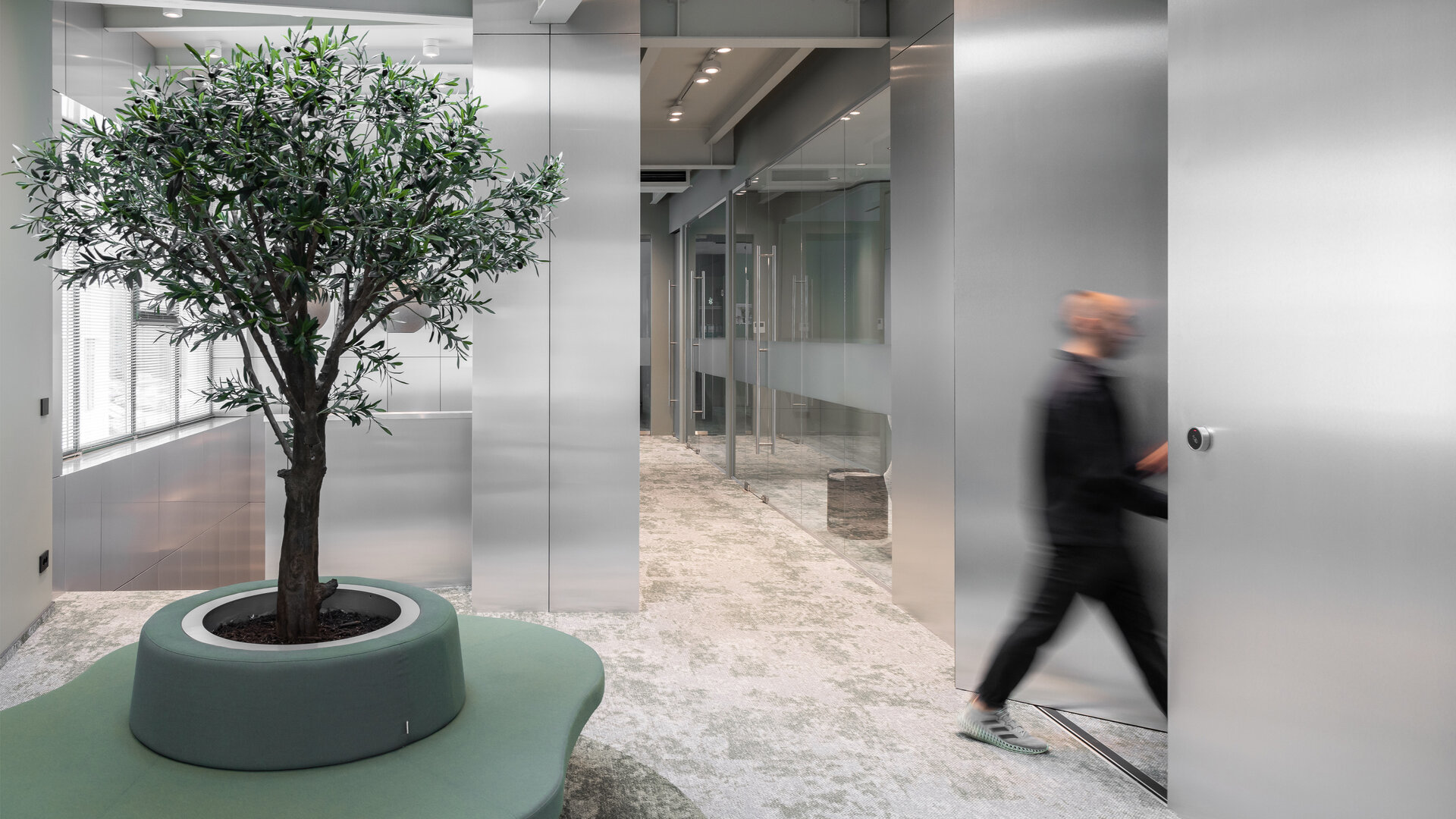
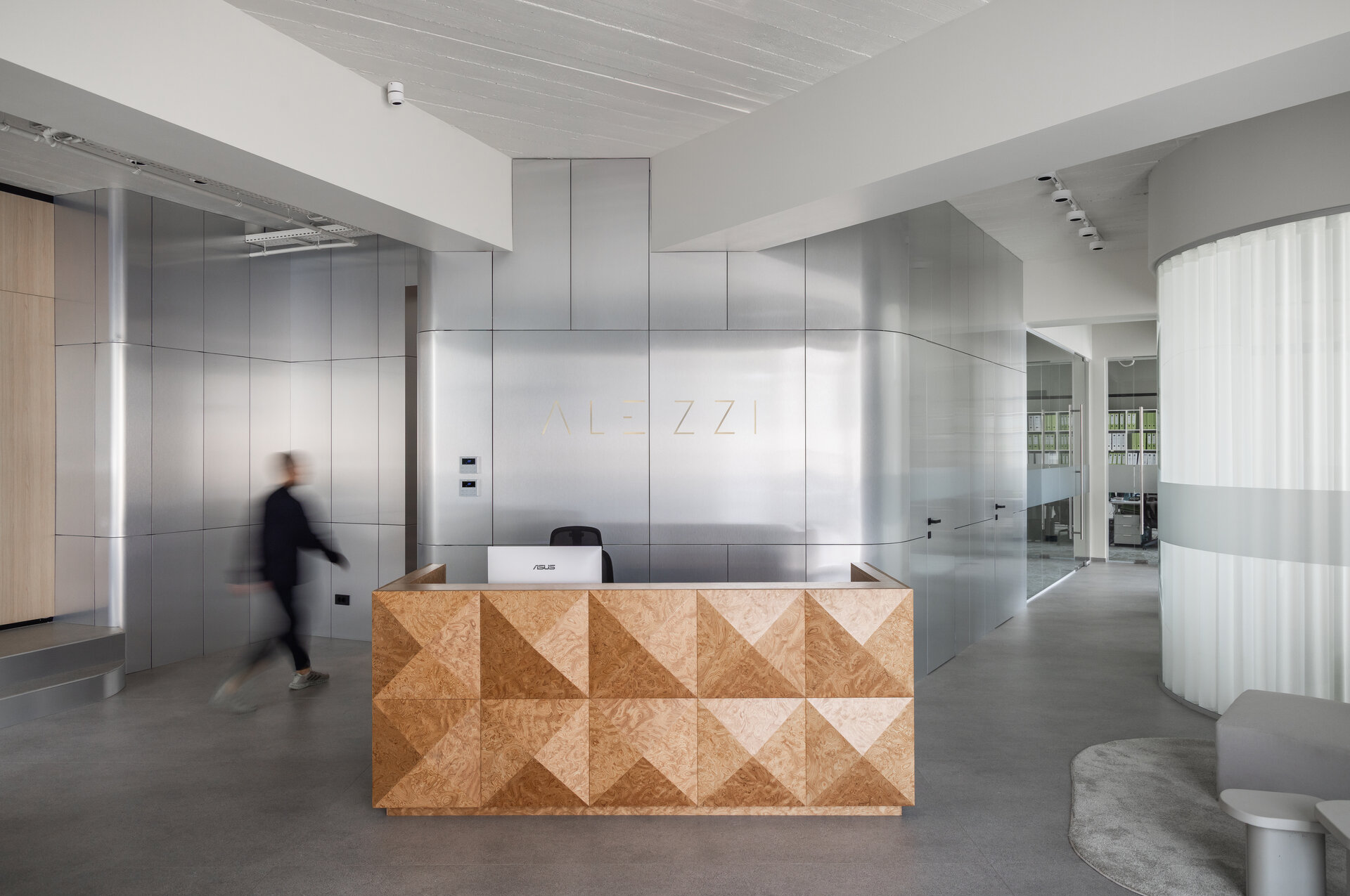
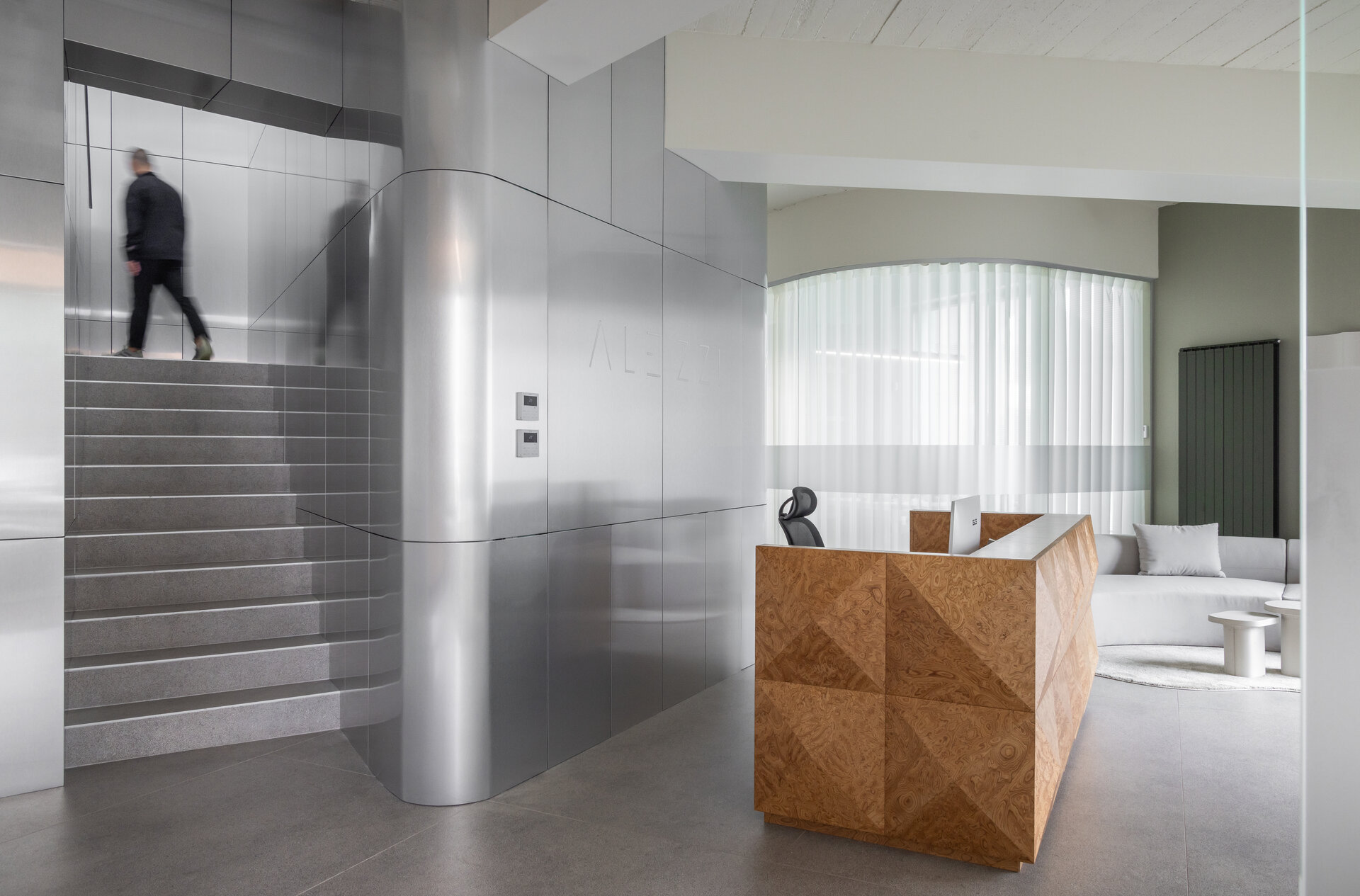
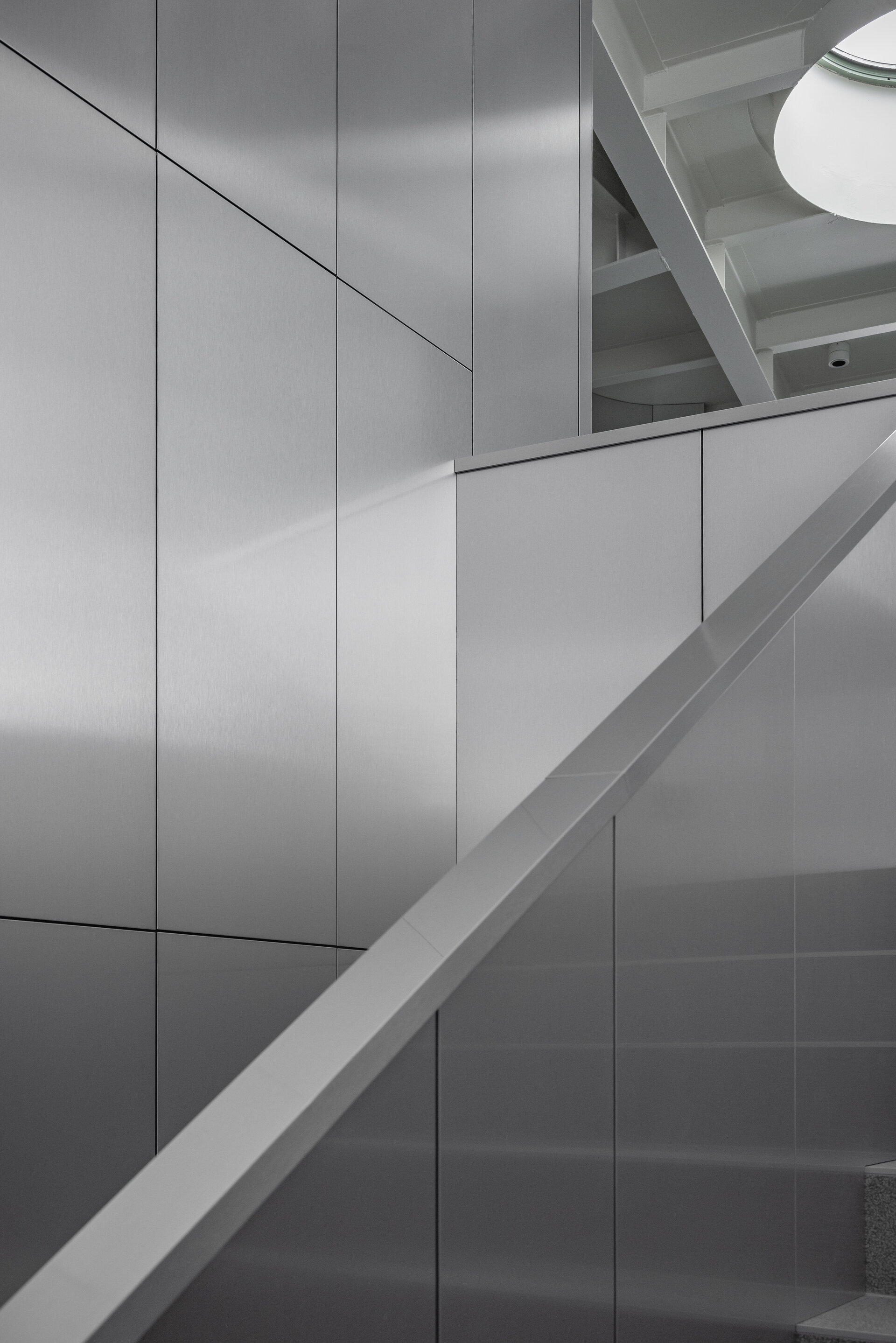
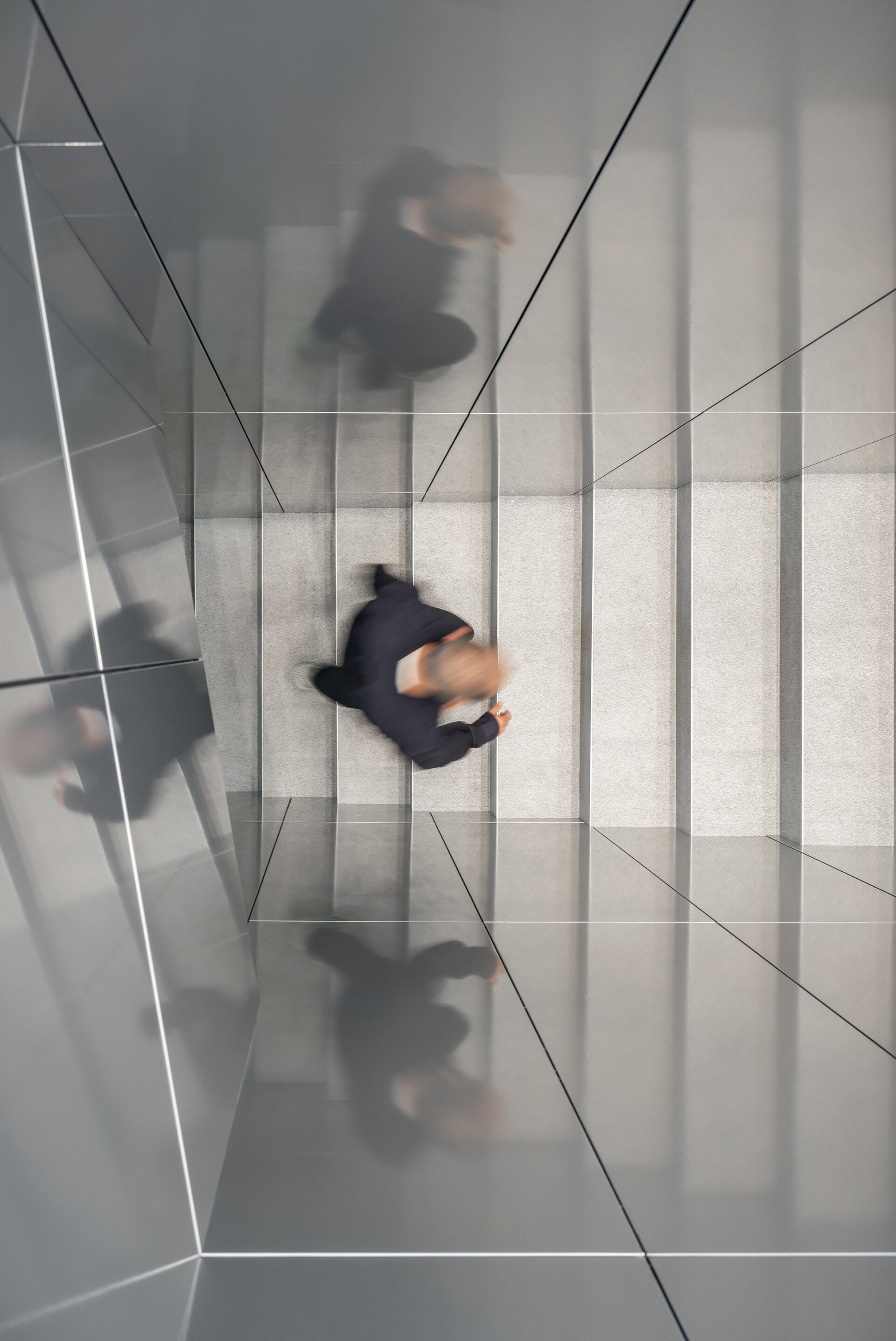
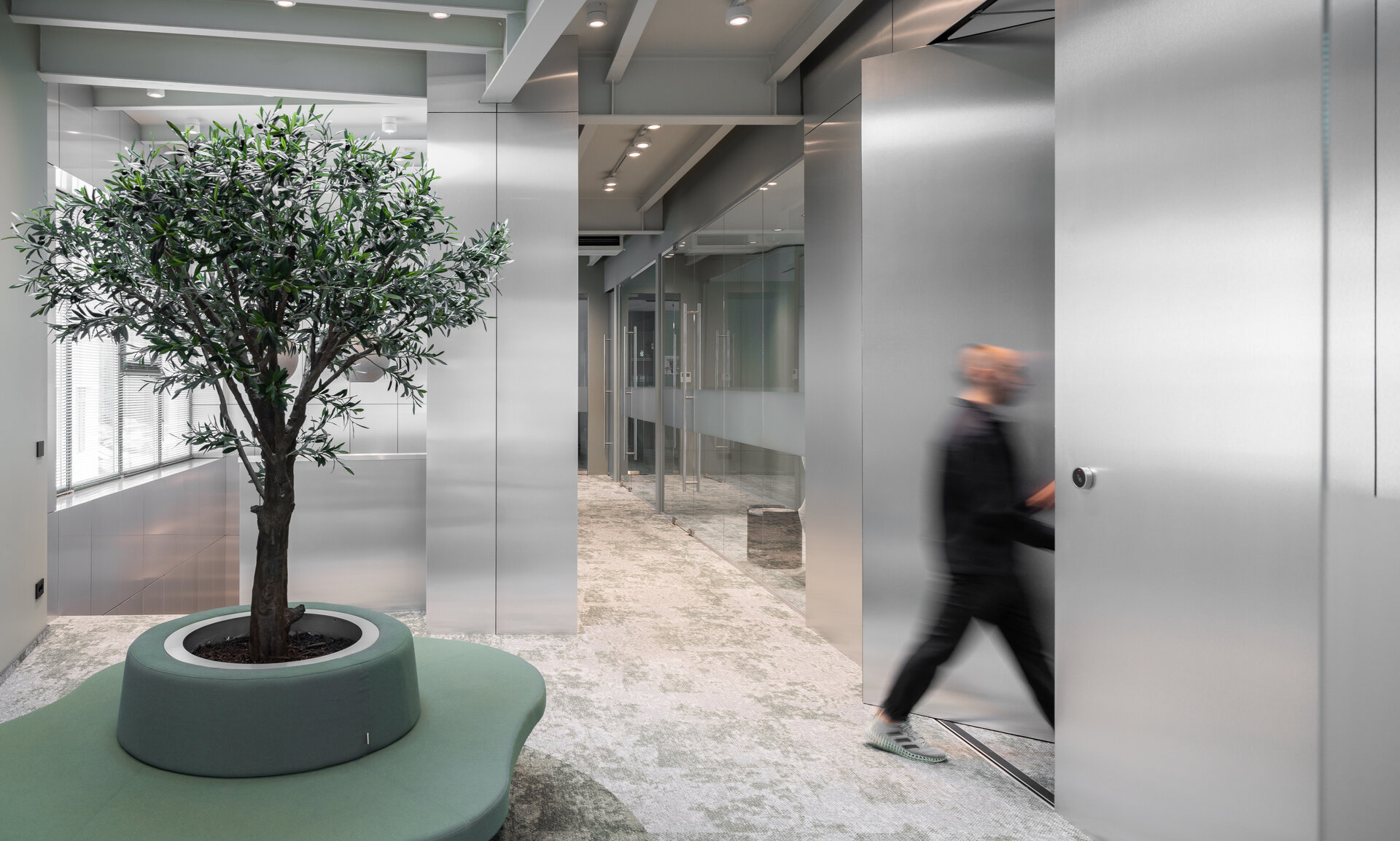
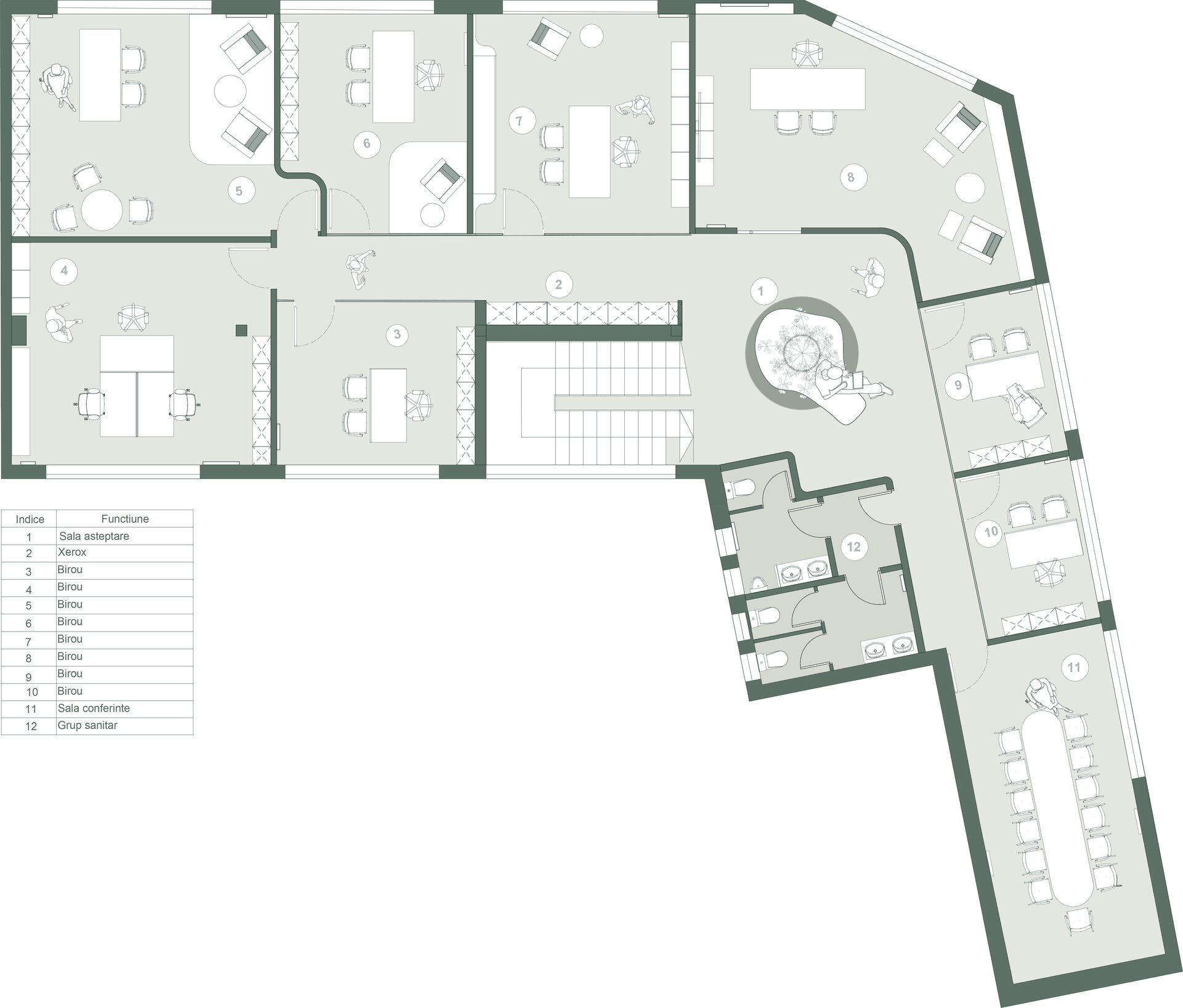
From a spatial perspective, one of the key challenges of the project was the reinterpretation of the existing staircase. Positioned in a very narrow transition area, the staircase could neither be ignored nor relocated—it had to become more than just a functional element. It became the project’s “core nucleus”: a vertical axis that connects the ground floor to the upper level both visually and physically, but also serves as a perceptual guide through the space. We chose a reflective material—stainless steel—not only to amplify light and visually expand the space, but also to create a dynamic experience of movement. The reflections are fragmented, multiplied, fluid, bringing a vibrant sense of motion to the journey toward the executive offices and the conference room. What was initially a constraint turned into an architectural opportunity, transforming a narrow passage into a catalyst for spatial expression.
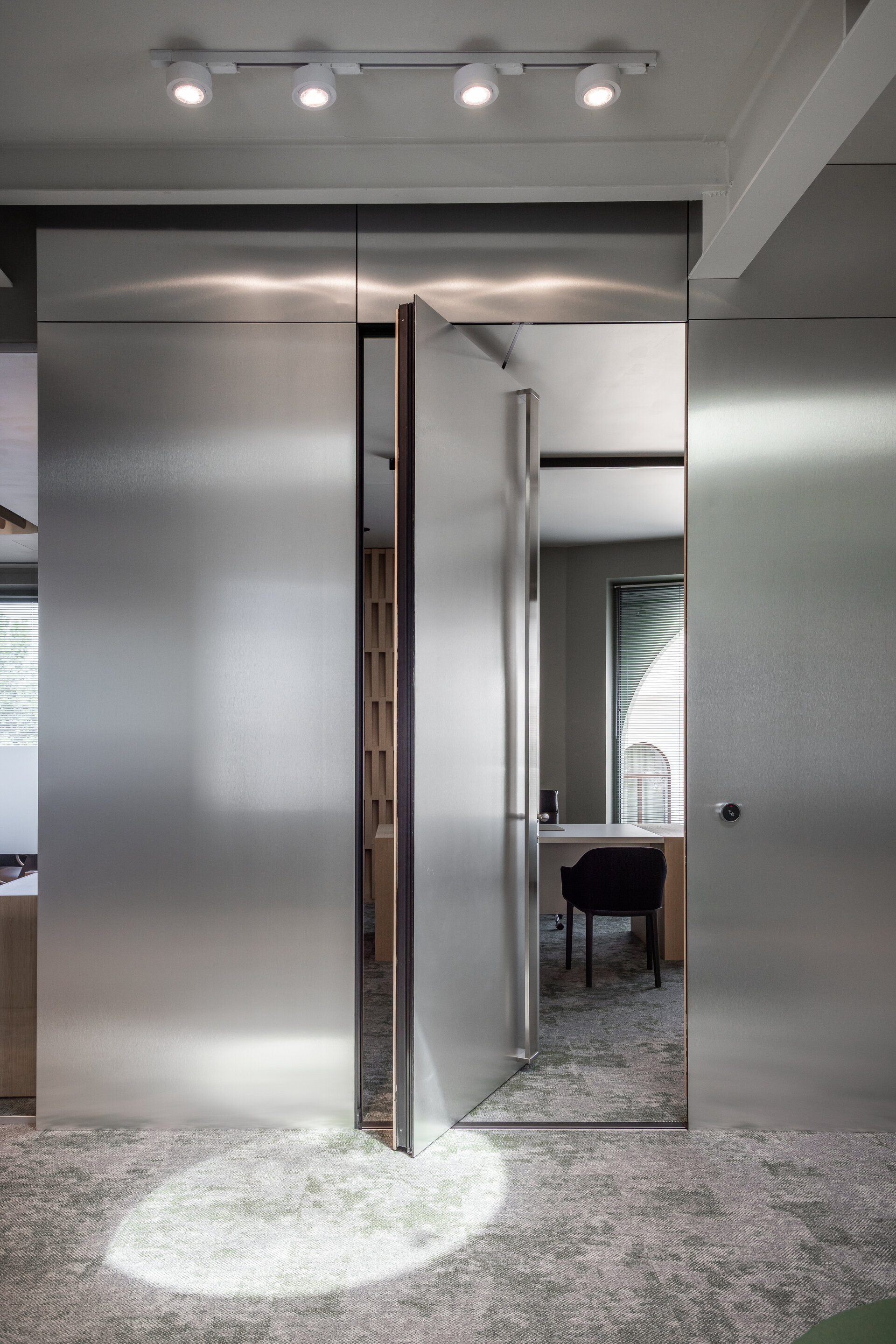
Far from being merely an aesthetic choice, stainless steel acts as a symbol of continuity between the two levels. It reappears in subtle details, in custom-made furniture, in trims and edges, and in the overall atmosphere. It is a clean, cool materiality—lucid and precise—evoking the progressive mindset that defines the organization. Through its reflectivity, the stainless steel becomes a mediator of dialogue: it doesn’t speak solely of itself, but of everything it reflects—people, movement, and space.
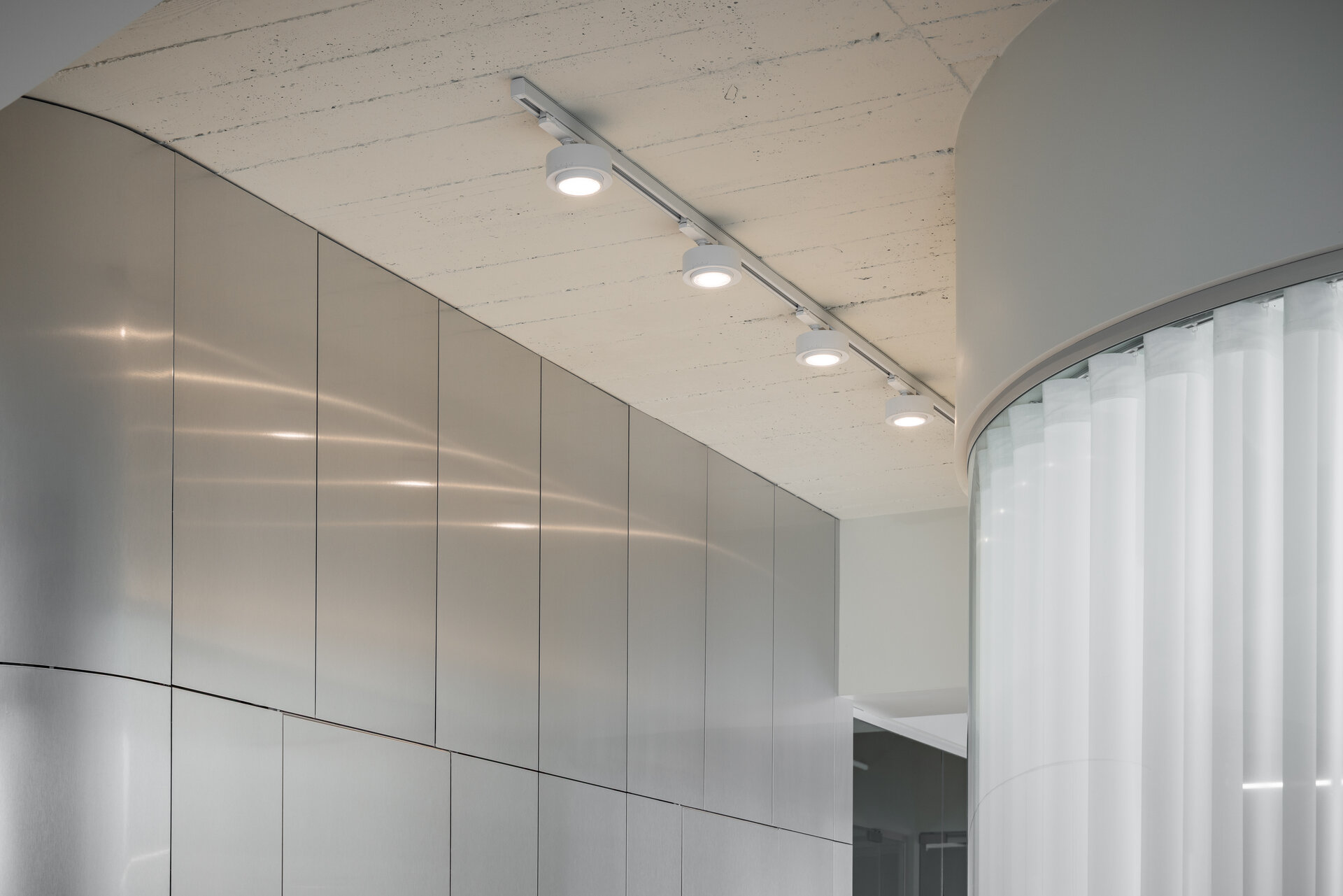
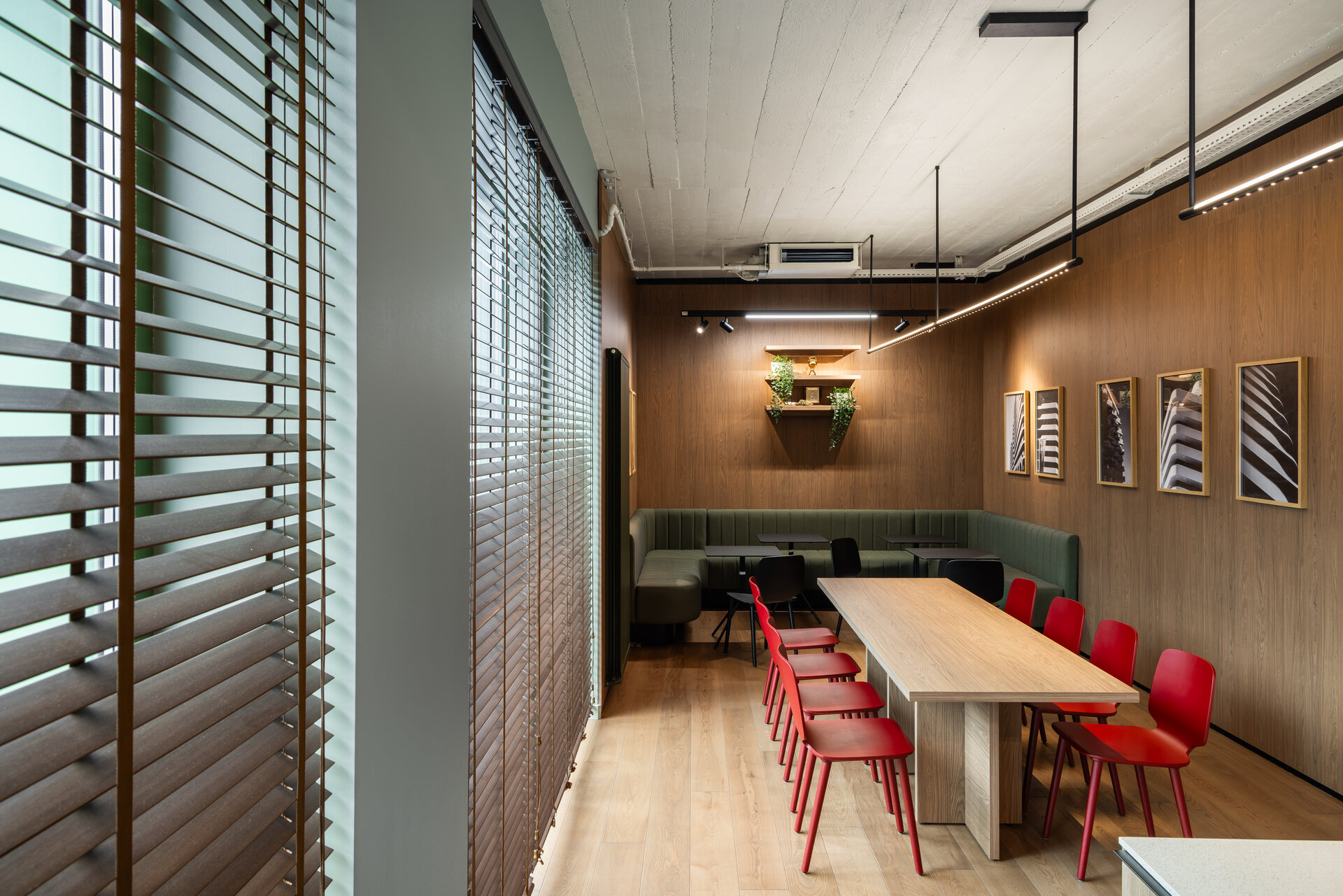
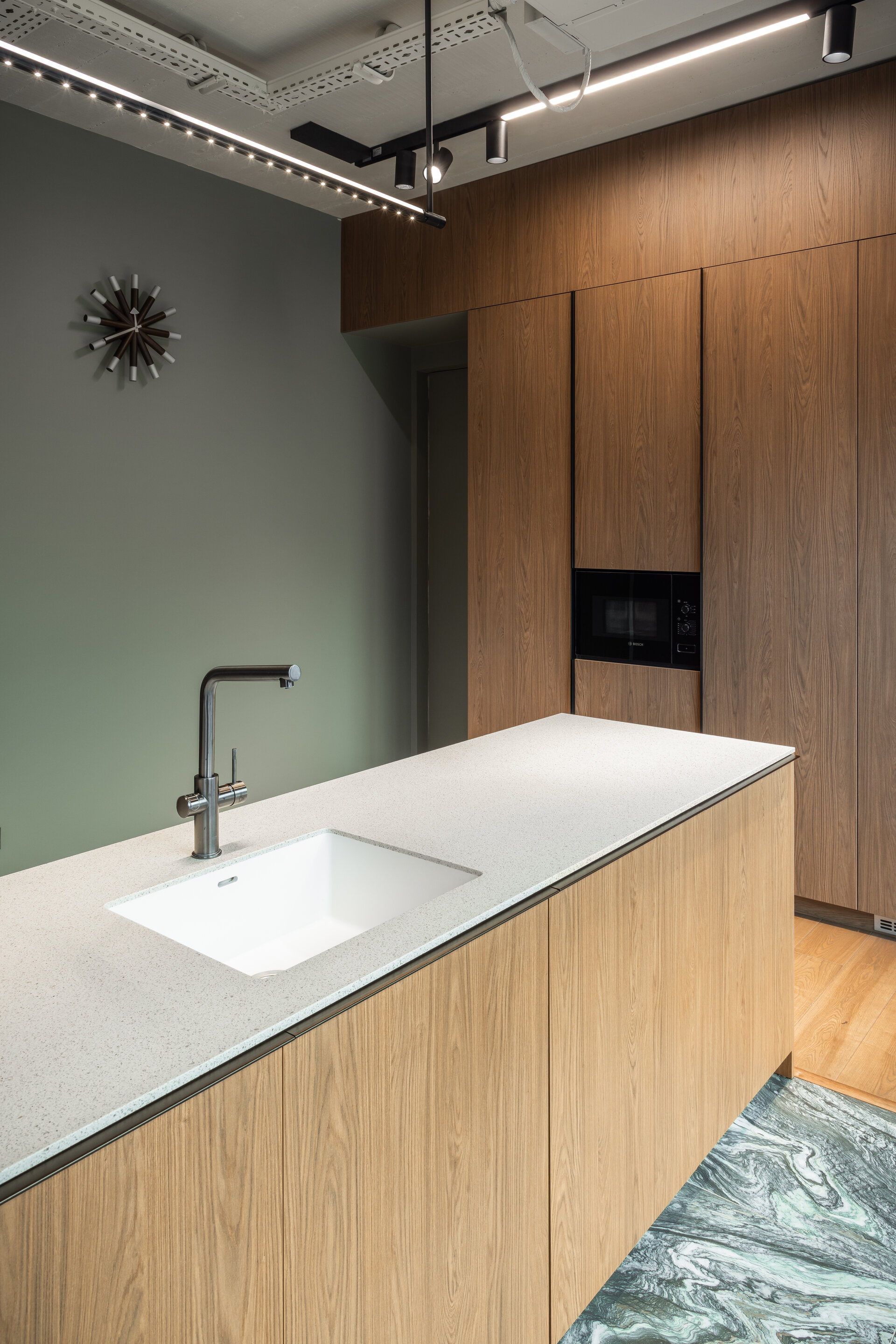
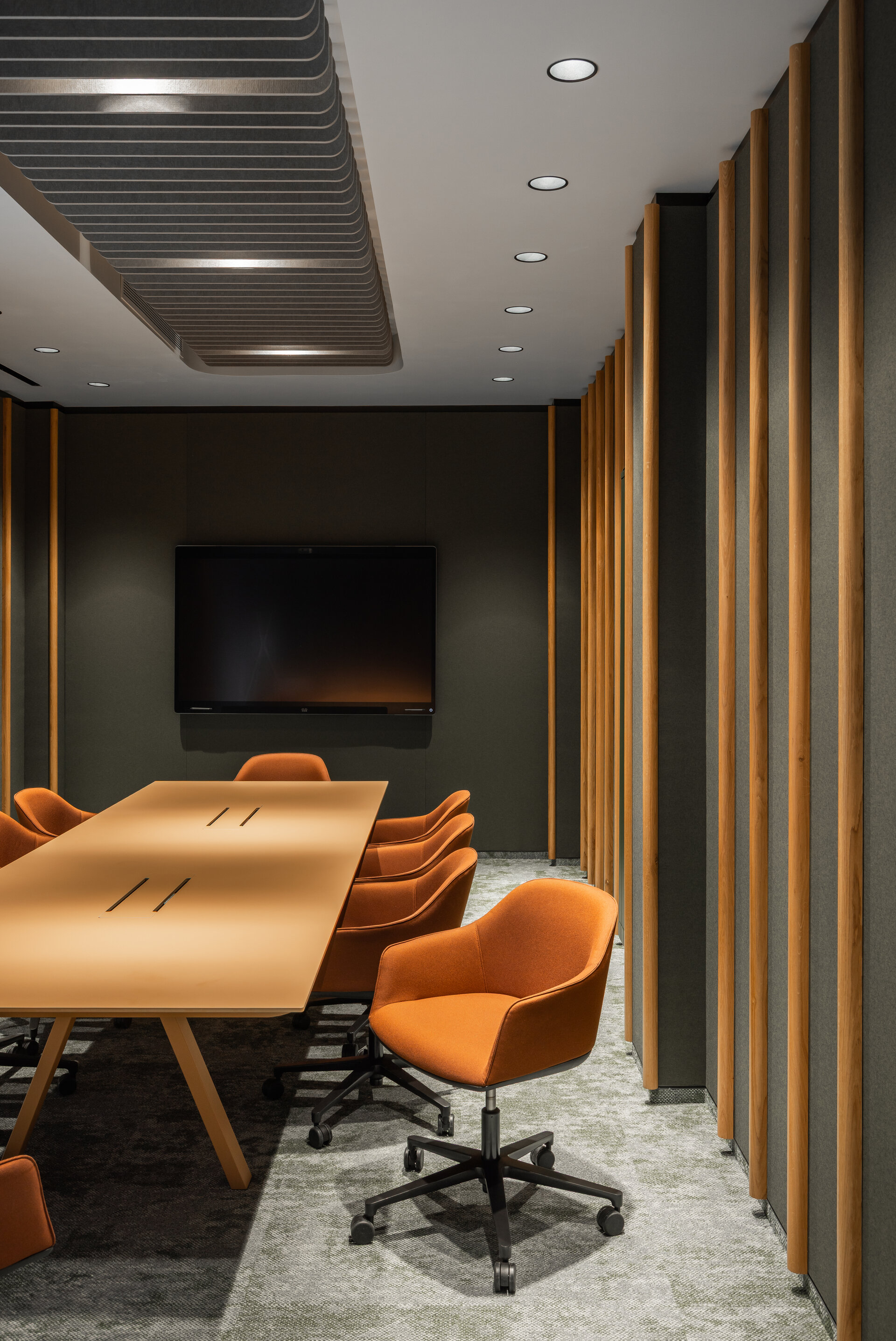
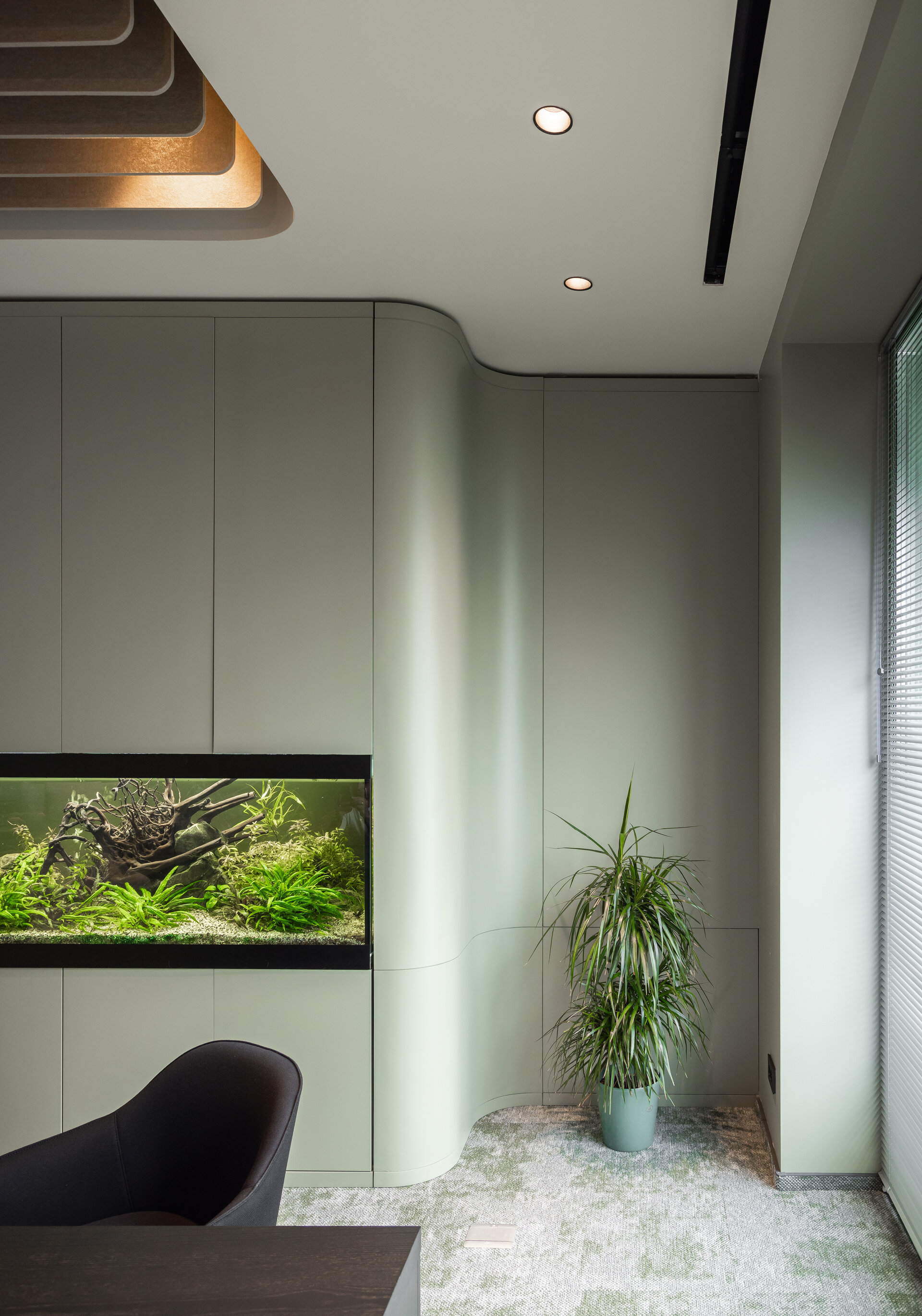
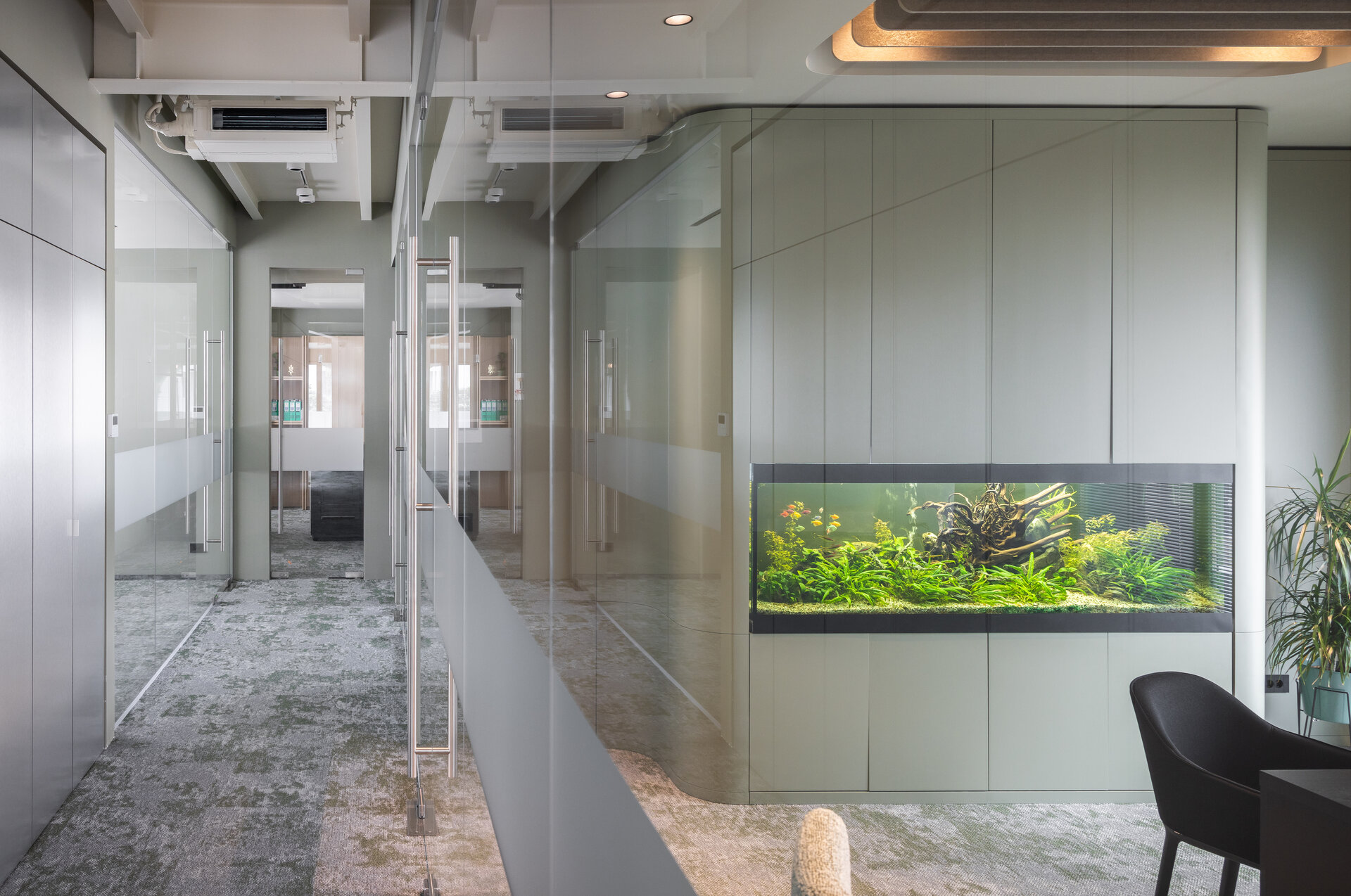
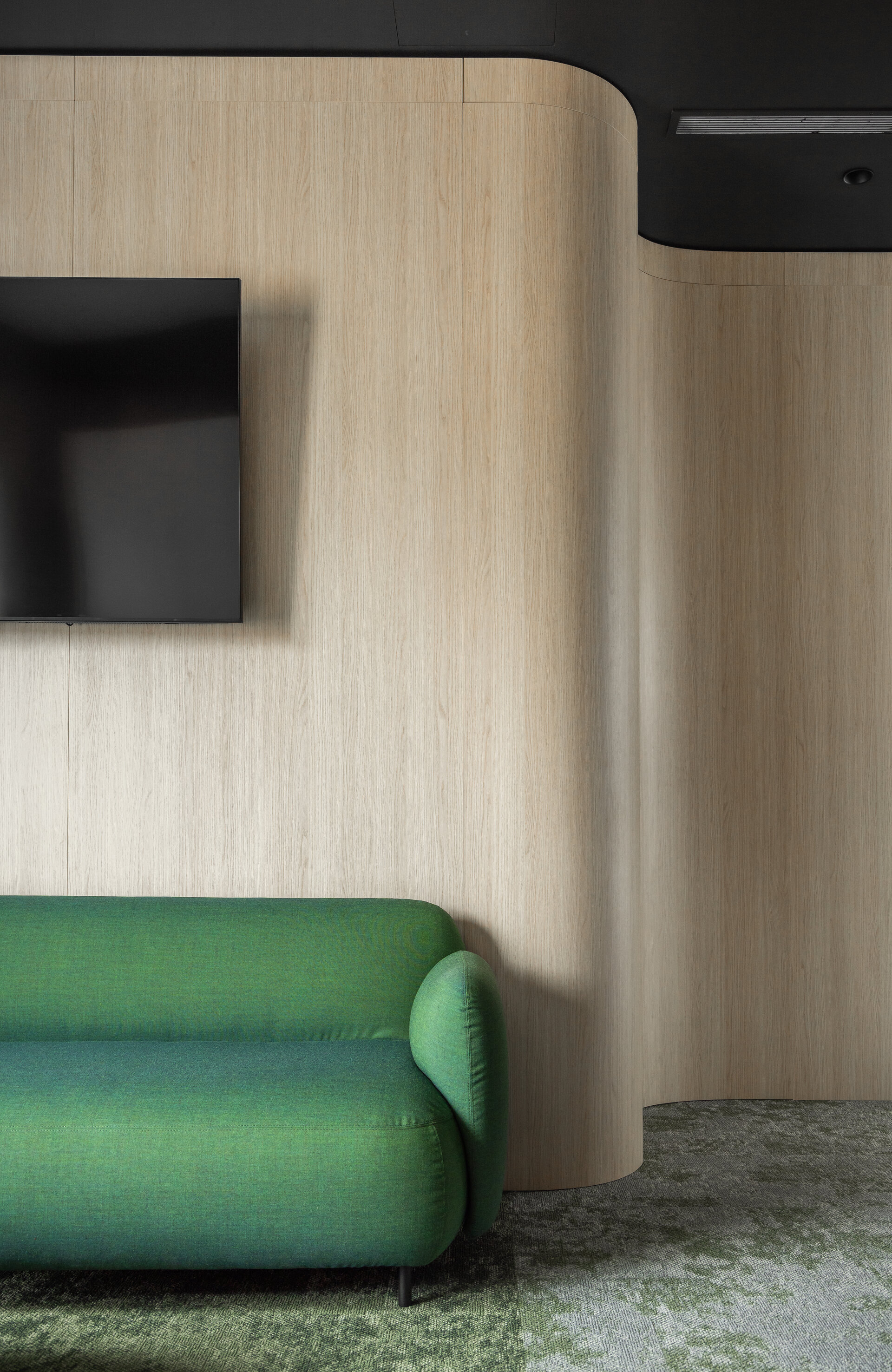
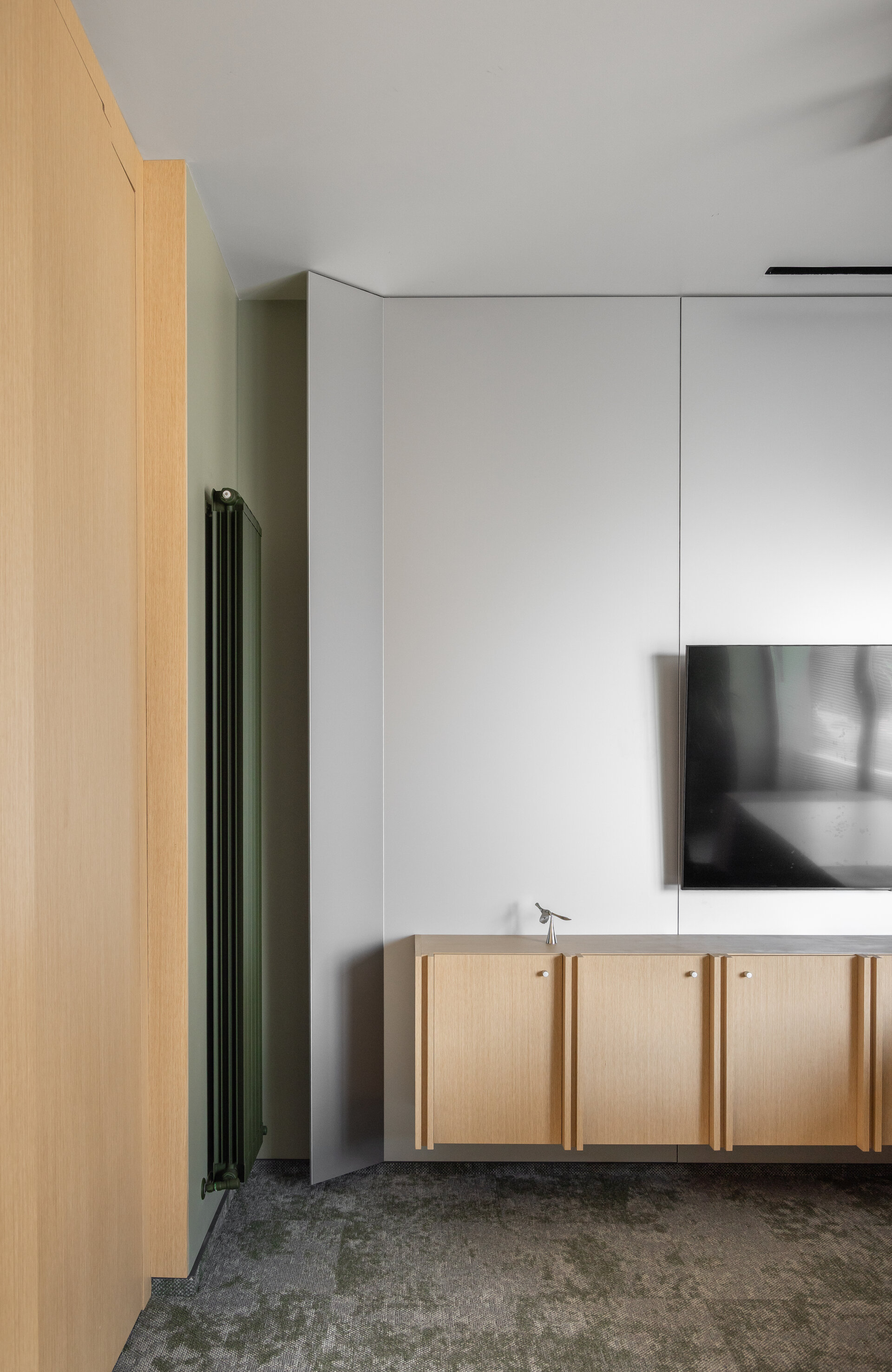
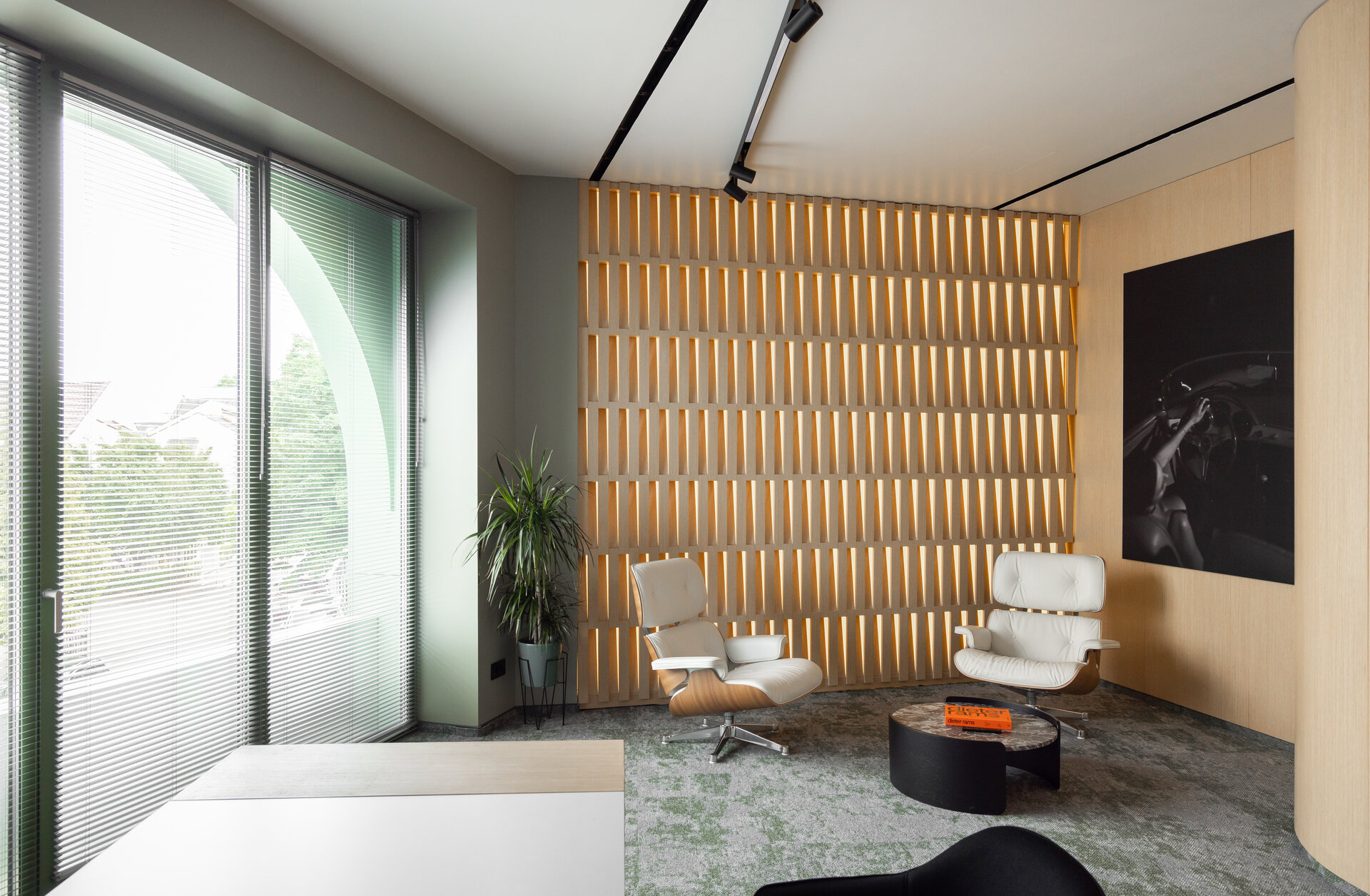
We deliberately chose to preserve the traces of construction throughout the space. Ceilings were left exposed—both on the ground floor and the new upper level—with all their imperfections and technical components in view. This architectural “honesty,” coupled with the selection of technical materials—steel, perforated gypsum board, epoxy coatings, acoustic panels, anodized aluminum, brushed stainless steel—builds a composed yet warm aesthetic, free from decorative rhetoric.
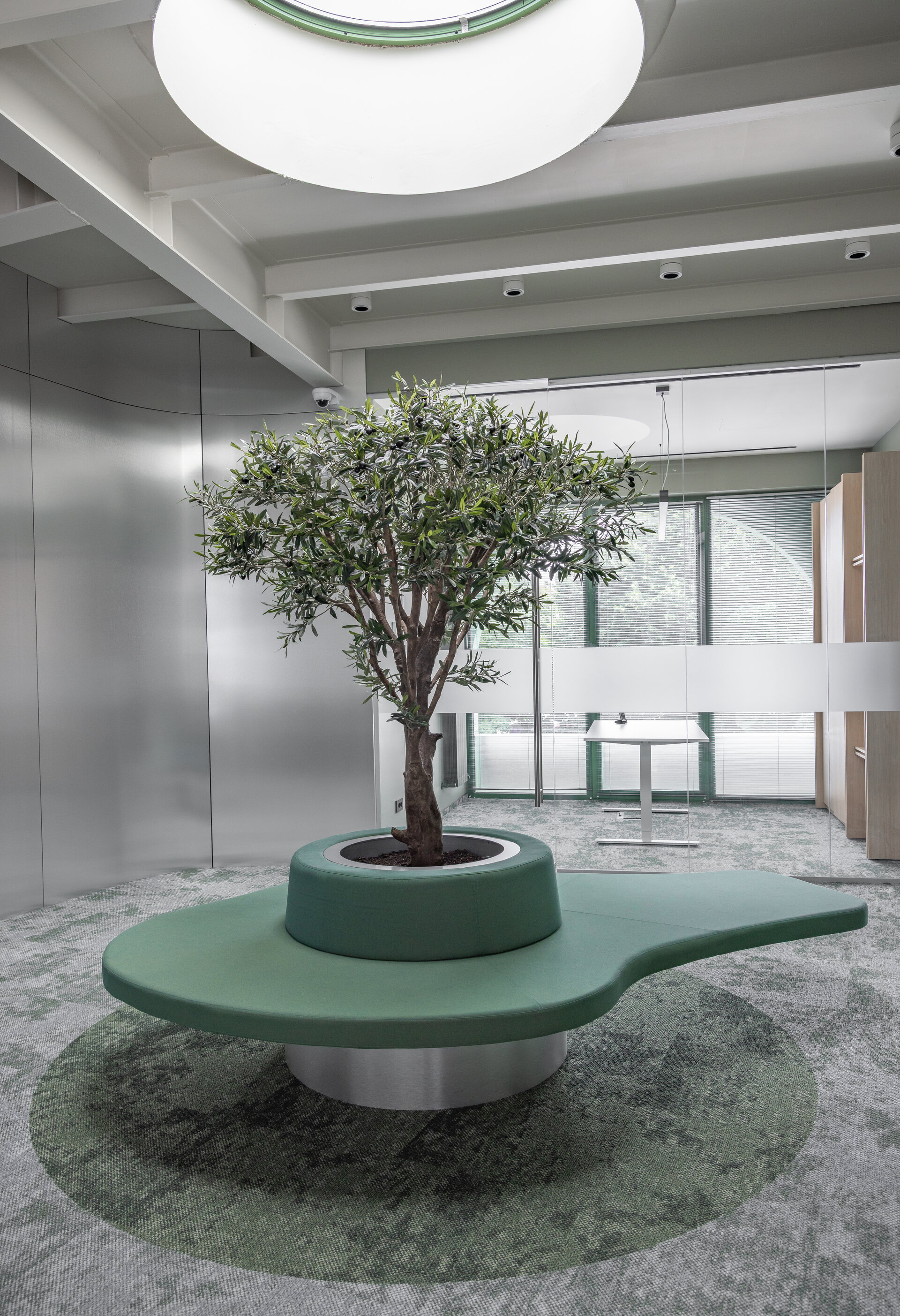
An unexpected but welcome element emerged during construction: a skylight, made possible once the steel structure was fully enclosed. It introduced a controlled perforation in the upper slab, allowing generous natural light to pour into the distribution area on the first floor. The skylight became a kind of counterpoint to the staircase—where the stainless steel reflects, the skylight diffuses. This balance between reflection and light, between material and immaterial, established a subtle yet essential dialogue within the spatial perception.
A recurring theme in the project was that of movement—of how the human body explores, perceives, and understands space through motion. The intervention does not rely on static “compositional frames,” but on a sequence of spatial episodes that open, contract, reflect, or illuminate depending on one’s perspective. The treatment of the staircase is central to this idea.
Instead of being concealed or minimized, the staircase became a gesture of connection. The vertical stainless-steel cladding continues in the balustrade and risers, turning the space into an active surface: it reflects, it multiplies, it changes depending on the light and the position of the user. This movement of light across the steel surfaces creates a sense of depth, as well as continuity. Subtly, the material doesn’t just reflect the environment—it reflects the movement of those who use it, reinforcing the notion that space is defined by human interaction.
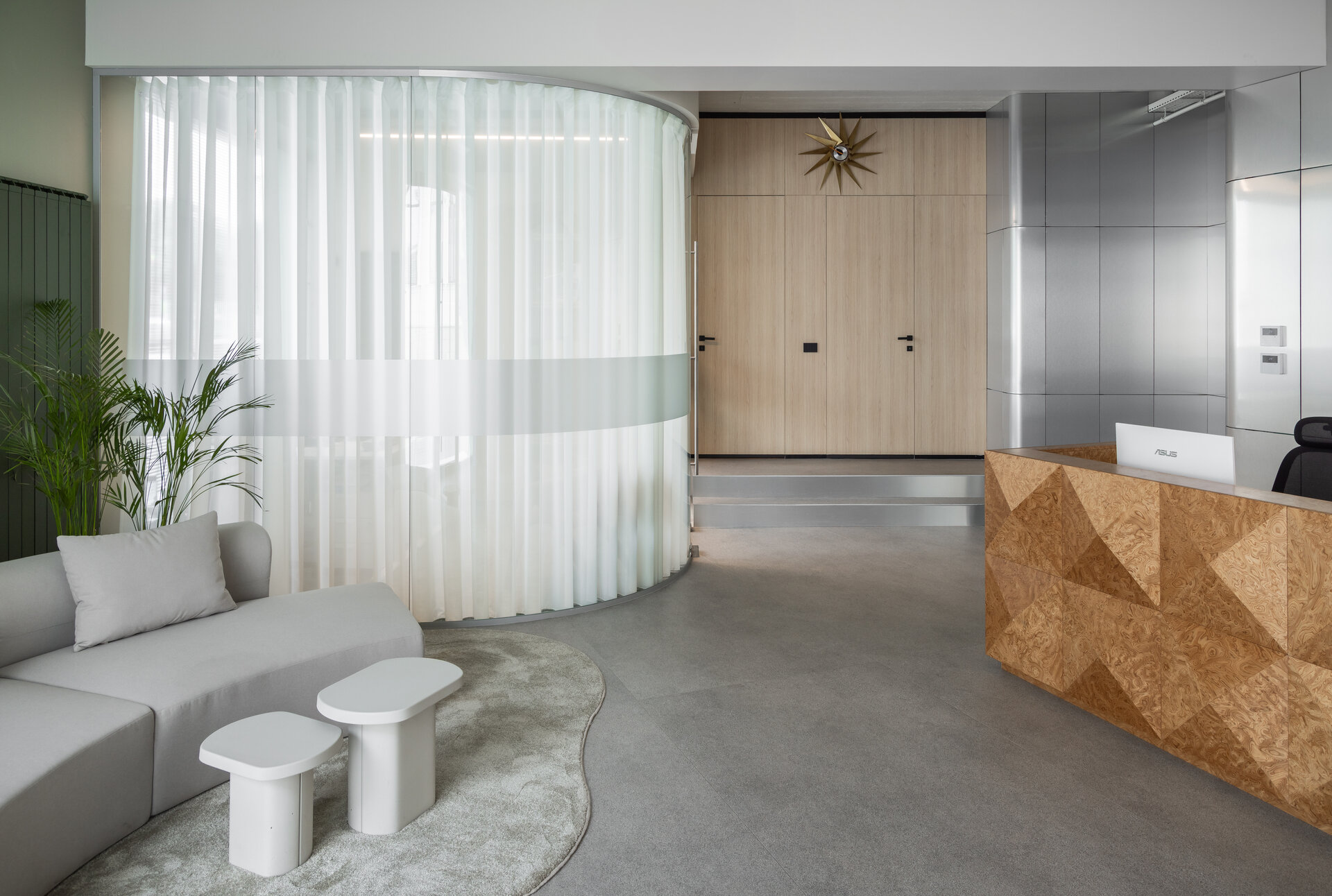
The staircase also contributes to the dissolution of the boundary between ground floor and upper level. There is no rigid separation, but rather a fluid transition. Strategically placed glazed surfaces and translucent materials around the staircase allow natural light to filter through, softening the transition and enhancing visual continuity between levels. It’s a discreet yet effective way to maintain spatial coherence.
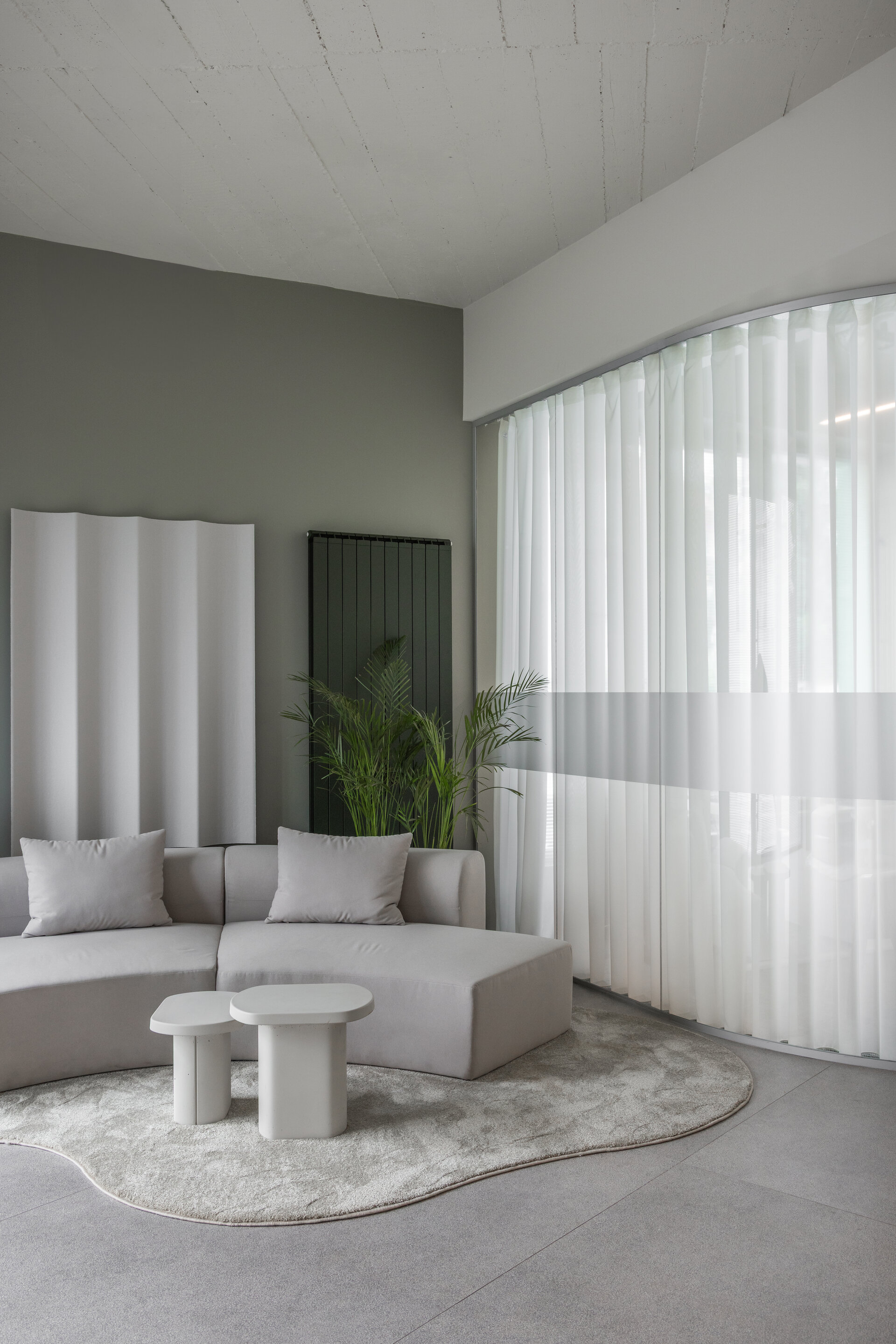
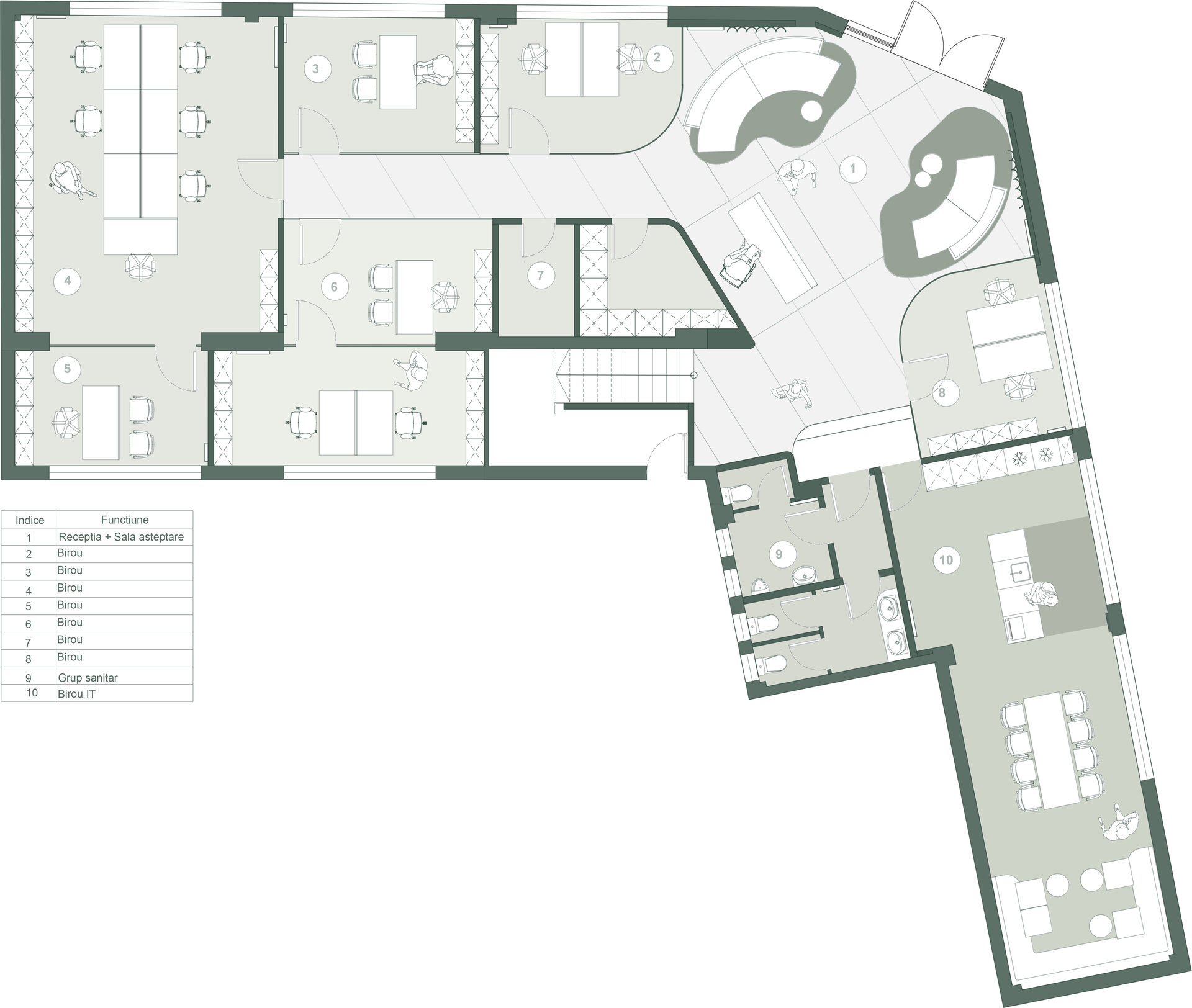
Circulations are clear but never rigid. Corridors are not mere passageways, but moments of visual and social reflection—especially around the staircase and skylight. Through the use of semi-transparent materials and subtle texture variations, we avoided the sensation of closed, constrained hallways. Even in areas without direct exterior views, the perception remains one of openness.
By embracing technical materials, structural visibility, and functional clarity, we aimed to define a space with a strong yet unobtrusive identity. The identity of this office is not born of graphic branding or stylistic rhetoric, but of a series of precise architectural gestures: a staircase turned into a source of light, a ceiling left free to breathe, a skylight appearing “naturally” during construction as a living response to context.
In this sense, the project is not just an exercise in interior design, but a manifesto for honest architecture—one that does not disguise or fabricate scenographies, but reveals structures of thought. It is a space not only designed for work, but for thought to take form through interaction, transparency, and motion.
Corporate and Retail Space Design

- Seen Users Flagship Store
- Nostro Spazio
- Alezzi Offices
- Pago Bucharest Office
- Of Love and Yoga
- Artisan HUB
- Information, preparation and response center for incidents, radiological and nuclear events - CIPRIERN
- Bucharest Business Park. Lobby
- HN Services. Premium Plaza
- Beautik
- E.On showroom interior design
- HBC Lobby design
- Office design for the Embassy of Ireland
- Kinstellar office design
- Bank HQ Design
- BLUM Romania Showroom Design
- Apa Nova Bucharest Office Design - Ștefan cel Mare Building - 3rd Floor
- Apa Nova Bucharest Office Design - Ștefan cel Mare Building - 5th Floor
- V.I.P. Collection Center Regina Maria
- Ellen Recordings Music Studio
- United Drive workspace
- Dent Estet Clinic
- The Attic from Rabat 11th
- Takeovers Studios - Dorobanți 164
- Prima Vista - sales offices
- Green Day Spa
- DreamPrints
- Moon Pilates
- Born2Bake
- Designed with Purpose: L’Oréal Romania’s New Office Landscape


