Moon Pilates
Authors’ Comment
An interior design exercise where function, symbolism, and light converge to define a clear identity, an architectural interpretation of control, balance, and breath. A space conceived as a direct extension of its core concept: movement.
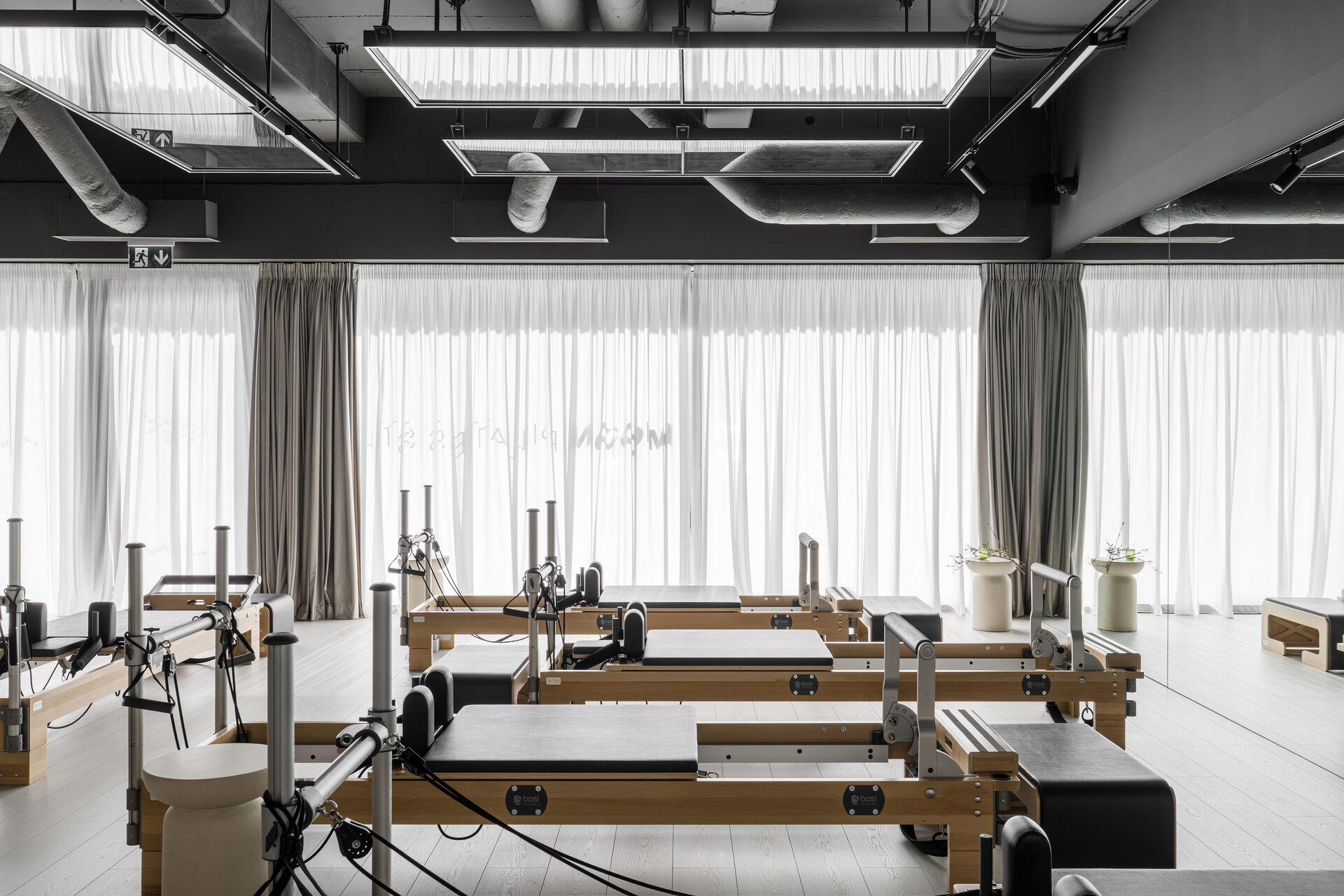
Starting from a raw 130 sqm construction site, Moon Pilates Studio has been transformed into a stage for an extensive process of design, execution, and customization, redefining the relationship between body and space, between function and expression.
Every phase of the interior design, from partitioning and technical installations (sanitary, electrical, HVAC) to material selection and custom furniture sketches was guided by a clear intention: to build a cohesive identity and deliver a memorable experience for the studio’s user.
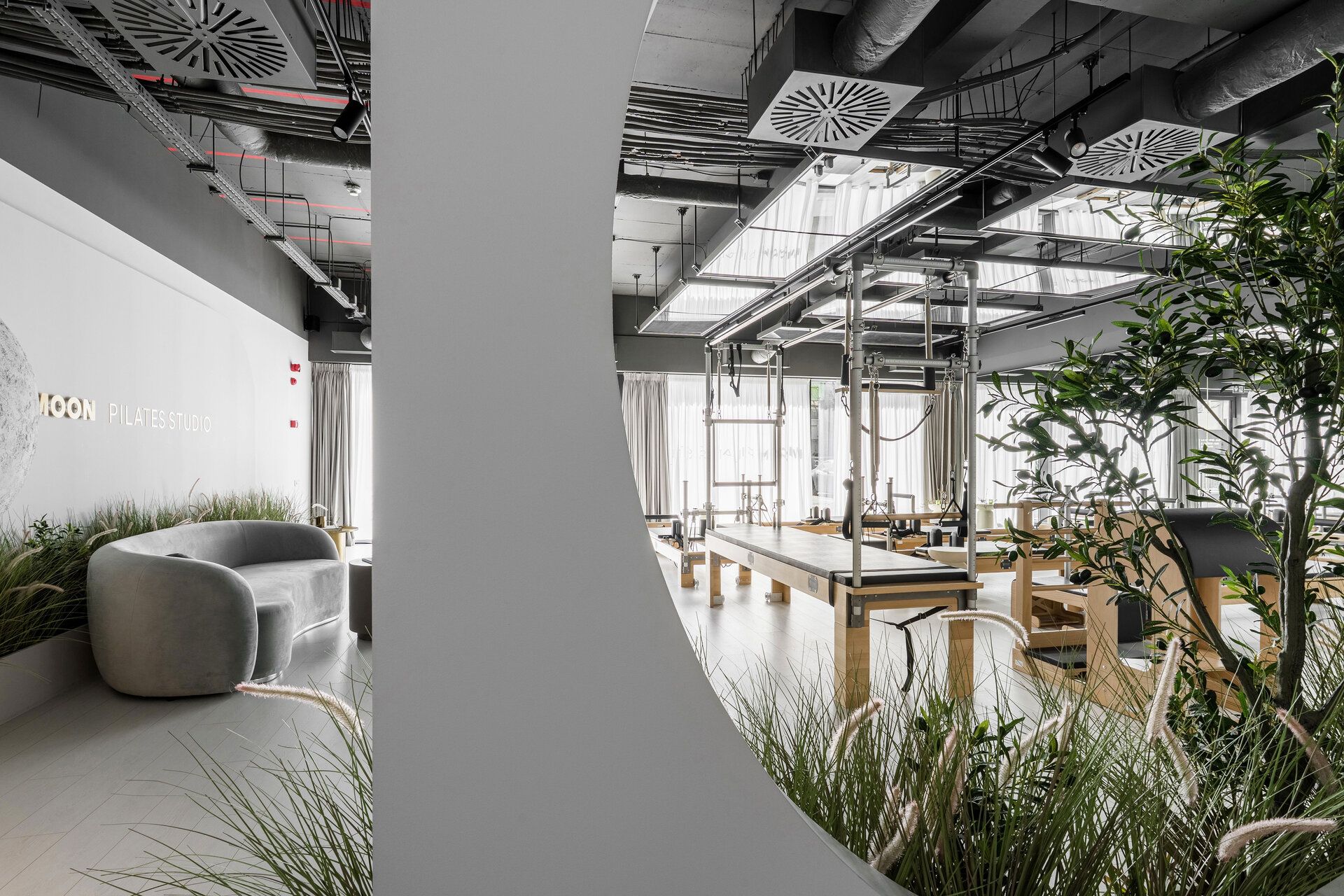
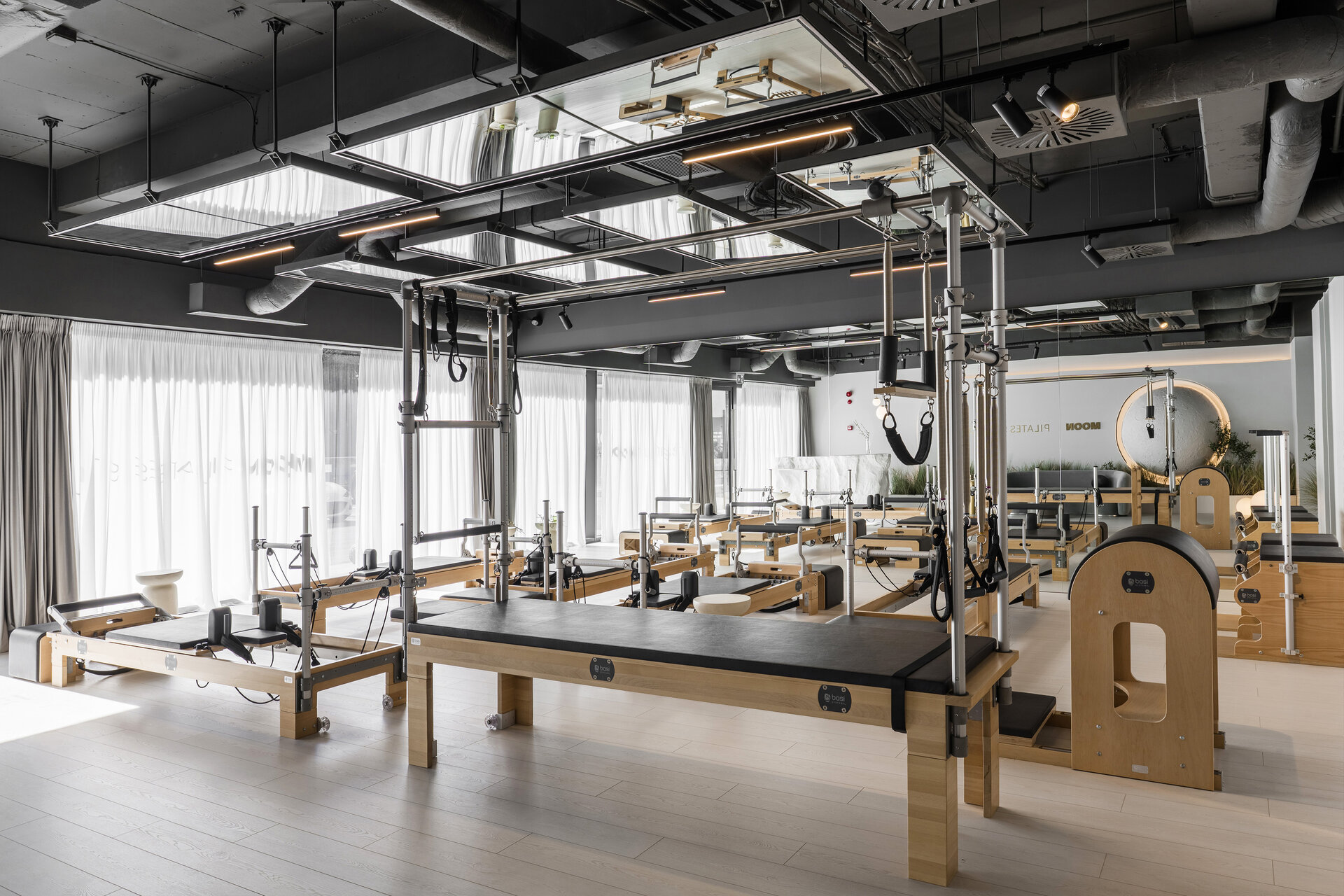
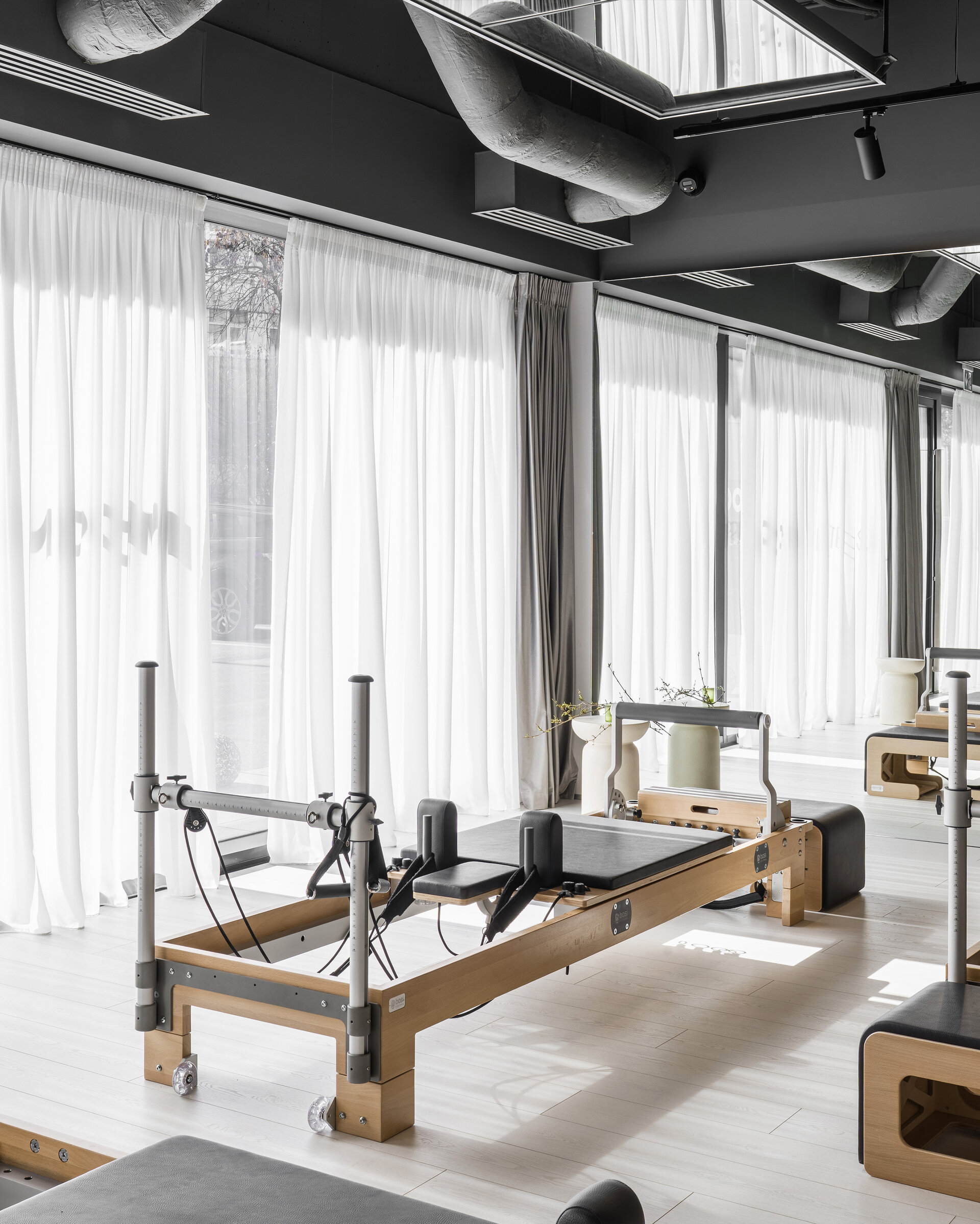
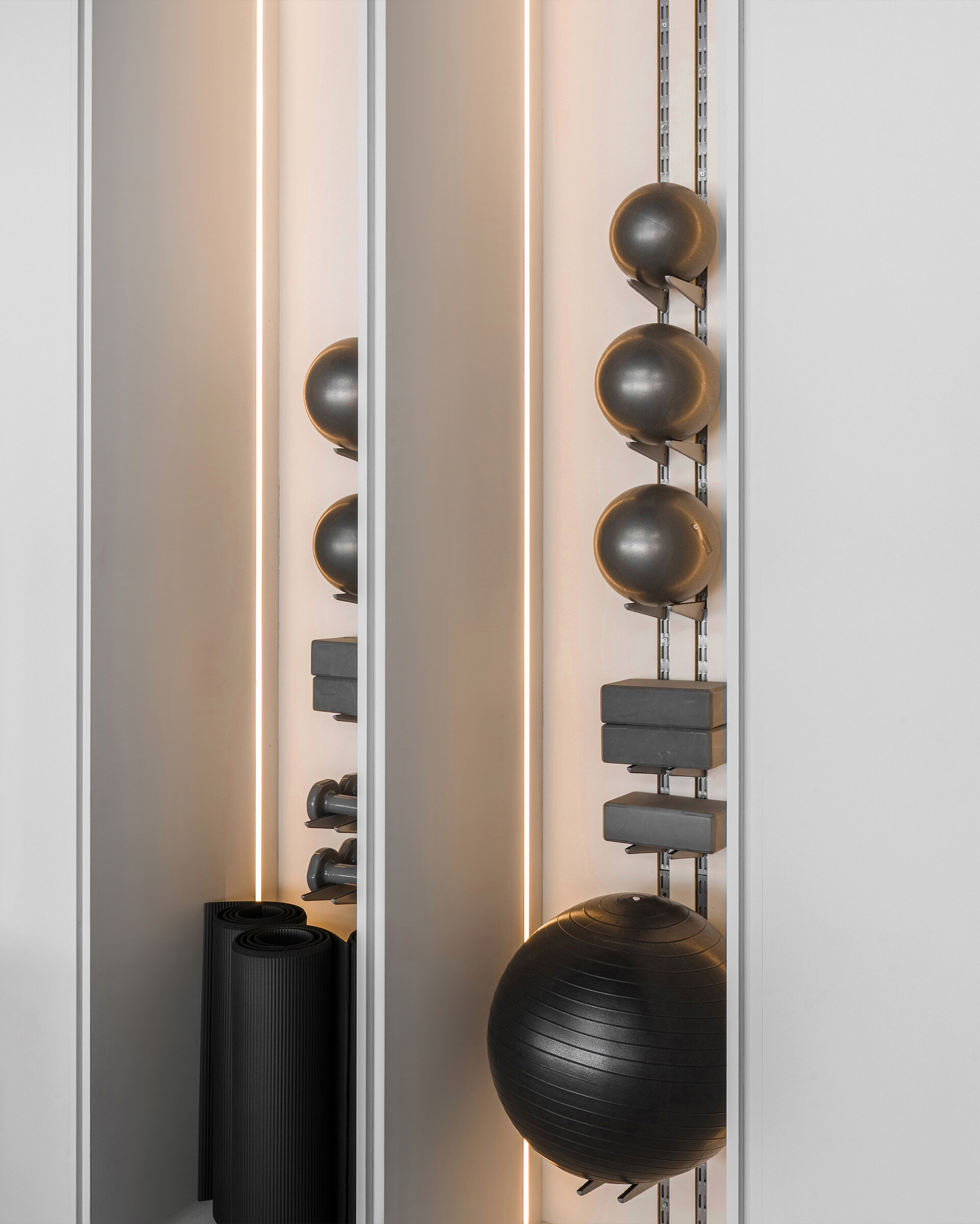
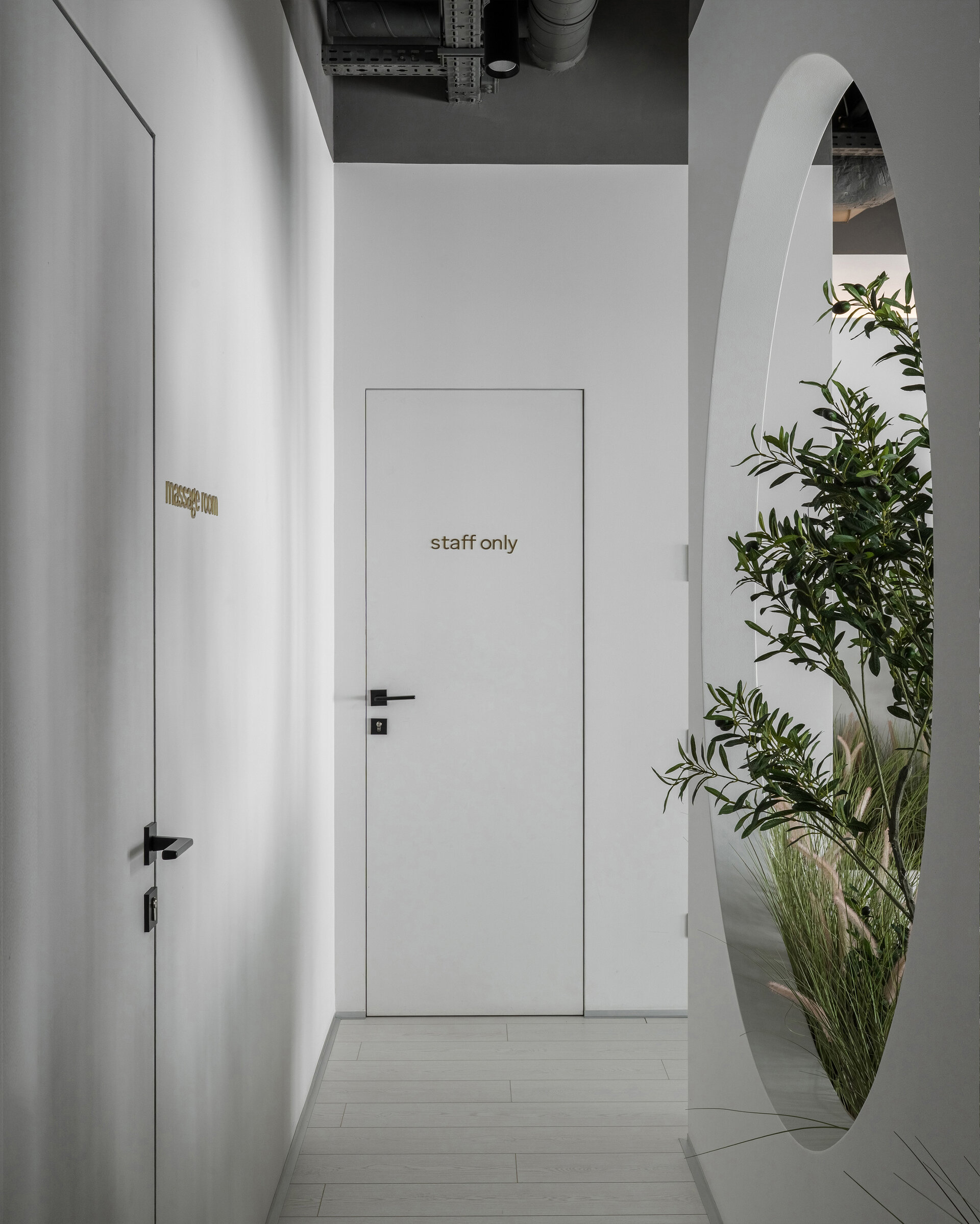
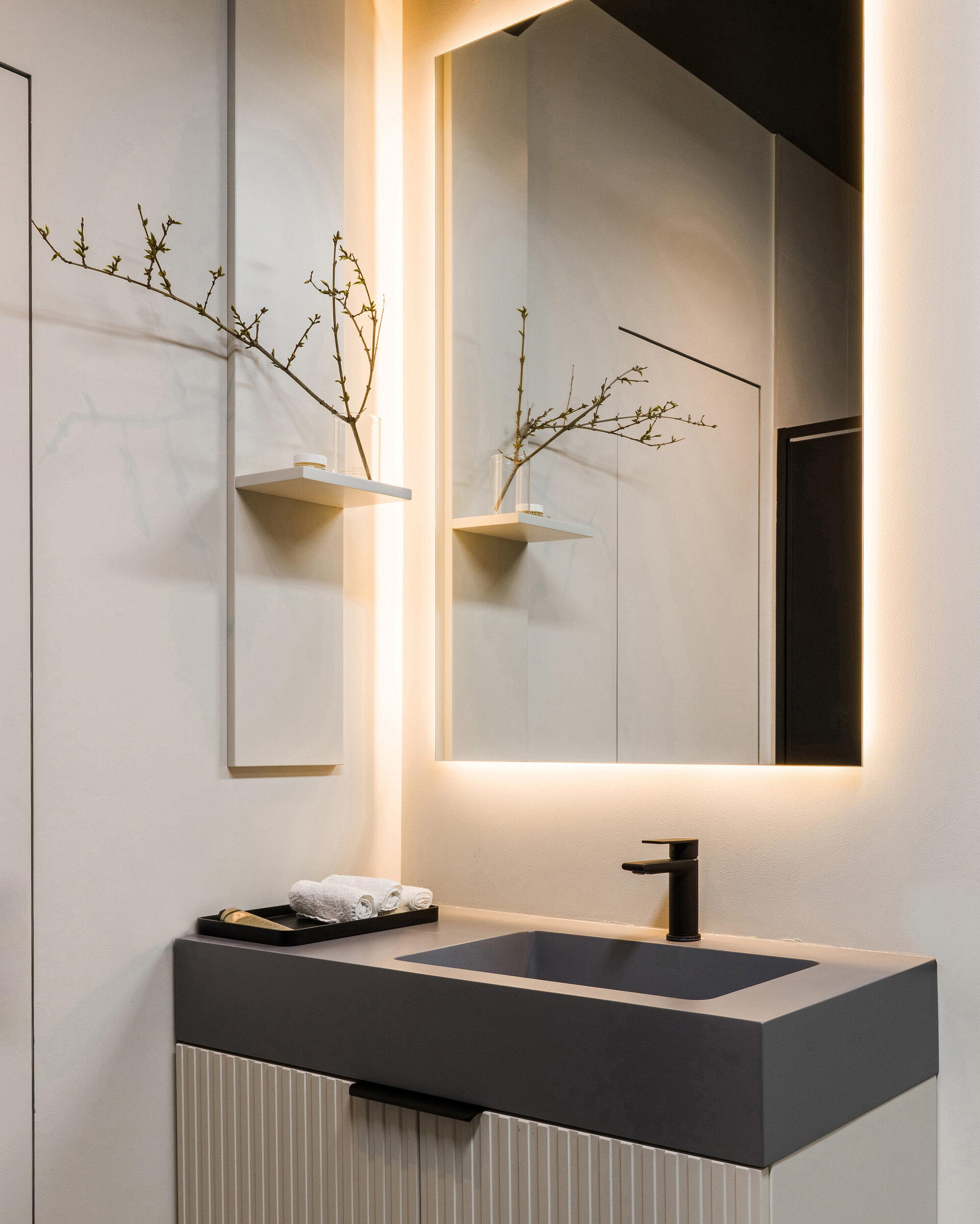
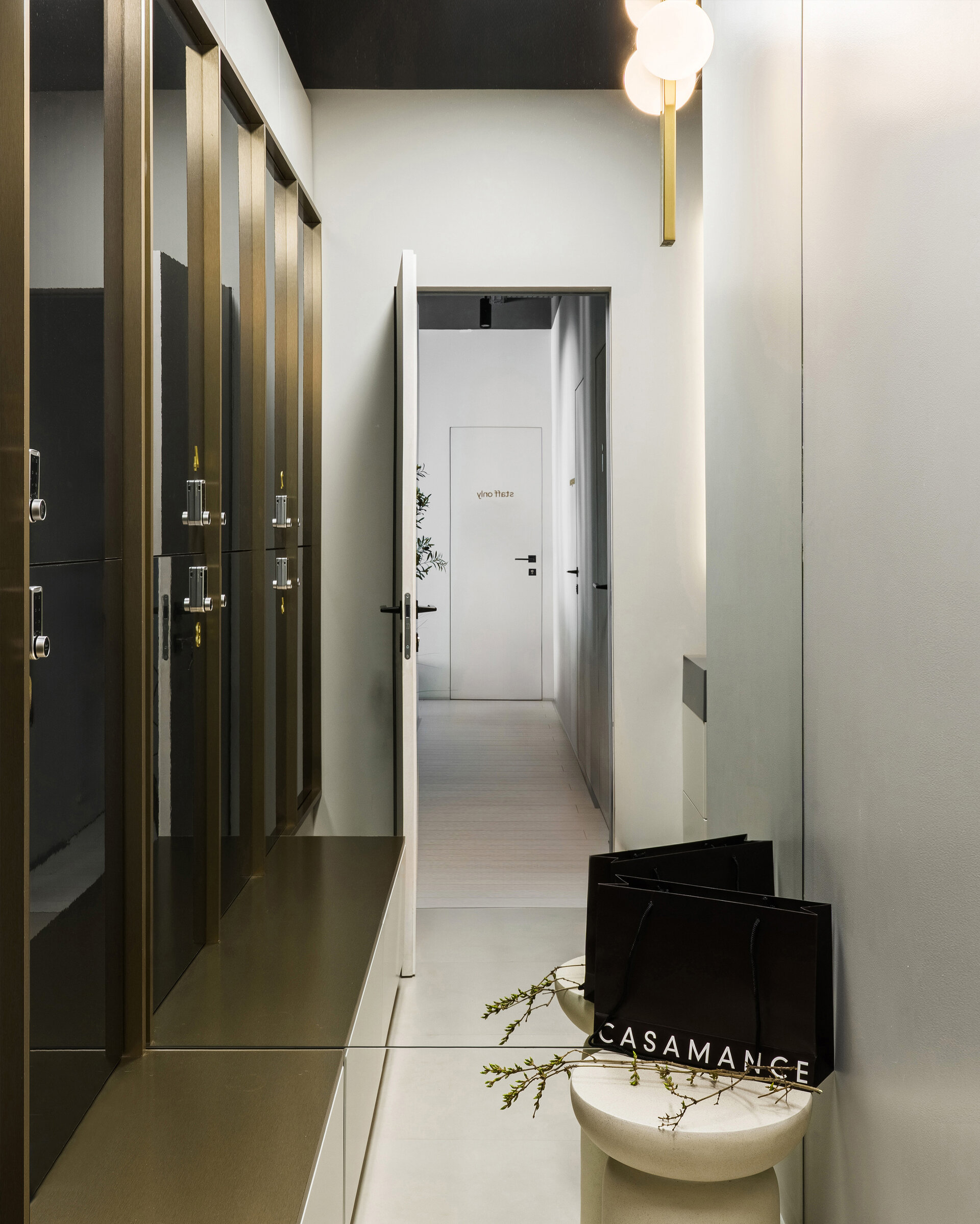
The project was defined from the outset by a clear function: a pilates studio centered around a main training space equipped with specialized equipment. Around this core, the layout unfolds with open-access storage, a compact reception area that flows into a relaxation zone, and a corridor leading to auxiliary spaces, including locker rooms, restrooms, a massage suite, and a private trainer’s area.
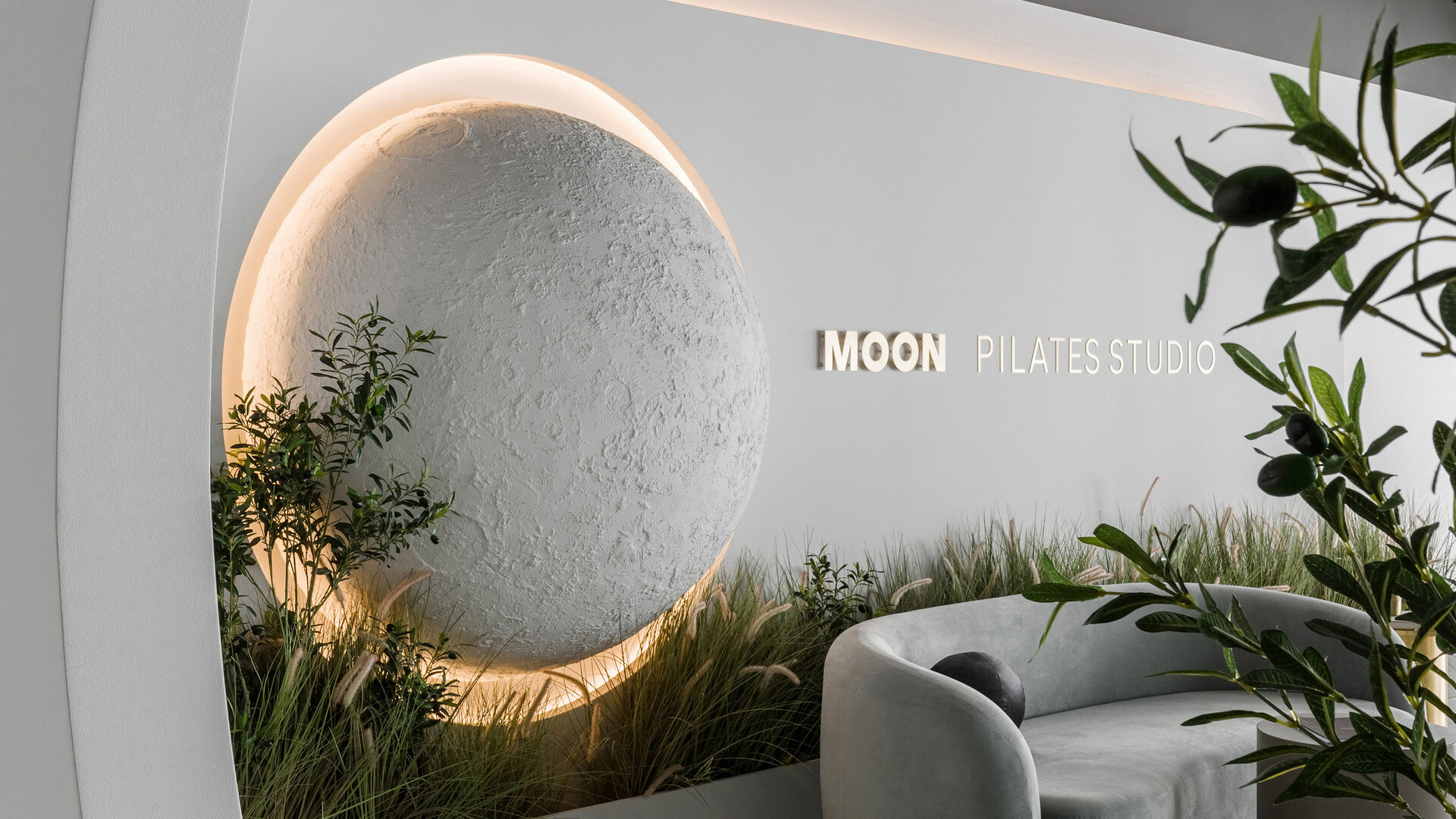
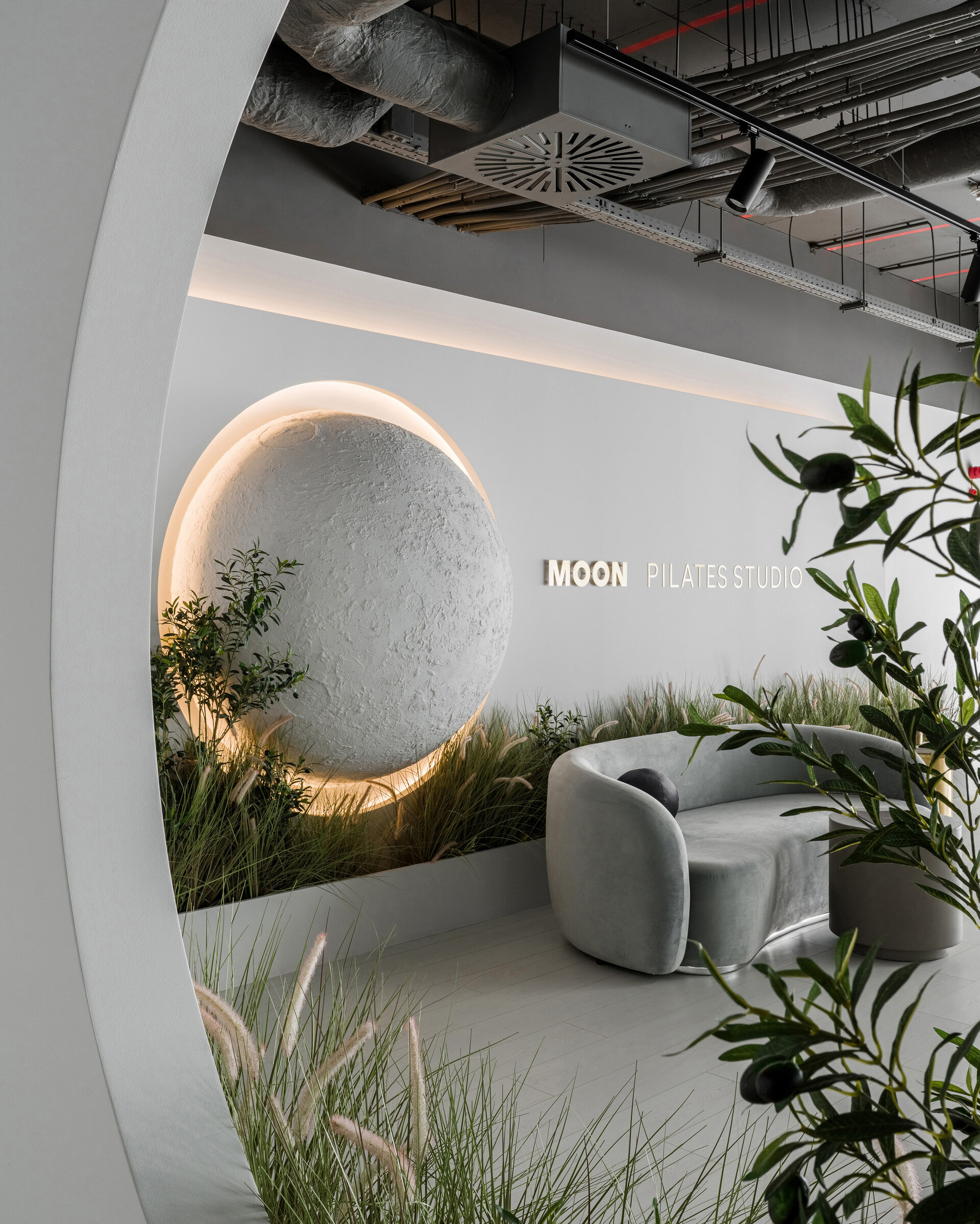
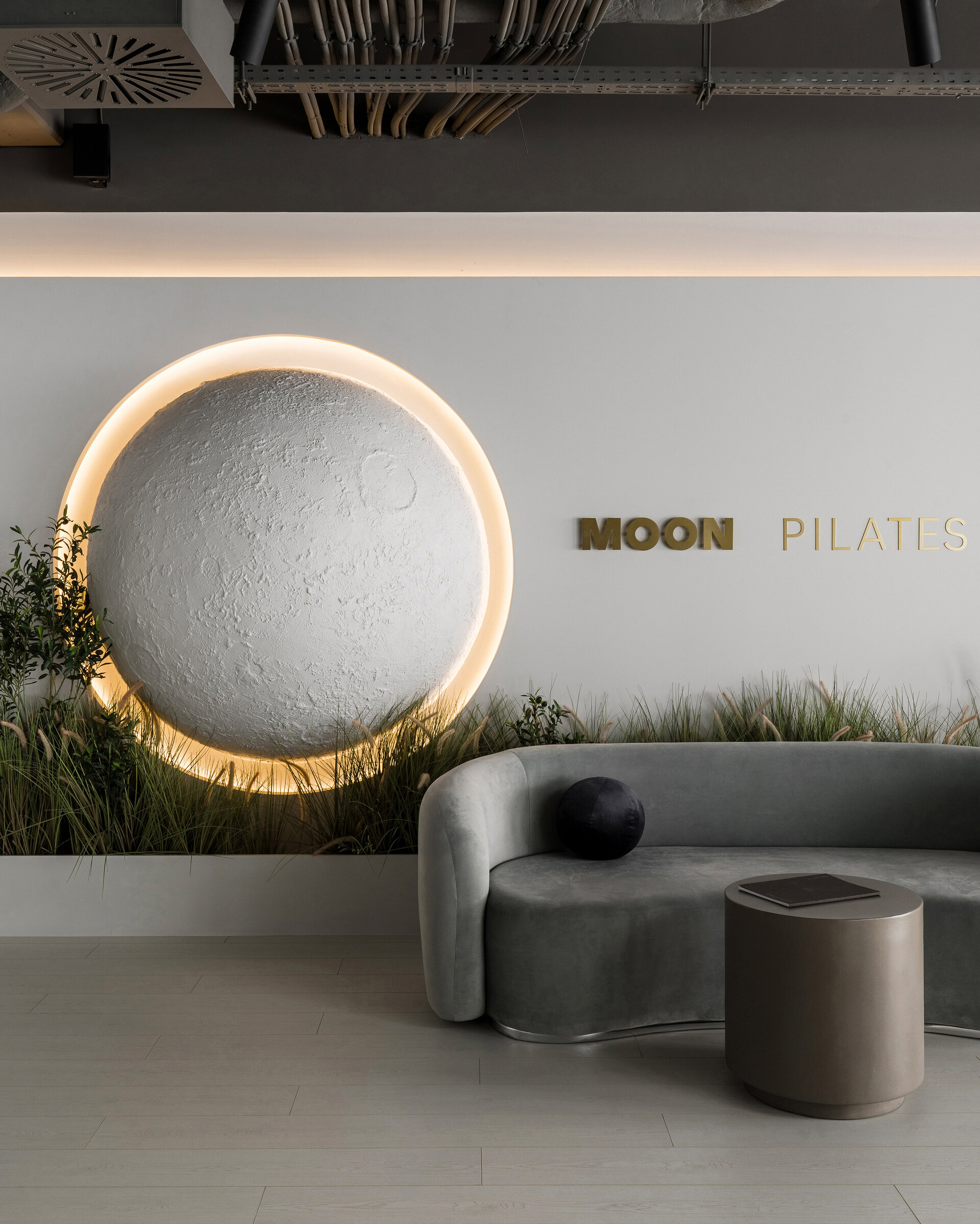
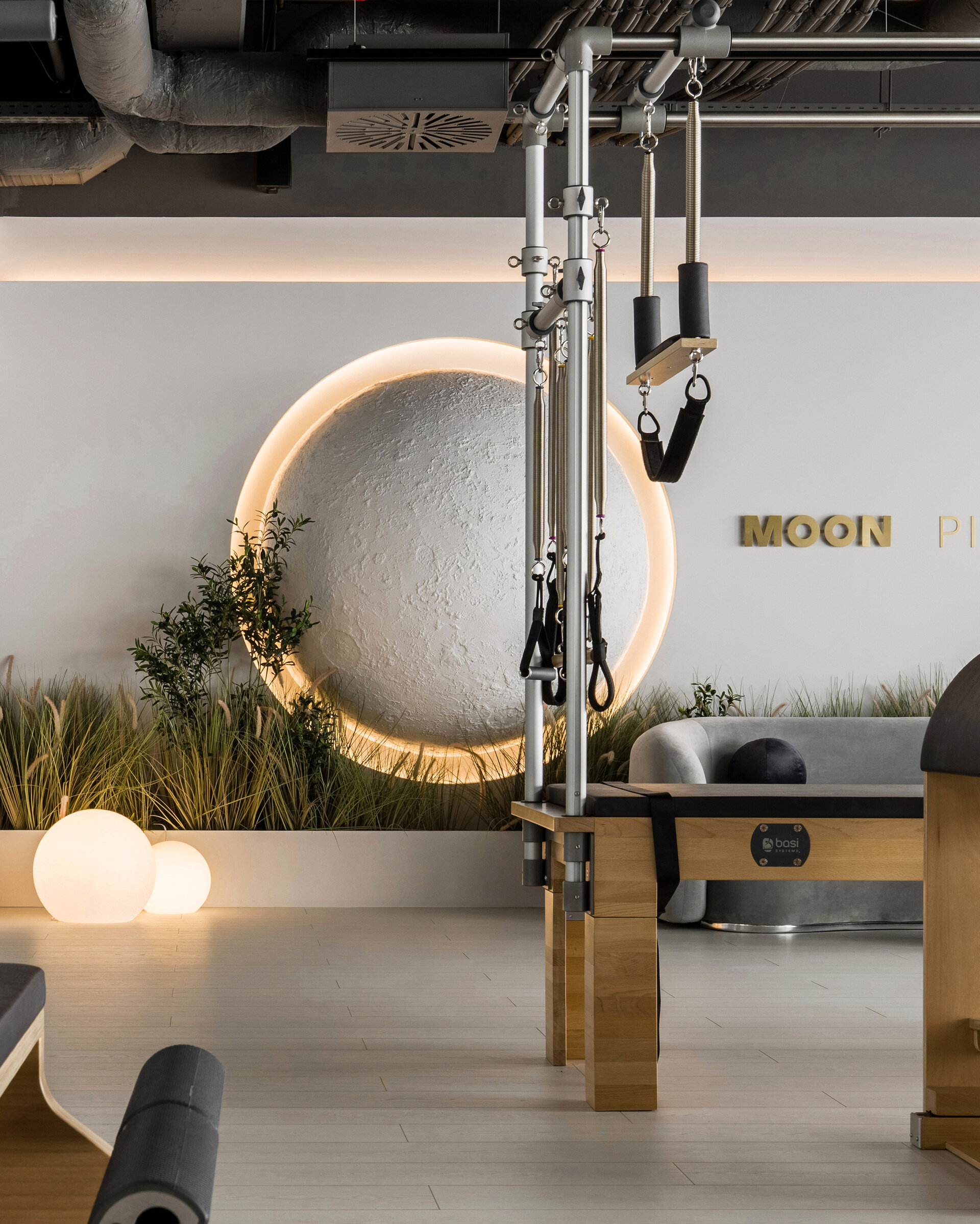
The conceptual foundation of the design was built around the Moon, a poetic, symbolic, and scenographic object. This idea materializes in the space through a large, semi-spherical structure, which serves not only as a visual feature but as a compositional anchor around which the entire layout revolves. Strategically positioned and illuminated from a hidden cove with warm LED lighting, the Moon adds visual gravity to the space.
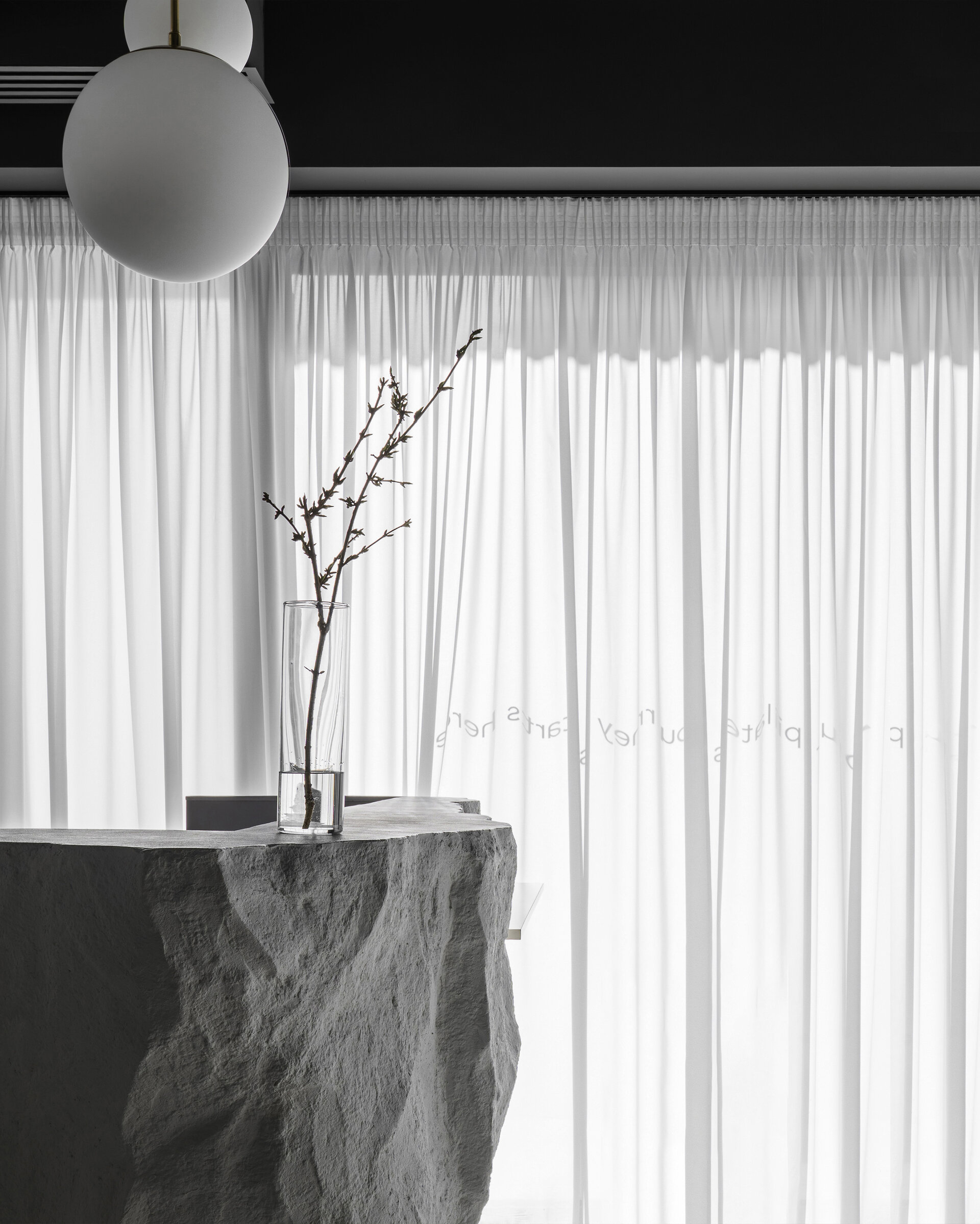
A defining architectural gesture lies in the compositional relationship built between three distinct elements: the sculptural reception desk, the hemispherical moon volume, and a wall with a circular cut-out. Together, they establish a symbolic axis that structures the space and generates a coherent perception and orientation experience.
This relationship reveals itself from the moment of entry, through the presence of the reception, a sculptural, mineral element whose geometry creates a controlled contrast with the otherwise clean-lined environment, visually anchoring the composition in the realm of materiality.
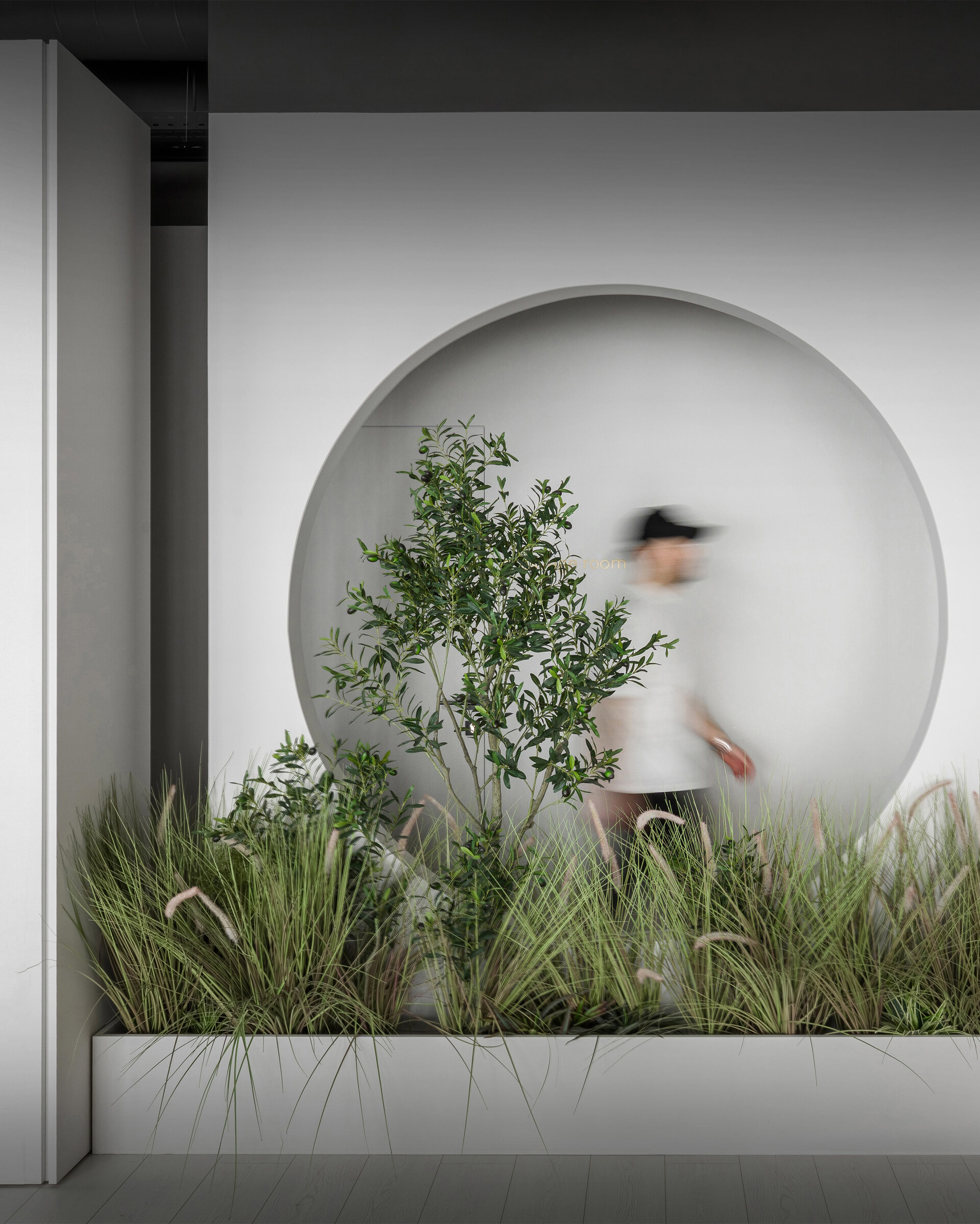
At the opposite end of this visual path lies the circular-cut wall, which separates the training area from the changing rooms through a gesture of controlled openness: a circular void that creates a subtle link between the two functional zones. The wall becomes a visual counterweight, a “negative” to the moon’s “positive” volume.
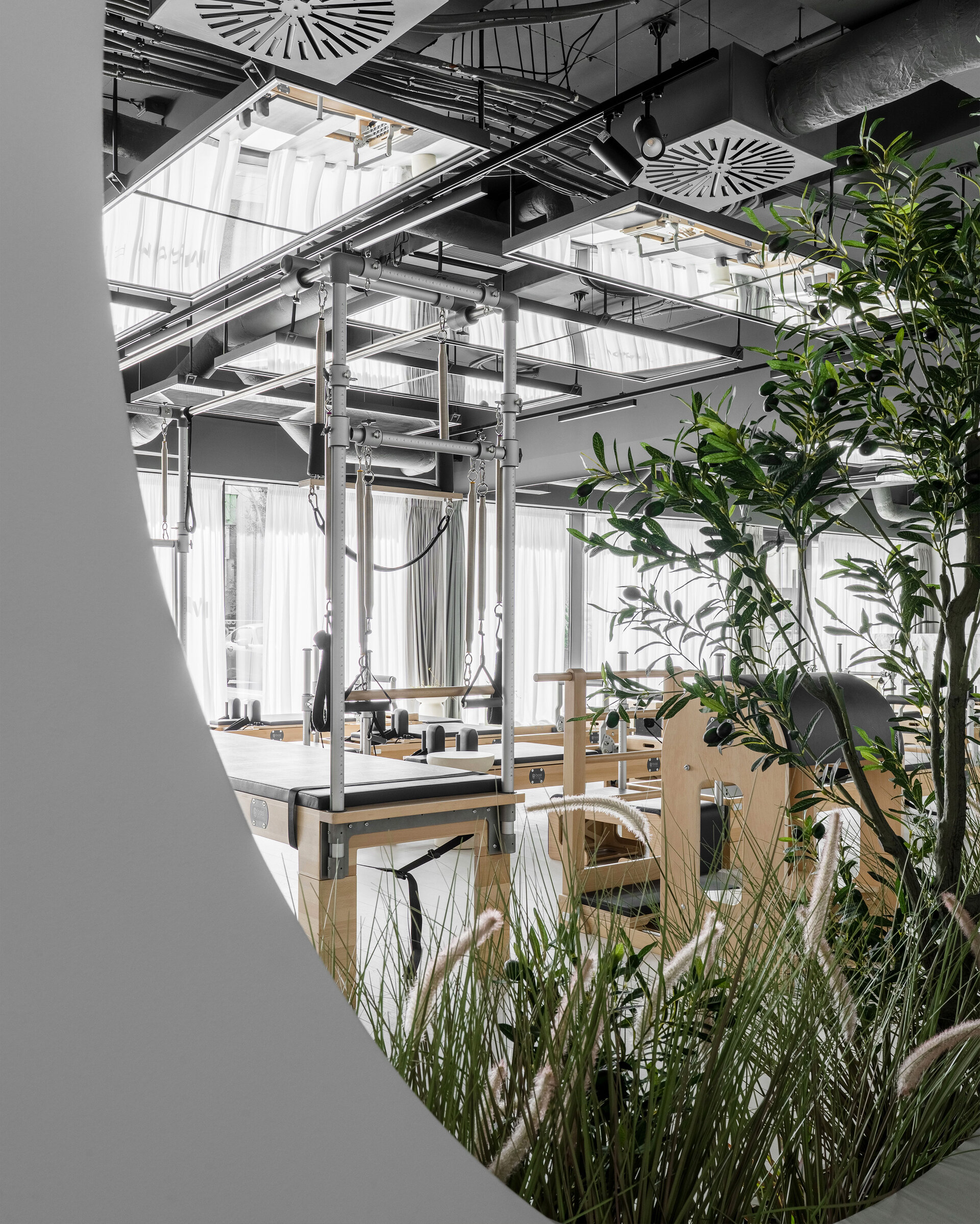
To extend spatial perception and add a functional element to pilates practice, large mirrors were placed not only vertically along the walls but also horizontally on the ceiling. This authentic solution introduces a new perspective, particularly suited for this type of activity.
From a materiality standpoint, everything belongs to a coherent system where form, function, and concept meet in a space that not only accommodates an activity, but expresses it.
The result is not merely a pilates studio, but a space finely tuned around movement, light, and symbolism, emerging from an integrated and thoughtful approach to interior architecture.
Corporate and Retail Space Design

- Seen Users Flagship Store
- Nostro Spazio
- Alezzi Offices
- Pago Bucharest Office
- Of Love and Yoga
- Artisan HUB
- Information, preparation and response center for incidents, radiological and nuclear events - CIPRIERN
- Bucharest Business Park. Lobby
- HN Services. Premium Plaza
- Beautik
- E.On showroom interior design
- HBC Lobby design
- Office design for the Embassy of Ireland
- Kinstellar office design
- Bank HQ Design
- BLUM Romania Showroom Design
- Apa Nova Bucharest Office Design - Ștefan cel Mare Building - 3rd Floor
- Apa Nova Bucharest Office Design - Ștefan cel Mare Building - 5th Floor
- V.I.P. Collection Center Regina Maria
- Ellen Recordings Music Studio
- United Drive workspace
- Dent Estet Clinic
- The Attic from Rabat 11th
- Takeovers Studios - Dorobanți 164
- Prima Vista - sales offices
- Green Day Spa
- DreamPrints
- Moon Pilates
- Born2Bake
- Designed with Purpose: L’Oréal Romania’s New Office Landscape


