- Nomination for the “Interior Space Architecture / Exhibition and Scenography Design” section
A World in a Negative
Authors’ Comment
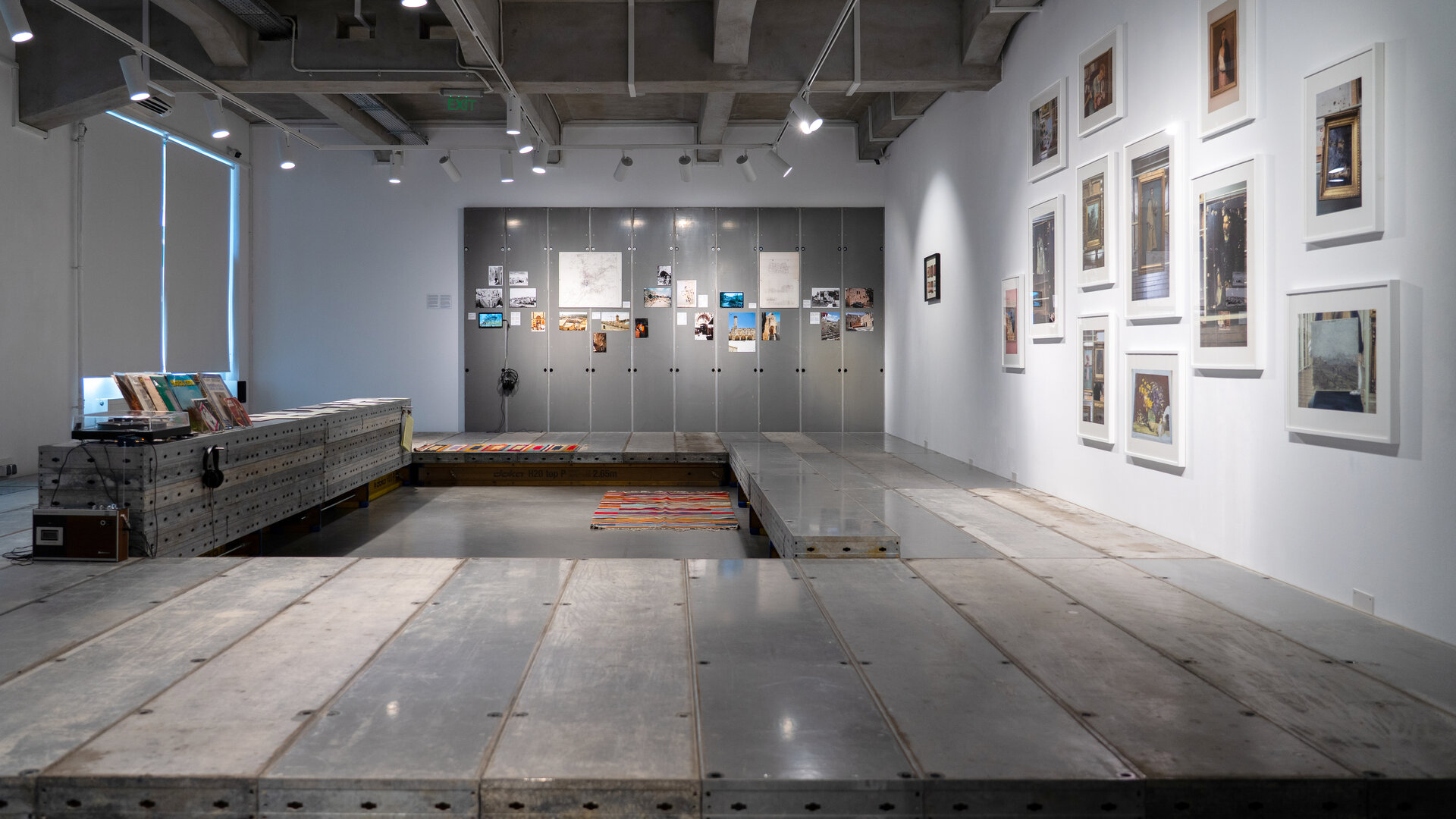
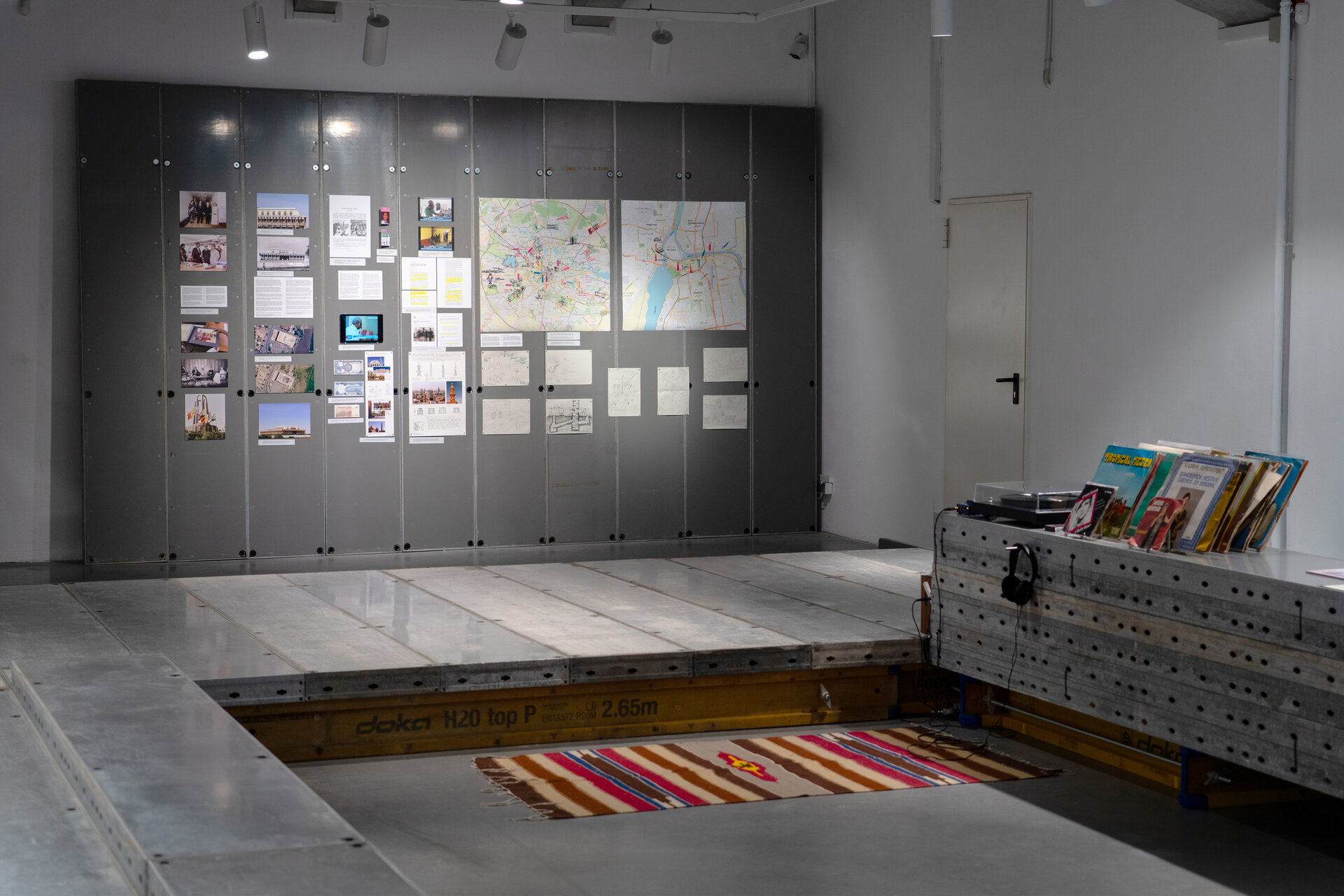
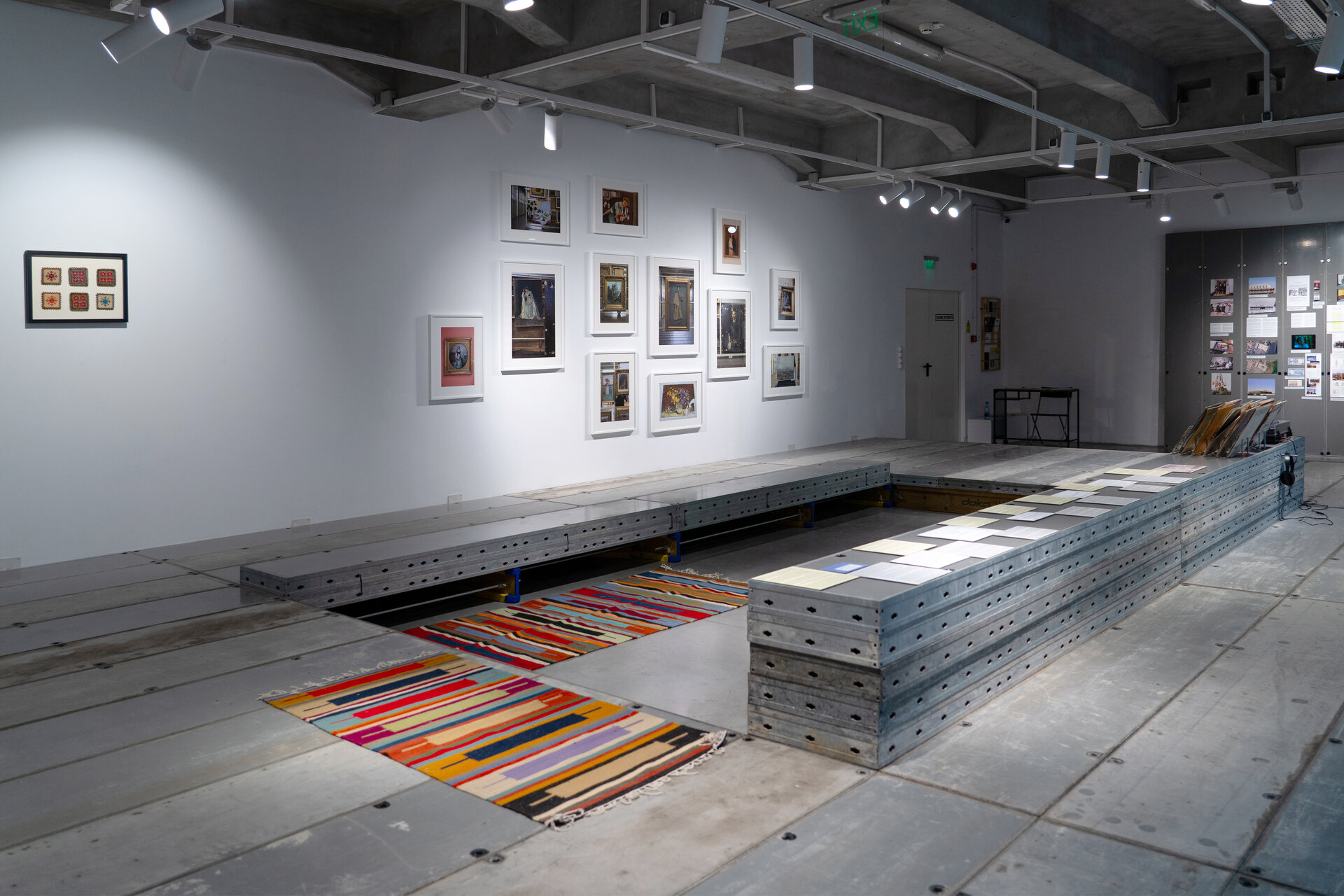
At the intersection between exhibition design and spatial installation, the project proposes an exhibition space cast in negative: concrete formwork panels compose a continuous horizontal surface with a void at its centre, a small agora shaped by absence that echoes the National Assembly designed by Cezar Lăzărescu in Khartoum in the 1970s.
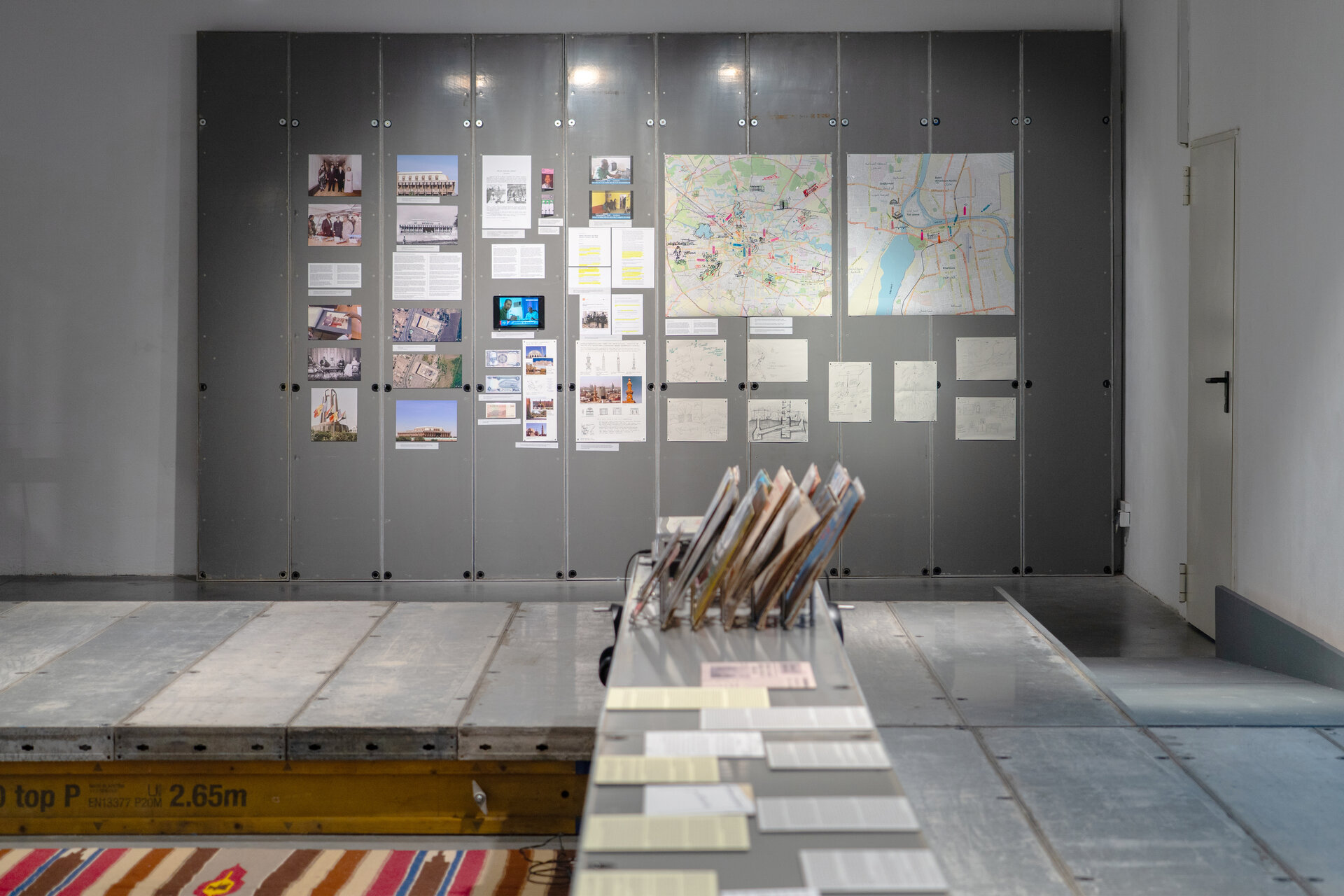
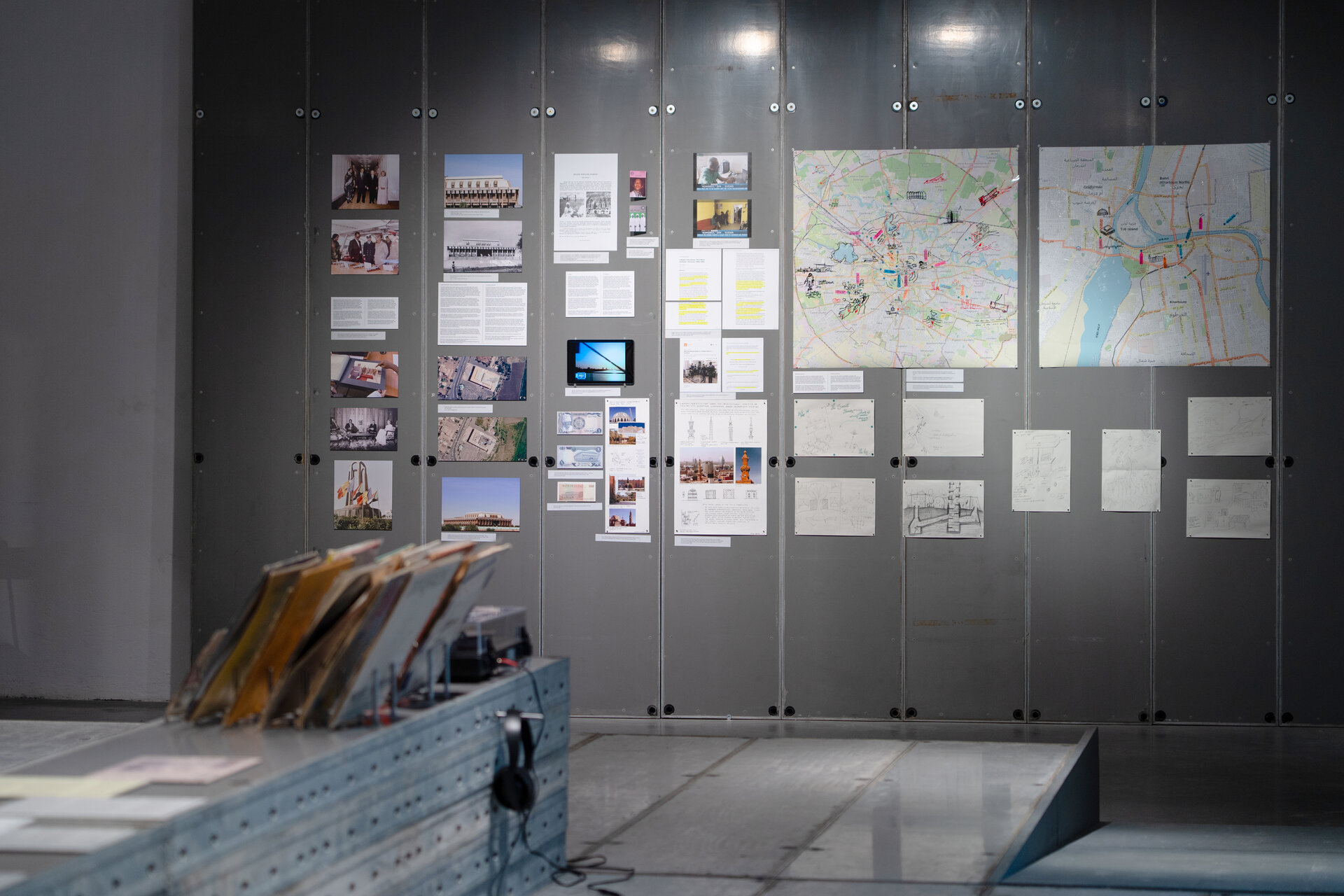
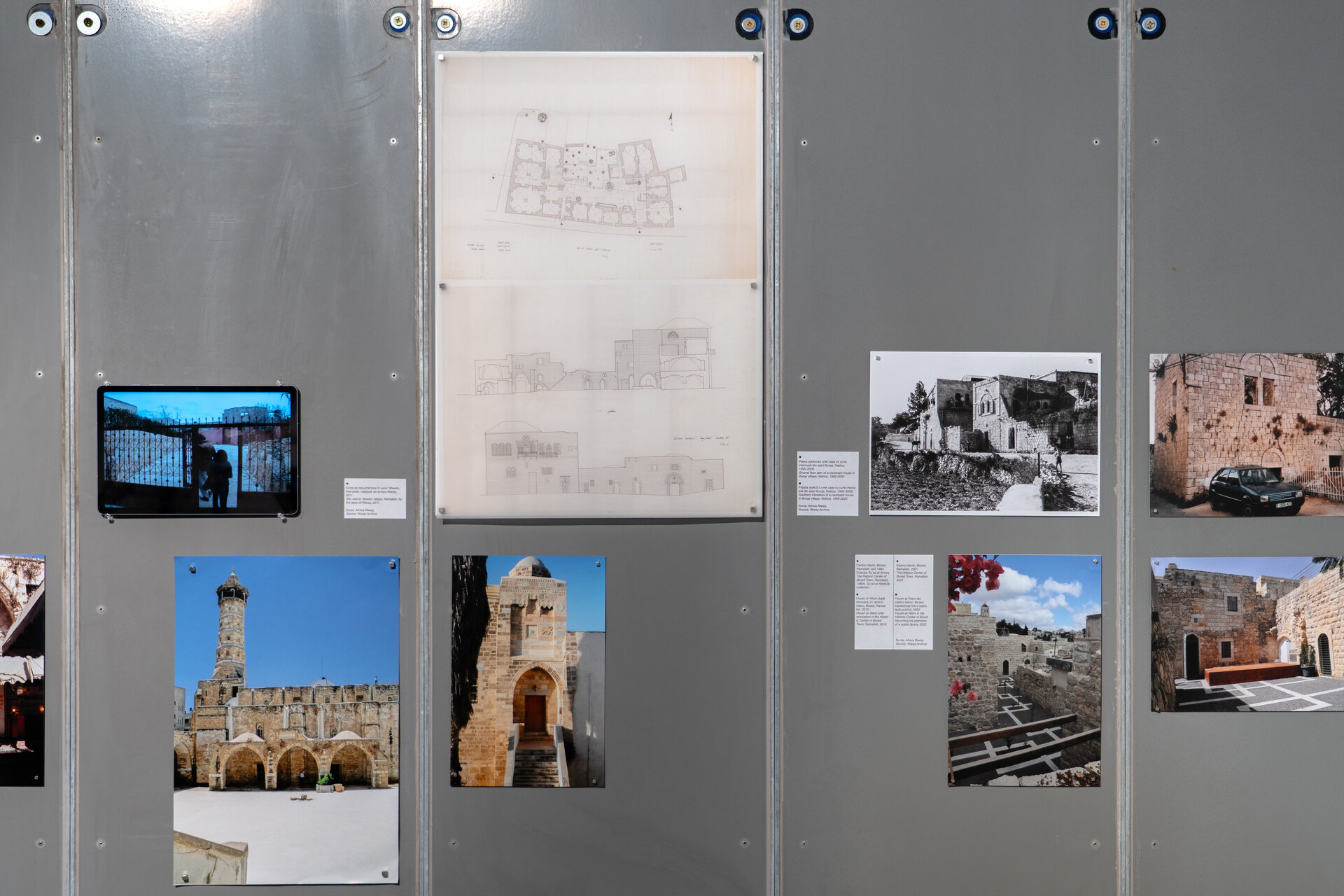
The exhibition ‘A World in a Negative’ explored the connections between Romania and Sudan from diplomatic, economic, artistic and archival perspectives. The spatial intervention started from one specific moment in this shared history: the construction of the National Assembly in Khartoum, designed by Cezar Lăzărescu. The building's architectural expression and construction techniques are emblematic of how representative public buildings were made in Romania in the early 1970s. The project thus points to a link between Romanian socialist architectural production and forms of political organisation in Sudan, as well as to the technological, economic and cultural exchanges between the two countries in the 1970s and 1980s.
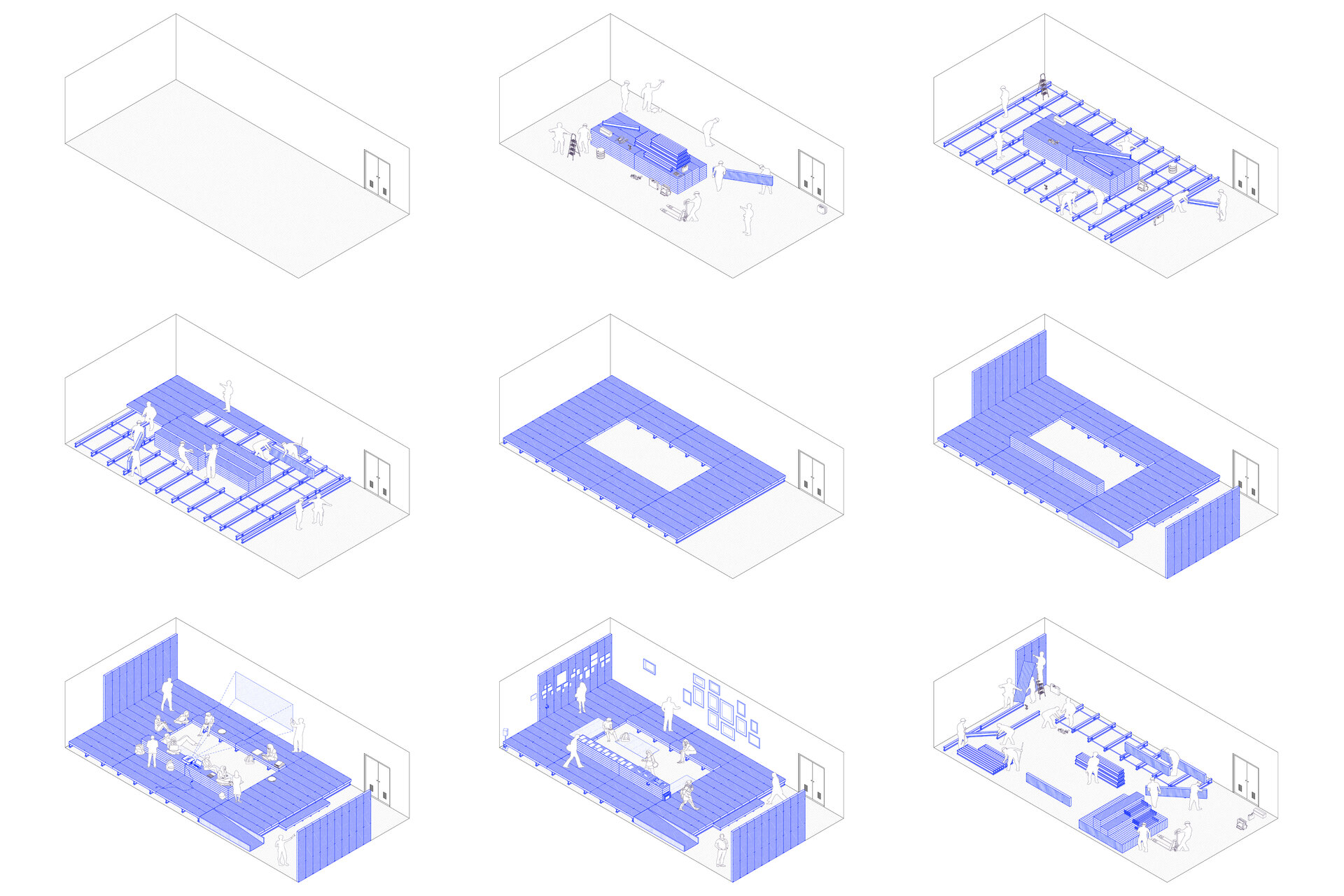
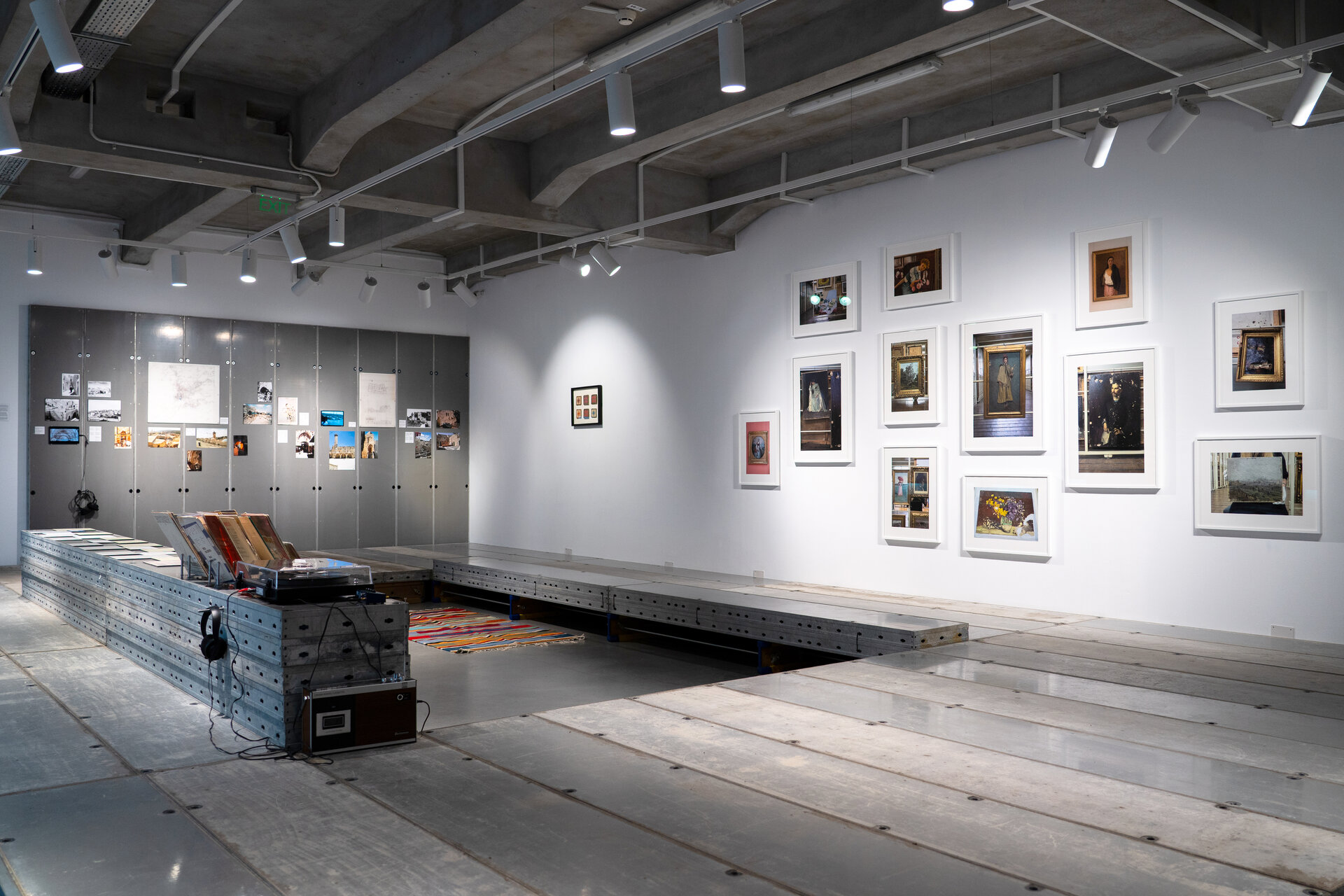
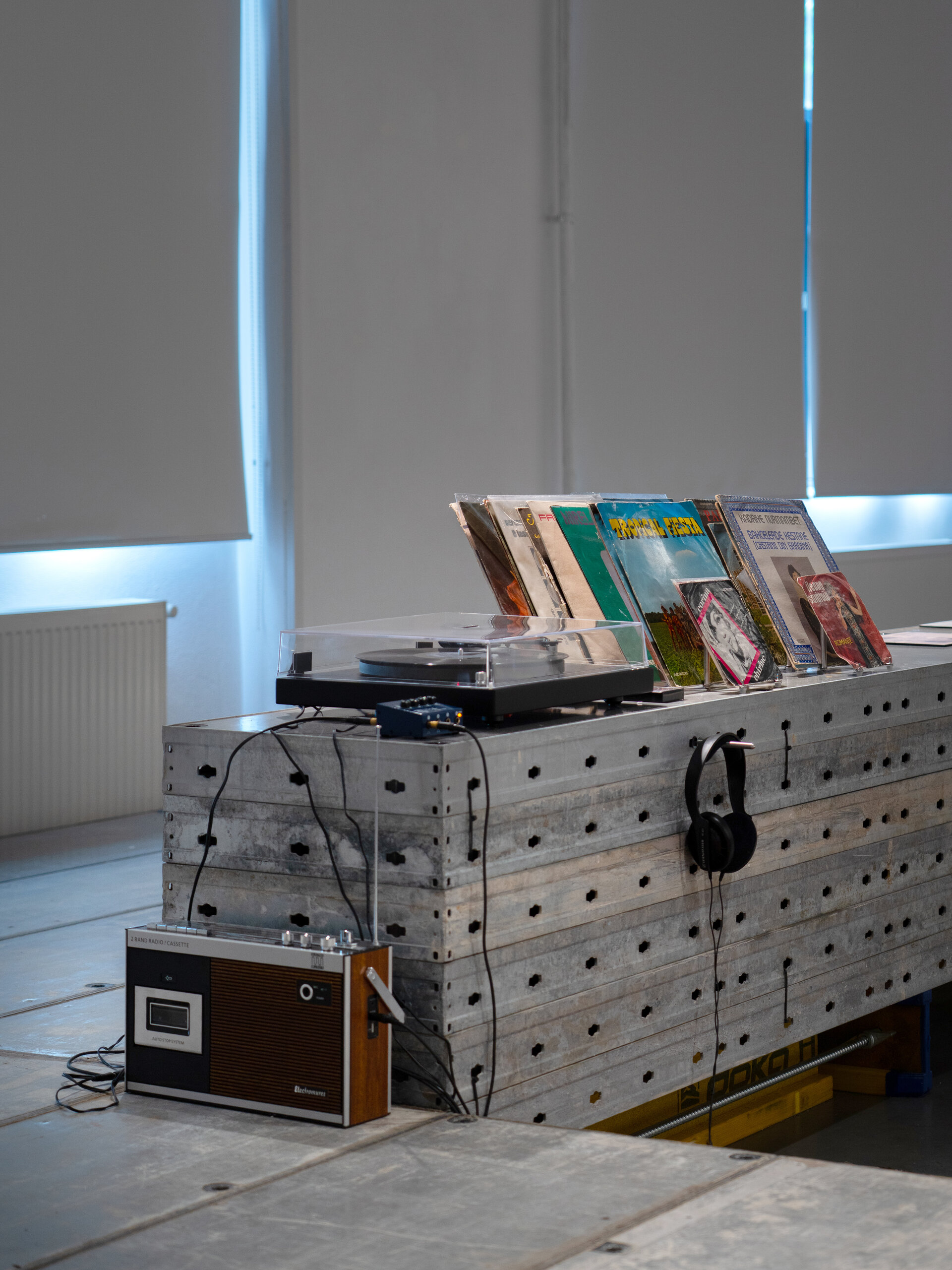
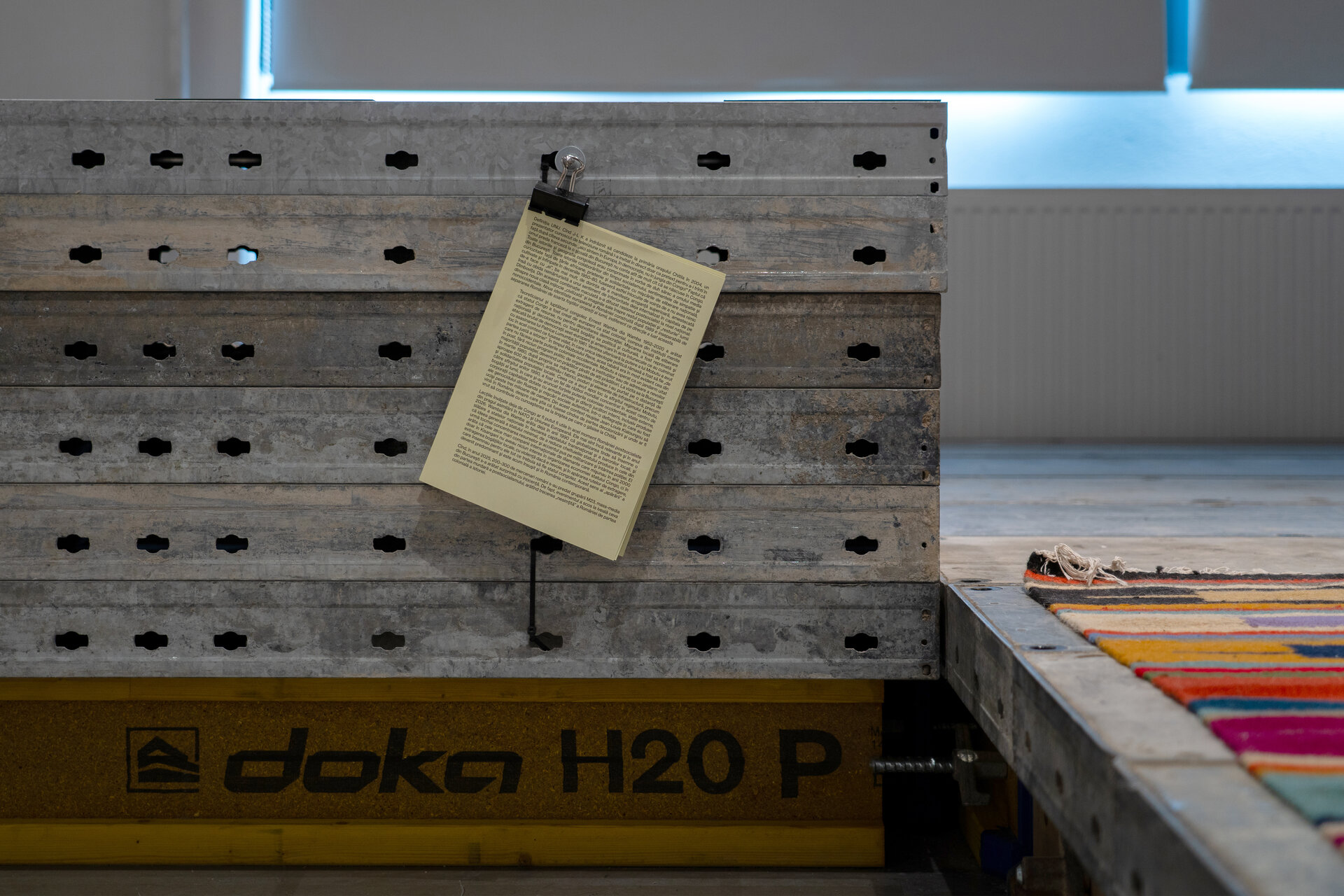
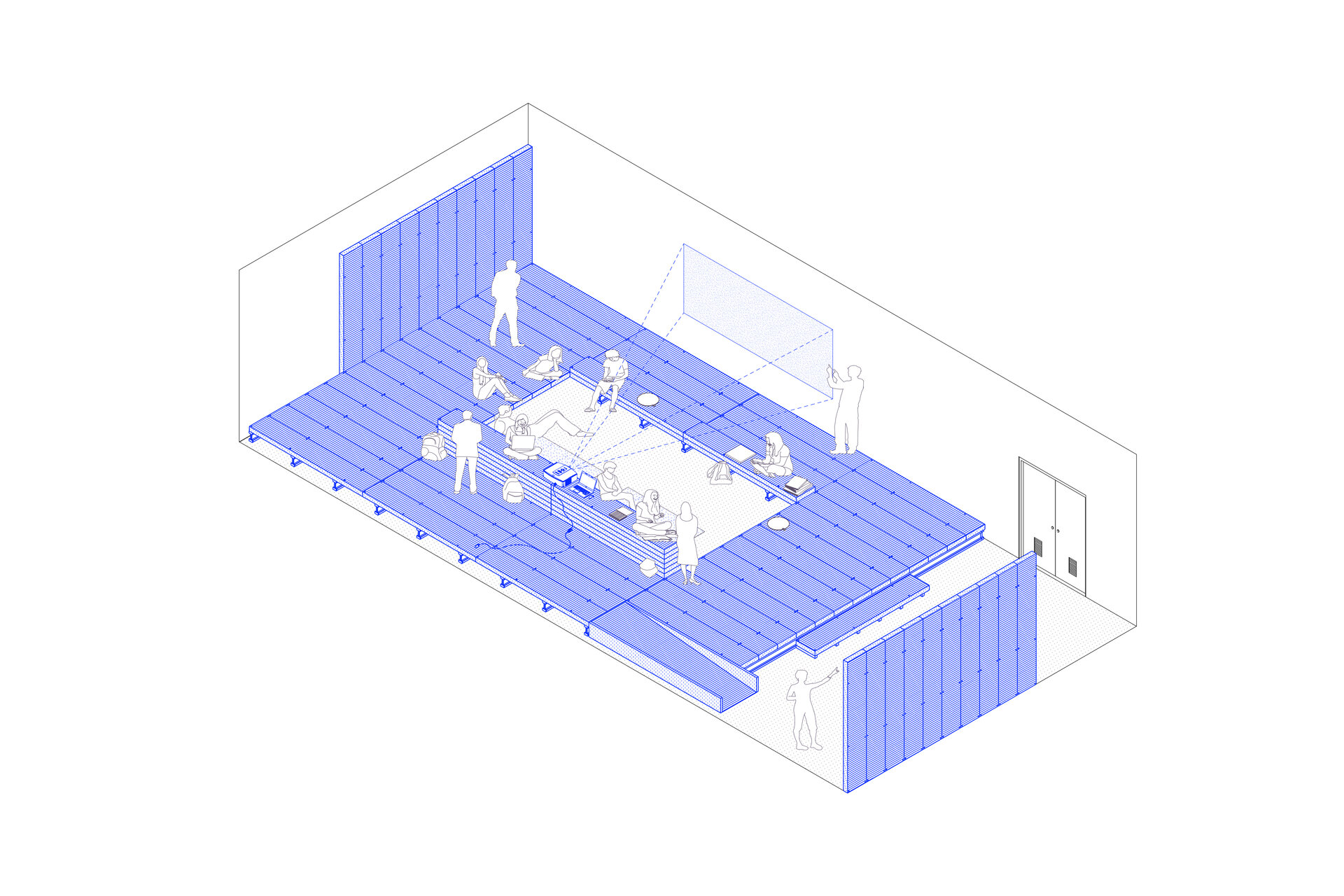
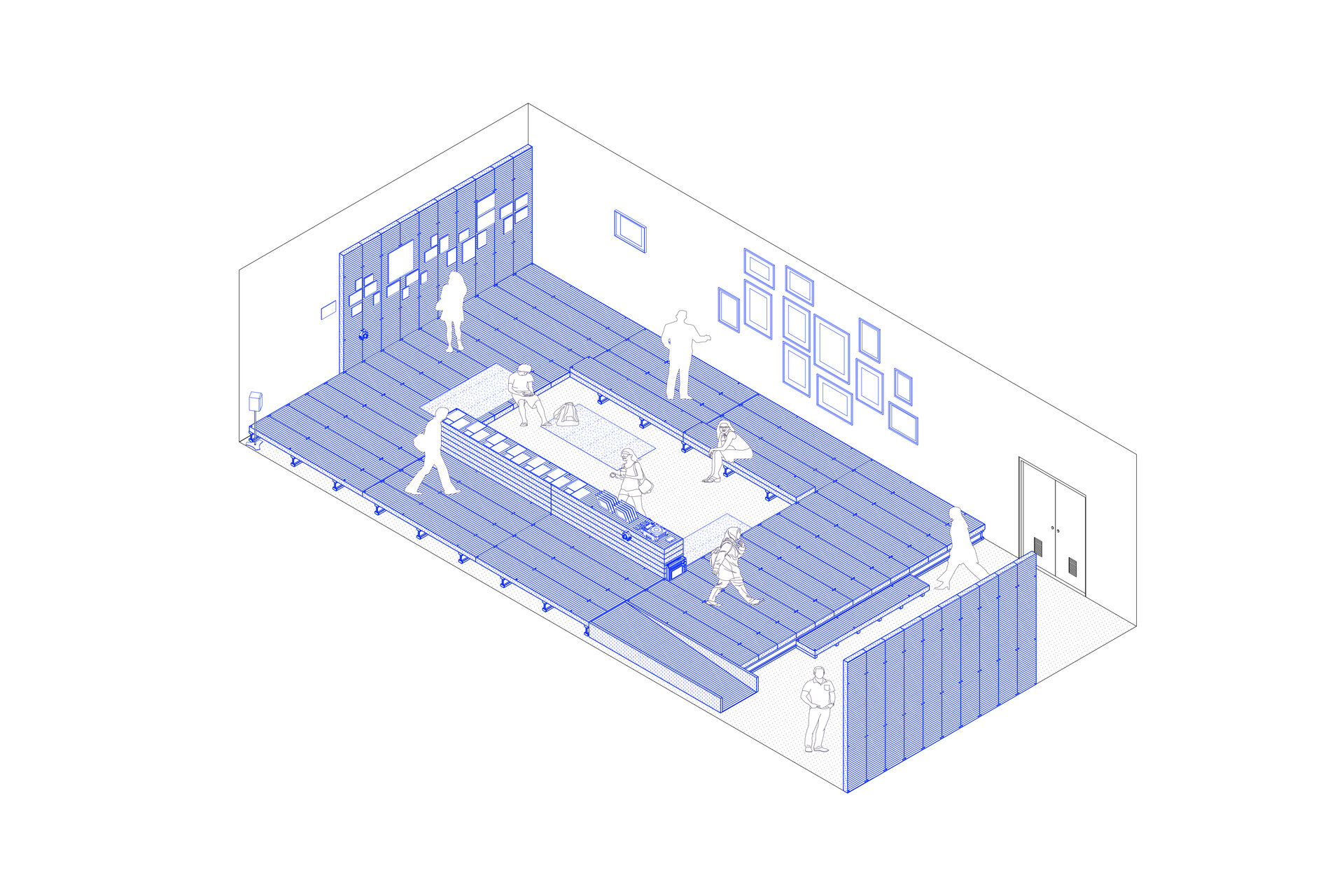
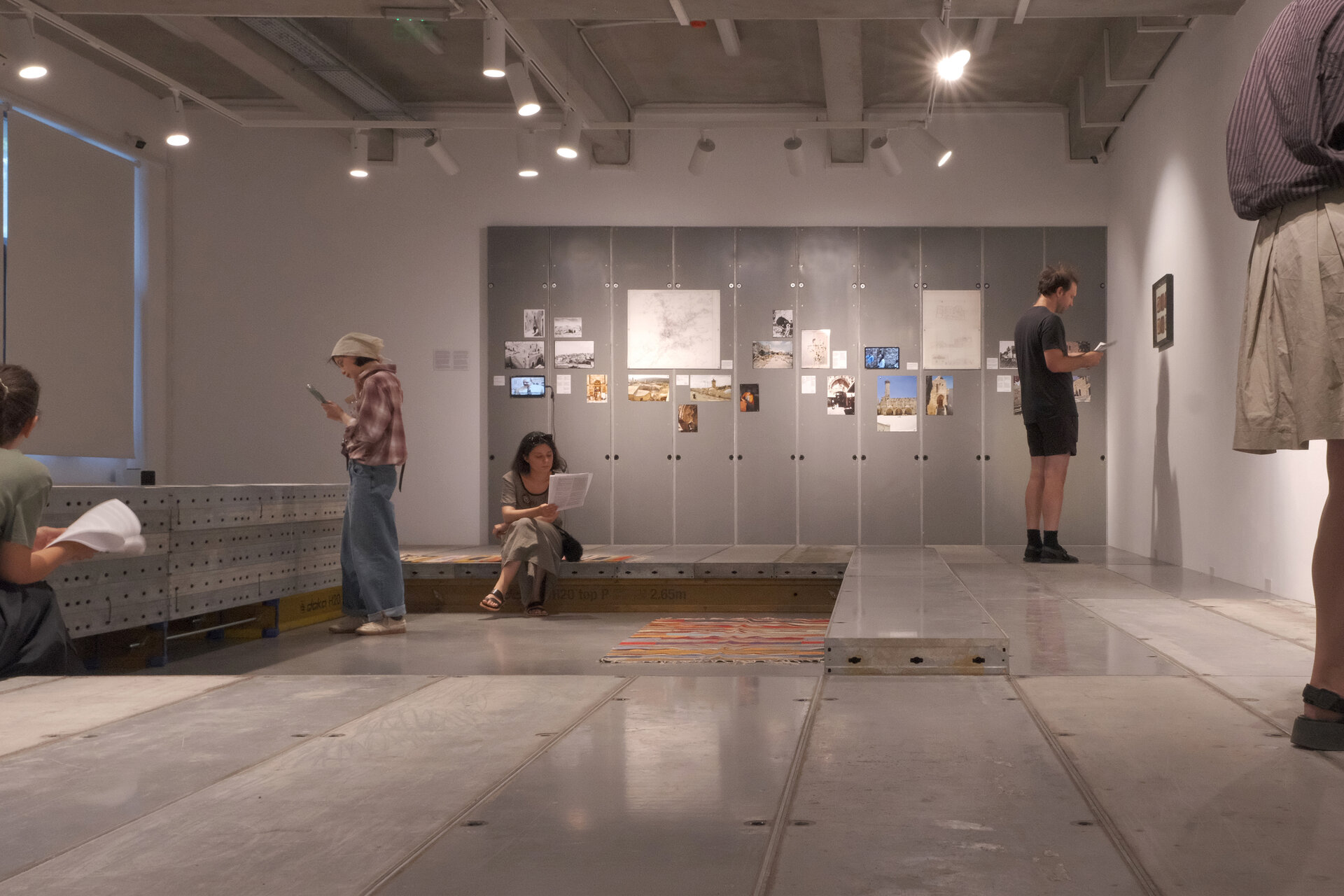
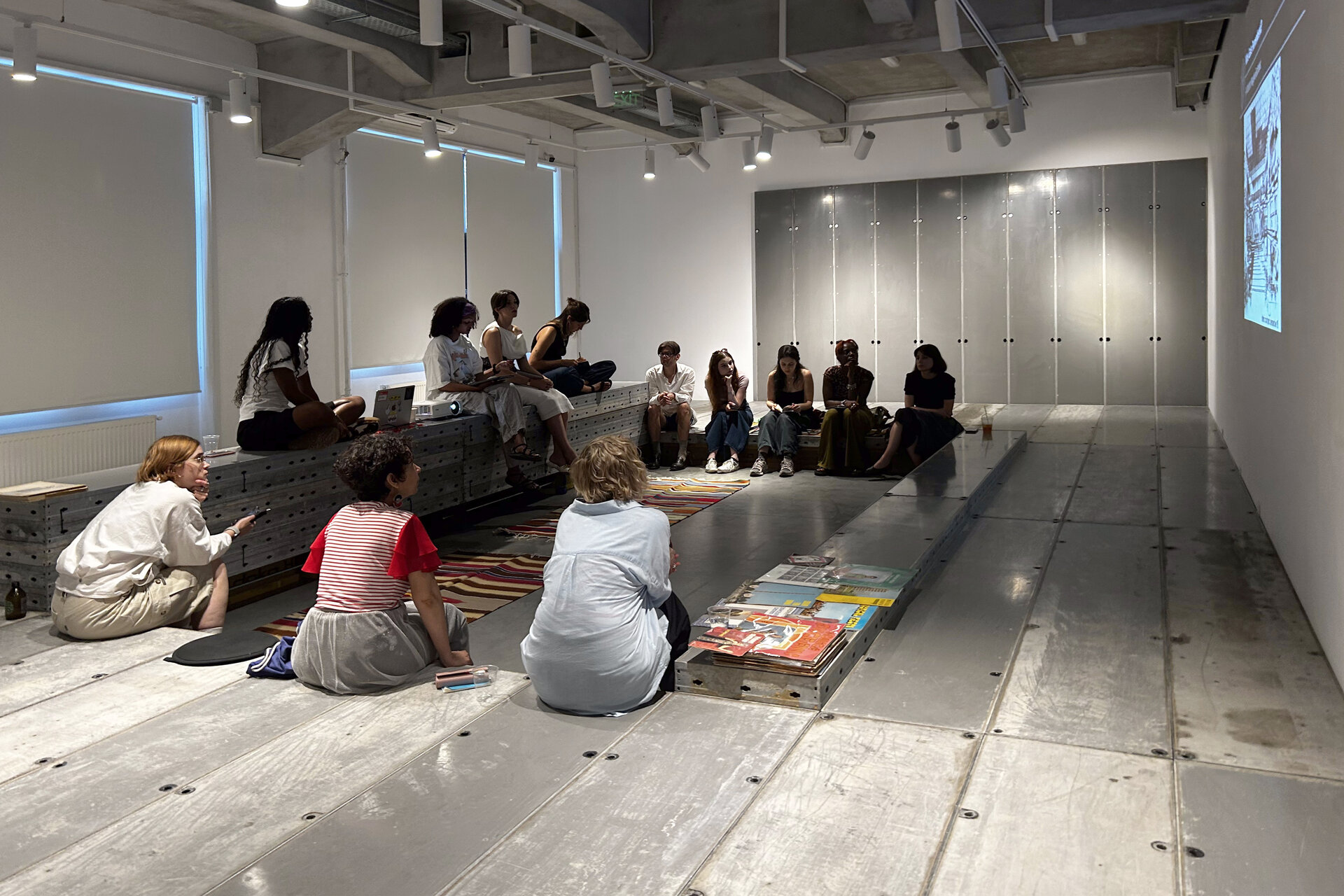
The installation was built from a finite number of prefabricated elements commonly used as concrete formwork. They are a "negative" of a standardised building process, applied globally today and related to the prefabrication techniques used in the past to build the Assembly in Khartoum. Arranged across the exhibition space, the panels formed a continuous horizontal plane, a carpet-like layer slightly raised above the existing floor. At its centre, a number of elements were removed to create a void: a negative space acting as a small agora, proposing a way of relating to the museum as a place to encounter and practice collective forms of solidarity.
Formed around the absence rather than the presence of material, this informal gathering place reflects on spatial configurations that enable assembly, exchange and collective action. The raised floor also recalls premodern forms of assembly, in which the ground itself is a multifunctional surface, used for walking but also for sitting and gathering.
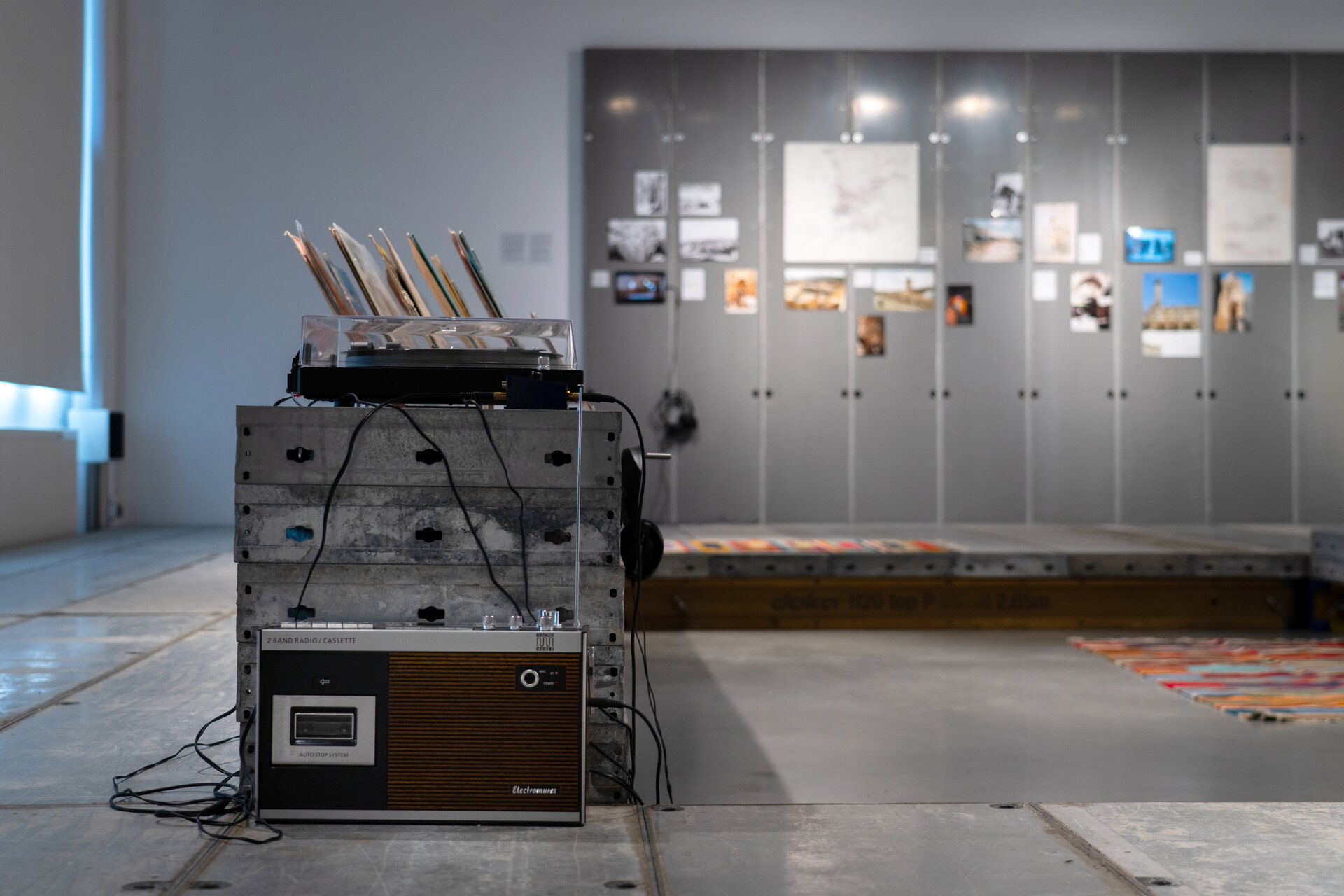
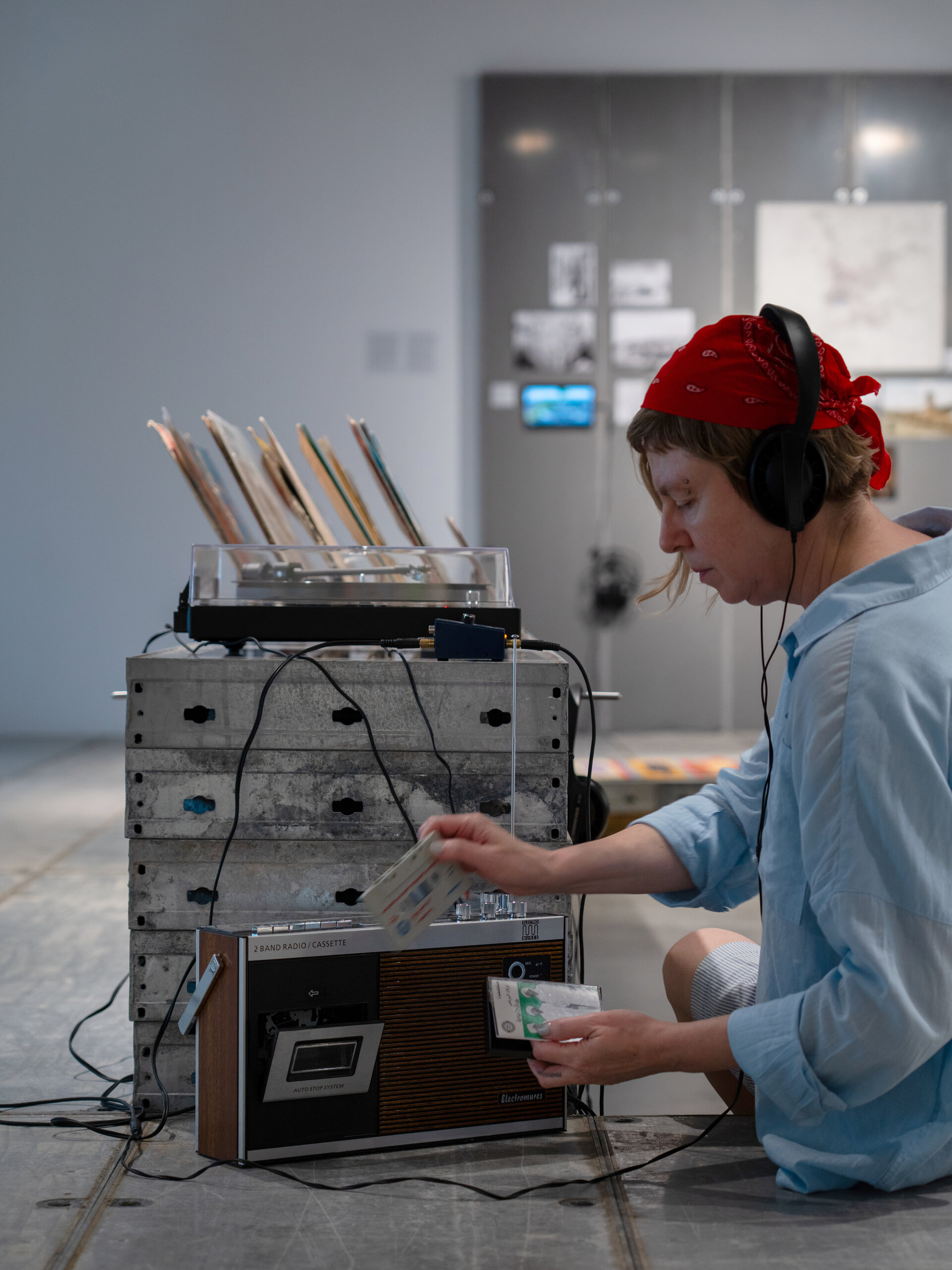
During the exhibition, the central space hosted a series of collective activities, including a workshop coordinated by Space Black and Chlorys and the meetings of a book club organised by NAZRA. Between these events, it remained a place where visitors could sit down, read, listen to the records in the audio section and take a closer look at specific parts of the exhibition.
All formwork components were rented and returned to the construction industry's supply chain after the exhibition closed. As a result, the installation left no waste and no trace, reducing the ecological footprint of this temporary exhibition.
Exhibition and Scenography Design

- Transilvania | Extravaganza
- A World in a Negative
- Why “We Should All Be Feminists”
- The Bucharest That Never Was
- The Infinite Dinner
- Pop-up Gallery at Point - two exhibitions
- Wet Snow
- Architecture of experience: Nijinski · Agony and Ecstasy
- Sides of interconnected learning
- BDF Professional / International Design / UAUIM
- Radical Domesticity
- Cella/kamera
- OFFSIDE / Plans, goals, points
- Rhythmic Stress
- BDF Young
- Highberg Pavilion
- “Lights and Shadows” Temporary Exhibition
- Show me the way
- “Balnea Daciae” Temporary Exhibition at Pompeii


