- Nomination for the “Interior Space Architecture / Exhibition and Scenography Design” section
Why “We Should All Be Feminists”
Authors’ Comment
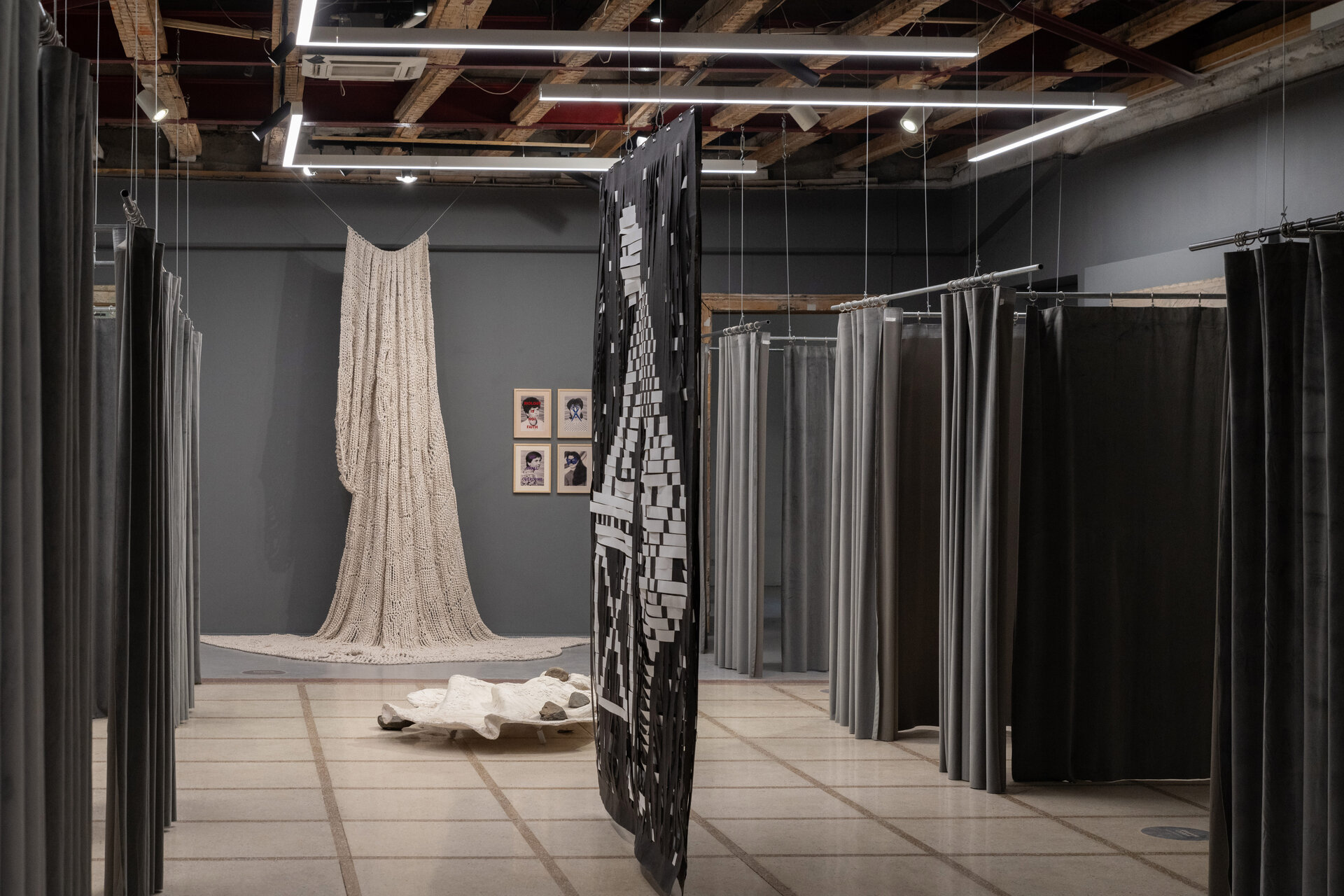
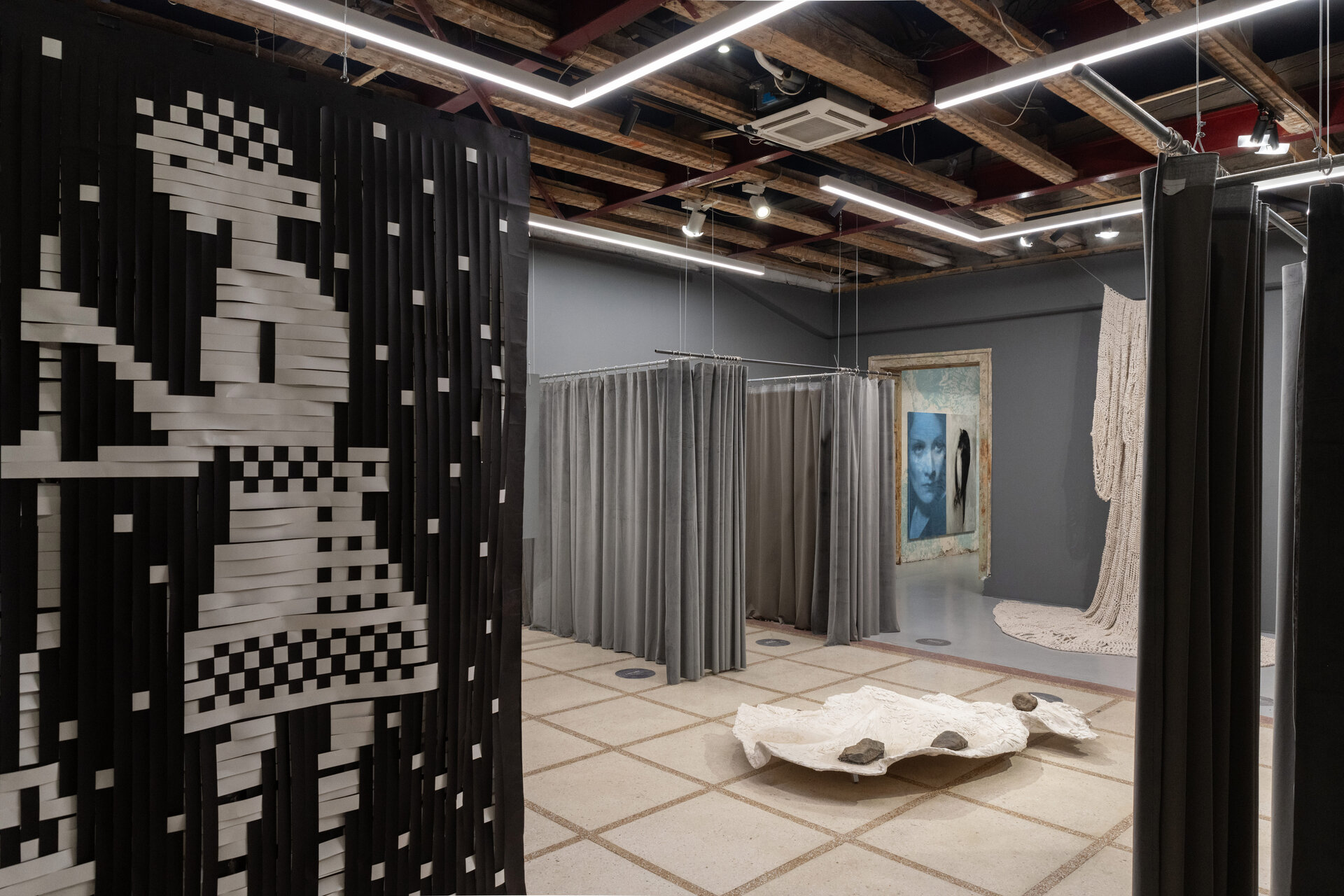
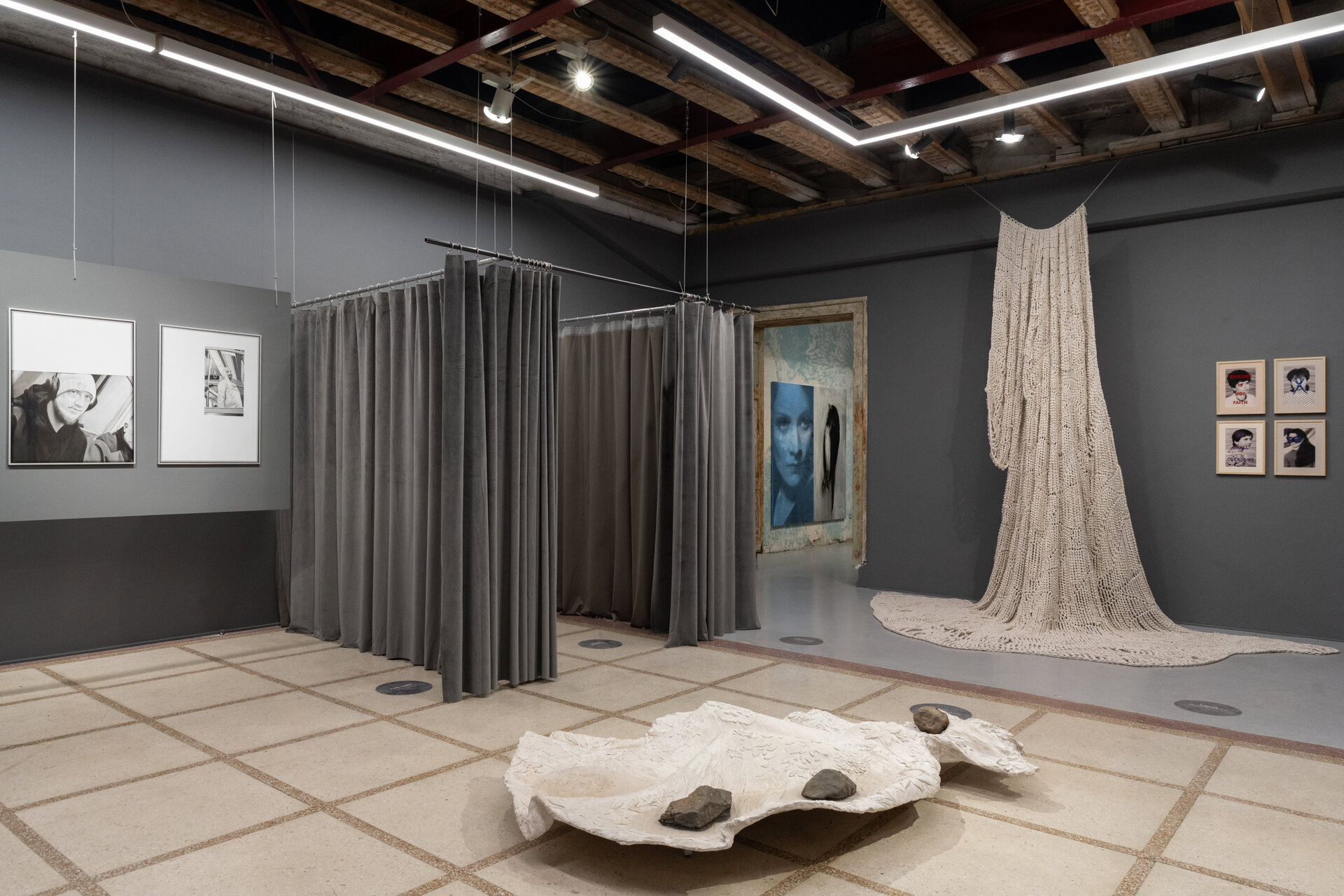
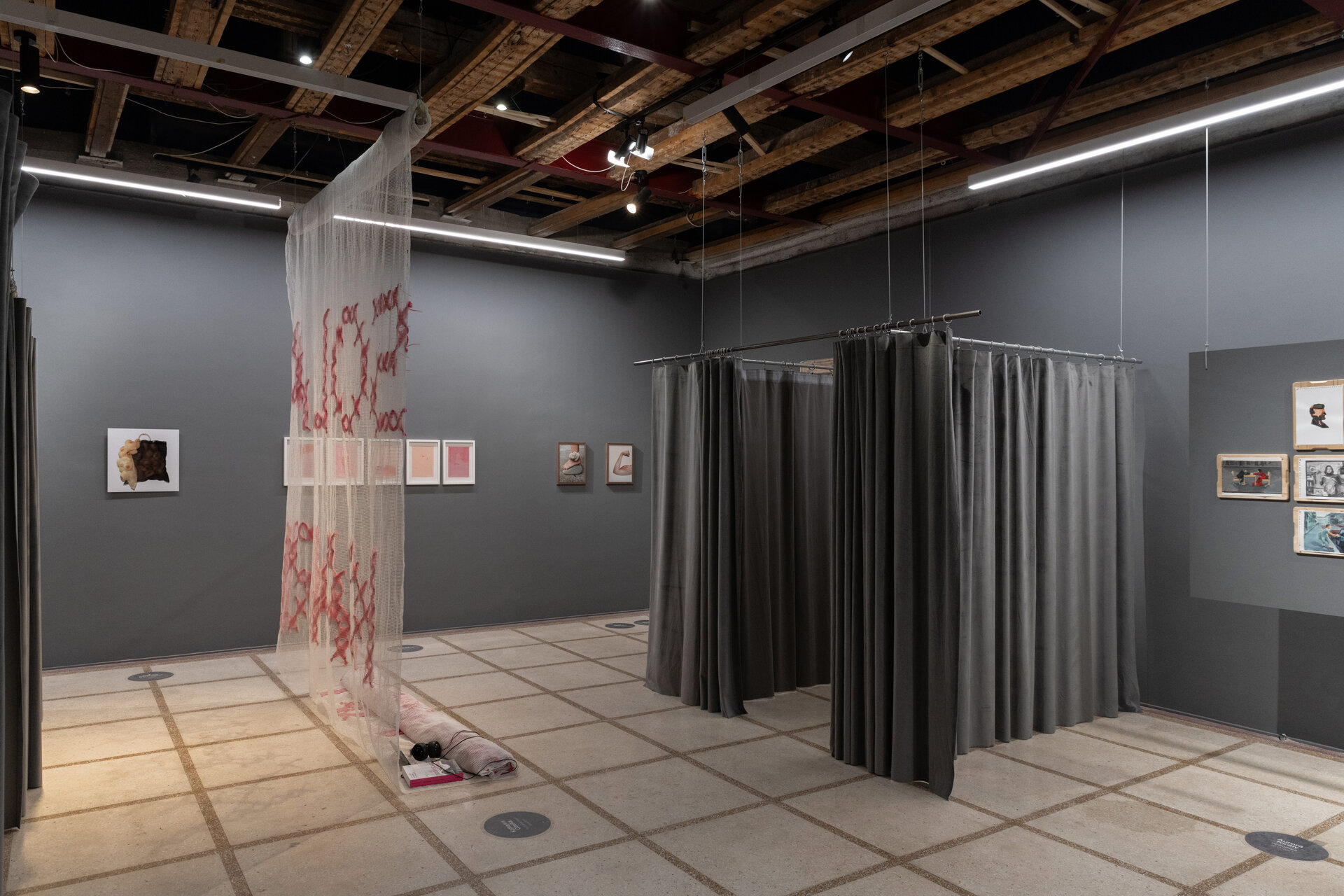
Conceived for the group exhibition Why “We Should All Be Feminists”, the exhibition design translates the curatorial premise into a spatial experience that encourages participation, dialogue, and critical reflection. Inspired by Chimamanda Ngozi Adichie’s essay, the exhibition approaches feminism as an invitation to rethink equality, diversity, representation, and social justice in the contemporary political climate.
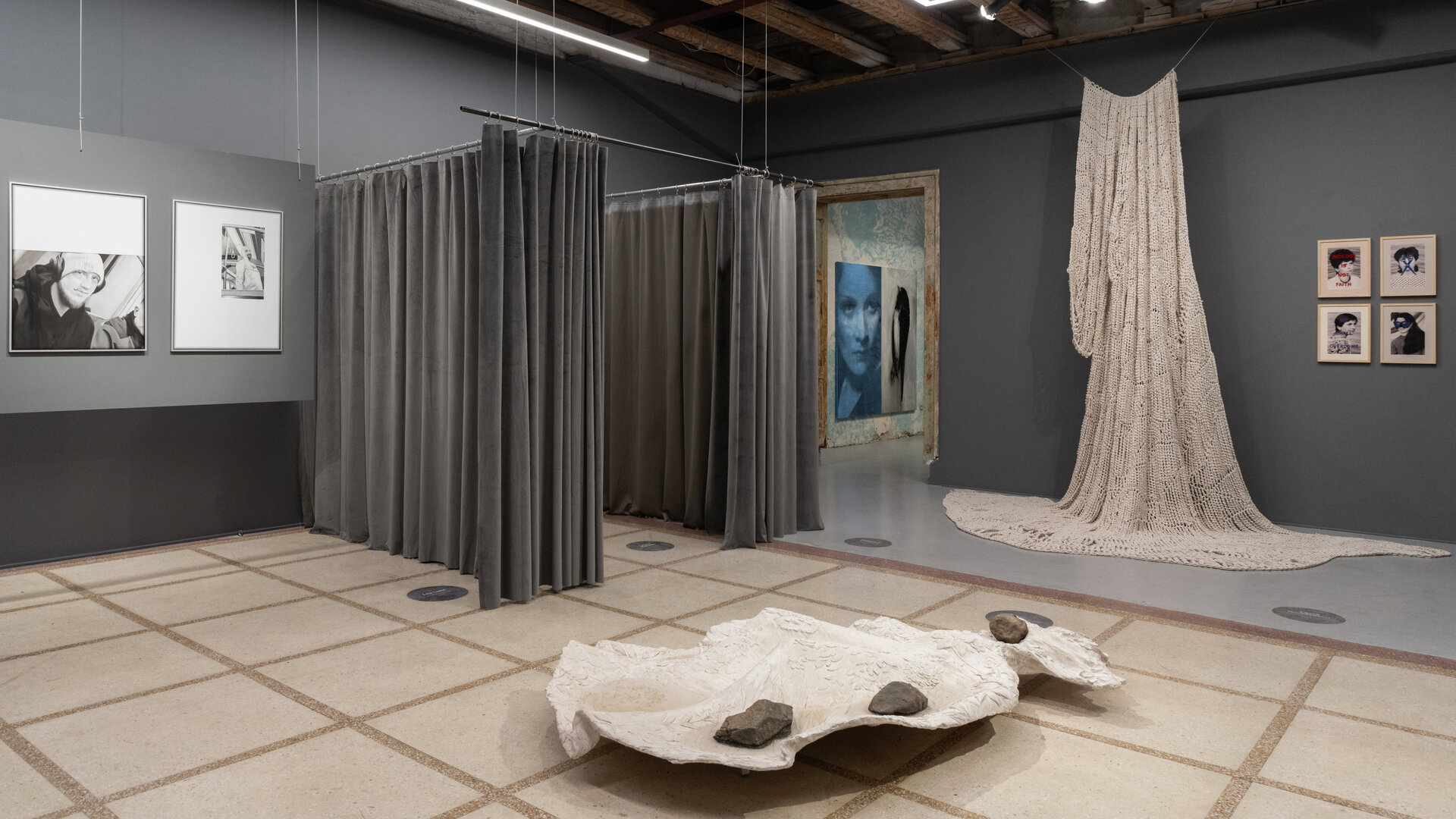
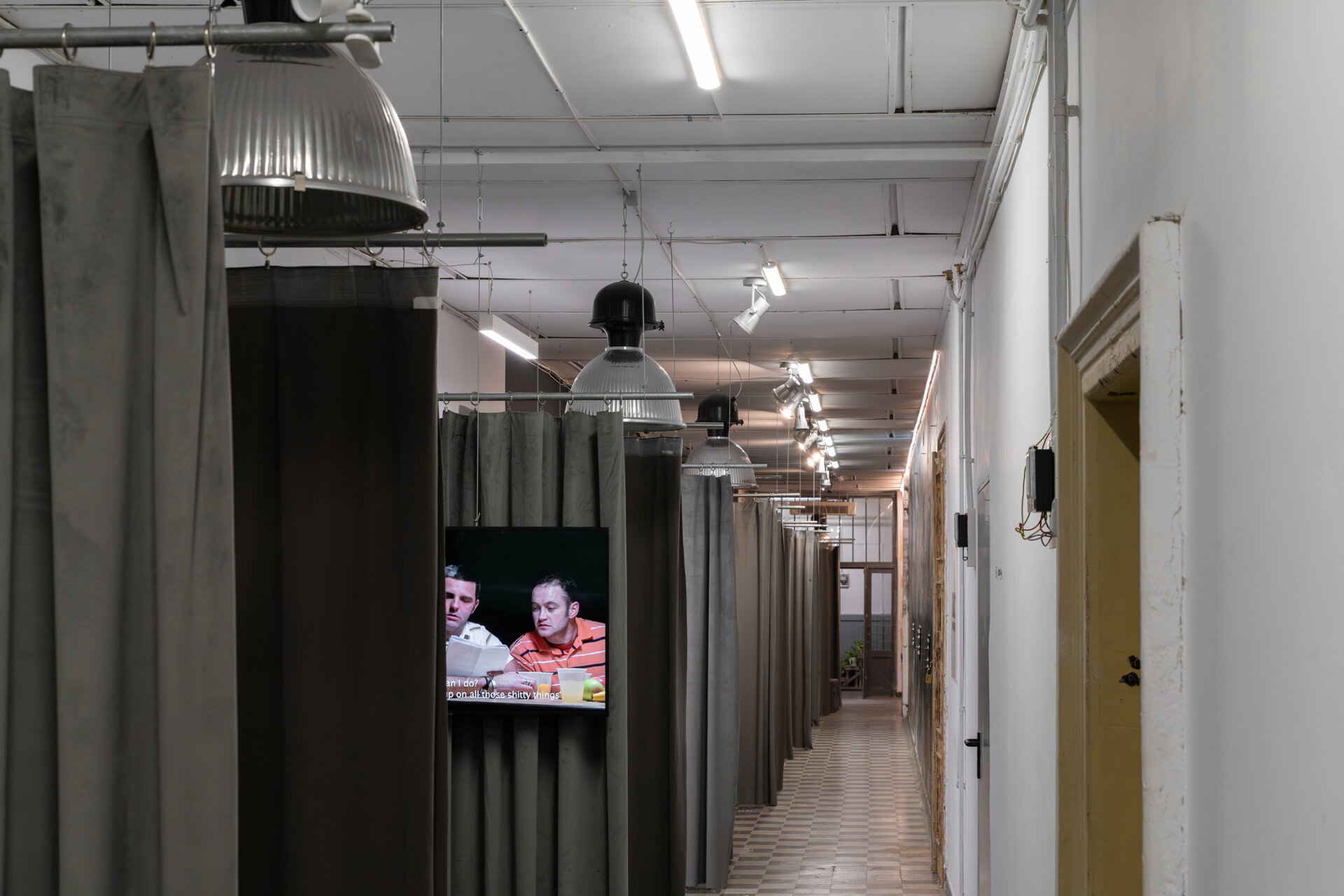
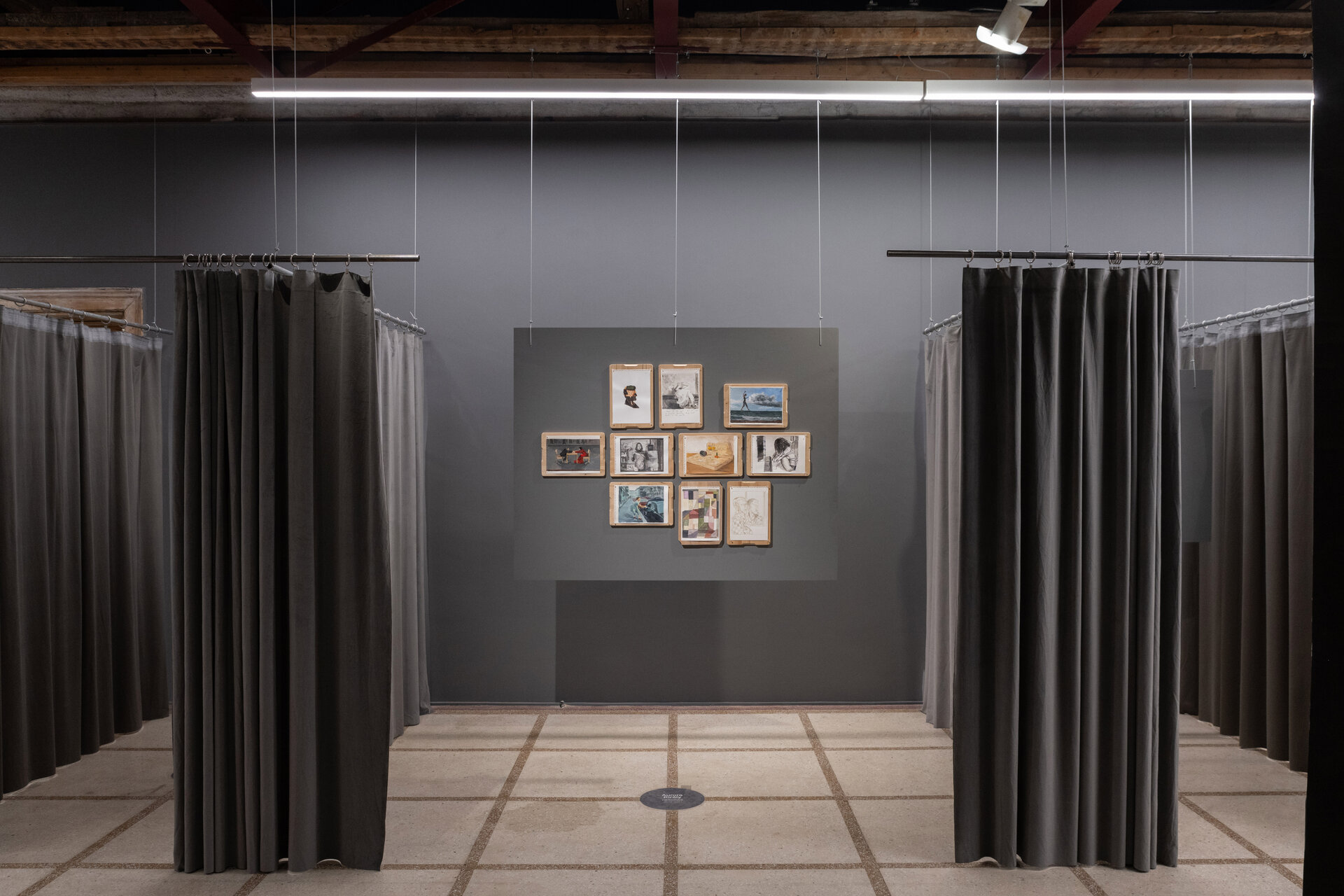
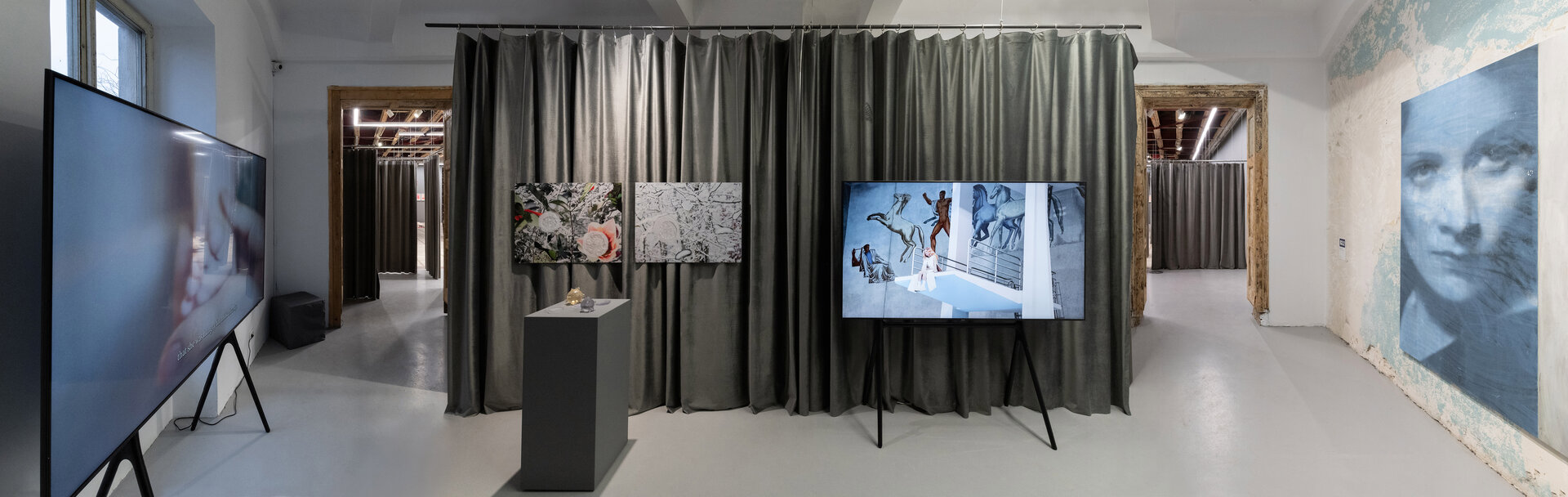
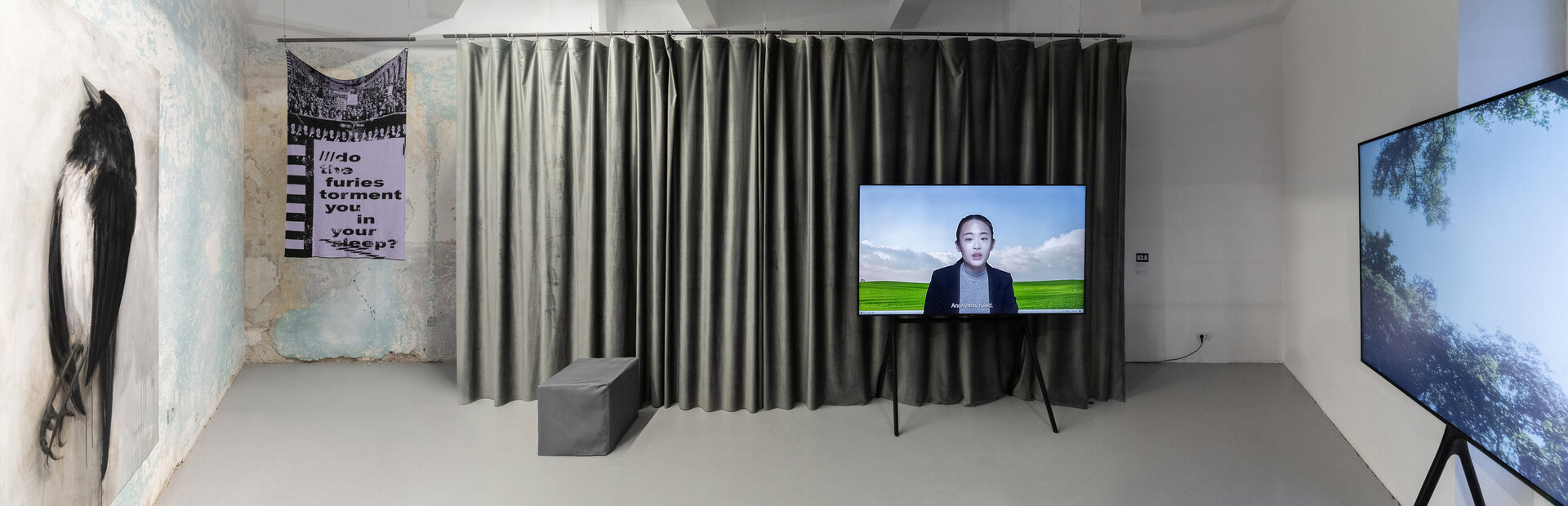
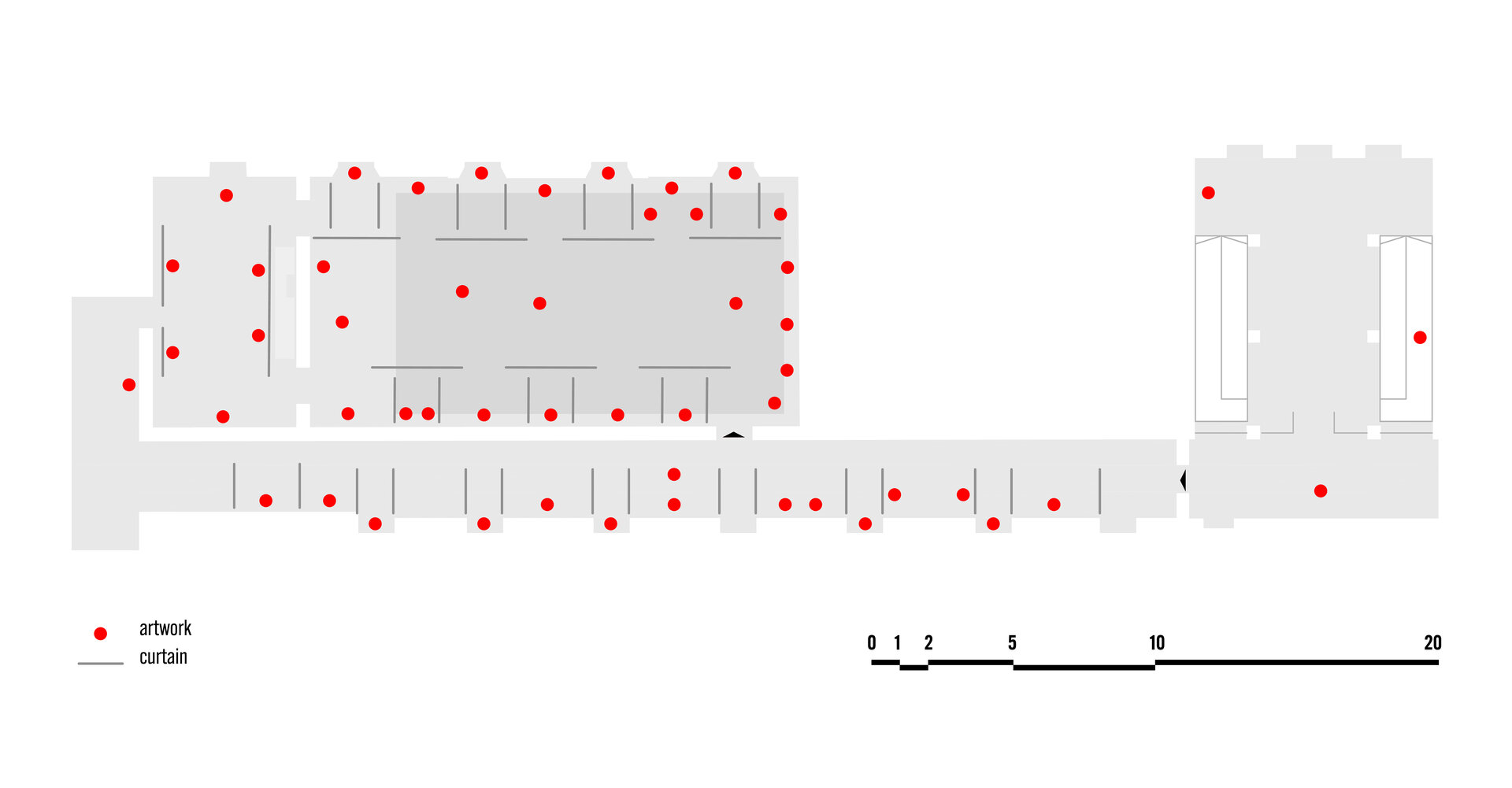
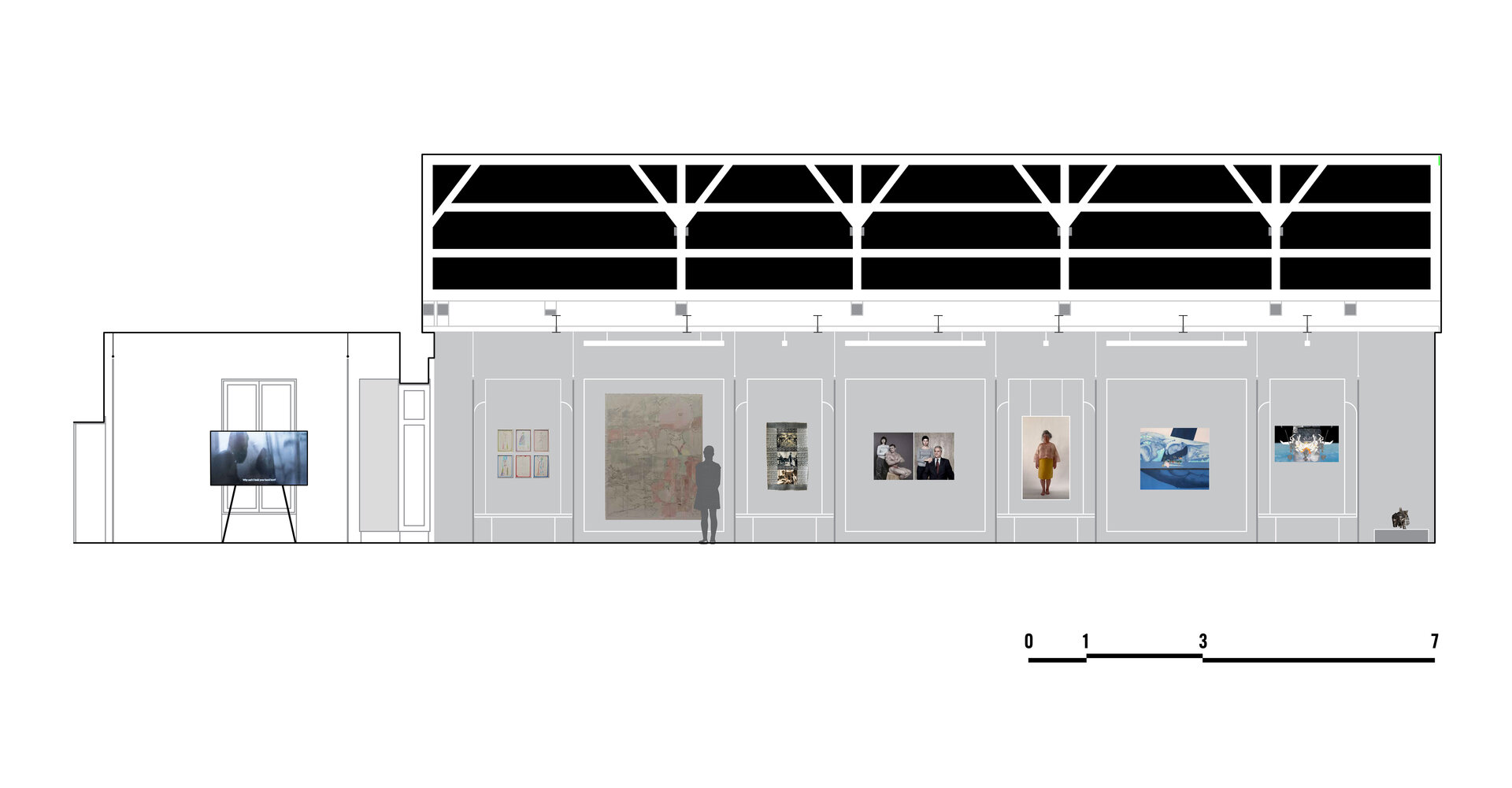
The architectural intervention is organized around layering, reflecting memory, vulnerability, resilience, and resistance. Instead of imposing a rigid sequence, the monumental spaces of /SAC Malmaison are fragmented into intimate spaces using suspended neutral-colored curtains. These partitions create varying degrees of transparency and concealment, allowing visitors to discover artworks while constructing their own paths.
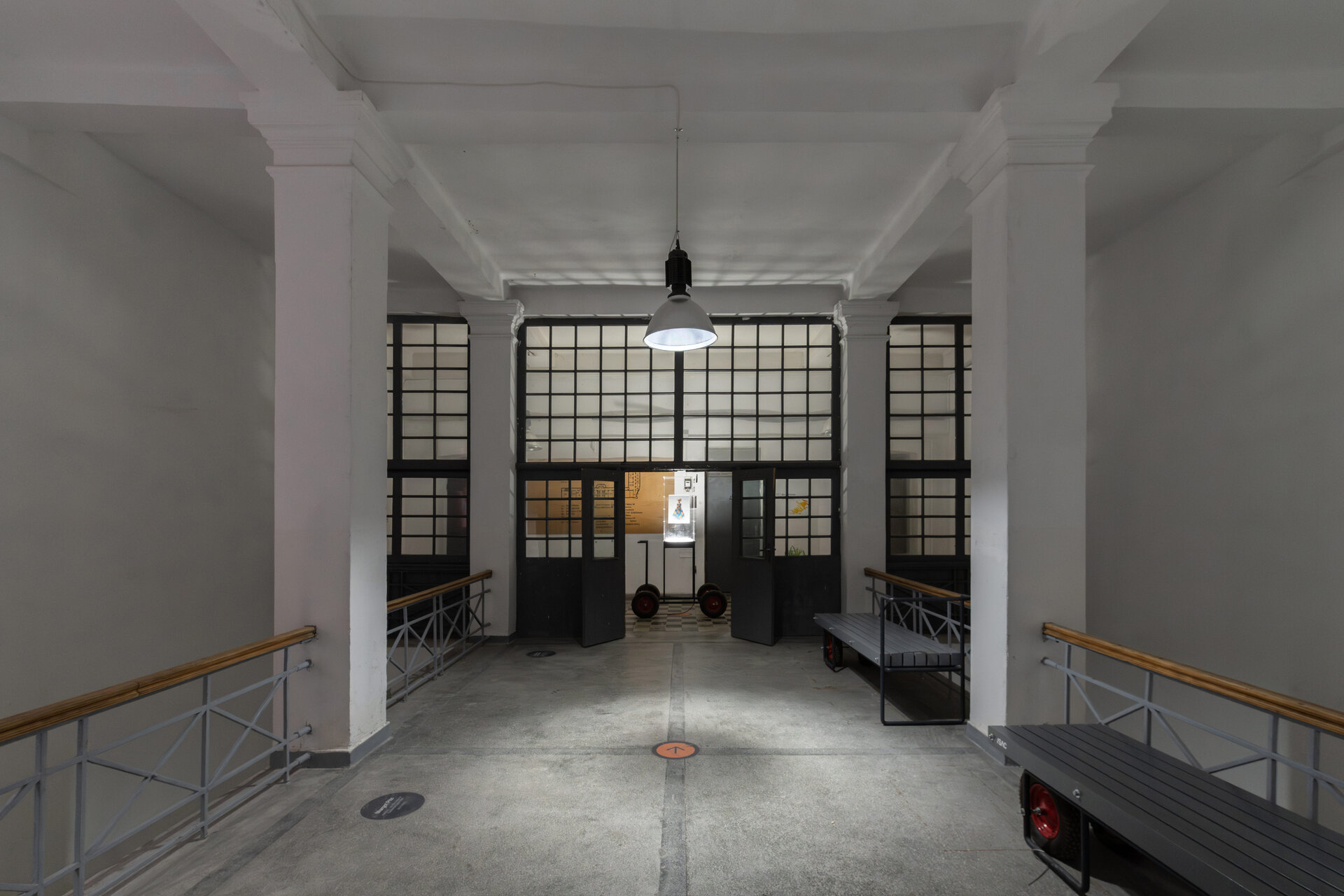
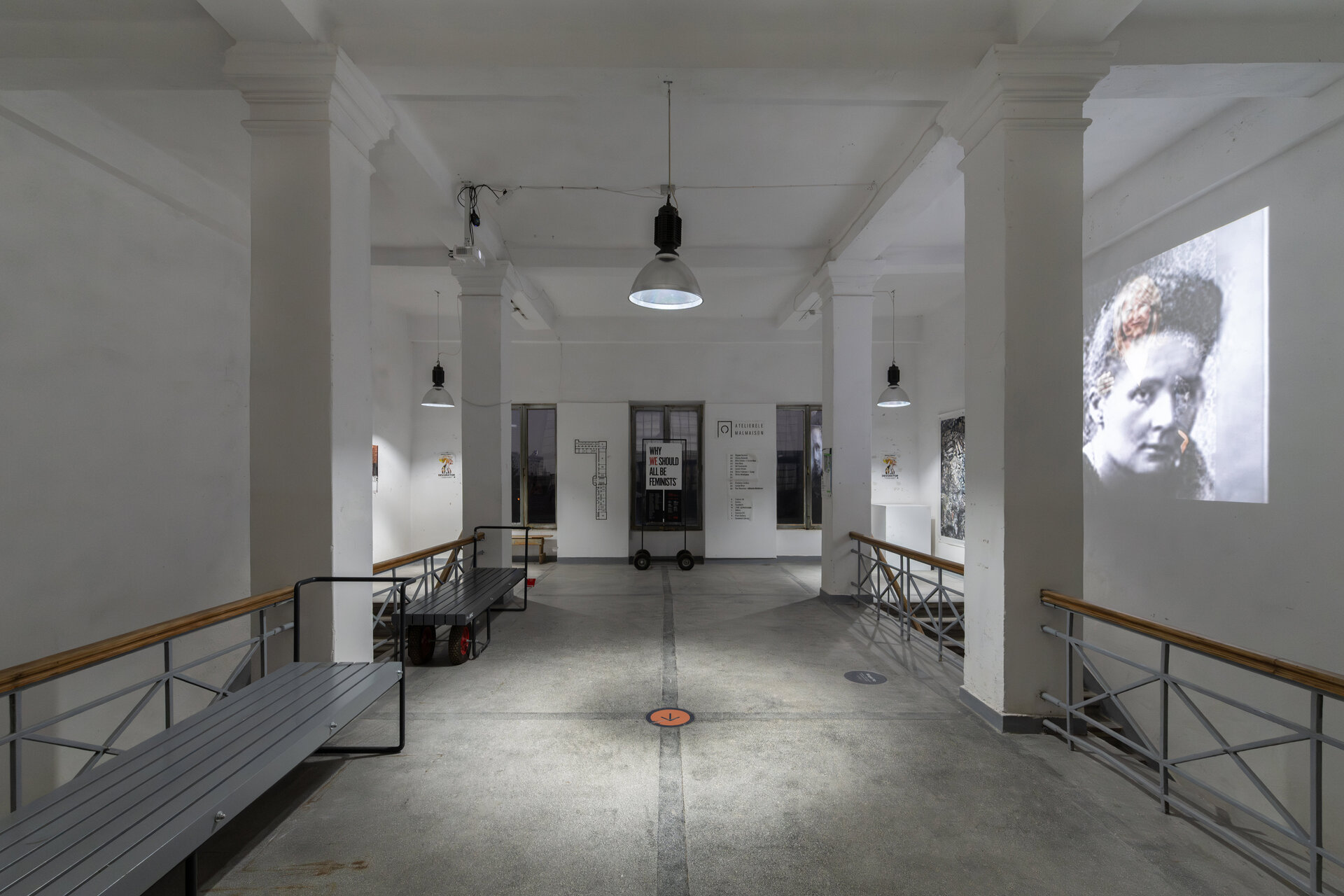
A central longitudinal corridor remains open, preserving the monumentality of the historic building while allowing large-scale works to be suspended from the structural beams. This maintains visual continuity and circulation.
Material choices remain understated. Reused textile curtains soften the existing architecture without competing with the artworks, while diffuse lighting creates an atmosphere of fragility and contemplation. The reversible intervention demonstrates how minimal means can transform spatial experience.
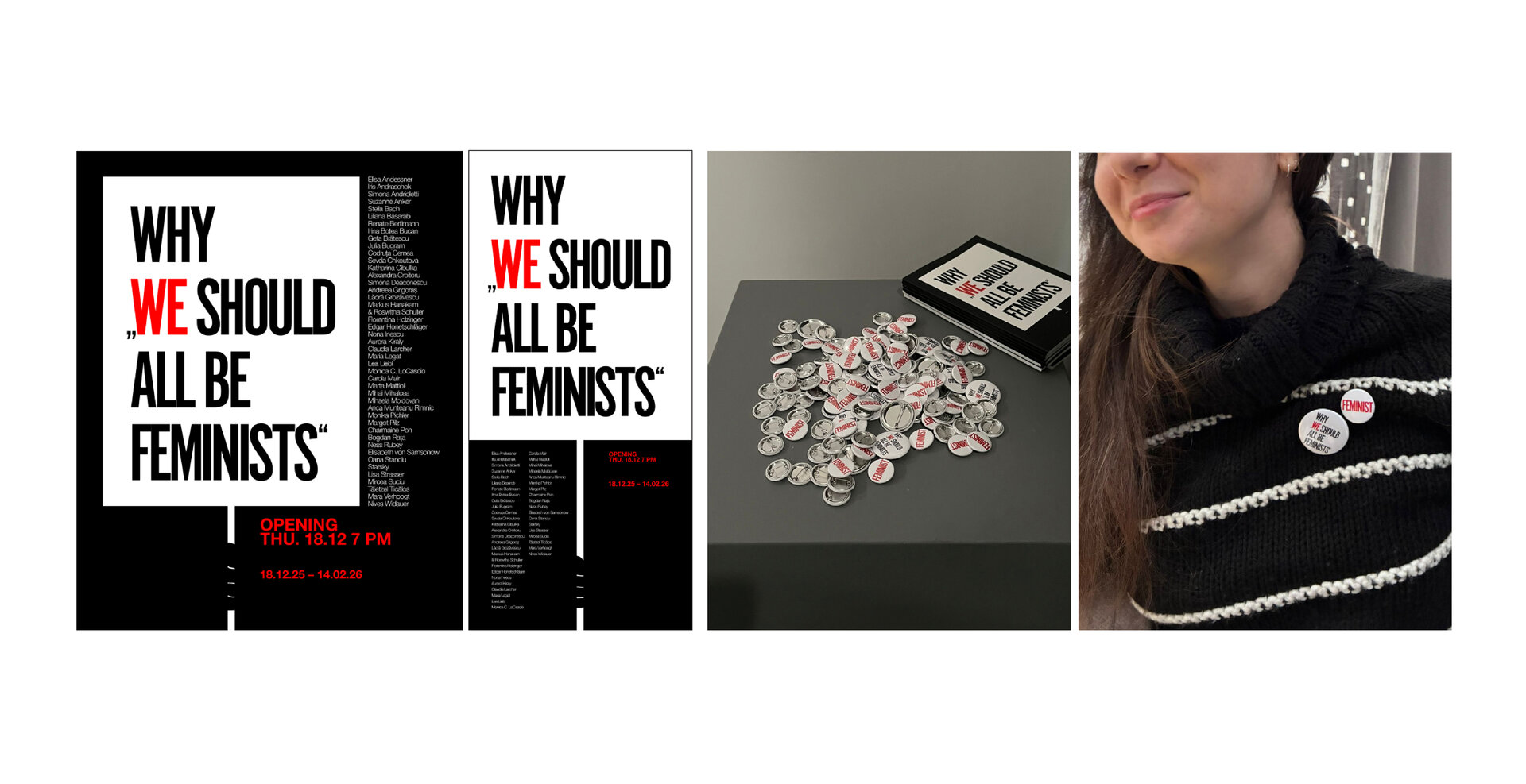
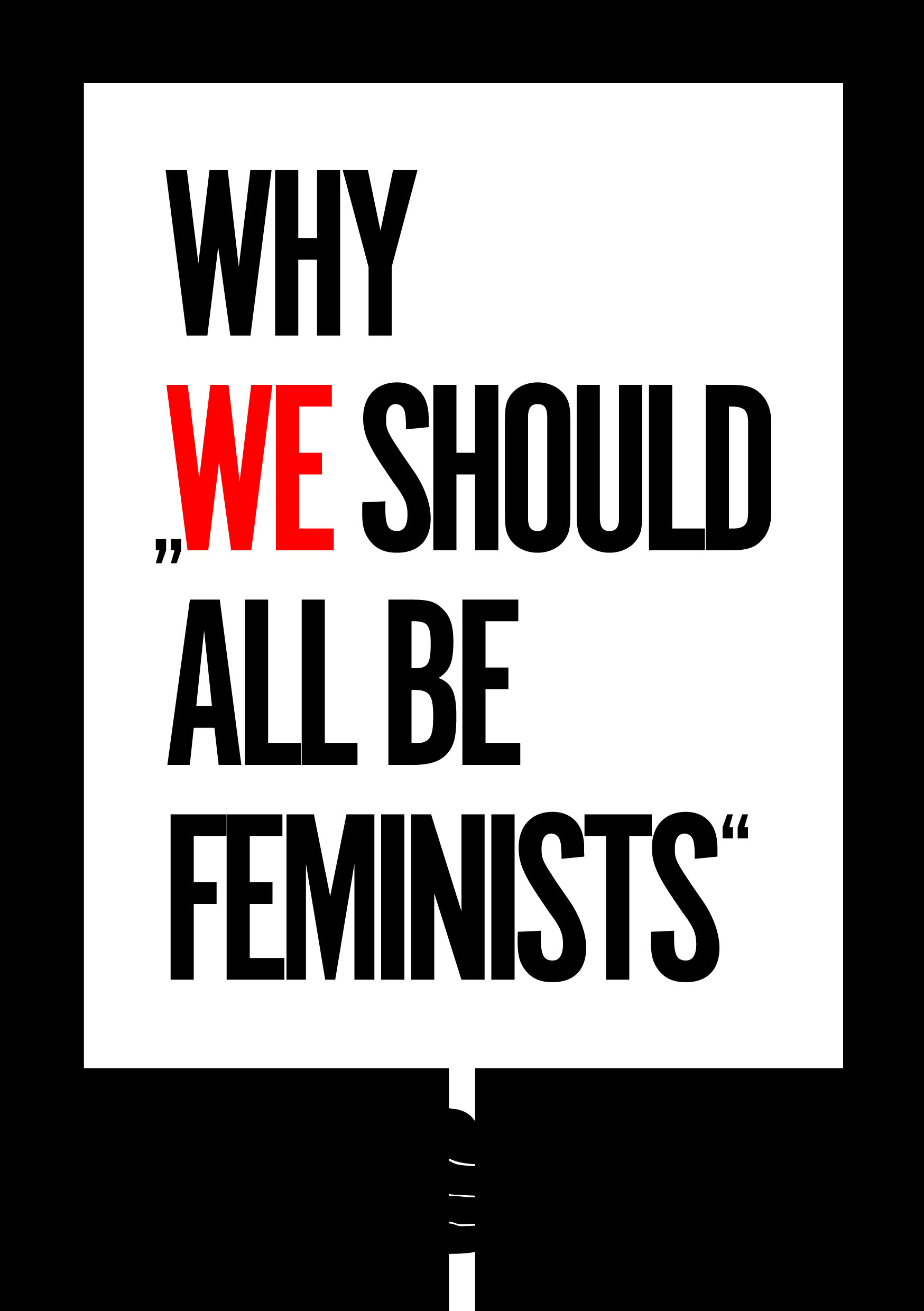
The graphic identity extends the curatorial concept into visual communication. Inspired by protest posters and political manifestos, it adopts a bold, condensed typographic composition expressing urgency and collective action. The title becomes the primary graphic element, with “WE” highlighted in red to emphasize collective responsibility and frame equality as a shared civic project. The restrained palette relies on black and white with selective red accents across posters, brochures, social media, and signage.
Visitors become active participants through wearable badges carrying fragments of the visual identity. By publicly identifying with the term “feminist”, participants extend the exhibition’s message beyond the gallery. The badges become portable statements encouraging dialogue about equality and representation.
The project demonstrates how exhibition architecture can mediate complex social and political themes through temporary interventions, adaptive reuse, restrained materials, and integrated graphic communication.




Exhibition and Scenography Design

- Transilvania | Extravaganza
- A World in a Negative
- Why “We Should All Be Feminists”
- The Bucharest That Never Was
- The Infinite Dinner
- Pop-up Gallery at Point - two exhibitions
- Wet Snow
- Architecture of experience: Nijinski · Agony and Ecstasy
- Sides of interconnected learning
- BDF Professional / International Design / UAUIM
- Radical Domesticity
- Cella/kamera
- OFFSIDE / Plans, goals, points
- Rhythmic Stress
- BDF Young
- Highberg Pavilion
- “Lights and Shadows” Temporary Exhibition
- Show me the way
- “Balnea Daciae” Temporary Exhibition at Pompeii


