Urban Intervention / NOOR - The Calligraphic Light of Form
Authors’ Comment
NOOR_ The Calligraphic Light of Form
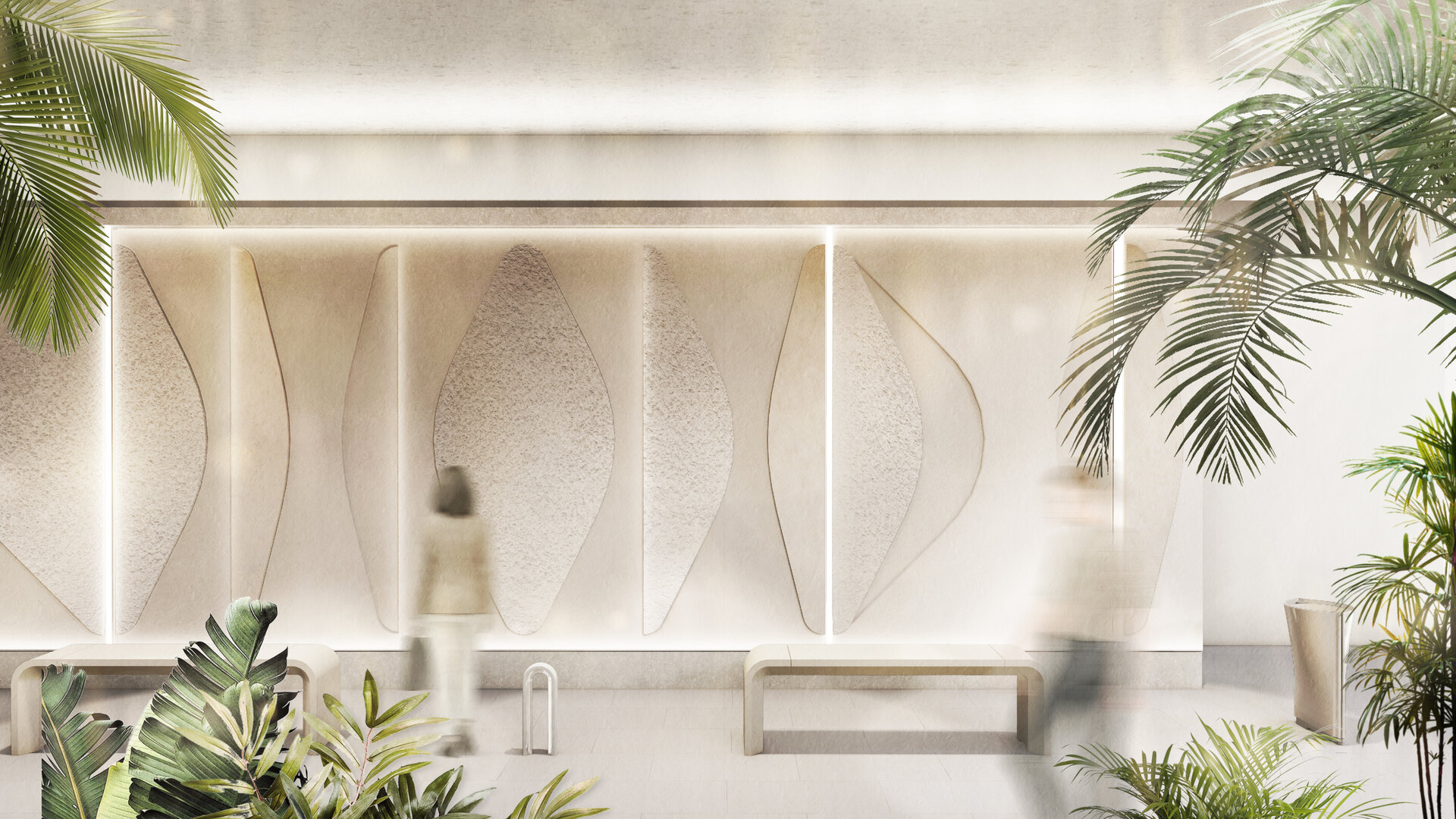
A modular urban system inspired by Arabic calligraphy, shaped through form, light, shadow, and materiality.
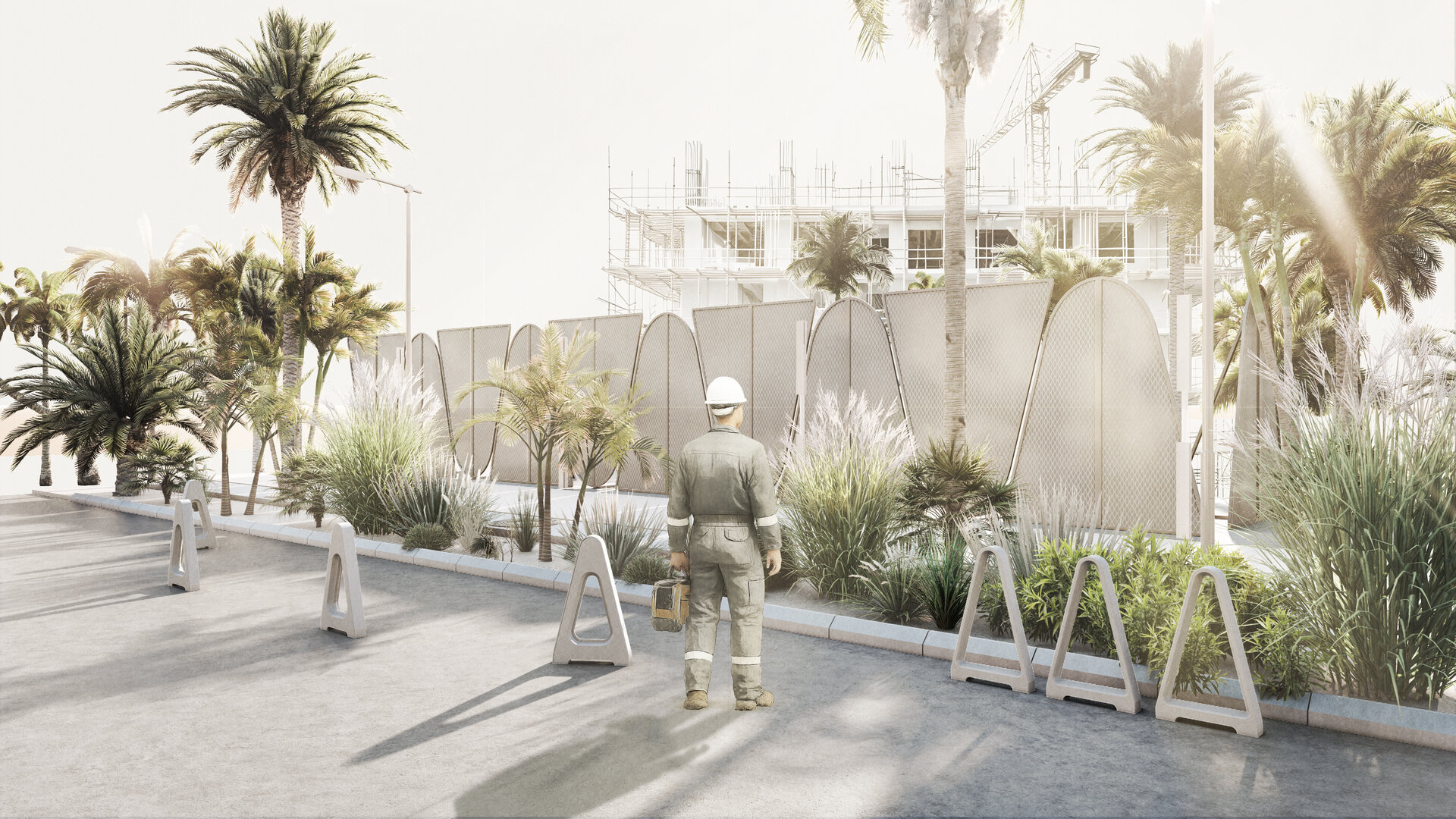
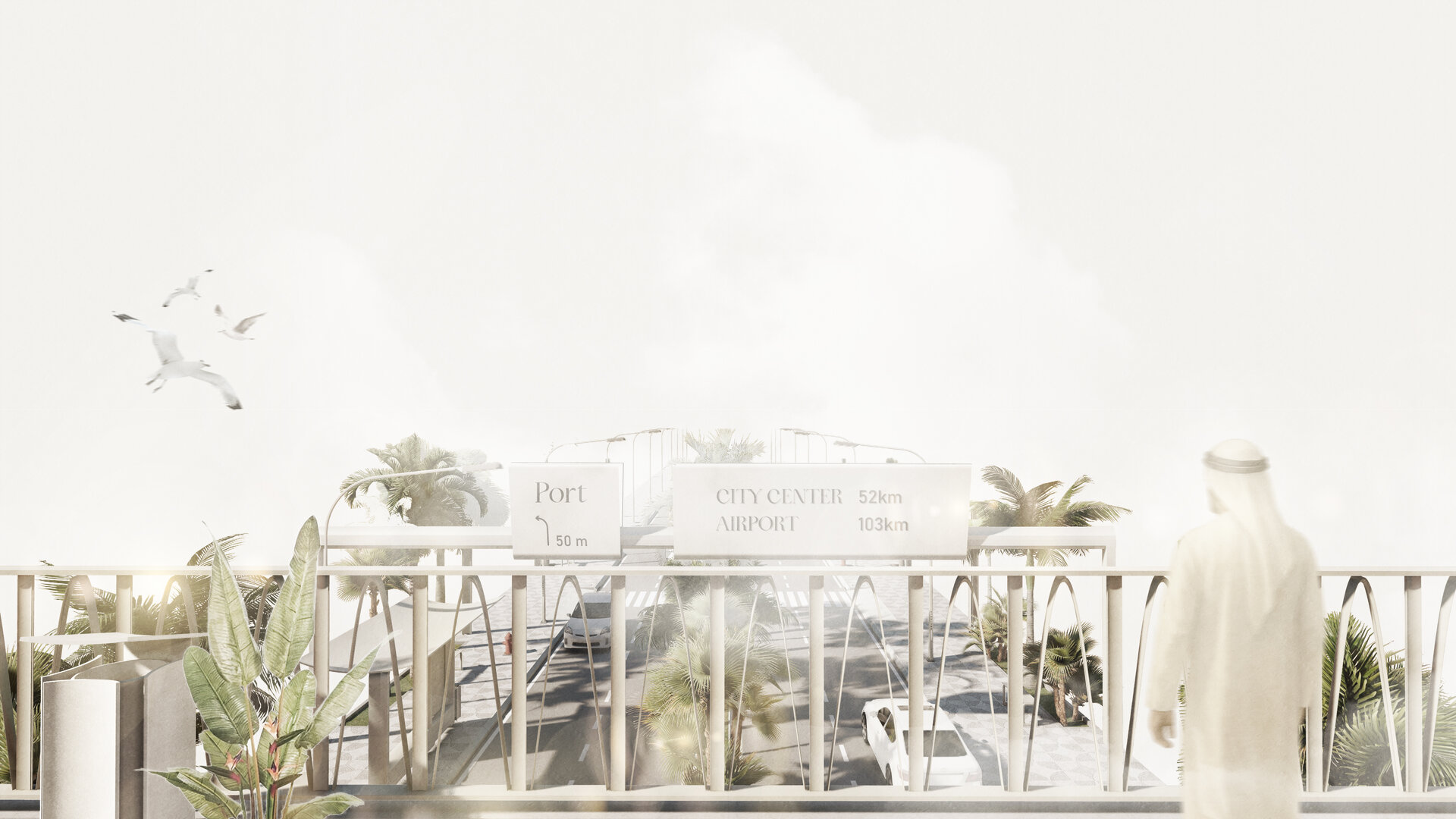
The project received an Honorable Mention in the international Dubai Urban Elements Challenge, organized by Buildner in collaboration with Dubai’s Roads and Transport Authority (RTA). The competition called for a system of modular and adaptable urban elements and interventions, addressing both urban furniture and a wide range of pedestrian situations: underground passages, bridges and footbridges, crossing areas, temporary public spaces, and urban areas undergoing transformation or affected by multiple ongoing construction sites. Proposals were expected to respond to Dubai’s climate, diverse communities, and rapidly developing urban environment.
Concept
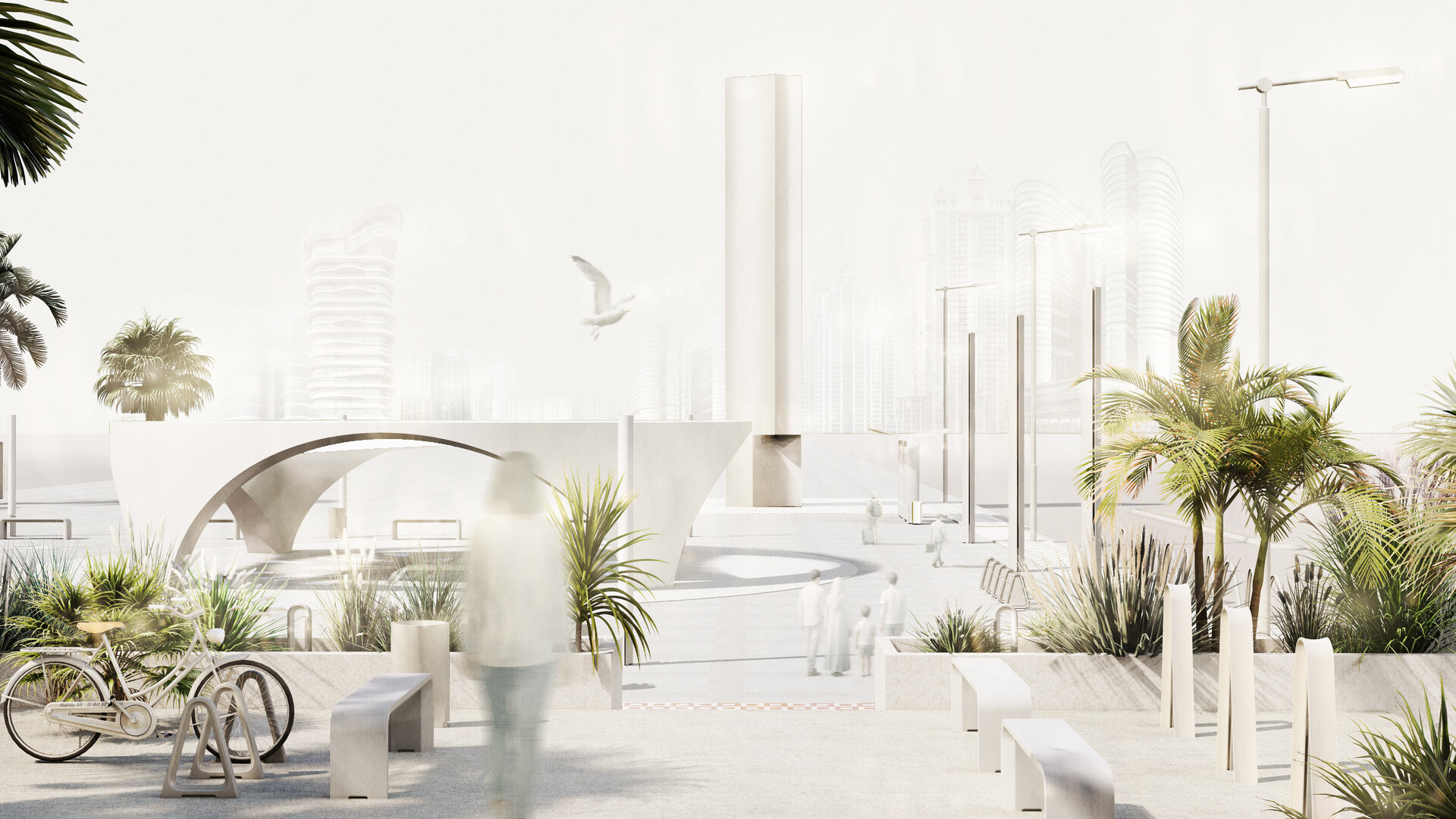
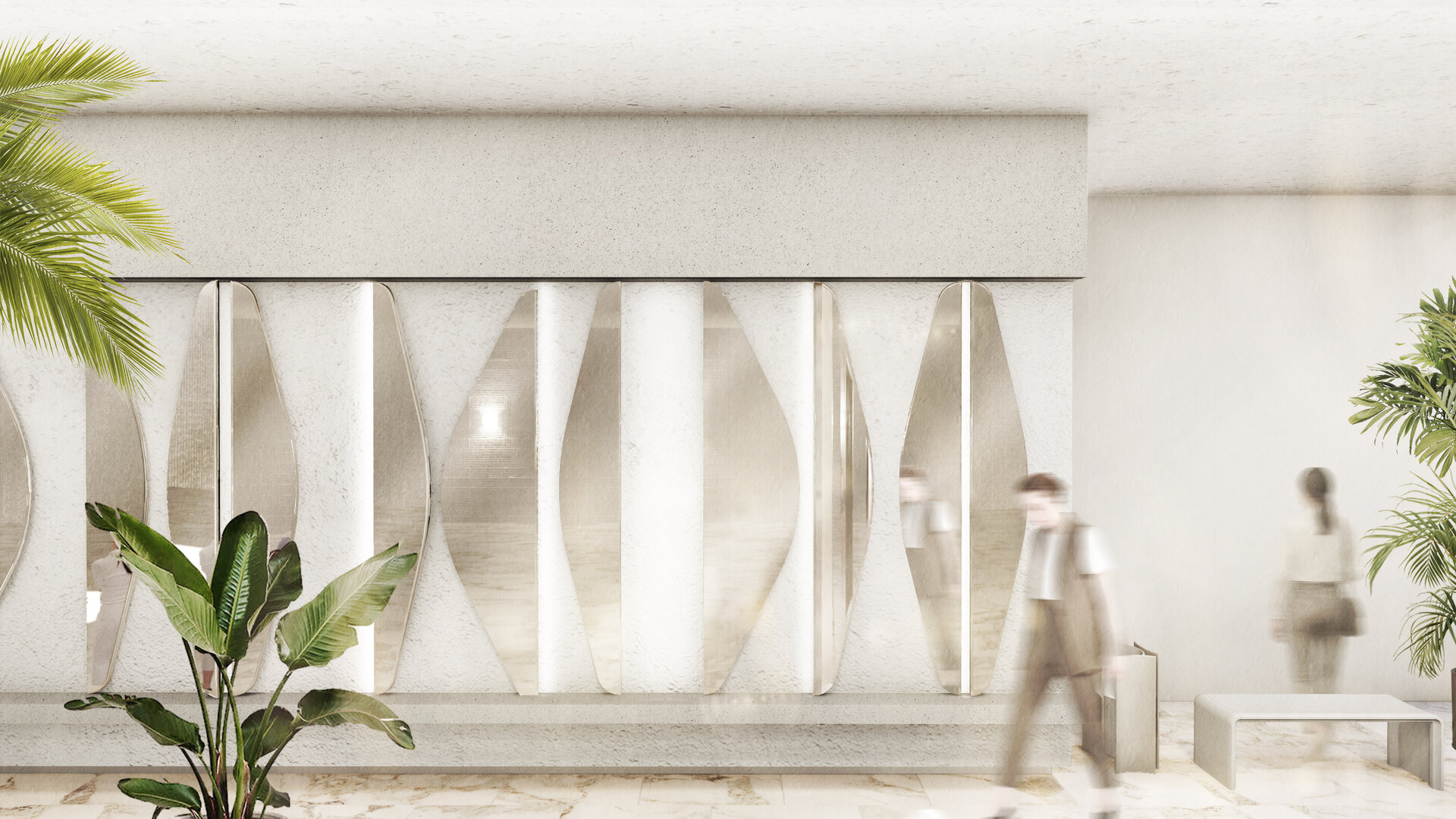
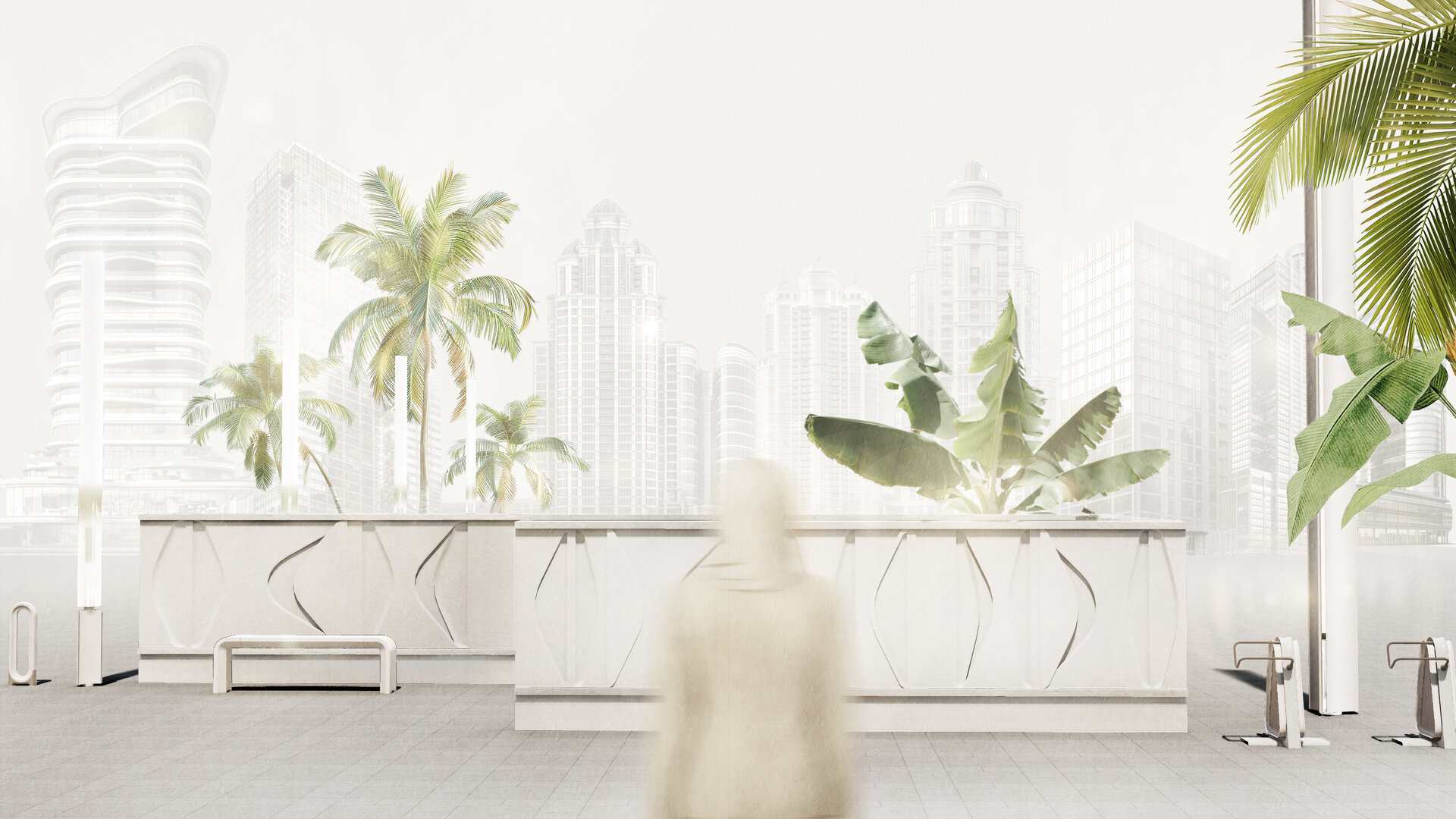
NOOR proposes a system of urban elements inspired by Arabic calligraphy, reinterpreted through a contemporary architectural language. The forms are simple and fluid, while the identity of the system is defined by proportion, rhythm, light, and shadow.
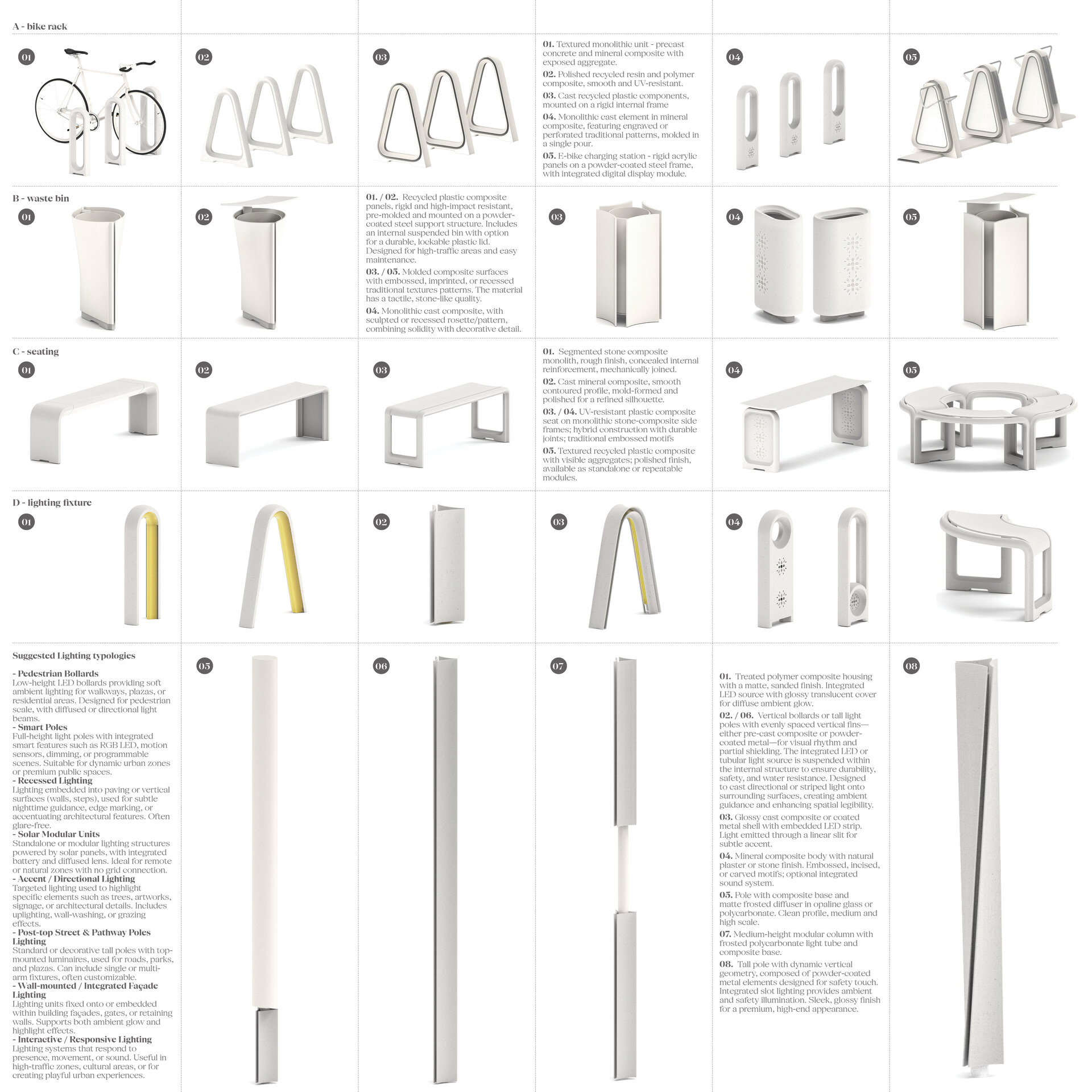
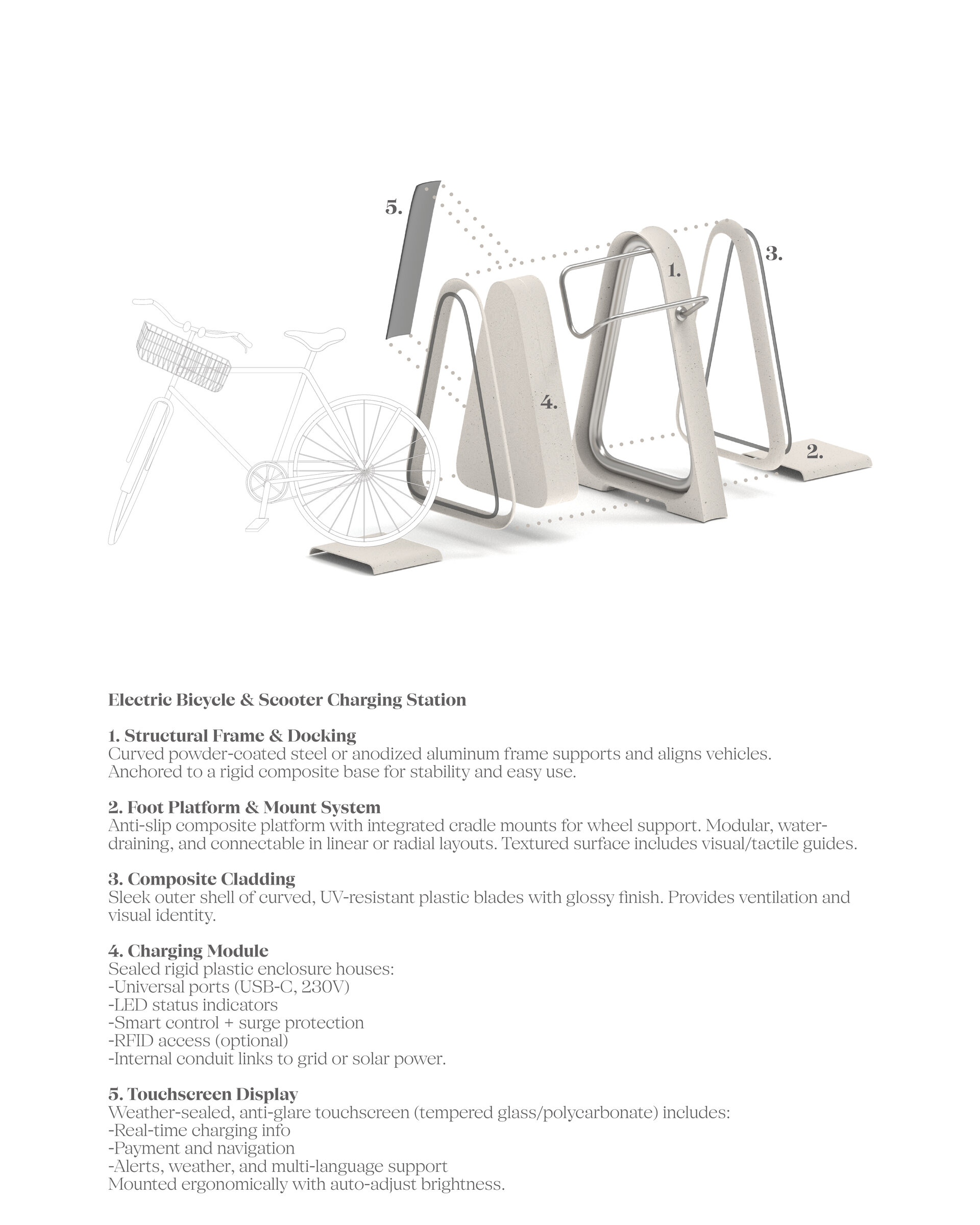
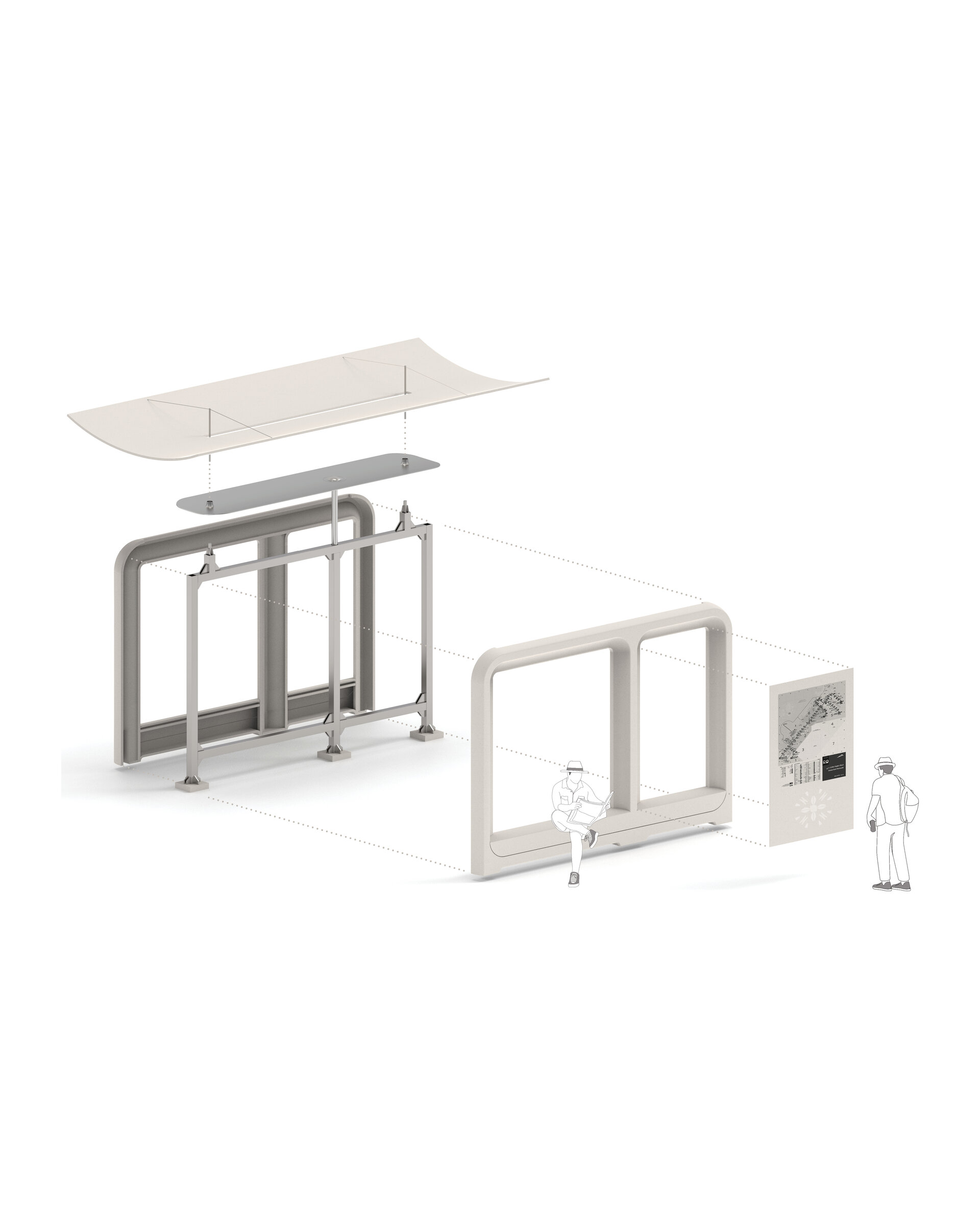
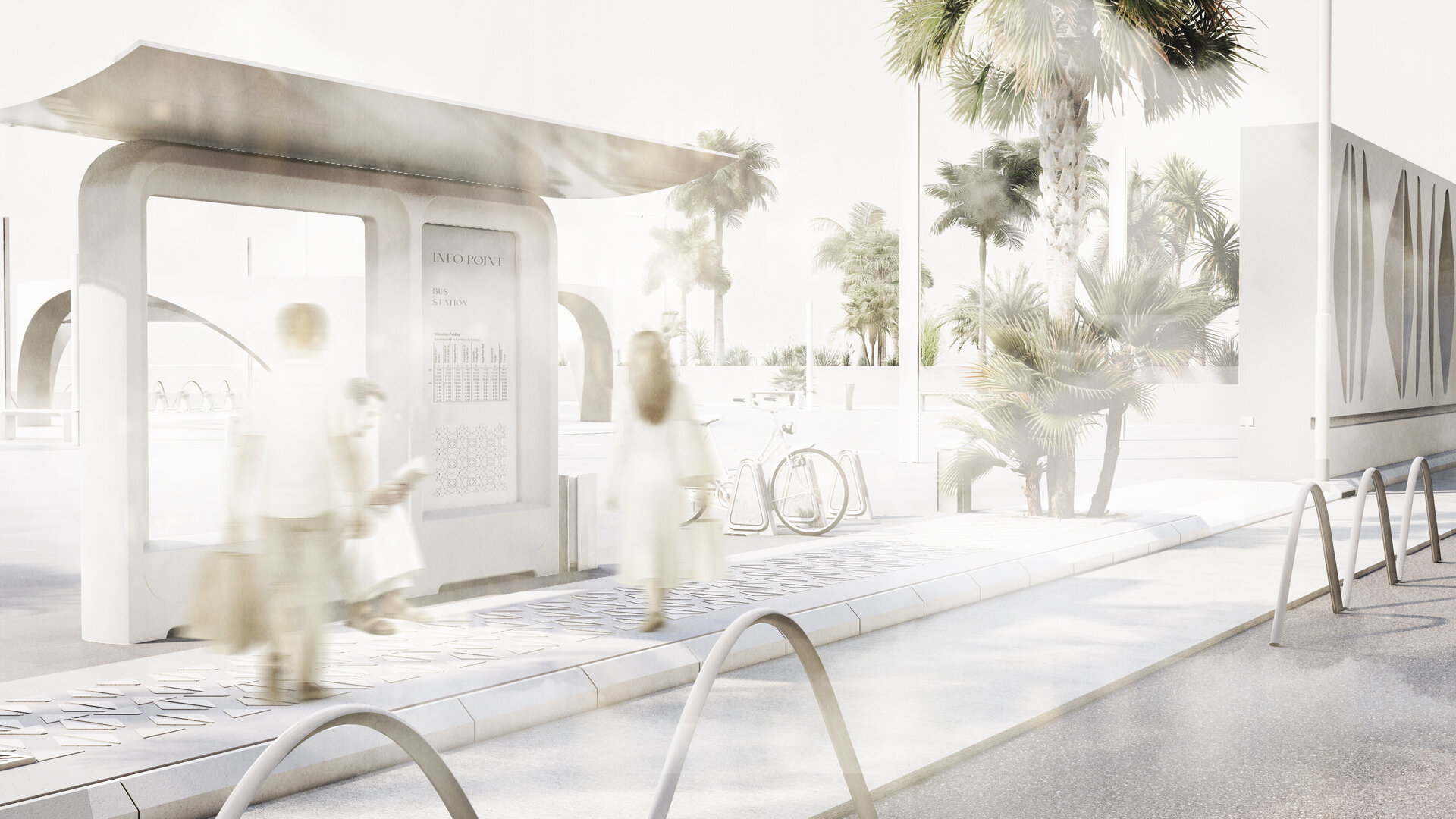
Benches, shading elements, screens, lighting fixtures, and wayfinding elements belong to the same system and can be combined according to context. NOOR does not propose a single object, but a kit of components capable of generating solutions for different urban situations, from resting areas and pedestrian routes to passages, bridges, footbridges, and areas temporarily affected by construction works.
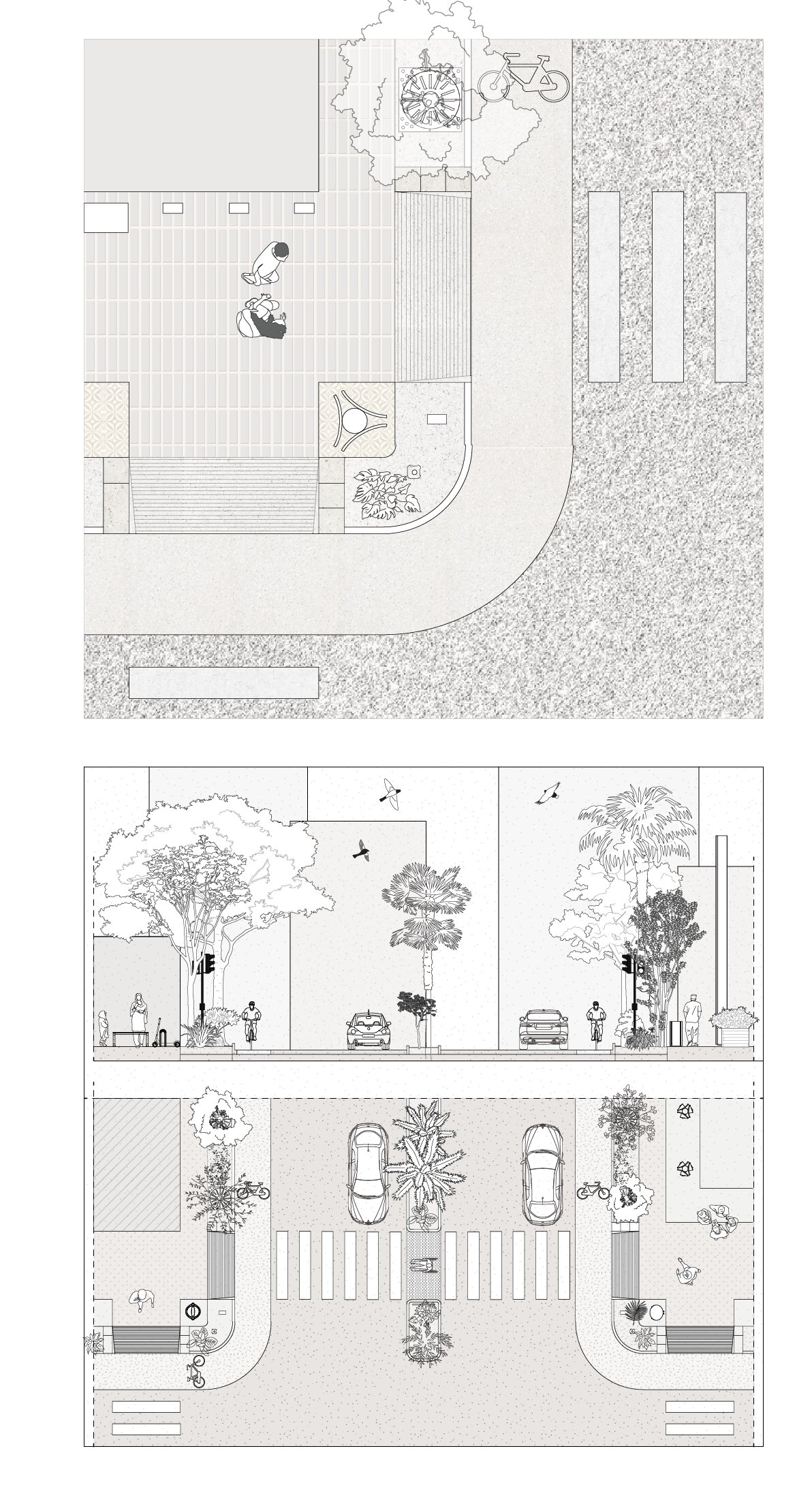
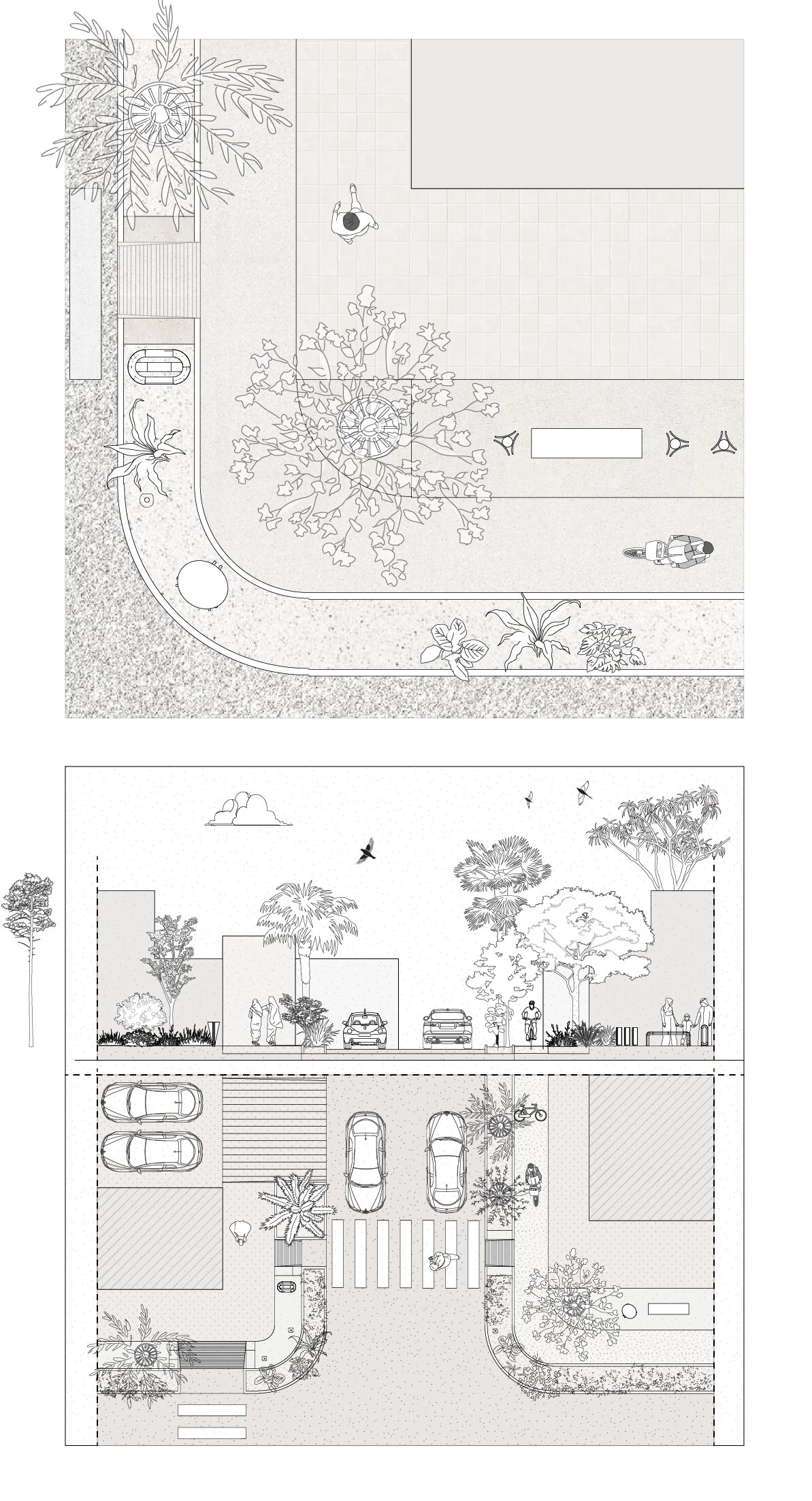
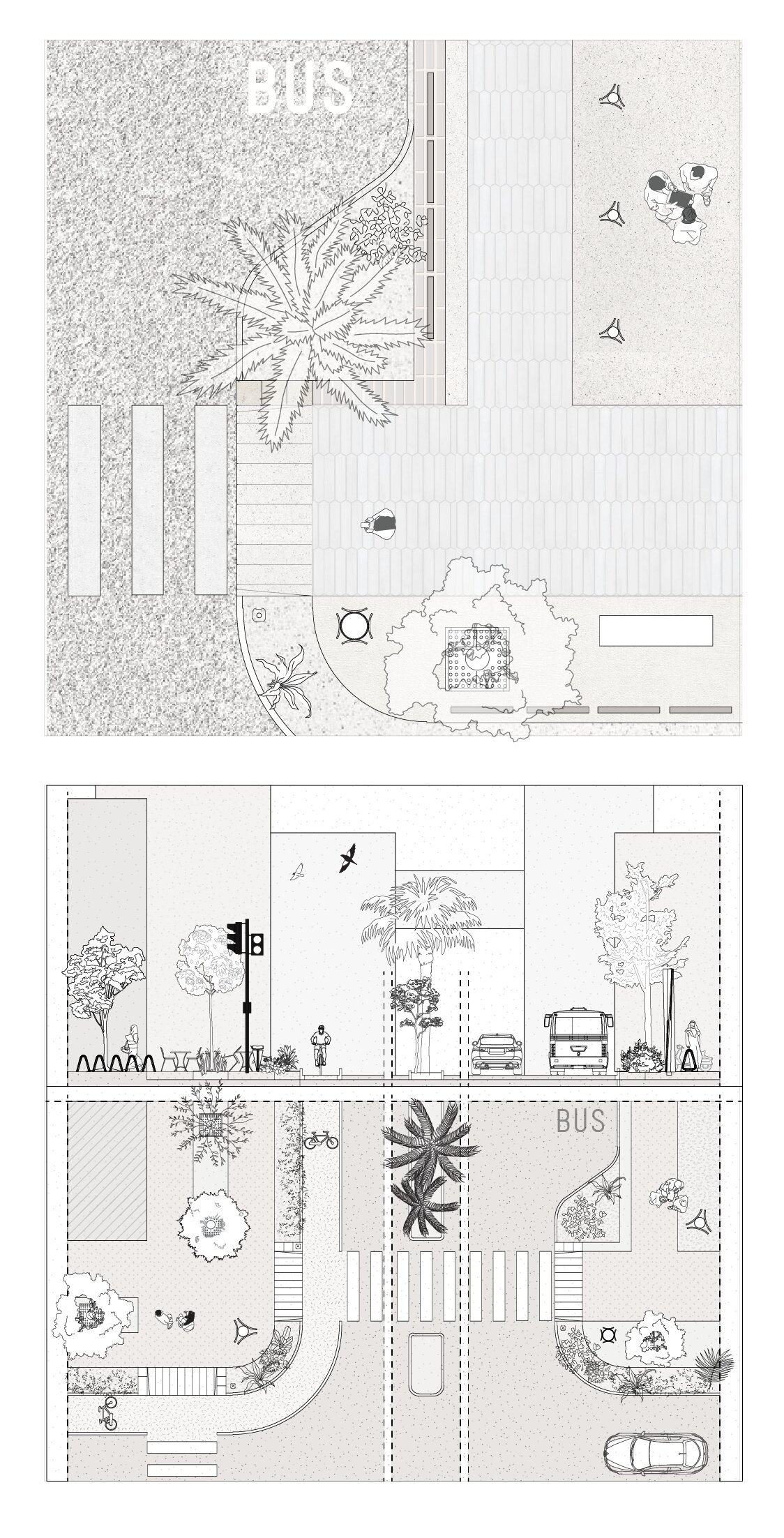
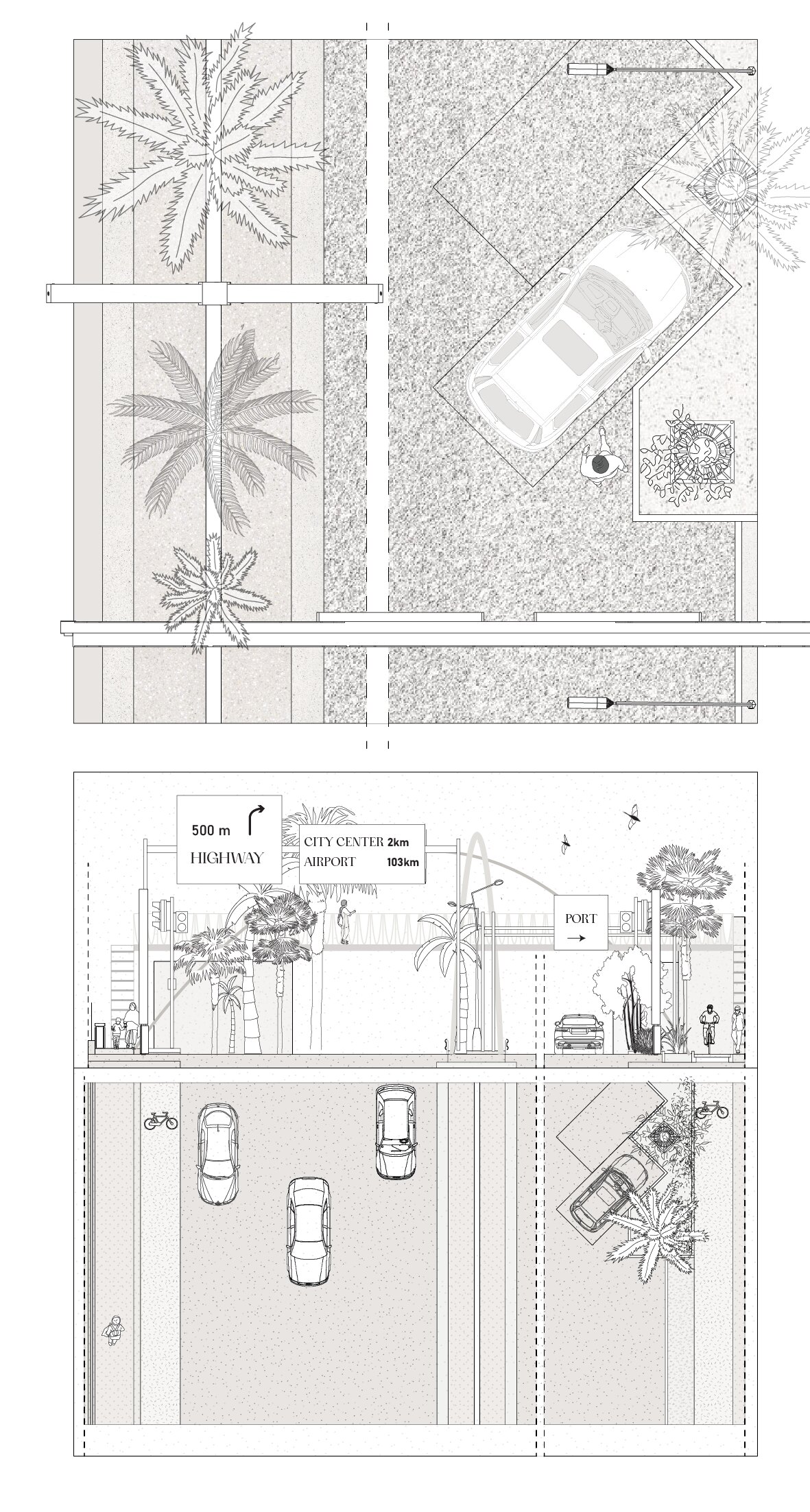
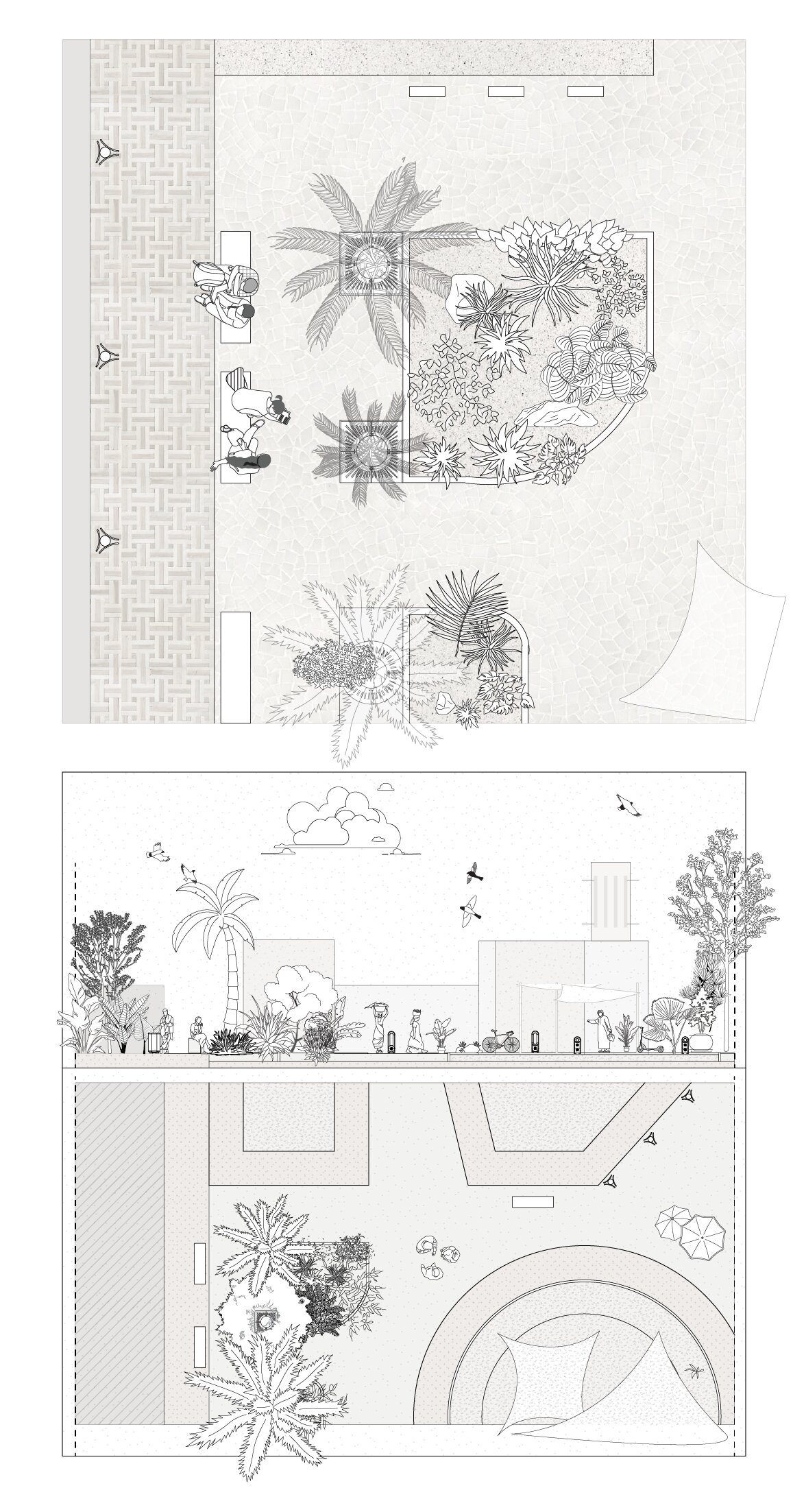
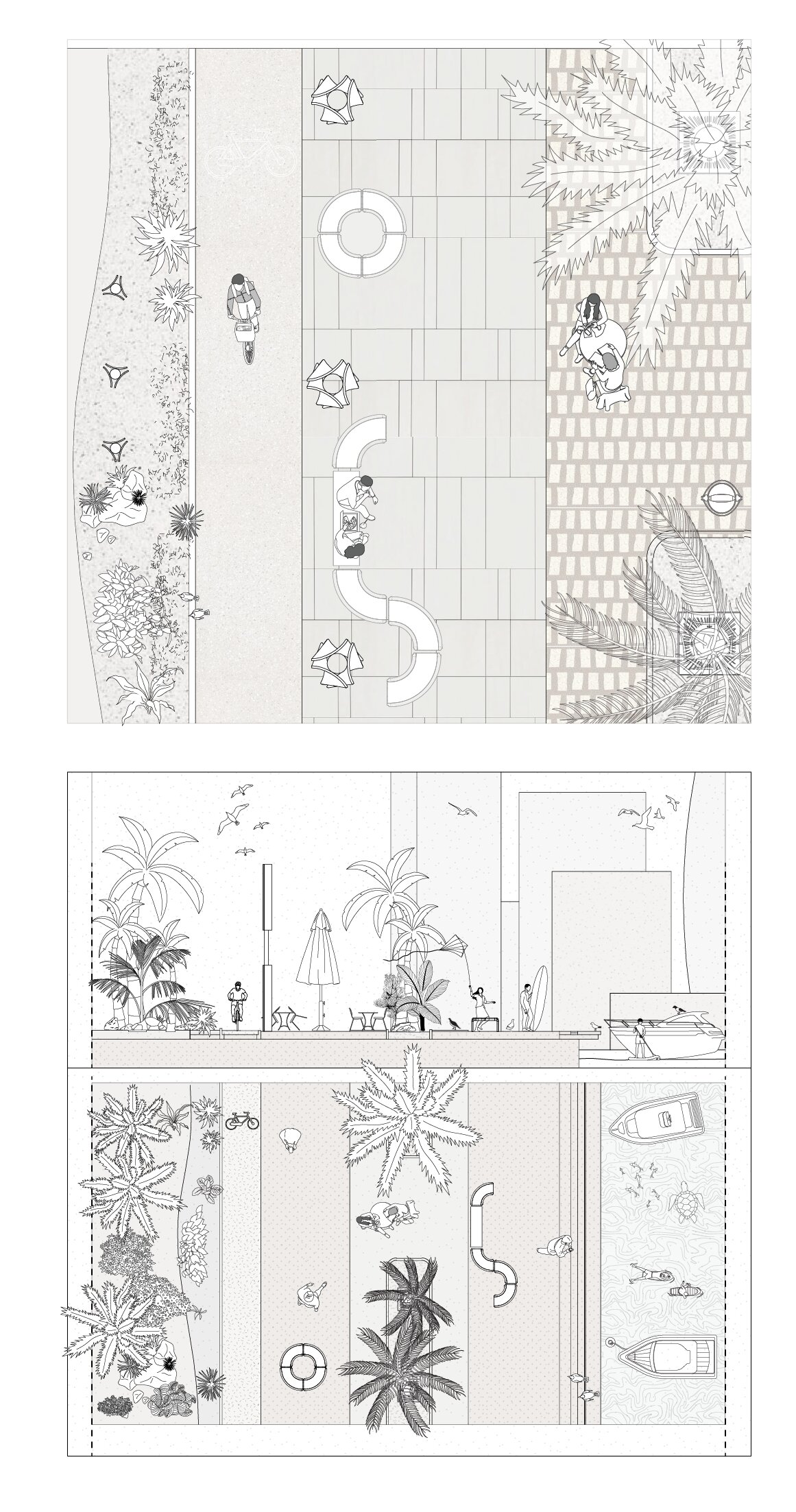
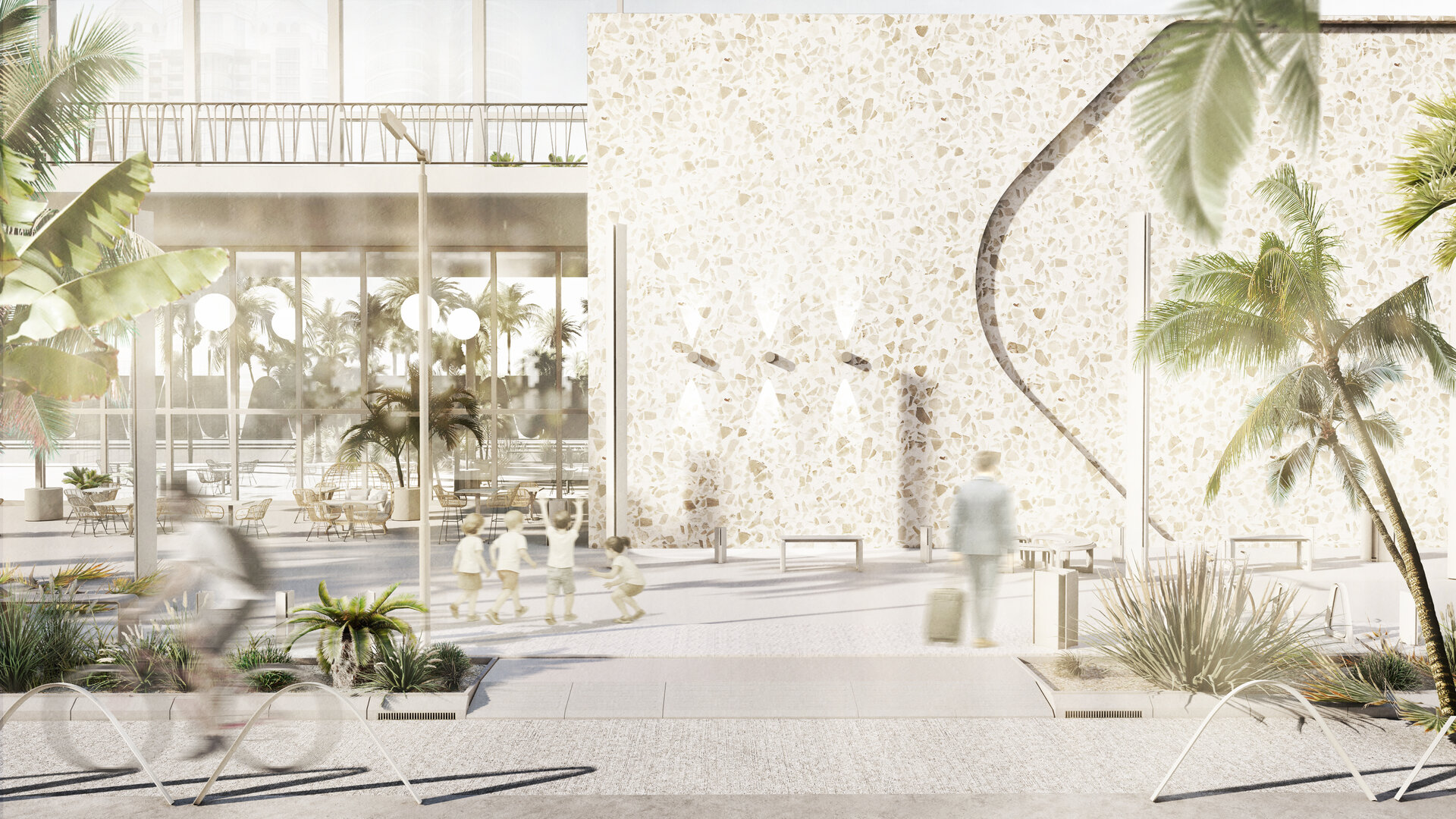
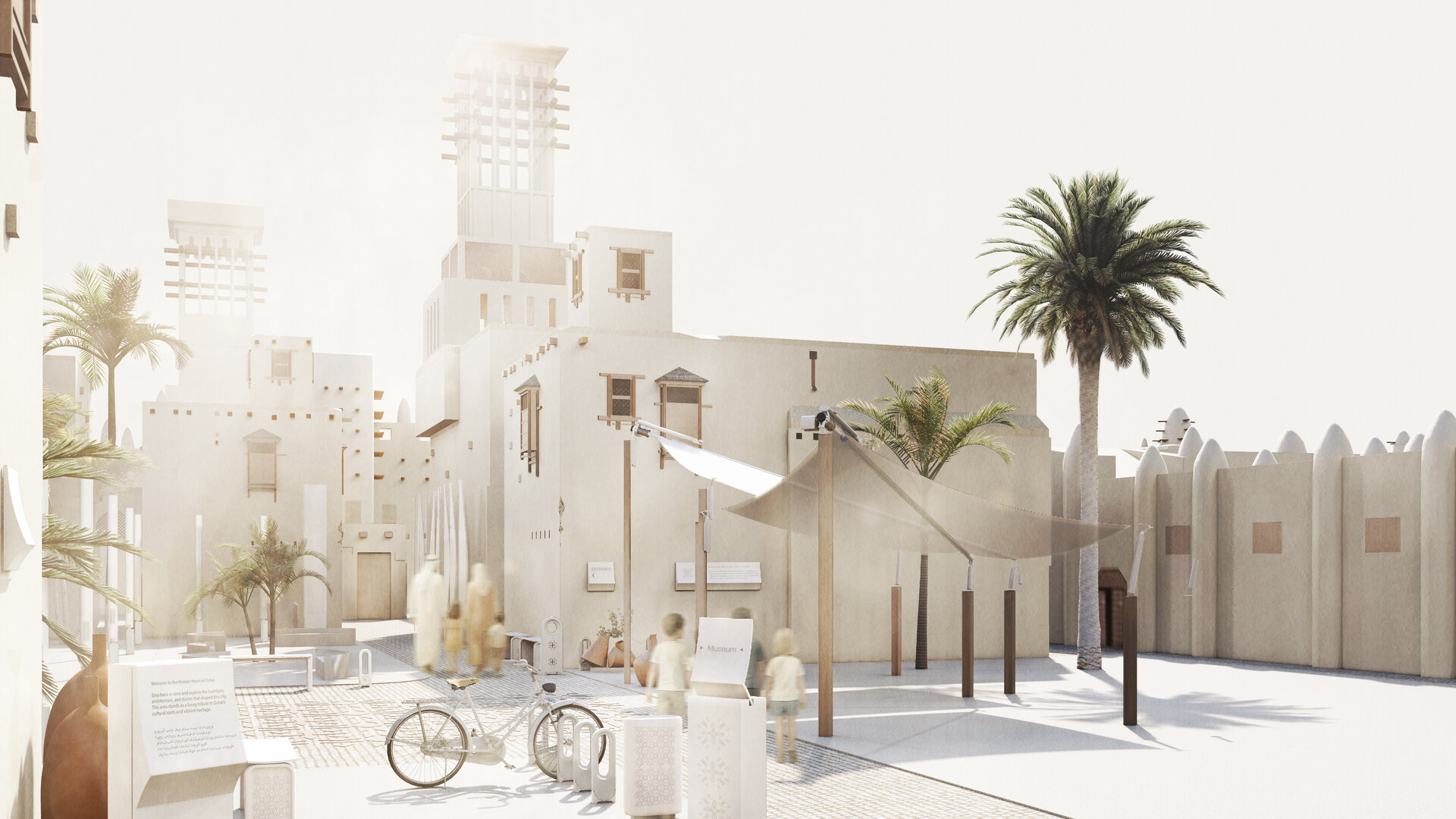
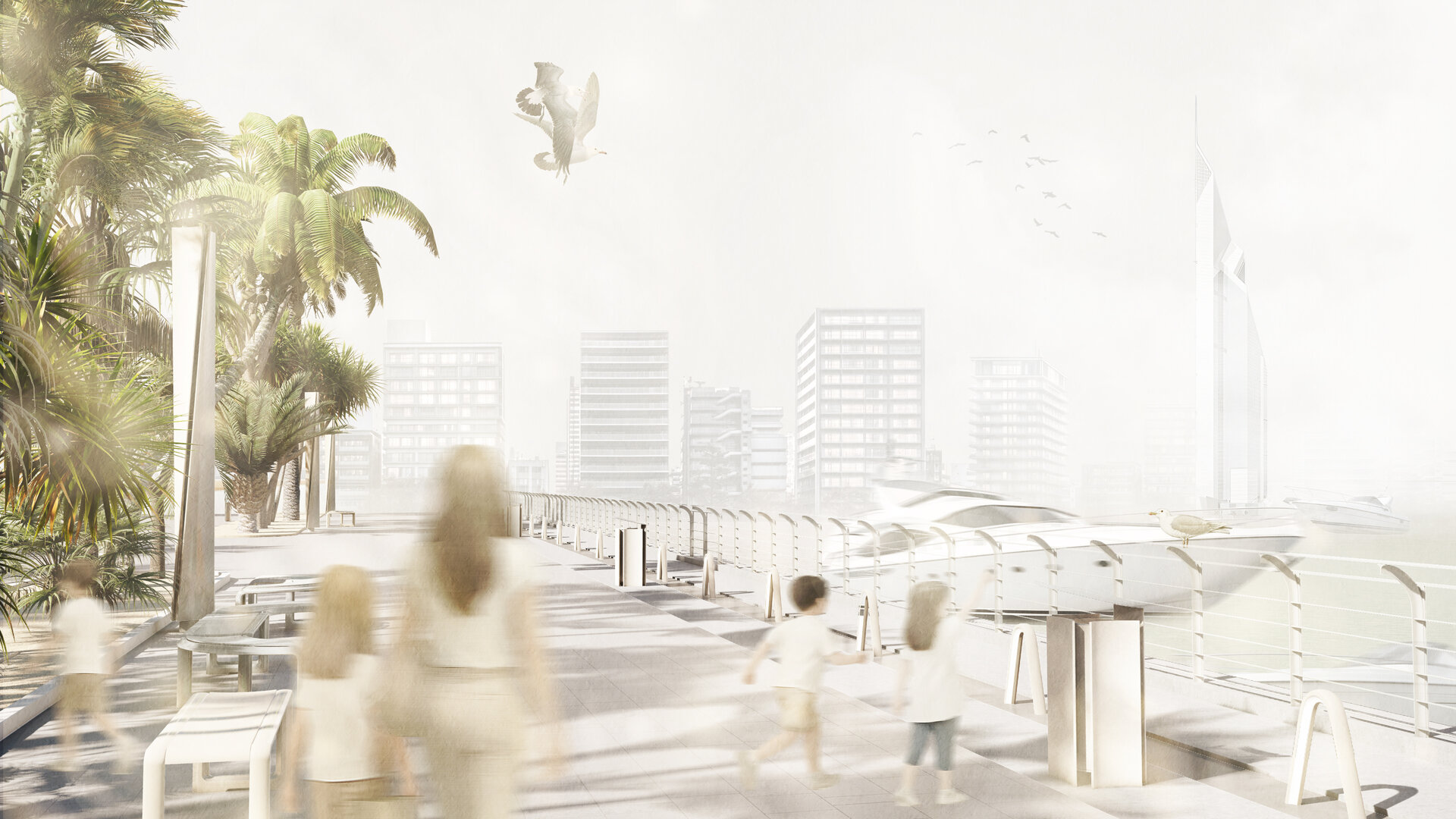
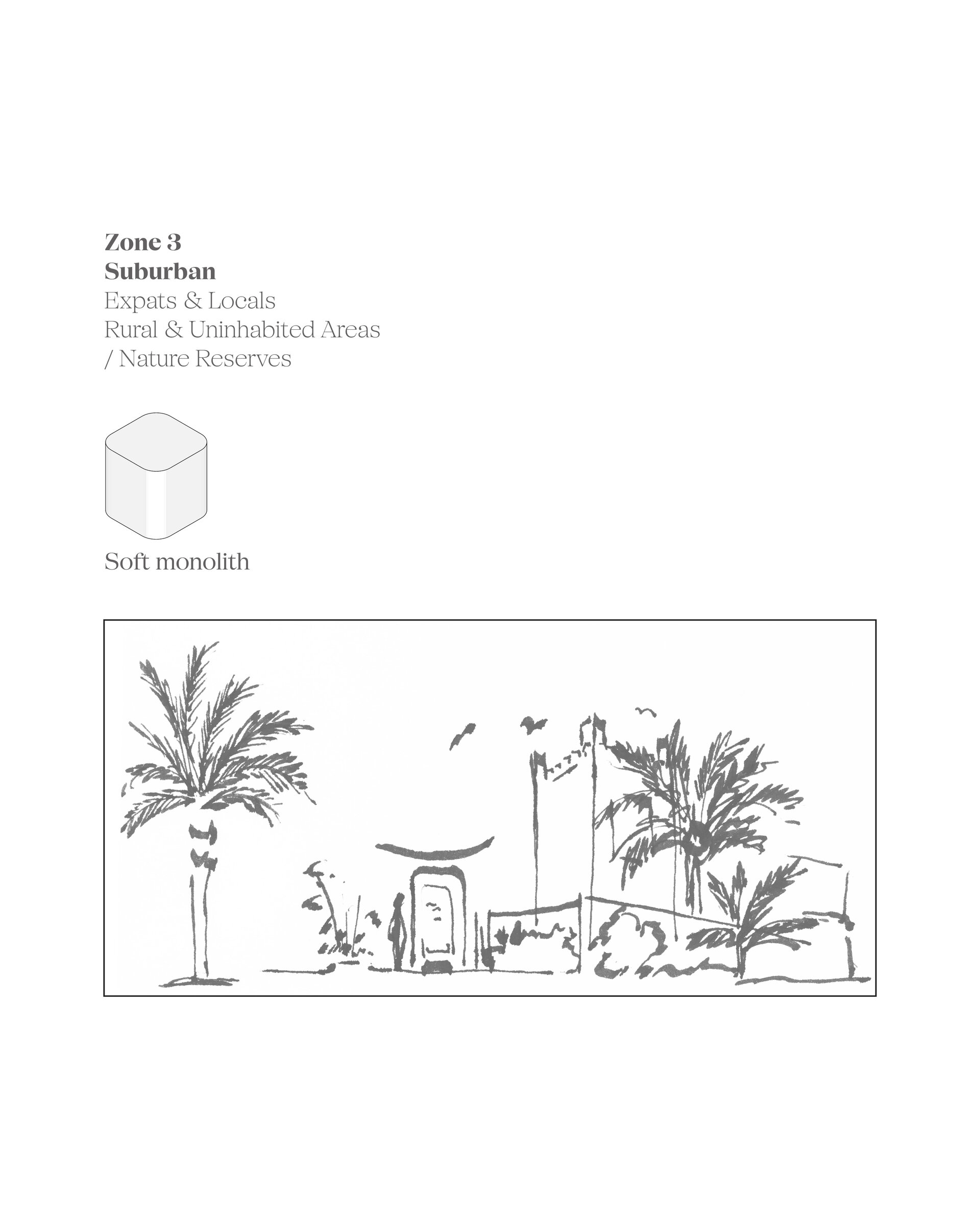
The system is adapted to seven distinct urban conditions in Dubai: 1 – residential district, with a calm atmosphere and domestic scale; 2 – residential district, with a different urban structure and density; 3 – suburban district, defined by more open spaces and a closer relationship with the landscape; 4 – mixed commercial and residential district, with higher pedestrian intensity and diverse uses; 5 – industrial district, where robustness and functionality become priorities; 6 – cultural and historic district, where materiality and detailing respond to local heritage; 7 – high-end district, characterized by a more refined expression, premium materials, and representative public spaces.
Within each district, the system changes in proportion, materiality, transparency, and configuration while maintaining the same design principles. Seating, shading, lighting, wayfinding, protection, and spatial definition are integrated into a human-scale urban architecture.
Materiality and durability
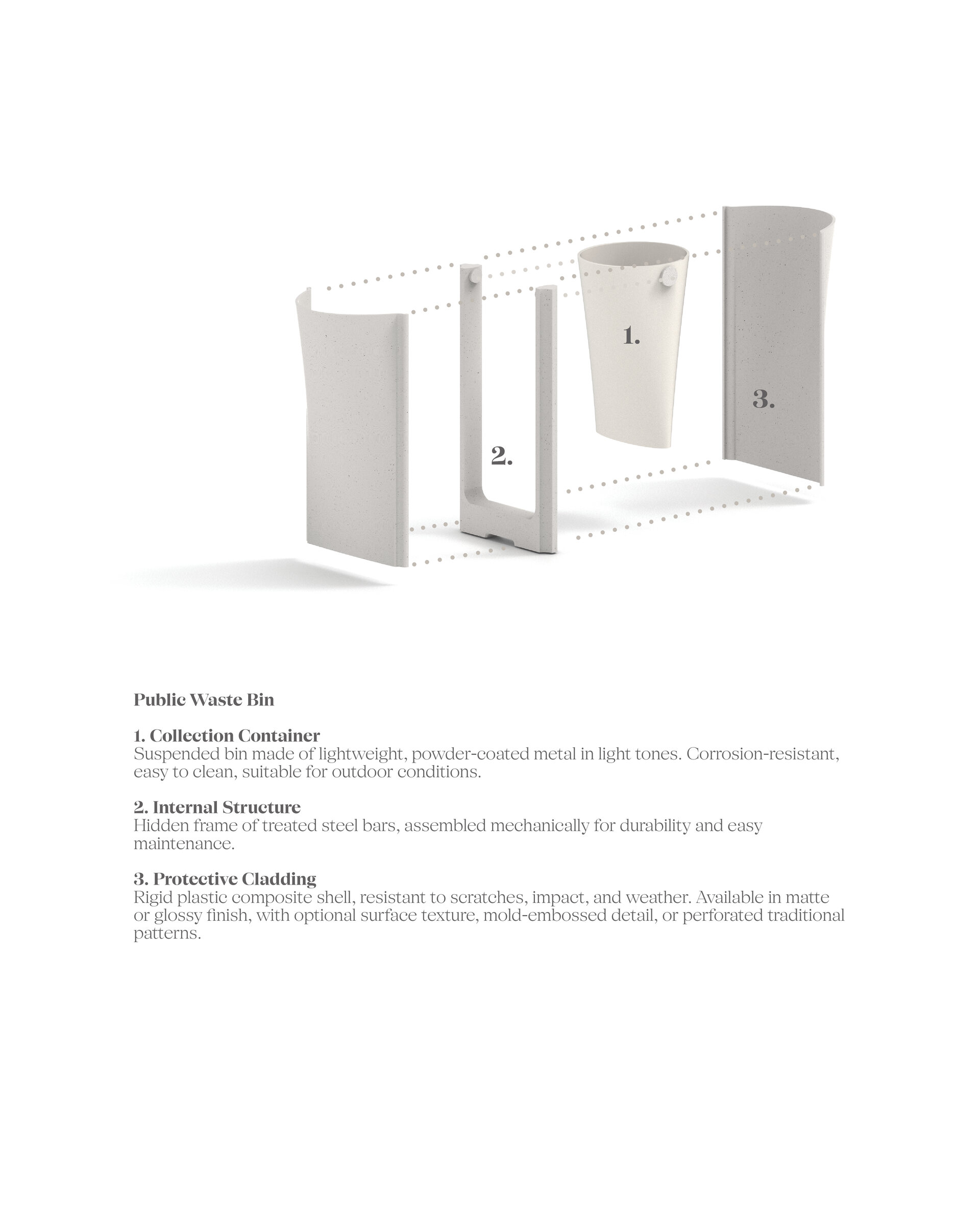
The material palette combines mineral composites, aggregates, metal, ceramics, and treated timber, selected for durability and low maintenance. Surfaces range from smooth and polished to granular and textured, while perforations and details may incorporate patterns inspired by local craftsmanship.
Hidden metal structures provide stability and are protected against corrosion. Materials are selected to withstand UV radiation, high temperatures, salinity, and humidity, responding to Dubai’s demanding climate.
Modularity and adaptability
Components can be extended, replaced, or reconfigured without major interventions. The system can serve both permanent interventions and temporary conditions, including areas undergoing construction or urban transformation. NOOR therefore provides a coherent yet flexible framework capable of responding to different districts, programs, and public-space conditions while maintaining a shared urban identity.
Public Architecture

- Open Landscape
- Ground Zero Pavilion - Concrete as Witness
- Prapori. Church and Centre for Studies and Research – CDS Paris
- The Land of the Deer, Masterplan
- The Architecture of Sound Bell Tower of Vatopedi Monastery, Mount Athos: Relocation of the Existing Bells and Installation of 12 New Bells
- Urban Intervention / NOOR - The Calligraphic Light of Form
- Development of the Dâmbu River, Ploiești
- Urban Toilets / Fields of Safety - Beyond Sanitation
- Benești Kindergarten
- Tetris Park
- Dracula Land
- Nest
- New Museum of Architecture and Design Helsinki, Finland
- Monarch
- The Museum of History and the Future Turku, Finland
- Palliative Care Hospital. Architecture as Support for Dignity and Care
- EduHub - children’s educational center in Urlați, Prahova
- Day center for children. Architecture for Support and Inclusion
- ADR Nord-Vest headquarters
- Mihai Bravu Convention Center and Hotel
- Christo and Jeanne-Claude Centre for Contemporary Art, Gabrovo, Bulgaria
- Center for Therapies and Social Services
- Moldova HiTech Park
- Beclean Masterplan
- Mizil Secondary School No. 1 – Architecture for Education and Community
- Intervals


