5% Blue Flat
Authors’ Comment
The project went beyond the scope of an architect's missions. Our involvement was design & built (from concept and design to execution and implementation).
The renovation was carried out entirely by us – 2 people (architect and engineer), at the beginning of the journey, with the desire to learn how everything is done, experimenting through implementation.
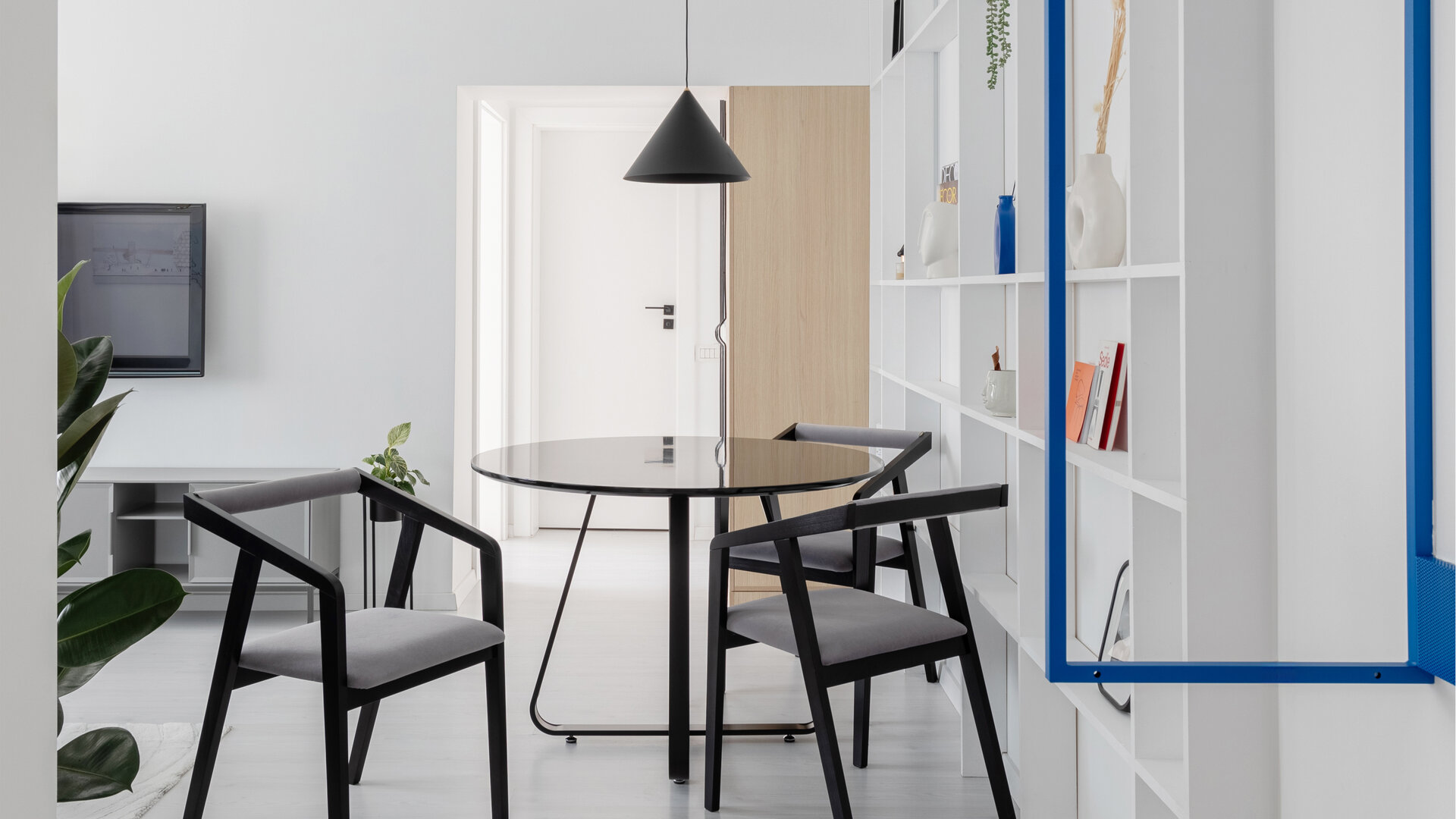
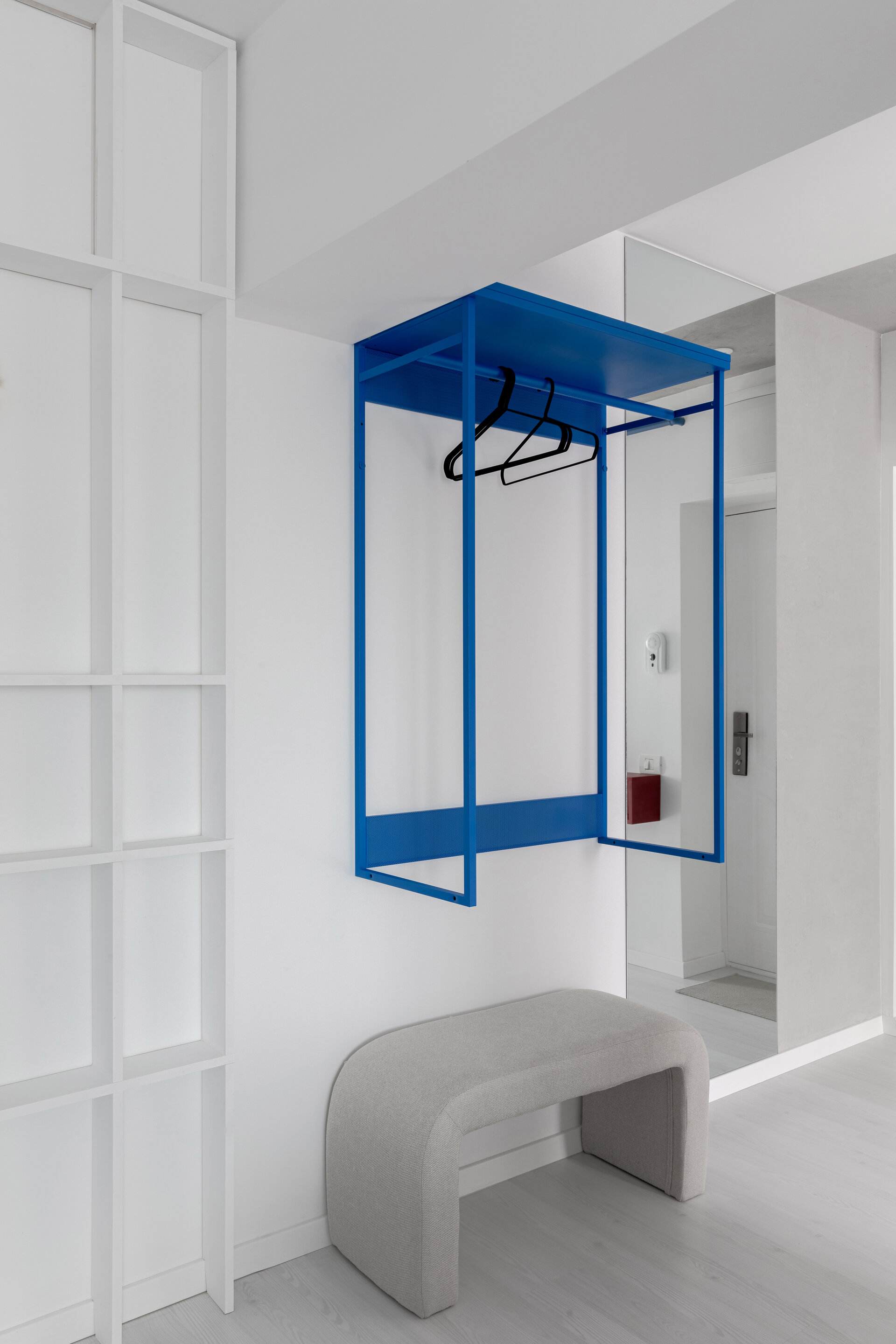
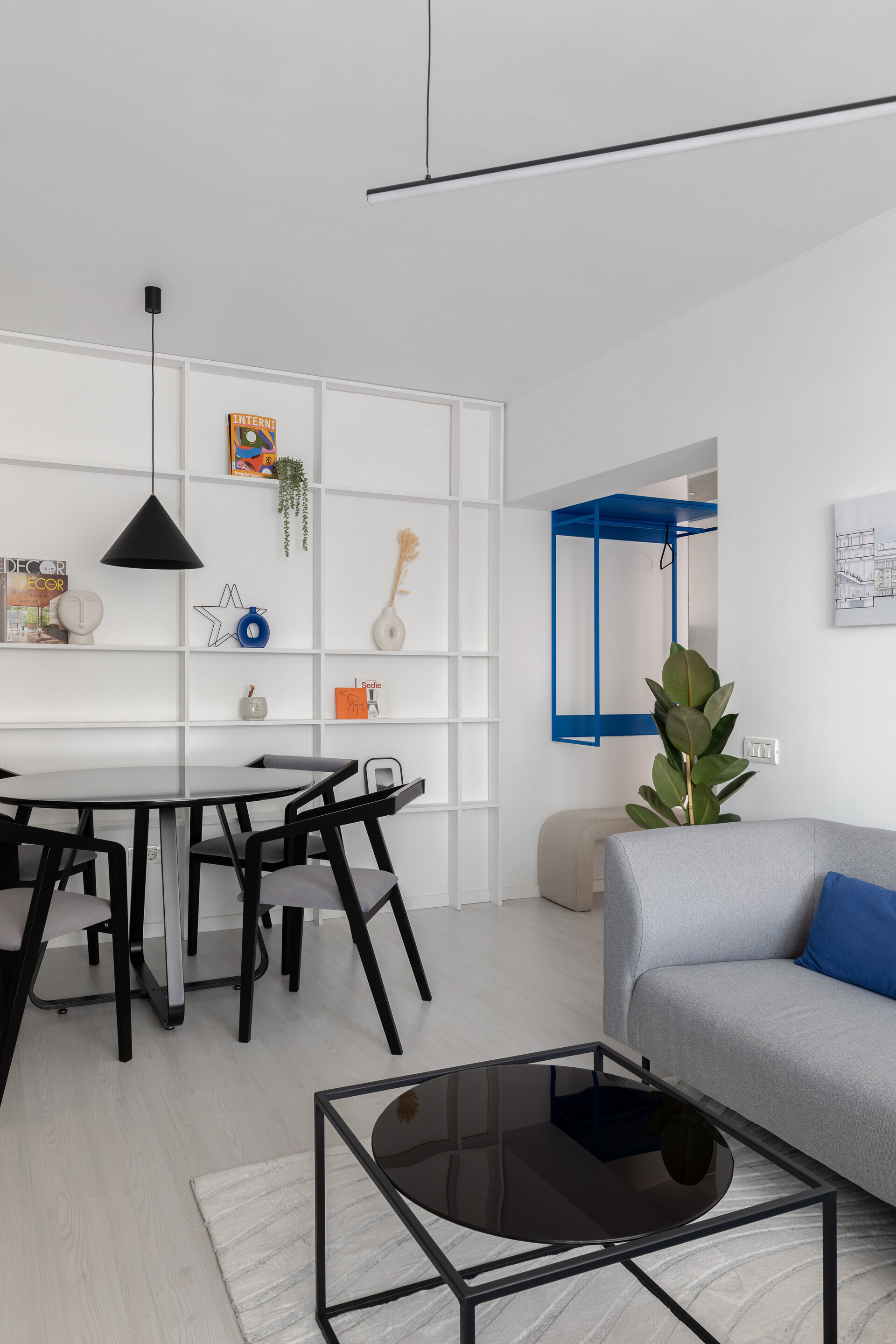
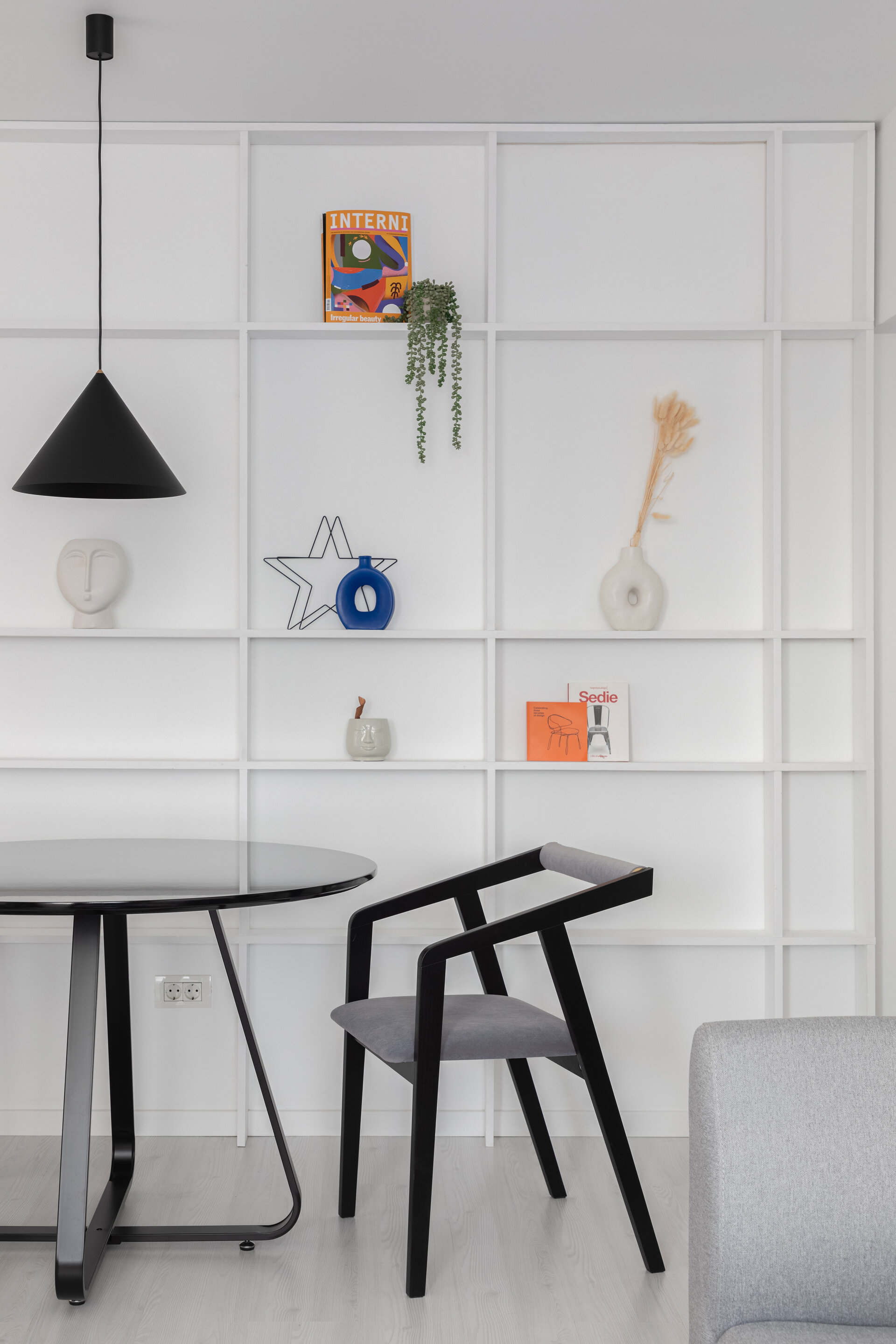
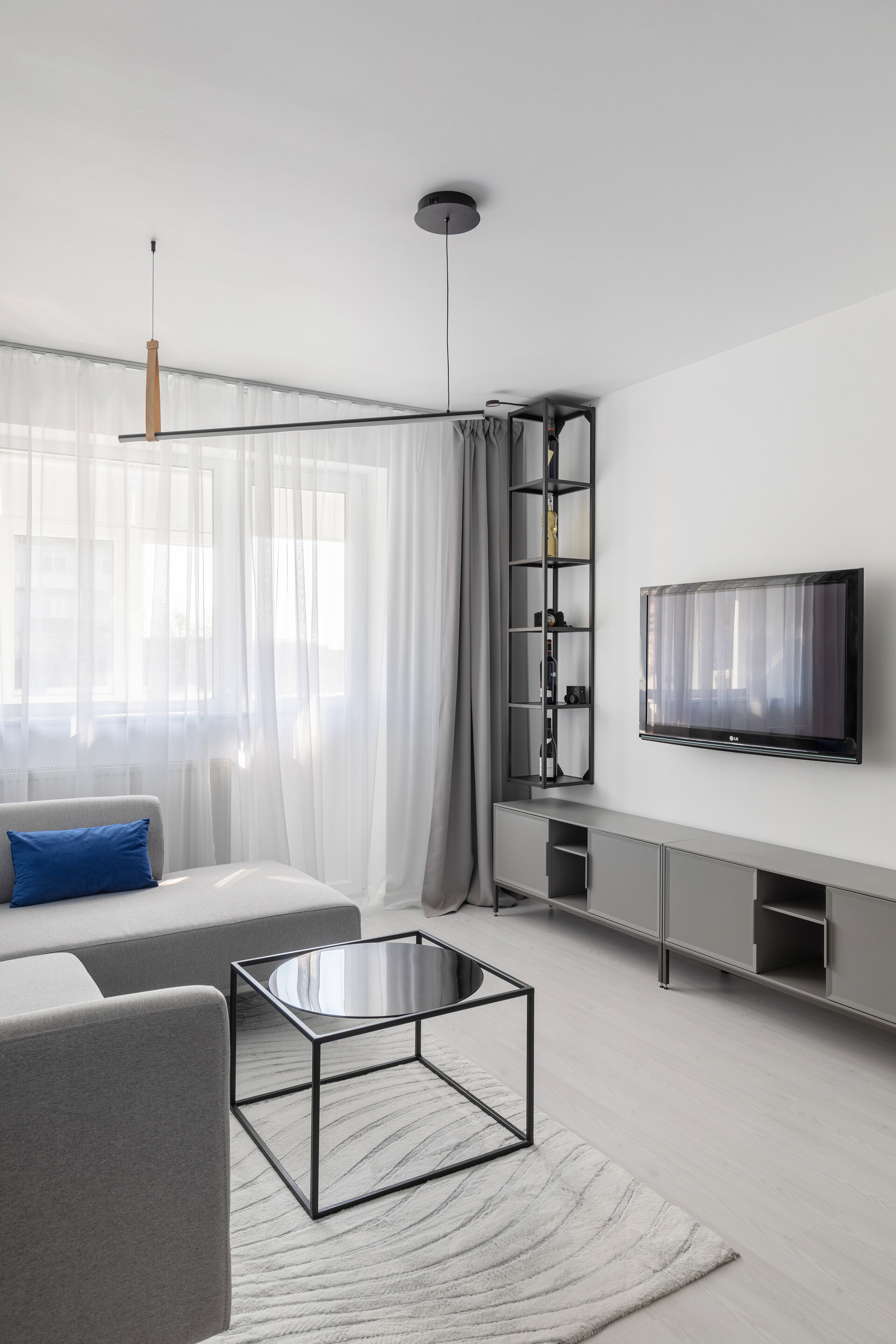
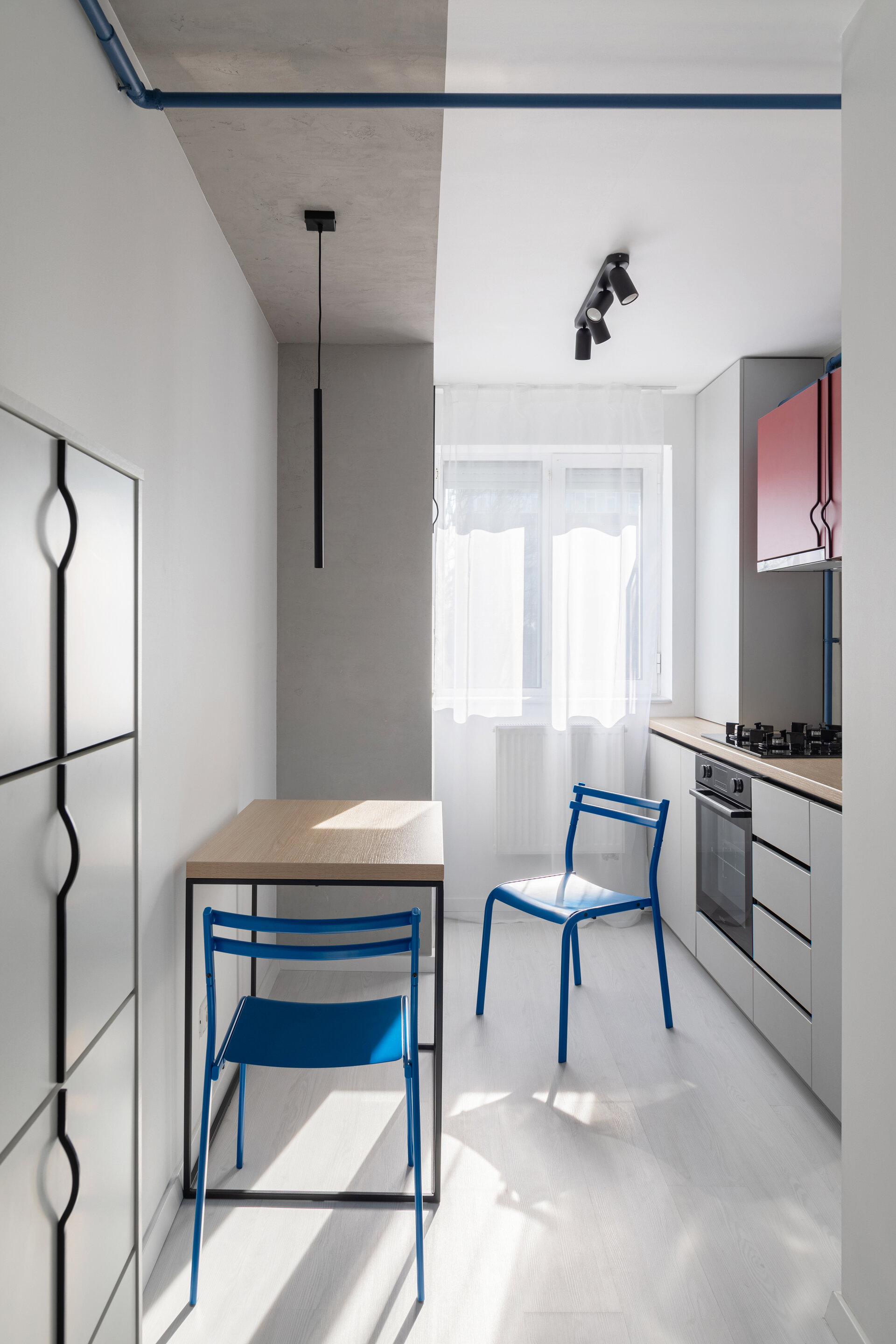
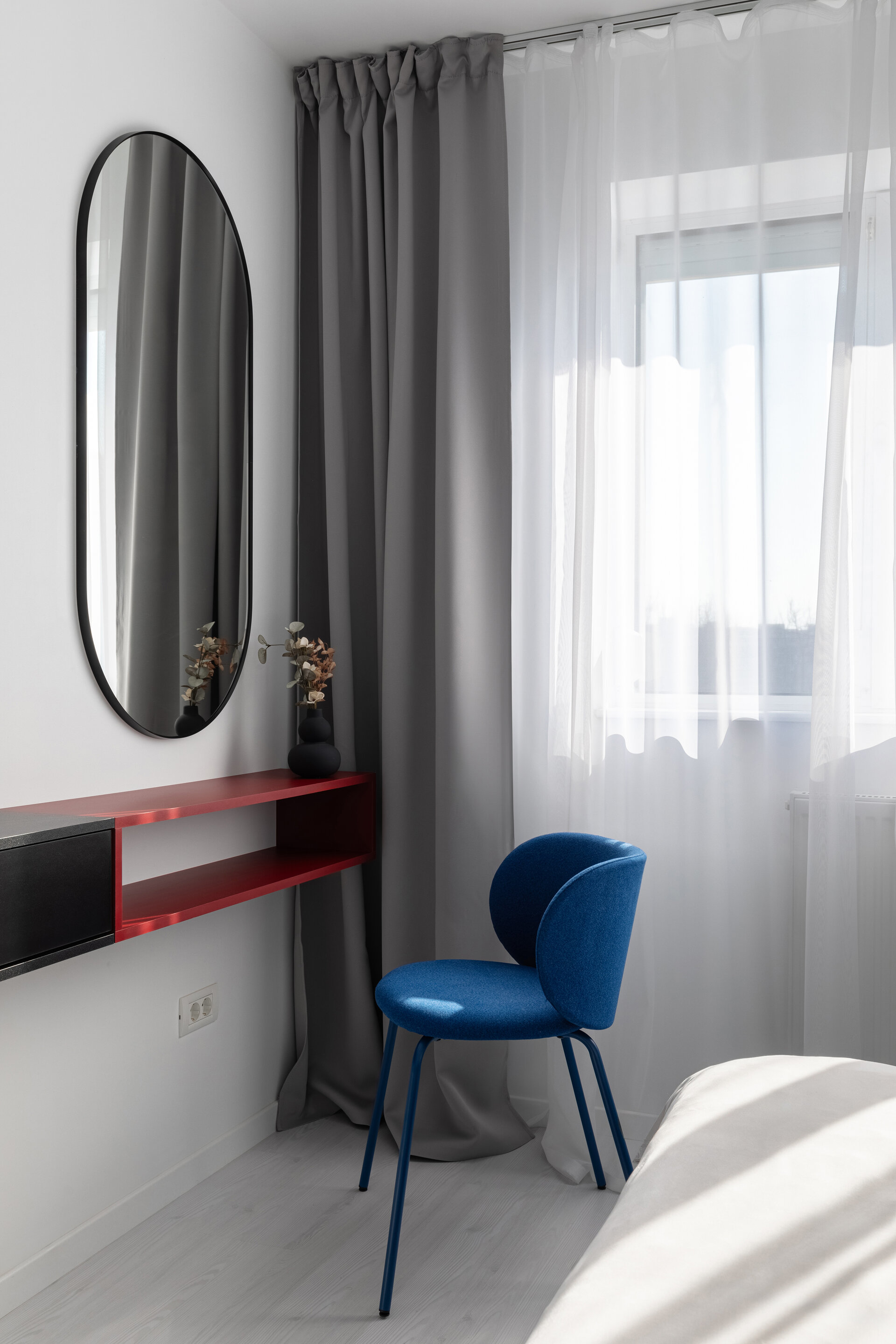
The small usable area, the passage from one room to another, the existence of 2 closets and many doors, led to the desire to visually free up the space, to emphasize functionality, ergonomics and simplicity.
The design and execution lasted over 4 years, only on weekends. The initial plan with the organization in stages and deadlines defined over a period of 1 year was not respected due to our lack of experience. You cannot correctly approximate the implementation of an operation if you have not done it before, and this renovation had numerous operations in areas that we were unfamiliar with. Unfortunately but fortunately at the same time, we encountered all sorts of situations where we improvised, asked questions and watched hours of tutorials. The visits to building materials and DIY stores were countless. As well as mistakes, changes, adaptations, annoyances, nerves, pains and frustrations.
We went through all the stages of a complete renovation. From getting rid of furniture (4th floor, no elevator), to stripping finishes, doors and breaking walls, to pouring rough and self-leveling screeds, wall cladding and installing plasterboard ceilings, including finishing them with putty and washable paints.
We realized that there are many special tools that can make our work easier and we rented them all: a crane for installing plasterboard on the ceiling, a small concrete mixer for screeds, a 45-degree skirting board cutter, a PPR pipe gluer, etc. We purchased many products several times, because the first ones we chose were always wrong (drill, saws, screws, etc.)
The electrical, heating and sanitary installations stage was the most difficult, with many challenges. There were completely new things, hard to understand technical information, things you don't usually interact with but are essential in functionality.
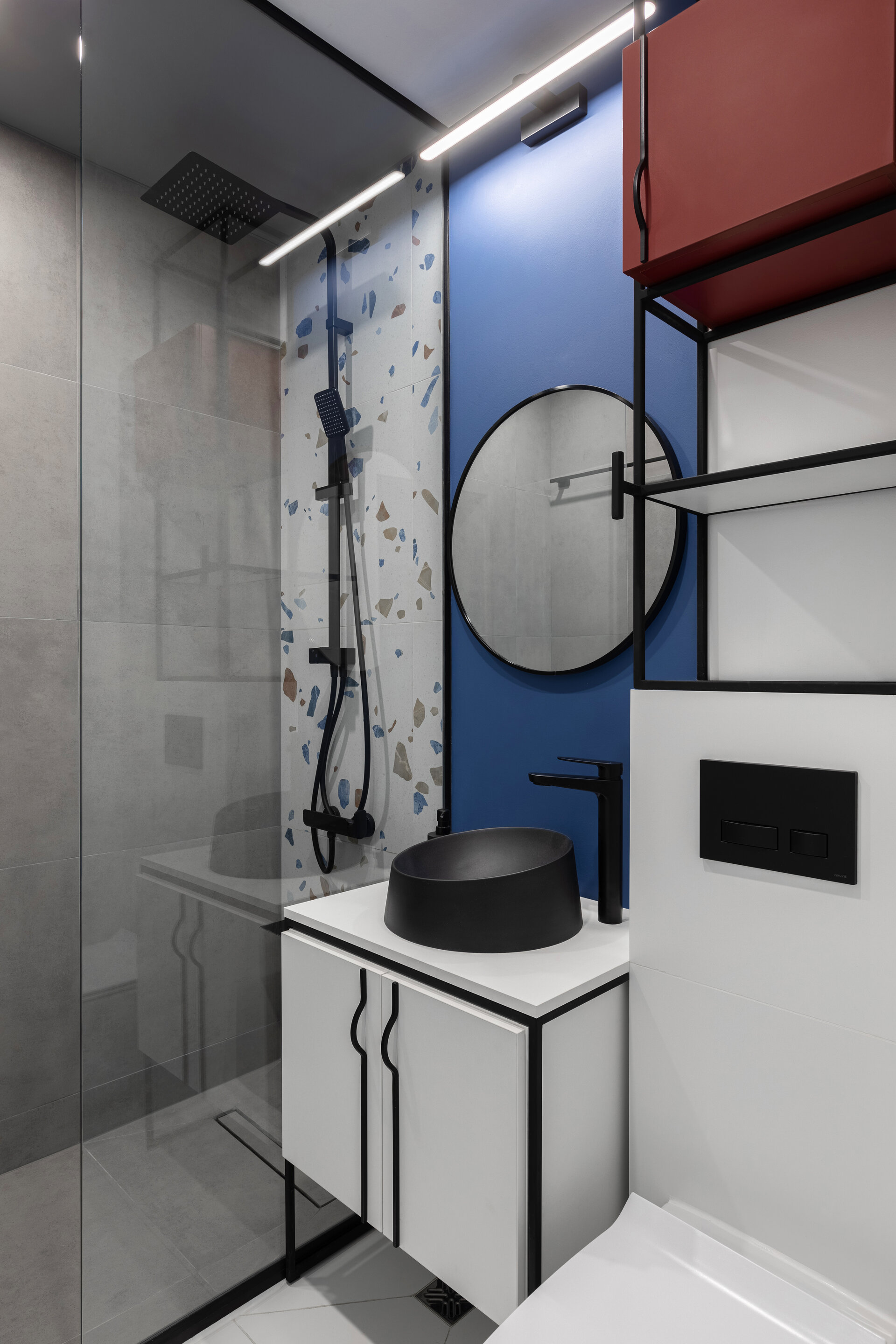
This stage lasted approximately 2 years (mostly documentation and research), then mistakes and redoes. It is important to mention that we often found ourselves in the situation of inventing solutions to achieve a certain effect, appearance, detail (for example, raising the metal frame of the glass shower screen in a functional but also aesthetic way). What we learned from this experience is that anything can be done, you just have to find the person/team willing to listen, try and find solutions.
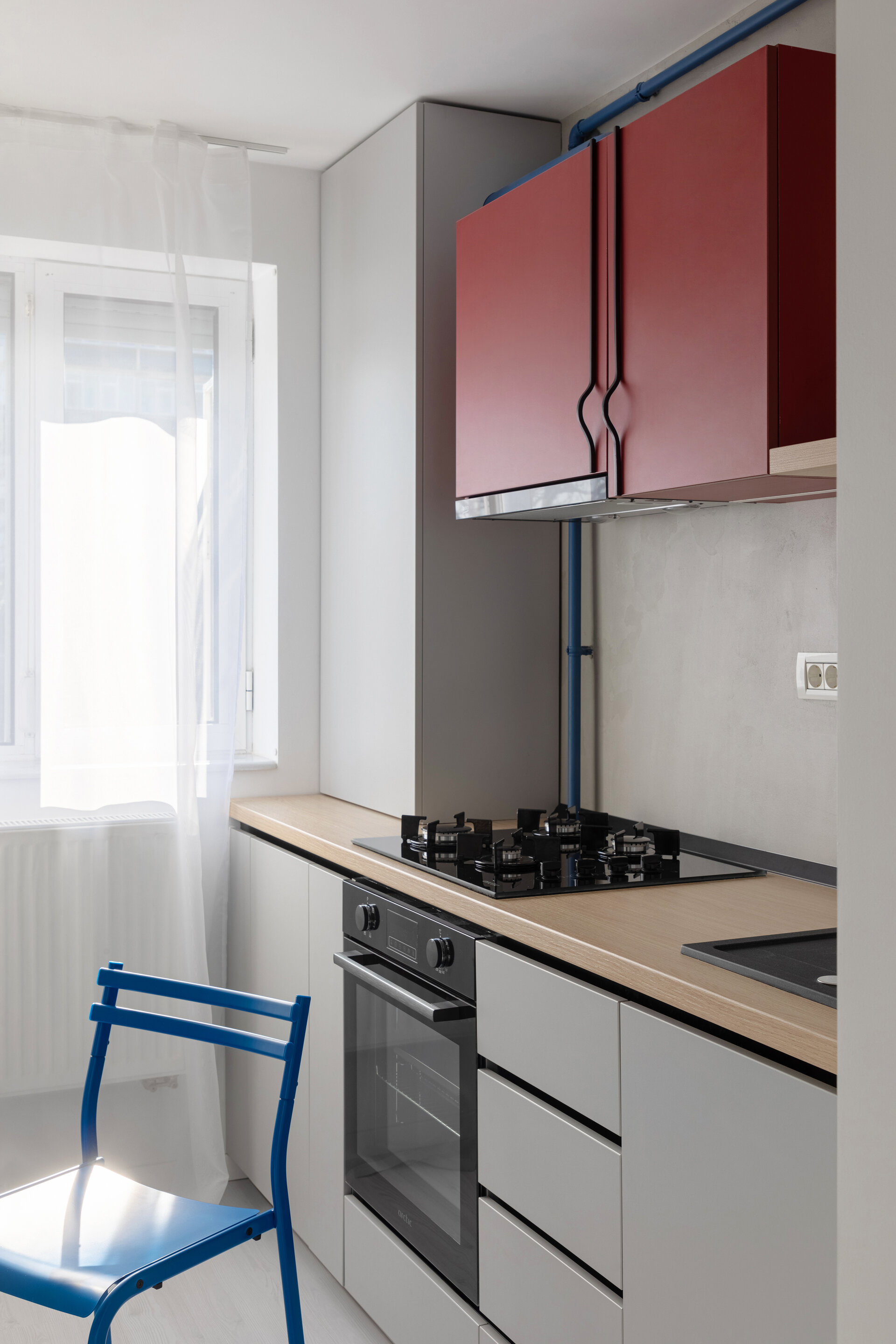
The finishing stage was full of frustrations, because the pressure of the details hung very heavily over our unexperienced heads. Tiles were laid, tiles were taken down (2 times) due to 2 misaligned joints. Parquet was laid, parquet was taken down due to alignment to a crooked wall. The front door was painted with 3 different types of paint and over 10 coats to make it white. We applied decorative plaster as a finish for the kitchen counter top and 4 types of varnish until we reached the application of microcement due to its resistance to degreasing and heat.
Although we didn't know from the beginning which products were right or how to put them into practice, we always arrived at them through trial and error. We always started with a detail in mind, a certain image we were aiming for and we didn't stop until we achieved it, no matter how long it took and how many times we redid something. We grew up surrounded by the famous "if it works, it's enough" but we wanted it to work and look good at the same time.
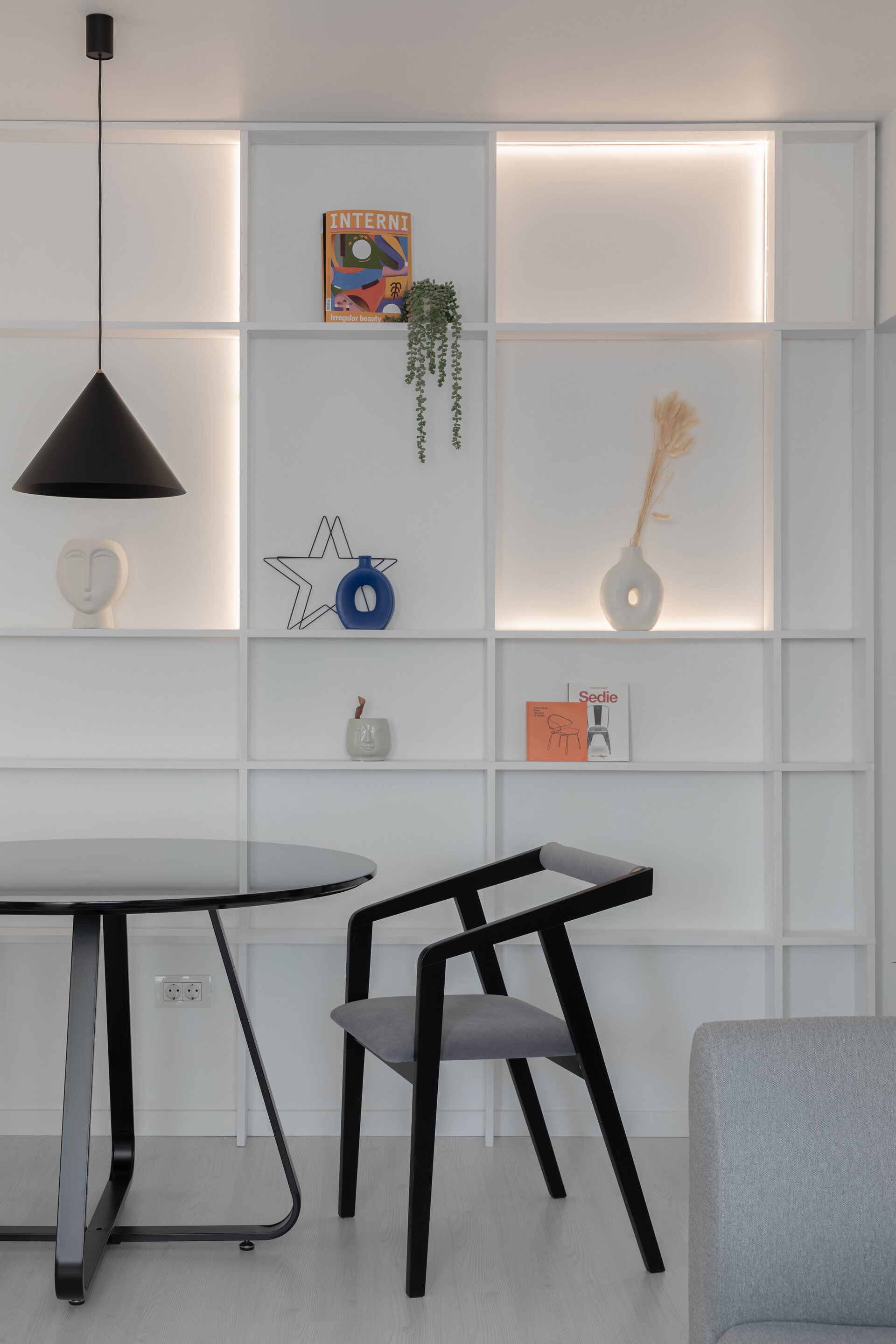
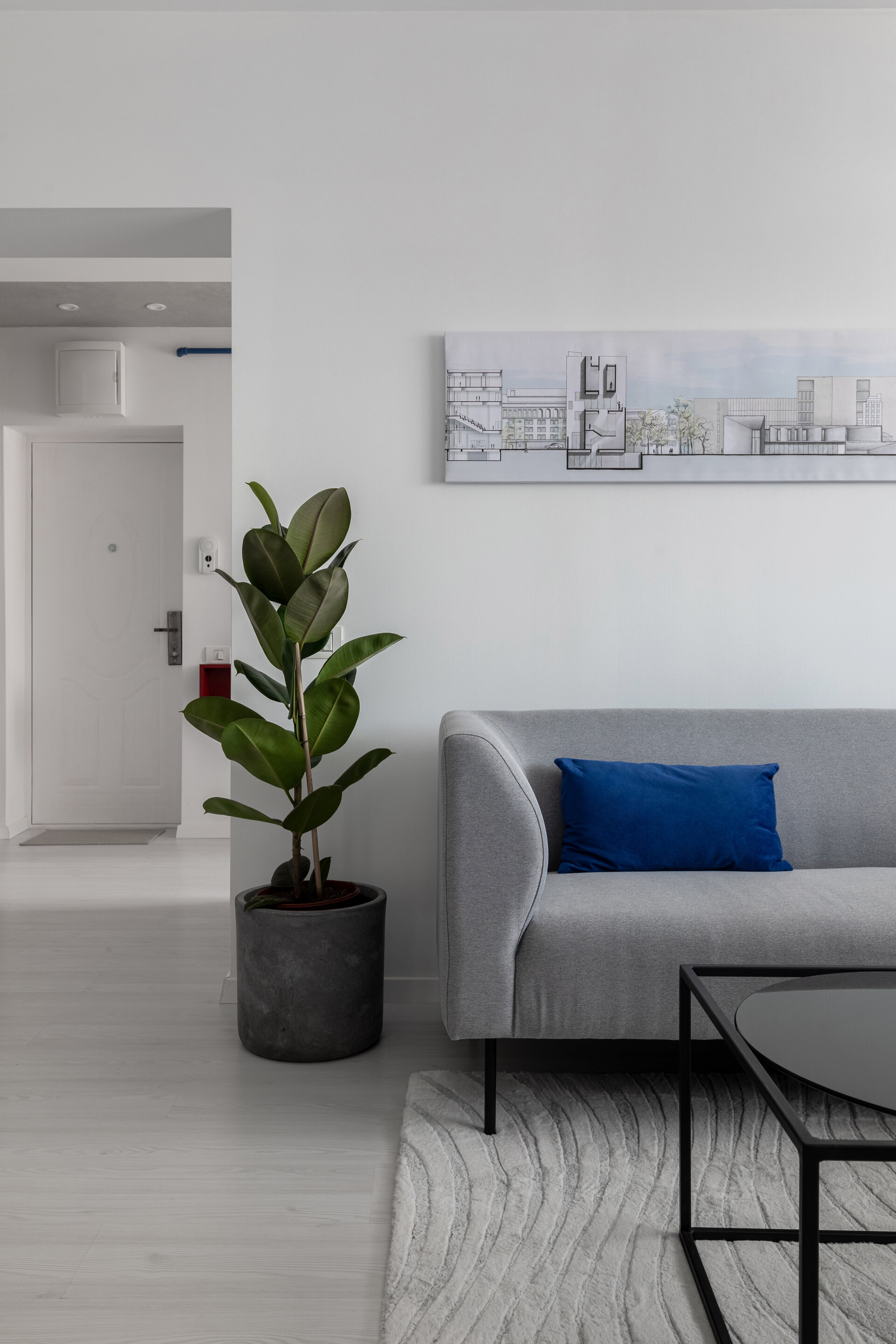
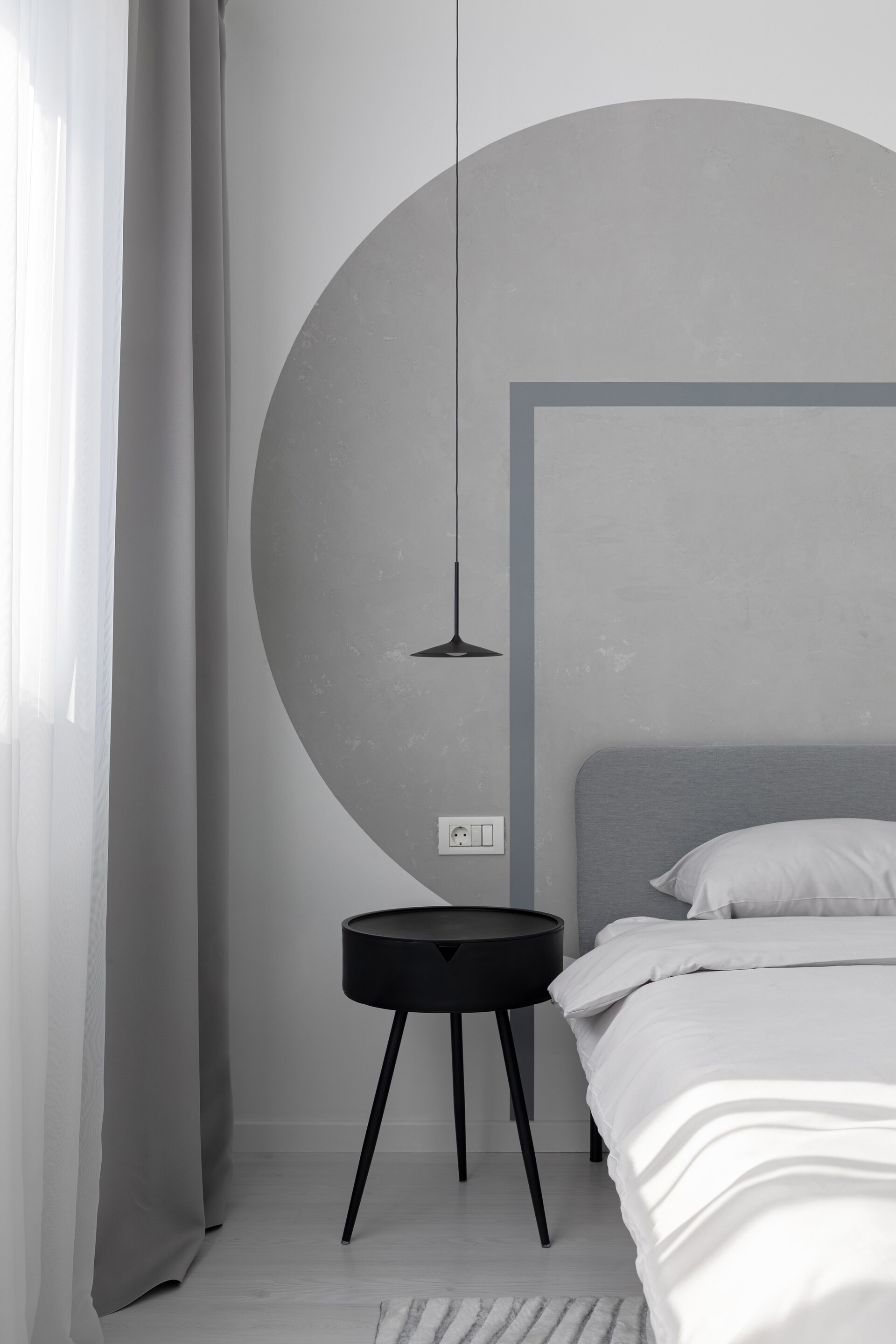
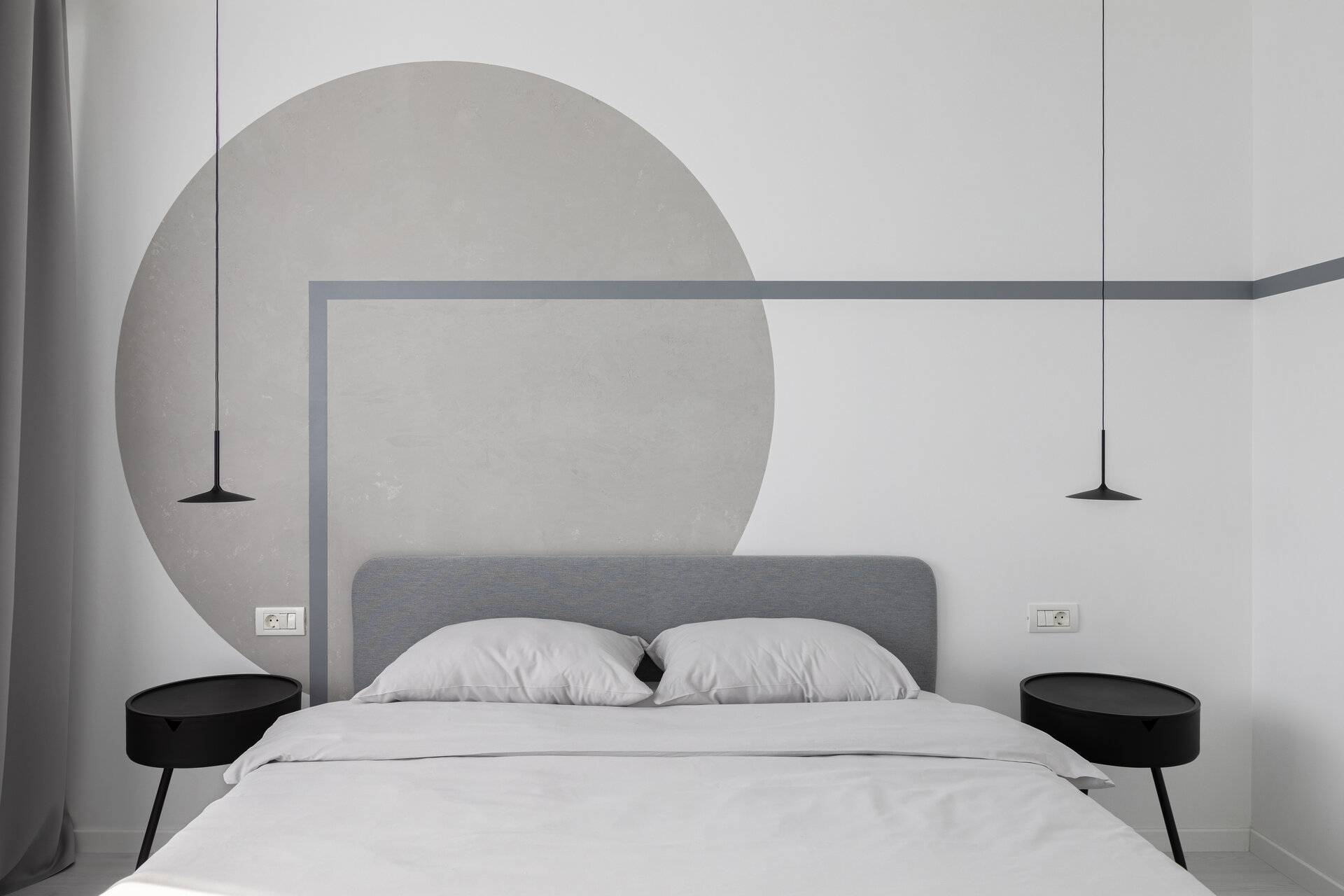
The plasterboard and adhesive wall cladding has a maximum vertical and horizontal inclination of 0.3 degrees, executed over a period of 6 months. We knew that we would have problems with the furniture later if the walls were crooked, so we didn't rush. After bringing the space to white, we entered familiar territory. We had already installed standard furniture, purchased decorations and curtains, drawn paintings - we calmed down, it was almost ready.
The total investment from a financial point of view was 20k euros. The time invested, however, was very long (4 years of weekends, with approximately 12 hours of work per day), the huge workload and the difficulty is incomparable (carrying and doing it with physical strength).
This project has a value and significance that is very difficult to describe in words. The experience gathered over these years is the basis and foundation of the knowledge with which I set out on my journey in the field of interior design and architecture. I ow have the confidence that even though I don't know many things (yet), I can do anything.
Interior Residential Design

- I House interior design
- It’s a wrap
- Apartment in interwar villa
- Heartwarming apartment
- Apartment in Cotroceni
- Uptown Haven – An Urban Refuge of Sophistication and Comfort
- Apartment O25 – Harmony Between Minimalism and Comfort in 4 Rooms
- AE Apartment
- C House
- M House
- House RR
- Apartment CS
- 5% Blue Flat
- Darian House
- Golden Light Apartment
- TD Apartment
- Industrial Groove Flat
- Aura Apartment
- “Chocolate Velvet” House
- Zestful Apartment
- The Labyrinth of colours of grey
- Oslo Freesia
- Laurel Brandy
- Pearl Marshmallow
- Speculum Studio
- PP apartment
- Cișmigiu apartment
- Living in Reflection
- Single family house design in Otopeni
- U house
- Banu Manta SRB apartment
- Moi Project
- The Hidden Gem
- O. Apartment
- A place TO BE
- Fairy tale
- Sea Infinity
- Bold Beige
- Art at Home
- Apartment for two young people
- Layover - a stop between destinations
- Lunaria
- DDP Apartment
- D. House
- Red Bunker
- House B
- Dristor Airbnb
- SST House
- Magheru Airbnb
- Whispers of Light
- Reflected Shadows


