- Prize of the “Interior Space Architecture / Interior Residential Design” section
I House interior design
Authors’ Comment
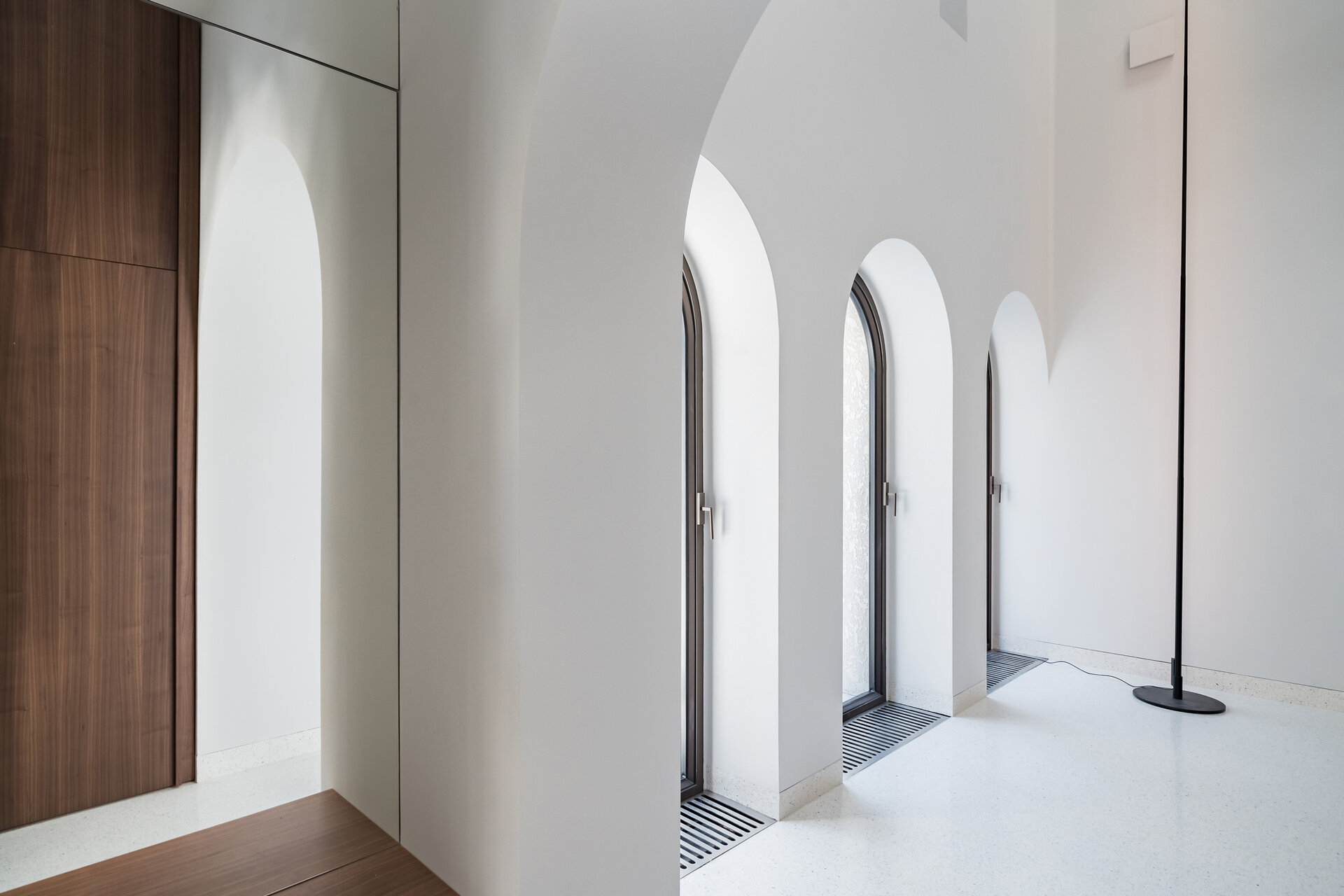
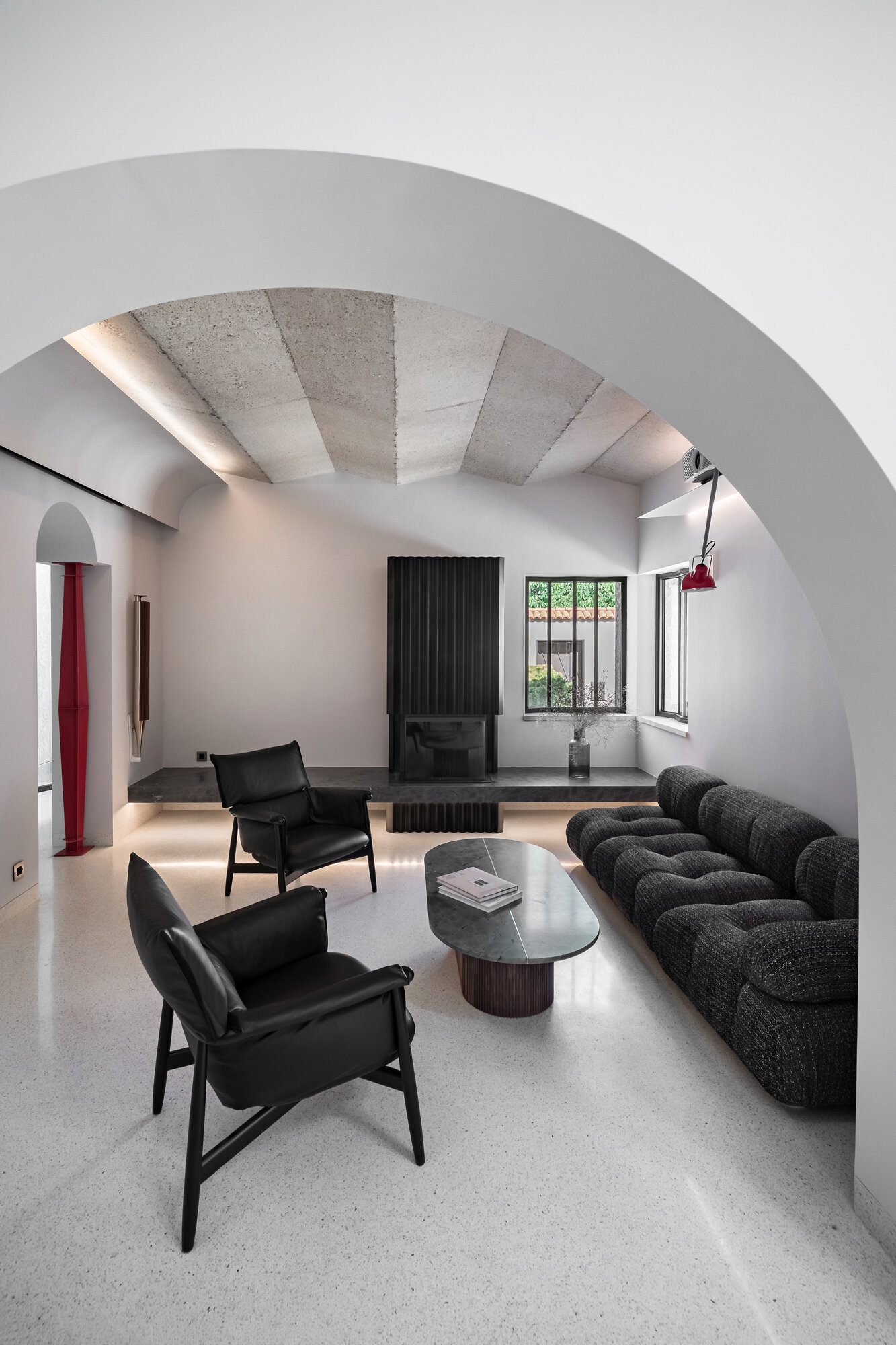
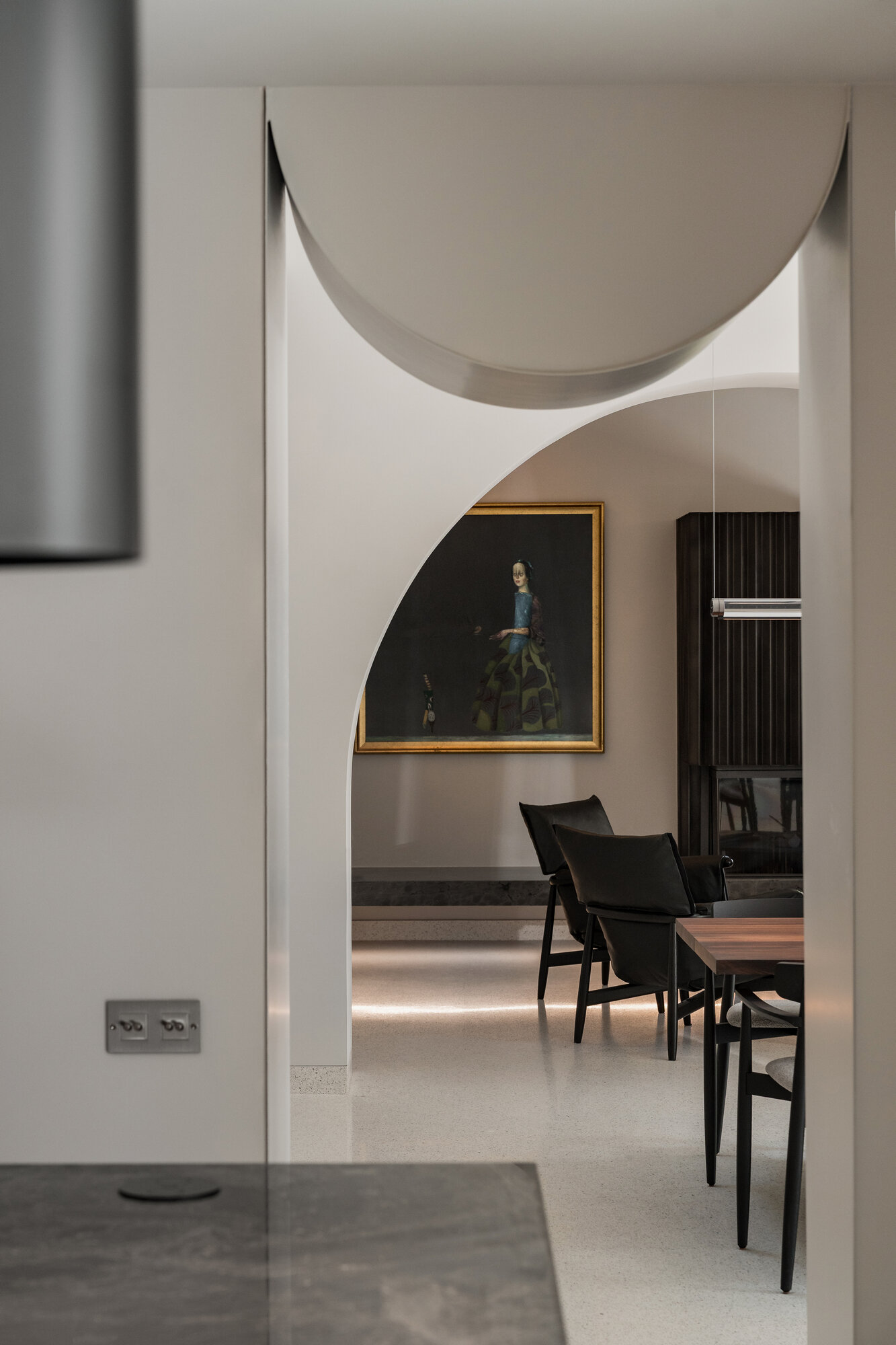
The present work is a rehabilitation and an almost complete reconfiguration of an existing Florentine-Moorish style house — a style often found in interwar Bucharest in houses and apartment buildings known for a high quality of architectural expression. Its most frequent elements include calcio vecchio plaster, twisted spindle columns with floral capitals accompanying arches or windows, arched, broken, or flattened openings, consoles with buttresses, and prominent window sills.
The challenge of the project was to reintegrate the original architecture with its specific details and materials into a building that is completely reconfigured on the inside and partially on the outside — a modern structure in which technology and functionality support spatiality. The process was long, beginning in 2020, and involved three building permits: two for the main body and one for the gazebo extension and walkway construction. The main volume was extended vertically, the arched windows lost their parapets, and the street-facing window was reconfigured to receive more morning light from the east.
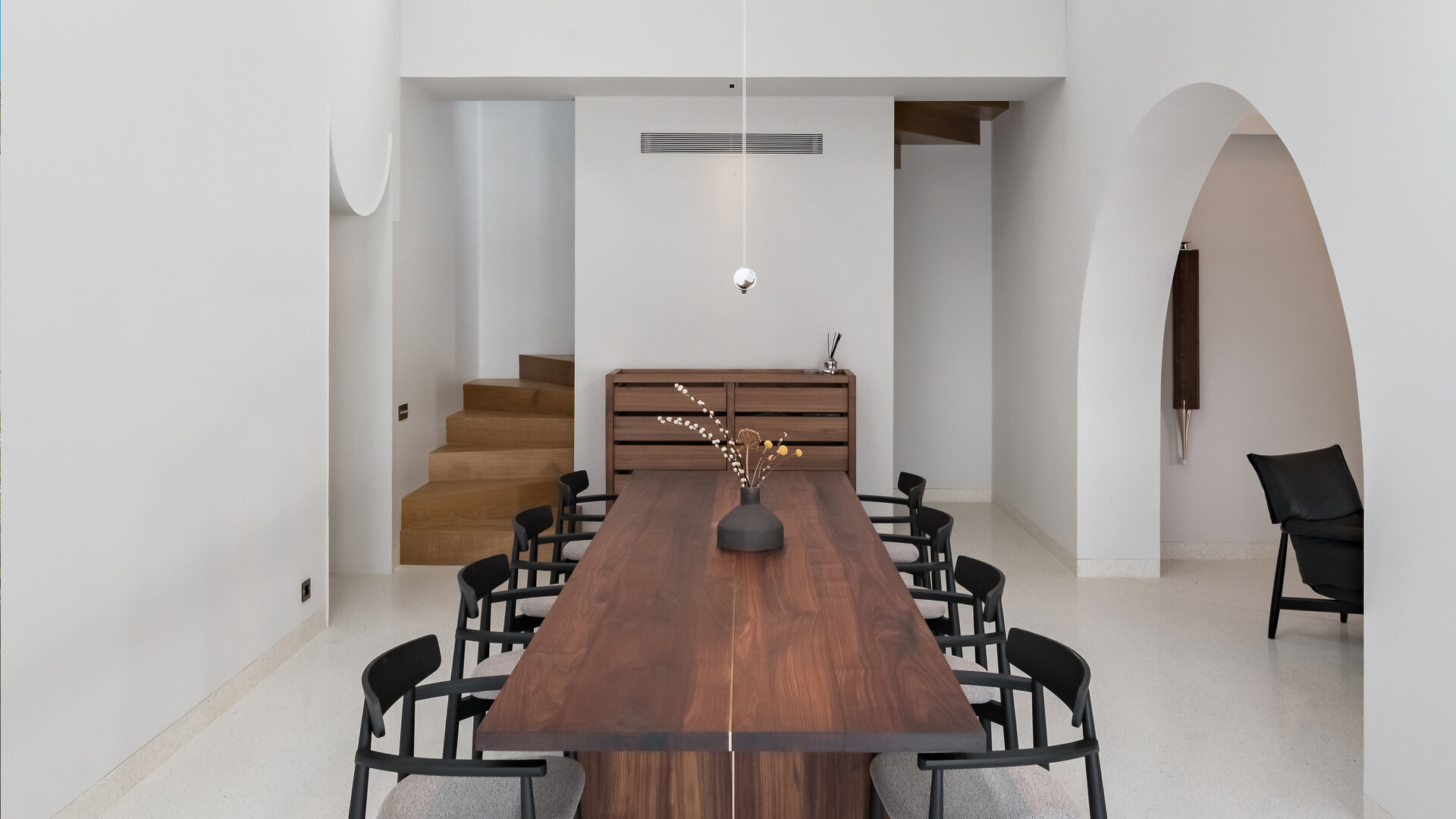
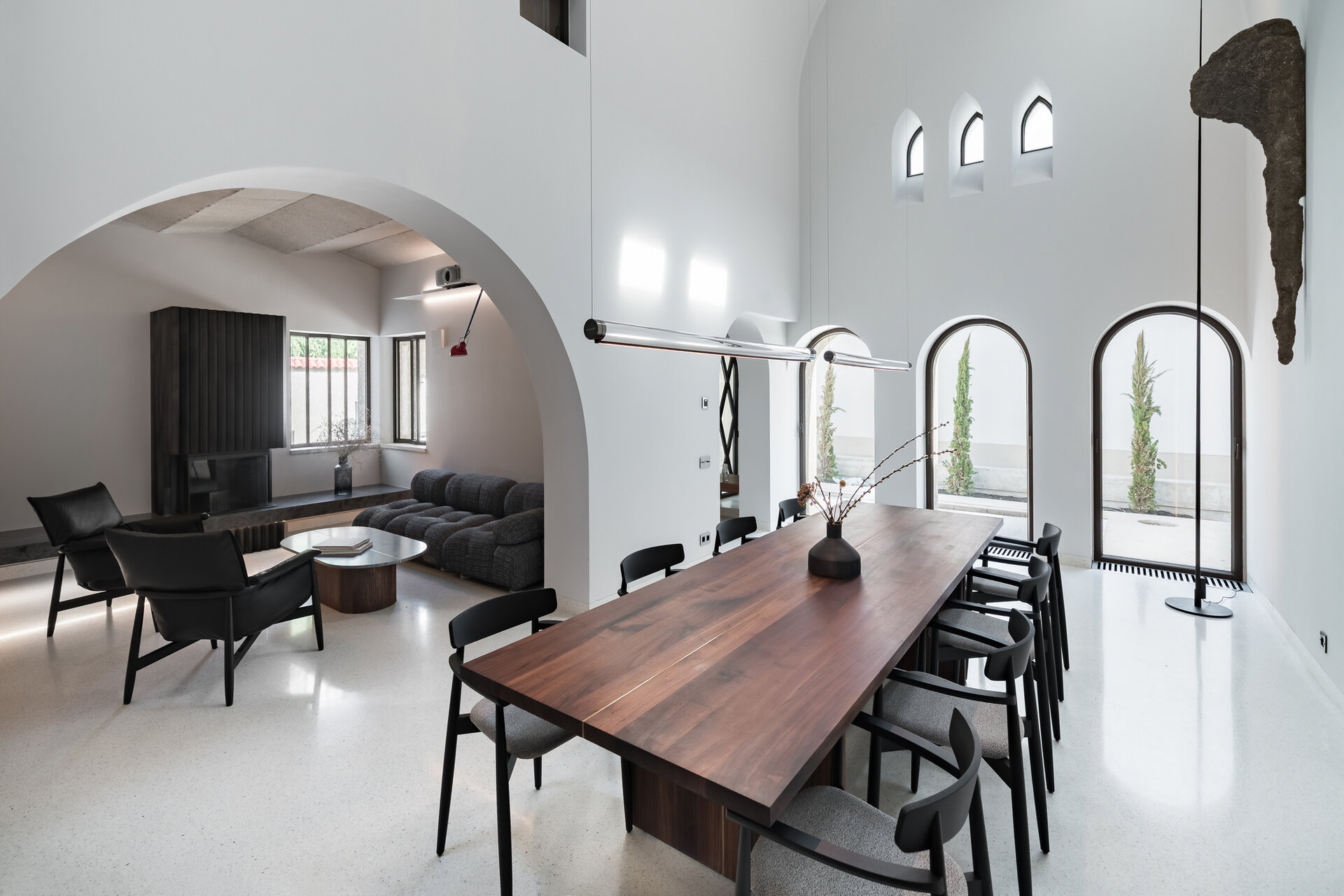
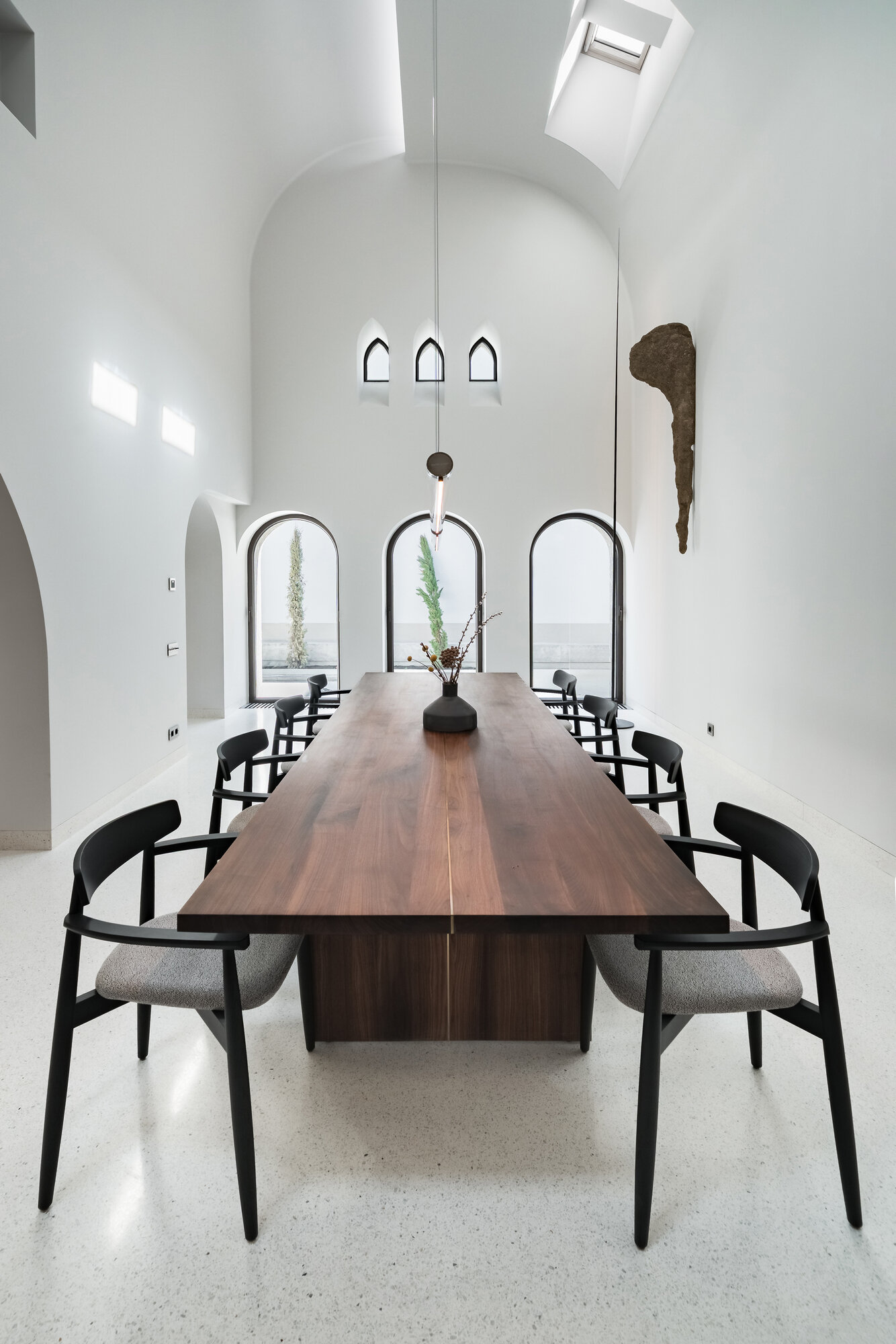
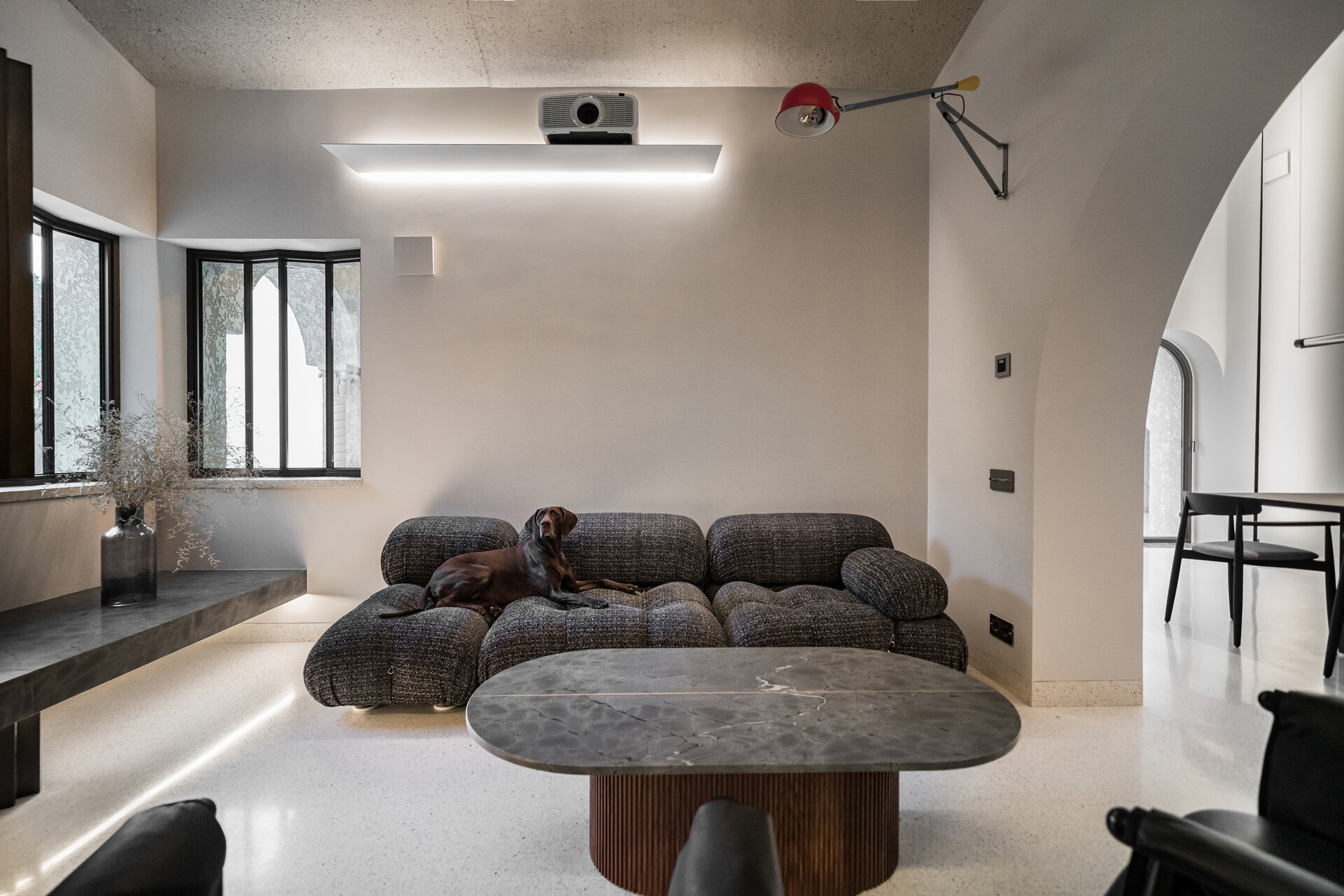
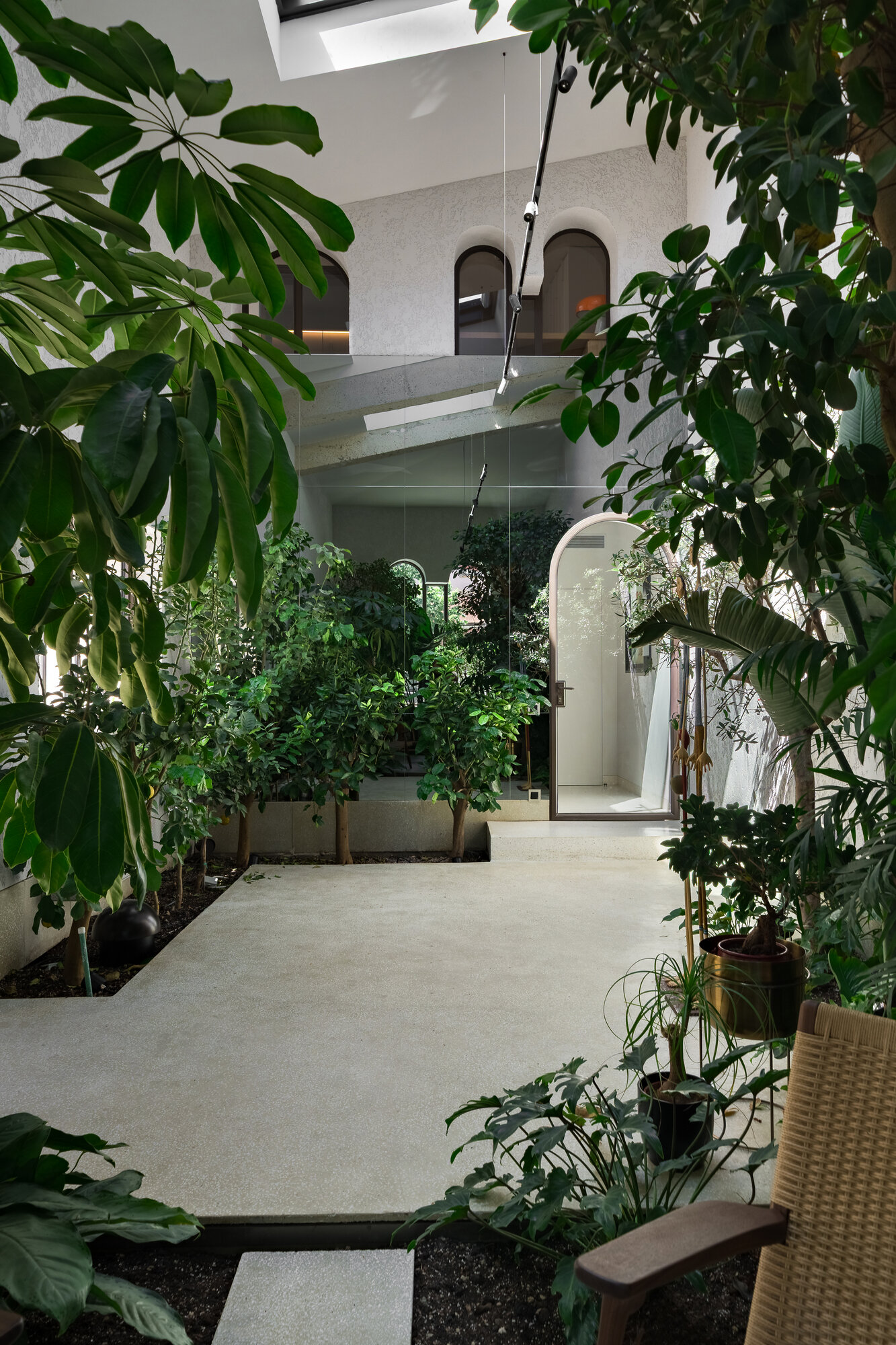
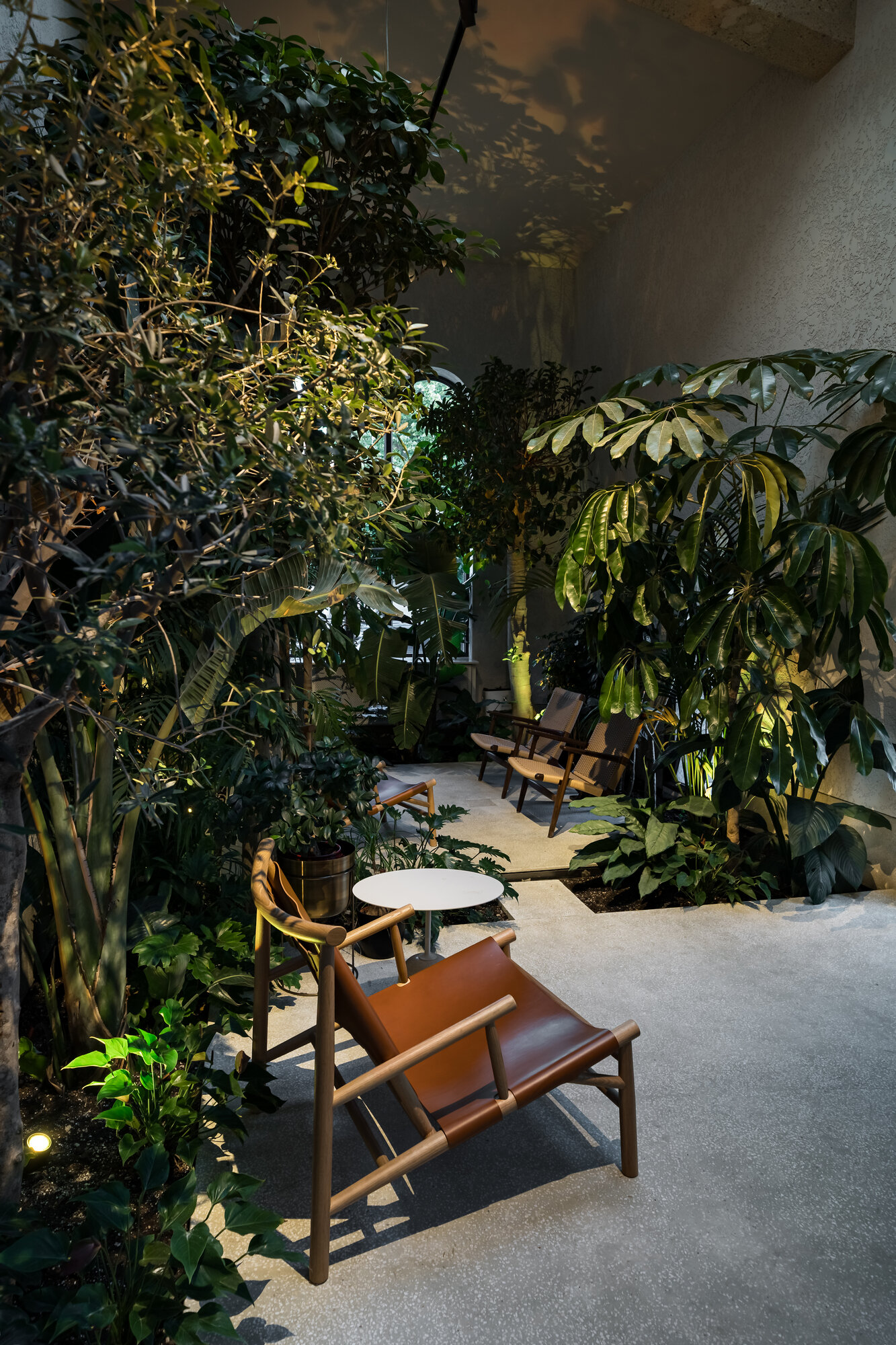
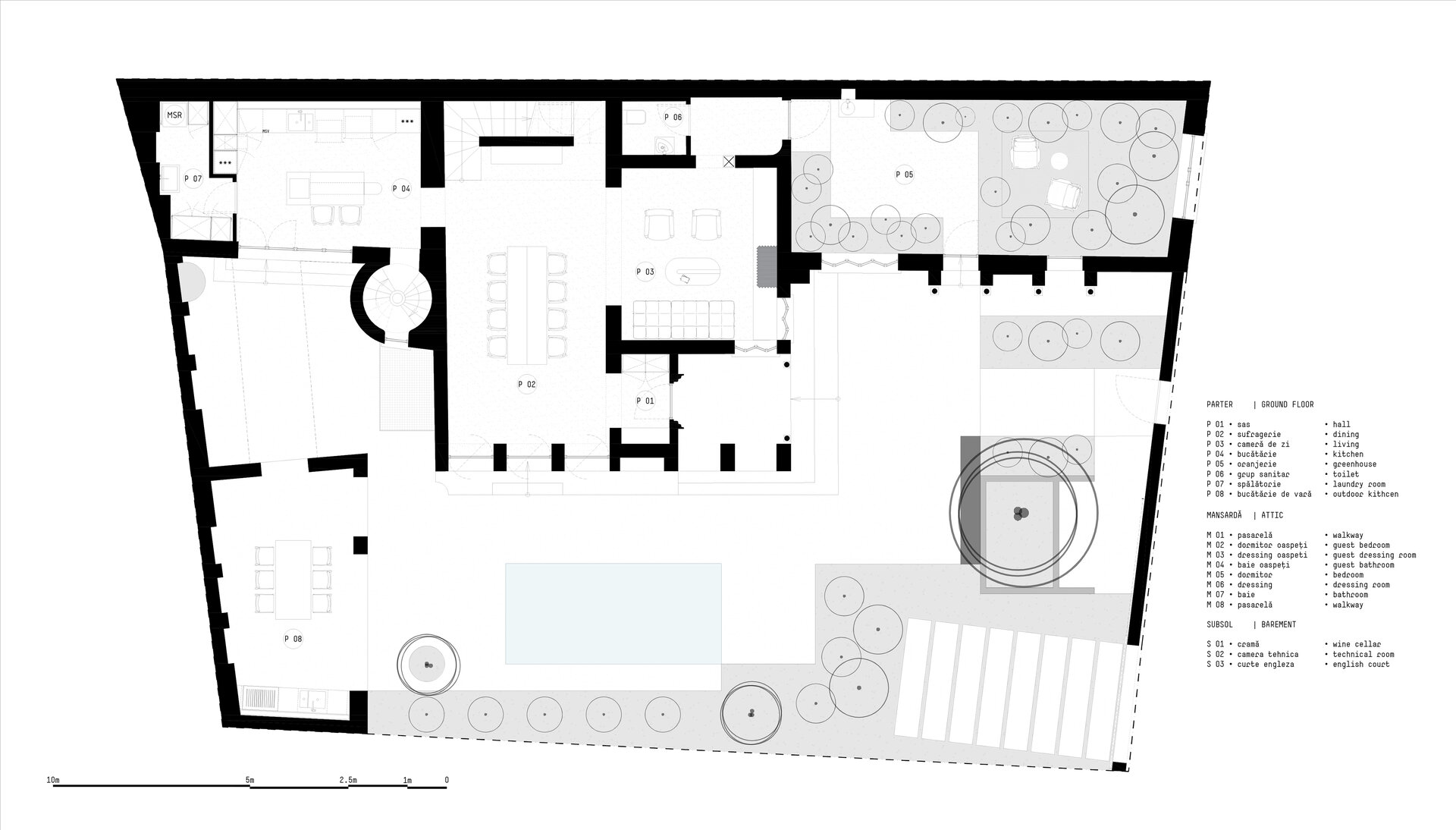
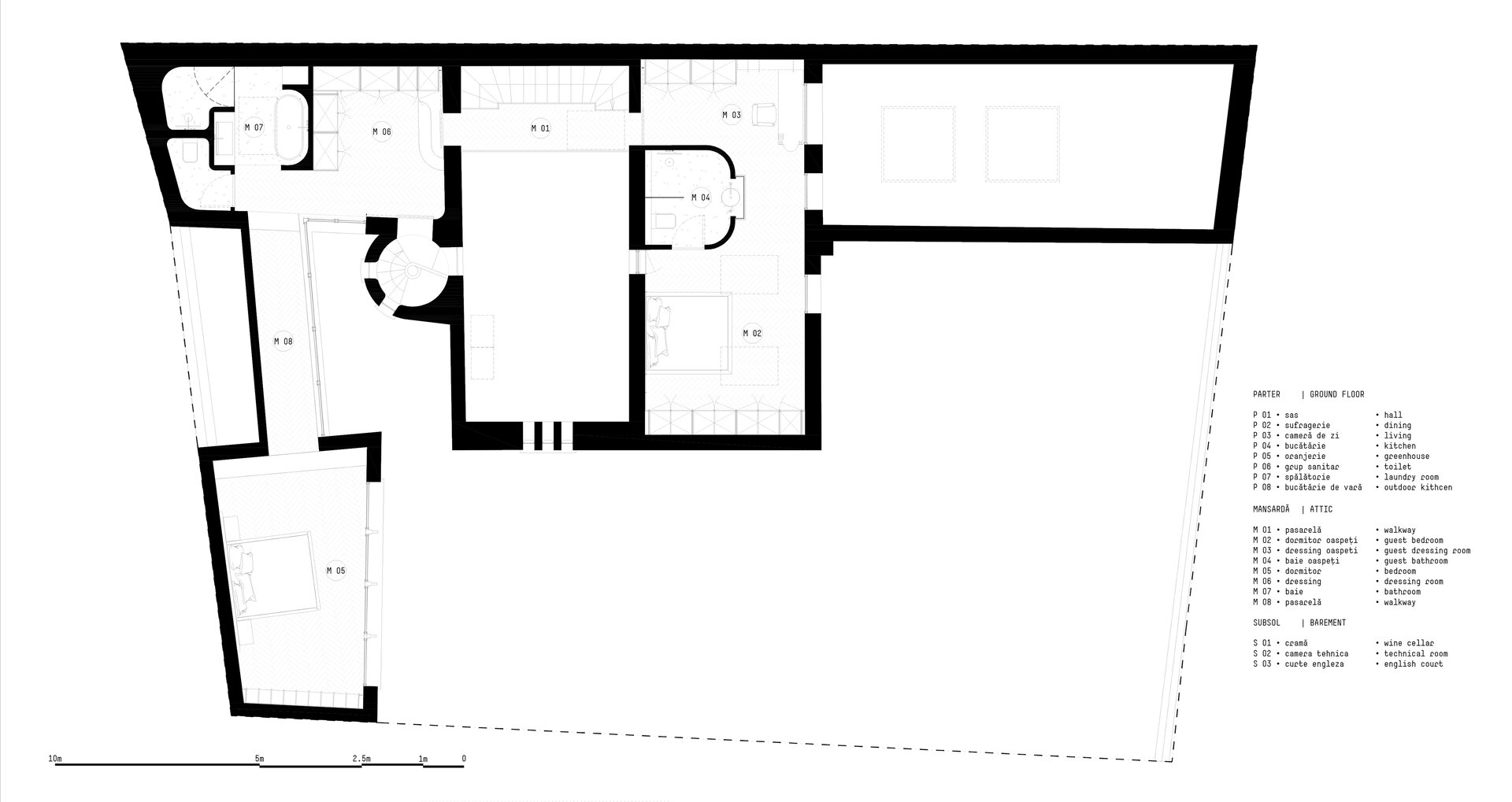
The spatial reconfiguration was necessary to enable a functional reorganization and to bring scale and light into the interior. Through this, we created two major vertical spaces — the orangery and the dining room — which became the most representative living areas of the house, complemented by the living room and the exterior pavilion.
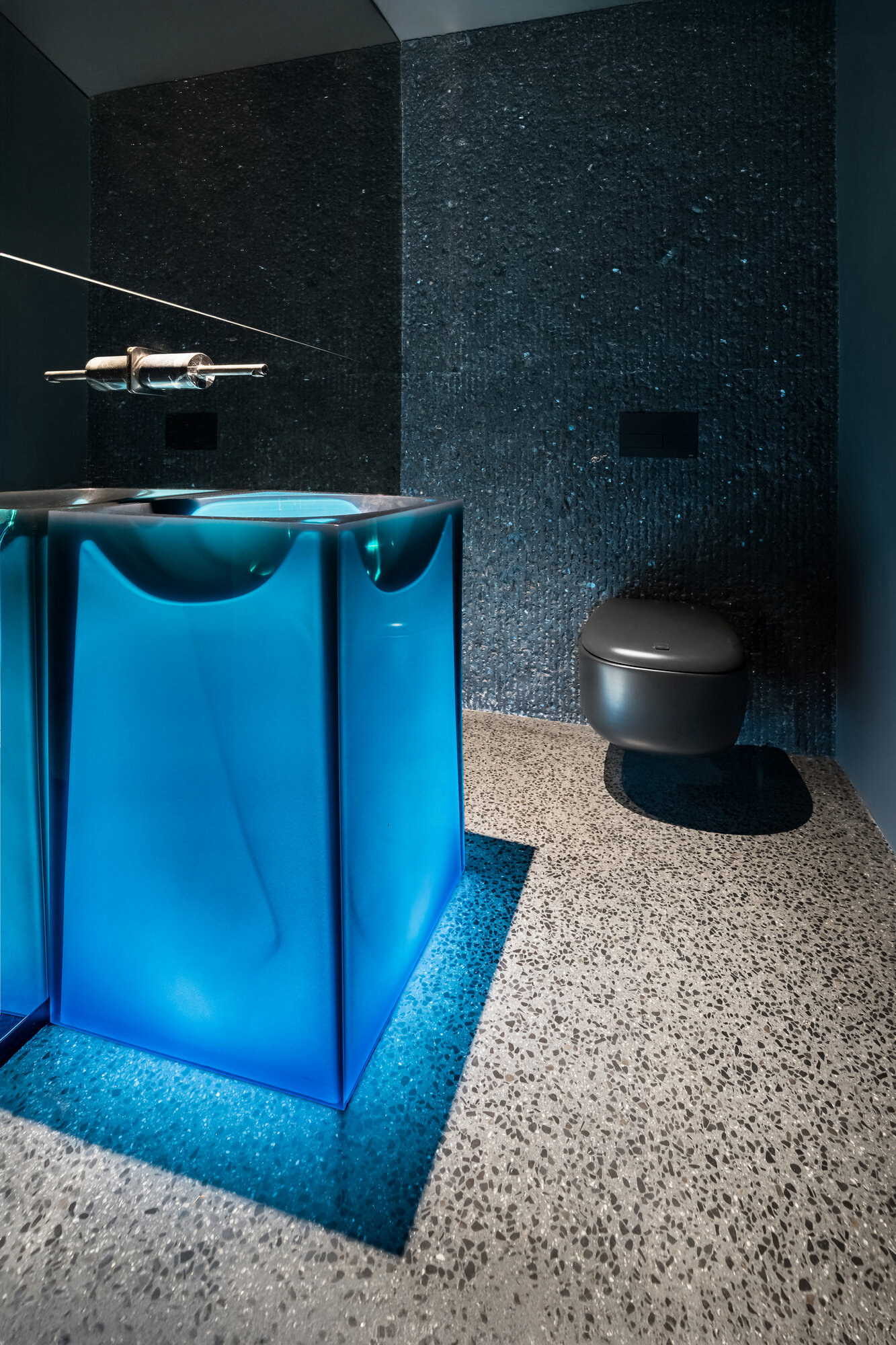
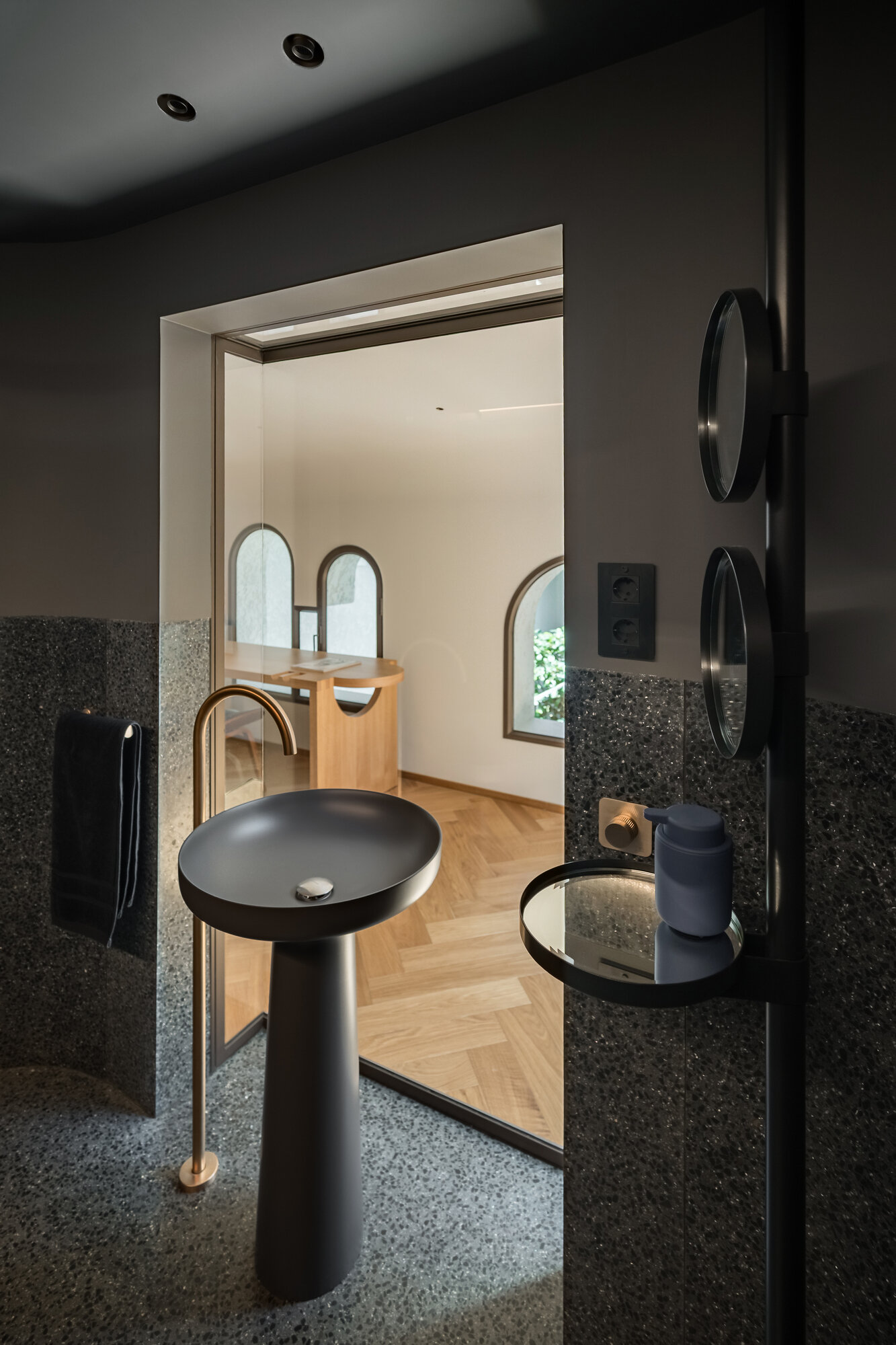
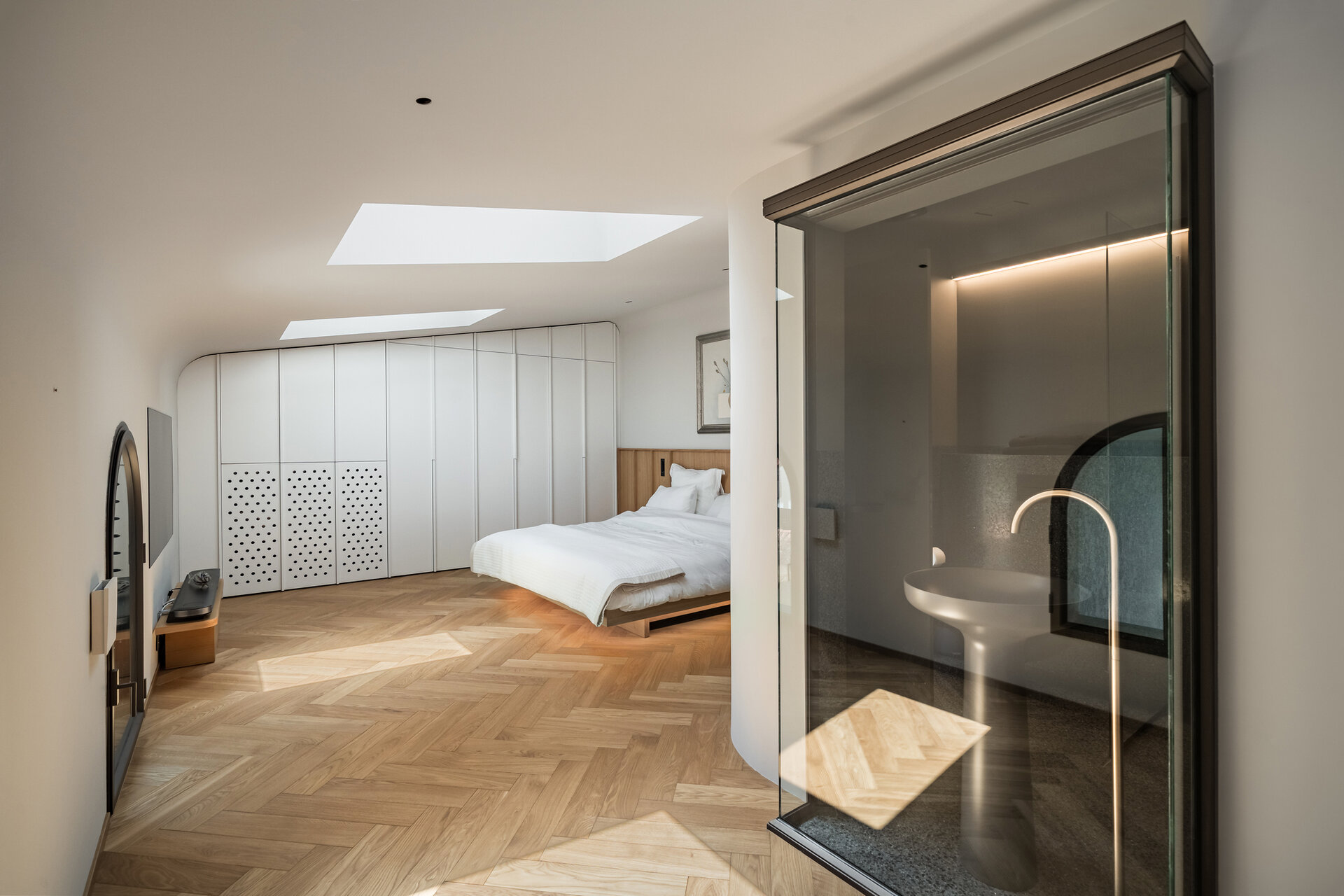
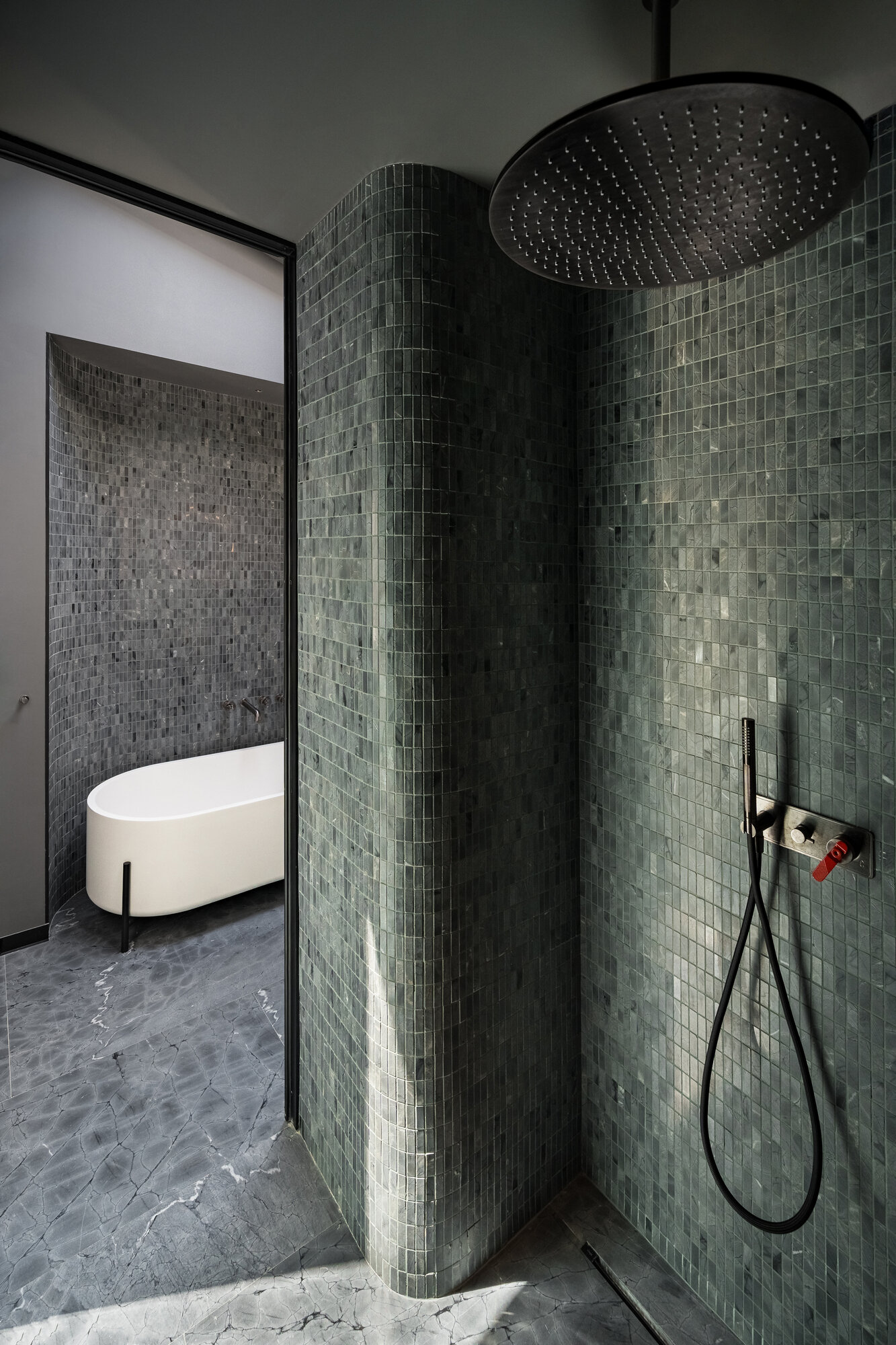
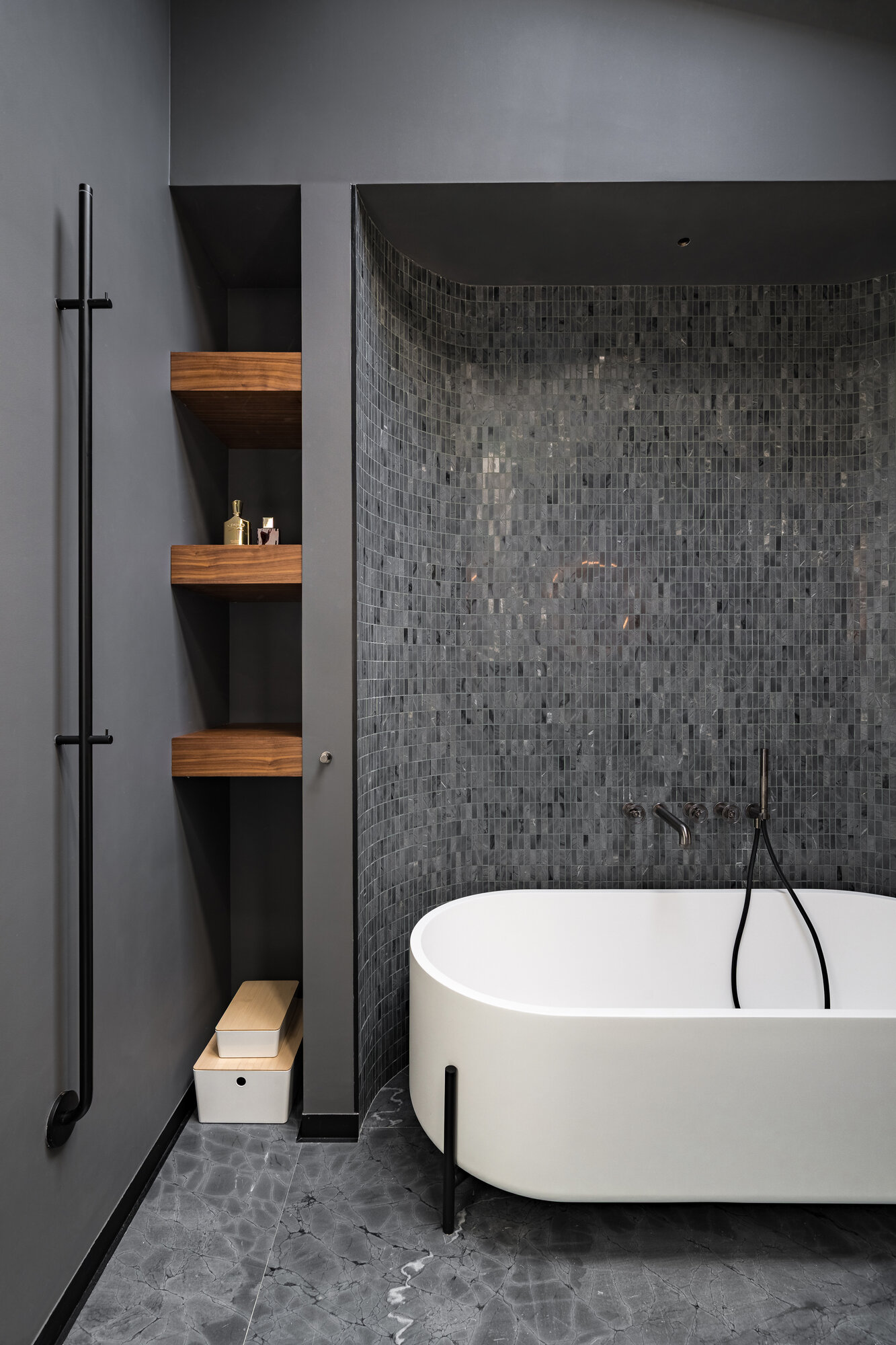
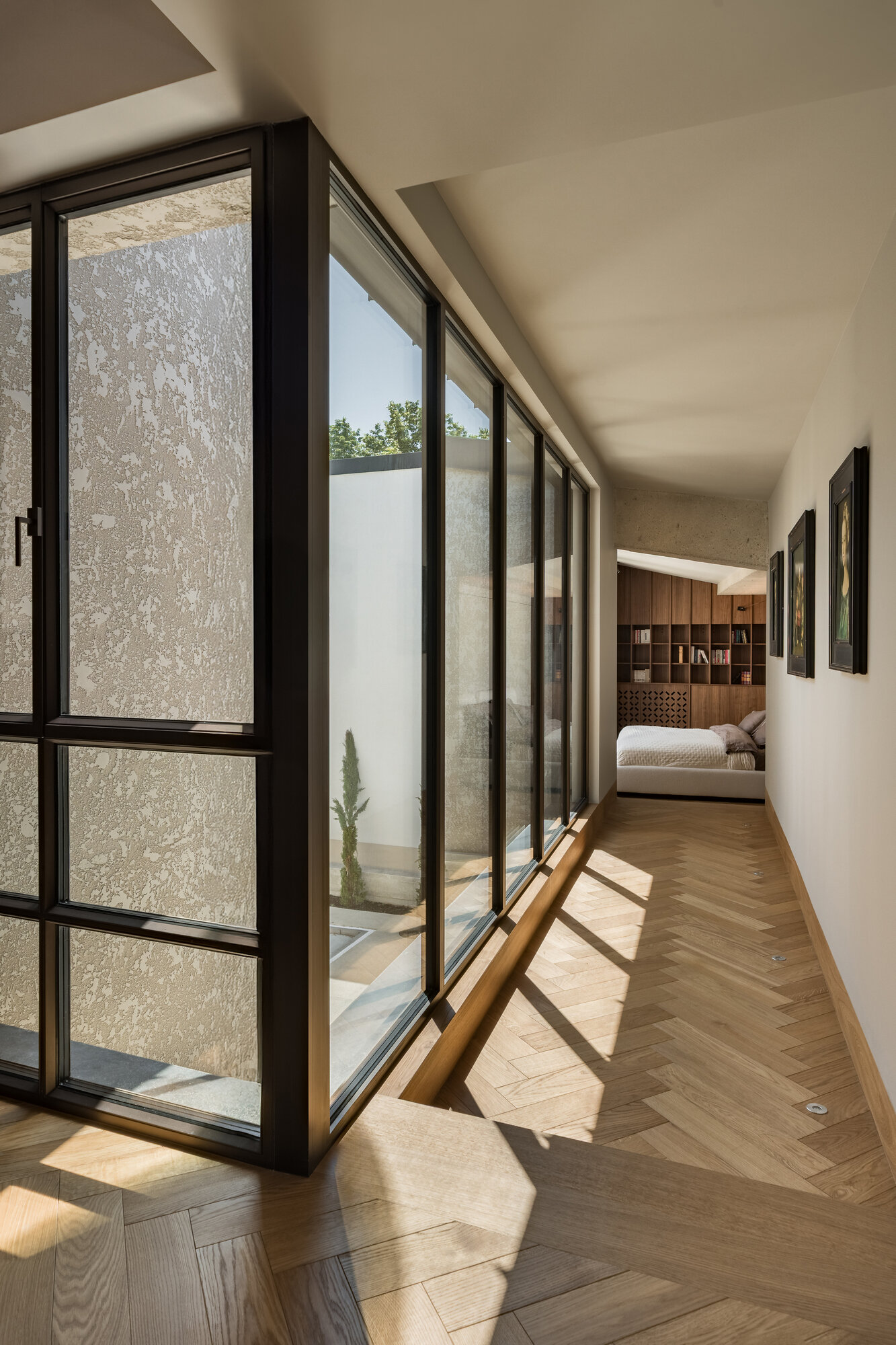
The dining room is crossed by a metal walkway that connects to the main staircase and facilitates circulation between the two bedrooms. The master bedroom area is located at the back of the house, and the bedroom, which is built over the gazebo, is accessed through a suspended metal walkway glazed on one side, linking the two building volumes. Thus, the upper floor is private while maintaining a visual connection to all the living spaces and the exterior. If the main spaces are defined by light as their central element, the bathrooms are treated in contrast, with dark materials and controlled lighting.
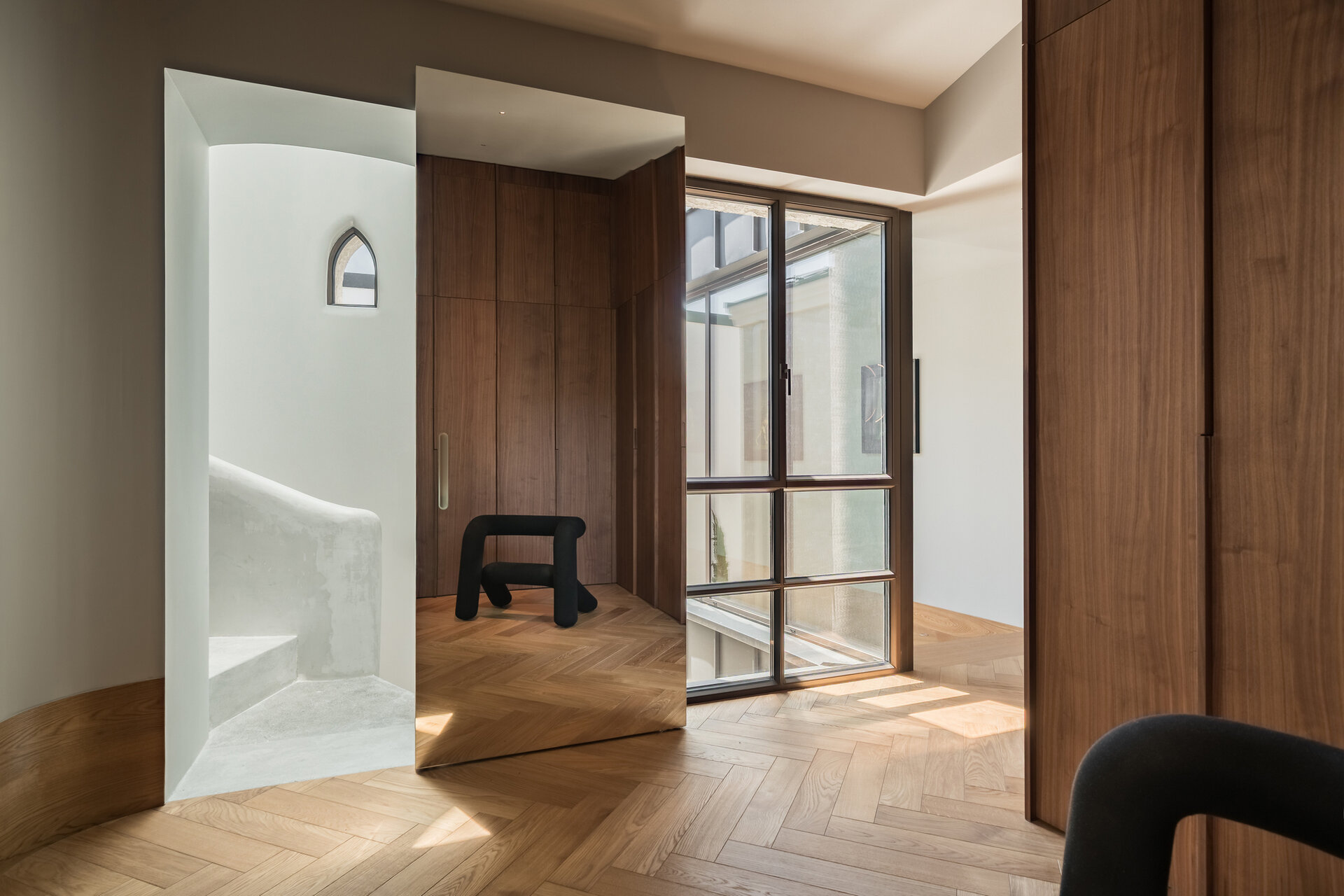
Light was a main subject of the design and a special requirement of the beneficiary. The relationship with natural light and its capture inside so that even the rooms with mono-orientation or indirect light can be illuminated throughout the day and year. The evening lighting seeks to provide an ambiance rather than showing the light source directly, the light is dimmable and configured in various scenarios.
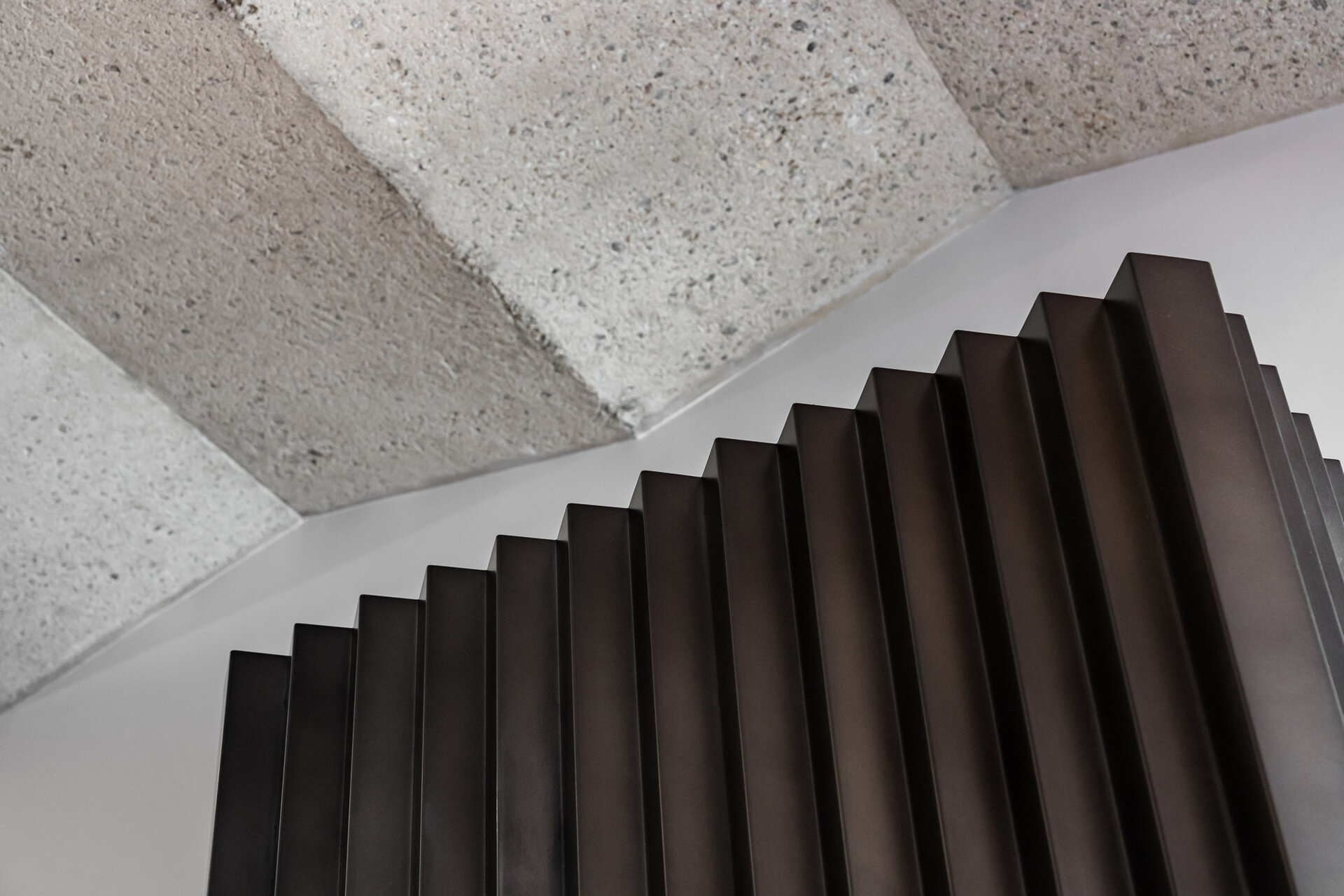
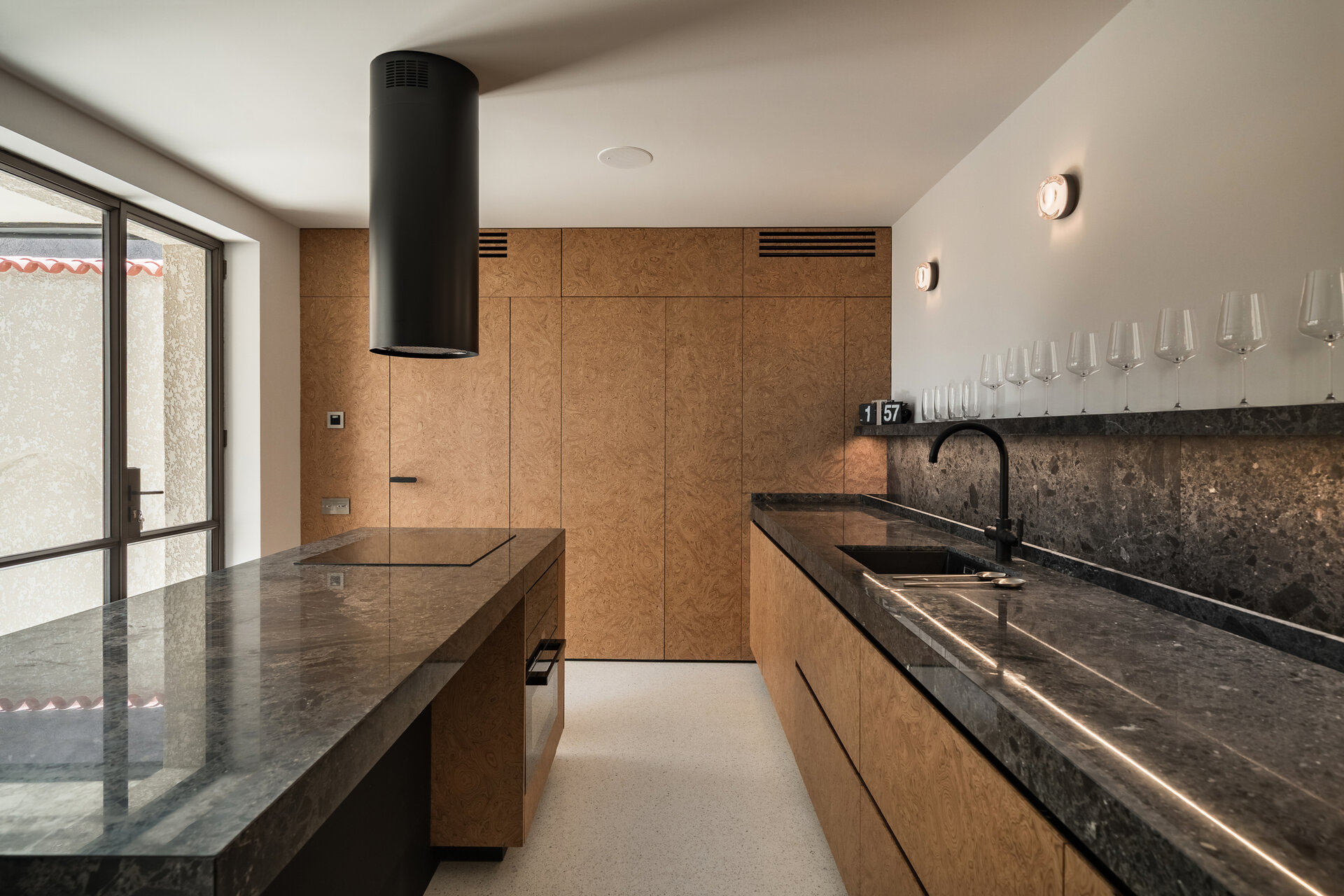
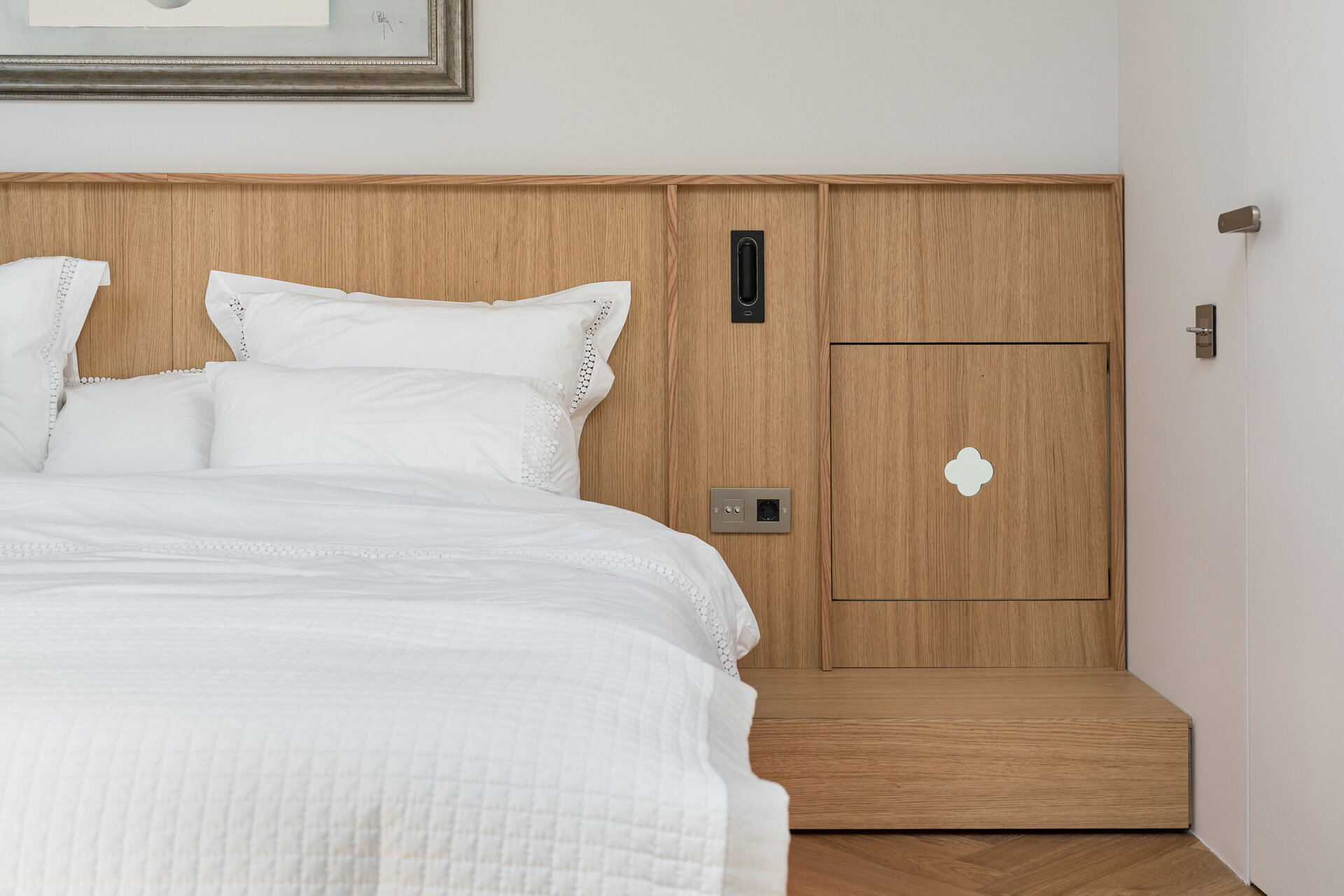
The interior design is limited to a few materials characteristic of the period in which the house was built — mainly mosaics, parquet, metal, stone, and decorative plasters — with areas of apparent sandblasted concrete. Externally, mosaic and washed mosaic finishes were used. The stamped lime plaster was restored on all façades and inside the orangery. The joinery was custom-designed for the location using steel profiles with thermal breaks. The furniture is custom made and uses walnut veneer, recomposed veneer, solid walnut wood, marble and marble mosaic. The terzzo poured over the underfloor heating followed two different recipes for the interior and for the exterior and greenhouse.
Interior Residential Design

- I House interior design
- It’s a wrap
- Apartment in interwar villa
- Heartwarming apartment
- Apartment in Cotroceni
- Uptown Haven – An Urban Refuge of Sophistication and Comfort
- Apartment O25 – Harmony Between Minimalism and Comfort in 4 Rooms
- AE Apartment
- C House
- M House
- House RR
- Apartment CS
- 5% Blue Flat
- Darian House
- Golden Light Apartment
- TD Apartment
- Industrial Groove Flat
- Aura Apartment
- “Chocolate Velvet” House
- Zestful Apartment
- The Labyrinth of colours of grey
- Oslo Freesia
- Laurel Brandy
- Pearl Marshmallow
- Speculum Studio
- PP apartment
- Cișmigiu apartment
- Living in Reflection
- Single family house design in Otopeni
- U house
- Banu Manta SRB apartment
- Moi Project
- The Hidden Gem
- O. Apartment
- A place TO BE
- Fairy tale
- Sea Infinity
- Bold Beige
- Art at Home
- Apartment for two young people
- Layover - a stop between destinations
- Lunaria
- DDP Apartment
- D. House
- Red Bunker
- House B
- Dristor Airbnb
- SST House
- Magheru Airbnb
- Whispers of Light
- Reflected Shadows


