- Nomination for the “Interior Space Architecture / Interior Residential Design” section
Apartment in interwar villa
Authors’ Comment
Introduction
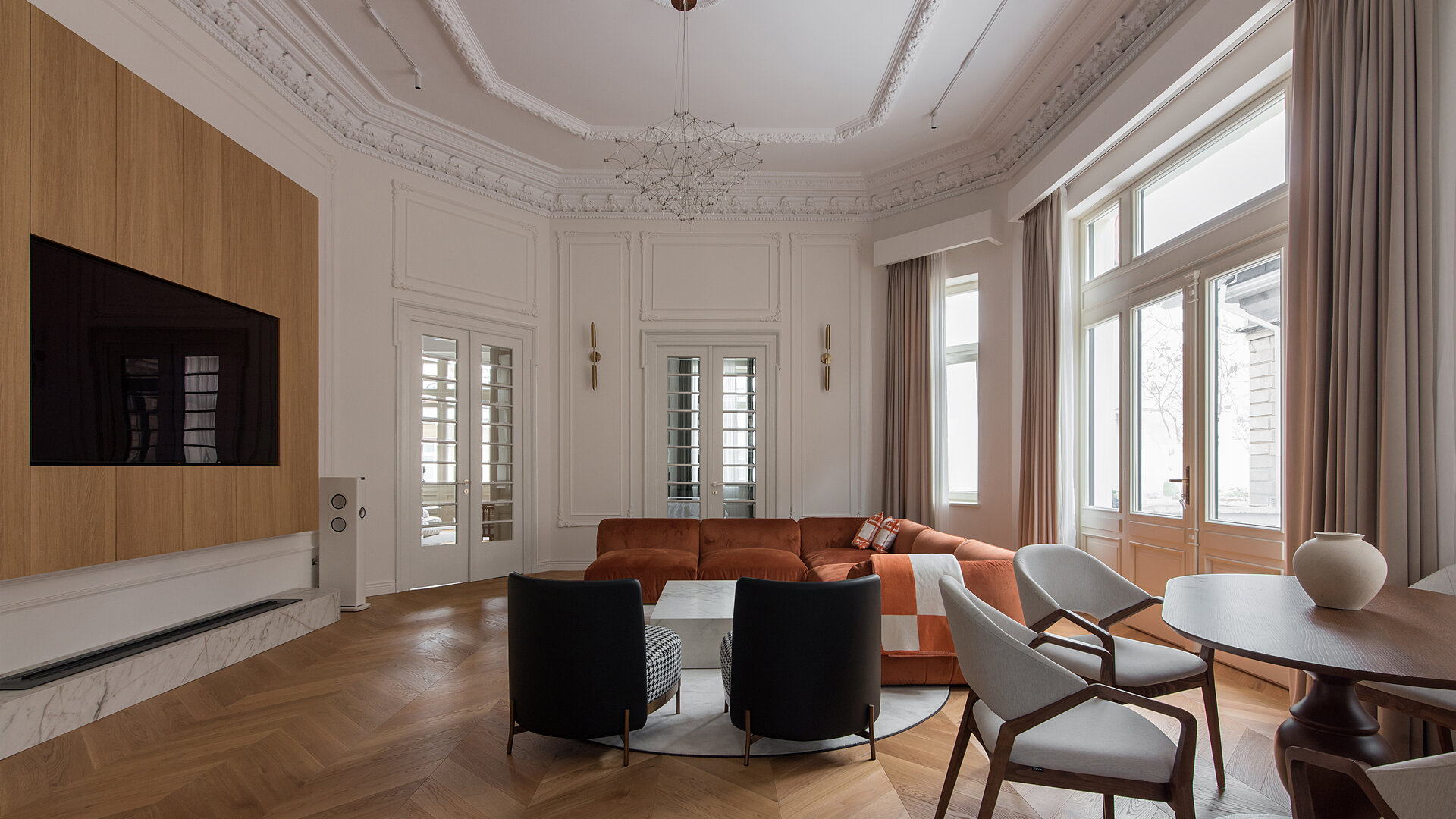
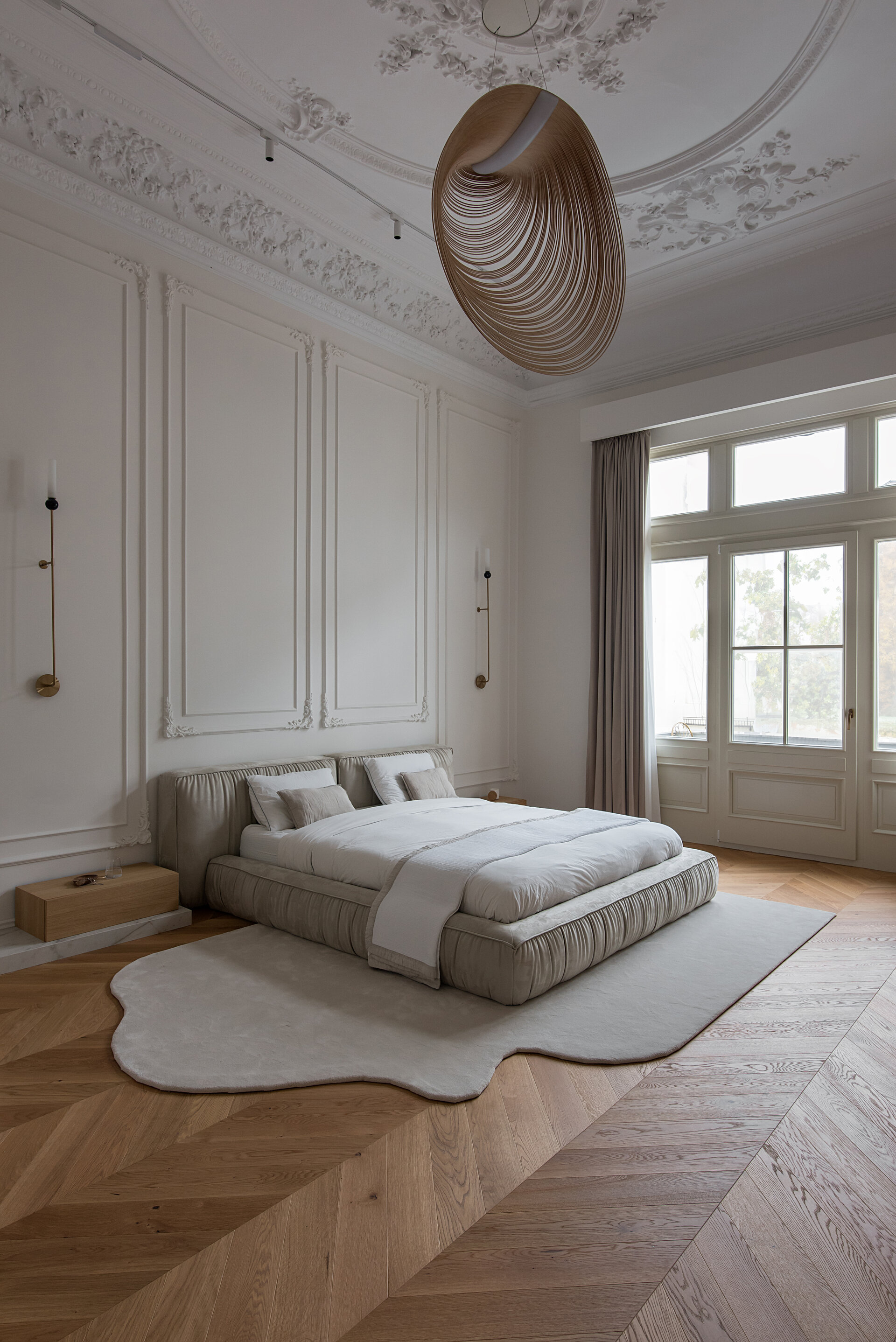
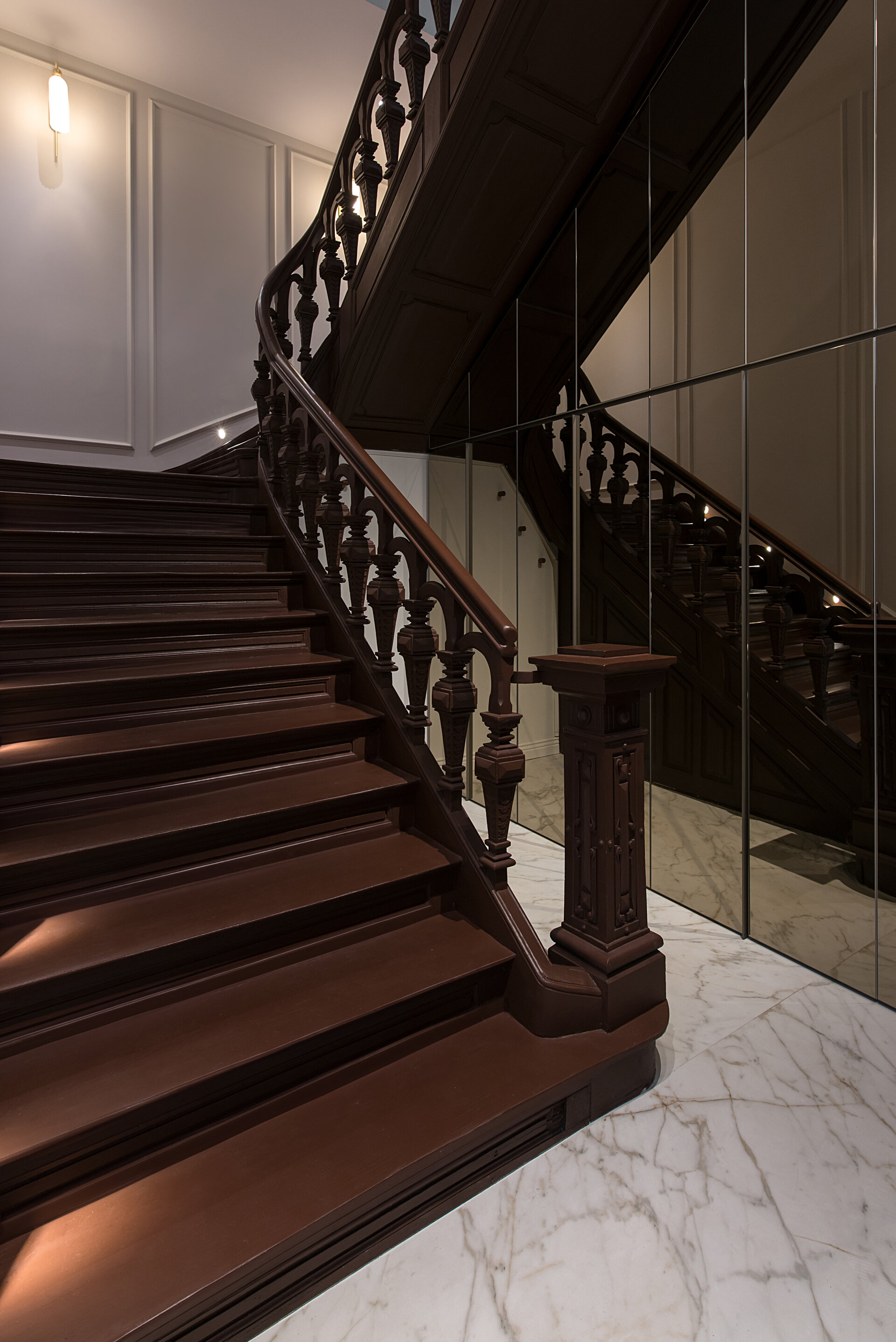
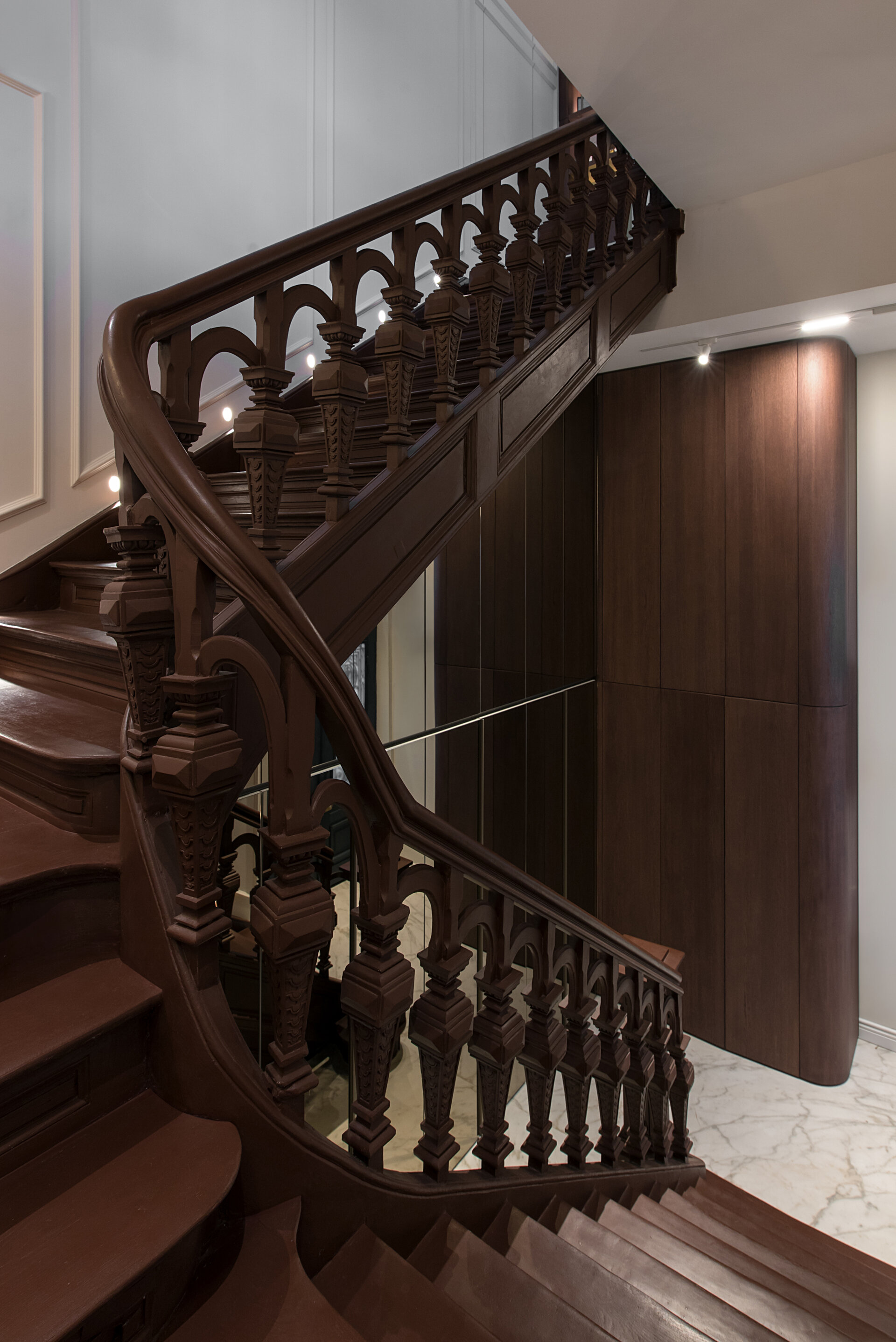
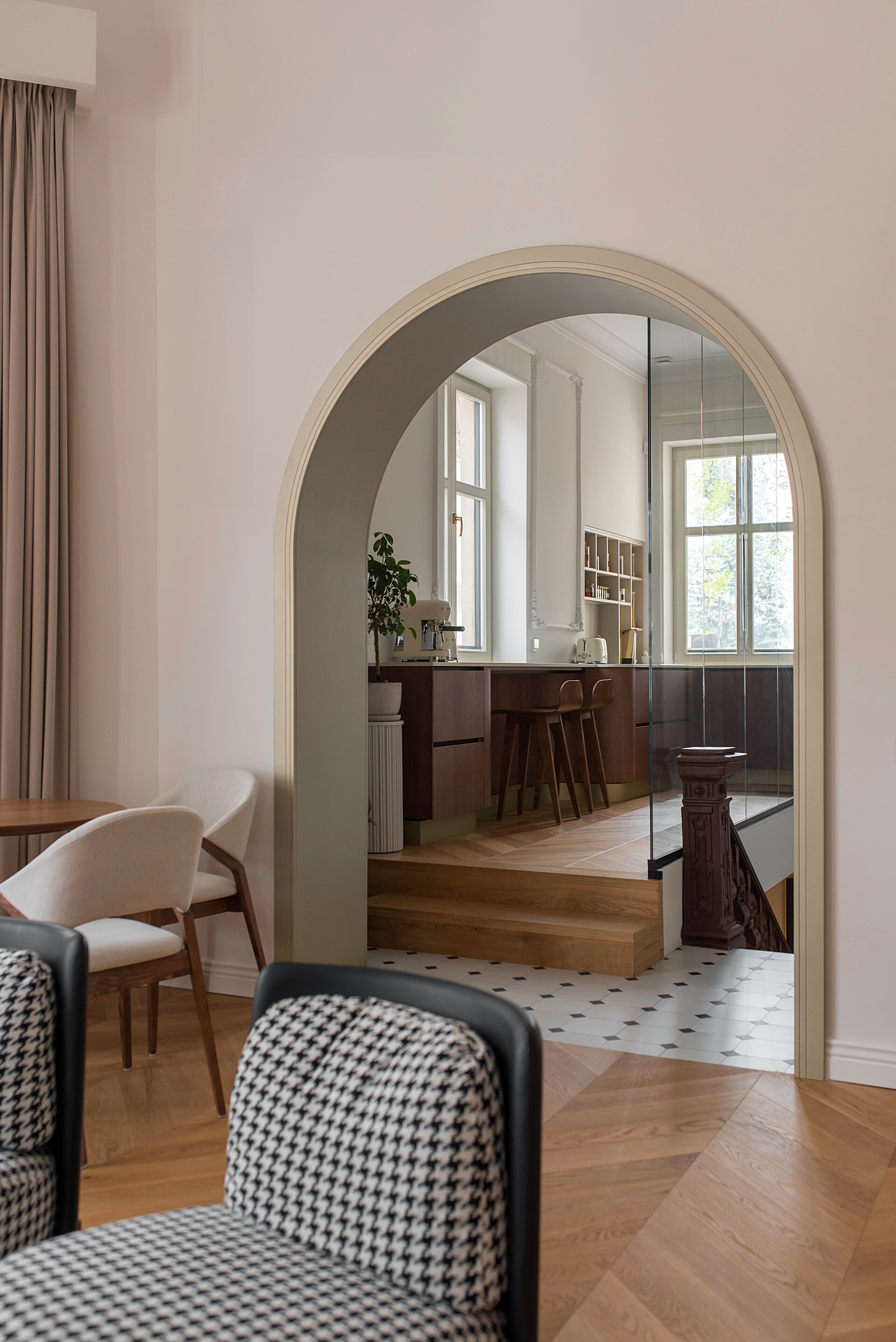
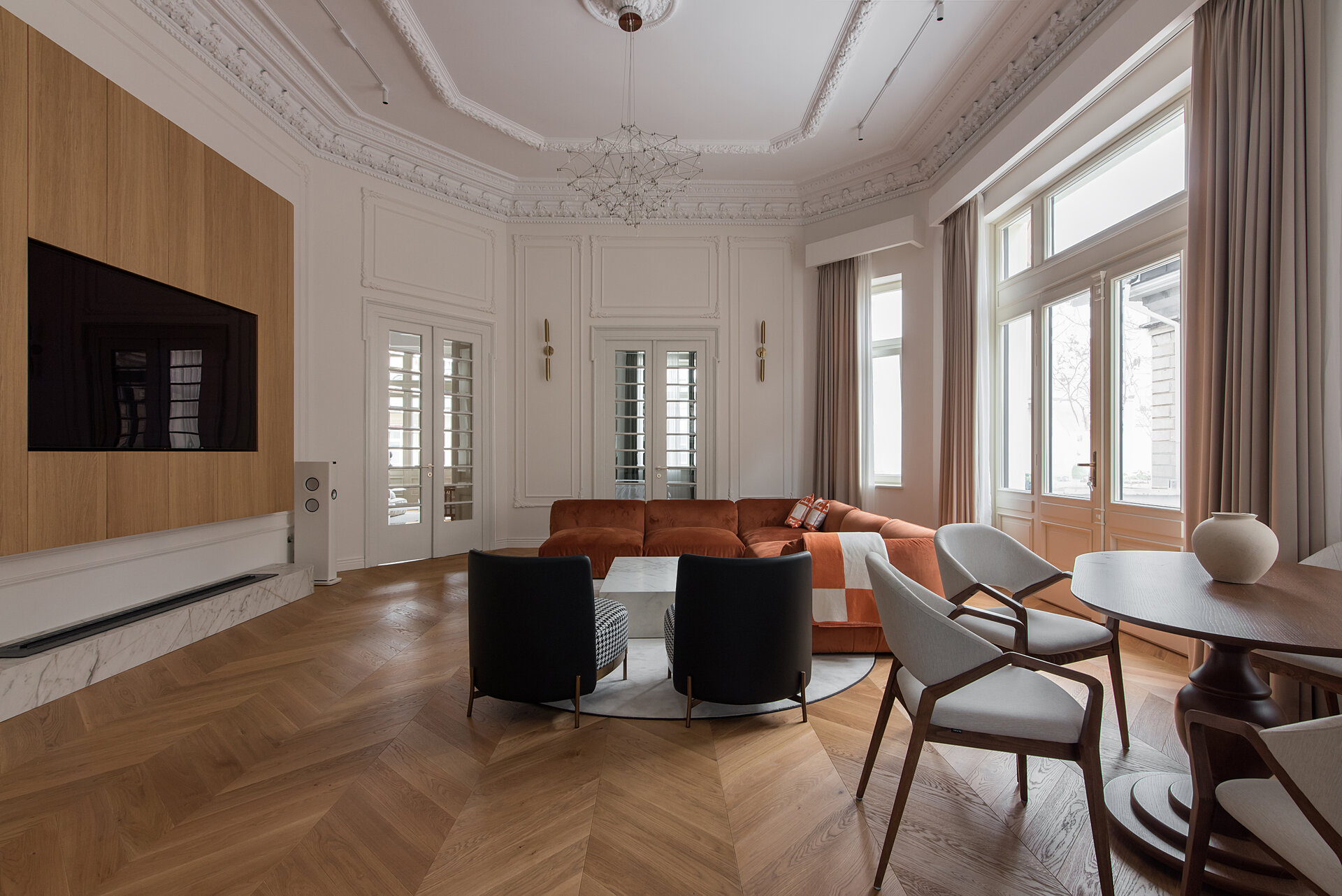
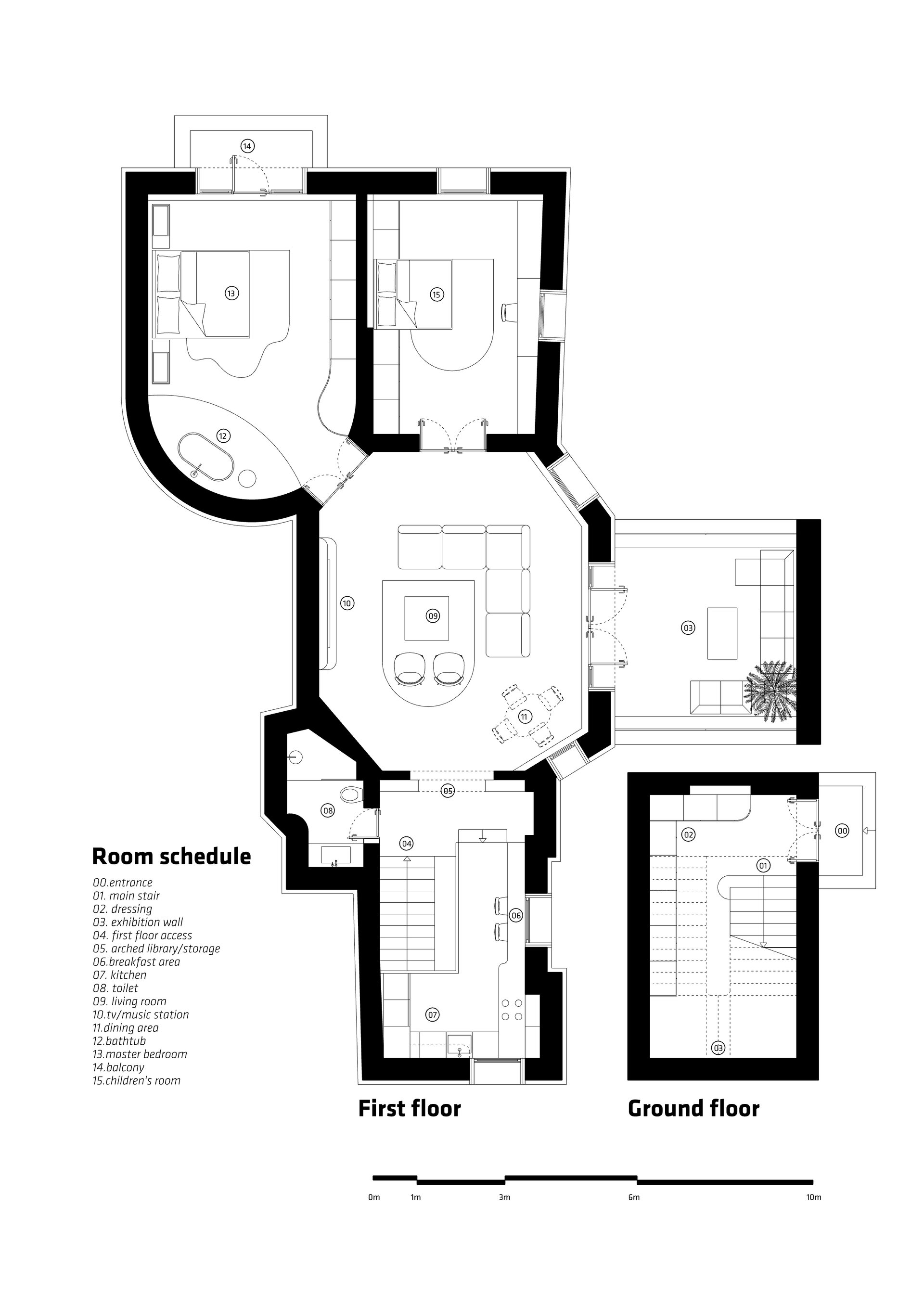
The apartment is located within a neoclassical building from 1927, in a central district of Bucharest. The intervention preserves defining architectural elements—lofty ceilings, original wooden joinery, and a sculpted, monumental staircase—conserved and structurally consolidated. The project redefines the interior as a contemporary domestic space, while maintaining a clear continuity with the building’s architectural identity.
⸻
Concept
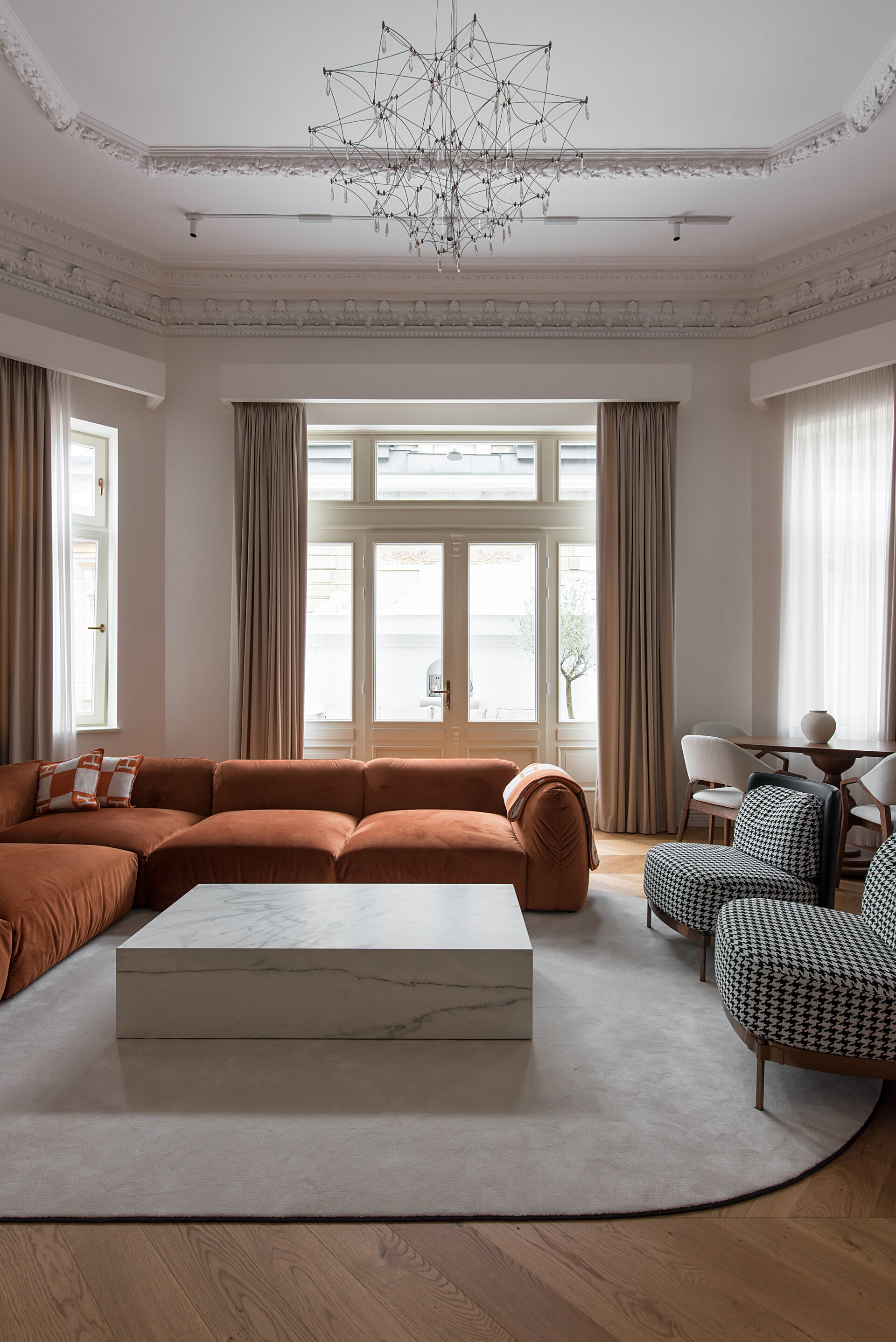
The design approach sought to enable a dialogue between historical memory and contemporary living, steering away from stylistic imitation or excessive contrast. The decorative ceilings, generous room proportions, and original staircase were treated as fixed spatial anchors around which the intervention was calibrated.
Furniture volumes, material textures and the chromatic register build up a layered yet coherent atmosphere—one that interprets and reframes the existing context rather than overwriting it.
The proposal positions itself in relation to the Anuala 2025 theme—“Bucharest as an aesthetic city”—by advocating for beauty not through overt form, but through the thoughtful activation of inherited spatial quality.
⸻
Finishes
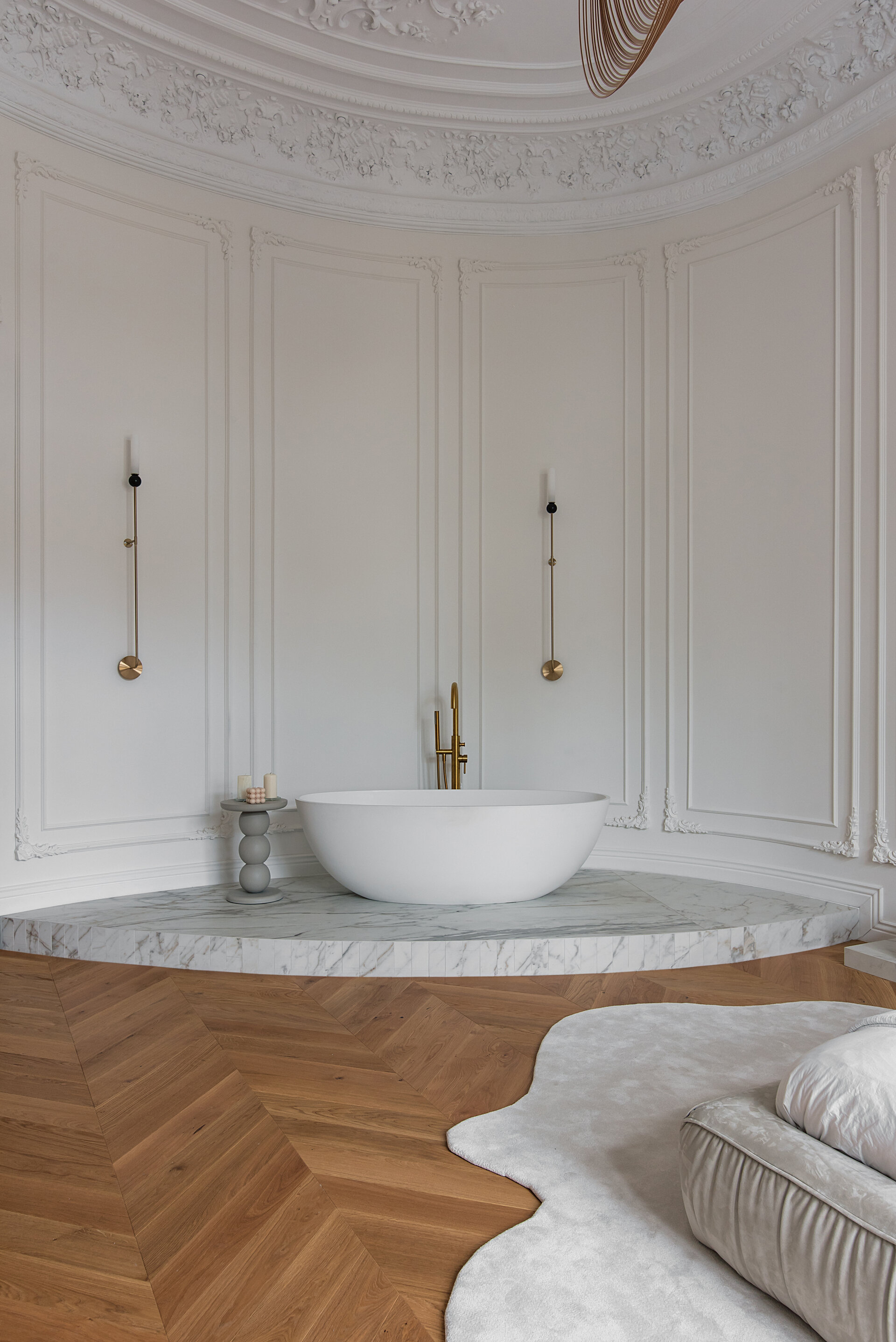
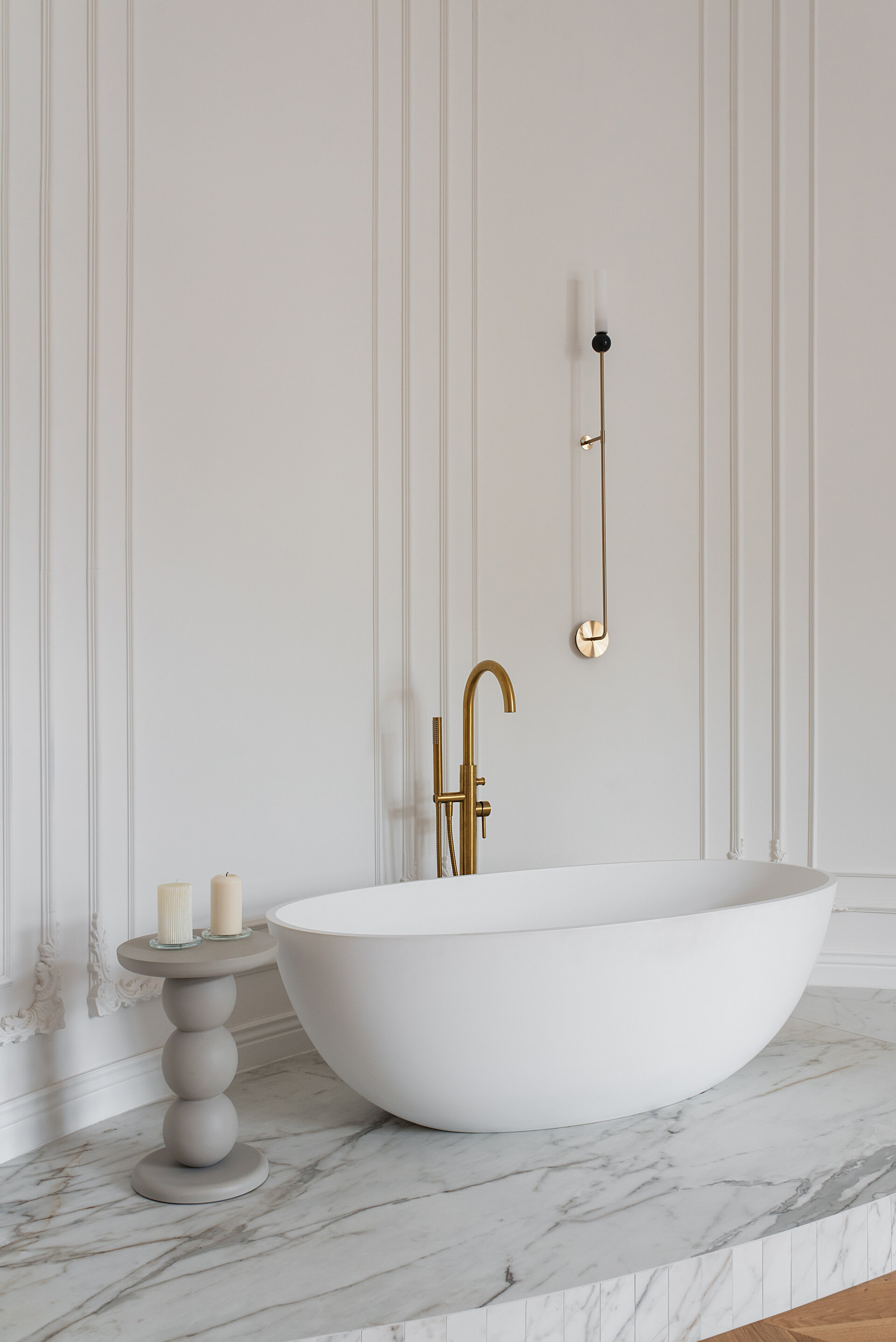
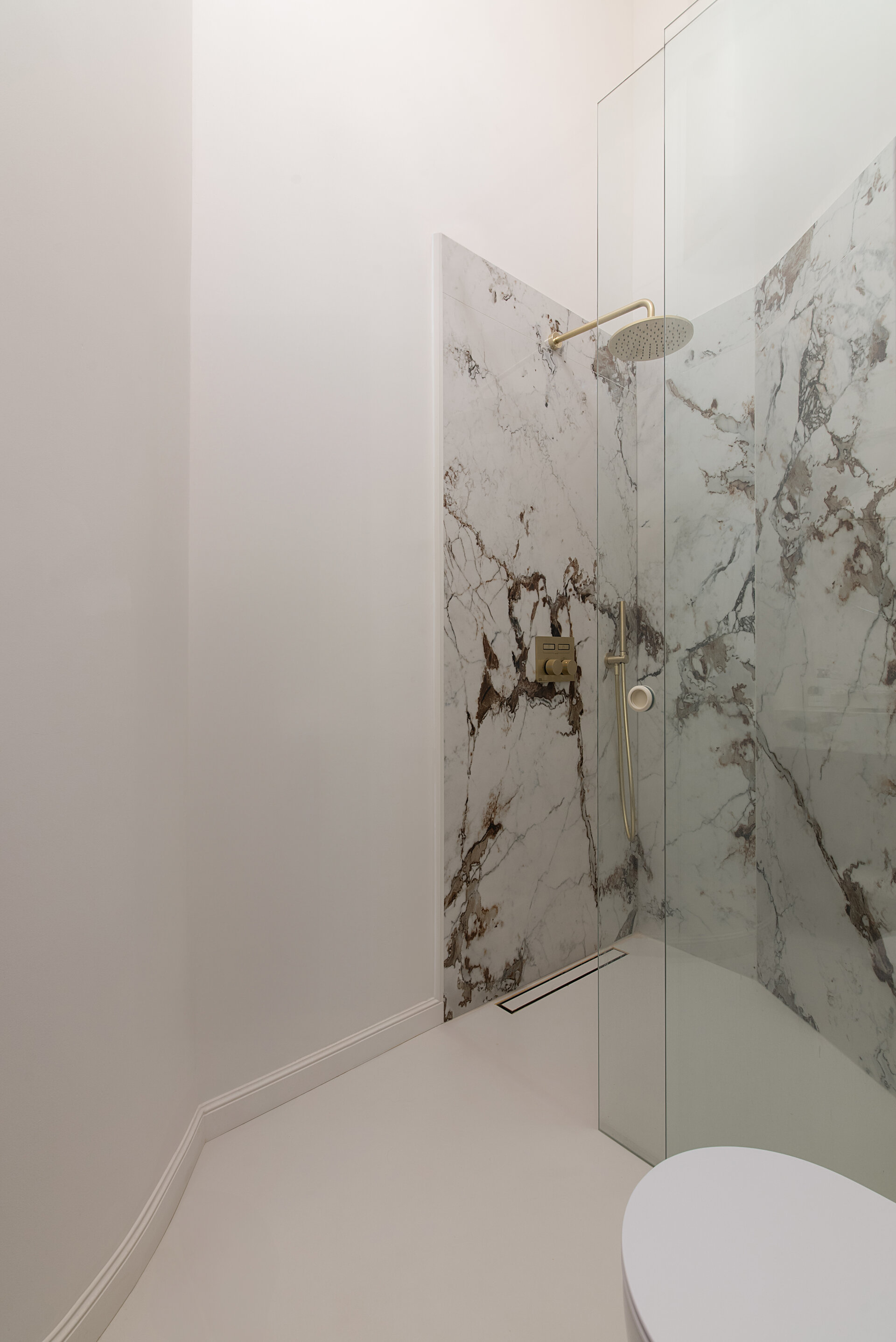
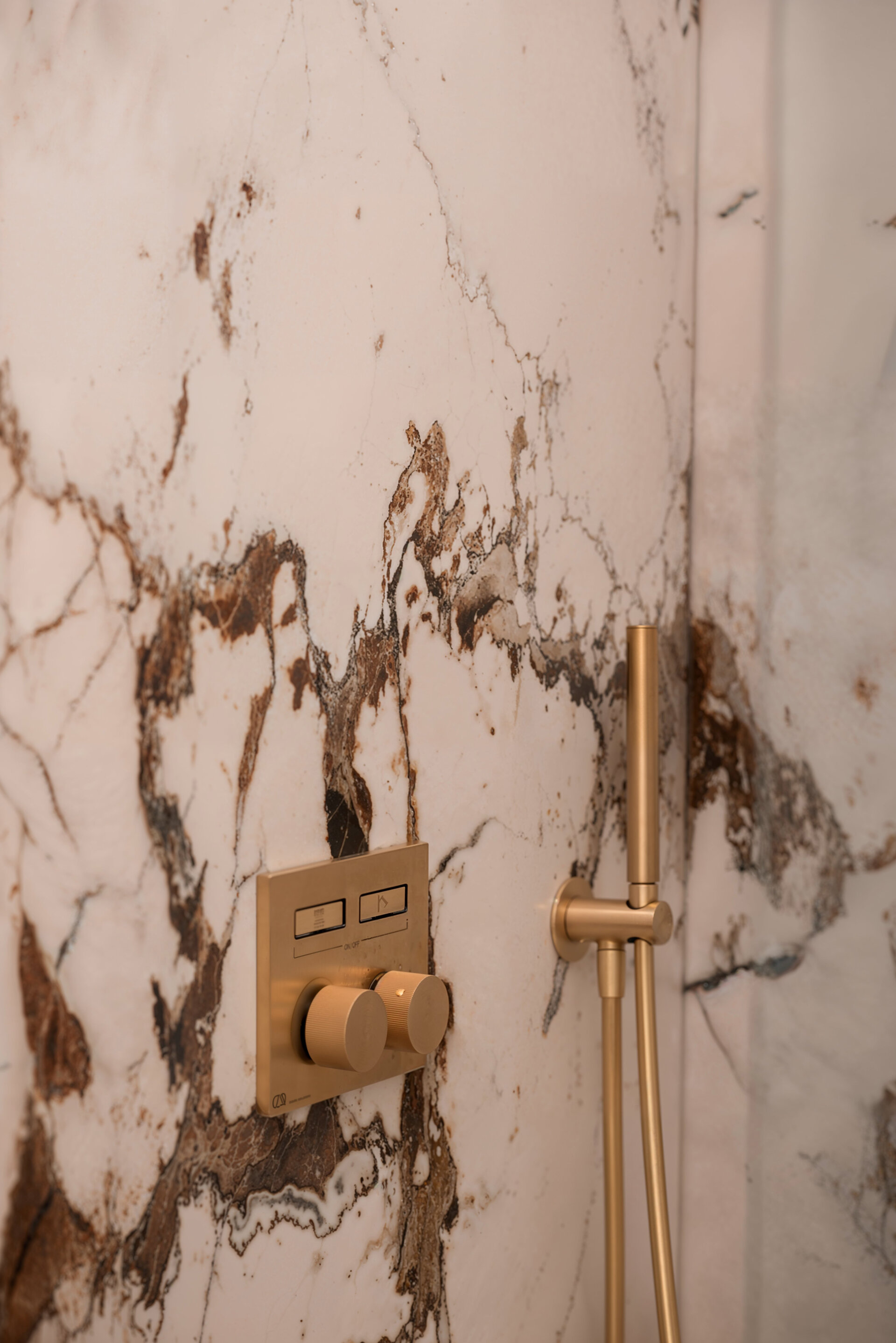
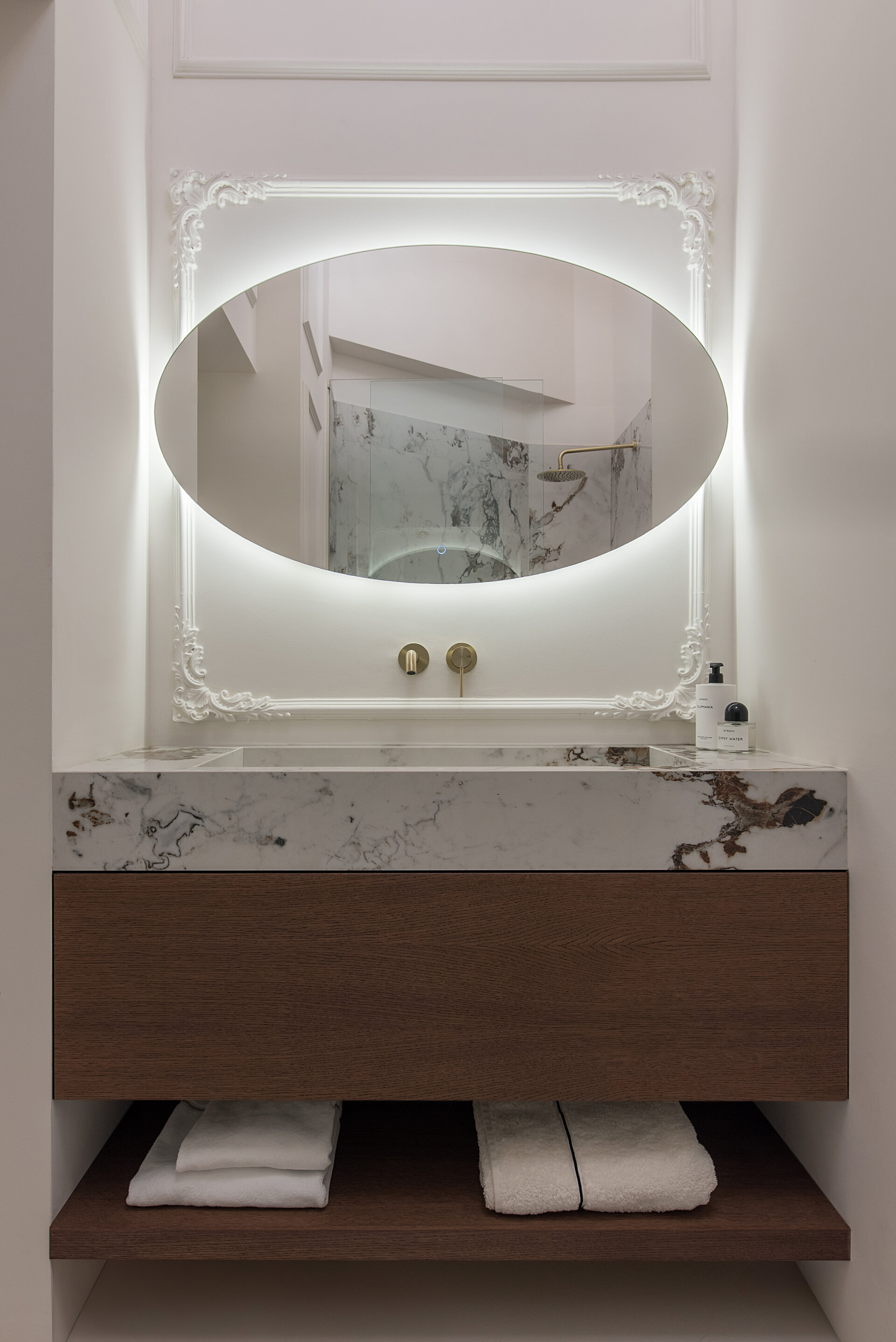
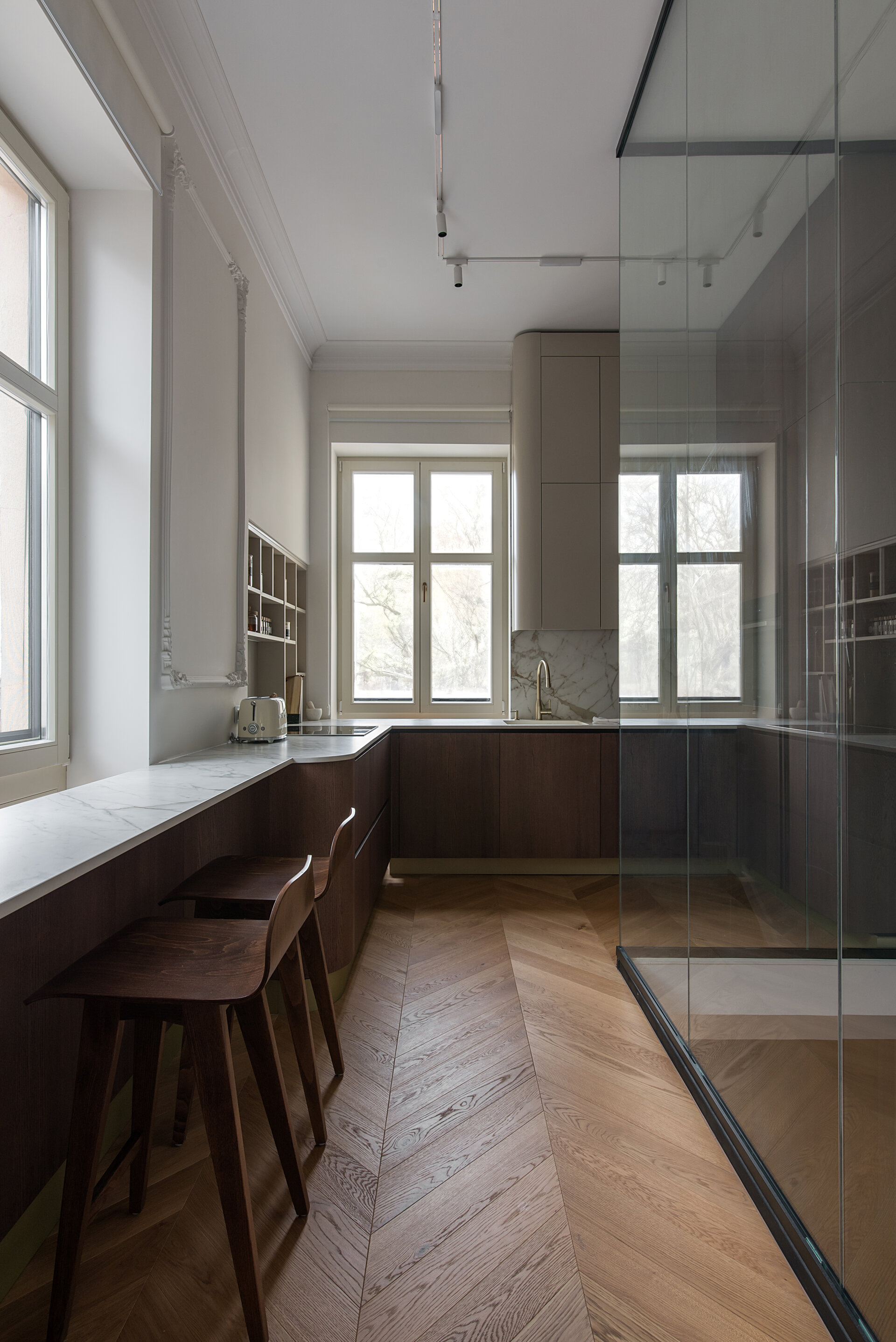
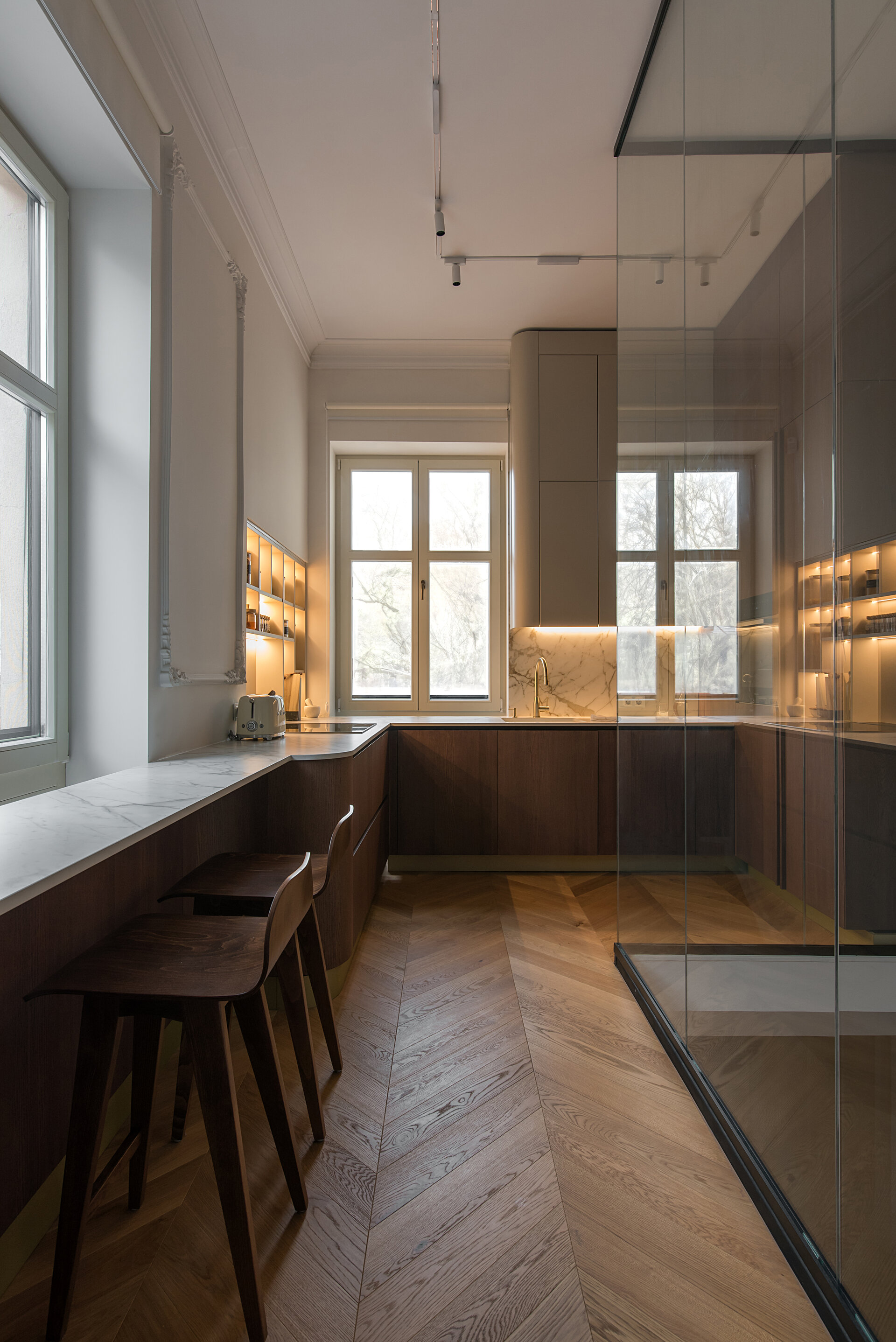
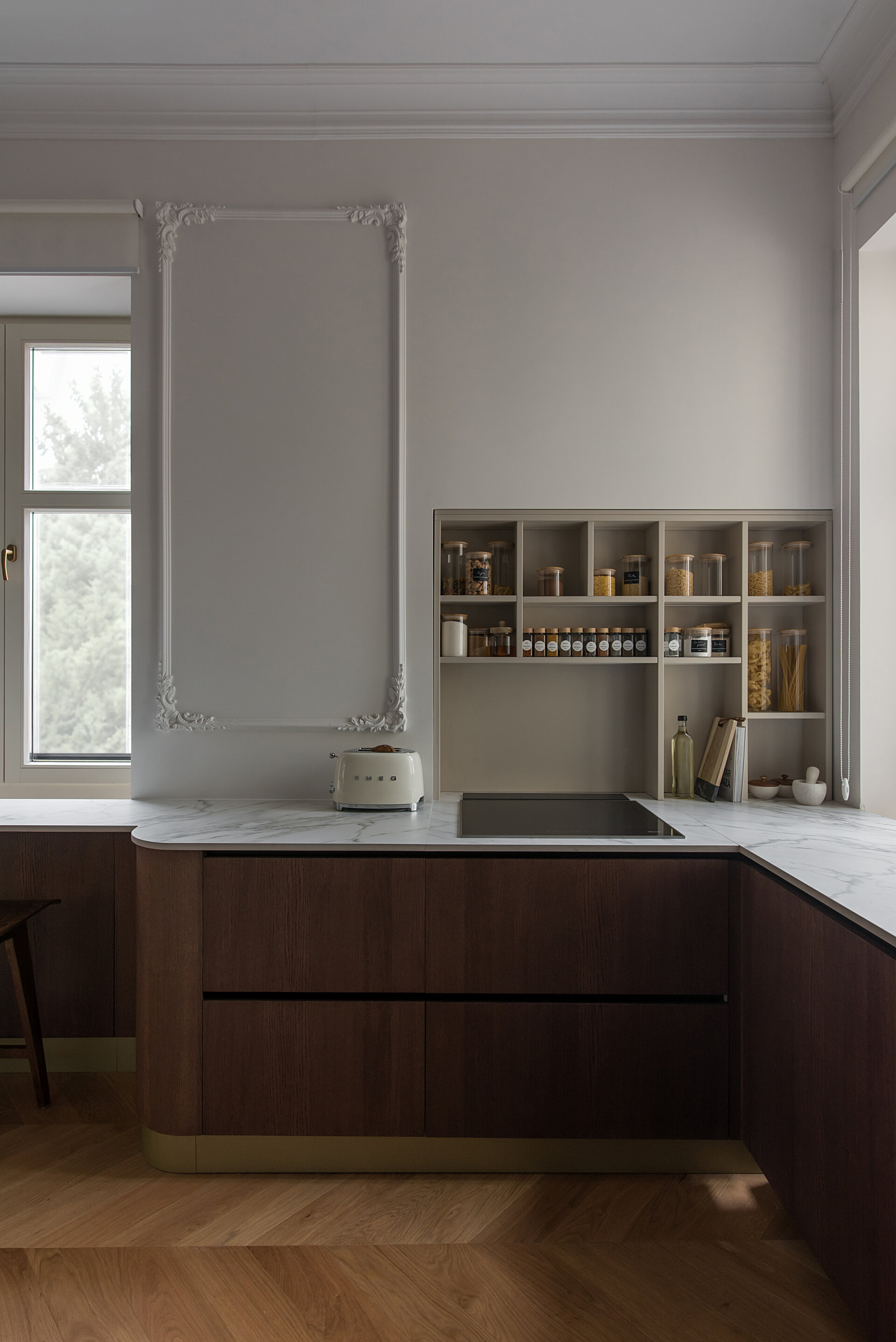
The finishing strategy respects the original material logic of the apartment. Triple-layer engineered wood flooring defines the living and sleeping quarters, following the typological layout specific to interwar interiors. Ceramic tiling with graphic patterns, evocative of early 20th-century decor, was introduced in entrance halls, bathrooms and the kitchen—offering both practicality and historical continuity.
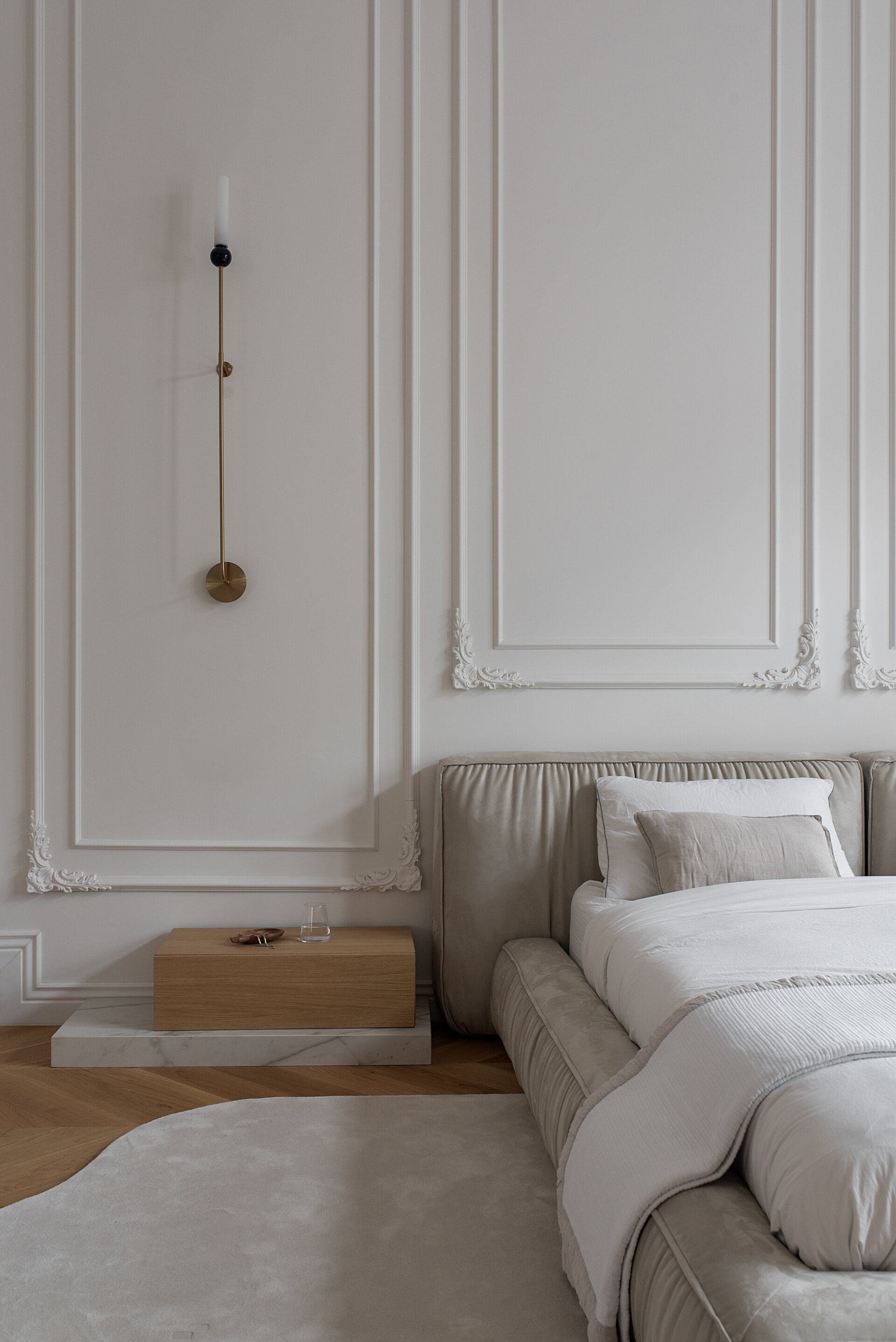
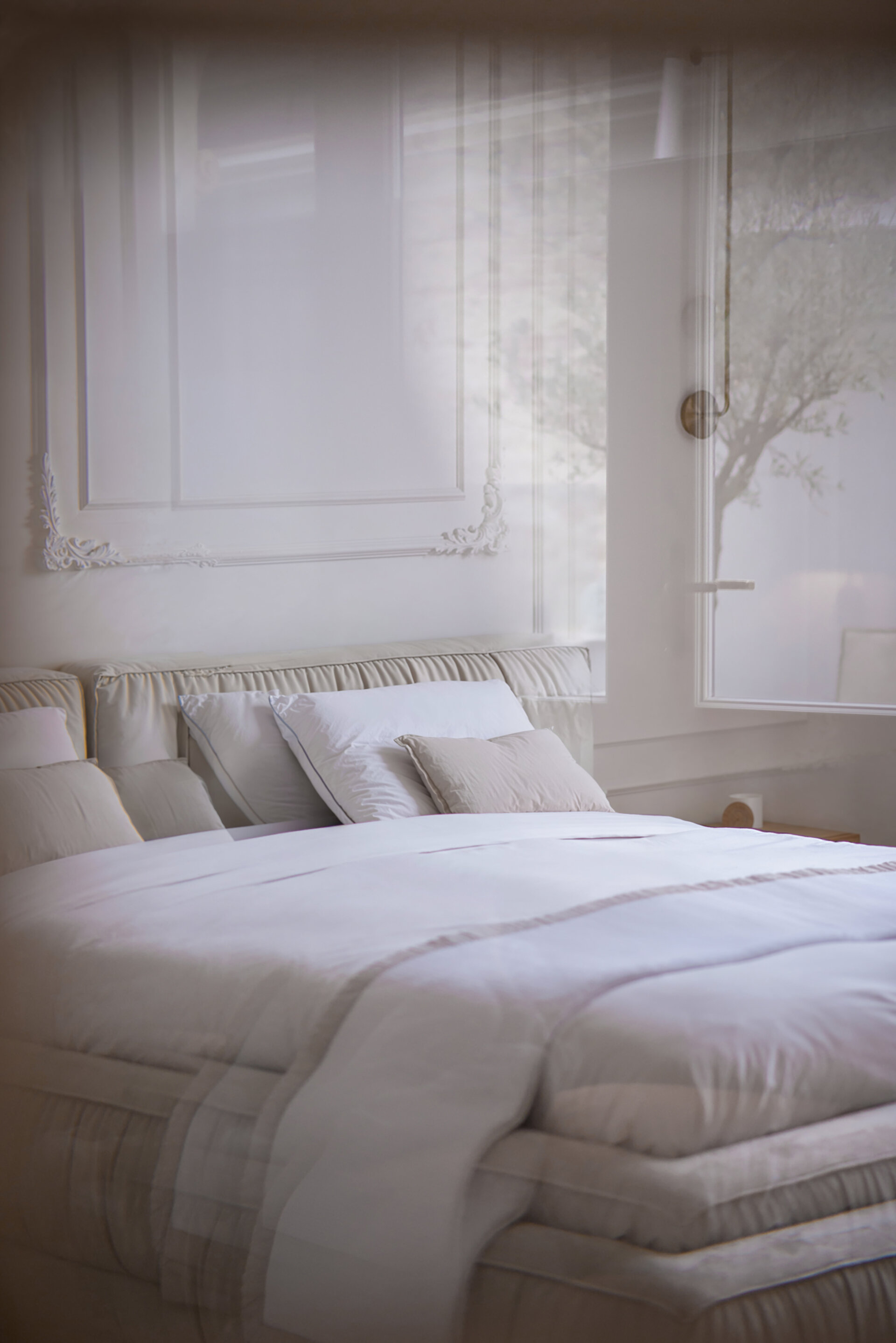
Original wooden joinery, cornices, and plaster detailing were all conserved, restored, and reinforced. The chromatic palette, rich in warm, saturated hues—terracotta, burnt orange, sage green— echoes the atmosphere of late 19th-century bourgeois interiors, contrasting with neutral backgrounds and matte surfaces.
⸻
Furniture
The fixed furniture is custom-designed and locally fabricated, primarily in lacquered and veneered MDF. Each piece is both utilitarian and spatially intentional, maintaining volumetric legibility throughout the interior.
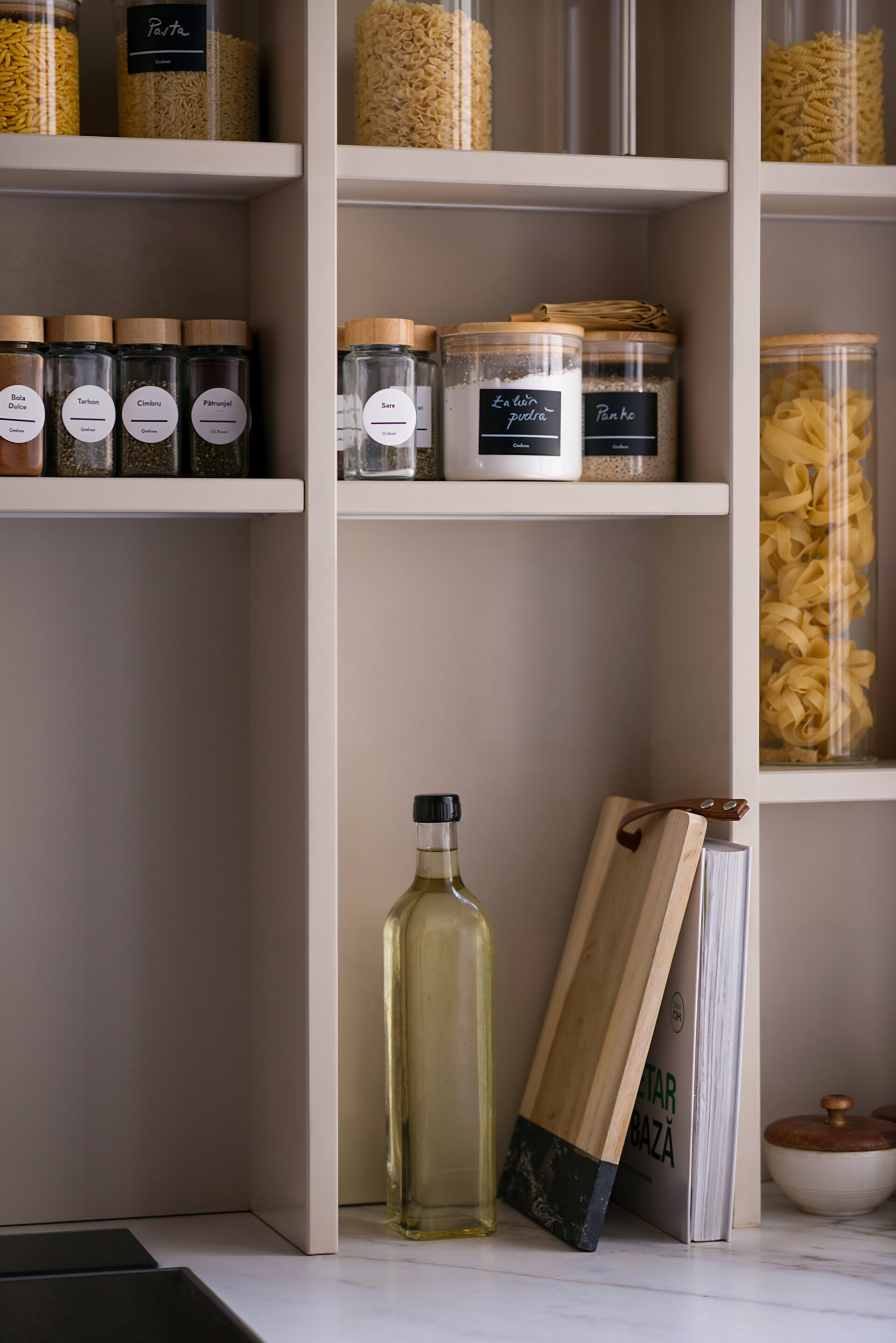
The living room is centered on a large-scale sofa, flanked by slender-framed armchairs and a locally produced solid wood table. The kitchen and bathroom furniture maintains the same formal rigor: clean planes, discreet metal accents and a subdued materiality.
⸻
Terrace
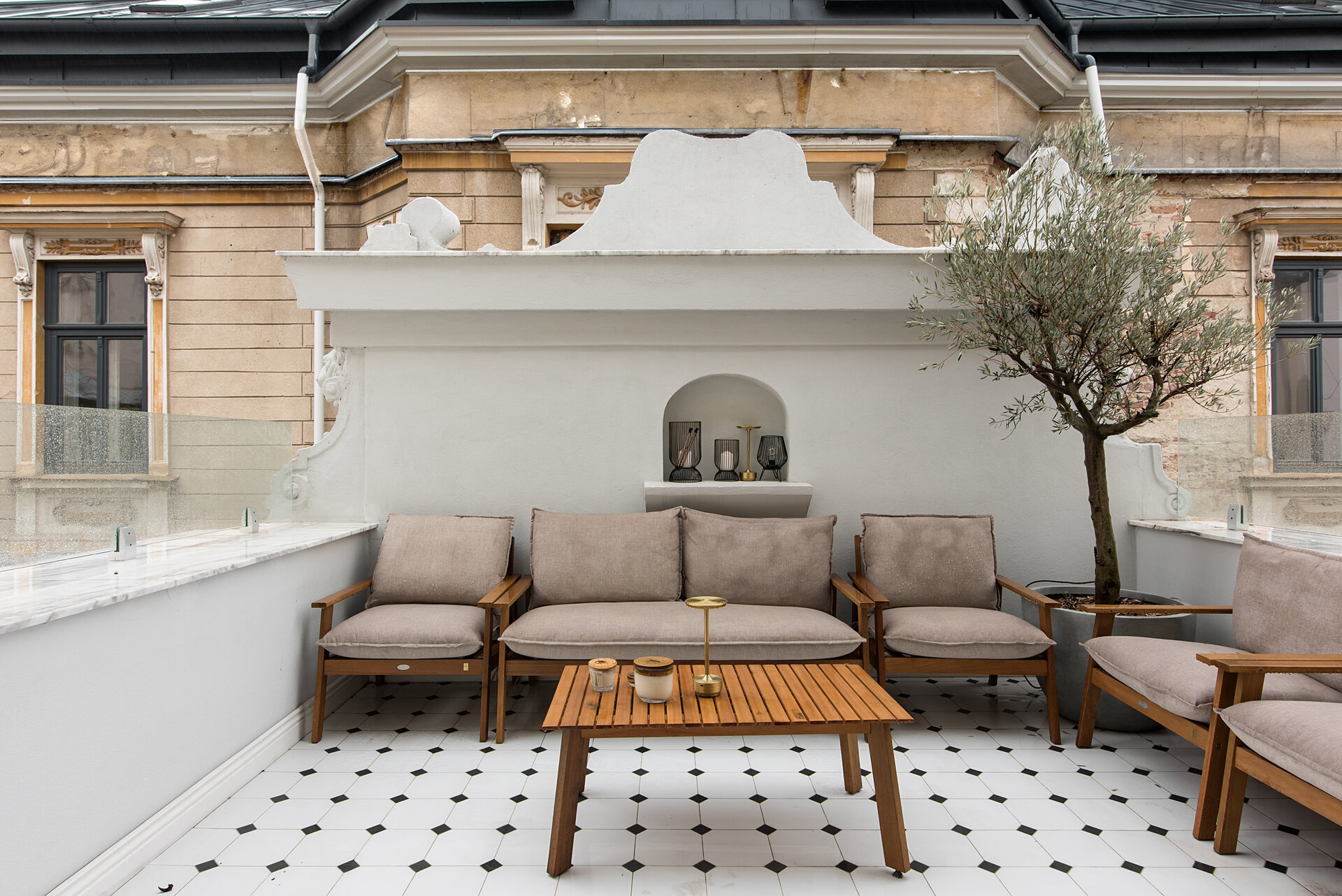
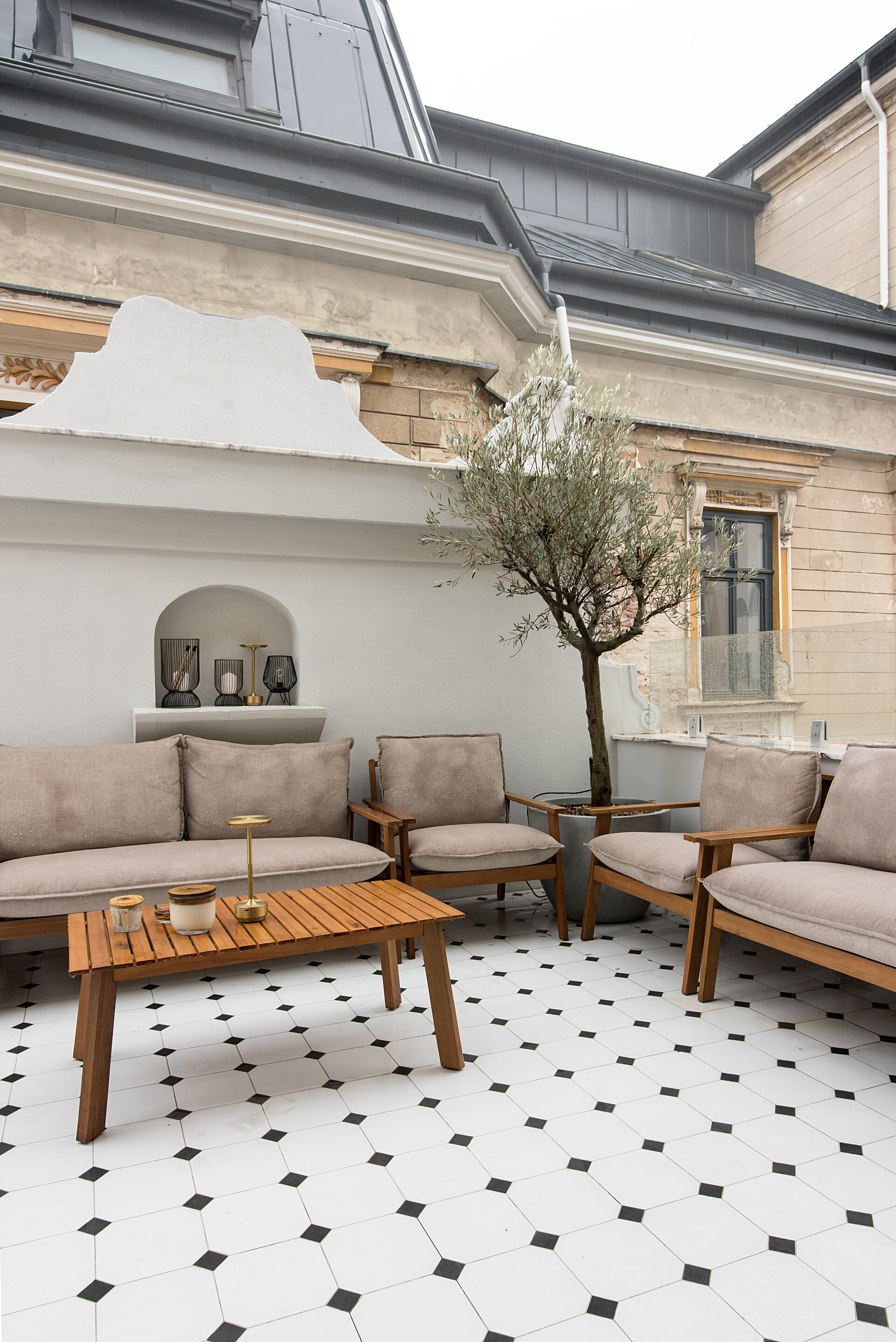
The terrace was conceived as a continuation of the original architectural logic. The intervention preserved the stuccoed neoclassical pediment and original balustrades, reinforcing the historic character of the façade. Flooring is rendered in checkerboard ceramic tiles, a motif typical of the interwar period.
Furnishings are sparse and carefully placed, complemented by restrained planting. A potted olive tree anchors the corner of the terrace, enhancing the domestic atmosphere without disrupting the architectural presence of the façade. The terrace remains a seasonal threshold space—fluidly transitioning between retreat and daily use.
⸻
Occupancy / Client
The apartment belongs to a young couple, recently married, whose lifestyle is sociable and active. The design process was shaped by a close collaboration between client and architect, allowing for precise alignment between spatial needs, material sensibility, and historical continuity.
In a city where architectural heritage is often undervalued or compromised, the project proposes a counter-narrative—one built on measured intervention, quiet preservation, and the rehabilitation of character.
⸻
Conclusion
The project’s value does not lie in a singular or spectacular gesture, but in the careful calibration of domestic space—through the conservation, restoration, and reinterpretation of existing architectural elements: the monumental wooden staircase, original joinery, ornamental plasterwork, decorative fragments, and selected pieces of furniture. It stands as a case for aesthetic restraint, architectural continuity, and a nuanced contribution to the evolving narrative of urban dwelling in Bucharest.
Interior Residential Design

- I House interior design
- It’s a wrap
- Apartment in interwar villa
- Heartwarming apartment
- Apartment in Cotroceni
- Uptown Haven – An Urban Refuge of Sophistication and Comfort
- Apartment O25 – Harmony Between Minimalism and Comfort in 4 Rooms
- AE Apartment
- C House
- M House
- House RR
- Apartment CS
- 5% Blue Flat
- Darian House
- Golden Light Apartment
- TD Apartment
- Industrial Groove Flat
- Aura Apartment
- “Chocolate Velvet” House
- Zestful Apartment
- The Labyrinth of colours of grey
- Oslo Freesia
- Laurel Brandy
- Pearl Marshmallow
- Speculum Studio
- PP apartment
- Cișmigiu apartment
- Living in Reflection
- Single family house design in Otopeni
- U house
- Banu Manta SRB apartment
- Moi Project
- The Hidden Gem
- O. Apartment
- A place TO BE
- Fairy tale
- Sea Infinity
- Bold Beige
- Art at Home
- Apartment for two young people
- Layover - a stop between destinations
- Lunaria
- DDP Apartment
- D. House
- Red Bunker
- House B
- Dristor Airbnb
- SST House
- Magheru Airbnb
- Whispers of Light
- Reflected Shadows


