The Labyrinth of colours of grey
Authors’ Comment
The story of this project stems from the client’s aesthetic preferences, defined at the beginning of the process as “dark/mysterious, masculine, and luxurious.” Inedit.Works joined the project at the perfect moment—before construction began—allowing a close collaboration with the architect who designed the building’s concept. This early involvement enabled both design teams to influence every detail of the house in a cohesive and thoughtful way.
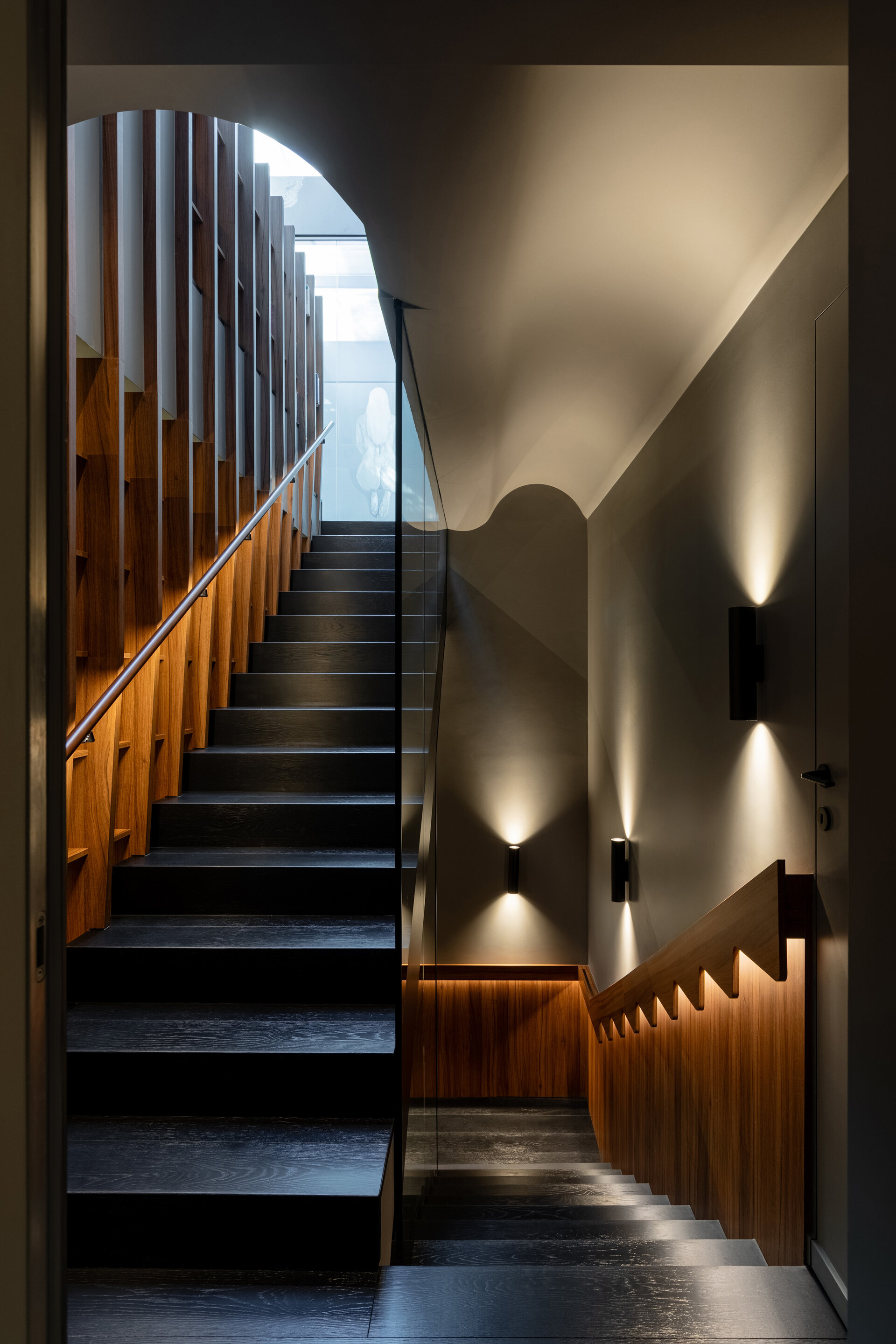
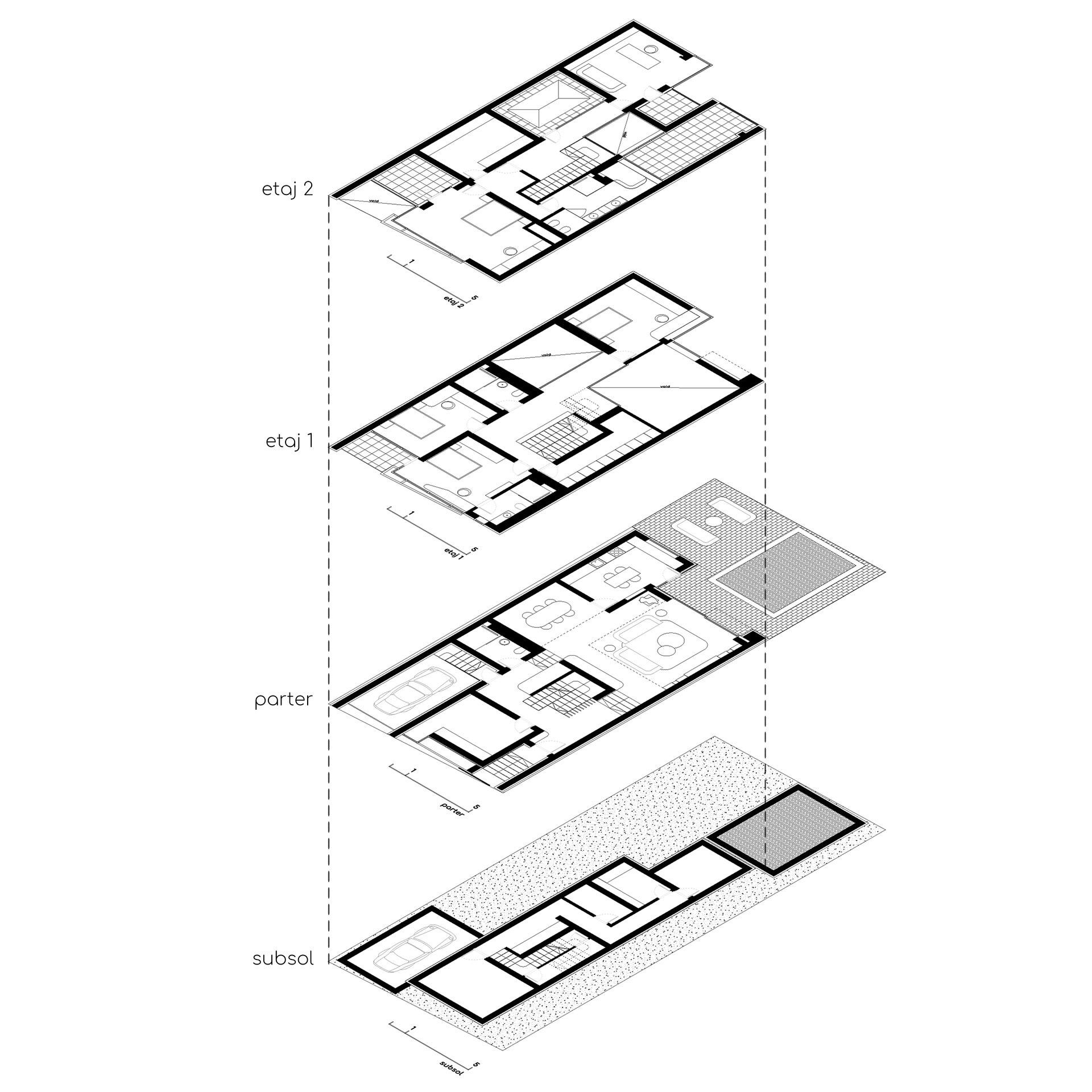
The interior design project takes place in a three-story house (basement, ground floor, and two upper levels) situated between two blind walls. At the core of the design is the interior staircase, which acts as a central nucleus. What makes this staircase unique is that each level of staircase features a different geometric configuration, evolving into a vertical ensemble of three distinct staircases layered one above the other. The presence of blind walls on the building’s long sides required the introduction of skylights, establishing a powerful connection between the interior and the exterior.
Various shades and textures of grey define the labyrinth that unfolds both vertically and horizontally throughout the home. This mysterious, monochromatic aesthetic is softened by accents of luxurious finishes and art objects.
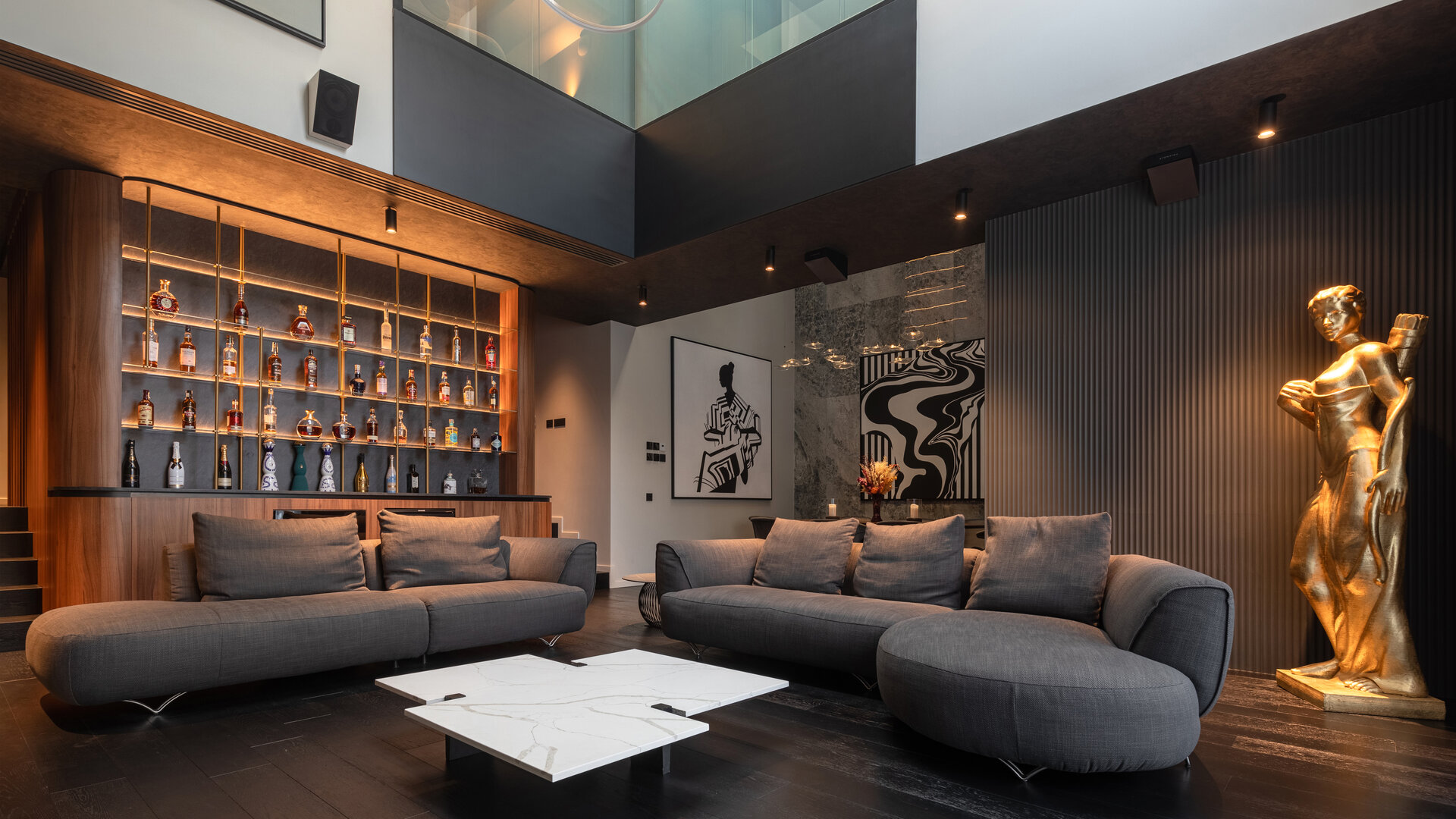
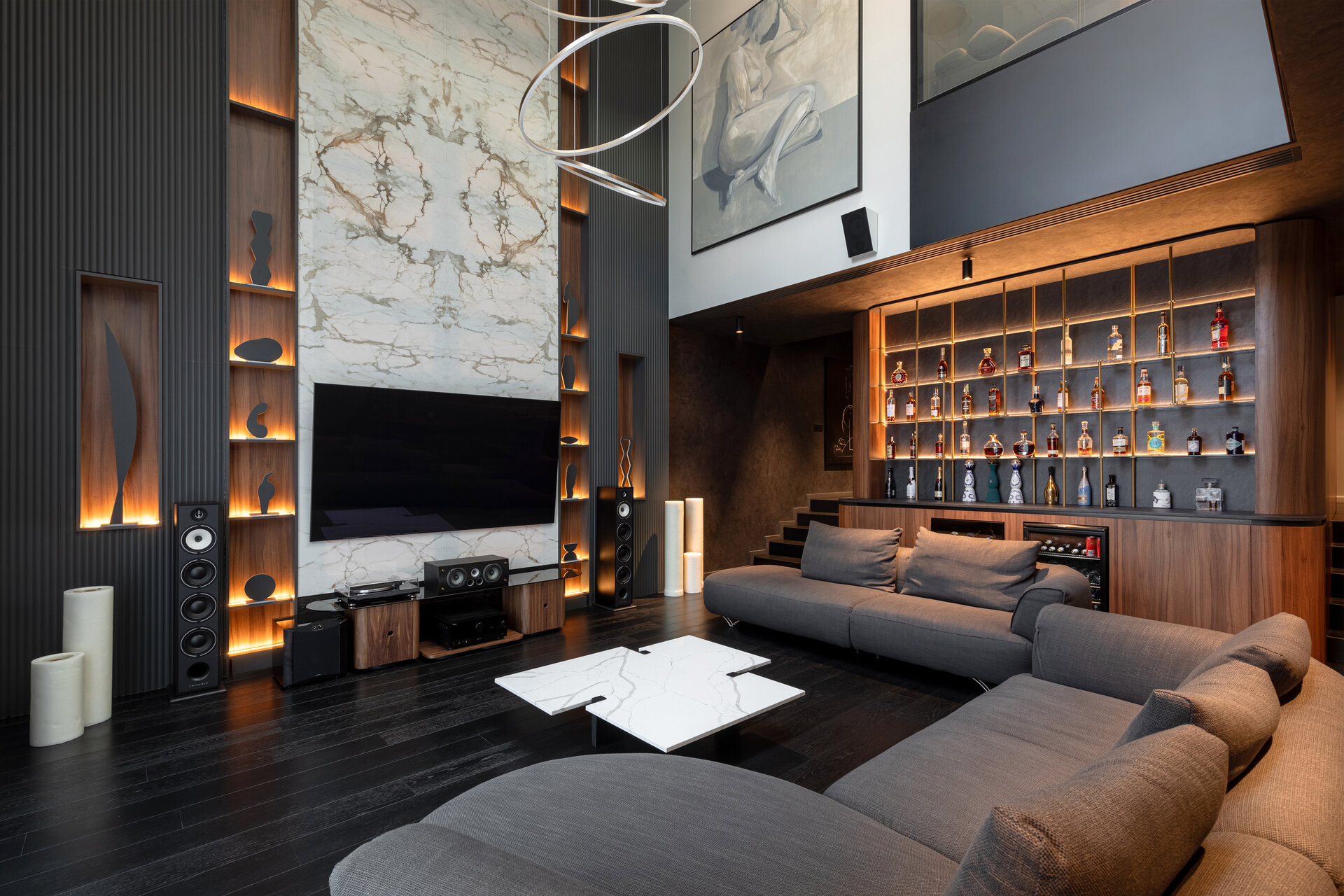
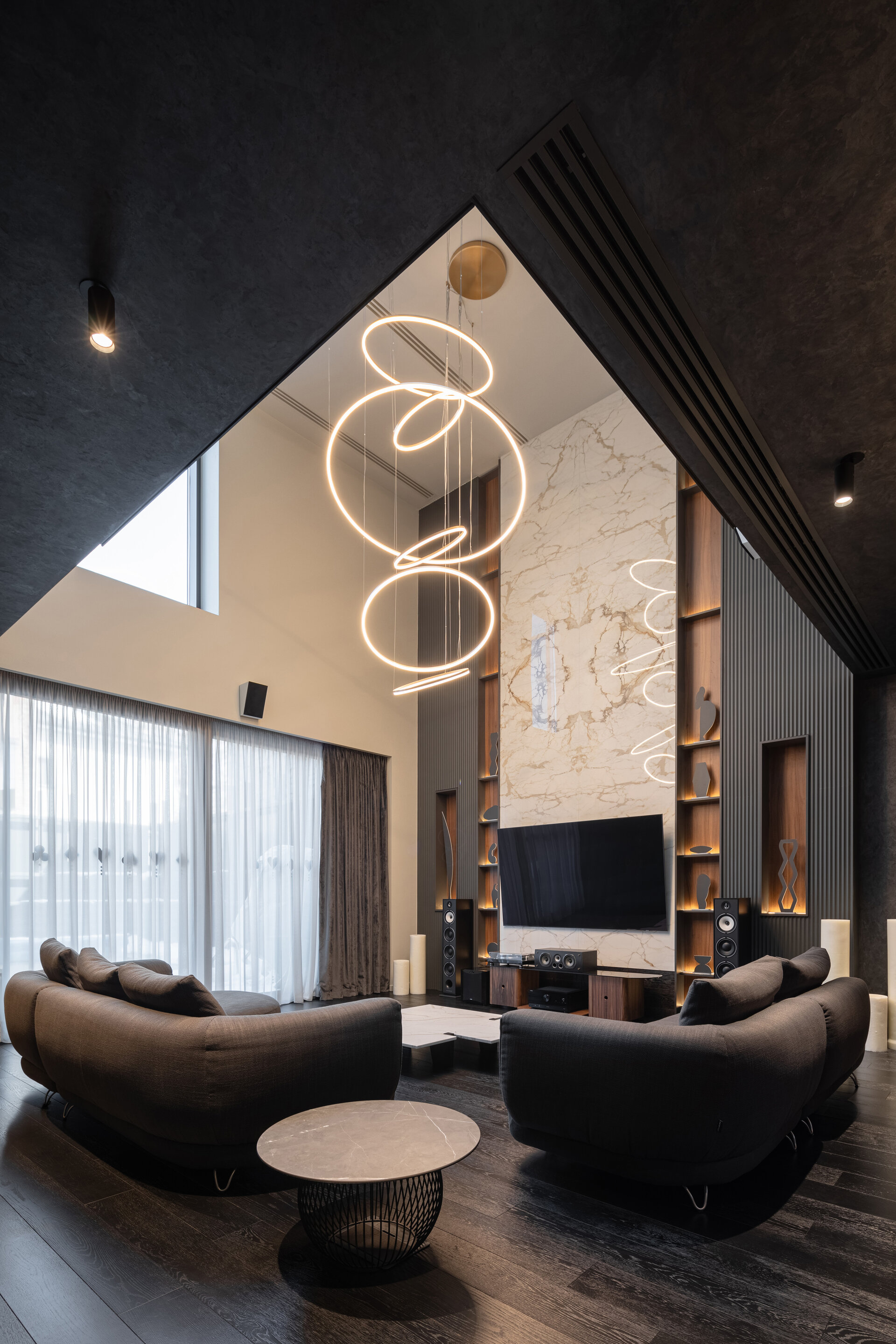
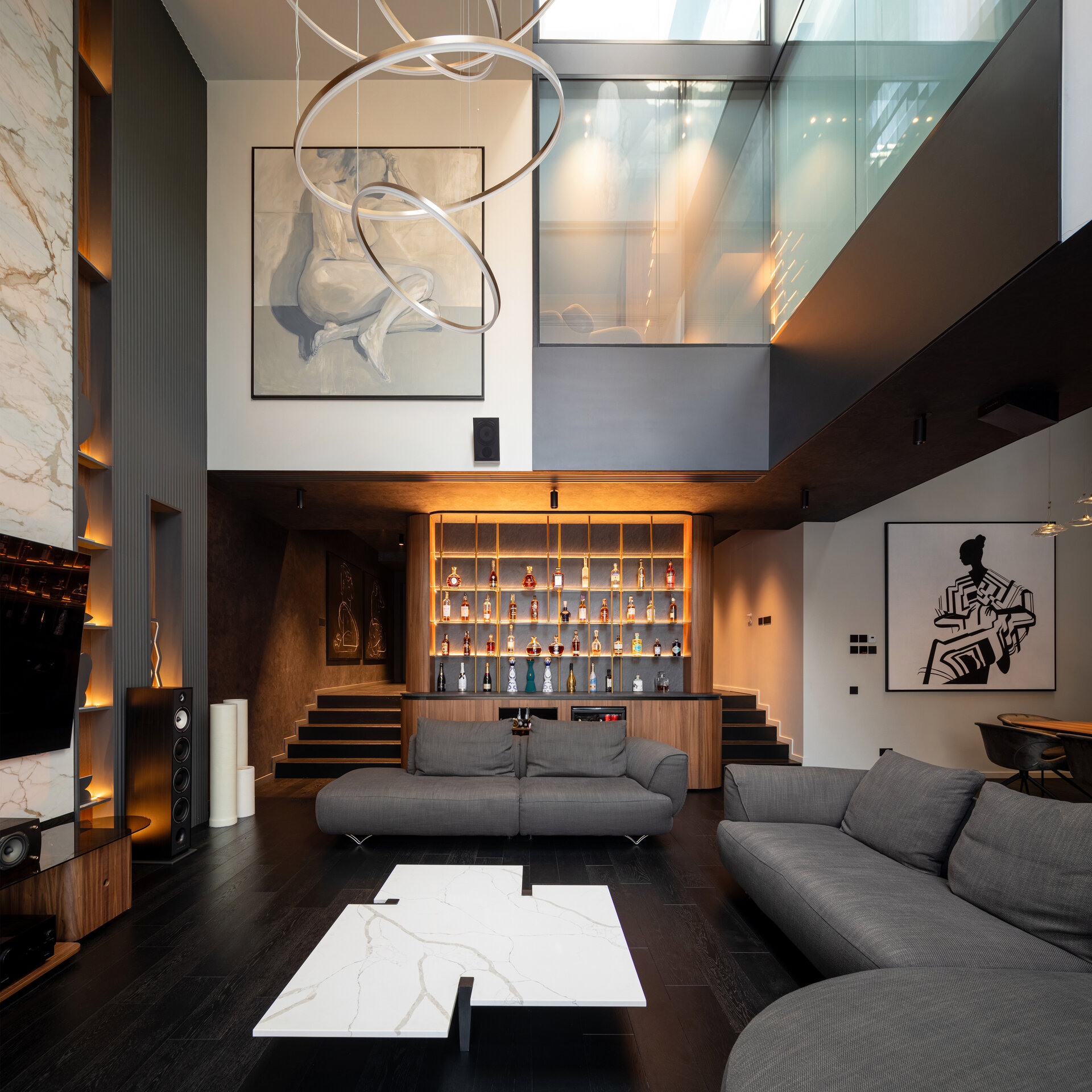
The ground floor acts as a pathway leading to the grand living room, which boasts an extraordinary ceiling height. The drinks display becomes a structural feature, seemingly supporting the glass walkway on the first floor. Each side of the living room is carefully staged to enhance the theatrical character of the space. Upon entering, visitors are greeted by a statue of the goddess Diana, symbolizing a guardian of privacy. The 7-meter-high wall housing the TV functions as a dramatic backdrop, showcasing decorative objects framed in a way that teases the viewer’s imagination.
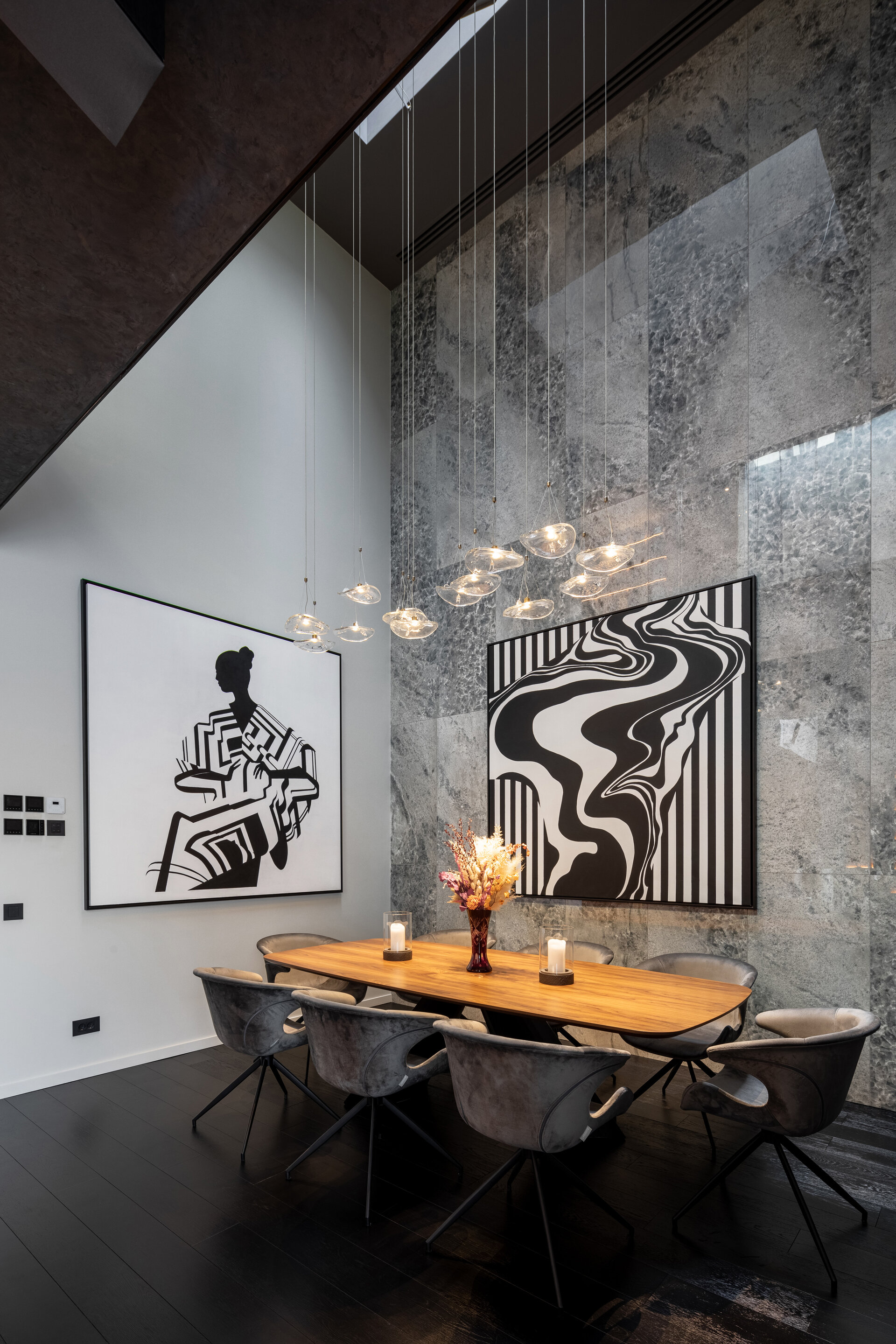
Adjacent to the living room is the dining area, separated by a floor-to-ceiling wall that reaches the skylight on the second floor. This wall is cladded in ceramic resembling crystalline conglomerates. The artworks and the cluster of pendant lights give the dining space a warm, intimate, and memorable character.
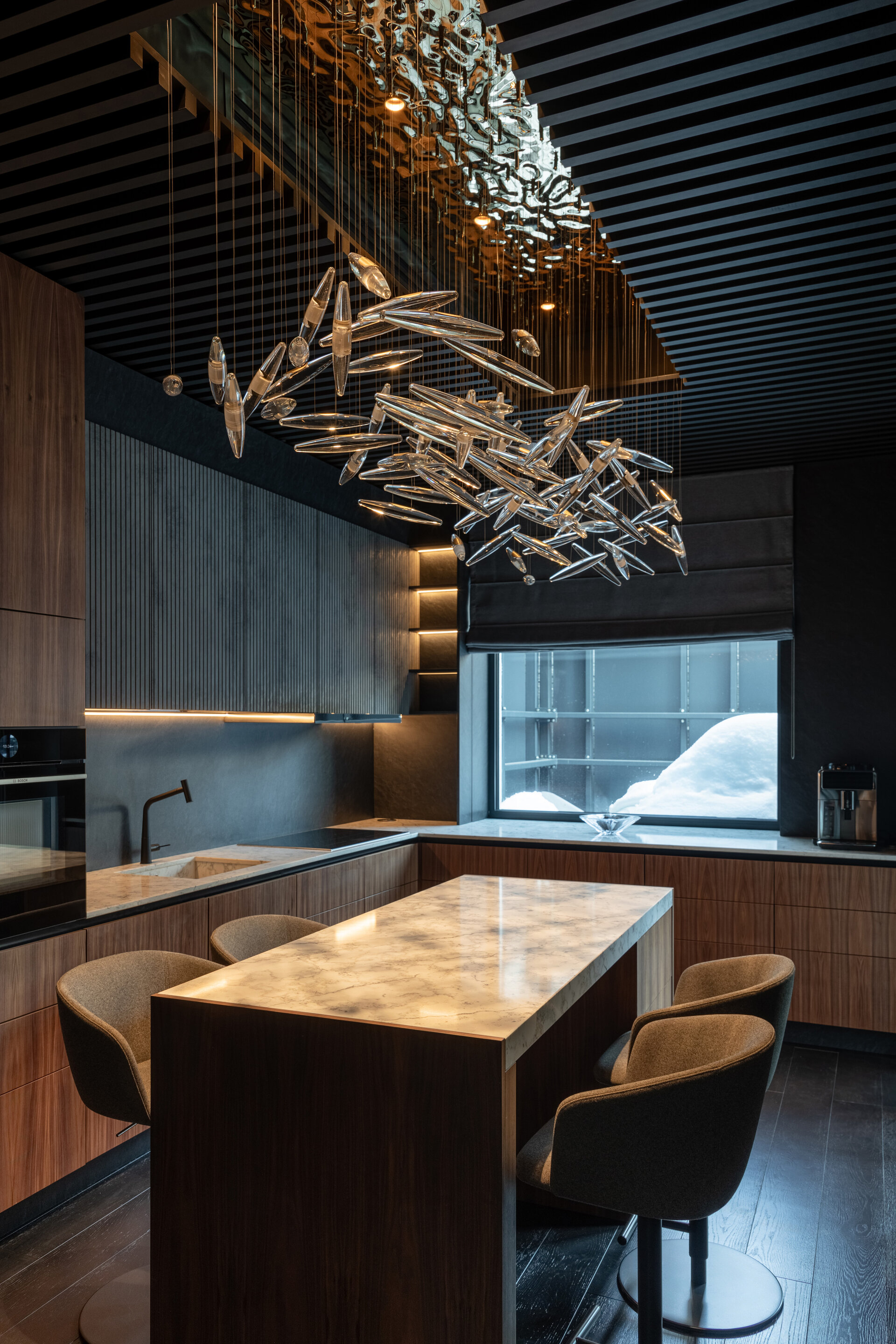
The kitchen revolves around a central island, above which floats a flock of illuminated spindles. The lighting is carefully curated to highlight only the areas where users physically interact with the kitchen elements.
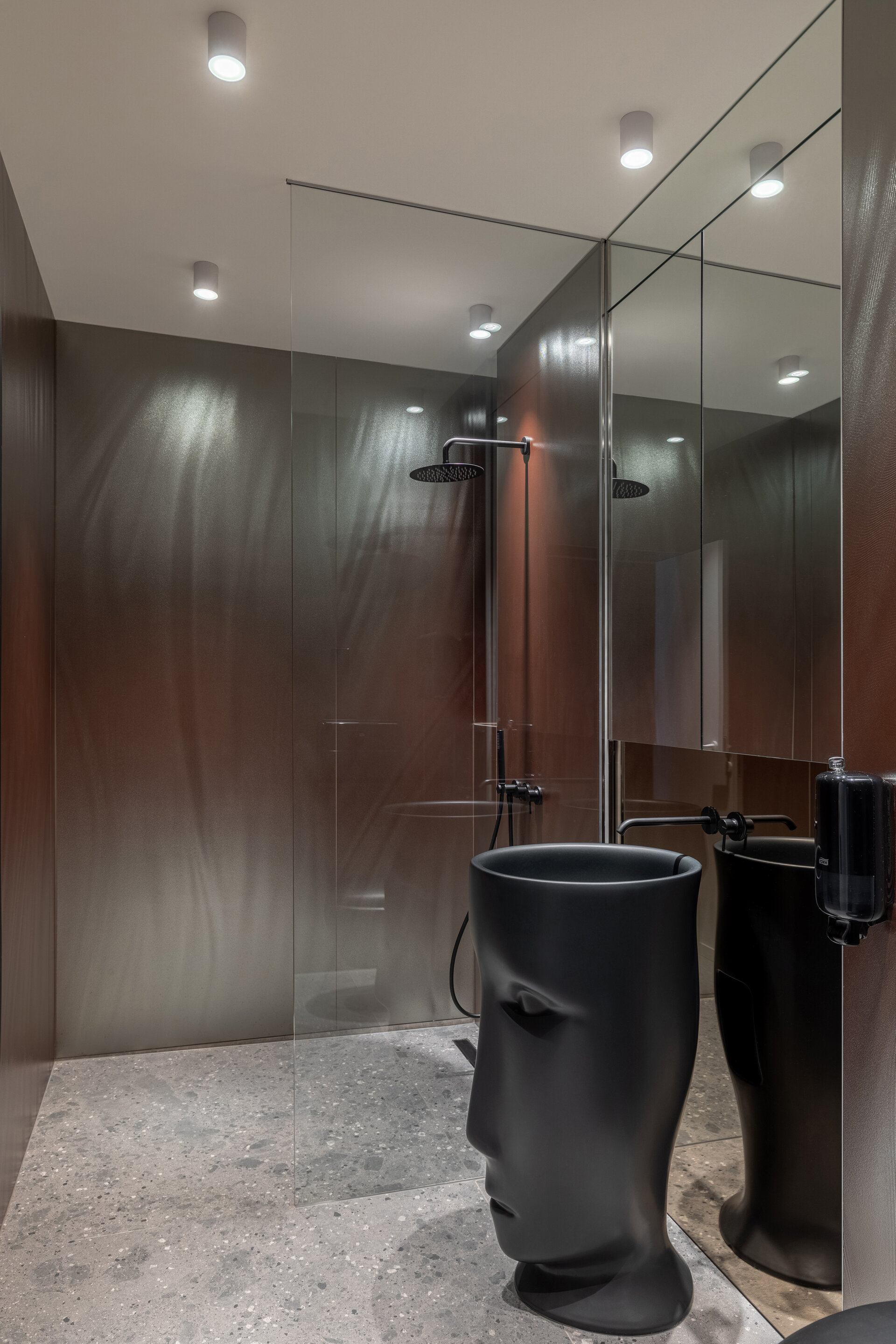
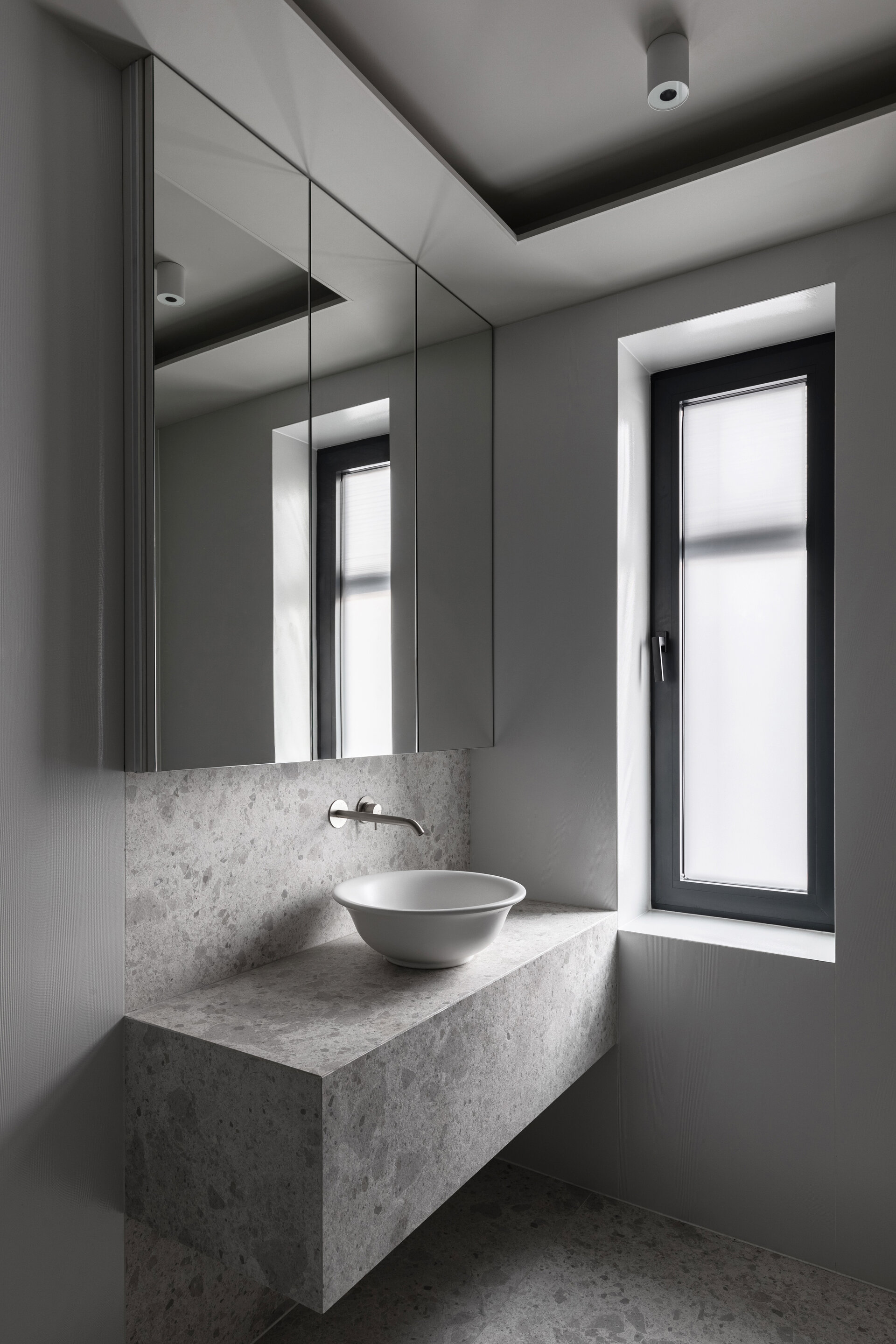
The ground-floor bathroom is designed as a hidden, theatrical space—hence the choice of folded ceramic tiles. It features a freestanding sink reminiscent of a butler, enhancing the feeling of stepping behind the curtain.
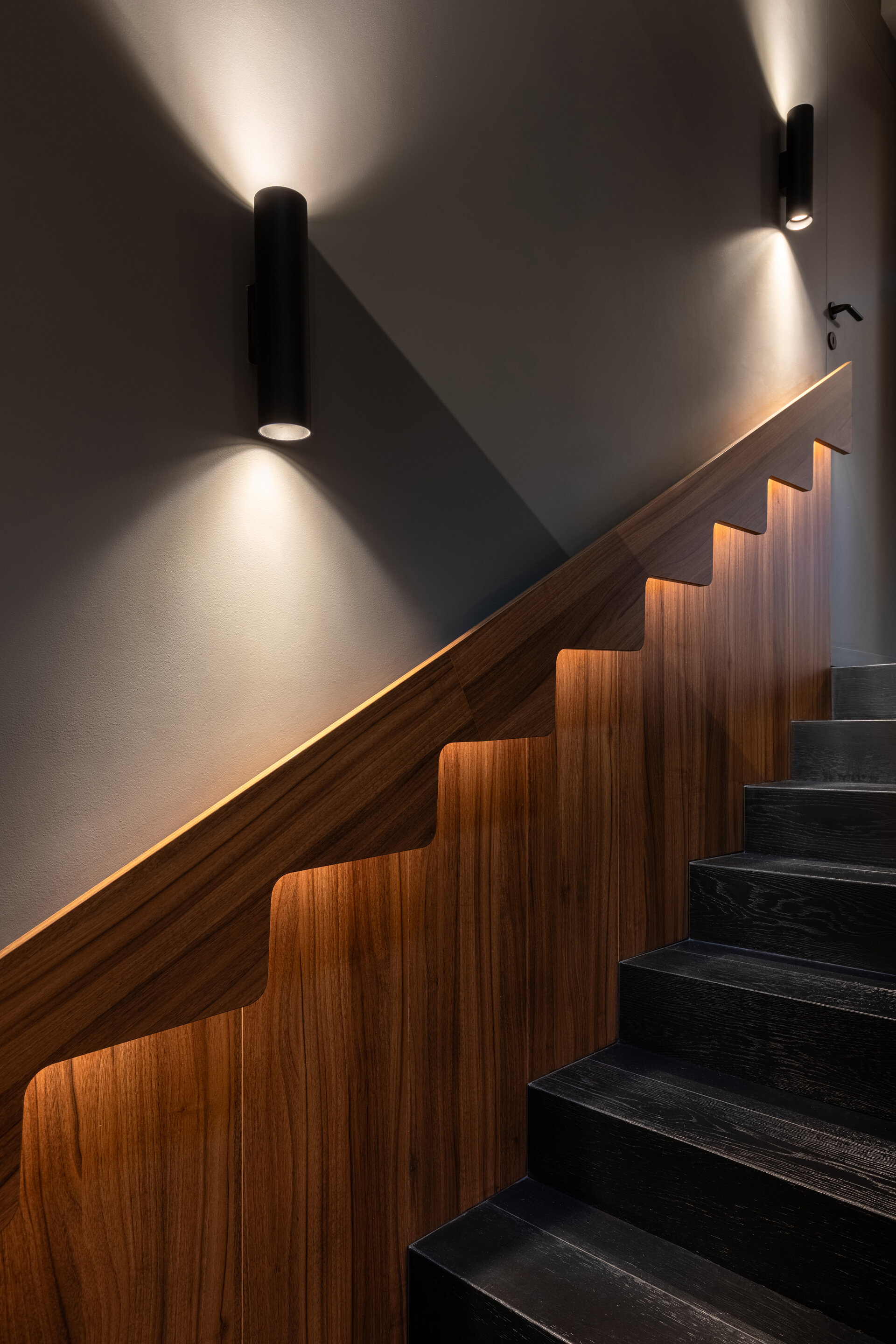
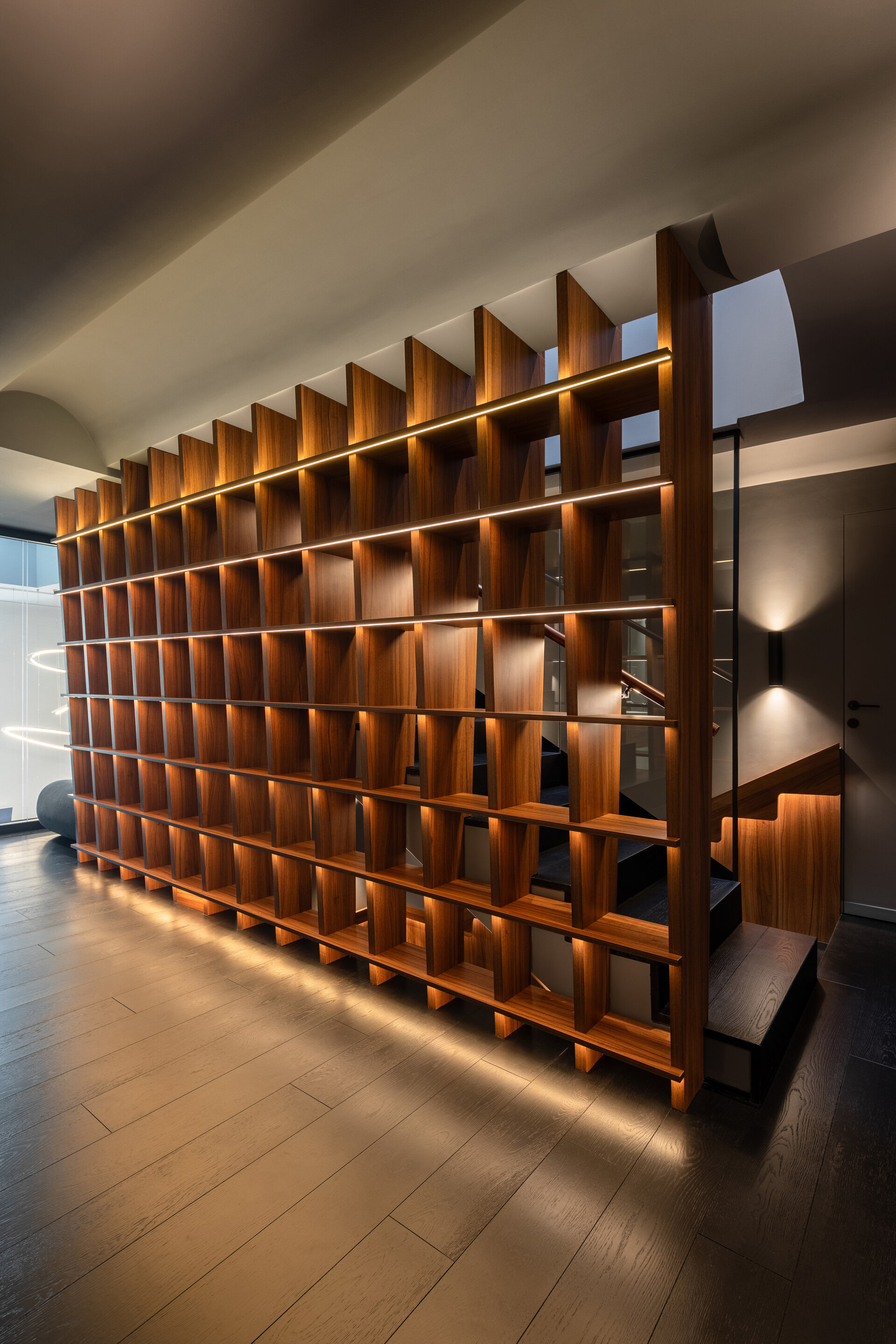
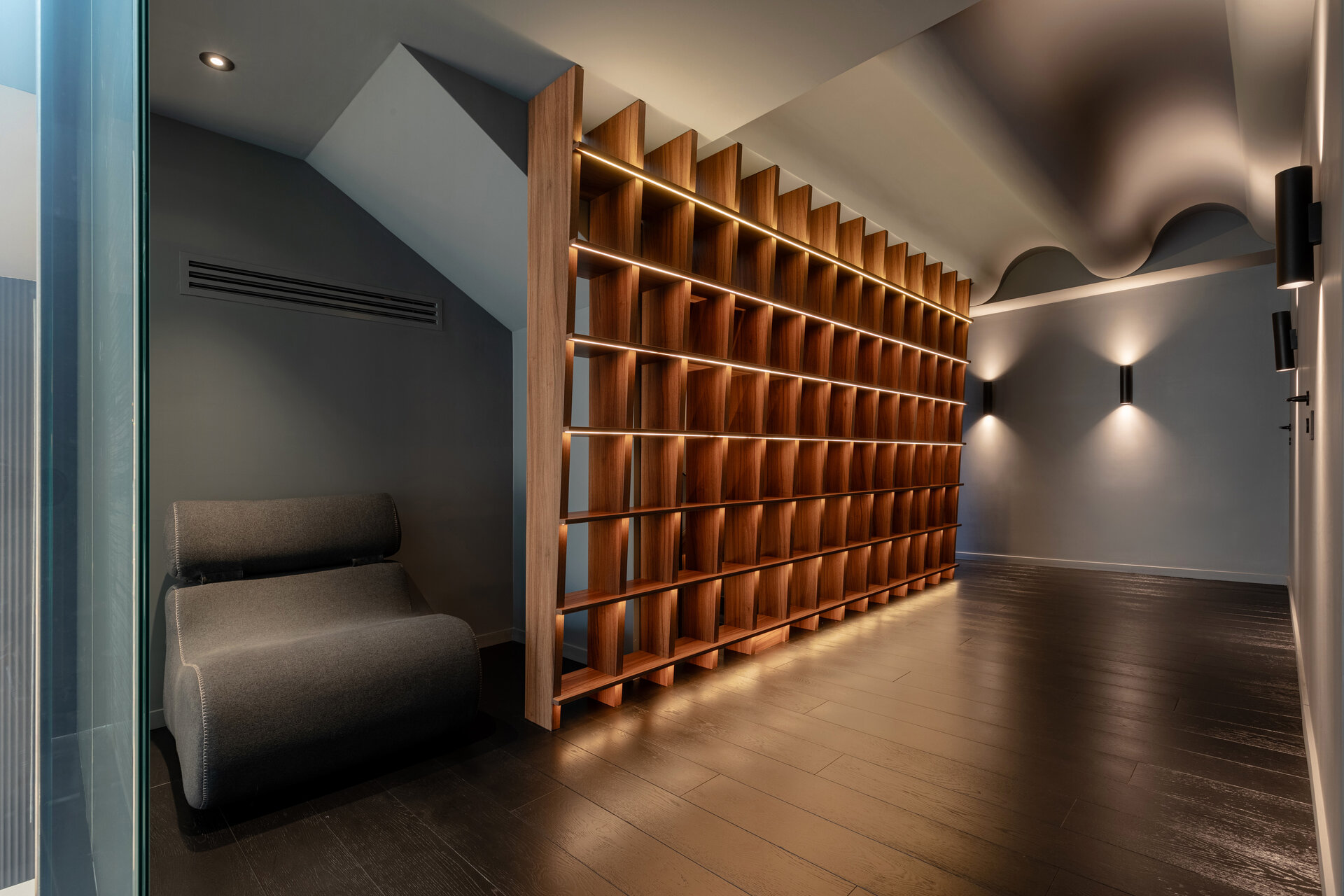
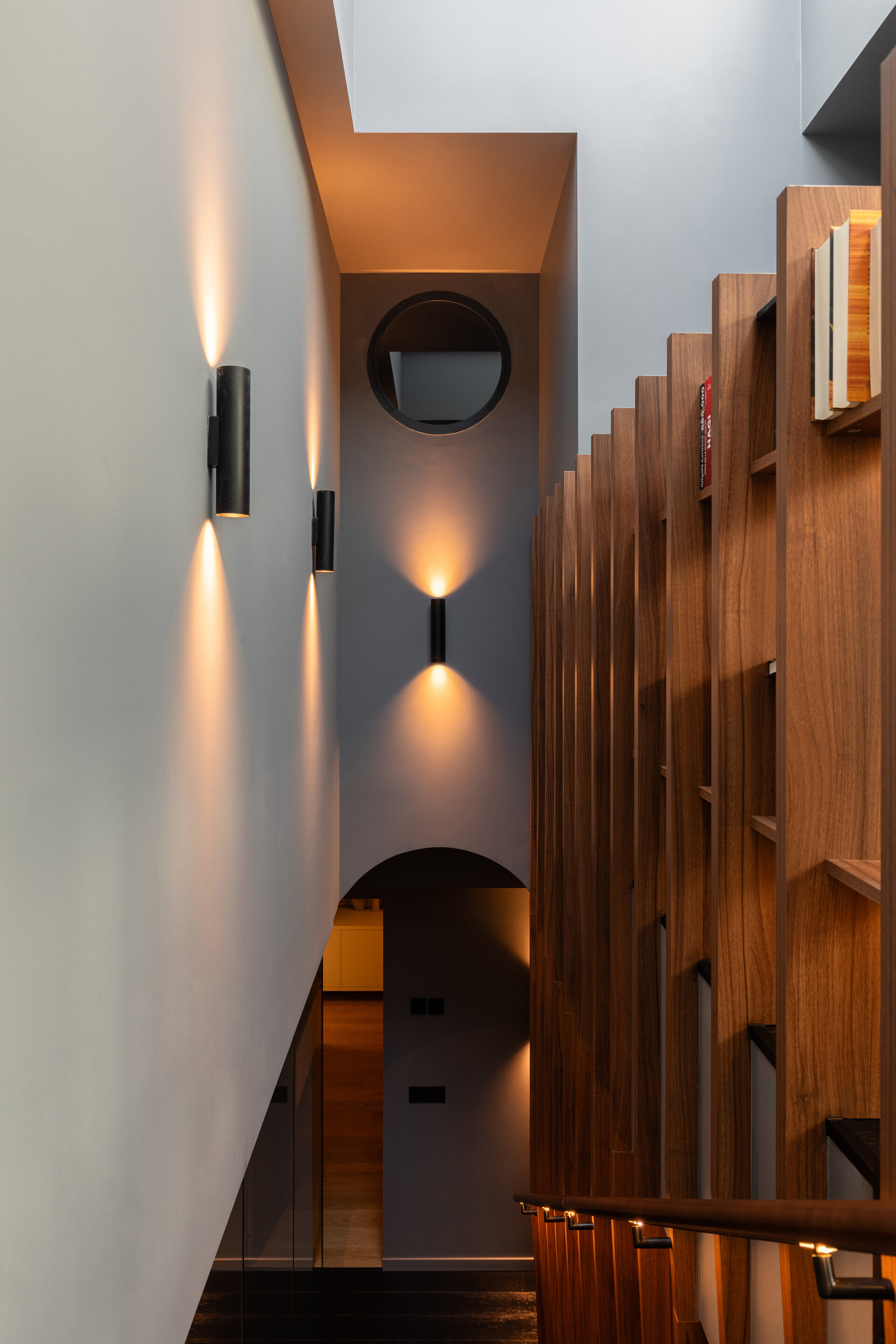
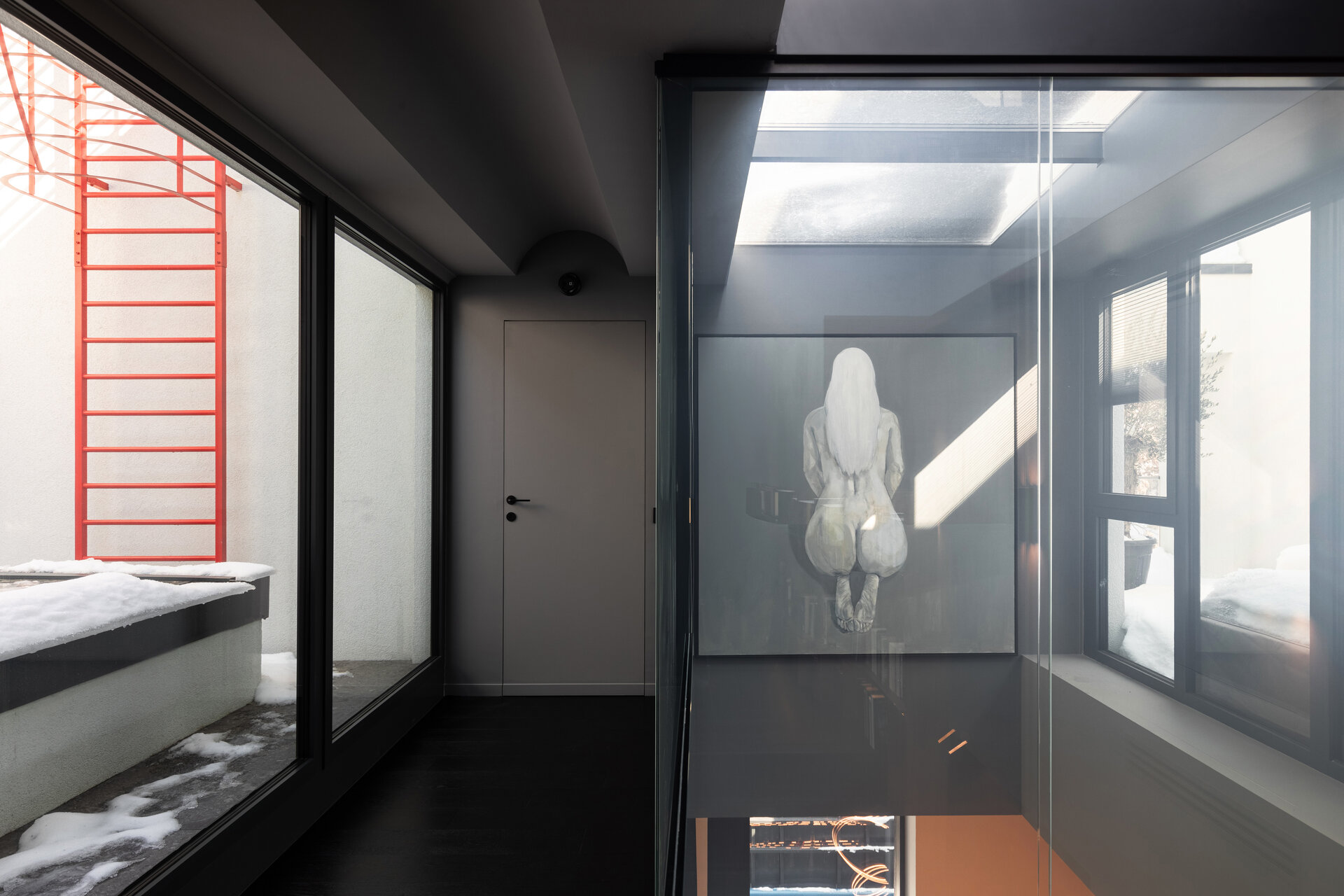
The vertical circulation in this house is meant to feel like wandering through a library. The lighting is delicately controlled to remain soft—especially on mornings when the night seemed to have been too short. On the first floor, the hallway features an undulating ceiling that engages in a subtle dialogue with wall-mounted light fixtures that cast light in two directions.
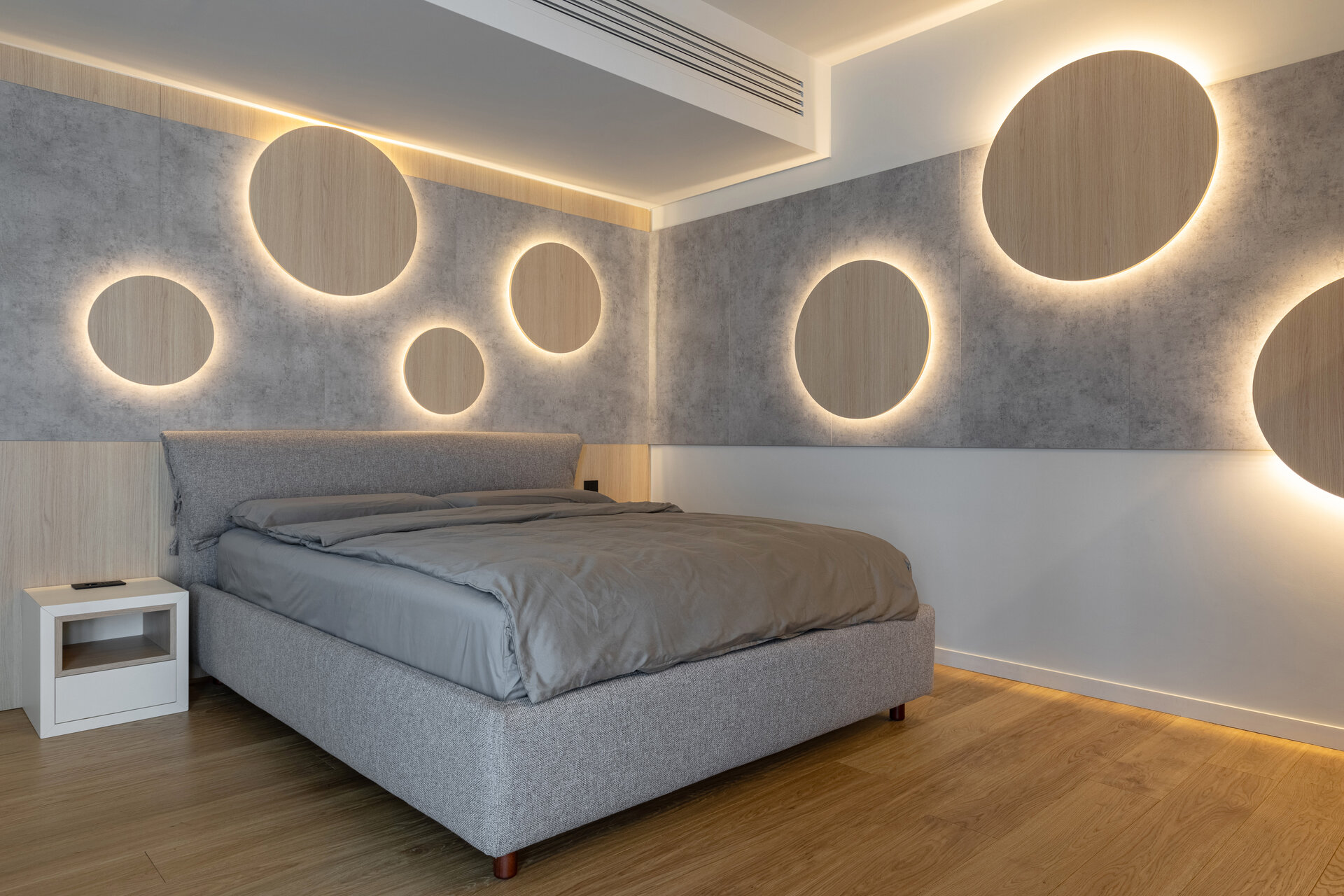
The children’s bedrooms and bathrooms are the only spaces where the dark, mysterious atmosphere is abandoned. Here, the client embraced the proposal for bright, airy environments that foster the children’s freedom to express their personalities.
The first floor also includes a glass walkway with views on one side into the living room and on the other into the dining area. At night, this walkway transforms into a reflective space where the lighting fixtures seem to dance like ethereal spirits.
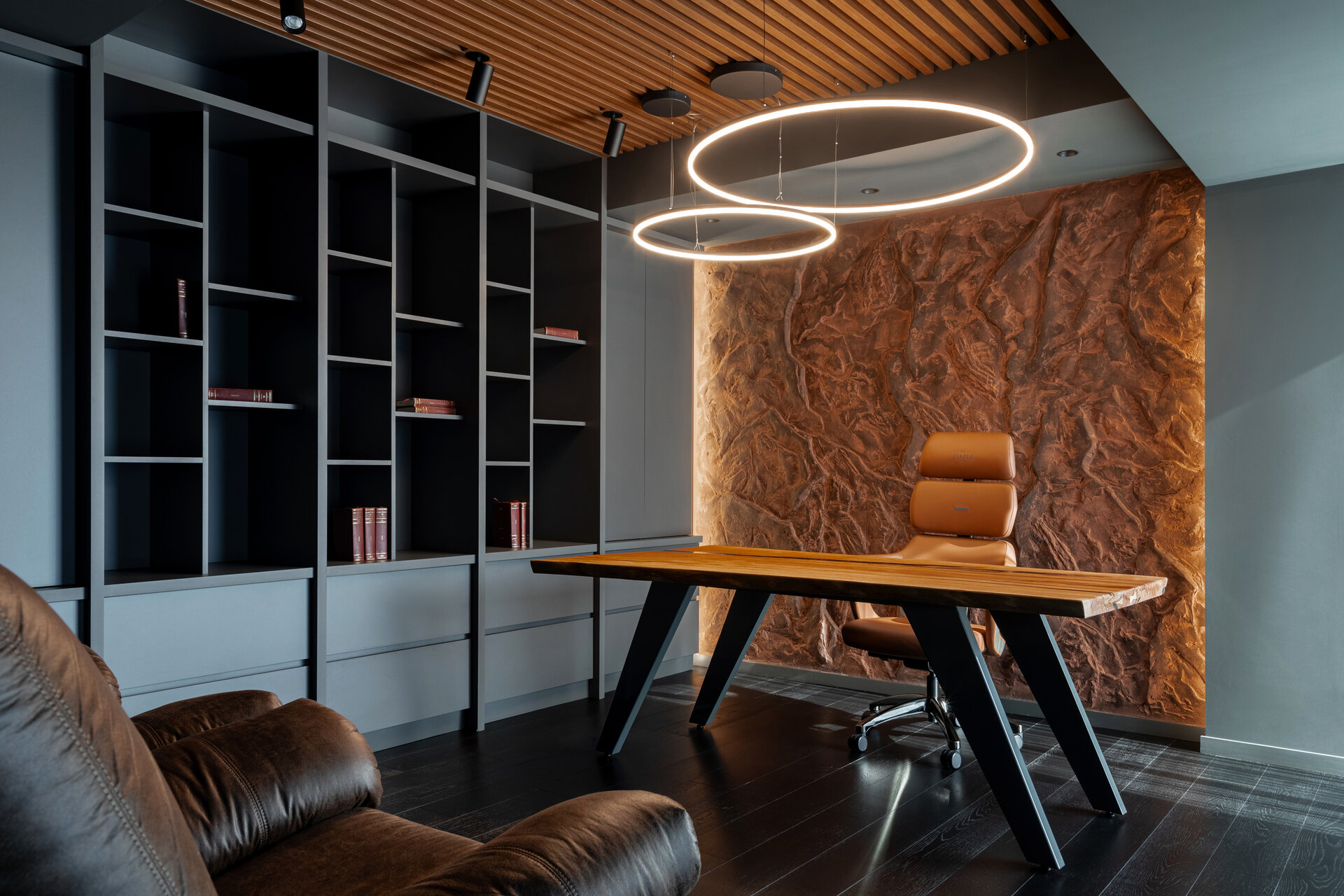
The second floor is dedicated to the master bedroom and the client’s office. In the office, a stone-like wall dissolves the boundaries of the space. Warm ambient lighting softens the rigid aesthetic, creating a harmonious balance within this segment of the Labyrinth of grey colours.
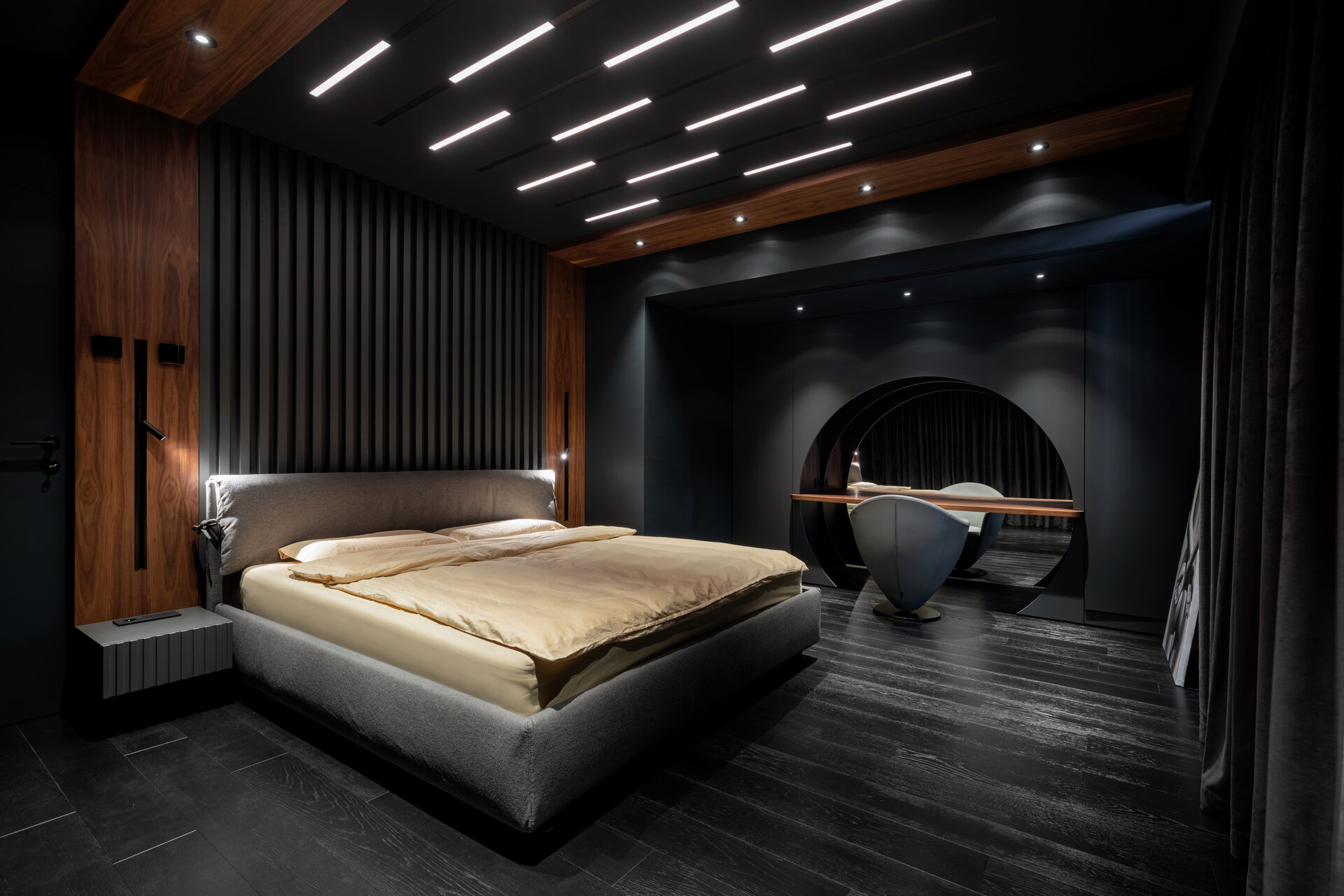
The master bedroom represents the pinnacle of the dark and mysterious ambiance. Deep, rich tones blur the lines between the ceiling, walls, and floor, creating the sensation of infinite space. This is a place where the clients’ imaginations are free to roam through the endless darkness. A special area dedicated to the lady of the house is envisioned as a portal to other worlds, with a mirror acting as a window into these imagined realms.
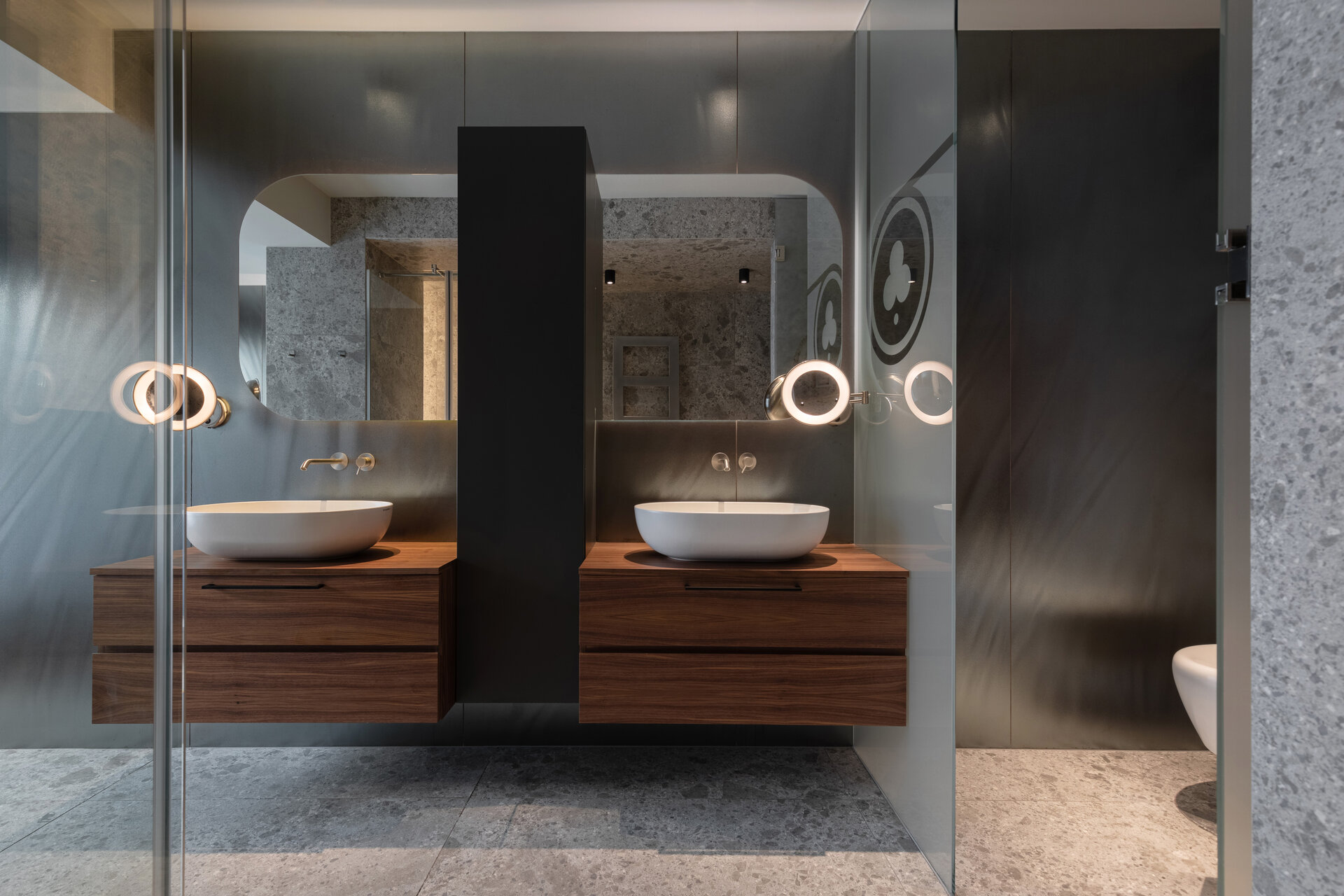
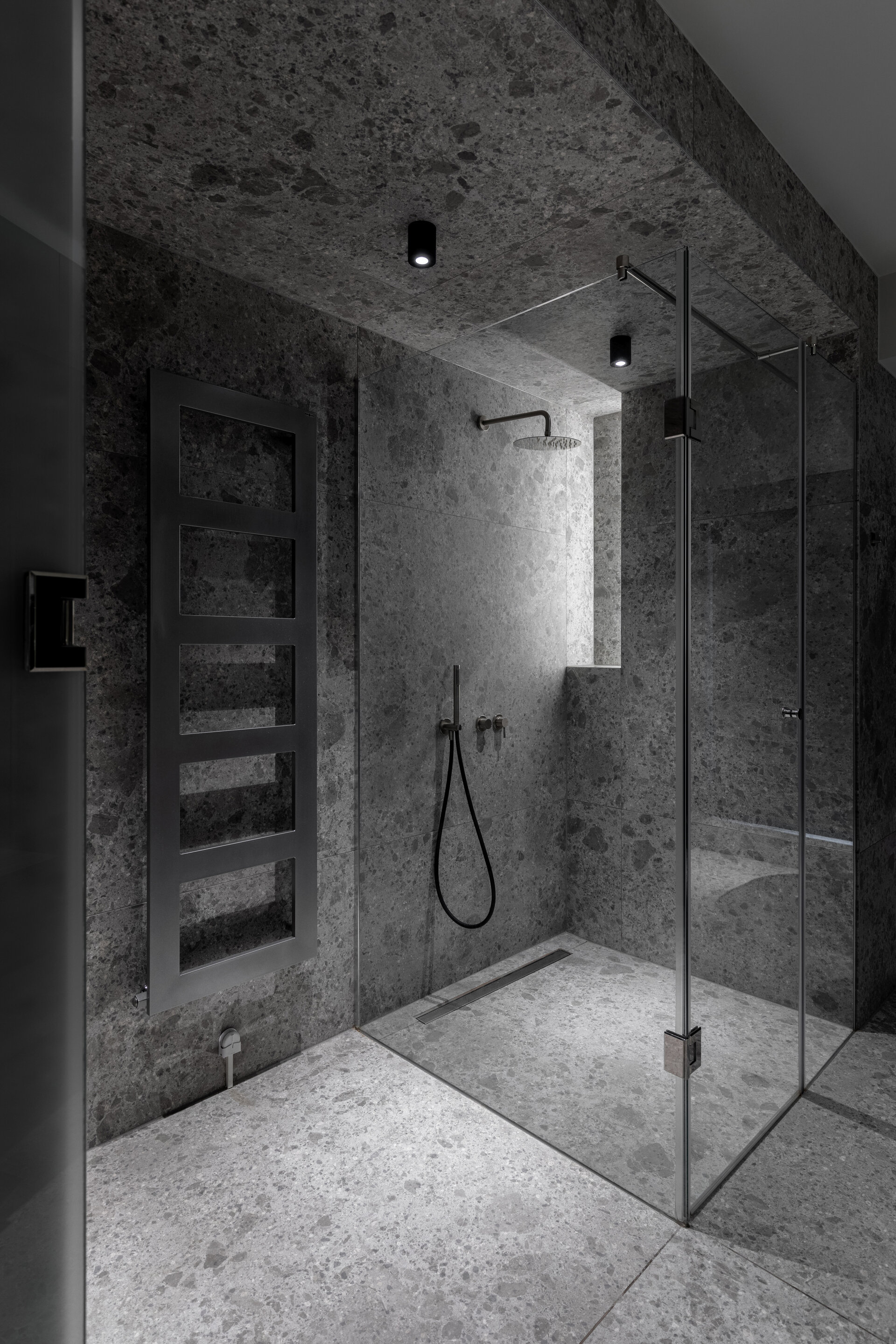
The master bathroom reveals its primal essence through stone-inspired surfaces. The wall housing the sinks suggests that beyond the curtain, the labyrinth could extend indefinitely.
The Labyrinth of grey colors is a sensory space designed to stimulate the imagination, offering an environment that is simultaneously ambiguous and easy to navigate.
Interior Residential Design

- I House interior design
- It’s a wrap
- Apartment in interwar villa
- Heartwarming apartment
- Apartment in Cotroceni
- Uptown Haven – An Urban Refuge of Sophistication and Comfort
- Apartment O25 – Harmony Between Minimalism and Comfort in 4 Rooms
- AE Apartment
- C House
- M House
- House RR
- Apartment CS
- 5% Blue Flat
- Darian House
- Golden Light Apartment
- TD Apartment
- Industrial Groove Flat
- Aura Apartment
- “Chocolate Velvet” House
- Zestful Apartment
- The Labyrinth of colours of grey
- Oslo Freesia
- Laurel Brandy
- Pearl Marshmallow
- Speculum Studio
- PP apartment
- Cișmigiu apartment
- Living in Reflection
- Single family house design in Otopeni
- U house
- Banu Manta SRB apartment
- Moi Project
- The Hidden Gem
- O. Apartment
- A place TO BE
- Fairy tale
- Sea Infinity
- Bold Beige
- Art at Home
- Apartment for two young people
- Layover - a stop between destinations
- Lunaria
- DDP Apartment
- D. House
- Red Bunker
- House B
- Dristor Airbnb
- SST House
- Magheru Airbnb
- Whispers of Light
- Reflected Shadows


