NAGI — Japandi Penthouse, Constanța
Authors’ Comment
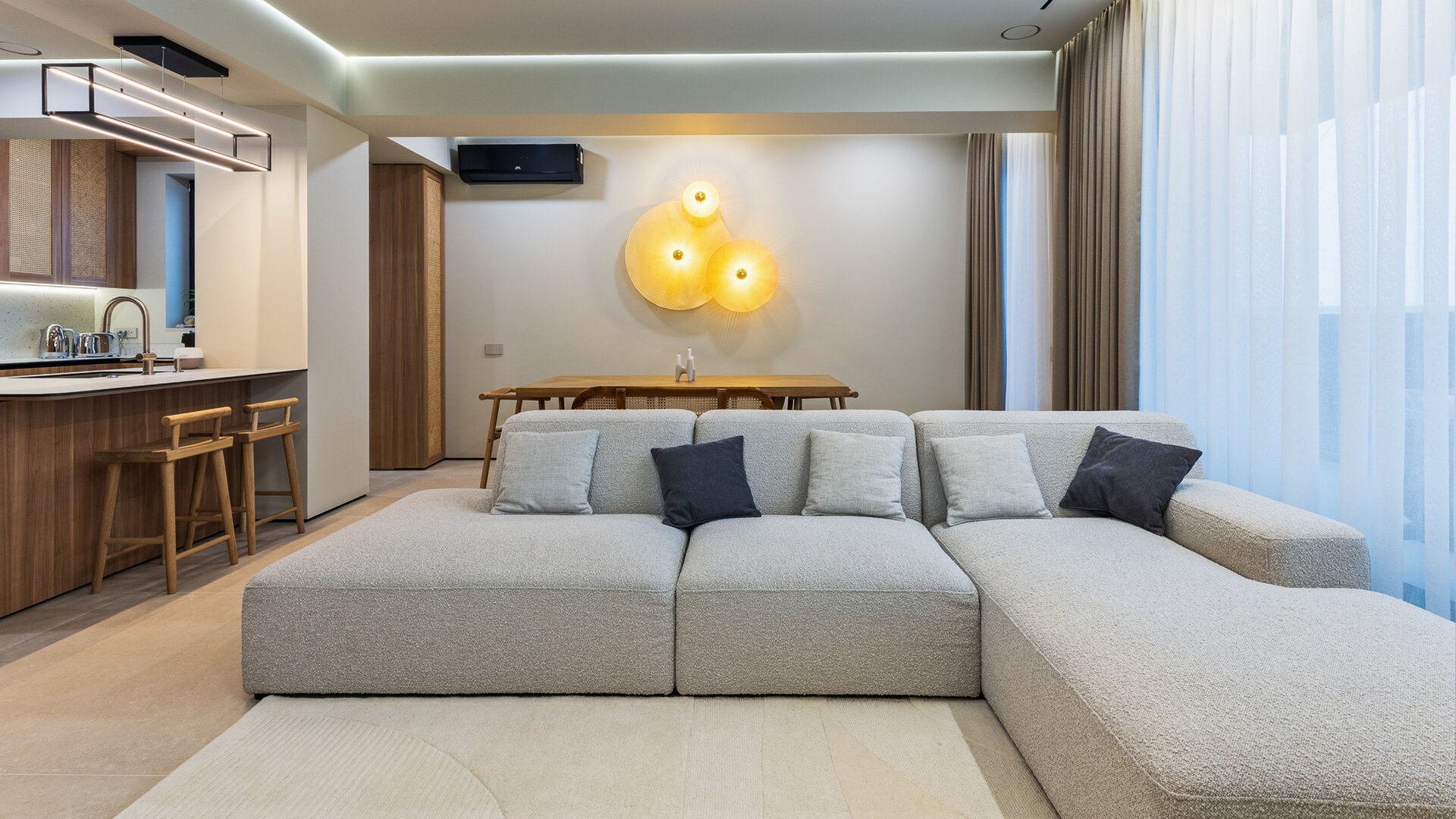
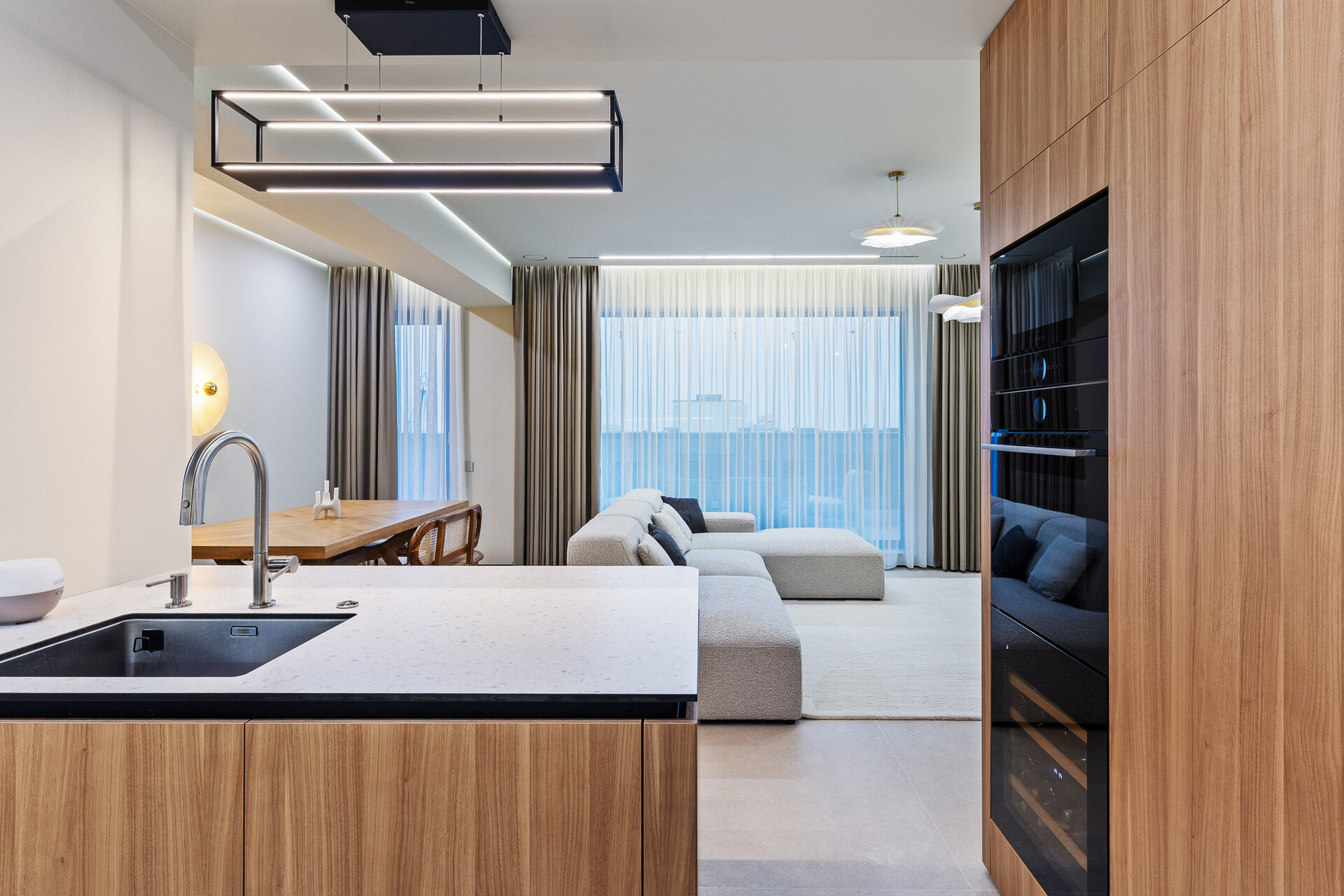
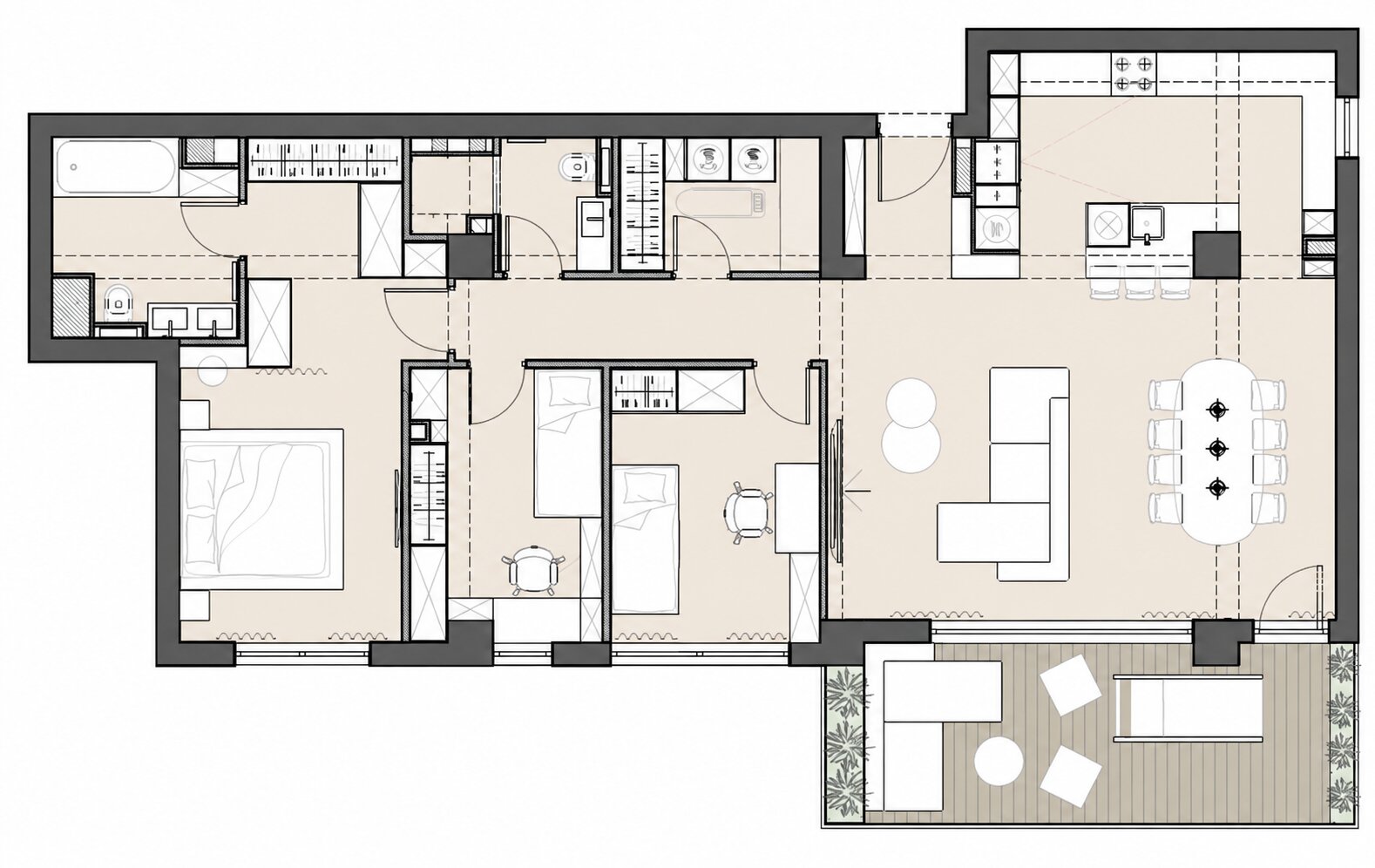
Nagi is an interior design project by ICONIC Design, developed across 120 m² in a penthouse in Constanța, sited in a rare condition: along the axis between Lake Siutghiol and the Black Sea. This dual proximity to water was not treated as a secondary landscape feature, but as the generative premise of the entire conceptual approach — the plan, the materiality, and the lighting scenario are all direct responses to the condition of dwelling between two bodies of water. The project takes its name from the Japanese term nagi, the stillness of the sea immediately after a storm — a metaphor for the static equilibrium the space seeks between the two waters.
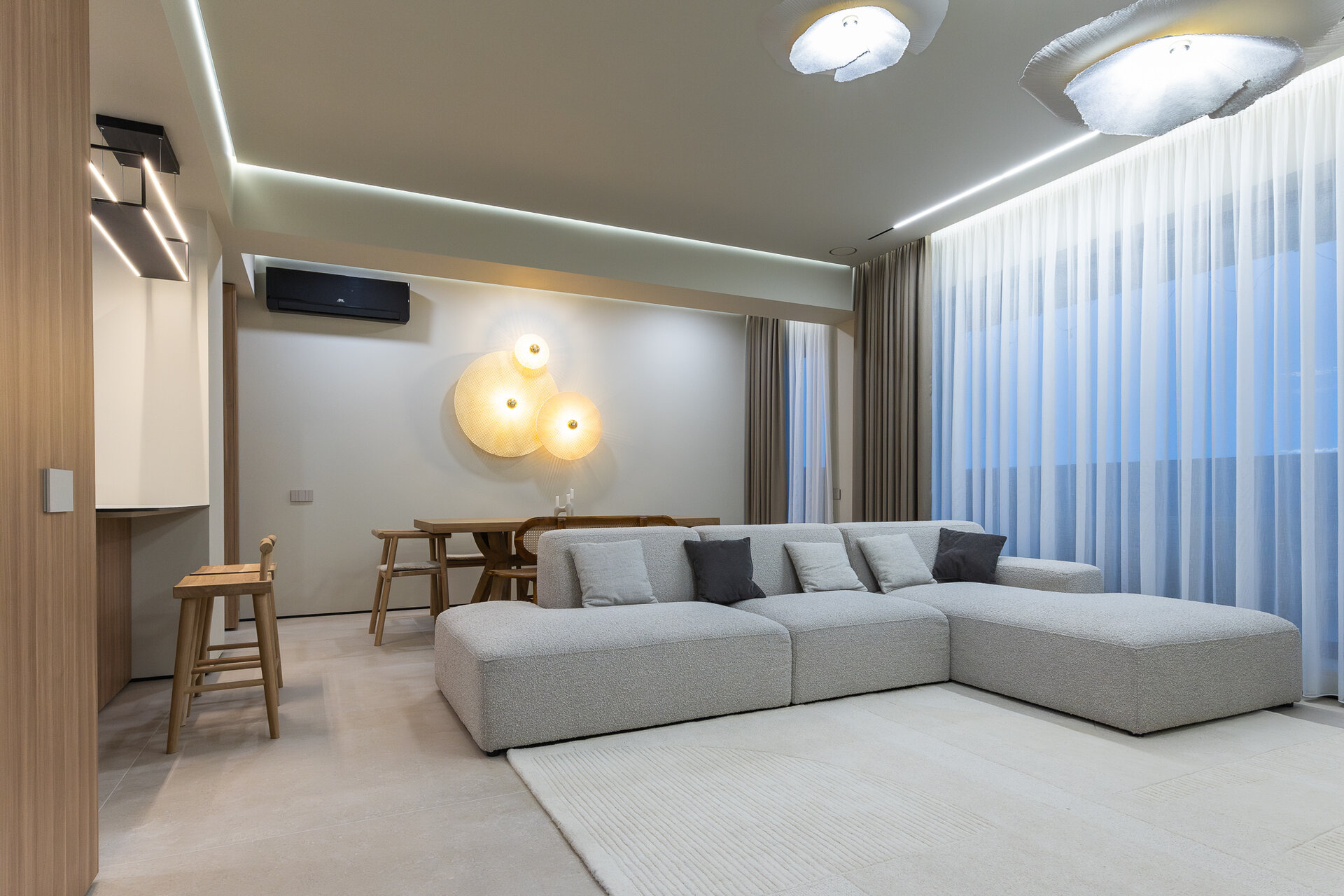
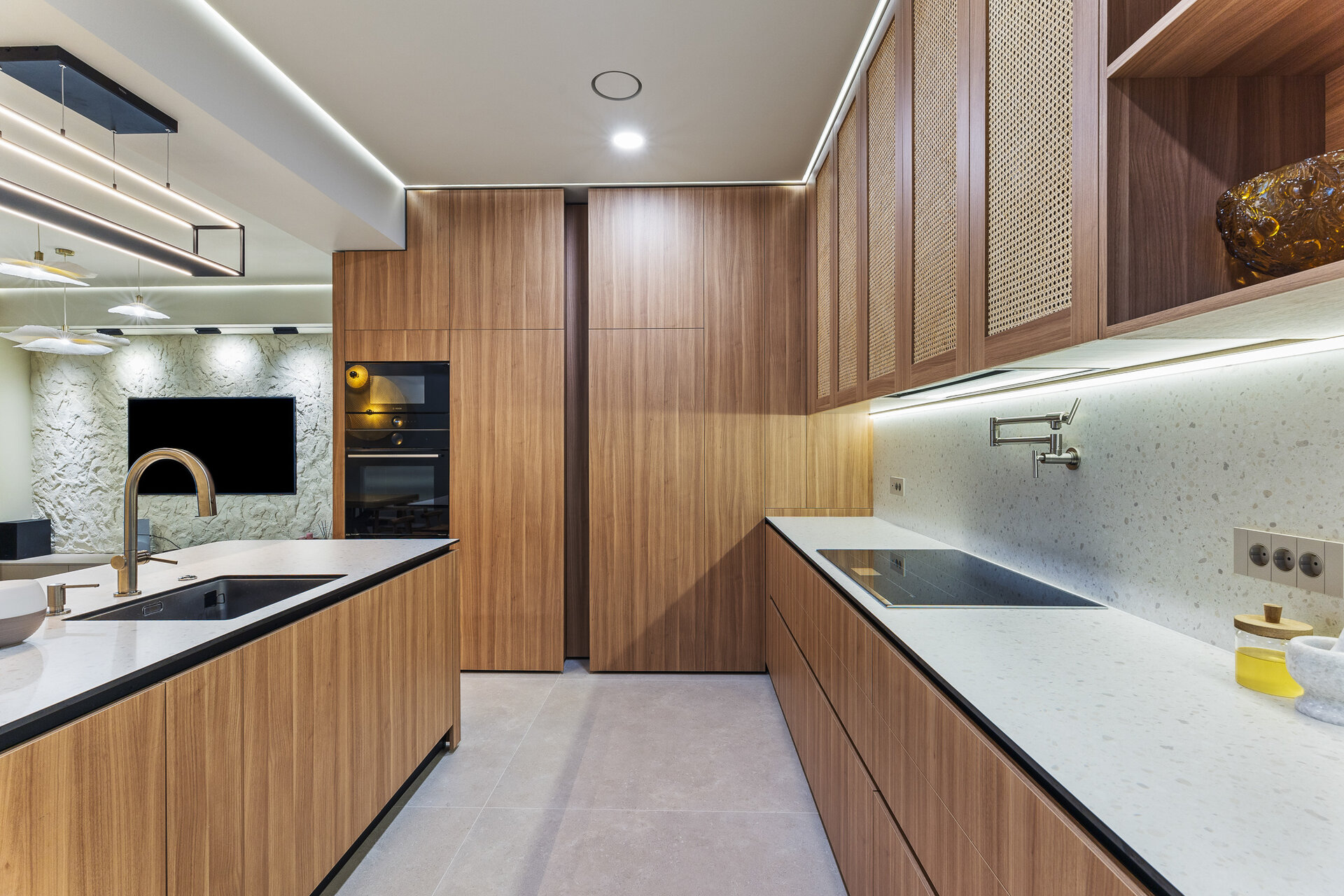
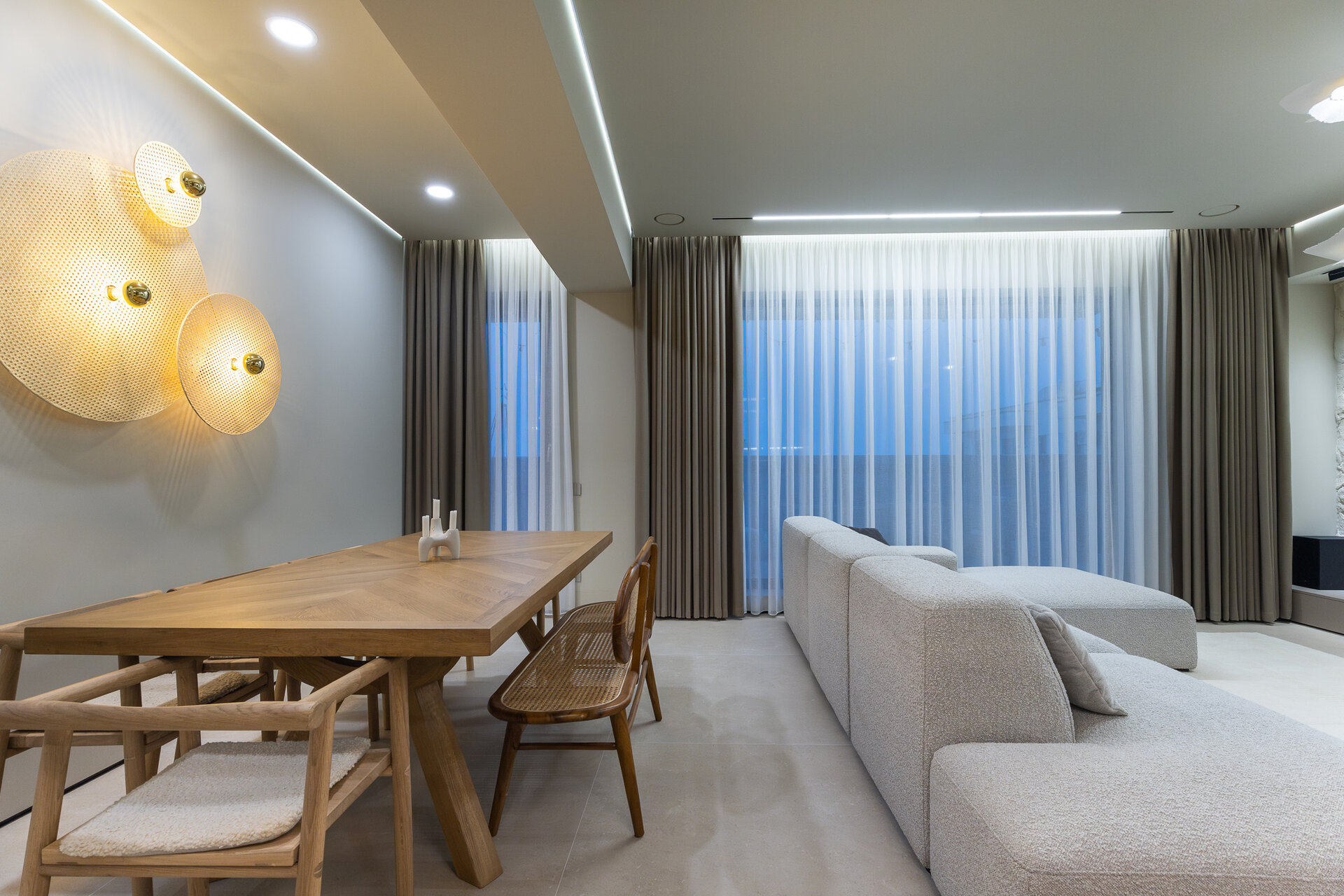
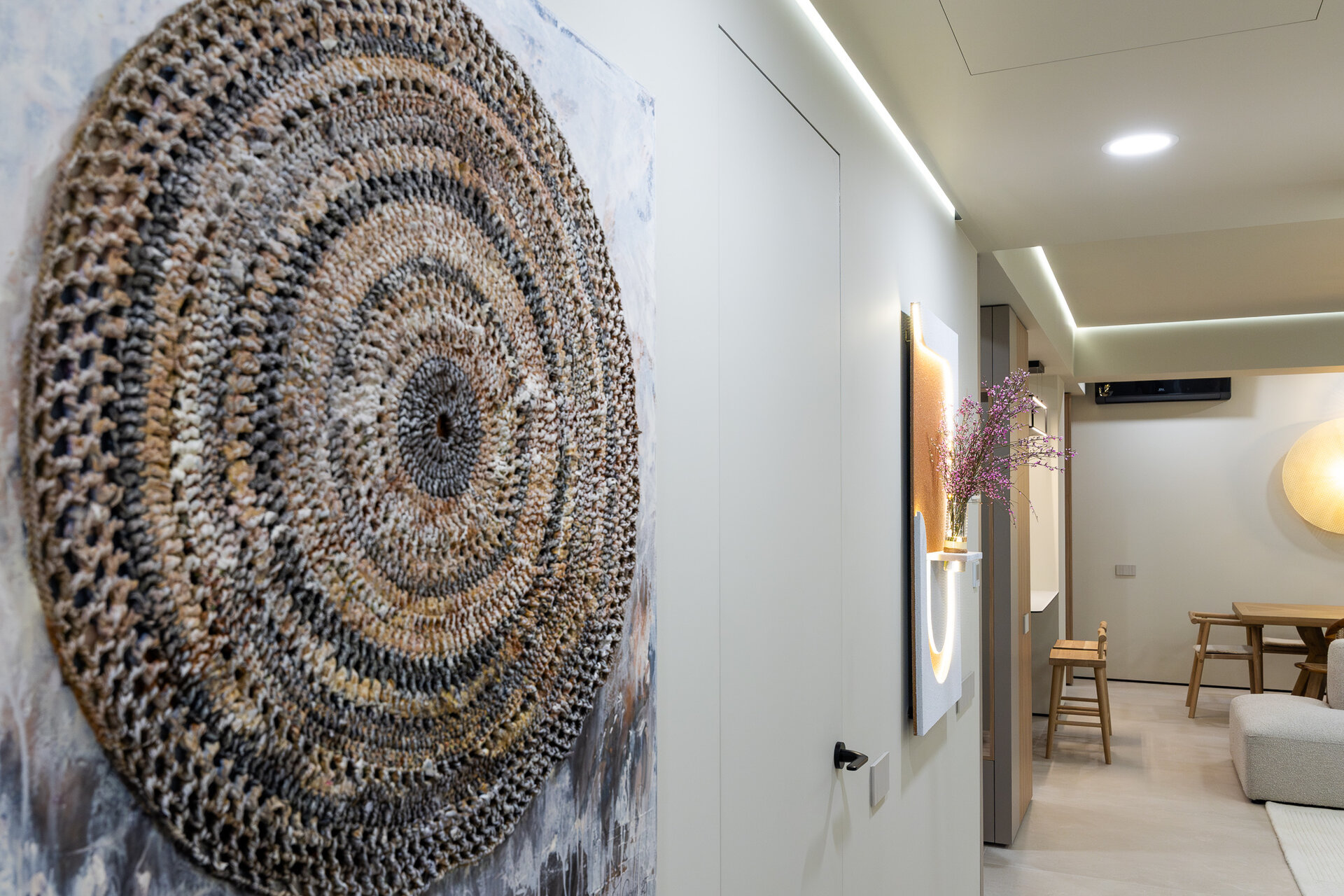
Conceptually, the project is built as an exercise in reduction: the open-plan living area is organised so that the two glazed fronts remain uncontested by furniture or partitions, generating a continuous visual sequence from lake to interior to sea. Technical elements — thresholds, lighting systems, mechanisms — are concealed within the interior architecture, removed from the visual field to preserve the purity of the plan.
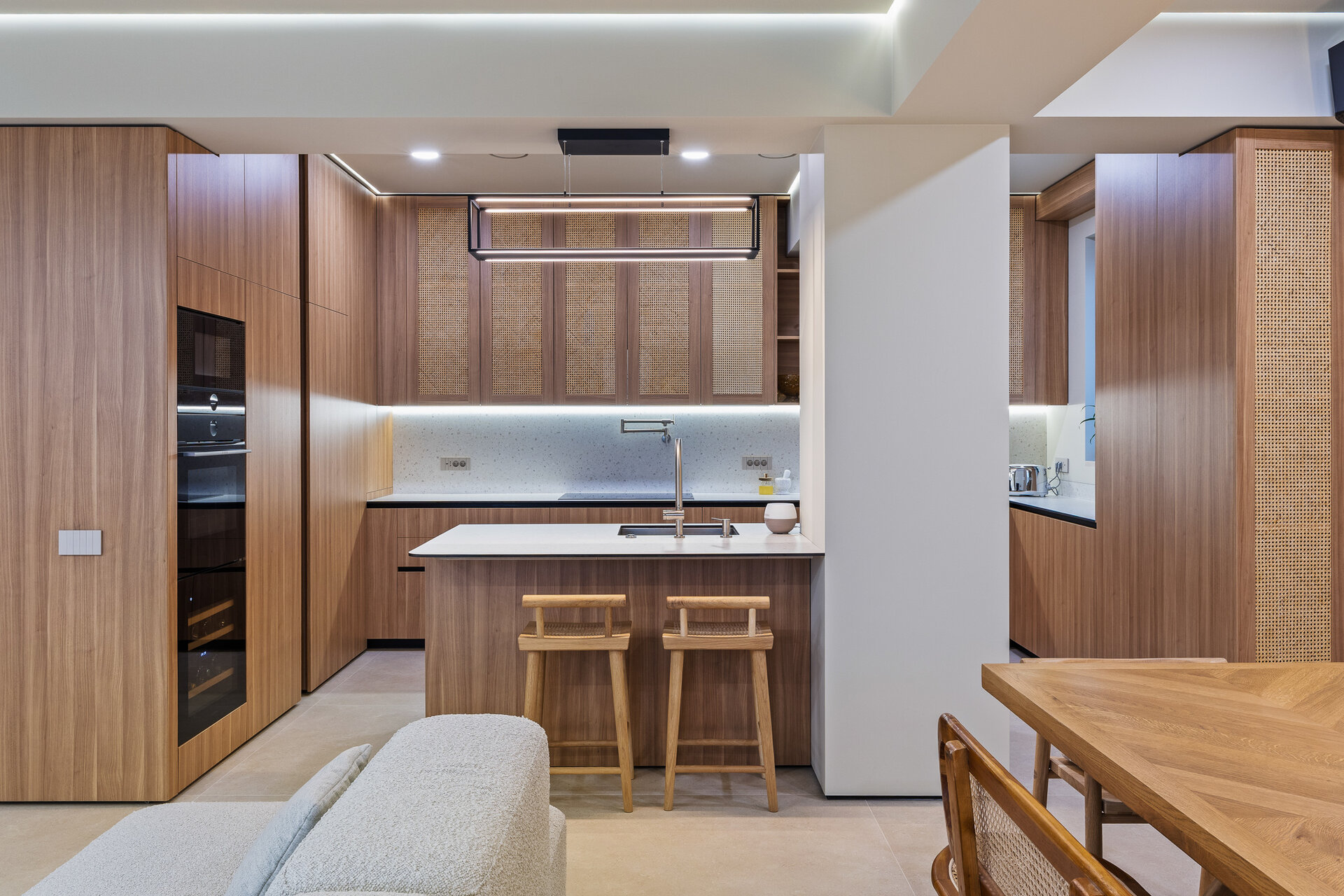
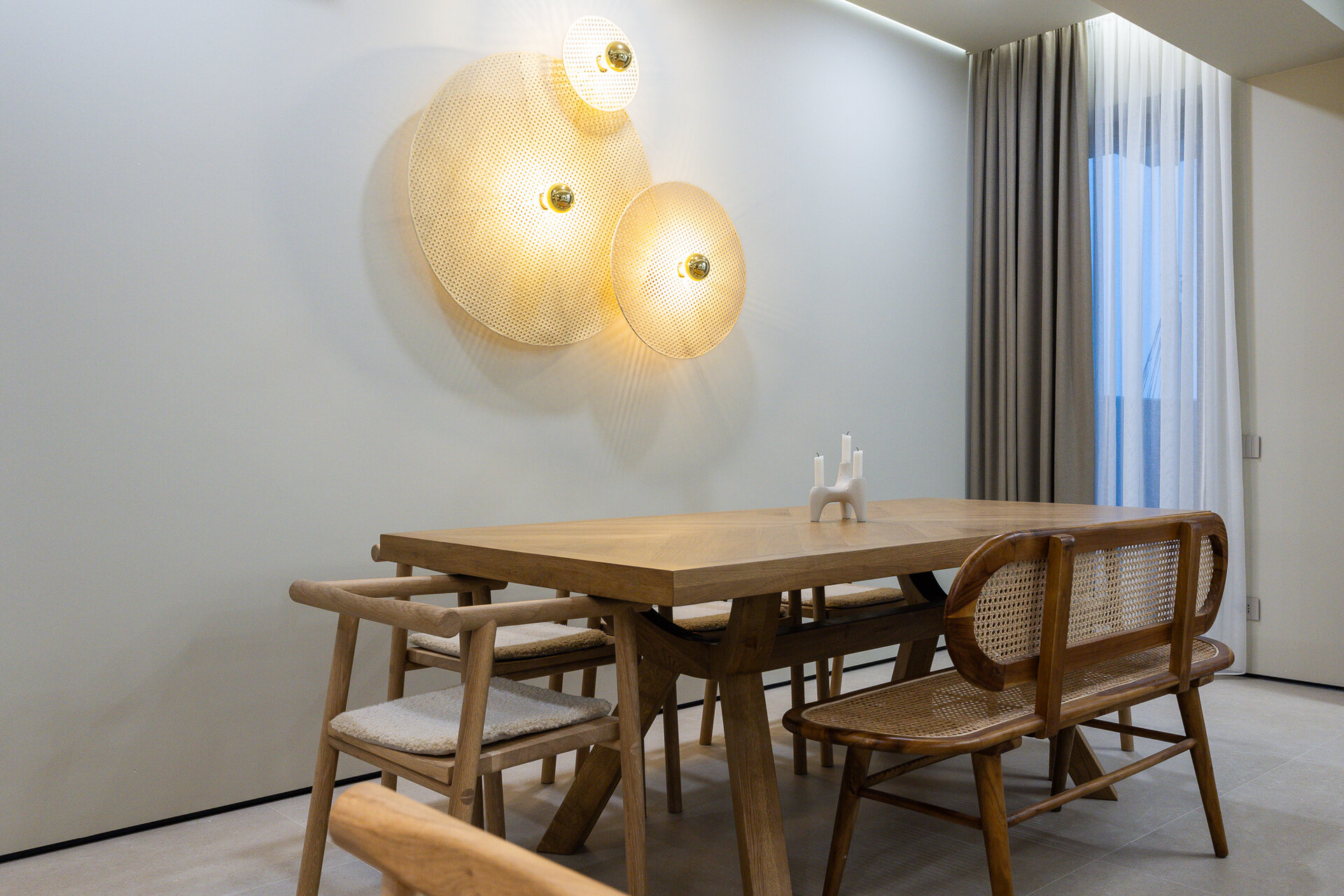
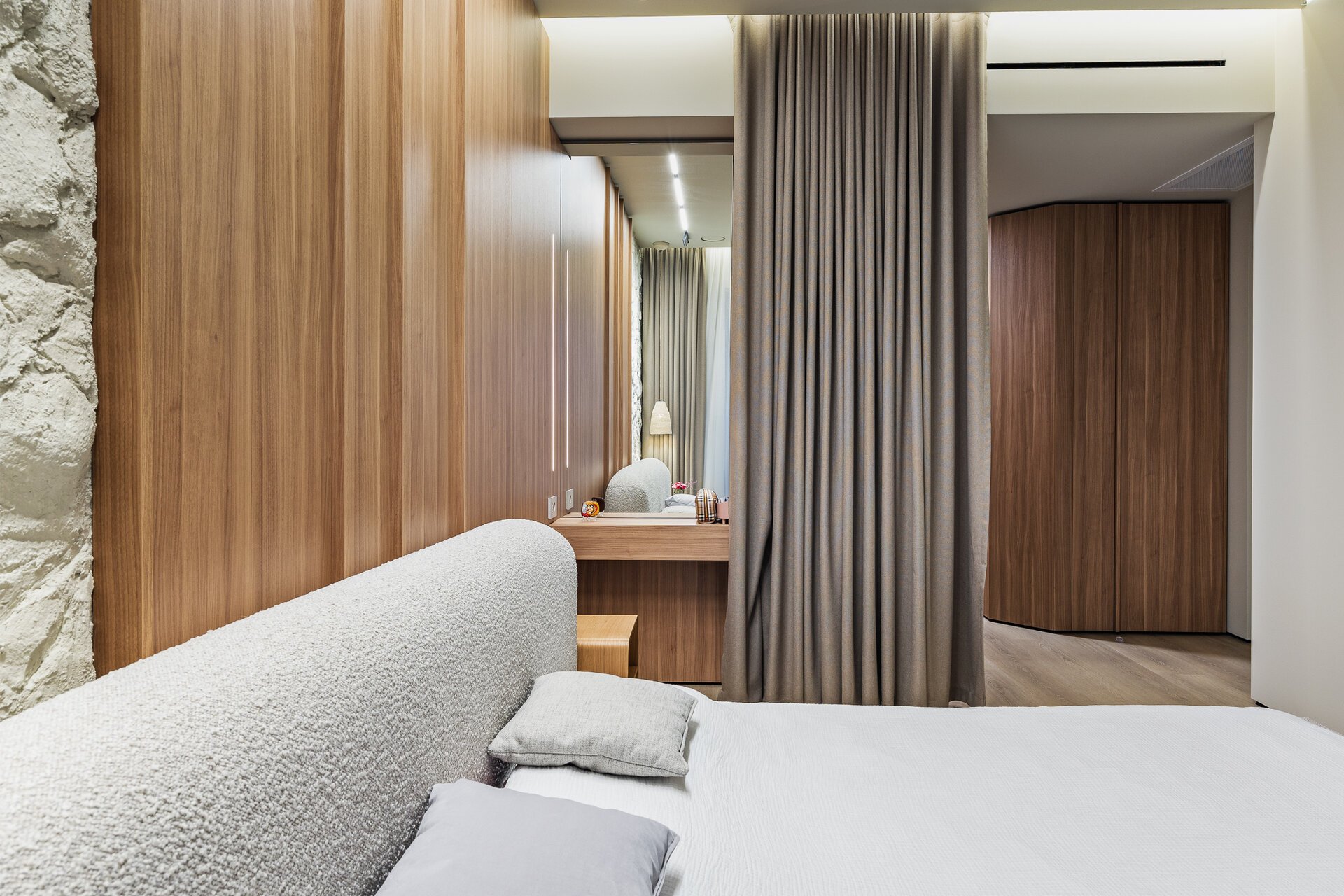
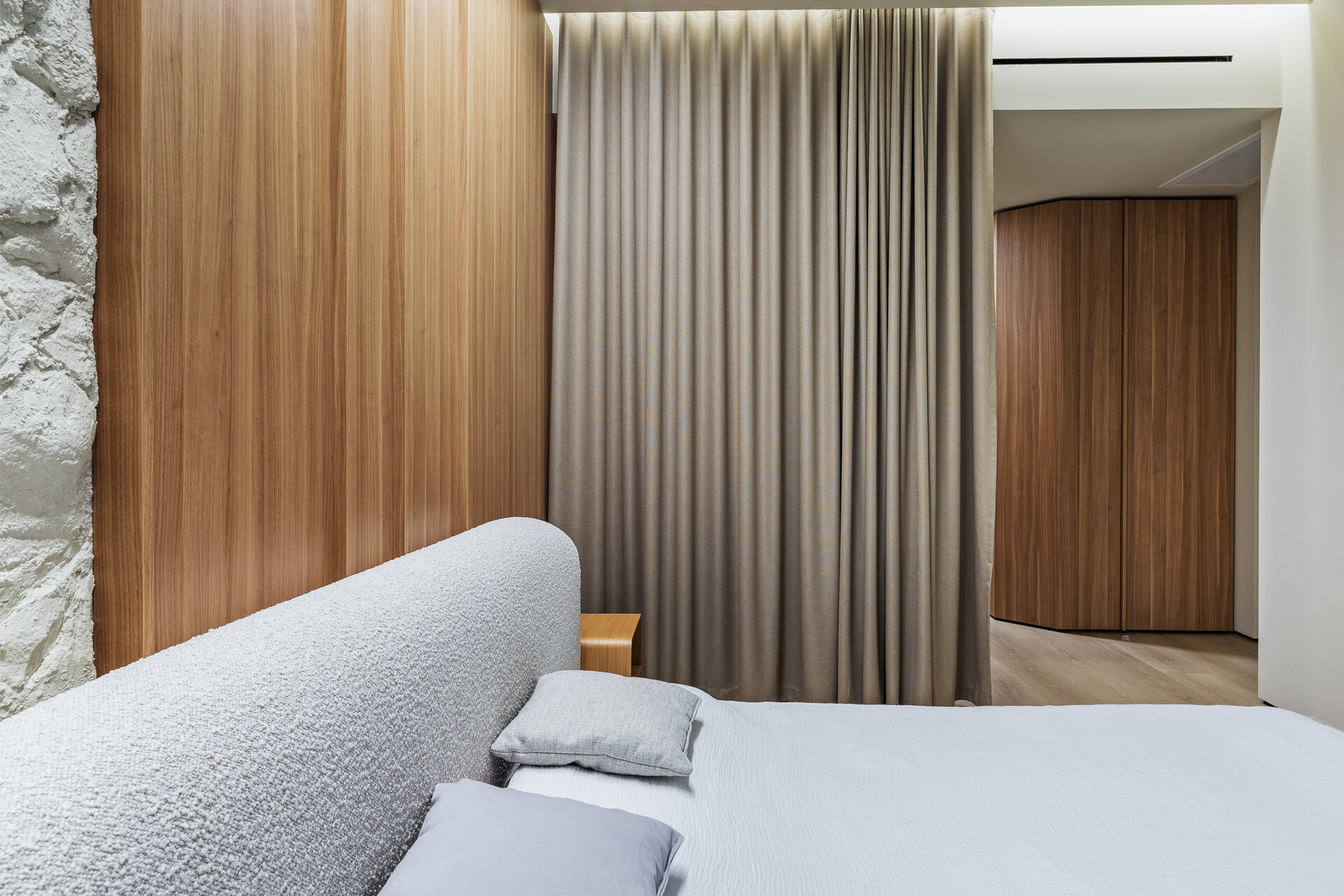
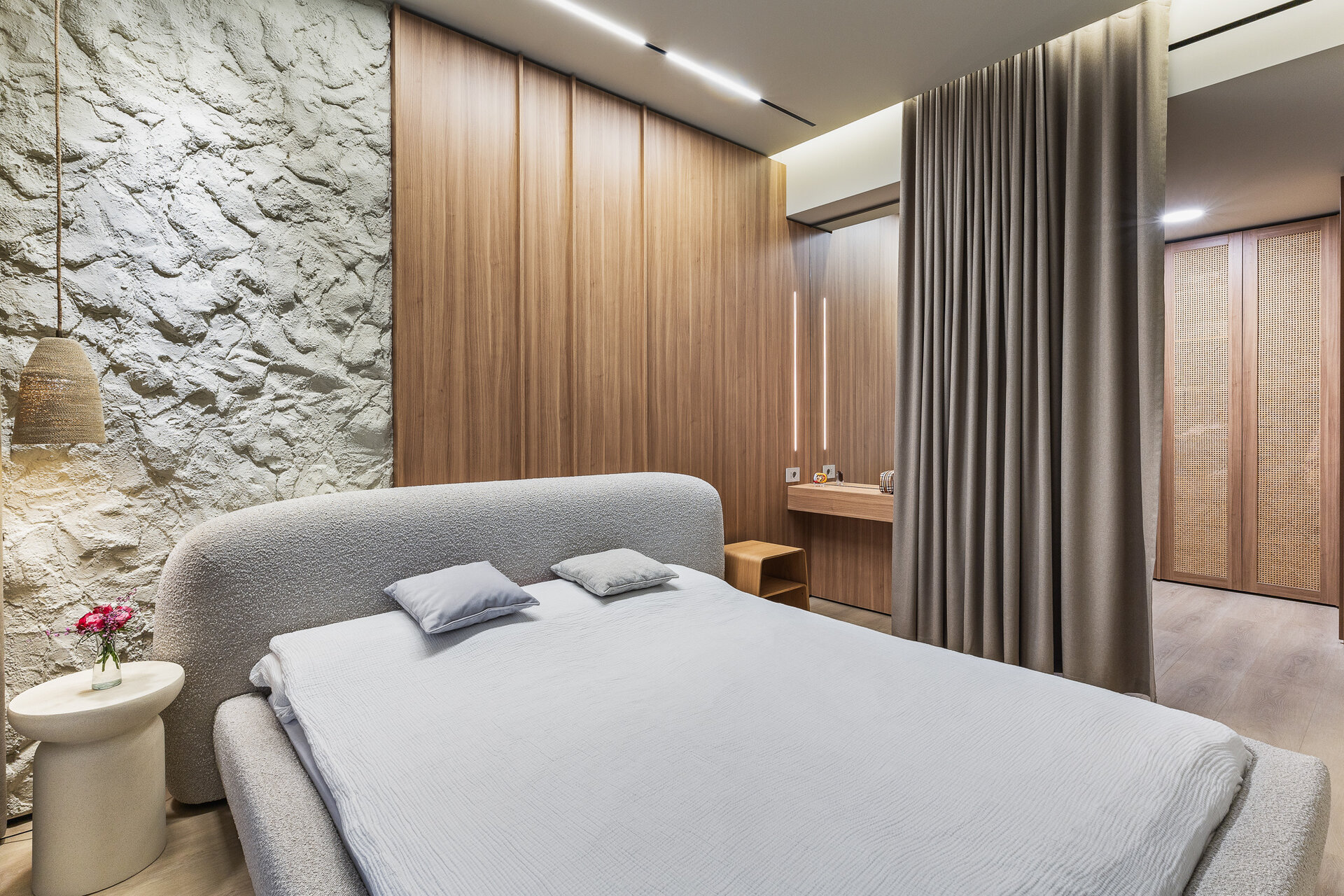
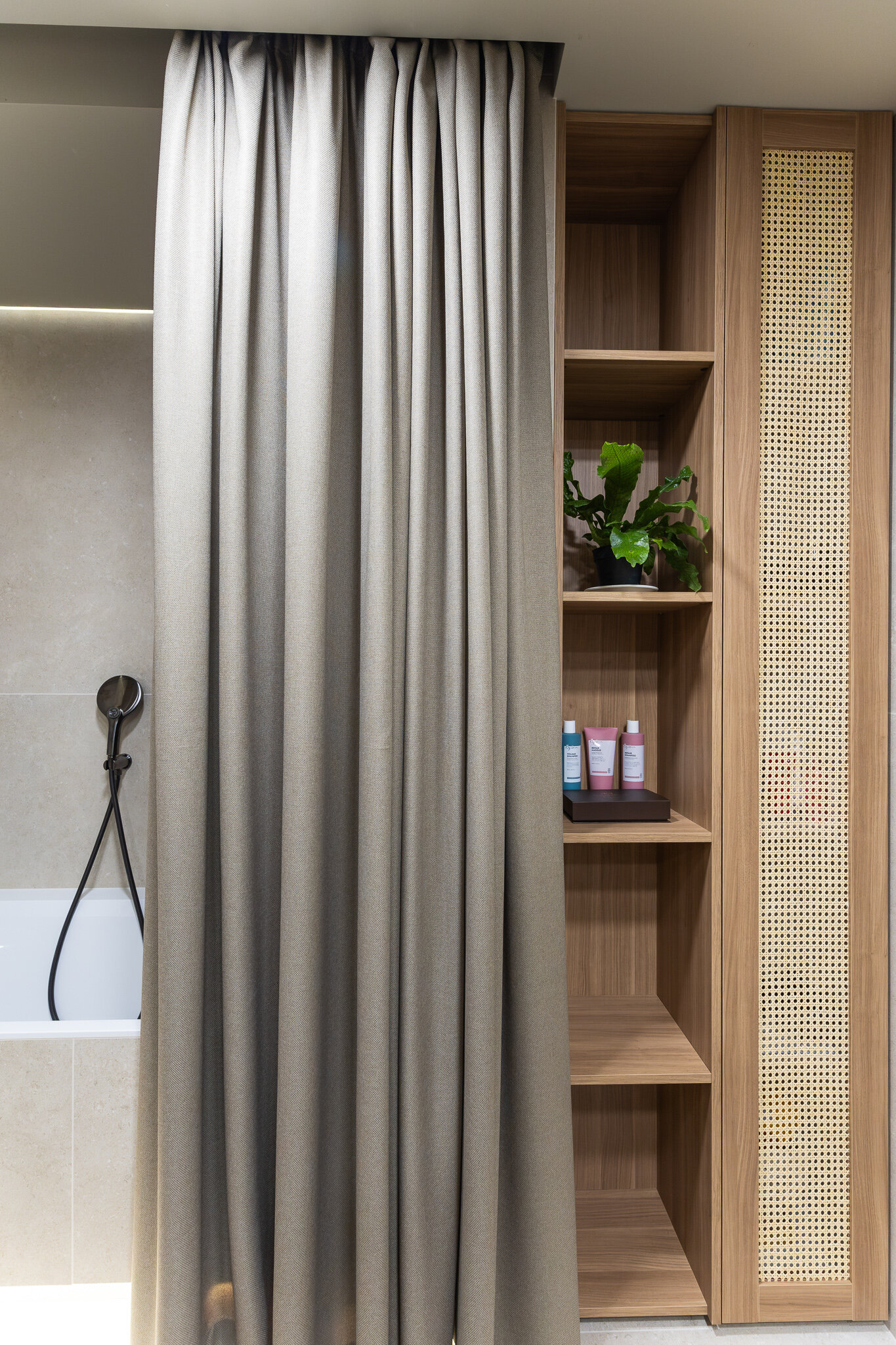
The materiality develops the Japandi language as a tectonic system rather than decoration: solid wood, worked sculpturally, with inlaid detailing that marks the joinery of each furniture piece; natural stone and a rock-wall feature that acts as an element of mass and spatial anchoring, set in contrast to the lightness of the glazed surfaces. The warm-toned palette sustains continuity between the interior and the shifting natural light of the two waters.
Light is treated as a design material, not a finish: a lighting scenario calibrated to the daily cycle recomposes the perception of the space, from daytime transparency to nighttime intimacy, while motorised drapery acts as a second layer of control — regulating light intensity and privacy simultaneously without interrupting the compositional axis toward the water.
Nagi proposes a model of contemplative dwelling in which the interior architecture does not compete with the landscape, but positions itself as a mediating instrument between the occupant and the two bodies of water — a design solution that transforms a site constraint into a coherent conceptual structure.
Interior Residential Design

- Apartment 13 Septembrie
- House by the lake
- Râșnov Chalet
- NAGI — Japandi Penthouse, Constanța
- The Archway Apartment
- A Dialogue Between Light, Space, and Calm
- Calm Siena
- Symbiosis
- Floreasca Penthouse
- Floreasca 2425 Penthouse
- Apartment 126
- Terra 02
- 1_2 Studio
- Gentle Shadows
- House C9
- House C8
- The cloud
- House N
- Flat Academiei
- Apartment 810
- ONE Floreasca Towers - interior design project
- Oxblood Volumes
- Sculpted Contours
- Varenne
- BC Apartment
- Equilibrium House
- Mural Painting Library
- M.AG House
- The Collection Room
- A nest between the plane trees
- M.OB Apartment
- The Memory of Objects
- TT11
- Chromatic Explorations
- Fluidity and Intimacy – Ground Floor Residential Reconfiguration
- Timeless Scenography: Mid-Century Tactility and Adaptation
- Sensory Minimalism: Connection and Spatial Optimization
- Invisible Architecture: Optimization and Functional Hybridization
- Subterranean Frequencies: A Dialogue Between Heritage and Contemporary Design
- Loop25
- Mint Condition
- Botanic Blush
- Dot Dot Blue


